Following a grueling 14-day trek, a team of mountaineers and conservationists has photographed the elusive blue-fronted lorikeet in the highlands of eastern Indonesia’s Buru Island. This is only the second photographed record of the parrot in more than 100 years, according to bird conservation groups. The blue-fronted lorikeet (Charmosynopsis toxopei) is a small species found only in the island of Buru. The bird, which has a lime-green plumage, an orange beak and a pointed tail, was first identified from seven museum specimens collected in the 1920s. The avian species went undetected despite surveys conducted in the lowland and mid-elevation forests they’re described from, until it was photographed in 2014 by Craig Robson during a birding tour, according to the Search for Lost Birds project, a global partnership between the NGOs American Bird Conservancy (ABC), Re:wild and BirdLife International. In April 2026, Indonesian mountaineering group Kanal Buru, which included researchers from ABC, Birdtour Asia and Yayasan Planet Indonesia, led an expedition in Buru. They scaled the limestone terrain of Mount Kapalatmada in the west of the island to reach a 2,700-meter (8,900-foot) summit cloud forest and successfully photographed the parrot. The team also captured its high-pitched calls for the first time. “We noticed two small birds fly into a nearby tree so I picked up my binoculars to see what one of them was,” John C. Mittermeier, director of the Search for Lost Birds at ABC and part of the expedition, said in a statement by the ABC. “I short-circuited with…This article was originally published on Mongabay
Rivers are known to naturally meander, change courses, braid and branch. But as rising temperatures melt glaciers and thaw frozen ground, the courses of Himalayan rivers are shifting and changing shape much more rapidly than before, according to a new study published in the journal Science. The rising instability of the rivers could pose a risk to water security and critical infrastructure, researchers say. The Himalayas, often referred to as the “Water Tower of Asia”, provide vital water resources for nearly 2 billion people downstream. But according to the study, in the upper high Himalayan region, where several important river basins originate, temperatures have risen nearly twice as fast as the global average in the past four decades. The researchers studied three upper high Himalayan river drainage basins: Yarlung Tsangpo, Indus and Ganges. The sources of these rivers occur at elevations of nearly 5,000 meters (16,404 feet), where there is extensive glacier, ice cover and permafrost. Meltwater from these glaciers and permafrost, which is sensitive to climate warming, forms the rivers’ primary water supply. To find out how climate change is shifting and reshaping these upper high Himalayan river basins, the researchers analyzed 40 years of satellite imagery. In particular, they measured 1,079 river bends, covering roughly 1,582 kilometers (983 miles), from 1980 to 2020. Since valleys can confine and influence river movements, the researchers chose unconfined bends or meanders that flowed freely through the landscape for their analysis. Their analysis found that the rivers’ courses were shifting sideways faster…This article was originally published on Mongabay
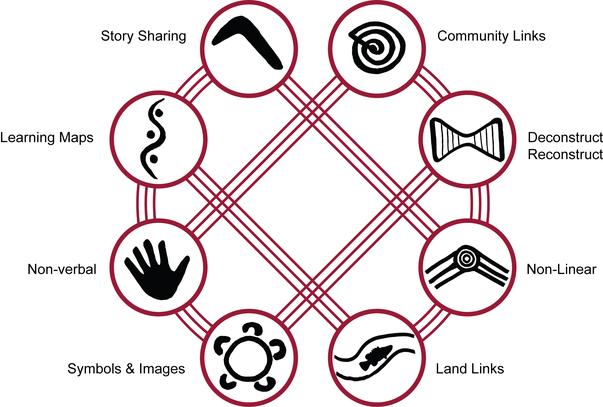
A new book from Indigenous scholar Tyson Yunkaporta of Australia explores how human narratives dictate how modern society governs itself and, crucially, how it exploits or protects the natural world. “It’s a terrible thing to … misrepresent things, make false claims, bear false witness in a way that is bending story, the story that everybody follows,” Yunkaporta told Mongabay’s newscast host Mike DiGirolamo. Yunkaporta is a Deakin University senior research fellow and member of the Apalech clan (Wik) whose traditional lands are located in far north Queensland, Australia. His book, Right Story, Wrong Story: Adventures in Indigenous Thinking, argues that identifying and correcting “wrong stories” is key to stopping environmental exploitation. A wrong story, according to Yunkaporta, is one that acts as a deceptive “curse” by presenting an illusion as if it were real to justify the exploitation of nature and community well-being through narratives that have no connection to the land. To illustrate the “wrong story” of modern resource exploitation, Yunkaporta told Mongabay the Aboriginal folk tale of Tidalik, a giant frog who hoarded all the world’s water for himself. Yunkaporta compares Tidalik to Wall Street firms and billionaires who gamble on water futures and “park their cash” in housing, exacerbating the affordability crisis while stopping the natural flow of resources. In the legend, the animal kingdom does not “eat” Tidalik; instead, an eel makes him laugh by tying himself in knots, forcing the frog to “vomit all the water back into the land.” “A lot of people…This article was originally published on Mongabay
Every April, eastern Nepal’s Tinjure-Milke-Jaljale region sees a rush of tourists, arriving for the vibrant spring bloom of rhododendrons, the country’s national flower. The flowers have now become more than a photo backdrop; they’re part of a new, unregulated market for a “souvenir:” Unlicensed rhododendron liquor. Sold openly in reused bottles with handwritten labels, the rhododendron alcohol market operates without health testing, official tracking or sustainability monitoring, Mongabay contributor Mukesh Pokhrel reports. The Tinjure-Milke-Jaljale (TMJ) region is home to at least 26 species of rhododendron (Rhododendron spp.). It has seen a massive post-pandemic tourism surge, with local officials estimating 500,000 visitors arrived from April 1-15 this year. For some families, the seasonal sale of flower-based alcohol provides supplemental income. “Tourists want something unique from here,” said Denga Lama, a resident who produces the liquor at their home. “People buy the alcohol because it reminds them of the flowers and mountains.” Forests within the TMJ region, where rhododendron plants occur, are largely managed as community forests. Nepal’s conservation laws prohibit commercial harvesting from community forests without approval. However, legal ambiguity regarding rhododendrons grown in private gardens has left officials uncertain about enforcement. When asked about bottled rhododendron liquor, Division Forest Officer Megh Raj Rai told Mongabay it was the first time he had heard about it. Rai said that if the liquor is being produced at large scales, the lack of oversight poses potential public health risks. Certain rhododendron species contain grayanotoxins, neurotoxins that can potentially be fatal; although, the risks…This article was originally published on Mongabay
As rising temperatures, shifting rainfall, and increased pest pressure reduce yields and quality of Arabica and Robusta coffees, the two species that account for nearly all commercial production, researchers and growers are turning to overlooked coffee species for a more climate-resilient future, Mongabay-India contributor Meena Menon reports. Arabica (Coffea arabica) and Robusta (C. canephora) have long dominated the global coffee industry. Other coffee species such as Excelsa (C. dewevrei) were previously relegated to the margins of coffee plantations as boundary markers or shade trees in India. Akshay Dashrath, co-founder of the South India Coffee Company (SICC), is leading efforts to re-evaluate Excelsa for its potential resilience. According to the SICC, a British planter introduced Excelsa to India in the late 1800s as an alternative to Arabica. However, it grew tall and dense, making it an impractical crop to manage and commercialize. Dashrath’s farm in Kodagu district in Karnataka state has 60-year-old Excelsa trees that his family preserved, which are now a source for trials aimed at scaling production. His company is collaborating with the Royal Botanic Gardens, Kew to do the research. Aaron Davis, a senior research leader at the Royal Botanic Gardens, said that the dominance of Arabica and Robusta in the global markets could see major disruptions in the next decade or so from other coffee crop species adapted to altered climates. Excelsa, native to parts of Tropical and West Africa as well as Southeast Asia, is already being scaled in Uganda and Vietnam. According to Kiwuka Catherine,…This article was originally published on Mongabay
Kyrgyzstan has officially designated a massive stretch of its high-altitude landscape as a protected corridor for snow leopards and other mountain wildlife. The Ak Ilbirs ecological corridor, formalized in 2025, spans nearly 800,000 hectares (2 million acres) and was designed with the future climate in mind, Mongabay’s Liz Kimbrough reports. The corridor connects several existing protected areas in the country, as well as pastureland, forest and other ecosystems across 14 rural municipalities to ensure wildlife, including snow leopards (Panthera uncia), can move freely as climate change shifts their habitats. The project was spearheaded by the Central Asian Mammals and Climate Adaptation (CAMCA) initiative, led by the U.N. Environment Programme (UNEP) in collaboration with the Kyrgyz government, Humboldt University of Berlin, and local conservation groups including CAMP Alatoo and Ilbirs Foundation. Murat Zhumashev, director of CAMP Alatoo, said that while the Ak Ilbirs corridor carries official protected area status, it functions differently from most. “The ecological corridor in Kyrgyzstan is based on a regulatory rather than a restrictive approach,” Zhumashev and his colleague Salamat Zhumabaeva told Mongabay by email. “It builds on existing environmental legislation, but unlike strictly protected areas, it does not involve land withdrawal or the introduction of strict prohibitions.” To design the corridor, scientists at Humboldt University “applied a combination of expert local knowledge, climate predictions and technical expertise to build the narratives for the future scenarios,” Julieta Decarre from Humboldt told Mongabay by email. Under future climate emissions scenarios, more than 60% of suitable habitat for snow…This article was originally published on Mongabay
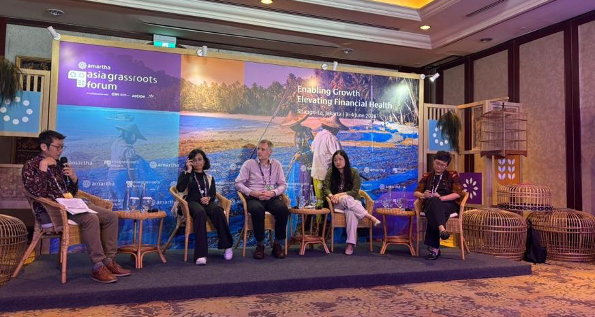
The intersection of environmental breakdown, climate change and economic instability has emerged as a primary threat to the resilience of smallholder farmers in Indonesia, according to researchers and local entrepreneurs who spoke at a recent convention. During the 2026 Asia Grassroots Forum, held in Jakarta on June 3 and 4, Alex Arnall, an associate professor for environment and development at the University of Reading, U.K., said climate change has become an “agent of exclusion,” creating a “double exposure” for farmers who must simultaneously navigate global market volatility and erratic weather. The Asia Grassroots Forum focused on building sustainable business ecosystems for smallholders. Previous research showed extreme weather events can affect farmers in southeast Asia by damaging crops, agricultural infrastructure like irrigation systems and farm equipment, and by increasing operational costs and reducing revenues. A 2024 report found that every 1% increase in average temperature raises the price of food production by 1% to 2% across Indonesia, Thailand, Vietnam, Malaysia and the Philippines. Researchers have also noted that smallholder farmers in the region face a massive financing gap, with less than one-third of the $100 billion needed annually for climate-smart adaptation, leaving them in urgent need of better access to credit, insurance and targeted financial support Drawing on his work with salt farmers in Thailand, Arnall described how even highly-skilled, traditional producers are seeing their knowledge “undermined” by sea-level rise and coastal change. “Farmers in many places … are losing trust in the weather patterns as they become more unpredictable,” Arnall…This article was originally published on Mongabay
Across the small islands of eastern Indonesia that lie within the Wallacea region, one of the world’s richest marine biodiversity regions, coastal communities are reviving ancient customary systems to safeguard marine ecosystems from destructive fishing and habitat loss. This movement is the centerpiece of Jejak Wallacea, a recent documentary highlighting how local empowerment can succeed where top-down conservation often fails, reports Mongabay’s Hans Nicholas Jong. The film features initiatives across four provinces: East Nusa Tenggara, South Sulawesi, Southeast Sulawesi and Central Sulawesi. These communities have turned to locally rooted methods of reverse biodiversity loss, such as seasonal fishing closures, customary sanctions and mangrove restoration. In Solor, East Nusa Tenggara, residents established traditionally protected marine areas that they refer to as “marine granaries” (kebang lewa lolon) to restore coral reefs and created turtle hatcheries. They are also moving away from harmful blast fishing. “What we chose was conservation, but based on local wisdom,” Vero Lamahoda, director of the local foundation Yayasan Tanah Ile Boleng that is supporting the communities in the transition, said in the documentary. In Southeast Sulawesi, the village of Wabula employs a customary system called Kaombo, which regulates access to traditionally protected areas like seagrass beds and mangroves. Violators face customary fines or rituals like Kaleo Leo, where suspects are dunked into the sea, and the individual who surfaces first is considered the guilty party. Similarly, communities on Langkai and Lanjukang islands in South Sulawesi utilize periodic closures of marine areas for octopus fishing to allow populations to…This article was originally published on Mongabay
Severed tissue from a cold-water sea cucumber can survive, heal, and even move independently for years in natural seawater, researchers recently found. Some animals have the ability to regenerate tissues and body parts. Certain lizards can regrow their tails, for example. Some sea stars and sea cucumbers, including Psolus fabricii that live in the cold waters of the Atlantic and Arctic oceans, can regrow their severed arms or halves. However, researchers in the study showed that the discarded parts of a sea cucumber, instead of dying, can also remain viable for long periods of time. “It’s like a lizard that loses its tail,” study co-author Rachel Sipler from Memorial University of Newfoundland in Canada, said in a statement. “We know some lizards can grow new tails; we’re talking about whether the tail can grow a new lizard.” Sipler and her colleagues removed parts of tentacles, feet and the main body from three Psolus fabricii individuals and placed them in natural seawater in the laboratory. The tissues showed active immune responses, cell diversification, and the ability to absorb nutrients (amino acids) dissolved in the seawater. Even when the researchers stopped the experiments after three years, the tissues continued to survive. “We haven’t grown a new, complete sea cucumber yet, but we are seeing pretty stunning growth and diversification of cells literally years after this tissue was removed,” Sipler said in the statement. Cell lines that are “immortal” and can perpetuate indefinitely are crucial for biomedical research. However, most such “immortal” cell…This article was originally published on Mongabay
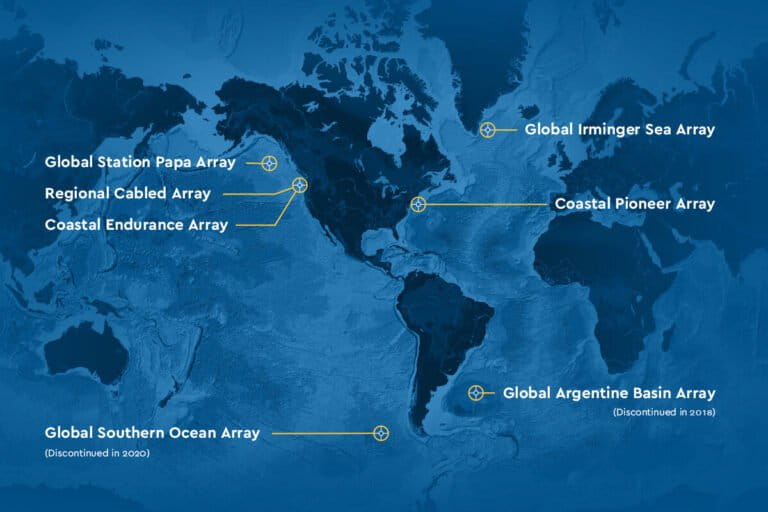
Over the next 15 months, major sensor arrays that have provided crucial, decade-long observations of the ocean, marine ecosystems and climate change will be dismantled. These sensors are part of the Ocean Observatories Initiative (OOI), a $386 million network of more than 900 instruments funded by the U.S. government’s National Science Foundation (NSF), which has provided real-time data on the world’s oceans for more than a decade. The sensors are distributed across both the Atlantic and Pacific oceans to monitor coastal environments, marine ecosystems, and ocean currents that influence the global climate. The decision to end OOI, described by the foundation as a “descoping,” will remove nearly all in-water infrastructure located off the states of Alaska, Washington, Oregon and North Carolina, and the Irminger Sea, an area between Iceland and Greenland. As the instruments are recovered, data streams from those areas will go dark, Jim Edson, principal investigator of the initiative, said in a statement. “However, all previously collected OOI data will remain accessible through the OOI Data Center.” The OOI was designed as a 25-to-30-year project specifically to capture long-term climate signals, which scientists say require at least three decades of continuous data to be meaningfully detected. The network has achieved just 10 years of observations. While satellites can monitor the ocean’s surface, the OOI arrays provided a rare look into the deep sea, measuring low-oxygen zones, carbon absorption, and currents critical to regulating weather patterns. The Associated Press (AP) reported that the removal comes at a particularly sensitive…This article was originally published on Mongabay
Researchers have found a new-to-science species of a tiny sea slug with black and yellow spots resembling “scattered sesame seeds.” Measuring just three millimeters long (0.1 inches long), the researchers have named it Thecacera sesama, according to a recent study. Study lead author Ho-Yeung Chan first spotted the sea slug during a recreational dive in the coastal waters of Keelung, northern Taiwan, in 2019. At the time, he was still an undergraduate student and did not realize the animal was unknown to science until he consulted an expert on Facebook, according to a statement. To formally identify the species, researchers collected six specimens of the sea slug during diving expeditions conducted between May 2021 and June 2025. Between May and September, typhoons can make diving risky. The research team then examined the specimens’ structure and appearance and analyzed their DNA to confirm that it was a new-to-science species. T. sesama is the seventh Thecacera species to be described, and the first one to be named in the genus in nearly three decades. Despite its small stature, T. sesama is visually striking, the researchers wrote. It has a translucent white body covered in small black and yellow spots that look like sesame seeds. While the species looks similar to another sea slug Thecacera pennigera, which has black and orange spots, T. sesama is significantly smaller and genetically distinct. The researchers found that T. sesama lives on and feeds exclusively on bryozoans, small aquatic invertebrates known as “moss animals” that live in…This article was originally published on Mongabay
In the remote, over-the-water village of Muara Enggelam in East Kalimantan, Indonesia, the introduction of reliable solar energy has become a catalyst for female entrepreneurship and economic stability. Historically cut off from basic services and reliant on expensive, noisy diesel generators that ran only from dusk to dawn, the village underwent a transformation starting in 2015 following a solar power allocation from Indonesia’s energy ministry, reports Mongabay Indonesia contributor Yuda Almerio. For women like Asniah, a mother of three, 24-hour electricity thanks to a solar array meant the ability to scale a home business. She began using electric blenders to produce amplang (fish crackers), a task that was previously difficult due to the high cost and unreliability of diesel fuel. “Using a blender was a bit of a worry, because the fuel would run out quickly,” Asniah told Mongabay Indonesia. “A liter [of diesel] wouldn’t last an hour — now it’s much more convenient.” Asniah has since expanded her ventures to include a food stall and a digital boutique, utilizing social media for marketing. Muara Enggelam’s solar infrastructure is managed by a village-owned enterprise, BUMDes, led by Jam’ah, a mother of one. This makes it a rare example of female leadership in the energy sector; the United Nations Development Program estimates that women make up less than 5% of energy managers in Indonesia. “Using a generator was expensive, that’s why so few people started businesses,” Jam’ah said. “The solar energy has been a relief for people.” While Muara Enggelam serves…This article was originally published on Mongabay

 Login