Why do the monkeys in Vietnam look so… odd? “The odd-nosed group” — that’s what scientists have called a group of primates found across Asia that share a common ancestry. Scientists think Vietnam’s monkeys—like the red-shanked douc and the Tonkin snub-nosed monkeys—developed their unique, flat or non-existent noses to adapt to the cold of high-elevation forestsThis article was originally published on Mongabay
From a symbol of wealth and the food of the gods, to a sweet treat many of us can’t go too long without; the story of cacao (or cocoa, depending on how it was processed), has been intertwined with humanity’s for millennia! In this 4-part series on NTFPs (non-timber forest products) with The Rainforester and Mongabay, we explore the ways that harvesting sustainably from our forests can keep them alive!This article was originally published on Mongabay
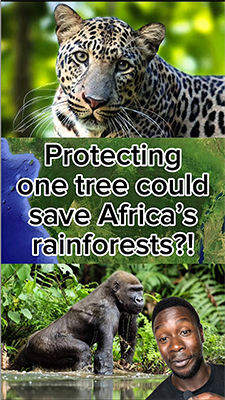
Ogbono is one of Africa’s most iconic plants, and its seed is one of African cuisine’s iconic ingredients. Providing both food and shelter for a great many species; this canopy tree is integral to many of the continent’s rainforests! In this 4-part series on NTFPs (non-timber forest products) with The Rainforester and Mongabay, we explore the ways that harvesting sustainably from our forests can keep them alive!This article was originally published on Mongabay
Lionfish are beautiful, venomous and devastating Caribbean reefs. In Honduras, divers are fighting back with homemade spears, hunting competitions and by putting lionfish on restaurant menus. Watch the full film to meet the community fighting back against one of the Caribbean’s most destructive invasive species.This article was originally published on Mongabay
Legal courtrooms are becoming a new battleground in the fight to save whales. In New Zealand, the proposed Tohorā Oranga Bill could recognize whales as legal persons — building on Pacific Indigenous efforts like He Whakaputanga Moana. This push to obtain legal rights for whales is part of the fast-growing ‘Rights of Nature’ movement. But at the same time, weakened protections under the Endangered Species Act threaten the last 51 Rice whales in the Gulf of Mexico. Join Conservation Entangled host Izzy Sasada as she explores how courtrooms are becoming a new frontier in deciding the fate of whales.This article was originally published on Mongabay

 Login