For the first time, archaeologists have analyzed the genetic material of Homo naledi, a mysterious 300,000-year-old relative of modern humans discovered deep in a South African cave system. What they found is unique in human evolution studies: Every skeleton known from the species is female.
"I think it is fair to say that they surprised us," Lee Berger, a National Geographic explorer-in-residence, told Live Science in an email, but H. naledi "has always been an enigmatic discovery."
Since 2013, Berger has headed the Rising Star project, which discovered nearly two dozen skeletons of small-brained, two-legged creatures, which the research team named H. naledi, within a cave system in South Africa's Cradle of Humankind.
Research over the past decade has revealed that H. naledi was unusual for having a small brain and upper body, similar to earlier australopithecines like Lucy, but a face, hands and lower limbs that were more human-like. In 2023, the Rising Star team suggested H. naledi may have used fire in the cave, and in 2025, they advanced the controversial claim that H. naledi buried their dead — a complex behavior unexpected for a human relative with such a small brain.
But a new study of H. naledi teeth published Wednesday (June 24) in the journal Cell may bolster the team's interpretation of the Rising Star cave as a burial site.
An international team of experts studied 20 teeth from H. naledi skeletons using proteomic analysis, a minimally destructive technique that sequences genetic material from ancient proteins. Proteomics is a burgeoning field, especially because these proteins can last longer than DNA. The team focused on amelogenin genes (AMEL), which code for proteins in dental enamel and vary by sex. While the gene variant called AMELX is found in both males and females, another one, AMELY, is found only in biological males.
In analyzing the H. naledi teeth, the team found no AMELY genes but plenty of AMELX ones, suggesting that all of the skeletons were from females. These included the nearly complete skeleton of Neo and DH1, the main representative of the species, both originally assumed to be male.
The result is surprising because there are no known ancient human cemeteries or collections of nonhuman primate skeletons that contain only females.
"The most likely reason for these robust results are, in my opinion, cultural selection after death for burial by sex and perhaps gender," Berger said. "There are many past human societies with sex-specific burial practices," study co-author John Hawks, a paleoanthropologist at the University of Wisconsin-Madison, said in a statement, but the H. naledi skeletons "are older than any known Neanderthal or modern human burial site, and it's remarkable to see that they may all be female."
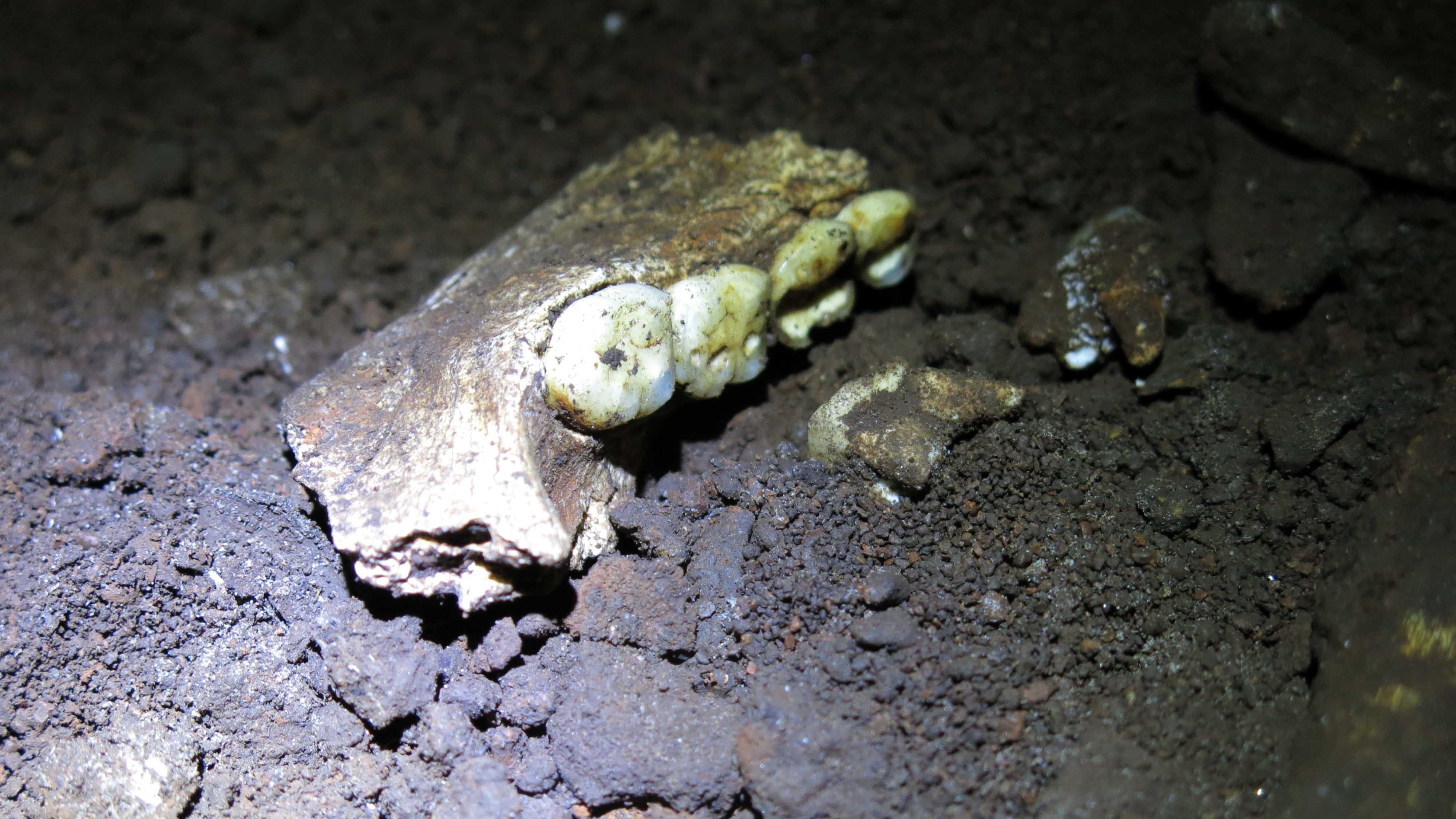
A partial jawbone with teeth from Homo naledi lies was found in the Rising Star cave system. (Image credit: Mathew Berger / Rising Star Program)
"An already weird hominin"
The discovery that everything we know about H. naledi comes from female skeletons has surprised paleoanthropologists.
"The bottom line is this is a weird result from an already weird hominin," Elizabeth Sawchuk, curator of human evolution at the Cleveland Museum of Natural History, who was not involved in the study, told Live Science in an email. "The key thing to remember is that failure to detect evidence of AMELY does not mean there are no males in the sample — it just means that none were detected."
One possible reason for the lack of this gene in H. naledi skeletons is an AMELY gene deletion that is known to occur very rarely in some modern-human populations and that has been found in one Neanderthal male. If the AMELY gene doesn't exist in this H. naledi group, then the protein profiles of males would look identical to the profiles of females.
However, "it's very unlikely that this would be the case among even half of the 20 individuals we studied or for an entire population," study co-author Enrico Cappellini, a paleoproteomics professor at the University of Copenhagen in Denmark, said in the statement. "Either scenario, namely the absence of H. naledi males in the Rising Star cave system or a systematic deletion of their AMELY gene, is fascinating and would have deep implications for a better understanding of the biology and evolution of this species."
Studies of H. naledi, a species known from a single site, "continue to yield more questions than answers," Sawchuk said. "As the authors point out, this is a surprising result that requires more investigation."
Other hominins in South Africa
A second surprising result in the proteomic analysis was that H. naledi shares a gene variant with Paranthropus robustus, a human relative with a massive face and teeth that lived in South Africa around 1 million to 2 million years ago.
Proteomic analysis of four P. robustus skeletons in 2025 proved that limited genetic material could be recovered from ancient human relatives in Africa. The new study has revealed that some members of this species and H. naledi shared a gene variant related to collagen production, which is different from the genes found in modern humans, Neanderthals and Denisovans.
While H. naledi and P. robustus inhabited the same general geographic area, it is unclear if they lived there at the same time and overlapped or if they may have had an ancestor-descendant relationship.
"It is early days for sampling fossil hominins with ancient proteins, and until we build a better, bigger sample, we just don't know" what the shared genetic variant means, Berger said.
Building a larger database of ancient proteins from other human relatives that evolved in Africa, such as Australopithecus africanusand Homo erectus, may clarify where H. naledi fits into the picture of human evolution.
"Key data are missing from H. erectus and A. africanus that would help put this evidence into context," Sawchuk said. "For now, this is another curious finding that bears further investigation."
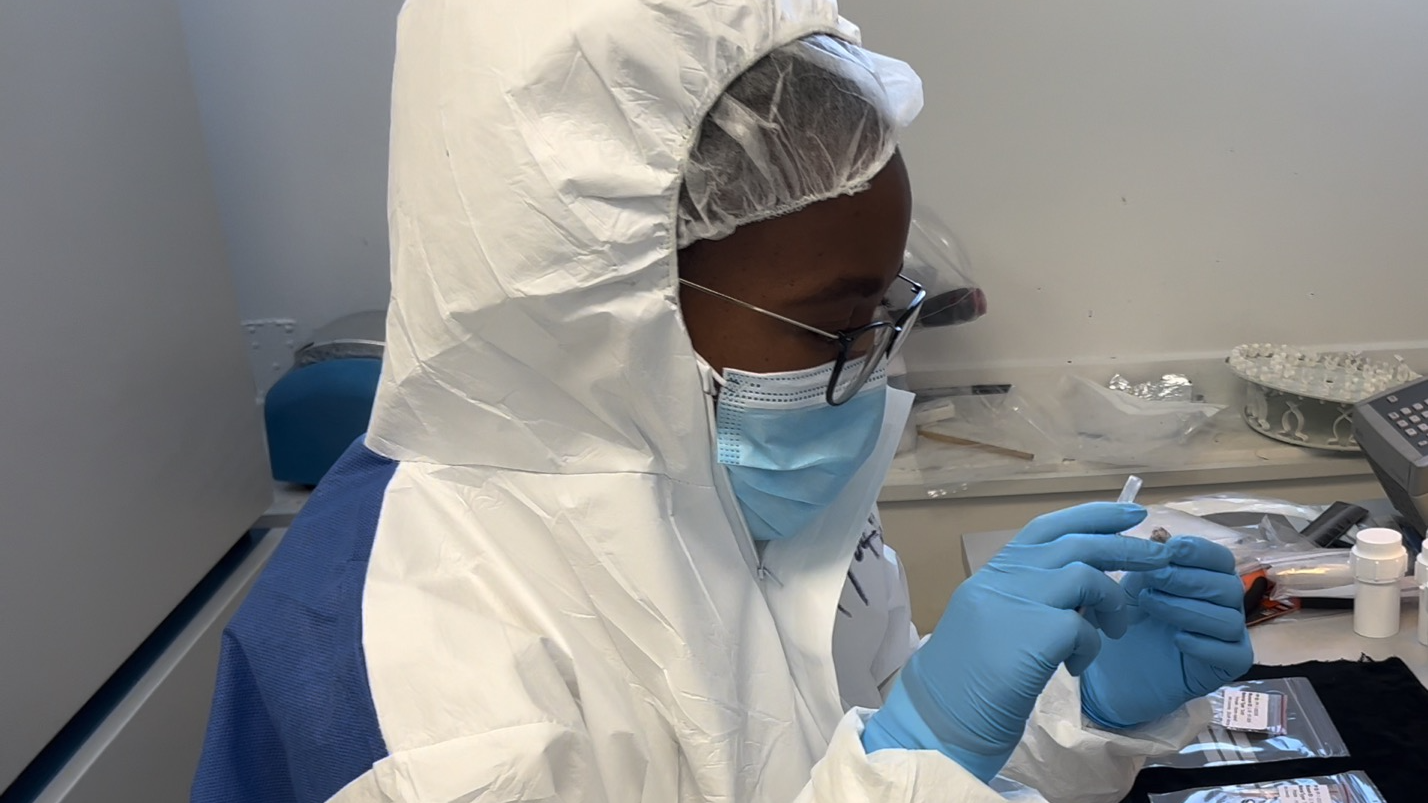
Study lead author Palesa Madupe has pioneered techniques to extract proteins from fossils. (Image credit: Alberto Taurozzi / Rising Star Program)
What does sex change?
In 2015, Berger and colleagues named the new hominin H. naledi and described what they presumed to be male and female variants of the species based on the skeletons' sizes. In many groups of human relatives and in modern humans, males are physically larger than females, on average. This assumption led the researchers to classify the presumed male individual DH1, discovered in the Dinaledi chamber of the cave, as the main representative of the new species.
But a 2024 study was the first to question the assumption that the H. naledi skeletons came from two sexes. In that study, researchers found variation in the teeth of H. naledi that was "so low that the possibility that one sex is represented by few or no individuals in the sample cannot be excluded," they wrote.
"Our study helps resolve the long-standing mystery of why Homo naledi lacked significant variation," study first author Palesa Madupe, a researcher at the Max Planck Institute for Evolutionary Anthropology in Germany, said in the statement. "It's probably because they could have all belonged to one sex."
If the proteomic sex analysis is correct and H. naledi does not have AMELY deletion issues, it means everything we know about the species comes from females. But this doesn't mean interpretations of the species are wrong.
"The only thing that has changed is that we have never seen a male!" Berger said. "When and if we do, we will have to extend the description to include male sex characters and the likely extension of certain aspects of variation."
The researchers hope their study paves the way for more proteomic analyses of human relatives in the future.
The new analysis proves that protein analysis of fossils from the Pleistocene (2.58 million years ago to 11,700 years ago) can be done in a minimally destructive way, Madupe said. "This means potentially opening the door to a whole new way of sustainably investigating the differences between sexes in groups of extinct hominins and other animals without causing visible damage to these priceless fossils."
What do you know about early humans? Test your knowledge with our human origins quiz!
An isolated population of sperm whales in the Mediterranean Sea are splitting into two distinct groups with different dialects, a new study reveals. This shift has likely been happening for thousands of years, as two groups split from an initial single population.
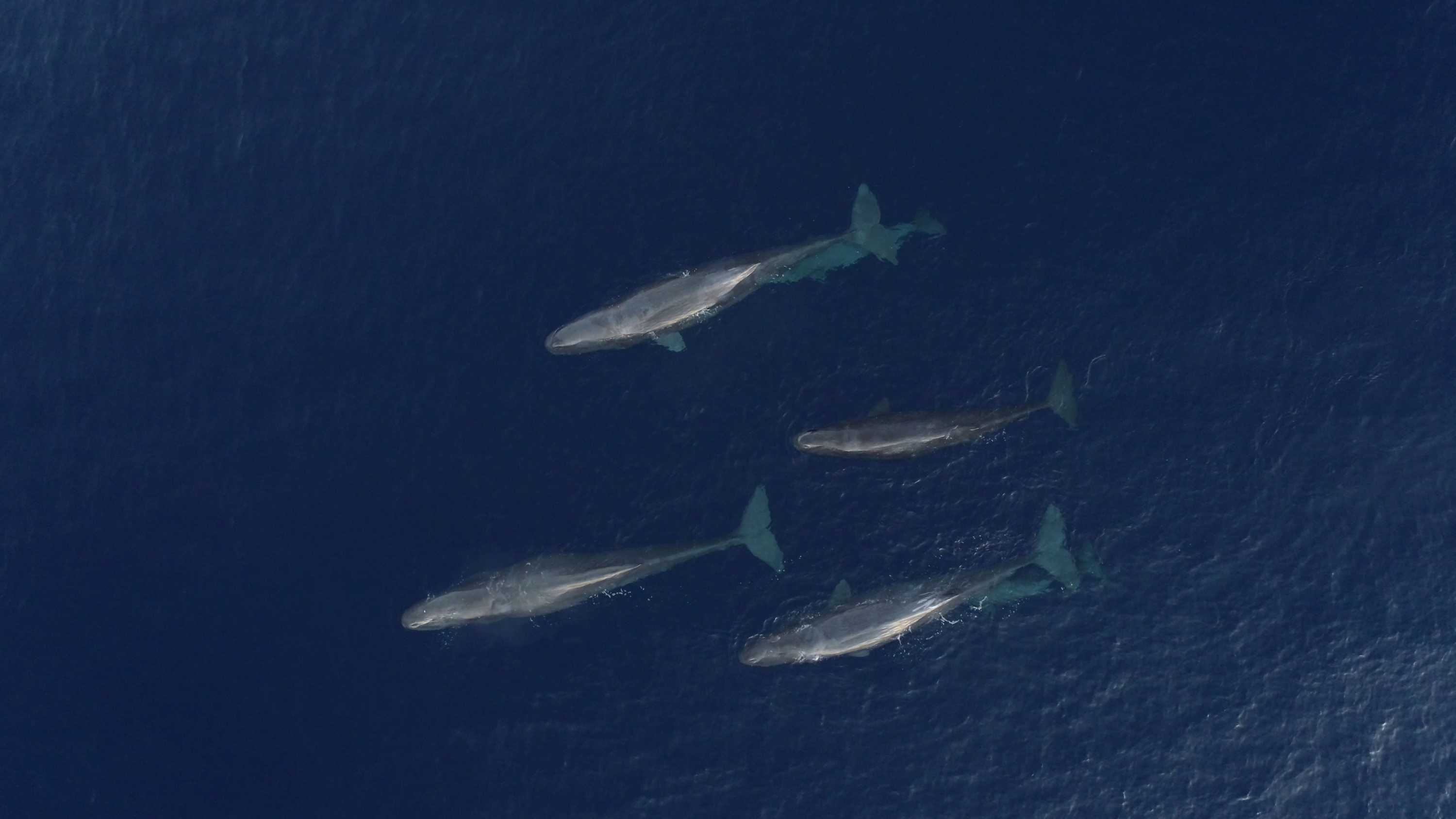
The sperm whales (Physeter macrocephalus) live in small social units of females and young, and they associate with other groups in the same area. They use social vocalizations called codas — shortpatterns of clicks — to communicate. Theparticular codas they use identify them as being part of the same cultural group.
Taylor Hersh, a researcher in the School of Biological Sciences at the University of Bristol in the U.K. and first author of the research, and her colleagues have analyzed codas recorded over almost 20 years in the Mediterranean, where there is a unique population ofa few thousand sperm whales, to see if they all use the same dialect.
Sperm whales entered the Mediterranean via the Strait of Gibraltar about 20,000 years ago, and they have spread throughout the area. The whales rarely leave the sea — even males, which normally migrate. Other sperm whales don't seem to enter often, either, so the Mediterranean ones are effectively isolated from other populations and are consideredan endangered subpopulation.
"The sperm whales in the Mediterranean are really cool," Hersh told Live Science. "I've always thought of them as the weirdos of the sperm whale world in that they don't leave through the Strait of Gibraltar even though they could. They are unique, and for a long time, they were also thought to be acoustically unique."
The thinking was that all the sperm whales in the Mediterranean belonged to the same clan, identified by their use of a single coda 90% of the time. This coda consists of three clicks and then a pause before the fourth and final click — a pattern called the three-plus-one type.
But the analysis by Hersh's team of 5,291 codas recorded between 2003 and 2021 revealed that sperm whales living in the eastern Mediterranean around the Hellenic Trench, off Greece, have a slightly different dialect from that used by animals in the western basin around Spain's Balearic Islands.
The eastern whales produce a distinct form of the three-plus-one coda. "It's a very similar pattern of clicks, but it's much, much faster," Hersh said.
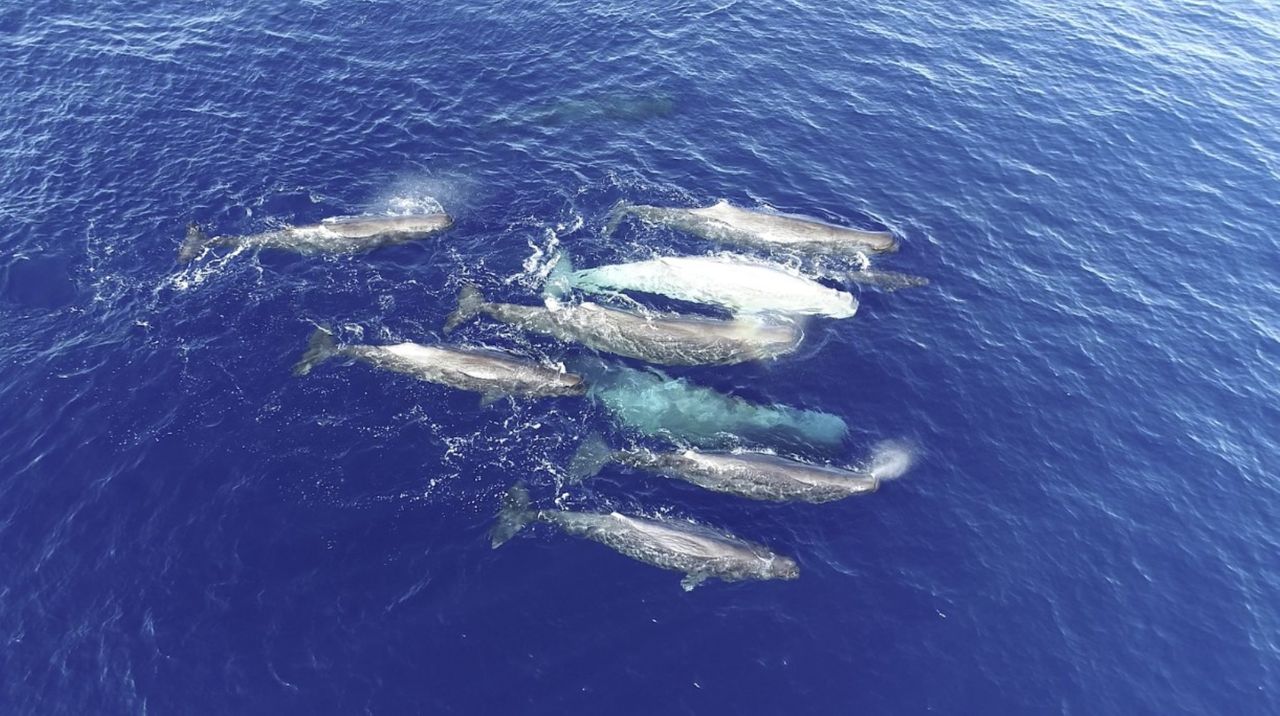
Researchers found distinct dialects between the two populations, with the eastern population producing slower codas. (Image credit: Asociación Tursiops)
In some recordings, whales in the eastern Mediterranean produced the slower coda, showing they were familiar with both dialects.
"The western sperm whales religiously stick to their dialect, but there were four instances of eastern whales using the western dialect," Hersh said. "The question of why is still an open one. Their dialect seems to be a lot more diverse than we expected. They do occasionally make those slow three-plus-one codas, but they make a lot of other coda types, too."
Hersh hopes further recordings alongside records that tie individual whales to sounds and events might help elucidate why the whales switch between dialects.
"It's exciting to see this study showing different populations behaving closely, but also differently," saidGašper Beguš, linguistics lead at Project CETI, a nonprofit organization that aims to translate the communication of sperm whales.
The study paints a picture of sperm whales progressively occupying the Mediterranean from west to east, with the dialect of one group gradually changing. "The groups in the east clearly remember the western dialect because they have these 'throwback' days," Hersh said.
It's still a mystery how and why these dialects evolved.
"Every speech is a dialect; the question is how did they arise and why?" said Beguš, who wasn't involved in the new study. He said the historical change in habitat does help to show which dialect came first. "In the Mediterranean, maybe they're forming different groups, so that's why they're trying to distinguish themselves," he told Live Science, giving the parallel of young people who distinguish themselves from previous generations by coming up with new slang.
"It's possible that these two groups with repertoires that are very similar but still distinctive could represent a sort of midway phase,” Ellen Jacobs, a marine biologist at Aarhus University in Denmark who wasn't involved in the research, told Live Science via email.
"Changes in the rhythm might be a very feasible and meaningful way for coda signals to start to diverge," she said, like the way the English words "How do you do?" got mashed together until they morphed into "howdy."
The timescale on which a sperm whale dialect develops is uncertain, but it's likely a slow process, according to Hersh. "It's probably happening on the scale of hundreds and thousands of years, because sperm whales can live into their 60s and 70s. And this study is looking over 19 years of data, and that's just a snapshot of one animal's life," Hersh said.
This means the eastern whale dialect was conceivably emerging in the Mediterranean Sea as famous human civilizations were speaking different languages on the surrounding lands, including when theancient Greeks andRomans were rising and then falling.
"Maybe if we could leave them for another 10,000 years, we would come back to find the completely separated dialects of clans," Jacobs said.
The symptoms: The man visited a hospital because two months earlier, some foods and beverages began to taste extremely unpleasant to him. Over time, more foods had become difficult for him to stomach. Sour and salty flavors were the first to trigger disgust. Oily foods were next, followed by fresh vegetables, cold water and juice, warm water and, finally, sweets.
The man ate less due to the taste aversions, and he unintentionally lost a few pounds. He told doctors at the hospital that he felt lethargic, they wrote in a report of the case.
What happened next: The patient, who was a physician himself, reported that eight years ago, he had been diagnosed with bipolar disorder. For the prior three years, he had been managing the condition with lithium, a mood stabilizer commonly used to treat bipolar disorder.
He was taking a prescribed dosage of 800 milligrams per day and historically hadn't had any unusual side effects. (This is slightly higher than the typical dose recommended for chronic management of bipolar disorder, but that said, doctors may tweak patients' doses based on their individual needs.)
The diagnosis: Doctors performed bloodwork and found that the level of lithium in the patient's blood was 1.28 milliequivalents per liter (mEq/L). Safe levels of lithium are between 0.6 and 1.2 mEq/L; any higher than that can cause a condition called lithium toxicity, which can be fatal if untreated.
When the doctors checked the man's medical records, they found that prior to the onset of his symptoms, the levels of lithium in his blood were between 0.4 and 0.9 mEq/L. In the report, the authors did not investigate the cause of the toxicity, nor did they hypothesize as to why lithium was accumulating in the patient's blood.
The treatment: The doctors told the man to stop taking lithium, and they instead prescribed another mood-stabilizing drug, called valproate. As the lithium levels in his blood dropped, the patient's energy returned and the foods and beverages that previously disgusted him recovered their normal flavors. Notably, this happened in the reverse order that their flavors had changed.
At a follow-up visit one year later, the man was still taking valproate and his symptoms of fatigue and taste changes had not returned.
What makes the case unique: Although they're uncommon, side effects of lithium use can include confusion, increased thirst, frequent urination, irregular or slow heartbeat, tiredness and weight gain. Rarer side effects include dizziness, headaches, vision problems and heat loss in the arms and legs. Lithium toxicity, also known as lithium intoxication, is known to increase the risk of these adverse symptoms.
Nevertheless, "it has not been generally known that lithium can lose or change taste in some patients," the case report authors wrote. Based on their findings, they suggested that in the future, taste loss or changes in taste perception should be flagged as a potential indicator of mild lithium intoxication.
This article is for informational purposes only and is not meant to offer medical advice.
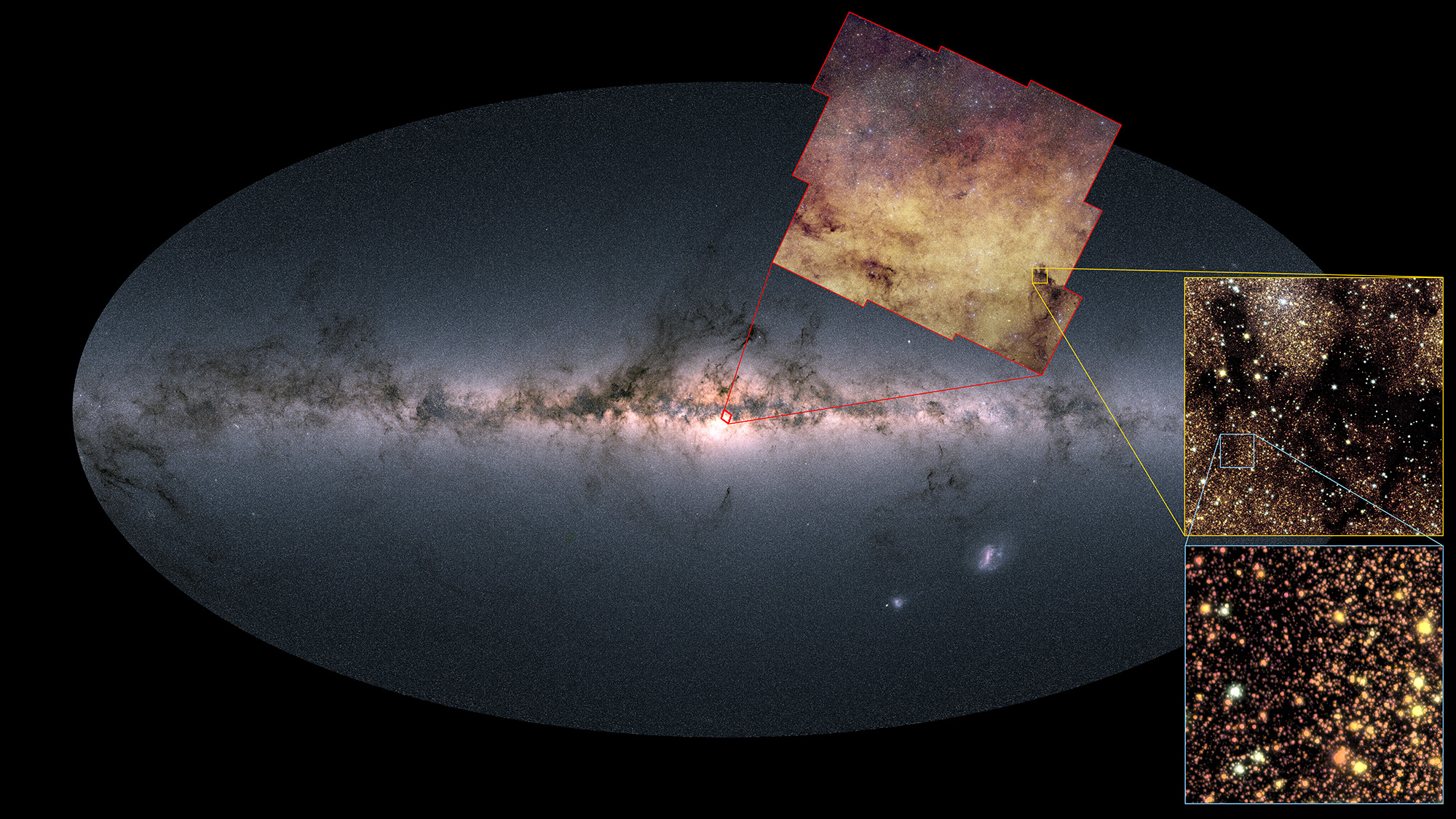
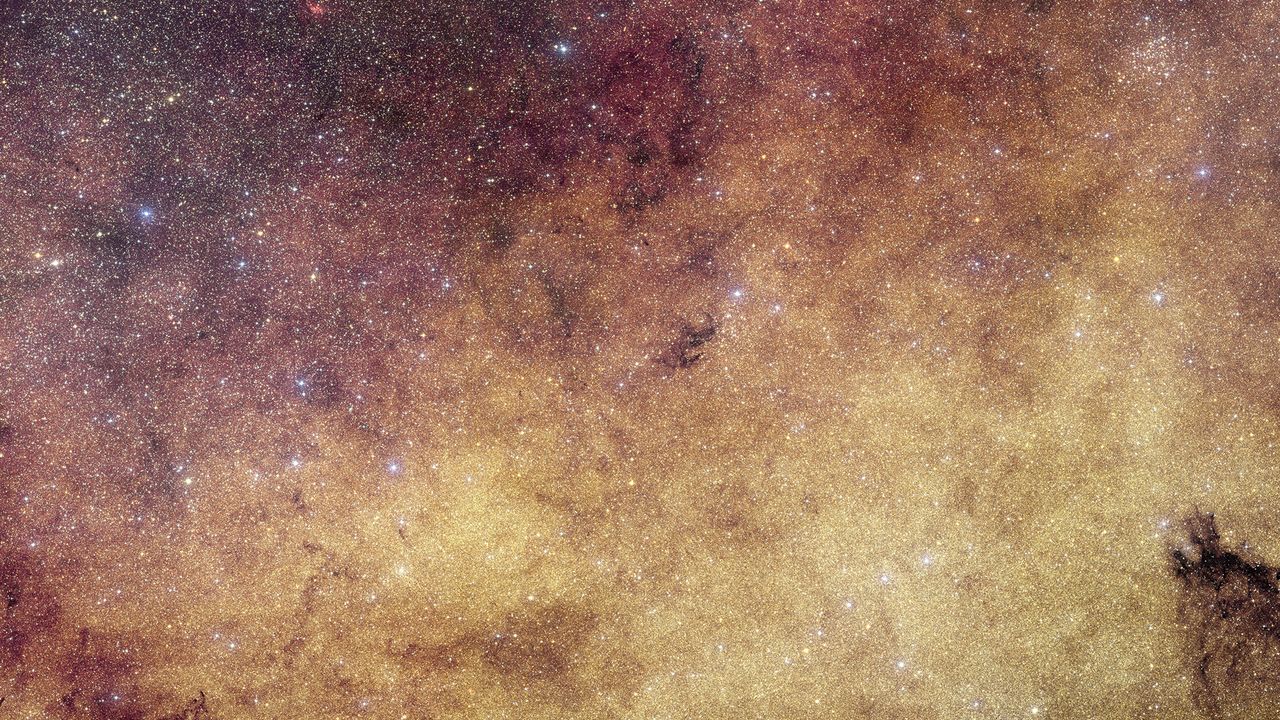
A deep-space telescope on a grand mission to make the largest-ever 3D map of the universe just peered into the star-filled heart of the Milky Way. In the new observations, shared Wednesday (June 24), the Euclid space telescope imaged the center of the Milky Way in extraordinary detail, showing off more than 60 million stars crowded in the galaxy's center.
The shiny new image from the European Space Agency (ESA) spacecraft will help astronomers confirm newfound exoplanets and use changes in starlight to measure those planets' masses as they orbit their parent stars, according to ESA scientists.
The image was taken in 26 cumulative hours in March 2025, across nine pointings of the telescope's visible-light camera toward the galaxy's center, also called the galactic bulge. Each viewpoint captured a slice of sky larger than the full moon. In a statement, ESA praised the performance of Euclid under challenging conditions.
"Designed to observe billions of faraway galaxies, the space telescope's visible-light camera is sensitive enough to tell apart individual stars in our super-crowded galactic bulge, without being blinded," agency officials wrote.
The mosaic image will help NASA's Nancy Grace Roman Telescope with its upcoming planet-hunting mission, after that observatory launches aboard a SpaceX Falcon Heavy rocket from NASA's Kennedy Space Center in Florida no earlier than Aug. 30.
One way the Roman telescope will search for new worlds is through microlensing, the same technique that can be used to examine exoplanets in the new Euclid image. Microlensing happens when one star passes in front of another from the perspective of an observer. The gravity of the closer-up star briefly bends and magnifies the light of the star behind it, allowing possibly unseen planets to pop up near that star.
An image of the Milky Way as seen from Earth, showing two zooms of Euclid's target area. (Image credit: ESA/Euclid/Euclid Consortium/NASA, CFHT, ESA/Gaia/DPAC,image processing by J.-C. Cuillandre and E. Bertin (CEA Paris-Saclay))
"During the last 20 years, almost 300 exoplanets have been discovered using this technique, all with ground-based telescopes and all towards the centre of our galaxy," Jean-Philippe Beaulieu, who initiated the Euclid galactic bulge survey and co-led the Euclid Consortium's exoplanet working group, said in the ESA statement.
"This image from Euclid includes 51 known planetary systems — and it will assist in studying many more that will be found," added Beaulieu, who holds positions at the Paris Institute of Astrophysics and the University of Tasmania in Australia.
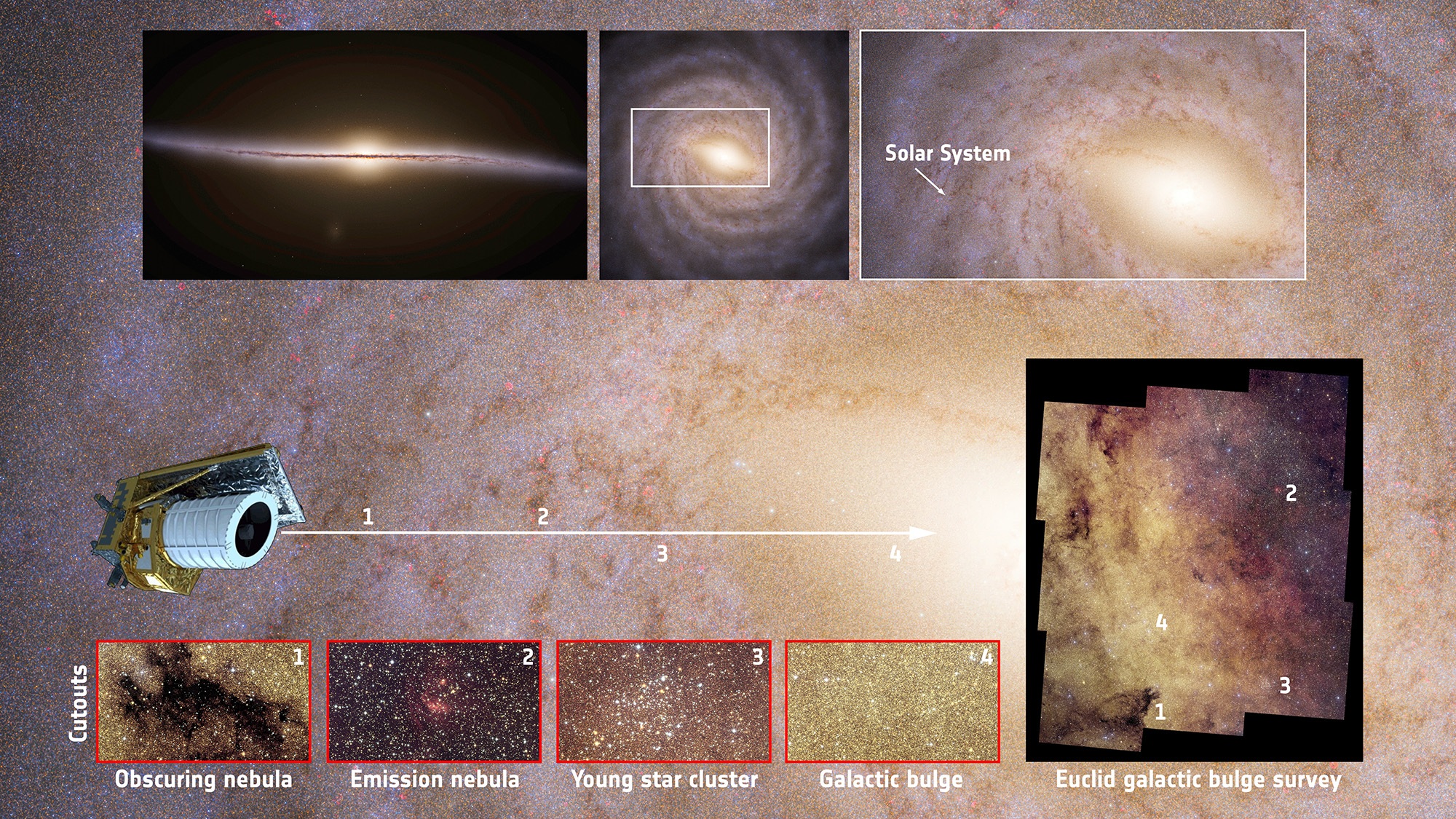
An infographic showing how Euclid sees across the Milky Way, into the galaxy's central bulge. The bottom panels illustrate the diversity of structures in Euclid's field of view. (Image credit: ESA/Euclid/Euclid Consortium/NASA, CFHT, image processing by J.-C. Cuillandre and E. Bertin (CEA Paris-Saclay); Milky Way artist impressions: ESA/Gaia/DPAC, Stefan Payne-Wardenaar))
A cosmic time capsule
Euclid's observing window was too short to find a microlensing event, which requires more than 20 days of examining one star to watch for a planet's orbit and associated changes in the star's light. But Euclid's work did allow astronomers to measure already-known planets. And once newer planets are confirmed by other telescopes, the image will let astronomers look back to confirm those newfound worlds' masses.
"In 24 hours, Euclid has already captured the stars involved in all the future microlensing events that the Roman space telescope will detect, but before the stars and planets involved have aligned," Natalia Rektsini, a postdoctoral fellow at the Paris Institute of Astrophysics who led the release of Euclid's galactic bulge survey data, explained in the statement.
"Anyone who detects a microlensing event in the same region, for example with Roman, will be able from now on to use Euclid data as a time reference in the past and see how the stars looked before they overlapped," she added. "Since Euclid can clearly separate individual stars, one can then measure how fast they move over time, and use that information to confirm the existence of a planet and determine its mass. This would not be possible with data from one point in time."
How well do you know our home galaxy? Find out with our Milky Way quiz!
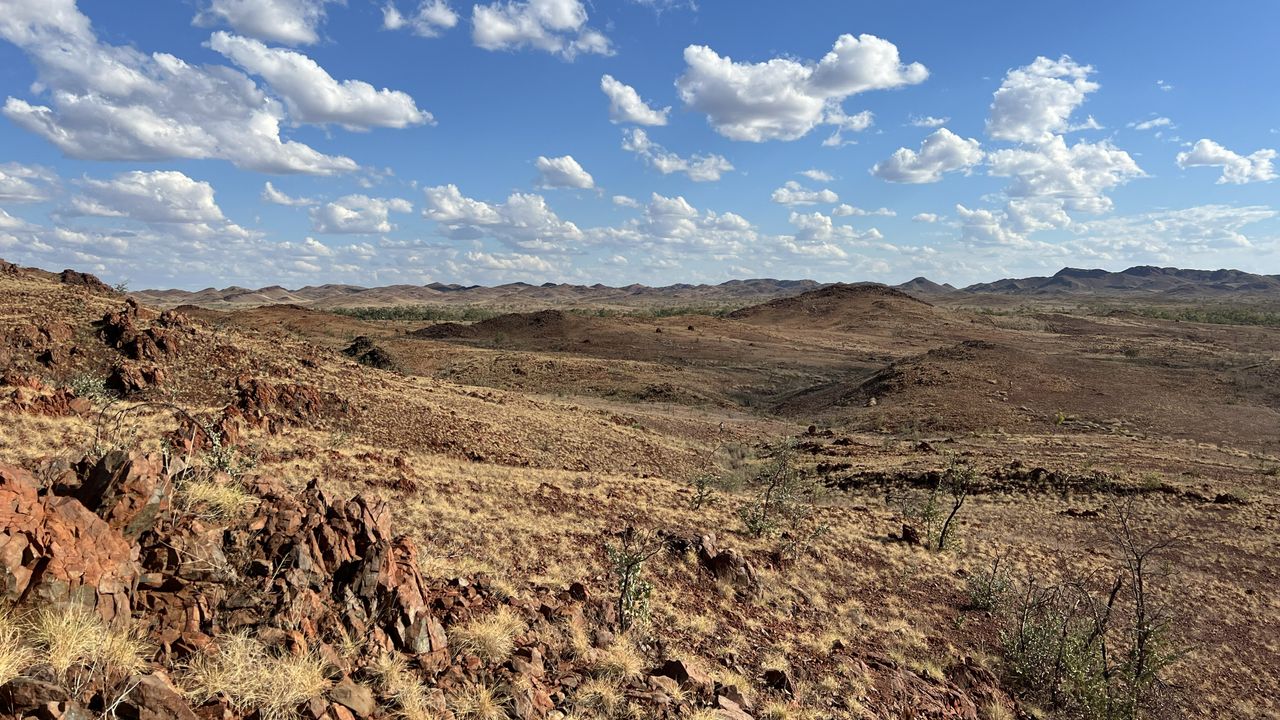
Earth's oldest known impact crater formed when a meteorite slammed into what is now Australia about 3 billion years ago — 470 million years later than scientists previously claimed, a new study suggests.
The impact crater, known as the North Pole Dome crater, is located in Western Australia's Pilbara region, which is home to some of the planet's oldest rocks. It remains a record-breaking structure, beating the world's next-oldest known meteorite impact crater — the Yarrabubba impact structure, also in Western Australia — by roughly 800 million years.
"While the site had previously been identified as an ancient impact structure, its exact age remained uncertain," study first author Chris Kirkland, a professor in the School of Earth and Planetary Sciences at Curtin University in Australia, said in a statement. "The impact left a 'mineral clock' behind. By dating minerals that were remade or newly grown in the damaged rocks, we can now pin down when this extraordinary event happened."
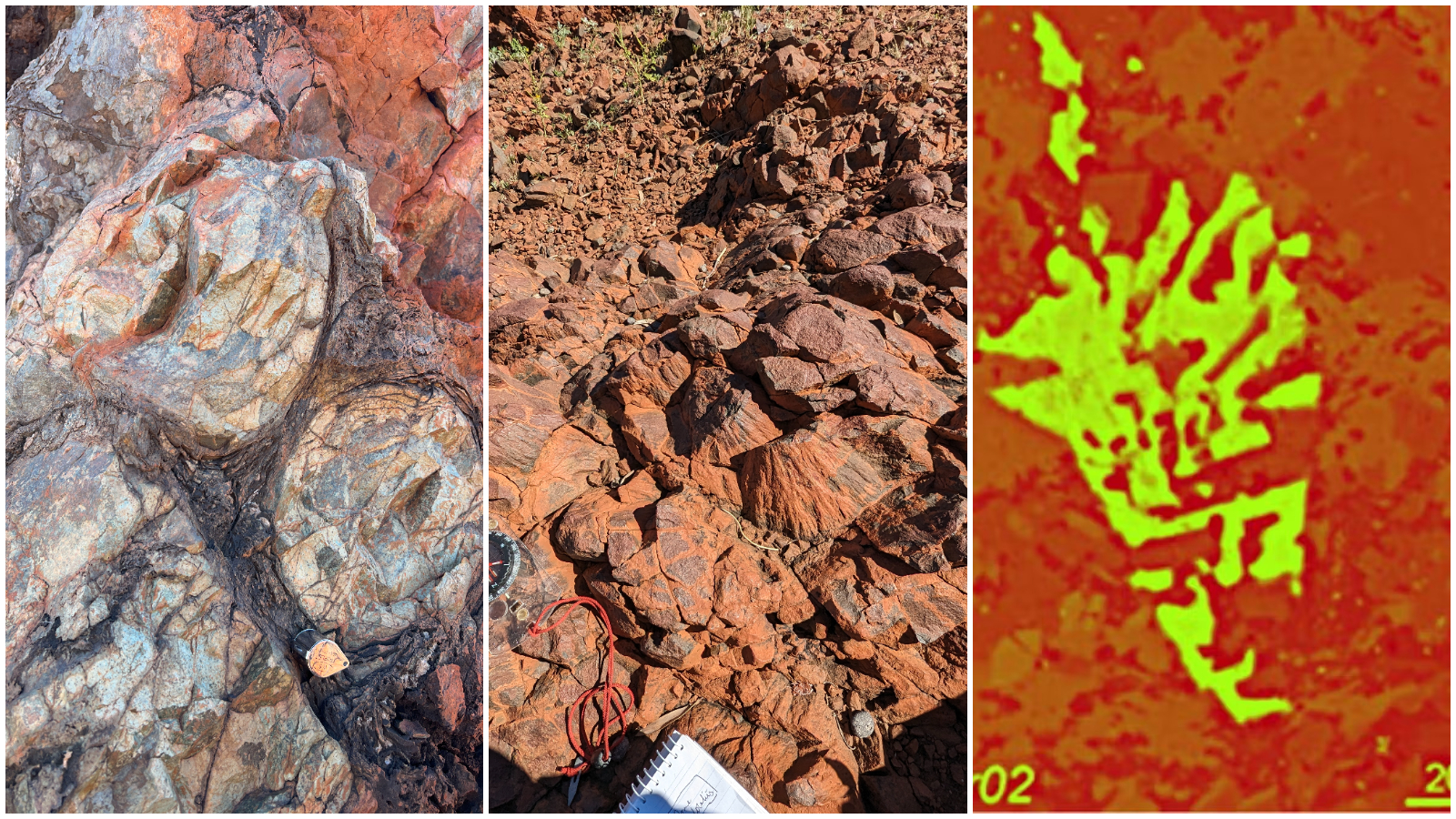
For the new study, Kirkland and his colleagues used advanced mineral dating techniques to estimate the ages of zircon, apatite, calcite and muscovite in shatter cones from the North Pole Dome crater. The researchers analyzed two samples of shatter-cone-bearing rocks, as well as a shocked quartz vein — a sheet-like deposit that typically forms when superhot, mineral-rich water circulates in the cracks between shocked rocks.
Researchers analyzed zircon and other minerals in North Pole Dome rocks. (Image credit: Curtin University)
"The key evidence comes from zircon, a tiny but extraordinarily resilient mineral that can keep geological time for billions of years," Kirkland said. "Some zircons at North Pole Dome have unusual branching, skeletal shapes. We interpret these as impact-modified crystals, formed when older zircon was disrupted, partly recrystallised, and in places regrown during the intense heating caused by the impact."
The age recorded in zircon was the same as that locked inside apatite minerals, giving the researchers confidence that the impact occurred a little more than 3 billion years ago. The younger shatter cones in the Science Advances study may have formed subsequently due to tectonic and thermal activity, the team wrote in the new paper, which was published Tuesday (June 23) in the journal Geology.
"Ancient impact craters are incredibly difficult to date because over billions of years, rocks are altered by heat, pressure and fluids, which can obscure or reset the original impact signals," Kirkland said. "The new age places the North Pole Dome structure as Earth's oldest known impact crater and the only recognised example from the Archean eon [4 billion to 2.5 billion years ago], a time when the planet's earliest continents were forming."
Planet Earth quiz: What do you know about our planet's most amazing features?
Using drugs to induce a hypothermia-like state may slow stroke-related brain damage, according to a new study involving lab animals and human patients.
The study used two existing drugs: the antipsychotic chlorpromazine and the sedative promethazine, called "C+P" when they're used together. This drug combo induced hypothermia and protected brain tissue in mouse and monkey models of stroke.
Additionally, an infusion of C+P was safe in an early trial including 32 human stroke patients, causing no notable side effects. However, no significant improvements in stroke outcomes were reported in a paper describing the results, which was published June 17 in the journal Science Translational Medicine.
More research is needed to determine what benefits C+P treatment may offer stroke patients. But the research sheds new light on the metabolic dynamics believed to be responsible for hypothermia's therapeutic effects, said Dr. Eric Landsness, an assistant professor of neurology at the Washington University School of Medicine in St. Louis who was not involved in the work.
"What's exciting about this study is that it's clear that it's not just the hypothermia, but it's the hypometabolism," said Landsness, who reviewed the paper before it was published.
Brain freeze?
The researchers tested C+P as a therapy for acute ischemic stroke, in which blood flow to the brain is blocked. Ischemic strokes are the most common form of stroke, accounting for over 85% of cases; "acute ischemic stroke" specifically refers to the medical emergency brought about by a sudden loss of blood flow to the brain and corresponding loss of neurologic function.
When blood flow is restored through a therapy called reperfusion treatment, "you can get significant injury from a lot of processes that were set in motion during the ischemia," said Dr. Patrick Lyden, a professor of physiology and neuroscience, neurology, and neurosurgery at the University of Southern California Keck School of Medicine who was not involved in the study.
To protect brain tissue from this double whammy of ischemia and reperfusion injury, some researchers have tried to harness hypothermia, which is "one of the most powerful ways of protecting the brain that we've ever studied in lab animals," Lyden told Live Science. "It's the standard by which all other brain protectants are measured."
In hypothermia, body temperature drops below 95 degrees Fahrenheit (35 degrees Celsius). Under normal circumstances, this can be very dangerous because the cold can slow down the heart and nervous system to the point that the body's cardiac and respiratory systems fail.
But one of the biggest theories for why hypothermia works in a therapeutic context is that it slows down our metabolism, similar to what's seen in animals during hibernation, Lyden said. "Because the metabolism is slowed, the death process in the brain is also slowed down."
Acute ischemic strokes damage brain tissue by cutting off blood flow to part of the organ, but reintroducing blood to the brain can also trigger injury. (Image credit: Douglas Sacha via Getty Images)
The C+P approach may be a more effective way to slow metabolism in stroke patients, the researchers hypothesized. In previous experiments, C+P reduced neuroinflammation in rodent models of stroke, possibly through changes in metabolic activity independent of hypothermia.
In the new study, the treatment was compared with two other methods of reducing core temperature in mice: a different drug, called adenosine 5'-monophosphate, and surface cooling using cold water and ice packs. While all three approaches induced hypothermia in the mice, only C+P treatment reduced their overall oxygen consumption and energy expenditure, two important indicators of slowed metabolism.
The paper highlights metabolism as more than a mere secondary effect of hypothermia, Landsness said; it's a process worth studying in its own right.
In mice, C+P treatment reduced the burning of sugar by the brain and brown fat, which burns fuel to generate heat. The treatment was also associated with less brain tissue damage and lactate accumulation, which can drive cell death, after stroke. These effects were also observed in rhesus monkeys treated with C+P.
According to the small safety trial with humans, the metabolic effects of C+P appear to extend to people.
The researchers measured lower levels of metabolism-associated proteins in the blood of patients who received the highest dose of the treatment tested. These were also the only patients to experience a significant decrease in body temperature at four hours after treatment, although their temperatures never dipped into true hypothermia. (Temperatures did fall that dramatically in the mice and monkeys.)
In people, C+P infusion did not reduce the degree of brain damage seen 72 hours after treatment, nor did it affect the participants' ability to perform daily activities without assistance after 90 days. Alongside the C+P treatment, the patients had also received standard reperfusion therapies.
The study authors, based at Capital Medical University in Beijing, did not respond to Live Science's request for comment. In their paper, they wrote that future trials could potentially establish the protective value of the C+P treatment in stroke.
In the current study, C+P did not trigger notable side effects in humans, but Lyden worried that the medications may still pose a risk of worrying effects. The two drugs could potentially interact in ways that cause symptoms like muscle spasms, seizures or changes in heart rhythm, for example. For that reason, it may be best to find different drugs that still slow metabolism but don't come with those risks, Lyden suggested.
To find an alternative to the C+P regimen, researchers will need a better sense of how the drugs exert their effects. The new paper "happened to fall upon a drug [combo] that happens to induce hypothermia and hypometabolism, but we don't necessarily know why," Landsness said. His lab is studying the neural circuits involved in hypothermia and hypometabolism, which could reveal new therapeutic targets.
This article is for informational purposes only and is not meant to offer medical advice.
See how much you know about the most complex organ in the human body with our brain quiz!
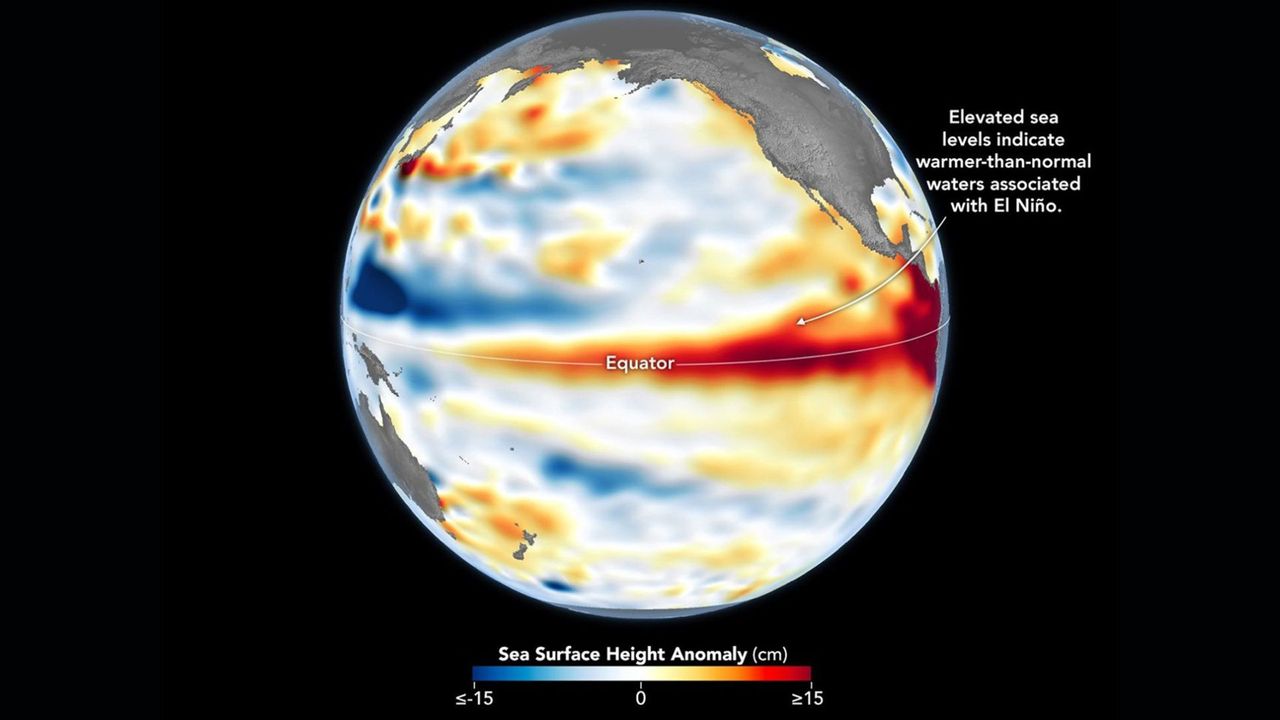
A massive wave of warm water is making its way across the Pacific Ocean as the newly declaredEl Niño gets into full swing, satellite images show.
The band, called a Kelvin wave, marks a swell of higher-than-average sea levels that stretches hundreds of miles along the equator. The anomaly is caused by warmer waters linked to El Niño — the warm phase of a natural climate pattern whose current iteration could become one of the strongest ever recorded.
The Sentinel-6 Michael Freilich satellite captured the deviations from average sea surface height on June 8. Red areas indicate higher sea surfaces than usual, while blue areas mark areas with lower surface heights.
Developed and launched in 2020 by NASA and the European Space Agency and operated by the European Organisation for the Exploitation of Meteorological Satellites (EUMETSAT), Sentinel-6 Michael Freilich measures changes in sea surface height down to fractions of an inch every 10 days.
The data complements measurements of sea surface temperature that have shown Pacific waters warming at unpreceded rates over the past several months, leading scientists to declare thestart of a new El Niño on June 11. When ocean water warms, it expands and takes up more space. That translates to an increase in the height of the water relative to the satellite and the center of Earth, which is then picked up by the satellite's sensitive equipment. At some points along the equator, sea surfaces are now more than 6 inches (15 centimeters) higher than usual.
Kelvin waves like this one form when winds in the western Pacific near the equator weaken and temporarily reverse, blowing from west to east instead of east to west. That lets warm water gradually build up in the east, deepening the layer of warm surface waters and preventing colder waters from rising from below. The wave has now reached the western coast of South America.
NASA hadalready observed a few other Kelvin waves this year, suggesting an El Niño event was soon to follow. In January, Sentinel-6 Michael Freilich detected one near Micronesia that dissipated around mid-February. Another emerged in March and elevated sea levels near Peru by mid-May.
Changes in sea surface temperature or height can alter atmospheric circulation patterns and affect the weather. El Niño often increases rainfall in the southwestern U.S., Colombia, Peru and Ecuador, while rainfall in the western Pacific tends to decrease. The most recent El Niño, which lasted from June 2023 to April 2024, boosted global mean temperatures that made 2024 the hottest year on record and the first to breach the 1.5 degrees Celsius (2.7 degrees Fahrenheit) warming limit — a guardrail set by the Paris Agreement beyond which the effects of climate change become more and more catastrophic.
The June 8 conditions in the western Pacific were similar to those that occurred 1997 during a particularly strong El Niño, according to astatement from NASA. 2026 has seen fewer Kelvin waves so far than 1997, but this year’s El Niño is still ramping up.
"For now, it looks like it's going to be a big one — more so than I would have said last week — but we still need more observations to know what's going to happen," Severine Fournier, a sea level researcher at NASA’s Jet Propulsion Lab, said in the statement.
How much do you know about our blue planet? Test your terran knowledge with our Earth quiz!
Humans have been searching the stars for alien radio signals for decades — and so far, E.T. has not phoned home. But that doesn’t mean intelligent life isn’t out there, a new study hints. Rather, something else could be interfering: according to the research, space weather surrounding alien planets could be preventing us from detecting technological signals from extraterrestrial civilizations.
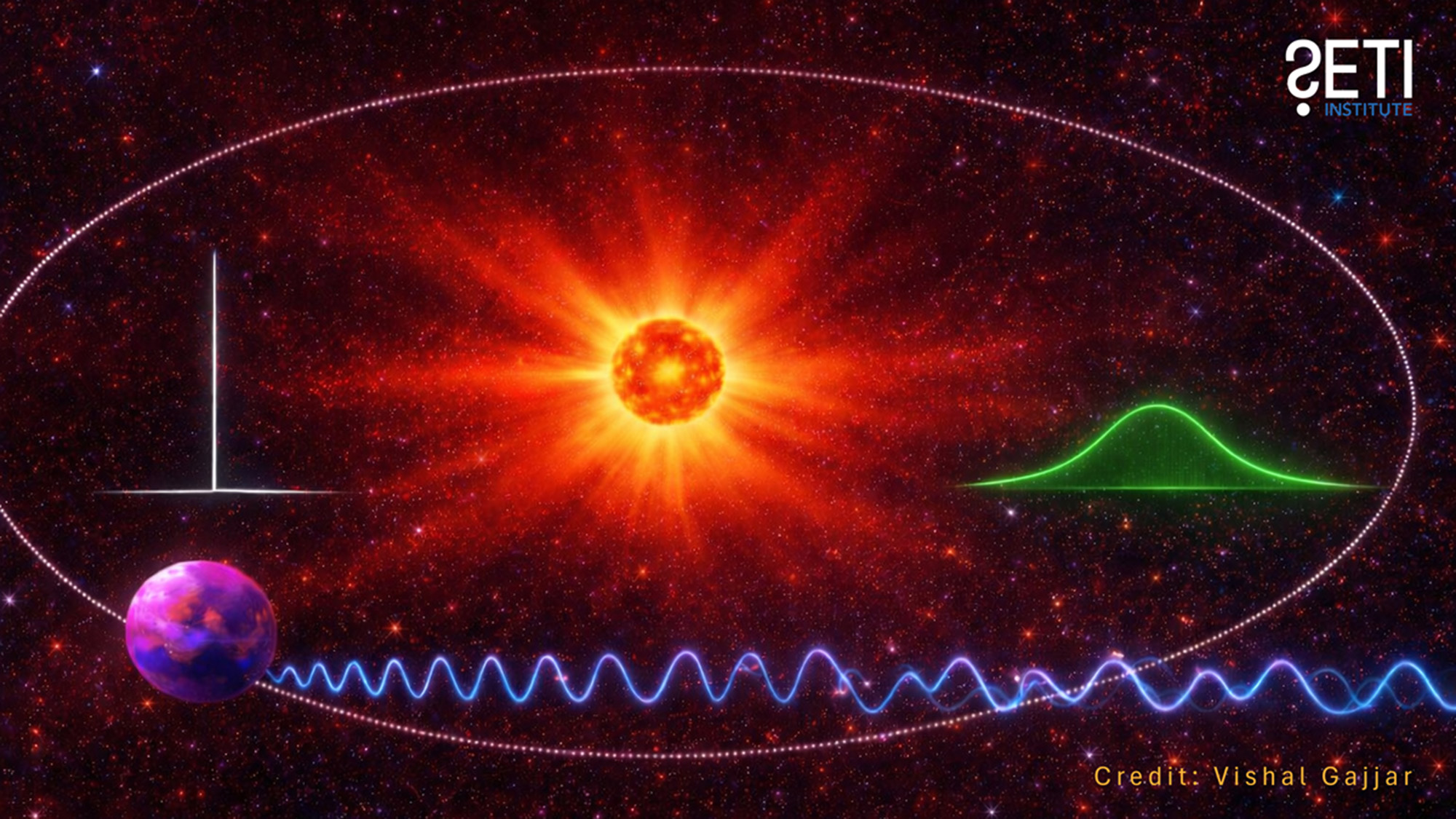
In the new study, researchers found that space weather caused by a planet's star could broaden hypothetical technosignals, dissipating their power over a larger range of frequencies and making them more difficult to detect.
"If a signal gets broadened by its own star's environment, it can slip below our detection thresholds, even if it's there, potentially helping explain some of the radio silence we've seen in technosignature searches," Vishal Gajjar, an astronomer at the SETI Institute and first author of the paper, said in a statement.
One way astronomers search for alien life is by looking for very narrowband signals, which are sharp spikes in the power of a radio emission. This spike usually only covers a few hertz.
"These don't occur naturally," Evan Keane, an astronomer at Trinity College Dublin who was not involved in the research, told Live Science. "So, if you see something very narrowband, you know that it is from something of interest." Astronomers would, for example, be able to easily detect some narrowband technosignatures on Mars, coming from the Mars rovers. But they have not observed any such signals from a clearly non-human origin.
Distorting signals
The new research argues that astronomers may have been looking for the wrong signal shape. In the new study, the researchers found that alien signals could be distorted by stellar space weather surrounding their home stars, which could explain why they have not been detected.
Space weather refers to changes in the space environment caused by charged particles, radiation and giant lumps of plasma called coronal mass ejections emitted by the sun. Other stars also generate space weather in their vicinity.
Gajjar and SETI colleague Grayce Brown investigated how space weather has historically impacted communications between Earth and spacecraft such as Mariner IV, which flew by Mars in the 1960s, and the Viking probes, which launched in 1977 for a voyage through the solar system and beyond. They created one of the largest collections of signal broadening examples and used that information to determine how other sunlike stars would affect the environment around their exoplanets. From this, the team calculated what would happen to a hypothetical alien narrowband signal that originated on one of them.
A planet’s radio signal may begin as a sharp tone (left, white) but can be spread out by the star’s plasma winds into a wider, fainter signal (right, green). The new study suggests radio astronomers may be missing signals by mostly looking for the sharp white shape instead of the broader green one. (Image credit: Vishal Gajjar)
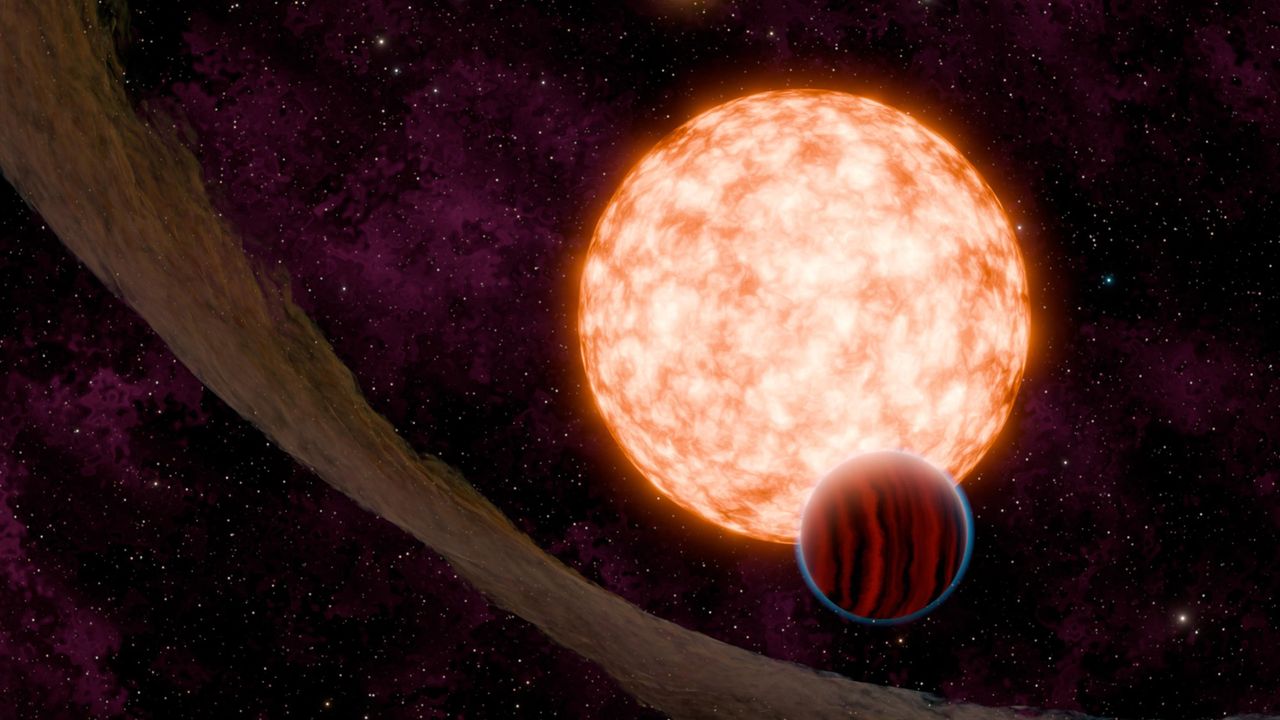
Then, they turned their attention to M dwarf stars, the most common type in the Milky Way. These stars account for three out of four stars in our galaxy, and some have been around since the early universe. That gives them a lot of time to have developed technologically advanced life, according to the paper.
There are no actual measurements of space weather around these stars, so Gajjar and Brown modeled what might happen to a narrowband technosignal that emerged from exoplanets and had to travel through interplanetary plasma. They found that hypothetical narrowband signals from these exoplanets were more likely to be smeared by space weather, making them even harder to detect.
In the paper, the authors propose a framework to estimate how much broadening would happen to a signal, given its frequency and the type of star its exoplanet was orbiting.
This new framework doesn’t totally answer Fermi’s infamous question, but it does give us a potential reason for the silence. The Fermi paradox "is not solely evidence for the absence of transmitters, but also a reflection of our detection limitations arising from a mismatch between the assumed signal morphology" and shape, the researchers wrote.
A step forward for SETI
Michael Garrett, an astrophysicist at the University of Manchester in the U.K. who was not involved in the study, welcomed the research.
"It is a solid contribution that SETI researchers and signal-processing teams should pay attention to," he told Live Science. "One of the strengths of the paper is that it's grounded in real measurements too, drawing on decades of spacecraft observations."
However, he emphasized that the paper focused on narrowband radio signals, which was only one way of potentially detecting an alien civilization. By contrast, Garrett's work explores the possible combined radio leakage from a technological civilization across a large range of frequencies.
Andrew Siemion, director of Breakthrough Listen Oxford Hub in the U.K. who was not involved in the research but collaborates with the SETI Institute, said this is the first paper to explore the space around exoplanets and its impact on detectability.
"The work offers a very concrete mechanism through which a candidate signal might ultimately be validated as having a likely origin with a distant planetary system," he told Live Science.
The authors recommended that future searches, especially with sensitive next-generation telescopes such as SKA-Low, take note of signal broadening when searching for civilizations beyond Earth.
Taming Nature: Inside China's efforts to control the region's water
China is facing water scarcity that affects millions of people, so the country is embarking on water projects on a scale the planet has never seen. This three-part series investigates three elements of this effort: the world's biggest dam, a doomed effort to create a "river in the sky," and a colossal water transfer project.
China controls some of the largest rivers in Asia, experiences heavy rain and has vast stores of water locked in glaciers in the west. But despite these abundant resources, China has a water problem. While central and southern regions are quenched by massive rivers like the Yangtze, the northeastern megacities like Beijing and Tianjin have endured serious water scarcity as agriculture, industry and population size rapidly increased.
To address the imbalance, China has undertaken one of the biggest engineering projects in the world: rerouting the flow of one of the world's mightiest rivers and its tributary, and ferrying the water thousands of miles from the center and south of the country to the thirsty north.
Called the South-to-North Water Transfer Project (SNWTP), the vast system of canals, pipes, dams, reservoirs and pumps moves staggering amounts of water via two routes through central and eastern China.
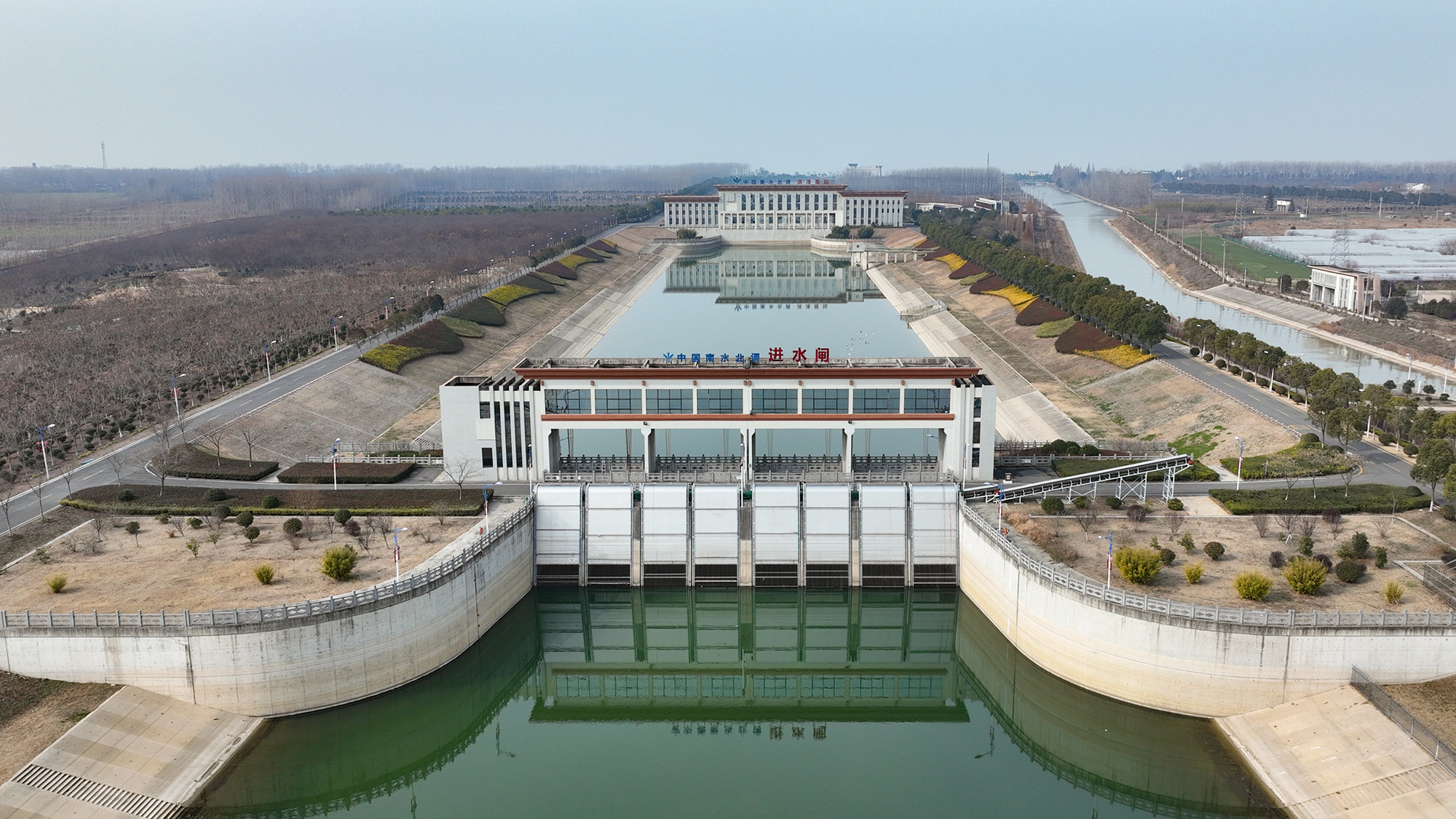
The Hongze Station on the eastern route of the South-North Water Transfer Project in Huai 'an City, China. (Image credit: CFOTO via Getty Images)
"It binds into a single network four major river basins, six provinces, three megacities, myriad bureaucracies, and more than 700 million people," Michael Webber, a professor emeritus in the School of Geography, Earth and Atmospheric Sciences at the University of Melbourne who specializes in regional economic development in China, wrote in a 2023 journal article.
But even this is not enough to satisfy the water needs in the North: China is currently expanding these routes and is planning a third, western route for the project, which would snake through the Tibetan Plateau before feeding the water-parched north and east. The route is attractive to Chinese officials because the river-and-glacier-threaded plateau, dubbed the Water Tower of Asia, has abundant water resources and is the source of numerous major rivers.
However, experts say the routes could worsen conditions in parts farther south that provide the water. What's more, the Tibetan portion of the project has stoked fears and suspicion in neighbors, as unofficial plans swirl suggesting major transboundary rivers could be diverted away from other countries and further into China.
The huge plan is "unbelievable," Mark Wang, a professor of human geography at the University of Melbourne, told Live Science. "The proposals [have] underestimated the negative impacts — environmental, earthquakes, evaporation and economic cost," as well as the international impacts, Wang added.
Water imbalance
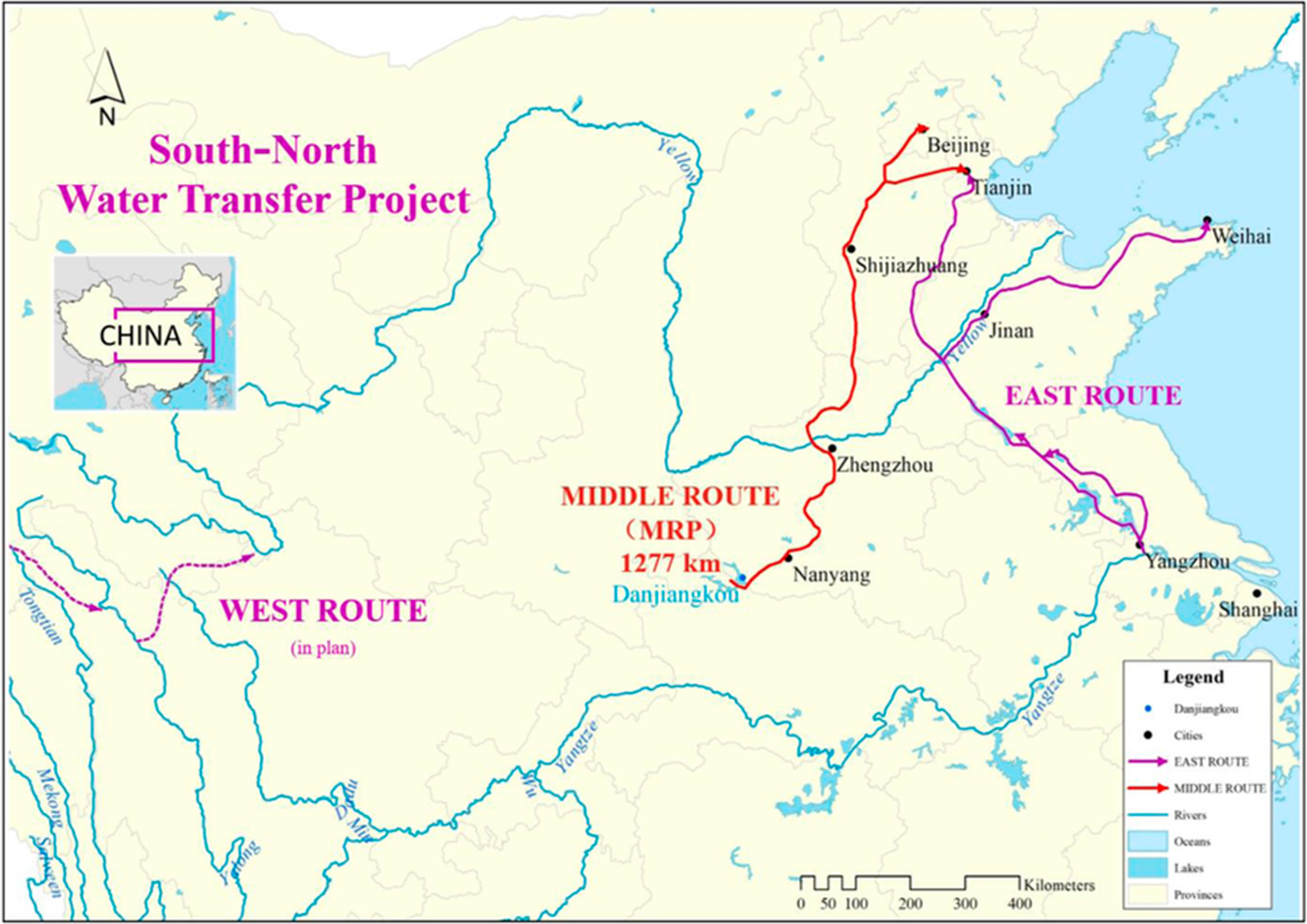
Construction of the SNWTP began in 2002. The eastern route has operated since 2013 and transports water from the mighty Yangtze from Yangzhou, near Shanghai, to the megacity Tianjin, which has a population of 15 million people. The central route, which goes from Danjiangkou to Beijing and Tianjin, began flowing the following year, carrying water from the Han River, or Hanjiang. Together, they have moved 21 cubic miles (88 cubic kilometers) of water more than 1,800 miles (2,900 kilometers) since they began operating, according to the Chinese government — more than double the maximum amount of water held in Lake Mead.
The Danjiangkou reservoir was expanded to supply the Central route, which flows to Beijing. (Image credit: silkwayrain via Getty Images)
The motivation for this project is obvious: China must support nearly 20% of the world's population with just 6% of its freshwater reserves. And this water is not distributed evenly across the country. Northern China has nearly half of the country's population and more than half of its agriculture but just one-fifth of the country's freshwater reserves.
In some places, the imbalance is even more dramatic. Tibet, in the west, has 4.8 million cubic feet (136,800 cubic meters) of water per person, while Tianjin, in the Northeast, has just 3,990 cubic feet (113 cubic m) per person. The United Nations considers less than 1,000 cubic m (35,000 cubic feet) of fresh water available per person water scarcity and less than 500 cubic meters (18,000 cubic feet) per person as "absolute water scarcity." The average in the U.S. is 314,300 cubic feet (8,900 cubic m).
Water transfer
China has a long history of rerouting water to serve its needs. Parts of the eastern route, for instance, use the Grand Canal, which was first built in the fifth century B.C.
"Control of water has been a key theme in Chinese history and mythology," Tom Harper, a lecturer at the University of East London specializing in Chinese foreign policy and international relations, told Live Science.
Map showing the two completed routes and the official plan for the western route. (Image credit: Zhang et al. (2022): CC BY 4.0)
Currently, the eastern route, which stretches 715 miles (1,150 km) from the Yangtze River to eventually reach Tianjin, transfers around 4 cubic miles (15 cubic km) of water per year.
This water needs to travel 213 feet (65 m) uphill, meaning pumping stations have to raise the water along the route.
The central route, meanwhile, relies on gravity to channel around 3 cubic miles (13 cubic km) of water 790 miles (1,270 km) from Danjiangkou Reservoir, on the Han River in Hubei province, to eventually reach Tianjin.
The Danjiangkou Reservoir already existed before the commencement of the project, but it was significantly expanded to raise the water level — and required 350,000 people to be relocated as a result.
The routes are now key to providing water to Beijing and Tianjin. For example, around 70% of Beijing's water comes from the route, experts told Live Science.
Fixing the fixes
The Chinese government and many Chinese scientists have boasted that the project has increased the water supply to people in northern China, raised the groundwater table in northern regions, and increased economic activity and agriculture in the region.
A major part of the project also focused on improving water quality: Freshwater supplies in China are heavily polluted, which reduces the amount of drinkable water.
"These were reservoirs, these were rivers, these were groundwater resources that had severe pollution impacts," Darrin Magee, a dam expert at Western Washington University, told Live Science. "So in the south where we had abundant water resources, the quality tended to be very bad in some areas."
To rectify this, the SNWTP installed water-cleaning stations along the route and the government implemented measures to reduce water pollution, including shutting down or relocating hundreds of manufacturing businesses that dumped their waste into waterways along the routes.
Along the eastern route, "pollution was terrible," Wang noted. "The central government put in a lot of effort… and they have control of the pollution again in a short period of time," he noted, adding that the water quality has significantly improved along the routes.
However, experts have said that the massive project has damaged ecosystems, displaced hundreds of thousands of people and fueled saltwater intrusion into underground reserves in water-providing areas, as the Yangtze River's freshwater flow is reduced.
"When the South-North Water Transfer was being proposed, many, many Chinese scientists were also against it because you just create lots and lots of new problems, whatever you fix," Emily Yeh, a professor of geography at the University of Colorado Boulder who specializes in Tibet, told Live Science. "Why not conserve water instead?"
Other experts agreed. "The water problem in China, it's not just physical water scarcity, it's the structural problem," Wang said. The biggest driver of water consumption is farming irrigation, which is water-intensive and leads to significant water loss. Conserving that water would go a long way to alleviating water scarcity, Wang added.
If China's "first priority is conservation, you won't need a large-scale, world's largest mega project," Wang said. Chinese authorities seem to be realizing this. They're also attempting large-scale water conservation policies, Wang said.
But the country is forging ahead with engineering projects.
The SNWTP's sources, particularly along the Han River, have less water per capita than the world's average, so siphoning off large amounts of the river's water could severely strain local areas. This has become such a problem that Chinese authorities are now undertaking even more engineering projects to alleviate the problem caused by the SNWTP. For instance, a new, smaller diversion is being added near the Danjiangkou reservoir, because people downstream are not getting sufficient water, Wang said.
The project is "a fix to fix the fix to fix the fix," environmental researcher Stevan Harrell wrote in the Made in China Journal — emphasizing the ever-growing number of engineering projects to deal with poor water governance.
Western route
Even though the two existing routes provide vast amounts of water to the North, and other water-conservation measures are being rolled out, Chinese authorities say the supply to the North is still not enough to meet demand, and that more water diversion is necessary.
The SNWTP's planned western route through the Tibetan Plateau won't start operations until at least 2050, but since its earliest planning stages, it has been mired in controversy.
The western route's official path would take 4 cubic miles (17 cubic km) of water per year from the Tongtian, Yalong and Dadu rivers — all tributaries that eventually feed into the Yangtze. The route would cross about 190 miles (300 km) of the Tibetan Plateau to the Yellow River, which then flows to the water-scarce north and east. The government has commissioned more feasibility studies for this route as part of the country's newly announced five-year plan.
The Tibetan Plateau's high, rugged and earthquake-prone landscape creates numerous challenges to potential infrastructure projects (Image credit: primeimages via Getty Images)
The construction of such a massive project is fraught with difficulty. The Tibetan Plateau rises 10,000 to 15,000 feet (3,000 to 4,500 m) above sea level. These high altitudes present several problems, such as challenges in construction and maintenance, and difficulties in preventing water from freezing.
To transfer water across the plateau, the route would require pumping stations, along with a series of 300- to 1,000-foot-tall (100 to 300 m) dams, which would rank among the tallest dams in the world. The project would also require cutting 200 miles (300 km) of tunnels through the mountains, including the Bayan Har Mountains, which separate the upper Yangtze and Yellow River drainage basins.
In 2018, Chinese scientists attempted to overcome the difficult terrain by transferring water through the air. But the "Sky River," or Tianhe project, ultimately proved unfeasible and has been effectively cancelled.
But China has not been deterred by these obstacles. The ongoing construction of the Dianzhong Water Diversion Project, in Yunnan province in southwest China, provides a test case for transferring water across mountainous, earthquake-prone landscapes. The damless design relies on a 380-mile-long (610 km) series of 58 tunnels, as well as pumps, to carry water through the mountainous and seismically active terrain. It is the "the world's longest water tunnel that could fit two high speed trains" and is "seen as a pilot demonstration project that will inspire and inform the design for the Western Routes," according to the Hong Kong-based think tank CWR. The first stage of the Dianzhong project is due for completion later this year, with a second phase recently announced.
Red flag
While the official western route has yet to break ground, alternative proposals have caused serious concern in neighboring countries. One unofficial plan developed in the 1990s, which politicians and academics subsequently considered completely unworkable, suggested funneling 48 cubic miles (200 cubic km) of water (four times the flow of the Yellow River) away from the Brahmaputra River, which flows into India and Bangladesh, and diverting the water toward the Yellow River basin, which serves the North and East of China.
A second controversial proposal, known as the Red Flag River project, suggests diverting 14 cubic miles (60 cubic km) of water 3,700 miles (6,000 km) from the Lancang, Nu and Yarlung Tsangpo rivers (called the Mekong, Salween and Brahmaputra rivers when they leave China) across the Tibetan Plateau to the northern Xinjiang region, which has high water stress and is facing desertification. Officials suggested the plan could turn Xinjiang into China's "California." The diverted water could also potentially be rerouted toward Beijing, experts told Live Science.
Some experts have called these "semi-official" proposals, as they have no official government backing but have been discussed openly by researchers with heavy government backing and support in China, which the government wouldn't allow if these people were truly speaking out of turn, Wang said.
Science Spotlight
(Image credit: Marilyn Perkins / Future)
Science Spotlight takes a deeper look at emerging science and gives you, our readers, the perspective you need on these advances. Our stories highlight trends in different fields, how new research is changing old ideas, and how the picture of the world we live in is being transformed thanks to science.
Despite no official government backing, the plans have worried neighboring countries, particularly India, due to fears that any water diversions on international rivers could significantly reduce vital downstream supplies. Massive water engineering projects are already being built in Tibet, such as the upcoming Motuo megadam on the Yarlung Tsangpo — close to the proposed starting point for the Red Flag River project.
"There's a lot of concern that there might be water diversion, because China has been talking about this for many, many years," Tenzin Norgay, a researcher at the nonprofit organization International Campaign for Tibet, told Live Science. "If it happens, it's going to be a huge risk to downstream countries."
Researchers have calculated that the Red Flag project would likely siphon around 20% of the rivers' upstream flows, though the overall water loss for the whole of each river is less than that. Regardless of the actual amount of diversion, the lack of international consultations and transparency is exacerbating suspicions, experts told Live Science.
A changing climate
While China is forging ahead with attempts to redistribute China's water and reduce water scarcity via the SNWTP, climate change could scramble those plans. An increased risk of droughts over the coming decades could compromise the SNWTP's ability to move water.
"Short to medium term, [we'll] see an increase in runoff as melting begins earlier each year," Magee said. "But over the long term, decreased snowpack means less secure water resources for most of China."
Taming nature
The government is really imagining Tibet as a source of ecological service for the rest of the country
Emily Yeh, professor of geography at the University of Colorado Boulder
China's water management approaches include vast dam-building projects, cloud seeding, monumental tree-planting schemes and water-transfer projects, all of which rely on technological and engineering solutions to control the natural world, experts told Live Science.
When it comes to megaprojects, "If there's any country that will do it, it's China," Magee said. "The People's Republic of Engineers."
Other experts agreed. "It is part of this idea that you can engineer your way out of these problems, even if it's with trees rather than with machines," Yeh said. "A large-scale engineering approach to the natural world has been a characteristic of Chinese approaches to perceived or real environmental problems."
This is particularly true for the Tibetan Plateau. "The government is really imagining Tibet as a source of ecological service for the rest of the country," Yeh said.
Other experts agreed that Chinese authorities typically take an engineering approach to attempt to manage nature.
But Wang noted that China faces big pressures, which is why its government is looking for big solutions.
"If you understand China's energy issues, you understand why China is doing this. If you understand the water and food security issues, you understand so many things China has done," Wang said.
From government surveillance programs to microchips in vaccines, technology-centric conspiracy theories have exploded in the digital age, adding to some of the best conspiracy theories already in existence.
While most probably seem laughable to the technically literate, some of these theories have spread like wildfire and had significant real-world impacts. And although most are complete fabrications, some do contain a kernel of truth — and others have turned out to be eerily accurate. Here's a rundown of some of the most pernicious technology conspiracy theories.
The Large Hadron Collider is opening a portal to hell
Verdict: Not True
The Large Hadron Collider, operated by the European Organization for Nuclear Research (CERN) in Switzerland, has been an obsession with conspiracy theorists almost since its opening in 2008. The organization has even seen it necessary to have a dedicated page on its website responding to some of the more outlandish claims.
Unsurprisingly, physicists swiftly debunked these ideas. The collider uses magnetic fields to accelerate protons to extremely high speeds before smashing them together to create smaller particles. The goal is to discover new elementary particles that could help test theories about how the Universe works.
Creating even a microscopic black hole or wormhole would require an accelerator the size of the whole universe, say researchers. It would also decay in a fraction of a second thanks to Hawking radiation, which causes black holes to lose mass and eventually evaporate. Even if such a black hole was stable, which current physics suggests is impossible, it would take three trillion years to consume just one kilogram of matter.
Tracking microchips in COVID-19 vaccines
Verdict: Not True
When the COVID-19 pandemic hit in early 2020, governments took unprecedented steps to control its spread, including lockdowns and vaccine mandates. That proved fertile breeding ground for novel conspiracy theories, including the bizarre claim that authorities were sneaking microchips into vaccines so they could track people.
The theory’s origins can be traced to March 2020, when Bill Gates participated in a Reddit discussion about digital health passports. A Swedish website dedicated to biohacking misinterpreted his comments and published an article saying the billionaire wanted to use microchip implants to fight the pandemic.
Via a paranoid game of Telephone, this slowly morphed into the idea that the government was using the vaccine to implant tracking chips in citizens. Needless to say, the theory is nonsense. There is no evidence that any of the billions of people vaccinated against COVID-19 have been implanted with tracking hardware.
But by January 2021, one in 10 American adults believed the theory. More worryingly, a poll found that one in four Americans said they were uncertain whether vaccines contained microchips. The conspiracy was built on years of anti-vaccine disinformation, and further fuelled the vaccine hesitancy that made it so hard to control the pandemic.
5G networks spread COVID-19
One of the prominent conspiracy theories during the COVID-19 pandemic was that 5G networks spread the virus. (Image credit: AerialPerspective Images/Getty Images)
Verdict: Not True
Another COVID-19 related conspiracy theory that gained significant traction claimed that the disease was being spread by newly installed 5G cellular networks. The theory became so widespread that cell towers were set on fire in several countries, and social media platforms were forced to actively combat its spread.
The idea is firmly contradicted by the overwhelming evidence that COVID-19 is caused by a contagious virus. And crucially, the virus spread rapidly in areas with no 5G coverage whatsoever. Nonetheless, the U.S. Federal Emergency Management Agency felt compelled to issue a statement clarifying that 5G technology does not cause coronavirus, while U.K. government officials dismissed it as a "crackpot conspiracy.”
The fears likely built on top of existing concerns about the health impacts of radiation from cellphone towers. But there is no credible evidence that existing technology causes health problems, and 5G should raise even fewer concerns. The radio frequency waves used by these networks are forms of non-ionizing radiation, meaning they lack the energy to damage DNA or cells in ways that could cause disease. High-band 5G uses millimetre wave frequencies that cannot even penetrate human skin.
The dead internet theory
Verdict: Partially True
The dead internet theory proposes that the web is now dominated by bots interacting with each other with minimal human involvement. The idea has been around for several years, but has been further fuelled by the recent rise of artificial intelligence (AI) chatbots and agents.
The conspiracy first surfaced in 2021 on the Agora Road's Macintosh Cafe forum, in a thread titled "Dead Internet Theory: Most Of The Internet Is Fake." The idea is that automated systems are being used to craft content designed to draw engagement and generate ad revenue. But the theory suggests that those interacting with this content are also bots.
While the extent to which this is true is debatable, there is an element of truth to the theory. Studies show bot traffic was responsible for 51% of all internet activity in 2024 — the first time bots surpassed humans. And since ChatGPT's launch, AI-generated content has exploded, with another study finding that 13.1% of websites now host such material.
This is leading to fears that the internet is being rapidly flooded with low-quality "AI slop" that could degrade its usefulness over time. Given that OpenAI CEO Sam Altman recently gave credence to the theory, this might be one to start taking more seriously. The evolution of this idea, fueled by AI, might permanently change how we use the internet in the years to come.
Governments can control the weather
Verdict: Partially True
Following the highly destructive hurricanes Helene and Milton in 2024, rumours swirled that they were the result of government weather control programs. One of the most prominent boosters of the theory was U.S. Congresswoman Marjorie Taylor Greene, who tweeted “Yes they can control the weather” to her 1.2 million followers shortly before Hurricane Milton hit.
While these specific claims are patently false, like many good conspiracy theories, they contain a kernel of truth. The U.S. government had been interested in weather control as far back as 1891 and had a serious "weather weapons" program in the form of Operation Popeye between 1967 and 1972 during the Vietnam War. Such practices were banned by the Environmental Modification Treaty in 1977.
Basic forms of weather modification also exist today, in particular cloud seeding. This involves dispersing materials like silver iodide into clouds, which can marginally enhance rainfall. Countries like China and Saudi Arabia use the approach to assist in agriculture. China harnessed this technology to ensure clear skies for the 2008 Olympics.
Proposals to fight climate change via solar geoengineering have also further fuelled conspiracy theories. This would involve spreading tiny particles in the upper atmosphere to reflect sunlight. But these approaches are a long way from the kind of weaponized weather control conspiracists dream of.
Phones eavesdrop on you for ad targeting
Could smartphones be spying on us? (Image credit: tim scott via Getty Images)
Verdict: Partially True
Many people have had the eerie experience of seeing ads for products appearing on their phone shortly after discussing them offline. This has led to a persistent belief that smartphones secretly listen to our conversations for advertising purposes.
The rumour has been around for decades, but Instagram head Adam Mosseri recently felt compelled to address it directly, stating the company doesn't use microphones this way and calling it a "gross violation of privacy." Multiple studies have also found no evidence of covert audio recording, and there are several reasons why it would be impractical.
For a start, constant audio recording would rapidly drain phone batteries and trigger visible indicators on phone displays. More importantly, unauthorized recording would create enormous legal liability for those who engaged in it.
But there is something potentially more unsettling behind the phenomenon. Online platforms, advertisers and data brokers are constantly collecting, curating and reselling every tiny piece of information they can glean from our online and offline behaviour. This allows them to develop incredibly accurate profiles of people to provide spookily appropriate, and timely, product suggestions.
Planned obsolescence
Verdict: Partially True
From clothes to consumer electronics and even cars, people increasingly complain that products don’t last as long as they used to. The theory of Planned Obsolescence suggests that this is no accident, and companies deliberately design products with short lifespans to force repeat purchases.
The idea has circulated for a long time and has some truth to it. There is historical evidence that companies have pursued obsolescence as a strategy — in the 1920s, for instance, major light bulb manufacturers came together to form the "Phoebus cartel," which colluded to reduce bulb lifespans to just 1,000 hours. General Motors also pioneered annual model changes to entice customers to buy newer vehicles, creating a template that other industries copied. Technology vendors are particularly guilty — think smartphones with batteries that degrade in just a few years, or no longer support software updates.
But the practice isn't necessarily aimed at tricking us into buying more than we need. Rapid product turnover makes things cheaper to manufacture and with technology in particular, consumers prefer paying less upfront for devices they'll replace soon to access new features. Durability comes at a price too, so customers are often happy to have cheaper products that may not last as long — for instance, clothes that children will grow out of.
Government-sponsored mind control programs
Verdict: True
There is a whole menagerie of conspiracy theories speculating that the government uses technology and drugs for mind control. One prominent recent example is the claim that the U.S. military’s High-frequency Active Auroral Research Program (HAARP) is secretly using radio waves to manipulate people’s thoughts.
While that specific claim has been firmly debunked, the idea that the U.S. government is attempting to control people’s minds is not so outlandish. In 1953, CIA director Allen Dulles launched a top secret program called MKUltra aimed at developing exactly those kinds of capabilities. The agency covertly contracted out 162 projects to various universities, research foundations and institutions to study how psychoactive drugs, hypnosis, electroshock therapy, sensory deprivation and various forms of torture could be used to manipulate people’s mental states.
Experiments were carried out on both volunteers and unwitting subjects, including prisoners, sex workers, soldiers and children. By the mid-1960s, the project’s backers concluded that while it was easy to dismantle a human mind, subsequently seizing control of it was beyond them, and they wound down research in 1964.
Investigative reporting by the New York Times uncovered the project in 1974 and led to a series of congressional hearings. But the bulk of documents related to the project had been destroyed the year before, meaning the true extent of the program remains a mystery.
Widespread digital surveillance
Verdict: True
Paranoia around the government’s ability to listen in on our phone calls or online communications is a defining feature of many conspiracy theories. But in June 2013, former CIA contractor Edward Snowden leaked a treasure trove of classified documents to journalists that validated many of these fears.
The revelations uncovered a mass surveillance network operated by U.S. intelligence agencies and their foreign allies to collect phone records and monitor internet activity across the globe. Most prominently, it uncovered the PRISM program, operated by the U.S. National Security Agency (NSA), which used secret court orders to demand internet communication data from technology companies.
The U.K.'s Government Communications Headquarters (GCHQ) was also revealed to be tapping into 200 fiber-optic cables around the world, allowing it to monitor up to 600 million communications daily.
The reports lead to widespread outrage because the surveillance targeted not only suspected terrorists and criminals but also ordinary citizens, journalists, corporations and 35 foreign leaders – most notably the phone of the German chancellor at the time, Angela Merkel. But despite an initial public outcry, Congress renewed many of these surveillance programs in 2018 with little debate, suggesting that widespread government surveillance remains alive and well.
Test your knowledge of unfounded beliefs, from flat Earth to lizard people with our conspiracy theory quiz!
The eruption, the first on La Palma in 50 years, began Sept. 19, 2021, when a fissure opened up on the western flank of Cumbre Vieja — a volcanic ridge that runs through the southern half of the island — and spewed massive lava fountains into the air. The violent outburst created a 660-foot-tall (200 meters) vent, dubbed Tajogaite, which continued to slowly pump out lava until Dec. 13, 2021.
The concentric cloud rings in this image are made up of steam, smoke and ash — known as an eruption plume — that rose above Tajogaite for weeks.
Normally, such a plume would continue to climb into the cold air of the stratosphere — the second layer of the atmosphere, which extends from around 6 to 31 miles (10 to 50 kilometers) above Earth's surface. However, when this image was captured, a rare "temperature inversion" created a layer of elevated warm air that acted as a lid, preventing the plume from rising and forcing it to spread outward, according to NASA's Earth Observatory.
At the start of the eruption, giant fiery fountains shot out of the ground near the town of Todoque, which was destroyed by the resulting lava flows. (Image credit: DESIREE MARTIN/AFP via Getty Images)
The trapped plume created concentric rings that formed from the natural ebb and flow in the intensity of volcanic activity. This pulse in the emissions given off by the volcano is visible in time-lapse footage captured by the Izaña Atmospheric Research Center on Tenerife, another Canary Island.
The official name for this type of concentric cloud formation is a "gravity wave," according to the National Weather Service. However, the formation has nothing to do with gravity, and it's completely separate from the ripples in space-time called gravitational waves.
"River of fire"
During the 85-day eruption, around 7.1 billion cubic feet (200 million cubic meters) of lava — reaching temperatures of up to 2,000 degrees Fahrenheit (1,100 degrees Celsius) — seeped from the ground.
This molten rock traveled around 4 miles (6.4 kilometers), destroying around 3,000 buildings in the town of Todoque, before falling into the Atlantic Ocean in a fiery waterfall. The estimated damage exceeded 700 million euros ($780 million), according to the Spanish newspaper El País.
This photo, also captured Oct. 1 by the European Space Agency's Copernicus satellite, shows the infrared heat radiating from the lava flow as it flows into the sea to create new land. (Image credit: ESA/Copernicus)
Where lava fell into the sea, around 4.6 million square feet (430,000 square meters) of new land was created. The reaction between the molten rock and the water also released high levels of volcanic gases, such as sulfur dioxide and hydrogen cyanide.
At least one person, a 72-year-old man who returned to his home prematurely, is believed to have died from inhaling these toxic fumes, according to AFP. Thousands of wild and agricultural animals are also thought to have been killed by the gases.
The damage was "truly terrible," Marie Edmonds, a volcanologist at the University of Cambridge, told Live Science at an event on La Palma in April 2025. "Most shocking to me is the closeness of the vent to the communities," she added when describing what it was like to visit the area. "It must have been absolutely terrifying to see the eruption so close."
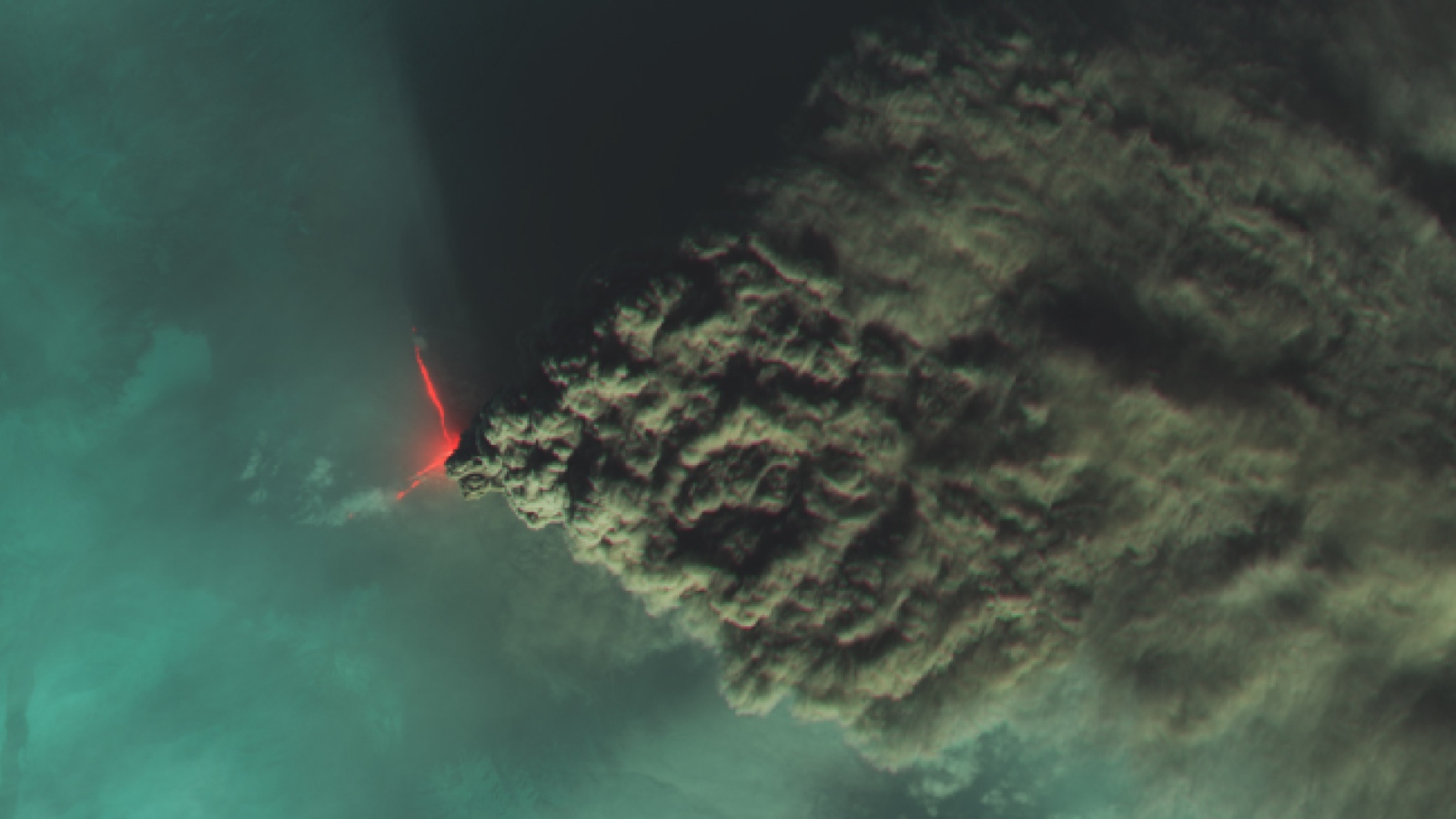
A false-color satellite photo from 2023 shows a devilish pair of lava flows and an enormous plume of smoke spewing from Klyuchevskoy, the tallest volcano in Europe and Asia.
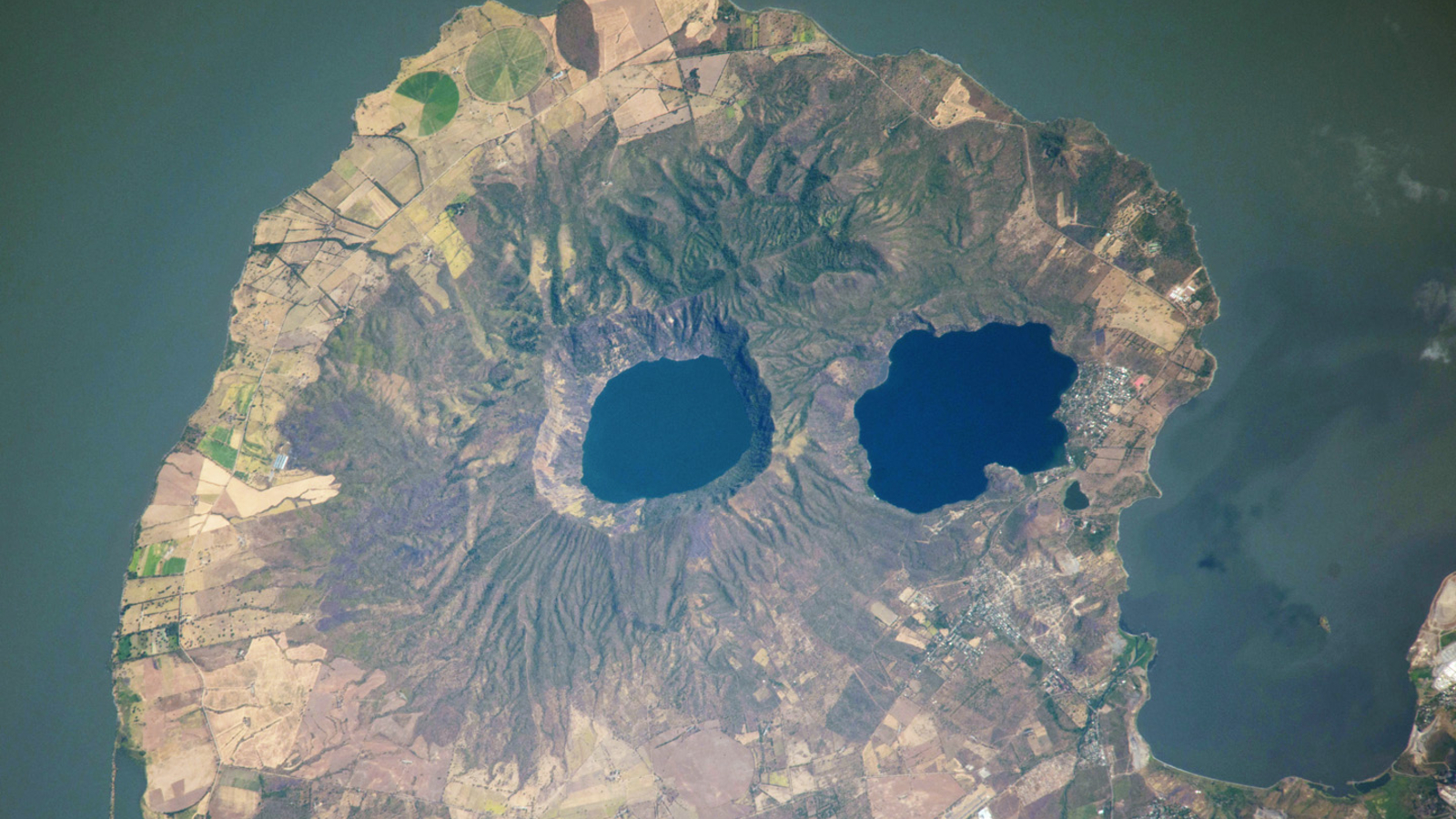
A 2014 astronaut photo shows a pair of volcanic lakes appearing to stare up into space from the Chiltepe Peninsula of Nicaragua's Lake Managua. These "eyes" and "skull" were created by violent eruptions thousands of years ago.
The causes of inflammatory bowel disease (IBD) are poorly understood, but now, scientists have pinpointed a runaway immune response that may underlie the condition in some patients.
IBD, which is characterized by chronic inflammation in all or part of the digestive tract, affects millions of people worldwide. Its principal forms are Crohn's disease, which can occur at any point of the gastrointestinal tract, and ulcerative colitis, which affects only the colon and rectum.
While IBD patients may experience similar inflammation, the underlying cause may be different. Understanding those differences could potentially unlock new, targeted angles for treatment, researchers concluded in the new study.
"Identifying these patients early could eventually allow clinicians to move more quickly toward therapies that address the specific mechanism of disease rather than relying on a trial-and-error sequence of medications," Dr. Brad Pasternak, medical director of the IBD Clinic at Phoenix Children's Hospital, who was not involved in the work, told Live Science in an email.
A potential subtype of IBD
The genetics of IBD are complex, with past studies linking the condition to 300 "hotspots" throughout the genome. The strongest known genetic risk factor for ulcerative colitis is a gene variant called HLA-DRB1*01:03, but how this variant contributes to IBD has been unclear.
A major clue had emerged in previous research by the same team, which tested the blood of two children with IBD. The kids had autoantibodies — immune proteins that target the body itself rather than germs — that were neutralizing a key anti-inflammatory protein called interleukin-10 (IL-10).
IL-10 normally works by inhibiting the secretion of pro-inflammatory proteins, so patients whose bodies block IL-10 are effectively releasing a brake that should be holding off inflammation, Pasternak said.
The researchers suspected that these autoantibodies could be one factor causing IBD. In their latest study, they sought to find out whether more IBD patients had the same autoantibodies.
The study included data from over 4,900 people with IBD and over 1,000 without the condition. Using two separate lab tests, the researchers analyzed blood samples from both groups, finding the autoantibody in 173 of the IBD patients, or about 3.5%. The autoantibody was virtually absent from the blood of the comparison group.
Then, in lab experiments, the team exposed immune cells to blood from the IBD patients who carried the autoantibody. This lowered the amount of IL-10 while triggering a pro-inflammatory response.
Study co-author Dr. Holm Uhlig, a pediatric gastroenterologist at the University of Oxford, told Live Science that identifying what drives the formation of the autoantibodies will be "a question of intense interest." For now, though, their data suggests that patients carrying HLA-DRB1*01:03 are far more likely to have autoantibodies blocking IL-10 than those without the variant.
Historically, the variant has been associated with severe IBD that can require major surgery to treat. "Currently, autoimmune responses are not at all part of the therapeutic repertoire, and that's why we feel it's a relevant study," Uhlig said.
Uhlig also noted that the subgroup of 3.5% of patients they identified is a "significant number," given the large overall number of IBD patients worldwide.
In general, many IBD patients are currently treated with therapies that broadly suppress inflammatory pathways, Pasternak said, but not everyone responds to treatment. This study points to a potential way to someday tailor treatments to the mechanism driving specific patients' diseases, he said.
Aside from offering personalized treatments for IBD patients, Uhlig said their findings may improve diagnoses.
"Patients could undergo genetic testing already in the early stage of their disease diagnosis," he said, "and then it would determine their susceptibility to develop autoantibodies."
This article is for informational purposes only and is not meant to offer medical advice.
Researchers have identified a new species of "walking shark," a rare group of small carpet sharks that use their fins to "walk" along shallow reefs.
A team of divers spotted the newfound shark, which they named Hemiscyllium dudgeonae, in the dark waters around the reefs of southeastern Papua New Guinea. Gliding along the rocks was a small, brown-spotted shark that they didn't recognize.
"I was so excited. … I didn't look very closely at the pattern and quickly caught it and took it back to the boat," Christine Dudgeon, a senior research fellow at the University of the Sunshine Coast in Australia, told Live Science in an email.
Dudgeon handed the shark to Jess Blakeway, a doctoral student and first author of a new study describing the shark. Blakeway "noticed that the shark had a different pattern to the one that we were looking for and called out to me: 'Chris, it's different.'"
The new shark is named the Dudgeon's walking shark after Dudgeon, in recognition of her 20 years of researching the Hemiscyllium genus.
The new find, described June 15 in the Journal of the Ocean Science Foundation, brings the number of known walking shark species to 10, each with their own unique body pattern.
"This discovery is exciting because a lot of new fishes, and in particular, new shark and ray species, tend to be deep sea, so finding something in very shallow [less than 3 feet, or 1 meter] of water is unusual and highlights that there is potentially a lot of biodiversity that we really don't know about," Dudgeon said.
Encountering a new species
The team had been searching for another walking shark species, called Michael's walking shark (Hemiscyllium michaeli), when they encountered the unusual shark.
"Michael's walking shark has leopard prints and Dudgeon's walking shark has small white dashes and brown dots all over its body," Dudgeon said. "But with only one specimen we were not sure if this was an anomaly or a true difference."
The researchers continued surveying nearby reefs, and within two days, they had located 11 additional Dudgeon's walking sharks across three sites. These included males and females, both juveniles and adults, with all displaying the distinctive body pattern. That consistency convinced the team that they were likely looking at an undescribed species.
Left to right: researchers Jess Blakeway, Mark Erdmann and Christine Dudgeon pose with the newly identified shark species H. dudgeonae.(Image credit: Nesha Ichida)
Dudgeon and Blakeway used genetic data to test this hypothesis at their laboratory in Australia. By comparing DNA from the newly discovered sharks with genetic samples from the other nine walking shark species, they confirmed that the population represented a new species.
Walking on land
Walking sharks are notable for their unusual biology. Unlike larger, open-ocean shark species, walking sharks spend their lives near coral reefs. Their ability to "walk" across the seafloor using their pectoral and pelvic fins is particularly useful during low tide, when parts of the reef become isolated from deeper waters. "Walking" helps the animals remain active when oxygen levels drop so that they can continue hunting prey across reef flats.
The new shark species H. dudgeonae was found in Watota, Milne Bay, off southeastern Papua New Guinea. (Image credit: Mark Erdmann)
Scientists think this ability evolved as a response to the challenging environment of tropical reef flats, where oxygen levels can shift dramatically as the tides rise and fall.
Studies indicate that some walking sharks can survive in low oxygen environments for hours, though more research is needed to understand how the sharks are able to do this, Dudgeon said.
So far, Dudgeon's walking shark has been documented at only three locations in Papua New Guinea. If future research confirms that the species has a highly restricted range, H. dudgeonae could be vulnerable to habitat degradation, climate change or overfishing.
Many walking shark species appear to stay close to the reefs where they were born, which limits their ability to recolonize damaged habitats. Species with small geographic ranges are often more susceptible to population declines because local disturbances can affect a larger portion of the total local population.
The discovery also shows how new shark species are still being found in regions that have received relatively little scientific attention. Dudgeon and her team plan to continue doing surveys in Papua New Guinea to study the new species in its home environment.
"I think many people are not aware of the wonderful diversity of sharks and their relatives, the rays, skates and chimeras," Dudgeon said. "Very few species are dangerous to humans and they are a wonderfully broad and eclectic group of animals. They continue to surprise and fascinate us."
How much of a shark fan are you? Find out with our shark quiz!
The symptoms: The woman had been trying to conceive with her male partner but had not become pregnant. Two rounds of in vitro fertilization (IVF) also failed to produce a pregnancy, but gynecological exams did not find any underlying causes for why she was unable to become pregnant. (When the patient's doctors described the case in a report, they did not mention if any fertility tests were also conducted on her partner.)
However, the woman had a history of asthma and sensitivity to inhaled allergens, such as mold, cat fur and dust. So she visited a medical facility to see if her allergies might be affecting her fertility.
What happened next: At the facility, blood tests revealed that the woman had unusually high amounts of eosinophils, a type of white blood cell that defends the body against allergens. Skin tests showed that, in addition to the woman's known allergy triggers, she was sensitive to mites, pollen from weeds and grasses, and allergens from insects and dogs.
The patient was especially sensitive to a protein called Canis familiaris allergen 5 (Can f 5), which is found in dog dander and urine. Sensitivity to Can f 5 can also indicate sensitivity to similar types of proteins found in human semen, the doctors wrote in the report.
In an interview with an allergist at the facility, the patient confirmed that she experienced nasal congestion and sneezing after unprotected intercourse with her male partner. These symptoms were previously overlooked by other specialists during consultations about her inability to conceive, she reported.
The diagnosis: Doctors then conducted further allergy tests using samples of semen collected from the woman's partner. The patient's allergic response confirmed the doctors' suspicions that she had a human seminal plasma allergy. (Seminal plasma is the fluid component of semen that carries the sperm cells.)
Sensitivity to semen "is a potential cause of female infertility," because such allergies can trigger inflammation in reproductive organs, according to the report. It's not immediately clear if the allergy somehow complicated the woman's IVF treatments, as well, given semen would not have been present in the implanted embryos.
The treatment: Barrier contraception — namely, condom use — is the most common intervention for a semen allergy. However, the patient was still eager to conceive with her partner, so she rejected that strategy.
The only known treatment for reducing sensitivity to semen involves introducing the fluid into the patient's body in gradually increasing concentrations, to build up their tolerance to the allergens. But this course of treatment was unavailable in Lithuania, the doctors wrote. Instead, they recommended that the woman take antihistamine medication before intercourse to reduce the severity of her allergic reactions.
She followed their instructions but found this approach "ineffective," the doctors wrote. During a follow-up visit three years later, the woman said that she had still been unable to conceive. What's more, new allergic symptoms now appeared after contact with her partner's semen, including a burning sensation in her vulva, puffy eyelids and watery eyes. No further treatments were recommended, according to the report.
What makes the case unique: Worldwide, medical experts have documented about 80 cases of human seminal plasma allergy, and there is still much to be learned about its impact on pregnancy, especially in the presence of other health-related issues that could hinder conception.
The causes of infertility are often difficult to pinpoint. Therefore, "this case serves as a reminder that seemingly unrelated allergic conditions, when combined, can contribute to reproductive health challenges, warranting comprehensive evaluations," the woman's doctors wrote.
This article was first published July 23, 2025.
This article is for informational purposes only and is not meant to offer medical advice.
Name: Hanging lamp in the form of a sandaled right foot
What it is: A bronze oil lamp
Where it is from: Syria (Byzantine Empire)
When it was made: Fifth century
Oil lamps have been simple and popular light sources for more than three millennia. But during the Roman and Byzantine empires, many oil lamps were highly decorated works of art. This hanging lamp in the collection of the Metropolitan Museum of Art was made nearly 1,600 years ago in the shape of a human right foot wearing a sandal, likely as an early Christian symbol.
The bronze oil lamp is significantly smaller than a life-size foot, measuring just 3.25 inches (8.3 centimeters) long. Still attached to the lamp is a chain with a hook for hanging, which is over 17 inches (43.5 cm) long.
The right big toe rests against the spout of the lamp, which would have held the wick. A sandal covers the foot, its leather or cord thongs tied at the ankle. The sole of the sandal is decorated with a swastika, which in Byzantine times was known as a gammadion cross and represented good fortune.
At the back of the lamp, there is an opening at the ankle where the lamp could be filled with oil. The flat cover for the opening is topped with a cross, identifying the lamp as a Christian artifact, Vera Ostoia, a curator of medieval art at The Met, wrote in a 1969 study of objects from the The Met Cloisters.
The foot shape may have been a protective image that symbolized good health and healing, according to The Met, and it may have doubled as a symbol of Christian pilgrimage. But the symbolism may have run even deeper.
In early Christian times, oil lamps and the light they produced were metaphors for enlightenment and immortality rather than just functional, Ostoia wrote. This foot lamp may have been connected to Psalm 119:105, which reads: "Thy word is a lamp unto my feet, and a light unto my path," meaning that people should follow the word of God as their path in life.
For more stunning archaeological discoveries, check out our Astonishing Artifacts archives.
When galaxies collide, it's less like a train wreck and more like a marriage: Two separate entities merge into a single massive celestial structure. But relationships are hard, whether you're a human or a galaxy — and this process may also "kill" the merging galaxies by unleashing star-quenching winds.
This mechanism may help to explain an enigma in the early universe. A glut of James Webb Space Telescope (JWST) observations have shown that galaxies grew surprisingly massive within 1 billion years of the Big Bang. Just as unexpectedly, many of these galaxies appear to have already stopped producing stars and grown quiescent (or dead) only about a billion years later.
Galactic winds have previously been considered as galaxy-killing culprits, but astronomers lacked the direct evidence to confirm that this process can meaningfully suppress star formation at such an early stage of cosmic history. Now, in a paper published June 10 in the journal Monthly Notices of the Royal Astronomical Society, an international team of astronomers has described how star-driven winds can quench galaxies, creating the kaleidoscope of quiescent structures observed by JWST.
Gas leak near the dawn of time
The researchers used JWST and the Atacama Large Millimeter/submillimeter Array radio telescope in Chile's Atacama Desert to observe a system of galaxies called CRISTAL-02 as it appeared only 1 billion years after the Big Bang.
With a stellar mass around 10 billion times greater than the sun's, CRISTAL-02 is a galactic merger that represents the latter stages of a multigalaxy collision. It also exhibits an immense plume of gas, almost as long as the galaxy system itself, that is escaping into space at hundreds of miles per second.
This immense outflow, comprising 1.5 billion solar masses, appears to be driven by the intense winds generated through a rapid burst of star formation, as well as star death, the study authors said. Both processes occur as galaxies collide, shocking large gas clouds into birthing new stars, including extremely massive ones that die within a few million years in violent supernova explosions.
The intense radioactive winds released from these young stars and their dying elder siblings can then suppress stellar formation, by energizing and dispersing pockets of cool molecular gas before it can gravitationally collapse to birth baby stars.
"The galaxy has a powerful wind that is ejecting material twice as fast as the galaxy forms stars," first author Rebecca Davies, an astrophysicist at the Swinburne University of Technology in Australia, said in a statement.
An illustration of the James Webb Space Telescope observing a distant galaxy (Image credit: Getty Images)
The CRISTAL-02 galaxy system may be forming around 260 new solar-mass stars per year — a rate three times higher than galaxies with similar masses and ages. Yet it's also losing more than 500 solar masses per year, — 20 times faster than typical massive galaxies, the researchers found.
"We don’t know much about how the first galaxies stopped forming stars. This work directly shows that process in action," co-author Andreas Faisst, an observational astronomer at Caltech, told Live Science via email.
"If the outflow keeps going, the galaxy will run out of gas to form stars in less than 100 million years from now — a blink of an eye in astrophysical terms."
A widespread cosmic phenomenon
This research offers a blueprint for galactic senescence, or gradual deterioration. "Almost half of early massive galaxies are interacting with other nearby galaxies, suggesting this isn't a quirk but a widespread cosmic phenomenon," Davies added.
But previous simulations have suggested that outflows from active black holes, rather than stars, may be primarily responsible for creating quiescent galaxies. Star-burst-driven outflows cease once star formation stops, whereas black-hole-driven outflows can persist for hundreds of millions of years afterward.
Therefore, the researchers cannot rule out that the CRISTAL-02 outflow was generated by a powerful black hole that was inactive at the time of the observation.
Additionally, the researchers compared the outflow from CRISTAL-02 with a sample of 99 other similar outflows spanning 12 billion years to determine whether this feedback process evolves over time.
They discovered that outflow efficiency has remained roughly constant across cosmic history, even as the internal properties of galaxies have changed while the universe has aged and expanded. Additionally, constraining the early-universe feedback mechanisms that dictate galactic evolution can help astronomers improve cosmological simulations that aim to explain why the cosmos looks and behaves the way it does today.
"If many early galaxies collide and experience rapid growth, then it may not be surprising that we see so many dead galaxies in the early universe," Davies explained. "CRISTAL-02 offers a natural solution to the mystery of why these massive galaxies live fast and die young."
These processes are still at work today, governing local star-dense sectors in our galaxy. They may also dictate its far off future, as the Milky Way could collide with our biggest neighbor, Andromeda, in around 4.5 billion years. When this merger occurs, it "will likely trigger a starburst associated with strong stellar winds — maybe similar to what we see in CRISTAL-02," Faisst said via email.
"The Milky Way and Andromeda system will subsequently likely become a large quiescent elliptical galaxy."
As summer in the U.S. heats up, people become more diligent about protecting their skin from the sun. Another option for doing so will soon be available.
On June 9, 2026, the U.S. Food and Drug Administration approved the first new sunscreen ingredient to be permitted for over-the-counter consumer use in the U.S. since 1999 — a chemical called bemotrizinol.
Our planet is irradiated by a yellow dwarf star 93,000,000 miles away that we fondly call the sun. It radiates light from its surface at a temperature of about 10,000 degrees Fahrenheit.
The Earth's atmosphere blocks most of the sun's radiation. Of the rays that get through, about half consist of infrared light — which gives you that warm feeling you feel on a sunny day — and 40% visible light, which you are probably familiar with as daylight.
About 10% of those rays are ultraviolet, or UV, light. UV light has the shortest wavelengths of the three types. That makes it the most dangerous — it's invisible and can damage living tissue.
Ultraviolet damage
Physicists further categorize solar UV light into several types, based on the wavelength, which is measured in nanometers. About 95% of it is UVA (315-400 nm) and 5% is UVB (280-315 nm). Sunscreens need to be able to block those rays from penetrating the skin.
The sun also emits two other types of UV light — UVC (200-280 nm) and vacuum UV (100-200 nm) — but these are stopped by the atmosphere, so sunscreens do not typically need to be able to block them.
Scientists previously thought that only UVB rays were dangerous because they cause sunburns, but UVA can also damage the skin. (Image credit: m.malinika/iStock via Getty Images Plus)
Scientists used to think only UVB was harmful because UVB rays cause sunburns. But today, researchers know both types of UV can damage the skin.
The only natural safeguard your body has against UV light is a microscopically thin layer of a pigment called melanin in your epidermis. The skin produces more melanin when exposed to the sun — that's what tanning is.
This extra melanin does protect the skin, but not fully. That's why protecting your skin with sunscreen is so important.
Sunscreens old and new
Sunscreens come in two different forms — mineral and chemical.
The first chemical sunscreen, developed in 1891, was an ointment made from quinine — a plant-derived compound that makes tonic water bitter.
Chemical sunscreens cover the skin in a transparent coating, acting like a solar sponge. They absorb UV photons and undergo a harmless chemical reaction, then dissipate the energy as heat. Bemotrizinol falls into this category.
Mineral sunscreens such as zinc or titanium oxide ward off the sun's rays by forming a protective film that also absorbs most UV light, but reflects some of it. Unlike chemical sunscreens, the film absorbs the light naturally, without a chemical reaction — which is why they are often visible as a white film on the skin.
Chemical sunscreens that have been available in the U.S until now combine ingredients like avobenzone, the most widely used UVA filter, with UVB filters such as octinoxate, octocrylene octisalate and homosalate. Working together, these substances protect the skin against the broad spectrum of ultraviolet rays.
These sunscreens are only effective for a short time because they are degraded by the chemical reactions they undergo, which means they must be frequently re-applied.
Another important element of sunscreen — whether mineral or chemical — is its Sun Protection Factor, or SPF. This number tells you how well a sunscreen prevents your skin from burning — in other words, what amount of UVB rays it absorbs.
An SPF of 2 would mean a sunscreen cuts your exposure to UVB rays in half, filtering out 50% of those rays. An SPF of 30 means the sunscreen lets just 1/30 of the rays penetrate your skin - which is 3.3%. So it blocks about 97% of the UVB rays.
Dermatologists generally recommend using a sunscreen with an SPF of at least 30.
Benefits of bemotrizonol
Bemotrizinol, while new to the U.S., isn't a new compound. European regulators approved it in 2000. Chances are, if you brought back sunscreen from a vacation in Mexico, Europe, Canada or South Korea, you may even have some laying around your house.
One benefit of bemotrizinol is its ability to filter both UVA and UVB rays, so it doesn’t have to be mixed with other products to do the job.
It has some other beneficial features as well. First, its molecules prefer to sit on the surface of the skin rather than being more readily absorbed into the bloodstream, which can occur for some formulations.
Bemotrizinol also does not degrade as readily in the sun than other chemical sunscreen products. That photostability means it can last for four to eight hours, rather than having to be applied every two hours or so.
Regardless of the type, as a skin scientist I can say with certainty that any sunscreen is better than none. Your skin does an excellent job protecting you from the world outside — so make sure you protect it in return.

 Login