A common culprit behind severe gum disease may also stiffen and narrow the heart's aortic valve, preliminary research suggests. This may help explain links between gum problems and poor heart health.
Now, researchers suggest that Porphyromonas gingivalis, one of the main bacteria involved in severe gum disease, may also contribute to calcific aortic valve disease (CAVD), a condition in which calcium builds up in the heart's aortic valve. The findings were presented in July at a meeting of the American Heart Association in Boston and have not been peer-reviewed yet.
Dr. Elena Aikawa, a professor of medicine at Harvard Medical School who was not involved in the study, said the findings "fit well with our current understanding of calcific aortic valve disease as an active, inflammation-driven disease rather than simply wear and tear of the valve."
Periodontal disease is likely just one contributor among many, rather than the sole cause of CAVD, she added. But the study does identify a biologically plausible pathway linking oral health to heart health that could open new opportunities for prevention and treatment.
How mouth bacteria harm the heart
CAVD affects millions of people worldwide, and there are no approved drugs that slow or stop its progression. As the disease worsens, people may develop fatigue, shortness of breath and chest pain, and in severe cases, they often require valve-replacement surgery.
Meanwhile, prior to the new research, it was known that bacteria and inflammatory signals from the mouth can sometimes enter the bloodstream and affect distant tissues, said Richard Lamont, chair of oral immunology and infectious diseases at the University of Louisville School of Dentistry, who was not involved in the study. Over time, these effects can accrue and gradually reshape how the immune system behaves, he said.
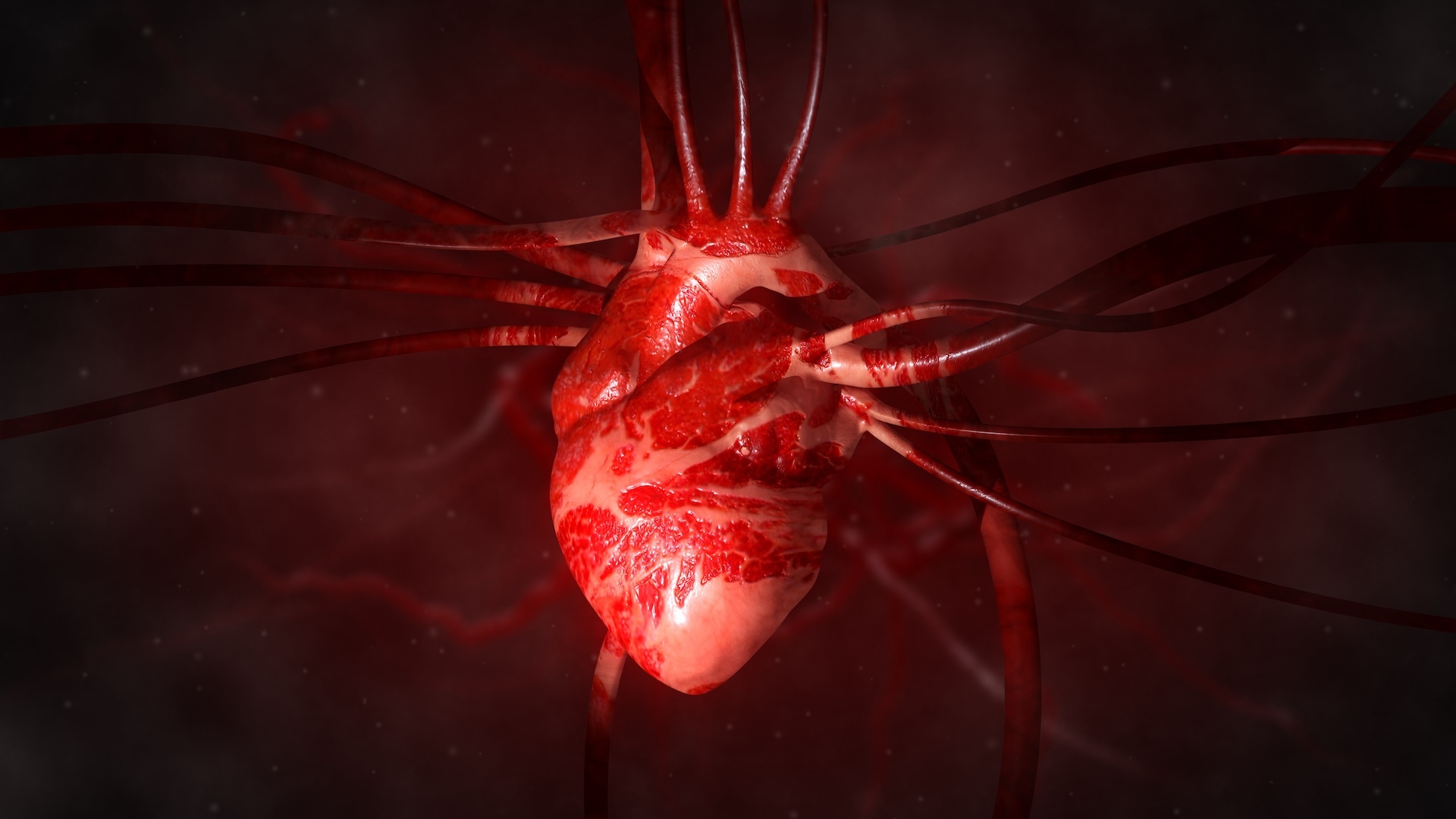
In CAVD, calcium builds up in the aortic valve, which connects the left side of the heart to the large artery that carries oxygen-rich blood to the body. (Image credit: Noctiluxx via Getty Images)
P. gingivalis is known to be particularly destructive to gum tissue, causing lots of inflammation, and it's been tied to cardiovascular disease in the past. To see if the bacterium might be directly impacting heart health, researchers at Fuwai Hospital in Beijing looked for P. gingivalis in aortic valve tissue removed during valve-replacement surgery. They compared this diseased tissue to valves that weren't calcified.
The calcified valves contained much higher levels of P. gingivalis DNA and proteins made by the bacterium. "P. gingivalis was about 30 times more abundant in calcified valves than in non-calcified valves," study first author Dr. Chenyang Li, a doctoral candidate at Fuwai Hospital, told Live Science in an email.
To test whether the bacteria might directly contribute to valve damage, Li and colleagues injected live P. gingivalis into the bloodstreams of healthy lab mice. The bacteria reached the animals' aortic valves, triggering inflammation, calcium buildup and narrowing of the valve.
"We were surprised to see valve calcification even in mice without high cholesterol," Li said. "This suggests P. gingivalis may directly contribute to valve disease, beyond traditional cardiovascular risk factors."
A comparison group of mice was given antibiotics before the injection and had less bacteria in their aortic valves and slower disease progression. Meanwhile, mice injected with dead P. gingivalis bacteria did not show any changes in their aortic valves.
The researchers traced the changes in the mice's hearts to interleukin-1 beta, a signalling molecule that normally helps the body fight infections. Exposure to P. gingivalis ramped up the production of this molecule, and in turn, the immune signal switched on genes that pushed healthy valve cells to behave more like bone-building cells, which is a hallmark of CAVD. This switch causes the cells to lay down calcium in the surrounding valve tissue.
When the scientists blocked interleukin-1 beta in some mice, the animals developed much less valve calcification even when the bacteria reached the valve. Lamont said that the mouse experiments strengthen the case that there's a biological mechanism directly linking gum and heart diseases. However, he cautioned that mice have very different oral microbiomes than humans, making it difficult to know whether the exact same process occurs in people.
That said, the team also saw the same pattern in human valve cells grown in the lab. Exposure to P. gingivalis increased inflammation and calcium buildup among the cells, while blocking interleukin-1 beta blunted those effects.
Both Aikawa and Lamont said more research is needed to confirm the relationship in humans. The findings give researchers a new pathway to explore for future treatments, raising questions of whether targeting inflammatory signals like interleukin-1 beta could help slow the progression of this widespread heart disease.
This article is for informational purposes only and is not meant to offer medical advice.
What do you know about the body's hardest-working muscle? Find out with our heart quiz!
After using the James Webb Space Telescope (JWST) to peer back toward the beginning of time, astronomers have proposed a radical new explanation for one of the universe's most flummoxing phenomena.
Little red dots (LRDs) are mysteriously compact, brilliant celestial objects found predominantly when the universe was less than 10% of its current age.
As revealed by JWST's unmatched infrared sensitivity, LRDs emerged incredibly early, only around 600 million years after the Big Bang, and then began disappearing about a billion years later.
Now, in a paper published in The Astrophysical Journal Letters, astronomers have proposed a novel formation mechanism for LRDs: They may be birthed by previously undiscovered celestial companions, whose intense ultraviolet (UV) radiation causes gas clouds to collapse into incredibly dense and exotic objects, like "black hole stars."
An illustration of a black hole star, or quasi-star, powered by a black hole surrounded by a cocoon of gas. (Image credit: (MPIA/HdA/T. Müller/A. de Graaff) via Wikimedia Commons)
"The most surprising aspect… is that these little red dots are not just 'red dots,' but there is a more complex emission nearby and around them," Josephine Baggen, an astronomer at Yale University and first author of the study, told Live Science in an email. "We think those what we call 'companions' are starlight."
Connecting the dots
In the study, the researchers compiled a sample of 83 LRDs, imaged with JWST, from ultradeep surveys. They found that 36 of the 83 LRDs, including over 80% of the brightest ones, hosted at least one companion that shined bright in blue-ish ultraviolet light; little red dots with little blue companions.
The LRDs sampled in this study. (Image credit: (Baggen et al., ApJL, 2026) )
These companions had masses ranging from hundreds of millions to billions that of the sun, suggesting that they may be star clusters or relatively small early galaxies, Baggen told Live Science.
These UV-spewing companions spurred the formation of LRDs from immense gas clouds, the team's new proposal states. Normally, cold molecular gas clouds fragment and condense into stars. But the intense UV irradiation from the companions halted the fragmentation process, potentially squeezing the gas clouds into supermassive stars that directly collapsed into black holes while skipping the explosive supernova stage that normally marks these stars' deaths.
This proposal helps to explain why LRDs appear bright in red optical light and UV wavelengths, with a dip between the two caused by the wavelengths of light absorbed by hydrogen gas. Rather than originating from a single object, the optical red light derives from the LRD, the UV light comes from its nearby companion, and the dip is thought to be caused by the dense cocoon of gas around the LRD.
As a result, the researchers suggested that all LRDs may have such partners but they may be too close together to be distinguished. Conversely, some companions may be separated by greater distances than the researchers accounted for in this study, requiring future observations to zoom out.
Intriguingly, this work may illuminate a couple of early-universe enigmas. First, the black holes manifesting from these interactions may be between 100,000 and 1 million solar masses, forming the "seeds" necessary to explain how ancient supermassive black holes grew so surprisingly massive so early in cosmic history.
Additionally, because LRDs may merge with the relatively small, UV-spewing galaxies that birthed them, this process may have created the impressively immense galaxies all around us today.
"We do think that this might be the birth of the supermassive black holes around these UV companions, born 'outside the galaxy,' [which] will eventually merge," Baggen told Live Science. "Whether this is what happened to the Milky Way in its earliest phases, we cannot really say, but it is plausible! There is still a lot of debate about how LRDs evolve and what they turn into at later times."
It's long been debated what started the 1789 smallpox outbreak that devastated the Indigenous population in Australia. Now, a new modeling study has the likely answer: It was brought in 1788 by the "First Fleet" of British ships to settle Australia.
The finding is based on mathematical modeling of the disease's impact on Indigenous Australians and rejects a contrary idea that the outbreak originated through contact with Indonesian islanders fishing in the far North of the country.
Alan Williams — an archaeologist at the private firm EMM Consulting and co-author of the study, published July 9 in the journal Nature Human Behaviour — told Live Science that the likely source of the outbreak were vials of dried smallpox scabs that British medics kept for inoculations (a precursor of smallpox vaccines, which weren't invented by Edward Jenner until the 1790s).
Some historians had argued that the live smallpox virus could not have survived the eight-month ship journey from Portsmouth, England, to Botany Bay, south of what is now the modern city of Sydney, where the British ships first landed.
But the investigation showed that the vials of smallpox scabs may have been replenished during the voyage when the fleet stopped at either Cape Town, South Africa, or Rio de Janeiro, Brazil, only a few months earlier, Williams said.
The smallpox outbreak devastated Indigenous communities and contributed to the rapid demise of Indigenous Australian culture, he said. The study estimates approximately 220,000 people died from the disease, and that early-20th-century Australian authorities did not comprehend the true extent of the Indigenous population when they attempted to document historical accounts.
Mystery outbreak
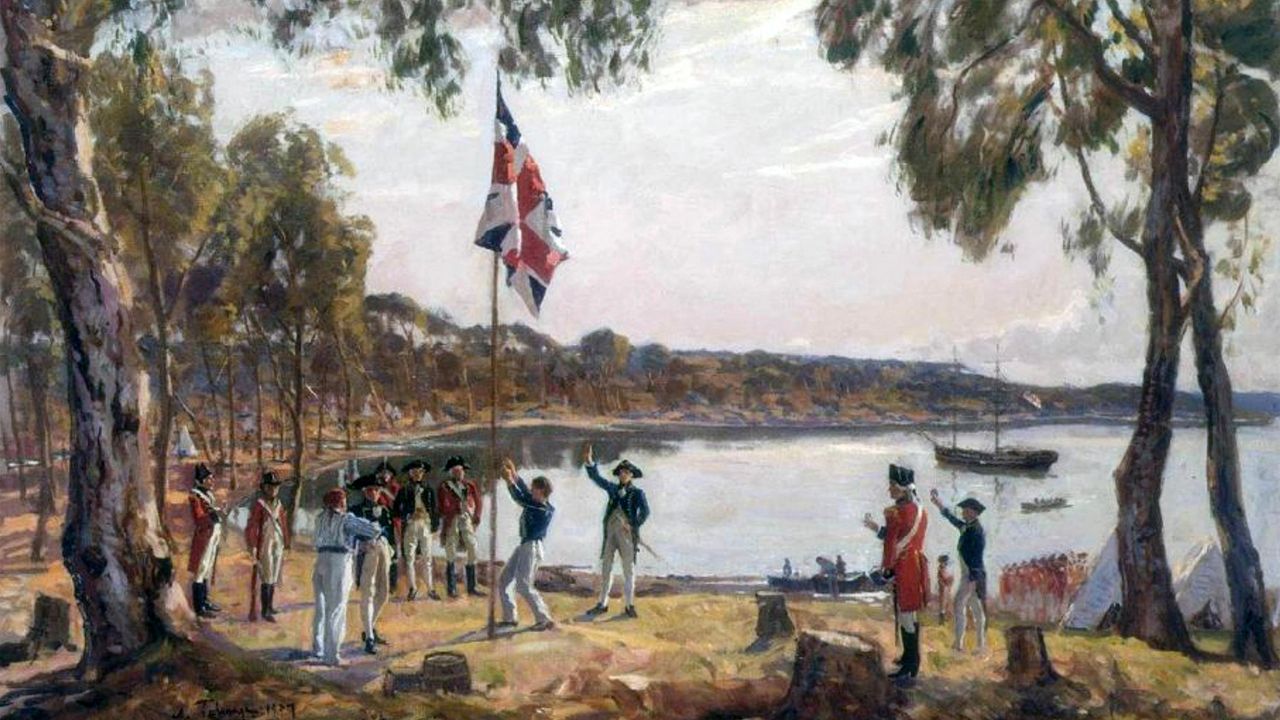
Within a few decades of the British Royal Navy officer James Cook charting Australia, the British sent ships to settle the continent. The British "First Fleet" to Australia consisted of 11 ships: two naval vessels, six convict transports and three ships for provisions. The British claimed that Australia legally belonged to nobody. They soon left Botany Bay because the land and water there were poor, and they moved to Sydney Cove in Port Jackson, which is now part of modern Sydney. There, they raised the British flag, claiming the whole continent.
There were no signs of a smallpox outbreak among nearby Indigenous communities when the First Fleet arrived, but the disease took a devastating toll in the decades that followed. Because there were no recorded cases of smallpox on the fleet, it was argued that the disease must have arrived in Australia on the tropical north coast of the continent through contact with islanders from the Makassar region of Sulawesi, which is now part of Indonesia.
But the new computer modeling of the proposed north coast outbreak showed the disease could not have spread from there to Australia's Southeast. Among other issues, the two regions were separated by thousands of miles of uninhabited desert, Williams said. Meanwhile, modeling of the smallpox outbreak in Indigenous communities near Port Jackson indicated that the outbreak had originated there, the researchers found.
Co-author Matthew Cody Nitschke, an expert in computer modeling at Flinders University in Adelaide, told Live Science that it is now clear that the outbreak was very unlikely to have originated in the North; by contrast, "there is very strong evidence that it was the First Fleet."
At the time, disease theory was not known, so the spread of smallpox may have happened by accident, Williams said.
An Indigenous Australian man holds traditional weapons during a ceremonial dance in Laura Quinkan Dance Festival at Cape York, Australia. New estimates that the theoretical population capacity of Australia before the British arrival was up to 5 million Indigenous people. (Image credit: chameleonseye via Getty Images)
Revising earlier ideas
The new study in Nature Human Behaviour refers to a second study by the same researchers that is now being prepared for publication by the same journal. It proposes that there were up to 3 million Indigenous Australians at the time the First Fleet arrived — many more than the 300,000 or so proposed in some earlier studies.
That second study, based in part on archaeological investigations of early Indigenous Australian communities, suggests that the theoretical population capacity of Australia before the British arrival was up to 5 million people, especially in the resource-rich areas of the North and Southeast.
The former estimate of roughly 300,000 Indigenous Australians seems to have come from a study in the 1930s based only on their depleted numbers. "By the time people actually sat down and said how many people were here, we had 100 years of disease, frontier violence, and everything else going on," Williams said.
University of Tasmania historian Henry Reynolds, who was not involved in the studies, told Live Science that the research debunks the old idea that the smallpox outbreak started on the north coast. "The idea that it came from the North and arrived at exactly the time [as the First Fleet] was always improbable," he said.
Ann McGrath, a historian at the Australian National University in Canberra who was not involved in the work, agreed. "The strong interdisciplinary approach of this latest research convincingly refutes this, and it also provides a much expanded estimate of the Indigenous population prior to 1788," she said in an email.
The skeleton of a wolf or bat you admire at the natural history museum may look pristine, but it wasn't always that way — there's a good chance flesh-eating beetles helped prepare those bones for display. For decades, many museums have relied on colonies of dermestid beetles to strip soft tissue, like skin and muscles, from skeletons. Unlike the harsh chemicals that would otherwise be used for bone preparation, these beetles can be gentler and clean hard-to-reach areas. But these colonies are a hassle to keep up, and escaped beetles can even be dangerous for valuable museum specimens that don't need their skin removed. Now, researchers may have found an even better biological cleanup crew.
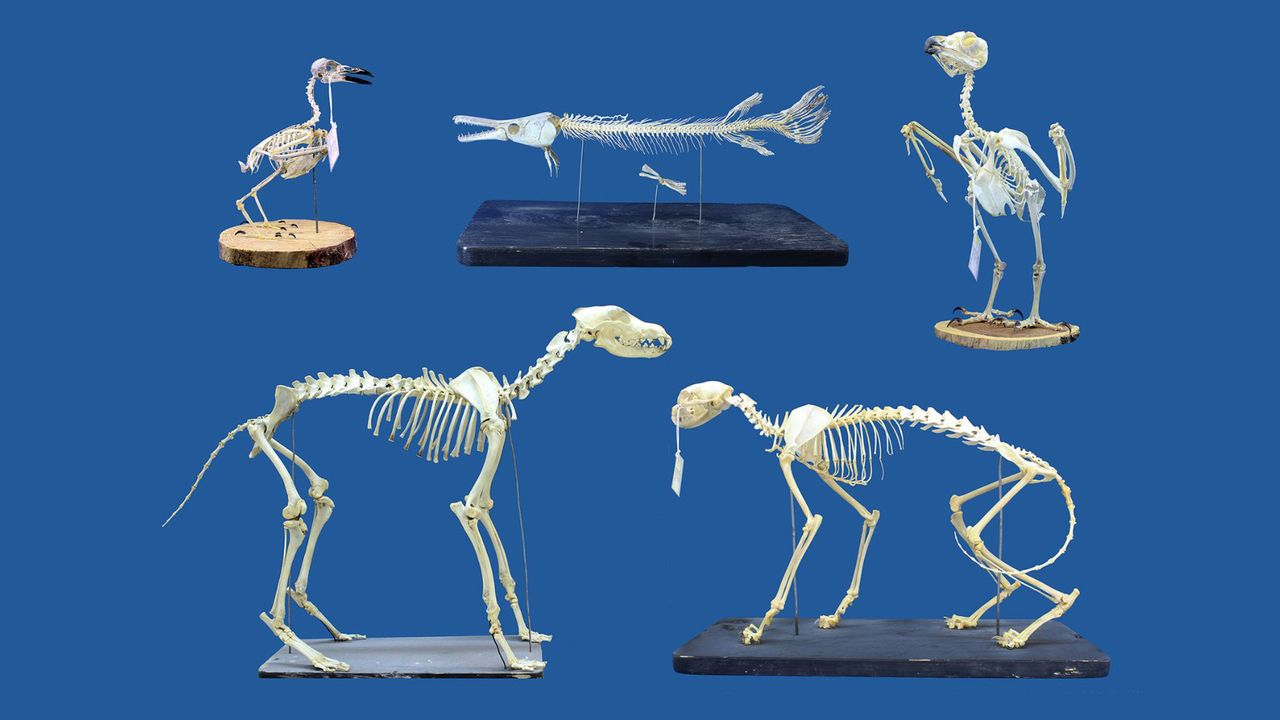
In a new study published July 1 in the journal PLOS One, scientists found that superworms (Zophobas morio) — large beetle larvae commonly sold as pet food — can clean skeletons just as effectively while offering practical advantages. The larvae removed soft tissue from animals ranging from tiny bats to a 9-pound (4.2 kilograms) wolf without damaging even the most delicate bones.
Two of the paper's authors, Niloofar Alaei Kakhki, a postdoctoral researcher at the State Museum of Natural History Stuttgart in Germany, and Morteza Monfared, a researcher at the Ferdowsi University of Mashhad in Iran, answered our questions via email about what makes superworms unique and how they could be used in laboratories and museums.
Kenna Hughes-Castleberry: Why are these critters called "superworms?" What makes them different from other beetle larvae?
Niloofar Alaei Kakhki and Morteza Monfared: Compared with the larvae of many other beetles, Zophobas morio larvae are much larger, which is one of the reasons they are so effective at removing soft tissue from bones.
What makes them truly unique, however, is their life cycle. Most beetle larvae pupate automatically once they reach the appropriate size. In contrast, superworms require an additional trigger: They must be isolated individually before they will pupate and develop into adult beetles. As long as they remain together in crowded conditions, they stay in the larval stage for several months.
This characteristic provides a major advantage for skeleton preparation. Because the larvae remain larvae for an extended period, they can be used repeatedly for cleaning specimens without rapidly developing into adult beetles. After each cleaning cycle, they can simply be fed a vegetable-based diet, allowed to recover, and then used again.
This also makes them safer than beetles commonly used for skeleton preparation, such as Dermestes. Adult dermestid beetles can reproduce, and females may lay eggs on — or even inside — skeletal specimens. If eggs or larvae are accidentally introduced into museum collections, they can become a serious pest and damage valuable specimens. Since superworms do not develop into adults unless they are intentionally isolated, this risk is greatly reduced, making the method safer for museum collections.
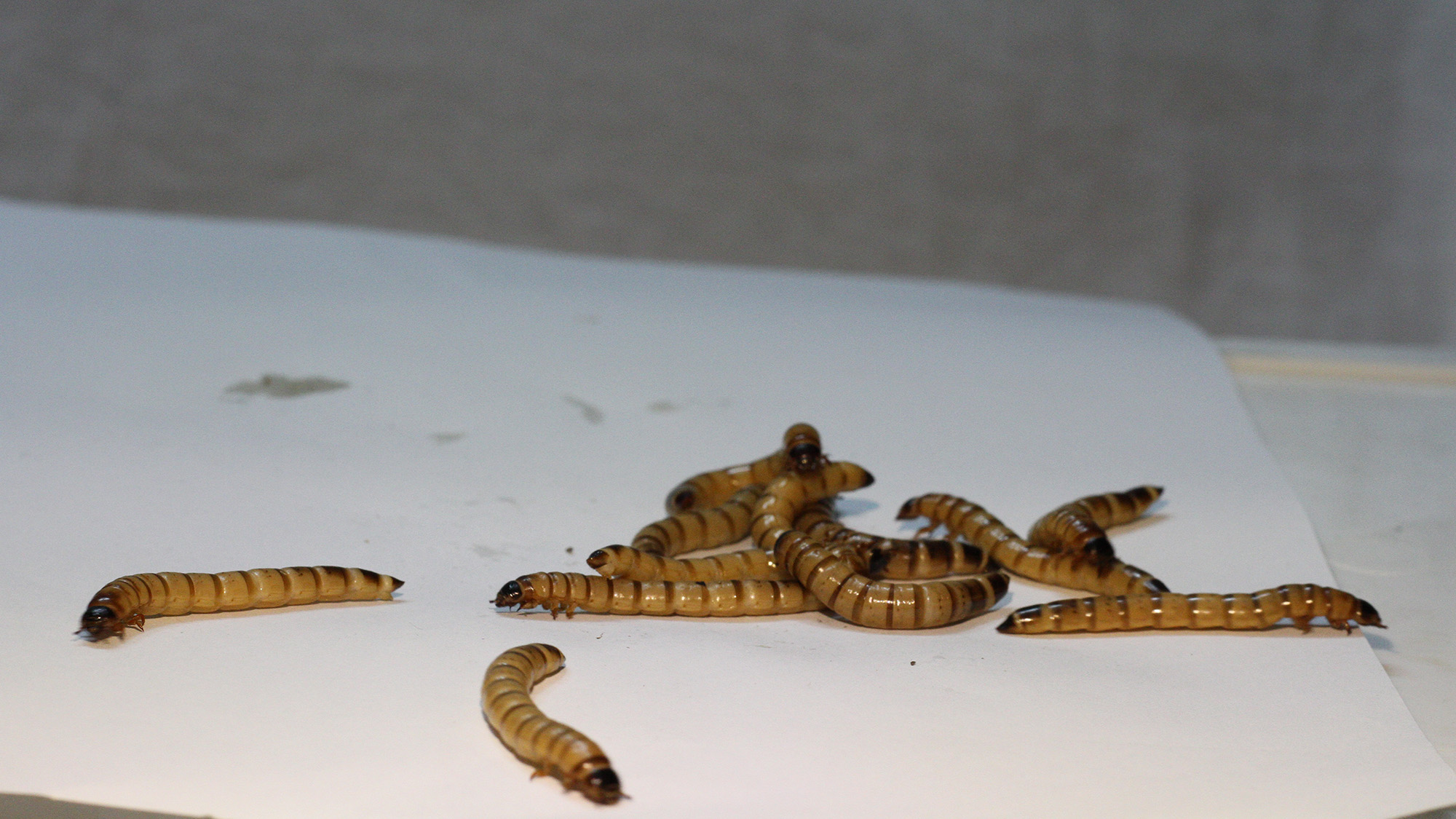
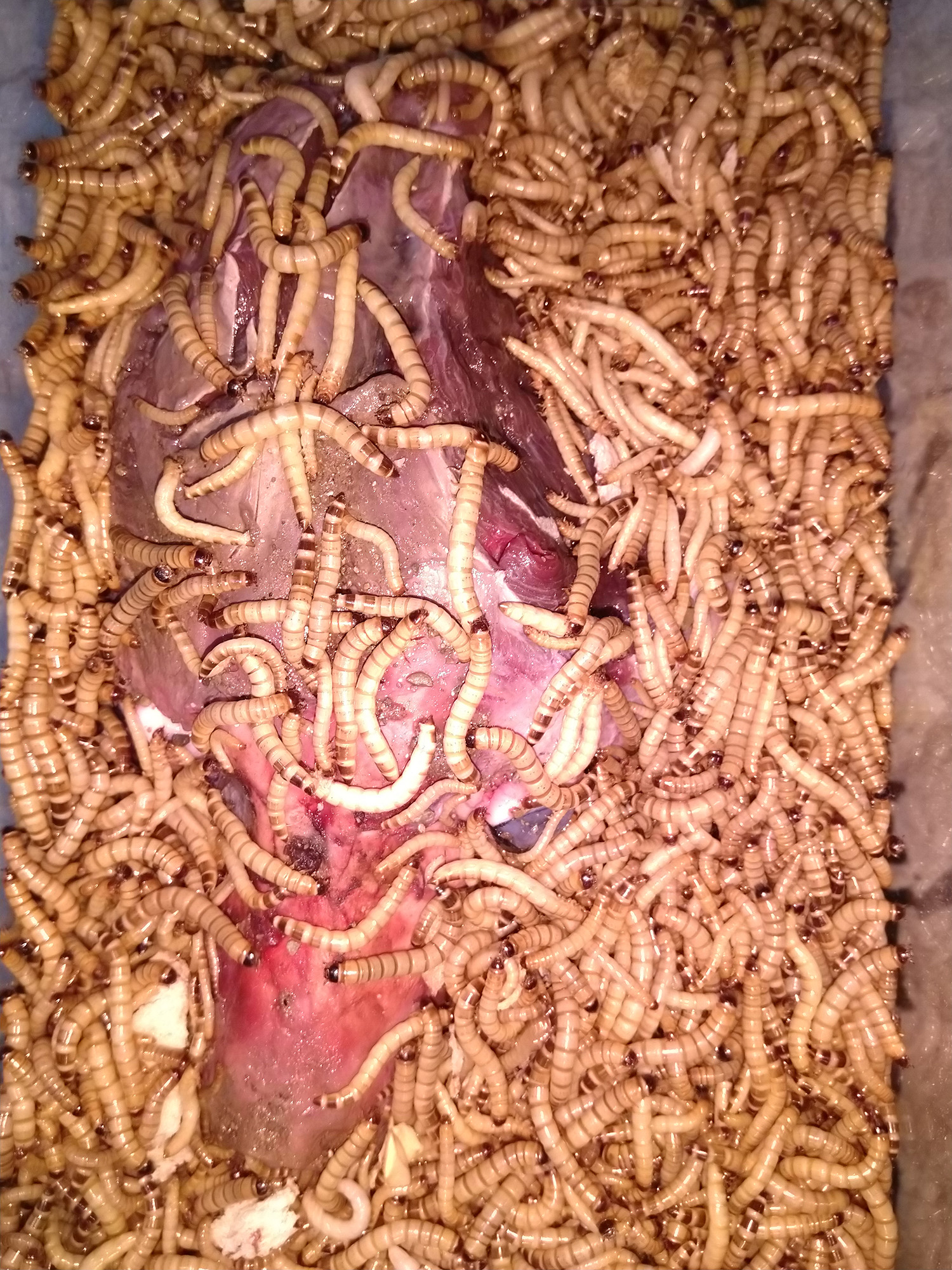
A group of superworms in their larval stage. (Image credit: Niloofar Alaei Kakhki and Morteza Monfared)
KHC: How did you figure out that the worms could clean the skeletons? Was that surprising?
NAK and MM: Several years ago, we started keeping a colony of Zophobas morio larvae (superworm) as live food for birds. As bird-watchers, we were often asked to help care for injured wild birds, so maintaining our own colony was more practical than purchasing larvae repeatedly. We fed the larvae mainly with vegetable scraps, such as cucumber, potato and banana peels.
One day, we ran out of vegetable waste. After lunch, we placed a leftover chicken bone with a small amount of meat still attached into the colony. To our surprise, the larvae gathered around it almost immediately and removed the remaining tissue with remarkable speed. Watching hundreds of larvae work together so efficiently was fascinating, and it immediately made us wonder whether they could be useful for something beyond animal feed.
At the same time, we were volunteering at the Zoology Museum of Ferdowsi University (ZMFUM), where preparing skeletal specimens was one of our regular responsibilities. We had experience with conventional preparation methods, including manual cleaning, boiling and burial. Although effective, these methods were often time-consuming and carried the risk of damaging delicate bones or losing small skeletal elements.
After observing how efficiently the larvae cleaned the chicken bone, we decided to test whether they could also prepare skeletal specimens. The first trials were remarkably successful. Within only a few hours, the larvae removed the soft tissues while leaving even delicate bones intact. Seeing the quality of the cleaned specimens was genuinely surprising and convinced us that this approach had real potential.
From that point on, whenever suitable animal specimens became available, we continued testing the method under different conditions, gradually refining it and optimizing the protocol. Over the following years, these observations evolved into the standardized, efficient and safe skeleton preparation method presented in our study. Yes, we were genuinely surprised. We already knew that superworms could consume a wide variety of organic materials, but we did not expect them to clean skeletons so quickly, so thoroughly, and with so little damage to even the most delicate bones.
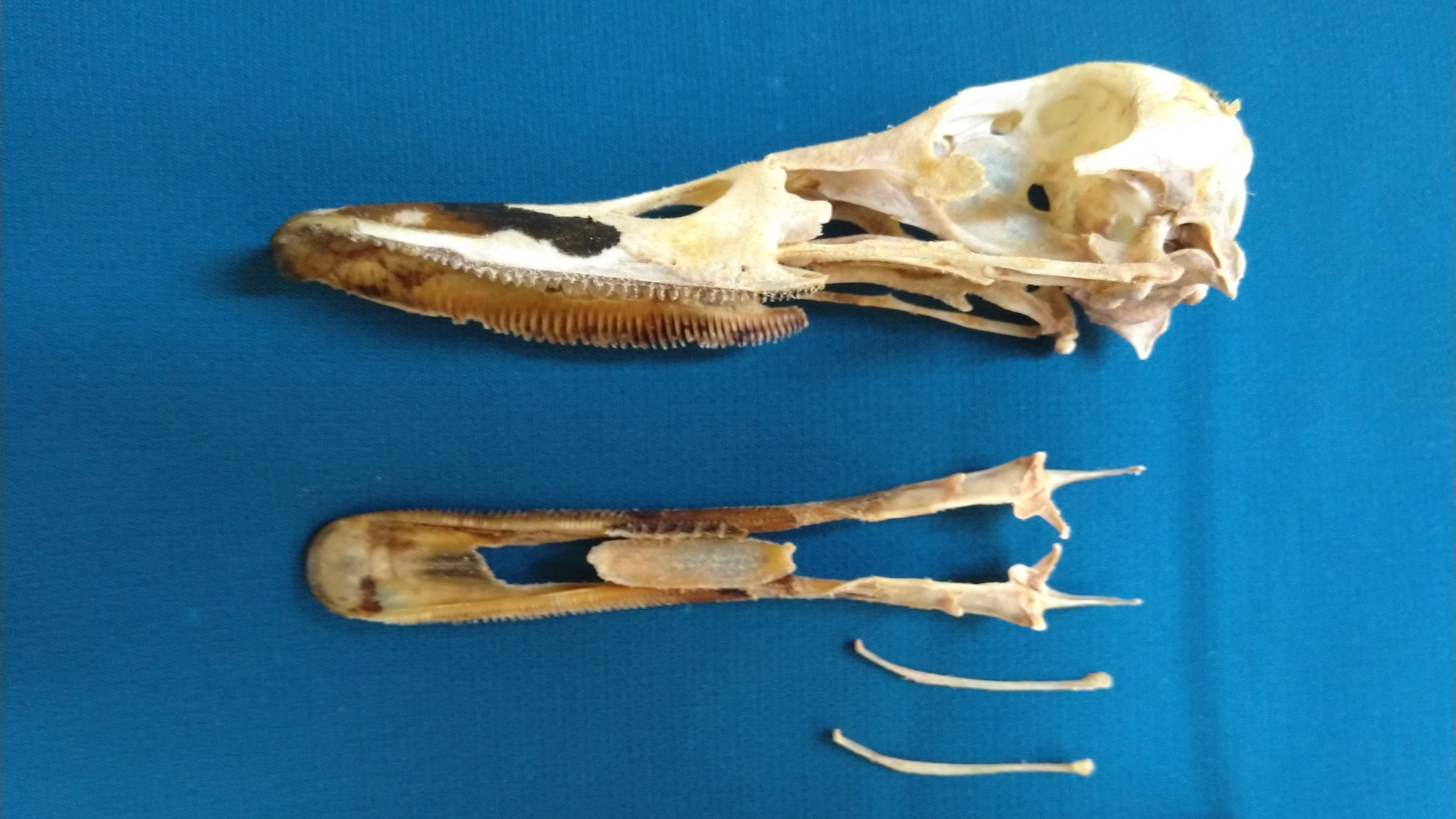
A delicate bird skull after being cleaned by superworms. (Image credit: Niloofar Alaei Kakhki and Morteza Monfared)
KHC: How do these superworms compare to other skeleton-cleaning products, like chemical cleaners? Are the worms better or worse at this task?
NAK and MM: Based on our experience, superworms offer several important advantages over existing skeleton preparation methods.
Compared with dermestid beetles, one of the biggest advantages is colony management. Because superworms only pupate when they are isolated individually, their life cycle can be controlled much more easily. As long as they are kept together, they remain as larvae and continue cleaning specimens. This greatly reduces the risk of accidentally introducing adult beetles or their eggs into museum collections, which is a major concern when working with dermestid beetles.
Compared with traditional methods such as boiling, manual cleaning or burial, the larvae also save a great deal of time and effort. Manual cleaning, especially for delicate specimens, can take many hours and always carries the risk of breaking or losing small bones. In contrast, the larvae can remove soft tissues efficiently while preserving even fragile skeletal elements.
Every preparation method has its own strengths and limitations, and the best choice depends on the type of specimen and the goals of the researcher. However, based on our experience using a wide range of preparation techniques, we believe that superworms provide an efficient, safe and practical alternative for many museum and research applications.
Rather than replacing every existing method, we see this technique as a valuable new tool that museums, universities and research laboratories can adopt and adapt according to their own needs.
A wolf skull being "cleaned" by superworms. (Image credit: Niloofar Alaei Kakhki and Morteza Monfared)
KHC: On average, how much does it cost to use the worms?
NAK and MM: It is difficult to estimate an average cost because prices vary considerably between countries and suppliers. Rather than the initial purchase price, the long-term maintenance cost is what makes this method attractive.
A colony can be established from a relatively small number of superworms. Once the larvae reach the appropriate stage, a portion of them can be isolated to pupate and develop into adult beetles. These adults reproduce and generate new larvae, allowing the colony to become self-sustaining over time.
The equipment required is also quite simple. The colony can be maintained in plastic or glass containers with wheat bran as the bedding, at approximately 25 degrees Celsius [77 degrees Fahrenheit]. Between skeleton preparation cycles, the larvae can be fed inexpensive vegetable scraps, allowing them to recover before being used again. Larvae can remain in the larval stage for several months, meaning the same colony can be used repeatedly.
Another advantage is that the colony size can easily be adjusted to meet the needs of different users. A museum or laboratory processing a large number of specimens can maintain a larger colony, while smaller collections can operate with far fewer larvae.
Overall, we find the method is relatively inexpensive to establish and maintain, especially when compared with the time, labor and specialized facilities often required for traditional skeleton preparation methods.
KHC: Do you envision museums and laboratories implementing these superworm cleaners in the future? Why or why not? Is the cost worth it?
NAK and MM: We believe this method has the potential to be adopted by many museums, universities and research laboratories, particularly those that regularly prepare skeletal specimens.
One of its greatest advantages is that it combines efficiency, safety and relatively low operating costs. Compared with some traditional approaches, it requires only basic equipment and does not rely on expensive chemicals or specialized enzymatic treatments. This makes it especially attractive for smaller museums and institutions with limited resources.
We also see advantages in terms of colony management. Because the life cycle of superworms can be controlled, the risk of introducing damaging museum pests is much lower than with some other biological cleaning methods. At the same time, the larvae can be reused repeatedly over several months, making the system practical for long-term use.
Ultimately, whether this method is worthwhile depends on the needs of each institution. However, based on our experience, we believe it offers an excellent balance between cost, efficiency, safety and specimen quality. Perhaps one of the most rewarding aspects of this approach is that it works with a natural biological process rather than against it. Instead of relying on harsh treatments, the soft tissues become a food source that supports the growth of another organism, creating a sustainable cycle while producing clean skeletal specimens. We believe this is one of the most appealing aspects of the method.
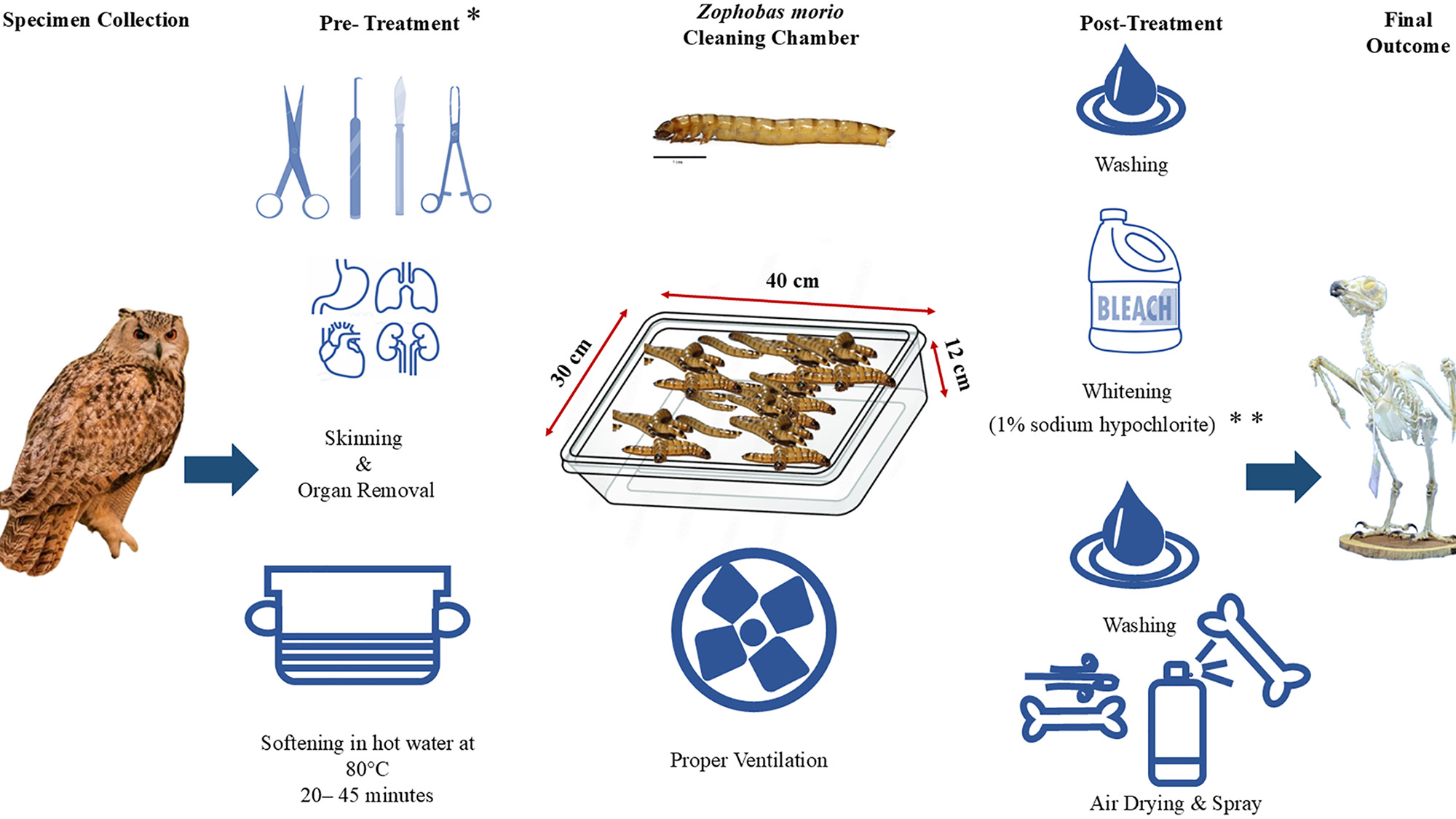
A diagram showing how the worms could be implemented in skeleton preparations. (Image credit: Rastekar et al., 2026, PLOS One, CC-BY 4.0)
KHC: Are there any fun stories from your research you can share?
NAK and MM: We have collected quite a few memorable stories over the years!
One of the funniest happened while we were experimenting with burial as a skeleton preparation method. We buried the head of a Persian onager (Equus hemionus) on the university campus. Unfortunately, the specimen had already begun to decompose and had a very strong smell. Even after it was buried, we knew exactly where it was because that part of the campus still smelled terrible. We avoided walking past it whenever possible, but anyone who happened to pass by immediately noticed the odor. At one point, campus security even came over to ask what we were doing, probably wondering why we were digging a hole and burying something on university grounds!
Another memorable story involved our superworms colony itself. In the early days, we kept the larvae in our office at the Zoology Museum (ZMFUM). Almost everyone who entered the room was startled by the sight of thousands of large larvae constantly moving around in their containers. Many people kept their distance at first. But over time, as we explained their biology and demonstrated how useful they were for our research, people's reactions changed. Some visitors even became genuinely interested in the colony, and a few who were initially afraid eventually asked to hold the larvae themselves.
Those moments reminded us that science is not only about experiments and data; it can also change the way people think about animals that are often misunderstood.
KHC: If there's one thing you want our readers to take away from your work, what would it be?
NAK and MM: If there is one message we hope readers take away from our work, it is that nature often has far more to offer than we initially realize.
Many organisms are known for a single, well-established application. Zophobas morio, for example, is widely recognized as animal feed and, more recently, for its ability to consume certain plastics. Our work shows that the same species can also provide an entirely different and unexpected solution to a practical problem in museum science.
This reminds us that the first known application of an organism is not necessarily its most valuable one. Sometimes, its second or even third application can have an even greater impact. Discovering those possibilities begins with curiosity, careful observation and a willingness to ask new questions.
This interview has been edited for length and clarity.
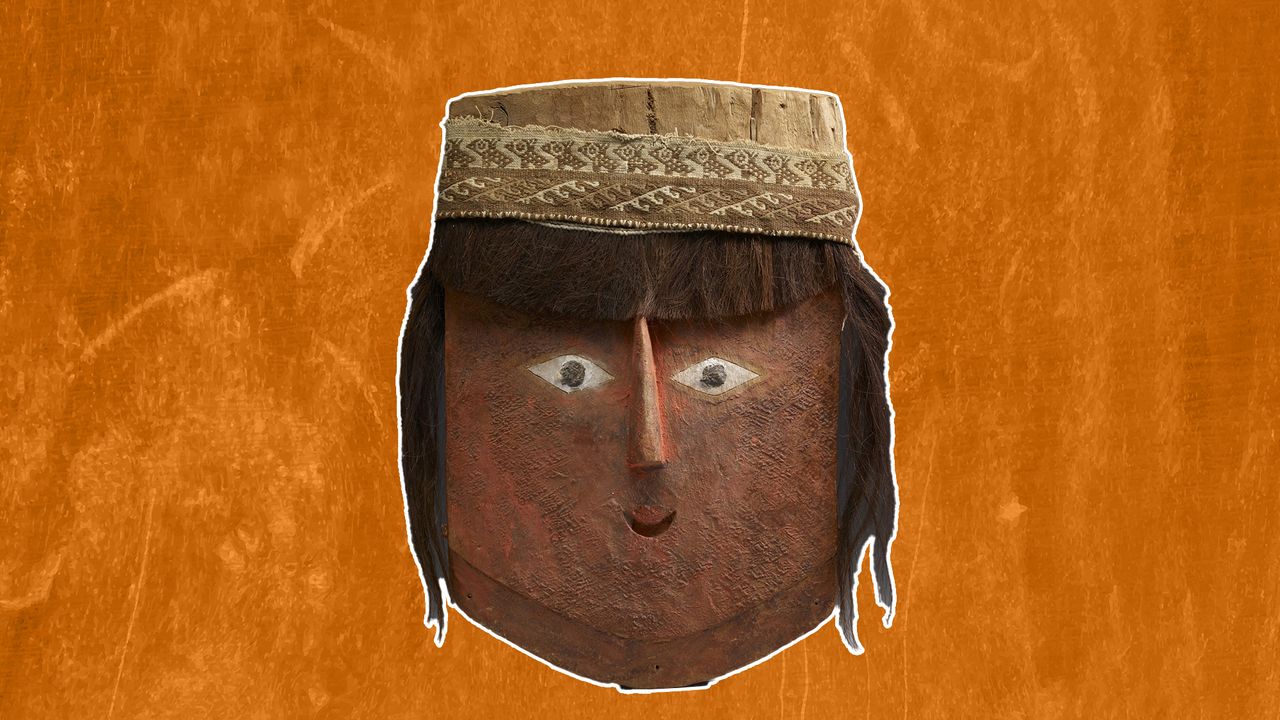
This wooden mask, which is decorated with human hair and a textile headband, adorned an Andean mummy up to a millennium ago. Made by an artist of the Chancay people, the mask was also painted red with the mercury-containing pigment cinnabar.
The Chancay were a pre-Inca people who lived along the central coast of Peru in the Late Intermediate Period (1000 to 1450). A common tradition among the Chancay was the funerary bundle — the end result of wrapping their dead in layers of textiles, vegetal material and animal skin. The bundle was then buried in a pit along with grave goods such as tools, food and figurines. Because the bodies were usually wrapped in a fetal position, however, it was not always clear exactly where the head was located once the bundle was complete.
According to The Walters Art Museum in Baltimore, which has this mask in its collection, "false heads" made from textiles or wood were sometimes tied onto the Chancay funerary bundles to act as a focal point for venerating the ancestor.
The mask is roughly life-size, measuring 12 by 8 inches (30.5 by 20.3 centimeters). Chancay funeral masks were not meant to be realistic. Instead, they had simplified features, such as the diamond-shaped eyes; triangular nose; and tiny, U-shaped smile on this mask. The wig was almost certainly made from human hair, according to a microscopic analysis The Walters Art Museum undertook in 2017.
The Chancay artist who made the mask painted it red using cinnabar, a toxic substance that is the brick-red form of mercury sulfide. Cinnabar was frequently used in Andean funerary rituals, and the color was associated with purification and commemoration rituals. But the mask was likely not placed on the outside of the bundle burial, as a patterned impression has been left on the cinnabar of this mask, probably from being wrapped in even more textiles, according to The Walters Art Museum.
What it means: The heliosphere is the region around the sun that's affected by the solar wind, a flow of charged particles emanating from the sun. Think of the heliosphere like a giant bubble encompassing the sun and planets, reaching out into space at three times the distance of Pluto. This bubble protects the solar system from radiation emanating from outer space, but the solar wind can also erode planetary atmospheres. Luckily, Earth is protected by its own bubble, the magnetosphere, which helps deflect the solar wind.
How to use it in a sentence: Because the entire solar system is traveling through space, scientists have long pictured the heliosphere as comet-shaped, but recent research suggests the bubble of solar wind looks more like a sad, deflated croissant.
Can you crack our science word of the day puzzle, Chain Word?
In the weeks around the 2026 annual meeting of the American Society of Clinical Oncology, my phone kept buzzing with alerts about GLP-1 drugs and cancer. The headlines were everywhere — from NPR and The Washington Post to Substack and heated exchanges on social media — all circling the same claim: Ozempic might lower the risk of cancer.
Behind those headlines is a real wave of studies, involving millions of patients. I'm a physician and clinical epidemiologist, and my team and I design and interpret these same kinds of studies that test what widely used drugs actually do.
The excitement around the idea that GLP-1 drugs can prevent cancer is running well ahead of the evidence. Not wrong, necessarily. Just not yet earned.
Cancer is among the hardest things to study, because it is not one disease but more than a hundred. Breast cancer, lung cancer and blood cancers are not variations of the same disease; each has its own distinct biology and its own mix of genetic, environmental and behavioral risks.
A single drug never gets one verdict on how it affects cancer. It gets a hundred, raising the risk of some, lowering it for others and leaving most untouched.
The early cancer concerns
Before the current buzz that GLP-1 drugs could reduce cancer risk, the worry ran in the opposite direction: that they might raise cancer risk.
Researchers were originally concerned about thyroid cancer. Studies in rodents found that Ozempic caused thyroid C cell tumors, which is why U.S. regulators added a black box warning in June 2026 to the drug that advises against its use among those with a personal or family history of related conditions.
But rodents are not people. Human thyroid C cells are less sensitive to GLP-1 drugs compared to rodent C cells because they have far fewer GLP-1 receptors. Long-term studies in monkeys did not show the same abnormal thyroid cell growth seen in rodents.
A 2025 analysis of data from 93 clinical trials found no clear link between taking certain GLP-1 drugs and thyroid cancer. European regulators reached the same conclusion in 2023 after reviewing available research on GLP-1s.
Pancreatic cancer was another concern. Here, too, researchers found no consistent increased risk from taking GLP-1 drugs in a 2025 analysis of data from 62 studies.
A 2025 study of about 87,000 adults found that overall cancer rates among those who started a GLP-1 drug were roughly 17% lower, with the clearest reductions in endometrial and ovarian cancers as well as a type of brain cancer called meningioma. The risk of kidney cancer was 38% higher among patients taking GLP-1 drugs, though larger studies are needed to confirm its significance.
A 2026 study of more than 110,000 women undergoing breast imaging found a roughly 30% lower risk of breast cancer among those who use GLP-1 drugs compared to those who do not.
Researchers are also studying how GLP-1 drugs affect a patient's chances of surviving cancer. Among more than 6,800 colon cancer patients in a 2024 study, around 16% of the 103 on a GLP-1 drug died within five years compared to 37% of those who were not taking one. A study presented at the 2026 American Society of Clinical Oncology reported a 34% lower risk of death across six cancer types for those taking GLP-1 drugs.
Why the evidence is so easy to misread
While these findings are exciting, studies on the effects of GLP-1 drugs on cancer risk have three features that make them especially easy to misread.
The first is healthy user bias. People who start a GLP-1 drug tend to be healthier and wealthier than those who do not. A person with obesity who has insurance, sees doctors regularly and can afford Ozempic is far more likely to start the drug than someone with the same height and weight who lacks those advantages.
Healthy user bias is very difficult to scrub out of observational studies, which compare people as they are treated in real life rather than assigning the drug at random. The very advantages that made it possible to receive a GLP-1 prescription, not the drug itself, may be what lowered a patient's cancer risk.
The second is the choice of the comparison drug. To understand the effect of a drug, it has to be measured against something else. What it's measured against will shape the results of the study. The 2024 study reported that patients taking GLP-1 drugs saw large reductions in cancer risk compared to those taking insulin. But comparing patients on GLP-1 drugs with patients taking the diabetes drug metformin showed no clear reduction in cancer risk.
Insulin is reserved for patients with more advanced diabetes, a condition that is itself a risk factor for cancer. In these studies, patients on insulin start out with a higher risk of cancer. Measured against a group at higher risk of developing cancer, almost anything can look protective. The apparent benefit came from the comparison drug, not the GLP-1 drug.
The third is timing. It is not so much another source of bias as a clue that other biases may be at work. Cancer can take decades to develop, yet most GLP-1 studies follow people for only a handful of years. In some studies, the apparent cancer benefits of GLP-1 drugs show almost immediately. But prevention doesn't work that quickly. A drug that truly lowered the risk of developing cancer would show its effect gradually as fewer tumors surface over time, not within the first few months of taking a drug.
When cancer risk appears to drop almost as soon as a patient starts treatment, the speed is not a magical triumph of GLP-1 drugs. Rather, in my view, it is the tell: People who start these drugs were already at lower cancer risk, and the GLP-1 drugs are getting credit for that preexisting advantage.
Moreover, almost all of this research comes from a handful of high-income countries, even as uptake of these drugs is increasing globally and the burden of cancer has disproportionately grown in lower-income countries. The idea that GLP-1s may reduce cancer risk for much of the world is being inferred from data generated almost entirely in a few rich ones.
What do randomized trials show?
The cleanest way around these study biases is randomized trials, which by design make comparison groups alike from the start.
Available clinical trials tell a quieter story than the headlines. Two 2025 meta-analyses, which pool data from multiple studies — one covering 50 trials and a second covering 48 — found little evidence that GLP-1 drugs either raise or lower cancer risk.
There are many GLP-1 brands available for consumers. (Image credit: Iuliia Burmistrova via Getty Images)
The findings of these meta-analyses are generally more reliable than those of observational studies because their total amount of data increases their statistical power. Despite their strengths, these analyses inherit the limitations of the trials they include. Most of the trials in these 2025 studies had a short follow-up of a year or two and recorded too few cancer cases to settle the question.
Randomized clinical trials designed to answer the question of whether GLP-1 drugs affect cancer risk would need to enroll tens of thousands of people and follow them for many years. Short of that, the next best evidence will come from observational studies designed to emulate randomized trials.
Until then, the idea that GLP-1 drugs lower cancer risk is a hypothesis worth testing but not a conclusion to act on.
Based on the available evidence, the clearest conclusion is the reassuring one: GLP-1 drugs do not appear to raise overall cancer risk. However, more ambitious claims that GLP-1s actively prevent cancer or improve survival after diagnosis remain unproven.
The surest thing I can say is also the least satisfying: It's still too early. These drugs are far younger than the cancers they are being credited with preventing.
Astronomers have found the strongest evidence yet that a rocky planet beyond our solar system has managed to hold onto an atmosphere — a crucial ingredient for life as we know it.
The discovery marks the first time scientists have detected an atmosphere surrounding a rocky planet orbiting in the habitable zone of another star, the region around a star where temperatures could enable liquid water to exist on a planet's surface. The findings, published July 16 in the journal Science, could help astronomers narrow the search for potentially habitable worlds beyond our cosmic backyard.
"It's absolutely exciting," Edward Schwieterman, associate professor of astrobiology at the University of California, Riverside, who was not involved in the study, told Live Science in an email. "We are getting closer to studying the atmospheres of worlds that could plausibly harbor life, with evidence of that life embedded in their observable spectra."
The planet, known as LHS 1140 b, lies about 48 light-years away from Earth and orbits a small, cool red dwarf star. At roughly 5.6 times Earth's mass, the exoplanet is classified as a super-Earth: a rocky planet larger than our own but much smaller than gas giants like Neptune.
It receives less than half the sunlight Earth gets, giving it an estimated surface temperature of around minus 53 degrees Fahrenheit (minus 47 degrees Celsius), according to previous estimates not accounting for an atmosphere. That makes the planet cold, but in the range astronomers consider potentially habitable.
Cosmic gas leak
Scientists have discovered thousands of exoplanets over the past few decades, including many rocky worlds. But determining whether those planets have atmospheres has proven far more difficult, because atmospheres around rocky planets are incredibly thin compared with those of giant planets, making them much harder to detect across vast cosmic distances.
Instead of looking for the atmosphere directly, the researchers behind the new study searched for a subtle clue that one existed: helium gas leaking into space. Using the WINERED spectrograph on the Magellan Clay Telescope in Chile, the team watched LHS 1140 b cross in front of its star and let a sliver of starlight filter through the planet's atmosphere on its way to Earth. As it did, the team looked for a tiny dip in the star’s light at the exact wavelength of infrared light that helium blocks — a telltale sign that gas was streaming off the planet and into space.
The prediction rested entirely on a mathematical model that had never been confirmed for a rocky planet. However, in September 2024, the team caught LHS 1140 b and a smaller, hotter neighboring planet, LHS 1140 c, transiting their star on the same night, less than 40 minutes apart. The researchers detected a clear helium signal from LHS 1140 b, while LHS 1140 c showed nothing.
NASA concept art depicting LHS 1140 b as a rocky super-Earth — a type of potentially habitable planet most similar to our own. (Image credit: NASA)
The contrast matters: LHS 1140 c orbits much closer to its star than LHS 1140 b does and receives roughly five times the radiation, yet it's also smaller and less gravitationally bound — conditions that should make any escaping gas easier, not harder, to spot. Finding nothing there suggests LHS 1140 c's atmosphere was stripped away long ago, while LHS 1140 b, sitting farther out in cooler, calmer conditions, has managed to hold onto its own.
The discovery addresses a question astronomers have been working to answer for decades.
"Twenty years ago we wondered whether other terrestrial-type planets even existed," study co-author Robin Wordsworth, a professor of Earth and planetary sciences at Harvard, said in a statement. "Then we learned they're common, and found some in the habitable zone. The next question was whether any of them had managed to keep an atmosphere. Now we know at least one has."
A step forward in the hunt for life
The find is especially notable because red dwarf stars like LHS 1140 can bombard nearby planets with high-energy radiation capable of stripping atmospheres away over time. Based on the star's estimated age of at least 3.1 billion years, the researchers say LHS 1140 b's atmosphere has likely persisted despite that bombardment, suggesting some rocky planets around these common stars can hang onto their atmospheres for far longer than once assumed.
But the researchers caution that detecting helium does not mean the planet is inhabited — or even that it is habitable. The observations reveal only the planet's thin upper atmosphere, not its full composition. Scientists still don't know whether LHS 1140 b has oxygen, carbon dioxide, water vapor or other gases that could make its surface more Earth-like and hospitable to life.
Instead, the discovery opens a new way to study distant rocky worlds.
"The study demonstrates that, at least in some cases, we will be able to begin characterizing the atmospheres of potentially habitable planets," Schwieterman said. "If only rocky planets orbiting Sun-like stars retained atmospheres, we might have to wait one to two decades for the launch of the Habitable Worlds Observatory to search for biosignatures on rocky planets. I'm certainly excited about what comes next!"
Future observations will aim to determine what the rest of LHS 1140 b's atmosphere is made of and investigate whether it may harbor oceans or other features associated with habitability.
Archaeologists in Russia have discovered a rare medieval wild-boar tusk that was likely used by a warrior or noble as a good-luck charm, a new study reports.
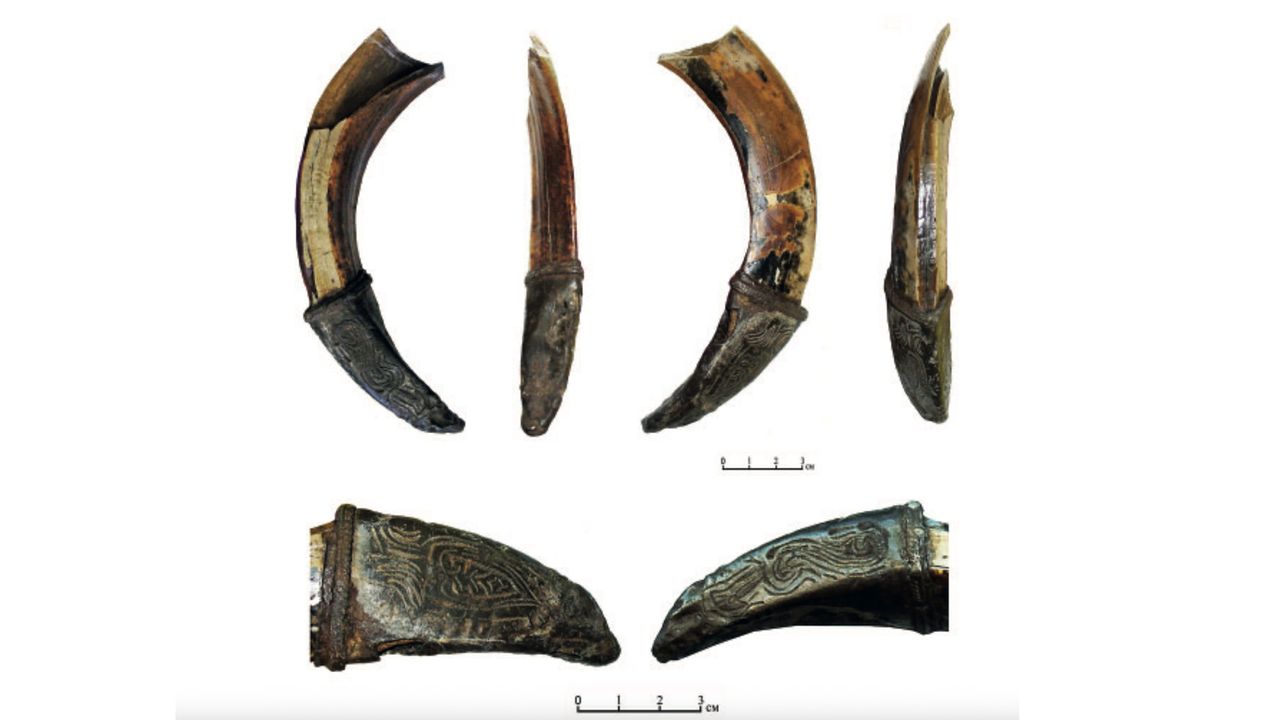
The unusual finding, a large tusk mounted with an engraved metal cap, dates to between the mid-12th and early 13th century. It was found in Novgorod the Great (also called Veliky Novgorod or Novgorod), one of the oldest major towns in Russia. One characteristic of the amulet, in particular, stood out.
"It's extraordinary because of its size. It's extremely big," Natalia Eniosova, co-author of the study and a metal scientist in the Department of Archaeology at Lomonosov Moscow State University, told Live Science. The tusk isn't complete, but the length of what's left is 3.9 inches (10 centimeters) long, with the widest point measuring 1.1 inches (2.8 cm) across. She and her colleagues' research revealed that the tusk came from a wild boar that was at least 8 years old and weighed over 220 pounds (100 kilograms).
"Such an animal would not have been hunted for food," she said, explaining that domestic pigs were a more practical and common food source at the time. The wild boar may have been eaten anyway, but the team doesn't know for sure.
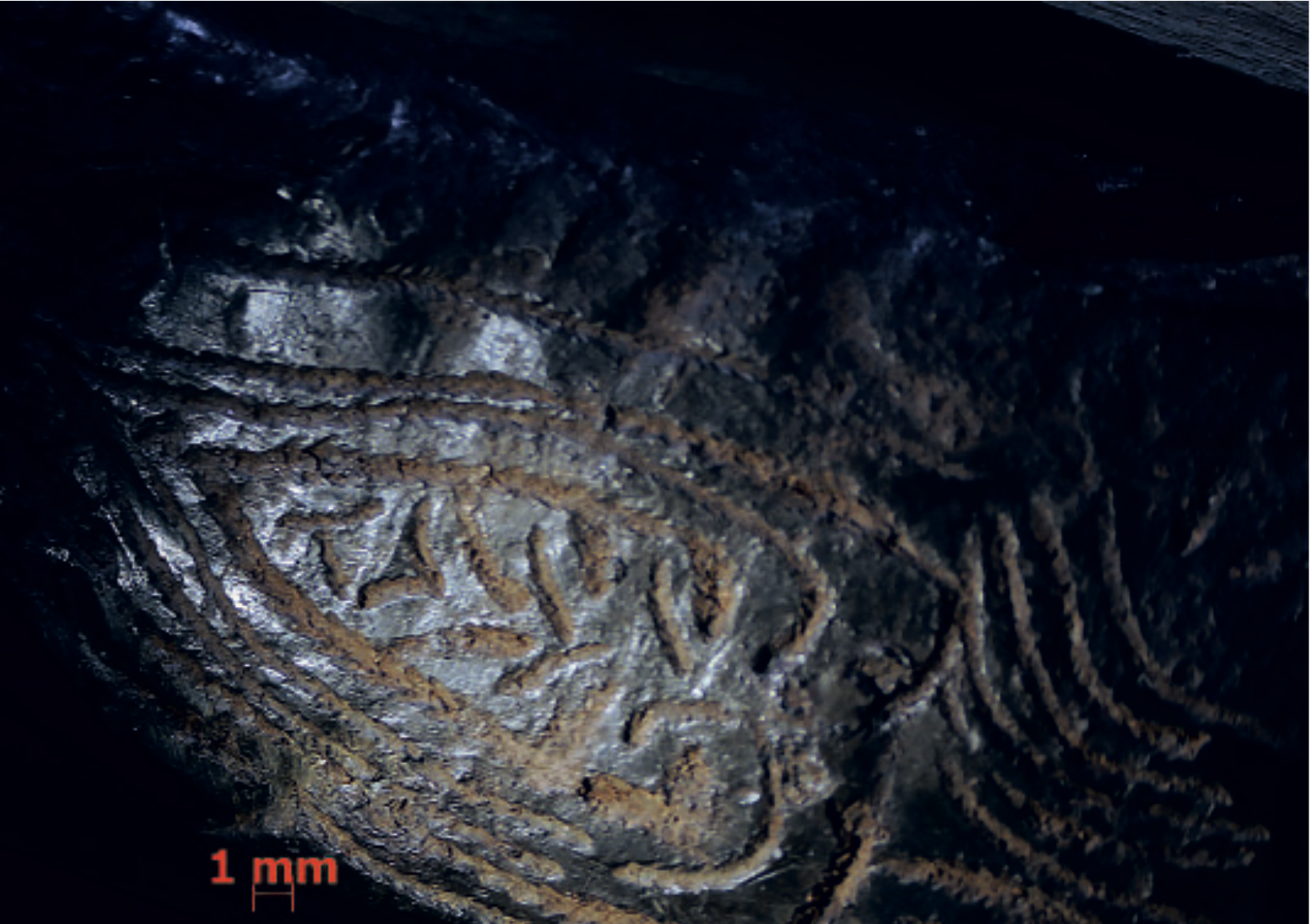
Another trait that makes the amulet unique is its mount. While it looks like it's made of silver, Eniosova was surprised to find that it was almost 100% tin — specifically, a silver-imitating tin-lead alloy. Just like today, tin wasn't as valuable or as expensive as silver, but because there weren't many tin sources in Europe at the time, it was still rare.
A close-up of the tin mount and its engraved decorations. (Image credit: Tyanina E.A. et al. The Volga River Region Archaeology (2026))
It's interesting that such a soft material was carved with engraved decorations, Eniosova pointed out. "It wouldn't have been easy, and this ornament is quite elaborate," she said. "It's a very, very well-done object."
All of these unusual characteristics seem to align with the artifact's discovery in a part of the Troitsky XVI excavation area that would have been inhabited by wealthy individuals. In fact, it was probably a hunting trophy belonging to an aristocrat, noble or military man, Eniosova said.
Historical texts report that wild-boar hunting in medieval times in what is now Russia was a privilege of the "druzhina," or military retinue, and the nobility, according to the study, which was recently published in the journal The Volga River Region Archaeology. Regardless of whether the wild boar was eaten, at least one of its tusks was extracted and then mounted with metal. The team thinks it was kept as a good-luck charm, mostly because of its size.
"It is highly probable that this mounted tusk functioned as a martial or hunting talisman," the researchers wrote in the study. "It symbolized the transfer of the beast's physical prowess to the hunter and served concurrently as a charm for good fortune."
Similar animal amulets with holes at the top, worn as necklaces, were popular in Veliky Novgorod during this time period, Eniosova noted. The newfound wild-boar tusk is missing its top part, but it may have once had a hole.
A close-up of an engraved ornament on the boar tusk's mount. (Image credit: Tyanina E.A. et al. The Volga River Region Archaeology (2026))
It still would have been a rare object, however. Boar tusk amulets were common in earlier periods, but they were very rare between the second half of the 11th century to the first half of the 13th century, despite the enduring widespread belief that these tusks had magical qualities.
The amulet could be linked to Scandinavian mythology, according to Eniosova. Indeed, some of Veliky Novgorod's first settlers were from Scandinavia. But the amulet was created over 150 years after they left the area, so the relation is hypothetical, Eniosova said.
Veliky Novgorod first appears in historical documents in the ninth century and was a major trading hub in the medieval polity known as Kievan Rus. Archaeologists theorized that at the time the boar tusk amulet was made, the city was inhabited by landowners and/or people involved with the fur trade, Eniosova said.
The finding is a "highly significant and unusual discovery," Alexei Gippius, a philologist at HSE University in Moscow who is familiar with Novgorod archaeology, told Live Science in an email.
Gippius, who knows the researchers but wasn't involved in the new study, added that the research sheds "new light on the origins and functioning of the mythological beliefs of the early Rus elite."
Researchers have discovered that children's brains can contain cells with their mother's DNA and that these cells can persist for decades.
The findings, which were posted to the preprint database bioRxiv June 10 but have not been peer-reviewed yet, are part of a growing body of work showing that a mother and fetus exchange cells during pregnancy — a phenomenon known as "microchimerism." Previously, scientists had found that a mother's brain harbors cells with her children's DNA.
The findings are important for several reasons, said Amy Boddy, co-director of the Microchimerism, Human Health and Evolution Project at the University of California, Santa Barbara, who was not involved in the study. Past work mostly found evidence of maternal microchimerism in infancy, and in blood samples, she told Live Science in an email. "What's exciting here is that it's tissue, not blood; it's real human data, not an animal model; and the methods are cutting-edge."
More broadly, the work reinforces the idea that microchimerism is "a normal process of mammalian biology," Boddy said.
Hunting down maternal cells in the brain
Before this study, there was sparse evidence for maternal microchimeric cells in brains, mostly because it is hard for researchers to get samples of human brain tissue and DNA from both parents and their children.
To overcome this challenge, a team led by Sami Kanaan, a staff scientist at the Fred Hutchinson Cancer Center in Seattle, analyzed brain tissue that had been surgically removed from dozens of children with severe epilepsy as part of their treatment. The patients ranged in age from 28 days to 19 years at the time of their surgery, and their mothers provided DNA samples through cheek swabs.
Kanaan's team used a tool called quantitative PCR to identify and count maternal cells hiding among millions of cells in the children's brains.
Out of 37 mother-child pairs, 26 children — 70% — had their mother's cells in their brains. These maternal cells were distributed across multiple regions of the brain, including the frontal, temporal and parietal lobes, which sit on the brain's outer surface, and the hippocampus, which is buried deep inside. Each sample had, on average, about 2.2 maternal cells per 100,000, though one sample from the hippocampus had 459 maternal cells per 100,000 and 11 children had no evidence of maternal DNA in their brains.
That prevalence is probably underestimated, Boddy said, "due to the limits of detecting rare cells at low frequency with this method."
Being a firstborn child seemed to increase the odds of having maternal cells in the brain. Of the children who carried their mother's cells, 14 were firstborns and 12 were later-born. In contrast, among the children who didn't have these cells, only one was a firstborn and 10 were later-born.
Using a technique called single nucleus RNA sequencing, which reveals what a cell is doing by showing which genes within the cells are switched on, the researchers found that the maternal cells had transformed into several types of brain cells. Likely, these cells were originally leukocytes and stem cells and had been transferred to the fetus via the placenta or during pregnancy or breastfeeding.
The transformed cells included neurons; oligodendrocytes, which produce the protective sheath around neurons; astrocytes, which support many brain functions and help fuel neurons; microglia, the brain's immune cells; and endothelial cells, which line blood vessels.
"Being able to use single-nucleus RNA sequencing to identify what type of cells the maternal microchimeric cells actually are is amazing," Boddy said. "We've been so limited in understanding the function of these cells, and papers like this, with these methods, are getting us closer."
During pregnancy, the mother and fetus exchange cells — a phenomenon called "microchimerism." (Image credit: Rhenizara S via Getty Images)
Checking healthy brains
To see whether these findings also applied to people without epilepsy, the researchers examined brain autopsy data from 29 individuals with no known neurodevelopmental conditions, ranging in age from 22 weeks of gestation to 40 years. They also analyzed brain tissue from three men in their late 80s and early 90s without any known brain conditions originally collected as part of an Alzheimer's disease study.
In total, the researchers found foreign cells in 25 of 32 people — about 78% — including in the brain of a man in his 90s.
The researchers suspect these foreign cells are maternal, but they couldn't confirm it because they didn't have DNA from the mothers. It is possible that the foreign cells came from a twin; an older sibling; a past pregnancy, miscarriage or abortion (in females); or, rarely, from a maternal grandmother, the team wrote in their paper.
As in the epilepsy patients, these cells had matured into several types of working brain cells. In younger brains, they most often became a specific kind of neuron, a layer 2/3 neuron, while in older brains, maternal cells were more likely to be microglia.
Given that these microchimeric cells take on very different roles, it would be interesting to know whether that diversity reflects their origins — for example, whether they came from a mother, an older biological sibling or a maternal grandmother, said Dr. Sing Sing Way, a microchimerism researcher at Cincinnati Children's Hospital Medical Center who was not involved in the study.
The number of maternal cells declined with age, but they never completely disappeared.
Boddy said the findings mostly raise new questions. "Do we maybe need microchimeric cells to 'help out'?" she asked. "Is diversity of cells in the brain important, or is it just a byproduct of being a placental mammal?”
Because microchimeric cells appear to be common, Boddy suspects they "are doing an important job in the brain, so understanding their function could be very important for understanding healthy brain development."
By using new analytical tools to pinpoint microchimeric cells, the study "pushes the boundaries" of previous research, but future studies would benefit from larger and more uniform datasets, Way said. That would mean obtaining more brain biopsies, analyzing more cells from each sample, collecting specimens at different ages, and sampling similar brain regions across individuals to better compare the results.
This article is for informational purposes only and is not meant to offer medical advice.
What it is: The collision-prone galaxy cluster MACS J0553.4-3342
Where it is: In the constellation Columba
When it was shared: July 2026
Around 100 years ago, Albert Einstein made an audacious prediction about space. The frequently right (but occasionally wrong) physicist theorized that, just as the curved lens of a magnifying glass bends light to increase an object's apparent size, massive celestial objects can curve the very fabric of the universe with their gravity — causing distant sources of light to bend, warp, and appear magnified as their rays pass through the region on their way to Earth.
Today, this phenomenon — called gravitational lensing — has been confirmed through dozens of telescope observations, and is a crucial tool that observatories like the James Webb Space Telescope (JWST) use to probe the light of the oldest, faintest galaxies in the universe. And in this newly released JWST image of a tumultuous young galaxy cluster, Einstein’s gravitational funhouse effect is on full display.
In the foreground, two bright white points of light ringed with white halos signify the gravitational center of MACS J0553.4-3342, a gargantuan collection of bound galaxies located in the constellation Columba (the dove). These two white beacons are massive elliptical galaxies, each wreathed in their own sub-cluster of smaller galaxies, according to a statement from the European Space Agency (ESA). And the two clusters are not getting along.
Studying the galaxies’ light as it appeared roughly 4.4 billion years ago, astronomers can tell the clusters are in the messy process of merging together. The two principal elliptical galaxies have already slammed through each other once, and now sit at a distance of around 1 million light-years apart (that’s about 10 Milky Ways lined up in a row). Eventually, that gap will close as the massive galaxies swoop back toward each other, finally combining into one.
A full-size view of JWST's observations (Image credit: ESA/Webb, NASA & CSA, S. Fujimoto)
But the real jewels in this galactic trove are hidden in the contorted, orange arcs of light that bookend the cluster on either side. Here, the magnifying effect of gravitational lensing is acting in full force — allowing JWST to detect the light of several faint galaxies from less than a billion years after the Big Bang.
Three bright dots in the arc on the left are actually three repeated images of a single galaxy, according to ESA. The trippy effect appears several times throughout the image, with each elongated orange streak cracking open a warped window onto an ancient corner of the universe that would otherwise be impossible to see.
Through observations like these, scientists using JWST have discovered that the oldest stars and galaxies in the universe have grown larger and faster than our leading theories of cosmology predict should be possible. Using one cosmic oddity to uncover another, this gravitational lens could keep astronomers busy for decades to come.
Nowadays, the word "weapon" may evoke modern-day technologies such as firearms, blades and missiles. Yet archaeological evidence shows that weapons have existed for hundreds of thousands of years. Of course, early humans wielded weapons that looked quite different from those used today.
So what is the oldest weapon?
Generally, weapons are defined as objects used to impart violence on other living beings, said Ben Fitzhugh, a professor of anthropology at the University of Washington in Seattle. That includes objects used in interpersonal conflict among hominins (a group that includes modern Homo sapiensand our relatives that evolved following the split from chimps and bonobos) and for hunting, Fitzhugh toldLive Science.
But archaeologists don't automatically consider just any object that could cause harm to be a weapon; context and intent matter, Rolf Warming, founding director of the Society for Combat Archaeology and a doctoral candidate in archaeology at Stockholm University, told Live Science in an email. For instance, experts excavating a site with potential weapons might look for evidence of hunting, such as butchered animal bones; or artifacts like pointed bone tools that can be used to craft weapons. They may also consider what objects were made out of and residue or wear marks on the weapons themselves, which can help determine how they were used.
According to Warming, archaeologists generally consider three finds as contenders for the oldest evidence of weaponry in the archaeological record: the Clacton spear, the Schöningen spears and throwing sticks, and the Kathu Pan 1 spear points.
Clacton spear
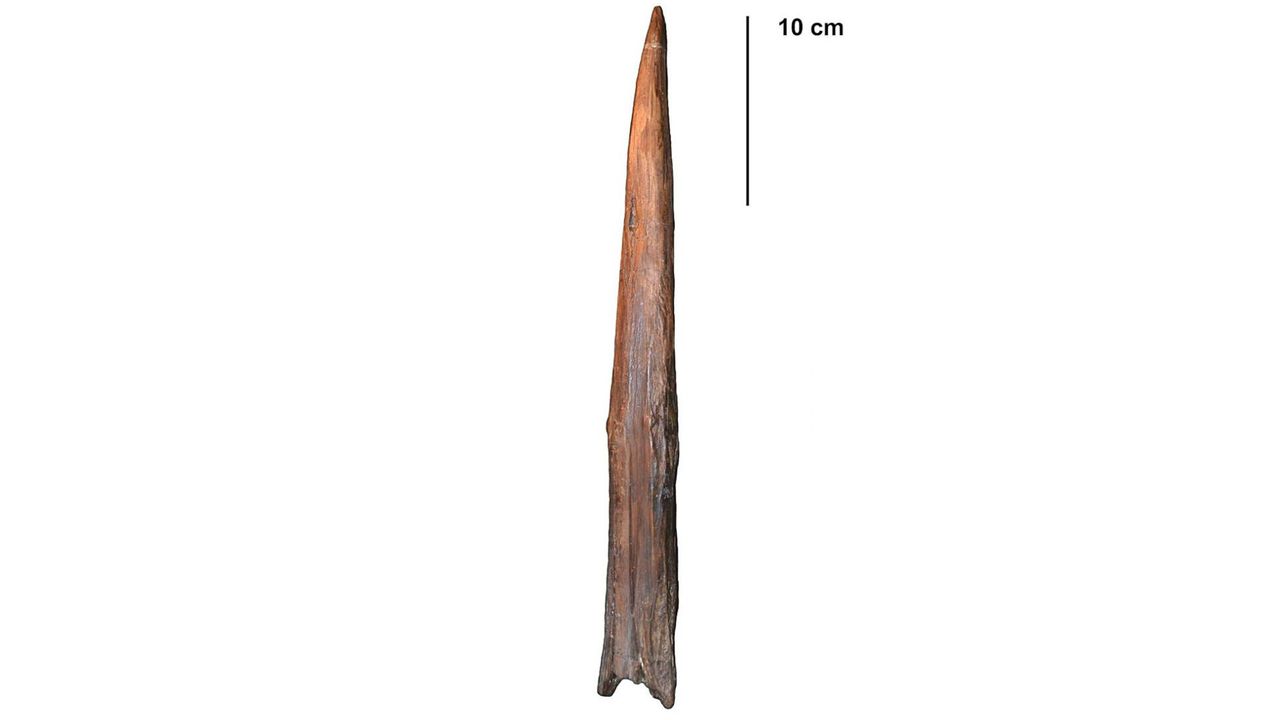
Scientists have estimated that the Clacton spear is over 400,000 years old. Experts think the uncovered 15-inch-long (37 centimeters) spear point was broken off from a longer shaft, perhaps by accident while the user was hunting, or deliberately as a ritual. It's made from yew wood and was worked with a tool to a sharp point on one end. The broken end was never found.
Excavated in 1911 from Clacton-on-Sea in Essex, England, the Clacton spear is now on display in London's Natural History Museum, where it is labeled as the oldest preserved wooden spear fragment in the world.
Archaeologists believe it was fashioned by either Homo heidelbergensis or Neanderthals— two hominins that predate H. sapiens. In fact, the spear appears to be older than our species, as the oldest known H. sapiens fossilsdate to around 300,000 years ago.The Clacton spear's shape, size and wood suggest that it was a thrusting weapon and that its makers engaged in cooperative hunting strategies.
Schöningen spears and throwing sticks
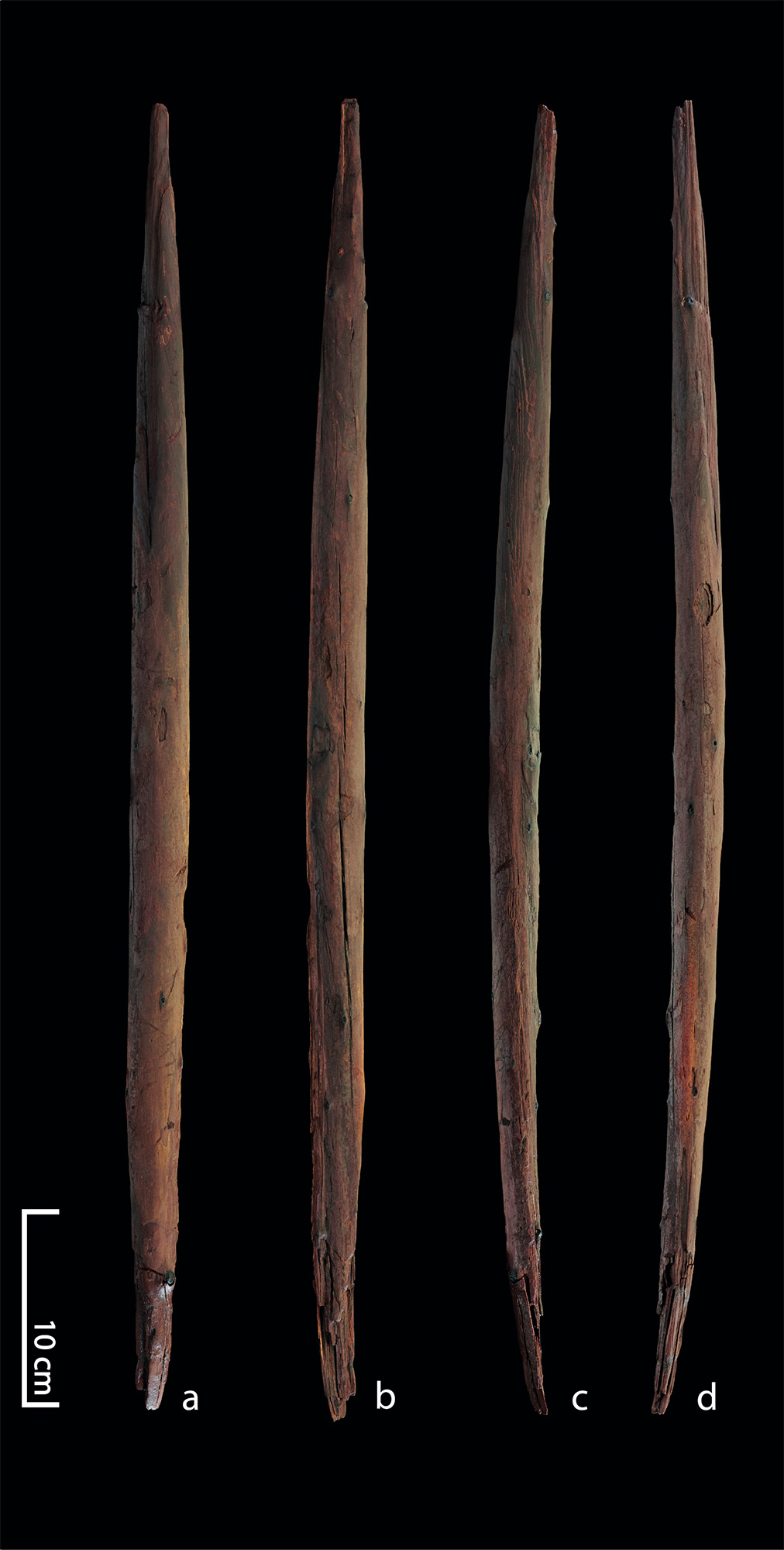
Different views of a throwing stick from Schöningen, a contender for one of the world's oldest weapons. (Image credit: Photograph by Volker Minkus)
They're considered the oldest completely preserved wooden weapons in the world, according to the Schöningen Research Museum; today, archaeologists' varying estimates place the weapons' age between 200,000 and 300,000 years old. Their creation has historically been attributed to H. heidelbergensis, an early human species that lived about 700,000 to 200,000 years ago throughout Europe, parts of Africa, and possibly in what is now China. More recent dating suggests the spears could potentially be the work ofNeanderthals, according to a 2025 study.
Scientists think these spears, which average just over 6.6 feet (2 meters) long, were used as thrusting weapons, throwing weapons or some combination of both to hunt larger game mammals, like horses, according to a 2024 study. The shorter throwing sticks are believed to be projectile weapons and average around 26 inches (65 centimeters) long.
"In fact, the [Schöningen weapons] were found in association with butchered horses," Fitzhugh noted. The spears were sharpened, hardened and blackened using fire. "These things were shaped in a dynamically sophisticated way," he said.
According to Warming, the Schöningen weapons suggest hominins had clear material knowledge and used different hunting tactics depending how far they were from their target.
Kathu Pan 1 spear points
Hafted spear tips — stone points attached to some form of handle or shaft — became more common in the archaeological record between 200,000 and 300,000 years ago across Africa and Eurasia, and were previously thought to be created by Neanderthals or H. sapiens.
However, 500,000-year-old stone points excavated from the Kathu Pan archaeological site in South Africa have signs of wear on the edges, and the shape of their base is consistent with hafted spears, suggesting they were used as weapons. Their age predates both Neanderthals and H. sapiens, and the location they were found in suggests they could have been created by H. heidelbergensis, who lived in regions of southern Africa at that time. Archeologists think they could have been used as spear ambush weapons.
But some researchers have contested this evidence, arguing that it's "indirect" or even controversial, as no wooden shafts were uncovered with the spear points to solidify them as weapons as opposed to stone tools.
These are some of the earliest examples of weapons in the archaeological record, but there may be older weapons that have not survived throughout time.
While hominins likely used organic materials like wood, sinew, fiber and adhesives to create objects and weapons, these materials break down or are destroyed over time, Warming noted.
Studying these ancient weapons gives us perspective about the present. After all, weapons are more than tools of harm: Warming said they are material clues that give us glimpses into how our early relatives combined materials, used their imaginations, shared knowledge and cooperated in groups.
Yet among these three important finds, Warming said that when inquiring about the oldest known weapon in the world, that "Clacton is the safest answer."
What it means: Autotrophs are organisms that can feed themselves with inorganic substances such as light (for plants) or methane (certain microbes). Autotrophs were the first single-celled life-forms to colonize the planet, thriving on chemicals bubbling up from the subsurface at deep-sea vents or figuring out how to harness the sun for energy. Heterotrophs (like you, me and all fungi), arrived on the scene later to feast on these DIY-ers.
How to use it in a sentence: Stromatolites, microbial mats built by cyanobacteria, are autotrophs that thrived in ancient shallow seas.
Can you crack our science word of the day puzzle, Chain Word?
Female farm managers are hidden in plain sight in ancient Roman texts, mentioned in laws, literature and grave inscriptions across five centuries. Modern historians have generally assumed they were housekeepers, in charge of domestic tasks and household meals, and segregated from the productive business of the farm.
My new paper, published in the Journal of Roman Archaeology, challenges this assumption.
In fact, there is evidence to suggest that many Roman female farm managers supervised wine production and other processes vital to farming and profits.
A false lead
A farming manual written by the Roman writer Lucius Junius Moderatus Columella in the 1st century CE is a window to the roles of the female manager.
An upper class landowner himself, Columella lists the responsibilities of farm managers, who were probably enslaved. The male manager was termed the vilicus, and the female manager the vilica, terms derived from their roles at the "villa".
But many historians reading this text have been side-tracked by a false lead: Columella begins his section on the vilica with a long quote from the Greek philosopher Xenophon, who wrote in Athens more than four centuries earlier.
A quote from Greek philosophy led many to misunderstand the roles women played in ancient Roman farming. (Image credit: Mahmoud Amer/Pexels)
The "natural" role of women, according to Xenophon, was to work indoors. Therefore in his discussion, the ideal upper-class married woman is depicted staying inside her town house to supervise the domestic work of the slaves.
The Greek writer is not discussing farm workers. In fact, Columella says four times that these ideas are not his own, but those of Xenophon, writing long ago.
Columella lists a completely different set of responsibilities for the vilica on a Roman farm: most importantly, the making of wine and olive oil, which were highly valuable commodities — the backbone of landowners' profits.
In his description of the vilica's duties, Columella includes the extraction of the juice from grapes during the harvest; adding flavorings and preservatives such as salt, wormwood, fennel or boiled grape-juice; and overseeing successful fermentation into wine.
According to Columella, the vilica also managed the processing of other farm products to make them long-lasting and profitable, such as turning inedible olives into olive oil for sale.
From archaeology we know that production of wine or oil, using huge machines in substantial buildings, could reach 50,000 to 100,000 litres per year, or even more. The vilica was therefore responsible for overseeing large-scale work essential to the operation of the estate.
Calling on the gods
Correct sacrifices to the gods were seen as vital to the success of the farm. Archaeology has uncovered altars for offerings in Roman wine-making buildings.
Wine-making in the Roman world was a precarious process, due to uncontrolled temperatures, bacteria or oxygenation. Wine could easily go moldy or turn into vinegar.
A striking element of Columella's account is that he includes carrying out offerings to avert such a disaster in his instructions for the female farm manager.
Looking for more clues
Other texts contain barely more than a mention of the vilica, revealing only her presence.
But we can still put together some clues.
Legal writings on inheritance, quoting the 1st century BCE jurist Trebatius, include her in the instrumentum fundi — whatever (including enslaved personnel) is required for productive work, gathering and preserving produce of the estate.
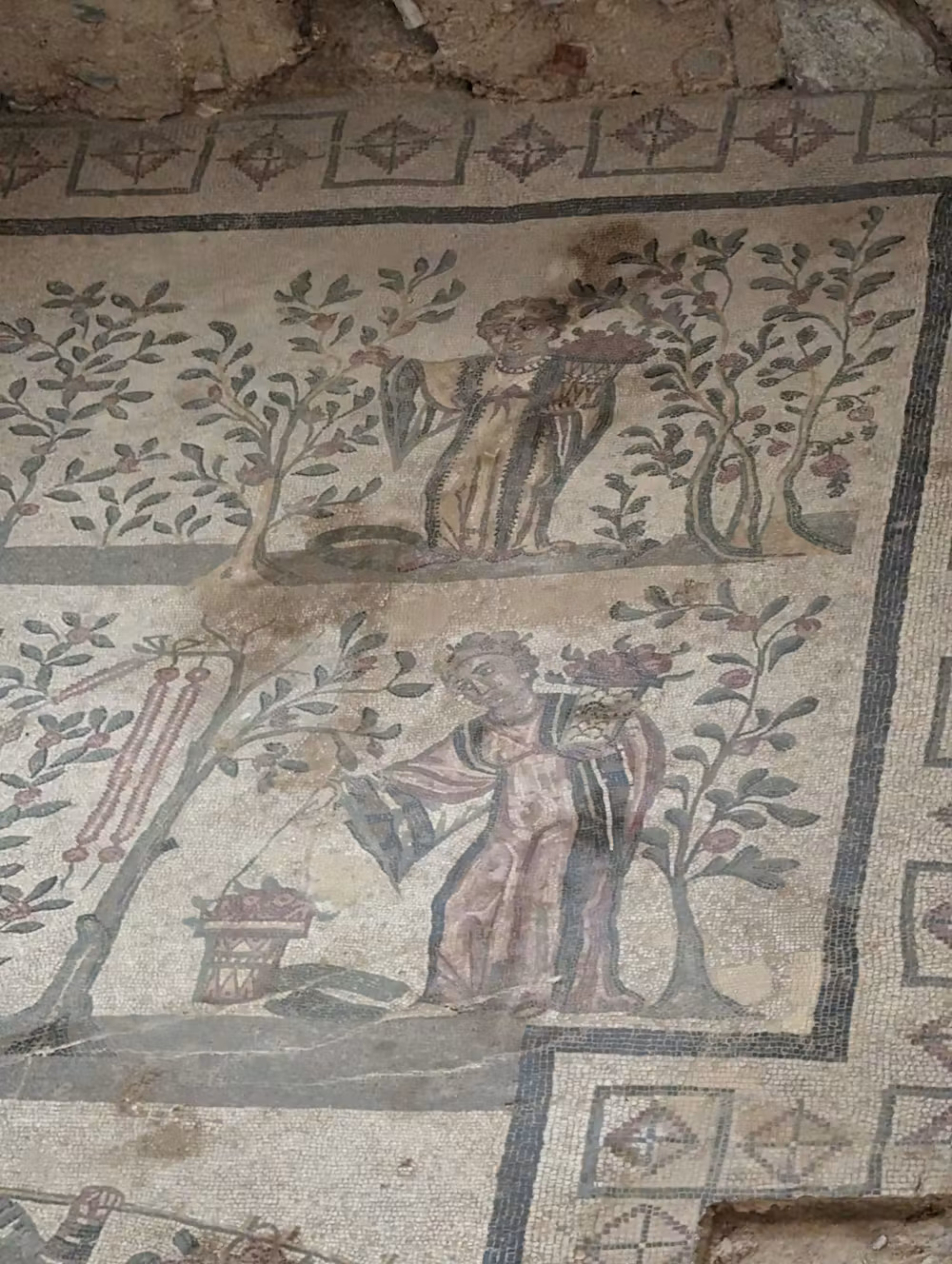
A mosaic shows Roman farm women at the Villa Romana del Casale, Sicily. (Image credit: Joe Lynch)
Another aristocratic landowner and writer, Cato the Elder, living two centuries before Columella, lists both the female and the male farm manager as essential staff for a vineyard or olive farm.
He devotes only one small section to outlining the female farm manager's tasks, but a close look shows these are not predominantly domestic. Cato includes keeping poultry and processing of seasonal farm products. Although he does include supervision of cleaning, this could refer to maintenance of work spaces such as stables and wine making buildings, an integral part of estate management – and also listed by Columella among the vilica's duties.
Cato also gives the vilica the responsibility for making sacrifices to the gods for the success of the farm. She must regularly offer garlands at the altar "for abundance", he writes.
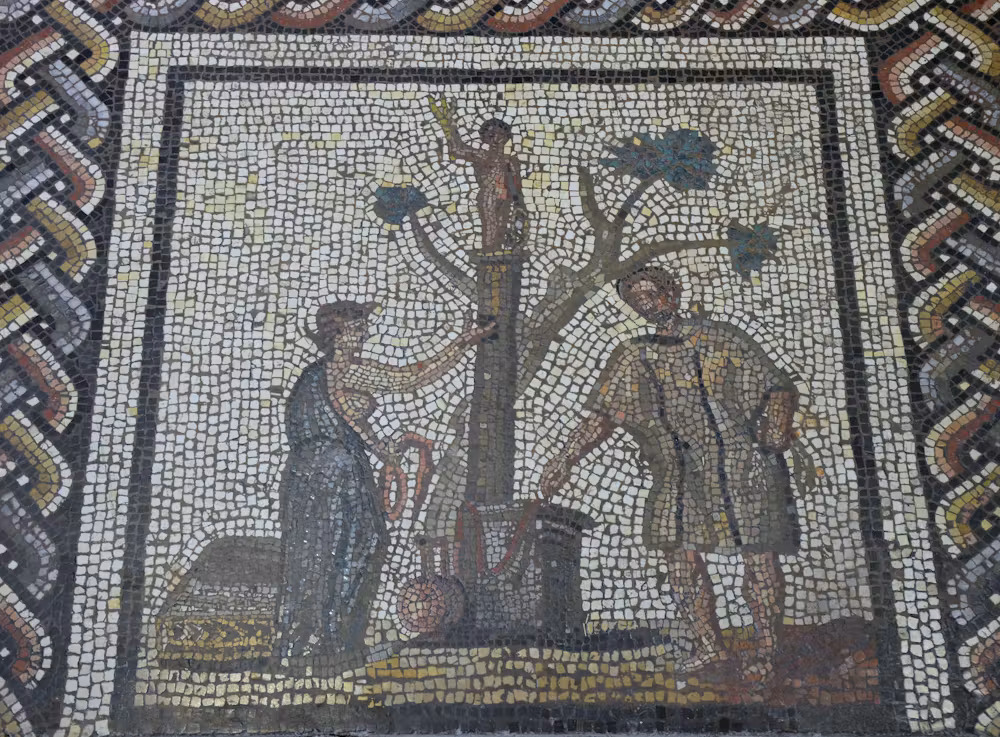
A Roman mosaic showing estate work in different seasons depicts a scene of sacrifices for abundant crops to the god Jupiter (in his Celtic form as a sky and weather god). A woman is shown holding an offering of garlands, just as Cato instructs. Beside her are a jug for wine offerings and a male figure.
Perhaps this mosaic shows the vilica and vilicus, both essential to the success of annual harvests. While such images of female figures are rare, one fragmentary wall painting from Rome shows a female overseeing wine-making workers, just as Columella describes.
This combined body of evidence suggests we should expand outdated understandings of the roles that Roman women played in farm production, the dominant sector of ancient economies.
No vilica has left us an account of her work in her own words. But by paying careful attention to the evidence, we can hear an echo of her voice.
Much of the discourse around artificial intelligence (AI) focuses on grand ideas such as the rise of a hypothetical artificial general intelligence (AGI) and superintelligence. Speculation swirls around the likelihood that the technology will thin out the job market, or even precipitate the death or evolution of human creativity. We haven't focused as much on the multitude of subtle yet hugely consequential ways in which AI is reshaping the social fabric of our society, and how we collectively imagine the future.
That's the argument sociologist and AI researcher Mona Sloane, an assistant professor of data science and media studies at the University of Virginia, puts at the center of her new book, "Predicted: How AI Is Restructuring Social Life" (University of California Press, 2026). Whether we consider email filtering, prediction markets or social media platforms, AI systems are embedded in the heart of how we interact with the digital world. Indeed, AI is so ubiquitously integrated into everyday interfaces that it's given rise to a new kind of "prediction logic" that makes assumptions about who we are and how we are likely to behave.
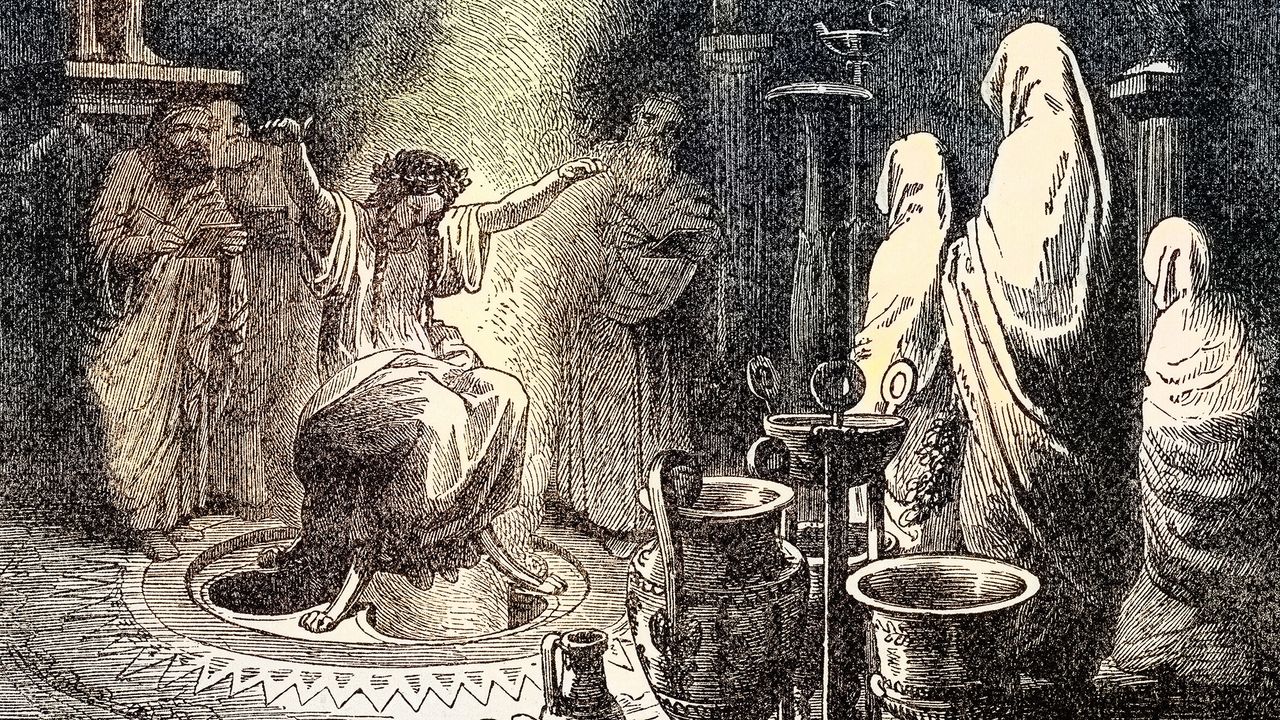
In this excerpt, Sloane compares the AI technology we use today with the oracles of ancient Greece, framing it as an omnipotent presence that has moved to organize society through the prism of prediction models. This in turn affects how we learn, live, love and even picture the future.
We live in a world of oracles. These oracles constantly feed us predictions that shape our social lives — how we socialize, love, work, gain access to resources. Like in ancient Greece, predictions occupy a prominent role in our society. We consider our oracles so mighty that their predictive power rules over the fate of whole economies and even geopolitical constellations. Where the oracle is, there is the center of the world.
But unlike in ancient Greece, our oracles aren't high priestesses delivering divine prophecies. They are artificial intelligence (AI) systems melted into the infrastructure of everyday life. Today, it is nearly impossible to evade the grasp of AI predictions. I voluntarily and involuntarily use AI on a constant basis: by using email providers that build on the predictive properties of AI for spam filters, by conducting online banking and getting enrolled into AI-automated fraud detection, or by using generative AI for supporting administrative chores. It has become part of how I experience the world.
It can be a relief when it helps me do things I dread or am bad at, such as produce a spreadsheet template I desperately need, help streamline language produced by different authors for a report, or generate a specific image for a presentation. Often, I must intently handhold the AI, checking and fixing its outputs. And sometimes, with deep frustration, I give up and start all over to complete my task manually.
The omnipresence of AI prediction can make it easy to think of these systems as inevitable, quasi-natural phenomena we are subject to, rather than a part of. But they are quantitative concepts that arise from social agreements about how we ought to capture and interpret the world around us.
"Quantitative concepts are not given by nature: they arise from our practice of applying numbers to natural phenomena," wrote Rudolf Carnap, a logician and professor of philosophy of science, in 1966. His point was that numbers can be useful, because they allow for information to travel more easily across contexts, as a sort of language. They also make mathematical predictions possible.
To him, this was first and foremost useful for engineering modern life: A quantitative language allows for the articulation of quantitative laws that, in turn, facilitate the routine generation of mathematicized predictions, particularly in the realm of physics. Being able to predict how energy, compounds, and materials will behave in certain configurations is the reason humans were able to build the conveniences of airplanes, cars, and telephones. For Carnap, predictions were simply instrumental in this way.
AI's ability to predict is changing how we think about the future. (Image credit: Yana Iskayeva via Getty Images)
Today, almost 60 years later, this pragmatic approach to mathematical prediction has been turned on its head by AI. Prediction is no longer just a handy tool in physics or engineering. The promises of AI's oracular power have turned prediction into a logic for structuring social life. This is a dangerous proposition. It implies that AI is always necessary or even inevitable and diverts attention from the social forces shaping ideas around this technology in the first place.
AI systems are not natural phenomena that happen to us. They are collective expressions of society. As such, they are not just a hype or a deception concocted and executed by global tech elites. They indicate a wider shift in how we imagine and enact society. Many critical discussions of AI characterize this phenomenon chiefly as heightened surveillance and capitalist extraction. But this is a myopic diagnosis. AI's most powerful effect is the subtle yet comprehensive recalibration toward prediction as a guiding principle for organizing society. In this book, I call this phenomenon the prediction paradigm.
AI is something that we do as part of going about our lives and participating in society — it is social infrastructure, affecting how we relate to one another and how we act in public and in private. Like all infrastructures, AI allows resources and ideas to flow in certain directions, but not others. AI uses data from our collective past to predict our individual future. And because AI deals in futures, it solidifies a linear time regime that hardens our social commitment to causality: The past always predicts the future. The problem of AI is not the rise of intelligent machines, but the extraordinary social significance ascribed to this linearity, fetishizing the future and leaving little room for deliberations about what (other) futures may be possible or we may want.
Predicted: How Ai Is Restructuring Social Life: 1 (co-Opting Ai)
In Predicted, Mona Sloane offers a pragmatic framework for understanding these transformations around prediction, classification, and linearity, proposing that we think about AI as a social arrangement that we coproduce. Drawing on over a decade of empirical research and real-world examples, this book invites us to see AI for what it is: deeply social, deeply political, and open to change.
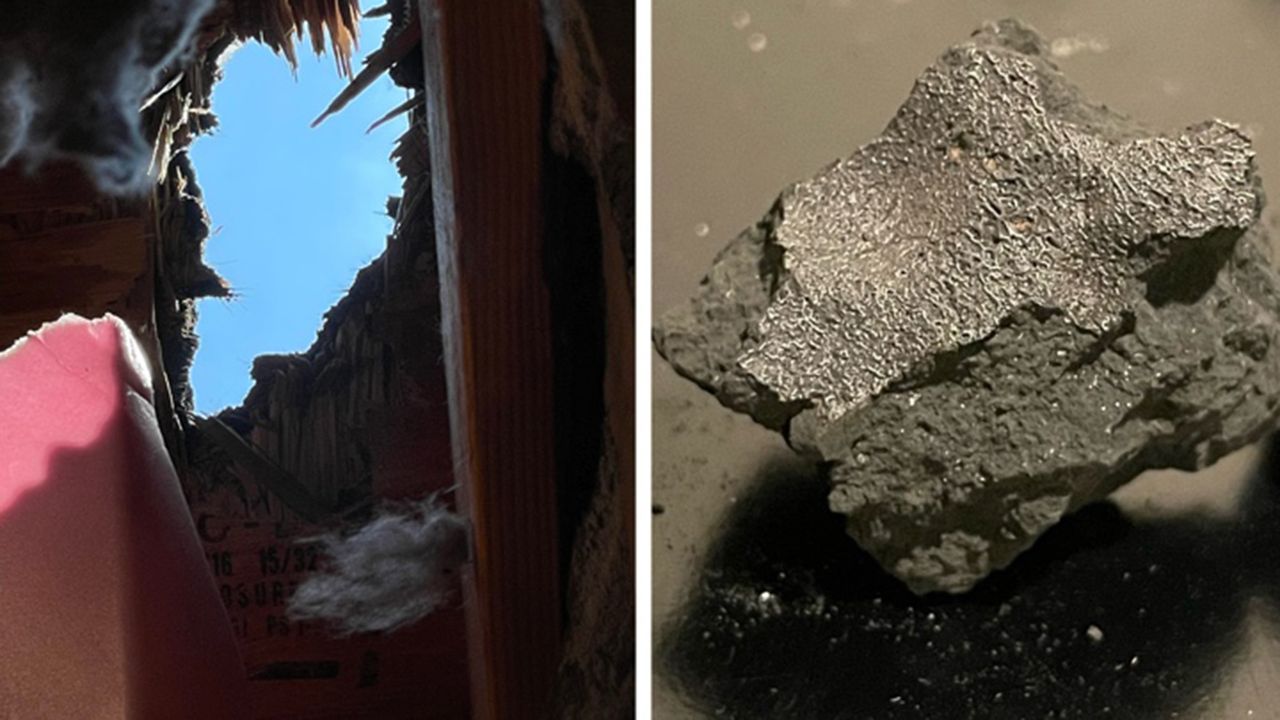
Scientists have discovered the building blocks of life inside a meteorite that smashed through a New Jersey home two years ago. The space rock contains amino acids, carbon compounds and other "prebiotic" molecules similar to what may have helped kick-start life on our planet, a new study shows.
Scientists on the study team — led by Peter Jenniskens, a meteor astronomer with affiliations at the SETI Institute and NASA's Ames Research Center — praised the homeowner in Hillsborough, N.J., for quickly preserving the meteorite after it fell through the roof on July 16, 2024, despite the adverse circumstances. His actions included using disposable gloves and aluminum foil to place pieces of the meteorite fragments into glass jars.
"I was at home at the time, heard a loud crash and found a hole in the ceiling of the master bedroom," the homeowner, who was not named, said in a statement from the SETI Institute. "I smelled a strong, sulfur-like odor and saw many black fragments, along with debris and black dust that covered my bed, carpet and surrounding areas."
A close-up of the Hillsborough meteorite’s surface. (Image credit: SETI Institute)
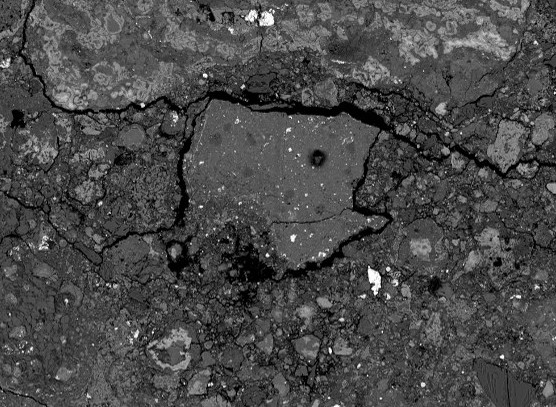
Those meteorite pieces were precious, the scientists said, and likely came from an ancient solar system planet that wasn't fully formed. "A forensic study of the fragments revealed that they contained preserved bits from near the surface of a small primitive asteroid where it experienced concentrated salty fluids — a process not previously known from this type of protoplanet world," Jenniskens said in the statement.
The rock broke apart in midair, with observer reports stopping when the meteor reached 22 miles (35 kilometers) in altitude, although Newark Liberty International Airport briefly tracked pebbles falling from the sky with Doppler weather radar after that. Fragments from only one meteorite — called Hillsborough, after the town where it crashed through the New Jersey home — were recovered.
The American Meteor Society used its cameras in Northford, Connecticut, and Douglassville, Pennsylvania — along with a doorbell camera in Wayne, New Jersey — to figure out the meteor's origin, Mike Hankey, an operations manager at the American Meteor Society and co-author of the study, said in the statement. "The path traced back to low in the asteroid belt."
Hillsborough is the second stony meteorite of its type ever spotted in a fall. Later analysis showed that the meteorite is full of ancient brines or salt. Scientists classified the meteorite as a type of stony space rock called a carbonaceous chondrite.
Scientists will compare the salt minerals to samples of asteroids Ryugu and Bennu, both of which contain ingredients of life and are samples of another carbonaceous chondrite type that formed earlier than Hillsborough. This analysis could help scientists further trace the origins of life-friendly chemistry in the early solar system.
The ancient Egyptians believed that gold was the flesh of the gods, meaning that bestowing gold tongues upon the deceased could help them speak in the afterlife. But it's not entirely certain whether all of the newly found gold objects were tongues (one may actually depict a wheat ear, a symbol of fertility), and the mystery of a possible false door inside the tomb is also stirring up debate.
Astrochemists delivered a sweet surprise this week, with news that they had detected a type of sugar called erythrulose in interstellar space, near the center of our Milky Way galaxy.
Erythrulose, consisting of four carbon atoms, is found in raspberries back on Earth. But its presence in space is a mouthwatering sign that the essential ingredients for life are highly abundant across our galaxy. That could make life much more prevalent than we thought, and could mean that aliens may also have a sweet tooth.
Animals come in all shapes and sizes, but are any a satisfyingly perfect sphere? It turns out that this deceptively simple question holds some evolutionarily profound implications.
Geoguessing emerged in the last decade as a geography game (and later a popular esport) in which players deduce locations from Google Maps imagery. But what about geoguessing something completely undocumented, and one that only trained scientists should be able to recognize?
In that circumstance, amateur astronomer Joël Lapointe should be crowned this year's champion. Using Google Maps to plan a hiking trip in Quebec's Côte-Nord region, Lapointe stumbled upon an indentation that has now been confirmed by scientists to be a 390 million-year-old scar from a gigantic asteroid collision.
"I get lots of messages from the public thinking they have found a crater and 99/100 turn out not to be the case," Gordon Osinski, a professor of planetary geology at Western University in Canada who confirmed the find, told Live Science in an email. "This is one of those rare examples that shows this is possible."
If you're looking for things to keep you busy over the weekend, here's a selection from our best opinion pieces, interviews, diagnostic dilemmas and crosswords that we published this week.
Named Colobus congoensis after the remote region of the Democratic Republic of the Congo where it was found, this striking newfound species has orange lips and makes unique roars and snorts.
The monkey's discovery is remarkable, most of all because finding new primates is extremely rare — with only five new ones being identified in Africa over the past 75 years — and also because of its relatively large size. Pinning down the species took years of careful tracking and documentation, alongside work with people from eight local villages who had knowledge of it.
Besides being a cool find in its own right, the discovery points to there being potentially many more undiscovered mammals, fish, reptiles and plants hidden inside the Congolian rainforest.
Animals come in a wide range of shapes and sizes, from spindly stick insects to blubbery whales. Round animals are harder to come by, but they're more common in the ocean than on land. So what is the roundest animal, and why are round animals uncommon?
At a glance, round animals might not seem that out of place on land. After all, small mammals like rabbits and pikas often look a bit spherical when their fur is puffed out and they're sitting. But Chris Law, an evolutionary biologist at the University of Washington in Seattle, said this shape is mostly an illusion.
"They're physically not as round as they appear to be," he told Live Science.
A sphere has the lowest surface-area-to-volume ratio of any shape, which is ideal for heat conservation. Law said the ability to curl or scrunch into a sphere can be essential to the survival of small animals, which lose heat more quickly than larger animals do.
Some small and furry mammals like the cotton-tail rabbit, Ezo flying squirrel and northern pika make look spherical when they're scrunched up and sitting down, but in reality they're not as physically round as they appear to be. (Image credit: Chris Rogers/Satoru S/feathercollector via Getty Images)
Rolling into a circle can also offer protection. To safeguard their vital organs, animals like armadillos and hedgehogs roll into balls when threatened, leaving only their armor or spikes exposed to predators. But when you look at the skeletons of these supposedly round critters and their shape when they're not scrunched up, they aren't round at all, Law said.
In fact, there are several reasons why round creatures are rarely found on land. Being perfectly round all the time would make it difficult to fit into small spaces, which is a key survival technique for avoiding predators, he added, and with the effects of gravity, having a lot of unsupported round mass puts strain on an animal's body. Overly round mammals, like obese cats and dogs, often suffer joint issues and other health problems.
"As a round animal, you're probably going to lose mobility, and you're going to be picked off by predators pretty easily," Law told Live Science.
There are exceptions, however. For example, beetles are small enough not to be affected as much by gravity and can fit into nooks and crannies without much wiggling. Their round shape coupled with their hard carapace makes them more difficult for predators to eat. And rain frogs puff up into a round shape to keep predators from removing them from their hiding spots.
If we're counting animals that are only round sometimes, then pill bugs (also known as rolly pollies) might take first place for the roundest land animal. But if not, rain frogs, and beetles like ladybugs, are the top contenders for the roundest land animal. But even these animals aren't perfectly round; ladybugs have flat bottoms to make it easier to move around, and rain frogs are less spherical when not puffed up.
Round sea animals
Being round at sea is a little more feasible than it is on land. In fact, sometimes, it's critical to survival.
Karly E. Cohen, a biomechanist at Friday Harbor Labs in Washington, studies lumpsuckers, a type of fish she describes as "quite round." These bulbous fish have suction cups made of enamel on their stomachs, which they use to latch on to surfaces at the bottom of the ocean. Lumpsuckers have armor, also made of enamel, covering their round shape. According to Cohen, lumpsuckers' roundness plays a huge part in keeping them attached to the seafloor or other surface. The curve of their bodies, coupled with the tooth armor, modifies the drag around the animal, creating a force that pushes them down rather than shooting them into the water column.
A lumpsucker sits on a rock. These animals use their enamel armor and their round shape to stay anchored to the ocean floor. (Image credit: MWCPhoto via Getty Images)
Although gravity still works underwater, buoyancy helps push objects up, meaning the effects of gravity do not feel as strong at sea as they do on land. According to Cohen, lumpsuckers can get around just fine, if a bit more slowly than their more streamlined neighbors. And like pufferfish and porcupine fish, lumpsuckers' round shape and uninviting exterior make them tough to swallow — literally.
"There's no real good way to eat an apple whole; you have to take a bite," Cohen told Live Science. "And then this thing is armored, so it's very hard to take a bite."
All about symmetry
Despite their spherical shape, lumpsuckers don't quite win the award for the roundest animal. Lumpsuckers, like most animals, have bilateral symmetry, which means they are divided into two symmetrical sides across one plane of symmetry. But there are animals that have radial symmetry, which means they are symmetrically arranged in a circle around a central point with multiple planes of symmetry.
Echinoderms — which include sea stars, sea urchins and sand dollars — have pentaradial symmetry, which means they have five planes of symmetry arranged around a central point. According to Laurent Formery, a developmental biologist at the Oceanological Observatory of Banyuls-sur-Mer in France who studies echinoderms, scientists aren't entirely sure of the benefits of pentaradial symmetry or why echinoderms are the only modern animals that have it.
However, Formery thinks being divided into five sections instead of two may give echinoderms better sensory perception than bilaterally symmetrical animals. Echinoderms have decentralized nervous systems, meaning that instead of a brain, they have a series of neurons distributed evenly across their body, and photoreceptors all over their skin.
"They are kind of like a big crawling eye and brain, so they are receiving information from everywhere," he told Live Science. "They have a completely different way, that is difficult for us to imagine, of interacting with their environment."
An urchin in the genus Histocidaris. Underneath their spines, sea urchins are almost perfectly spherical. (Image credit: Volgi archive via Alamy)
Because of this unique organization, radially symmetrical animals can sense predators from any direction. They can also easily switch which segment of their body is in the lead, making it easier for them to change directions to capture prey.
Discounting their spikes, certain species of sea urchin are almost perfectly spherical. Like lumpsuckers, sea urchins' spherical shape, coupled with their spines, makes them difficult meals for predators, Formery said. Sponges lack any symmetry, so they can develop all sorts of body shapes. One species, called the death ball sponge, looks like a Sputnik lamp, with many hook-covered spheres attached to its spindly "arms."'
Under the sea, urchins in the genus Histocidaris, like Histocidaris purpurata and Histocidaris formosa,are the closest to perfect spheres, making them the top candidate for roundest animal.
Although roundness might be uncommon in the animal kingdom, Cohen said it's fascinating to study these animals and the reasons for their adaptations.
"As somebody that's interested in the tools and ways organisms work in their environments," she said, "they're a real treasure trove of evolution."
What do you know about the animal kingdom? Test your knowledge with our animal quiz!
What it means: Neuroplasticity is the ability of the nervous system to adapt to the environment or to injuries by forming new connections and modifying and strengthening existing connections. Neuroplasticity can happen after an injury, such as a stroke or trauma to the brain, but it also occurs during ordinary learning. Just by reading this definition, you may be making new, sustainable brain connections.
How to use it in a sentence: Scientists used to think neuroplasticity was an ability only the the young had, but researchers are increasingly learning that aging brains can adapt throughout the lifespan, much to everyone's relief.
Can you crack our science word of the day puzzle, Chain Word?
Scientists long thought that when RNA kick-started life on Earth 4 billion years ago, it could form only small, simple structures. But new research shows that naturally occurring RNA molecules can also adopt large, sophisticated geometries, like filaments and cages. Now, scientists wonder whether the structures were present at life's beginning.
According to an idea known as the RNA world hypothesis, RNA-based life-forms preceded modern ones that use DNA and protein. RNA, a molecular cousin of DNA, still plays roles in modern cells but does not serve as the primary genetic material. By comparison, primordial species used RNA to store genetic information and to catalyze reactions as stand-in enzymes.
Proteins eventually dominated as enzymes, perhaps because they can fold into more diverse figures than RNA can. That's because proteins are composed of 20 types of subunits, called amino acids, each with a unique structure, whereas RNA is composed of only four subunits, called nucleotides, that all adopt similar shapes.
Scientists originally thought that only proteins were varied enough to assemble into large structures, but a new paper has demonstrated that RNA — though more limited in its variety — also has the capacity to form these large configurations. The research was posted to the preprint server bioRxiv July 1 and has not been peer-reviewed yet.
"We show RNA can do things which we have never seen before," said study co-author Lin Huang, an RNA biologist at Sun Yat-Sen University in China. "It suggests that at the origin of life RNA could assemble into all kinds of shapes," he told Live Science.
Huang and his colleagues had hypothesized that RNA molecules could link together if they possessed sequences that fold into "kissing stem loops." This occurs when an RNA strand folds over on itself, forming a structure that resembles a loop in a shoelace. If loops from different RNAs bond together, or "kiss," the molecules could link up and form larger complexes, the researchers proposed.
After sifting through a bevy of RNA sequences, the researchers found a family of RNA molecules encoded by bacteriophages — viruses that infect bacteria — that form these loops. They purified several of these RNA molecules in the lab, allowed them to assemble in a dish, and then captured their structures using cryo-electron microscopy.
They discovered that some of the RNA molecules formed long filaments. These resembled protein-based filaments such as the cellular cytoskeleton, a scaffold that participates in many functions, including shaping and moving the cell.
Other RNA molecules assembled into cages as large as common viruses. Some of these took the form of an icosahedron — a 3D shape that is built from 20 equilateral triangles and resembles a soccer ball. Many viruses, including herpesviruses, package their genome into protein-based icosahedra called capsids. This raises a question: Could RNA-based capsids have packaged genomes in the RNA world?
RNA structures assemble into icosahedra as large as protein-based virus capsids. (Image credit: Lin Huang)
This work demonstrates that RNA had the capacity to assemble into these elaborate structures during the RNA world, Huang said, but that doesn't prove it actually happened.
"I definitely think that environmental parameters are a question," Anna Medvegy, an evolutionary biologist at Eötvös Loránd University in Hungary, told Live Science in an email. "Can these structures form in the environment in which the hypothetical RNA World existed?" said Medvegy, who was not involved in the new work.
If scientists could recreate these environmental conditions at the dawn of life, such as high temperatures and low pH, and still observe that these structures take shape, that would strengthen the theory that they could have been present in the RNA world, she said.
Although the RNA cages and filaments were large, Huang's team generated them using only short RNA strands, each no longer than 200 subunits. Medvegy said long RNAs are susceptible to breaking, so if short strands can assemble into these structures, that provides more promise that these multi-tiered molecules could have formed in the RNA world.
Another question is whether these elaborate RNA complexes currently assemble inside the bacteriophage-infected bacteria from which they were derived. So far, Huang's team has only seen these structures form in a lab dish, so they need to determine if factors inside bacteria, such as proteins, would either disrupt or enable their formation inside cells.
Beyond providing insight into life's beginnings, these RNA cages could have potential applications in biotechnology, Huang thinks. Efforts are underway to use DNA folded into "DNA origami" to deliver drugs into cells, and Huang thinks DNA's older cousin, RNA, could one day play a similar role in medicine.

 Login