❌

Reading view

Big dogs age faster at an epigenetic level, new study finds

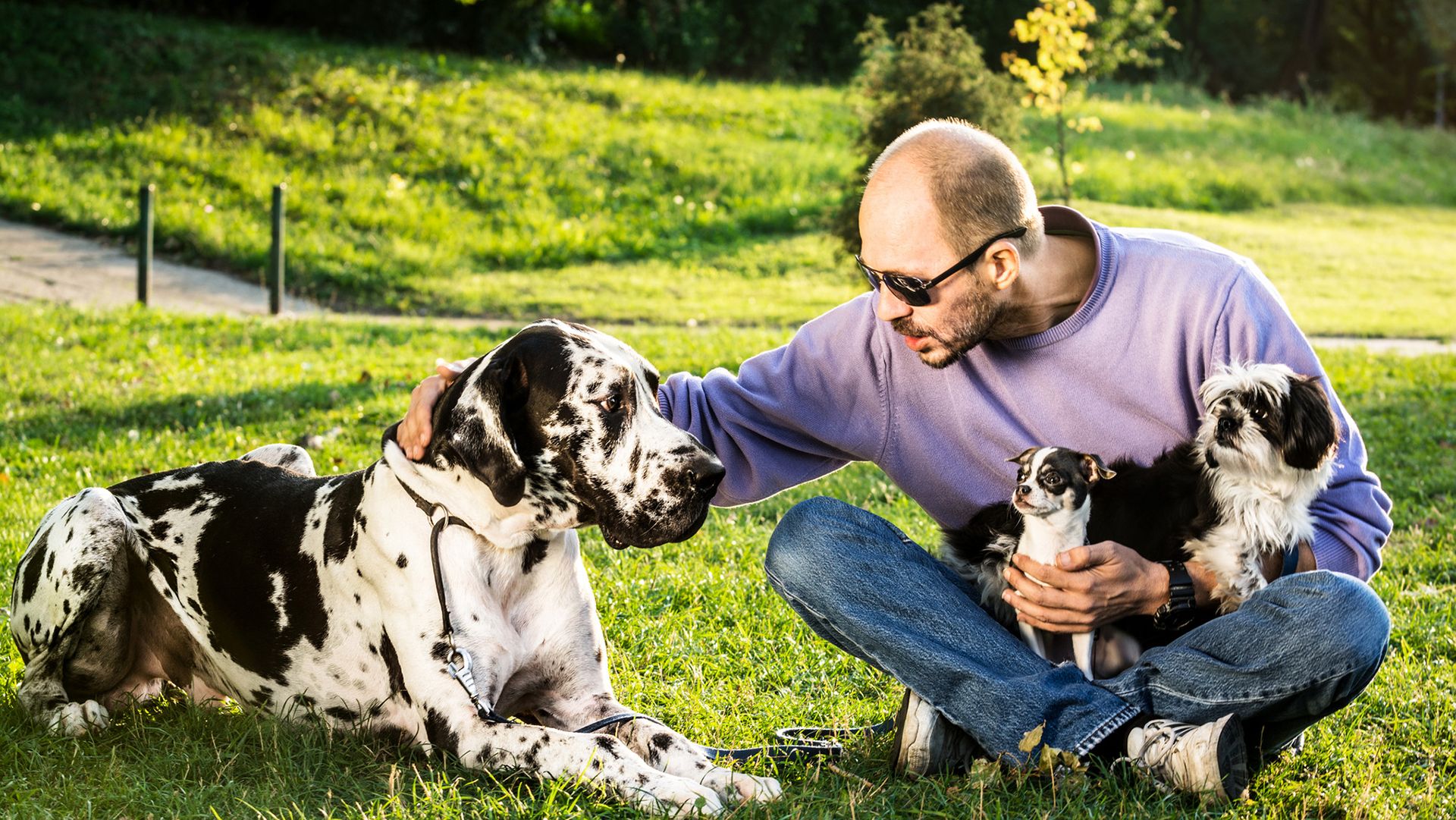
Great Danes and mastiffs rarely live more than a decade, while Chihuahuas can live twice as long. Exactly why big dogs die younger than small ones do has been unclear β€” but new findings may help to solve that mystery.

The research, published Thursday (Oct. 8) in the journal Science, looked at a chemical code written on top of dogs' DNA. This code, called the methylome, consists of chemical tags called methyl groups, which bind to DNA's building blocks.

Proteins constantly access DNA, loading up the information written in its code and taking that data away to be turned into new proteins for the cell. But these methyl groups can act as tiny roadblocks that stop that process in its tracks.

These groups are one type of "epigenetic marker," which collectively help to control gene activity, and their arrangement on DNA changes predictably as animals age, study co-author Blaise Mariner, a bioinformatician at Arizona State University, told Live Science. Across many studies and species, including humans, scientists have used this data to build epigenetic clocks that track animals' biological ages.

Dogs happen to be a great species for studying aging. Their owners devotedly track what they eat, how they live, and how their health changes over time. So Mariner and his colleagues built epigenetic clocks using DNA in blood samples taken from 894 dogs enrolled in the long-term Dog Aging Project based at the University of Washington.

These samples revealed how the dogs' immune cells aged. These cells patrol the whole body, so "they're a really good measure of systemic aging," study co-author Noah Snyder-Mackler, a genomicist at Arizona State University, told Live Science.

The team found that changes in DNA methylation closely tracked biological aging, in that the dogs with older-than-expected epigenetic ages had a higher risk of death from any cause. Once they looked at how different sizes of dogs aged, clear differences emerged.

"Using our biomarker, this epigenetic clock, big dogs were aging a little bit faster per year of life than small dogs," Snyder-Mackler said.

A key epigenetic change linked to larger body size was the loss of methyl groups at stretches of DNA called transposable elements. Also called "jumping genes," these elements can potentially move around the genome, but the methyl groups help stop them from doing so. But when that methylation is lost, the jumping genes can become too active and end up damaging other genes and causing inflammation, a key process that ramps up with age.

In short, the new data suggests that out-of-control jumping genes may contribute to big dogs' faster aging.
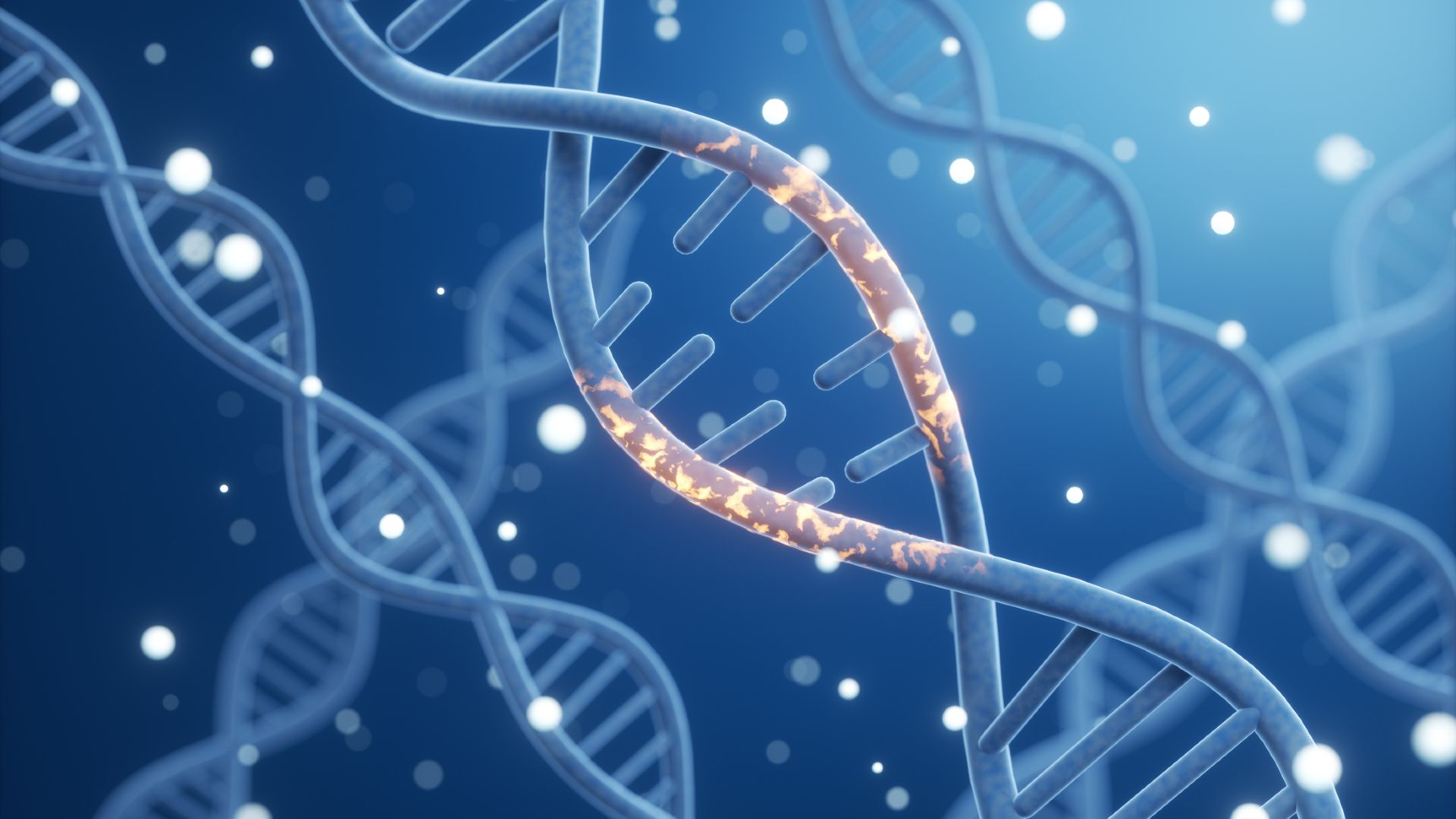
An illustration of blue double-helix strands of DNA

Researchers created epigenetic clocks based on data from 894 dogs. (Image credit: Josh Hawley via Getty Images)

In aging dogs, the team found that some regions of the genome with few chemical tags became more methylated, while other areas that had been choked with methyl groups gradually lost them. Additionally, at least in terms of their epigenetics, dogs' immune cells appear to become more similar to one another as they age. Mariner said this "loss of cell identity" is a key hypothesis for what happens to the body as it ages.

Immune cells are carefully specialized for different roles, such as preventing cancer or killing viruses. As these cells become more similar to one another, they become less able to fulfill their specialized roles, studies suggest.

Humans have bred big dogs for size, and Snyder-Mackler said this push for large body size may have come at a cost.

"Their bodies have to make this trade-off between really rapid growth and maintenance of that," he said, "versus investment in the immune system and integrity of the organism." For now, that idea is a hypothesis, though, as the current study doesn't directly address why big dogs' epigenetic aging has come to be this way.

Now, the team wants to build more informative clocks as the Dog Aging Project recruits more pooches to follow for longer periods. Snyder-Mackler said the team's data currently explains only part of how dogs' epigenetic ages vary. "What we really want to know is, what explains the rest of that variation?" he said.

The team was keen to build predictive models that might help dog owners anticipate their pets' age-related health concerns, Snyder-Mackler added.

What we learn about dogs from these studies may help us understand human aging, too. That's partly because dogs get some of the same diseases we do, but it's chiefly because they share humans' living spaces and environments.

"We're going to start looking, at the molecular level, [at] how these environmental exposures or experiences impact health and aging in dogs, which is going to be directly translatable to humans who are living in those same exact environments," Snyder-Mackler said.

"Most people love dogs," he added. "That means we can get a lot of really good data on them."
  •  

1 million people's genes reveal the heritability of the Big Five personality traits β€” and it's complicated

A family photo album can reflect how physical traits, such as blue eyes or lanky limbs, have been passed down β€” but a new analysis suggests that the way personality emerges across generations is far more complicated.

The meta-analysis, published Sept. 2 in the journal Nature, is the largest of its kind ever attempted. The work identified over 1,200 genes linked to five personality traits: extraversion, agreeableness, conscientiousness, openness to experience and neuroticism.

However, the scientists behind the study said its most important conclusion is that no single gene determines whether an individual will have a particular personality trait. Instead, thousands of genes exert tiny effects that are likely impossible to disentangle from environmental factors that shape our behavior.

Twins and DNA sequencers

Researchers have studied the link between genes and behavior for decades. Before the ability to analyze the genome in detail, many early studies looked to identical twins.

Knowing that identical twins share nearly 100% of their genetic material, scientists compared their traits with those of nonidentical twins and other siblings. Some studies compared twins raised in the same home with those raised in different homes in an attempt to separate the influence of upbringing from genetics. These efforts concluded that personality was roughly 50% heritable. ("Heritability" measures how much of the variance seen in a given trait can be explained by genes.)

A woman with dark hair holds two identical looking infants in her lap.

Genetic studies of personality traits previously relied on comparisons between twins. Now, genetic sequencing technologies have advanced the field. (Image credit: Johner Images via Getty Images)

The advent of gene sequencing enabled geneticists to calculate the influence of genes with greater precision than twin studies did. The most powerful tool in this arsenal is the genome-wide association study (GWAS), which can link traits to gene variants in detail. These statistical analyses require sample sizes in the millions, though.

The new study was a large collaborative project called the Revived Genomics of Personality Consortium, which brought together 46 cohorts of participants who'd had their genomes sequenced. Each person had been asked something related to one of the Big Five personality traits. The team had data from roughly 600,000 people about the first four traits β€” extraversion, agreeableness, conscientiousness, openness to experiences β€” and data from over 1.1 million people about their levels of neuroticism.

Generally, as geneticists have leveraged larger and more powerful GWAS, many traits have shown increased heritability because these bigger studies can identify more subtle genetic links, said Brent Roberts, a psychologist at the University of Illinois at Urbana-Champaign who was not involved in the new study. But "with personality, it was really clear from the get-go that it was different," Roberts said.

Earlier GWAS had suggested that the heritability of personality from common gene variants was roughly 5% to 15%, far lower than the estimate suggested by twin studies. The new work has confirmed those low numbers, said study co-author Michel Nivard, a genetic epidemiologist at the University of Bristol in the U.K.

It may be that GWAS do not capture extremely rare variants that might link personality traits in certain families, which means the heritability may be slightly underestimated, Nivard suggested. Additionally, twins are more likely to rate their personalities as similar for reasons unrelated to genetics, so the twin studies may have overestimated the heritability of personality, Nivard noted.

Cutting out confounders

It can be difficult to control for confounding factors in GWAS. For example, if scientists were investigating the influence of genes on academic achievement, genetics only tells part of the story; a person's socioeconomic status and access to books and tutoring also influence their education.

But in this case, Nivard and his colleagues did not find confounders in measuring personality. The researchers found that the genetic effects on personality are the same within families as they are among unrelated individuals.

"We've basically been able to rule out that there's any straightforward, simple social processes by which your parents directly influence your personality," Nivard said.

A key takeaway from the study should be not to focus too much on the different contributions of genes versus environmental factors in a trait as complex as personality, Roberts said. Our moods and minds are a collaboration between the two factors, not a tug-of-war, he argued.

A study to properly measure this interplay would be vastly expensive and would require following participants for decades. "This is where the limitation of human genetics research is really profound," Roberts said. Part of the problem, he added, is that while our DNA sequence is fixed, how the body accesses and reads DNA varies significantly depending on the environment a person finds themselves in. In other words, which genes get turned on and when are variable factors.

Assessing this enmeshed relationship using only the DNA code we are born with is like trying to predict every move of a couple's dance by looking at how they hold each other before the music starts up.

Nivard and his team can now use this powerful data source to learn more about personalities within groups of people, he said. Nivard predicted that, even once geneticists have mapped all the rare gene variants that may influence personality, some genetic influence will still go unaccounted for; processes such as the interaction between the environment and gene expression are still not fully understood. He called these the "unknown unknowns." Identifying these factors is the next frontier for the genetics of personality.

"It's where we're headed," Nivard said.

  •  
❌