❌

Reading view

'Freakish' discovery of 9 million-year-old capybara tooth supports idea that Atacama wasn't always a desert
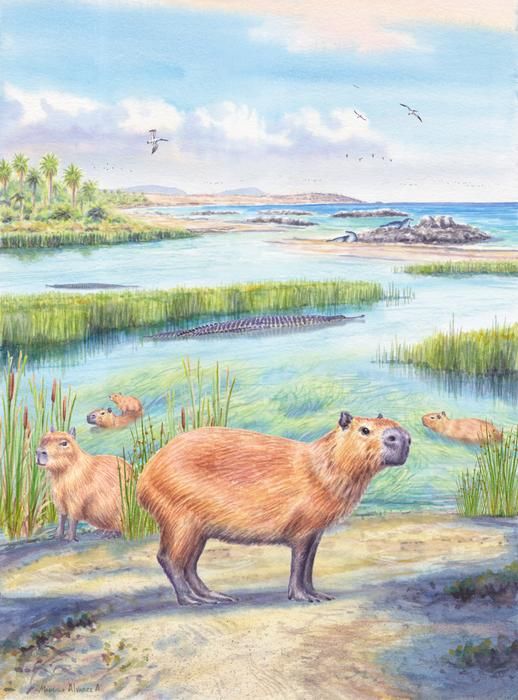
An illustration of several small four-legged mammals next to a river.

An illustration of ancient capybaras enjoying coastal wetlands, which may have looked somewhat like the Atacama Desert around 9 million years ago. (Image credit: Mauricio Alvarez)

Researchers have discovered a roughly 9 million year old tooth belonging to a large, water-loving relative of modern day capybaras in the Atacama Desert of northern Chile. The fossilized molar adds to previous evidence suggesting that it's unlikely the Atacama, one of the driest places on Earth, was continuously dry for the last 40 million years.

The Atacama Desert, possibly the oldest desert on Earth, takes up the northern third of Chile. It's bounded by the Chilean Coast Range to the west, which blocks rain from the Pacific Ocean, and the enormous Andes to the east, which obstruct rain from the Atlantic Ocean. The driest part of the desert's hyperarid region gets less than 0.08 inches (2 mm) of rainfall a month.

Recent research estimates the Atacama's hyperarid core started forming between 47.8 million and 33.9 million years ago, in the Mid- to Late-Eocene, 20 million years before the Andes formed. It suggests the mountain ranges weren't the cause for the desert's aridification, and may have only intensified it.

Capybaras (Hydrochoerus hydrochaeris) β€ͺ—‬ the world's largest rodent β€ͺ—‬ exclusively live close to stable freshwater sources and feed on plants that also require water to grow, so the discovery of an extinct capybara relative (Hydrochoerus Cardiatherium) tooth in the Atacama Desert is very strange.

"Finding a capybara tooth in a marine deposit in what today is one of the driest regions on Earth is just freakish," Priscilla Martinez, a geoscientist at the University of Arizona and co-author of a new paper describing the discovery, said in a statement.

Capybaras are native to South America, although today, they are not found in Chile, where the tooth was unearthed, according to the International Union for Conservation of Nature (IUCN).
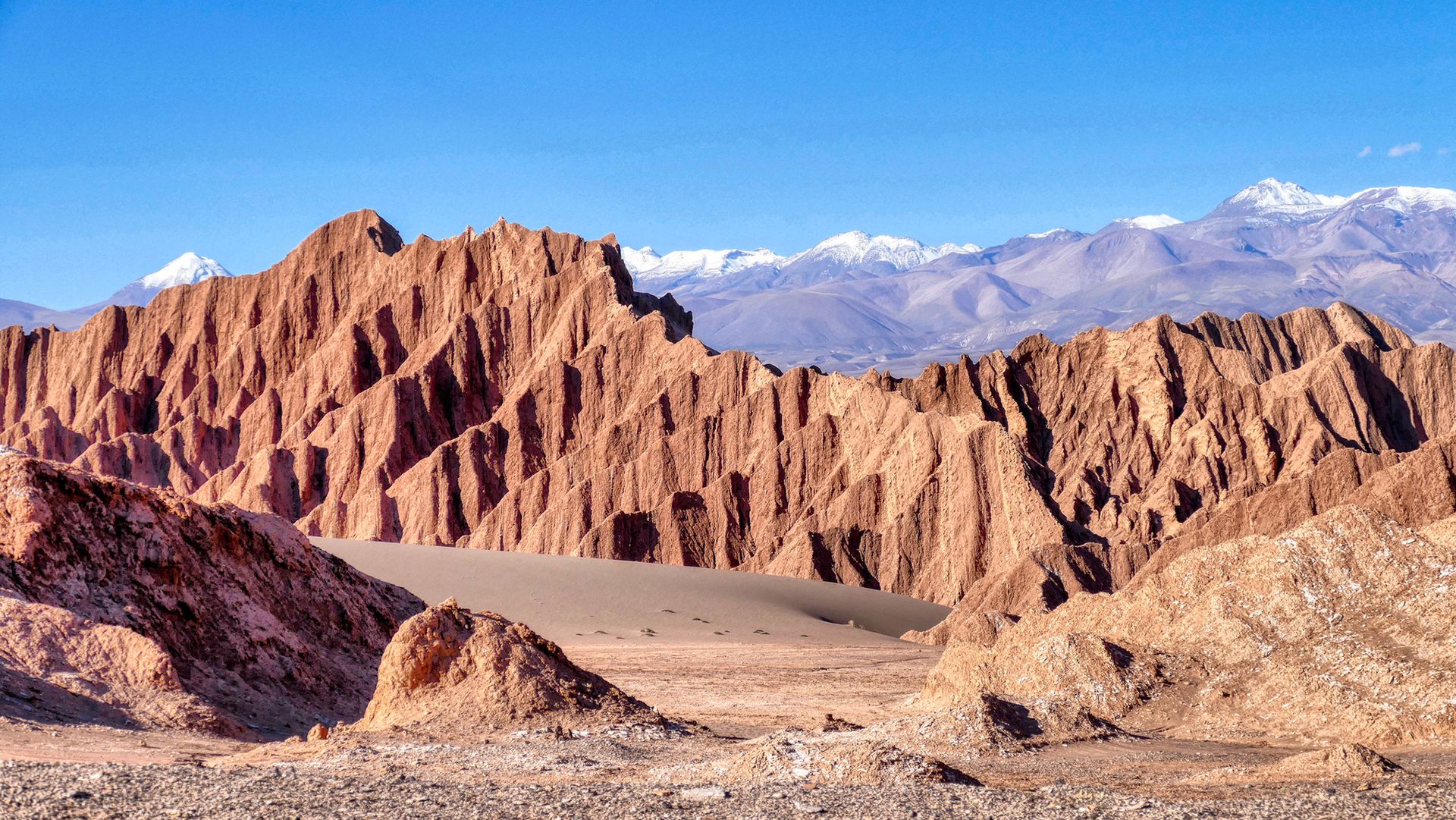
A series of jagged cliffs seen in the desert

Part of the Atacama Desert called Valle de La Luna, named because of the region's resemblance to the moon. (Image credit: Piero Damiani via Getty Images)

The tooth isn't the only clue that the Atacama was a wetter place in the late Miocene. Researchers found it in a layer holding the remains of a shallow marine environment that existed between 7 million and 10 million years ago, according to the statement. And they've also found microscopic pieces of plants, known as phytoliths, revealing that palm trees, grasses, gingers and other flowering plants grew there in what may have been a subtropical forest.

These findings and others are part of a growing body of evidence that the Atacama Desert was once wet enough for crocodiles and freshwater fish to thrive and palms to grow. The new study, published Sept. 5 in the journal Scientific Reports, shows that capybara relatives lived there as well during the late Miocene, which, because they are semiaquatic animals, is further evidence to support the hypothesis of a sporadically moist Atacama.

The researchers aren't sure how exactly capybaras moved into the Atacama Desert. Although there were capybaras in South America at the time, the Andes created an 18,000-foot-high (5,500 meters) barrier between their current habitats and the site where the tooth was found. The researchers theorized that, instead of traversing the mountains, the ancient capybaras migrated along the western coast of South America, following wetlands, rivers and other water sources.

According to Samantha Hopkins, an Earth sciences professor at the University of Oregon who was not involved in the study, it's unlikely the tooth found its way to the site without capybaras living there.

"If you wanted to find a way that this capybara could be here while the Atacama was still as dry as it is today, you'd have a hard row to hoe," she told Live Science in an email, because the size of the tooth makes it hard to transport it long distances. The desert wind couldn't have blown it such a long way, and while large carcasses can float down waterways for miles, "if you're going to invoke a large enough waterway to do this, you've demonstrated that the Atacama wasn't as dry as it is today anyway."
  •  

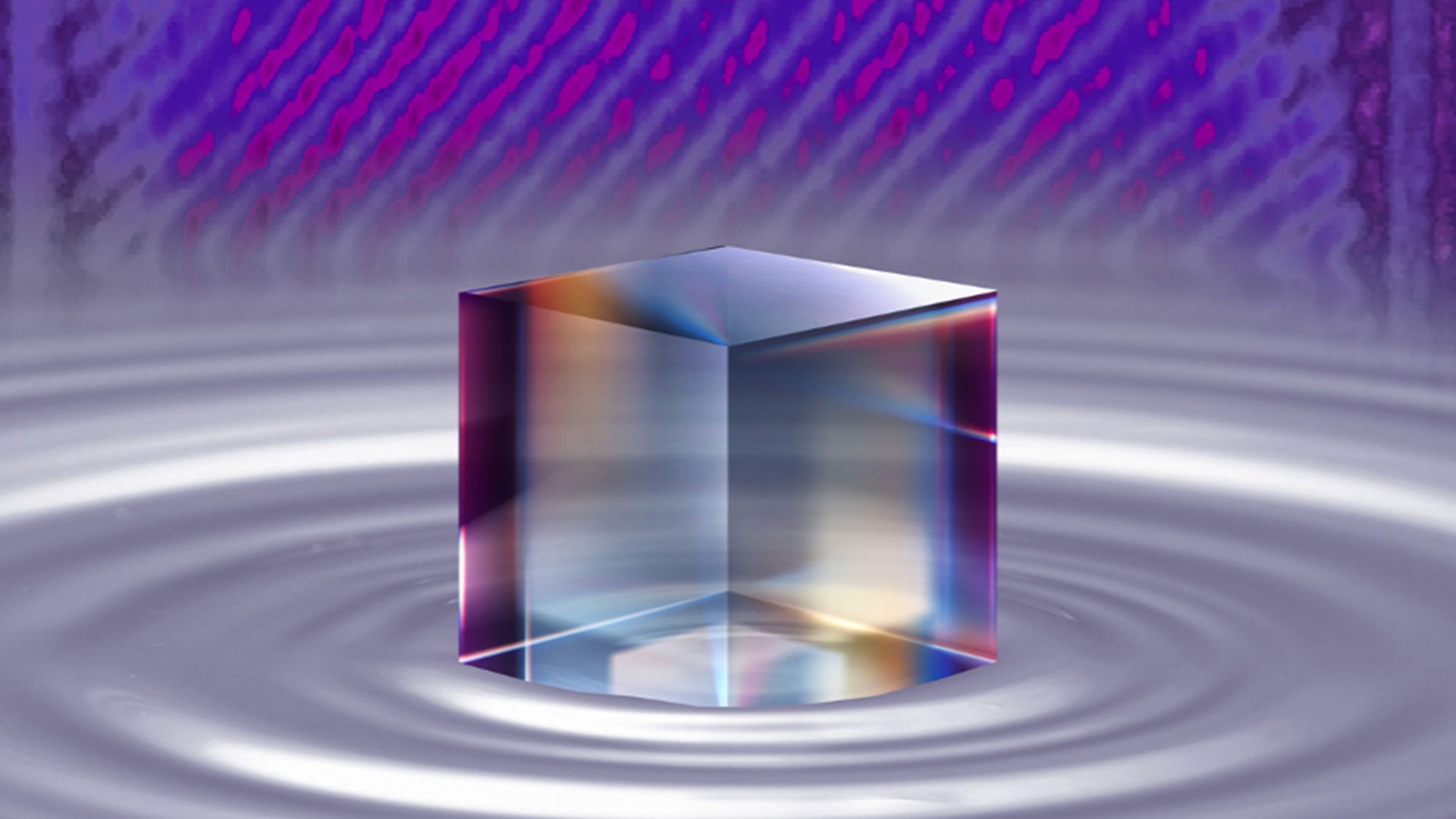
Scientists got diamond's melting point wrong by more than 1,000 degrees, crushing new laser experiment reveals

Scientists melted diamonds with a powerful laser to take some of the most precise measurements of the mineral's elusive melting point β€” and found that previous experiments were off by more than 1,300 degrees Fahrenheit (700 degrees Celsius).

It's odd to think of diamond, the hardest natural material on Earth, melting β€” but melt it does when blasted with extremely powerful lasers under the right conditions. Understanding how diamond responds to shock waves from lasers is an important part of developing nuclear fusion, the process that powers stars. Nuclear fusion is also a potential energy source for the future, so researchers have put a lot of effort into developing models that describe and predict how diamond behaves.

However, diamond is weird. Although the experimental data and theoretical models match up pretty well most of the time, there have been some strange discrepancies scientists haven't been able to explain. The biggest one is the 2,240 F (1,244 C) β€ͺ—‬ roughly 20% β€ͺ—‬ difference between previous experimental data and model-predicted melting temperatures of diamond. There's also been some debate about whether diamond reorganizes its atoms into a different kind of solid carbon before turning into a liquid at the end of the melting process.

Researchers have struggled to explain these discrepancies because the conditions diamond melts at are so extreme that it's extraordinarily difficult to measure it in labs on Earth. However, new experiments may finally offer the solution that scientists have pursued for two decades.

In a study published Aug. 13 in the journal Nature Physics, scientists zapped tiny plates of synthetic diamond with an ultraviolet laser, creating shock waves that were so powerful that as they passed through the samples, the diamond changed from transparent to mirror-like. The strong increase in reflectivity is one indication the diamond melted. By combining this change with measurements of how brightly the diamonds glowed while being zapped, the researchers mapped the melting temperature with great precision.

"We were able to take tiny diamond samples and shock compress them to temperatures hotter than the surface of the sun and to pressures higher than the center of Neptune and Uranus β€” and still measure atomic structure, temperature, density and optical reflectivity," study co-author Marius Millot, a research scientist at Lawrence Livermore National Laboratory in California, said in a statement.

The team found that the diamond sample's melting temperature was more than 1,300 F lower than previously thought β€” putting the melting point in line with theoretical predictions and finally explaining the long-held discrepancy.

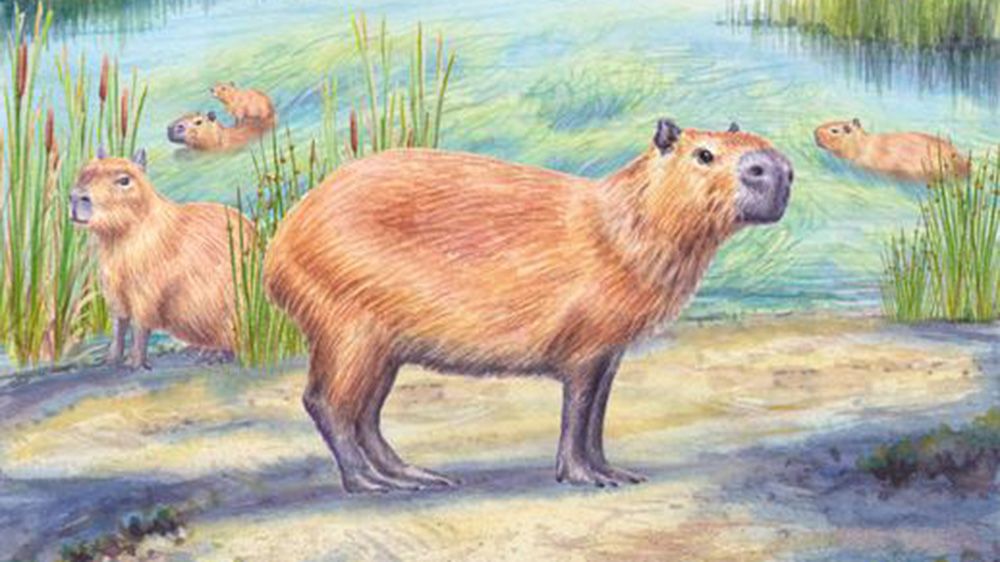
An illustration of a diamond melting.

An artist's concept of a solid chunk of diamond floating in a metallic liquid carbon pool. The new experiment proves this sort of situation is possible deep within other planets. (Image credit: James Wickboldt/LLNL)

The team also measured the samples' atomic structure with X-ray diffraction and saw that the diamond didn't transition to a different kind of solid carbon before melting, possibly because the energy required to rearrange the atoms was too large, the researchers wrote.

However, they also hypothesized that multiple shocks could be powerful enough for this transition to occur and that the way the shocks are applied to the diamond might affect how it changes phase. Understanding this is important for nuclear fusion research, as certain types of experiments involve lasers melting and crushing a diamond capsule to put the capsule’s contents, solid deuterium and tritium, under more than 30 petapascals of pressure and temperatures higher than 180 million F (100 million C), the requisite conditions for a fusion chain reaction to occur.

The researchers found that between about 660 and 1,060 gigapascals of pressure and at around 12,140 F (6,727 C), diamond exists as solid chunks floating in liquid carbon. As the pressure increases, more diamond transitions into liquid carbon, which is thought to be a very strange material. Unlike most forms carbon takes on Earth β€ͺ—‬ like coal, graphite and diamond β€ͺ—‬ liquid carbon is metallic, so it conducts electricity. It's also denser than diamond. So hypothetically, if you somehow were to put liquid carbon in a cup without instantly vaporizing it, a chunk of solid diamond could happily bob around in it like an ice cube in a glass of water.

Knowing how diamond behaves under such extreme conditions is also important for understanding the ice giant planets Uranus and Neptune. Based on measurements from the Voyager 2 spacecraft in the late 1980s and lab experiments on Earth, scientists think it literally rains huge chunks of diamond inside these planets and that their mantles may have liquid carbon oceans with diamonds floating around like icebergs. The new research means scientists can make better predictions about the planets’ interiors and their carbon cycles.

See how much you know about gemstones with our gold and gems quiz!

  •  
❌