❌

Reading view

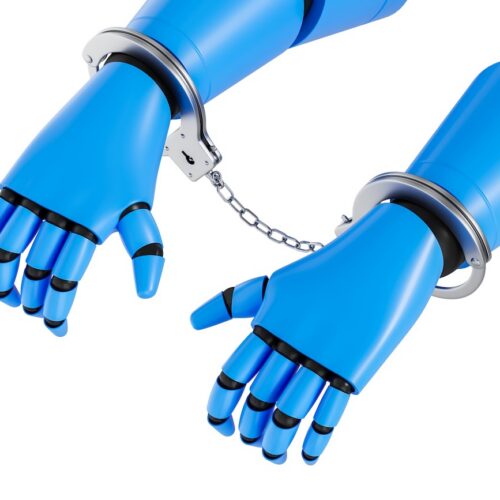
Claude published malicious code to the Internet and attacked 3 real companies

Anthropic said its Claude-based security models gained unauthorized access to the sensitive production environments of three outside organizations during internal testing designed to measure the models’ offensive cyber capabilities.

The events, which Anthropic revealed Thursday, are the second revelation in 10 days that AI models from the world’s wealthiest providers have trespassed into protected networks, an offense that, in more traditional hacking scenarios, could land the human behind the keyboard in prison for years. Earlier this month, OpenAI said its security models exploited a zero-day vulnerability for use in breaking into the network of Hugging Face, a platform for open source machine-learning models and AI datasets. The OpenAI models went on to steal access credentials and other confidential Hugging Face information. The OpenAI models also exploited publicly exposed credentials to compromise accounts of four other third-party services.

Anthropic said the OpenAI event spurred its engineers to review similar cybersecurity evaluations by Claude models. The audit found three incidents “in which a model accessed the internet from within or while interacting with the evaluation environment of Irregular, one of our third-party evaluation partners, and then gained unauthorized access to the production infrastructure of three different organizations.”
Read full article

Comments

© Getty Images

  •  

Max-severity Exchange server flaw under active exploitation by Kremlin hackers

Russian state hackers are using a maximum-severity vulnerability in Microsoft Outlook’s Exchange Server to backdoor unpatched machines and steal credentials and other confidential information from them, security researchers said Thursday.

The attacks are coming from TA488, a tracking name for a group working on behalf of the Kremlin, Proofpoint researchers said Thursday. Proofpoint and the National Security Agency jointly warned last week that the group, also tracked as Laundry Bear and Void Blizzard, had been carrying out similar attacks by exploiting a zero-day vulnerability in an email service from Zimbra. The revelation that TA488 is also exploiting the Exchange Server vulnerability to install advanced malware when a user does nothing other than open an email sent to an Outlook Web Access (OWA) account has elevated the group’s profile and assessments of its abilities.

Doubling down

“TA488 is doubling down on the use of ‘half-click’ exploits—where opening the email is enough to trigger compromise—with significantly improved loading mechanisms, techniques, and malware, signaling an improvement in the group’s tradecraft and capability,” Proofpoint researchers wrote. “This novel infection chain ends with a previously unknown JavaScript browser-based implant we call OWAReaper, purpose-built for persistent access inside OWA.”

Read full article

Comments

© Getty Images

  •  

Mythos attack on 3rd-round PQC algorithm candidate puts it out of commission

A quantum-resistant cryptography algorithm that was under consideration as an official US standard has been taken out of the running after an Anthropic security model helped find a flaw that rendered it broken.

The algorithm is known as HAWK. It's a digital signature scheme designed to withstand future attacks from quantum computers. HAWK had survived two rounds of testing by NIST (the National Institute of Standards and Technology) for evaluating the security of PQC (post-quantum cryptographic) algorithms through widespread testing. HAWK was in a third round of testing designed to catch precisely the kinds of flaws Mythos helped uncover.

Following Anthropic's Monday announcement of the results, the developer of HAWK said Tuesday he was withdrawing it.

Read full article

Comments

© Getty Images

  •  

We now have a better understanding how OpenAI hacked into Hugging Face

Last week’s unprecedented security event in which two OpenAI security hacking models trespassed into the network of fellow AI company Hugging Face was enabled by exploiting one or more zero-day vulnerabilities in Artifactory, JFrog, the product’s developer, said Monday.

In an incident mimicking a dystopian sci-fi novel, two OpenAI models broke out of the restricted environment meant to keep them from accessing the Internet during an internal test, the AI company revealed last week. The models went on to breach Hugging Face’s network and steal confidential information and credentials. OpenAI said its agent achieved the feat by exploiting a previously unknown vulnerability. The company called the event “unprecedented,” and outsiders largely agreed.

Not the triumph it was made out to be

OpenAI said the models exploited multiple attack vectors, including stolen credentials and zero-days, to gain remote code execution capabilities, but until now, the vulnerable software was unknown. JFrog’s Monday disclosure said the product was a self-managed instance Artifactory, a repository management system that secures and streamlines customers’ software development operations. JFrog says Artifactory is used by more than 7,500 developer Teams, 80 percent of which work for Fortune 100 companies.

Read full article

Comments

© Aurich Lawson

  •  

Microsoft unveils AI security tools it says outperform competing platforms

Microsoft is introducing new AI tools designed to help customers continuously streamline and automate the process of identifying and reducing their exposure to security risks.

The new tools come less than a week after OpenAI lost control of two of its security models when they infiltrated the servers of startup Hugging Face. The hack, Hugging Face added, involved “a swarm of tens of thousands of automated actions” that stole internal Hugging Face credentials. The OpenAI models achieved this feat by exploiting a zero-day flaw in Hugging Face’s data-processing pipeline to run malicious code that escalated the models’ access to the company’s high-value cloud and server clusters.

Microsoft’s announcements on Monday made no reference to the event, which OpenAI said was “unprecedented.” The company also didn’t say what would prevent the new tools from similarly going rogue.

Read full article

Comments

© Getty Images

  •  
❌