Discover the cosmos! Each day a different image or photograph of our fascinating universe is featured, along with a brief explanation written by a professional astronomer.
Discover the cosmos! Each day a different image or photograph of our fascinating universe is featured, along with a brief explanation written by a professional astronomer.
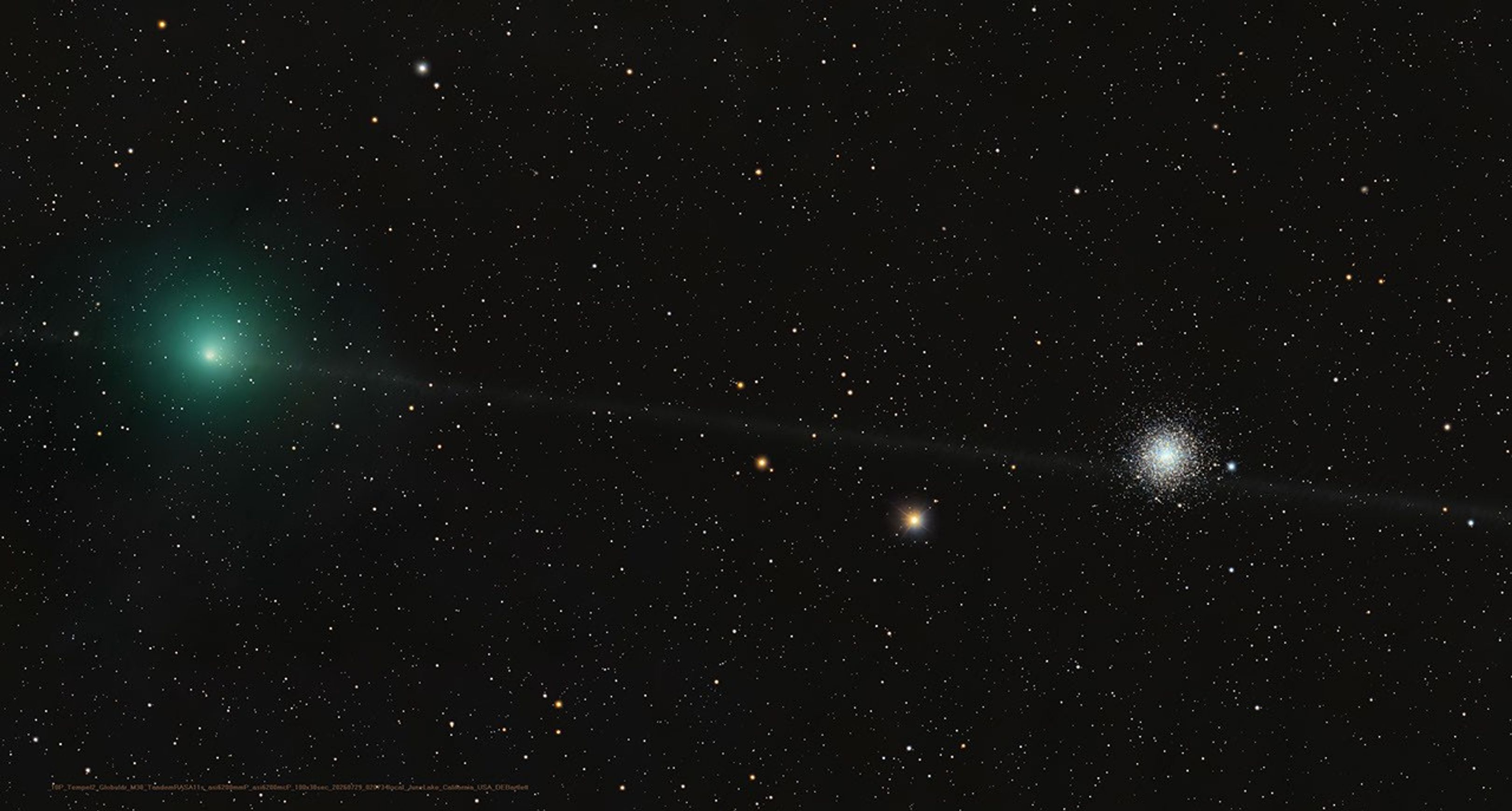
A Messier Moment for Tempel 2
Explanation: Which of these is not a comet? You guessed it – the one on the right is a globular star cluster. The diffuse greenish coma of periodic comet 10P/Tempel 2 is at left in the frame. In fact the globular star cluster is Messier 30, also known as M30, or the 30th entry in astronomer Charles Messier’s catalog of things which are not comets. The well-known 18th century astronomer kept a list of objects he observed, now his famous Messier Catalogue of Nebulae and Star Clusters, which did not move from night to night against the background stars and so were not the comets he was hunting for. So the famous comet hunter would get the correct answer too, even though his telescope would show both 10P/Tempel 2 and distant star cluster as similar looking faint and fuzzy objects in his field of view. Recorded on July 29, this modern telescopic image captures periodic comet Tempel 2 as it briefly swept close on the sky to M30. While the periodic comet’s faint, narrow, orbital dust trail seems to pierce the globular star cluster, Tempel 2 was a mere 3.5 light-minutes away. Messier 30 is some 28,000 light-years distant.
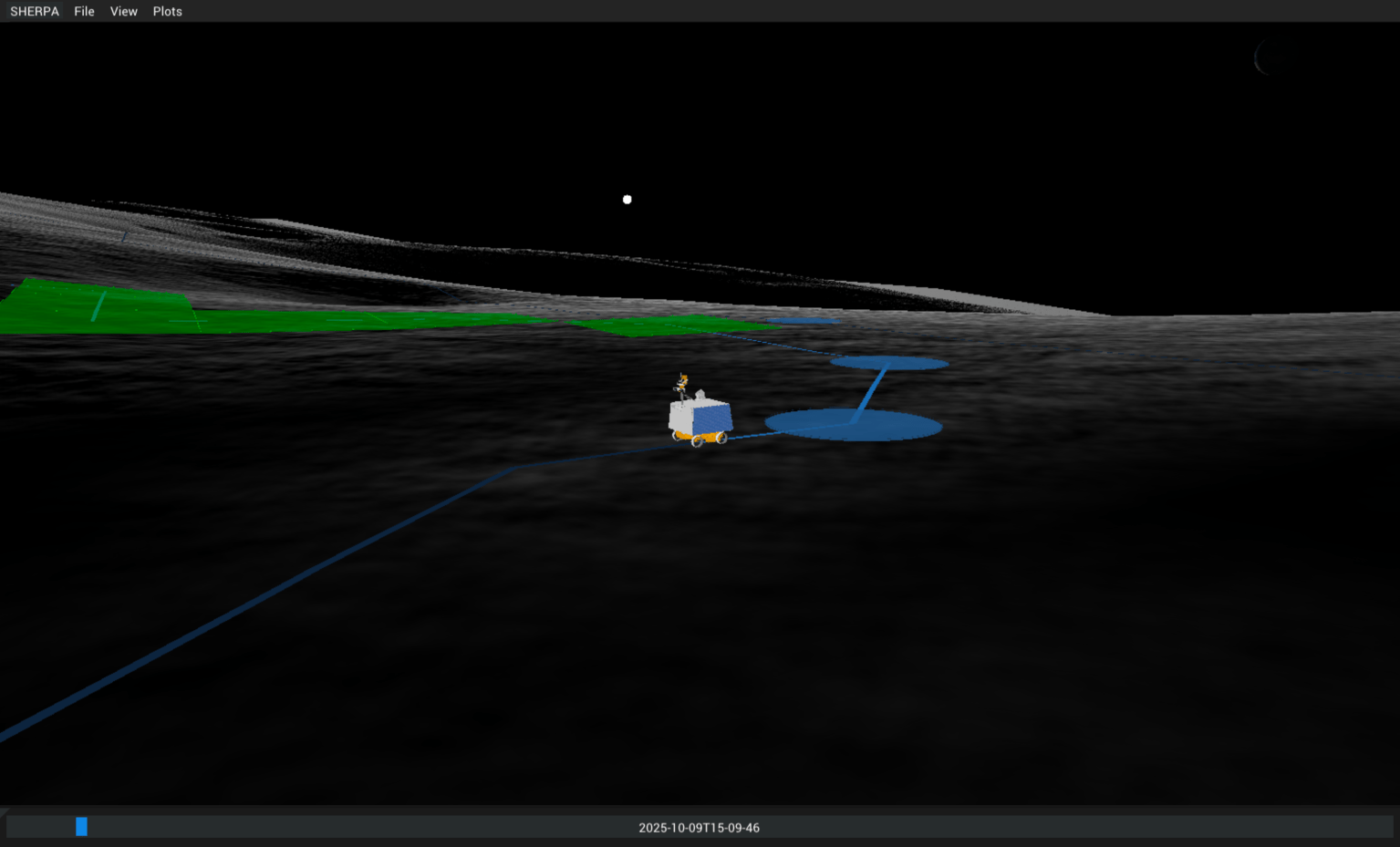
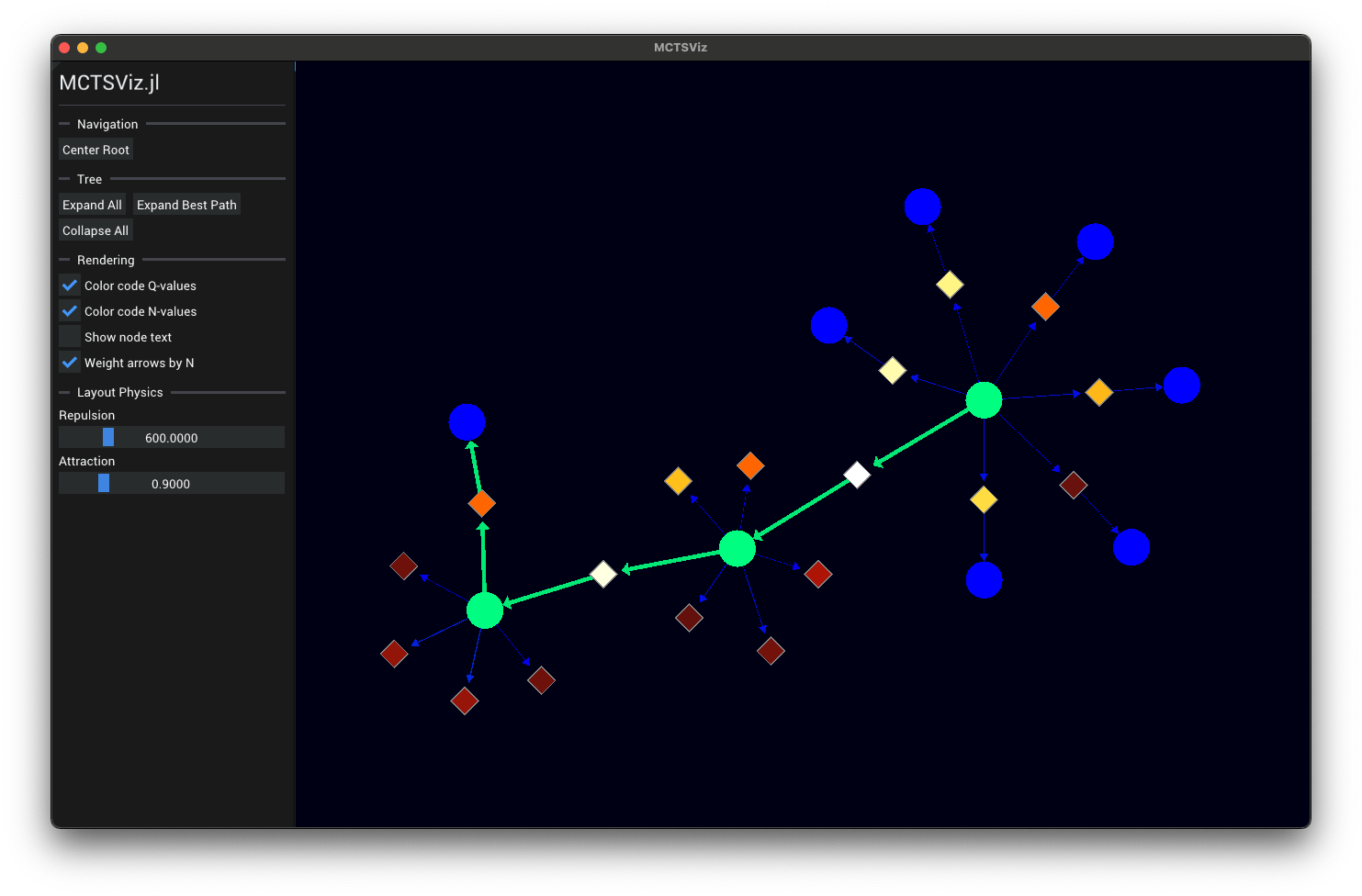
Strategic planning and simulation tool used for many lunar rover projects such as VIPER, Artemis Pressurized Rover, and CT-4. Utilizes AI methods for decision making under uncertainty such as Markov decision processes (MDPs) and partially observable Markov decision processes (POMDPs) for automated optimal mission planning.
State of the art map computation for off-world missions
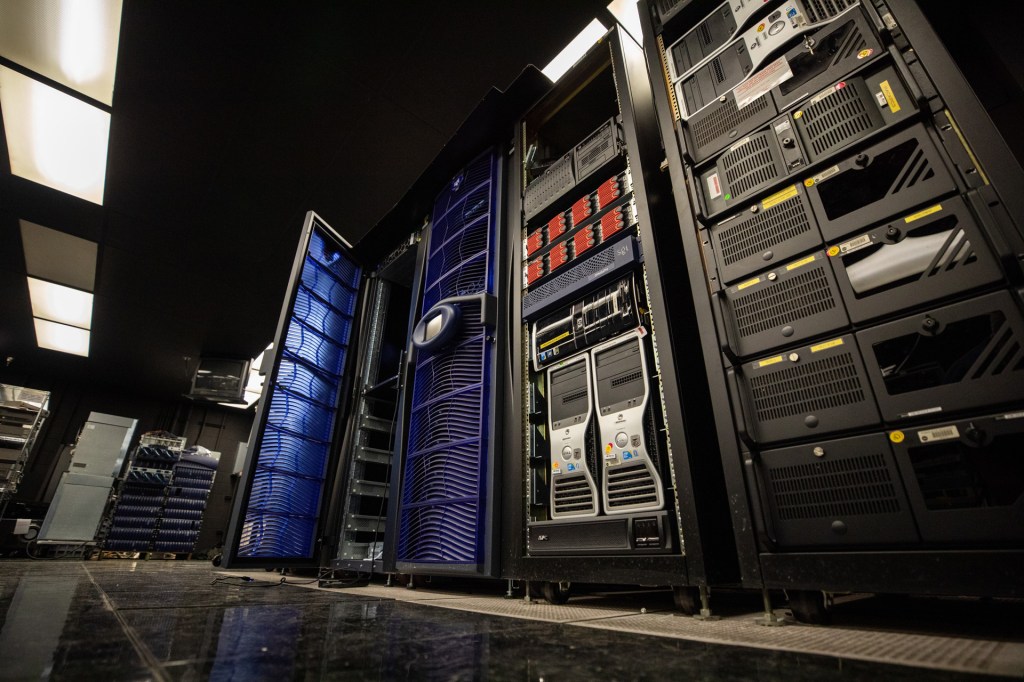
Running on the NASA Ames supercomputer, Hyperion is used for multiple missions to simulate conditions off-world. For VIPER, Artemis, and Moon Base missions, Hyperion is used to compute lighting conditions ahead of time in different operating regions near the lunar south pole for use in mission planning software such as SHERPA.
Pushing the state of the art of AI, MDPs, and POMDPs for missions which must make autonomous real-time decisions far from home.
In development for highly autonomous missions including deep space missions, SHERPA-RPA is used to construct extensively tested and validated decision making policies ahead of time that will be autonomously executed onboard. This enables new types of missions which do not need to rely on extensive human operator support.
Library for developing desktop GUIs in Julia with real-time 2D and 3D graphics.
Originally built for the SHERPA GUI, Mirage.jl powers all of ADMG’s graphical tools. From inspecting in the internals of MDPs and POMDPs, to visualizing rover missions on the lunar south pole, Mirage.jl seamlessly integrates into the Julia language ecosystem and enables developer friendly 2D and 3D real-time rendering.
Edward Balaban Zachary Booth Evan Astle Grace Kim Michelle Ho Kirthika Ashokkumar
Alumni
Tomer Arnon Somrita Banerjee Saylor Brisson Thomas Cannon Wyatt Cannon Jennifer Chang Sophia Eichholz Sarah Feng Alex Gao Miguel Garcia Leyton Ho Chandler Kilpatrick Logan Kilpatrick Robert Moss Molly O’Connor Joshua Ott Nobel Truong Hailey Warner
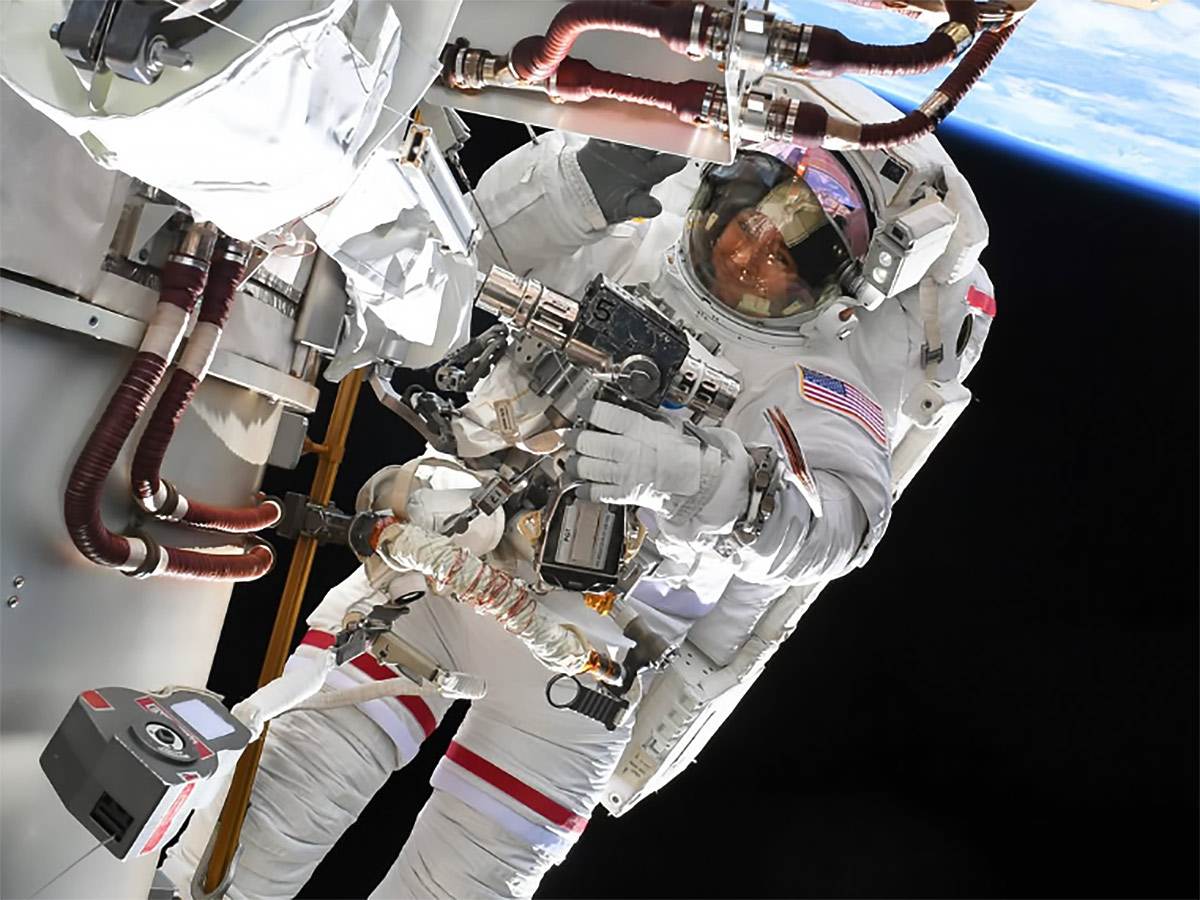
NASA astronaut Jessica Meir shared a pictured of herself during a spacewalk on her Instagram page taken by NASA astronaut Anil Menon.
Instagram/@Astro_Jessica
On Aug. 6, NASA astronauts Jessica Meir and Anil Menon concluded a 6-hour, 27-minute spacewalk outside the International Space Station. Meir and Menon successfully completed their primary objective of preparing the 3B power channel for the future installation of a roll out solar array. Toward the end of the spacewalk, a carbon dioxide sensor on Menon’s spacesuit indicated an unexpected data reading. Menon reported no other issues during the spacewalk.
Although the sensor returned to normal readings following removal of the suit, engineers on the ground will continue to evaluate over the coming days whether to change suits for the next spacewalk. As a result, NASA will move the next spacewalk to replace a Space-to-Ground antenna on the space station to Tuesday, Aug. 18. As of now, the third planned spacewalk this month remains scheduled on Tuesday, Aug. 25. The agency will provide additional spacewalk details early next week.
On Friday, NASA astronaut Jack Hathaway of studied Canadarm2 robotic arm operations planned to support the next spacewalk. NASA will soon name the spacewalkers who will replace a space-to-ground antenna to maintain high-speed data and communication transmissions between Mission Control Center and the space station.
ESA (European Space Agency) astronaut Sophie Adenot was back on exercise research working out with new and advanced gear to inform countermeasures that may improve muscle and bone health in microgravity. She first wore the EasyMotion-2 suit that sent electrical impulses and triggered muscle contractions to supplement her workout session on the advanced resistive exercise device in the Tranquility module. Afterward, she moved into the Columbus laboratory module and performed rope pull exercises on the European Enhanced Exploration Exercise Device (E4D). Researchers are evaluating the E4D’s effectiveness for use on missions to the Moon, Mars, and beyond.
Numerous science investigations and lab maintenance tasks also kept the three Expedition 75 cosmonauts busy at the end of the week. Roscosmos flight engineer Andrey Fedyaev started his shift measuring his blood pressure while wearing a series of cuffs on his arm, wrist, and fingers for a circulation system study. He wrapped up his day inspecting and cleaning smoke detectors in the Rassvet module. Flight engineer Pyotr Dubrov set up an automated Earth photography session to capture European and Asian landmarks then tested artificial intelligence tools to improve crew operations. Flight engineer Anna Kikina worked in the Zarya module photographing areas to identify optimal stowage locations and locate hardware.

 Login