❌

Reading view

Three key vital signs make up the "urban pulse" of a city

People often speak metaphorically of the heartbeat or pulse of a city, but according to the authors of a new paper published in the Proceedings of the National Academy of Sciences, cities do indeed have an "urban pulse"β€”an indication of urban "metabolic activity" that can be measured to suss out telltale patterns. And those patterns could help inform future public policy around urban planning.

The precise definition of urbanization has shifted over the centuries. Zhe Zhu of the University of Connecticut and his fellow authors adopted a broad version for their study. It features fundamental "processes of concurrent change in at least six dimensions, including demography, economy, infrastructure, environment, governance and culture," they wrote. "Together they give rise to outcomes, measurable results of the process, such as population growth, urban land expansion, GDP growth, and innovation." Their chosen metrics reflect this dynamic view: Cities are not static grids but "living, adaptive ecosystems."

β€œFor decades, we had just been capturing the outcome of urbanizationβ€”a house that’s been built, or a road expansion,” said Zhu. β€œBut you don’t really see the dynamics within an urban area. This is going to be a very impactful tool influencing not only top-down policy decisions from governments but also bottom-up decisions from everyday people navigating their cities.” One day we may be able to check a neighborhood's "urban pulse" while house-hunting, for instance, or while scouting potential locations for a new business.


Read full article

Comments

Β© Zhe Zhu/GERS Lab

  •  

Commonwealth Fusion makes the physics case for its 400 MW reactor

The scientific community has a plan for achieving fusion power. It involves getting a better understanding of how to control fusion in a tokamak-style reactor using the currently under construction ITER reactor, and then using that knowledge to build DEMO-style plants. But ITER isn't even expected to see hot plasmas until the middle of the 2030s, by which point solar panels will be so cheap that we'll probably all be getting them free in our cereal boxes.

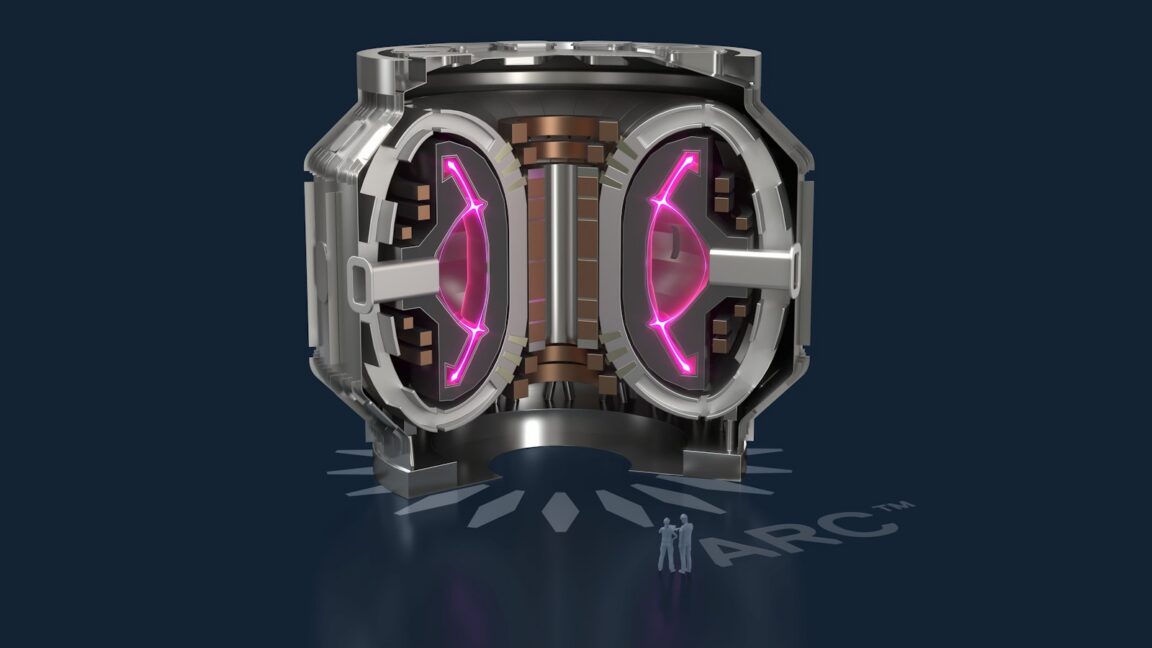
Commonwealth Fusion is a startup that's basically asking "what if we did that, but now?" Its ITER equivalent, a tokamak called SPARC, is over 70 percent complete and is planned to be operating as soon as next year. The company already has a site and customers for the power-generating follow-on, called ARC. Both of those projects are predicated on using high-temperature superconductors to generate an extremely powerful magnetic field that will allow the company to build a smaller reactor, and thus get things done faster.

Years of running plasmas through tokamaks has given us confidence that the basics of these plans are sound. But there are lots of potential devils in the details (otherwise there'd be little need for experimental reactors). So Commonwealth's scientists, in collaboration with the academic community, have recently released five peer-reviewed papers that detail its plans for ARC: what our best models tell us now, and what we'll still need to learn from SPARC to finalize the design of a production fusion plant.

Read full article

Comments

Β© Commonwealth Fusion

  •  
❌