❌

Reading view

A new solar cell could generate electricity underwater

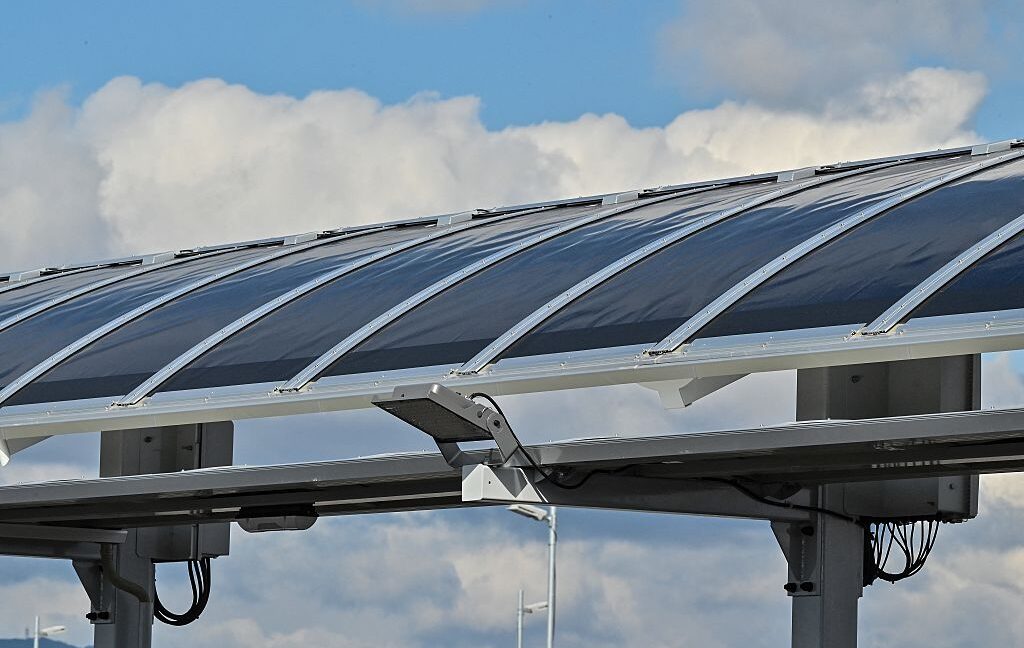
In one episode of the Hanna-Barbera cartoon Birdman, the eponymous hero struggles to fight the evil Dr. Shark aboard a submarine without solar energy to recharge his powers. So Birdman would surely appreciate the new perovskite solar cells developed by a team led by Simin Ma at Yunnan University, since they are designed to work underwater.

Solar cells made from perovskites rather than silicon are always a tale of trade-offs. They can be made cheaply, they can take interesting forms (like thin, flexible, transparent films), and they can convert substantially more of the incoming solar energy into electricity. The difficulty is that they tend to degrade quite quickly.

Tuned for the deep

Moisture is particularly destructive to perovskites, making them a seemingly odd choice for an underwater solar panel. But these materials have another critical superpower: They can be tuned to work with different wavelengths of light. Water quickly blocks the wavelengths of light that silicon solar panels absorb, but a carefully designed perovskite cell could still make electricity in the deep blue sea. And actually, the lower light levels and cooler temperatures should help it live longer.

Read full article

Comments

© Richard A. Brooks

  •  

Update to Google’s AI weather model improves forecast accuracy

Google is one of the major players in AI (meaning machine learning) weather forecast model space. The models it and others generate have their strengths and weaknesses, but the main advantage is that they can have forecast performance similar to traditional models while requiring far less computing horsepower to run. That means they can be run more frequently.

Google recently released version 3 of its WeatherNext model, with the biggest change being that it now ingests some satellite weather data, shortening the lag time between current weather conditions and generating a new forecast. The update is detailed in a white paper.

Reanalysis

Many weather models make use of what’s called a “reanalysis,” which is a sort of model of its own. Reanalyses take in all kinds of weather data and combine them into a single, consistent global snapshot of the atmosphere. That requires that they provide estimates for conditions over locations without real-world measurements, because weather forecast models need to work with a global picture.

Read full article

Comments

© NASA/JPL

  •  

China could supply EV manufacturing boom with recycled EVs

While recycling is a mathematically obvious response to the finite, non-renewable nature of many resources, the economic math is often challenging. For many materials, it can be hard to compete with virgin materials on a cost basis. Fast-moving technologies like electric vehicles throw in an added complication: By the time a car is scrapped, the industry may have moved on to a different battery chemistry. That reduces the value of recycling the car’s battery back into the production chain.

Still, a study led by Xin Xiong at Nanjing University finds that in China, recycling could become the dominant source of many key materials needed to manufacture EV components over the coming decades.

Modeling manufacturing needs

The researchers set out to model how the supply of recycled materials compares to manufacturing demand in China between 2010 and 2050. It covers materials relevant to batteries across hybrid, battery-electric, and even fuel-cell vehicles (lithium, cobalt, nickel, manganese, phosphorus, sodium, sulfur, and graphite), as well as several critical elements used in electric motors (copper, neodymium, dysprosium, samarium, and cerium).

Read full article

Comments

© General_4530

  •  

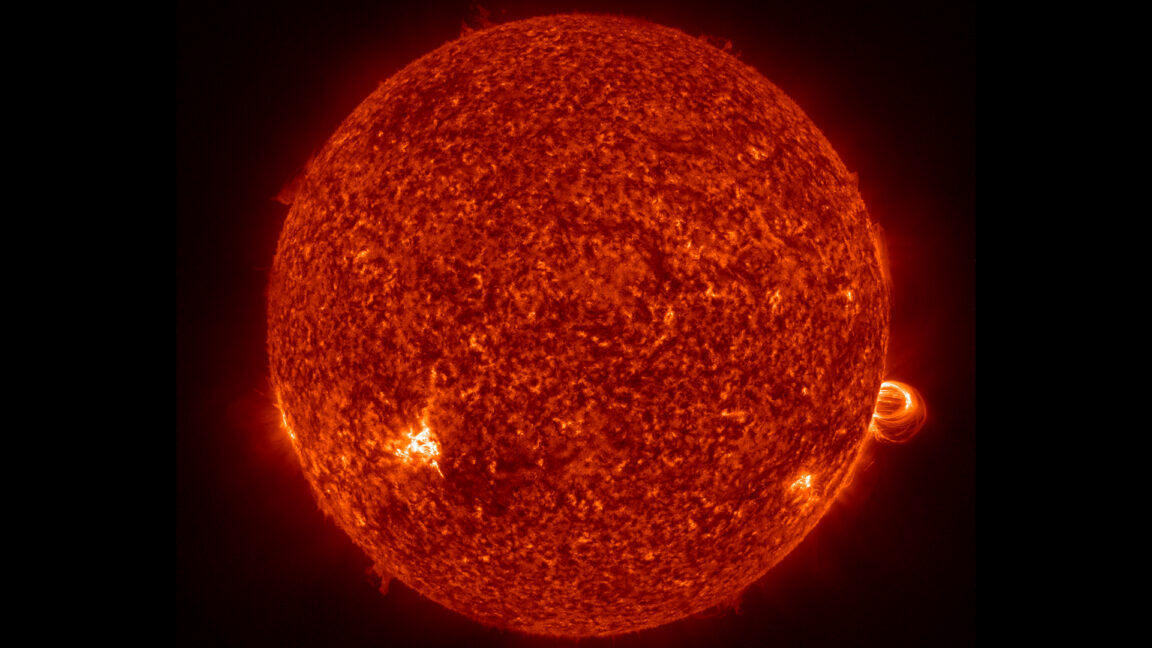
Good news—we have extra time before the Sun ends life on Earth

It’s a bit worrying when a scientific paper begins, “How long will life on Earth survive?” But in this case—a study by Jacob Haqq‐Misra of Blue Marble Space and Eric Wolf at the University of Colorado Boulder—the billion-plus-year timeline under consideration shouldn’t cause you too much existential panic.

The context for this question is that we understand the Sun will brighten as it eventually matures into a red giant that swallows the Earth in a solar furnace. So, where along that 5 billion-year path will life on Earth, in fact, be cooked?

Weathering and the weather

This isn’t just a question of incoming radiation. Among the thermostat-like stabilizing feedback loops in Earth’s climate, the cycling of CO2 through the solid Earth is a major factor over timescales this long. The weathering of silicate rocks at the surface converts atmospheric CO2 into carbonate that ends up on the seafloor, where it can be subducted into the mantle with tectonic plates. (And eventually, it can cycle back out to the atmosphere through volcanoes.)

Read full article

Comments

© NASA/GSFC/SDO

  •  

Your empty cuppa could capture carbon

Humanity has littered the sky with the refuse of fossil fuel use, releasing enough CO2 to change the planet’s climate. We are also chucking incredible sums of carbon in the form of plastics into landfills and into the environment around (and inside of) us. What if cleaning up one of these problems could also help clean up the other?

A new study led by Ruth Ebenbauer at Aarhus University experiments with this idea by upcycling discarded polystyrene into (part of) a material commonly used in carbon-capture systems.

Adding amines

This material is based on amines—a simple chemical group that conveniently acts like a sponge for CO2. An amine will grab CO2 molecules when exposed to them, but let go of the CO2 when heated or depressurized, leaving it ready to go again. The first “CO2 scrubbers” tried in smokestacks used amines dissolved in water to do this, but solid amines are used in all kinds of carbon-capture systems now because they require less energy. These solid materials—often made into granules similar to the activated carbon in a water filter—have high surface area and high porosity, so the amines can efficiently partner up with CO2 molecules.

Read full article

Comments

© Jamesmcq24

  •  

The weather and climate science AI revolution isn’t revolutionary

It feels like there's no escaping AI right now, whether you’re trying to type a sentence without being interrupted by a digital “assistant” or struggling to find a new refrigerator that doesn’t require a Wi-Fi connection for some reason. You’d be forgiven for wondering if we’re in the midst of a quantum leap in tech or whether people are just hyping up a heap of slop.

So what should we make of the growing use of AI in weather and climate modeling?

The conversation didn't get off to a great start earlier this year when a National Weather Service office posted a forecast map featuring nonexistent cities in Idaho with names like “Whata Bod” and “Orangeotild.” Thankfully, that was just an AI-generated image produced for social media, not the actual forecast model. Meteorologists and climate scientists are not yet being replaced by large language model prompt engineers.

Read full article

Comments

© Aurich Lawson | Getty Images

  •  

Want an oxygen-rich atmosphere? Stuff oxygen’s friends in the mantle.

Planet Earth has some pretty great qualities going for it. (Negative reviews mostly revolve around the staff and clientele.) Pretty high on the list of positives is a richly oxygenated atmosphere. But that’s something that evolved and built up over a couple billion years, only eventually resulting in a world conducive to animal life like us.

Scientists have many ideas about what could have caused oxygen to increase, and it seems that a number of them are probably correct. No one thing in isolation seems to explain it. Life is part of the story, with photosynthetic life pumping out oxygen. The chemistry of the solid Earth also had a role to play, both through supporting photosynthetic life and through reactions that can shuttle oxygen between the atmosphere and rocks deep inside the Earth.

A new study led by Wei Shi of the Chengdu University of Technology suggests that evidence of changes in the subduction of tectonic plates—the process by which they disappear down into Earth’s interior—lines up with the timing of jumps in oxygen levels.

Read full article

Comments

© AZemdega

  •  
❌