❌

Reading view

Founder’s cost-cutting obsession drove Unitree lead in cheap humanoid robots

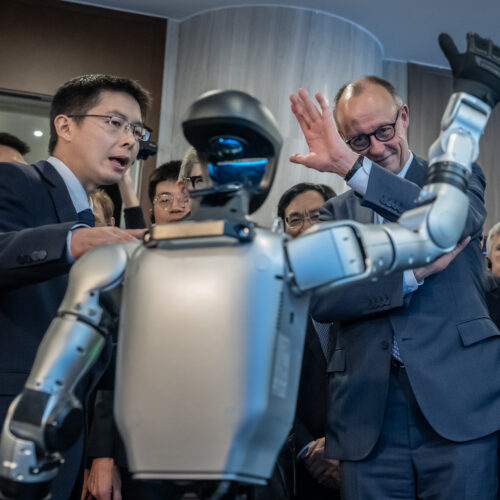
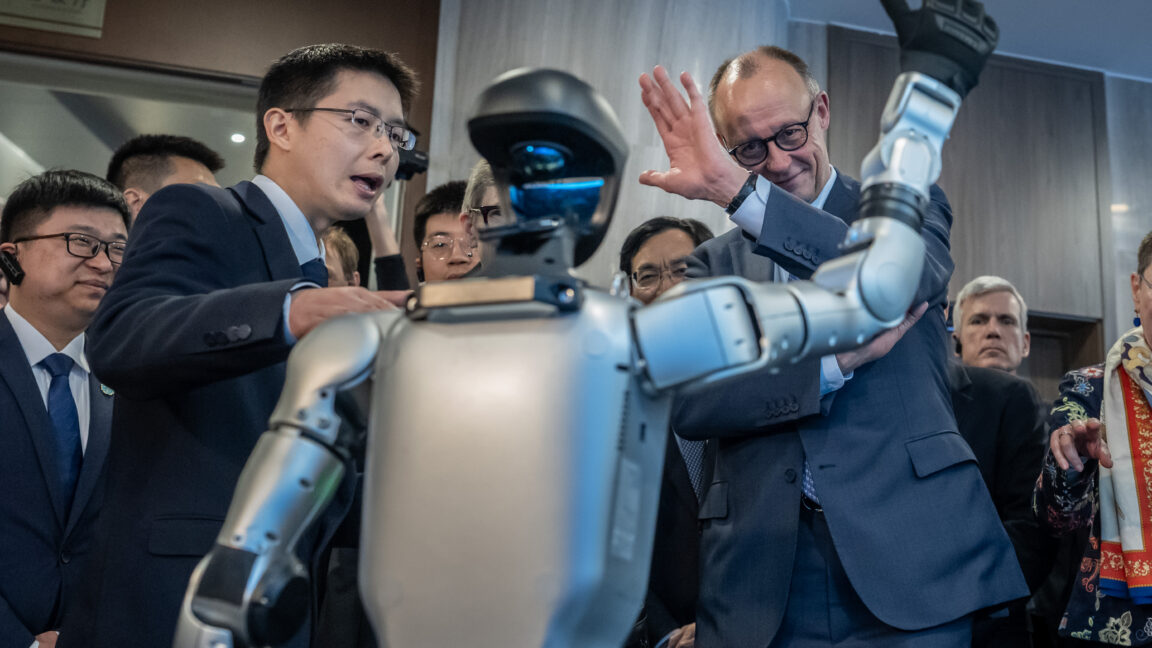
China leads the world in churning out humanoid robots and four-legged robot dogs that also happen to be the most affordable on the market—and Unitree Robotics’ founder Wang Xingxing is arguably one of the people most responsible for that Chinese lead.

The introverted founder, who prominently appeared at a 2025 business symposium hosted by Chinese President Xi Jinping, became phenomenally wealthy after Unitree launched an initial public offering on the Shanghai Stock Exchange STAR Market on August 19. But extensive reporting by Beijing-based Caijing Magazine suggests Unitree’s success so far has been driven by Wang’s extreme micromanagement leadership style—an approach that may be more suited to a small startup than a fast-growing robotics company.

Caijing’s interviews with Unitree employees and investors paint a picture of Wang as someone who personally decides nearly every aspect of corporate strategy or product design, including the colors of materials and lengths of individual screws. The Caijing Magazine feature published on August 31, titled “The King of Unitree,” was translated into English by ChinaTalk, a US-based think tank and media organization, on September 10.
Read full article

Comments

© Michael Kappeler/dpa (Photo by Michael Kappeler/picture alliance via Getty Images

  •  

AI leaders want to hit the brakes after years of reckless speed

For years now, the major frontier AI labs have all been acting as if they're in an all-out, winner-take-all race with control of world-changing machine superintelligence (or at least market-changing artificial general intelligence) at the finish line. This weekend, the industry as a whole rapidly started turning away from that posture, urging coordination on slowing down the development of frontier AI that they say could soon be too dangerous and unknowable to control.

Anthropic's Dario Amodei was at the forefront of this change in tone, arguing in a nearly 4,000-word essay this weekend that "we must slow the pace at which we improve the capabilities of AI models" to avoid "a race to the bottom, spurred by commercial incentives, [that] can make [catastrophic] risks more acute."

Within hours, other AI leaders were echoing the same call. OpenAI co-founder and CEO Sam Altman posted his agreement on social media and said similar pacing discussions had been taking place at OpenAI. Alphabet Chief Scientist and Google DeepMind cofounder and chair Demis Hassabis said that Amodei's essay "points towards the right path forward," and renewed his own recent call for an industry-wide standards body. Microsoft CEO Satya Nadella posted that the company "welcome[s] the research, focus, and deliberate pacing needed to get alignment right as the design goal," ahead of the release of a lengthy "humanist AI" code of conduct for its models.

Read full article

Comments

© Getty Images

  •  

"Offensively cheap": Solar power is looking up

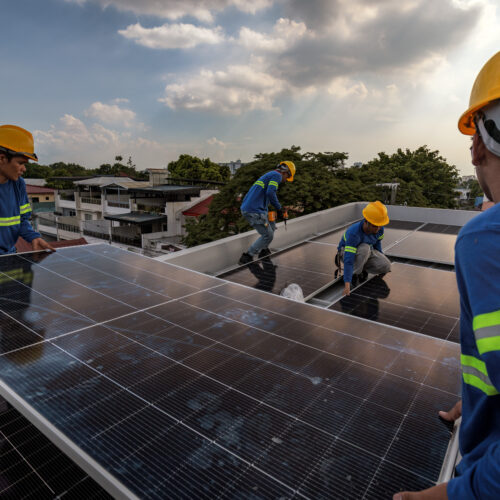
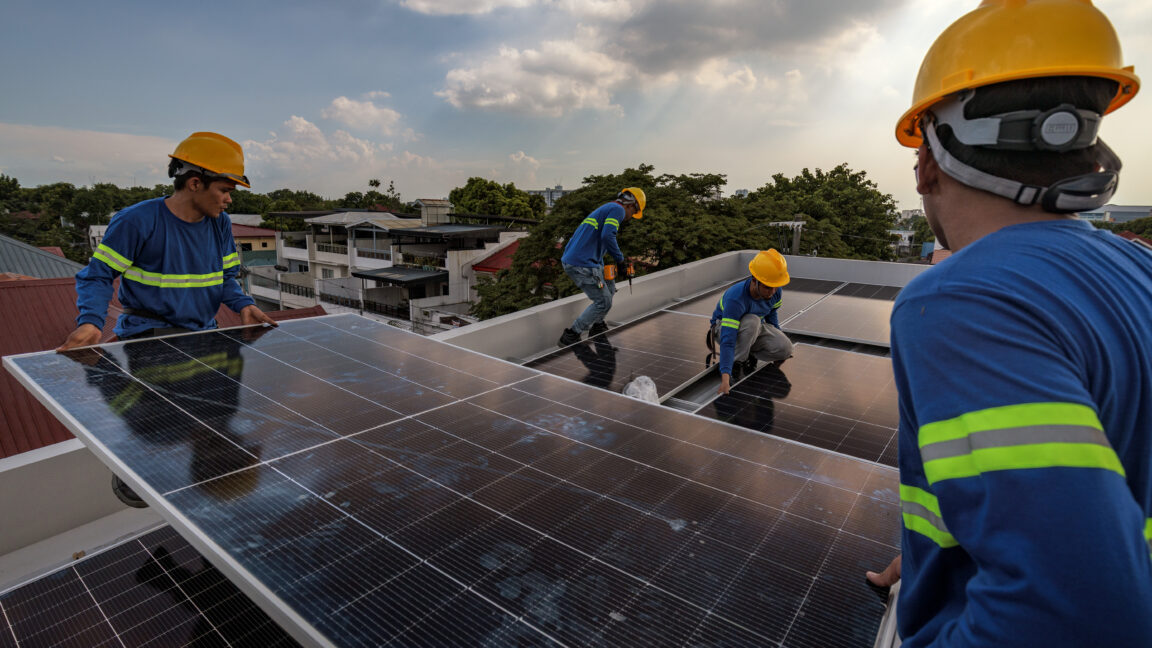
In the badlands of Chakwal, in north-central Pakistan, Bestway Cement is transforming plots of dry earth and olive and peach groves into a forest of solar panels.

Its efforts will add 6.34 megawatts of generation capacity by the end of the year, the company says, in addition to the 26 MW of photovoltaic cells currently in place. Already, solar generates over a quarter of the electricity powering its cement plant.

“It’s the only way we can compete,” says Abdul Waheed, the general manager at Chakwal, which produces over 3 million tonnes of cement per year. “Our rivals have already gone in this direction.”

Read full article

Comments

  •  

I fixed a tractor using John Deere’s self-repair service. Farmers aren’t sold on it.

There is something wrong with the tractor. The water-in-fuel sensor, a small device embedded in the John Deere machine that monitors the integrity of its diesel engine, is disconnected. And I’ve got to fix it.

I’m not a mechanic or a farmer. I’m poking at a laptop at John Deere’s corporate office in Santa Clara, California. There’s a cable connecting the computer to a 5130ML tractor sitting on the grass nearby. A bright red notification sits on the screen, telling me something is wrong. I type in a question and the software pulls up instructions and a few images from the user manual that matches the serial number of the machine.

Credit: Boone Ashworth

Read full article

Comments

© John Deere

  •  

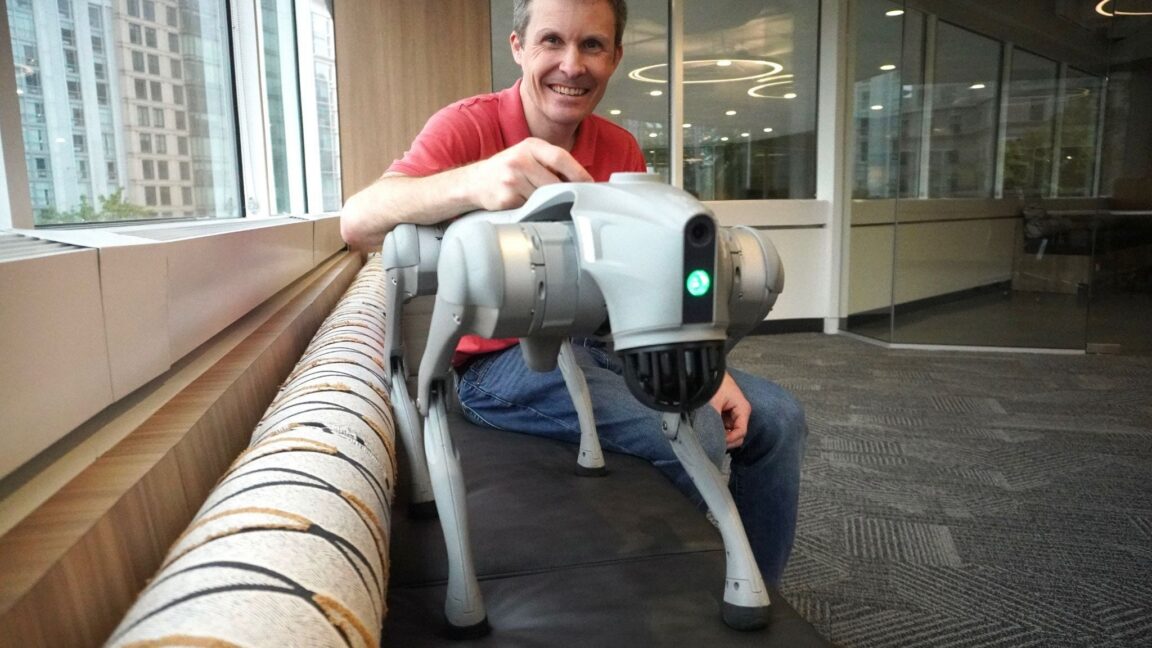
I spent $4,000 on a robot dog from China

On a sunny morning in June, I walked to work with a quadruped robot beside me. I’ve never gotten more attention from strangers.

A bunch of people snapped pictures of my robot dog. Several people asked me questions. Was it mine? (Yes.) Did I build it? (No.) Was it being used for surveillance? (No.)

Biological dogs kept a safe distance from my mechanical companion. Some growled or barked at it.

Read full article

Comments

© Nat Purser

  •  

Oracle tries to appease Stargate data center opponents with renewables push

Oracle’s proposed investment in 2 gigawatts of renewable energy projects for New Mexico comes as local opposition could delay development of the Project Jupiter data center that Oracle is building for OpenAI.

The two tech companies are developing the $165 billion Project Jupiter data center in Santa Teresa, New Mexico, as part of the broader Stargate AI infrastructure project announced by President Donald Trump in 2025. But Project Jupiter faces local protests and court battles over concerns about its environmental impacts—and the latest Oracle announcement on September 8 seeking proposals for renewable energy projects does not change the fact that the data center will be powered by fuel cells that consume natural gas.

“Like all matching programs, this would be synthetic in the sense that 2 GW of renewables wouldn't directly power the data center,” wrote Michael Thomas, CEO of the Cleanview data platform that tracks renewable energy and data center projects, in a LinkedIn post.

Read full article

Comments

© STACK Infrastructure

  •  
❌