❌

Reading view

Trump admin puts Americans in Congo on "do-not-board" list, barring return

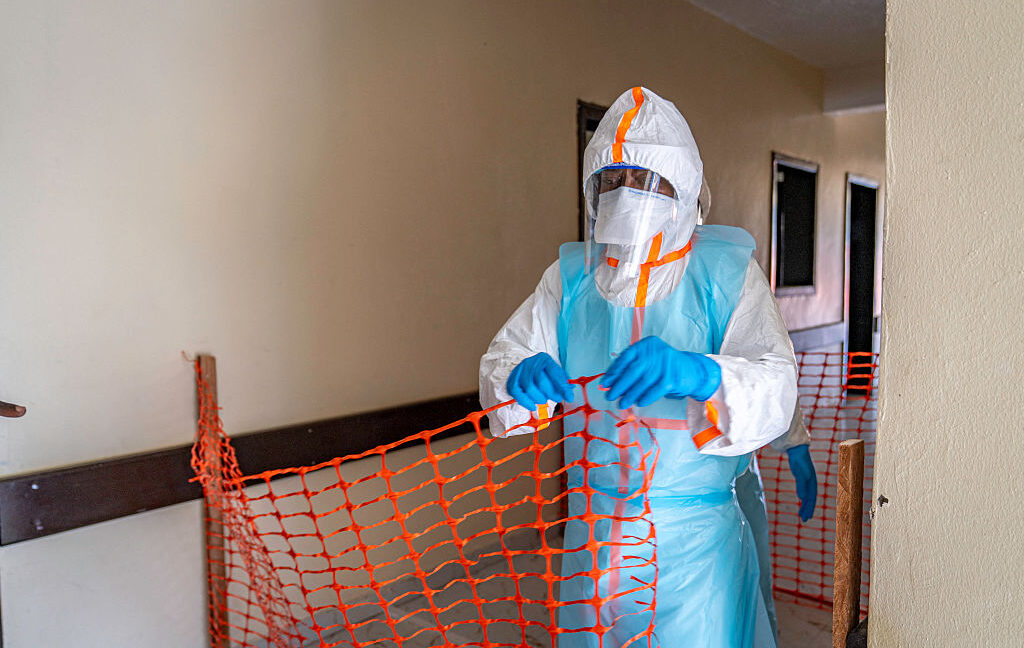
The Trump administration on Monday barred US citizens in the Democratic Republic of the Congo from returning home amid an Ebola outbreak that continues to outpace response efforts.

Reuters first reported late Monday that Americans currently in the DRC or those who have recently traveled to the Ebola-stricken country have been put on a "do-not-board" list. They cannot travel back to the US until they have spent 21 days in a third country. The order, taken under a transportation authority known as Title 49, was independently confirmed by Politico on Tuesday.

Both outlets noted that roughly two dozen Americans who had been set to board flights home on Tuesday have already been blocked by the new rule. It remains unclear if the bar also applies to government workers. The Centers for Disease Control and Prevention has at least two dozen employees working in the DRC.
Read full article

Comments

© Getty | GLODY MURHABAZI

  •  

Probe into explosive diarrheal cases points to Taco Bell and bad lettuce

Lettuce and salad greens have become the prime suspects in an explosive outbreak of the diarrheal parasite Cyclospora, which is surging nationwide but erupting to extraordinary heights in Michigan.

In recent years, Michigan has typically reported around 50 cases of cyclosporiasis, which causes urgent bouts of watery diarrhea, abdominal cramps, and nausea. But, this year, as of July 14, the state has reported 3,309 cases of the food-borne pathogen. Of those 44 have been hospitalized.

Based on interviews with more than 1,000 people sickened in Michigan, the latest data is pointing to leafy greens as the source, according to the Michigan Department of Health and Human Services (MDHHS).

Read full article

Comments

© Getty | Al Drago

  •  

Trump may be mystery patient in odd case of 79yo getting experimental obesity drug

In an extremely odd case, a single 79-year-old patient was granted early access to Eli Lilly's powerful, still-experimental obesity drug retatrutide through the Food and Drug Administration's "compassionate use" program—raising immediate questions if that sole patient is President Donald Trump, according to a report by Stat News.

Lilly's retatrutide is a highly anticipated next-generation obesity drug that targets GIP and glucagon hormones in addition to GLP-1. It is currently in late-stage trials to treat obesity, diabetes, sleep apnea, and other conditions. Data from a Phase 3 trial that Lilly released in May indicates that patients with obesity (but without diabetes) who took the drug for 80 weeks lost 28 percent of their weight, an amount comparable to bariatric surgery.

Millions of Americans with obesity are eager to get the drug, with options being limited so far to enrolling in a clinical trial or trying to obtain it by dodgy methods.

Read full article

Comments

© Getty | Aaron Schwartz

  •  

Man used massage gun on his tired eyeballs. It went as well as you'd expect.

For our weary eyeballs, strained and tired from long periods locked onto screens, rest and relaxation can do wonders. But a man in Scotland came up with an eye-popping plan to try to pamper his pooped peepers.

Ophthalmologists discovered it when the man, who was in his 20s, appeared at an eye treatment center in Edinburgh. He told them he had noticed increasing floaters and flashing lights in his right eye over the previous six days. According to a BMJ Case Report, the man said he hadn't had any eye or head injuries before the vision problems began, and that his family didn't have a history of eye disorders that might explain them. Besides having mild near-sightedness and needing glasses, he usually didn't have any problems with his eyes, he said.

When the doctors—Niamh O’Connell ‍‍and Ashraf Khan—took a close look, they were surprised to find that both of his eyes were in terrible shape. In his right eye, he had multiple retinal tears, widespread retinal bruising, and a condition called retinal dialysis—a retinal break at a junction in the front of the eye—that is usually seen after a significant eye injury. In his left eye, he had more widespread bruising and six full-thickness rips in his retina.

Read full article

Comments

  •  

FDA advisors unanimously vote to approve Moderna's mRNA after agency drama

Independent advisors for the Food and Drug Administration on Friday voted 9–0 in support of approving Moderna's seasonal mRNA flu vaccine, which a Trump appointee at the agency initially tried to block from even being reviewed.

In an all-day meeting, members of the FDA's advisory committee—known as VRBPAC for Vaccines and Related Biological Products Advisory Committee—pored over data and presentations on the vaccine, which is dubbed mRNA-1010 and branded as mFlusiva. The presentations included a review from FDA scientists, which was supportive of the vaccine.

Data from a Phase 3 trial including over 40,000 adults age 50 and older found the mRNA vaccine was around 27 percent more effective against seasonal flu than a standard flu shot. A smaller Phase 3 trial, involving data from nearly 3,000 people age 65 years and older, showed the shot produces stronger immune responses than a high-dose flu vaccine, which is recommended for this age group. The safety profile of the vaccine was also generally good.

Read full article

Comments

© DeFodi Images

  •  

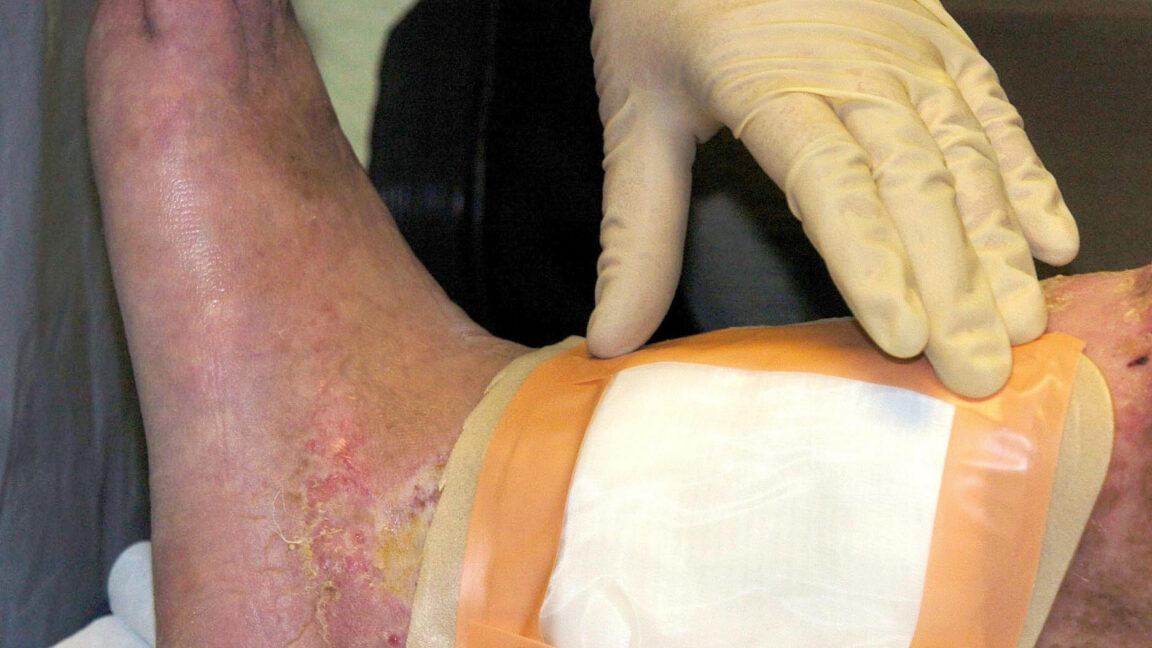
Second carcass-eating fly species cleared by FDA for maggot wound therapy

The Food and Drug Administration this week cleared a second carcass-feasting fly species for use in maggot wound therapy, according to an announcement from Cuprina Holdings, a Singapore-based company that has dubbed its new therapeutic larvae MediFly Maggots.

With the clearance, Cuprina appears to be the only company to have FDA clearance to sell two species of fly larvae—and it's abuzz with the potential to dominate the global maggot market.

The new species is Lucilia cuprina, or Australian sheep blowfly. It's a close relative of Lucilia sericata, or the common green bottle fly, which is the fly species most often used for wound therapy, often called biosurgery or maggot debridement therapy (MDT). L. sericata is the only other fly with FDA clearance, which the agency first granted in 2004 to Ronald Sherman, who is now Cuprina’s Medical and Scientific Director.

Read full article

Comments

© Getty | John Giles

  •  

"Truly evil" FDA rejection of gene therapy overturned after Trump official ousted

A gene therapy for Huntington's disease has a new path toward approval from the Food and Drug Administration after the ouster of several Trump officials, particularly Vinay Prasad, who rejected the therapy in a shocking move one former FDA official called "truly evil."

Huntington's disease is an inherited condition that typically strikes in middle age and causes nerve cells in the brain to gradually break down. There are currently no treatments for the disease, and many afflicted die in their 50s and 60s.

Gene therapy company UniQure developed a one-time treatment, AMT-130, that aims to lower brain levels of the mutant protein behind the disease, called huntingtin. Data from a small, early trial suggested the drug could slow the progression of the disease up to 75 percent, and patients and advocates have closely watched the drug's development in hopeful anticipation.

Read full article

Comments

© Getty | Congressional Quarterly

  •  
❌