❌

Reading view

Genuinely human: Bionic emotion-sensing humanoid robot sheds real tears while talking

“Can you shed tears for me?” a visitor asked. “Of course,” the robot replied, and its eyes welled up on command. That brief exchange became one of the standout moments at the 2026 Inclusion Conference on the Bund in Shanghai. A bionic emotion-sensing robot demonstrated its ability to physically cry in response to a simple spoken request, catching visitors off guard with just how natural the reaction looked.

The robot is built on a three-layer technical architecture designed specifically to generate convincing human emotional responses rather than simple pre-programmed animations. Its ability to produce tears on cue points to a deeper engineering goal: making robotic emotional expression feel spontaneous and responsive, rather than scripted.

Two facial technologies

Traditional systems used to animate robotic faces rely on servo motors. Those motors physically pull silicone facial skin into different shapes to generate expressions like smiles, frowns, or surprise. That approach has powered most emotionally expressive robots shown publicly in China over the past two years, letting them blink, glance around, and shift expression in real time.

The next generation of the technology moves beyond that mechanical pulling system entirely. Developers plan to add bionic muscles beneath the robot’s synthetic skin. That shift is meant to let the robot generate a meaningfully wider range of facial expressions than servo-driven skin alone can produce. Rather than a limited set of pre-built expression shapes, muscle-based actuation could let the face shift more continuously and naturally between emotional states.

Producing actual tears, as the robot did during its conference demonstration, adds a physiological layer on top of that facial architecture. Rather than relying on expression alone, generating a genuine fluid response mimics one of the most recognizably human signals of emotion. That signal is difficult to convincingly fake through mechanical movement alone.

A bigger tech showcase

The robot appeared as part of a wider technology exhibition running alongside the conference. That exhibition spanned nearly 15,000 square meters and drew more than 300 science and technology exhibitors. The 2026 Inclusion Conference on the Bund ran under the theme “Building the AI Economy Together.” It featured a main forum alongside more than 40 sub-forums exploring different facets of China’s expanding AI industry.

Emotionally expressive robots have become an increasingly prominent showcase at major Chinese technology events over the past year. That trend reflects a broader industry push to make human-robot interaction feel more natural and less mechanical.

Whether audiences respond to a crying robot with genuine emotional engagement or simple curiosity, demonstrations like this one carry a clear signal. Chinese robotics developers are now investing seriously in the physical, physiological details of emotional expression, not just the underlying artificial intelligence driving it.
  •  

Volvo’s 50-ton excavator skips recharging entirely using a 35-meter grid cable reel

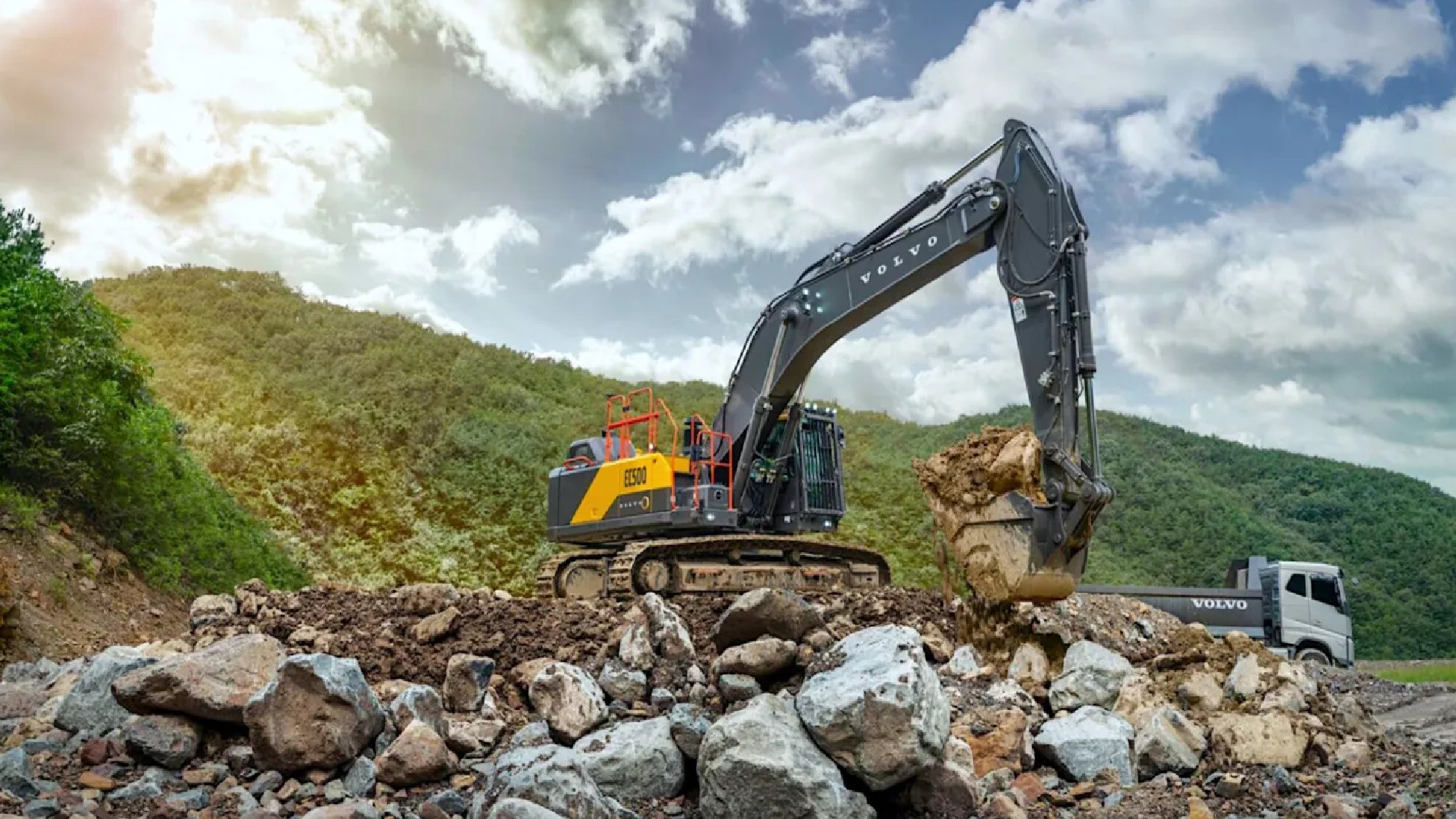
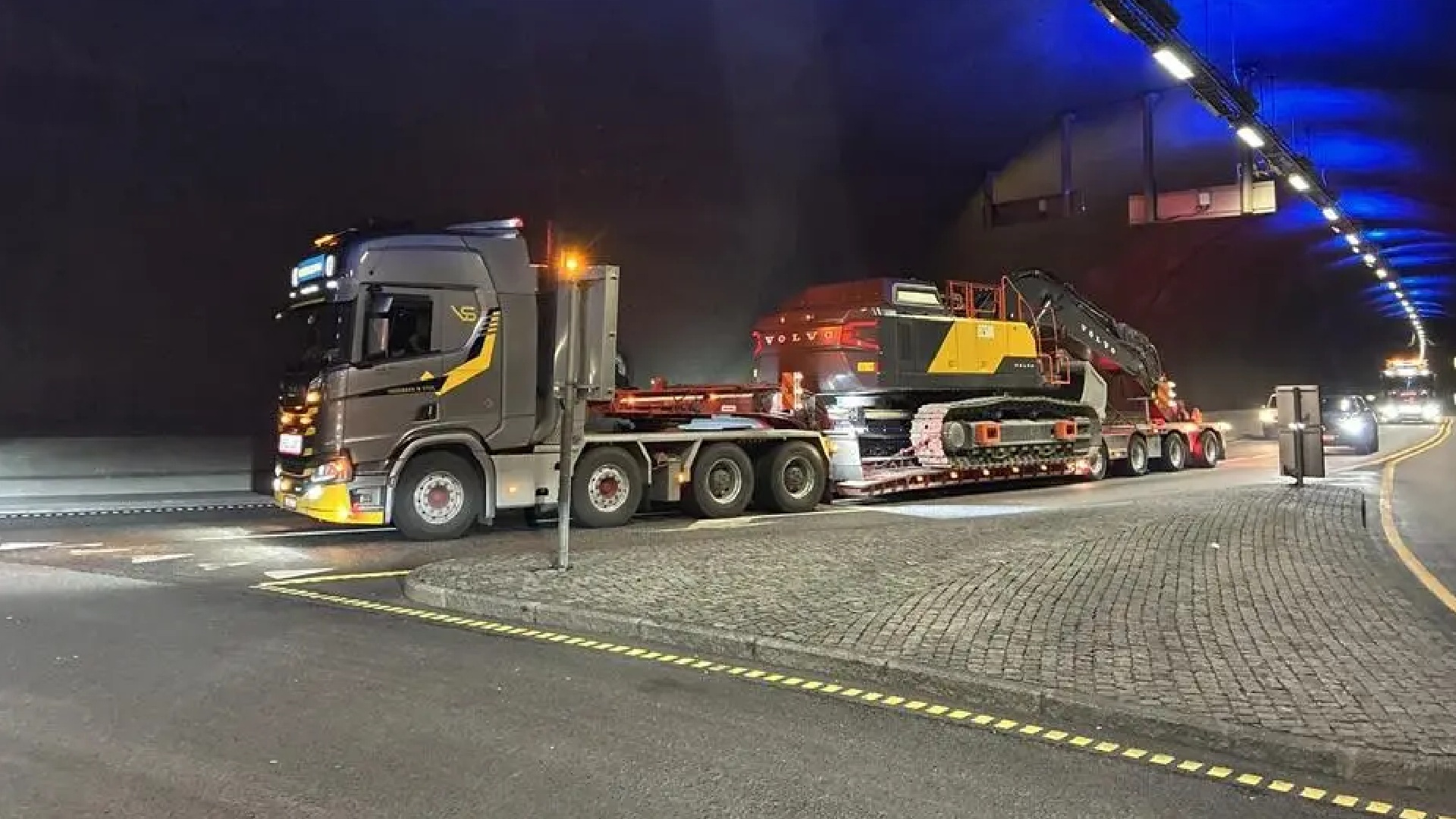
A new 50-ton electric excavator from Volvo Construction Equipment is designed to never need a battery recharge. It uses a 35-meter cable reel to draw power directly from the grid instead. The EC500 Electric is now undergoing pre-production testing in Norway, running real work at active job sites months before its official production launch.

Volvo built the EC500 Electric to match the performance of its diesel-powered counterpart, a machine the company’s customers already know well. Saying the two perform identically is one thing, though. Proving it in the field is another matter entirely. The new model is significantly larger than Volvo’s existing 30-ton EC230 Electric, and the excavator remains so early in development that it isn’t yet in full production.

Grid power, no downtime

The excavator carries an onboard high-voltage battery rated for two to three hours of continuous use on its own. Its 35-meter cable reel lets the 50-ton machine plug directly into grid power instead. That connection enables operation around the clock across shift after shift without ever needing to stop and recharge.

EC500 Electric on the move; by Volvo CE.

That grid dependency comes with its own tradeoff, since reliable power access can’t always be taken for granted on every job site. Mike Switzer, a heavy equipment fleet buyer and co-host of The Heavy Equipment Podcast, said that reality applies broadly across the industry. Working for a company, he said, doesn’t automatically guarantee power is available wherever that work happens.

Handling uneven power

Volvo’s battery-electric system runs on a 400-volt base designed specifically to adapt to varying grid conditions on different job sites. That flexibility is meant to help customers manage the practical realities of fluctuating site power while reducing the demands the excavator places on existing job site infrastructure.

The first EC500 Electric unit in customer hands is currently working across quarrying, road building, and tunneling applications in Norway. Volvo said the ongoing test program is designed to funnel real-world feedback on the machine’s behavior, performance, and operator experience directly into its final development stages.

Volvo described the approach as ensuring the machine gets developed around more than technical specifications alone. It also incorporates the daily requirements of customers working in some of the most demanding applications the equipment will actually face. Early data gathered from the pilot program is already shaping refinements ahead of the EC500 Electric’s planned production launch in spring 2027.

  •  

Rare-earth-free US magnets gain Honda backing for next-gen electric propulsion

Honda Motor has invested in Niron Magnetics, a US company commercializing rare-earth-free Iron Nitride permanent magnets.

Announced on September 9, the investment will support the continued commercialization of Niron’s technology and help scale its manufacturing operations.

The move reflects Honda’s interest in next-generation magnetic materials that could reduce reliance on rare-earth elements in electrified systems.

Reducing reliance on rare-earth materials

Permanent magnets are used in electric propulsion motors and several other technologies. However, many conventional high-performance magnets depend on rare-earth metals that face resource constraints and changing market conditions.

Niron’s Iron Nitride technology offers an alternative that does not require rare-earth materials. It is intended to support performance, cost stability, and sustainability goals while reducing reliance on constrained global supply chains.

“This investment reflects the increasing focus on rare-earth-free magnet technology as manufacturers look for more resilient solutions,” said Jonathan Rowntree, CEO of Niron Magnetics.

“Following investment from Honda, we are encouraged by their confidence in our technology and vision for scaling rare-earth-free permanent magnets across a broad range of applications. The investment adds to growing industry momentum as manufacturers increasingly direct resources to alternatives to rare-earth-based magnets,” he added.

The technology can be used across automotive systems, robotics, industrial automation and emerging mobility platforms. Other potential applications include artificial intelligence and data center infrastructure, as well as consumer electronics.

Honda sees potential for electric propulsion

Most electric propulsion motors currently use permanent magnets made from rare-earth metals. Honda expects Niron’s technology to help address some of the supply and market challenges associated with these materials.

“Niron Magnetics has an innovative permanent magnet technology that does not require rare earth materials. Most electric propulsion motors today use permanent magnets made from rare earth metals, which are subject to resource constraints and fluctuations in market conditions,” said Mahito Shikama, Director, Executive Officer of Honda Motor Co., Ltd.

“Niron Magnetics is addressing these challenges, and Honda has high hopes for its potential,” he added.

The investment further supports Niron’s effort to establish Iron Nitride as a new category of permanent magnetic material. It will also help the company expand the technology’s adoption across a growing range of products and applications.

Honda’s backing adds to the resources being directed toward alternatives to rare-earth-based permanent magnets. For Niron, it supports the transition from commercializing its technology to producing the magnets at a larger scale.

US facility to scale magnet production

Niron recently announced a new 287,000-square-foot facility in Sartell, Minnesota, for magnet manufacturing. The plant is scheduled to begin operating in 2027.

Once operational, the facility is expected to produce up to 1,500 tons of rare-earth-free Iron Nitride permanent magnets annually. This output will serve the company’s targeted automotive, industrial and advanced technology applications.

The facility forms a central part of Niron’s manufacturing expansion. Honda’s investment will support the company as it works to scale production and broaden the use of Iron Nitride magnets across electrified systems.

  •  

‘First-of-its-kind’ US flying stratospheric platform completes record-breaking 18,000-mile trip

A Moriarty-based company’s stratospheric platform has re-entered the United States. High Altitude Platform Systems (HAPS) for stratospheric infrastructure completed its record-breaking trans-Pacific flight from New Mexico to Japan and back.

Callled Service Test 1 (ST1) mission, the stratospheric platform was developed by Sceye. ST1 launched on August 9, 2026, and arrived in Japan 13 days later. While operating in Japan, Sceye demonstrated mobile broadband connectivity to unmodified devices through SoftBank Corp.’s core network and HAPS-based edge computing and communication with drones to support the development of a 3D communications network.

Mission validated technology, vehicle systems, payload

“Groundbreaking and historic only begin to describe our ST1 flight,” says Mikkel Vestergaard Frandsen, Founder and CEO of Sceye.

“This mission proved not only that our technology, vehicle systems, payload, and operational infrastructure are ready for connectivity services, but also that the stratosphere is where the future non-terrestrial infrastructure lies. The stratosphere is what will enable the always-on future – including the promised land of 6G. Together ground, stratosphere, and space – each operating at their optimal strengths, will change the course of humanity.”

During its journey, Sceye’s ST1 traveled nearly 30,000 km and re-entered continental U.S. on September 4, 2026. ST1 reached airspace near Sceye’s headquarters in Moriarty, New Mexico on September 5, 2026, where Sceye completed additional vehicle testing and a planned termination and descent.

Conducted in partnership with SoftBank Corp, a leading operator of telecommunications and IT businesses in Japan and globally, ST1 marks Sceye’s first flight to Asia and a groundbreaking milestone toward the commercial deployment of HAPS as stratospheric infrastructure. ST1 carried SceyeCELL, a first-of-its-kind “cell tower in the sky” designed to deliver wide-area mobile broadband directly to standard devices from the stratosphere. When deployed at full scale, one Sceye HAPS is designed to cover the equivalent area of approximately 500 terrestrial towers, according to a press release.

Stratosphere offers the optimal vantage point

The stratosphere offers the optimal vantage point: It is close enough to Earth for high-capacity connectivity and observation, yet the altitude is high enough for wide-area reach. Importantly, the stratosphere offers space-like conditions without the cost of being in space and the disadvantages of being in orbit. Sceye’s HAPS maintain altitude and their area of operation in the stratosphere through consecutive day and night cycles, operating like geostationary satellites, only 1,800 times closer to Earth and at a fraction of the cost, as per the release.

The platform traveled nearly 30,000 km from New Mexico to Japan and back to New Mexico over a month-long journey. The platform also tested emergency calls, using an emergency alert messaging system designed for large-scale disasters, as well as communications with drones.

Through a server installed on the HAPS, Sceye and SoftBank conducted data processing directly on the platform, demonstrating an average round-trip processing response time of 68 milliseconds, reducing communications latency by over 40% compared with internet-based cloud processing. This marks the world’s first successful test in which a mobile core network and a web server for processing were installed on a HAPS, enabling response processing to be performed entirely onboard the HAPS and the results to be relayed back to smartphones.

  •  

Multi-kilojoule lasers built for nuclear fusion could power next-gen air defense

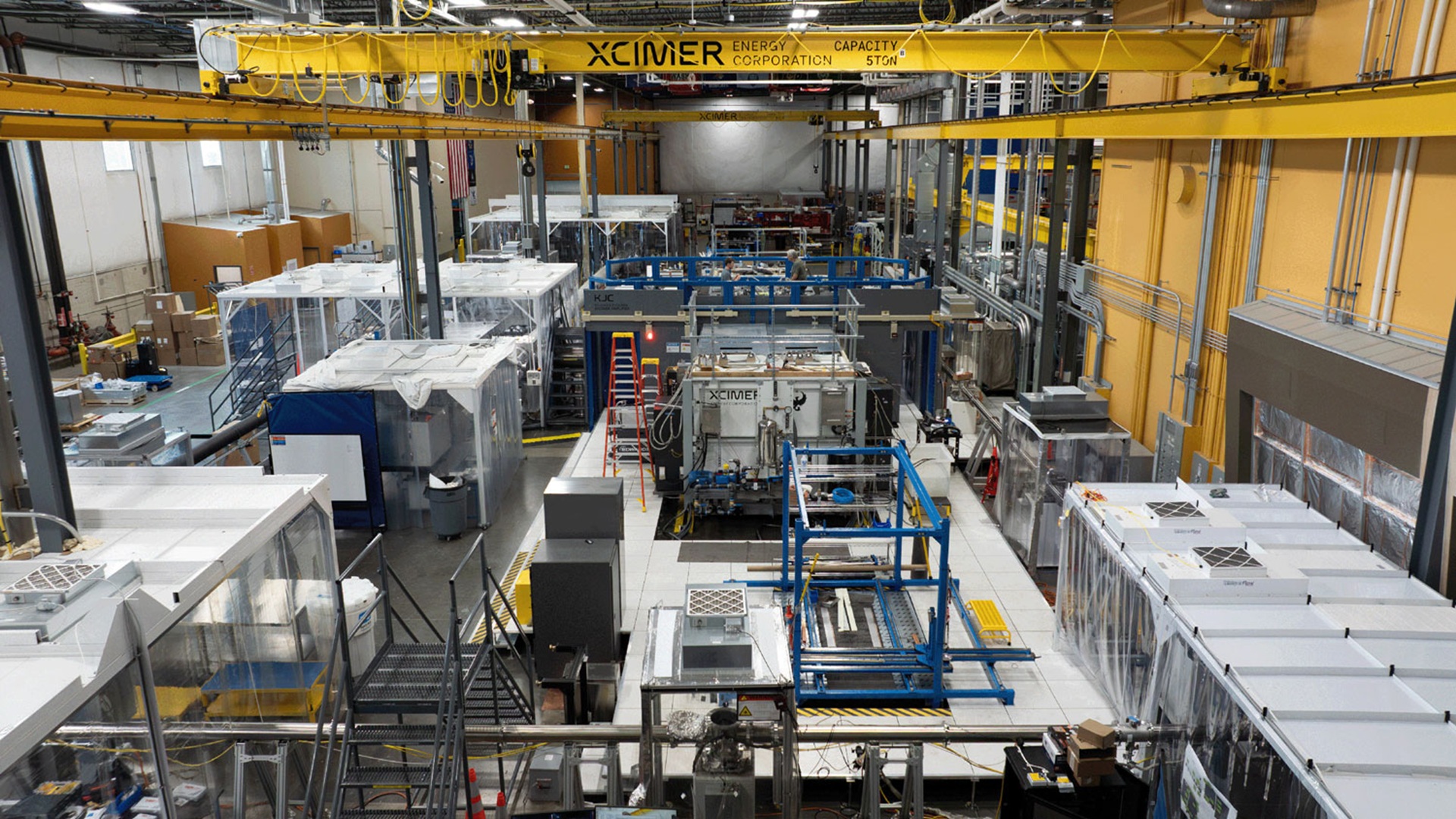
RTX Ventures has invested in laser fusion company Xcimer Energy to develop pulsed-laser technology for potential use in US military directed-energy systems.

The collaboration brings together two applications that share a fundamental engineering challenge: building powerful lasers that can fire repeatedly, reliably and affordably.

Xcimer is developing excimer laser technology for its fusion power system. The company says the same approach could provide the performance and scalability needed for directed-energy weapons, potentially offering longer-range capability than existing systems.

RTX’s investment is also intended to support Xcimer’s fusion program. In June, the US Department of Energy approved Xcimer’s fusion pilot power plant design under its Milestone-Based Fusion Development Program.

One laser, two missions

Laser fusion works by using intense laser pulses to compress and heat fuel until it reaches conditions where nuclear fusion can occur. The challenge is developing lasers that can deliver these pulses repeatedly while keeping energy consumption, maintenance, and operating costs under control.

Those same requirements matter for military laser systems. A directed-energy weapon must deliver enough energy to engage a target while remaining efficient and reliable enough for repeated use. Xcimer says its excimer-based system is designed around those requirements.

“As the United States accelerates the development of next-generation air defense, the need for affordable and scalable directed energy systems has never been more urgent,” said Conner Galloway, co-founder, CEO and Chief Science Officer at Xcimer. “Our excimer-based laser technology offers the performance, speed and inherent scalability needed at a fraction of the cost and complexity of today’s systems.”

The partnership will now examine how the laser technology could be integrated and containerized into RTX defense systems.

That could be important because one of the challenges facing directed-energy weapons is making them practical outside laboratory environments. Systems must fit into deployable platforms while generating enough power to engage threats.

Fusion technology enters air defense

RTX brings experience in sensing, command and control, and air-defense systems to the partnership. The company says those capabilities could help integrate Xcimer’s laser technology into future defense platforms.

“We believe Xcimer’s pulsed-laser technology lines up perfectly with our expertise in areas like advanced sensing, command and control and air defense,” said RTX Chief Technology Officer Juan de Bedout. “Together we will explore how we can best integrate these technologies into advanced, scalable defense systems able to defeat a range of new and evolving threats.”

Xcimer is pursuing commercial fusion power alongside the defense work. The company expects its fusion technology to begin delivering electricity to the grid by the mid-2030s.

The dual-use development could give the laser technology two potential markets: commercial fusion energy and military directed-energy systems.

For now, the RTX-Xcimer agreement is focused on exploring integration and development rather than announcing an operational weapon. The companies will need to demonstrate that the laser can meet the demanding requirements of a deployable defense system while maintaining the efficiency, reliability, and scalability needed for repeated operation.

  •  

Compact geothermal drill completes first commercial borehole job for low-carbon heat

A geothermal drilling rig just finished working on one of the least forgiving places for heavy equipment, a live construction site in downtown Boston.

Dig Energy completed its first paid commercial installation at 100MAG, Suffolk’s AI and innovation hub near the construction firm’s headquarters. The Massachusetts startup used its compact drilling platform to install geothermal heating and cooling infrastructure for the building.

The drilling operation started in early August and finished in about two weeks. Workers carried out the work while construction continued around them, giving Dig a real test of its approach in a crowded commercial setting.

Geothermal drilling gets smaller

Geothermal heating and cooling has relied on mature technology for decades. The difficult part has often been getting the drilling done without driving up project costs.

Traditional drilling equipment can demand substantial space and labor. That creates a particular problem on urban construction sites, where available space can be scarce.

Dig built its drilling system around those constraints. The company says its rig needs only a fraction of the footprint and crew used by conventional drilling equipment.

At 100MAG, the active drilling area occupied only a few parking spaces at any given time. That allowed the geothermal work to fit into an operating construction site without taking over a large section of the property.

“Suffolk has led some of the most complex and sophisticated construction projects in the country,” said Dulcie Madden, co-founder and CEO of Dig Energy.

Madden said the 100MAG site tested the technology under tight spatial constraints and a demanding schedule. She added that Dig’s equipment could integrate into Suffolk’s construction workflow.

That matters because geothermal projects can require drilling before a building can use the system. A smaller drilling platform could make that step easier to accommodate alongside other construction activity.

Suffolk puts system to work

The installation also gives Suffolk a chance to judge geothermal technology through an actual project rather than a demonstration. Suffolk Technologies, the construction firm’s venture arm, invested in Dig through its BOOST 6 accelerator. The program brings emerging construction technologies onto Suffolk projects for real-world deployment.

Parker Mundt, a partner at Suffolk Technologies, said the project showed how Dig’s compact platform could reduce the cost and complexity of geothermal installations. Suffolk now has direct experience with the drilling process at a commercial property. That experience could help the contractor assess geothermal systems for future projects across its portfolio.

The opportunity extends beyond conventional office construction. Suffolk works with customers investing in geothermal and on-site energy infrastructure, including education facilities and data centers.

Dig plans to put its drilling system through several more New England projects in the coming months. The planned sites include a grocery store, a utility headquarters and a small campus.

Those deployments will put the compact rig against different site conditions and building requirements. They could also show whether the space and labor savings seen at 100MAG hold up across a wider range of commercial projects.

  •  

Louisiana unveils 5 GW power push combining gas, batteries and advanced nuclear

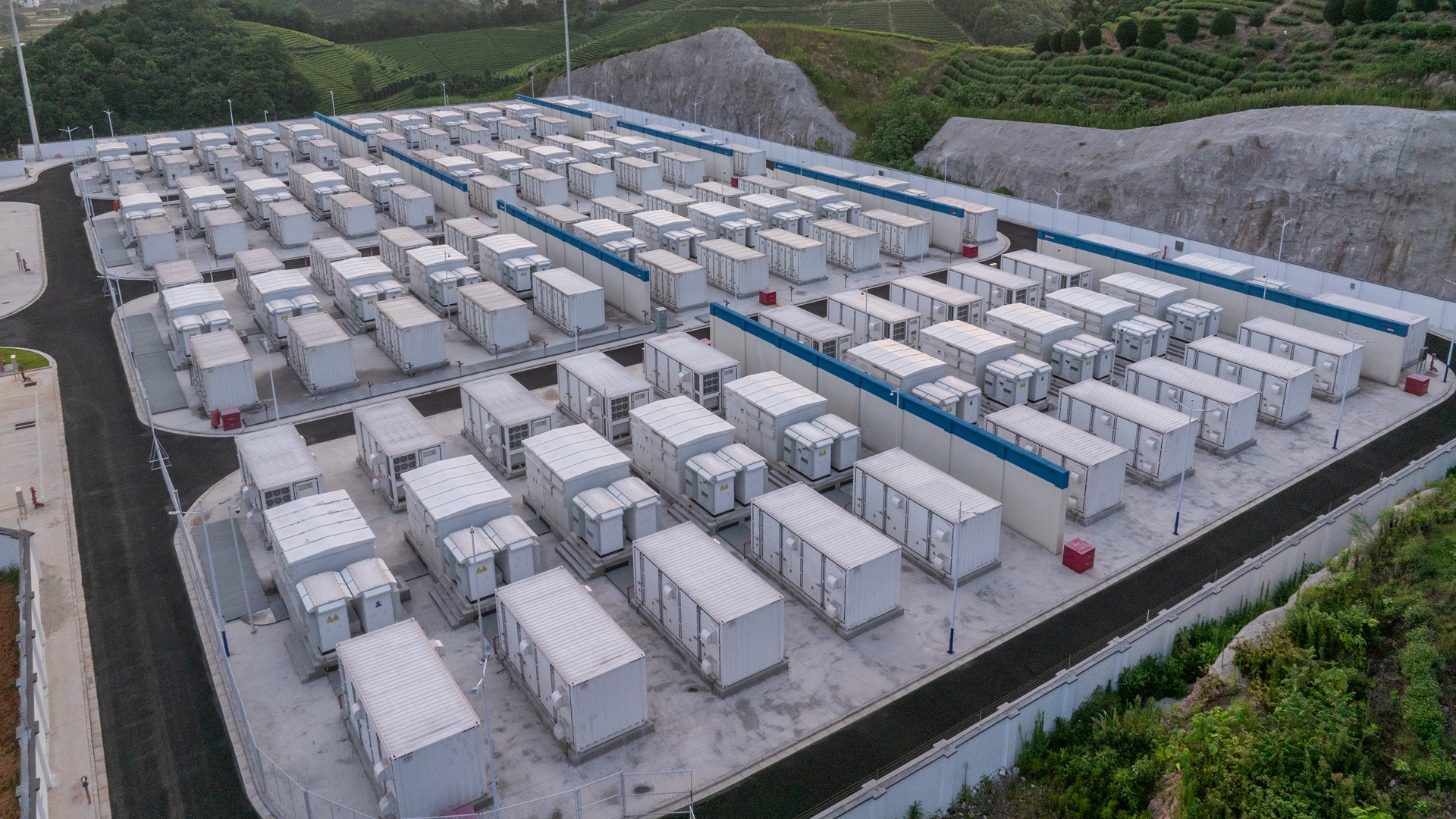
Louisiana could add 5 GW of new power through a three-project plan combining natural gas, battery storage and advanced nuclear reactors.

The portfolio is designed to serve growing electricity demand from data centers, advanced manufacturing and other industrial users. Rather than relying on one generation source, the plan spreads the capacity across three projects with different roles and development timelines.

Project Cayman would provide the largest share, with 2.88 GW of natural-gas generation and battery storage. The project could also include a data-center technology campus, giving large customers access to dispatchable power close to their operations.

Project Barracuda would add another 1.2 GW of natural-gas generation, along with 300 MW/1.2 GWh of battery storage. The planned energy park could support up to 1 GW of critical data-center IT capacity, creating a dedicated power and computing hub.

Project Amberjack takes a different route. It is being developed as a standalone small modular reactor campus targeting up to 1 GW of advanced nuclear generation.

Three technologies, three roles

The projects are intended to address different parts of the power challenge. Gas generation would provide dispatchable electricity, batteries would help manage demand and storage, and nuclear power would provide a longer-term source of steady generation.

Cayman has already secured site control through a binding letter of intent. Its development would proceed in phases based on customer demand, fuel availability, utility requirements, environmental reviews, permitting, and financing.

Barracuda is also being planned in stages. Its generation, storage, and data-center components could be expanded as customer demand develops.

Amberjack is at an earlier stage. The project has site control, but the company still needs to conduct technical and environmental studies before determining the reactor technology and final plant configuration.

“The Louisiana trilogy offers three distinct, complementary solutions to answer America’s soaring power demand,” said Richard Taylor, CEO of ONE Nuclear. “Cayman delivers scale, Barracuda connects dedicated power with digital infrastructure, and Amberjack creates a disciplined path toward advanced nuclear power.”

The combined planning targets amount to approximately 4.08 GW of natural-gas generation from Cayman and Barracuda, plus up to 1 GW of nuclear capacity from Amberjack.

Those numbers are not yet guaranteed generation capacity. The projects still depend on final engineering, grid interconnection, permits, customer agreements, financing, and other development decisions.

Nuclear remains the longer bet

Amberjack is the most technically ambitious part of the portfolio. The proposed campus would use multiple small modular reactors, but the company has not yet selected a specific reactor technology.

Planned work includes geotechnical and environmental studies, cooling-water and logistics assessments, transmission analysis and discussions with potential technology vendors. The company also plans continued engagement with the Nuclear Regulatory Commission and local communities.

“The Louisiana Portfolio is ambitious because Louisiana’s opportunity is extraordinary,” said Chris Hansmeyer, Chief Development Officer of ONE Nuclear. “These projects are complementary, but they are not dependent on one another. We can advance proven dispatchable generation and storage for near-term demand, purpose-built infrastructure for digital and industrial customers, and a rigorous, site-specific pathway for advanced nuclear power.”

The approach reflects a broader push to build power infrastructure around rapidly expanding data-center demand while keeping nuclear power in the mix as a longer-term option.

ONE Nuclear plans to hold a public information meeting in October 2026 to explain the projects, discuss environmental and infrastructure work, and gather community feedback. The three projects remain at different stages of development, and no commercial power generation has begun.

  •  

New 154,000-square-foot US plant makes lithium carbonate from 100% recycled batteries

R3 Lithium has started producing lithium carbonate from recycled battery materials at its facility in Covington, Georgia.

The 154,000-square-foot plant is designed to recover lithium at commercial scale. R3 also raised $15 million in Series A funding to upgrade the operation.

The company expects the Georgia facility to produce more than half of US lithium carbonate output in 2027. Its existing production line can make 2,500 metric tons of lithium carbonate annually.

Georgia plant targets scale

The facility can shred as much as 30,000 metric tons of battery material each year. That feedstock includes manufacturing scrap and batteries reaching the end of their useful lives.

Shredding produces black mass, which contains the valuable materials left inside lithium-ion batteries. R3 processes that material at the same site to recover lithium and produce lithium carbonate.

The process combines calciner-based crystallization with water-based precipitation. Keeping those steps together eliminates the need to ship lithium-bearing material elsewhere for refining.

The facility previously produced 99%-pure lithium carbonate using entirely recycled material. R3 acquired the site in July after its previous owner invested about $150 million into the operation.

A second 2,500-metric-ton production line could eventually double the site’s lithium carbonate capacity. R3 has also secured roughly $1 billion in offtake agreements with customers.

Trafigura is among the buyers supporting those agreements. Tim Wood-Dow, a battery metals trader at Trafigura, said domestic lithium supplies remain limited.

Recycling cuts supply chain

The approach could give US battery manufacturers another source of domestically processed lithium. Much of the world’s battery production and processing capacity remains overseas.

Developing new lithium mines also takes considerable time. Projects can spend seven to 10 years navigating permitting before production begins.

Recycling existing batteries offers a different route to supply. R3 can source lithium from material already circulating through the battery economy.

Demand for lithium carbonate is also expanding as battery storage grows. Global battery storage installations surpassed 300 gigawatt-hours during 2025.

Data center construction has added another source of demand for large energy storage systems. Each gigawatt-hour of grid-scale storage requires about 880 tons of lithium carbonate.

R3 plans to build additional facilities across North America and Europe. Each site would use modular production units capable of processing 5,000 metric tons annually.

The company plans to secure customer offtake agreements before deploying those units. That strategy would let R3 expand capacity in stages as demand develops.

One site handles recovery

The Covington facility also recovers materials beyond lithium. Its process produces concentrated metal oxide containing nickel, cobalt, manganese, and graphite.

R3 can sell those materials separately after extracting the lithium. That creates additional value from the same recycled battery feedstock.

Keeping the process on one site also reduces the number of locations involved in moving battery materials through the recycling chain. Scrap and spent batteries can enter the facility and emerge as refined lithium carbonate.

R3 now wants to replicate that model across additional sites. If its expansion targets hold, recycled batteries could become a larger source of domestically produced lithium carbonate in the US.

  •  

World’s first zinc Hall-effect thruster fires in space on its maiden attempt

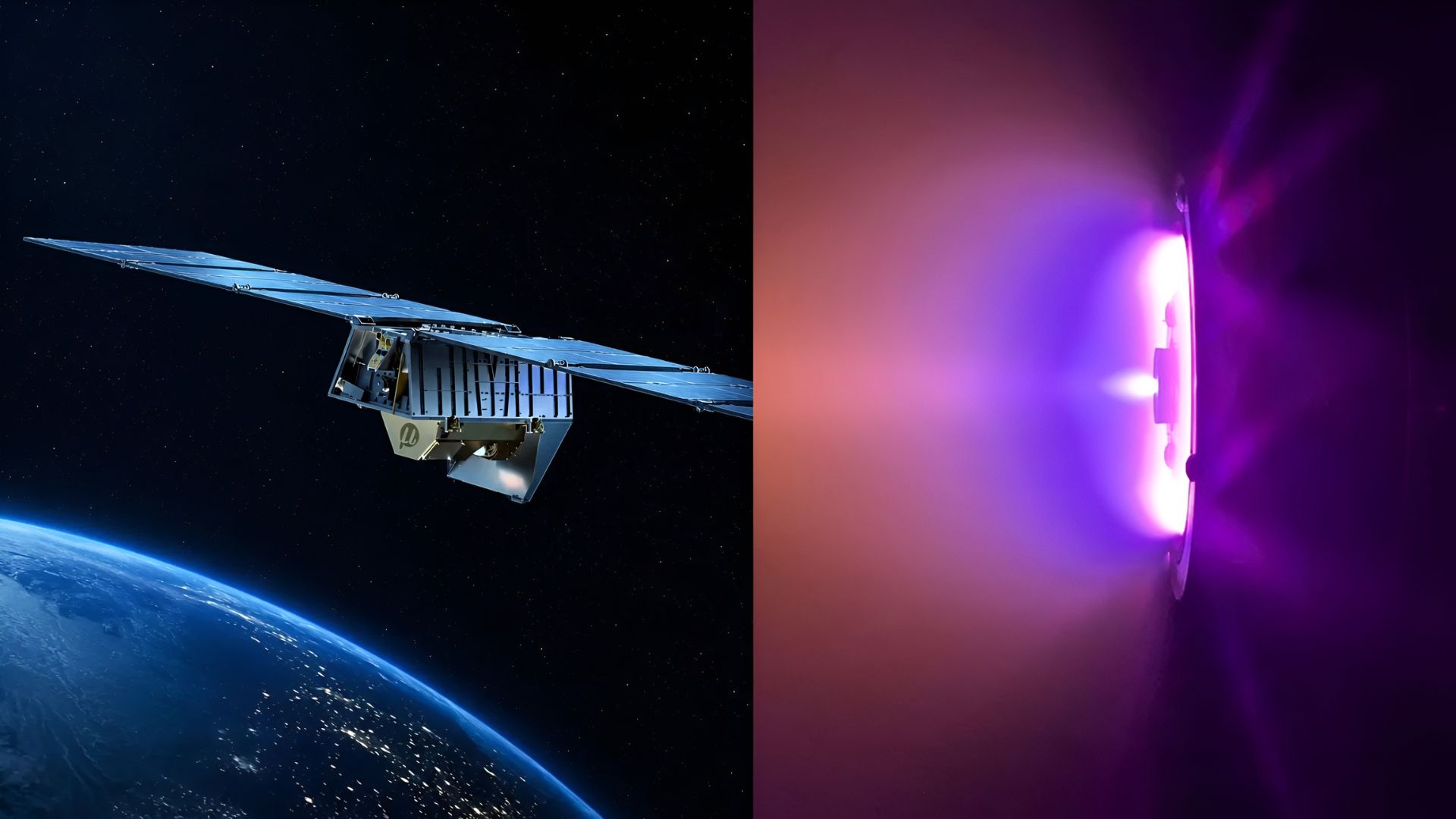
A satellite has fired a Hall-effect thruster fueled by solid zinc in orbit for the first time, giving spacecraft designers a new option for electric propulsion.

Muon Space completed the test on July 1 aboard SERT-III, a dedicated propulsion test spacecraft. The mission tested the company’s Starlight propulsion system under real orbital conditions.

The thruster fired successfully on its first attempt. Telemetry matched ground-test predictions, while orbital tracking detected a measurable change in the spacecraft’s trajectory.

Zinc aims at xenon

Hall-effect thrusters have become a standard choice for efficient satellite propulsion. Most systems use xenon or krypton, which require high-pressure storage and add complexity to spacecraft designs.

Starlight takes a different approach. Its propellant comes as solid zinc, which remains stable at room temperature and does not need a pressurized tank.

That could simplify spacecraft integration and ground operations. Zinc also costs less than traditional noble-gas propellants and has a much broader supply base.

Those factors matter as satellite operators deploy larger constellations. Cutting propulsion hardware and propellant costs can become significant when the same system flies across dozens of spacecraft.

Muon says Starlight can support orbit raising, station keeping, and controlled deorbiting on small and medium-sized satellites.

The system also addresses a practical challenge that has followed electric propulsion for years. Satellite operators need efficient thrusters, but propulsion hardware must also fit tight spacecraft mass and integration constraints.

SERT-III tests hardware

Muon designed SERT-III specifically to examine how the propulsion system behaves in space. The spacecraft carried sensors to measure performance, spacecraft interactions, and material deposited by the thruster plume.

Ground testing had already established expected performance across different throttle levels and operating conditions. The orbital test provided a chance to see whether those results held up in microgravity.

They did. The thruster fed and vaporized zinc reliably during the firing, according to Muon. Tracking data also confirmed that the spacecraft experienced the expected thrust.

Engineers also watched for unwanted zinc deposition around the spacecraft. Thermoelectric Quartz Crystal Microbalance sensors detected less deposition near the thruster than conservative preflight models predicted.

That result gives engineers more data for understanding how zinc behaves after leaving the thruster. It should also help refine plume and contamination models for future spacecraft.

Muon CEO Jonny Dyer called the orbital firing a major milestone for electric propulsion. He said the company chose to acquire Starlight Propulsion because zinc could address persistent problems in the propulsion supply chain.

The test also avoided putting experimental hardware on a primary customer mission. SERT-III gave engineers a spacecraft dedicated to collecting propulsion data without placing another mission at risk.

Customer missions next

Muon now plans to incorporate the flight data into further development of Starlight. Engineers will focus on reliability, manufacturing, and plume management as the system moves toward production.

The company expects its current-generation thruster to reach customer spacecraft before the end of 2026. Muon is also developing a larger second-generation system. It plans to test Gen2 in orbit during the first quarter of 2027.

That version will target larger spacecraft and could expand zinc-based Hall propulsion beyond the smaller satellite market. If the upcoming tests confirm the early results, solid-metal propellant could become a practical alternative for more commercial spacecraft.

  •  

20-foot nuclear reactor lowered 100 feet underground using commercial drilling gear

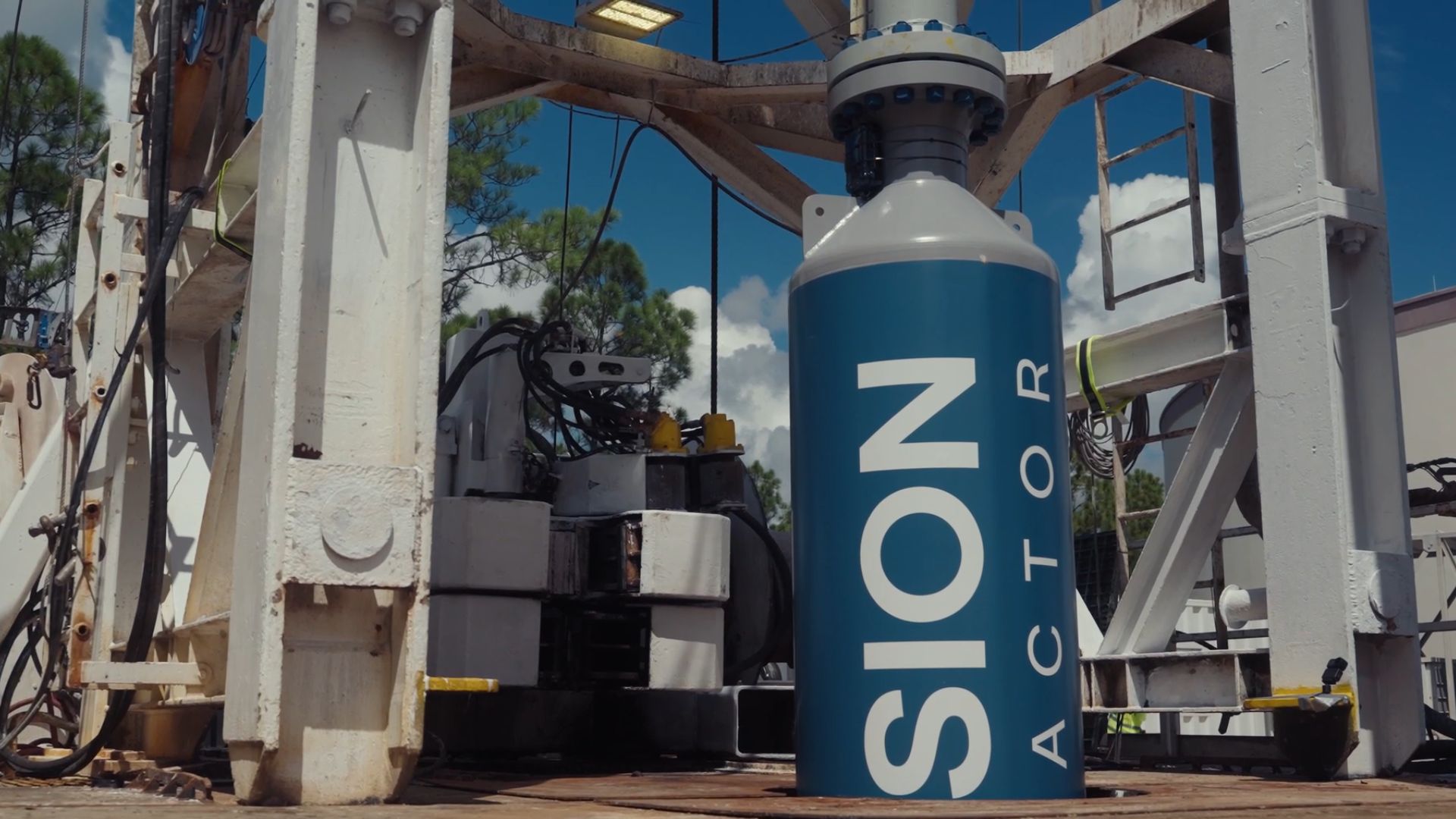
Deep Fission has successfully lowered a 20-foot reactor canister 100 feet underground and retrieved it using commercial drilling equipment, testing a key part of its plan to bury small nuclear reactors a mile below the surface.

The demonstration took place on September 3, when a commercial drilling and rigging crew lowered the full-size canister into a 34-inch-wide borehole. The crew aligned the canister at depth before bringing it back to the surface.

The test focused on whether the large reactor canister can be handled underground using equipment already available to drilling contractors. Deep Fission said the demonstration did not require equipment invented, custom-built, or adapted for nuclear service.

The canister was a full-size, non-nuclear replica of the vessel designed to house the company’s Gravity reactor core. It contained no nuclear fuel, so the test was aimed at validating the physical deployment and retrieval process rather than reactor operation.

Commercial drilling goes nuclear

“The most important thing about this demonstration is what we did not have to do,” said Liz Muller, CEO and Co-Founder of Deep Fission. “We did not have to develop new technology. We used a rig and rigging that is commercially available in the field today, and our reactor uses pressurized water technology that has been operating in the nuclear industry for decades.”

Deep Fission’s reactor concept combines established pressurized water reactor technology with an underground deployment system. The Gravity reactor would use standard low-enriched uranium fuel, while the company’s main change is to place the reactor deep underground.

The proposed reactor would sit in a water-filled borehole approximately one mile below the surface. Deep Fission says the water column and surrounding rock could provide containment, operating pressure, heat transfer, and emergency cooling.

That configuration could reduce the surface infrastructure normally associated with nuclear plants. Instead of constructing a large reactor facility above ground, the company’s model would shift much of the system underground.

The company believes this could simplify construction, reduce costs, and shorten deployment schedules while providing additional safety margins.

Mile-deep reactors face hurdles

The latest test does not demonstrate that a commercial reactor can operate underground. Deep Fission still has to validate the broader system, including drilling, reactor integration, regulatory requirements, and eventual commercial operation.

The company recently received approval from the US Department of Energy for its Nuclear Safety Design Agreement for the Gravity reactor. It is advancing the project under the DOE Reactor Pilot Program and is developing its first reactor project in Parsons, Kansas.

The underground approach is also intended to support deployment closer to customers that need reliable electricity. Deep Fission is targeting utilities, industrial customers, and data centers seeking low-carbon baseload power.

“Our innovation is in how we put proven pieces together, not in inventing something that has never been built. That is the difference between a science project and something you can deploy,” Muller said.

The company now needs to move from a mechanical demonstration to the much harder task of proving that its underground reactor design can meet engineering, safety, licensing, and commercial requirements.

  •  

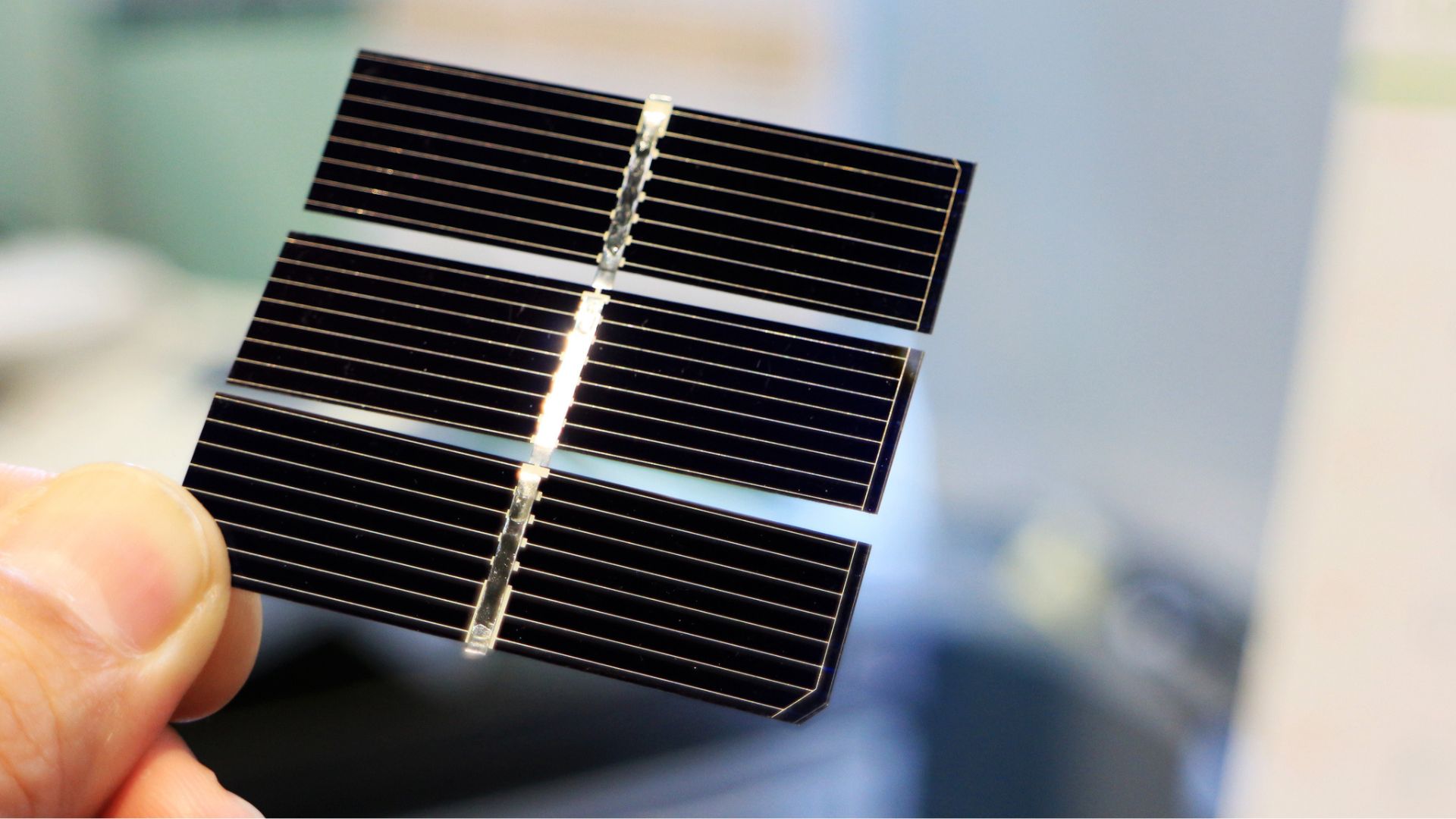
Rocket Lab’s new space solar cell delivers 31.5% efficiency with 40% less mass

Rocket Lab, the aerospace leader, announced the production release of Inverted Metamorphic (IMM) Apex, its newest space-grade solar cell. It is entirely germanium-free.

IMM Apex delivers a 31.5 percent Beginning-of-Life conversion efficiency alongside a 40 percent reduction in cell mass. In orbit, weight is everything. Lighter cells mean lower launch costs, bigger payloads, and better specific power (watts per kilogram).

And compared to conventional solar cells used for the past 30 years, IMM Apex operates without germanium substrates, which mitigates rising costs and supply chain issues for critical minerals.

“Rocket Lab is excited to bring this cutting-edge solar solution to market. IMM Apex delivers exceptional performance while addressing real-world challenges like rising material costs and supply chain constraints,” said Brad Clevenger, President of Rocket Lab USA.

Drop-in compatibility

The global supply chain for germanium is fragile due to extreme market concentration, complex extraction processes, and geopolitical trade controls. 

China controls most of the global supply and strictly limits exports. This concentration creates major supply risks for space programs.

To make matters worse, germanium is only a byproduct of zinc mining, so refineries cannot easily boost production. High purity requirements further constrain the market. As a result, major importers like the United States face severe cost spikes and potential shortages.

But these new solar cells could solve the issue. As per the company, the IMM Apex solar cell offers satellite builders instant compatibility without requiring system redesigns. It acts as a drop-in replacement, so companies avoid expensive retooling costs.

The underlying platform has already proved its worth on NASA’s Ingenuity Mars Helicopter and powers over 1,100 satellites in orbit today. Upgraded facilities are currently churning out multi-100-kilowatt volumes to keep pace with booming global demand.

“In addition to being free from germanium supply constraints, optimized manufacturing processes and targeted capital investments have enabled efficient manufacturing in multi-100-kilowatt volumes to meet growing demand,” the company stated. 

Backed by over a decade of rigorous testing, IMM Apex is ready now for diverse mission needs, with future upgrades already underway.

Eliminates germanium dependency

Standard solar cells are grown right-side up on a thick germanium base. IMM cells are grown upside down on a temporary substrate, which is later etched away. This process creates flexible, ultra-thin, radiation-hardened cells made of layers like Gallium Arsenide and Indium Gallium Phosphide. 

Germanium forms the vital foundation of high-efficiency space solar panels and infrared satellite optics. Spacecraft solar panels avoid standard silicon in favor of multi-junction III-V solar cells. These cells use layers like Gallium Arsenide grown on a germanium base. The germanium substrate supplies structural support and absorbs infrared light. 

Wall Street reacted positively to the release, sending RKLB stock up as market analysts recognized the commercial potential of overcoming germanium challenges. 

“With IMM Apex, customers gain access to a high-efficiency, lightweight, germanium-free product that combines proven reliability with faster production times. IMM Apex is designed to more cost-effectively power the most ambitious missions without compromising performance,” Clevenger added.

As constellations expand and interplanetary ambitions grow, power remains the ultimate challenge. Rocket Lab pairs a lighter cell weight with supply chain independence. This achievement moves the company beyond better solar technology and clears a direct runway for the next era of commercial spaceflight.

💾

Rocket Lab, the aerospace leader, announced the production release of Inverted Metamorphic (IMM) Apex, its newest space-grade solar cell.
  •  

New compact radar gives weapon stations faster tracking of hard-to-spot drones

Norwegian defense company KONGSBERG has selected Echodyne’s MESA radar platform for multiple air and surface applications, starting with its PROTECTOR remote weapon stations. The compact radar has already been integrated into the PROTECTOR RS4 and RS6 systems.

The collaboration brings together KONGSBERG’s weapon-station architecture and Collaborative Fire Control capabilities with Echodyne’s solid-state radar. It is designed for static, crewed, and uncrewed platforms. 

The system helps them detect, track, and engage fast-moving drones. It also requires less space, weight, and power than traditional high-performance electronically scanned array radars.

Compact radar strengthens weapon stations

The integration provides the PROTECTOR systems with the precise radar data required to operate as counter-unmanned aircraft system effectors. MESA delivers range, range-rate, bearing, and movement data while maintaining stable tracks on agile targets with low radar signatures.

This data allows the radar to direct and stabilize the weapon station’s optical fire-control system on a target.  According to Echodyne, the combination can help the system sustain its target lock, reduce the time between detection and engagement, and increase its chances of hitting a drone.

“KONGSBERG has set the standard for remote weapon systems through decades of field experience, disciplined engineering and close collaboration with operators,” said Eben Frankenberg, CEO of Echodyne. 

“Integrating MESA radar gives the PROTECTOR family the precise, stable and persistent tracks needed to cue the fire-control system, sustain target lock and act decisively against fast-moving, low-signature drone threats,” he added. 

“Just as important, MESA delivers that performance in a compact, software-defined package that can scale across a large installed base and adapt as the threat evolves,” he continued.

Radar supports precise airburst timing

Accurate radar measurements become particularly important when PROTECTOR weapon stations use programmable airburst ammunition. Range and range-rate information helps the fire-control system time the munition so that its effect occurs at the intended point along a drone’s flight path.

MESA can also operate as part of a wider network of sensors and weapon systems. A cooperative search radar or another sensor can initially detect a threat and send its track to a radar-equipped PROTECTOR station. The local radar can then refine the incoming information, maintain the track and provide the data needed for fire control. 

This process enables distributed systems to share an air picture, allocate targets and rapidly switch their attention as individual threats are addressed.

Companies explore wider radar applications

Echodyne and KONGSBERG spent several years integrating, testing and demonstrating the radar-enabled system in field conditions. The work reflects KONGSBERG’s approach of validating new capabilities through practical testing before broader deployment.

Beyond the RS4 and RS6 integrations, the companies are examining how high-performance radar could support other air and surface missions across KONGSBERG’s portfolio. Their continued technical work will focus on resilient sensing, networked fire control and protection that can scale as threats evolve.

Both companies are exhibiting at the International Defense Industry Exhibition in Kielce, Poland, from September 8 to 11, 2026.

  •  

US Army picks Boeing and Anduril for its next-gen cruise missile defense

The U.S. Army has selected Boeing and Anduril to enter the next phase of a competition for a new midrange air-defense interceptor, the companies announced on September 9, 2026. The weapon is being developed to defend fixed and forward operating bases against cruise missiles, militarized drones, and other aerial threats.

The selection moves the program into Phase 2 of the Integrated Fires Protection Capability Increment 2 Second Interceptor effort. Boeing and Anduril will now carry out detailed design, development, integration, and demonstration work before facing a competitive test against Army requirements.

A new layer for base protection

The proposed interceptor is designed to fill a gap in the Army’s air-defense network. It would provide a midrange option between short-range systems used for point defense and longer-range weapons intended for protecting high-value targets.

Boeing is responsible for the seeker technology and compact airframe, while Anduril is developing the interceptor’s solid rocket motor. The weapon’s compact design is intended to allow military units to deploy more interceptors at each defended location.

The companies are also emphasizing affordability and production capacity. A larger number of available interceptors could help units respond to attacks involving large numbers of lower-cost aerial threats.

Modular design could speed upgrades

The interceptor will use a Modular Open Systems Architecture. This design lets crews replace or upgrade key components such as the seeker, avionics, and software without redesigning the entire weapon.

The approach could make it easier for the Army to adapt the system as aerial threats evolve. It is also intended to reduce the time and cost of introducing new capabilities.

“Our scalable production approach is designed to provide a reliable, affordable layer of defense against a range of aerial threats to protect the warfighter with practical, dependable capability when it matters most,” said Bob Ciesla, vice president of Boeing Precision Engagement Systems.

Boeing said its manufacturing approach is intended to support scaled production as the program develops.

Anduril expands rocket motor production

Anduril plans to manufacture the interceptor’s solid rocket motor at its 450-acre Mississippi Solid Rocket Motor Complex. The company has invested more than $100 million of its own money in the facility.

The site has also received $58 million through Defense Production Act funding. Anduril said the combined investment will support several propulsion programs while increasing production capacity.

The facility features a bladeless high-speed mixer that Anduril describes as the only one of its kind worldwide. Its manufacturing line can run multiple stages in parallel and produce different motor configurations.

The company said the U.S. solid rocket motor industry has become concentrated among two suppliers after decades of consolidation. Its Mississippi facility is intended to add capacity and improve supply-chain resilience.

Partnership moves into full development

Boeing and Anduril began exploring technologies for the Army program in 2024 and announced their partnership in December. Their selection now moves the concept into detailed system development and competitive demonstration.

The effort comes as the U.S. military faces growing demand for interceptors that can counter large numbers of relatively inexpensive cruise missiles and drones. Anduril said China, Russia, and Iran have spent the past decade developing mass-producible aerial threats designed to put pressure on U.S. interceptor inventories.

“We welcome the opportunity to continue in this competition,” stated Jim Bryan, executive director of Boeing Integrated Air and Missile Defense. “By combining proven seeker expertise with a purpose-built interceptor, we are delivering thoughtful, effective advances in air and missile defense that meet mission needs.”

  •  

China reinforces Taiwan-facing artillery with upgraded 155mm howitzers this year

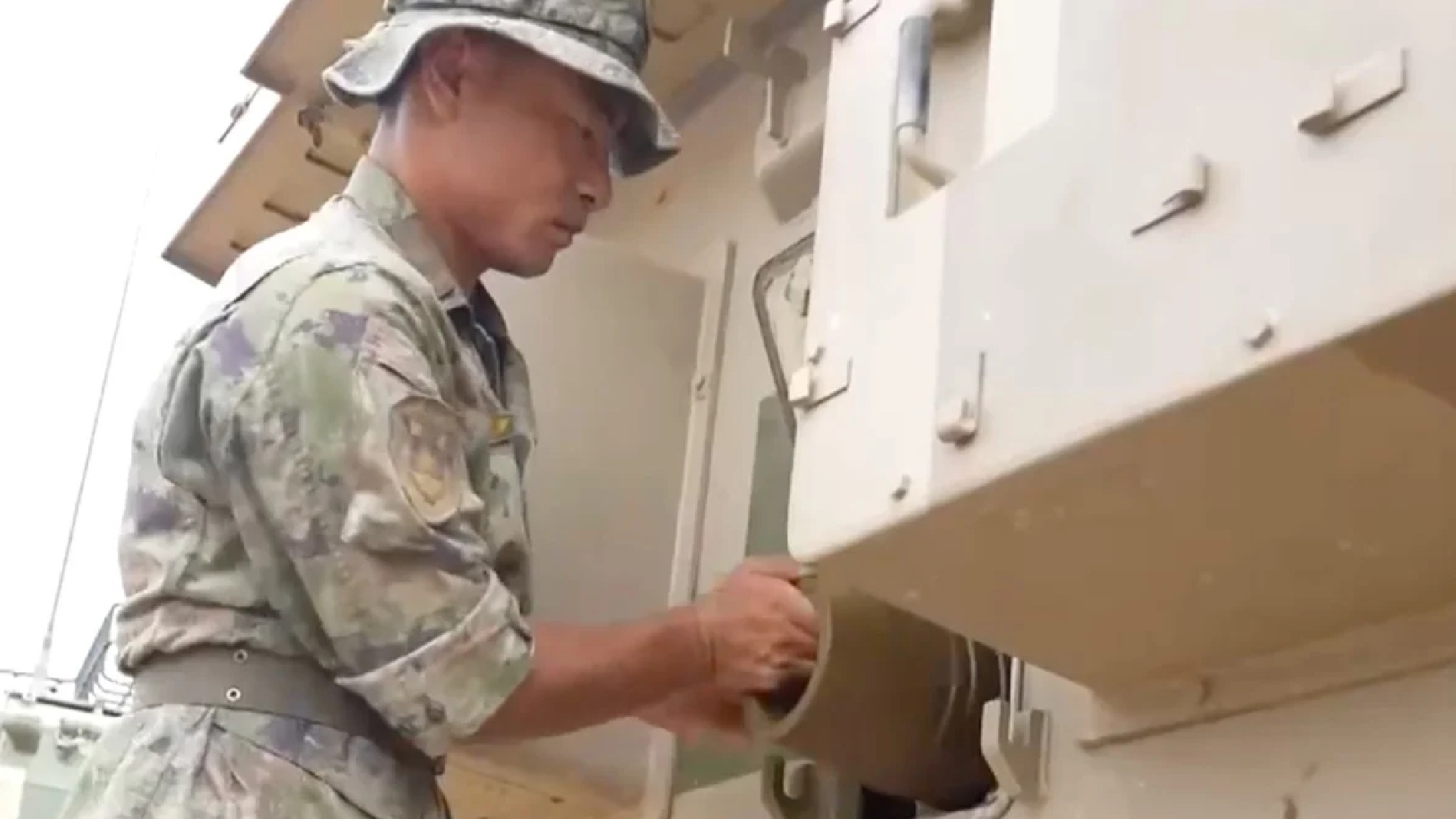
China has reinforced artillery firepower facing the Taiwan Strait, deploying additional 155mm PLZ-05 self-propelled howitzers to replace older equipment. State broadcaster CCTV reported Sunday that a combined-arms brigade under the People’s Liberation Army’s 71st Group Army received a batch of the howitzers over the past two months. The deployment phased out the brigade’s previous 122mm artillery, an older and less capable system.

The brigade conducted its first live-fire test with the new howitzers following the deployment. The 71st Group Army belongs to the Eastern Theatre Command, which holds primary responsibility for military operations facing Taiwan, the East China Sea, and Japan.

A brigade-level first

This deployment marks the first time the PLZ-05 has been assigned specifically at the brigade level. The system was originally fielded at the group-army level, where it operated as a long-range suppression weapon rather than equipment directly integrated into brigade formations. Moving the system down to the brigade level represents a structural shift in how the PLA organizes its heavy artillery assets.

Brigade officer Sun Xialong said receiving 155mm self-propelled howitzers for the first time significantly improved the unit’s overall combat effectiveness. That framing suggests the PLZ-05’s move down to brigade level reflects a deliberate effort to streamline artillery firepower closer to frontline combat units.

Swapping between commands

The howitzers arrived painted in brown desert camouflage. The tracked vehicles appear to have been relocated from the Western Theatre Command, rather than built as new equipment specifically for the 71st Group Army. In their place, the Western Theatre Command has instead received lighter, wheeled PCL-181 155mm self-propelled howitzers. That design is better suited to the plateau and mountainous terrain that command typically operates across.

That swap suggests Beijing is deliberately matching different howitzer designs to the specific terrain and operational demands each theatre command faces. It’s a different approach than distributing identical equipment uniformly across the PLA’s various regional forces.

  •  

DARPA launches new hypersonic missile program to counter China’s YJ-19 and CJ-1000

A year after China unveiled the world’s first operational air-breathing hypersonic missiles, the United States is launching a new program aimed at catching up. The Defense Advanced Research Projects Agency will bring contractors together later this month. The agency plans to outline requirements for its Next Generation Hypersonic Cruise Missile, according to its website, with air-breathing propulsion sitting at the center of the effort.

Unlike rocket-powered missiles, air-breathing weapons draw oxygen directly from the atmosphere instead of carrying an onboard oxidizer. That design frees up weight that can instead go toward additional fuel or a larger payload.

China went public first

China displayed that same air-breathing approach at a massive military parade in Beijing last year. The parade marked the 80th anniversary of the country’s victory in World War II. That event introduced the YJ-19 anti-ship missile and the larger, road-mobile CJ-1000. Both are believed to run on air-breathing scramjet engines and were presented as weapons already in active service with the People’s Liberation Army.

The YJ-19’s distinctive air intake was clearly visible during the parade. Chinese state media described the CJ-1000 as built for far longer-range strikes against targets on land, at sea, or in the air. Outside of Russia’s ship-based Zircon missile, the YJ-19 and CJ-1000 are considered the world’s only other operational scramjet-driven hypersonic weapons.

More than an upgrade

DARPA has signaled it isn’t simply looking to refine existing American hypersonic designs. In an industry request issued last month, the agency called for entirely new propulsion systems, fuels, and boosters. Those systems need supporting technologies capable of withstanding the extreme heat generated during hypersonic flight.

The resulting missile could ultimately come in multiple sizes, ranging from smaller weapons carried by tactical aircraft to considerably larger systems launched from bombers or ground-based platforms. That flexibility mirrors the range of launch options China has already demonstrated across its own hypersonic missile family.

Darpa’s earlier air-breathing hypersonic effort, the Hypersonic Air-breathing Weapon Concept, completed its first successful flight test in 2021. It has continued flight testing since, laying some of the technical groundwork this newer, more ambitious program now aims to build on.

  •  

Bird-inspired ultrablack wool capture 2.43 kg of water per square meter for 10 hours

Nearly half the world’s urban population could lack access to clean drinking water by 2050, a 50 percent jump from 2016 levels, according to current scientific projections. Cornell researchers have turned to an unlikely source for a possible answer: the same deep-black bird feathers that inspired one of the darkest fabrics ever created.

A team led by Larissa Shepherd, assistant professor in Cornell’s Department of Human Centered Design, has demonstrated something surprising. Polydopamine-dyed wool, including an ultrablack version inspired by the magnificent riflebird, can purify saltwater using nothing but sunlight. Kyuin Park, formerly of Shepherd’s Responsive Apparel Design Lab, led the study, published in the journal Advanced Science.

Built to trap light

Polydopamine is a polymer inspired by melanin, the pigment that gives mussels their dark coloring. The compound bonds strongly to other materials and absorbs near-infrared light, converting it directly into heat. Shepherd’s lab previously used polydopamine-dyed wool, combined with plasma etching that creates light-trapping nanofibrils, to produce a record-setting ultrablack material mimicking the riflebird’s feathers.

For this study, the team applied that same material to a different problem: desalination. They used a technique called interfacial solar vapor generation. A specialized material sits partially submerged in water, heating its surface with sunlight and converting it directly into vapor. That vapor then condenses back into potable water, leaving behind the vast majority of the original salt content.

Shepherd said wool’s biodegradability sets this approach apart from many existing desalination materials. Unlike plastic-based systems, wool won’t leave microplastics or other lasting residue behind as it breaks down over time.

A vertical output boost

Researchers tested three wool architectures across three physical configurations. Those included horizontal, positioned flat against the water’s surface; one-sided vertical; and two-sided vertical, using mirrors to illuminate both faces of the material at once. The two-sided vertical setup performed best by a wide margin.

Ultrablack-dyed wool in that configuration captured 2.43 kilograms of water per square meter of fabric per hour. Wool dyed with polydopamine alone, without the extra ultrablack treatment, reached 2.21 kilograms per square meter per hour. Both figures came in nearly double the output of traditional horizontal evaporation setups.

The material also resisted salt fouling, a common failure point for solar desalination systems, running continuously for 10 hours without salt buildup interfering with performance. Salt levels in the resulting water stayed well below World Health Organization drinking water standards, according to Shepherd.

Ultrablack versus simpler wool

Shepherd said polydopamine-only wool already performs well enough that the extra plasma-etching step might not always be worth the added effort. Reaching ultrablack requires that additional step. Over a full year of operation, though, she said that extra evaporation boost could prove worthwhile. Ultrablack represents a comparatively modest additional step once the base polydopamine treatment is already in place.

Future research will test the dyed-wool technique directly on rainwater and wastewater, alongside improved designs for actually collecting the purified water once it’s produced.

  •  

US firm unveils compact stellarator design to supply 400 MW nuclear energy to grid

Fusion power company Thea Energy has detailed a fusion power plant designed to continuously supply approximately 400 megawatts of electricity to the grid.

The New Jersey-based company unveiled the Helios architecture on September 9 through a collection of 16 peer-reviewed papers published in a special issue of Fusion Engineering and Design.

The proposed US stellarator combines adaptable software-controlled magnets, a continuous exhaust system and a sector-based maintenance approach.

Together, these technologies are intended to make fusion power reliable, cost-competitive and suitable for commercial operation.

Planar coils simplify stellarator engineering

Stellarators use magnetic fields to confine the extremely hot plasma required for fusion.

Although decades of research have established the concept as a mature fusion system, the complicated three-dimensional coils traditionally used by stellarators have created major engineering challenges.

Helios replaces those complex modular coils with an arrangement of planar magnets controlled through software. This configuration is designed to remain operational despite manufacturing deviations and wear that develops during extended operation.

“The Helios power plant is technically viable, robust, and requires no scientific miracles to commercialize,” said David Gates, co-founder and chief technology officer of Thea Energy.

According to the company, the quasi-axisymmetric design also allows Helios to be more compact than other proposed optimized stellarator power plants.

The system has a major radius of eight meters, helping reduce both its physical footprint and projected cost.

Continuous system targets reliable grid power

Unlike fusion concepts that operate in pulses, Helios is designed to run continuously. The company says the plant could provide roughly 400 MW of electrical power without the risk of plasma disruptions, supporting its intended role as a source of baseload energy.

Its architecture includes an X-point divertor, which continuously removes exhaust from the stellarator during fusion operations. The design also divides the plant into maintainable sectors, allowing equipment to be accessed and serviced over its operating life.

“The papers introduce several innovative concepts aimed at reducing risks that have traditionally been associated with stellarator-based fusion power plant designs,” said Benedikt Geiger, associate professor at the University of Wisconsin–Madison and co-guest editor of the special issue.

The published research covers several systems needed to turn the fusion concept into an operational power plant.

These include remote handling, cryogenics, heat transfer, power supplies, diagnostics, instrumentation, and planar-coil magnet engineering.

Helios follows DOE-certified milestone

The US Department of Energy previously certified Helios’ preconceptual design during the first phase of its Milestone-Based Fusion Development Program.

Thea Energy became the first participating company to receive certification for its plant-design milestone following an independent expert review.

Before operating Helios, the company plans to develop Eos, its first large-scale integrated stellarator. Eos uses the same planar-coil architecture and is intended to demonstrate fusion performance relevant to a commercial power plant.

Thea Energy says Helios remains on track to begin operating in the 2030s.

The newly published papers now provide the wider fusion community with a detailed, multidisciplinary account of the physics and engineering behind that commercial objective.

  •  

US lab’s 500-times brighter X-rays can track material’s defect formation in real time

Researchers in the United States are shaping the nanoscience frontier, using atomic‑scale control to accelerate advances in electronics, energy storage, catalysis, sensing and medicine.

“At Argonne, some of the world’s brightest innovators are turning nanoscience into the next generation of discovery, pushing ideas that once seemed impossible into the realm of the achievable,” said Gary Wiederrecht, director of the Center for Nanoscale Materials and the Nanoscience and Technology division.

At the nanoscale, properties can shift dramatically

It has also been highlihted that modern nanoscience rests on a simple idea: Matter behaves differently when it becomes small enough. At the nanoscale, properties can shift dramatically because quantum effects and the forces acting at a material’s surface — such as electrostatic and other molecular interactions — begin to dominate their behavior.

“What makes nanoscience so exciting is that it is ultimately about the extraordinary changes that occur when materials shrink from the bulk world into the nanoscale, where virtually everything begins to behave differently,” said Gary Wiederrecht, director of the CNM and Argonne’s Nanoscience and Technology division.

​”At the nanoscale, new properties emerge — optical, electrical, chemical — that simply don’t exist at larger scales. Scientists and engineers use those changes to create impactful technologies that were once impossible.”

Argonne entered the modern era of nanoscience with deep strengths in materials research, photon science and advanced instrumentation. For decades, its researchers have worked to develop groundbreaking tools to redefine how scientists visualize, understand and engineer matter at the atomic scale.

Upgrade increased brightness of its X-ray beams 500‑fold

Completed in 1995, the APS is now the world’s brightest synchrotron X‑ray source. Its comprehensive upgrade, completed in 2026, increased the brightness of its X-ray beams 500‑fold, enabling researchers to more precisely image atomic structures and track defect formation in real time as materials undergo different environmental stresses, according to a press release.

A powerful new tool, Argonne’s world‑class In Situ Nanoprobe (ISN), moves the lab’s beamline imaging capability into the realm of ​“in situ” study, where researchers can watch how materials work, adapt and fail in real‑world conditions. This is a critical step toward breakthroughs in energy, microelectronics, quantum systems and advanced manufacturing.

“The APS is already one of the world’s great engines for understanding matter,” said Sarah Wiegold, an Argonne physicist. ​”The ISN expands that strength by adding an especially important dimension: the ability to probe nanoscale behavior under realistic operating conditions.”

The ISN connects with complementary APS techniques that examine materials across larger length scales, different time scales and alternate modes of contrast. Together, these capabilities create a far more complete understanding of complex materials — from the atomic and nanoscale origins of behavior to system-level performance, as per the release.

  •  

How nuclear submarines stay underwater for months without surfacing

A nuclear-powered submarine can disappear beneath the ocean and remain there for weeks or even months without surfacing. Unlike conventional submarines, it does not need to regularly come up for air or surface to recharge its batteries.

The secret is not simply the nuclear reactor. A nuclear submarine is essentially a self-contained environment that can generate its own power, oxygen and fresh water while carrying enough food and supplies to keep its crew alive for extended periods.

Nuclear power removes the biggest limitation

The fundamental difference is the way the submarine generates energy. Conventional diesel-electric submarines need atmospheric oxygen to run their diesel engines, while their batteries eventually need to be recharged. 

A nuclear reactor, by contrast, produces heat through nuclear fission and does not need atmospheric oxygen to operate. That allows the submarine to keep generating power while completely submerged.

In a typical naval reactor system, heat from the reactor is transferred to water in a separate steam system. The resulting steam drives turbines, which provide propulsion and generate electricity for the submarine’s other systems. The steam is then condensed back into water and reused in a closed cycle.

This gives nuclear submarines essentially unlimited range from their reactor fuel compared with conventional submarines. The U.S. Department of Energy says modern naval reactor cores can last more than 1 million miles, although the submarine’s actual deployment duration is limited by other factors.

But what about oxygen?

The crew still needs it, of course. This is where the submarine becomes more like a miniature artificial ecosystem. Modern submarines can produce oxygen onboard, allowing the crew to breathe without drawing a fresh supply from the atmosphere. At the same time, systems remove carbon dioxide and other contaminants from the enclosed air.

The U.S. Navy’s historical account of submarine operations notes that modern boats use equipment to produce fresh air, remove carbon dioxide, and filter potentially harmful vapors.

The reactor is particularly useful here because its enormous energy supply can power these life-support systems continuously. In other words, the submarine does not need to conserve its oxygen simply because it is underwater. It has systems designed to continually maintain the atmosphere inside the boat.

How do they get fresh water?

Water is another resource that could quickly become a problem for a crew spending months underwater. Modern nuclear submarines can produce fresh water from seawater, using onboard distillation systems. 

The U.S. Navy says this capability, combined with oxygen production, allows a nuclear submarine to operate independently of Earth’s atmosphere for extended periods. Fresh water can therefore be produced for drinking and other onboard needs, rather than carrying every drop required for a months-long patrol.

So what eventually forces a submarine to surface?

Surprisingly, food is one of the biggest constraints. A nuclear reactor can keep producing power, and the submarine can produce oxygen and fresh water, but its crew still needs to eat. The U.S. Navy describes food as the primary limitation on the length of a submerged patrol, while an official U.S. Navy page for the Ohio-class submarine lists approximately 60 days of endurance with food supplies.

That does not mean a nuclear submarine must physically surface every time it needs supplies. Resupply can sometimes be conducted through specialized operations, but a submarine’s ability to remain completely independent is ultimately constrained by what it can carry and what its crew requires.

What about the people inside?

Keeping the machinery running is only half the challenge. Hundreds of sailors may spend months in a confined environment with no sunlight, limited personal space, and little contact with the outside world.

The Smithsonian’s National Museum of American History notes that nuclear submarines can operate submerged for months, while crews must cope with cramped living conditions and prolonged separation from their families. The U.S. Navy also studies the effects of disrupted sleep schedules, limited sunlight, and restricted exercise on submariners during long deployments.

That is why a nuclear submarine is better understood not simply as a warship with a reactor, but as a self-contained underwater city. The nuclear reactor supplies the energy needed to propel the vessel and operate its systems. Life-support equipment maintains the air. Desalination systems provide fresh water. Food stores sustain the crew.

Put those capabilities together, and a submarine no longer has to repeatedly return to the surface just to survive. That independence from the atmosphere is what transformed submarines from vessels that could briefly operate underwater into warships capable of remaining hidden beneath the ocean for months.

  •  

New algorithm maps urban power sites using 24-hour grid simulations and local needs

Cities trying to add large power plants or battery storage facilities face a problem beyond grid capacity: finding a site that fits the surrounding community.

Researchers at the U.S. Department of Energy’s Oak Ridge National Laboratory (ORNL) have developed an algorithm that helps utilities and planners identify locations for power generation and storage in urban areas.

Unlike conventional site-selection methods that mainly assess technical factors, the new approach also considers zoning rules, historical sites, architectural value, local economic priorities, and community preferences.

The tool combines these factors with a power-grid simulator to determine where an energy project could be placed and how large it should be. It can also account for changing energy policies and local priorities.

Cities face tighter power constraints

Urban regulations can significantly reduce the number of locations available for large energy projects. Zoning and noise restrictions alone can eliminate 20 to 30 percent of potential sites, according to researcher Rodney Itiki.

The algorithm is designed to prevent planners from choosing a technically suitable location that may be unacceptable to the people living or working nearby.

“The tool is revolutionary because previous study approaches were not considering the real world,” Itiki said. “They just started with a diagram of the energy system and picked a location based on that infrastructure, without incorporating the needs of the community.”

The system uses a weighting method to account for factors such as energy policy, local regulations, and input from grid planners, urban planners, and other stakeholders.

A city seeking to attract manufacturers, for example, could give greater weight to affordable electricity and new industrial jobs. Another area with data centers or military facilities could instead prioritize reliability and energy security.

The algorithm can then use those priorities to help determine the appropriate type, size, and location of an energy project.

Grid demand gets mapped hourly

The tool also accounts for how electricity demand changes throughout the day. It simulates grid demand and power flows over a 24-hour period, allowing planners to see how a proposed project could affect the network as electricity use changes.

That could be important in neighborhoods where demand rises sharply when residents return home and switch on appliances, heating or cooling systems.

The researchers said the approach can be used for different types of energy projects and updated as local policies change. That gives utilities a way to reassess potential sites rather than relying on a fixed set of assumptions.

The system is also intended to address situations where infrastructure competes with places that have historical, architectural or tourism value. A large battery installation, for example, may provide a strong technical solution but still be unsuitable beside a landmark or historic site.

Planning tool targets wider uses

The researchers believe the approach could eventually be used beyond energy infrastructure. Potential applications include selecting sites for critical-materials mining, data centers, disaster-response infrastructure and facilities needed for major international events such as the FIFA World Cup or Olympics.

The work was led by Itiki with researchers Suman Debnath and Qianxue Xia. It was funded by the DOE’s Integrated Energy Systems Office.

The study was published in Energies.

  •  
❌