❌

Reading view

US Navy selects autonomous surface ships for deep-ocean mapping under $40M program
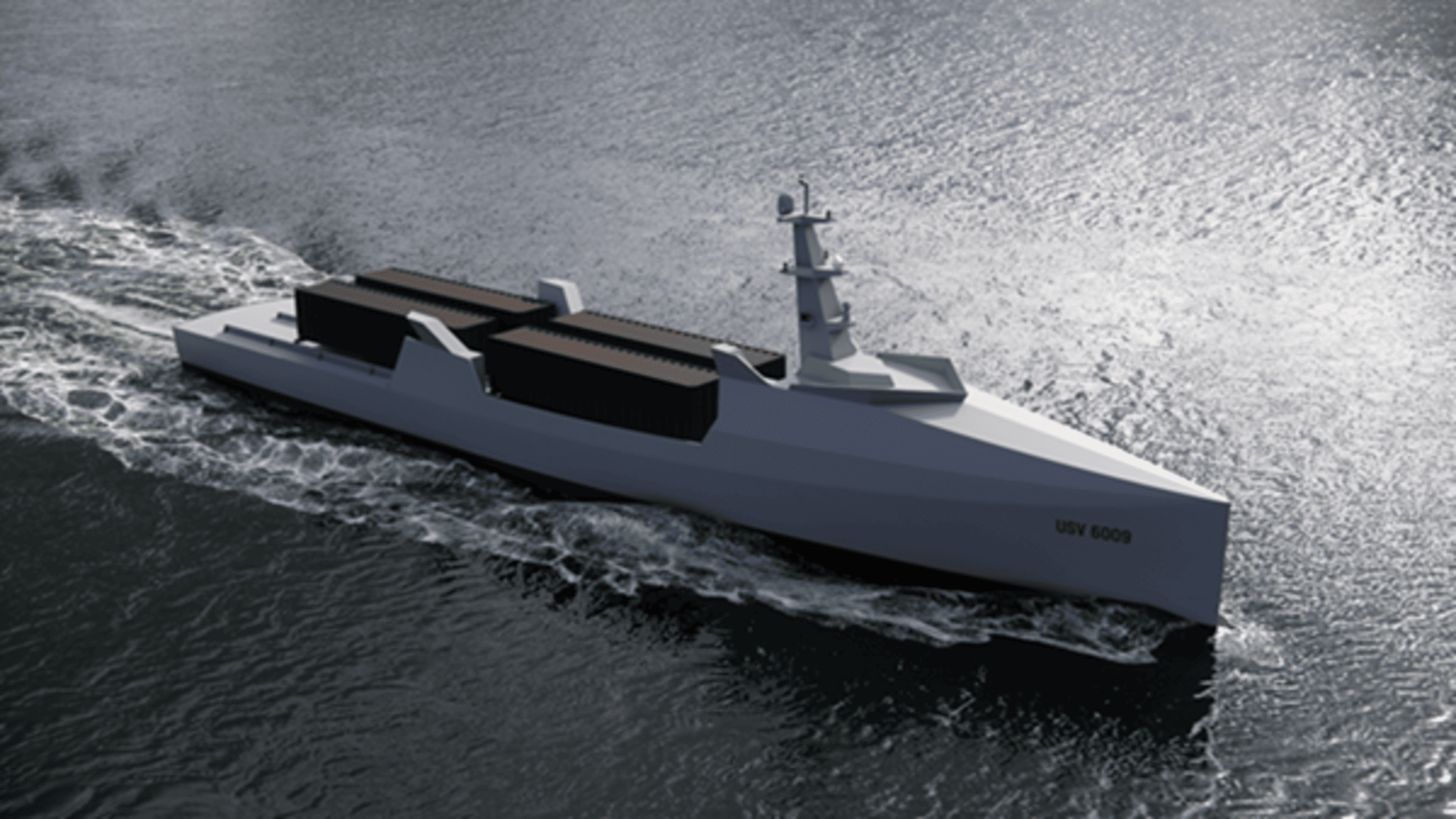
A new era of naval operations is on the horizon, as Blue Water Autonomy’s unmanned ships leverage tightly integrated hardware, software, and AI to map the ocean floor and transform maritime research.

Blue Water Autonomy is rapidly turning unmanned ships from a concept into an operational reality.

After showcasing its Liberty Class autonomous vessel to the U.S. Navy, the company announced a wave of strategic partnerships tied to the Navy’s Medium Unmanned Surface Vessel (MUSV) program, which includes $6 billion in funding to scale up production.

Currently under construction at Conrad Shipyard, these vessels merge traditional shipbuilding expertise with AI-enabled production systems.

“Traditional shipbuilding doesn’t scale, and pure software approaches don’t deliver hardware,” said Rylan Hamilton, CEO of Blue Water Autonomy, on the company’s website.

“We’re doing both. Integrating proven marine systems with AI-driven manufacturing and operations to fundamentally rethink how ships are built. By distributing and parallelizing work across proven partners, we’re creating a production system that can move at the pace required for a modern maritime industrial base.”

The power of many

The company is harnessing the power of many to realize the future of shipbuilding. Its manufacturing model incorporates multiple industrial partners responsible for different parts of the impressive ship: Tulip will provide a manufacturing execution system, Caterpillar Defense will supply marine diesel engines, and Valsted will support the automation systems.

“Shipbuilding has always required extraordinary coordination, and we’re giving that coordination a software backbone,” explained Erik Mirandette, chief business officer at Tulip. “Tulip connects every step on the factory floor with real-time data and AI-native tools, so Blue Water can orchestrate production at scale, catch issues earlier, and build with the speed and reliability that modern maritime demands.”

Building on this initiative, Blue Water Autonomy is quickly expanding its reach. According to a recent news release, its unmanned, AI-powered vessel will now map the ocean floor—a mission the Navy sees as central to the future of military marine research. The Navy’s interest underscores its commitment to using the most advanced systems available for modern maritime operations.

Moving fast

On August 4, 2026, Blue Water Autonomy won a multiple-award contract with the Naval Oceanographic Office (NAVOCEANO) to provide “high-resolution mapping using long-endurance uncrewed surface vessels” across the Indian and Pacific Oceans.

The company added that deep open-ocean surveys are “among the most demanding work at sea,” and the goal extends well beyond mapping, as the Navy must navigate not only the seas, but also underwater acoustics. These conditions “shape how naval forces move and operate far from the shore.”

Traditionally, these missions relied on costly crewed vessels—often running tens of thousands of dollars a day and requiring travel far from shore. With uncrewed, AI-powered ships, NAVOCEANO and the Navy aim to reduce costs, minimize risk, and dramatically expand the scope of ocean research.

Thanks to AI, these vessels “can operate on the open ocean for months at a time.”

The multi-year NAVOCEANO contract comes with a $40 million ceiling, but Blue Water Autonomy will still have to compete for funding alongside other selected companies.

“Mapping the open ocean is exactly the kind of long, high-endurance work that autonomous vessels are built for,” said Rylan Hamilton, CEO of Blue Water Autonomy. “This selection puts our autonomy to work across the Indian and Pacific oceans, well beyond the range of a crewed survey ship, and it shows the technology we are building serves many different missions.”

As artificial intelligence and automation reshape the naval landscape, the need for large crews is diminishing—and machines may well steer the future of the world’s oceans.


💾

Months-long autonomous ocean surveys aim to enhance navigation, mapping, and underwater acoustic modeling far from shore.
  •  

New post-quantum chip architecture passes key milestone in 28nm test environment

Canada-based BTQ Technologies and the Industrial Technology Research Institute (ITRI) have completed the first milestone in a multi-year program to validate a new chip architecture designed to accelerate post-quantum cryptography.

The Quantum Compute-in-Memory (QCIM) architecture is being developed as part of a broader chip roadmap led by BTQ and ICTK. The technology is intended to provide hardware-based cryptographic acceleration for devices and systems that will need protection against future quantum computers.

The companies say the results could support future applications across military systems, industrial equipment, automotive technology, IoT devices, Physical AI and connected infrastructure.

Architecture validated in 28-nanometre environment

The first phase of the collaboration focused on validating the QCIM core under demanding operating conditions. The architecture was tested within a TSMC 28-nanometre design environment, where researchers evaluated its ability to accelerate cryptographic operations while maintaining functional correctness.

The tests covered algorithms associated with FIPS 203, 204 and 205, which form part of NIST’s emerging post-quantum cryptography standards. The architecture is also being designed to support additional algorithms as security requirements and standards evolve.

BTQ describes QCIM as a soft IP cryptographic accelerator capable of supporting both conventional and post-quantum cryptographic functions in a compact, low-power design.

The key concept is to perform cryptographic operations inside the memory subsystem rather than moving data between separate processing and memory components. This approach is intended to reduce data movement, latency and power consumption.

Furthermore, the architecture is also designed to be “crypto-agile,” allowing it to support different cryptographic algorithms as requirements change.

From post-quantum algorithms to real-world hardware

The development is part of a collaboration involving three different areas of semiconductor expertise. BTQ is contributing its cryptographic architecture, while ICTK provides secure semiconductor and physical unclonable function capabilities. ITRI is contributing semiconductor design, integration and validation expertise.

The companies say the completed milestone reduces technical uncertainty around the QCIM architecture and provides a foundation for moving toward broader system integration. The next phase will focus on module-level integration, verification and validation. This work will examine how the QCIM core can be incorporated into larger chip and system architectures while maintaining performance, interoperability and functional correctness.

“The results demonstrate that the QCIM architecture can accurately and efficiently accelerate multiple NIST-standardized post-quantum cryptographic algorithms under demanding conditions while maintaining the flexibility required to respond to evolving security standards,” said Olivier Roussy Newton, CEO and chairman of BTQ Technologies.

The technology is being targeted at applications where long-term security, device authentication and efficient cryptographic processing are particularly important, including edge computing, industrial systems, secure elements and AI-enabled devices. BTQ also expects to ship test chips to selected customers and strategic partners by the end of the year for performance and functional validation.

Dr. Chih-Cheng Lu, manager of ITRI’s Electronic and Optoelectronic System Research Laboratories, added that the next stage will build on the current results through additional integration and verification.

💾

BTQ Technologies and ITRI have validated a compute-in-memory chip architecture designed to accelerate post-quantum cryptography.
  •  

New study claims that flood defenses may have made Yangtze floods more dangerous

A new study has looked at historic flooding of the Yangtze River and concluded that human attempts to temper flood risks may have actually made things worse. From ancient dykes to modern dams and floodgates, the team has concluded that, overall, these may have made flood events more devastating.

The core idea is deceptively simple: if you squeeze a river into a narrower space, the same volume of floodwater has fewer places to go. The result is that flood events, when they occur, can be amplified rather than dampened.

Historically, when the Yangtze flooded, water spread into surrounding floodplains, lakes and wetlands. Locally, this was clearly bad news, but those areas acted like enormous temporary storage tanks.

In other words, they absorbed water, slowed it down and released it gradually. In response, people then built embankments, drained lakes and reclaimed floodplains for farming and development. That protected those particular areas from ordinary floods, but the team claims, removed much of the river system’s overflow capacity.

To support their claims, the international team, led by Yu Shiyong of Jiangsu Normal University, looked at flood events over the last 500 years as the core of their study. They combined sediment archives, historical reports, and high-resolution climate reanalysis data to reconstruct the size and scale of historic floods along the river.

Did humans make Yangtze floods worse?

They found that embankment construction increased the estimated magnitude of a 100-year flood by about 18%, while lake enclosure and reclamation increased it by about 8%. A “100-year flood” does not mean one flood every 100 years. It means a flood of that size has historically had roughly a 1% chance in any given year.

But, you may well wonder, aren’t dams and levees supposed to prevent this? In short, they do, for smaller, more frequent flooding events. But the team argues that measures intended to control flooding can amplify the peak discharge of rare, extreme events.

Another problem human measures like dams and levees seem to have created, the team argues, is a perception of safety. With them in place, locals feel more secure in living in flood plains and will build houses, factories, etc, in places where they otherwise wouldn’t.

Termed the “levee effect,” when an extreme flood eventually overtops or exceeds those defences, the resulting damage can be much greater because more people and assets are now exposed.

So what can be done? The team argues that a more hybrid water management system might be better going forward. Rather than removing dams and levees, etc, they argue for strengthening defenses where needed, especially near large population centers.

They also argue that lakes and wetlands should be reconnected to rivers, and floodplains should be restored and preserved to act as natural flood absorbers. The team also suggests setting up controlled areas that can act as artificial floodplains, and restoring forests and wetlands upstream to slow rain runoff into rivers.

Nature knows best

“The core idea is not to eliminate floods, but to allow them to accumulate, divert and be released slowly in a predictable, controllable and minimally damaging space,” Lead author Yu Shiyong said in an interview.

“An ideal flood control system for the Yangtze River should be a robust river and lake ecosystem with self-adjusting capabilities, rather than relying solely on ever-rising dykes,” he added.

“Truly modern water management is about scientifically determining which areas must be protected, which areas should be left flood-prone, and when to store water and release it, while ensuring that the costs and benefits are shared fairly,” Yu added.

You can view the study for yourself in the journal Proceedings of the National Academy of Sciences of the United States of America.

💾

A new study appears to show that historic attempts to tame Yangtze flood events may have made things worse, not better.
  •  

New hydrogen engine achieves diesel-level performance for medium-duty vehicles

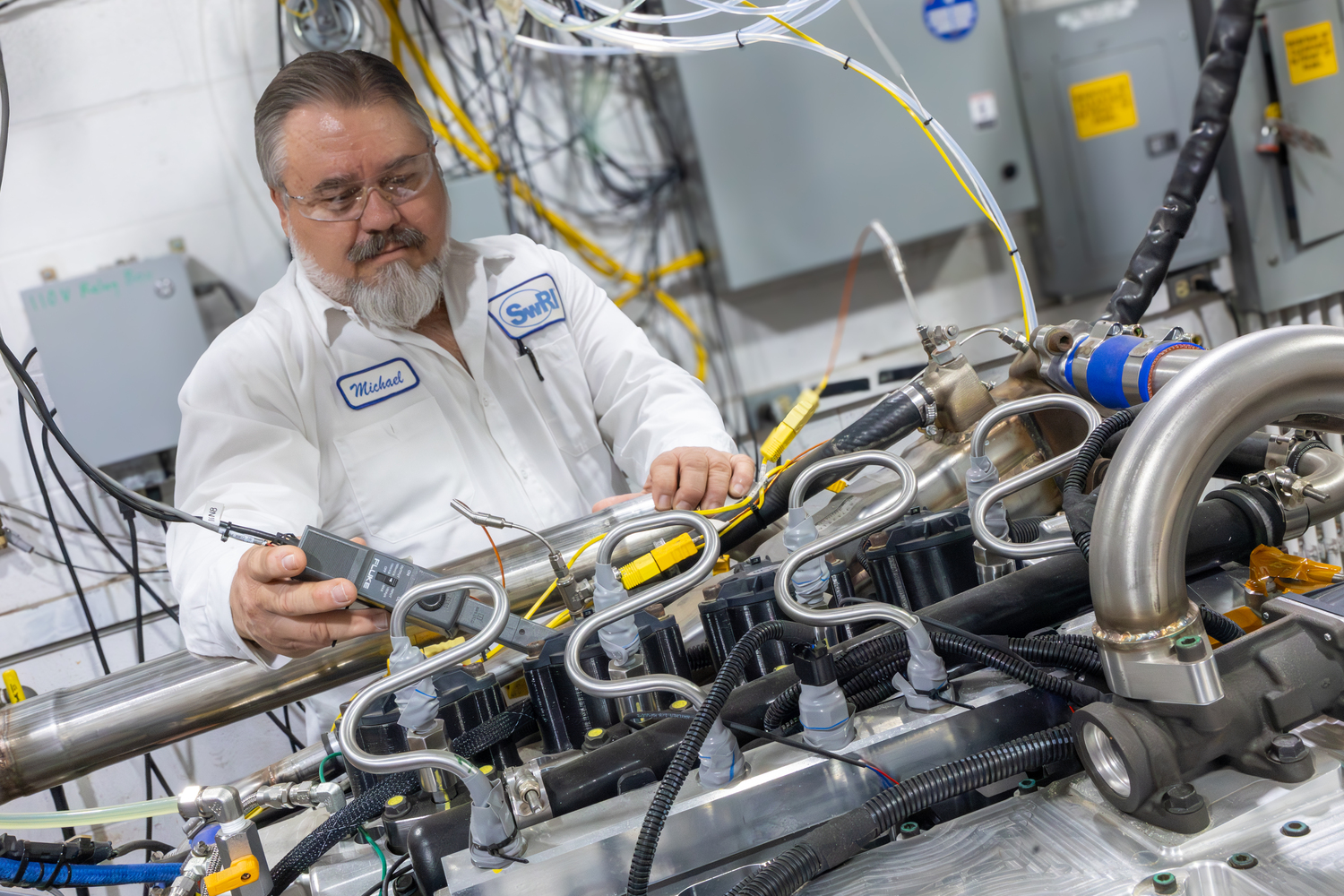
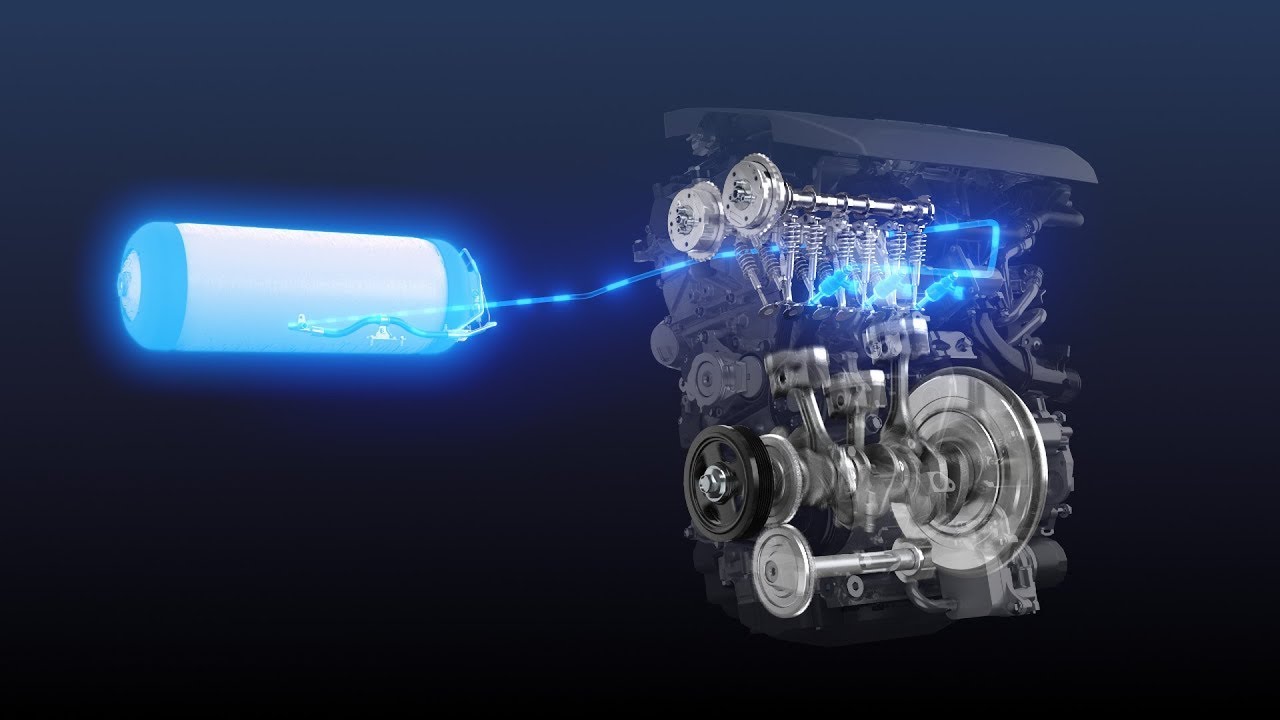
Researchers from the Southwest Research Institute (SwRI) have successfully developed an optimized spark-ignited hydrogen engine suitable for medium-duty commercial vehicles. As a form of internal combustion engine (ICE), the new engine behaves much more like a diesel engine than earlier hydrogen engines.

In other words, it is not a new kind of fuel-cell engine, but rather burns hydrogen inside cylinders using spark ignition. Just like a petrol engine, the new ICE produces mechanical propulsion using pistons.

“In addition to decades of developing medium- and heavy-duty engines, SwRI has some of the most extensive experience in the world developing and testing H2-ICEs for internal research, clients and industry demonstrations,” said Dr. Qilong Lu, a program manager in SwRI’s Powertrain Systems Engineering Department and one of the leads on this project.

“The engine was designed, constructed and rigorously tested at SwRI to ensure efficiency and performance,” Dr. Lu added.

Diesel-like torque hydrogen engine

“We began at the single-cylinder level, focusing on optimizing combustion and injection strategies,” Lu said. “From there, our team ramped up efforts to develop the full multi-cylinder engine, addressing key challenges such as pre-ignition, combustion stability and overall systems integration,” Lu added.

The attraction is that hydrogen contains no carbon, so burning it produces water rather than carbon dioxide. It also allows manufacturers to retain much of the familiar internal-combustion ecosystem: engines, transmissions, manufacturing equipment, servicing knowledge and supply chains.

The team also managed to deliver the new hydrogen ICE’s diesel-like torque using a turbocharger that forces more air into the engine. This allows it to burn more hydrogen and produce the strong low-speed torque needed to move loaded trucks.

The new engine also has improved airflow thanks to an innovative intake-port geometry allowing hydrogen to burn much faster than petrol and requiring different air movement inside the cylinder.

The engine also features larger intake valves and hydrogen-specific injectors to enable optimum fuel-to-air mixing within the cylinders. It also uses special software and calibrations to precisely manage injection, ignition, boost pressure and the air–fuel mixture.

Another wrinkle they had to overcome is safety. Hot engine surfaces or residual gases can ignite hydrogen before the spark fires, producing knocking, power loss or potentially engine damage.

Low-emissions but not zero

In terms of emissions, the engine produces what the team describes as “near-zero tailpipe CO₂.” While this is true in terms of the engine itself, the way in which the fuel hydrogen is produced matters here.

If produced from natural gas, rather than renewable electricity, CO₂ could remain high, all things considered. Also, hydrogen combustion can still produce nitrogen oxides, or NOx, because combustion heats nitrogen and oxygen from the air to very high temperatures.

It therefore isn’t literally a zero-emission engine and may require careful combustion control and exhaust after-treatment.

“The project brought together many areas and experts at the Institute to complete,” said Chris Bitsis, assistant director of SwRI’s Powertrain Systems Engineering Department, who oversees combustion research programs. “SwRI’s hydrogen combustion engine program is working every day to advance this technology and showcase its potential as a near-zero carbon emissions industry solution,” he added.

💾

SwRI team has developed a new hydrogen truck engine with diesel-like power and near-zero carbon dioxide tailpipe emissions.
  •  

‘7x more’ thrust: 72-foot sail powers world’s first wind-assisted multipurpose cargo ship

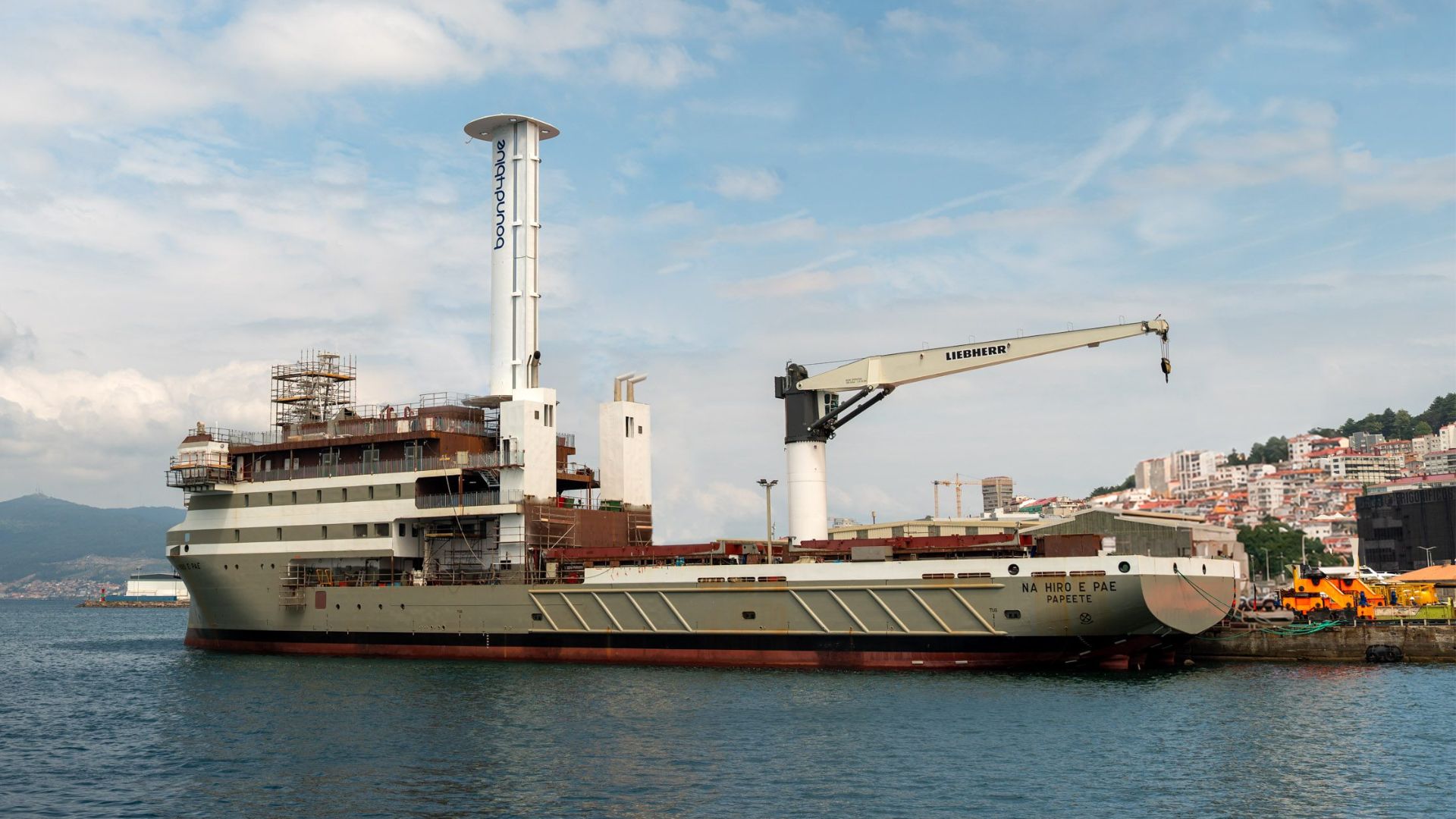
Wind propulsion company bound4blue has completed the installation of a 22-metre (72-foot) tall suction sail on the 292-foot (89-metre) cargo ship Na Hiro E Pae. This makes it the “first multipurpose vessel” worldwide to adopt a wind propulsion system. The unit was fitted at the Astilleros Armon Vigo yard in Spain for Greek shipping firm Société de Navigation des Australes SNA Tuha’a Pae.

“We hope Na Hiro E Pae leads the way for other ambitious shipping companies keen to unlock sustainable advantages,” said José Miguel Bermúdez.

Capable of carrying 200 passengers and 1,500 tonnes of supplies between Tahiti and the Austral Islands, the ship is expected to cut its energy consumption by 10 percent using the autonomous system alongside existing service from the Tuhaa Pae IV, which has operated on the route since 2012.

Delivering significant fuel savings

The installed technology, known as the eSail, yields sevenfold the thrust generated by an equally sized conventional rigid sail. This high efficiency allows a relatively small unit to deliver significant fuel savings without interfering with the fast loading and unloading operations required on multipurpose ships.

“bound4blue’s mechanically simple suction sail, producing up to seven times the propulsive force of a standard rigid sail of the same size, slots into a ‘green technology mix’ that includes engines capable of running on biofuel or e-fuel, electric POD propulsion, efficient waste management, and autonomy in fresh water supply,” highlighted the company in a press release. 

The system functions by pulling airflow across a wide aerodynamic contour to assist the main engines. An autonomous vertical sail uses suction technology to draw air over this shape, creating propulsive thrust that decreases the mechanical burden on the vessel’s primary engines.

By pulling the air over its surface, the system prevents airflow separation that normally limits conventional sails. This aerodynamic effect allows the unit to generate far higher propulsive force relative to its physical surface area, directly lowering fuel usage and engine emissions.

“Multipurpose vessels have traditionally been seen as a challenging segment for wind power, due to the required flexibility of operations and related integration demands,” added Bermúdez.

Utilizing other green technologies

The compact nature of the eSail provides high force efficiency, allowing the vessel to maintain open deck space for cargo handling while utilizing wind energy.

The Na Hiro E Pae combines the suction sail with several other onboard green technologies. The ship features engines configured to burn biofuel or e-fuel as soon as local regional markets can supply them.

It also incorporates electric POD propulsion, efficient waste management systems, and autonomous fresh water supply capabilities to support its passenger and freight services.

“Sustainability was a key objective throughout the design process, and the eSAIL forms an important part of a wider package of technologies that will help us reduce energy consumption and environmental impact, while maintaining the reliable transport services our communities depend upon,” concluded Boris PIEL technical Director, SNA Tuha’a Pae Shipping Company.

  •  

US submarine warfare capabilities advance with $43 million in new contracts

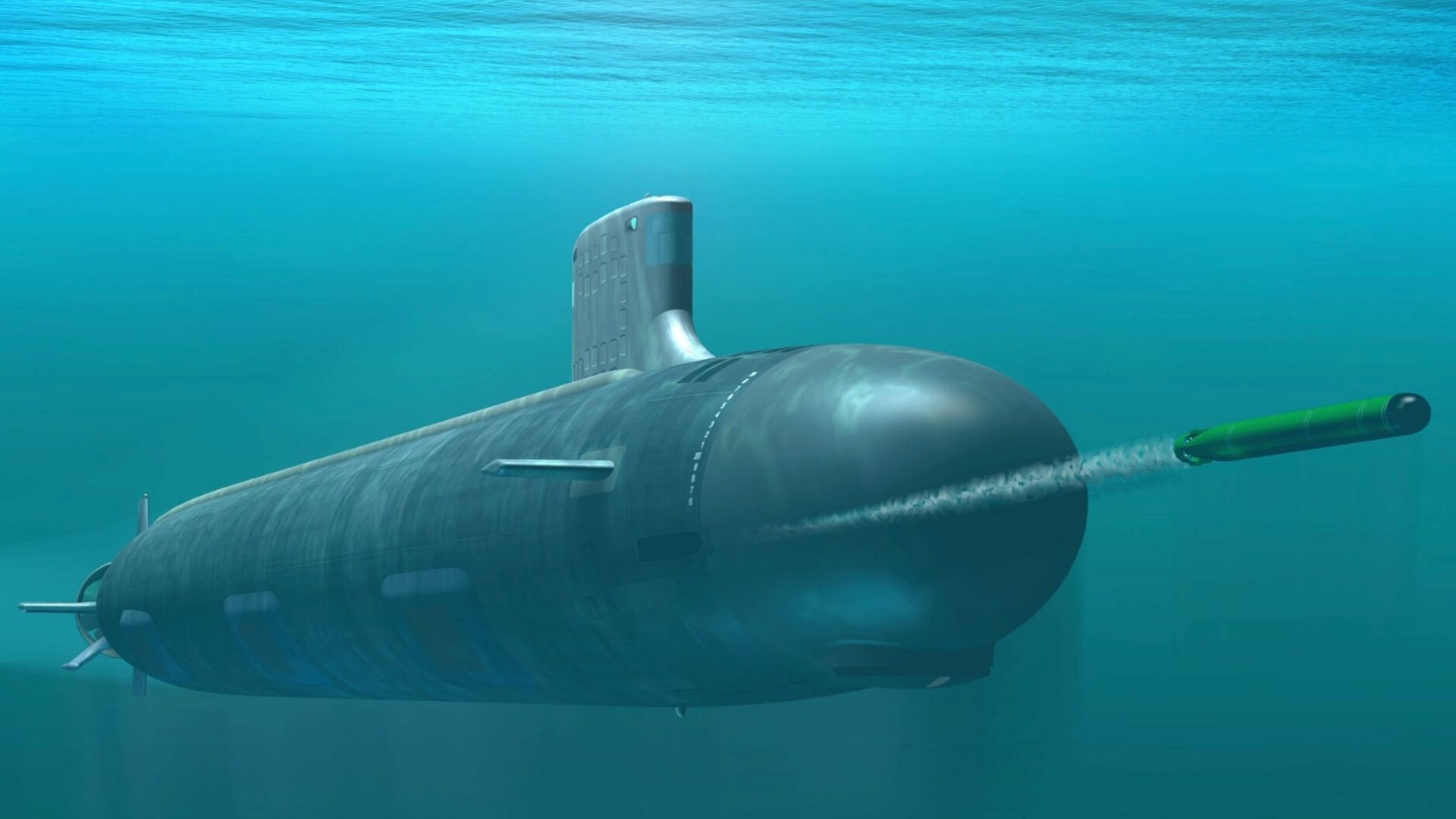
Graham Corporation has secured two US defense contracts worth more than $43 million to supply equipment for the MK48 Mod 7 heavyweight torpedo and the country’s submarine fleet.

The New York-based manufacturer announced the awards on August 7.

The contracts cover alternators and regulators for the torpedo program and new MK19 Mod 2 air turbine pump assemblies for submarine spares, supporting the US Navy’s undersea warfare capabilities and fleet readiness.

Power systems for the MK48 torpedo

The first award exercises the fourth option year of an existing contract supporting the MK48 Mod 7 Heavyweight Torpedo program. It was awarded during Graham’s first quarter of fiscal 2027, which ended June 30, 2026.

Under the option, Graham will continue supplying alternators and regulators used within the torpedo system. Alternators generate electrical power, while regulators manage the resulting voltage and current to help onboard electronics operate reliably.

These components are particularly important in a heavyweight torpedo, where propulsion, guidance, sensing and control systems must function under demanding underwater conditions.

Reliable power management can support target acquisition and navigation while helping the weapon maintain performance throughout its mission.

The MK48 is launched from submarines and is designed to engage hostile submarines and surface ships.

Continued component orders also indicate that the US is sustaining and upgrading an established weapon as undersea competition becomes increasingly important.

Submarine pumps to arrive from 2028

Graham received the second contract during its fiscal 2027 second quarter, which ends September 30, 2026. The company will manufacture new-build MK19 Mod 2 air turbine pump assemblies for the submarine fleet’s spare-parts inventory.

Deliveries are scheduled to begin in 2028 and continue through 2030. The extended delivery period could help the Navy maintain a dependable supply of replacement hardware for submarines already in service.

Air turbine pumps convert energy from pressurized air into mechanical pumping power.

On submarines, equipment of this kind can support essential fluid-handling functions in environments where compact construction, dependable operation and tight performance tolerances are critical.

Maintaining spare assemblies also reduces the risk of a component shortage keeping a submarine out of service for longer than necessary.

The contract therefore supports not only equipment production but also maintenance planning and operational availability.

$43 million added to defense backlog

Revenue from the MK48 Mod 7 and MK19 Mod 2 awards will be recorded in Graham’s fiscal 2027 first- and second-quarter backlog. The deals extend the company’s role as a supplier of specialized technologies for US defense platforms.

“These awards reflect the continued demand we’re seeing across our defense platforms, and demonstrate the durability of our customer relationships built over years of consistent execution,” said Matthew Malone, President and CEO of Graham Corporation.

“Our mission-critical applications remain vital in helping our customers meet high-level performance requirements. We’re proud to continue supporting the MK48 and submarine programs and look forward to building on this momentum,” he added.

Beyond defense, Graham develops fluid, power, heat-transfer, vacuum and advanced mixing technologies for the space, energy and process industries.

The latest awards reinforce how those engineering capabilities are being applied to torpedo reliability, submarine maintenance and the long-term readiness of America’s undersea fleet.

  •  

15 NASA missions that redefined science, engineering, and exploration

Few institutions have shaped humanity’s understanding of space quite like NASA. Since its founding in 1958, the agency has launched hundreds of missions, but only a handful fundamentally changed science, engineering, or human history.

Some placed humans on the Moon. Others transformed astronomy, revealed hidden worlds across the Solar System, or even ventured beyond the Sun’s influence. Here are 15 NASA missions whose legacy continues to shape science and exploration today.

1. Project Mercury (1958-1963)

NASA’s first human spaceflight program proved that Americans could survive and operate in space. Alan Shepard became the first American in space in 1961, while John Glenn became the first American to orbit Earth a year later, laying the groundwork for every crewed mission that followed.

2. Project Gemini (1961-1966)

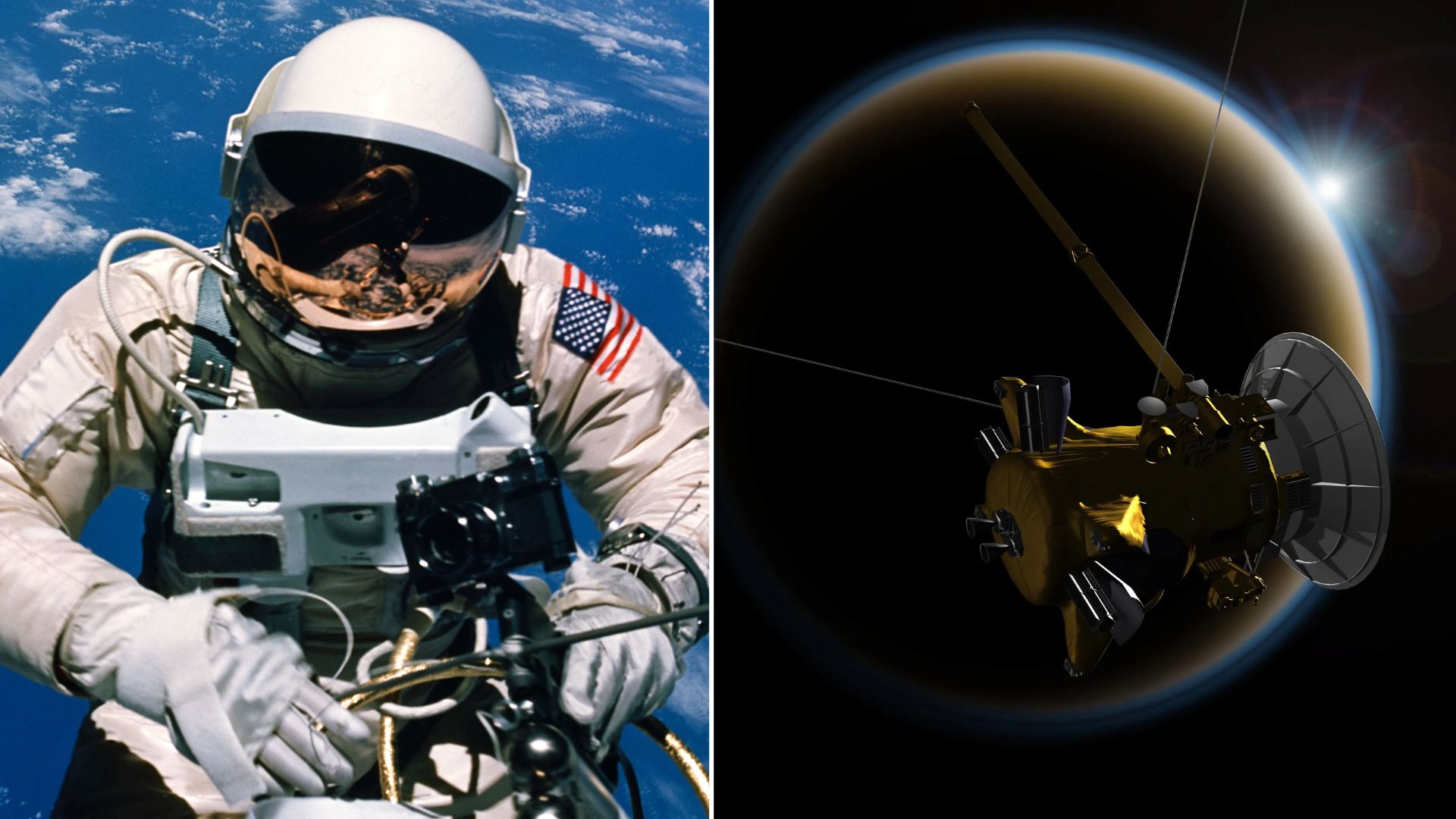
Before astronauts could reach the Moon, NASA had to master orbital rendezvous, docking, long-duration spaceflight, and spacewalks. Gemini accomplished all of those objectives, becoming the technological bridge between Mercury and Apollo.

3. Apollo 11 (1969)

Perhaps no mission changed history more profoundly. Neil Armstrong and Buzz Aldrin became the first humans to walk on the Moon while Michael Collins orbited overhead. Apollo 11 demonstrated that humanity could travel to another celestial body and safely return home, inspiring generations of scientists and engineers.

4. Skylab (1973-1979)

America’s first space station proved humans could live and work in space for months at a time. Crews conducted hundreds of experiments in medicine, solar physics, and Earth observation, paving the way for the International Space Station decades later.

5. Viking 1 (1975-1982)

When Viking 1 landed safely on Mars in 1976, it became the first successful mission to operate on the Martian surface. It returned the first images from the ground, analyzed Martian soil, and conducted pioneering experiments searching for signs of life.

6. Voyager 1 and Voyager 2 (1977-Present)

Originally designed to explore the outer planets, the twin Voyager spacecraft delivered humanity’s first close-up views of Jupiter, Saturn, Uranus, and Neptune. Both continue operating today, with Voyager 1 becoming the first human-made object to enter interstellar space.

7. Space Shuttle Program (1981-2011)

The Space Shuttle transformed access to low Earth orbit by introducing partially reusable spacecraft. Shuttle missions deployed and serviced satellites, launched the Hubble Space Telescope, assembled much of the International Space Station, and flew 135 missions over three decades.

8. Hubble Space Telescope (1990-Present)

Hubble revolutionized modern astronomy. Its observations helped refine the age of the Universe, study black holes, discover thousands of galaxies, and capture some of the most iconic images ever taken from space. More than three decades later, it continues producing groundbreaking science.

9. Mars Pathfinder (1997)

Pathfinder introduced the world to Sojourner, the first rover to operate on another planet. The mission demonstrated that relatively low-cost robotic exploration could deliver enormous scientific returns and paved the way for the sophisticated Mars rovers that followed.

10. Cassini-Huygens (1997-2017)

Cassini transformed our understanding of Saturn and its moons. It revealed water-rich plumes erupting from Enceladus, explored Titan’s methane lakes, and showed that icy moons may possess environments capable of supporting life.

11. Spirit and Opportunity (2003-2019)

Expected to survive only 90 Martian days, the twin rovers rewrote expectations. Opportunity operated for nearly 15 years, discovering overwhelming evidence that liquid water once flowed across Mars, dramatically reshaping scientific understanding of the planet’s history.

12. Curiosity (2011-Present)

Curiosity’s mobile laboratory confirmed that ancient Mars once possessed lakes, rivers, and the chemical ingredients necessary for microbial life. It continues investigating how the planet evolved from a wetter world into today’s cold desert.

13. James Webb Space Telescope (2021-Present)

Built to succeed Hubble, the James Webb Space Telescope has observed some of the earliest known galaxies, analyzed exoplanet atmospheres, and provided unprecedented infrared views of the cosmos. Its discoveries are already reshaping astronomy and cosmology.

14. Perseverance and Ingenuity (2020-Present)

Perseverance is searching for signs of ancient microbial life in Jezero Crater while collecting samples for future return to Earth. Its companion, Ingenuity, became the first aircraft to achieve powered, controlled flight on another planet, opening an entirely new chapter in planetary exploration.

15. Artemis I (2022)

More than 50 years after Apollo, Artemis I successfully tested NASA’s Orion spacecraft and Space Launch System during an uncrewed mission around the Moon. It marked the beginning of NASA’s Artemis program, which aims to return astronauts to the lunar surface and eventually support human missions to Mars.

From the Moon to interstellar space

NASA’s greatest missions have done far more than achieve technical milestones. They have expanded humanity’s understanding of the Universe, transformed engineering, and inspired generations to pursue science and exploration. With programs such as Artemis, Europa Clipper, and future Mars missions on the horizon, the next history-making NASA mission may already be on its way.

Check out 7 upcoming NASA missions here.

  •  

10 futuristic VTOL aircraft transforming urban mobility, combat & cargo operations

Helicopters are no longer the only aircraft capable of taking off vertically. Electric motors, autonomous flight systems and lightweight materials are giving rise to machines that lift like helicopters but fly more like conventional airplanes.

Some are designed to carry passengers over congested cities, while others could transport soldiers, deliver cargo or give individuals their own personal aircraft. Here are 10 futuristic VTOL aircraft attempting to change how people and goods move through the sky.

1. Joby Aviation air taxi

Joby Aviation

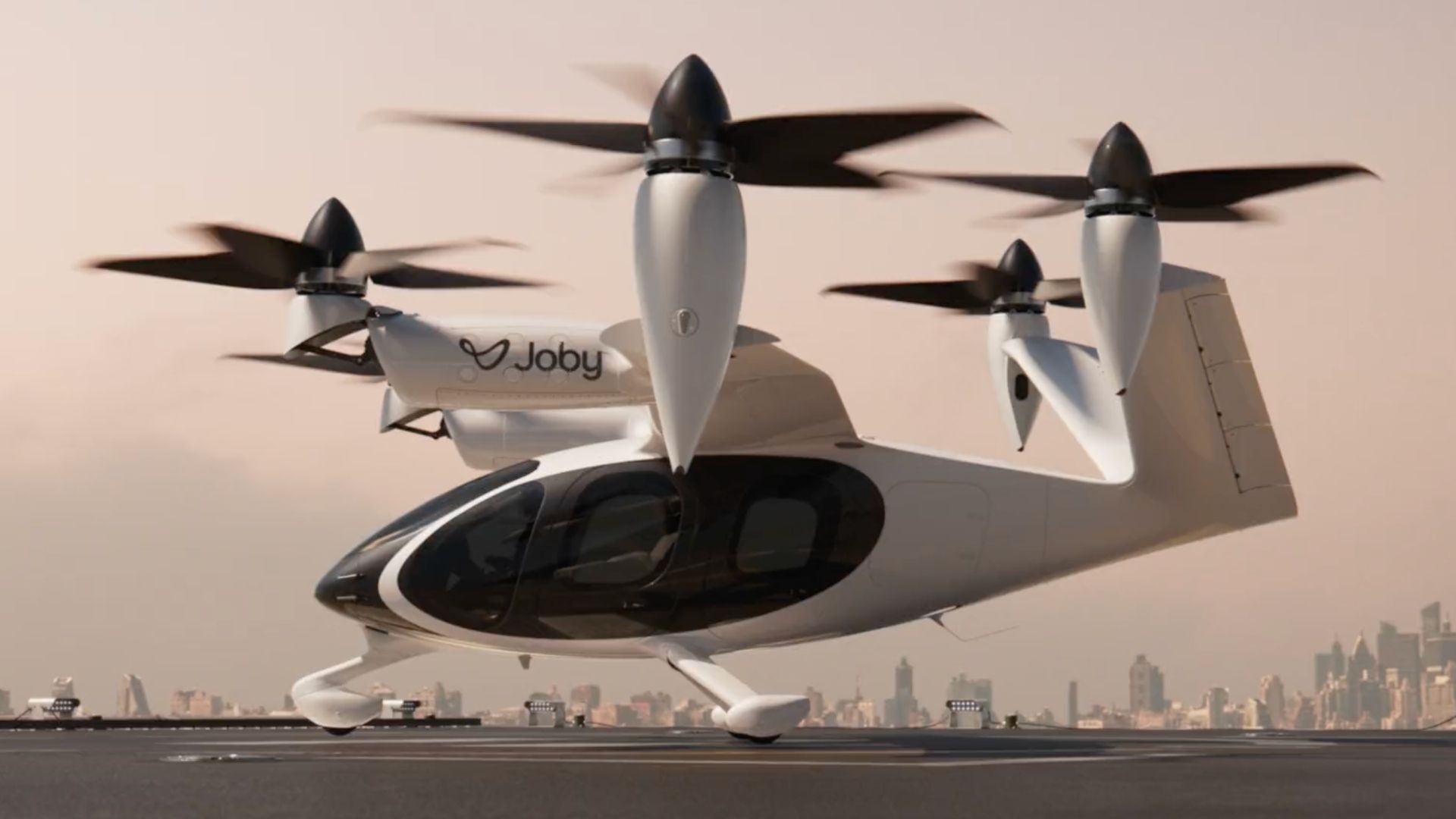
Joby Aviation has developed one of the most mature electric vertical takeoff and landing aircraft in the industry. Its air taxi uses six tilting electric propellers to rise vertically before transitioning into forward flight.

The aircraft is designed to carry a pilot and four passengers at speeds of up to 200 mph, with a range of up to 100 miles. Joby reported that its aircraft had completed more than 2,600 flights and covered over 50,000 miles by December 2025.

2. Archer Midnight

Archer Midnight

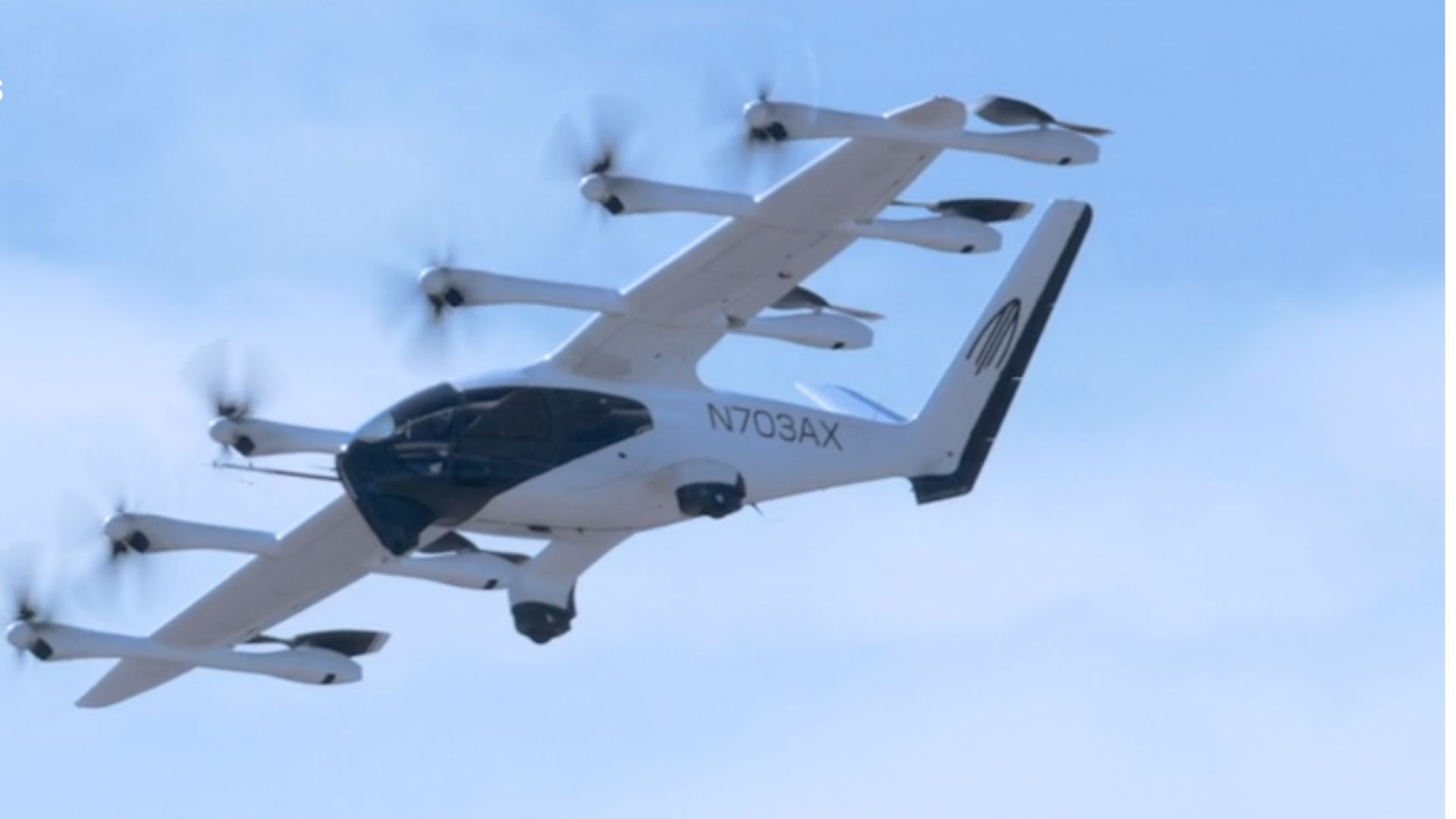
Archer Aviation’s Midnight is built for short, repeated journeys across crowded cities. The aircraft has 12 electric motors and propellers, providing additional redundancy if one propulsion unit fails.

Midnight can carry four passengers and a pilot at speeds of up to 150 mph. Although its claimed range reaches 100 miles, it is optimized for consecutive journeys of around 20 to 50 miles. A piloted aircraft completed a 55-mile flight in 31 minutes in August 2025.

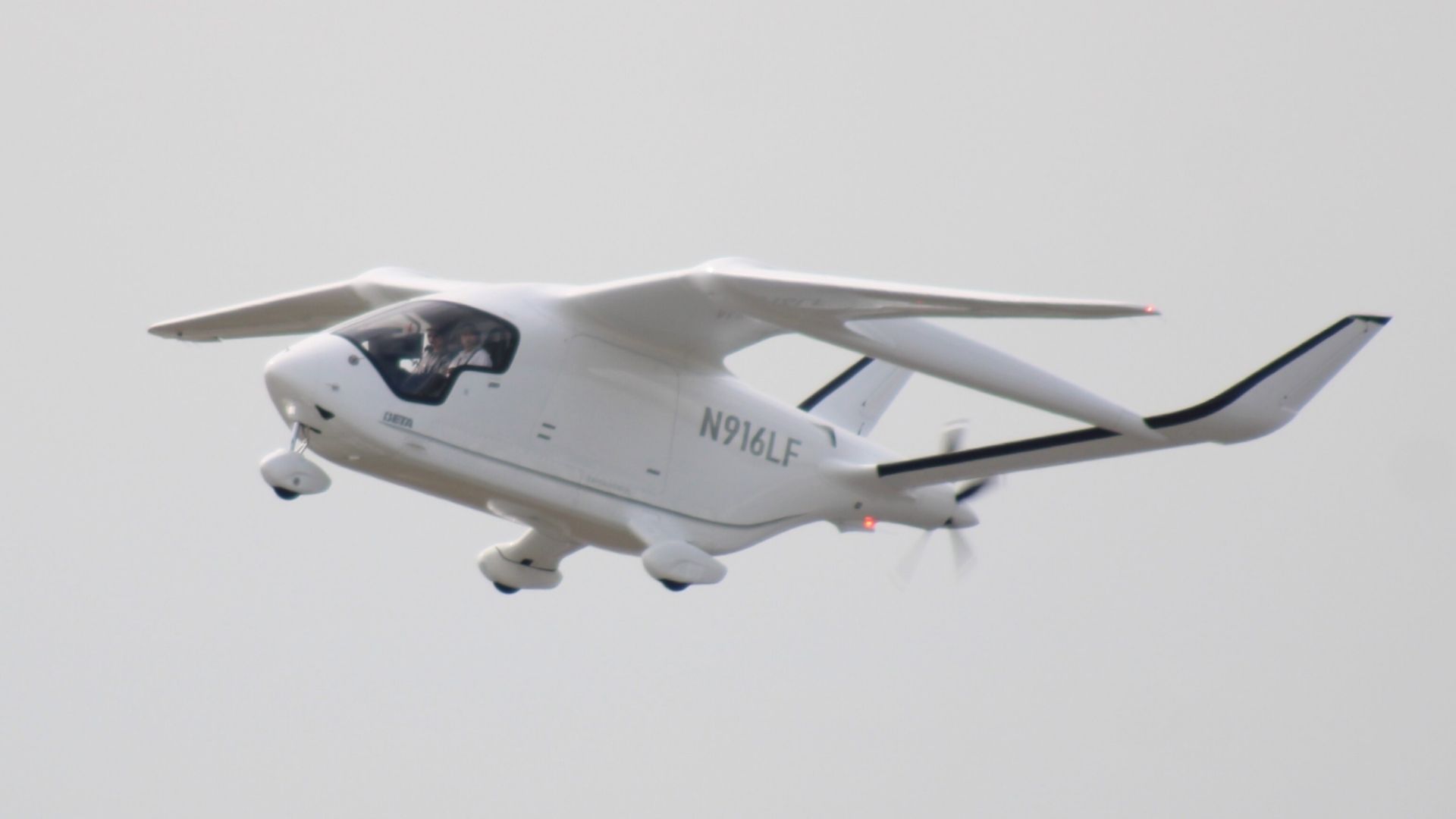
3. BETA ALIA VTOL

Wikimedia Commons

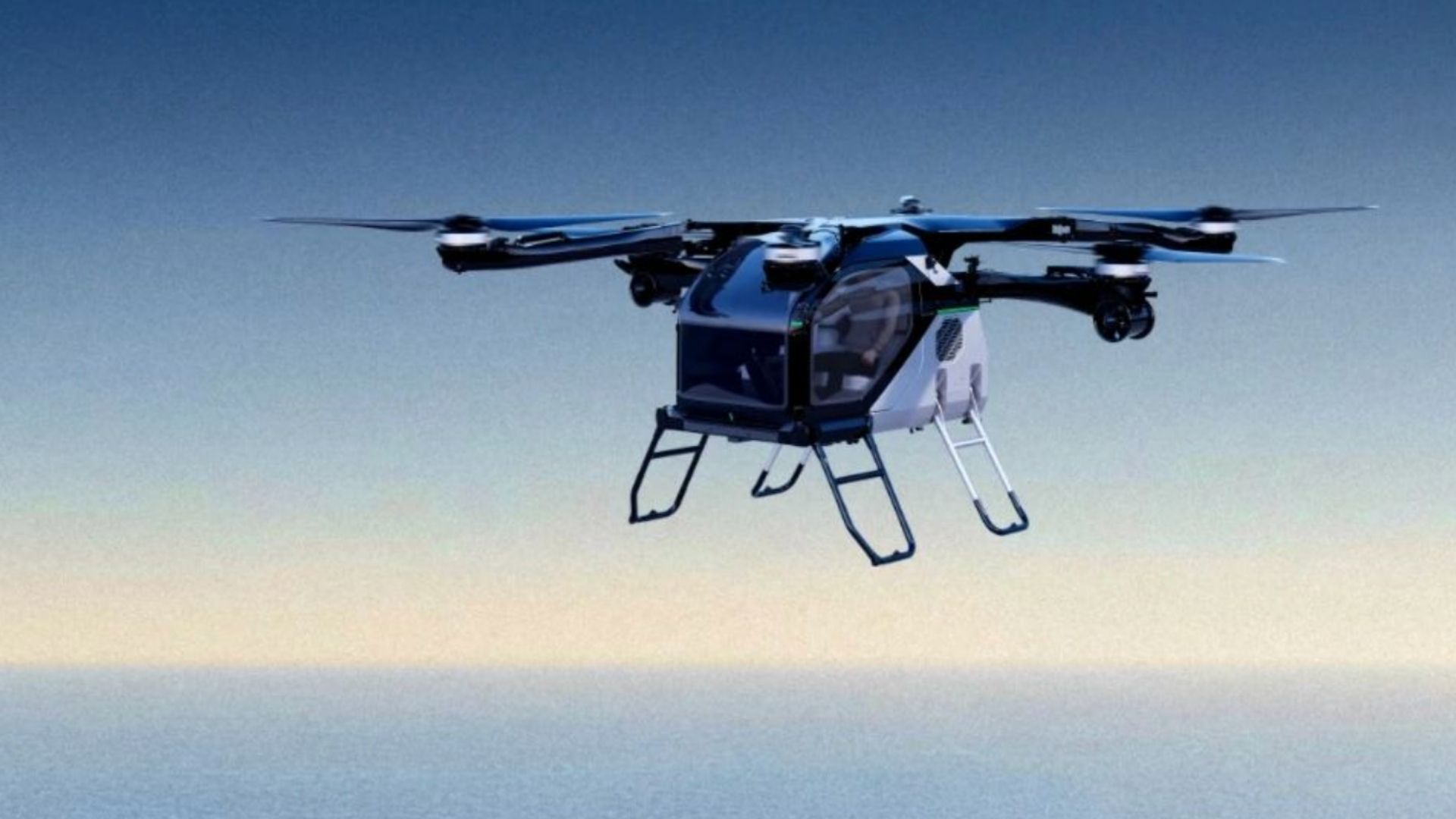
BETA Technologies has taken a relatively straightforward approach with its ALIA VTOL. Four horizontal propellers provide vertical lift, while a separate propeller at the rear drives the aircraft during forward flight.

ALIA is designed to carry five passengers or around 200 cubic feet of cargo. It has a listed maximum speed of 153 knots, equivalent to approximately 176 mph.

BETA is targeting passenger transport, medical missions, logistics and military operations with the platform.

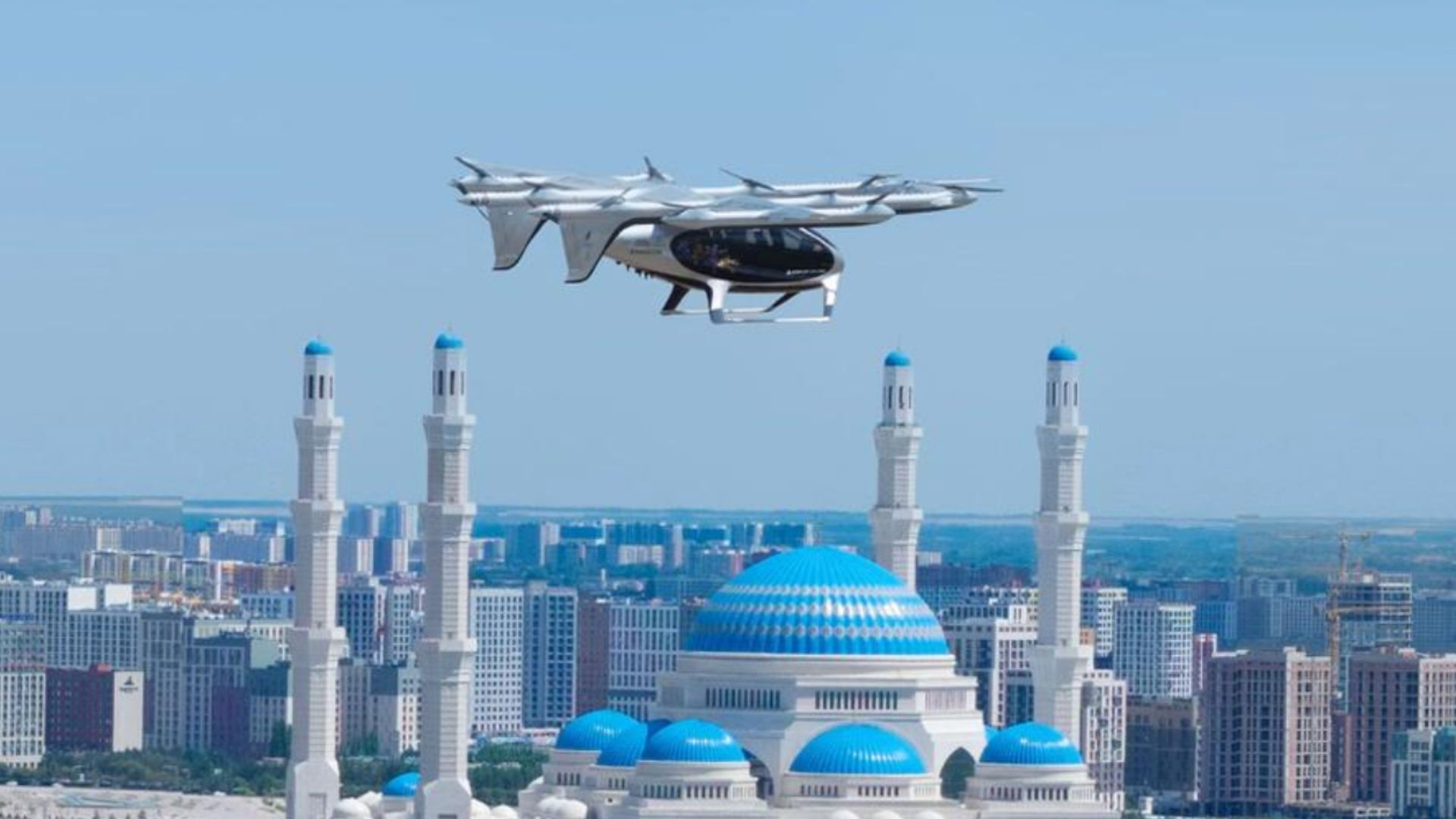
4. AutoFlight Prosperity I

AutoFlight

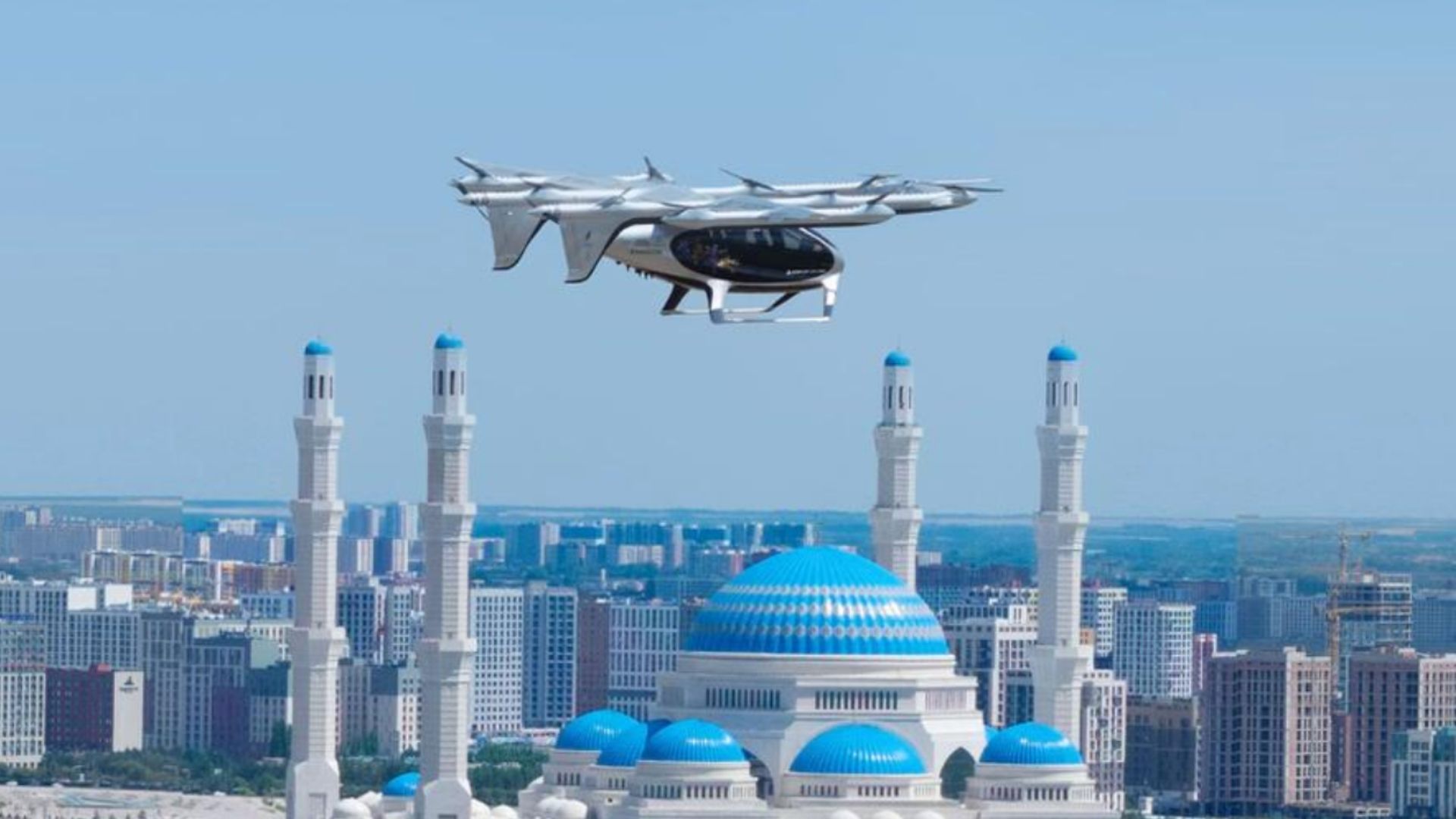
China’s AutoFlight is developing Prosperity I for longer passenger journeys between cities and transport hubs. Its unusual propulsion system includes 10 lifting propellers and three propellers for forward flight.

The aircraft has five seats, including one for the pilot, and a typical payload capacity of 350 kilograms. AutoFlight claims a range exceeding 250 kilometres and a cruise speed above 200 kilometres per hour.

The passenger aircraft is currently progressing through airworthiness certification.

5. Vertical Aerospace Valo

Valo is the latest electric aircraft being developed by Britain’s Vertical Aerospace. It uses eight tilt-shift propellers and a carbon-composite airframe to carry four passengers and one pilot.

The all-electric aircraft is designed to travel up to 100 miles at speeds reaching 150 mph. Vertical is also planning a hybrid-electric version with a significantly more ambitious range of up to 1,000 miles.

The company is targeting entry into service after regulatory approval, currently expected in 2028.

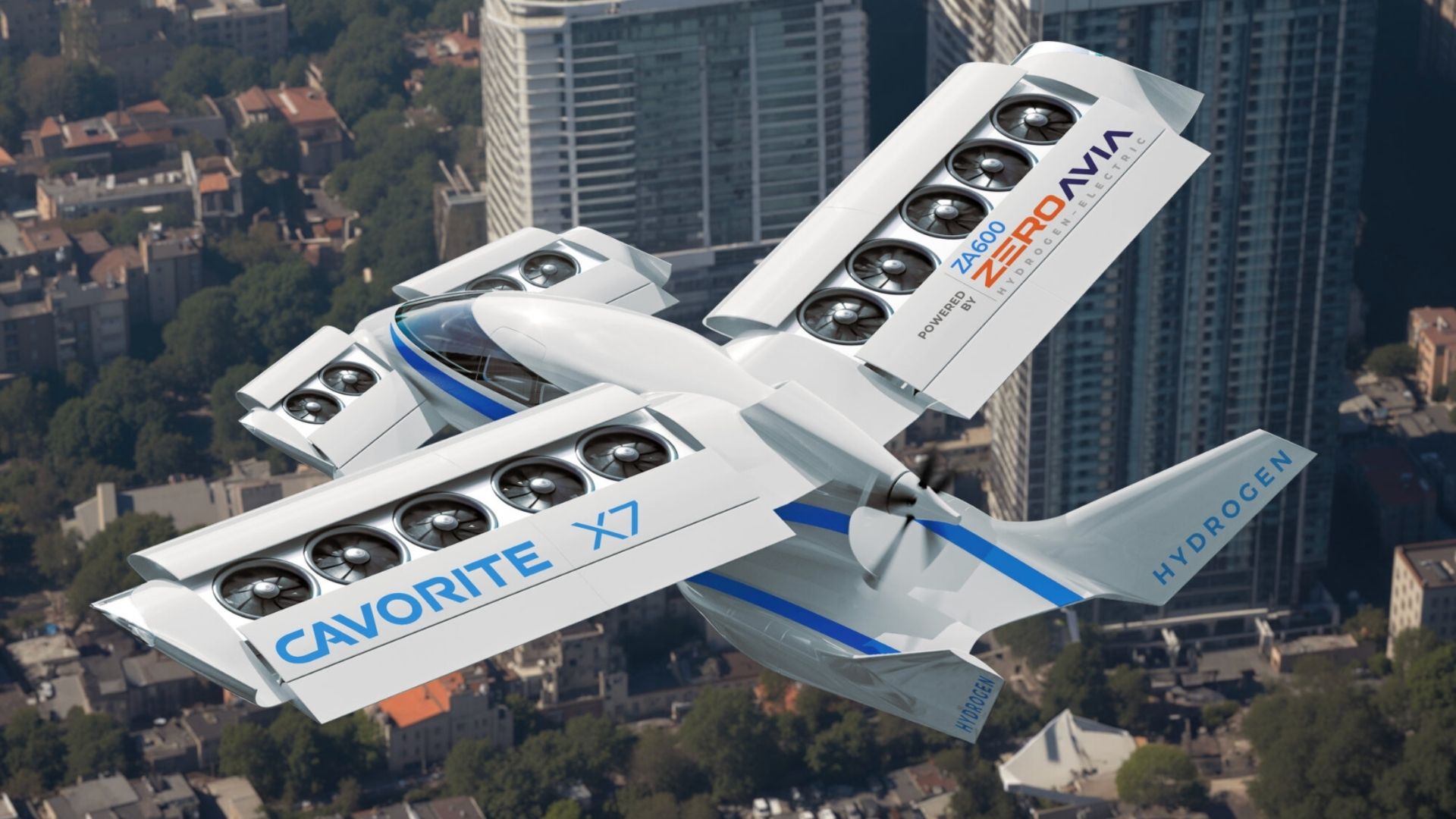
6. Horizon Cavorite X7

Hysky

Instead of placing its lift propellers outside the aircraft, Horizon Aircraft has hidden them inside the wings. Panels open to expose 12 electric fans during vertical takeoff and close once the Cavorite X7 transitions into forward flight.

The Canadian hybrid-electric aircraft is being developed to carry six passengers and one pilot. Horizon is targeting a range of approximately 500 miles and a maximum speed of around 280 mph.

Its proposed missions include regional transport, defence and emergency response.

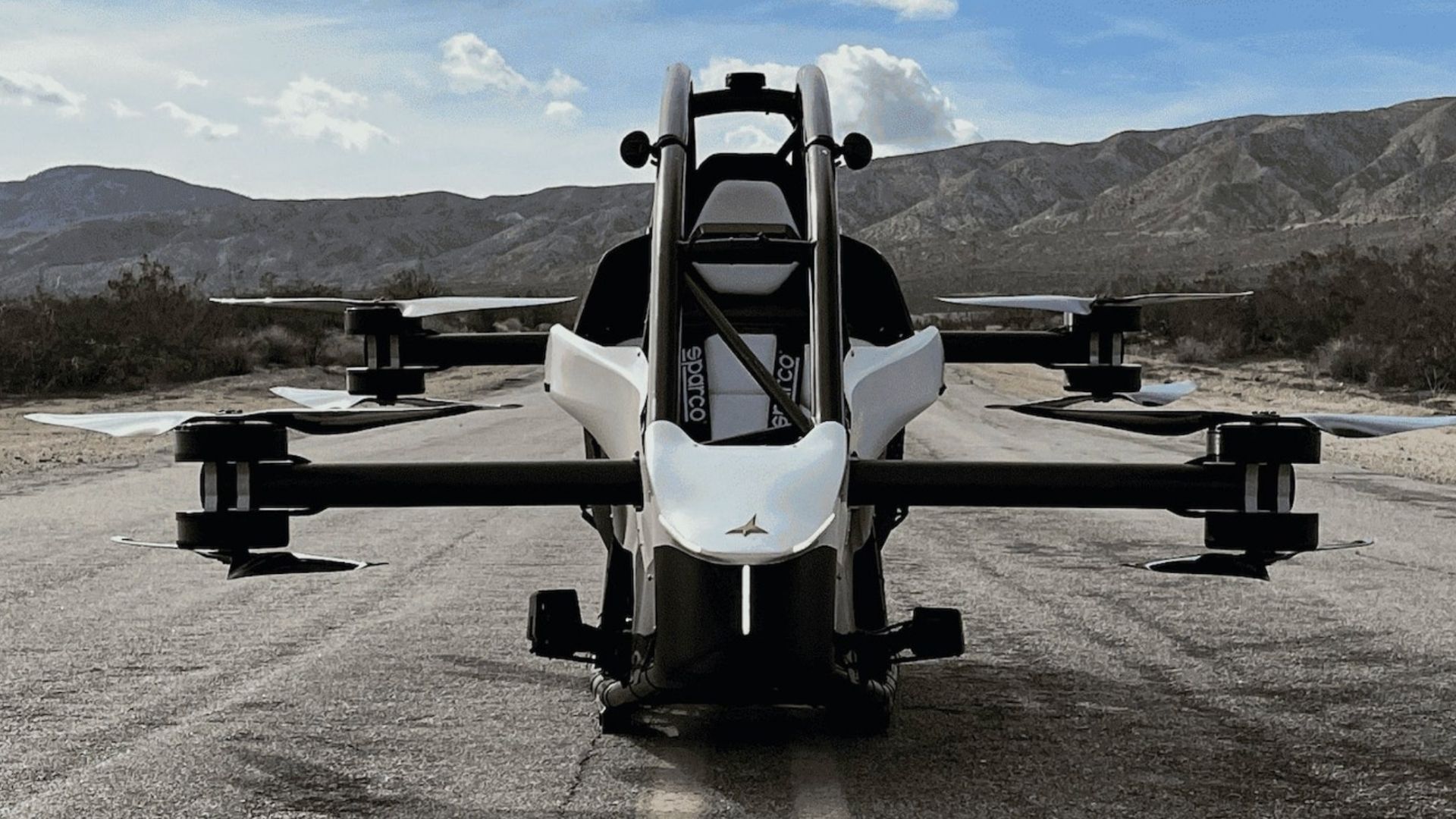
7. Jetson ONE

Jetson ONE

The Jetson ONE resembles a cross between an open-wheel racing car and an oversized drone. Its lightweight aluminium-and-carbon-fibre frame carries a single pilot above eight electrically powered propellers.

The aircraft offers approximately 20 minutes of flight and has a software-limited maximum speed of 63 mph.

It is controlled using a four-axis joystick and includes automatic landing, motor redundancy and a ballistic parachute. Unlike many proposed personal eVTOLs, early Jetson ONE aircraft have already reached customers.

8. ARIDGE Land Aircraft Carrier

Aridge

ARIDGE’s Land Aircraft Carrier approaches the flying-car problem by separating driving and flying. The system consists of a six-wheeled ground vehicle carrying a detachable two-seat electric aircraft inside its rear compartment.

Once the vehicle reaches a suitable location, the aerial module can be released and prepared for vertical flight. This modular architecture avoids forcing one machine to operate effectively both on public roads and in the air.

9. Sikorsky Nomad

Lockheed Martin

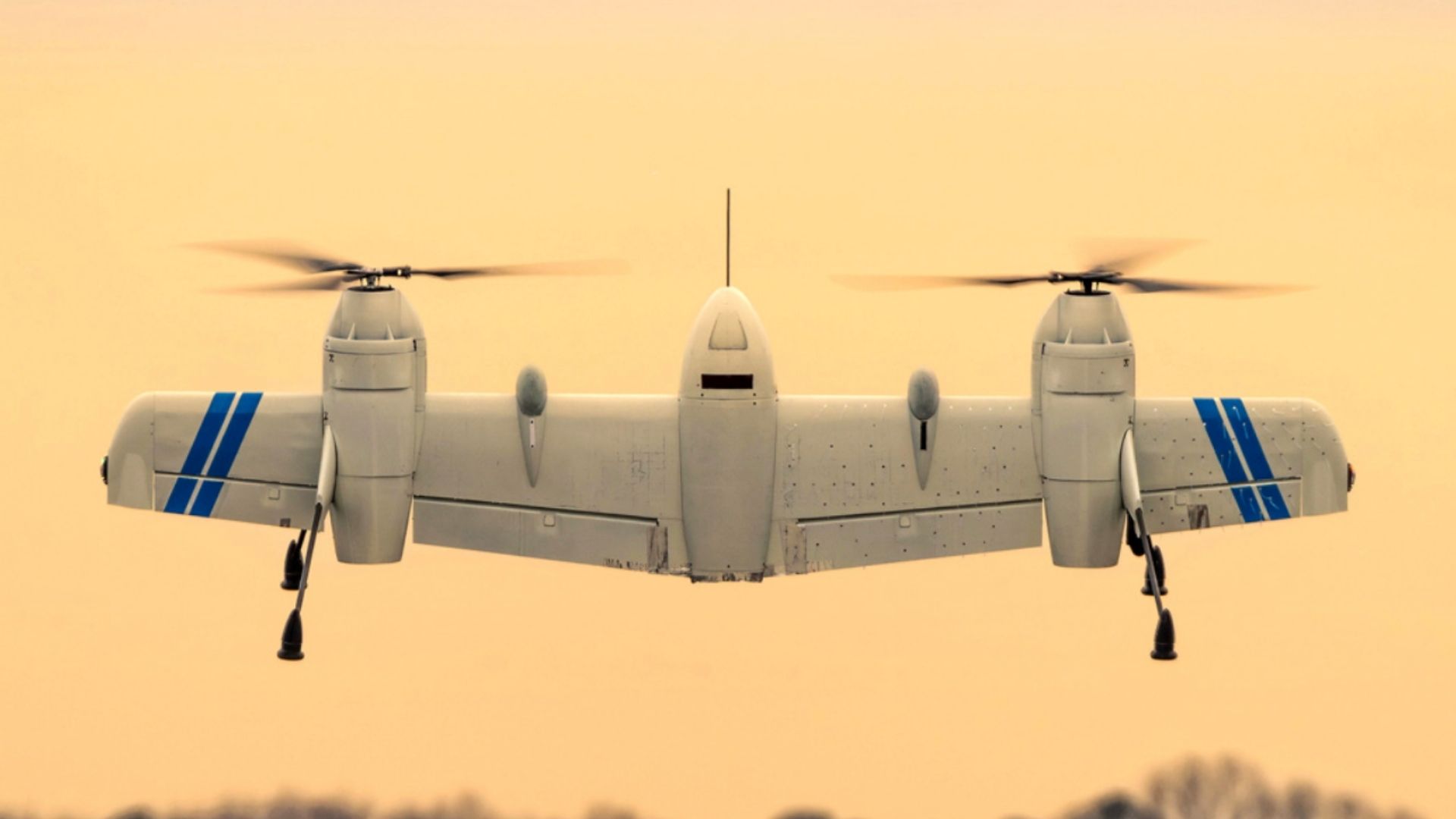
Sikorsky’s Nomad is a family of autonomous aircraft built around a rotor-blown-wing design. Two large propellers generate airflow over the wing, allowing the aircraft to hover before transitioning into efficient horizontal flight.

A 10.3-foot-wing prototype completed more than 40 takeoffs and landings, including 30 transitions between helicopter and airplane modes.

The larger Nomad aircraft could eventually perform reconnaissance, light-attack and contested-logistics missions without putting a crew onboard.

10. Bell MV-75 Cheyenne II

Bell MV

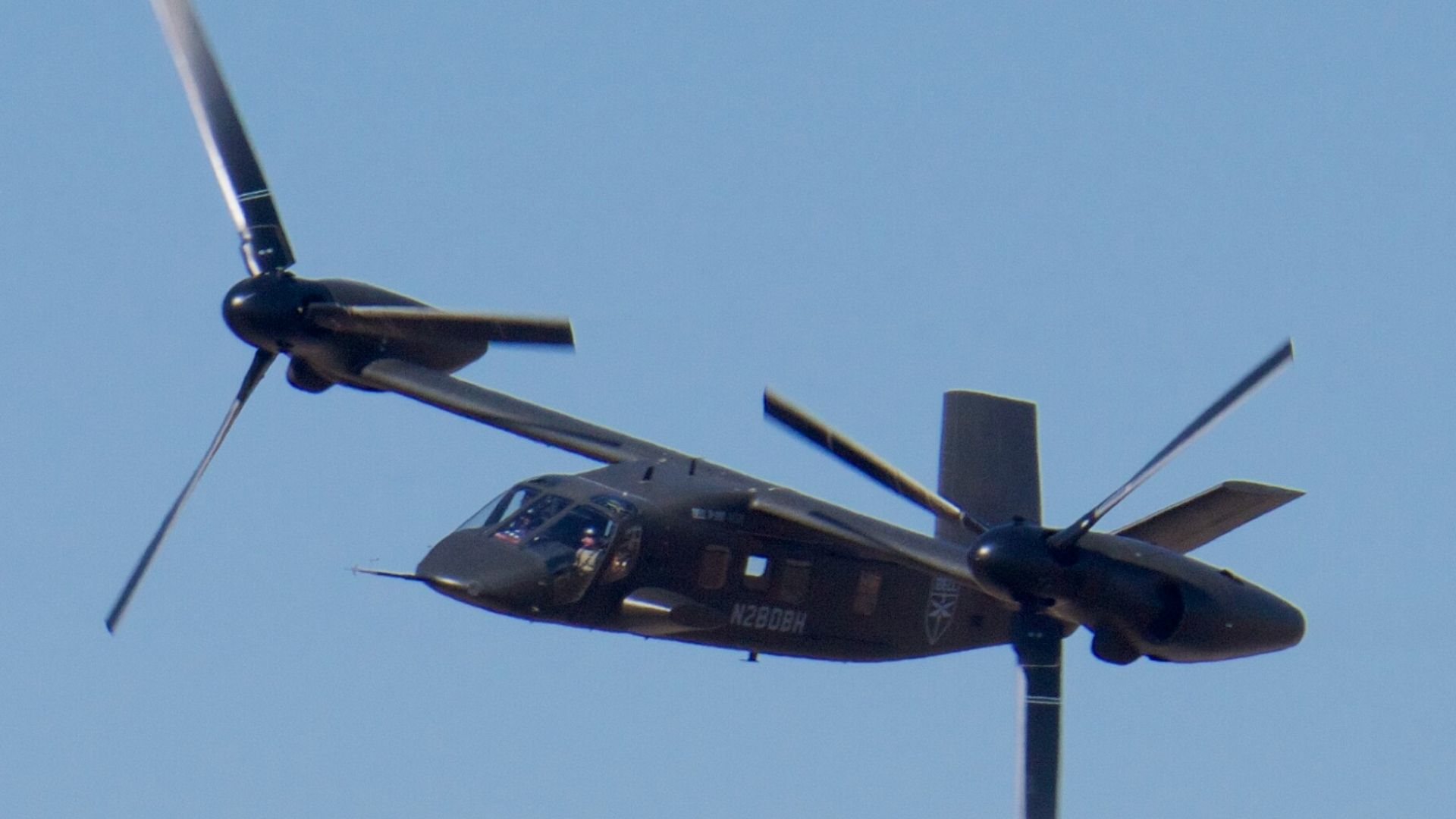
Bell’s MV-75 Cheyenne II is being developed as the U.S. Army’s next-generation long-range assault aircraft. Derived from the V-280 Valor demonstrator, it uses tilting rotors to combine helicopter-like vertical flight with turboprop-like speed.

The Army expects the MV-75 to fly more than twice as far and twice as fast as parts of its current helicopter fleet. It could eventually conduct air assault, medical evacuation, resupply and disaster-relief missions while replacing the UH-60 Black Hawk in certain roles.

Conclusion

These aircraft show there is no single solution to the vertical-flight problem. Companies are experimenting with tilting propellers, dedicated lift rotors, concealed fans, hybrid engines and autonomous flight systems.

However, flying prototypes are only part of the challenge. Certification, infrastructure, battery life, noise and operating costs will ultimately decide which of these futuristic VTOL aircraft become everyday machines—and which remain captivating visions of aviation’s future.

  •  

China’s 80-hectare facility aims to make long-duration energy storage batteries

A new industrial complex in China’s Shandong province is beginning production rollout with a specific goal. Manufacturing batteries designed to store electricity for longer periods and support increasingly renewable power grids.

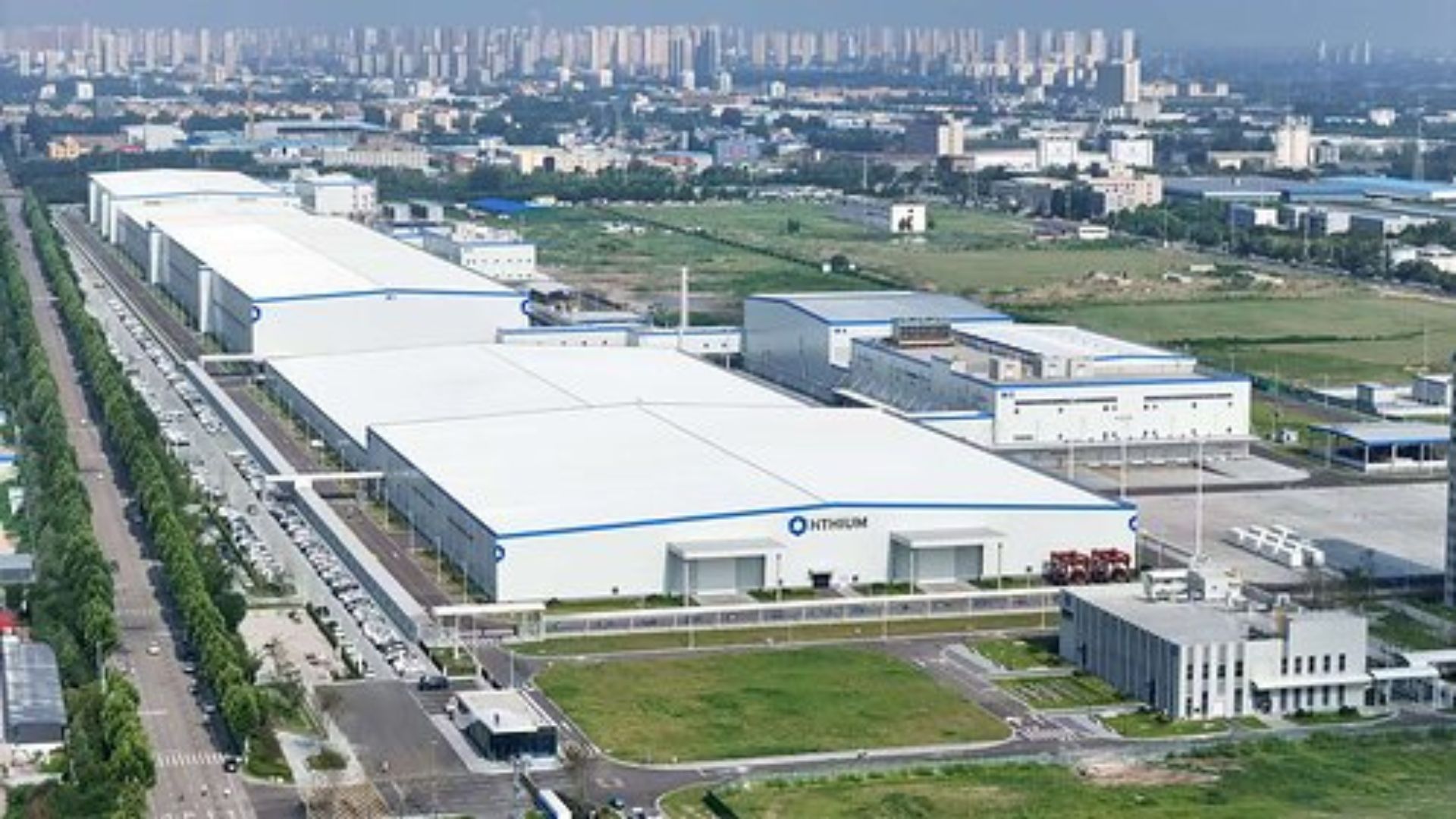
HiTHIUM held the production rollout ceremony for its Heze Base on August 7 in Heze Luxi New Area. The company describes the facility as the world’s first integrated industrial park dedicated exclusively to long-duration energy storage (LDES).

Unlike conventional battery plants focused primarily on cells, the Heze project brings together battery-cell manufacturing, materials production and energy-storage system integration. The planned facility covers approximately 80 hectares, with total investment across the industrial chain exceeding RMB 13 billion.

Why long-duration storage matters

Solar and wind power can produce large amounts of electricity when conditions are favorable, but generation does not always coincide with demand. Energy storage allows excess electricity to be stored and released later, helping balance the grid. LDES is intended to extend that capability over longer periods. For example, stored electricity could be released after solar generation falls in the evening or during longer periods of low renewable output. That makes the technology increasingly relevant as power systems add more variable renewable generation.

A battery factory built around LDES

The Heze Base uses a whole-industry-chain approach, covering LFP battery cells, modules and system integration, new materials and upstream raw-material processing. The facility is also designed around very large-capacity battery products. HiTHIUM says its fifth-generation intelligent manufacturing lines can produce more than 15 GWh per production line, while the company is developing thousand-ampere-hour-class cells for LDES applications.

Larger-capacity cells can potentially reduce the number of individual cells and connections needed in a large storage installation, simplifying parts of system construction. HiTHIUM’s earlier LDES products include a 1,175 Ah cell, which the company says entered mass production in 2025.

Automating storage production

The factory itself is designed as a highly automated manufacturing operation. HiTHIUM says its fifth-generation production lines have an automation rate exceeding 95% and incorporate more than 1,000 quality-control checkpoints, including AI-powered visual inspection.

According to the company, the new production system reduces floor space required per GWh by 50%, production manpower by 58%, and manufacturing energy consumption by 13% compared with its previous generation. HiTHIUM also reports a 200% improvement in production efficiency.

These figures are company-reported comparisons, but they highlight an important part of the LDES race: reducing costs will depend not only on battery chemistry, but also on manufacturing efficiency.

From cells to complete storage systems

The Heze Base is intended to take the battery manufacturing process from raw materials all the way through to finished, containerized energy-storage systems. That integrated approach matters because grid-scale storage is more complicated than simply installing large numbers of battery cells. Cells must be assembled into modules and systems, with the finished equipment incorporating the components and controls required for large-scale energy storage.

HiTHIUM says the Heze rollout marks a new phase focused on scaled manufacturing and delivery of LDES products. The significance of the project ultimately goes beyond one factory. As renewable generation expands, electricity grids need increasingly capable ways to shift power across time. The growth of dedicated LDES manufacturing suggests battery companies are now preparing for a market where storing electricity for longer periods could become just as important as generating it.

  •  

US lab to hunt most elusive ‘ghost particles’ deep underground with automated triggers

One of the world’s most ambitious neutrino experiments, the Deep Underground Neutrino Experiment (DUNE), is being built to catch some of the universe’s most elusive particles, but finding those fleeting signals may soon involve artificial intelligence. 

As the massive detector takes shape a mile underground in South Dakota, researchers are developing AI systems to sort through huge amounts of data, identify neutrino interactions, spot signs of a stellar explosion and even detect problems inside the detector.

This could fundamentally change how scientists run a particle-physics experiment at DUNE’s scale. 

For instance, instead of waiting for conventional analysis to work through enormous amounts of data, AI could identify important events in near real time and direct researchers toward the signals most worth investigating.

“These approaches are going to really accelerate DUNE in terms of the commissioning process and the sensitivity of the experiment to reach our full discovery potential,” Sowjanya Gollapinni, a representative from DUNE, said.

Can AI read ghost-particle tracks?

Neutrinos are notoriously difficult to study. Trillions pass through our bodies every second, yet they interact so rarely that detecting them requires an enormous detector and an intense neutrino beam. 

Fermilab will generate a powerful neutrino beam that will travel to a detector at the Sanford Underground Research Facility in South Dakota, where huge chambers filled with liquid argon will record the tiny traces left when neutrinos collide with argon atoms.

Keeping so much argon in the right state is itself a huge engineering challenge. Each of DUNE’s two planned far-detector cryostats will eventually house about 17,000 tons of liquid argon, kept at roughly −300°F. The massive cryogenic containers must keep the argon cold enough for the detector to work.

However, the problem does not end when a neutrino is detected. Every interaction can produce several particles, each leaving a trail through the argon.

Scientists must work backward through those tracks to determine where the collision occurred, what particles were created, and what the original neutrino’s energy and direction were. 

Fermilab researchers have already spent years testing whether machine learning can make this process faster. The MicroBooNE experiment was among the first high-energy physics experiments to use deep neural networks to analyze images from a liquid-argon detector. DUNE is now taking that approach much further.

“We are going to have very high resolution, almost photographic-quality images of these interactions. Which is great, but also brings challenges such as making reconstruction more difficult because we see such fine detail.” ,” Leigh Whitehead, an AI expert at DUNE, said.

An AI lookout for exploding stars

DUNE’s AI will also be searching for something far rarer—a supernova in our galaxy.

When a massive star collapses and explodes, neutrinos escape from its interior and can reach Earth before the burst of light becomes visible. This gives scientists an unusual opportunity to study the violent processes occurring inside a dying star. 

DUNE’s giant liquid-argon detector is being built in part to capture neutrinos from astrophysical events such as nearby supernovae.

An AI trigger will continuously monitor DUNE’s detector for the telltale pattern of a supernova neutrino burst. If it finds a promising signal, the system is designed to preserve data from 10 seconds before to 100 seconds after the candidate event. 

This could give astronomers an early warning, allowing telescopes to turn toward the exploding star while its light is still arriving.

The neutrinos themselves could reveal what the explosion leaves behind — potentially a neutron star or a black hole. This makes DUNE part particle detector, part cosmic early-warning system.

AI could become DUNE’s technician

There is another problem hidden inside DUNE’s enormous scale, which is keeping the detector running. Thousands of components must operate together underground, and operators need to respond quickly when something goes wrong. 

Researchers are therefore investigating whether a large language model could search through records of previously solved problems and point operators toward relevant fixes.

Machine learning could eventually go a step further by recognizing patterns that indicate a detector anomaly before an actual failure occurs. 

This approach, therefore, reflects a broader push to use AI throughout particle-physics experiments, where increasingly complex facilities are producing more data than conventional methods can easily handle.

Building an AI-powered physics experiment

DUNE will eventually produce petabytes of data, making fast and reliable analysis essential. Researchers are developing AI tools alongside the detector while working with national laboratories and universities to build the computing infrastructure needed to handle that flood of information. 

The collaboration now includes more than 1,500 scientists and engineers from over 35 countries and CERN, while also training the next generation of researchers. 

The AI systems will need to be developed and tested alongside the experiment, but if they work as intended, DUNE could become a model for how AI helps scientists operate massive experiments and find rare signals hidden in overwhelming amounts of data.

  •  
❌