❌

Reading view

US accelerates development of next-gen chemical protection suits for fighters with new program

A Chicago-based company has been awarded an initial $23.67 million acquisition contract under the U.S. Department of War’s Accelerate the Procurement and Fielding of Innovative Technologies (APFIT).

With this Numat Technologies will accelerate the deployment of next-generation chemical and biological protection suits for U.S. Special Operations Forces.

The award is being executed in partnership with the Defense Threat Reduction Agency (DTRA) and is intended to speed the transition of the company’s technology from development into operational use.

Numat will deliver field-ready protective suits at scale

The APFIT program was established to bridge the gap between promising defense technologies and field deployment by providing procurement funding for mature innovations that are ready for operational use. Since its launch, the program has supported the rapid acquisition of advanced capabilities for the U.S. military, with total awards now exceeding $2 billion, according to a press release.

“Over the past 10 years, Numat built the MOF industrial base for this moment, where we can activate an entire supply chain, from material design through high-volume system manufacturing, to protect the Warfighter,” said Ben Hernandez, CEO of Numat Technologies.

“This contract award reflects our long-term investment in American innovation. Numat will deliver finished, field-ready protective suits at scale, made completely in the United States.”

Numat’s protection suits incorporate metal-organic frameworks

Numat’s protection suits incorporate metal-organic frameworks (MOFs)—highly porous engineered materials designed to capture and neutralize hazardous chemical and biological agents. Unlike conventional protective garments that primarily act as barriers, the company’s MOF-enabled suits are engineered to self-detoxify by neutralizing harmful substances upon contact, while also improving breathability and wearer mobility.

Under the APFIT contract, Numat will supply the MOF-enabled chemical and biological (CB) suits directly to U.S. Special Operations Forces, whose personnel often operate in environments where exposure to chemical and biological threats is a significant concern. According to the company, the suits are designed to offer enhanced protection without compromising comfort or operational effectiveness.

The contract also represents a milestone for the domestic manufacturing of metal-organic frameworks, a technology that has gained increasing attention for applications ranging from defense and industrial filtration to energy storage and environmental protection. Numat said it has spent more than a decade building a U.S.-based supply chain capable of designing, producing and integrating MOFs into mission-critical systems.

Company Chief Executive Officer Ben Hernandez said the award reflects years of investment in establishing a domestic industrial base for MOF technology and positions the company to deliver field-ready protective equipment manufactured entirely in the United States.

The latest award builds on Numat’s long-standing collaboration with several U.S. defense organizations, including the Defense Threat Reduction Agency, the Office of the Assistant Secretary of War for Industrial Base Policy, the Capability Program Executive Office for Chemical, Biological, Radiological and Nuclear Defense, U.S. Special Operations Command, the U.S. Army and the U.S. Navy. These partnerships have helped advance MOF technology from laboratory research to scalable manufacturing, according to the company.

Beyond military applications, Numat said its MOF platform has potential uses across industrial, semiconductor and energy sectors, where advanced materials are increasingly being deployed for gas storage, chemical separation and hazardous material filtration.

The APFIT award underscores the U.S. government’s broader efforts to accelerate the procurement of innovative defense technologies while strengthening the domestic industrial base and reducing the time required to transition emerging capabilities into operational service.
  •  

Advanced composites for future aircraft can be built faster as two US firms join hands

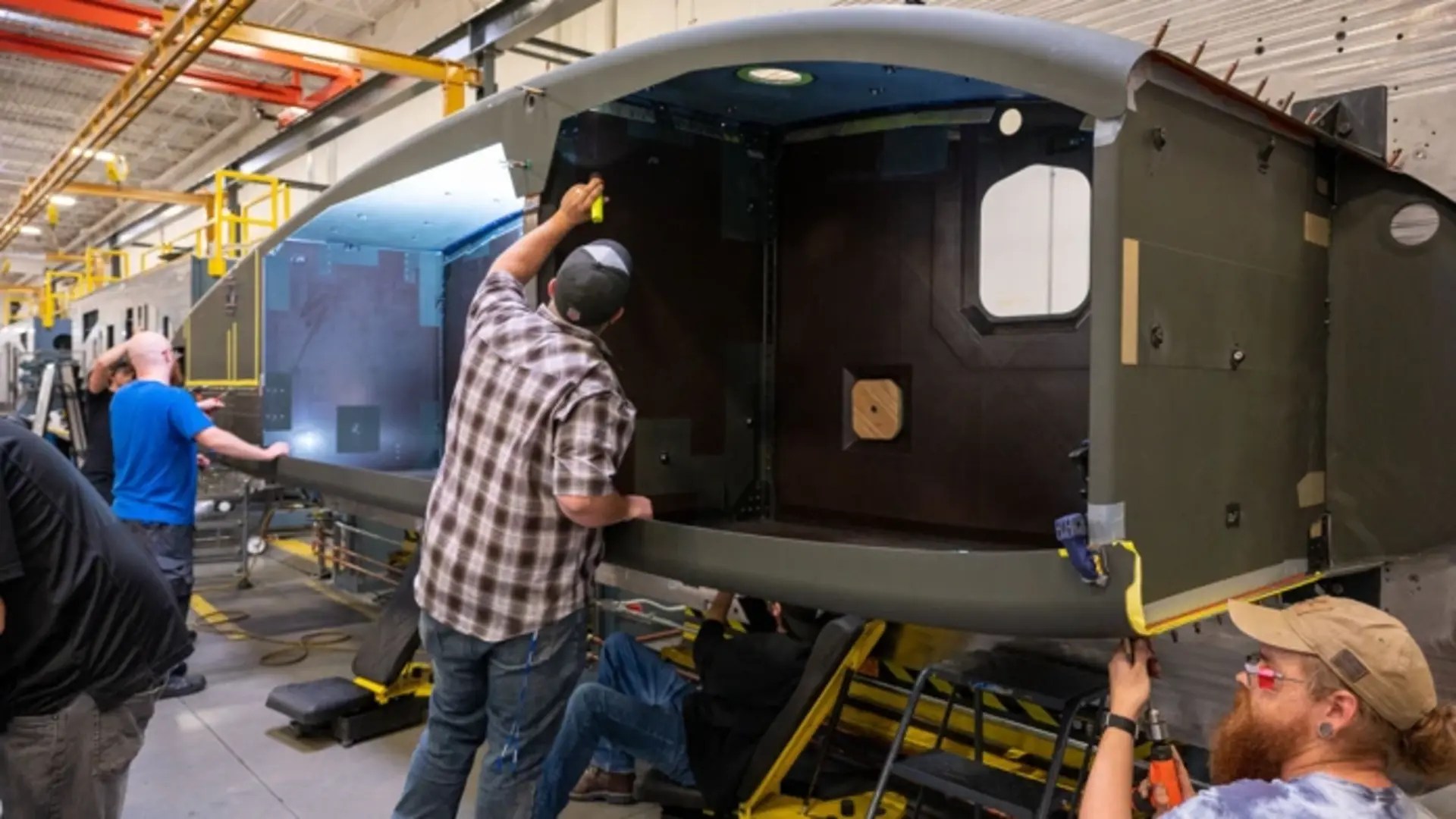
Albany Engineered Composites and A&P Technology are combining advanced braiding and resin transfer molding technologies to accelerate the development of scalable composite solutions for future aerospace and defense applications.

Albany Engineered Composites (AEC), a segment of Albany International Corp., and A&P Technology, a global leader in precision braided composite reinforcement technologies, announced a strategic collaboration to explore and develop advanced braided composite manufacturing solutions for current and next-generation aerospace and defense applications.

The collaboration will capitalize on A&P Technology’s expertise in braided composite architectures and Albany Engineered Composites’ advanced Resin Transfer Molding (RTM) manufacturing capabilities. The companies said the partnership is focused on accelerating the industrialization of lightweight, highly integrated composite structures designed to support future commercial and defense aircraft production requirements.

“Future aerospace platforms demand manufacturing technologies capable of simultaneously improving performance, reducing recurring cost and scaling to production rates the industry has not previously achieved,” said Chris Stone, president of Albany Engineered Composites in a press release.

“By combining A&P Technology’s deep expertise in advanced braiding with Albany’s industry-leading RTM capabilities, we are creating a force multiplier for our customers, accelerating the transition from innovative textile architectures to repeatable, production-ready composite solutions.”

The companies will work together on research, technology development, manufacturing process maturation, and commercialization opportunities focused on purpose-designed braided composite structures. These efforts will target current and next-generation aeroengine platforms, commercial aircraft, Advanced Air Mobility (AAM) blades and structures, Collaborative Combat Aircraft (CCA), and solid rocket motor nozzles.

Expanding advanced aerospace capabilities

Albany Engineered Composites is a rapidly growing division of Albany International Corp. that designs and manufactures advanced composite components for aerospace and defense industries. Headquartered alongside its parent company in Rochester, New Hampshire, AEC operates advanced research, development and manufacturing facilities across the globe, including major composite production sites in Salt Lake City, Utah; Boerne, Texas; and Commercy, France.

As aerospace manufacturers seek larger, more integrated composite structures, the companies said that combining braided composite preforms with automated RTM processing provides a pathway to scalable manufacturing by reducing assembly complexity and supporting higher production rates.

“It’s a privilege to collaborate with Albany given their broad and deep design and manufacturing skill and know-how built on decades of success making parts for the most demanding applications,” said Andy Head, president of A&P Technology.

“Together, we can offer composite solutions not only at an enabling rate but also with enabling cost and performance benefits. We look forward to meeting customer challenges together.”

Brent Stevenson, vice president of emerging markets and technology at Albany Engineered Composites, said that customers are seeking integrated solutions that combine multiple manufacturing processes.

“Our customers are looking beyond individual manufacturing processes; they’re looking for integrated solutions,” said Stevenson.

“Braiding and RTM are naturally complementary technologies. Together, they enable highly engineered composite architectures supporting complex geometries, efficient manufacturing and production scalability for both current and next-generation aerospace and defense platforms.”

Supporting future aerospace platforms

Through the collaboration, Albany Engineered Composites and A&P Technology aim to advance composite manufacturing solutions that combine precision braided reinforcement technologies with advanced RTM processing. The companies’ work will focus on production-ready composite structures for a range of aerospace and defense applications, including commercial aircraft, military platforms and emerging aviation technologies.

The partnership brings together two specialized manufacturing approaches as the companies pursue opportunities in research, development, process advancement and commercialization of advanced composite solutions, the press release concludes.

💾

Albany Engineered Composites and A&P Technology have joined hands to advance next-generation aerospace composites.
  •  

Chinese startup introduces next-gen optical links to connect thousands of high performing chips

As AI models continue to grow in size and complexity, chipmakers are shifting their focus from individual processor performance to the ability to efficiently connect thousands of accelerators into a single computing system. 

These highly interconnected server architectures have become a key competitive area for AI infrastructure companies, which are racing to deliver the computing scale needed for models with trillions of parameters and the growing adoption of AI agents.

According to Ding Yunfan, vice president of AI framework architecture at Biren, improvements in the performance of a single graphics processing unit (GPU) are no longer enough to meet these demands. Instead, the industry’s biggest challenge is turning vast GPU clusters into unified, seamless computing platforms capable of operating as a single system.

Architecture designed to break GPU cluster limits

Biren believes the future of large-scale AI computing depends on replacing conventional electrical interconnects with optical technology. According to Ding, traditional copper-based connections are approaching their physical limits, effectively capping today’s server architectures at around 128 GPUs, the South China Morning Post reports.

To overcome that bottleneck, the company has developed a distributed, decoupled supernode architecture built around near-packaged optics (NPO), which positions optical fibres closer to the chips to increase bandwidth and improve data transmission. Biren said the approach could enable clusters with up to 1,024 AI accelerator cards, significantly expanding the scale of computing systems needed to support increasingly demanding AI workloads.

Ding said optical interconnects are becoming essential for overcoming the scalability limits of conventional server architectures. Shanghai-based Biren is among a growing number of Chinese companies tackling these infrastructure challenges. Rivals including MetaX, Enflame and Alibaba are also developing supernode architectures to compete with Nvidia’s NVL72 and next-generation NVL144 AI platforms.

Biren’s Shanghai-based rival MetaX has introduced its Xijing S600 AI supernode, featuring a single rack that connects 64 GPUs. The company said its design reduces signal loss by removing external cabling between compute nodes, switch nodes and interconnect systems, improving efficiency for large-scale AI workloads.

Looking beyond electrical links to build larger AI supernodes

Biren is also working on new approaches to expand the scale of its AI computing systems. The company’s orthogonal hardware architecture, co-developed with telecommunications giant ZTE, uses traditional electrical connections, while Biren is simultaneously testing a prototype near-packaged optics (NPO) interconnect system. 

The chipmaker said the optical approach could eventually support supernodes with more than 512 accelerator cards, helping address the growing demand for larger and more efficient AI infrastructure.

Despite growing interest in optical networking for AI infrastructure, Ding said the semiconductor industry is still in the early stages of developing and testing optical interconnect technologies. He noted that widespread adoption will require further advances before these systems can be deployed at scale.

Furthermore, Ding emphasized that the technology still requires real-world validation before it can be widely adopted. He projected that NPO optical systems could reach mass commercial deployment around 2028, as the industry continues refining the technology and addressing remaining engineering challenges.

💾

Chinese chip startup Biren has introduced a new optical supernode architecture designed to connect thousands of AI chips in a single cluster.
  •  

US firm gets license to commercialize patented seawater uranium extraction technology

Austin-based SuperCritical Materials Corp. has secured a license from the U.S. Department of Energy (DOE) to commercialize a patented uranium and critical materials extraction technology developed by DOE laboratories.

The development is a significant step toward expanding future nuclear fuel supply through unconventional uranium resources.

Licensed technology is designed to extract uranium from seawater

Developed with support from the DOE’s Office of Nuclear Energy and led by researchers at Pacific Northwest National Laboratory (PNNL), the licensed technology is designed to extract uranium from seawater using advanced adsorbent materials. SuperCritical said the agreement grants the company rights to manufacture and deploy the technology at industrial scale in the United States, with plans to expand into allied nations in the future.

The announcement comes as the United States accelerates investment in advanced nuclear energy to meet rising electricity demand driven by artificial intelligence, data centers, advanced manufacturing and other energy-intensive industries. Industry experts have increasingly highlighted that while reactor development is advancing, expanding the upstream nuclear fuel supply chain—including uranium production, enrichment and fuel fabrication—remains a critical challenge.

According to the company, the world’s oceans contain an estimated 4.5 billion metric tons of dissolved uranium, representing a resource far larger than known terrestrial reserves. While extracting uranium from seawater has long been considered technically feasible, commercial deployment has remained limited due to economic and engineering challenges.

SuperCritical intends to commercialize DOE-developed process

SuperCritical said it intends to commercialize the DOE-developed process using advances in adsorption chemistry and materials science. In addition to uranium, the company believes the technology could also enable the recovery of other strategically important critical materials from seawater.

The company describes its long-term strategy as building infrastructure to support what it calls the “Intelligence Economy,” a period of economic growth expected to be driven by artificial intelligence, robotics, advanced computing, defense technologies and digital infrastructure. It argues that reliable nuclear energy and secure fuel supplies will be essential to sustaining this growth.

“Our objective is straightforward,” said Alexander Canon Bryan, founder and chief executive officer of SuperCritical Materials. “If the Intelligence Economy requires abundant, reliable nuclear energy, then it will also require abundant, reliable nuclear fuel.”

SuperCritical noted that its technical team includes former researchers from Pacific Northwest National Laboratory, including Dr. Gary Gill, a co-founder of the company and a scientist who has spent more than two decades researching uranium extraction from seawater.

The company said commercial deployment of the technology could contribute to strengthening domestic nuclear fuel supply chains while supporting broader U.S. efforts to improve energy security, expand critical materials production and reduce dependence on imported strategic resources.

The licensing agreement also aligns with ongoing federal initiatives aimed at strengthening America’s nuclear industrial base and increasing domestic production of critical minerals and materials.

Although seawater uranium extraction has been demonstrated in research settings, analysts note that large-scale commercialization will depend on achieving competitive production costs and successfully scaling the technology for industrial use. Industry observers view the DOE licensing agreement as an important milestone toward evaluating the commercial viability of the process.

  •  

MIT: Building renewables in the wrong places could raise blackout risks by 2050

MIT researchers have developed a new framework that could help energy planners decide where to build renewable energy projects as climate change puts growing pressure on power grids.

The study combines fine-scale meteorology with detailed simulations of energy infrastructure. Researchers found that where new energy projects are built could significantly affect whether future power systems can meet demand reliably.

The team applied the framework to decarbonized energy systems in New England and Texas. Their analysis found that systems designed around historic climate conditions could experience up to a fivefold increase in energy shortfalls by 2050.

By incorporating future climate conditions into energy planning, however, the researchers found that both regions could improve grid resilience at little or no additional cost.

“As we mitigate climate change with renewables, we can also adapt to climate change by using future weather projections in our power system planning, and the extra costs of that adaptation are, at least in this study, not much,” said senior author Michael Howland, an MIT professor.

Climate change adds new risks to power grids

Electricity systems are already changing rapidly as demand rises from trends such as artificial intelligence and transportation electrification, while falling costs drive greater adoption of wind and solar power.

But renewable generation and electricity demand are both affected by weather, creating new challenges as climate conditions change.

“This study explores the joint, simultaneous impacts on multiple components of the energy system, similar to compound events studied in climate science,” Howland explained.

“An extreme weather event can impact wind and solar generation and electricity demand all at the same time. Our hypothesis is that’s likely to be the biggest impact we’ll see from climate change on energy systems,” he added.

The study found that climate change could increase energy failures by as much as 500% by 2050 if future climate conditions are not considered when siting and designing energy infrastructure.

Where wind and solar are built matters

The researchers found that locations best suited for renewable projects under future climate conditions can differ meaningfully from those identified using historic weather data.

“We are telling people where you put your wind and solar matters a lot for your ability to deliver energy when you need it,” Qiu explained.

“We need to think more about the when and where of adding renewables rather than only focusing on adding overall capacity,” he added.

In New England, climate-related disruptions increased the need for solar capacity and transmission lines close to major demand centers.

In Texas, risks were primarily driven by transmission constraints. Climate-informed designs prioritized wind farms in West Texas to better align renewable generation with future demand patterns.

Researchers seek faster planning tools

The current framework relies on expensive, high-resolution models, making it impractical for grid operators to use routinely today.

The researchers hope to develop faster models that could make climate-informed planning easier to apply.

“This study shows the opportunity and the need,” Howland says. “There are risks to not adapting our system, but if we do adapt our system, there could be big opportunities that are not costly.”

The study was published in Natural Energy.

  •  

US: 80% import reliance of power transformers delays hydropower infra upgrades

The United States is facing nine major supply chain challenges that could delay the rehabilitation of its hydropower infrastructure, according to a new report from the National Laboratory of the Rockies (NLR).

The report has examined the difficulties hydropower operators encounter when upgrading or replacing large power transformers (LPTs).

These custom-built devices raise the voltage of electricity generated by hydropower turbines, allowing it to travel efficiently across long-distance transmission networks.

Their importance extends beyond hydropower, as more than 90% of the electricity consumed in the United States passes through high-voltage transformers at some stage.

Transformer deliveries can take five years

One of the most serious challenges identified in the report is the time required to procure new transformers.

A typical LPT rated at 100 megavolt-amperes takes approximately 2.5 to three years to acquire. Lead times for extra-high-voltage units can extend to five years because only a limited number of facilities worldwide can manufacture them.

Transformer prices sharply increased by approximately 80% in 2025 compared with 2021 levels, according to the report. A single unit can now cost as much as $10 million.

These pressures come as demand rises across the power sector. Although domestic manufacturing and assembly capacity has expanded in recent years, the report found that it has not grown quickly enough to meet current requirements.

US manufacturers also depend heavily on international suppliers. Approximately 80% of the raw materials used in domestic LPT production, including grain-oriented electrical steel and refined copper, are imported.

Changing trade conditions could further increase the baseline costs of copper and steel, adding uncertainty to transformer procurement.

Remote dams create transportation problems

Delivering an LPT to a hydropower facility presents another layer of difficulty. Many dams are located in isolated regions surrounded by rugged terrain, making them considerably harder to reach than conventional power facilities.

Transformers require specialized vehicles and heavy-duty trailers capable of carrying oversized loads. However, the United States has a limited domestic fleet of such equipment. Transportation routes must also be planned carefully and require special permits.

Permitting and regulatory procedures can produce additional delays, particularly when an operator must remove an existing transformer before installing its replacement.

Federal contracting rules and domestic-content requirements could also create near-term bottlenecks while US production capacity remains limited.

Report could guide domestic investment

The NLR study builds on the US Department of Energy’s broader Hydropower Supply Chain Gap Analysis, which previously identified five gaps affecting the domestic industry.

DOE’s Hydropower and Hydrokinetic Office funded the follow-on study to provide a closer examination of the LPT supply chain. Researchers used feedback from hydropower industry participants to define the nine challenges.

The findings could help shape federal policies, incentives, lending programs, workforce initiatives and investments intended to expand US transformer production.

Strengthening the domestic supply chain will be important for new construction as well as upgrades, refurbishments and relicensing work at existing facilities.

Hydropower currently provides more than 6% of total US electricity generation, making the availability of critical transformers essential to its continued contribution to the grid.

The report is titled as Large Power Transformer Supply Chain Gap Analysis and Domestic Content Strategies for Hydropower Rehabilitation.

  •  

US firm unveils sensors to track military personnel and supplies at tactical edge

Rune Technologies has unveiled TyrSense, a new line of ruggedized sensors designed to help military units track personnel, casualties, and supplies in contested environments where conventional communications may be unavailable.

The hardware marks the company’s first expansion beyond software, extending its TyrOS logistics platform directly to personnel operating at the tactical edge.

The initial TyrSense products use small, durable NFC tags that can be attached to personnel or cargo. When scanned during a handoff, the system records the location and status of the individual or pallet in TyrOS.

Unlike conventional tracking systems, the location is determined by the node where the scan takes place rather than through GPS.

The tags can also operate without an active cloud connection or satellite signal, allowing units to continue recording movements in denied, degraded, intermittent, or low-bandwidth environments.

Once connectivity returns, the collected information can synchronize with TyrOS.

Aim to replace manual military tracking

Military units continue to rely heavily on manual processes to account for personnel and supplies, according to Rune.

Information about available resources is often maintained through whiteboards, paper manifests, and manually compiled reports. These systems can become difficult to maintain when units relocate or lose network connectivity.

TyrSense is initially designed around three military workflows that commonly depend on manual reporting: personnel accountability, medical operations, and cargo tracking.

For personnel, scanning a tag allows units to update an individual’s duty status, reducing the need for the daily manual process of compiling accountability information.

In medical operations, the system can record each transfer of a casualty as the individual moves from the point of injury through successive levels of care.

For logistics, tags attached to pallets can register shipments as they move through different nodes across a military supply network.

Built to operate when battlefield networks fail

Rune has designed the sensors around conditions where military personnel may have limited or no communications access.

Because individual scans can be registered locally at the tactical edge, units can continue collecting information even during network disruptions.

“A tag has to work in a vehicle and with no signal, because that’s where these counts happen,” said Peter Goldsborough, Co-Founder and Chief Technology Officer of Rune Technologies.

“We built TyrSense so the scan registers at the edge and reaches TyrOS the moment a connection is there. The hardware is deliberately simple. The value is what TyrOS does with the data,” he added.

The approach allows TyrOS to receive updated information once connectivity becomes available rather than requiring personnel to maintain continuous access to remote infrastructure.

Rune plans sensors for fuel and water

TyrSense builds on the company’s deployment of TyrOS with operational military units over the past year.

During Balikatan 26 in the Philippines, the software provided tactical commanders with information on food, water, fuel, and personnel supporting thousands of troops across a Joint Task Force, according to the company.

Rune is also the sole logistics provider for the US Marine Corps’ Project Dynamis and is the only application selected by both prime contractor teams participating in the US Army’s Next Generation Command and Control program.

The company now plans to expand the TyrSense hardware portfolio beyond NFC-based tracking.

  •  

MIT’s GIFT framework improves CAD designs by turning its failures into training data

Creating a realistic 3D model from a simple image remains surprisingly difficult for artificial intelligence. 

While AI can generate impressive pictures, producing the precise CAD code engineers use to design aircraft parts, cars, and consumer products is far more challenging. Even a small mistake can make a design unusable. 

Now, researchers from MIT, IBM, and Red Hat have developed a framework that significantly improves the ability of AI systems to turn 2D images into functional CAD programs, producing more accurate designs while reducing inference computation by about 80 percent.

This new research work tackles one of the biggest obstacles in AI-driven engineering, which is the shortage of high-quality CAD training data. Existing image-to-CAD systems need vast numbers of examples linking 2D images to working CAD programs, but creating those datasets is expensive and labor-intensive. 

Instead of relying on more human-created data, the new approach teaches AI using the mistakes it already makes. “We want to obtain data augmentation that is informed by the model itself,” lead study author and AI researcher Giorgio Giannone said.

Turning failed designs into training material

The team’s framework, called Geometric Inference Feedback Tuning (GIFT), works with vision-language models that convert a 2D image and text description into Python code that can be executed in CAD software to create a 3D object.

To understand where a model struggles, GIFT asks it to solve the same CAD problem multiple times in parallel. Some outputs are correct, some are close to the target design, and others are much further away. 

According to the researchers, these ‘near-misses’ are the most valuable because they reveal exactly what the model does not yet understand.

The system executes each generated CAD program and compares the resulting 3D geometry with the target using a standard engineering metric known as Intersection over Union (IoU), which measures how closely two 3D shapes match. 

Rather than discarding imperfect outputs, GIFT identifies those that are close to correct and uses them to generate new training examples.

Giannone explained, “If we sample the model 10 times and it generates 10 correct answers to the same problem, then there is not much for it to learn. We care about the in-between cases, where the model might only solve the problem 50 percent of the time.”

Teaching the model how to fix its own errors

GIFT improves the model through two complementary techniques. The first, called GIFT-REJECT, keeps alternative CAD programs that generate the correct geometry even if the code differs from the original reference solution. 

Traditional AI training often assumes there is only one correct CAD program for each object, even though engineers can create the same part in many different ways. By exposing the model to multiple valid solutions, GIFT broadens its understanding of how CAD designs can be constructed.

The second method, GIFT-FAIL, focuses on imperfect outputs. The system takes a nearly correct 3D model generated by the AI, converts it back into an image, and pairs that image with the correct CAD program. By doing so, it creates new examples that effectively teach the model how to recover from specific mistakes.

More importantly, this process requires no human intervention. The framework automatically identifies errors, creates new training data, and uses that information to improve the model.

The researchers also designed GIFT around a technique known as inference-time scaling. Instead of retraining an entire AI model, which can be extremely expensive, the system improves performance during generation. 

Rather than discarding the extra computation spent searching for better CAD programs, GIFT converts successful and near-successful attempts into new training examples that can later be used to improve the model through fine-tuning.

Moreover, users can decide how much computation they want to spend depending on their budget and time constraints.

Better CAD designs with a fraction of the computing power

When evaluated on the GenCAD-Code dataset, models enhanced with GIFT achieved a 12 percent improvement in geometric accuracy compared with a strong supervised-learning baseline. 

The framework also reduced the inference computation needed to achieve comparable performance by about 80%.

“With GIFT, we started with geometry because with engineering problems, if the geometry of a 3D shape is not correct, nothing else will be correct, but there are many other aspects to consider,” Giannone said. 

The system’s ability to learn from its own mistakes could help accelerate product development by making AI-generated CAD models more reliable. 

Engineers could move more quickly from sketches to testable 3D designs, reducing development costs, shortening design cycles, and exploring a wider range of ideas without creating large amounts of new training data.

The researchers say this is only the beginning. So far, GIFT focuses on generating correct geometry, but future versions will aim to teach AI how to design parts that are not only accurate in shape but also easier to manufacture and better suited for real-world performance. 

The study is published on arXiv.

  •  

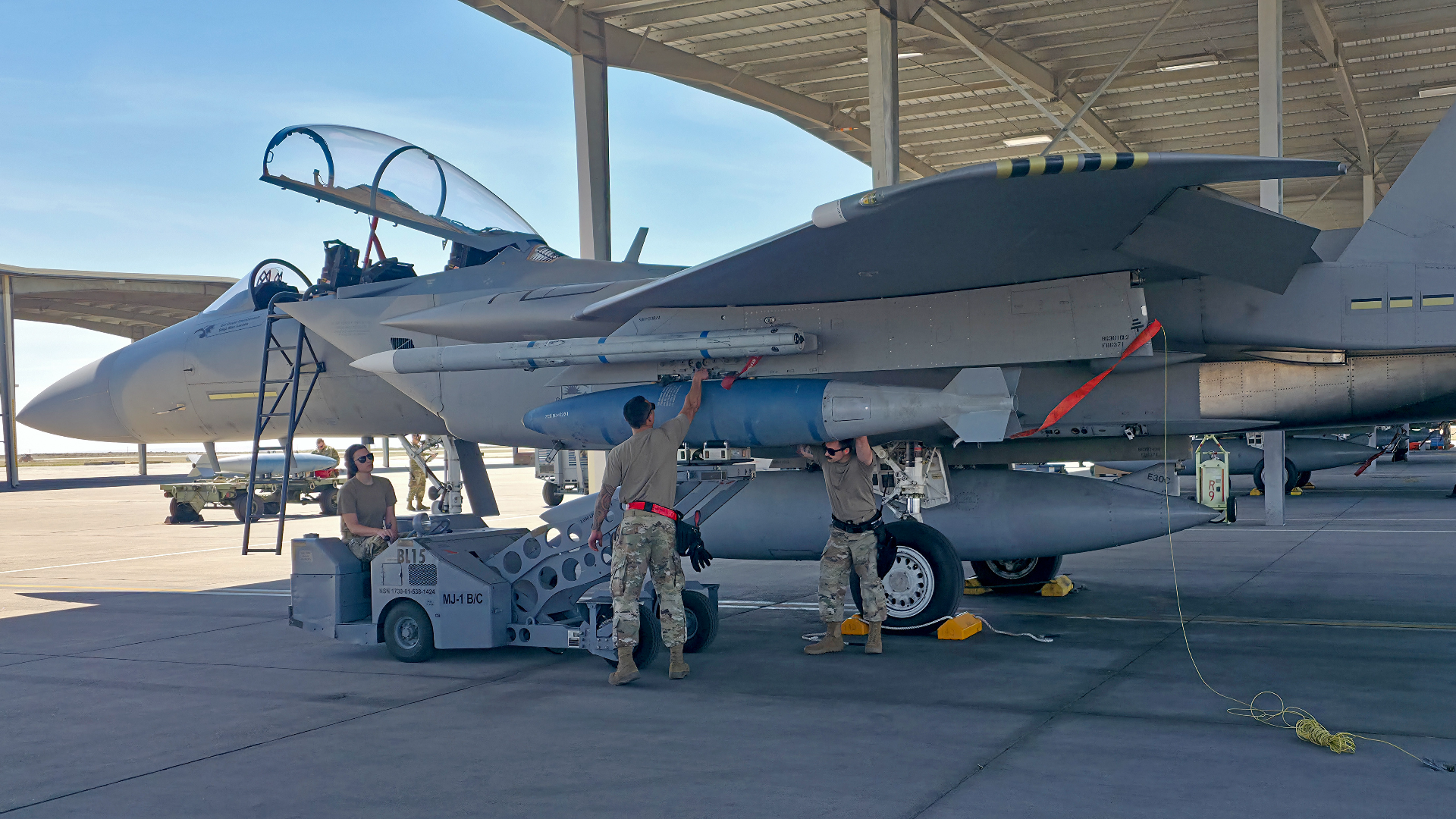
US Air Force crews drop 36 practice bombs to validate F-15EX strike capability

The US Air Force’s 142nd Wing has completed its first live bomb-dropping exercise with the F-15EX Eagle II, marking a key milestone in expanding the aircraft’s operational capabilities. In early May, pilots, maintainers, and munitions specialists traveled to Mountain Home Air Force Base in Idaho to carry out the training mission.

During the exercise, crews loaded 500-pound BDU-50 and 2,000-pound BDU-56 practice bombs onto the aircraft before releasing them over the Mountain Home bombing range. Although these training munitions closely resemble live bombs, they are filled with concrete instead of explosives, allowing crews to safely practice real-world weapons employment.

While the F-15EX has previously undergone weapons testing with the 85th Test and Evaluation Squadron at Eglin Air Force Base in Florida, this marks the first time an operational F-15EX unit has successfully loaded and dropped bombs as part of its mission readiness training.

F-15EX’s new combat role required months of pilot training

The F-15EX Eagle II is designed to do far more than its predecessor. Although it closely resembles the aging F-15C, the newer aircraft is built as a multirole fighter, capable of carrying out both air-to-air and air-to-ground missions. Unlocking that expanded capability, however, required months of preparation and specialized training across the 142nd Wing.

A key part of that effort was led by Maj. Jesse Loya, one of only three pilots in the wing with prior experience in air-to-ground operations. Together, the three completed a nine-month training program focused on the tactics and technical aspects of delivering precision-guided munitions. They then developed a training curriculum to teach the rest of the wing’s pilots the fundamentals of air-to-ground operations, laying the foundation for the unit’s first operational bomb-dropping mission.

According to Loya, the training at Mountain Home Air Force Base served as a stepping stone toward preparing pilots to safely employ air-to-ground weapons. The program focused on building the skills needed to handle ordnance while following a much shorter timeline than the traditional nine-month qualification course. 

He said the ability to complete the training so quickly reflected the experience and capabilities the pilots had developed throughout their careers, allowing the wing to accelerate the F-15EX’s transition into a multirole combat aircraft.

Weapons loaders play key role in prepping F-15EX

Preparing the F-15EX Eagle II for its first bomb-dropping mission required extensive training from weapons crews as well as pilots. Tech. Sgt. Tyler Phelps, one of the 142nd Wing’s experienced weapons loaders, traveled to Nellis Air Force Base in Nevada earlier this year to train with F-15E aircraft and earn certification to load bombs.

After returning to Oregon, Phelps and other certified Airmen trained the rest of the weapons team ahead of the Mountain Home mission. Seeing the bombs loaded onto the F-15EX marked the culmination of months of preparation and a major milestone for the 142nd Wing.

The training mission involved 10 sorties, during which crews dropped a total of 24 BDU-50 and 12 BDU-56 practice bombs. The operation was completed without any safety incidents, and all missions received satisfactory evaluations, marking a major step forward in the wing’s transition to the multirole capabilities of the F-15EX.

The next phase in the F-15EX’s air-to-ground certification process will involve loading and dropping live munitions. The crew is scheduled to conduct that mission at Nellis Air Force Base at the end of August, bringing the wing one step closer to full air-to-ground operational capability.

💾

The Oregon Air National Guard's 142nd Wing has completed its first live bomb drop with the F-15EX Eagle II.
  •  

Electric aircraft advance as Vertical Aerospace plans first public eVTOL flight demonstration

British aerospace company Vertical Aerospace is set to conduct the first public electric vertical take-off and landing (eVTOL) demonstration flights at the upcoming Farnborough International Airshow. 

The event represents another milestone in the company’s journey toward certification and the eventual launch of commercial electric aircraft services.

The demonstrations come at a key stage in the company’s development, Vertical Aerospace noted. In recent months, the company has unveiled its Valo aircraft, completed successful piloted transition flights, strengthened its financial position, expanded its global technology partnerships, progressed its hybrid-electric defense strategy, and continued advancing its certification program.

Valo eVTOL moves closer to commercial operations

Following successful demonstrations of the aircraft’s core capabilities, Vertical Aerospace is now shifting its focus toward the next stage of development, with efforts centered on certification, industrialization and preparing for commercial operations.

Alongside public piloted flight demonstrations of its full-scale prototype, the company will also showcase its full-scale commercial Valo aircraft model, offering visitors a closer look at the technology behind its next-generation electric aircraft.

According to Stuart Simpson, CEO of Vertical Aerospace, the company arrives at Farnborough with the key building blocks for its next phase already in place. He said Vertical has transformed over the past year by launching its Valo aircraft, achieving piloted transition flights, strengthening its financial position and expanding its industrial ecosystem, while continuing to prove the technology.

“Every milestone we deliver reduces risk, strengthens our competitive position and brings us closer to building one of the world’s leading electric aerospace companies,” Simpson noted. A major highlight of Vertical Aerospace’s presence at the Farnborough International Airshow will be its planned flight demonstrations, which are set to mark the first public eVTOL aircraft demonstrations at the event.

Company targets key certification and production milestones after expanding flight tests

The company intends to conduct demonstration flights throughout the show, subject to approved flight conditions. The planned flights follow the UK Civil Aviation Authority’s recent expansion of Vertical’s Permit to Fly, allowing the company to carry out public demonstrations beyond its Flight Test Centre at Cotswold Airport for the first time.

Following the expanded flight approval, Vertical’s test pilots have successfully operated the aircraft across multiple locations, including RAF Brize Norton, RAF Benson, Blackbushe Airport and Farnborough Airport. These flights have expanded the company’s test program, providing valuable experience across different operating environments.

The company is also targeting several important program milestones that will support the development, production, and commercial rollout of its aircraft. These include completing the Critical Design Review (CDR) by the end of 2026, which will establish the certifiable design baseline for the aircraft and enable the production and testing of certification-conforming models. 

Furthermore, the UK firm plans to bring its early production aircraft assembly facility online in Q3 2026 and expand the Vertical Energy Centre in Q4 2026 as part of its industrialization efforts. In addition, Vertical expects to select a long-term turbogenerator supplier during 2026, ahead of beginning hybrid-electric flight testing in the first half of 2027.

💾

UK-based Vertical Aerospace will conduct public demonstration flights of its Valo eVTOL aircraft at the Farnborough International Airshow.
  •  
❌