
❌

Reading view

Self-healing contact lenses repair scratches with just one hour of UV light exposure

Scratched contact lenses often mean an expensive replacement, even if the damage is minor. Researchers in South Korea have now developed a self-healing material that can repair those tiny imperfections using just one hour of ultraviolet light, opening the door to more durable soft contact lenses.

The new hydrogel-based material restores itself at room temperature and could eventually help wearers extend the life of their lenses instead of discarding them after everyday wear. The technology also combines a protective coating that resists scratches and bacteria, adding another layer of durability for future designs.

UV repairs damage

Researchers Jung-Hyun Choi and Byoung-Ki Cho created the material using a hydrogel, a water-rich polymer network already widely used in soft contact lenses. They redesigned the structure so that ultraviolet light, instead of heat, activates the repair process.
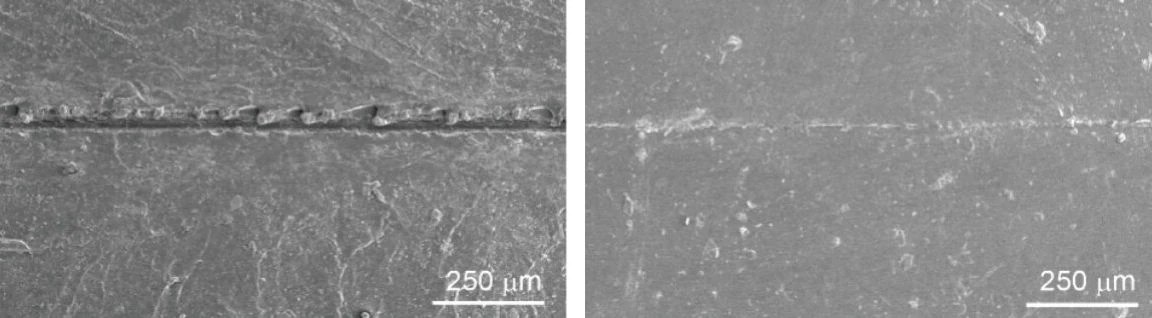
One hour of UV light nearly erases scratches in this self-healing contact lens material. Credit – ACS

Exposure to UV light with a wavelength of 365 nanometers for one hour triggers a chemical reaction known as disulfide exchange. During that process, sulfur bonds temporarily break apart and reconnect with neighboring atoms, allowing the damaged polymer network to gradually rebuild itself.

The team had previously demonstrated a heat-driven self-healing hydrogel, but that approach required several hours of warming. Extended heating dries out contact lenses and makes them unsuitable for everyday use, making room-temperature repair a more practical alternative. Laboratory tests showed the healing process restored scratched samples with high efficiency, leaving behind a nearly seamless surface instead of visible damage.

Protective coating adds strength

The researchers also coated the hydrogel with another polymer designed to reduce bacterial growth and shield the surface from abrasion. That extra layer proved effective during durability testing. Even after repeated contact with fine-grit sandpaper, the coated material maintained its clarity. Transparency declined by only about 2%, suggesting that routine scratches would have little effect on vision quality.

The hydrogel also retained water and displayed mechanical characteristics comparable to those expected from commercial soft contact lenses. Those properties are critical because comfort depends on a lens remaining hydrated throughout the day.

According to the researchers, users could eventually repair minor damage with UV lamps already found in many homes, including devices used for cleaning or curing gel nail polish. The repair process can also be repeated, allowing the material to recover from multiple instances of wear.

More testing ahead

Several steps remain before self-healing contact lenses reach consumers. The material must undergo additional stability evaluations and regulatory review to confirm it can withstand long-term use and repeated repair cycles.

If those hurdles are cleared, the technology could reduce waste and lower replacement costs for millions of contact lens users. Instead of treating every scratch as the end of a lens’s life, future designs may be able to recover from everyday damage and stay in service much longer. The project received funding from the National Research Foundation of Korea.

The study titled “Room-Temperature UV-Induced Self-Healing Hydrogels with Antifouling and Antiscratch Surfaces for Soft Contact Lenses” is published in the journal ACS Applied Polymer Materials.
  •  

South Dakota uranium project clears key federal hurdle for 20-year license renewal

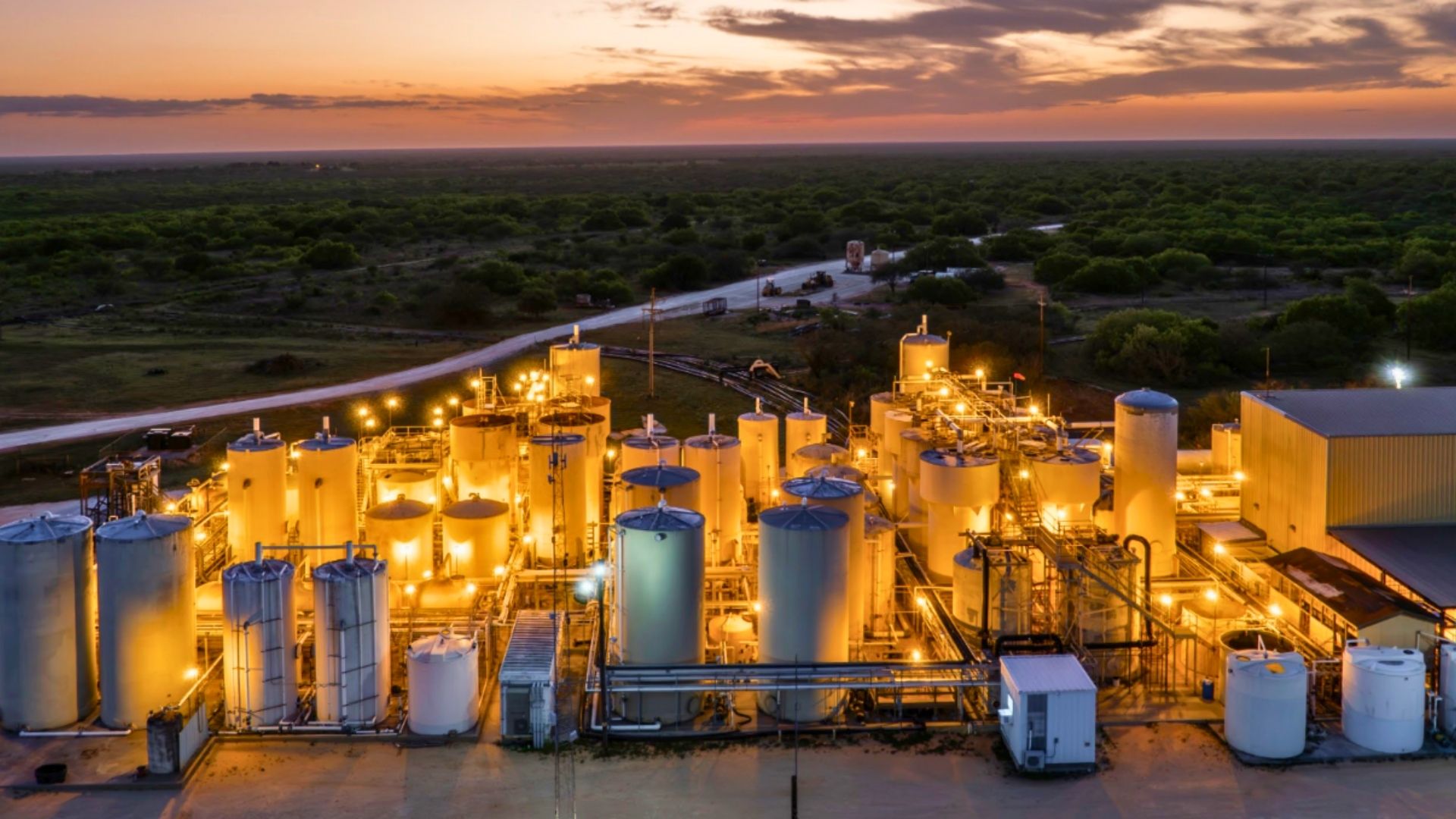
A major uranium project in South Dakota has cleared another regulatory hurdle, bringing it closer to supplying domestic nuclear fuel as the United States works to strengthen its critical mineral and energy supply chains. The latest decision marks another step toward advancing one of the country’s key uranium development projects.

enCore Energy said the U.S. Nuclear Regulatory Commission completed an Environmental Assessment and issued a Finding of No Significant Impact for the Dewey Burdock Uranium Project. The decision supports renewal of the project’s Source Materials License for another 20 years, leaving a safety evaluation as the final major review before the license can move forward.

Final review remains

Federal regulators stated they will renew the license if the project continues to satisfy construction and operational safety requirements for its planned in-situ recovery facility. enCore, through its subsidiary Powertech USA, has already submitted the information required for that review.

The agency also approved a Programmatic Agreement covering compliance with the National Historic Preservation Act. The framework establishes a phased process to evaluate and protect cultural and historic resources as development advances, allowing engineering work and environmental oversight to progress under a defined process.

William M. Sheriff, executive chair of enCore Energy, welcomed the decision and called the environmental findings an important step toward renewing the project’s operating license. He said the company supports the agency’s view that the development could deliver economic benefits during construction and long-term operations. Sheriff added that enCore remains focused on safety and environmental stewardship throughout the project’s life cycle.

ISR technology in focus

Dewey Burdock spans 10,580 acres in South Dakota and ranks among the country’s advanced-stage uranium developments. Most of the site sits on private land, with a smaller portion managed by the Bureau of Land Management.

The project plans to produce yellowcake using in-situ recovery technology, which circulates an oxygen- and water-based solution through underground ore bodies instead of excavating large open pits. Engineers favor the approach because it minimizes surface disruption and relies on established production methods that have operated for decades across the uranium industry.

The Bureau of Land Management recently authorized construction of access roads, groundwater monitoring wells, and overhead power infrastructure on public land within the project area. Those approvals allow crews to begin building essential site infrastructure before full production activities start.

Dewey Burdock also joined the Fast-41 permitting program last year, giving it access to an accelerated federal review process reserved for priority infrastructure and critical mineral projects. The U.S. Nuclear Regulatory Commission serves as the lead agency for that effort, which aims to improve coordination across multiple federal agencies without reducing regulatory standards.

If the final safety review concludes successfully, the project will secure a renewed 20-year license and move closer to commercial uranium production. The yellowcake produced at the site would supply fuel used by commercial nuclear power plants, supporting a broader federal push to expand domestic uranium production and reduce dependence on foreign sources for a material that remains central to the nation’s energy strategy and long-term national security objectives.

  •  

World’s fastest tactical launch delivers military spacecraft to orbit under 17 hours

Rocket Lab has set a new benchmark for military responsive space operations after launching the U.S. Space Force’s VICTUS HAZE mission just 16 hours and 42 minutes after receiving a formal launch order. The turnaround beat the previous record by more than 10 hours and showed how quickly a defense spacecraft can move from standby to orbit.

The mission also introduced a different operating model for tactical space missions. Rocket Lab developed the spacecraft, carried out the launch, and now controls operations in orbit, giving the U.S. Space Force a single provider for the entire effort.

Faster launch timeline

Responsive space programs are designed to place satellites into orbit on short notice during a crisis. VICTUS HAZE tested that concept under demanding timelines and cleared several milestones well ahead of schedule.

Rocket Lab’s Guidance, Navigation and Control team needed only about four hours to finalize trajectories, update flight software and coordinate ground stations after receiving the launch notice.

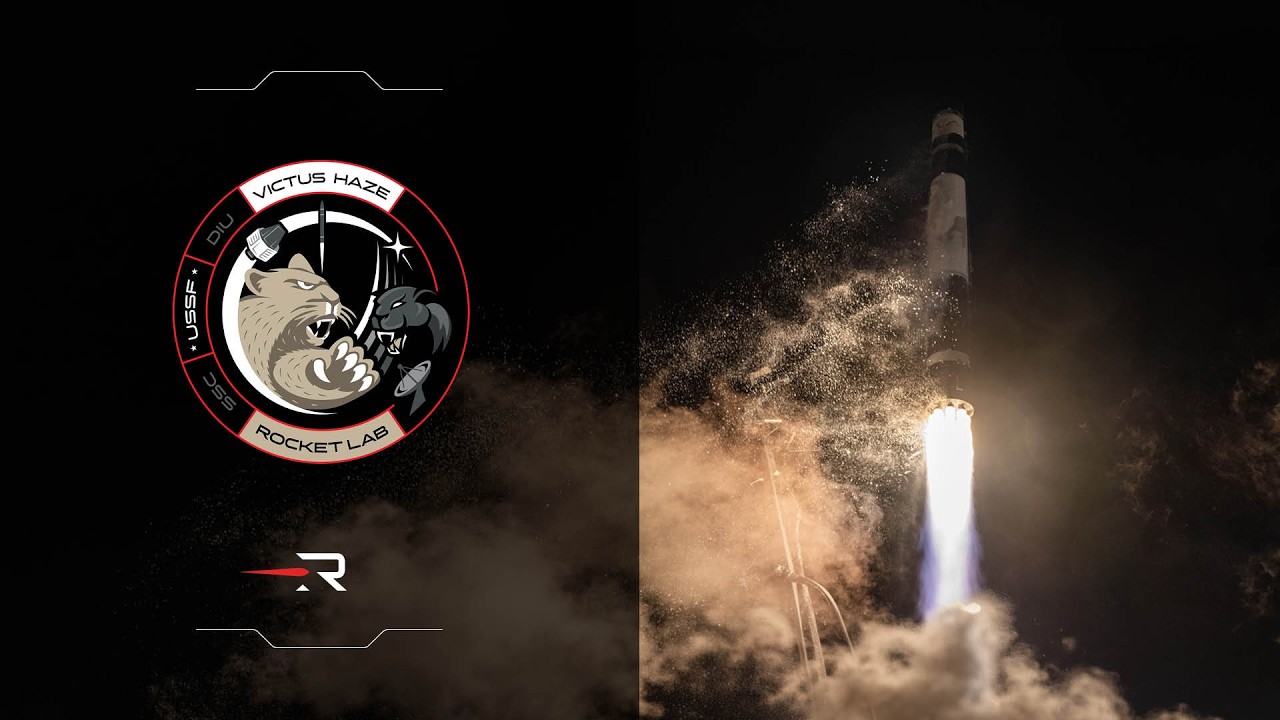
The Space Force called, and we launched. From call up to lift-off in just 16 hours 42 minutes 🎯 Rocket Lab has made history – the fastest response time ever for a @USSF_SSC Tactically Responsive Space mission. pic.twitter.com/yJyhFxbpT3
— Rocket Lab (@RocketLab) June 22, 2026

Electron lifted off from Launch Complex 1 in New Zealand and successfully deployed the company’s Pioneer spacecraft. Engineers completed spacecraft commissioning in 37 hours and 36 minutes, beating the program’s 72-hour requirement by more than 34 hours.

Spacecraft begins pursuit

The Pioneer spacecraft has already started Rendezvous and Proximity Operations in low Earth orbit. The mission simulates a scenario in which a maneuverable satellite rapidly approaches and inspects another spacecraft that is not cooperating.

Such missions could strengthen U.S. military space awareness during emergencies. A satellite launched on short notice can quickly pursue an object in orbit and provide military planners with near real-time intelligence about its movements and activities.

Rocket Lab founder and CEO Sir Peter Beck described the integrated approach as a major step forward for responsive space missions. “Our launch-plus-spacecraft integrated mission capability is transformative for responsive space,” Beck said. He added that having spacecraft ready for immediate deployment allows the United States and its allies to reinforce national security space operations far more quickly.

Single provider strategy

VICTUS HAZE is the first Tactical Responsive Space mission to rely on a single prime contractor for the entire effort. Rocket Lab developed the Pioneer spacecraft before carrying it into orbit on Electron. The company now directs the mission from the ground as the satellite performs its assigned operations.

According to U.S. Space Force Lt. Col. Lincoln Miller, the mission completes the program’s “crawl, walk, run” demonstration phase and shows teams can field sophisticated space capabilities within days instead of months. He said Rendezvous and Proximity Operations remain challenging under compressed timelines. Commissioning the spacecraft ahead of schedule and immediately starting orbital maneuvers demonstrates the ability to respond rapidly during a crisis.

Rocket Lab credits that speed to its vertically integrated manufacturing approach. The Pioneer spacecraft relies on key hardware and software produced inside the company instead of a network of outside suppliers. That level of control shortens development schedules and eliminates many procurement delays that slow traditional defense programs. As a result, a mission that would normally require years of planning moved from launch notification to orbit in less than 17 hours, establishing a new benchmark for rapid military space access.

💾

Rocket Lab's VICTUS HAZE mission launched in 16 hours as the Pioneer spacecraft began rapid orbital operations.
  •  
❌