Login

US Army selects edge-first software to maintain battlefield supply during jamming
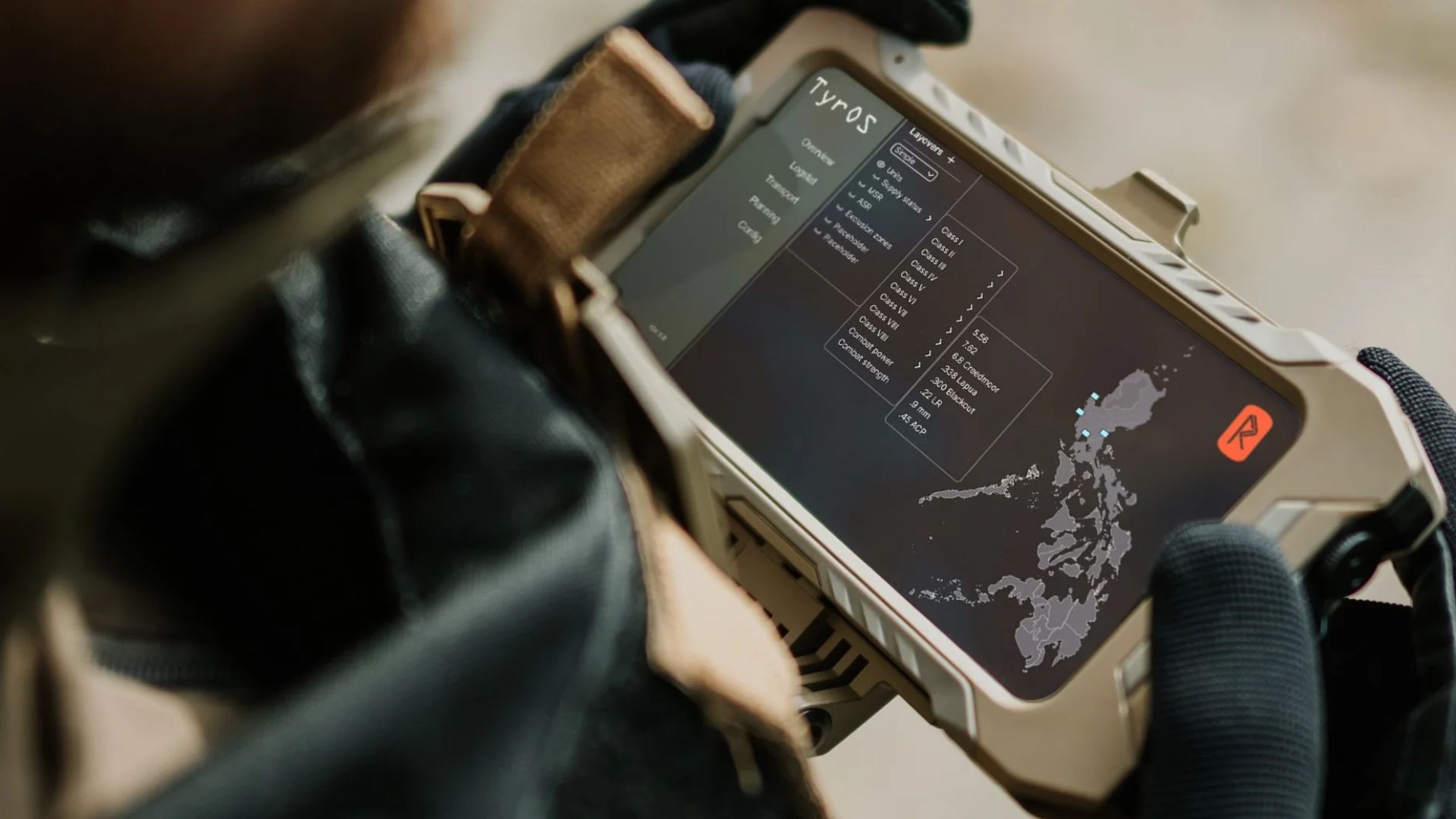
The United States Army (the Army) has awarded Rune Technologies a $99 million Indefinite Delivery, Indefinite Quantity (IDIQ) contract for its proprietary TyrOS platform.
The IDIQ framework will run for five years, during which authorized Department of War (DoW) organizations can place orders for the software and associated services through the contract, up to a maximum cumulative value of $99 million.
“Established by the Army and available for broader DoW use, the vehicle enables Soldiers, Marines, Sailors, Airmen, Guardians, Commanders, Sustainers, acquisition professionals, and contracting teams to rapidly access and field-proven software solutions at the speed of operations,” Rune explains in an official press release.
This differs from “normal” military procurement in that it offers a potential rapid-adoption pathway for interested parties. For anyone even remotely familiar with military purchases (which can take many months to years), this could reduce procurement timelines from many months to just days.
But what is the big deal with the new software? Well, Rune’s TyrOS is akin to a mix of Amazon, Google Maps, inventory management, an artificial intelligence (AI) chatbot, and predictive analytics in one place. In this sense, it acts a bit like an AI-assisted logistics operating system.
Windows for war
Windows for war, if you like. “Logistics is the distribution layer of military power, and it has to move at the speed of the fight,” said David Tuttle, Co-Founder and CEO of Rune Technologies.
“This contract gives sustainment teams across the Army and joint force a single, repeatable way to deploy TyrOS and other Rune capabilities into their units, while reducing acquisition friction and accelerating capability delivery to the tactical edge,” he added.
The system not only tells users that an asset needs resupply but can also identify potential bottlenecks and recommend alternative courses of action.
So, the AI will go far beyond something simple like “fuel will run out here in X days.” It will help users find alternative sources, reroute convoys to assist, etc., before a crisis occurs.
Beyond predictive modeling, one of TyrOS’ strengths, Rune explains, is that it uses a native large language model (LLM) as part of its interface. So, instead of clicking through menus, a user can simply ask a question using natural language to get the answer they want.
Say they ask something like “show every artillery battalion that will be below 30% ammunition within the next 72 hours.” The AI converts that into database queries and produces an answer.
Proactive, not reactive
But it gets better than that. As Rune explains, its software features a specially designed AI agent called Saga. This sophisticated piece of software effectively acts as an automated AI logistician in the system.
To this end, it is able to autonomously detect issues and then generate recommendations for action. A human still approves the decision, but the planning work is largely automated.
Yet another innovation is something called “edge-first architecture.” Normally, AI systems rely heavily on cloud servers, which, in turn, rely on stable and reliable telecommunications.
But satellite link failures, network jamming, and physical severing of telecoms are something of an occupational hazard in war. Edge-first means the AI runs locally on military computers or servers.
So even if disconnected from headquarters, a brigade can still use the system. Not too shabby.