
❌

Reading view

US firm boosts maritime security with long-range nuclear activity detection technology
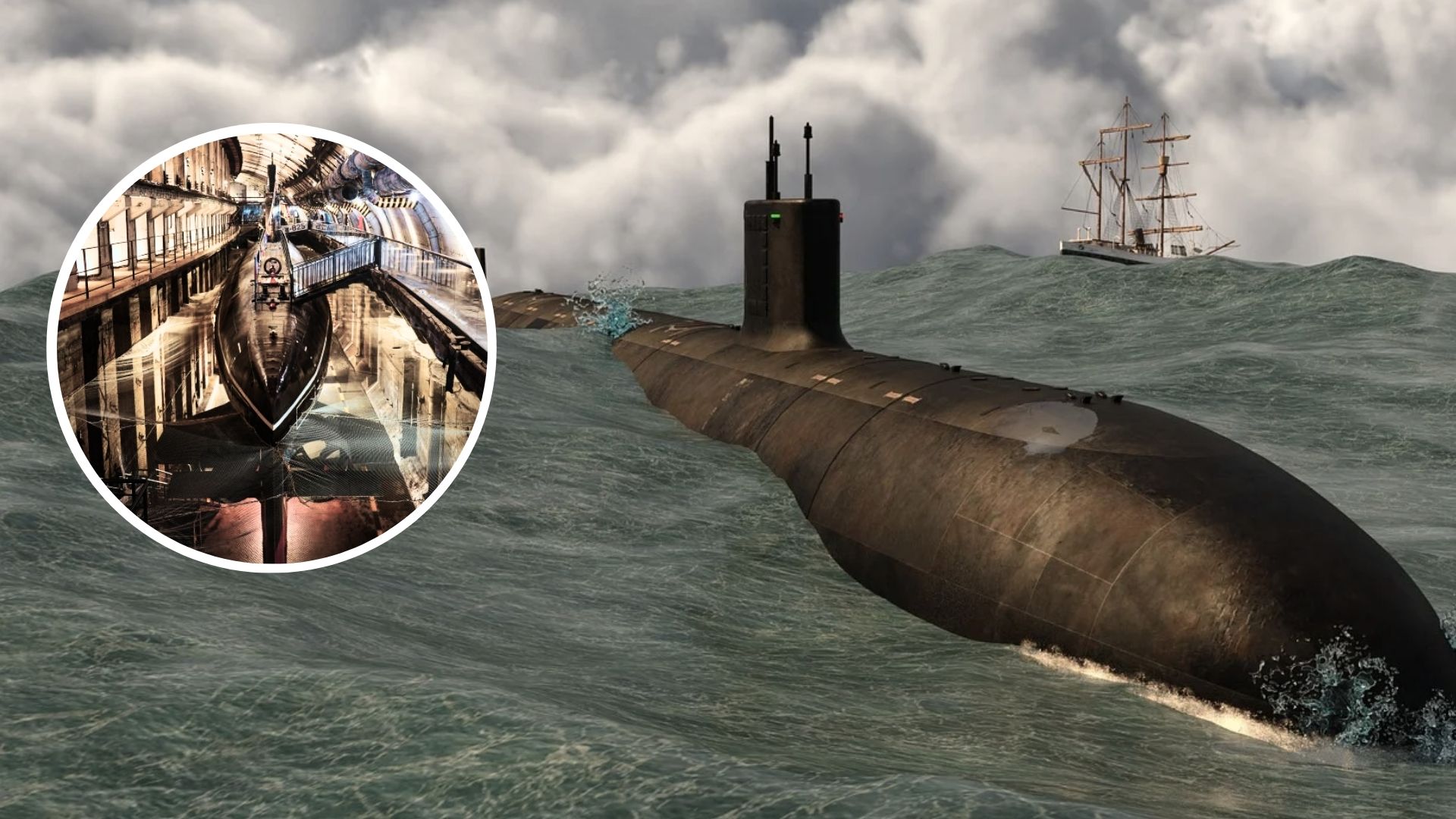
A Florida-based company has announced a series of major advancements in maritime and long-range detection capabilities utilizing its proprietary using its Base Molecular Resonance (BMR) technology platform.

BMRT’s Generation 2 platform offers unprecedented offshore and underwater detection results following the successful completion of a separate U.S. government-sponsored field study.

The company stated that the results mark the first operational deployment of BMRT’s Generation 2 platform in a true maritime environment and further reinforce the company’s position at the intersection of advanced physics, national security, and resonance-based detection technologies.

Long-range performance

β€œThese results fundamentally alter how the world should think about shielding, distance, underwater concealment, and the movement of strategic materials,” said Robert β€œBo” Short, co-founder and CEO of BMRT.

β€œThe oceans have historically served as a sanctuary for concealment, transport, and strategic ambiguity. With this technology those assumptions collapse.”

Unlike previous demonstrations, which emphasized long-range performance in land-based settings as well as controlled tethered aerial scenarios, the Generation 2 maritime testing initiative was specifically designed to assess precision detection capabilities within a maritime operating environment. Rather than pursuing maximum standoff distances, the effort focused on validating target discrimination, environmental stability, and detection precision from mobile maritime platform, according to a press release.

Long-range detection event involving U-235

BMRT also publicly disclosed for the first time details surrounding a long-range detection event involving U-235.

During a demonstration attended by representatives from an elite U.S. Combatant Command, BMRT’s Generation 2 system reportedly detected U-235 from Stuart, Florida, across the Gulf of America to the South Texas Project Electric Generating Station near Bay City, Texas, a distance of approximately 970 miles, as per the release.

BMRT stated that it is now releasing portions of this information due to the continued maturation of the technology, the successful evolution into its Generation 2 architecture, and the increasing strategic importance of transparent discussions surrounding nuclear detection, maritime security, counter-proliferation, and strategic deterrence.

β€œWe are entering an era where the movement of strategic materials can no longer remain hidden by distance, shielding, terrain, or water,” said Lee Duke, BMRT’s co-founder and president.

β€œThe implications for global security, maritime monitoring, counter-proliferation operations, and nuclear transparency are profound.”

Operating from maritime vessels offshore, BMRT conducted a series of advanced detection exercises with the positive results.

From a maritime platform positioned approximately 1,500 feet offshore, the Gen 2 system successfully detected ten individual nitrocellulose-based propellant targets located inside a vehicle on land. While operating from a maritime vessel, the system successfully detected a single trace quantity of nitrocellulose-based propellant positioned on a floating object at an approximate distance of 270 feet.

From a maritime platform, the system detected two discrete nitrocellulose-based propellant targets positioned on a floating object at approximately 450 feet, demonstrating enhanced range performance with increased target mass.

In underwater trials, trace quantities of nitrocellulose-based propellant were submerged at depth to evaluate system performance through water. Despite the extremely low target mass, detection remained precise and stable, performing as though the water itself were effectively absent from the detection environment, according to BMRT.


  •  

US firm’s new deep-reach drone can conduct surveillance beyond tactical frontline

An aerospace and defense company has unveiled its new deep-reach intelligence, surveillance and reconnaissance (ISR) drone. Called RQ-70, the drone delivers ISR capabilities beyond the immediate tactical frontline.

Developed by AIRO Group Holdings, the RQ-70 drone is expected to enter full-scale production in January 2027.

β€œThe RQ-70 is a direct response to what our customers have been asking for, with longer range, greater endurance, and the same operational reliability they have come to expect from the RQ-35,” said Joe Burns, AIRO CEO.

β€œTogether, these platforms give allied defense forces a complete ISR toolkit, and give AIRO a stronger foundation to compete across a broader set of mission requirements.”

Longer-range ISR capability

The RQ-70 builds on the operational success of the RQ-35 Heidrun, which has been deployed by NATO member and allied forces, and directly addresses growing customer demand for longer-range ISR capability and extended mission endurance. Together, the two platforms establish AIRO as a multi-platform ISR provider equipped to serve a broad spectrum of mission requirements across allied defense forces. The introduction of the RQ-70 deepens AIRO’s presence in the defense drone market while expanding its customer base, according to a press release.

The company revealed that building on the RQ-35’s proven operational model, the RQ-70 supports standard hand launch and deep-stall landing, operates in GNSS-denied environments, and incorporates onboard AI to further advance AIRO’s AI roadmap. The platform also offers configuration flexibility, including standard, long-range, and VTOL-enabled options. In addition, the RQ-70 features a modular payload and software architecture that can be tailored to specific mission requirements, enabling it to serve as a standalone, full-service ISR drone for many NATO and allied defense customers.

Other key system capabilities include up to 8 hours of endurance for persistent surveillance and longer time on station; ISR operations beyond the front lines with an operational range of 62+ miles (100 km); resilience in GPS/GNSS-denied environments; deployment by a single operator with fully autonomous mission operation and recovery; and connectivity designed for digital battlefield integration, as per the release.

Drone can deliver long-range, persistent surveillance

β€œModern conflicts have shown that success depends on a multitude of factors, such as how quickly intelligence can be collected, processed, and delivered to decision-makers,” said Dr. Chirinjeev Kathuria, AIRO Executive Chairman.

β€œThe RQ-70 is designed to meet that challenge, delivering long-range, persistent surveillance that integrates seamlessly into connected battlefield environments to provide reliable intelligence when it matters most.”

The unveiling at Eurosatory gives customers, partners, and industry stakeholders their first chance to see the aircraft configuration firsthand, providing a clear sense of its scale, capabilities, and intended operational concept.

The launch further supports AIRO’s broader growth strategy, which includes expanding its defense manufacturing footprint in Europe and developing next-generation unmanned systems. With the addition of the RQ-70, AIRO aims to strengthen its position as a provider of scalable, AI-enabled ISR solutions capable of meeting evolving battlefield requirements.


  •  

US firms to begin production of autonomous fighter jets that can team up with crewed jets

The U.S. Air Force has awarded production contract for its Collaborative Combat Aircraft program. The engineering and manufacturing development and production contracts have been awarded to General Atomics, FQ-42, and Anduril, FQ-44 for CCA Increment 1.

Building upon decades of responsible, semi-autonomous flight development, CCA represent the next critical evolution of airpower. CCA are designed to seamlessly integrate with crewed fighters to extend reach, awareness and survivability in contested environments. This human-machine teaming will serve as a powerful deterrent, signaling to adversaries the futility of challenging U.S. airpower.

Tactical edge can defeat any adversary

β€œCollaborative Combat Aircraft change how we project power and generate mass in highly contested environments,” said Air Force Chief of Staff Gen. Ken Wilsbach.

β€œDelivering this capability to our warfighters faster ensures our forces maintain the tactical edge required to deter and, if necessary, defeat any adversary.”

These contracts have been awarded four months ahead of schedule, these contracts signify that the FQ-42 and FQ-44 meet rigorous mission requirements and are ready for full-scale manufacturing. The decision follows a competitive source selection process, identifying the systems as the most capable and cost-effective solutions to maintain air superiority in an increasingly complex and contested global threat environment.

150 combat capable CCA

β€œBy moving fast from competitive selection into full-scale manufacturing, we position ourselves to field highly credible and combat-ready semi-autonomous systems to stay ahead of the pacing challenge,” said Secretary of the Air Force Troy Meink.

β€œThese contracts reaffirm our confidence in the strategic path forward for the program to procure over 150 combat capable CCA by the end of the decade.”

It’s also revealed that the equally critical to the CCA ecosystem is the mission autonomy software. The Air Force awarded mission autonomy production contracts to a pool of six vendors, establishing a competitive marketplace for the program.

β€œMission autonomy is the cornerstone of the CCA concept, and leveraging a competitive, multi-vendor environment ensures we capture the latest technology,” Meink said.

β€œThis approach guarantees our Airmen are equipped with state-of-the-art capabilities today but keeps the door open for the breakthroughs necessary to maintain air superiority.”

The software contract leverages a first-of-its-kind award fee exposure strategy, which enables operator feedback and combat performance to determine what the Air Force pays for mission autonomy. The Air Force will only pay the entire licensing fee if a vendor provides a combat capability aligned with warfighter needs and feedback. The licensing approach also allows the Air Force to award software licenses to any of the six vendors within the pool at any point over the next six years. This approach ensures the Air Force can procure the best-performing and most affordable solutions as technology evolves, according to a press release.


  •  
❌