❌

Reading view

New container-launched European missile promises strikes beyond 1,243 miles
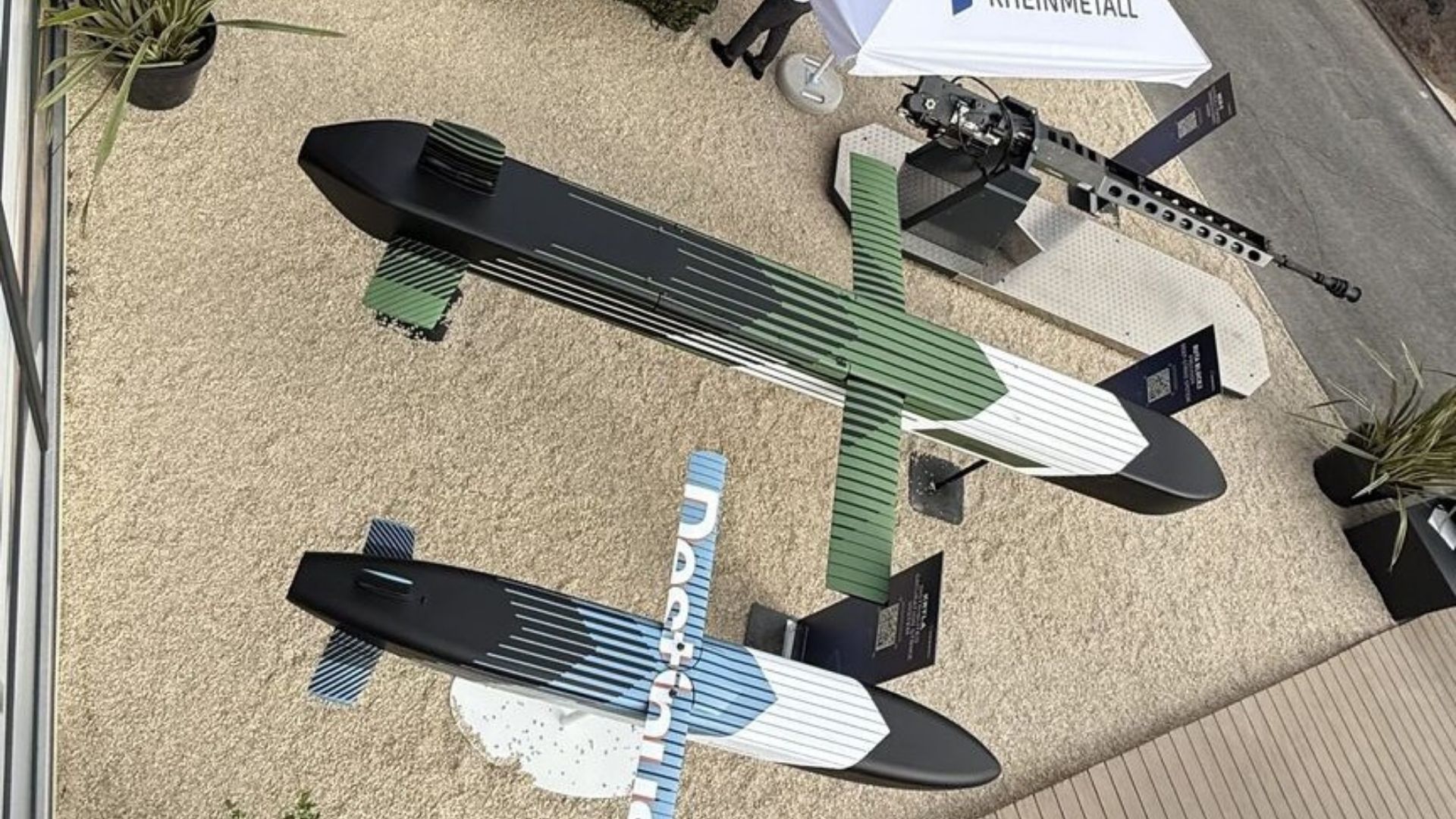
Europe’s defense industry is accelerating the development of a new long-range cruise missile capable of striking targets more than 2,000 kilometers (1,243 miles) away. At Eurosatory 2026 in Paris, the joint venture Rheinmetall Destinus Strike Systems announced plans to fast-track the introduction of the Ruta Block 3 missile while beginning production of two shorter-range systems, Kryla and Ruta Block 2.

The companies say the Ruta Block 3 is designed for strategic deep-strike missions against high-value and hardened targets. The missile will carry a warhead of up to 250 kilograms (551 pounds) and be launched from standard shipping containers, allowing deployment from land vehicles and maritime platforms. According to the joint venture, the system can be made ready to fire in about two minutes.

The program is being developed with NATO qualification in mind, a step that would make the missile available to NATO and European Union member states. The announcement comes as European countries continue to expand domestic defense manufacturing capabilities and reduce reliance on non-European suppliers.

The missile family is being developed through a partnership that combines Destinus’ missile technologies with Rheinmetall’s manufacturing and defense production expertise. The companies have already signed a term sheet and say a final shareholders’ agreement is close to completion.

Container launch, rapid strike

Ruta Block 3 is the most advanced missile in the joint venture’s roadmap, but production will begin with two existing systems. The first is Kryla, a compact cruise missile carrying a 50-kilogram warhead designed for saturation attacks. The missile can be launched from containers, giving existing artillery units access to cruise missile capabilities.

The second system, Ruta Block 2, carries a 551-pound warhead and is intended for attacks on hardened and high-value targets. Like Ruta Block 3, it launches from standard containers rather than dedicated missile launchers.

“Together we are advancing NATO qualification on an accelerated path, embedded in existing programmes for European defense ministries. This allows us to rapidly provide European armed forces with a ready-to-deploy, certified and fully European effector,” says Roman Köhne, Head of Division Weapon and Ammunition, Rheinmetall.

European supply chain focus

The joint venture says all three missiles will be produced through a fully European supply chain. To support that goal, Rheinmetall Destinus Strike Systems plans to establish a facility in Germany for final assembly, integration, and testing. Initial delivery readiness is targeted for 2026.

The companies also emphasize the flexibility offered by containerized launch systems, which can be transported through existing logistics networks and deployed across a wide range of platforms.

“We are firmly committed to launch from standard sea containers. This gives our customers maximum flexibility: our systems can be deployed across virtually any land and sea platform and through existing logistics chains – concealed and brought to firing readiness in the shortest time,” says Mikhail Kokorich, Founder and CEO of Destinus.

Under the partnership, Destinus will provide the missiles’ core technology while Rheinmetall will supply warheads and booster rocket motors, creating what the companies describe as a fully European deep-strike missile portfolio.

  •  

US-backed Ward 250 nuclear reactor achieves criticality under DOE program in Utah

The United States has reached another milestone in its push to bring advanced nuclear technology from the drawing board to deployment. Valar Atomics announced that its Ward 250 reactor successfully achieved fueled criticality during testing at the Utah San Rafael Energy Lab in Emery County, Utah. The achievement means the reactor can now sustain a controlled nuclear chain reaction, a key step before any reactor can begin generating electricity.

The test also marks a notable first for the Department of Energy’s Reactor Pilot Program. Ward 250 became the first reactor authorized under the program to reach criticality outside a national laboratory, highlighting the government’s effort to accelerate commercial reactor development. Federal officials described the milestone as another sign that advanced nuclear projects are moving from concept to reality at a faster pace than in previous decades.

Racing toward deployment

The Ward 250 reactor is the second advanced reactor expected to reach criticality under goals established by President Donald Trump’s May 2025 executive order. The order called for multiple advanced reactor demonstrations to achieve criticality before July 4, 2026. Earlier this month, Antares Nuclear reached the same milestone with its Mark-0 reactor at Idaho National Laboratory. Together, the projects represent some of the fastest-moving reactor demonstrations currently underway in the United States.

Moments ago, Valar Atomics took Ward 250 critical for the first time. This fulfills President Trump’s EO 14301, which called for 3 advanced reactors to go critical by July 4th.

This is our second criticality as a company, and an important step toward our goal of power by July 4. pic.twitter.com/ZNVgKSarfV

— Isaiah Taylor – making nuclear reactors (@isaiah_p_taylor) June 18, 2026

Energy Secretary Chris Wright said the achievement reflects growing momentum across the domestic nuclear sector. “Today marks another historic moment for America’s nuclear renaissance,” Wright said.

He pointed to several recent accomplishments, including the first airlift of a small reactor aboard a U.S. military C-17 aircraft. Wright said such milestones demonstrate how quickly advanced nuclear technologies are progressing under current federal initiatives.

Built in nine months

Valar Atomics completed the reactor project in less than a year. According to founder and CEO Isaiah Taylor, the site was empty nine months ago. “Today, there’s a critical reactor on it, built and operated by the Valar team,” Taylor said.

The company developed Ward 250 as a power-producing reactor rather than a laboratory experiment. Achieving criticality confirms that the design can sustain the nuclear reactions required for future energy production.

Taylor credited support from the Department of Energy, Utah state officials, local communities, and project partners for helping the company meet its development goals.

New path for reactors

The Department of Energy launched the Reactor Pilot Program to shorten development timelines for first-of-a-kind advanced reactors. The initiative uses existing DOE authority to authorize reactor demonstrations while developers continue working toward commercial licensing pathways.

Officials view the program as a way to reduce barriers that have historically slowed nuclear innovation in the United States. Building on the program’s early progress, the Department recently introduced the Nuclear Energy Launch Pad. The effort aims to further accelerate testing, validation, and deployment of advanced reactor technologies.

The Reactor Pilot Program ultimately seeks to bring at least three advanced reactor concepts to criticality outside national laboratories. Federal officials believe the approach can help restore U.S. leadership in nuclear energy while expanding access to reliable, around-the-clock power generation.

  •  

Norway clears funding for world’s largest ship tunnel through dangerous sea route

Norway is preparing to move ahead with the construction of the world’s first ship tunnel after securing funding in the revised national budget, and completing the evaluation of contractor bids for the project.

The Norwegian Coastal Administration (Kystverket) announced that it is ready to sign a contract with the winning contractor for the Stad Ship Tunnel project. The government agency expects construction to begin in early 2027.

The decision follows after Norway’s center-left parties reached an agreement to include funding for the project in the revised national budget. Final approval by the Norwegian Parliament is expected by June 19.

“We have received the news regarding the ship tunnel,” Einar Vik Arset, Kystverket General Director, said. “We are ready to initiate the processes needed to facilitate a construction start in the beginning of 2027.”

World’s first ship tunnel

First mentioned in an article in the Nordre Bergenhus Amtstidende newspaper, in 1874, the Stad Ship Tunnel will be the world’s largest ship tunnel. Located on the Stadlandet Peninsula, it is expected to stretch 1.1 miles (1.7 kilometers) through solid rock, or 1.37 miles (2.2 kilometers) when entrance sections are included.

The tunnel will measure 164 feet (50 meters) in height and 118 feet (36 meters) in width. Officials noted that it will be excavated through the narrowest part of the peninsula, connecting Moldefjord and Kjødepollen in the Vanylvsfjord region. The dimensions are large enough to accommodate vessels up to the size of Norway’s famous Coastal Route ships, including the Hurtigruten fleet.

The project will be led by the Norwegian Coastal Administration.
Credit: Kystverket / Snøhetta

It will allow large cargo vessels, ferries, and cruise ships to bypass the Stadhavet Sea. The waters are considered among the most hazardous along Norway’s coast, with rough weather, powerful currents, and high waves contributing to more than 30 maritime deaths since World War II.

“This is a major project, but we have prepared thoroughly over several years,” Arset pointed out. “We are ready as soon as we receive instructions from the Ministry of Trade, Industry and Fisheries.”

According to Kystverket, about 81 percent of today’s ship traffic will be able to use the tunnel. Cruise ships will reportedly be limited to a speed of eight knots inside it. This will allow them to complete the passage in about 10 minutes.

Built for modern shipping

For its construction, Norway will excavate roughly three million cubic meters of rock. This is equivalent to around 750,000 truckloads of material. The project will rely on conventional drill-and-blast methods to carve the tunnel through hard gneiss rock beneath the peninsula.

Kystverket said that it has completed its review of bids from three consortiums competing for the project’s main construction contract. The final contenders include Norway’s AF Gruppen, France’s Eiffage Génie Civil, and a joint venture between Sweden’s Skanska and Norway’s Vassbakk & Stol.

“The evaluation has been completed,” Harald Inge Johnsen, one of the project’s manager, concluded in a press release. “Once the contract award is announced, there will be a standstill period for any complaints before the contract can be signed as planned.”

Additional contracts covering demolition work and new water infrastructure near the tunnel site are also ready to be tendered. The Stad Ship Tunnel is expected to improve navigational safety and reliability for maritime traffic along Norway’s rugged western coast.

💾

The world's first ship tunnel has moved a step closer after Norway secured funding and completed contractor bid evaluations.
  •  

China plans space-based solar plant that could beam power over span of 22,369 miles

For years, scientists and engineers have highlighted the potential of space-based solar power for addressing terrestrial energy shortages.

Now, researchers at Xidian University, China, are developing new technologies to harvest solar energy in space and transmit it wirelessly to Earth.

The project, known as Zhuri or “chasing the sun,” focuses on building systems capable of beaming power from geostationary orbit, more than 36,000 kilometres away.

China’s new space-based solar power solution

On the university campus in Xi’an, Shaanxi province, associate professor Fan Guanheng and his team have demonstrated key components for their new approach to space-based solar power.

Using a 4.8-metre dome-shaped mirror suspended from a 75-metre tower, they concentrate sunlight onto solar panels.

The generated electricity is then converted into microwaves and transmitted over 100 metres to a rectenna, which converts the waves back into usable power.

Recent tests achieved kilowatt-level transmission and showed the system could direct energy to multiple moving targets simultaneously, according to an expert review panel last month.

The Xidian University team is also experimenting with 2-7 meter-wide Fresnel lenses, which focus light efficiently with less material while using cooling fluids to manage heat.

In an interview with the South China Morning Post (SCMP), Fan explained the process in three stages: light concentration, microwave conversion and transmission, and rectification. The researchers conducted their tests during peak sunlight hours between 10 am and 3 pm.

A solution to the energy crisis?

Space-based solar power offers significant advantages over ground installations. Solar energy density in orbit can reach six times that on Earth’s surface, unaffected by night cycles, weather, or atmospheric interference.

“That is why space-based solar power is a potential way out of the energy crisis on Earth,” Fan said.

The new project is led by Xidian’s Duan Baoyan, a pioneering electromechanical engineer and former president of the university.

Duan, who was inspired to start this work in 2012 by NASA’s SPS-ALPHA concept of modular satellite arrays, envisions large-scale systems. A one-gigawatt station –sufficient for a mid-sized city–would require mirrors spanning hundreds of metres.

However, challenges remain, such as addressing the deployability of foldable or self-assembling structures, achieving precise microwave targeting, and ensuring beam safety for aircraft and the environment.

The new Xidian design uses modular units flying in formation rather than a single massive structure, improving resilience and maintenance.

China’s efforts place it among leaders in the field, alongside the United States and Japan.

While orbital deployment remains the long-term goal, nearer-term applications include wireless charging of satellites in orbit or powering lunar bases from orbit or the Moon’s surface.

For the team, the next priority is securing funding for orbital experiments. If successful, the technology could provide continuous, high-efficiency clean energy, transforming the global power supply.

  •  

Pentagon turns to US chip maker to fix aging carrier systems and legacy hardware

Phoenix Semiconductor has won a Phase II SBIR contract from the U.S. Defense Logistics Agency to develop drop-in replacements for obsolete microelectronic components used in defense systems.

Based in Austin, Texas, the company will design and validate four legacy chips facing supply shortages across military platforms. The program aims to maintain critical systems without requiring redesigns of existing hardware or software, addressing long-standing issues tied to discontinued semiconductors.

One of the key projects under the contract is the recreation of the Signetics 82S100 Bipolar Field-Programmable Logic Array, originally introduced in 1975 and discontinued in the late 1980s. The chip supports the Catapult Assisted Take-Off but Arrested Recovery system used to launch aircraft from Nimitz-class aircraft carriers.

Phoenix is working with Naval Air Systems Command on the project. The goal is to deliver a form-fit-function replacement that avoids expensive system-level changes, which can require extensive certification and shipyard time across fleets.

Keeping legacy systems alive

Defense platforms often remain in service for decades, while semiconductor lifecycles last only a fraction of that time. This mismatch has created a persistent obsolescence problem across the defense supply chain. The Department of Defense estimates redesign and replacement efforts can cost around $5 million over five years per instance, while broader diminishing manufacturing sources and material shortages mitigation costs exceed $2.4 billion annually.

Phoenix says its Phase I program demonstrated cycle-accurate replacement chips that were successfully tested in a live commercial system without requiring hardware or software changes. The company’s method focuses on producing form, fit, and function compatible components that can be directly inserted into existing systems, reducing downtime and eliminating the need for full requalification in critical defense applications.

Reviving retired defense chips

Ryan Hatcher, CEO and founder of Phoenix Semiconductor, said the award validates its approach. “This DLA SBIR Phase II award and our work with NAVAIR is a direct validation of what Phoenix has built — a faster, more cost-effective path to restoring access to mission-critical microelectronics that power the platforms our warfighters depend on. Working alongside our partners, we are proving that American ingenuity can solve one of the most pressing vulnerabilities in our defense industrial base — without multi-million-dollar redesigns and years of delay.”

Tackling defense obsolescence crisis

The program also aligns with the Defense Logistics Agency’s modernization and supply chain strategy and provisions in the FY2025 National Defense Authorization Act covering microelectronics obsolescence mitigation, supply chain risk management, and domestic manufacturing expansion.

Phoenix’s patent-pending approach does not require new silicon fabrication or original wafers. The company says its drop-in components are designed to match original form, fit, and function, allowing military systems to continue operating without redesigns while reducing cost and lead times for legacy part replacement.

By focusing on legacy component replication, the company aims to reduce dependency on fragile global supply chains and shorten repair timelines for aging defense systems. The approach could also support other industries that rely on long-life industrial hardware systems worldwide.

  •  

US firm deploys floating data centers that generate electricity using ocean waves

High-performance computing is moving into international waters to solve the dual challenges of energy availability and hardware cooling. US-based tech startup Panthalassa recently finalized a $140 million Series B investment round to scale production on its self-propelled maritime data platforms. 

“There are three sources of energy on the planet with tens of terawatts of new capacity potential: solar, nuclear, and the open ocean,” said Garth Sheldon-Coulson, Co-Founder and CEO of Panthalassa.

This capital injection will fund the completion of an assembly facility near Portland, Oregon, and accelerate a pilot deployment in the northern Pacific Ocean later this year.

“As demand for new electricity and computing continues to surge, terrestrial data centers face mounting constraints: limited grid capacity, cooling water scarcity, supply chain bottlenecks, permitting delays, and impacts on local communities and infrastructure,” said the company in a press release.

Deploying autonomous nodes into deep water

Residential communities frequently organize against new data center construction out of concern over increased utility costs, noise pollution, and the diversion of public resources.

Panthalassa evades these regional regulatory and environmental obstacles by deploying autonomous computing nodes directly into deep water. 

“Panthalassa’s nodes are autonomous, floating energy systems that are mass-produced from plate steel in coastal factories,” added the press release. “They operate in the distant ocean, where they generate clean electricity around the clock.”

Onboard mechanical systems convert the kinetic movement of waves into a steady supply of electricity, establishing a continuous power source that functions independently of weather-dependent terrestrial renewables like solar or wind.

Onboard data processing and ocean cooling

The entire data processing cycle occurs directly on the water. Instead of using undersea cables to send raw electricity back to coastlines, the platforms consume the power immediately to run onboard artificial intelligence hardware. 

The surrounding ocean operates as a perpetual thermal sink, providing natural cooling that maintains optimal chip temperatures and slows hardware degradation without consuming municipal freshwater. 

For data transmission, the system relies on low-Earth-orbit satellite networks to receive incoming commands and broadcast completed AI inference tokens back to terrestrial clients.

“Rather than transmitting energy back to terrestrial grids, Panthalassa uses it directly onboard to power AI chips, sending inference tokens to land by satellite,” explained the company.

Development timeline and future outlook

The upcoming deployment of the Ocean-3 pilot series represents the culmination of a ten-year development timeline. Panthalassa previously conducted oceanic field tests using its Ocean-1, Ocean-2, and Wavehopper designs in 2021 and 2024 to verify the stability of its power generation and navigational software. 

The scheduled Pacific trials will focus on processing active computing workloads and standardizing manufacturing protocols in preparation for widespread commercial availability in 2027.

By utilizing remote marine environments, the architecture opens up a vast energy resource without adding traffic to domestic power infrastructures or requiring new land-based power plants. 

Financial backers and corporate partners indicate that moving high-density computing to the ocean offers a viable template for scaling global technology infrastructure while mitigating the economic and ecological impact on civilian communities.

“We’ve built a technology platform that operates in the planet’s most energy-dense wave regions, far from shore, and turns that resource into reliable clean power,” concluded Sheldon-Coulson. “We’re now ready to build factories, deploy fleets, and provide a sustainable new source of energy for humanity.”

  •  

Medical miracle: World’s first HIV-to-HIV dual lung and liver transplant achieved in US

For 26 years, Bertrand Nelson’s body was a battleground. He fought HIV and sarcoidosis. Then, a devastating bout of Legionnaires’ disease in 2021 left his lungs shattered and his liver failing. By 2024, the 56-year-old was tethered to an oxygen tank. 

He needed a miracle. On March 21, 2026, he got two and made medical history.

In a marathon surgery at NYU Langone Health, surgeons performed the world’s first HIV-positive-to-HIV-positive lung transplant. Nelson did not just get a new lease on life. He also received a new liver on the exact same day. Today, he is breathing entirely on his own.

“This is a watershed moment for the HIV-positive community and represents real progress in creating equity in organ transplantation,” said Sapna Mehta, MD, clinical director of NYU Langone Transplant Institute and co-architect of the research protocol. 

“While these transplants are still only allowable under certain research protocols, this marks an expansion of options for people in need of a lifesaving organ,” Mehta added.

Expanded donor pool

Organs from HIV-positive donors were strictly discarded. However, the 2013 HIV Organ Policy Equity (HOPE) Act opened the door for research protocols to change that. While doctors have previously transplanted HOPE hearts, kidneys, and livers, the delicate and infection-prone nature of lungs kept them off the table until now. 

The breakthrough addresses a deep inequity in the American healthcare system. Right now, roughly 1.2 million people in the U.S. live with HIV. Because of modern antiretroviral therapies (ART), most live near-normal lifespans and cannot transmit the virus. 

Under the old rules, organ failure meant facing an excruciatingly long waitlist. By allowing HIV-positive patients to accept organs from HIV-positive donors, medicine is unlocking an entirely new pool of available lifelines. 

“Transplantation of HOPE hearts and abdominal organs has been done before, but this has not been done in lung transplantation. It takes a special kind of patient to be willing to do something that hasn’t been done before,” said Mark A. Sonnick, MD, transplant pulmonologist at NYU Langone Transplant Institute and co-author of the research protocol. 

Nelson was ready to be that patient. His motivation was close to home.

“I want to be well for her,” Nelson said, speaking of his mother, who turns 82 this August. “I want her to see me thriving.”

Nelson is doing fine now

In 2000, Nelson was diagnosed with HIV and sarcoidosis, a condition that went into remission until a severe case of Legionnaires’ disease in 2021 reactivated it, damaging both his lungs and liver. 

By 2024, his health had deteriorated to the point of requiring continuous oxygen, leading to his evaluation for a groundbreaking dual-organ transplant under the HOPE Act. On March 21, the medical history was made with the first HIV-positive-to-HIV-positive lung transplant. 

Nelson is currently out of the hospital, lifting weights, and rebuilding the strength he lost during four grueling years of limited mobility.

For the broader medical community, NYU Langone’s triumph is a proof of concept. The institute is currently one of the only centers in the nation approved to perform these specific transplants. But Nelson hopes his story will spark a chain reaction, raising awareness and expanding the protocol to hospitals nationwide.

“There are so many others who need access to this level of care,” Nelson said. “The more organs that become available, the better the odds of finding the right match and living a long life.”

💾

On March 21, 2026, NYU Langone Health performed the world’s first HIV-positive-to-HIV-positive lung transplant.
  •  

Germany launches multimillion-dollar nuclear fusion hub to study matter found inside stars

Germany has recently launched a multimillion-dollar fusion research hub, which will explore the extreme states of matter that exist deep inside stars and planets.

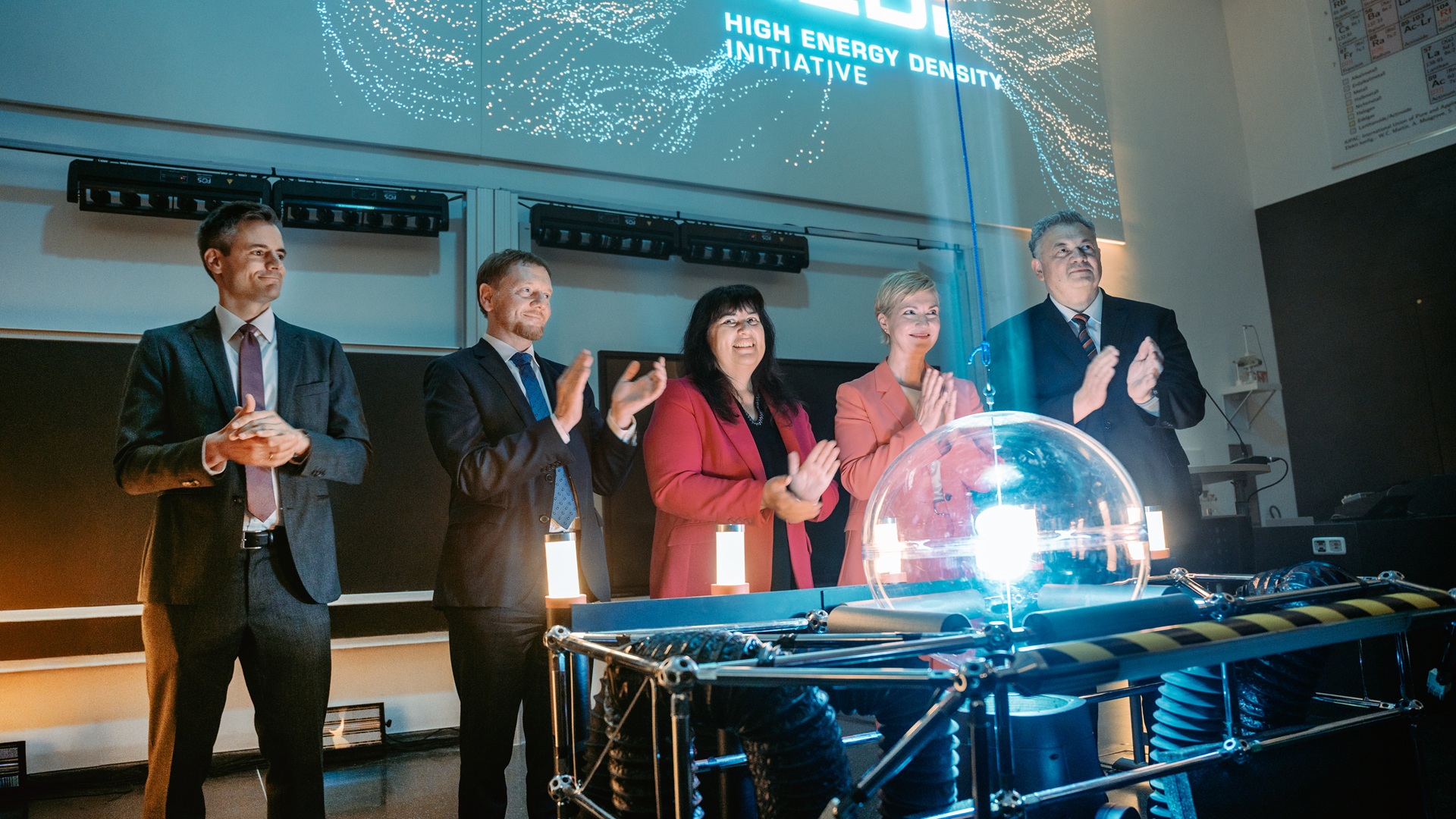
The new High Energy Density Initiative (HEDI) was unveiled by the University of Rostock and the Helmholtz-Zentrum Dresden-Rossendorf (HZDR) on June 18. It will reportedly investigate the matter under extreme conditions similar to those found in stars and giant planets.

The event was attended by Mecklenburg-Western Pomerania Minister-President Manuela Schwesig and Saxony Minister-President Michael Kretschmer. It also drew other participants from politics, academia, and industry.

Dorothee Bär, Federal Minister for Research, Technology and Space, emphasized the importance of the initiative. “HEDI will investigate what happens to the fuel under the extreme conditions of laser fusion,” Bär highlighted. “To achieve this, outstanding experimental and theoretical expertise must be brought together across state borders and in cooperation with the federal government.”

A physics research center

Fusion energy is regarded as one of the most promising long-term solutions for producing large amounts of climate-neutral electricity. Yet, many of the physical processes that occur during fusion reactions remain poorly understood.

To tackle the issue, HEDI will focus on studying how matter behaves at extremely high temperatures and pressures. As part of the program, HZDR also established the new Institute of High Energy Density Physics. It was founded in early June and is funded jointly by the German federal government and the state of Saxony.

The state of Mecklenburg-Western Pomerania is investing USD 23 million (EUR 20 million) to support the construction of a novel research facility that is expected to be completed by 2030.

Michael Kretschmer, Minister-President of the Free State of Saxony, said that the investment is set to create an internationally visible center of excellence that will attract leading scientists and secure additional funding for the region.

“Saxony is a strong center for science and research, with excellent universities and research institutions,” Kretschmer explained. “Fusion research offers tremendous opportunities for a secure, climate-neutral, and long-term energy supply.”

Understanding fusion fuel

One of the hub’s basic goals is to refine the understanding of inertial confinement fusion (ICF). This fusion approach relies on powerful laser pulses to compress and ignite fusion fuel. In addition, researchers will also investigate warm dense matter and hot dense matter. These exotic states naturally exist inside stars and planets.

As per the team, studying how materials react under such conditions is crucial for fusion energy technologies. The first big projects will involve analyzing mixtures of light elements at megabar pressures and the dynamic properties of hot dense matter at gigabar pressures.

HEDI will collaborate closely with the European XFEL, as well as a broad network of national and international partners. It will also participate in Germany’s Fusion 2040 funding program. What’s more, it has already established a partnership with Marvel Fusion, a Munich-based firm developing laser-based fusion technologies.

“The major challenges of fusion research can only be overcome through a deep understanding of the properties of matter under extreme conditions,” Ronald Redmer, PhD, HEDI’s founding director, said in a press release. “HEDI creates the scientific foundation needed to answer these questions.”

💾

Germany has launched the High Energy Density Initiative (HEDI), a new fusion research center that will study extreme states of matter.
  •  

NASA’s new prototype rover completes 16-mile autonomous desert trek

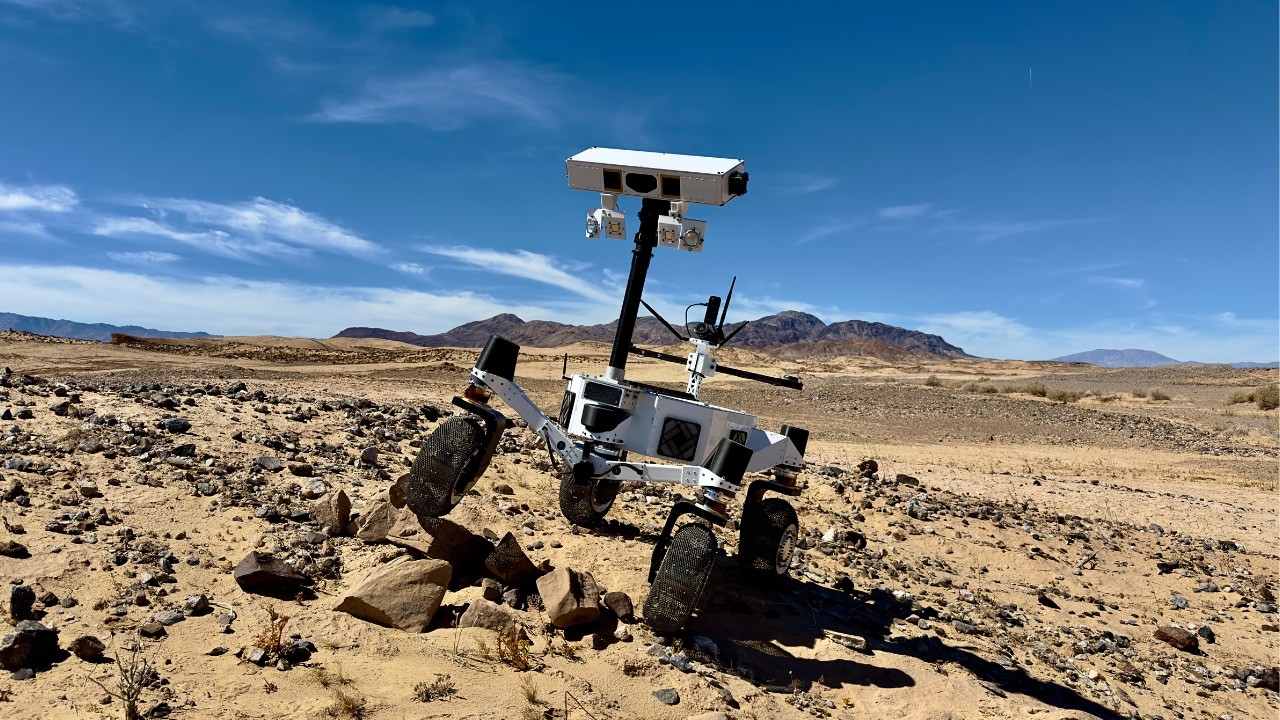
NASA’s Jet Propulsion Laboratory (JPL) has developed a 4-foot-long, four-wheeled prototype designed for high-speed, long-distance autonomous exploration on the Moon and Mars. 

Dubbed Exploration Rover for Navigating Extreme Sloped Terrain (ERNEST), it underwent field tests in the Colorado Desert. The robotic rover successfully traveled 16 miles over 37 hours with minimal human intervention.

“This testing is helping us refine the mobility hardware and autonomy software to navigate extreme distances across a wide range of terrain and lighting conditions anticipated on the Moon,” said Issa Nesnas, a principal technologist at JPL. 

Active suspension system

For the last thirty years, NASA has used a mechanical setup called the “rocker-bogie” suspension system. It is the architecture behind every Mars rover from Sojourner to Perseverance that keeps their wheels grounded.

But it has some problems. Send a passive rover up a loose, sandy slope steeper than 15 degrees, and it will likely get stuck, spin its wheels, or risk a catastrophic tip-over. 

The ERNEST prototype introduces an innovative active suspension system that manages its own weight distribution. 

Equipped with four steerable wheels and a front-powered gimbal, the rover can navigate extreme terrain using unique gaits like squirming, wheel-walking, obstacle-climbing, and even driving sideways. 

Plus, a built-in clutch mechanism allows ERNEST to switch back to a passive mode when efficient, less-demanding driving is needed, blending high-capability mobility with energy conservation.

The 4-foot-long prototype is a testbed designed to advance both robotic autonomy and extreme terrain mobility for future Moon and Mars missions.

ERNEST achieves higher speeds and longer driving distances through its enhanced independent decision-making and a unique ability to lift its individual mesh wheels over obstacles that would trap current Mars rovers.

Ultimately, these technological improvements will inform the design of next-generation rovers capable of exploring previously inaccessible, rough extraterrestrial landscapes.

During recent testing, the vehicle clocked speeds up to 0.6 mph (1 kph) over 37 hours of driving across seven days — an order of magnitude faster than the autonomous navigation speeds of Curiosity and Perseverance. 

“You could do a science road trip across the Moon — or Mars — with this vehicle,” said James Keane, a JPL planetary scientist working on lunar missions.

Preparing for the rough, unknown terrain

Using reinforcement learning, computers ran thousands of hours of virtual simulations over single weekends, punishing the virtual rover with impossible physics scenarios until it learned the optimal way to climb, crawl, and survive.

The software was then loaded directly into the physical rover. Engineers took it out into the desert heat and turned it loose. ERNEST handled the rest. 

The team even ran the rover through the deep, confusing shadows of dusk and dawn. This simulated the extreme lighting conditions future astronauts and robots will face at the Moon’s south pole.

Building on this success, a new project will merge ERNEST’s active suspension control with long-range intelligent navigation. This will allow the rover to plan paths, deciding when to climb surmountable obstacles and when to steer clear of major hazards. 

It will help to prepare future missions for the most rugged landscapes on the Moon and Mars.

💾

NASA's JPL has developed a 4-foot-long, four-wheeled prototype designed for high-speed, long-distance autonomous exploration on the Moon and Mars. 
  •  

Boeing tests quantum protocol in Q4S payload before year-long space mission

Engineers at Boeing demonstrated a key quantum protocol during ground testing of the payload for the Q4S mission, ahead of its launch scheduled in 2027. Boeing’s self-funded Q4S missions are critical in realizing a space-based quantum network in the future. 

The recent growth in interest for quantum computing and sensors has also pushed demand for quantum networks, where information can be shared with high security and reliability. For any network to work, information needs to be routed efficiently. 

While this has been successfully done for quantum networks using fiber-optic cables, transmission losses become significantly higher as the networks scale from regional to national scales. For data transmission over hundreds of miles, free-space optical channels are much more efficient than fiber-optic cables, prompting the need for a space-based quantum network.

Scientists are therefore working to develop these networks, and Boeing’s Q4S mission is one such project. 

What is Q4S mission? 

Boeing is making a major move towards developing a quantum space network through its Q4S mission. 

“Quantum networking has the potential to transform how information is shared, timed and protected across global systems, but only if it can work outside the lab, under real mission constraints,” said Lane Ballard, Boeing chief technology officer, in a statement. “Q4S is about taking an important quantum capability and proving it on mission-ready hardware.”

As part of the project, the mission will spend a year in orbit to test quantum networking hardware in the harsh environment of space. During these tests, the mission will demonstrate entanglement swapping, the foundational mechanism that enables quantum links to extend beyond point-to-point connections. 

What is entanglement swapping? 

Quantum entanglement swapping relies on quantum teleportation, where a quantum state of a particle can be transferred to another without physically moving the particle. In entanglement swapping, teleportation occurs between entangled photon pairs, resulting in a shared state between the particles, even though they have never interacted. 

Quantum entanglement swapping is the basis for quantum repeaters, which are crucial for scaling quantum networks. For Boeing to build a scalable quantum network, it needs to first demonstrate entanglement swapping between photons, without loss or degradation of quantum data. 

Demonstrating this in space will be challenging, since quantum states are delicate and entanglement can be disrupted by factors such as environmental temperature and radiation. 

“One of the hardest parts of quantum networking is maintaining strong performance while working within the size, weight and power limits of a spacecraft,” added Lowell in the statement. 

In their recent tests, Boeing engineers demonstrated quantum entanglement swapping in a space-qualified Q4S payload ahead of its launch to orbit. The results are comparable to peer-reviewed experiements, operating within the strict Size, Weight, and Power (SWaP) constraints of a compact satellite. 

“These test results show that we can produce high-fidelity swaps on a payload engineered for space, not just for a controlled lab bench,” concluded Lowell. “That is a meaningful step toward practical quantum networks.”

The Q4S mission is scheduled for launch in 2027. Following the one year data gathering in orbit, Boeing plans to share its technical results for peer-review. 

  •  

US firm boosts maritime security with long-range nuclear activity detection technology

A Florida-based company has announced a series of major advancements in maritime and long-range detection capabilities utilizing its proprietary using its Base Molecular Resonance (BMR) technology platform.

BMRT’s Generation 2 platform offers unprecedented offshore and underwater detection results following the successful completion of a separate U.S. government-sponsored field study.

The company stated that the results mark the first operational deployment of BMRT’s Generation 2 platform in a true maritime environment and further reinforce the company’s position at the intersection of advanced physics, national security, and resonance-based detection technologies.

Long-range performance

“These results fundamentally alter how the world should think about shielding, distance, underwater concealment, and the movement of strategic materials,” said Robert “Bo” Short, co-founder and CEO of BMRT.

“The oceans have historically served as a sanctuary for concealment, transport, and strategic ambiguity. With this technology those assumptions collapse.”

Unlike previous demonstrations, which emphasized long-range performance in land-based settings as well as controlled tethered aerial scenarios, the Generation 2 maritime testing initiative was specifically designed to assess precision detection capabilities within a maritime operating environment. Rather than pursuing maximum standoff distances, the effort focused on validating target discrimination, environmental stability, and detection precision from mobile maritime platform, according to a press release.

Long-range detection event involving U-235

BMRT also publicly disclosed for the first time details surrounding a long-range detection event involving U-235.

During a demonstration attended by representatives from an elite U.S. Combatant Command, BMRT’s Generation 2 system reportedly detected U-235 from Stuart, Florida, across the Gulf of America to the South Texas Project Electric Generating Station near Bay City, Texas, a distance of approximately 970 miles, as per the release.

BMRT stated that it is now releasing portions of this information due to the continued maturation of the technology, the successful evolution into its Generation 2 architecture, and the increasing strategic importance of transparent discussions surrounding nuclear detection, maritime security, counter-proliferation, and strategic deterrence.

“We are entering an era where the movement of strategic materials can no longer remain hidden by distance, shielding, terrain, or water,” said Lee Duke, BMRT’s co-founder and president.

“The implications for global security, maritime monitoring, counter-proliferation operations, and nuclear transparency are profound.”

Operating from maritime vessels offshore, BMRT conducted a series of advanced detection exercises with the positive results.

From a maritime platform positioned approximately 1,500 feet offshore, the Gen 2 system successfully detected ten individual nitrocellulose-based propellant targets located inside a vehicle on land. While operating from a maritime vessel, the system successfully detected a single trace quantity of nitrocellulose-based propellant positioned on a floating object at an approximate distance of 270 feet.

From a maritime platform, the system detected two discrete nitrocellulose-based propellant targets positioned on a floating object at approximately 450 feet, demonstrating enhanced range performance with increased target mass.

In underwater trials, trace quantities of nitrocellulose-based propellant were submerged at depth to evaluate system performance through water. Despite the extremely low target mass, detection remained precise and stable, performing as though the water itself were effectively absent from the detection environment, according to BMRT.


  •  

Waste oils and fats to be turned into low-emission jet fuel with new modular tech

Honeywell has announced that its modular refining technology and automation systems will be used in a major renewable fuels project by Acelen Renewables in Bahia, Brazil.

The project is a new development focused on producing sustainable aviation fuel (SAF) and renewable diesel. Honeywell said its modular Ecofining process technology, along with specialized pumps, compressors, and integrated control and safety systems, will help Acelen Renewables make construction and operations at the site more efficient.

Industry forecasts show that demand for SAF could reach almost 500,000 barrels per day in the next ten years. As airlines and governments work to cut emissions, fuel producers are looking for ways to boost output while keeping costs and project schedules under control.

Modular approach aims to speed deployment

A main feature of Honeywell’s role is its modular delivery model. Rather than relying solely only traditional site-built infrastructure, modular units can be assembled and installed more efficiently, helping shorten construction time and lower project costs.

The company said this method lets renewable fuel facilities start production sooner than with traditional methods. Getting facilities up and running faster is becoming more important as aviation companies look for more low-emission fuel to meet future sustainability goals.

The Bahia project is expected to help grow Brazil’s renewable fuel industry. With its rich agricultural resources, the country is aiming to become a leader in producing next-generation biofuels.

“Brazil is set to produce the fuel of the future through a project that is sustainable—economically, socially, and environmentally,” said Marcelo Cordaro, COO of Acelen Renewables. “The Bahia facility project supports biodiversity and fosters an economy based on sustainability. Honeywell’s process technology and automation expertise will help maximize the production of lower-emission fuels at our facility, supporting the growing global demand for renewable fuels.”

Converting waste into aviation fuel

Honeywell UOP’s Ecofining technology, developed with Eni SpA, is central to the project. This process turns waste fats, oils, and greases into renewable diesel and sustainable aviation fuel.

According to the company, the SAF produced can cut greenhouse gas emissions by up to 80 percent when mixed with regular jet fuel. The technology enables producers to use a wide range of waste-based feedstocks that might otherwise have little value.

Automation designed for efficient operations

In addition to fuel processing technology, Honeywell will supply integrated automation and safety systems for the facility. These systems bring together process controls and operational know-how to help manage plant performance and lower project risks.

The company’s technology is built into its Experion PKS platform, which supports monitoring, safety management, and operational decision-making. It said the platform also offers digital tools and data insights that can boost plant efficiency over time.

Biofuel facilities are increasingly using automation to improve production rates, maintain reliable operations, and support long-term success.

Growing focus on lower-cost renewable fuels

The company believes that new technology will be key to making renewable fuels more competitive worldwide. Lowering production costs is seen as essential for wider use in aviation and transportation.

“Honeywell’s low-carbon process technologies are enabling companies like Acelen to address the growing demand for renewable fuels by using a variety of feedstocks,” said Ken West, president and CEO of Honeywell Process Technology. “Technology and integrated automation play a pivotal role in reducing the cost of renewable fuels, which is essential for broad adoption. Advances in Honeywell’s technology have reduced the cost to produce SAF, and the use of novel, low-cost feedstocks will help further reduce production costs.”

It also noted that it has delivered over 1,500 modular process units worldwide using different technologies. 

  •  

Advanced nuclear project secures 77-acre US site for molten salt reactor testing

Terrestrial Energy has secured exclusive access to 77 acres at the Texas A&M-RELLIS campus to advance engineering preparations for a small modular nuclear power plant. The signed ground lease and research and development agreements allow the company to conduct physical testing and environmental site characterization. 

This data collection is required before submitting a construction permit application to the US Nuclear Regulatory Commission.

This development follows two regulatory and technical milestones achieved by Terrestrial Energy earlier this year. In April 2026, the Nuclear Regulatory Commission completed a safety evaluation of the company’s methodology for identifying and analyzing potential reactor accidents. 

This assessment is built on a late 2025 regulatory milestone, during which the agency approved the core engineering design criteria for the system. In May 2026, the company entered a separate agreement with Riot Platforms to study how this reactor design can support large-scale computing infrastructure, targeting up to 4 gigawatts of total power capacity.

Technical profile of the molten salt design

The planned facility uses an Integral Molten Salt Reactor, which represents a shift from traditional light-water nuclear plants. Traditional reactors use solid uranium fuel rods cooled by water under high pressure. In contrast, this Generation IV design mixes low-enriched uranium fuel directly into a liquid salt mixture. The liquid functions simultaneously as the fuel matrix and the heat transfer fluid.

This liquid state alters the safety profile of the system. If power is lost, the liquid salt can cool by natural air circulation without requiring active electrical backup pumps to prevent overheating. The reactor operates at high temperatures but at normal atmospheric pressure. This low-pressure environment reduces the physical risk of a containment breach compared to high-pressure water systems.

The reactor is engineered as a small modular unit. This allows major components to be fabricated in a factory environment and transported by truck or rail to the site for assembly, rather than being built entirely on-site. The facility is designed to generate both electricity and high-temperature industrial heat. This thermal energy output can be directed to industrial applications, such as chemical synthesis, or to localized power grids.

Scope of the campus testing site

The 77-acre site at the RELLIS Energy Proving Ground will host multiple validation projects. Terrestrial Energy has established an engineering and project management office on the campus to oversee these activities. Under a master research agreement finalized in the first quarter of 2026, university researchers and company engineers will collaborate on testing procedures.

The site will support the primary reactor project, alongside two initiatives managed in partnership with the US Department of Energy, TETRA and TEFLA. Engineers will focus on verifying how the system’s materials withstand high thermal stress and radiation over time. The project also includes local workforce development to train technicians on the specific maintenance protocols required for liquid-fueled systems.

The regional power grid, operated by the Electric Reliability Council of Texas, faces rising demand from advanced manufacturing facilities, industrial operations, and data centers. These installations require a continuous baseline power supply that is not affected by weather conditions. 

  •  

Video: New robotic system achieves 99.5% success in fast auto factory wire assembly

Canadian robotics company Sanctuary AI has reported a significant achievement in industrial automation.

The firm said its system achieved a task success rate of more than 99.5 percent during a complex wire-plugging task for a global Tier 1 automotive supplier. 

The operation completed in 2.54 seconds, meeting the customer’s live-production benchmarks and demonstrating high-speed, reliable performance in a manufacturing setting. 

Sanctuary AI said the milestone highlights its strategy of deploying Physical AI on commercial robots to speed industrial adoption and support future industrial humanoids.

Factory automation leap

The achievement reflects Sanctuary AI’s strategy of deploying its Physical AI platform on existing and next-generation industrial robotic systems, rather than waiting for widespread commercialization of humanoid robots. This hardware-agnostic approach enables the company’s AI models to operate across different robotic platforms while accelerating adoption in manufacturing environments.

Sanctuary AI demonstrated high-performance Physical AI capabilities in an industrial manufacturing environment, achieving a task success rate exceeding 99.5 percent in a complex wire-plugging operation for a global Tier 1 automotive supplier. The system completed the task with a cycle time of 2.54 seconds, matching the throughput requirements of the customer’s live production line and meeting established industrial performance benchmarks.

The deployment focused on a plug-insertion process involving flexible wire assemblies moving along a conveyor. Such tasks are particularly challenging for automation because the cables can bend, twist, and shift position dynamically during transport, requiring continuous perception, adaptation, and precise manipulation.

According to the firm, the AI-powered robotic system successfully detected, tracked, aligned, and inserted the connectors while maintaining production-line speed and reliability.

“Manipulating a flexible wire into a moving target on a live conveyor is exactly the kind of contact-rich dexterity problem that has kept tasks like this out of reach for traditional automation. Solving it required models built around performance from day one with reliability, cycle time, and safety measured against real production benchmarks,” said Olivia Norton, co-founder and CTO of Sanctuary AI, in a statement.

AI power industries

Sanctuary AI develops Physical AI systems designed to enable robots to perform complex tasks in real-world industrial environments. Unlike traditional industrial automation, which relies on fixed programming for repetitive operations, Sanctuary AI’s approach combines advanced perception, reasoning, and manipulation capabilities, allowing robots to adapt to changing conditions and handle tasks that require dexterity and decision-making.

The company’s Physical AI platform processes information from cameras, sensors, and robotic actuators to understand its surroundings and execute actions in real time. This enables robots to identify objects, track movement, plan motions, and manipulate components with a high degree of precision. The technology is particularly suited to manufacturing environments where variations in object position, orientation, or movement make conventional automation difficult.

A key feature of Sanctuary AI’s strategy is its hardware-agnostic design. The AI can be deployed on existing industrial robotic systems as well as future robotic platforms, reducing the need for specialized hardware. This allows manufacturers to integrate advanced AI capabilities into current production lines while preserving existing infrastructure investments.

The platform is designed to automate labor-intensive tasks, including assembly, material handling, inspection, and component insertion. By combining real-time perception, motion planning, and adaptive control, Sanctuary AI aims to help factories improve productivity, maintain consistent quality, address labor shortages, and prepare for the next generation of intelligent industrial robots.

“By focusing on a performance-first approach to Physical AI models, we’re delivering value to customers today, on an AI platform that will also scale to the next generation of general-purpose systems,” said Norton, in a statement.

💾

Sanctuary AI achieves 99.5 percent success on a wire-plugging task, matching factory production speed with Physical AI.
  •  

Space-based mapping exposes massive footprint of modern GPS interference

The manipulation of Global Navigation Satellite System (GNSS) signals has grown far beyond local combat zones, becoming a constant and mostly unseen problem. For the first time, data from an experimental Low Earth Orbit (LEO) satellite has mapped the wide reach of active GPS jamming and spoofing from space.

These orbital measurements surprised aerospace engineers by showing that intentional attacks on Positioning, Navigation, and Timing (PNT) data are strong enough to block satellite receivers flying hundreds of miles above Earth.

In the past, electronic warfare tactics such as jamming, which blocks real satellite signals with noise, and spoofing, which sends false coordinates to receivers, were seen as local threats limited to low-altitude areas or specific military regions.

But over the past five years, as global politics have changed, more countries have used electronic countermeasures. This shift has changed how safe Low Earth Orbit (LEO) is from electromagnetic threats.

This ongoing problem now threatens the imaging, weather tracking, and altitude systems used by commercial space networks.

Low earth orbit vulnerability and signal weakness

Modern satellite navigation is vulnerable because of how orbits work. Standard GPS and other global systems operate in Medium Earth Orbit (MEO), more than 12,000 miles (19,000 kilometers) above Earth. Since their signals must travel so far, the radio waves that reach receivers on the ground or in the air are very weak.

This structural fragility makes it is easy for transmitters on the ground to overpower them. Researchers expected that people on the ground and airline flights would be most affected by this interference. However, they did not know how much these jamming fields reached into space until the Pulsar-0 technology demonstrator was launched.

A 30-decibel drop

The mapping breakthrough was achieved by Pulsar-0, a specialized test satellite manufactured by Xona Space Systems. Launched into a 310-mile (500-kilometer) altitude LEO orbit, the spacecraft was built primarily to flight-validate new navigation technologies before the company initiates the mass deployment of its planned 300-satellite constellation later this year.

To ensure full interoperability with existing space architecture, the small probe was equipped with a standard, high-sensitivity commercial GPS receiver.

When flight engineers activated the internal receiver a few months post-launch, the incoming telemetry data revealed an immediate operational anomaly. As Pulsar-0 traversed space corridors extending from Western Europe all the way to the western borders of Pakistan, its onboard GPS capabilities vanished entirely.

In the hardest-hit areas, the strength of the authentic GPS signal at the satellite dropped from the usual 40 decibels to just 10 decibels, making it almost impossible to read.

This sharp 30-decibel drop caused an almost complete blackout of normal positioning data, making it impossible for any satellite over the area to quickly determine its altitude or exact location.

Mitigation via 100x signal amplification

This widespread electromagnetic interference affects much more than just commercial flight delays. Modern observation and remote-sensing satellites need clear GPS signals to aim their cameras or radar correctly before taking high-resolution images of specific places.

Without an active, unjammed PNT lock, these multi-million-dollar imaging platforms suffer severe degradation in altitude determination, leading to significant geometric errors in their data sets. Furthermore, artificial electronic interference is frequently exacerbated by unpredictable space weather.

Major solar events, such as the historic Gannon superstorm in May 2024, have shown that natural forces can disrupt GNSS signals and shut down automated systems across continents for days.

To build a resilient backup infrastructure that withstands both geopolitical jamming and solar anomalies, aerospace engineers are pivoting toward low-altitude, high-power solutions.

Constellations like Xona’s upcoming Pulsar network are designed to broadcast specialized PNT signals from LEO. Because these satellites operate significantly closer to the surface than traditional MEO arrays, they can deliver navigation signals that are roughly 100 times stronger than traditional legacy GPS.

According to empirical simulation profiles, this massive 100-fold boost in signal amplification will alter the economics of electronic warfare: existing terrestrial jammers that currently disrupt hundreds of square miles of airspace will see their effective disruption radius reduced to a mere 5% of their current reach, effectively neutralizing widespread systemic blind spots.

  •  

China’s new flexible brain-computer chip retains 94% efficiency after 18 months

A team of researchers from China and Japan has developed a ultra-flexible brain implant electrode array. 

It overcomes a major hurdle in brain-computer interfaces (BCIs): the physical mismatch between stiff metal electrodes and soft brain tissue, which typically leads to chronic inflammation and signal degradation.

The development comes from Tsinghua University’s Shenzhen International Graduate School, the University of Tokyo and the Chinese Academy of Sciences’ Shenzhen-Hong Kong Institute of Brain Science.

Researchers tested the flexible brain implant in animal trials. Interestingly, it achieved long-term signal clarity and safe, stable functionality over an 18-month period.

Soft brain implant

Neuroscientists pursuing the dream of a highly functional brain-computer interface often face the issue of the fleshy wall. The human brain is naturally soft. The advanced electrode arrays implanted in the brain to read thoughts or restore movement are made of rigid metals like platinum.

When you put something hard against something soft inside a moving body, friction wins. Over time, the brain jiggles, the metal rubs, and chronic inflammation forms a wall of protective scar tissue. Signals degrade, and the implant goes blind.

The new development is based on an all-organic, ultra-flexible implant material called Chip (conductive hydrogel with interfacial percolation). 

In the past, trying to use hydrogels, which are water-swollen polymer networks, for brain implants was difficult. These materials are biocompatible but have some issues, such as poor electrical conductivity and a tendency to swell like sponges when in contact with bodily fluids. Swelling distorts the microscopic grid of electrode channels, ruining any hope of micro-engineering. 

The researchers defeated both problems with a manufacturing hack.

To begin with, the hydrogel was pre-anchored to a rigid, ultrathin parylene substrate to fully lock its shape. Then, it was carved using high-precision photolithography while it was completely dry.

The result is a 128-channel array that is a mere 9 micrometers thick — far thinner than a strand of human hair. Moreover, microscopic channels were packed tightly to achieve a data density 10 times higher than any previous hydrogel implant.

As per the study paper, it has an electrical conductivity of 2,512 S/cm, letting it catch the faintest whispers of cellular thought. 

Tested on rabbits

To see if the material could survive the wet environment of a living body, the team implanted the arrays into rabbits. 

For over 550 days, the freely moving animals broadcast crystal-clear neural activity. Even after 18 months, the signal-to-noise ratio remained at 94 percent of its day-one clarity. When the researchers examined the brain tissue using histological staining, they found almost no inflammation, no angry immune response, and no thick scar tissue.

“The resulting all-organic ECoG array conforms to the cortical surface, minimizing foreign body response and providing exceptional signal quality, with the longest record up to 550 d[ays],” the team noted in the study paper. 

The South China Morning Post (SCMP) reported that it demonstrated exceptional durability and safety by tolerating 1,000 cycles of 30 percent tensile strain. It is the absolute maximum deformation real brain tissue can withstand. 

Throughout this intense stress testing, the material maintained stable electrical performance, showing less than a 4 percent variation in its conductivity.

BCIs are advancing rapidly, but their long-term survival inside the body has always been the weak point. Invasive brain implants should ideally last a lifetime rather than just a few years. This new class of organic hydrogel could eventually solve the gap between machine and mind, offering a durable solution for the long term.

💾

A team of researchers from China and Japan has developed an ultra-flexible brain implant electrode array. 
  •  

52-foot long Doomsday climate recorder nears launch as Earth’s Black Box takes shape

After nearly five years of development, the team behind Earth’s Black Box has confirmed that the massive climate-recording structure will be set up in Tasmania by December 2026.

Launched by the Australian non-profit Rouser Lab in 2021, the project’s goal is to create a permanent archive of environmental data that will document humanity’s response to the climate crisis for future generations.

According to a report by The Guardian, key parts are already being assembled. The structure will be set up near a remote airfield in Tasmania, where it will run nonstop and collect data about the planet’s health.

Massive structure designed to survive disasters

Earth’s Black Box is often compared to the flight data recorders found in airplanes, but it is much bigger. The structure will be 52 feet (16 meters) long and 13 feet (4 meters) high, made from reinforced steel and concrete.

Rouser Lab says the structure is being built to handle extreme conditions. The project website states it is “designed to withstand every possible threat including cyclone, earthquake, fire, flood or attack.”

The aim is to build an archive strong enough to survive major disasters that could impact modern society. Tasmania’s remote location was chosen partly because the island is relatively stable both geologically and politically.

The facility will run on its own using a solar power system on the roof. Thirty-six solar panels, covered with toughened glass, will provide electricity for the storage systems inside.

Continuous stream of environmental records

The archive will collect and store large volumes of information from organizations worldwide. Sources will include space agencies, weather agencies, and universities that track environmental conditions and climate trends.

Information will be sent to the system via the internet and added to the project’s Vital Index. This database will hold measurements, datasets, and records that track the planet’s condition over time.

Project organizers describe the archive is a living record, not just a static collection. New information will be added all the time, building a timeline of environmental changes and how people respond.

“The purpose of the device is to provide an unbiased account of the events that lead to the demise of the planet, hold accountability for future generations, and inspire urgent action,” the Earth’s Black Box website states. “How the story ends is completely up to us.”

Five years of quiet development

Since the project was first announced, Rouser Lab has given only a few updates. Because of this long silence, some people wondered if Earth’s Black Box was mainly a symbolic effort to highlight climate issues.

Jonathan Kneebone, the group’s artistic director, recently said that a lot of work has been happening behind the scenes. He told The Guardian that the team had been “evolving the design, data storage systems, source materials, web platform—as well as developing funding models to sustain the project into the future.”

Rouser Lab calls itself an experimental environmental communications agency, not a scientific institution. Still, the group has kept working to get the project built and installed.

Questions remain about its long-term impact

The broader vision behind Earth’s Black Box is more than just saving data. Rouser Lab hopes that future civilizations will be able to look at the archive and learn from the environmental choices made today.

The organization is also working on another big idea called Climate S.O.S. This project would include a 164-foot-tall (50-meter-tall) techno-obelisk with a radio telescope meant to send a distress signal into space.

For now, Earth’s Black Box is meant to serve as what Rouser Lab describes as an “objective real-time archive for scientists, students, journalists and the public.”

It is still unclear if the installation will become a key research tool, since there are already many open climate databases around the world. Still, supporters think the large, visible structure could help bring public attention back to climate change and the long-term effects of today’s environmental choices.

  •  

Next-Gen battery management system predicts internal cell failures to prevent EV fires

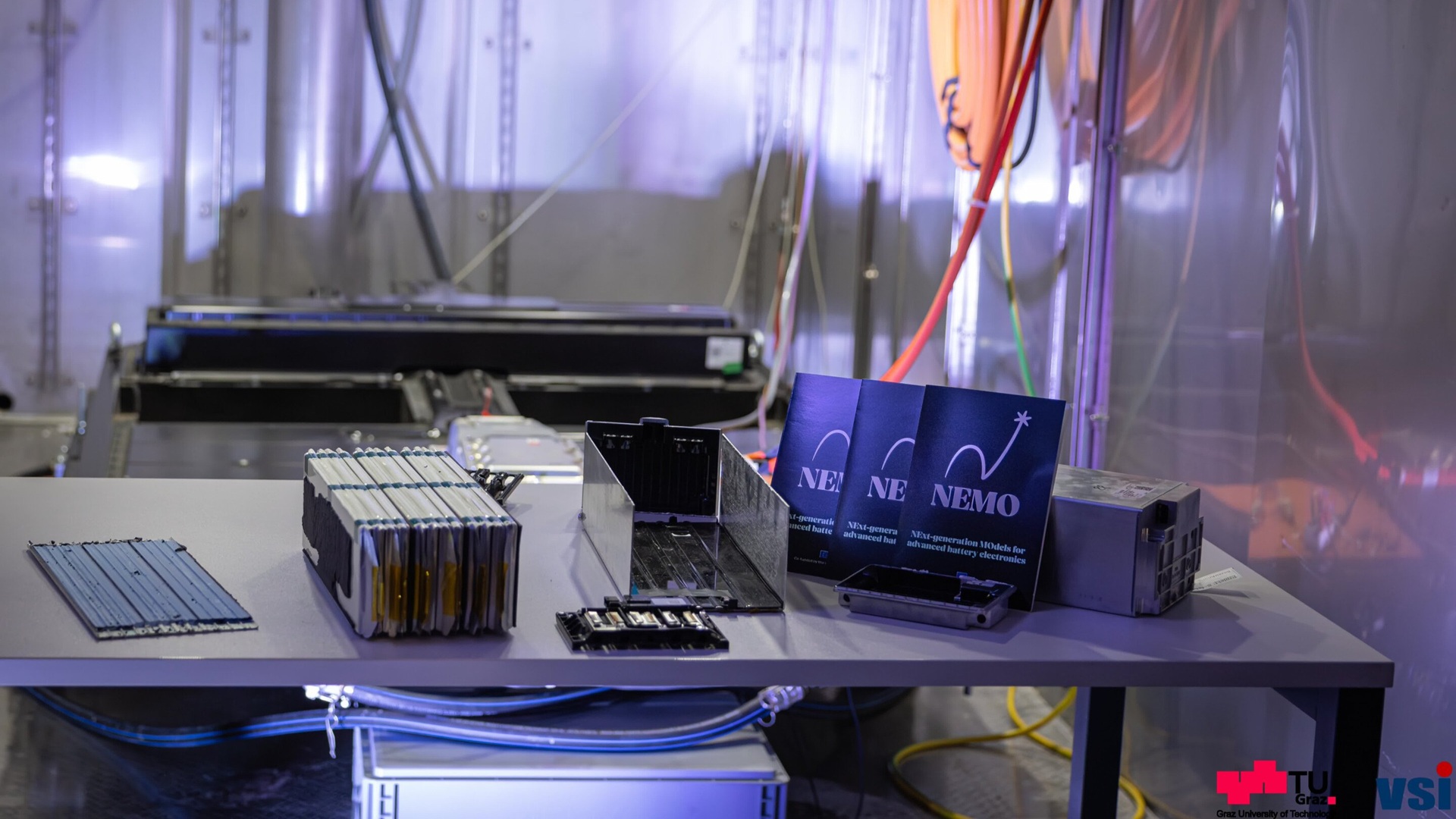
The software architecture governing modern electric vehicles is receiving a critical intelligence upgrade. Working within the European Union-funded Nemo project, a multinational research consortium has developed advanced mathematical models and predictive algorithms designed to dramatically increase the safety, durability, and lifespan of electric vehicle (EV) battery packs.

By shifting EV battery diagnostics from basic external tracking to real-time internal auditing, the system isolates microscopic cell anomalies before they escalate into catastrophic thermal failures.

Just as a symphony orchestra requires a highly synchronized conductor to maintain balance, an EV relies on a Battery Management System (BMS) to regulate power distribution, charging cycles, and energy storage.

Historically, however, standard automotive BMS hardware has been relatively blind to the internal health of individual battery cells. Conventional monitoring has relied almost exclusively on basic external indicators: total voltage, current output, and localized surface temperatures.

Because internal degradation, manufacturing flaws, and localized physical stress cannot be accurately diagnosed solely from surface metrics, vehicle computers have typically been unable to identify micro-damage until a cell suffers a systemic breakdown.

Training algorithms via physical crash stress tests

To bridge this critical observational gap, engineers at the Vehicle Safety Institute at the Graz University of Technology (TU Graz) focused on translating physical impact data into predictive software models.

Inside the university’s specialized Battery Safety Center, researchers subjected individual lithium-ion battery cells to controlled mechanical deformations, perfectly replicating real-world scenarios such as minor fender-benders or low-speed parking lot collisions.

The data collected from these laboratory stress tests was used to train specialized machine learning algorithms. This allows the upgraded BMS software to independently recognize the exact electrical signatures of internal structural damage.

Tracking internal cell expansion to block short circuits

To extract high-fidelity data from deep within active battery cells without destructive testing, the research team integrated an advanced sensor technology, Electrochemical Impedance Spectroscopy (EIS).

Operating directly within the moving vehicle, EIS measuring tools continuously pulse small electrical signals through the cells to chart shifting internal resistance profiles. This provides an active window into the microscopic chemical changes that occur as a battery ages.

To complement the EIS sensor array, the researchers engineered a predictive physical-volume model. Lithium-ion cells naturally expand and contract slightly during high-volume charging and discharging cycles. If individual cells swell excessively, the internal pressure in the sealed battery pack increases rapidly, leading to microcracks, torn separators, and internal short circuits.

By predicting these exact physical volume fluctuations in real time, the new algorithm intelligently throttles power delivery to minimize structural strain, effectively curbing the risk of internal short circuits and preventing dangerous thermal spikes before they can manifest.

Extending battery longevity via real-time adjustments

Historically, assessing battery degradation required a vehicle to be plugged into a stationary diagnostic terminal, yielding a static percentage showing total capacity loss relative to factory standards.

The new algorithms completely bypass these external limitations by providing continuous, granular insights into internal chemical shifts as aging occurs. This allows the vehicle’s computer to make minute, real-time adjustments to individual cell workloads.

By dynamically balancing the power draw across healthy versus aging cells, the system dramatically extends the overall commercial service life of the entire battery pack. Despite this massive leap in compute capability, researchers noted that the upgraded BMS does not add any meaningful size or weight penalties to the vehicle, though it does require specialized sensor configurations.

  •  

US firm’s new deep-reach drone can conduct surveillance beyond tactical frontline

An aerospace and defense company has unveiled its new deep-reach intelligence, surveillance and reconnaissance (ISR) drone. Called RQ-70, the drone delivers ISR capabilities beyond the immediate tactical frontline.

Developed by AIRO Group Holdings, the RQ-70 drone is expected to enter full-scale production in January 2027.

“The RQ-70 is a direct response to what our customers have been asking for, with longer range, greater endurance, and the same operational reliability they have come to expect from the RQ-35,” said Joe Burns, AIRO CEO.

“Together, these platforms give allied defense forces a complete ISR toolkit, and give AIRO a stronger foundation to compete across a broader set of mission requirements.”

Longer-range ISR capability

The RQ-70 builds on the operational success of the RQ-35 Heidrun, which has been deployed by NATO member and allied forces, and directly addresses growing customer demand for longer-range ISR capability and extended mission endurance. Together, the two platforms establish AIRO as a multi-platform ISR provider equipped to serve a broad spectrum of mission requirements across allied defense forces. The introduction of the RQ-70 deepens AIRO’s presence in the defense drone market while expanding its customer base, according to a press release.

The company revealed that building on the RQ-35’s proven operational model, the RQ-70 supports standard hand launch and deep-stall landing, operates in GNSS-denied environments, and incorporates onboard AI to further advance AIRO’s AI roadmap. The platform also offers configuration flexibility, including standard, long-range, and VTOL-enabled options. In addition, the RQ-70 features a modular payload and software architecture that can be tailored to specific mission requirements, enabling it to serve as a standalone, full-service ISR drone for many NATO and allied defense customers.

Other key system capabilities include up to 8 hours of endurance for persistent surveillance and longer time on station; ISR operations beyond the front lines with an operational range of 62+ miles (100 km); resilience in GPS/GNSS-denied environments; deployment by a single operator with fully autonomous mission operation and recovery; and connectivity designed for digital battlefield integration, as per the release.

Drone can deliver long-range, persistent surveillance

“Modern conflicts have shown that success depends on a multitude of factors, such as how quickly intelligence can be collected, processed, and delivered to decision-makers,” said Dr. Chirinjeev Kathuria, AIRO Executive Chairman.

“The RQ-70 is designed to meet that challenge, delivering long-range, persistent surveillance that integrates seamlessly into connected battlefield environments to provide reliable intelligence when it matters most.”

The unveiling at Eurosatory gives customers, partners, and industry stakeholders their first chance to see the aircraft configuration firsthand, providing a clear sense of its scale, capabilities, and intended operational concept.

The launch further supports AIRO’s broader growth strategy, which includes expanding its defense manufacturing footprint in Europe and developing next-generation unmanned systems. With the addition of the RQ-70, AIRO aims to strengthen its position as a provider of scalable, AI-enabled ISR solutions capable of meeting evolving battlefield requirements.


  •  

ThermoPhy glove uses micro-heating and 3D tokens for tactile data visualization

Moving beyond conventional, screen-based digital interfaces, an engineering team at the University of Adelaide has developed an innovative wearable device that maps personal data directly onto physical sensations.

The functional prototype, named ThermoPhy, utilizes a localized combination of micro-heating hardware and 3D-printed physical indicators to allow wearers to literally feel complex datasets.

Developed at the university’s Australian Research Centre for Interactive and Virtual Environments (IVE), the platform explores a new paradigm in data visualization by prioritizing private tactile responses over traditional visual graphs.

Modern health and wellness tracking apps typically generate complex dashboards filled with abstract numerical charts that can feel cold and disconnected from human experience.

By utilizing “data humanism“—a design philosophy that makes raw information more relatable and narrative-driven—the ThermoPhy project aims to cultivate a more empathetic, embodied relationship with personal telemetry. The hardware achieves this by taking sensitive or emotionally charged metrics and converting them into distinct, carefully calibrated thermal zones across a user’s hand.

Integrating micro-heating elements with tactile tokens

The physical layout of the ThermoPhy glove relies on two distinct feedback loops: thermal stimulation and tangible structural tokens. Integrated into the internal lining of the glove’s fingers are arrays of miniature electronic heating elements.

These micro-resistors are wired to a central microcontroller capable of modulating temperatures precisely to deliver subtle, gradated sensations of warmth to the wearer’s fingertips.

On the exterior surface of the glove, researchers mounted attachable 3D-printed tokens engineered to resemble miniature physical bar charts, line graphs, and heatmaps. By merging these physical shapes with variable thermal signals, the device can simultaneously convey multi-layered datasets.

For instance, a user tracking their sleep architecture can feel the physical height of a 3D bar to measure total sleep duration, while the internal heating elements concurrently warm up or cool down to signal their psychological mood or stress level upon waking.

Isolating private telemetry and simulating crowd comfort

A primary technical advantage of using thermal feedback over traditional visual or auditory alerts is its inherent privacy. Because thermal energy transfers via direct conduction, only the person physically wearing the glove can perceive the shifting temperature profiles.

This makes the system uniquely suited for displaying sensitive, human-centered metrics—such as biometric anxiety tracking, mood fluctuations, and personal wellness logs—out of the prying eyes of external onlookers or surrounding screens.

In one practical testing scenario, researchers mapped the glove’s thermal engine to environmental crowding and ambient comfort indices. As a user simulated navigating a heavily congested space, the glove’s internal temperature scaled upward proportionally.

Higher physical temperatures were programmed to represent acute levels of environmental discomfort or heightened situational stress, translating abstract density calculations into an immediate, intuitive physiological warning system.

Designing for radical affordability and future AR tracking

Beyond individual self-tracking, the research team notes that the device holds significant potential for cultivating interpersonal empathy. Because the software architecture allows data profiles to be shared across a network, one user can equip the glove to directly experience the real-time stress, biometric fatigue, or psychological state of another person, providing a completely non-verbal platform for shared storytelling and emotional communication.

A standout feature of the ThermoPhy prototype is its extreme cost efficiency. While medical-grade haptic garments often cost thousands of dollars to manufacture, the Adelaide engineering team constructed their prototype using off-the-shelf electronic parts and raw components totaling just $19.68 USD.

Moving forward, the research team plans to conduct extensive user-group testing to catalog exactly how humans interpret varying degrees of thermal feedback over extended periods.

Additionally, the team is working on software patches to integrate the haptic glove directly into emerging augmented reality (AR) and virtual reality (VR) simulation suites, laying the groundwork for immersive, screen-free computing environments.

  •  
❌