❌

Reading view

US Air Force B-52 bomber crashes after takeoff, shutting down Edwards airfield

A US Air Force B-52 Stratofortress crashed shortly after takeoff from Edwards Air Force Base in Southern California on Monday, sending a towering plume of black smoke over the desert installation and triggering a large-scale emergency response.

The bomber went down at about 11:20 a.m. local time at the base, located roughly 100 miles northeast of Los Angeles in the Mojave Desert. Officials have not said how many people were aboard the aircraft or whether anyone survived.

Video captured by local news helicopters showed smoke continuing to rise from the crash site hours later. The area near the runway appeared heavily scorched, with blackened ground marking the impact zone. Few recognizable pieces of the aircraft could be seen from the air. The cause of the crash remains unknown.

Emergency response continues

Edwards Air Force Base said emergency crews rushed to the scene immediately after the aircraft went down. In an initial statement, the base said the situation remained ongoing and that additional details would be released as they became available.

πŸ‡ΊπŸ‡Έ A US Air Force B-52 bomber crashed shortly after takeoff from Edwards Air Force Base in California. pic.twitter.com/G56SEDLkkS

β€” PAryan 8πŸͺ½8 (@RebelGoy88) June 15, 2026

Officials later posted an update on X, saying the installation had shut down its airfield while first responders carried out rescue and recovery operations. Aircraft headed to Edwards were diverted elsewhere, and the base suspended all non-commercial visitor passes until further notice.

Update- 12:48 PDT: The airfield has been closed, and all inbound aircraft are being diverted.

All non-commercial visitor passes have been suspended until further notice to allow the installation to focus entirely on emergency response operations.

β€” Edwards Air Force Base (@EdwardsAFB) June 15, 2026

A spokesperson for the installation declined to provide additional details from local media as authorities focused on the response effort. Investigators are expected to examine the wreckage, maintenance history, and flight information to determine what led to the accident.

Questions surround crew

The Air Force has not identified the crew members involved or disclosed their condition. The B-52H typically operates with a five-person crew consisting of pilots and specialized officers responsible for navigation and electronic warfare duties.

As news of the crash spread, lawmakers offered support to those affected. Rep. Jay Obernolte, whose district includes Edwards Air Force Base, said he and his wife were praying for everyone involved, including the crew, their families and the first responders working at the scene. Rep. Lisa McClain also expressed support, saying her prayers were with those impacted by the crash.

My prayers are with everyone involved in the B-52 crash at Edwards Air Force Base this afternoon. Thank you to the emergency crews responding right now. Our service members carry the weight of this nation’s defense every single day. We are with them.

β€” Chairwoman Lisa McClain (@RepLisaMcClain) June 15, 2026

Aging bomber fleet

The B-52 Stratofortress first entered service in the 1950s and remains one of the oldest aircraft still flying in the US military inventory. The Air Force currently operates 76 B-52H bombers. Despite their age, the aircraft continue to fly operational missions and have undergone repeated modernization efforts.

Monday’s incident marks the most serious B-52 accident in years. The last fatal crash involving the bomber occurred in 2008, when six Air Force personnel died after a B-52 crashed near Guam during preparations for a ceremonial flyover.

Boeing stopped building the aircraft in 1962, meaning the Air Force can no longer replace lost bombers with newly manufactured airframes. For now, investigators remain focused on the immediate task of understanding what happened at Edwards Air Force Base and determining the fate of those aboard the aircraft.

  •  

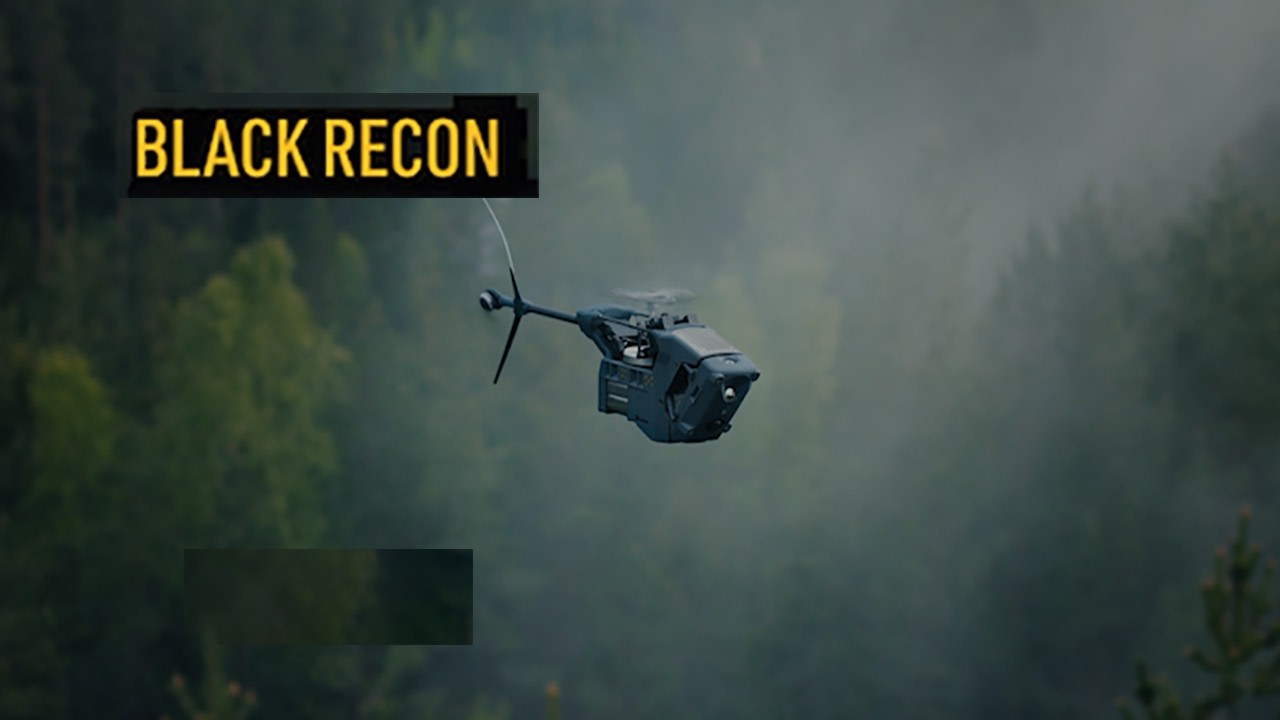
New sub-450-gram mini drone system sustains autonomous surveillance despite GPS jamming

As armies look for ways to keep soldiers under armor while maintaining constant awareness of the battlefield, Teledyne FLIR Defense has introduced a micro-drone system designed to do both.

Unveiled at the Eurosatory defense exhibition in Paris, the Black Recon system enables troops to send out small reconnaissance drones from military vehicles and fixed installations while remaining under protection. The same platform retrieves the aircraft after each mission and prepares them for their next deployment.

The launch reflects a broader shift in military technology. Armed forces increasingly want autonomous systems that can shorten decision cycles, extend reconnaissance beyond line of sight, and continue operating in electronic warfare environments where GPS signals and communications links face disruption.

Keeping troops protected

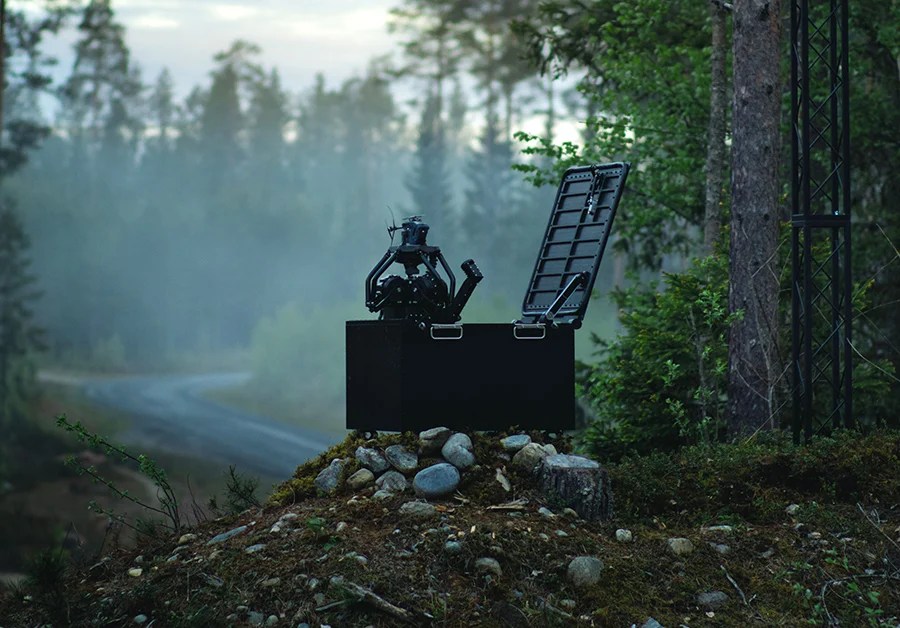
At the center of Black Recon is a docking station that houses and supports up to three micro-unmanned aircraft. Rather than relying on a single drone and human operators in the field, the system cycles aircraft through missions. One drone can conduct reconnaissance while another recharges, creating what Teledyne describes as near-continuous intelligence, surveillance and reconnaissance coverage.

Each aircraft launches autonomously, carries out reconnaissance and target acquisition tasks, then returns to the vehicle or installation for capture and recharging before the next sortie begins. The approach could prove particularly valuable for mechanized units operating in contested environments where even brief exposure outside a vehicle carries risk.

β€œBlack Recon represents a major step forward in integrated reconnaissance for ground forces,” said Dr. JihFen Lei, president of Teledyne Defense and Aerospace Group and senior vice president of Teledyne Technologies.

Lei said integrating launch, recovery, and recharging capabilities directly into military platforms gives operators persistent situational awareness while speeding access to intelligence and improving force protection during fast-moving operations.

Built for contested skies

The system was designed specifically for mounted operations instead of being repurposed from equipment meant for troops on foot. Teledyne said each drone weighs less than 450 grams and can stay aloft for about 50 to 60 minutes. The aircraft can also travel at speeds of up to 25 meters per second, extending surveillance beyond traditional engagement ranges.

Black Recon mini-drone system swapping. Credit – Teledyne FLIR Defense

Black Recon also targets one of modern warfare’s growing challenges: operating in electronically contested environments. The company said the drones can continue missions in GPS-denied conditions using advanced sensors and visual navigation systems. Visual inertial navigation also enables radio-silent operations without depending entirely on traditional radio-frequency links.

Additional capabilities include onboard relay functions to extend communications coverage and compatibility with the Black Hornet 4 nano-drone, which is already in service with several military customers.

The company also said the system can support thermal and visible imaging payloads, providing troops with real-time imagery and targeting data during operations.

Beyond reconnaissance missions

Although Teledyne developed Black Recon with military users in mind, the company said the technology could eventually support public safety missions, including border security, critical infrastructure monitoring and maritime patrol operations.

The platform’s modular design also leaves room for future payloads. Planned additions include chemical, biological, radiological, and nuclear detection sensors, as well as lethality modules that could expand the system’s role beyond surveillance.

Black Recon is available for order now, with customer deliveries expected to begin in 2027. The launch comes as defense companies race to develop autonomous systems capable of maintaining battlefield awareness while reducing the burden and risk placed on human operators.

πŸ’Ύ

Teledyne FLIR unveils Black Recon micro-drone system, which lets vehicles deploy, recover, and recharge compact UAVs without exposing crews.
  •  
❌