
❌

Reading view

US Navy’s new 20,000-ton Columbia-class nuclear-powered submarine takes shape
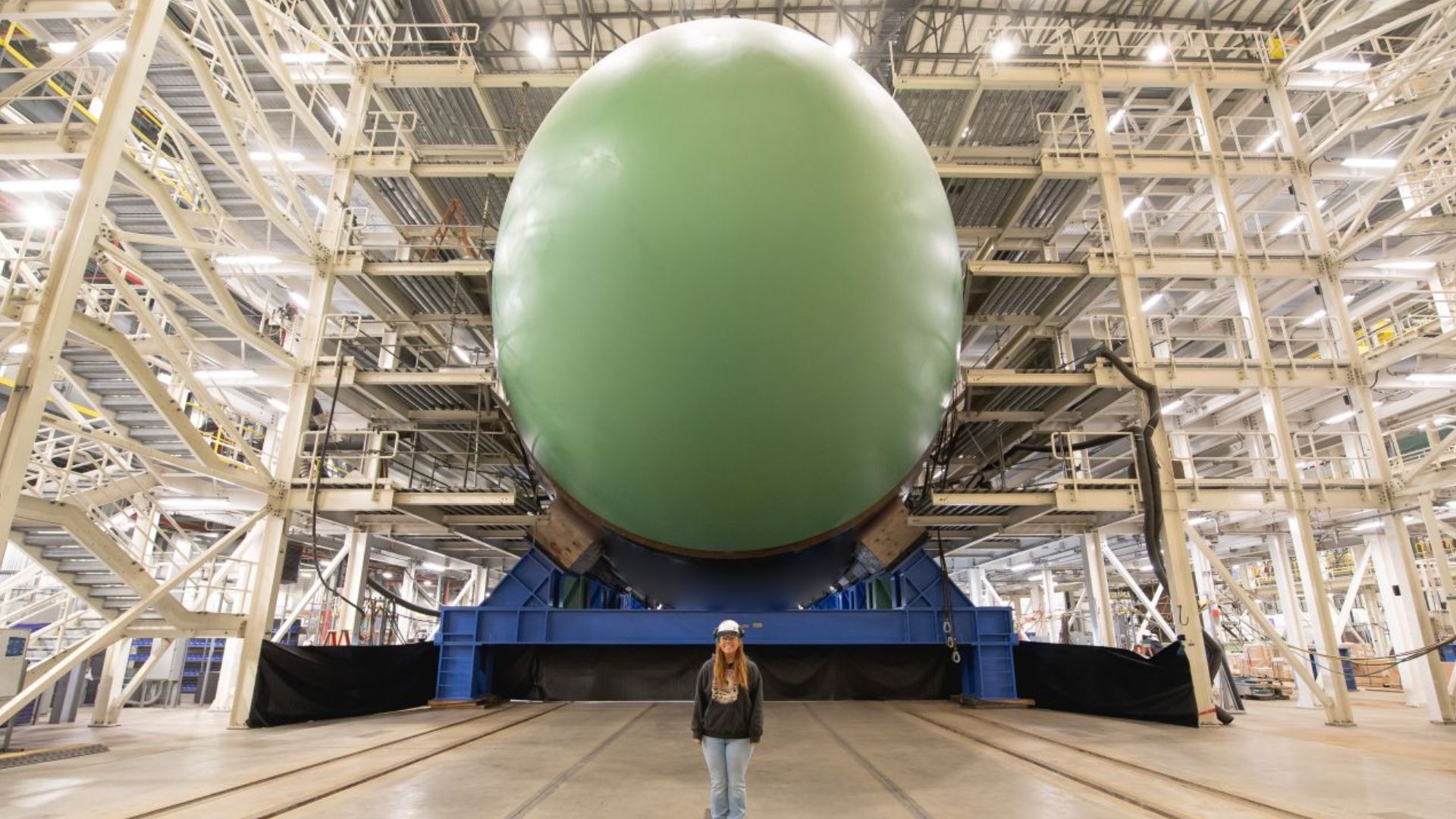
A recently released photograph offers a clear view of the construction of the future USS District of Columbia (SSBN-826), the first of the U.S. Navy’s new Columbia-class ballistic missile submarines. Shared online by Ashley Cowen, Lead Photographer at Newport News Shipbuilding, the image shows major parts of the submarine as work continues toward its planned delivery in 2029.

The photo shows both the bow and the stern sections under construction. These are key parts of the submarine and show that work on the Navy’s top-priority strategic deterrence program is making steady progress.

Key submarine sections take shape

The new image shows clear progress on the bow and stern sections of the submarine. The stern will later house the propulsion system and the unique X-shaped control surfaces, designed to help the submarine move and perform better underwater.

The sections seem to be inside General Dynamics Electric Boat’s South Yard Assembly Building or another large facility at the main shipyard in Groton, Connecticut.

The image arrives months after the arrival of the massive β€œAtlas” dry dock, which reached the shipyard in January 2026. This dry dock was built to support the construction, maintenance, and future servicing of Columbia-class submarines.

Ongoing deliveries of major submarine parts, hull sections, and support equipment indicate the program is on schedule as builders work to complete the first submarine in the class.

Designed to replace the Ohio-class fleet

The Columbia-class submarines are being built to replace the older Ohio-class ballistic missile submarines, which started service in the early 1980s. As the Ohio-class submarines retire through the early 2040s, the Columbia-class will take over the sea-based part of America’s nuclear deterrent.

Design work for the USS District of Columbia started in 2007, after the U.S. Navy partnered with General Dynamics Electric Boat to create a new class to follow the Ohio-class fleet.

The Navy describes the Columbia-class as being designed to survive better, be available for operations more often, and last longer than the previous class. These submarines are expected to stay in service until at least the 2080s.

This program is seen as one of the most important defense upgrades happening in the United States, since ballistic missile submarines are the most secure part of the country’s nuclear defense system.

Advanced technologies and larger design

The Columbia-class brings several big improvements over the Ohio-class submarines. These include quieter engines, better sonar, upgraded sensors, and new electronic controls for steering the submarine.

These submarines will also be larger than the Ohio-class submarines. When finished, each Columbia-class submarine will weigh more than 20,000 tons.

Even though the new submarines are larger, they will carry fewer missilesβ€”16 UGM-133 Trident II D5 Life Extension submarine-launched ballistic missiles instead of the 24 Trident missiles on the Ohio-class. This change aligns with new strategic needs while maintaining a strong nuclear deterrent.

Each submarine will have four missile compartments, each holding four ballistic missiles.

Massive industrial effort supports construction

The Columbia-class submarines are built using a modular approach. Different contractors build large sections separately, and then these parts are put together at Electric Boat’s Groton facility.

Work is currently underway at Quonset Point, Rhode Island, with help from over 3,000 suppliers across the country. Newport News Shipbuilding makes the main bow and stern parts before they are sent to be added to the final hull.

The Navy plans to build a total of 12 Columbia-class submarines. Boats four through eight will be procured at a rate of one submarine per year over the next five years, with the program costing about $62 billion.

According to current plans, the USS District of Columbia will enter service in 2029, and the last submarine in the class should join the fleet around 2041 or 2042. Together, these submarines are expected to provide America’s sea-based nuclear deterrent for many years.
  •  

China’s largest solar-hydrogen-storage project completed with 120,000-kWh backup

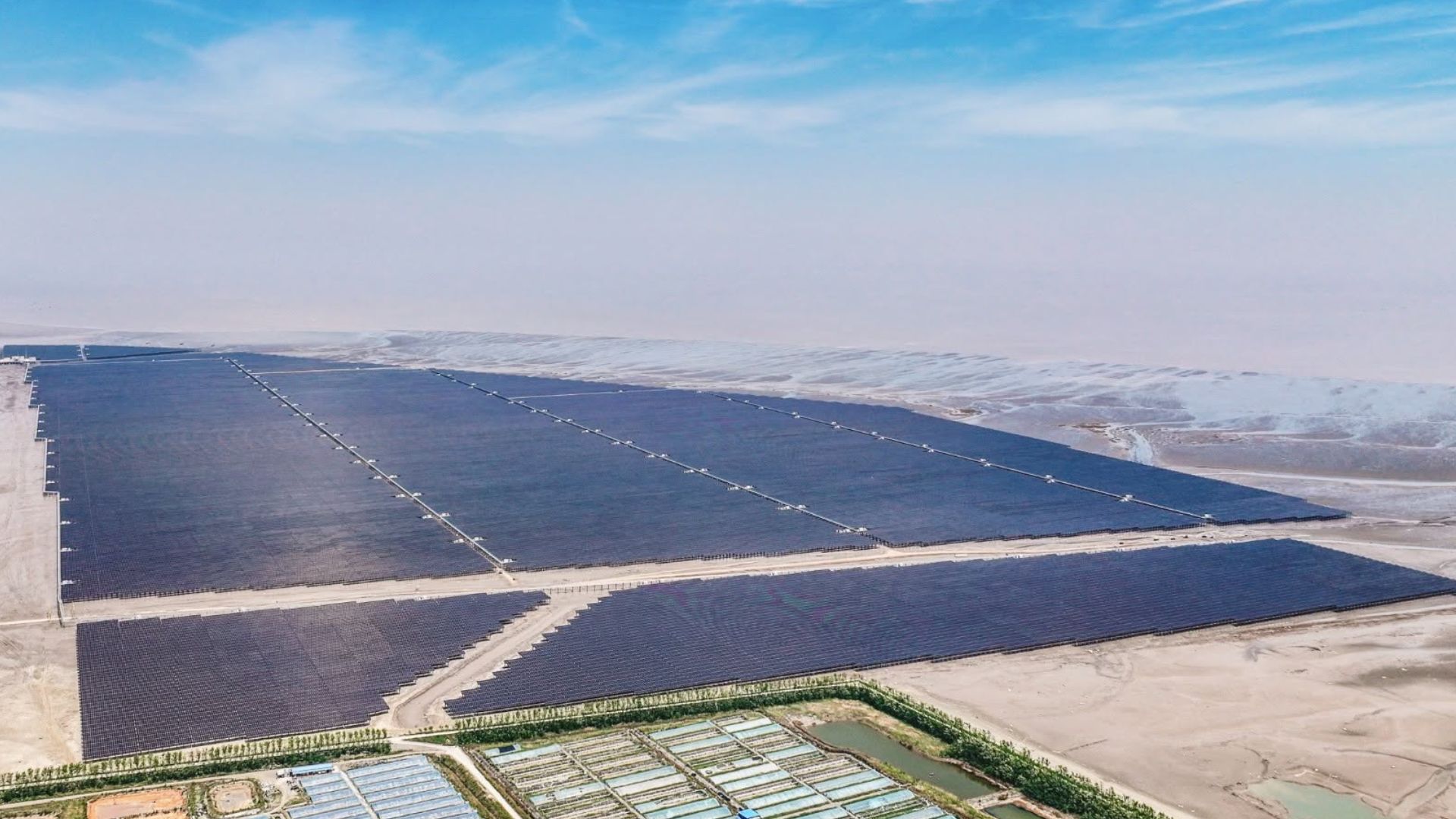
China has completed its largest offshore project, which combines solar power, hydrogen production, and energy storage. This marks a big step in the country’s efforts to create more reliable renewable energy systems. The project, off the coast of Rudong in East China’s Jiangsu Province, was reported as completed on Wednesday, according to China Media Group.

Funded by CHN Energy Guohua Energy Investment Co., the facility is described as China’s largest offshore solar demonstration project that combines solar power, hydrogen production, and energy storage.

Massive offshore facility combines multiple energy technologies

The Rudong project features 400,000 kilowatts (400 MW) of solar capacity and a new 220-kilovolt onshore booster station. It also includes a hydrogen production station capable of producing 1,500 standard cubic meters of hydrogen per hour, along with an electrochemical energy storage station.

According to Chinese media reports, this is the first project in China to combine power generation, hydrogen production, energy storage, full energy use, and coastal ecological management in one development.

The facility has been designed around what officials describe as an integrated β€œelectricity-storage-hydrogen” model. Solar power made offshore can go to the grid, be stored in batteries, or be used to make hydrogen from water. This setup lets energy be used in different ways based on demand and conditions.

The project is built on coastal tidal flats, which are often considered suitable sites for large renewable energy projects. It also uses advanced solar technology and smart control systems to improve energy conversion and management.

China's largest integrated PV-hydrogen-storage project has completed construction in east China's Jiangsu Province. The project, with a total photovoltaic capacity of 400,000 kW, includes a newly built 220 kV onshore booster station, a hydrogen production facility with a… pic.twitter.com/gd2KuSPBkA

β€” People's Daily, China (@PDChina) June 10, 2026

Green hydrogen plays a central role

One important feature of the project is that it can make green hydrogen using electricity from renewable sources. By using solar power to split water into hydrogen and oxygen, the facility can store energy as hydrogen for later use.

The Nantong Daily reported earlier this year that the solar power station achieved full-capacity grid connection on April 29, 2025. When the whole project is running, the energy storage station will be able to supply 120,000 kilowatt-hours of electricity during peak demand each day.

Meanwhile, the hydrogen production facility is expected to generate up to 180 tons of green hydrogen each year. This hydrogen can be used by nearby industries, such as chemical manufacturing and transportation, that are looking for cleaner fuel options.

Officials say the finished solar, hydrogen, and storage facilities will operate as a closed-loop energy system covering generation, storage, use, and backup.

Experts highlight stability advantages

Lin Boqiang, director of the China Center for Energy Economics Research at Xiamen University, said that adding hydrogen and storage technologies can help address the problem of solar power’s volatility. He said the project shows that renewable energy is moving beyond just adding more power generation.

β€œIts completion marks a further step forward for China in the field of new-energy multi-energy complementarity,” he stated. He added that the project is now focused on energy conversion efficiency, integrating different energy sources, and making the system more stable, rather than just increasing capacity.

He also said that coastal regions often have strong wind and solar resources but still face inconsistent energy supply.

China scales up renewable hydrogen production

This project comes as China is rapidly expanding hydrogen production from renewable energy across the country. The National Energy Administration says the industry is moving from pilot projects to large-scale commercial use.

As of the end of March, completed and ongoing renewable hydrogen projects in China had a total production capacity of over 1 million tons per year. More than 250,000 tons per year are already in operation, which is more than double the capacity at the end of 2024. Projects under construction will add over 900,000 tons of annual capacity.

Lin noted that the long-term value of projects like Rudong will depend on reducing development costs and improving the efficiency of hydrogen production. Still, the new facility is one of the best examples to date of how solar power, energy storage, and hydrogen production can work together in a large-scale clean energy system.

  •  
❌