Login

Four-legged robot dog spots hazardous toxins before firefighters enter danger zones
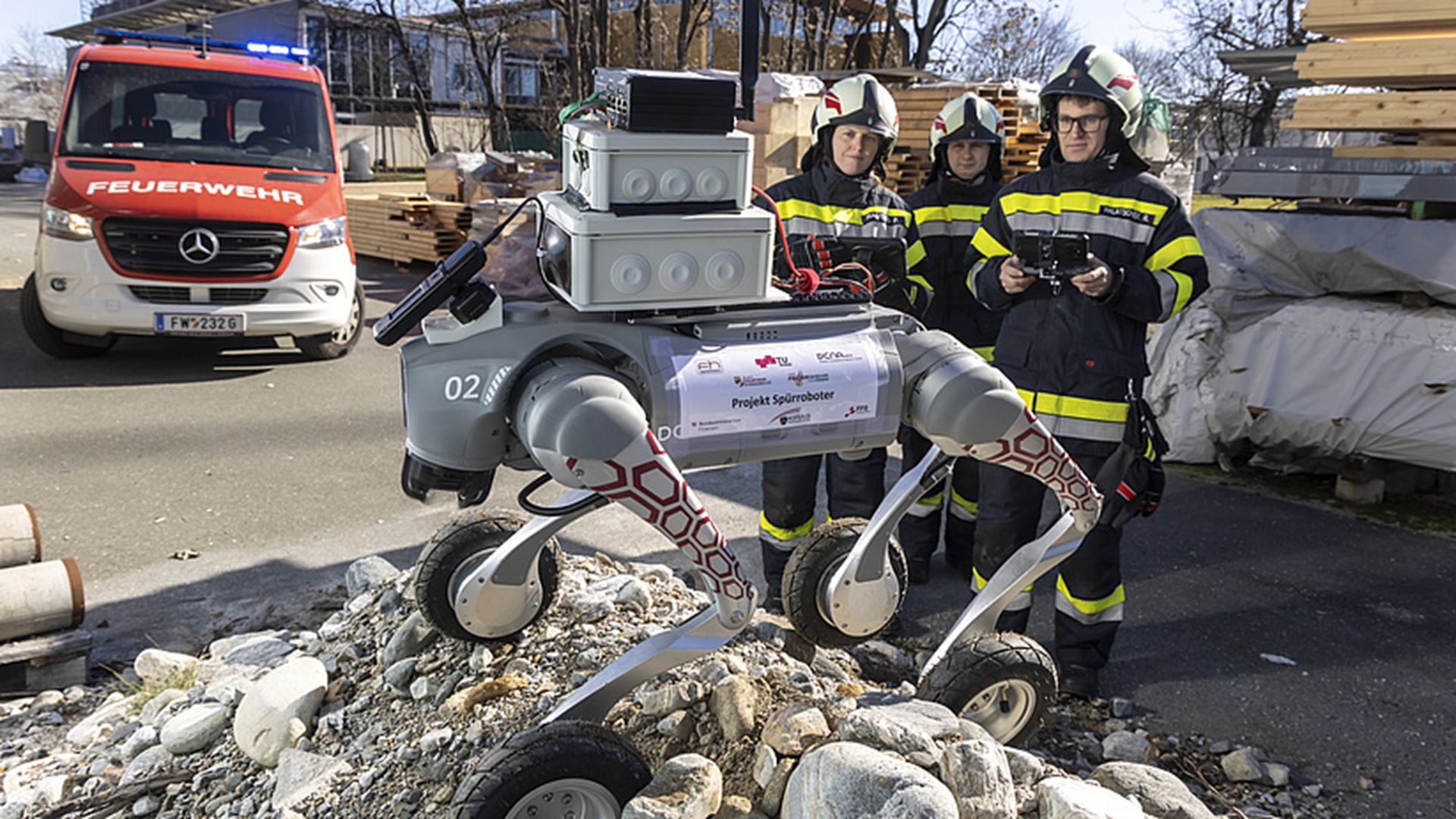
A four-legged robot dog designed to detect toxic substances could soon become the first responder sent into dangerous areas and help firefighting crews assess the damage without risking their own safety.
The remote-controlled detection robot was developed by researchers at the Graz University of Technology (TU Graz) in Austria. It is a compact, quadruped system that also incorporates measurement devices already used by fire services.
According to the research team, the detection robot has already been extensively tested by emergency services as part of large-scale pollutant drills. It has proved its ability to provide real-time data from danger zones.
Gerald Steinbauer-Wagner, PhD, an associate professor and robotics researcher at TU Graz, revealed that the dog can be deployed on missions ahead of firefighting crews. “It measures pollutant concentrations and delivers the data together with a camera image in real time from the danger zone,” Steinbauer-Wagner explained.
First into danger
In chemical accidents, emergency crews need to identify hazardous substances quickly while operating under dangerous conditions. Firefighters must typically don bulky protective suits, such as a Level A or B Hazmat suit, prior to entering contaminated areas to take measurements.
Although necessary to ensure total isolation from hazardous environments, the process can consume valuable time during an emergency. To address this issue, the team turned to robotics.
Credit: Lunghammer – TU Graz
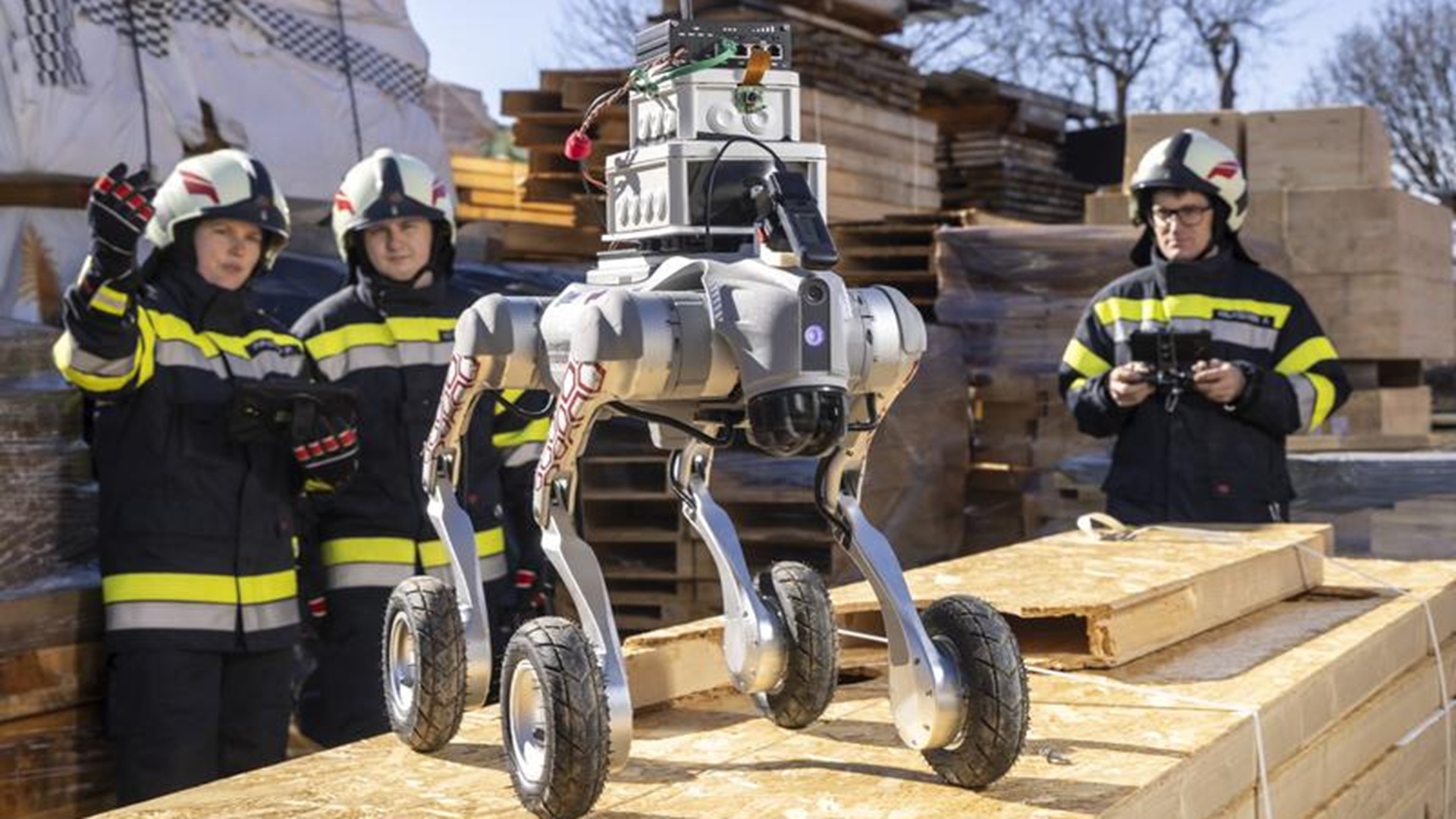
As per the researchers, the robotic dog can be sent in before firefighters to collect critical information from the scene. “This allows the emergency services to assess the situation without having to enter the danger zone themselves,” Steinbauer-Wagner continued.
The technology reduces firefighting teams’ direct exposure to toxic substances. It could significantly improve their safety during industrial accidents and hazardous materials incidents.
“Based on a comprehensive requirements analysis, we developed an appropriate robotic strategy and integrated it into existing standard operational procedures,” Steinbauer-Wagner added. “This should ensure seamless collaboration between man and machine during the operation.”
A safer perspective
Instead of creating a new system, the team made it compatible with existing fire-service procedures. The researchers conducted an extensive requirements analysis before integrating it into established hazardous materials response protocols. The robot relies on commercially available parts for mobility, sensing, data processing, communication, and visualization.
“The results of the field tests were extremely promising in terms of mobility, user-friendliness and effectiveness,” Steinbauer-Wagner reported. Meanwhile, a recent potential analysis supported by the Austrian Research Promotion Agency (FFG) highlighted several advantages of the technology.
Gerald Czech of the Austrian Federal Fire Service Association emphasized that, in the event of a real incident, he would send the robot dog into the contaminated area before the firefighters go in. “For the fire service, every minute counts during a hazardous materials operation,” he said in a statement.
Czech further said receiving measurement data and images from the danger zone while crews are still putting on protective gear could save valuable time during an emergency. “This increases the safety of the crew and improves operational command,” he concluded.
Experts from the Styrian and Upper Austrian fire service associations, TU Graz, the University of Applied Sciences Upper Austria, as well as the Disaster Competence Network Austria, support the use of detection robots. They propose making them a permanent part of fire departments’ hazardous materials response teams.