❌

Reading view

A two-nanometer crystal stretch uncovers magnetism long hidden in ruthenium dioxide

For years, ruthenium dioxide (RuO₂) has kept physicists confused. Depending on which experiment they looked at, the metallic oxide either appeared magnetic or not magnetic at all. 

This uncertainty has made it difficult to determine whether RuO₂ belongs to an unusual new class of materials known as altermagnets, which could one day power faster and more energy-efficient electronics.

Now, in a new study, researchers have shown that the missing piece may not be the material itself—but how tightly it is stretched. By growing an ultrathin RuO₂ film just two nanometers thick and keeping its crystal lattice under strain, they detected clear signs of magnetic order that had remained hidden in thicker, relaxed samples. 

The findings suggest that magnetism in RuO₂ is not a fixed property but something scientists may be able to switch on simply by engineering the material’s atomic structure. “RuO2 has attracted renewed interest due to expectations of prominent altermagnetic spin splitting,” the researchers said.

The debate over an unusual magnetic material

RuO₂ is already widely used as an industrial catalyst and is valued for its excellent electrical conductivity. 

However, over the past few years, it has become the focus of an intense debate because some experiments suggested it might be an altermagnet—a recently proposed type of magnetic material that combines features of conventional magnets and nonmagnetic materials.

Unlike an ordinary bar magnet, an altermagnet has almost no overall magnetization even though its electrons remain magnetically ordered. Previous studies, however, produced conflicting results. 

Some reported magnetic order, unusual Hall effects, and efficient spin-charge conversion, while others found no evidence of magnetism in bulk crystals or relaxed thin films. A recent study even concluded that RuO₂ showed no altermagnetic behavior down to films 5 nanometers thick. 

However, no one had directly examined fully strained films thinner than about four nanometers using techniques capable of measuring both the motion and spin of electrons at the same time.

“The spin structure of RuO2 remains largely unexplored in the ultrathin limit,” the study authors note.

Stretching atoms to uncover hidden magnetism

To explore that missing regime, the researchers grew atomically smooth RuO₂ films only two nanometers thick on titanium dioxide-based substrates. Since the substrate’s atomic spacing differs slightly from that of RuO₂, the ultrathin film is forced to stretch to match it—a condition known as epitaxial strain.

You can think of it like laying a small wire mesh over a frame with slightly different spacing. The mesh has to stretch to fit, subtly changing the positions of every junction. In a crystal, those tiny shifts alter how electrons move and interact.

The team then used spin-resolved angle-resolved photoemission spectroscopy (spin-ARPES), which shines light on the material to eject electrons. By measuring each electron’s energy, momentum, and spin, scientists can map the material’s electronic structure in remarkable detail.

To ensure the results were genuine, they repeated the measurements in two different experimental geometries to separate real magnetic signals from possible measurement artifacts. Additional X-ray and optical experiments confirmed that the films remained fully strained and revealed their crystal symmetry.

Hidden magnetic signals emerge

The measurements uncovered an unusual momentum-dependent spin texture, meaning the direction of an electron’s spin changed systematically depending on how it moved through the crystal.

After performing a detailed symmetry analysis, the researchers ruled out nonmagnetic explanations, including effects caused by the crystal’s polar structure or by the measurement process itself.

As the study authors note, “A comprehensive symmetry analysis rules out nonmagnetic origins of this spin texture. These findings suggest an emergent nonrelativistic spin structure enabled by epitaxial strain in the ultrathin limit, marking a distinct departure from the behavior of relaxed or bulk RuO₂.”

The observed behavior was consistent with either weak ferromagnetism or altermagnetism, indicating that strain fundamentally changes the electronic ground state of RuO₂.

Strain as a new control knob

The findings suggest that strain could become a practical way to switch magnetic properties on in materials that normally do not display them, opening new possibilities for low-power spintronic devices based on electron spin instead of electric charge.

However, the experiments were carried out at around 15 kelvin (about −258°C), so it is still unknown whether the same behavior persists at room temperature. 

Future studies will need to determine exactly which magnetic state emerges and whether it can be reliably controlled in real-world devices.

The study is published in the journal Science Advances.

  •  

China’s 40,000-ton amphibious assault ship showcases battle power in live-fire tests

China has released new footage highlighting tests aboard its Type 076 amphibious assault ship Sichuan, including the vessel’s first publicly disclosed live-fire launch of countermeasures and an electromagnetic catapult test using a dead load.

The Sichuan features a new propulsion system and an electromagnetic catapult designed to support future unmanned operations at sea, marking a step toward expanding China’s naval aviation capabilities beyond traditional carrier-based platforms. 

Military observers noted that the dead load test represents an early-stage evaluation carried out before full aircraft launch trials, helping validate the performance and reliability of the electromagnetic launch system.

Operational readiness with electromagnetic catapult trial

The successful completion of the electromagnetic catapult test during the construction phase of the Type 076 amphibious assault ship suggests that the system has reached an operational and reliable stage, according to military observers. 

The vessel has already completed multiple sea trials, fueling expectations that it could soon enter service. Observers also anticipate the future release of footage showing the ship conducting launches of actual carrier-based aircraft, which would provide further insight into its capabilities, Global Times reported.

Chinese military affairs expert Song Zhongping said the Type 076 amphibious assault ship marks a significant technological advance, introducing new possibilities for naval operations. Speaking to the Global Times on Saturday, he noted that the vessel addresses the challenge of deploying carrier-based aircraft from amphibious assault ships while also driving innovation in future maritime operational concepts.

The Type 076 combines technologies developed for China’s Type 075 amphibious assault ship and Type 003 aircraft carrier, bringing together existing systems to create a more advanced naval platform. According to Song, the integration of these technologies improvaes the ship’s overall capabilities and demonstrates China’s progress in electromagnetic catapult systems and related technologies.

Enabling longer-range drone missions with heavier payloads

The electromagnetic catapult system aboard the Type 076 is expected to expand the range of aircraft the ship can deploy, supporting both manned fighter jets and larger unmanned aircraft. According to Song, the technology could allow drones to operate with heavier payloads and greater endurance, enabling them to carry additional equipment or weapons for longer-range missions.

Launched in December 2024, the Sichuan began its first sea trials in November 2025, according to Xinhua News Agency. The vessel has a full-load displacement of more than 40,000 tons and features a twin-island superstructure, a full-length flight deck, and newly integrated electromagnetic catapult and arrestor systems.

These technologies are designed to improve aircraft launch and recovery capabilities while expanding the operational flexibility of the ship. Furthermore, the vessel is designed as a multi-role naval platform capable of supporting a range of operations, including the deployment of fixed-wing aircraft, helicopters, and amphibious equipment. 

Chinese media note that the ship has successfully completed multiple rounds of sea trials, allowing engineers and naval crews to evaluate its systems, performance, and operational readiness ahead of its expected commissioning.

💾

China’s Type 076 amphibious assault ship Sichuan has been shown testing its defensive countermeasures and electromagnetic catapult system.
  •  

7 most stunning exoplanets discovered in recent years

More than 6,000 exoplanets have now been confirmed beyond our Solar System, but only a handful truly redefine what astronomers thought was possible. Over the past few years, observatories such as the James Webb Space Telescope (JWST), ESO’s Very Large Telescope (VLT), and NASA’s TESS mission have uncovered alien worlds that are evaporating into space, forming before our eyes, or hiding in plain sight for more than a decade. Here are seven of the most fascinating exoplanets discovered or dramatically redefined in recent years.

1. Beta Pictoris d: The planet that hid for more than a decade

Astronomers using the European Southern Observatory’s Very Large Telescope recently announced the discovery of Beta Pictoris d, a giant planet that had remained hidden in archival observations for over ten years. The world is about 100 times fainter than its famous sibling, Beta Pictoris b, making it one of the faintest exoplanets ever directly imaged from Earth. Its discovery also makes Beta Pictoris only the second known planetary system with three directly imaged planets, providing astronomers with an exceptional laboratory for studying planetary formation.

2. BD+05 4868 Ab: A planet literally evaporating away

Few exoplanets are as dramatic as BD+05 4868 Ab. Located about 140 light-years away, this rocky world orbits so close to its host star that its surface is believed to be molten. Intense heat strips away rock from the planet, creating spectacular comet-like mineral tails stretching millions of kilometers into space. Astronomers believe they are witnessing the slow destruction of an entire planet in real time, making it one of the most unusual planetary systems ever observed.

3. WISPIT-2 b: Watching a planet being born

Most exoplanets are discovered long after they have formed. WISPIT-2 b is different. It was directly imaged while still embedded within the gas-and-dust disk surrounding its young star. The planet appears to have carved a visible gap inside the protoplanetary disk, giving astronomers one of the clearest views yet of planetary formation in progress. Systems like WISPIT-2 are exceptionally rare and provide valuable insights into how giant planets emerge from stellar nurseries.

4. TOI-561 b: A lava world that challenged expectations

The rocky exoplanet TOI-561 b circles its star in less than half an Earth day, making its surface hot enough to sustain vast oceans of molten rock. Recent observations have suggested that this extreme world may retain an atmosphere despite temperatures that should have stripped lighter gases away long ago. Understanding how such planets survive under these conditions could improve scientists’ understanding of rocky planets orbiting close to their stars.

5. 2M1510 (AB) b: A real-life Tatooine

Science fiction imagined planets orbiting two suns decades before astronomers found one. 2M1510 (AB) b goes a step further by orbiting two brown dwarfs instead of ordinary stars. Brown dwarfs are often described as “failed stars” because they never became massive enough to sustain hydrogen fusion. The discovery has challenged existing theories of planet formation, suggesting planets can emerge in environments previously considered unlikely.

6. K2-18 b: The exoplanet that keeps scientists debating life

Few planets have generated as much discussion as K2-18 b. Located within its star’s habitable zone, the super-Earth has been studied extensively by the James Webb Space Telescope for signs of atmospheric chemistry that could hint at biological activity. While recent observations sparked excitement over possible biosignature gases, subsequent analyses have emphasized that no evidence of extraterrestrial life has been confirmed. Even so, K2-18 b remains one of the most important targets in the search for potentially habitable worlds.

7. L 98-59 d: A volcanic world unlike anything in our Solar System

Among the newest additions to this growing list is L 98-59 d, an exoplanet about 35 light-years away that appears to host a global molten magma ocean beneath an atmosphere rich in sulfur compounds. The discovery offers astronomers an unprecedented opportunity to study how rocky planets evolve under extreme conditions. Unlike Earth, where volcanic activity is largely localized, L 98-59 d may represent an entire planet shaped by continuous volcanism, making it one of the most hostile—and scientifically valuable—worlds ever identified.

The golden age of exoplanet discovery

Every year, astronomers uncover hundreds of new worlds, but the most exciting discoveries are no longer just about adding another dot to the catalog. Today’s observatories are beginning to reveal how planets form, how they die, what their atmospheres contain, and whether any could potentially support life.

With the James Webb Space Telescope, next-generation ground observatories, and future missions on the horizon, these seven worlds are unlikely to remain the most astonishing for long. The next truly extraordinary exoplanet could already be waiting in the data.

  •  

Sodium-ion batteries explained: Are they really the next big thing for EVs?

For years, lithium-ion batteries have dominated the electric vehicle (EV) industry. But a new contender is rapidly gaining momentum. Sodium-ion batteries, once considered a laboratory curiosity, are now entering commercial production, with companies such as CATL unveiling second-generation cells and several automakers exploring the technology for future vehicles.

The growing interest has led to an obvious question. Could sodium-ion batteries replace lithium-ion batteries? While sodium-ion batteries offer several compelling advantages, they are unlikely to replace lithium altogether. Instead, they could become an important part of a more diverse battery ecosystem.

How do sodium-ion batteries work?

At first glance, sodium-ion batteries look remarkably similar to lithium-ion batteries. Both generate electricity by shuttling charged ions between a positive electrode (cathode) and a negative electrode (anode) during charging and discharging. The key difference is that lithium-ion batteries use lithium ions, while sodium-ion batteries use sodium ions.

That seemingly small change has major implications. Sodium is one of the most abundant elements on Earth and is widely available across many regions, unlike lithium, whose mining and refining remain concentrated in relatively few countries. Because of this, sodium-ion batteries have the potential to reduce supply chain risks while lowering dependence on critical minerals.

Why are researchers so excited?

The biggest attraction is cost. Lithium prices have fluctuated dramatically over the past decade as EV demand surged. Sodium, by comparison, is inexpensive and widely available, making it an attractive alternative for manufacturers looking to build more affordable batteries.

Sodium-ion chemistry also performs well in cold weather, where conventional lithium-ion batteries often experience noticeable reductions in charging speed and driving range. Another advantage is safety. Many sodium-ion designs demonstrate excellent thermal stability, reducing the likelihood of thermal runaway compared with some lithium-based chemistries.

Taken together, these characteristics make sodium-ion batteries particularly appealing for lower-cost EVs, grid-scale energy storage, and commercial vehicles where affordability and durability often matter more than maximum driving range.

So why hasn’t sodium replaced lithium?

The answer comes down to energy density. Lithium is a much lighter element than sodium, allowing lithium-ion batteries to store more energy for the same weight. Modern lithium iron phosphate (LFP) batteries commonly exceed 200 watt-hours per kilogram, while nickel-rich lithium chemistries can achieve even higher values.

Although sodium-ion technology has improved rapidly, with commercial cells now approaching 175 Wh/kg, it still trails the best lithium-ion batteries. That means an EV using sodium-ion cells generally requires a larger or heavier battery pack to achieve the same driving range.

For compact city cars, this may not be a major issue. For premium long-range EVs, however, every kilogram matters.

The future may not be lithium or sodium it could be both

Perhaps the most interesting development isn’t replacing lithium batteries at all. Several manufacturers, including CATL, are developing hybrid battery packs that combine lithium-ion and sodium-ion cells in a single vehicle.

The idea is to let each chemistry do what it does best. Lithium cells provide high energy density for long driving range, while sodium-ion cells offer strong cold-weather performance, improved durability, and lower costs. Advanced battery management systems can intelligently balance power between the two chemistries depending on temperature, driving conditions, and charging requirements.

If successful, these hybrid packs could reduce winter range losses while lowering manufacturing costs without sacrificing overall vehicle performance.

Where sodium-ion batteries could make the biggest impact

Rather than competing directly with every lithium-ion battery, sodium-ion technology appears best suited to applications where cost and reliability outweigh maximum range. Affordable city EVs, delivery vans, buses, two- and three-wheelers, forklifts, and stationary energy storage systems are all strong candidates. In many of these applications, vehicles return to predictable charging locations, reducing the importance of ultra-high energy density.

Long-range luxury EVs, performance cars, and electric aircraft, however, are likely to continue relying on higher-energy lithium-based chemistries for the foreseeable future.

So, are sodium-ion batteries a game-changer?

Yes but perhaps not in the way many people expect. Sodium-ion batteries are unlikely to replace lithium-ion batteries across the entire automotive industry. Instead, they represent an important new option that could make electric mobility cheaper, more resilient, and less dependent on constrained raw material supply chains.

Much like modern vehicles use different engine types for different purposes, tomorrow’s EV market is likely to rely on multiple battery chemistries, each optimized for specific applications. If lithium-ion batteries helped launch the EV revolution, sodium-ion batteries could play a key role in making that revolution more affordable, more sustainable, and accessible to far more people around the world.

  •  

US’ largest biogenic ethanol carbon capture deal signed, CO₂-by-rail initiative kicks off

Frontier Infrastructure Holdings (Frontier) and Carbonfuture have announced a new partnership to create and market carbon-removal credits from CO₂ produced by ethanol plants across the US’ Mountain West and Texas.

Under the agreement, Frontier will handle the physical CO₂ while Carbonfuture will help sell the resulting credits. According to reports, this deal now represents the largest ethanol-based bioenergy carbon capture and sequestration (BECCS) carbon dioxide removal (CDR) deal ever signed.

Under the deal, 750,000 carbon credits will be made available from “Project Spirit,” which is Frontier’s ethanol BECCS initiative. These credits will be made available for purchase by corporate and institutional buyers via Carbonfuture once active.

The idea is that CO₂ will be absorbed from corn. This corn is then harvested and fermented to make ethanol, a process that releases relatively pure CO₂.

Typically, this CO₂ is released back into the atmosphere, but under Project Spirit, it is captured at source. The gas is then compressed and liquefied ready for transport in special railcars to Wyoming.

Carbon storage from corn

It is then injected underground in deep geological storage vessels. The process will be actively monitored, and credits are issued for sale for the net quantity permanently removed.

“The removal will be certified under Puro.earth’s Geologically Stored Carbon (GSC) Methodology, with monitoring, reporting, and verification provided by Mangrove Systems,” Frontier explains in its press release.

Ethanol fermentation, it turns out, is attractive for carbon capture because it produces an unusually concentrated CO₂ stream (around 99% in some systems). So it generally requires less complicated separation than capturing dilute CO₂ from a power-station exhaust.

It is also considered “biogenic,” meaning the CO₂ is removed from the atmosphere by plants rather than “cleaning up” extra carbon released from burning things like fossil fuels.

“This partnership agreement marks an important step forward for our CO₂-by-rail initiative and for the ethanol producers we serve,” said Steven Lowenthal, Co-CEO of Frontier, in a press release.

“Carbonfuture has built a trusted platform for durable carbon removal, and partnering with them gives our customers a practical, near-term pathway to achieving their net zero goals through a trustworthy infrastructure,” he added.

Not entirely carbon negative

“Buyers are looking for durable carbon removal they can trust, at scale,” said Julie Mansfield, Head of Global Buyer Growth, Carbonfuture.

“By bringing Frontier’s ethanol BECCS supply to market, this partnership expands access to verifiable, durable removals while reinforcing the rigorous standards needed to scale the sector,” he added.

It is important to note that this is not yet a completed removal project, nor does the announcement say that all 750,000 credits have already been purchased. According to reports, the first CO₂ removals are expected to begin sometime in late 2027.

It is also important to note that the process will not be entirely net-negative in terms of CO₂ emissions. Growing the corn in the first place requires the use of fertilizers, diesel-powered farming machinery, and energy to process and ferment the corn.

Transportation via rail and other parasitic electrical costs are involved for processing the CO₂ and injection underground are also involved. That all said, this will prove attractive to carbon credit purchasers when it finally does go live later next year.

💾

Frontier and Carbonfuture sign a new deal that will make 750,000 carbon credits available for purchase by storing CO₂ from corn fermentation.
  •  

100 driverless oilfield trucks planned for Permian Basin as US firms scale fleet by 2027

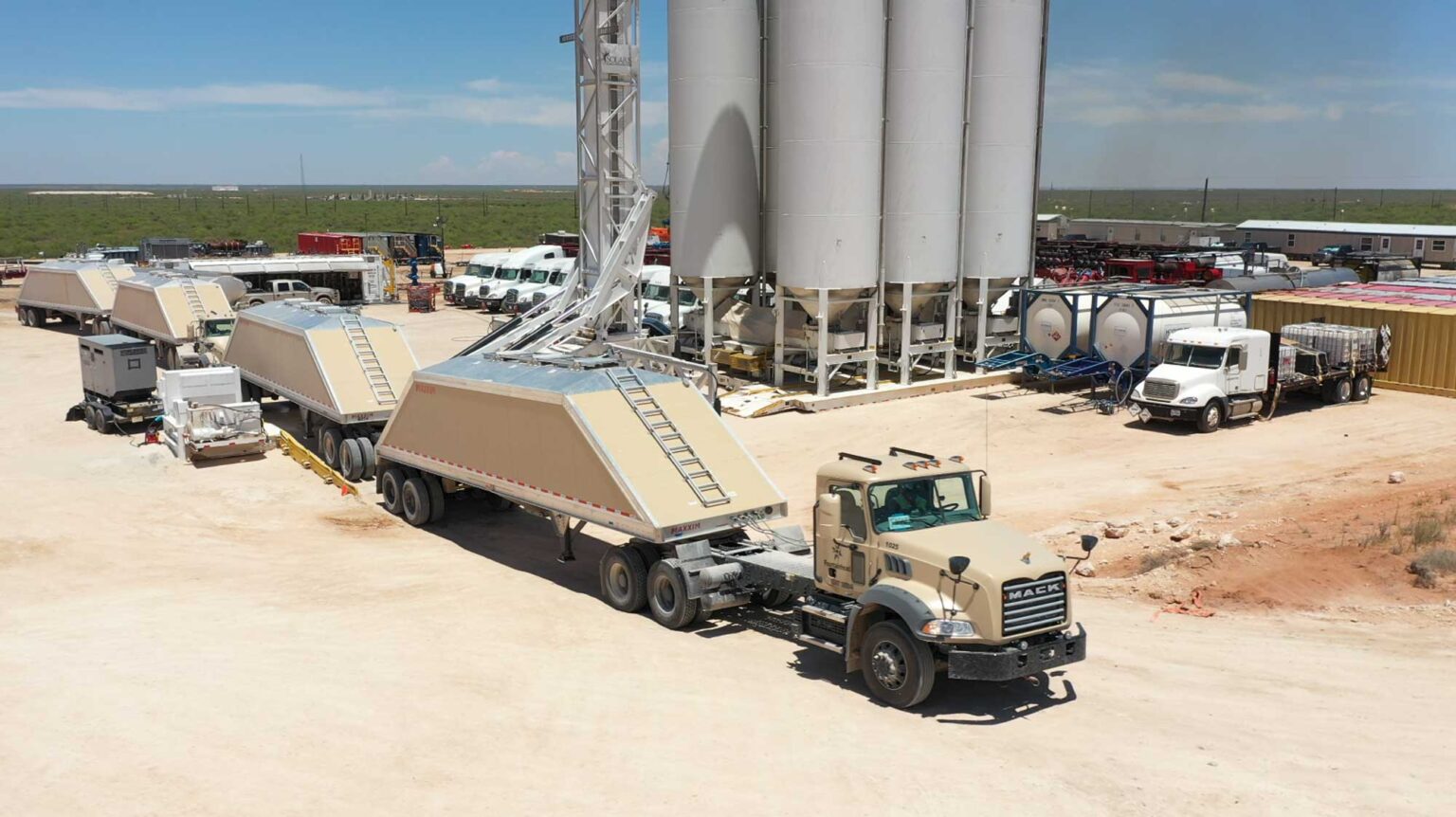
Atlas Energy Solutions Inc. (Atlas) has announced that it intends to expand its autonomous truck operations in the US Permian Basin from 28 to 100 by mid-2027. The company will work with Kodiak AI, Inc. (Kodiak) to make this ambition a reality using its physical artificial intelligence (AI)-powered autonomous driving technology.

What that means in practice is retrofitting or upfitting trucks with a package of sensors, controls, cameras, and other hardware to enable them to be operated autonomously using an AI “driver.”

According to Atlas, the new trucks will be used to expand operations at its second load-out point along its 42-mile (68 km) “Dune Express” sand conveyor system. This system will help Atlas become more responsive to customer needs for the transport and supply of proppant in the region.

Proppant, in case you are unaware, is a special grade of sand used by oil and gas companies during hydraulic fracturing. The sand is pumped underground to keep the cavities created by fracturing open, allowing oil and gas to flow freely.

Delivering sand without drivers

As you can appreciate, that requires enormous quantities of the stuff. What’s more, transporting it from mines or storage sites to drilling locations involves thousands of repetitive truck journeys, often on remote, dusty and relatively predictable routes.

The load-out points refer to strategic locations along the so-called “Dune Express” where this sand is loaded onto trucks. At present, Atlas explains, autonomous trucks have been used from one load-out point at a time.

The addition of another (one in Texas and one in New Mexico) will enable them to cover a wider area and improve customer order fulfillment. According to Atlas, since incorporating driverless trucks into its operations, they have carried approximately 7,000 loads totaling around 450,000 tons of sand over 23,500 “driverless hours.”

As for the trucks in question, they are entirely driverless but with an important distinction. To date, these trucks have tended to operate on controlled oilfield logistics networks, or private roads, not public highways or lanes.

That is considerably easier from an AI-training perspective than allowing autonomous trucks to travel freely through ordinary cities or mixed public traffic. The next major step is therefore operating on public roads, which Atlas and Kodiak say they expect to begin by early 2027, subject to regulatory and operational approval.

Fleet to increase to 100 by mid-2027

That would greatly expand where the trucks can deliver. “This partnership with Kodiak is a critical part of the Atlas strategy to transform oilfield sand logistics through innovation,” said John Turner, CEO and President of Atlas Energy Solutions, in a press release.

“Our mission is to seek critical energy infrastructure with inefficiencies, then engineer solutions that improve efficiency, reduce risk and enhance our customers’ operational success,” he added.

“Together, Atlas and Kodiak have deployed the world’s largest fleet of driverless big-rig trucks,” said Don Burnette, Founder and CEO, Kodiak.

“We’ve demonstrated that autonomous trucking is delivering meaningful results today. Our expanding partnership, which now covers two unique locations, is creating a blueprint for how autonomy can transform logistics by improving efficiency, increasing productivity, and delivering lasting value for customers at commercial scale,” he added.

💾

Atlas announces its intentions to expand its driverless truck fleet to 100 by mid-2027 for its sand delivery operations in the Permian Basin.
  •  

‘Dumbbell’ atomic pairs tackle decades-old ethanol chemistry problem for everyday products

From perfumes and synthetic flavorings to plastics and resins, acetaldehyde is a chemical used to make countless everyday products. 

However, producing it efficiently has remained a challenge because the catalysts that convert ethanol into acetaldehyde gradually lose activity, generate unwanted byproducts, or break down over time.

Now, researchers have developed a three-metal catalyst that tackles those long-standing problems in an unusual way. By pairing platinum and chromium atoms inside a silver matrix, they created tiny dumbbell structures known as heterometallic pair sites. 

These atomic pairs selectively remove only the hydrogen atoms needed to convert ethanol into acetaldehyde while suppressing the deactivation pathways seen in comparable platinum-silver and chromium-silver catalysts. 

“Our catalyst solves an important problem in chemistry because it completes a selective dehydrogenation: Instead of stripping away all of the hydrogen atoms, it removes just the ones necessary,” Anatoly Frenkel, one of the study authors and a chemist at Stony Brook University, said.

Moreover, since the process starts with ethanol that can be produced from biomass such as crop residues, forestry waste, and food waste, it could also provide a more sustainable alternative to conventional petrochemical production.

Breaking the limits of conventional catalysts

Catalysts speed up chemical reactions without being consumed, but making one that is both fast and selective is difficult. In ethanol dehydrogenation, conventional catalysts often keep reacting after removing the required hydrogen atoms, triggering unwanted reactions. 

Over time, they can also become coated with carbon deposits, known as coking, or undergo structural changes that reduce their performance.

To overcome these problems, the researchers turned to quantum mechanical calculations, which predicted that platinum and chromium atoms would naturally pair up when dispersed inside silver. 

“Prior quantum chemical calculations and surface science experiments by our collaborators showed that platinum-chromium pairs form preferentially in silver and exhibit electronic structures distinct from isolated platinum and chromium sites, enabling unique surface chemistry,” Jason Weaver, one of the study authors and a chemist at the University of Florida, said.

The team then fabricated thin films of the alloys to test whether these predicted atomic pairs actually formed.

Building the atomic picture

The researchers combined several advanced techniques to examine the catalyst from the inside out. At Brookhaven National Laboratory’s National Synchrotron Light Source II, X-ray absorption fine structure (XAFS) measurements confirmed that platinum and chromium atoms had indeed paired together throughout the silver host.

The catalyst’s surface was then analyzed at Sweden’s MAX IV synchrotron using surface-sensitive XAFS and ambient-pressure X-ray photoelectron spectroscopy (AP-XPS), which allowed scientists to observe the catalyst while it was actively converting ethanol. 

These measurements showed that only catalysts containing platinum-chromium pairs efficiently produced acetaldehyde. 

Additional scanning transmission electron microscopy (STEM) mapped the distribution of platinum and chromium atoms inside the silver matrix, providing further evidence that the unusual atomic arrangement was responsible for the catalyst’s behavior.

“Combining this with the local bonding information from surface-sensitive XAFS gives a really complete picture of the state of the catalyst and how this affects its performance,” Lindsay Merte, one of the study authors and an associate professor of physics at Malmö University, said. 

Tiny atomic pairs, major gains

Catalytic tests showed that the trimetallic platinum-chromium-silver catalyst became active at around 200°C and steadily increased its activity up to 350°C, where it selectively converted ethanol into acetaldehyde and hydrogen, with mass spectrometry identifying these as the dominant gaseous products.

In contrast, platinum-silver catalysts accumulated carbon deposits that blocked active sites, while chromium-silver catalysts became less effective because of oxidation. 

The platinum-chromium pairs greatly suppressed both of these deactivation pathways, allowing the catalyst to remain active for longer. 

The researchers also found that these heterometallic pair sites stayed stable even at relatively high active-metal loadings, addressing a common limitation of many atomically dispersed catalysts.

Previous studies had suggested that carefully designed pairs of different metals could outperform isolated single atoms, but this work provides experimental evidence that such heterometallic pair sites can operate under realistic reaction conditions.

A new strategy for catalyst design

The study offers a new blueprint for catalyst design. Instead of searching for entirely new materials, scientists may be able to create longer-lasting, more selective catalysts simply by arranging familiar metals in new atomic partnerships—a strategy that could benefit not only ethanol dehydrogenation but many other industrial chemical reactions as well.

However, the catalyst has so far been demonstrated only as a model thin-film system, so additional work will be needed before it can be adapted for industrial reactors. 

The researchers’ next goal is to translate the same atomic design into high-surface-area nanoparticles, which are better suited for large-scale chemical manufacturing.

The study is published in the journal Angewandte Chemie.

  •  

Over 99.99% of oil removed from seawater with higher evaporation rate using new membrane

Growing populations and expanding industries are intensifying freshwater shortages across parts of Africa, the Middle East, and Southeast Asia, increasing the need for sustainable water supplies. Solar desalination has emerged as a promising solution, using sunlight to convert seawater into freshwater with relatively low energy requirements.

But real-world conditions pose a challenge. Seawater near ports, shipping routes, and industrial areas is often contaminated with oil, which can clog desalination membranes and reduce their performance. 

Although many experimental solar desalination systems have shown strong results in laboratory tests using clean saltwater, it remains uncertain how effectively they would operate in polluted seawater.

New membrane design aims to make solar desalination more practical

In an effort to overcome this limitation, researchers at Pusan National University developed a multifunctional hydrogel membrane that combines oil separation and solar-driven desalination in a single system. 

Led by Professor Sanghyun Jeong from the Department of Civil and Environmental Engineering, the team designed a membrane architecture that simultaneously removes oil contaminants while producing freshwater, eliminating the need for separate treatment stages. The study was published online on June 1, 2026, and will appear in the October 15, 2026, issue of Desalination.

Inspired by the need for selective water treatment, the researchers developed a membrane with a “Janus” architecture, giving each side a distinct function. One surface is hydrophilic, made from a chitosan and polyvinyl alcohol hydrogel, allowing water to pass through while blocking oil droplets. 

The opposite surface is hydrophobic and incorporates copper oxide nanoparticles coated with a carbon shell, which are embedded within a nanofiber layer. This dual-sided design enables the membrane to handle different contaminants while supporting more efficient desalination and oil separation.

Higher oil removal and faster solar water evaporation

By separating the membrane’s functions across different layers, the researchers prevented oil separation and solar heat generation from interfering with each other, a common challenge in single-layer designs. The hydrophobic side absorbs sunlight, converts it into heat, and drives water evaporation at the membrane surface.

Testing showed that the membrane removed more than 99.99% of oil from contaminated seawater while maintaining stable performance across different oil droplet sizes and repeated cycles. During solar desalination experiments, it achieved a water evaporation rate of about 0.05 gallons per square foot per hour, nearly three times higher than conventional single-layer membranes.

According to Prof. Jeong, the new membrane technology could support more sustainable water treatment by harnessing renewable solar energy while combining contaminant removal and freshwater production in a single platform. The integrated approach has the potential to reduce energy consumption, simplify operations, and minimize secondary waste generation compared with conventional desalination methods.

The researchers suggest that the membrane developed in this study represents a broader strategy for designing next-generation water treatment technologies. By integrating multiple treatment functions into a single membrane architecture, the approach could provide a framework for creating more efficient and adaptable systems beyond desalination applications.

💾

Researchers have developed a multifunctional membrane that combines oil-water separation and solar desalination in a single architecture.
  •  

Chinese quantum chemistry tech transforms coal into carbon fibers and graphene

Coal has long been associated with electricity generation, steelmaking, and carbon emissions. But a new technology unveiled in China aims to give the fossil fuel a very different role. Transforming it into high-value carbon materials used in industries ranging from energy storage to aerospace.

The technology, presented at an industry conference in Taiyuan, Shanxi Province, converts ordinary coal into premium carbon materials through a specialized coal liquefaction process. Developers say the approach could significantly increase the economic value of coal while reducing emissions associated with conventional coal utilization.

A different approach to coal utilization

According to the company, the technology was jointly developed by Zhaoqing Shunxin Coal Chemical Industry Technology Co., Ltd. and Guangdong Coal-based Carbon Materials Research Co., Ltd. It was reviewed by an expert panel organized by the China International Association for the Promotion of Science and Technology in October 2025, which assessed the process as having reached an internationally leading level and recommended accelerating its commercialization.

Rather than burning coal for energy or converting it into fuels, the process focuses on extracting carbon-rich molecular structures that can serve as feedstock for advanced engineering materials.

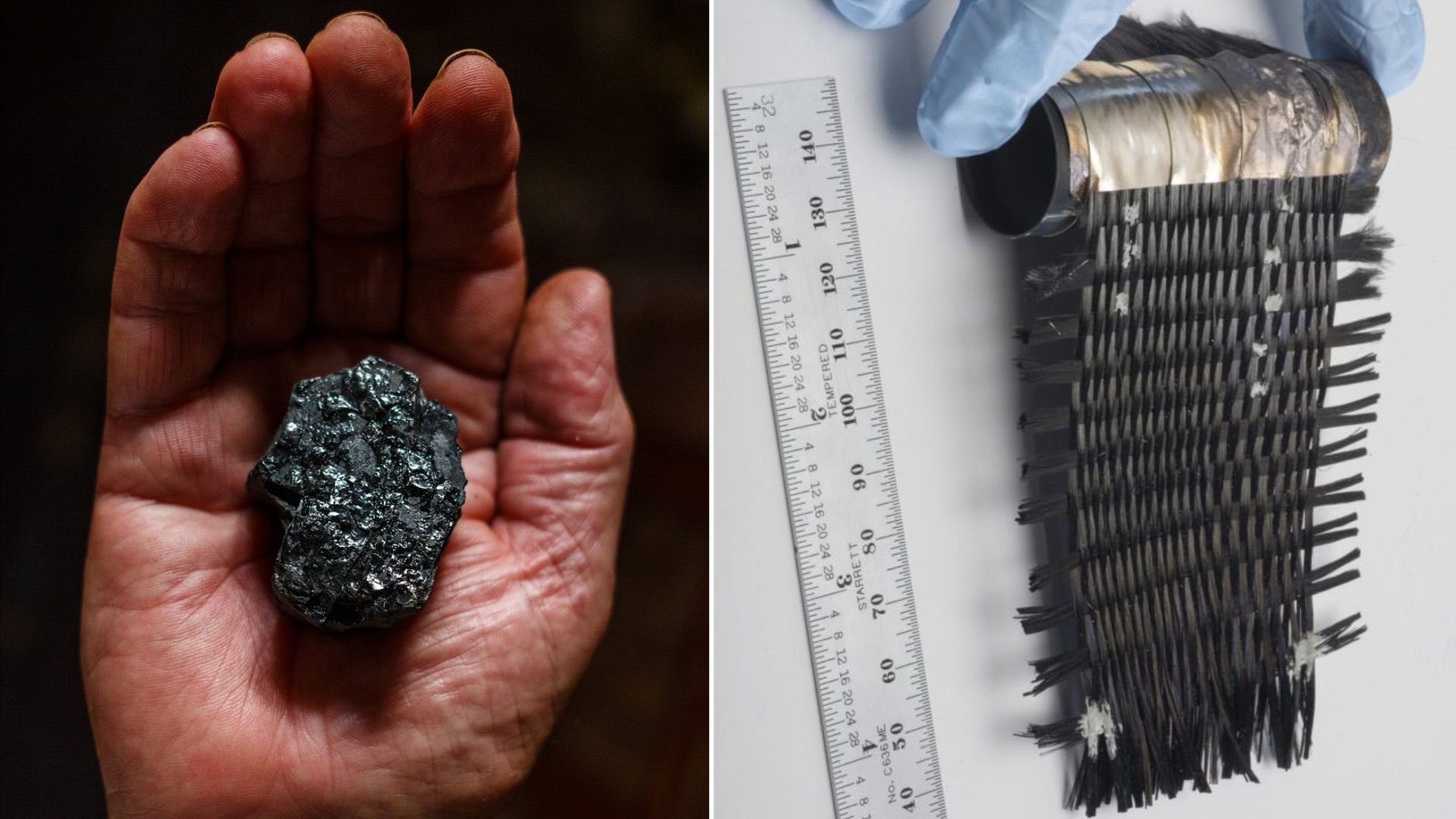
The developers say the technology is based on quantum chemistry, separating coal molecules according to their chemical structure and bond strength. Molecules with lower bond energies are converted into oil and gas, while highly stable aromatic structures are transformed into condensed-ring pitch. A carbon-rich precursor used to manufacture advanced carbon materials.

From coal to aerospace-grade materials

One of the most notable aspects of the technology is the range of materials it claims can be produced. According to the developers, the condensed-ring pitch can be used to manufacture carbon foam, carbon fibers, 3D graphene, super-activated carbon, and supercapacitor-grade activated carbon. These materials are widely used across sectors including aerospace, energy storage, electronics, and advanced manufacturing.

The company also claims its carbon foam exceeds China’s Class A flame-retardancy standard and is suitable for military and aerospace applications. If these performance claims are validated at commercial scale, the technology would shift coal from being primarily an energy resource to serving as a raw material for high-performance engineered products.

Environmental and economic potential

The developers also highlight environmental benefits. According to the company, approximately 60% of the carbon contained in coal can be converted directly into carbon materials rather than being released through combustion. The process is also claimed to reduce carbon dioxide emissions by around two tonnes per tonne of coal processed, while generating virtually no waste gas, wastewater, or solid waste.

Economically, the approach aims to move coal further up the value chain. Instead of producing a commodity worth hundreds or thousands of yuan per tonne, the process is designed to generate advanced carbon materials that can command values ranging from tens of thousands to hundreds of thousands of yuan per tonne, depending on the final product. These figures were provided by the technology’s developers and have not been independently verified.

Moving toward commercialization

The technology has already taken its first step toward industrial deployment. The developers announced a cooperation agreement with the state-owned China Pingmei Shenma Group to construct a 6,000-tonne-per-year coal-based carbon materials project in Henan Province. They also said several carbon products produced using the process have completed user testing with downstream manufacturers and are now ready for commercial-scale deployment.

Although the technology still faces the challenge of proving its performance at industrial scale, it reflects a broader shift in how coal is being viewed. Rather than serving solely as a fuel, researchers are increasingly exploring its potential as a source of advanced materials, potentially opening new applications for one of the world’s most abundant carbon resources.

  •  

$820 million boost expands U.S. drone industrial base, cuts foreign reliance

The United States is moving to expand its domestic drone manufacturing base after Performance Drone Works (PDW) received a conditional loan commitment of up to $820 million from the Department of War’s Office of Strategic Capital (OSC). Rather than focusing solely on producing more drones, the proposed funding aims is address one of the industry’s biggest vulnerabilities: reliance on foreign-controlled supply chains for critical drone components.

If finalized, the financing would help expand U.S. production capacity for propulsion systems, power electronics, flight-control hardware, vision systems, and other key technologies used in drones, robotics, and autonomous platforms.

Building the industrial base behind military drones

Modern military drones are only as resilient as the supply chains that support them. While the United States develops some of the world’s most advanced unmanned systems, many of the electronic components and subsystems that power them continue to come from overseas suppliers.

According to the company, the proposed investment would allow PDW to manufacture many of these critical technologies domestically while also supplying components to other American drone manufacturers. The initiative reflects broader efforts to strengthen the U.S. defense industrial base as demand for unmanned systems continues to grow.

The company currently operates Drone Factory 01, a 90,000-square-foot engineering and manufacturing facility in Huntsville, Alabama, where engineering, systems integration, flight testing, manufacturing, and fulfillment are carried out under one roof.

Lessons from modern warfare

The announcement comes as drones have become one of the defining technologies of modern conflict. From intelligence gathering and precision strikes to logistics and electronic warfare, unmanned systems are now central to military operations across multiple theaters.

Recent conflicts have also exposed the importance of manufacturing capacity. Producing advanced drones at scale requires a reliable supply of motors, batteries, flight controllers, sensors, cameras, communications equipment, and propulsion systems. Many of these have historically depended on international supply chains.

By investing in domestic production of these technologies, the United States aims to reduce potential supply disruptions while improving the ability to rapidly manufacture mission-critical systems when required.

Beyond defense applications

Although the proposed financing is driven by national security priorities, the manufacturing capability could extend beyond military use. PDW said the expanded production capacity is intended to support future public safety, industrial, and commercial applications in addition to meeting defense requirements. A stronger domestic component ecosystem could also benefit the wider U.S. drone industry by providing American-made alternatives for manufacturers that currently rely on imported hardware.

The Office of Strategic Capital was established to help finance technologies considered important to long-term U.S. national security and industrial competitiveness, particularly in areas where private investment alone may not be sufficient to rapidly scale manufacturing.

Funding remains conditional

The proposed $820 million financing has not yet been finalized. According to the announcement, the commitment remains conditional and is subject to additional financial, legal, technical, and due diligence requirements before reaching financial close.

Even so, the size of the proposed investment illustrates how drone manufacturing has become a strategic priority for the United States. As militaries increasingly rely on autonomous systems across air, land, and sea, building secure domestic supply chains for the components behind those platforms is emerging as an important part of maintaining technological and industrial competitiveness.

  •  

US neighbour could gain domestic engine overhaul capability for future fighters

GE Aerospace and Magellan Aerospace have signed a memorandum of understanding to establish maintenance, repair, and overhaul capabilities in Canada for the F414-GE-39E engine that powers Saab’s JAS 39 Gripen E fighter.

The agreement, announced on July 22, would move forward only if the Canadian government selects the Gripen E for the Royal Canadian Air Force’s fighter fleet.

Under the proposed arrangement, GE Aerospace would train Magellan personnel and license the company as Canada’s domestic center of excellence for F414 engine sustainment. The work would be carried out at Magellan’s facility in Mississauga, Ontario.

Domestic engine support

“Today’s MOU signing builds on a six-decade relationship between GE Aerospace and Magellan that spans both military and commercial engines and will ensure the Royal Canadian Air Force has access to engine sustainment services in country to ensure readiness of the F414 engines,” said Paul Ferraro, Vice President of Defense Engines & Services at GE Aerospace.

The companies said the capability would support aircraft readiness, engine availability, and long-term fleet performance while giving Canada more control over fighter maintenance.

The proposed center would also extend Magellan’s role in military engine support by developing specialized infrastructure, technical expertise, and a skilled workforce within the country.

If implemented, the project would fit with Canada’s push to strengthen its domestic defense industrial base and retain more high-value aerospace work at home.

Sovereign aerospace capability

“This MOU reflects our shared intent to build enduring sovereign aerospace capabilities in Canada,” said Haydn Martin, Magellan’s Vice President in Business Development, Marketing, and Contracts.

“Should the Saab JAS 39 Gripen E aircraft be selected, Magellan Aerospace will be ready to provide world-class engine maintenance, repair and overhaul services that enhance operational readiness for the Royal Canadian Air Force while maintaining highly skilled Canadian jobs, developing advanced technical expertise, and strengthening Canada’s long-term defence industrial capacity,” he said.

For the Royal Canadian Air Force, having an in-country engine sustainment option could reduce dependence on foreign maintenance networks and improve access to repair capacity during periods of higher operational demand.

The planned capability would also support the development and retention of personnel trained to work on fighter propulsion systems.

F414 engine track record

The Gripen E uses the F414-GE-39E, part of GE Aerospace’s F414 engine family. According to GE Aerospace, the F414 has accumulated more than five million flight hours, while more than 1,600 engines have been delivered to eight nations.

The engine features a six-module architecture intended to simplify maintenance and allow components to be replaced or interchanged.

GE Aerospace also says the F414 operates without scheduled overhauls, relying instead on on-condition maintenance designed to maximize engine availability and reduce life-cycle costs.

The engine is built to provide rapid throttle response and unrestricted performance.

However, the Canadian sustainment plan remains tied to Ottawa’s fighter procurement decision. The proposed Mississauga operation would proceed only if Canada chooses the Gripen E, making the MOU both an industrial commitment and a potential element of Saab’s bid for Canada’s future air combat requirements.

  •  

US Army trials advanced military planning platform to speed battlefield decisions

The US Army is testing an experimental AI platform designed to dramatically accelerate battlefield planning by reducing decision-making timelines from days or hours to just seconds. The system, known as the Course of Action Generative Pre-trained Transformer (COA-GPT), is intended to help military personnel rapidly develop and adapt operational plans while maintaining human oversight throughout the process.

Developed by researchers at the US Army Combat Capabilities Development Command’s Army Research Laboratory, the Army’s primary fundamental research institution, COA-GPT is being evaluated as part of Project Convergence Capstone 6, the service’s largest experimentation exercise, taking place at Fort Irwin, California. 

The trial will assess how AI can support faster, more adaptable decision-making in future battlefield environments.

Tackling human-AI integration in military operations

The COA-GPT is an experimental AI platform built to speed up mission planning while providing commanders and intelligence teams with a more flexible framework for operational decision-making. 

The system is designed to address one of the military’s biggest challenges in adopting AI: ensuring effective collaboration between soldiers and AI. By combining AI-generated recommendations with human judgment, COA-GPT aims to help military personnel plan and adapt operations more quickly without removing people from the decision-making process.

According to Dr. Amar Marathe, program manager for COA-GPT at DEVCOM Army Research Laboratory, the platform combines generative AI with decades of military expertise and established doctrine to help Army leaders and soldiers generate, compare and evaluate different operational planning options. 

He stressed that the goal is not to replace human decision-makers, but to enhance their capabilities. Instead, COA-GPT is designed to fit into existing military planning workflows, enabling personnel to work faster, improve efficiency and make more informed decisions during mission planning.

Interface helps commanders guide autonomous systems

One of the key scientific challenges behind COA-GPT is enabling machines to better understand human intent across teams of soldiers and AI-enabled systems, according to Marathe. Through a partnership with Hyssos Tech, the platform incorporates an advanced graphical interface that allows leaders at different levels of command to communicate with AI more naturally. 

Using tools such as shared maps and visual inputs, commanders can better guide agentic AI systems while reducing miscommunication, cognitive burden and operational friction among personnel.

Marathe further explained that COA-GPT was developed with a flexible, plug-and-play architecture that allows researchers to replace individual components and experiment with new AI capabilities without rebuilding the entire system. This approach enables faster testing, adaptation and integration of emerging technologies as the platform continues to evolve.

Moving forward, the Army will continue refining the COA-GPT testbed through additional soldier feedback and collaboration with industry partners. Researchers will examine how generative AI could reshape the role of Army planning teams, identify the cognitive skills future planners will need and improve workflows to ensure the technology helps maintain a strategic advantage on the battlefield.

💾

US Army data scientists have developed an experimental AI-powered platform designed to reshape how soldiers plan military operations.
  •  

China possibly making new class of stealthy attack submarine, satellite images suggest

New satellite imagery has been released that appears to show what analysts believe is a new kind of Chinese submarine. Captured by BlackSky back in May of this year, the new attack submarine appears to be under construction at the Jiangnan Shipyard in Shanghai.

Concrete details on it are thin on the ground, but analysts believe it could be an improved version of China’s existing Type 093 “Shang” class. If true, this would represent another step in China’s modernization of its undersea capabilities.

From what can be gathered, the new submarine appears to have a smaller conning tower than the Type 093, and appears to be shorter. The smaller tower could be significant as it could reduce drag and turbulence when submerged.

This would, in turn, reduce its acoustic signature, making it more stealthy. Hull design is also just one part of a vessel’s design. If the idea is to make it more acoustically stealthy, then the submarine would likely also feature other refinements like vibration isolation, anechoic coatings, sonar arrays, etc.

New Chinese submarine spotted

If true, this would make the submarine considerably harder to detect and track using things like passive sonar. For potential rivals in theatres like the Indo-Pacific, it could, in theory, thwart detection efforts from P-8 “Poseidon” aircraft, seabed sensor networks, etc. This would feed into China’s anti-access/area-denial strategy within its sphere of influence.

“Its role may be to silently approach U.S. aircraft carriers underwater and launch attacks,” former Vice Admiral Masao Kobayashi, who served as commander of the Japan Self-Defense Forces’ submarine fleet, told Asahi.

In reality, this translates to making it riskier for Western navies to operate near Taiwan or the South China Sea in general. If this new submarine is as quiet as believed, it could, in theory, stalk and potentially attack U.S. carrier strike groups.

Reduced drag would also translate into higher speeds when submerged, and much improved energy efficiency. That would enable it to travel further and operate for longer between resupply.

According to reports, the submarine appears to be around 393 feet (120 meters) long and 33 feet (10 meters) wide. It would also be just the latest in new submarines developed and launched by China in recent years.

Between 2021 and 2025, Asahi explains, China has deployed an estimated ten submarines, with a total displacement of around 79,000 tons between them. Beyond that, analysts are somewhat split on how to classify the new submarine.

New class or improvement?

Some believe it to be an entirely new class, while others prefer to see it as an improved variant of the Type 093. It is also not clear how the submarine is powered and propelled, with some believing it is likely nuclear-powered. However, it is impossible to tell from satellite imagery alone.

“The submarine appears to be a new class,” Timothy Heath, owner of research firm Perceptum, told the South China Morning Post (SCMP).

Whatever the case, it is important to note that we only have satellite imagery to go by right now. Chinese authorities have neither confirmed nor denied the new submarine’s existence.

💾

The submarine appears to be around 393 feet long and 33 feet wide. It would also be just the latest in new submarines developed and launched by China in recent years.
  •  

US models beat China’s Kimi K3 with a 76% score over 32% in cyber benchmarks, tests show

Despite fears that China could race ahead of the US in AI, a joint UK-US evaluation found that Moonshot AI’s Kimi K3 performs “significantly below” leading American models in offensive cybersecurity capabilities.

The findings address growing concerns in Washington regarding China’s recent advancements in artificial intelligence following the release of Kimi K3, described as China’s most powerful large language model.

The UK Artificial Intelligence Security Institute (UK AISI) and the US Center for AI Standards and Innovation (CAISI) found that Kimi K3 achieved an overall cyber capability score of 32.2%, compared to an average of 76.2% for top, unnamed US models.

Evaluation identifies cybersecurity gap

Researchers tested Kimi K3 using ExploitBench, a public benchmark developed by Carnegie Mellon University that measures an AI system’s ability to develop end-to-end exploits for software vulnerabilities.

According to the evaluation, Kimi K3 “performs significantly below the most recent frontier cyber-capable models” when tasked with developing exploits. The model attained a score of 32 percent, outperforming GLM-5.2, another Chinese open-weight model, which scored 24 percent.

However, Kimi K3 still lagged behind leading US systems. The most cyber-capable US models achieved an average score of 76.2%.

The report also examined whether models could achieve arbitrary code execution (ACE)—a high-severity exploit outcome that allows attackers to take control of a target system. Kimi K3 achieved ACE on none of the 41 ExploitBench tasks, while “the most cyber-capable models achieved ACE on 20/41 samples on average,” according to the UK AISI and CAISI.

Simulated attack shows remaining capabilities

The evaluation also tested Kimi K3 on “The Last Ones” (TLO), a 32-step simulated corporate network attack designed to measure a model’s ability to conduct end-to-end cyber operations autonomously.

Kimi K3 reached step 17 of the attack path on average, compared with the 28.5 steps achieved by the most cyber-capable US models.

Despite this gap, the report noted that Kimi K3 completed the simulated attack in one of 10 attempts. The UK AISI and CAISI said this demonstrated that the model “is capable of autonomously attacking small, weakly defended, and vulnerable enterprise systems, when directed to do so and given initial network access.”

Furthermore, Kimi K3’s safeguards did not prevent it from attempting cyber exploit development or offensive cyber operations during testing.

Although the results were only preliminary, the research noted that Kimi K3’s overall cyber capability score was estimated from a single benchmark, whereas other models were evaluated across a larger number of cyber tasks.

Findings reshape AI competition debate

Kimi K3 has sparked attention, if not concern, following reports of its strong performance on other AI benchmarks. However, these new findings offer a different picture of the model’s cybersecurity capabilities, showing that it still lags behind US systems.

The South China Morning Post reported that the evaluation “offers a stark reality check amid mounting panic in Washington over Beijing’s AI advancements following Moonshot AI’s latest flagship release.”

David Sacks, former White House AI czar and current co-chair of US President Donald Trump’s Council of Advisers on Science and Technology, said the findings suggest that fears over Chinese model supremacy may be exaggerated. He urged policymakers to avoid over-regulating the sector.

“The Kimi Panic needs to stop,” Sacks said in a social media post. “American frontier models are still ahead.”

💾

New UK-US findings show that Moonshot AI’s Kimi K3 still lags behind top US models in cybersecurity threats.
  •  

Surface-to-air missiles vs interceptor drones: Which is better for modern air defense?

Air defense used to revolve around one basic problem: stopping enemy aircraft and missiles before they reached their targets. The rapid spread of drones has complicated that equation.

Cheap one-way attack drones, small reconnaissance UAVs, and larger strike platforms can now threaten military bases, infrastructure, and frontline units without requiring an adversary to risk an expensive crewed aircraft.

Traditional surface-to-air missiles, or SAMs, remain among the most powerful tools available for defending airspace. But using costly missiles against inexpensive drones can create an unfavorable exchange.

That has pushed militaries toward another option: drone interceptors designed specifically to hunt and destroy hostile UAVs. Here is how the two approaches compare across six key areas.

Cost per interception

The biggest difference is economics.

Modern surface-to-air missiles can be extremely expensive because they require sophisticated seekers, propulsion systems, guidance electronics, and warheads capable of destroying fast and highly maneuverable targets.

That makes sense when the incoming threat is a fighter jet, helicopter, or cruise missile. The calculation changes when the target is a relatively inexpensive drone.

Drone interceptors can potentially offer a lower-cost response. Many are built around simpler airframes, compact sensors, and reusable or comparatively inexpensive components. Some destroy targets by collision, while others carry small warheads or other defeat mechanisms.

The objective is simple: avoid spending a high-value interceptor on a low-value threat whenever possible.

Speed and target types

Surface-to-air missiles maintain a major advantage when speed matters.

SAM systems are designed to engage targets traveling at high subsonic, supersonic, and, in some cases, even greater speeds. That makes them suitable for threats such as combat aircraft and cruise missiles, depending on the system.

Drone interceptors generally operate against slower targets. They are particularly suited to small UAVs whose flight speeds and maneuverability allow another drone to pursue them.

Against a fast jet or missile, however, most interceptor drones would struggle to match the speed and engagement envelope of a dedicated SAM.

Range and coverage

SAM systems are built to defend large areas.

Long-range batteries can monitor and engage threats tens or even hundreds of kilometers away, depending on the weapon. This allows defenders to create layered protective bubbles around cities, bases, and strategic infrastructure.

Drone interceptors usually operate over much smaller areas. They may be launched once radars, electro-optical sensors, or other systems detect an incoming UAV.

Their shorter range makes them better suited to local defense rather than wide-area airspace control.

Ammunition and sustainability

Another important difference is how quickly each system can be replenished. A missile launcher carries a limited number of ready-to-fire interceptors. Once those missiles are used, the system must be reloaded, creating potential vulnerability during large or sustained attacks.

Drone interceptors could offer greater flexibility if they can be manufactured cheaply and stored in larger numbers.

That becomes particularly important during swarm attacks, where dozens of drones may arrive within a short period. The challenge is ensuring that interceptor drones can launch, coordinate, identify targets, and engage quickly enough to deal with multiple threats.

Guidance and autonomy

Surface-to-air missiles rely on highly mature guidance systems.

Depending on the weapon, they may use radar guidance, infrared seekers, command guidance, or combinations of several methods. Drone interceptors increasingly depend on autonomy.

Computer vision, artificial intelligence, onboard navigation, and target recognition can allow an interceptor to pursue another drone with limited human involvement.

That could make them useful against large numbers of small targets, but it also places significant importance on reliable detection, identification, communications, and autonomous decision-making.

Complementary weapons, not replacements

Drone interceptors are unlikely to make surface-to-air missiles obsolete. Instead, they are becoming another layer in increasingly complex air-defense networks.

SAMs remain essential when the threat is fast, long-range, heavily armed, or capable of operating at high altitude. Drone interceptors can fill the gap at the lower end of the threat spectrum, particularly against inexpensive UAVs that may not justify the use of an advanced missile.

The future of air defense will therefore probably not come down to choosing between missiles and interceptor drones. It will depend on using the right weapon against the right target.

As aerial threats become cheaper, more numerous, and more diverse, the most effective defenses will likely combine long-range missiles, guns, electronic warfare, directed-energy systems, and interceptor drones into a layered network capable of responding without exhausting its most expensive weapons.

  •  

Energy resilience: US Army and Air Force eye smart micro grids in a 10-year deal

The US Army and Air Force have signed 10-year Intergovernmental Support Agreements with Arizona State University to expand energy services across military installations in the continental United States.

Signed on July 7, the agreements allow installations to request support for utility monitoring, energy assessments, data integration, resilience planning, and workforce development.

The arrangement is intended to help bases strengthen energy resilience, improve infrastructure management, and prepare for operational disruptions.

Expanding access to energy expertise

Under the agreements, Army and Air Force installations can seek a broad range of technical services from Arizona State University.

These include utility metering and billing analysis, energy and water assessments, building automation, distribution network modernization, on-site generation, microgrid development, independent project reviews, energy readiness exercises, and workforce training.

“Intergovernmental Support Agreements give installations an important mechanism to access support services that can improve readiness and resilience,” said Jordan Gillis, assistant secretary of the Army for installations, energy and environment.

“This effort reflects the Army’s continued focus on strengthening infrastructure, improving efficiency and supporting mission requirements across our installations,” he continued.

The US Army said the partnership can also help installations better understand existing utility systems and identify where modernization or efficiency improvements are needed.

Managing aging utility systems

A major focus of the Army agreement is the condition and performance of utility infrastructure at military installations.

“Through this agreement, Arizona State University will provide the monitoring, analysis and technical support needed to help Army installations better understand and manage aging utility systems,” said David Dentino, deputy assistant secretary of the Army for installations, housing and partnerships.

“This partnership is about improving readiness, increasing resilience, reducing costs and ensuring our installations have the reliable infrastructure needed to support the mission,” he continued.

For the Air Force, the agreement similarly creates a route for installations to obtain services linked to infrastructure, energy efficiency, and mission assurance.

“National security requires energy and water surety,” said Nancy J. Balkus, deputy assistant secretary of the Air Force for infrastructure, energy and environment.

“Every one of our installations is not just a base; it is a power projection platform to assure lethality whenever called upon. Without energy and water security, our missions cannot test, launch, sustain or succeed,” he said.

Supporting long-term installation resilience

Intergovernmental Support Agreements allow military installations to obtain support services from eligible state and local government entities.

For the Army and Air Force, the new ASU agreements provide a framework through which bases can request energy-related expertise without creating separate arrangements for every service.

The broader goal is to improve the reliability of installation infrastructure while giving military facilities more options for monitoring, planning, training, and resilience projects.

By covering services ranging from metering and automation to microgrids and energy readiness exercises, the agreements give installations access to tools that can support infrastructure modernization and long-term operational preparedness.

The initiative also aligns with wider efforts to ensure military installations can continue meeting mission requirements as energy systems, infrastructure demands, and operating environments evolve.

  •  

US Navy’s nuclear propulsion infrastructure to get upgrade with $85 million Amentum contract

US defense contractor Amentum has secured an $85 million contract to support the modernization of critical infrastructure within the US Navy’s Nuclear Propulsion Program (NNPP). 

The three-year agreement will focus on redesigning and upgrading spent fuel examination capabilities at the Naval Reactors Facility in Idaho, a key site responsible for supporting the Navy’s nuclear fleet. The new facility will allow scientists and engineers to analyze used fuel cores, comparing real-world performance data with predictions from advanced design and testing processes. 

The company points out that these efforts will help improve the safety, reliability, and long-term mission capability of the Navy’s nuclear-powered vessels.

Strengthening the Navy’s nuclear fuel evaluation capabilities

According to Mark Whitney, president of Amentum’s energy and environment business, the project reflects the company’s continued focus on providing the engineering expertise and operational support needed to sustain the US Navy’s nuclear-powered fleet. 

By upgrading critical spent fuel examination capabilities, Amentum aims to help the Navy better analyze, optimize, and extend the performance of nuclear fuel cores. The modernization effort is expected to provide engineers and scientists with improved tools and data to support future fleet readiness, safety, and reliability.

Whitney further noted that Amentum’s broader nuclear expertise positions the company to support some of the most complex challenges in the sector. He said the company’s capabilities cover the full nuclear project lifecycle, delivering safe, innovative, and reliable solutions for customers worldwide. 

He also added that Amentum’s integrated global nuclear expertise enables the company to take on demanding projects, including efforts that support the US Navy in maintaining the effectiveness of its nuclear-powered fleet.

Nuclear propulsion program marks decades of innovation and reliability

For more than seven decades, the Navy’s NNPP has remained at the forefront of nuclear technology, developing advanced systems to power the Navy’s global fleet. The program has built a reputation for combining innovation, safety, reliability, and operational efficiency, enabling nuclear-powered vessels to perform critical missions around the world. 

Through continuous research, engineering advancements, and rigorous testing, the NNPP continues to support the long-term performance of the US Navy’s nuclear capabilities, Amentum highlights. A collaboration between the Department of Energy and the Department of the Navy, the NNPP is responsible for overseeing the design, development, and operational support required to sustain the Navy’s nuclear-powered fleet. 

The program plays a central role in maintaining US maritime advantage by ensuring warfighters have access to vessels with exceptional endurance, stealth, responsiveness, and advanced warfighting capabilities. Through its work across the nuclear propulsion lifecycle, the NNPP helps support the reliability of the Navy’s strategic naval assets.

Furthermore, as operator of the world’s largest nuclear-powered fleet, including 11 active aircraft carriers and more than 70 submarines, the Navy relies on programs such as the NNPP and partners like Amentum to support the safety, performance, and long-term sustainability of its nuclear propulsion systems.

💾

The project will focus on upgrading critical facilities that enable the Navy’s nuclear-powered fleet and long-term propulsion capabilities.
  •  

US nuclear fusion engine secures key research permit for up to 1 GW power systems

American Fusion has officially cleared a major regulatory hurdle, securing research and development certification from the Texas Department of State Health Services (DSHS) for all twelve registered models of its Texatron Fusion Engine platform. 

The development was shared by American Fusion’s Executive Chairman Brent Nelson in an interview, as reported by the company. 

This regulatory clearance applies to system hardware configurations across a wide power capacity spectrum, beginning with 500-kilowatt units and extending to large-scale architectures designed to output up to one gigawatt. With authorization completed, technical teams are preparing to start the next phase of experimental testing at Texas Tech University.

The primary technical objective of the upcoming experimental sequence is to verify nuclear fusion reactions inside the Texatron confinement hardware. Operational research teams plan to gather diagnostic measurements concerning plasma dynamics, specifically tracking core plasma temperatures, particle densities, and magnetic containment behaviors during operational cycles. 

“Nelson stated that the Company’s initial testing objectives include validating fusion reactions within the Texatron platform and collecting performance metrics related to plasma behavior and system operation,” said the company in a press release.

Maintaining conditions for sustained fusion reactions

Evaluating these physical parameters allows engineers to assess how efficiently the system achieves and maintains the conditions required for sustained fusion reactions. Following the initial reaction verification, testing will shift toward evaluating the pulse-generated electrical output produced by the engine, which serves as an intermediate milestone before attempting continuous electricity generation.

“Data generated during testing is expected to be independently documented, with findings potentially available for publication following review,” remarked the company.

Unlike conventional nuclear fission reactors that require steam turbines and produce long-lived radioactive waste, the Texatron system utilizes magnetic-confinement technology to generate electricity from high-energy plasma while significantly reducing radioactive byproducts. 

“Advanced fusion systems can convert energy directly into electricity, reducing reliance on steam turbines and minimizing energy losses,” noted American Fusion. “This enables higher efficiency, simpler infrastructure, and faster, more flexible power generation for modern grids.”

Current engineering efforts are distributed across several intermediate engine sizes, including 5-megawatt, 10-megawatt, and 20-megawatt configurations, along with preliminary engineering planning for a 100-megawatt unit.

Transportable and reduced radiation profile

The physical characteristics and direct electrical output of the engine dictate its target integration environments. Hyperscale artificial intelligence data centers increasingly utilize high-voltage direct current power infrastructure, meaning matching the generator’s direct DC output reduces energy conversion losses compared to traditional steam turbines, though power conditioning is still required to stabilize voltage.

The transportable and reduced radiation profile of the hardware allows smaller units to be deployed on trucks to supply power for defense installations, mining operations, and remote industrial facilities. 

The operational targets for 2026 depend on executing the multi-stage plasma validation tests, establishing performance metrics, expanding patent protections, and negotiating initial power placement agreements with commercial partners.

“American Fusion Energy is moving from proven laboratory breakthroughs toward scalable energy systems by focusing on real-world engineering challenges,” concluded the company.  

“Building on validated progress in high-temperature plasma confinement, the company is translating fusion physics into practical pathways for future commercial power.”

  •  

US lab initiative targets 5x faster engineering with next-gen supercomputing

US firm Rescale, a digital engineering platform that combines AI, simulation, and high-performance computing to help R&D and engineering teams design, test, and bring new products to market faster, has received funding under the Genesis Mission, a national initiative led by the US Department of Energy to build an advanced integrated science discovery platform.

As part of the program, Rescale will join Lawrence Berkeley National Laboratory, Lawrence Livermore National Laboratory, and Oak Ridge National Laboratory as a funded partner in the Agentic HPC Pipeline Initiative (AHPI). 

The initiative aims to use agentic AI on Rescale’s platform to help accelerate the adoption of national laboratory-developed computing tools and simulations by US industry.

Doubling scientific research output with AI and advanced computing

The Genesis Mission is an ambitious initiative aimed at accelerating scientific and technological breakthroughs by combining artificial intelligence, supercomputing, quantum systems, and advanced scientific instruments into a single research platform. 

Established through an executive order in November 2025, the program brings together the department’s 17 national laboratories and around 40,000 scientists and engineers to advance research in areas including energy, scientific discovery, and national security. 

Department officials have compared the scale and ambition of the initiative to landmark US efforts such as the Manhattan Project and the Apollo program, with the goal of doubling the productivity of the country’s scientific research within the next decade.

The US Department of Energy launched the first Genesis Mission funding round earlier this year, awarding $293 million to projects focused on areas including advanced manufacturing, biotechnology, nuclear energy, and quantum science. The program received more than 8,000 applications, making it the department’s largest-ever funding call.

Rescale’s AHPI was selected for Phase I funding to address a key challenge: helping industry access advanced simulation tools developed by US national laboratories that have often required specialized expertise and infrastructure.

Helping manufacturers access advanced AI-powered simulations

The company will work with three US national laboratories to bring agentic AI capabilities to advanced simulation tools. The project will integrate AI agents into WarpX, LiDO, and Adamantine, codes developed by Lawrence Berkeley National Laboratory, Lawrence Livermore National Laboratory, and Oak Ridge National Laboratory.

Using the Rescale platform, AI agents will help engineers choose simulation tools, configure inputs, monitor runs, and analyze results. The initiative aims to reduce the time and specialized expertise needed to use these simulations by more than five times, making advanced research capabilities more accessible to US manufacturers.

According to Rescale CEO Joris Poort, the Genesis Mission highlights the importance of making industrial AI technologies available to leading research and development teams that can apply them in real-world applications.

Building on Rescale’s existing partnership with ORNL’s Manufacturing Demonstration Facility, AHPI addresses a common gap: DOE-industry collaborations run for a fixed term, and once they end, partners keep the insight but lose the tools to act on it. AHPI keeps the resulting agentic workflows, surrogate models, and code environments live on Rescale, letting labs and industry keep collaborating long after a project’s funding ends.

💾

Rescale will help develop advanced digital engineering capabilities as the US expands efforts to use supercomputing in research.
  •  

Quantum Zeno effect could freeze tomorrow’s quantum computers mid-calculation

The race to build larger and more powerful quantum computers has mostly focused on engineering: adding more qubits, reducing noise, and keeping fragile quantum states alive. However, a new theoretical study suggests that another, largely overlooked problem may emerge as these machines grow. 

Researchers at the Helmholtz-Zentrum Dresden-Rossendorf (HZDR) have found that a strange quantum phenomenon known as the quantum Zeno effect could cause certain quantum computers to slow dramatically—or in the worst case, nearly stop computing altogether.

“For quite generic conditions, we find that the quantum Zeno effect poses strong limitations on the performance” of quantum systems, the study authors note.

Rather than exposing a flaw in today’s devices, this research work identifies a fundamental scaling challenge that designers may have to confront as quantum computers become larger. 

In their new study, the HZDR team says the effect could become especially important for adiabatic quantum computers, a class of machines widely studied for solving optimization problems, searching massive datasets, and simulating molecules.

When the environment won’t stop “looking” at a quantum computer

The quantum Zeno effect is one of quantum mechanics’ most counterintuitive ideas. It predicts that repeatedly measuring a quantum system can prevent it from changing its state, effectively freezing its evolution. 

The concept has been studied experimentally for decades. Earlier research works explored this phenomenon mainly in isolated laboratory systems or as a way to deliberately control quantum states. For example, a theoretical work showed that continuous measurements can trap quantum systems within specific states. 

The HZDR researchers asked a different question—what if a quantum computer experiences this effect unintentionally?

Adiabatic quantum computers work differently from gate-based quantum computers. Their “algorithms are considered robust and can be executed by quantum computers largely independently of the hardware that is used,” Ralf Schützhold, one of the study authors and the director of the Institute of Theoretical Physics at HZDR, said.

Instead of performing a sequence of quantum logic operations, they gradually reshape an energy landscape while keeping qubits in their lowest-energy, or ground, state. If this transformation is slow enough, the ground state naturally evolves into the solution to the problem being solved. 

To investigate, they built a theoretical model of an adiabatic quantum computer interacting with a realistic environment. In practice, no quantum processor is perfectly isolated. Even inside refrigerators cooled to temperatures just above absolute zero (−273.15°C), tiny amounts of heat, electromagnetic radiation, or other external influences still interact with qubits. 

These interactions cause decoherence, gradually disrupting the delicate quantum properties such as superposition and entanglement—that give quantum computers their power. In effect, the surrounding environment behaves like an unintended detector that continually checks the qubits’ state, even though nobody is intentionally measuring them.

More qubits could make the problem worse

The team analyzed the adiabatic version of Grover’s search algorithm, a famous quantum algorithm that searches unsorted databases much faster than classical methods. 

In adiabatic computing, the algorithm starts with an easy-to-prepare quantum state and then slowly transforms the system’s governing energy landscape, known as the Hamiltonian, until the ground state represents the desired solution. If the transformation is sufficiently slow, the qubits naturally remain in the ground state throughout the computation.

Their calculations revealed that scaling creates an unexpected vulnerability. As the problem size grows, the minimum energy gap separating the ground state from higher-energy states can become increasingly small. 

As these energy differences shrink, the computation must proceed more slowly to remain adiabatic. Since the computation takes longer while environmental disturbances continue acting at roughly the same rate, the quantum Zeno effect becomes increasingly likely. 

“Each disturbance acts like an unwanted measurement, slowing down the system’s evolution. In the worst case, a calculation could even freeze completely,” Gernot Schaller, one of the study authors and the head of Quantum Technologies at HZDR’s Institute of Theoretical Physics, said.

Much like a cake rises properly only if the oven remains closed, constantly opening the door to check on it interrupts the baking process, causing the cake to stop rising or even collapse. In the same way, repeated environmental disturbances keep interrupting the natural evolution of the quantum state before it can reach the desired endpoint.

More importantly, the study does not suggest that all quantum computers face the same limitation. The work focuses on adiabatic quantum algorithms and related approaches such as quantum annealing, where the computation relies on gradually crossing small energy gaps. 

A roadmap for building more resilient quantum computers

The study is theoretical rather than experimental, so the findings still need to be explored in real quantum hardware. 

However, the researchers say the problem can be mitigated by improving shielding against heat and electromagnetic interference and by using techniques such as spin echo, which applies carefully timed pulses to reduce interactions between qubits and their environment.

The findings also suggest that scaling quantum computers will require more than simply adding qubits. Future systems may need better protection from environmental noise and smarter control techniques to reduce the risk of the quantum Zeno effect becoming a bottleneck. 

The study is published in the New Journal of Physics.

  •  
❌