❌

Reading view

Canada confirms lithium-rich brine while sustaining 1,400 cubic meters daily flow

Canadian-based critical minerals company E3 Lithium has commissioned Phase 2 of its Clearwater Project Demonstration Facility in Alberta and confirmed lithium concentrations of 75.8 milligrams per liter in brine produced during ongoing reservoir testing.

The company said the latest results support the consistency of lithium-bearing brine chemistry across the Clearwater Project and the broader Bashaw District, a key factor as it advances plans for commercial lithium production.

The demonstration facility is currently being used to test reservoir performance over an extended period. Brine is pumped from a production well and immediately reinjected into a separate injection well, allowing engineers to evaluate flow behavior and reservoir response under operating conditions.

According to the Alberta-based company, the facility achieved stable production and injection through the well pair. During early operations, an electrical submersible pump maintained the targeted flow rate of 1,400 cubic meters per day.

Brine tests confirm consistency

The company regularly collected brine samples during operations and sent them to an independent third-party laboratory for analysis. Results confirmed lithium concentrations of 75.8 mg/L, matching expectations for the resource.

E3 said the reservoir data generated through the testing campaign will be used to update its reservoir development plan and support a feasibility study for the Clearwater Project.

The next stage of operations will focus on analyzing the relationship between brine and natural gas within the reservoir. The information is expected to support the design of the front end of a future commercial processing plant.

The demonstration facility forms part of E3’s broader effort to reduce technical risks before moving toward large-scale lithium production.

“With Phase 2 operations underway, E3 has begun a series of project-scale de-risking activities for the Clearwater Project,” said Chris Doornbos, CEO and chair of E3 Lithium.

The company added that the current campaign has already processed more brine through the two new wells than all of its previous testing programs combined.

Scaling toward production

Lithium demand continues to grow as automakers and battery manufacturers seek additional supplies of the metal used in electric vehicle batteries and energy storage systems.

For E3, the demonstration facility serves as a bridge between laboratory-scale testing and commercial deployment. Data collected from reservoir operations, brine chemistry studies, and future process testing will be used to refine engineering designs and operating plans.

“We have already moved more brine through these two wells than E3 has handled through all its previous testing combined, and we expect to continue to operate the pump as needed over the coming 24 months,” Doornbos said.

He added that confirmation of reservoir performance and lithium grades at the new wells strengthens confidence in the predictability of the resource.

The company plans to continue operating the demonstration facility while advancing front-end engineering design work and completing a feasibility study for the project. The resulting data will help determine the design of a future commercial facility and support decisions related to full-scale development.

  •  

US Air Force B-52 bomber crashes after takeoff, shutting down Edwards airfield

A US Air Force B-52 Stratofortress crashed shortly after takeoff from Edwards Air Force Base in Southern California on Monday, sending a towering plume of black smoke over the desert installation and triggering a large-scale emergency response.

The bomber went down at about 11:20 a.m. local time at the base, located roughly 100 miles northeast of Los Angeles in the Mojave Desert. Officials have not said how many people were aboard the aircraft or whether anyone survived.

Video captured by local news helicopters showed smoke continuing to rise from the crash site hours later. The area near the runway appeared heavily scorched, with blackened ground marking the impact zone. Few recognizable pieces of the aircraft could be seen from the air. The cause of the crash remains unknown.

Emergency response continues

Edwards Air Force Base said emergency crews rushed to the scene immediately after the aircraft went down. In an initial statement, the base said the situation remained ongoing and that additional details would be released as they became available.

🇺🇸 A US Air Force B-52 bomber crashed shortly after takeoff from Edwards Air Force Base in California. pic.twitter.com/G56SEDLkkS

— PAryan 8🪽8 (@RebelGoy88) June 15, 2026

Officials later posted an update on X, saying the installation had shut down its airfield while first responders carried out rescue and recovery operations. Aircraft headed to Edwards were diverted elsewhere, and the base suspended all non-commercial visitor passes until further notice.

Update- 12:48 PDT: The airfield has been closed, and all inbound aircraft are being diverted.

All non-commercial visitor passes have been suspended until further notice to allow the installation to focus entirely on emergency response operations.

— Edwards Air Force Base (@EdwardsAFB) June 15, 2026

A spokesperson for the installation declined to provide additional details from local media as authorities focused on the response effort. Investigators are expected to examine the wreckage, maintenance history, and flight information to determine what led to the accident.

Questions surround crew

The Air Force has not identified the crew members involved or disclosed their condition. The B-52H typically operates with a five-person crew consisting of pilots and specialized officers responsible for navigation and electronic warfare duties.

As news of the crash spread, lawmakers offered support to those affected. Rep. Jay Obernolte, whose district includes Edwards Air Force Base, said he and his wife were praying for everyone involved, including the crew, their families and the first responders working at the scene. Rep. Lisa McClain also expressed support, saying her prayers were with those impacted by the crash.

My prayers are with everyone involved in the B-52 crash at Edwards Air Force Base this afternoon. Thank you to the emergency crews responding right now. Our service members carry the weight of this nation’s defense every single day. We are with them.

— Chairwoman Lisa McClain (@RepLisaMcClain) June 15, 2026

Aging bomber fleet

The B-52 Stratofortress first entered service in the 1950s and remains one of the oldest aircraft still flying in the US military inventory. The Air Force currently operates 76 B-52H bombers. Despite their age, the aircraft continue to fly operational missions and have undergone repeated modernization efforts.

Monday’s incident marks the most serious B-52 accident in years. The last fatal crash involving the bomber occurred in 2008, when six Air Force personnel died after a B-52 crashed near Guam during preparations for a ceremonial flyover.

Boeing stopped building the aircraft in 1962, meaning the Air Force can no longer replace lost bombers with newly manufactured airframes. For now, investigators remain focused on the immediate task of understanding what happened at Edwards Air Force Base and determining the fate of those aboard the aircraft.

  •  

From CERN to plague islands: 7 scientific sites surrounded by paranormal lore

Science is usually associated with reason, evidence, and discovery. Yet some of the world’s most significant scientific and medical sites have accumulated ghost stories, conspiracy theories, and paranormal legends of their own. In many cases, the lore emerged from tragedy, isolation, or misunderstood research rather than anything supernatural.

These seven sites sit at a rather eerie intersection of science and folklore.

1. CERN, Switzerland-France

Home to the Large Hadron Collider, CERN is one of the world’s leading centers for particle physics research. Yet despite its scientific credentials, the facility has become a recurring subject of internet conspiracy theories.

Rumors linking CERN to portals, alternate dimensions, and occult activity gained momentum in 2016 after a prank video filmed on the organization’s grounds appeared to show a ritual human sacrifice near the laboratory’s Shiva statue. CERN later clarified that the video was an unauthorized spoof and that no one was harmed.

The incident added fuel to years of speculation surrounding the collider’s experiments, making CERN one of the few modern research facilities to develop a paranormal reputation despite a lack of evidence supporting the claims.

2. Waverly Hills Sanatorium, United States

Opened in Kentucky in 1910, Waverly Hills Sanatorium was built to treat tuberculosis patients during one of the deadliest public health crises of the early twentieth century.

Waverly Hills Sanatorium main entrance. Credit – Wikimedia Commons

The facility became known for its advanced treatment methods and later for its so-called “body chute,” a tunnel reportedly used to transport the deceased away from patients. Decades after the hospital closed, stories of apparitions, shadow figures, and unexplained voices transformed it into one of America’s most famous haunted locations.

Whether the stories are true or not, the real history is grim enough. Thousands of patients passed through the sanatorium before antibiotics dramatically reduced tuberculosis deaths.

3. Poveglia Island, Italy

Located in the Venetian Lagoon, Poveglia served as a quarantine station during plague outbreaks beginning in the eighteenth century.

Ships arriving in Venice with suspected infections were isolated there, and over time, the island became associated with disease, death, and mass burials. Later, parts of the island housed a psychiatric facility before being abandoned.

Today, Poveglia is frequently described as one of the world’s most haunted islands. Local legends speak of restless spirits, mysterious voices, and supernatural activity, although many claims are impossible to verify. What is certain is that the island’s history reflects centuries of public-health efforts during some of Europe’s deadliest epidemics.

4. Trans-Allegheny Lunatic Asylum, United States

Completed in the nineteenth century, the Trans-Allegheny Lunatic Asylum was originally designed according to the Kirkbride Plan, an influential architectural approach to psychiatric treatment.

At its peak, the institution housed thousands of patients, far beyond its intended capacity. Reports of overcrowding, poor conditions, and controversial treatments became part of its history.

Central room inside the Trans-Allegheny Lunatic Asylum. Credit – Wikimedia Commons

Today, the massive complex attracts paranormal investigators who report apparitions, voices, and other unexplained phenomena. While the ghost stories dominate popular culture, the site also provides a window into the evolving history of mental-health care and institutional medicine.

5. Pennhurst State School and Hospital, United States

Pennhurst was established in Pennsylvania to care for people with intellectual and developmental disabilities. Over time, however, investigations revealed severe overcrowding and troubling conditions within the institution.

After its closure, the abandoned buildings became the focus of ghost stories and paranormal television programs. Reports of strange sounds, apparitions, and unexplained encounters continue to attract visitors.

Its haunted reputation is inseparable from its documented history. For many historians, Pennhurst serves as a reminder of how society once approached disability care and how those systems often failed the people they were intended to help.

6. Beelitz-Heilstätten, Germany

This vast hospital complex near Berlin opened in the late nineteenth century as a tuberculosis treatment center and later served wounded soldiers during both World Wars.

The sprawling campus, surrounded by forests and gradually reclaimed by nature, has become one of Europe’s most recognizable abandoned medical facilities. Its decaying corridors and operating rooms have inspired countless urban legends, ghost stories, and paranormal investigations.

Today, parts of the site have been restored and opened to visitors, but its eerie appearance continues to fuel speculation about what may still linger within its walls.

7. Duga Radar (“The Russian Woodpecker”), Ukraine

Hidden within the forests near Chornobyl stands one of the largest radar structures ever built. Known as Duga, the Soviet-era installation formed part of an over-the-horizon early-warning system designed to detect incoming intercontinental ballistic missiles during the Cold War. The enormous antenna array, stretching hundreds of meters long and rising roughly 150 meters high, transmitted a distinctive repetitive signal that was picked up by radio operators around the world between 1976 and 1989.

Full view of the two over-the-horizon radar antennas. Credit – Wikimedia Commons

The mysterious tapping noise earned the system the nickname “The Russian Woodpecker.” Because Soviet authorities never publicly explained the signal, speculation flourished. Amateur radio operators and conspiracy theorists suggested everything from weather control and mind-control experiments to secret military technologies. 

While the radar’s true purpose later became known, the abandoned structure’s location near Chornobyl, its colossal scale, and decades of secrecy continue to fuel an aura of mystery around one of the Cold War’s most imposing engineering projects.

Processed with VSCO with a4 preset
  •  

China launches photonic computing lab to advance next-gen light-powered chips

China has launched a new research laboratory dedicated to photonic computing, a technology that uses light instead of electricity to process information and could help address the growing power demands of artificial intelligence and advanced computing.

The Shanghai Key Laboratory of Integrated Photonic Computing Chips and Systems was officially launched this week in Shanghai. According to local reports, it is China’s first industry-academia platform focused specifically on photonic computing research and development.

The facility is based at Shanghai Jiao Tong University and will bring together researchers and industry partners to develop photonic chips, optical components, computing architectures, and software systems needed to support the technology.

The launch comes as countries and technology companies race to secure enough computing power to train and run increasingly sophisticated AI models. As data centers consume more electricity, researchers are looking beyond traditional semiconductor designs for alternatives that can deliver higher performance with lower energy use.

Light over electrons

Unlike conventional chips that move data using electrons through silicon circuits, photonic chips rely on photons, or particles of light, to transmit and process information.

Because photons travel faster than electrons and generate significantly less heat, photonic systems could potentially offer major gains in speed, bandwidth, and energy efficiency. Researchers believe such systems may help overcome some of the physical limitations facing traditional semiconductor technologies.

Zou Weiwen, director of the new laboratory and a professor at Shanghai Jiao Tong University, highlighted the technology’s potential, describing it as “an important pathway for achieving breakthroughs in computing power, offering advantages in bandwidth, latency, and energy efficiency.”

The new laboratory will focus on several areas, including photonic chip architectures, silicon-photonics integration, optical devices, supporting algorithms, and commercial applications.

China has increasingly identified photonic computing as a strategic technology as it seeks alternatives to advanced semiconductor technologies that remain difficult to access because of export restrictions and supply chain challenges.

Building local ecosystem

Shanghai authorities said they have supported research into photonic computing through multiple science and technology programs while also investing in innovation platforms and industrial development.

The push toward photonic computing comes as researchers worldwide explore alternatives to conventional chip designs that are approaching physical and thermal limits. Supporters of the technology argue that light-based processors could help reduce the massive energy consumption associated with AI data centers while enabling faster data movement across computing systems.

The laboratory is a joint initiative between Shanghai Jiao Tong University and Lightelligence, a Shanghai-based startup specializing in photonic computing technologies.

Lightelligence has previously claimed to be the first company to achieve large-scale deployment of hybrid optical-electronic computing systems. The company has emerged as one of China’s leading players in the photonic computing sector.

Despite growing interest in the technology, significant technical hurdles remain before photonic computing can be deployed at scale.

Zou noted that one major challenge is the lack of a mature software and algorithm ecosystem capable of fully utilizing photonic hardware. Researchers must also address fundamental scientific and engineering problems before the technology can achieve its theoretical performance advantages.

Still, the launch of the new laboratory signals China’s intention to accelerate research into light-based computing as demand for high-performance computing and AI infrastructure continues to grow worldwide.

  •  

New sub-450-gram mini drone system sustains autonomous surveillance despite GPS jamming

As armies look for ways to keep soldiers under armor while maintaining constant awareness of the battlefield, Teledyne FLIR Defense has introduced a micro-drone system designed to do both.

Unveiled at the Eurosatory defense exhibition in Paris, the Black Recon system enables troops to send out small reconnaissance drones from military vehicles and fixed installations while remaining under protection. The same platform retrieves the aircraft after each mission and prepares them for their next deployment.

The launch reflects a broader shift in military technology. Armed forces increasingly want autonomous systems that can shorten decision cycles, extend reconnaissance beyond line of sight, and continue operating in electronic warfare environments where GPS signals and communications links face disruption.

Keeping troops protected

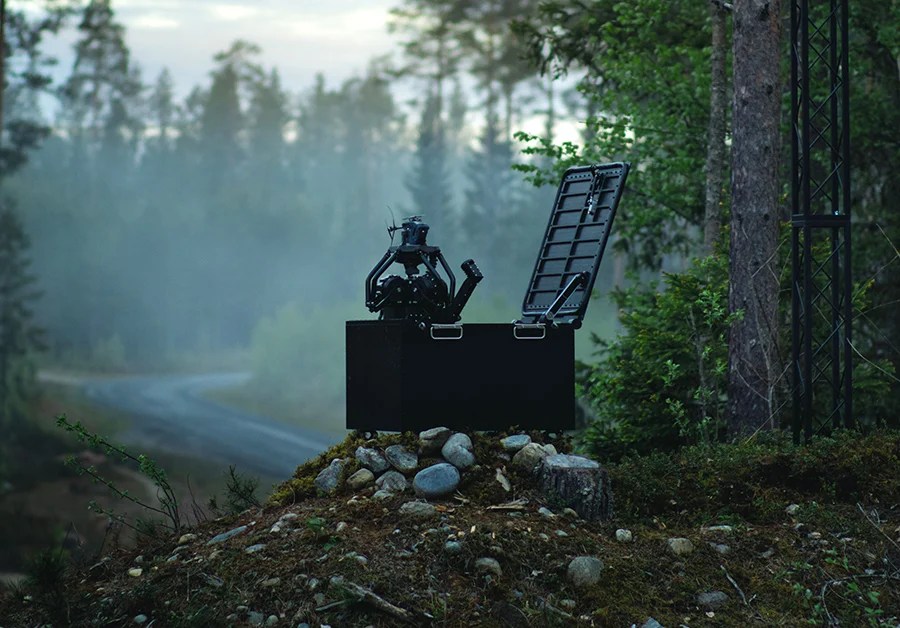
At the center of Black Recon is a docking station that houses and supports up to three micro-unmanned aircraft. Rather than relying on a single drone and human operators in the field, the system cycles aircraft through missions. One drone can conduct reconnaissance while another recharges, creating what Teledyne describes as near-continuous intelligence, surveillance and reconnaissance coverage.

Each aircraft launches autonomously, carries out reconnaissance and target acquisition tasks, then returns to the vehicle or installation for capture and recharging before the next sortie begins. The approach could prove particularly valuable for mechanized units operating in contested environments where even brief exposure outside a vehicle carries risk.

“Black Recon represents a major step forward in integrated reconnaissance for ground forces,” said Dr. JihFen Lei, president of Teledyne Defense and Aerospace Group and senior vice president of Teledyne Technologies.

Lei said integrating launch, recovery, and recharging capabilities directly into military platforms gives operators persistent situational awareness while speeding access to intelligence and improving force protection during fast-moving operations.

Built for contested skies

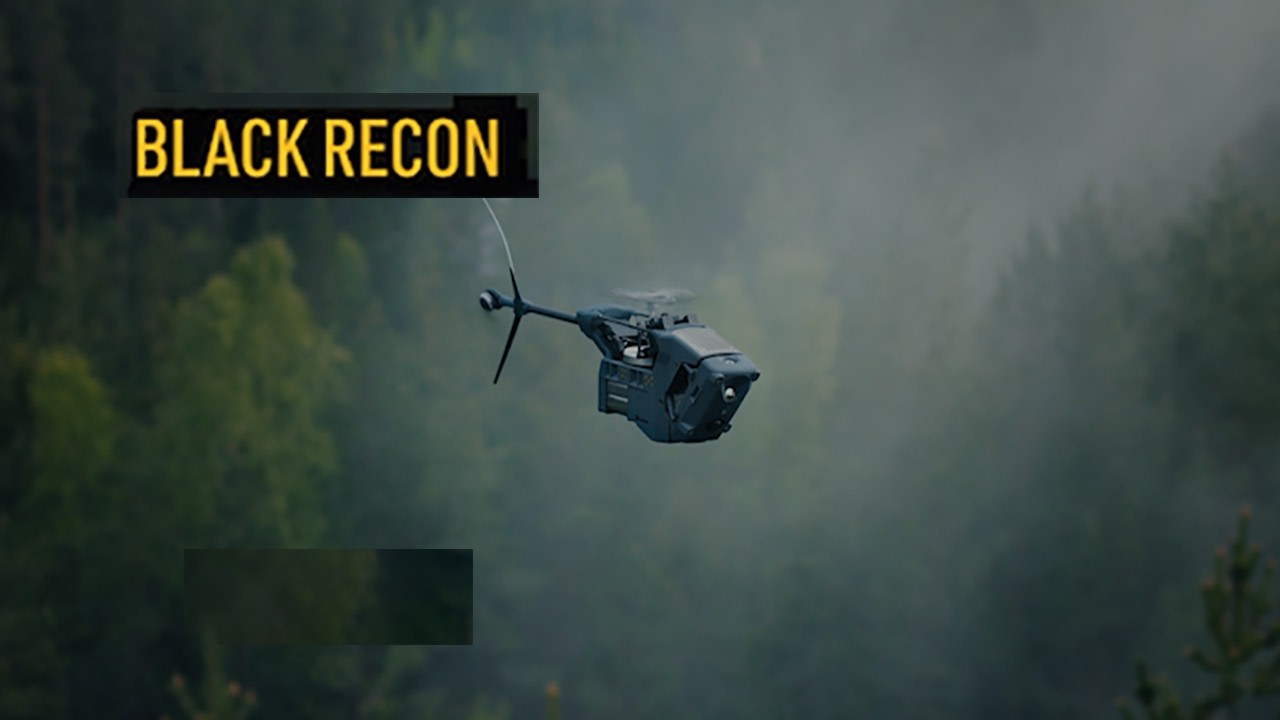
The system was designed specifically for mounted operations instead of being repurposed from equipment meant for troops on foot. Teledyne said each drone weighs less than 450 grams and can stay aloft for about 50 to 60 minutes. The aircraft can also travel at speeds of up to 25 meters per second, extending surveillance beyond traditional engagement ranges.

Black Recon mini-drone system swapping. Credit – Teledyne FLIR Defense

Black Recon also targets one of modern warfare’s growing challenges: operating in electronically contested environments. The company said the drones can continue missions in GPS-denied conditions using advanced sensors and visual navigation systems. Visual inertial navigation also enables radio-silent operations without depending entirely on traditional radio-frequency links.

Additional capabilities include onboard relay functions to extend communications coverage and compatibility with the Black Hornet 4 nano-drone, which is already in service with several military customers.

The company also said the system can support thermal and visible imaging payloads, providing troops with real-time imagery and targeting data during operations.

Beyond reconnaissance missions

Although Teledyne developed Black Recon with military users in mind, the company said the technology could eventually support public safety missions, including border security, critical infrastructure monitoring and maritime patrol operations.

The platform’s modular design also leaves room for future payloads. Planned additions include chemical, biological, radiological, and nuclear detection sensors, as well as lethality modules that could expand the system’s role beyond surveillance.

Black Recon is available for order now, with customer deliveries expected to begin in 2027. The launch comes as defense companies race to develop autonomous systems capable of maintaining battlefield awareness while reducing the burden and risk placed on human operators.

💾

Teledyne FLIR unveils Black Recon micro-drone system, which lets vehicles deploy, recover, and recharge compact UAVs without exposing crews.
  •  

China turns to recycled coal waste to meet surging demand for construction sand

China is turning the massive environmental liabilities of its coal-mining history into the raw materials for its next generation of infrastructure.

In the southeastern county of Gaoping, located deep within China’s premier coal province of Shanxi, a massive new recycling facility has quietly begun operations. It transforms the waste into high-value industrial and building materials.

Reportedly, its daily output sounds like a standard quarry operation: 1,000 tonnes of sand, gravel, and unburnt bricks destined for the country’s endless appetite for concrete.

But these construction materials did not come from a riverbed or a mountain quarry. The material was extracted from coal gangue, which is the ultra-hard, toxic rock waste left behind after mining and washing coal. 

Specialized facility

China’s coal gangue is expected to be around 7 billion tonnes. Left unmanaged, coal waste routinely triggers water contamination, airborne dust pollution, and spontaneous fires.

Less than 60 percent of this mountain of rock was ever reused. The rest stayed behind as a permanent ecological tax on resource-dependent cities. Now, technology is cracking that stubborn bone to turn the waste into an industrial resource. 

The South China Morning Post (SCMP) reported that the Gaoping facility consists of automated systems that sort the incoming waste using X-ray separation equipment. From there, the material is crushed, screened, and stripped of impurities. The result is a stream of manufactured aggregates and eco-friendly unburnt bricks that skip the high-emission firing process entirely.

Local authorities say the applications reach far beyond basic roads. The refined waste is finding its way into ceramics and even high-tech spacecraft coatings. 

Broader circular economy

Beyond recycling coal waste, China is eyeing a broader circular economy to overhaul its construction material supply. 

China uses nearly half of the world’s construction sand and gravel, a habit that has severely degraded fragile river ecosystems. Replacing natural sand with coal waste solves two environmental headaches at once.

Research also suggests that recycling construction and demolition waste could meet half of China’s aggregate demand by 2050.

The industry is scaling up at breakneck speed. While attempts to recycle gangue date back to the 1950s, the economic incentive shifted after 2010 as natural sand supplies tightened and Beijing locked in its national carbon targets. 

Last year, a milestone 10-million-tonne utilization project was launched in Datong. 

The strategy is not without its speed bumps. Industry experts caution that aggregates derived from coal waste currently represent only a tiny sliver of China’s annual consumption. 

Due to the material’s structural limitations, it cannot be used for high-strength or critical load-bearing structures like skyscraper pillars or major bridges. Strict toxicity testing is also mandatory to ensure heavy metals do not leach out of the residential walls of the future.

This strategy operates alongside efforts to harvest industrial value from existing fossil fuel liabilities—such as extracting critical technology metals like lithium, gallium, and germanium from mining byproducts. Furthermore, trapping power plant emissions to manufacture affordable agricultural fertilizer.

The development shows that a zero-waste future might actually be possible simply by turning a toxic liability into literal building blocks.

💾

In the southeastern county of Gaoping, located deep within China’s premier coal province of Shanxi, a massive new recycling facility has quietly begun operations.
  •  

US and European firms test autonomous strike technology for future cruise missiles

Shield AI and Destinus have completed a flight test exercise demonstrating autonomous collaborative strike capabilities from an interceptor drone system, named Hornet.

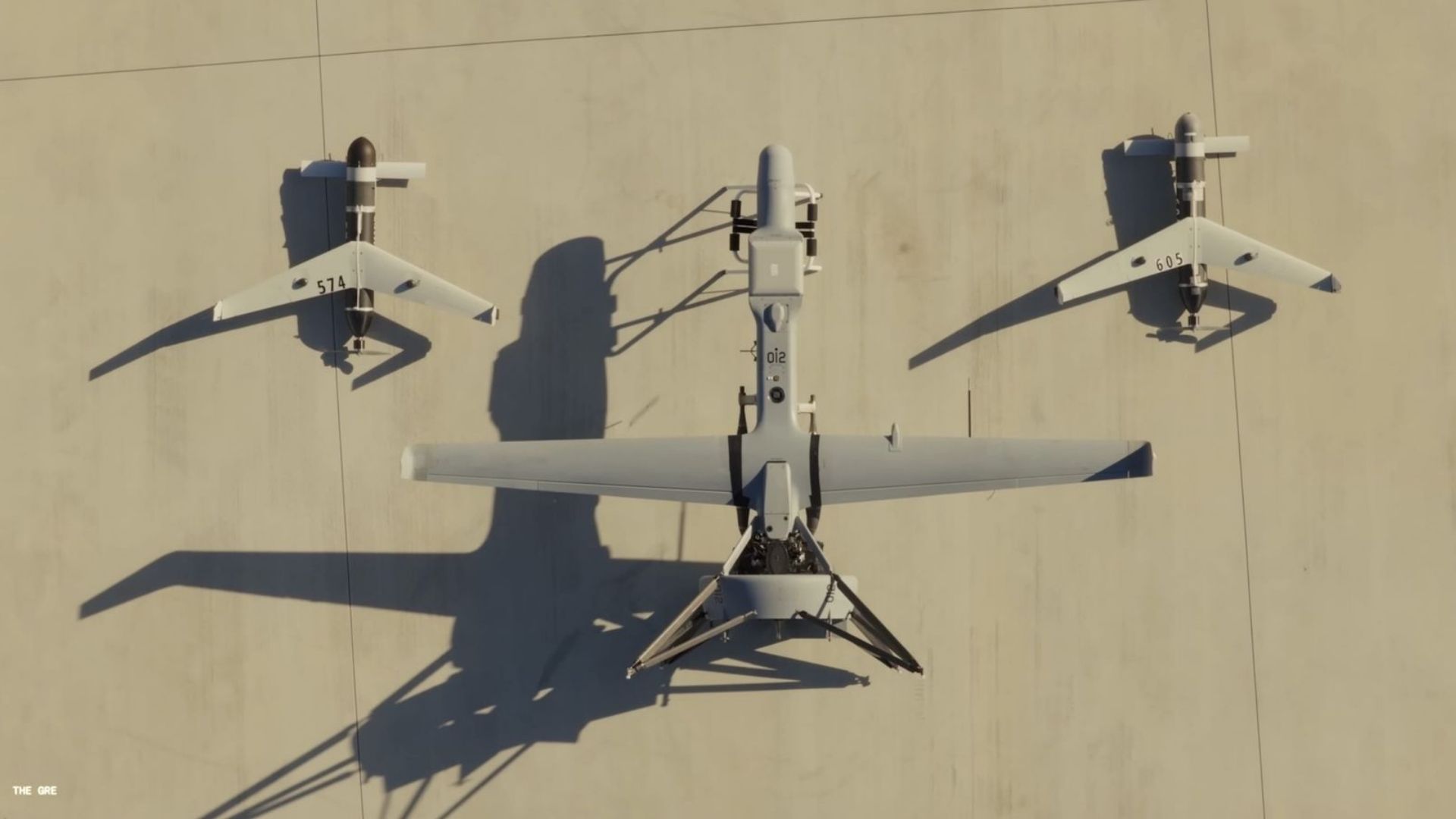
Hornet is designed and manufactured by Destinus, a European defense technology company. It is a multi-role autonomous platform capable of counter-unmanned aircraft system, strike, reconnaissance, and data relay missions. It can also be integrated into the existing multi layered air-defense architecture for protecting forward bases and critical infrastructure from kamikaze drone swarms. Hornet can operate in GPS denied environments, has a minimum range of 75 km (46.6 miles) and can carry a payload of 1.5 kg (3.3 pounds).

According to the company the Hornet serves as an initial integration baseline for Shield AI’s Hivemind AI pilot across the Destinus product line. The company’s product line of unmanned aircraft systems and cruise missiles is based on a common architecture which facilitates cross platform integration. The integration also serves as a technical risk reduction measure.

Tim Moser, chief technology officer at Destinus, said: “Destinus platforms operate on our own flight control architecture, and Hivemind validated that we can integrate third-party autonomy without surrendering system design authority.”

What the exercise involved

The main aim of the full mission flight test is to facilitate the integration of Hivemind with Ruta cruise missile. The missile is intended for precision strike against hardened and high-value military targets. It will be fielded in two blocks with iterative capability enhancements in range and payload. The missile will be capable of flying low-altitude terrain-following flight trajectories and can operate in GPS denied and contested electronic warfare environments.

The flight test covered the complete mission sequence akin to the Ruta’s operational engagement. It included autonomy-assisted mission planning via ground control station, radio testing, autonomous terrain following, in-flight target updates, and autonomous terminal maneuver execution on operator command.

Previously, the company has also carried out tests demonstrating an inflight teaming of Hornet with Shield AI’s V-BAT UAS. In these tests, the V-BAT served as a communications relay between the ground station and multiple Destinus Hornet interceptor drones.

How Hivemind functions in a teaming role

Shield AI’s Hivemind AI pilot is a platform agnostic autonomy software. It enables platforms to sense, decide, and act independently, within operator-defined parameters under established command authority. It can dynamically reroutes mission plans, responds to unexpected conditions, avoids obstacles, and executes complex tasks.

In a teaming context, individual aircraft running Hivemind communicate peer-to-peer to distribute situational awareness and coordinate maneuvers to lessen reliance on a ground control station. The architecture is intended to preserve mission continuity even when datalinks are jammed or severed.

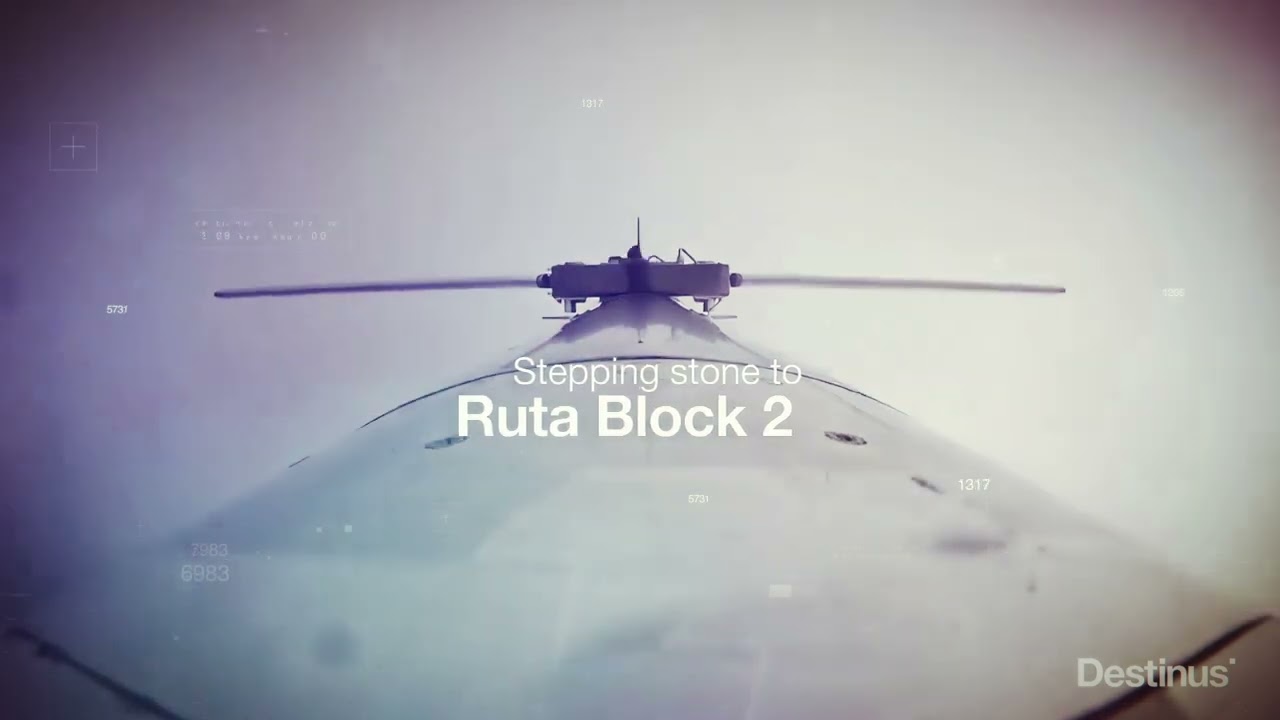
Destinus intends to transition these capabilities via the Ruta platform to Ukraine. This will enable the coordinated strike behaviors between V-BAT and multiple Ruta systems to be tested in a combat environment.

💾

Destinus intends to transition the autonomous strike and teaming capabilities via the Ruta platform to Ukraine.
  •  

7 myths and facts about the Northern Lights that may surprise you

For centuries, the Aurora Borealis has captivated skywatchers with its shimmering curtains of green, red, and purple light. Yet despite being one of Earth’s most recognizable natural phenomena, the Northern Lights remain surrounded by misconceptions. 

Some believe they occur only near the North Pole, while others assume they are caused by weather or that they always appear green. In reality, auroras are the result of complex interactions between the Sun and Earth’s magnetic field, and scientists continue to uncover new details about how they form. Here are seven common myths about the Northern Lights and the facts behind one of nature’s most spectacular displays.

1. Myth: The Northern Lights make no sound

Fact: Most auroras occur too high in the atmosphere for sound to travel directly to the ground. However, some observers have reported hearing faint crackling or hissing noises during intense displays. The phenomenon remains debated, but researchers have investigated possible explanations involving electrical activity close to the Earth’s surface. While not fully understood, reports of auroral sounds are not dismissed as pure imagination.

2. Myth: The aurora is always green

Fact: Green is the most common aurora color, but it is far from the only one. Different atmospheric gases and altitudes produce different colors. Oxygen can create green or red displays, while nitrogen can produce blue, purple, and pink hues. During powerful geomagnetic storms, observers may see multiple colors at once, creating the spectacular multicolored curtains often captured in photographs.

3. Myth: Auroras only happen at the North Pole

Fact: The Aurora Borealis is most common near the Arctic, but powerful solar storms can push auroral activity much farther south. During major geomagnetic events, the lights have been observed across Europe, Asia, and even parts of the continental United States. There is also a southern counterpart known as the Aurora Australis, which occurs around Antarctica and southern high-latitude regions.

4. Myth: Auroras are unique to Earth

Fact: Earth is not the only world with auroras. Scientists have observed auroral activity on Jupiter, Saturn, Mars, and several other bodies in the Solar System. While the underlying mechanism is similar, charged particles interact with an atmosphere and a magnetic environment. The appearance and behavior of auroras vary significantly from planet to planet. Studying these alien auroras helps researchers better understand planetary atmospheres and magnetic fields.

5. Myth: The Northern Lights are caused by Earth’s weather

Fact: Auroras are actually a form of space weather. They occur when charged particles from the Sun interact with Earth’s magnetic field and collide with gases in the upper atmosphere. These collisions release energy in the form of colorful light. While clouds can block your view of an aurora, the phenomenon itself originates hundreds of miles above normal weather systems. Strong solar storms can even make the lights visible far beyond the Arctic.

6. Myth: If an aurora forecast is good, you’ll definitely see it

Fact: A strong aurora forecast is only part of the equation. Visibility also depends on cloud cover, light pollution, moonlight, and your geographic location. Even during powerful geomagnetic storms, thick clouds can completely hide the display. This is why experienced aurora chasers pay as much attention to weather forecasts as they do to solar activity predictions.

7. Myth: The aurora is a modern phenomenon

Fact: Humans have been observing auroras for thousands of years. Ancient cultures across Scandinavia, North America, Asia, and Europe developed myths and legends to explain the mysterious lights. Long before scientists understood solar wind or magnetism, people associated auroras with spirits, omens, warriors, or celestial beings. Modern science has explained the mechanism behind the lights, but the sense of wonder they inspire remains unchanged.

  •  

Hanwha Ocean to Build Six KDDX Destroyers Featuring AESA Radar, VLS, and IEP Options

South Korea has formally advanced its Korea Destroyer eXperimental (KDDX) program by designating Hanwha Ocean as the prime contractor for the construction of six next-generation destroyers, according to reports.

The move signals a concrete step in Seoul’s broader naval modernization effort, aimed at replacing aging KDX-I class frigates that have been in service since the late 1990s.

Program architecture and Hanwha Ocean’s role

Hanwha Ocean, formerly known as Daewoo Shipbuilding and Marine Engineering (DSME) before its acquisition by the Hanwha Group in 2023, will serve as the lead shipbuilder for the KDDX fleet.

The company brings substantial warship construction experience, having previously built KDX-II Chungmugong Yi Sun-sin-class and KDX-III Sejong the Great-class destroyers for the Republic of Korea Navy (ROKN).

The KDDX is designed as a roughly 6,000-ton displacement vessel — placing it between a conventional frigate and a full destroyer — optimized for multi-domain operations covering anti-surface warfare (ASuW), anti-submarine warfare (ASW), and anti-air warfare (AAW).

The design incorporates an integrated mast architecture that consolidates radar, electronic warfare, and communications systems into a single structure to reduce radar cross-section.

Propulsion and combat systems specifications

The KDDX is expected to adopt a combined diesel and gas (CODAG) or integrated electric propulsion (IEP) system, with final propulsion architecture still subject to program refinement. The ship’s combat management system is slated for domestic development, consistent with South Korea’s stated goal of reducing dependence on foreign defense electronics.

The vertical launch system (VLS) configuration will likely accommodate the domestic Hyunmoo cruise missile family alongside the Korean Air and Missile Defense (KAMD) interceptors.

The radar suite is anticipated to include an Active Electronically Scanned Array (AESA) system, developed in collaboration with LIG Nex1, which has been involved in previous Korean naval electronics programs. Integration of a domestically produced 127mm naval gun is also under consideration, though supplier finalization remains pending.

Industrial and procurement timeline

The six-ship order represents a significant production run by regional standards. South Korea’s Defense Acquisition Program Administration (DAPA) has been managing requirements definition, and the program has faced iterative delays tied to technology readiness levels for some onboard systems.

Full-rate production is expected to extend through the mid-2030s, with the lead vessel delivery targeted within the current decade pending contract finalization.

From an industrial standpoint, the contract reinforces Hanwha Ocean’s position in the domestic naval shipbuilding sector following its competition against HD Hyundai Heavy Industries, which builds the existing Sejong the Great-class Aegis destroyers.

The award consolidates naval surface combatant work at a single yard, which carries both efficiency benefits and supply chain concentration risks if production bottlenecks emerge.

Operational context and regional calculus

The KDDX program does not operate in isolation. The ROKN is simultaneously pursuing the KDX-III Batch II Aegis destroyer and expanding its submarine fleet under the KSS-III program. Sustaining parallel major acquisition tracks places pressure on defense budgets and domestic industrial bandwidth.

Questions remain about whether Korea’s shipyards can absorb concurrent destroyer, submarine, and future light aircraft carrier workloads without schedule compression on any individual program.

For engineers and defense analysts tracking South Korea’s evolving naval engineering programs, the KDDX contract award with Hanwha Ocean represents a procurement decision with tangible technical and strategic consequences that will play out across the next decade of ROKN fleet development.

  •  

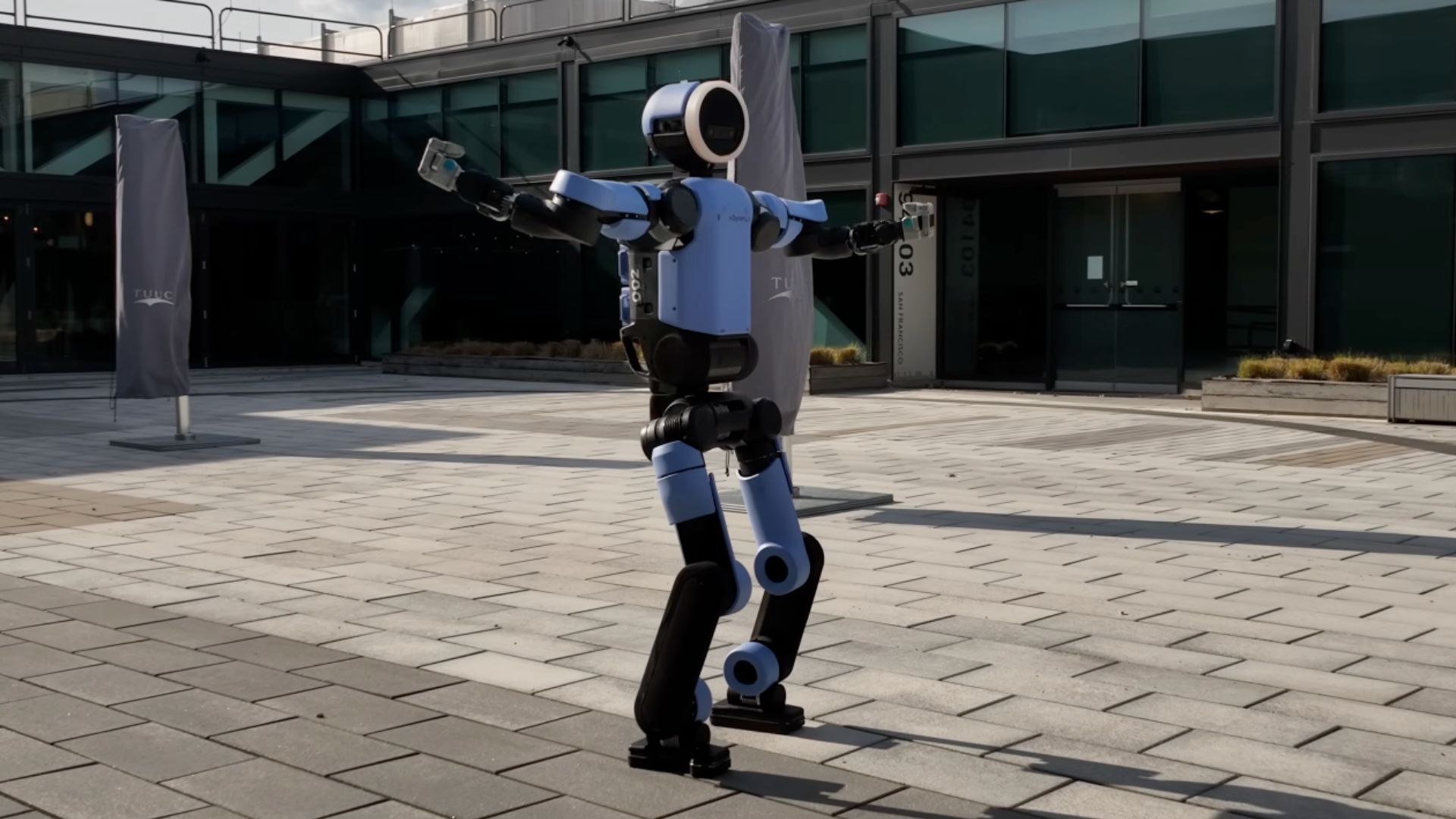
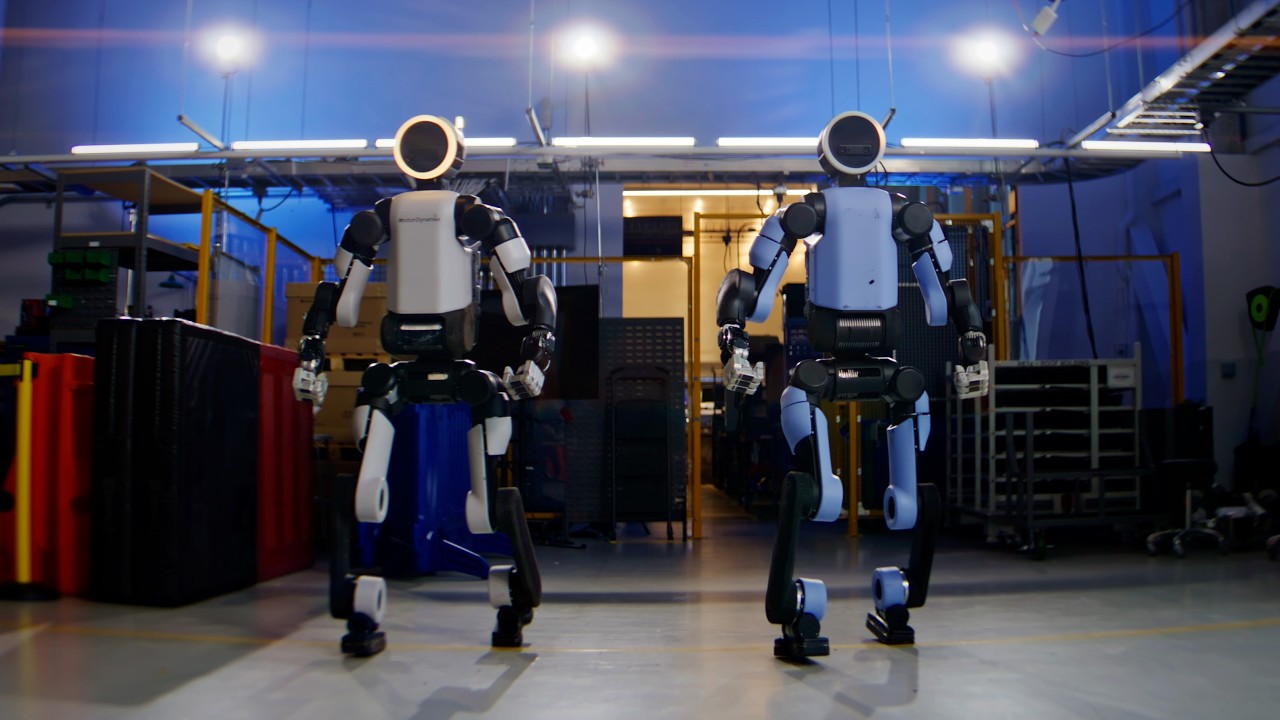
Boston Dynamics Atlas shows signs of general intelligence for factory work, reports say

New reports suggest that Boston Dynamics’ Atlas is approaching the autonomy needed for industrial deployment.

The assessment follows recent demonstrations by Boston Dynamics that indicate significant progress in developing general intelligence.

Experts suggest advancements now enable humanoid robots to adapt to unfamiliar environments and perform a broader range of tasks beyond preprogrammed actions.

Recently, the US robotics firm launched a campaign featuring Atlas, using football to showcase human-centered robotics, AI, and human-robot interaction.

Atlas gains intelligence

Boston Dynamics is making rapid progress toward commercializing humanoid robots, with its Atlas platform approaching the level of autonomy required for industrial deployment, according to a new report from KB Securities.

Analyst Kang Sung-jin said recent demonstrations by Boston Dynamics, Hyundai Motor Group’s US-based robotics subsidiary, point to major advances in the development of humanoid robot “general intelligence” — the ability to adapt to unfamiliar environments and perform a broad range of tasks without relying solely on preprogrammed instructions, reports The Korean Herald (TKH).

A key factor behind this progress is the company’s accelerated training framework. According to the report, Boston Dynamics can run simulations equivalent to millions of hours of robot training in a single day. The resulting behaviors and skills can then be transferred to a physical Atlas robot in roughly one hour, significantly shortening development cycles and enabling faster deployment of new capabilities.

The report credits strategic collaborations with Google DeepMind and Nvidia for helping drive these advancements. DeepMind contributes expertise in artificial intelligence and learning systems, while Nvidia provides the high-performance computing infrastructure needed for large-scale simulation and robot training.

Recent Atlas demonstrations also highlight notable improvements in physical intelligence and whole-body control. In one example, the humanoid robot moved a refrigerator using coordinated movements across its entire body, while another video showed Atlas performing dynamic kicking motions that required balance, agility, and precise motor control, reports TKH.

Kang said the demonstrations reinforce Hyundai Motor Group’s commitment to industrial humanoid robotics and position Boston Dynamics as a leading contender in the emerging market. He projects the company could secure 15 percent of the global humanoid robot market by 2035 and as much as 60 percent of the premium industrial humanoid segment.

Atlas industrial leap

Boston Dynamics says one of the key advantages of its new Atlas humanoid robot is a significantly reduced “sim-to-real gap” — a common robotics challenge where skills learned in simulation fail to transfer reliably to the physical world. The company attributes this improvement to Atlas’ simplified hardware design, which makes it easier to create highly accurate simulations for training.

Unlike many humanoid robots that use numerous actuator types and complex mechanical systems, Atlas relies on just two actuator types across its body. Its arms and legs are also designed symmetrically, simplifying both control and simulation. This streamlined architecture allows engineers to train the robot more efficiently in virtual environments and rapidly transfer those capabilities to the real machine.

Boston Dynamics also redesigned Atlas to eliminate cables running across joints, enabling continuous joint rotation while reducing wear and maintenance requirements. The added flexibility allows the robot to perform movements that are difficult for conventional humanoids.

The company highlighted Atlas’s ability to handle heavy industrial tasks. Although the robot was trained using loads weighing between 50 and 70 pounds (23–32 kilograms), it successfully moved a refrigerator weighing more than 100 pounds (45 kilograms) during testing. According to Boston Dynamics, such tasks require more than visual perception, demanding full-body coordination, weight anticipation, balance, and precise force control.

The company added that Atlas’s athletic feats, including handstands and backflips, serve a practical purpose by helping develop balance, agility, slip recovery, and endurance needed for real-world industrial environments.

💾

Boston Dynamics’ Atlas nears industrial autonomy, adapting to new environments and handling tasks beyond preprogramming.
  •  

Samsung-backed 7 DOF robot is learning to work inside a giant e-commerce warehouse

A mobile robot developed by Samsung-controlled Rainbow Robotics has reportedly begun testing inside a Coupang fulfillment center, marking what could be its first deployment in a live commercial warehouse environment.

According to a report by The Korea Herald, Coupang is evaluating Rainbow Robotics’ RB-Y1 robot to determine whether it can reliably sort, transport, and handle goods within one of South Korea’s highly automated logistics networks. While neither Coupang, Samsung, nor Rainbow Robotics has publicly confirmed the pilot, industry sources told ETNews that a larger deployment could follow if the tests prove successful.

The reported trial represents an important step for the RB-Y1, which until now has primarily been used by universities, research institutions, and industrial partners for testing and development.

A different kind of humanoid

Unlike the bipedal humanoid robots grabbing headlines worldwide, the RB-Y1 takes a more practical approach. The machine combines a wheeled autonomous mobile base with a dual-arm upper body designed to mimic the movement of a human torso. 

The robot stands approximately 1.4 meters tall and weighs 131 kilograms. Its two robotic arms offer seven degrees of freedom each and can handle payloads of up to 3 kilograms per arm.

Mounted on a high-speed wheeled platform capable of traveling at 1.5 meters per second, the robot is designed to navigate warehouses, factories, and research facilities while performing tasks such as picking, sorting, and manipulating objects.

Rainbow Robotics says the platform uses a 20-axis whole-body control system to maintain stability during movement and when handling items. The company also developed collision-avoidance software that prevents the robot’s arms from interfering with each other during operation.

Why Coupang is interested

For Coupang, South Korea’s largest e-commerce company, warehouse automation has become increasingly important as the company seeks to improve efficiency and reduce operating costs.

The company has invested heavily in robotics, automation, and artificial intelligence in recent years. According to The Korea Herald, Coupang has invested more than $84 million in global AI startups since 2023 as part of broader efforts to modernize its logistics infrastructure.

The potential benefits extend beyond productivity. South Korea’s Serious Accidents Punishment Act holds executives legally accountable for fatal workplace accidents, creating additional incentives for companies to automate potentially hazardous tasks.

With a payload capacity better suited to lighter goods than heavy lifting, the RB-Y1 would likely be deployed for sorting, picking, and moving smaller items if the pilot progresses to commercial use.

Samsung’s growing robotics ambitions

The trial also highlights Samsung’s expanding ambitions in robotics. Samsung increased its stake in Rainbow Robotics to 35 percent before making the company a subsidiary, identifying robotics as one of its next major growth areas alongside artificial intelligence and advanced semiconductors.

The move comes as South Korea continues to lead the world in industrial automation. According to the International Federation of Robotics, the country has the highest robot density globally, with roughly 1,012 industrial robots for every 10,000 manufacturing workers. More than seven times the global average.

If the Coupang pilot proves successful, it could provide one of the clearest signs yet that advanced mobile manipulators are beginning to transition from research laboratories into large-scale commercial logistics operations.

  •  

BMW’s Neue Klasse EVs become home power hubs with smart solar energy ecosystem

Global car giant BMW and German clean-energy firm Solarwatt have just unveiled a home energy solution that will turn the upcoming Neue Klasse electric vehicles (EVs) into household energy storage units.

The companies presented their joint offering ahead of The smarter E / Intersolar Europe 2026 trade fair, which will take place in Munich München from June 23-25. The new announcement followed the expansion of their partnership in smart energy and home charging solutions, which the firms revealed on May 18.

As part of the effort, BMW intends to integrate its Neue Klasse vehicles and the bidirectional Wallbox Professional DC home charging station into Solarwatt’s home energy management system (HEMS), also called the Solarwatt Manager.

Instead of functioning solely as cars, the Neue Klasse EVs will also serve as mobile energy storage units. They will provide electricity to households through Vehicle-to-Home (V2H) technology.

A smarter energy hub

The system is set to link photovoltaic panels, stationary home batteries, electric vehicles, and household appliances through the Solarwatt Manager platform. The software controls energy production and usage to determine where the available power should be directed.

BMW said the integrated system will coordinate all energy assets simultaneously. This will reportedly allow homeowners to maximize the usage of self-generated solar power and minimize reliance on grid energy.

The PV system, battery, EV, and other consumers are intelligently coordinated and controlled as a whole. Credit: BMW Group

The platform will also incorporate weather and solar forecasts to predict future energy production. During winter and other periods of reduced solar production, the system will take advantage of dynamic electricity tariffs by charging batteries and vehicles when electricity prices are low.

The stored energy could then be utilized later. “This not only increases the self-consumption of solar power but also significantly reduces the energy costs of the entire household – unlike Vehicle-to-Grid (V2G), the electricity is used within the household and not fed back into the public grid,” BMW officials pointed out.

Power when needed

The system requires three essential components, including a Neue Klasse vehicle, BMW’s Wallbox Professional, and the Solarwatt Manager energy management system. Homeowners will be able to configure the settings via the My BMW App. They will have the option to optimize the household energy priorities through the Solarwatt Home app.

“In the Solarwatt Home app, customers can define household priorities – for example, for appliances and storage systems,” BMW representatives continued in a press release. “This ensures that energy is distributed intelligently, reduces the need for manual control, and makes the best possible use of solar power.”

The Vehicle-to-Home package is set to cut household energy costs.
Credit: BMW Group

Yet another advantage is that the system works with a wide range of third-party components. Existing solar panel systems and home batteries can be connected to the platform. This will enable homeowners to upgrade their current setups instead of simply replacing them from scratch.

“For many homeowners, the prospect of expanding an existing home battery storage system with an electric car is highly attractive,” Peter Bachmann, Solarwatt CEO, concluded in a statement. “This significantly increases the benefits of one’s own PV system, lowers electricity costs, and makes the home even less dependent on purchasing electricity from the grid.”

The two firms plan to launch the system in Germany, Austria, and the Netherlands in late 2026. Customers will also be able to order the BMW Wallbox Professional directly through Solarwatt. The first deliveries are expected to start in the final quarter of the year.

  •  

7 oldest things found on Earth that reveal our planet’s deep past

Long before humans built cities, made tools, or even appeared on Earth, the planet was already leaving behind clues to its earliest history. Some are tiny crystals almost as old as Earth itself.

Others are fossils, ancient rocks, mountain ranges, and tools that reveal when life began, how early humans evolved, and how our world changed over billions of years. These seven discoveries are among the oldest things ever found on Earth.

1. UR 501 jawbone

Wikimedia Commons

The UR 501 jawbone is considered one of the oldest known human fossils. Found in Malawi, it is estimated to be around 2.5 to 2.3 million years old. The fossil belongs to the Homo rudolfensis group, an early human relative.

Its discovery was important because early Homo fossils had not been found in Central Africa before. The jawbone suggests that early humans or their close relatives may have moved through the East African rift system, offering clues about how early Homo spread across the continent.

2. Lomekwi stone tools

The Lomekwi stone tools, discovered in West Turkana, Kenya, are around 3.3 million years old. They are considered the oldest known tools ever found. Archaeologists uncovered anvils, cores, and flakes at the site.

What makes these tools remarkable is that they are older than the earliest known humans by about 500,000 years.

This means they may have been made by early human relatives such as Australopithecus or Kenyanthropus. Their discovery changed the idea that toolmaking was only a human trait.

3. Lake Zaysan

Wikimedia Commons

Lake Zaysan in Kazakhstan is believed to be around 65 million years old. While Lake Baikal is often called the world’s oldest lake, Lake Zaysan may be even older.

The lake is thought to have formed during the Cretaceous period, though its exact age is difficult to confirm. Today, it is located near artificial reservoirs and the Bukhtarma dam. The dam raised the lake’s water level, increasing its area and causing some sources to group it with nearby reservoirs.

4. Makhonjwa Mountains

The Makhonjwa Mountains, located in South Africa and Eswatini, are about 3.6 billion years old. They are widely known as the oldest mountain range in the world.

The mountains are part of the Barberton Greenstone Belt, one of Earth’s oldest geological structures. They also contain some of the oldest known signs of life and ancient gold deposits. In 2018, the Makhonjwa Mountains were added to UNESCO’s World Heritage List.

5. Stromatolites

Wikimedia Commons

Stromatolites are layered rock structures formed by ancient cyanobacteria. Some of the oldest stromatolites are about 3.5 billion years old, making them among the earliest visible evidence of life on Earth.

These organisms once existed in large numbers around the planet. Although they became less common in the fossil record about a billion years ago, stromatolites still grow in some places today. They remain one of the clearest records of early life.

6. Hematite tubes

Hematite tubes found in Quebec, Canada, may be between 3.7 and 4.2 billion years old. Researchers have suggested that these tiny structures could be some of the oldest fossils ever discovered.

The tubes resemble structures made by modern microbes near hydrothermal vents. They also contain chemical signs often linked with life, including carbon and phosphorus.

However, some scientists remain cautious, arguing that the structures may have been misread or may not be as old as claimed.

7. Jack Hills zircon

Wikimedia Commons

The Jack Hills zircon crystals from Australia are believed to be the oldest known material found on Earth. They have been dated to about 4.375 billion years old.

These tiny crystals formed only around 165 million years after Earth itself. Their chemistry suggests that early Earth may have cooled quickly enough to have surface water and continental-type rocks. That means the young planet may not have been as hostile as once believed.

  •  

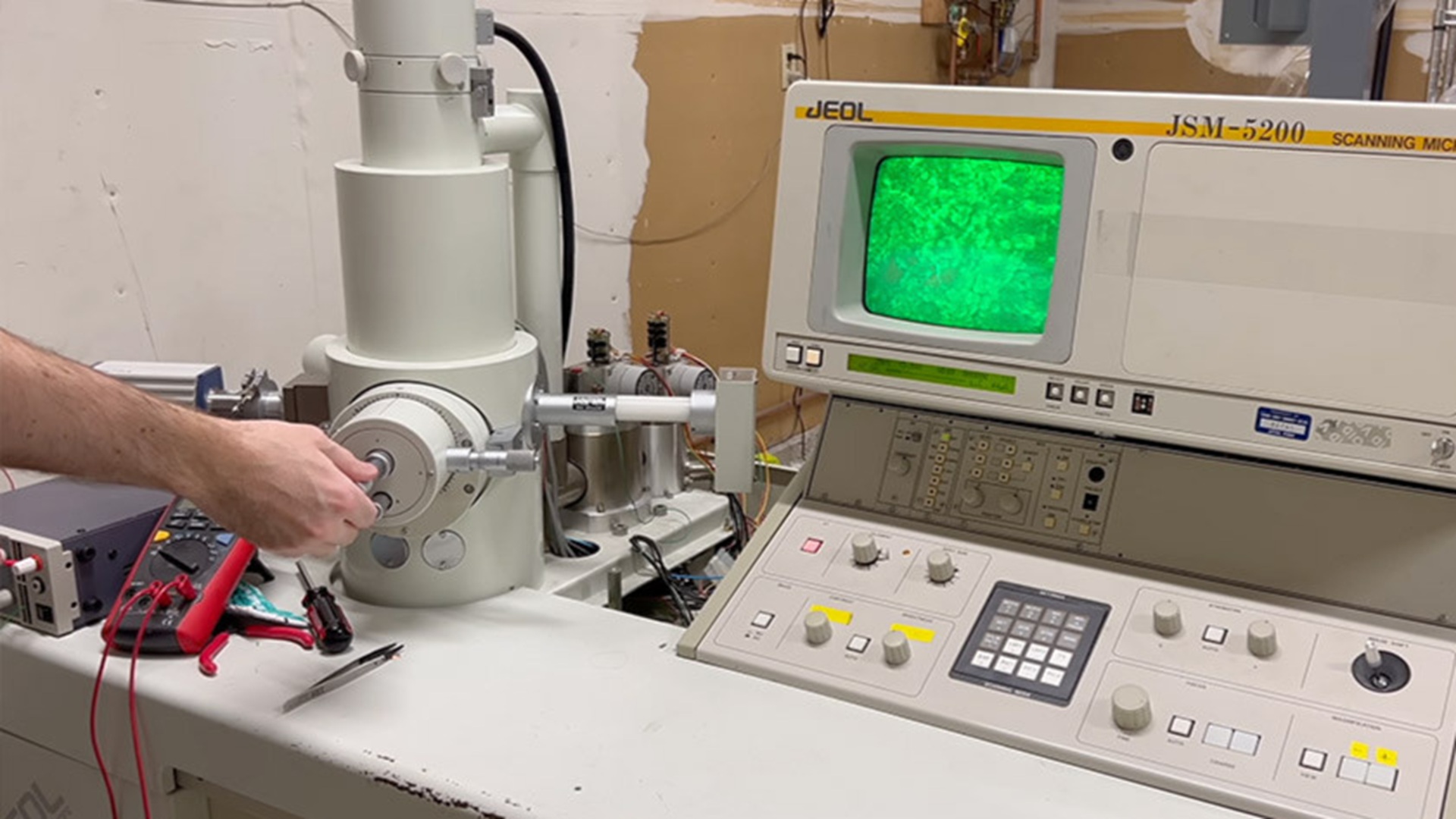
Hobbyist converts SEM into transmission electron microscope for sub-nanometer imaging

A home machinist and microscopy enthusiast has documented a detailed technical conversion of a scanning electron microscope (SEM) into a transmission electron microscope (TEM), demonstrating that sub-nanometer resolution imaging is not strictly confined to professional laboratory settings.

The project walks through the mechanical, electronic, and optical modifications required to redirect the SEM’s focused electron beam through an ultrathin specimen rather than bouncing it off a surface.

SEM versus TEM

In a conventional SEM, a focused electron beam rasters across the surface of a sample and detectors collect secondary and backscattered electrons to construct a three-dimensional surface image.

A TEM, by contrast, accelerates electrons through a thin specimen—typically below 100 nanometers—and a detector or phosphor screen on the far side captures the transmitted beam, yielding internal structural information at atomic or near-atomic resolution.

The two modalities require fundamentally different sample preparation, detector geometry, and beam alignment strategies, which makes the conversion non-trivial.

The modification involved fabricating a custom specimen holder stage capable of holding electron-transparent samples, repositioning a scintillator-based detector beneath the sample plane, and carefully adjusting beam convergence angles to suit transmission geometry.

Beam energy in the converted system reportedly remained in the range typical of low-voltage SEMs—roughly 5 to 30 kiloelectron volts—which is lower than the 80–300 keV found in dedicated TEMs.

That energy gap has direct consequences for penetration depth and contrast, meaning the converted instrument is better suited to very thin biological or polymer films than to hard crystalline materials.

Specimen preparation constraints

At 30 keV, electron penetration through matter is substantially reduced compared to a 200 keV research-grade TEM. Specimens must be prepared to thicknesses well below 50 nanometers to achieve meaningful transmission contrast, which demands either focused ion beam (FIB) thinning or careful ultramicrotome sectioning.

The project does not sidestep this limitation; the builder acknowledges that sample preparation remains the most labor-intensive part of the workflow and that certain dense or thick materials will simply block the beam entirely at these voltages.

Achieving proper alignment in a converted system also presents practical difficulties. Commercial TEMs incorporate sophisticated electromagnetic lens alignment systems, stigmators, and beam-tilt controls that are absent in most SEMs. The DIY conversion relies on mechanical stage adjustment and iterative beam tuning to compensate, which increases setup time per sample significantly.

Detector configuration and image acquisition

The transmitted electron signal was captured using a scintillator coupled to a camera placed below the sample stage. This configuration is conceptually similar to a bright-field TEM detector arrangement, where areas of the specimen that scatter or absorb electrons appear darker against a bright background.

The resolution achievable with this setup is constrained not only by beam energy but also by the point spread function of the scintillator material and the pixel pitch of the camera sensor used.

For engineers interested in electron optics at the amateur level, projects like this one sit alongside other low-cost electron beam experiments that have appeared in the maker community.

DIY scanning electron microscope builds have previously demonstrated that fundamental vacuum and high-voltage engineering skills can be acquired outside institutional settings, though always with serious attention to X-ray shielding and high-voltage safety protocols.

Safety and practical risk factors

Operating any electron beam instrument outside a certified laboratory introduces real hazards. Bremsstrahlung X-ray emission is an inherent byproduct of electron deceleration in the target and chamber walls.

SEMs are shielded from the factory, but any modification to the chamber geometry—including cutting ports for a transmission detector—requires careful verification that shielding integrity is maintained. The builder’s documentation should be read with this in mind by anyone considering replication.

The conversion represents a technically detailed exercise in applied electron optics and vacuum engineering, and it offers a practical reference point for understanding the design constraints that separate entry-level and research-grade electron microscopy instruments.

💾

Explore a detailed DIY conversion of a scanning-electron-microscope to a TEM for sub-nanometer imaging at home.
  •  

US defense firm unveils 22-pound backpackable robot for bomb disposal teams

American defense firm AeroVironment (AV) has introduced the TOM 50 RE, a lightweight, backpackable uncrewed ground vehicle (UGV) designed for rapid deployment in complex and contested environments.

Developed by its subsidiary Telerob, the system was unveiled at Eurosatory 2026 in Paris. Weighing under 10 kilograms (22 pounds), the TOM 50 RE has a compact form factor, making it easy to be carried and operated by a single soldier or team member.

The robot features a stair-climbing flipper system and optional attachments, allowing it to navigate stairs, uneven terrain, and confined indoor spaces. This makes it ideal for bomb disposal operations in high-risk environments.

AV’s bomb disposal robot

AV’s rolling robot offers up to five hours of endurance and can carry payloads of up to five kilograms. The vehicle was designed to address key requirements of ground forces, explosive ordnance disposal (EOD) teams, special operations units, and SWAT operators.

It supports four primary roles: mobile exploration for initial situational awareness in unknown areas; mission-accompanying reconnaissance with autonomous mapping; defusing operations using modular disruptors or drop-charge payloads; and operational support as a communications relay or additional sensor platform.

A core feature is its simultaneous localization and mapping (SLAM) capability. SLAM allows the TOM 50 RE to generate detailed digital maps of multi-level buildings and GPS-denied environments. This includes underground structures and dense urban terrain. Operators can mark points of interest on these maps and export data for immediate intelligence use and mission planning.

For situational awareness, the system includes four high-resolution wide-angle cameras with infrared capability, providing 360-degree coverage in day, night, and low-visibility conditions. Its IP-mesh radio architecture ensures secure, resilient communications and allows the UGV to act as a mobile repeater. This allows it to extend network connectivity for teams operating deep inside structures.

Addressing the ‘realities of modern ground combat’

The vehicle’s modular design features a Mission Module Interface that supports integration of specialized payloads, including advanced cameras and EOD tools. It is controlled via AV’s Halo command software on Tomahawk Grip systems or the Robo Command Control System, enabling coordination with other uncrewed assets.

“The introduction of TOM 50 RE reflects AV’s commitment to delivering robotic systems that directly address the realities of modern ground combat and explosive threat environments,” Wahid Nawabi, AV’s chairman, president, and CEO, explained in a press statement. “Today’s operators need systems that move with them, adapt to multiple missions, and provide immediate intelligence while reducing risk to human life.”

Florian Gruener, Managing Director of Telerob, meanwhile, added that the system delivers robotic capability at the point of need, allowing forces to gain awareness, mitigate threats, and decide faster while protecting personnel.

The TOM 50 RE expands AV’s portfolio of ground robotic systems for defense, security, and public safety applications. It builds on the company’s broader work in integrated autonomous capabilities across multiple domains.

  •  

Taiwan’s new ‘intelligent’ humanoid robot combines sensing and adaptive interaction

A Tawniese firm has unveiled its first humanoid robot capable of interacting with the physical world.

TM Technology, known primarily for integrated circuit design, has expanded its operations into sectors such as construction, green energy, and smart manufacturing, with support from its parent, Yinglin Group.

TM Technology said the humanoid robot combines advanced hardware and software as part of a broader intelligent platform strategy, representing a significant step in its efforts to develop next-generation AI-powered robotic systems.

Recently, Techman Robot from Taiwan unveiled its TM Xplore I humanoid at Nvidia GTC 2026 in San Jose, highlighting a collaboration with QCT and Nvidia.

Embodied AI emerges

As per reports, TM Technology’s newly unveiled humanoid robot combines AI, advanced manufacturing, biomimetic engineering, and multi-modal sensing technologies to operate in complex real-world environments. Designed as an embodied AI system, the robot features a layered architecture that mirrors key functions of the human nervous system.

At its core is an AI-powered “brain” responsible for semantic understanding, reasoning, task planning, and decision-making. A dedicated “cerebellum” subsystem manages balance, posture control, locomotion, and coordinated movement, enabling the robot to perform tasks with greater stability and precision. The platform also incorporates a sophisticated perception suite that combines 3D vision systems, LiDAR sensors, and force-sensing technology to create a detailed understanding of its surroundings and support real-time interaction, reports Taiwan News (TN).

The humanoid is equipped with multi-degree-of-freedom joints and dexterous robotic hands, enabling it to manipulate objects and perform a wide range of physical tasks. According to the company, the robot can handle transportation, inspection, assembly, and other precision operations that require coordinated motion and environmental awareness. Unlike traditional industrial robots that follow pre-programmed routines, the system is designed to adapt to changing conditions through learning-based interaction and intelligent decision-making.

TM Technology said the development marks a shift from conventional hardware manufacturing toward integrated intelligent platforms. The company expects initial deployment in factories and logistics environments, where autonomous robots can assist with repetitive and labor-intensive tasks, before expanding into healthcare, caregiving, and household service applications as the technology matures, reports TN.

Taiwan’s humanoid push

Another Taiwanese firm, Techman Robot, recently unveiled its next-generation humanoid robot, TM Xplore I. The robot reflects Techman’s strategy of combining artificial intelligence with industrial automation under its “See · Think · Act – Powered by AI Robotics” framework.

Unlike traditional bipedal humanoids, TM Xplore I features a humanoid upper body mounted on a wheeled mobile base, a design intended to improve stability, mobility, and operational reliability in factory environments. The platform combines autonomous navigation with dexterous manipulation, enabling it to transport materials, interact with workers, and perform precision tasks in industries such as semiconductor manufacturing, electronics assembly, and automotive production.

The robot is powered by Nvidia’s Jetson Thor computing module, providing high-performance edge AI capabilities for real-time decision-making. It also incorporates Vision-Language-Action (VLA) technology, allowing it to process visual and language inputs simultaneously and translate them into physical actions. Techman’s software stack supports multimodal sensor fusion, generative AI inference, and autonomous operation.

TM Xplore I further leverages Nvidia’s robotics ecosystem, including Isaac Sim for simulation-based training and testing, FoundationStereo for AI-powered depth perception, and Isaac GR00T for enhanced dexterity and autonomy. Together, these technologies enable faster deployment, improved adaptability, and more efficient automation in smart manufacturing environments.

💾

Taiwan's TM Technology unveils its first humanoid robot, combining AI, sensing, and robotics for real-world tasks.
  •  

5 natural disasters that changed history and reshaped human civilization

Natural disasters are usually remembered for the destruction they leave behind. But some disasters do more than destroy cities, villages, or coastlines. They change the direction of history.

Across centuries, earthquakes, floods, eruptions, and storms have weakened empires, stopped invasions, changed belief systems, and forced societies to rethink how they build and survive.

Here are five of the deadliest natural disasters that changed human civilization.

1. The Minoan eruption

Wikimedia Commons

Around 1600 B.C., a massive volcanic eruption struck Thera, now known as Santorini in Greece.

The eruption was one of the most powerful volcanic events of the ancient world. It sent ash into the sky, buried settlements, and triggered tsunamis across the Aegean Sea. One of the societies most affected was the Minoan civilization, based on Crete.

The Minoans were among the most advanced people in the ancient Mediterranean. They had large palaces, strong trade routes, and a powerful seafaring culture. But the eruption disrupted their economy and weakened their influence.

The disaster did not destroy the Minoans in one moment. However, it likely accelerated their decline and helped shift power toward the Mycenaeans. Some scholars have also linked the event to later stories about Atlantis, the lost island civilization described by Plato.

2. The typhoons that stopped the Mongols

In the 13th century, the Mongol Empire was one of the most powerful forces in the world. After conquering large parts of Asia and Europe, the Mongols turned toward Japan.

They launched two major invasions, first in 1274 and again in 1281. Both campaigns involved large naval fleets carrying troops across the sea.

But both invasions were struck by massive typhoons. The storms destroyed many Mongol ships and scattered the invading forces before they could take control.

In Japan, these storms became known as kamikaze, or “divine winds.” They helped preserve Japan’s independence and stopped Mongol expansion further east.

The storms also became an important part of Japanese memory, reinforcing the belief that the country was protected by divine forces.

3. The 1556 Shaanxi earthquake

The 1556 Shaanxi earthquake remains the deadliest earthquake in recorded history.

It struck China during the Ming Dynasty and killed an estimated 830,000 people. The death toll was so high partly because many people lived in cave dwellings carved into soft loess soil. When the earthquake hit, these homes collapsed almost instantly.

The disaster destroyed villages, farmland, roads, and local administrative systems. Entire communities were wiped out.

The earthquake showed that the impact of a disaster depends not only on nature’s force but also on how people live. It pushed later discussions around safer buildings, better settlement planning, and disaster response.

4. The 1755 Lisbon earthquake

Wikimedia Commons

On November 1, 1755, a massive earthquake struck Lisbon, Portugal. It happened on All Saints’ Day, when many people were inside churches.

The earthquake was followed by a tsunami and fires that destroyed much of the city. Tens of thousands were killed, with some estimates reaching up to 100,000.

But the disaster did not only reshape Lisbon. It changed European thinking.

At the time, many people saw disasters mainly as acts of divine punishment. Lisbon’s destruction forced philosophers, scientists, and leaders to ask new questions. Could earthquakes be studied? Could cities be built to survive them?

The event influenced Enlightenment thinkers such as Voltaire and helped push early ideas in seismology. Lisbon was later rebuilt with stronger planning and more resilient design.

5. The 1931 China floods

Wikimedia Commons

The 1931 China floods are among the deadliest natural disasters in human history.

They were caused by heavy snowmelt, extreme rainfall, and overflowing rivers, including the Yangtze and Huai. Vast areas of China were submerged.

The disaster killed an estimated 1 million to 4 million people through drowning, famine, disease, and the collapse of basic services. Crops were destroyed, communities were displaced, and cities and villages remained underwater for long periods.

The floods forced China to rethink flood-control policies, river management, urban planning, and agriculture. They showed how deadly extreme weather can be when it meets densely populated areas and weak infrastructure.

Conclusion

History shows that natural disasters are never just moments of destruction. Their impact depends on how societies prepare, respond, rebuild, and learn from what went wrong.

In many cases, the real legacy of a disaster is not the damage it causes, but the changes it forces into the future.

  •  

LeoLabs’ new 3D radar fits in 20-foot box, tracks objects 143 miles above Earth

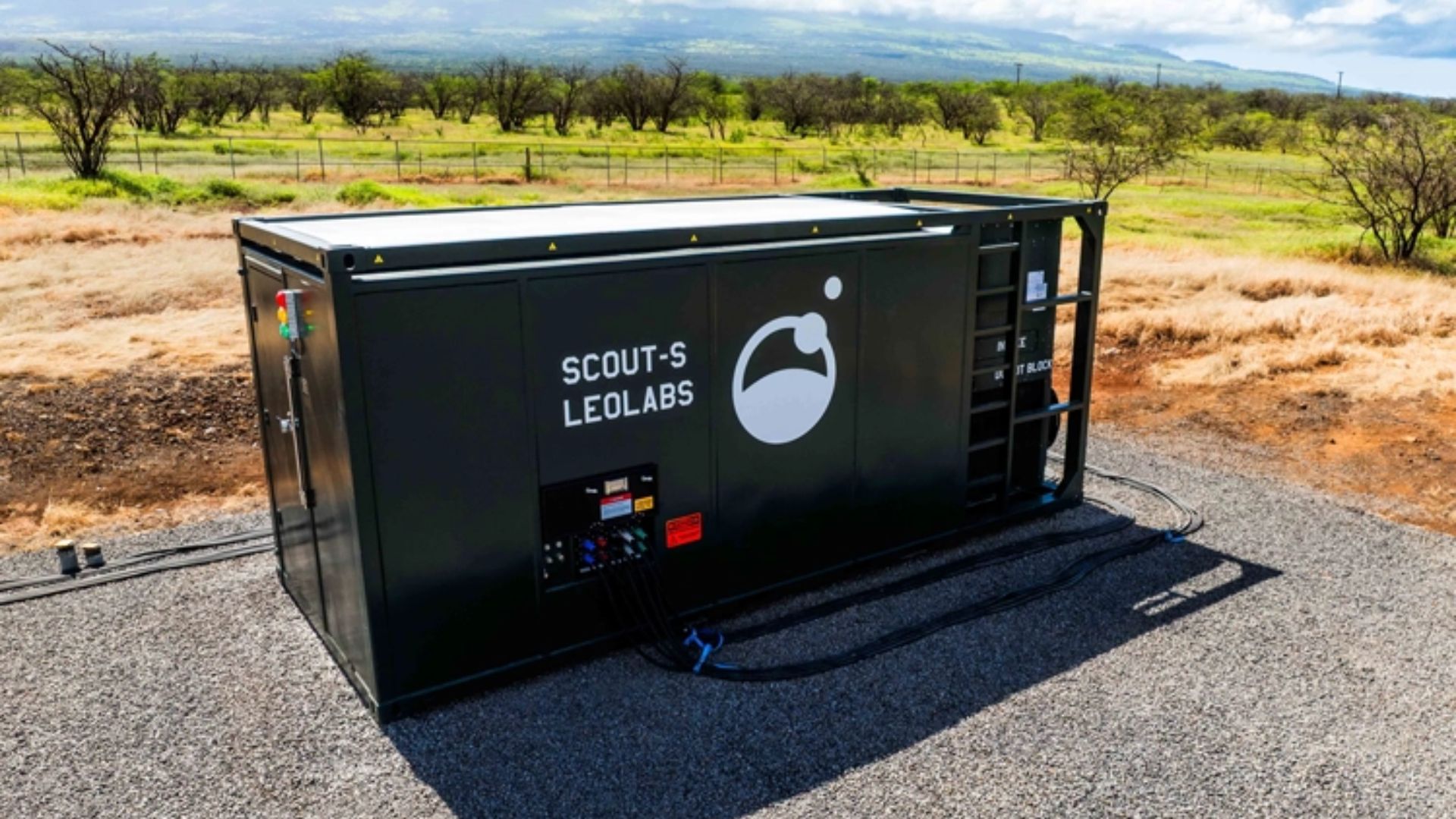
A new mobile space surveillance radar is now active as military planners focus more on tracking potential threats in orbit, including satellites used for nuclear command, control, and intelligence. LeoLabs, a space monitoring company, announced that its latest radar, Scout Hawaii, began operating and will take part in the Valiant Shield 2026 exercise in the Pacific.

This is the first time the company’s Scout-S radar has been used in the field. It is designed to better track objects in low Earth orbit (LEO) and very low Earth orbit (VLEO).

Radar heads to major Pacific military exercise

Valiant Shield is a major joint military exercise held every two years by the United States in the Indo-Pacific. Since 2024, regional allies have also taken part.

This year’s exercise will take place from June 22 to July 1 in Hawaii, Guam, Japan, and nearby waters.

LeoLabs has not shared details about the contract for the radar’s participation. The company said the Scout-S program is funded by private investment and support from the US Space Force, including a Tactical Funding Increase (TACFI) award announced in 2025.

The company views the exercise as an opportunity to test the radar in real-world conditions and demonstrate how it can support military space awareness missions.

A new class of radar is here.

Scout-S™ delivers persistent custody, dynamic tracking, and deployable sensing for LEO and VLEO — extending coverage where mission demand is greatest.

It's more than a radar. It’s a new approach to space sensing.

Deploy Where the Mission Demands. pic.twitter.com/If1pt0N2E9

— LeoLabs (@LeoLabs_Space) June 10, 2026

Built for rapid deployment anywhere

One of the key features of the Scout-S system is its mobility. The radar fits in a standard 20-foot shipping container, so it can be moved by truck, plane, or ship.

The system uses 3D scanning, direct-radiating-array technology, and a modular S-band electronic system. LeoLabs said these features help the radar find and track objects in busy orbital areas.

A company spokesperson said the improved design greatly increases how long the radar can observe a satellite as it passes by.

From snapshots to continuous tracking

Traditional tracking systems usually watch satellites for only short periods before waiting for the next pass. LeoLabs said Scout-S is built to provide much longer observation periods, helping operators track objects in orbit more continuously.

The company thinks this feature is more important now that military and commercial satellites can maneuver more often.

“The acceleration of adversarial activity in space is challenging U.S. and Allied Space Superiority. Tracking objects periodically to predict orbits is no longer enough. What matters now is the ability to maintain persistent custody of maneuverable payloads so our customers can respond to emerging threats,” said LeoLabs CEO Tony Frazier in the release.

The design also allows multiple units to be deployed quickly, helping to cover surveillance gaps that fixed radar sites cannot easily reach.

Tracking Chinese satellites and future expansion

Scout Hawaii is already sending data to LeoLabs’ global monitoring network. The company said the radar has consistently tracked Chinese intelligence, surveillance, and reconnaissance satellites, including the Yaogan military spacecraft.

According to the firm, the system has tracked China’s reusable spaceplane in low Earth orbit. The radar has also shown it can monitor objects flying at very low altitudes. The company reported successfully tracking an object orbiting at 143 miles (230 kilometers) above Earth.

The firm plans to keep the Hawaii-based radar running after Valiant Shield ends, using it for more experiments and testing new features. The company also said a second Scout-S unit should be built by early 2027, with more production expected later that year.

  •  

China’s new welding robot cuts 70mm steel, boasts 30-ton capacity, 20-year life

China has reportedly deployed its first domestic AI-driven marine welding system at a smart manufacturing base in Tianjin.

Developed by Offshore Oil Engineering Co., the robotic system is designed to handle highly complex, customized, and heavy welding scenarios for offshore oil and gas platforms.

The robot is fully capable of handling specialized offshore components, including module nodes, buckle rings, and deepwater jacket strengthening rings.

20 years of life

Automotive manufacturing was long seen as the peak of robotic welding precision due to its uniform parts, but marine engineering presents a much tougher challenge. 

Marine welders handle massive, oddly shaped, and heavy components such as deepwater jacket strengthening rings and module nodes. All these tasks require a far higher level of adaptive, heavy-duty automation. This new AI-driven system aims to solve this. 

Built for extreme heavy-duty manufacturing, the system has a 20-year service life and a massive 30-ton maximum load capacity. Global Times reported that it can slice through and fuse steel up to 70 millimeters thick. Moreover, it has an overall operational efficiency exceeding 40 percent. 

Equipped with artificial intelligence, visual weld seam recognition, and intelligent 3D laser vision alignment, the mechanical arm scans its environment in real time. It maps out a custom multi-layer path-planning strategy for each unique piece of steel.

With just a single command, the robot automatically handles the entire welding process from start to finish. It manages tasks independently, using real-time data to seal the initial root pass and automatically correct its trajectory on the go.

“The robots can be activated with a single click to complete intelligent welding of product components, and are equipped with functions such as intelligent weld path correction, intelligent root pass welding, and dual-sided four-wire intelligent filling,” the company stated in an earlier release.

Plus, the AI’s precision ensures a first-pass qualification rate of over 98 percent, thereby eliminating the need for costly, time-consuming structural re-work.

AI-powered marine welder

Getting the system factory-ready was a grueling trial by fire. Before entering full active duty, the robot system underwent nearly 10 months of on-site debugging to ensure it could withstand the harsh realities of a shipyard. 

The engineering team pushed the technology to its limits, conducting roughly 1,000 rigorous welding experiments to fine-tune the AI before clearing it for the front lines of manufacturing.

Reportedly, the advanced welder isn’t working alone. An independently developed intelligent grinding robot was deployed right alongside it. 

Using cutting-edge technologies such as intelligent visual positioning and real-time force-control compensation, this autonomous companion ensures the steel is perfectly prepped and finished. 

The grinding robot has already proven its worth on the shop floor, successfully processing more than 500 steel sections while clocking a sleek 15 percent boost in operational efficiency.

It solves the issues of poor accessibility and difficult precision control, allowing the robot to execute complex spatial welds on massive structures where human operators and standard machinery struggle.

Driven by China’s expanding “AI Plus” initiative, heavy industry is rapidly moving from dangerous, labor-intensive shipyards into highly automated, self-correcting digital ecosystems. For human crews, this transformation removes them from hazardous sparks and toxic fumes, shifting their roles from manual laborers to supervisors of a faster, tireless robotic workforce.

💾

China has reportedly deployed its first domestic AI-driven marine welding system at a smart manufacturing base in Tianjin.
  •  

US and Iran agree on ceasefire framework; fate of 900-pound enriched uranium unsettled

A possible agreement to end the war between the United States and Iran was announced late Sunday by U.S. President Donald Trump and Pakistani Prime Minister Shehbaz Sharif.

The deal includes stopping military actions, reopening the Strait of Hormuz, and eventually lifting U.S. restrictions on Iranian ports. Still, Iran’s nuclear program, a key issue, has not been settled and will be discussed in future talks.

The agreement is expected to be officially signed in Switzerland on Friday. News of the deal quickly affected global markets, sending oil prices down and Asian stock markets higher.

Ceasefire framework signals end to active fighting

The U.S. president announced the agreement on his Truth Social platform at about 5:30 p.m. ET on Sunday, saying, “The Deal with the Islamic Republic of Iran is now complete.” His statement came after Sharif spoke, as Pakistan has helped mediate the talks.

Although all the details have not yet been shared, Sharif said the agreement includes “the immediate and permanent termination of military operations on all fronts, including in Lebanon.”

Iran’s Supreme National Security Council later confirmed that military operations would stop for good starting Monday night. Iranian Deputy Foreign Minister Kazem Gharibabadi said negotiators will use a 60-day ceasefire to work toward a broader agreement that could include easing sanctions and other long-term measures.

This announcement follows months of fighting that have killed thousands, mostly in Iran and Lebanon. After U.S. and Israeli attacks on Iran on February 28, Tehran struck Israel and Gulf countries with U.S. bases. Iran also blocked shipping in the Strait of Hormuz, and the U.S. responded by restricting Iranian ports.

A major result of the agreement is the planned reopening of the Strait of Hormuz, which is a key route for global oil and gas shipments. Trump said the waterway will reopen on Friday and that he has ordered the U.S. blockade of Iranian ports to end.

“Ships of the World, start your engines. Let the oil flow!” Trump wrote.

Nuclear dispute remains the biggest challenge

Even with this diplomatic progress, negotiators have delayed decisions about Iran’s nuclear activities.

According to Iranian officials, discussions during the ceasefire period will focus on sanctions relief and the future of Tehran’s nuclear program. Sources indicate that the issue remains among the most difficult issues facing both sides.

The dispute goes back years. During Trump’s first term, the U.S. withdrew from the 2015 nuclear deal negotiated under President Obama. After that, Iran increased its uranium enrichment and built up more than 400 kilograms (about 900 pounds) of uranium close to weapons-grade.

Former Biden administration State Department spokesperson Matthew Miller criticized the framework, saying: “We have no assurances the nuclear program will ever be addressed, but Iran has shown the world it can take the global economy hostage and get something from the U.S. in return.”

Republican Senator Lindsey Graham welcomed the ceasefire but stressed that future nuclear talks will be watched closely. “Under our law, any nuclear deal with Iran will be sent to Congress for review and a vote,” he said. “Congratulations to all on getting us to this point.”

As negotiators prepare for formal talks in Switzerland, the focus is now on whether the ceasefire will last and if both sides can agree on Iran’s nuclear future.

  •  
❌