❌

Reading view

New turbo-electric passenger aircraft concept projected to deliver 17% more range efficiency

A hybrid-electric aviation company has unveiled a new conceptual aircraft design for next-generation airliners.

Electra’s conceptual aircraft uses a wide “double-bubble” fuselage that allows the body of the aircraft to contribute more lift, while two underwing turbofan engines produce thrust as well as electricity to power electric tail fans that ingest and re-energize slower-moving air over the fuselage.

Latest configuration could deliver up to a 17 percent efficiency

The technique is known as boundary layer ingestion. Electra’s analysis found that the configuration could deliver up to a 17 percent efficiency improvement beyond gains expected by 2050 from advanced structures, engine technologies, and aerodynamic improvements.

“The value of electrification in this concept is that it lets us put the propulsion where it couldn’t go before but does the most good,” said Dr. Parker Vascik, Director of Product Strategy at Electra.

“We can radically improve how the airframe and propulsion system work together while keeping the aircraft grounded in real airline and airport operations. The goal is not just efficiency on paper, but concepts that we can actually build, certify, and use.”

The company also revealed that the concept is designed to fit within existing airport gates and airline operations, use standard jet fuel or sustainable aviation fuel, and avoid reliance on airport charging infrastructure or untested fuel types. The configuration also supports a twin-aisle cabin layout within a narrowbody aircraft class, unlocking improved passenger comfort and more efficient boarding and deplaning. 

The concept is developed as part of NASA’s Advanced Aircraft Concepts for Environmental Sustainability (AACES) 2050 program.

“This concept builds on years of research into how airframe shape and propulsion placement can work together to improve aircraft efficiency,” said Dr. Alejandra Uranga, Electra’s Chief Engineer for Research and Future Concepts.

“What is different now is the ability to use electrification and distributed propulsion to more deeply integrate those systems. Designing the aircraft as a whole system is essential to realizing the full potential of future commercial aircraft.”

NASA’s open-source Aviary multidisciplinary design adopted

In addition to the concept, Electra developed 11 technical papers documenting the models, methods, and findings behind the study. The company also adopted NASA’s open-source Aviary multidisciplinary design and optimization tool and developed an electrified aircraft design suite intended for public use. Together, these contributions are intended to help advance the broader aviation research community, not just push forward a single aircraft concept, according to a press release.

Electra’s AACES 2050 team brought together leaders across industry and academia, including American Airlines, Honeywell Aerospace, Lockheed Martin Skunk Works, Hinetics, the Massachusetts Institute of Technology Department of Aeronautics and Astronautics, the University of Michigan Department of Aerospace Engineering, and the University of California, Irvine’s Aircraft Systems Laboratory, as per the release.

“Through AACES, NASA is pushing the industry to think boldly, to use our novel propulsion technologies to unconstrain design thinking for the next generation of commercial aviation,” said Marc Allen, CEO of Electra.

“The third era of aviation will bring radical change to how people and places connect, whether applied to aircraft entering service this decade, future regional platforms, or commercial transport by mid-century. Electra’s focus as the hybrid electric leader is to keep American aviation, and NASA, leading the way.”


  •  

Archaeologists identified oldest structure at UNESCO site Hadrian’s Villa

This just in from Hadrian’s Villa: archaeologists uncovered an underground villa dating to the Republican period, the oldest construction ever found to date at the massive, imperial complex.

Archaeologists continue to make groundbreaking discoveries at 300-acre Hadrian’s Villa, under investigation since 2003. From its earliest foundations, the daily operation of its vast workforce, and the lavish palatial residence, there seems to be no end in sight to its former glory.

Between April and May this year, at the Palazzo sector of Hadrian’s Villa in Tivoli, Italy, researchers reached a new milestone, yet again, when they found a structure beneath the Palazzo’s peristyles, a residential area, that revealed an earlier foundation for the site, before Emperor Hadrian took it over to build his splendid, jaw-dropping grounds.

In this newly discovered structure, they identified a hypogeum, an underground storage chamber, according to Archaeology News. From the construction debris and pottery shards, in Hadrian’s day, the structure appeared to archaeologists to have been abandoned. All the same, the artifacts represent the only archaeological finds from the Republican era.

The oldest structure on site

Researchers from the Archaeological Seminar at Pablo de Olavide University (UPO), in collaboration with the Institute of Hadrian’s Villa and Villa d’Este, are spearheading the current archaeological excavation at the UNESCO World Heritage site.

More like a small city, larger than Pompeii, Hadrian’s Palace boasted a sprawling display of 30 monumental buildings, including palaces, libraries, baths, and theaters. It took over a decade to build, about 19 miles from Rome. He chose this location beneath the Tiburtine Hills because it’s a massive, flat valley near ancient aqueducts and the Aniene River, which helped feed and sustain the extensive pools, thermal baths, and elaborate fountains. As Hadrian dabbled in architecture, he even built structures that acted like photographs taken from his favorite locations throughout the empire.

A sight to behold, indeed, Hadrian’s Villa was astounding as a display of wealth, culture, and power. According to researchers, long before Hadrian selected this location in Italy as his grand countryside estate, these remains likely belong to an earlier villa that was incorporated into the foundations of the Palazzo, which has provided archaeologists with a glimpse into its past.

Gardens and more

Along with the hypogeum, researchers also uncovered elaborate gardens that once surrounded the Palazzo. From what archaeologists gathered, the Roman villa garden featured a flowerbed enclosed in a courtyard with rows of packed ceramic pots, as per Ancient Origins. The design was called “ingenious,’ allowing for seamless transitions between the seasons, which revealed the sophistication of their landscaping techniques. Additionally, tree pits were identified to plant shrubs and trees, so the gardens reflected a highly organized layout, and an exceptional group of intact ceramic flowerports, according to Archaeology News.

As gardens contributed to the beauty and splendor of Hadrian’s Villa, the latest discoveries offer an unprecedented insight into how these green spaces were organized and maintained. As excavations are ongoing, who knows what archaeologists might find next at Hadrian’s Villa, whose splendor and glory appear to have no end.

💾

More like a small city, larger than Pompeii, Hadrian’s Palace boasted a sprawling display of 30 monumental buildings.
  •  

First-ever: Four-legged robot dog successfully walks across treacherous Arctic ice floes

For centuries, the Arctic has remained one of the most dangerous places on Earth to explore. Beneath what looks like solid snow can lie hidden pools of icy water capable of swallowing people, vehicles, and scientific equipment without warning. 

These risks make collecting data from polar regions slow, expensive, and often dangerous. Now, a small four-legged robot promises to change this. 

A modified version of Lynx S10, an autonomous robot developed by China-based DEEP Robotics, has become the first quadruped platform to walk on Arctic Ocean ice floes. It successfully demonstrates that autonomous machines may one day perform some of the most hazardous fieldwork in places where human access is limited. 

“The Lynx S10 enables autonomous path planning and intelligent obstacle avoidance,” the DEEP Robotics team notes.

The achievement is significant not because a robot survived the cold, but because it showed that compact autonomous systems can navigate unpredictable ice, snow, and water-filled terrain that even experienced researchers approach with extreme caution.

A compact but highly capable machine

The Arctic expedition was designed as a real-world stress test for the Lynx S10, a compact quadruped robot that weighs less than 20 kilograms even with its battery installed. 

Unlike larger robotic platforms that require extensive transport and setup, the machine can be carried and deployed by a single person. “Its compact body allows single-person portability and rapid deployment, enhancing operational mobility,” the DEEP Robotics team claims.

Despite its small size, it is equipped with sixteen precision joints that allow it to bend, twist, and maneuver through spaces that would be inaccessible to bulkier robots.

The standard version of the robot is already highly capable. According to its creators, “Equipped with a next-generation AI motion control and gait algorithm, the Lynx S10 performs a variety of extreme maneuvers.”

For instance, it can travel at speeds of up to 8 m/s on flat ground, climb over obstacles as tall as 50 centimeters, and switch between wheeled and legged movement depending on the terrain. 

When necessary, it can even rise into a bipedal stance to gain additional height and visibility.

To operate independently, the robot relies on an advanced perception system. 

Four ultra-wide-angle cameras equipped with high-dynamic-range lenses continuously monitor its surroundings, while front and rear LiDAR sensors generate detailed three-dimensional maps. This allows the machine to identify obstacles, plan routes, and navigate without constant human control. 

Its rugged design also enables operation in harsh environments. The standard platform is rated IP66 against dust and water intrusion, functions in temperatures from minus 20 to 55 degrees Celsius, carries payloads exceeding 8 kilograms, and can automatically locate and travel to a charging station when battery levels become low.

However, Arctic ice presented challenges that went far beyond the robot’s original design specifications. 

Teaching a robot to walk on floating Arctic ice

Engineers therefore modified the platform before deployment. The standard wheels were replaced with large biomimetic paws inspired by the broad feet of polar bears. These custom feet spread the robot’s weight across a larger surface area, helping prevent it from sinking into soft snow. 

Anti-slip textures improved grip on slick surfaces, while integrated crampons provided extra traction on hard ice. The robot’s sealing was also upgraded from IP66 to IP67 for greater protection against water intrusion.

Researchers introduced another unusual modification for environments where ice and water mixed together. By increasing the effective surface area of the limbs, the robot’s legs could function almost like paddles, allowing it to move through slushy conditions that would challenge conventional wheeled systems.

The Arctic tests quickly revealed why such adaptations were necessary. In several locations, snow concealed dangerous meltwater pools beneath the surface. The robot encountered terrain that appeared stable but actually floated above hidden pockets of water. 

Thanks to its redesigned feet and traction system, it maintained stability while traversing these deceptive surfaces. In one instance, it successfully glided across an area that looked like solid ice but concealed water underneath. 

Later tests pushed the machine into regions where ice and water were intermixed, and the modified limbs enabled it to continue moving through the difficult terrain.

More importantly, this was not a finished commercial product being showcased under controlled conditions. The Arctic vehicle was still an alpha-stage prototype. 

The machine matters beyond the Arctic

The broader significance of the project extends well beyond a single expedition. Environmental researchers and emergency responders often need to operate in locations that are dangerous, remote, or impossible for humans to access safely. 

Lynx S10 “confidently handles challenging environments such as dusty sites, heavy rain, and humid/foggy conditions,” the researchers at DEEP Robotics added.

This lightweight autonomous robot is capable of crossing unstable ice and moving through mixed ice-water environments. Therefore, it could help collect environmental data, monitor climate-related changes, and support search-and-rescue operations without exposing people to the same risks.

Researchers are now using the performance data gathered during the mission to further improve the design.  Hopefully, future versions will be even more capable of handling unpredictable natural environments. 

You can read more about Lynx S10 here.

💾

The Lynx S10's ability to navigate dust, heavy rain, and unstable terrain makes it a game-changer for emergency responders.
  •  

Anthropic blocks international users as US labels top models a national security risk

AI giant Anthropic has been forced to suspend access to its most advanced artificial intelligence models for users outside the US after the Trump administration imposed sweeping new export restrictions on the technology. The decision effectively blocks foreign governments, businesses, researchers, and individuals, as well as foreign nationals residing in the US, from using the company’s latest AI systems.

According to a US administration official, Commerce Secretary Howard Lutnick informed Anthropic CEO Dario Amodei in a letter sent on Friday that the company’s newly released Fable 5 and Mythos 5 models are now classified under export control rules.

To comply with the directive, Anthropic has moved to disable access for all affected users, reflecting Washington’s growing view that cutting-edge AI capabilities should be treated as strategically sensitive technologies.

Broad export restrictions leave no room for exceptions

Anthropic said it chose to disable access to its two newest AI models entirely because the new US restrictions apply to a wide range of users, making selective enforcement impractical. The rules cover foreign governments, companies, and individuals, and even extend to some foreign-born Anthropic employees working in the country, the Wall Street Journal reported.

“The net effect of this order is that we must abruptly disable Fable 5 and Mythos 5 for all our customers to ensure compliance. Access to all other Claude models is not affected,” the company said in a statement on X, noting that they were “working to restore access as soon as possible”. 

WSJ also notes that the decision marks one of the clearest signs yet that Washington is willing to intervene directly in the global AI race, treating advanced models as strategic technologies rather than ordinary commercial products. 

For companies such as Anthropic and its rivals, which are competing aggressively to release ever more capable systems ahead of highly anticipated public listings, regulatory hurdles and forced slowdowns can carry enormous financial consequences. Any disruption to product rollouts or access to international markets risks delaying growth plans and could ultimately cost the industry billions of dollars in lost revenue and valuation.

Mythos access freeze raises concerns for critical infrastructure security 

The suspension of access to Mythos could have immediate consequences far beyond the AI sector, as governments and private organizations have increasingly relied on the model to detect and fix software vulnerabilities. A prolonged shutdown could disrupt ongoing cybersecurity operations and delay critical defensive work across a range of industries, WSJ adds.

Sectors such as finance, energy, and critical infrastructure have already integrated the technology into their security workflows. The development comes only days after Anthropic introduced Fable, a next-generation model built on the same advanced architecture as Mythos, making it available to the public with additional safeguards designed to limit potentially dangerous capabilities.

Tensions between Anthropic and the Trump administration have been building for months over the rules governing how the Pentagon can deploy the company’s AI systems. At the center of the dispute are the safety guardrails and operational limits attached to Anthropic’s models. 

According to Washington DC-based AI columnist Ron Schmelzer, the biggest takeaway from the latest restrictions is that governments are increasingly treating advanced AI as a strategic technology, on par with nuclear capabilities or high-grade encryption.

“While the US was focusing on preventing foreign users from accessing Anthropic’s most powerful models, Anthropic’s reaction of making it unavailable to everyone shows that there’s a tension here between the AI mega companies efforts to rapidly increase their market share and profitability and governments efforts to make sure that AI is used for their benefit. In this push and pull, who will win, multi-billion dollar companies (or even trillion-dollar) or powerful governments?” he tells Interesting Engineering (IE).

The latest decision to impose new restrictions could further intensify that standoff, raising the stakes in an increasingly contentious debate over the military use of advanced AI.

💾

Anthropic has suspended access to its most advanced AI models for international users after the Trump administration designated them as potential national security risks.
  •  

Millipedes originated 460 million years ago, study rewrites land animal timeline

A new study has established the first-ever evolutionary history of all living millipedes, one of the planet’s first land animals that pioneered its terrestrial ecosystems (as the first chemical weapon manufacturers, too).

At a time when the Earth was bare, when there were no vertebrates, no trees, no leaves, no flowering plants, and no plants with seeds, millipedes were feeding on decaying mosses, decomposed slime, and primordial gunk.

Though that sounds unappetizing, someone had to complete the “dirty work” necessary to pave the way for life. Though they perform an essential function as one of the first animals on Earth, science still hadn’t fully tracked their history until now.

A new, groundbreaking study published in Current Biology addressed a 100-year-old gap in millipede science surrounding two rare groups of millipedes: Siphoniulida and Siphonocryptida.

Scientists knew that they existed, but without specimens for DNA analysis, they couldn’t confirm where they belonged in the millipede family tree.

But it was no easy feat to find them. One group spends its life underground, while the other survives in only a few known locations.

Penetrating 260 million years of history

Researchers traveled to Los Tuxtlas, Mexico, and Spain’s Canary Islands to collect Siphoniulus neotropicus and Hirudicryptus canariensis, two millipedes whose DNA had never before been included in an evolutionary analysis.

“It took 10 people over a week to find one tiny 10-millimeter adult,” said Luisa “Fernanda” Vasquez-Valverde, the paper’s first author, in a press release.

“Finding them in the field was hard because we were just seeing this little white nematode. We didn’t know for sure it was a millipede until we looked under the microscope.” 

After sequencing their DNA, comparing hundreds of genes across 82 millipede species, and combining those results with evidence from 29 fossils, researchers determined where the groups belonged in millipede history and when their lineages emerged.

“Millipedes may have originated nearly 460 million years ago — roughly 35 million years before the oldest known millipede fossils and much earlier than previously believed,” according to the press release.

Siphonocryptida turned out not to be a distinct order after all, but part of an existing lineage. Siphoniulida was finally placed among its closest relatives on the millipede evolution timeline.

All in all, the analysis of the millipede species revealed that the ancient animals originated 460 million years ago, roughly 35 million years before the oldest known millipede fossils, which was “the biggest surprise” to researchers —

“Just how ancient these lineages turned out to be.”

The completed family tree also revealed one of the millipedes’ most important adaptations: they made the first chemical weapons. And it was these defenses that helped scientists trace their origins to about 260 million years ago.

Although the new study brought new insights into one of the planet’s most significant animals, millipedes still hold secrets waiting to be discovered.

Still more to discover

Scientists have described more than 14,000 species worldwide, but experts believe that tens of thousands may still be out there undiscovered.

These “unheralded heroes of the ecosystem” may be one of nature’s most important detritivores — because they break down decaying plant material and return nutrients to ecosystems — but scientists still haven’t fully penetrated this lineage, which is more ancient than the dinosaurs and paved the way on land for vertebrates.

“It’s really kind of puzzling that they have such an important function in the ecosystem, and yet they’re so poorly known,” noted Paul Marek, the study’s lead investigator and associate professor in the College of Agriculture and Life Sciences’ Department of Entomology.

“Millipedes beat vertebrates onto land by more than 80 million years,” continued Marek. “They really set the stage for later life on land, including humans and vertebrates.”  

“There is all this potential for discovery,” a press release concluded. “It keeps me wondering what else we’re going to find.” 

💾

A groundbreaking DNA study bridges a century-old gap in millipede science, tracking the evolution of the ancient critters.
  •  

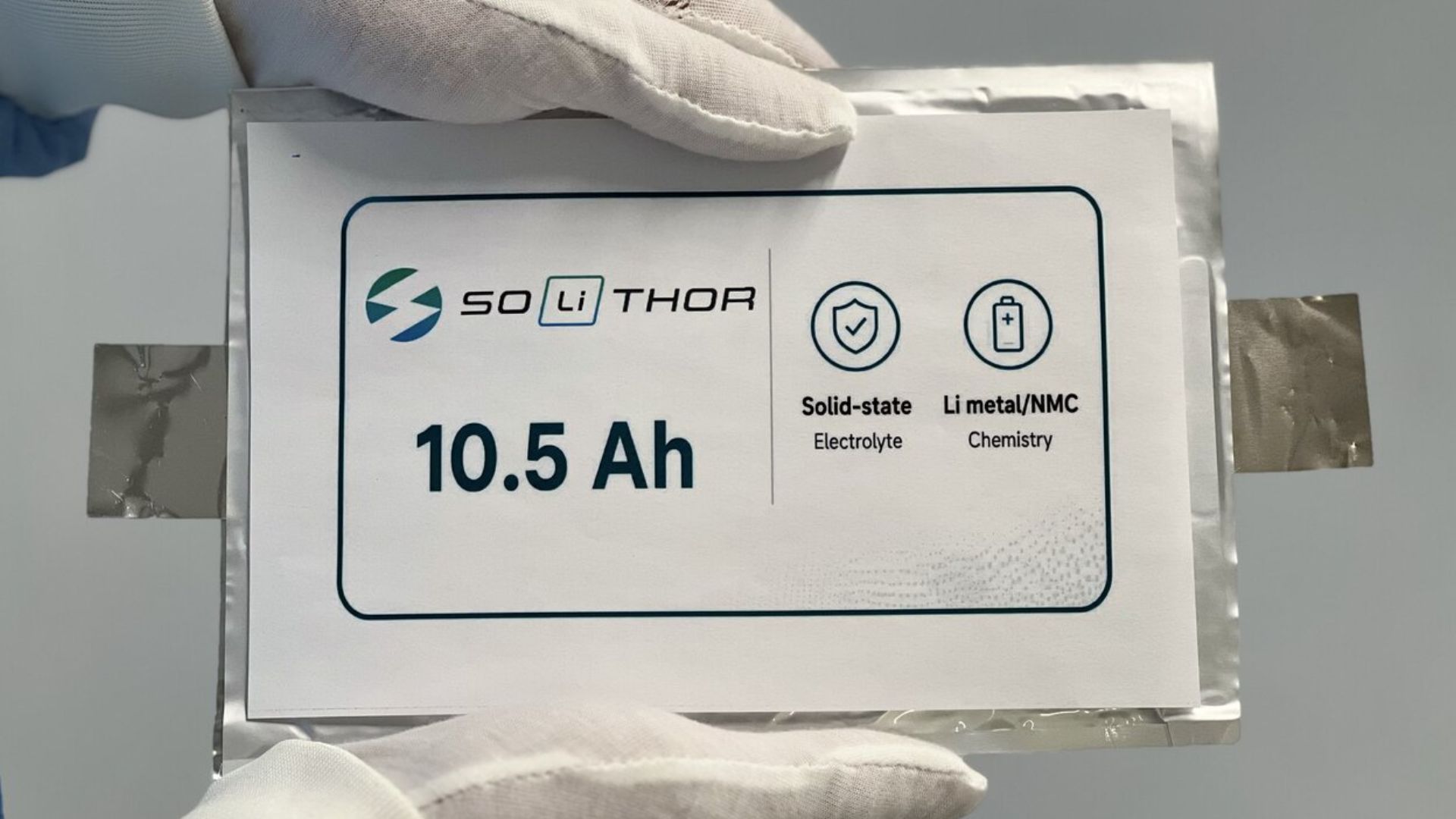
Solid-state battery cell hits 465 Wh/kg density, targets aerospace and defense applications

European battery startup SOLiTHOR has produced its first 10 Ah demonstration cell, marking an increase in the physical scale of its solid-state lithium battery technology. The company intends for this larger format to show that its laboratory chemistry can transition into commercial production for industries requiring specialized power sources.

Alongside the production of the larger cell, the company reported stack-level energy densities of 465 Wh/kg and 1400 Wh/L within a pouch design. Engineers reached these figures by introducing a high-loading cathode with an areal capacity of 8mAh/cm2 into the company’s proprietary Solid Composite Electrolyte.

Unlike traditional lithium-ion systems or certain semi-solid designs, this chemistry uses a sol-gel process that functions without requiring any liquid electrolyte injections during assembly.

Laboratory evaluations indicate specific performance characteristics under varied operational environments. When testing multilayer pouch cells at a temperature of 25°C, the cells sustained continuous discharge rates reaching 5C without experiencing major drops in capacity.

Performance limits and safety metrics

The same units tolerated short 30-second power pulses up to 10C when held at a 50% state of charge. This specific energy discharge behavior is relevant for machinery that requires brief, intense energy outputs, such as unmanned aerial vehicles during departure and descent sequences.

“SOLiTHOR has developed a chemistry that allows the industry to rethink the manufacturing of solid-state battery cells,” said Dr. Fanny Bardé, Co-Founder and Chief Technology Officer at SOLiTHOR.

Long-term stability tests were conducted on smaller 1 Ah multilayer pouch cells. These units completed more than 500 full discharge cycles while maintaining over 80% of their original storage capacity, which provides an initial benchmark for the operational lifespan of the chemistry.

During standardized safety protocols, the fully charged multilayer cells were subjected to intentional overcharging and direct nail penetration.

Production economics and industry targets

“In safety assessments, SOLiTHOR’s technology successfully passed the overcharge and nail penetration tests on a 100% charge multilayer pouch cell with no smoke, leakage, thermal runaway, or fire,” highlighted the company in a press release.

“These technical achievements not only prove that the chemistry works, but that it delivers the combination of energy density, power performance, and cycle life required for practical applications,” added Bardé.

The manufacturing framework for the new chemistry relies on roll-to-roll processing systems already common in the battery sector. By removing the liquid filling stage entirely and accelerating the subsequent chemical formation and aging protocols, the production timeline for these steps is shortened by two-thirds. 

Because these specific phases normally represent one-quarter of total cell manufacturing expenditures, their reduction alters the overall processing economics.

Facility adaptation for market deployment

“Existing Li-ion facilities can be upgraded for solid-state production with no new equipment, limited switching costs, and reduced operational costs,” noted the press release.

The company is targeting initial applications for its battery cells within the aerospace, maritime, transport, and defense sectors.

“With this major technical update, we are demonstrating that our technology can be realistically produced, satisfying the demands of high-performance and high-value applications within aerospace, dual-use, and mobility,” concluded Rodrigo P. Navarro, CEO at SOLiTHOR.

  •  

World’s first ‘three-lane’ optical fiber network in China boosts data transfer by 5x

Chinese researchers have reportedly developed a new “three-lane highway” optical fiber system. The new system, the researchers explain, could dramatically expand the data-transfer capacity of future networks, notably those for artificial intelligence (AI).

Put in simpler terms, the innovation effectively “squeezes” more traffic from fiber-optic cables without having to replace or lay new cabling. According to the team, they have been able to increase traffic by as much as five times while also increasing transmission capacity per core by nearly 50%.

Today, most internet traffic travels through glass fibers using laser light. Importantly, each fiber doesn’t just carry one beam of light. It carries many wavelengths (colors) of light simultaneously, like multiple radio stations sharing the airwaves.

Presently, most commercial systems use a mixture of C-band (the workhorse) and L-band wavelengths. The latter is used to extend capacity when needed.

The team, they report, has managed to add a third, called S-band; hence the “three-lane highway” analogy. The fiber itself isn’t necessarily wider; they’re simply using more of the available light spectrum.

Adding an extra lane to optical fibers

So, you might ask, why hasn’t S-band been used before? Well, in short, over long distances, optical signals tend to weaken. To overcome this, telecom companies use optical amplifiers placed along the route.

The industry’s amplifiers were optimized for C-band (and later L-band). S-band signals were more difficult and expensive to amplify cleanly. To this end, the Chinese team claims to have solved enough of these engineering problems to make commercial deployment practical.

But there is another trick up the team’s sleeve: multiple cores to the fibers. Normal optical fibers consist of a single core, but the team’s new ones reportedly actually contain four.

To this end, each of these core acts like an independent fiber. So, unlike traditional fibers with a single core and two optical bands, the new fibers actually have four cores, with three optical bands working simultaneously.

That’s a significant leap in capability. For applications like AI, this could prove to be very useful indeed, especially when it comes to removing data-transfer bottlenecks.

At present, most large AI models tend to use thousands of graphics processing units (GPUs), constantly exchanging data at the speed of light. A modern AI cluster can move terabits per second between machines.

5x the data transfer

Often, the bottleneck is not the GPU but getting data from one GPU cluster to another. So, if you can move five times more data through the same fiber infrastructure, you necessarily get faster training, larger distributed models, and lower network congestion.

Looking at the bigger picture, this isn’t a breakthrough in terms of fiber optics; similar achievements have happened in Japan, Europe, and the US. What is different is that this appears to have been commercially deployed, not just developed in a lab.

According to reports, the new optic fibers have run over about 21.7 miles (35 km) of an existing telecoms network, combining the innovations mentioned. Looking ahead, the team suggests the new cables could be deployed internationally, perhaps even in submarine cables.

It could also play a major role in China’s “Eastern Data, Western Computing strategy,” which seeks to shift data-intensive workloads from densely populated eastern regions to resource-rich western provinces, according to the developers.

💾

Researchers solved the engineering challenges of S-band amplification to create a "three-lane highway" for future internet.
  •  

China’s Xiaomi unveils robotic arm that enables remote, hands-free home EV charging

The Chinese tech giant, Xiaomi, has offered a closer look at its vision for the future of home EV charging, unveiling a robotic arm system that can automatically connect a vehicle to a charger without any driver intervention. The company says the technology is scheduled for commercial release in the fourth quarter of 2026.

The automated charging arm is intended to work alongside smart parking functions, creating an integrated experience in which a vehicle parks itself and begins charging autonomously. According to Xiaomi, the goal is to remove the friction from everyday EV ownership by combining automation and AI into a single home charging solution.

The company also stressed that the demonstration video released with the announcement was recorded in a real-world environment rather than a controlled concept showcase. Xiaomi said the functions featured in the footage are already production-ready, suggesting that the technology is nearing commercial deployment.

Drivers can park, walk away, and let the robot do the charging

As part of the unveiling, Xiaomi outlined a range of everyday use cases designed to make home EV charging almost entirely hands-free. The company says the system is built around convenience, allowing drivers to interact with the charger as little as possible, CarNewsChina writes. 

One of the key features is what Xiaomi describes as automatic charging. After the vehicle is parked, the robotic arm detects its position, connects the charging cable, and begins charging without requiring any manual input. Drivers can simply leave the vehicle and let the system handle the rest.

The charging process is also designed to end automatically. Once the battery reaches full capacity or a user-defined charging limit, the robotic arm disconnects the charging connector on its own, helping to streamline the entire experience. 

In addition, Xiaomi says owners will be able to start a charging session remotely through a smartphone app. As long as the vehicle is parked within the robotic arm’s operating range, users can trigger the process without having to return to the car or physically handle the charging cable.

Battle for autonomous EV charging is gaining momentum

Competition in the field of autonomous EV charging is accelerating as Chinese automakers and technology companies look to redefine the home charging experience. Xiaomi is not alone in exploring robotic solutions, with several major industry players investing in similar technologies.

Among them is Li Auto, which has also been developing its own automated charging system. During the launch of the Li Auto i8 all-electric SUV last year, CEO Li Xiang revealed that the company was actively testing an automatic charging robot, highlighting a growing belief within the industry that future EV ecosystems will combine intelligent parking, autonomous driving features, and fully automated charging into a single seamless experience.

Another example of the industry’s shift toward autonomous charging emerged last August, when the Harmony Intelligent Mobility Alliance demonstrated a robotic charging system integrated with the all-electric Aito M8. The setup allows drivers to activate an “off-vehicle parking” mode, enabling the car to maneuvre itself into a designated charging bay. 

Once in position, a smartphone app commands a robotic arm to open the charging port and automatically connect the charging cable. According to HIMA, the entire process is designed to be completed in just a few minutes, roughly the time it takes to enjoy a cup of coffee.

💾

Xiaomi has unveiled a home charging robotic arm designed to automatically connect and charge electric vehicles.
  •  

Chinese military study outlines strategy to target US warships from 1,800 miles away

Chinese military planners have reportedly devised a plan to target US carriers in places like Guam. The strategy, published in the Chinese journal Tactical Missile Technology, claims a combination of satellites, AI, and missiles could render carrier groups vulnerable, even at distances of over 1,620 nautical miles (3,000 km).

At present, both the People’s Liberation Army (PLA) and the United States Navy know that the former can threaten critical assets like aircraft carriers close to China. To reduce that threat, the US Navy has increasingly positioned key assets farther from China’s coastline, relying on bases such as Guam and adopting more dispersed operating patterns across the Pacific.

The Navy has also been dispersing deployed ships in the region to make them much harder to find, track, and potentially attack. Not keeping their eggs in one basket, as it were.

However, as the South China Morning Post (SCMP) reports, the PLA has been working on a potential plan to threaten such ships even at great distances. Led by associate professor Gao Tianyun from the College of International Studies at the National University of Defence Technology in Nanjing, the proposal is very interesting indeed.

Dangerous game of hide-and-seek

The study, titled “Research on the effectiveness of anti‑ship missile swarm operation under distributed confrontation,” basically describes an innovative “kill-chain” solution rather than a new wonder weapon.

The idea, in a nutshell, is to first find the group using a mixture of satellites, drones, radar aircraft, ships, submarines, signals intelligence, etc. Once done, the plan would rely on near-constant tracking for long-range missiles to be targeted and launched.

With that achieved, the paper suggests firing many missiles (a mix of hypersonics and “pre-strike firepower packages”) at the target, not one or two.

Once in flight, the plan would rely on the missiles cooperating by sharing target data, sorting real ships from decoys, assigning themselves to different targets, and attacking from different angles.

According to the researchers, such a coordinated attack could overwhelm layers of US naval defense, including Aegis-equipped destroyers, interceptor missiles, electronic warfare systems, decoys, and close-in weapon systems.

So, something of a coordinated, long-range missile swarm attack. The point is to make the US defence system run out of time, interceptors, radar capacity, or correct target choices.

Means and motive

Sounds reasonable on the surface, but the plan comes with one major caveat. That being said, this is just a plan right now, not proof that China can actually do it tomorrow.

Needless to say, hitting a moving carrier group at 1,620 nautical miles distant is not an easy task. Achieving it in reality would be brutally hard because the target moves, hides, jams, uses decoys, and fights back.

The hardest part is not the missile range; it is maintaining accurate targeting data across the whole chain. While effectively just a wargame made public, the release of this information is likely intended to send a warning to the US, rather than actually boast about its technological prowess.

In effect, they are saying that hiding and dispersing your ships won’t necessarily keep you safe. We (China) have the means to get them if we want to.

💾

A new Chinese study reveals a blueprint to defeat US Navy carrier groups using AI and missile swarms.
  •  

World’s first working nuclear clocks built with thorium nucleus after decades of effort

For decades, nuclear clocks have existed as one of physics’ most tempting promises. A device that could keep time even more accurately than today’s best atomic clocks. Now, two independent research teams have turned this idea into reality. 

Researchers in China and Europe have demonstrated working nuclear clocks based on the nucleus of thorium-229, a rare isotope whose unique properties have long made it the leading candidate for next-generation timekeeping.

The achievement represents much more than a new kind of clock. Since a nucleus is far better shielded from environmental disturbances than the electrons used in atomic clocks, nuclear clocks could eventually become the most precise timekeepers ever built. 

Plus, this breakthrough could improve navigation, gravitational sensing, and tests of the laws governing the universe. 

As the researchers note, “by making a laser-addressed atomic nucleus an operational clock reference, this work extends quantum metrology from electronic to nuclear transitions, and opens a new platform for compact clocks, solid-state nuclear quantum sensors and precision tests of fundamental physics.”

Turning a thorium nucleus into a clock

Modern atomic clocks keep time by measuring the frequency of light absorbed or emitted when electrons jump between specific energy levels inside an atom. 

As these frequencies are extremely stable, counting their oscillations provides an exceptionally accurate way to measure time. Physicists have long envisioned building a clock using a nucleus instead of electrons. The idea is attractive because atomic nuclei are much smaller and more isolated from the outside world. 

Stray electric and magnetic fields that can slightly disturb electrons have far less influence on the nucleus. In principle, that should allow a nuclear clock to achieve even greater stability and precision.

“Such a nuclear clock might rival or outperform current optical clocks based on electron-shell transitions in atoms or ions, is expected to be more robust against external perturbations, and provides enhanced sensitivity in clock-based tests of fundamental principles of physics,” the researchers explained.

However, the problem is that almost all nuclear energy transitions are far too energetic to be controlled with lasers. They typically require high-energy gamma rays rather than ordinary laser light.

Thorium-229 is a remarkable exception. Its nucleus possesses an unusually low-energy excited state that can be reached using ultraviolet laser light. For years, physicists recognized that this made thorium-229 the only known realistic candidate for a nuclear clock.

Even so, the task remained extraordinarily difficult. The required transition occurs at a wavelength of roughly 148 nanometers, deep in the vacuum ultraviolet region of the electromagnetic spectrum. 

Producing stable laser light at this wavelength and precisely matching it to the nuclear transition pushed existing technology to its limits.

Two teams, one breakthrough

The two groups solved the problem using broadly similar strategies. One team, led by researchers at Tsinghua University, and another from the Vienna Center for Quantum Science and Technology, embedded thorium-229 atoms inside calcium fluoride crystals. 

“Here, we implement a thorium-229 nuclear clock by stabilizing a continuous-wave laser to the 148 nm nuclear transition with rapid feedback based on continuous absorption spectroscopy,” the researchers from the Vienna Center note.

The crystal acts as a solid host that holds large numbers of thorium nuclei in place while allowing laser light to interact with them. Both groups then illuminated the crystals with highly specialized continuous-wave vacuum ultraviolet lasers tuned near the thorium nuclear transition.

Although the overall concept was similar, the teams optimized different parts of the experiment. The Chinese researchers relied on a more powerful laser system to drive the nuclear transition. The European team instead used crystals containing a higher concentration of thorium nuclei, increasing the number of nuclei available for measurement.

Once they had successfully excited the nuclei, the researchers needed to demonstrate that the system could function as a true clock rather than simply detecting the transition.

So did the system work?

The Chinese team locked the frequency of their vacuum ultraviolet laser directly to the nuclear resonance. In effect, the thorium nucleus became a frequency reference that continuously corrected the laser. 

The researchers reported a fractional frequency instability approaching one part in 10 trillion after a day of operation, showing that the nuclear transition could serve as a stable timekeeping signal.

The European team chose a different test. Instead of focusing solely on clock performance, they used their nuclear clock as a scientific probe. 

The researchers searched for ultralight dark matter, a hypothetical form of matter that could subtly alter the energy levels inside atomic nuclei. If such particles existed, they might produce tiny periodic shifts in the thorium transition frequency.

“We use the nuclear clock to constrain models of ultralight dark matter by searching for periodic fluctuations and slow drifts in the nuclear transition energy, on time scales between 20 sec and one day,” the Vienna team said.

No evidence of dark matter was detected. However, the experiment demonstrated that the nuclear clock was sensitive enough to rival or exceed the capabilities of the world’s best atomic clocks when searching for such effects.

Together, the two studies provide the strongest evidence yet that practical nuclear clocks are no longer a theoretical concept but an operational technology.

What happens next?

While these first-generation devices are still laboratory systems, they mark the beginning of a new era in precision measurement. 

Future nuclear clocks could outperform today’s most advanced atomic clocks because the thorium nucleus is naturally protected from many sources of noise that limit current technologies.

According to the researchers, such clocks could eventually improve satellite navigation, provide more precise gravitational measurements, and enable new tests of fundamental physics. 

The next major goal is to refine the technology, reduce its size and complexity, and compare multiple nuclear clocks against one another. 

You can read the studies here and here.

  •  

SORA-Q: Baseball-sized shape-shifting rover that saved Japan’s SLIM moon mission

A microscopic, shape-shifting robot inspired by children’s toys successfully saved the narrative of Japan’s historic first lunar landing, according to data finalized by the Japan Aerospace Exploration Agency (JAXA).

The mini-rover, officially designated as Lunar Excursion Vehicle-2 (LEV-2) and nicknamed SORA-Q, was ejected from Japan’s Smart Lander for Investigating Moon (SLIM) just moments before the main spacecraft suffered a catastrophic engine failure and flipped upside down on the lunar surface.

Newly released mission telemetry reveals that the baseball-sized mechanical sphere executed its transforming sequence flawlessly, crawling across the loose lunar soil to capture the iconic, mission-saving image of the inverted lander.

The Toy Engineering Behind the Sphere

Weighing a mere 250 grams (8.8 ounces) and measuring just 8 centimeters (3.1 inches) in diameter, SORA-Q represents an unprecedented cross-disciplinary engineering venture. JAXA co-developed the tiny explorer alongside Japanese toy manufacturing giant Takara Tomy—the original co-creators of the Transformers franchise—as well as Sony Group and Doshisha University.

The robot’s structural layout relies on mechanical principles utilized in transforming action figures. To survive the violent vibrations of spaceflight and the impact of dropping onto the Moon, SORA-Q remained packed into a smooth, metallic sphere.

Upon landing, the ball split down the middle, allowing the two outer hemispheres to extend outward as independent, eccentric wheels, while a small stabilizing tail deployed from the rear to prevent the body from spinning in place. This transforming design allowed a tiny camera package to pop upward from the core, clear of the dusty ground.

Surviving the Regolith: The Locomotion Modes

Operating on the Moon presents steep physical challenges for miniature mobile platforms. The fine, abrasive lunar dust—known as regolith—can easily jam delicate gears, and the lack of substantial gravity makes traditional wheel traction highly inefficient.

To overcome these environmental hurdles, JAXA and Takara Tomy programmed SORA-Q with two distinct physical locomotion modes to ensure it could navigate the unpredictable lunar surface.

In crawling mode, both hemispherical wheels rotate in perfect synchronization, creating a standard rolling motion that is highly energy-efficient for crossing flat terrain.

For tougher terrain, the robot switches to butterfly mode, where the wheels shift out of alignment and rotate asynchronously to mimic a swimming or flapping motion. This erratic movement allows the rover to push itself out of deep, shifting dust traps by continually shifting its center of gravity side to side.

Analysis confirms that the rover dynamically toggled between these modes, navigating slopes up to 15 degrees and crawling across several meters of rough terrain to position itself for its primary photography task.

Saving a mission via mesh networks

SORA-Q’s deployment was not just a mobility test; it proved to be an essential safety net for the entire SLIM mission. When the primary lander lost one of its main thrusters at an altitude of 50 meters, it touched down hard and tipped completely over, leaving its solar panels facing away from the sun and severely limiting its operational lifespan.

Because SORA-Q was too compact to house a heavy, power-hungry antenna capable of beaming data directly back to Earth, it relied on an innovative, local Bluetooth mesh network to relay its findings.

The tiny sphere filmed the tilted lander and transmitted the image files locally to its companion rover, LEV-1—a separate, 2.1-kilogram hopping robot that had ejected alongside it. LEV-1 then utilized its larger, dedicated S-band transponder to upload the data to ground stations on Earth.

The resulting photograph provided the first definitive visual proof of SLIM’s orientation on the lunar slope, enabling JAXA engineers to precisely calculate when the changing angle of the sun would hit the inverted solar cells and wake the lander back up.

By proving that ultra-lightweight, transforming mechanisms can survive the space environment, the success of SORA-Q is directly influencing the design of the next generation of compact planetary scouts, showing that heavy, rigid chassis are no longer the only way to explore foreign worlds.

  •  

Scientists brew ‘ultrasonic espresso’ in three minutes at room temp with 75% less energy

A team at UNSW Sydney has produced an espresso-strength coffee using room-temperature water and sound waves — no heating, no pressure, no boiling — and in a blind taste test with 100 regular coffee drinkers, the result was indistinguishable from a traditionally brewed shot.

The research was led by Dr. Francisco Trujillo from UNSW’s School of Chemical Engineering. His team developed an ultrasonic brewing system that reduces energy consumption by up to 75% compared to conventional espresso machines while producing a concentrated shot in under three minutes.

How acoustic cavitation replaces heat

Traditional espresso forces water heated to near-boiling through tightly packed coffee grounds under pressure — typically 9 bar. The heat and pressure together drive the rapid extraction of flavor compounds, oils, and caffeine from the grounds into the water.

Trujillo’s system replaces heat with high-frequency sound waves. A transducer — a small metal device — is pressed against the side of a modified coffee filter basket.

When activated, it causes the basket to vibrate rapidly at ultrasonic frequencies far beyond human hearing, transmitting those vibrations through both the coffee grounds and the room-temperature water.

The vibrations create a phenomenon called acoustic cavitation: microscopic bubbles form and collapse rapidly in the liquid. When those bubbles collapse near coffee particles, they act like tiny jets of water, pitting and fracturing the surface of the grounds and forcing flavor compounds, oils, and caffeine into the water at rates that would normally require heat.

The result is a concentrated, espresso-strength shot — same richness, same caffeine — brewed with cold water in two and a half to three minutes.

Three variables proved most important in getting it right: the brew ratio (water per gram of coffee, which controls concentration), the grind size (finer grinding accelerated extraction), and the duration of ultrasound application (the sweet spot was 2.5 to 3 minutes for a balanced result).

What the taste test found

To validate the system, the team ran a randomized blind sensory evaluation. Four drinks were tested — traditional espresso, ultrasound-brewed espresso, traditional filter coffee, and ultrasound-brewed filter coffee — all prepared fresh, cooled to the same temperature, and served in identical coded cups in random order. Around 100 regular coffee drinkers rated each drink on a nine-point scale for aroma, flavor, bitterness, and overall liking.

For espresso, there were no significant differences across any taste measure. Most participants could not tell the two versions apart, and no preference for either emerged.

For filter coffee, the ultrasound version actually outperformed the traditional brew. Participants rated it significantly higher overall — particularly for the pleasantness of its bitterness.

The industrial case

Trujillo’s team is clear about where the biggest impact lies. While a home version of the machine is technically feasible, the most compelling opportunity lies in industry. Companies producing ready-to-drink coffee at scale currently operate large volumes of high-energy brewing equipment continuously.

A system that cuts energy use by three-quarters, brews in minutes, and delivers espresso-strength concentrate that can be shipped and later diluted into cold brew, milk-based drinks, or ready-to-drink products represents a meaningful change to that cost structure.

The 75% energy saving is particularly beneficial at that scale, Trujillo noted, and because the process produces a concentrated, espresso-strength coffee, it can be used directly in manufacturing or shipped as a concentrate for a range of coffee products — cutting both energy and processing time from the industrial supply chain simultaneously.

The research was first published in the Journal of Food Engineering.

💾

Researchers at UNSW team brews espresso-strength coffee with ultrasound and cold water, saving 75% energy.
  •  

Test facility for full-scale fusion power-plant blankets set to be developed in US

A San Diego-based company is set to develop design concepts for a facility dedicated to testing full-scale fusion power-plant “blankets”. For this, General Atomics is collaborating with the U.S. Department of Energy (DOE).

The company revealed that the new Fusion Blanket Component Test Facility (BCTF) would enable scientists and engineers to evaluate integrated fusion blanket systems.

Testing would address a major engineering challenge

General Atomics revealed that these systems use specialized lithium-based materials—solid, liquid, or salt—that line the inside of a fusion vessel to capture energy and produce the tritium needed to sustain fusion reactions. Successful testing would address a major scientific and engineering challenge on the path to realizing the world’s first commercial fusion power plant.

The public-private partnership was initiated by a seed investment from the U.S. Department of Energy, provided to INL to launch preconceptual design and lay the groundwork for establishing key collaborations. In addition to GA, the collaboration will include Idaho National Laboratory (INL), Kyoto Fusioneering, the University of California San Diego, and other key collaborators across industry and academia, according to a press release.

The plan is to develop a design that would leverage GA’s established Magnet Technologies Center, the former site where the ITER Central Solenoid, the world’s most powerful pulsed superconducting magnet, was completed last year. If the project proceeds to full construction, the existing infrastructure provides the advanced equipment and expertise needed to move the project on a faster timeline, as per the release.

Blanket Test Facility

Engineers would use the facility to confirm that circulating blanket fluids can effectively remove heat, withstand mechanical stress, and safely extract fuel at power plant levels—critical steps needed before advancing to more complex neutron and tritium testing.

“The Blanket Test Facility would give the fusion community the speed and scale needed to de-risk next-generation blanket designs,” said Dr. Brian Grierson, director of Fusion Energy Technologies at General Atomics.

“It’s where innovation meets practicality, and where we transform theory into real-world systems.”

Fusion is the same process that powers the sun. Instead of splitting atoms as in traditional nuclear power, fusion fuses light atomic nuclei to release massive amounts of energy, without long-lived radioactive waste. Researchers believe fusion could provide virtually limitless, carbon-free electricity to meet the growing global energy demand.

The project also reinforces San Diego’s growing status as a center for fusion research and development. General Atomics already operates the DIII-D National Fusion Facility, one of the leading magnetic-fusion research centers in the United States. The region is also home to significant academic programs, digital engineering initiatives, and an expanding network of fusion-focused companies and institutions.

Recent policy developments have further strengthened California’s position in the emerging fusion sector. State initiatives aimed at supporting fusion research and commercialization have encouraged investment and collaboration, helping establish an ecosystem designed to accelerate technological breakthroughs.


  •  

US Navy’s nuclear-powered fast-attack submarine returns to fleet

US Navy’s Virginia-class fast-attack submarine has returned to the fleet ahead of schedule. The nuclear-powered USS Colorado (SSN 788) was undergoing scheduled maintenance at the Pearl Harbor Naval Shipyard (PHNSY) and the Intermediate Maintenance Facility (IMF).

The submarine completed its maintenance 29 days ahead of schedule on June 10. It has rejoined the fleet and is now ready to serve in the Submarine Squadron 7 to ensure dominance in the Pacific.

The nuclear-powered vessel is capable of supporting various missions, such as anti-submarine warfare; anti-surface ship warfare; strike warfare; special operations forces support; and intelligence, surveillance, and reconnaissance.

Maintenance of Navy vessels at PHNSY and IMF

The PHNSY and IMF are located in the heart of the Pacific to ensure a comprehensive fleet repair and maintenance facility. It is one of the most comprehensive facilities of its kind between the U.S. West Coast and the Far East. Its mission is to keep the US Navy’s fast-attack submarines and surface ships ‘Fit to Fight’.

Effective and timely maintenance helps keep the Navy vessels lethal, ready to defend the country, and also maximizes their lifespan. The maintenance of the USS Colorado was completed ahead of schedule by the combined efforts of the crew from the shipyard and the vessel.

“Finishing ahead of schedule is not about rushing; it’s about hard work and persistence,” said U.S. Navy Capt. Ryan McCrillis, commander of PHNSY & IMF. “It’s producing first-time, high-quality work and attacking every roadblock with urgency.”

McCrillis further said that the early completion was a result of team effort, “from the newest apprentice to senior shipyard leaders, the ship’s force, the project team, and support from the fleet and headquarters.”

More about the nuclear-powered USS Colorado submarine

USS Colorado was commissioned on March 17, 2018, at Naval Submarine Base New London. It is the 15th Virginia-class fast-attack submarine and fifth Block III submarine of the class.

Displacing approximately 7,800 tons with a length of 370 feet, Virginia is longer but lighter than the previous Seawolf-class submarines. It can sail at speeds exceeding 28.7 miles per hour (25 knots) and can operate at a maximum depth of over 800 feet.  For propulsion, it relies on a S9G reactor, which produces over 40,000 shaft horsepower (SHP).

The nuclear-powered vessel has effectively limitless range and the ability to operate submerged for months. The range is limited only by the food and supplies that the crew needs to carry.

Colorado is a part of the Virginia-class’s third, or Block III, contract, in which the Navy redesigned approximately 20 percent of the ship to reduce acquisition costs.

The submarine features a redesigned bow, which replaces 12 individual Vertical Launch System (VLS) tubes with two large-diameter Virginia Payload Tubes (VPTs), each capable of launching six Tomahawk cruise missiles. There are other design changes that reduced the submarines’ acquisition cost while maintaining their warfighting capabilities.

It also has special features to support Special Forces – which include a reconfigurable torpedo room that can accommodate a large number of personnel and their equipment for prolonged deployments.

  •  

Iron-based catalyst helps zinc-air batteries power devices without precious metals

Researchers at Tohoku University have developed an iron-based catalyst that improves the performance of zinc-air batteries, a technology viewed as a lower-cost alternative to lithium-ion systems for energy storage.

The team focused on overcoming a key limitation of the oxygen reduction reaction (ORR) in zinc-air batteries. While zinc-air batteries draw oxygen from the surrounding air instead of storing it internally, the ORR process is relatively slow, restricting overall battery performance.

To address the problem, the researchers engineered a heterointerface combining iron oxide (Fe2O3) and samarium oxide (Sm2O3). The interface altered how electrons behave at the catalyst surface, helping speed up reaction kinetics and improve battery efficiency.

According to the researchers, the catalyst weakens excessive bonding between iron sites and hydroxyl intermediates, allowing the reaction to proceed more smoothly and reducing one of the major bottlenecks in zinc-air battery operation.

Reworking battery chemistry

Fe2O3 was selected because it is abundant, inexpensive and stable under the alkaline conditions commonly found in zinc-air batteries. However, iron-based catalysts typically suffer from strong Fe-OH interactions that slow the release of reaction products.

The newly developed Fe2O3/Sm2O3 interface was designed to overcome that limitation. Researchers said charge redistribution, orbital hybridization and spin modulation at the interface helped optimize the catalyst’s behavior during oxygen reduction.

As a result, the catalyst delivered faster ORR kinetics and improved durability compared with conventional approaches. The work also avoided the use of expensive noble metals, which are commonly used in high-performance catalysts.

The team evaluated the material in both liquid and flexible all-solid-state zinc-air batteries. Beyond laboratory measurements, the researchers demonstrated practical operation by powering a small LED lamp and charging a smartphone.

“The catalyst achieves high ORR activity, improved reaction kinetics, excellent durability, and superior performance in both liquid and flexible all-solid-state zinc-air batteries,” said Hao Li, distinguished professor at the Advanced Institute for Materials Research (WPI-AIMR).

Beyond precious metals

Zinc-air batteries have attracted attention because they use widely available materials and can theoretically deliver high energy density. Unlike lithium-ion batteries, they rely on oxygen from the atmosphere as part of the electrochemical process.

Researchers believe improving catalyst performance could help make the technology more practical for real-world applications, including portable electronics, wearable devices, and large-scale energy storage systems.

“For the general public, this means that we may be closer to affordable and sustainable clean-energy technologies,” Li said.

The researchers say the study demonstrates a potential pathway toward lower-cost energy storage by replacing precious-metal catalysts with more abundant materials while maintaining strong electrochemical performance.

Future work will focus on expanding the interfacial spin-regulation strategy used in the study and exploring whether similar approaches can improve other energy-conversion and storage technologies.

The findings were published in Angewandte Chemie International Edition.

  •  

Scientists forge 24,000-atom mini universe that generates time without a single clock

What if time isn’t woven into the fabric of reality at all? A new experiment suggests that the past-to-future march we experience every day could arise from the internal dynamics of a system. Using 24,000 ultracold atoms, scientists built a “mini universe” that allowed them to study how time might emerge without relying on clocks.

The findings, published in Physical Review Research, offer researchers a new way to test ideas that have long remained in the realm of theory. The setup could help scientists explore quantum gravity, the origins of the universe, and the fundamental nature of time inside a laboratory.

Building a mini cosmos

Professor Giovanni Barontini of the University of Birmingham and his team created the miniature universe using a cloud of 24,000 ultracold atoms. The atoms existed just billionths of a degree above absolute zero.

Experiment to trap and cool rubidium atoms close to absolute zero. Credit – University of Birmingham

The researchers confined the particles inside an isolated quantum system. They then used two laser beams to form a thin barrier that divided the setup into two regions. One region remained observable, or “bright.” The other stayed hidden from direct observation and became the “dark” sector.

Inside this simplified cosmos, the bright region repeatedly expanded and contracted. The cycle resembled theoretical versions of a Big Bang followed by a Big Crunch, a scenario in which the universe’s expansion eventually reverses.

Because the system remained sealed from its surroundings, scientists reconstructed the sequence of events using only changes occurring within the mini-universe. They did not need an external laboratory clock.

Time through disorder

The experiment points to a concept known as “entropic time.” Rather than treating time as an independent backdrop to reality, the researchers linked its passage to changes in entropy, or the way particles spread through the system. Atoms moved between the bright and dark regions, altering the distribution of matter.

As those distributions evolved, the system moved forward in time. When the arrangement stopped changing, time effectively stood still. The team found that this version of time flowed in a consistent direction. It also correctly ordered events, even during repeated cycles of expansion and contraction. Its pace could speed up or slow down depending on how entropy shifted within the system.

“In some theories of the universe, especially quantum gravity, time doesn’t appear as a built-in feature,” Barontini said. “Yet in everyday life, time flows from past to future. Why is this so, when most basic laws of physics work the same way forwards and backwards?”

Bringing cosmology to the lab

Barontini said the study provides controlled experimental evidence that changes within a system can define time without relying on an external clock. “It offers new insight into the nature of time in quantum gravity,” he said. “It could be used to describe dynamics just as effectively as conventional time.”

The researchers also showed that quantum mechanics remains mathematically consistent under this framework. They rewrote a version of the Schrödinger equation using entropic time, allowing predictions about how a quantum probability distribution evolves.

The work addresses a long-standing puzzle in physics: If the universe has no fundamental clock, how can events be arranged into a meaningful sequence of “before” and “after”? Perhaps more importantly, the experiment transforms abstract debates into testable science.

The platform could eventually allow researchers to investigate conditions linked to the early universe, probe competing theories of quantum gravity, and even simulate black holes under controlled laboratory conditions.

For decades, many of these questions existed mainly on chalkboards and in complex equations. This miniature universe suggests physicists may finally have a way to put some of them to the test.

  •  

UK trials compact G-size sonobuoy built for autonomous drones hunting submarines

Ultra Maritime has completed the first in-water deployment trial of its next-generation Multistatic Active Receive Sonobuoy, or MSARS, in Scotland, marking a major step in the United Kingdom’s push to modernize anti-submarine warfare.

The trial comes as NATO nations monitor growing submarine activity across the North Atlantic. Military planners increasingly seek tools that can detect quieter submarines and unmanned underwater systems operating over larger maritime areas.

MSARS aims to strengthen those capabilities. The compact sonobuoy is designed to improve the detection and localization of underwater threats while supporting both crewed and uncrewed operations.

Expanding underwater surveillance

Ultra Maritime developed the system with backing from the UK’s Defence Science and Technology Laboratory, known as Dstl. The effort supports the Atlantic Bastion program, which focuses on expanding autonomous anti-submarine warfare capabilities. The initiative seeks to bring uncrewed aircraft into submarine hunting missions while improving coordination with existing crewed assets. Those assets include the Royal Navy’s Merlin Mk2 helicopter fleet.

Unlike traditional approaches that rely heavily on crewed aircraft, Atlantic Bastion emphasizes distributed operations. Multiple platforms can share information and work together to track underwater targets across wider areas. The company said rising submarine activity has increased the urgency for improved detection technologies.

“Enhanced detection and localization of threat submarines and unmanned underwater vehicles are critical to maintaining operational advantage,” Ultra Maritime said. MSARS gives operators flexibility before deployment. Crews can configure mission settings through a built-in digital interface before launching the sonobuoy from an aircraft.

Integration with SeaGuardian

Ultra Maritime is also working with General Atomics to integrate MSARS and other G-size sonobuoys onto the MQ-9B SeaGuardian unmanned aircraft. The pairing could significantly expand anti-submarine warfare coverage.

SeaGuardian’s endurance allows it to remain on station far longer than many traditional platforms. Combined with compact sonobuoys, operators could survey larger sections of ocean without increasing crew requirements.

Ultra Maritime says the integration would extend operational reach, increase sonobuoy carrying capacity, and support distributed multistatic operations in contested environments. The company also noted that it remains the only manufacturer producing G-size sonobuoys. Their smaller form factor makes them particularly suited for unmanned aircraft missions.

Broader sonobuoy push

The Scottish trial arrives as Ultra Maritime expands its sonobuoy business through production contracts and international partnerships. Earlier this year, the company secured a U.S. Navy contract covering low-rate initial production of the AN/SSQ-125B sonobuoy. The system aims to improve the detection of increasingly quiet submarines operating in challenging acoustic conditions.

Ultra Maritime has also expanded its presence in Europe. In 2025, France selected the company to provide active and passive sonobuoys under a contract awarded by Thales on behalf of the country’s defense procurement agency.

For defense planners on both sides of the Atlantic, the latest MSARS milestone represents more than a successful trial. It highlights a broader shift toward networked and increasingly autonomous anti-submarine operations designed for a more contested maritime environment.

  •  

Halo nuclear microreactor utilizes high-fidelity simulation to speed first power

The newly public company Hadron Energy has announced that it has selected GSE Solutions to develop a full-scope, high-fidelity simulator for its Halo Micro-Modular Reactor (MMR). The simulator will prepare future operators for licensing exams and day-to-day operations. It also marks another step toward commercializing the Halo reactor design.

The agreement expands the relationship between the two companies into a strategic alliance. Hadron plans to use the simulator for its first reactor deployment and future commercial units as production scales.

Training comes first

No commercial nuclear reactor in the United States can operate without NRC-licensed personnel in the control room. Those licenses require extensive training, including simulator-based testing that reflects the actual plant operators will oversee.

GSE will oversee the simulator from development through commissioning. Built specifically for the Halo MMR, it will mimic everything from normal plant operations to emergency situations. The system will prepare the first wave of operators and technical staff responsible for bringing the reactor online.

The simulator goes beyond being a simple teaching tool. It represents a regulatory requirement that operators must satisfy before a reactor produces electricity. Without it, a plant cannot move into commercial operation.

Beyond regulatory boxes

The technology also provides engineering value long before fuel reaches the site. Teams can use it to verify procedures, assess control room interactions, and evaluate how operators respond under pressure.

Developing the simulator alongside the reactor design could help Hadron identify potential issues earlier in the process. Engineers can address operability concerns while modifications remain easier and less costly.

“You cannot commission a nuclear plant without certified operators,” Ross Ridenoure, Hadron Energy’s chief nuclear officer, said in a statement. “You cannot certify operators without a high-fidelity simulator that represents the plant they are going to operate.”

Ridenoure said involving GSE during the design phase allows the company to replicate the plant virtually as engineering work continues. That approach can expose human-factors concerns before construction advances too far.

Leveraging industry experience

GSE brings more than 50 years of simulator expertise to the partnership. The company and its predecessors built one of the first commercial full-scope nuclear simulators in 1971. Its experience now spans a broad range of reactor technologies, including pressurized water reactors, boiling water reactors, CANDU units, VVER designs, and next-generation systems.

Hadron believes that experience can reduce some of the development risks associated with first-of-a-kind nuclear projects. GSE’s background with simulator certification and industry standards could also support a smoother regulatory pathway.

The announcement follows Hadron’s recent partnership with Paragon Energy Solutions, a Mirion Technologies company, to support the Halo MMR’s instrumentation and control architecture. The simulator will ultimately mirror those same control systems during operator training.

“An advanced reactor without trained, licensed operators is not a power plant,” Ridenoure said. “It is an asset sitting idle.”

He added that bringing experienced partners into the program early reflects the disciplined execution shareholders and future customers should expect as Hadron advances toward first power. For Hadron, operator readiness now stands alongside reactor development as a defining milestone on the path to commercialization.

  •  

Potato-shaped UFO? Pentagon releases 72 new reports of unexplained objects

The Department of War has released a third batch of declassified records tied to unidentified anomalous phenomena (UAP), adding 72 files that describe unexplained sightings reported by military personnel, federal agents, and foreign observers.

The release is part of the PURSUE program, launched after President Donald Trump directed federal agencies to identify, review, and declassify records related to UFOs, UAPs, and potential extraterrestrial activity.

The newly released documents do not provide evidence of alien life or a government cover-up. Instead, they offer additional details about several unresolved cases that investigators have been unable to conclusively explain.

According to the Department of War, unresolved cases are incidents where available data is insufficient to determine the nature of the observed object or phenomenon.

Strange objects, few answers

One of the most detailed reports involves a February 2022 sighting near Colorado Springs, Colorado. Five US Army personnel at Fort Carson reported seeing an unusual object hovering above Cheyenne Mountain.

“The object was ‘potato’ shaped with distinct edges and appeared to look painted in a creamy/whitish opalescent color,” an FBI document states. Witnesses said the object appeared to consist of “articulating fish scales or panels that were non-symmetrical, non-overlapping and irregular shaped.”

According to the report, the object remained stationary for roughly two minutes before disappearing. No photographs or videos were captured.

Investigators later assessed with “low confidence” that the sighting may have resulted from sunlight reflecting off snow-covered terrain and illuminating clouds. However, witnesses reported clear skies, and investigators found no evidence of balloons, aircraft, or known foreign technology in the area.

Another case involved six federal law enforcement agents who reported repeatedly observing bright orange and red orbs in October 2023. According to the documents, the objects appeared above a ridgeline and, in some instances, seemed to generate additional smaller orbs.

An analysis conducted by the Pentagon’s All-Domain Anomaly Resolution Office reviewed several possible explanations, including military exercises and flare deployments occurring nearby. The report said those explanations were plausible but not conclusive and noted that the observations could involve “unrecognized technology.”

Global reports surface

The latest release also includes an FBI report describing a 2025 sighting in the northeastern United States. A witness reported seeing a bright red sphere near a wooded area.

“Inside the red sphere, at the center, there appeared to be what (redacted) described as a ‘white plasma sun’ about the size of a basketball,” the report states.

The witness said a second sphere appeared before both objects departed silently. The file includes cellphone footage showing two glowing red objects moving across the sky. The White House later shared the video online while referencing the case.

Among the older documents is a CIA report from Zimbabwe dating to 2008. Witnesses near the country’s main airport described a disc-shaped object with rotating lights.

“At one point during observation, ‘beams’ were observed emanating from the object,” the report states.

So far, the Trump administration’s disclosure effort has resulted in the release of roughly 300 UAP-related files dating back to the 1940s. The Department of War said additional records will be released in future tranches as reviews and declassification efforts continue.

  •  

New W-band gallium nitride chip fast-tracked from lab to market in six months

Northrop Grumman has developed a new gallium nitride (GaN) microwave chip that operates in the W-band spectrum, a high-frequency range used for advanced radar, satellite communications, and emerging wireless networks.

The company said the chip was designed, manufactured, and made market-ready in less than six months, an unusually short timeline for a high-frequency semiconductor intended for defense and commercial applications.

Built at Northrop Grumman’s semiconductor facility in Redondo Beach, California, the chip is designed to strengthen wireless signals while operating at frequencies capable of transmitting large amounts of data with low latency.

According to the company, the technology could support secure military communications, next-generation radar systems, satellite links, and future 5G and 6G wireless networks.

Faster signals, smaller hardware

The W-band occupies frequencies between roughly 75 and 110 gigahertz, offering significantly more bandwidth than lower-frequency wireless systems. The added spectrum can help enable faster data transmission, higher-resolution sensing, and more secure communications.

W-band technologies are attracting growing interest because they can handle far larger amounts of data than many conventional wireless systems. The frequencies are increasingly being explored for applications ranging from high-resolution imaging and advanced sensing to satellite communications and future mobile networks.

Microscope photo of the high-frequency GaN microwave chip. Credit – Northrop Grumman

However, operating at such high frequencies requires specialized semiconductor materials and designs capable of maintaining performance while managing power and heat, areas where GaN-based devices have gained increasing attention.

Northrop Grumman said the new chip fully utilizes this portion of the radio spectrum to improve signal performance while reducing the need for larger and more power-intensive equipment.

Gallium nitride has become a key material for advanced radio-frequency electronics because it can operate at higher power levels and frequencies than conventional silicon-based devices. The material is already widely used in military radars, electronic warfare systems, and satellite communications hardware.

The company said the chip can act as a signal amplifier, helping wireless systems transmit and receive data more efficiently. In military applications, that could improve secure communications and data transfer between platforms and satellites. Commercially, the technology could help support future wireless networks as demand for higher data rates continues to grow.

Defense To 6G

The project was developed through the California DREAMS hub of the Microelectronics Commons program, a public-private initiative aimed at accelerating domestic semiconductor innovation.

The program is funded by the Office of the Under Secretary of Defense for Research and Engineering and brings together industry, government, and academic partners to speed the development of advanced microelectronics technologies.

Northrop Grumman said the rapid development cycle demonstrates how collaborative manufacturing and design efforts can shorten the path from concept to deployment.

The company manufactures microelectronics at two US-based facilities and produces millions of semiconductor components annually for defense and commercial customers. Its Microelectronics Center has been involved in semiconductor development for more than seven decades.

As governments and industries seek faster communications, more capable radar systems, and advanced sensing technologies, high-frequency GaN devices are expected to play an increasingly important role in future wireless infrastructure.

  •  
❌