❌

Reading view

Massive 23,000-pound magnetic core fuels world’s most advanced fusion system revival

A massive magnet that crossed the Atlantic Ocean has brought one of America’s most ambitious fusion projects a step closer to reality. The U.S. Department of Energy’s Princeton Plasma Physics Laboratory recently received the central magnet bundle for its upgraded spherical tokamak, a compact fusion system designed to test technologies that could shape future power plants.

The delivery marks a critical milestone for the machine’s return to operation. Engineers now enter the final stages of assembly before experiments resume in 2027.

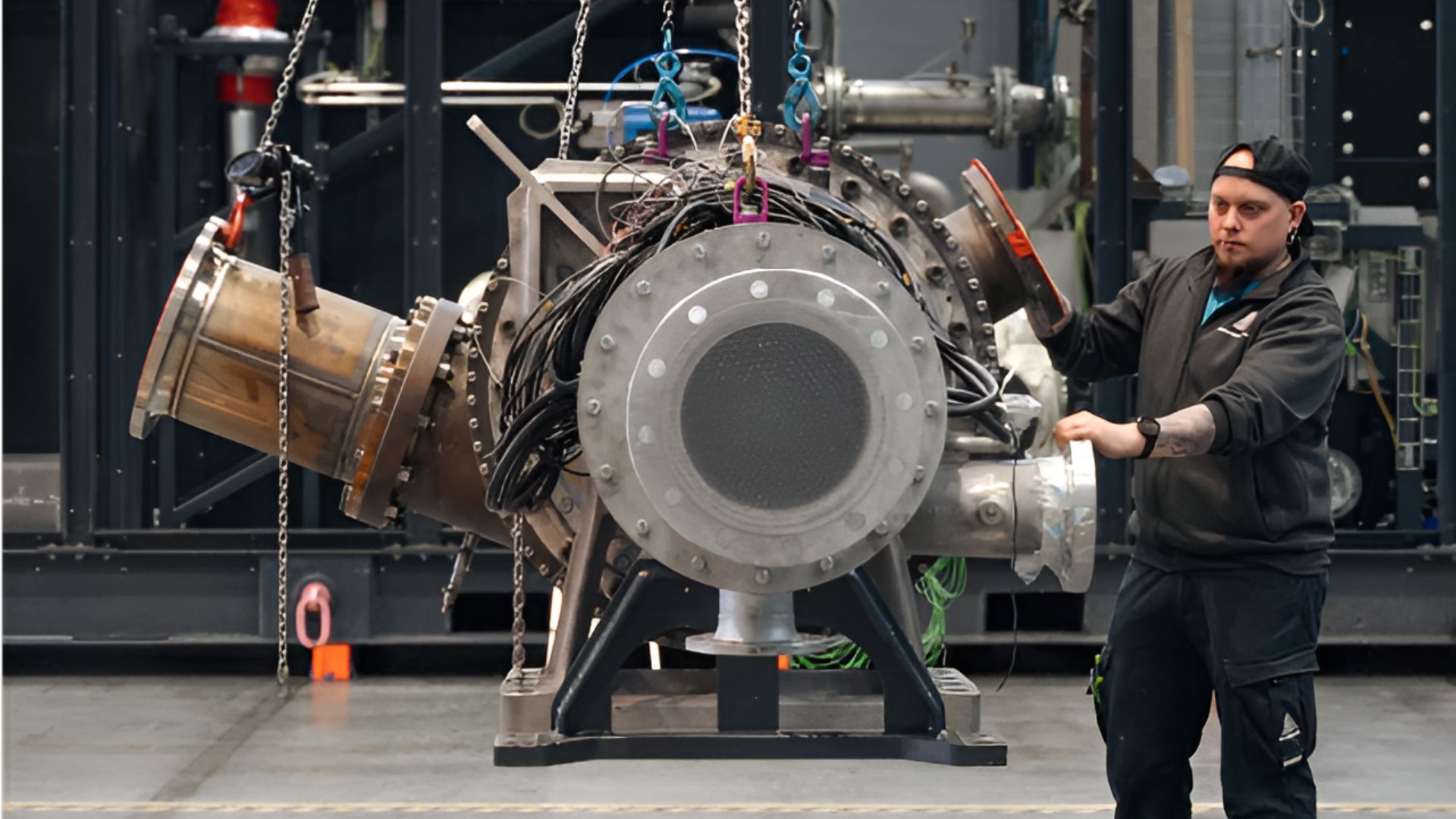
Manufactured by Spain-based Elytt Energy, the component traveled from Bilbao to New Jersey aboard a cargo aircraft before making its final trip by flatbed truck to Princeton. Weighing 23,000 pounds and stretching roughly 20 feet long, the bundle ranks among the most important pieces of the fusion device.

Dave Micheletti, associate laboratory director for engineering and project director, called the arrival “a truly momentous occasion.” He said the team will now focus on completing assembly and preparing the system for scientific use.

Magnetic core

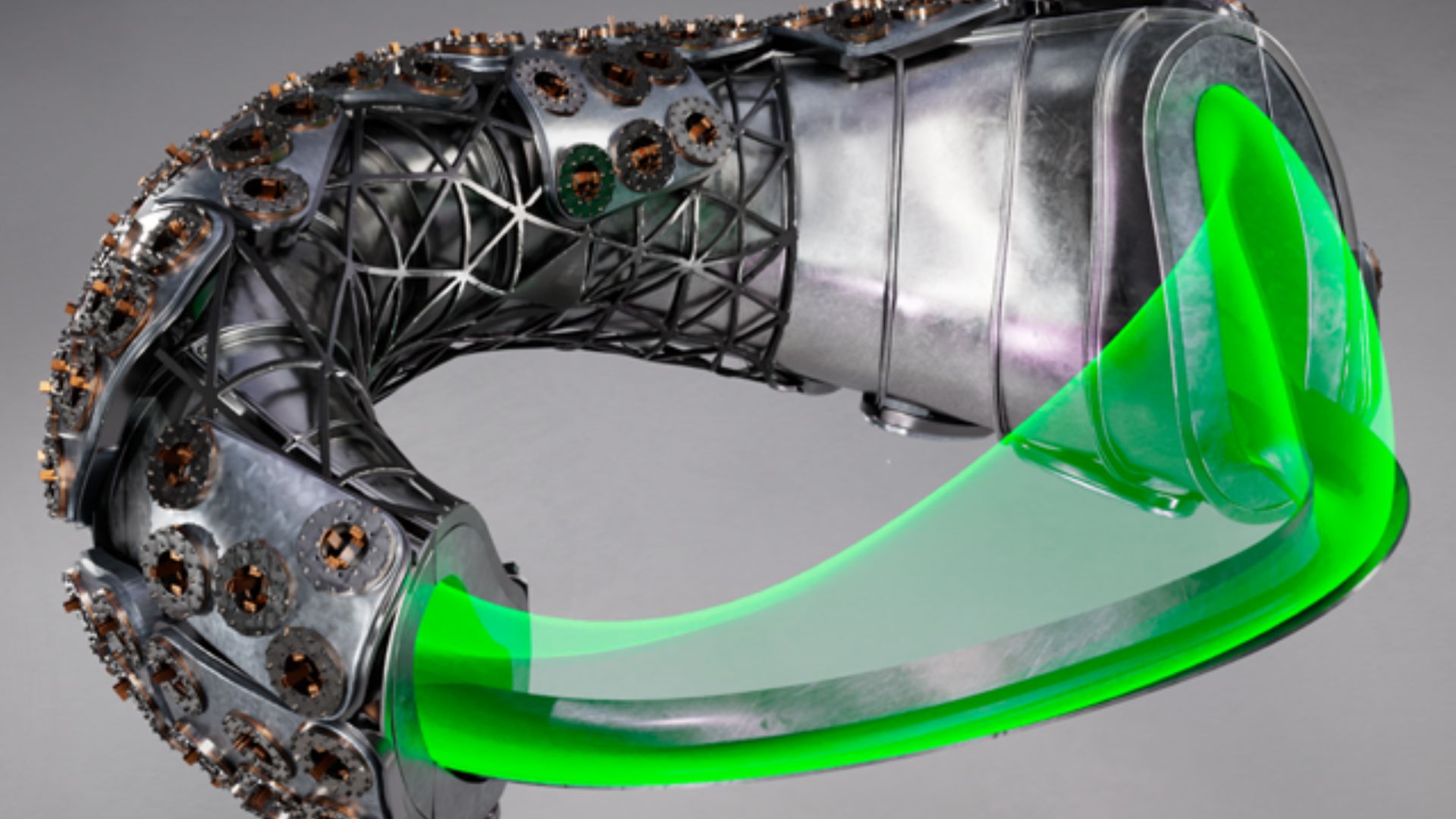
The central bundle combines two critical magnet systems into a single structure. The toroidal field magnets generate the primary magnetic fields that confine the plasma. Meanwhile, the ohmic-heating system drives electrical current through the plasma to raise temperatures and support confinement.
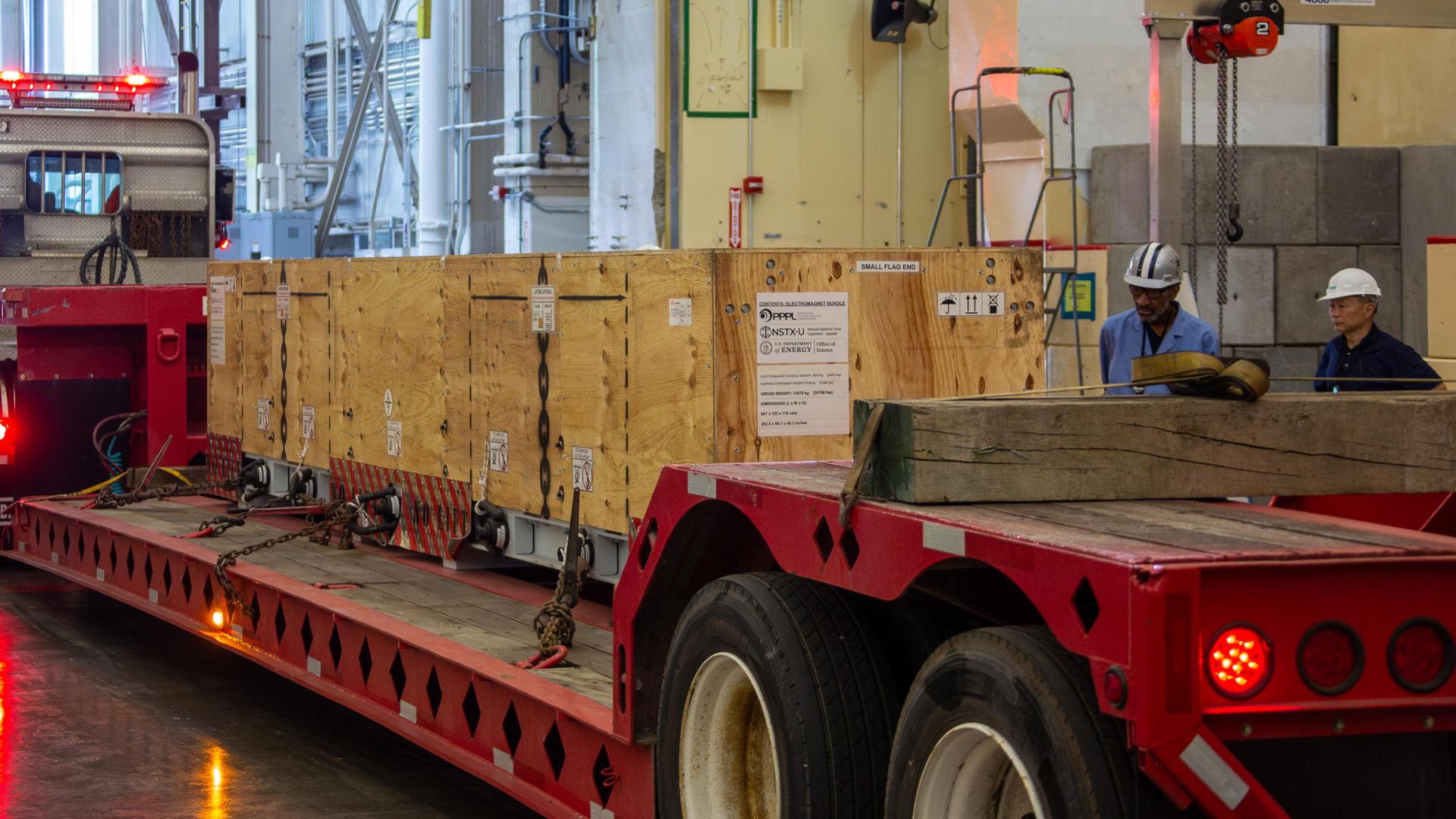
A flatbed truck delivers the magnetic bundle. Credit – Michael Livingston / PPPL Communications Department

Building the assembly required a complex manufacturing process. Technicians joined 36 copper conductors, each measuring 19 feet long, using fiberglass tape, resin, and vacuum-pressure impregnation techniques.

Engineers then wrapped additional copper coils around the structure to create the ohmic-heating system. They sealed the completed assembly with insulating resin to withstand demanding operating conditions.

Once installed, the magnets will create two magnetic field configurations inside the apple-shaped vacuum vessel. Together, they stabilize and heat the plasma needed for fusion experiments.

Testing future reactors

Researchers believe spherical tokamaks could offer advantages over conventional designs. Their compact shape may improve efficiency while reducing construction and replication costs. The upgraded system will help scientists evaluate whether the approach can support future commercial fusion plants.

The machine also supports broader national goals. Researchers plan to gather operational data that could train artificial intelligence tools capable of improving fusion performance and control strategies.

Jonathan Menard, the laboratory’s deputy director for research, said the facility will provide new opportunities for scientists and engineers entering the field. He encouraged researchers worldwide to use the platform to advance fusion science.

Final assembly begins

Engineers have already positioned the magnet bundle near the fusion device using heavy-duty cranes. Over the coming months, teams will rotate the structure upright and prepare it for installation. Workers will lower protective shielding around the assembly before placing it inside the machine’s interior.

Technicians must still connect dozens of flexbus components, cooling lines, and internal systems. They will also complete bakeout procedures and commissioning tests to verify that all systems operate together safely.

Steven Cowley, the laboratory’s director, said the upgraded machine possesses capabilities unavailable elsewhere. He noted that the project could play an important role in determining the future direction of commercial fusion research.

If the remaining work proceeds as planned, the upgraded facility could begin experiments in 2027, giving American researchers a powerful new platform to explore the promise of fusion energy.

💾

The arrival of a 23,000-pound central magnet moves a next-generation fusion device into its final assembly phase.

  •  

Tiny additive helps water-based battery run for 2,800 hours with record capacity

Researchers in South Korea have developed a new electrolyte additive that significantly improves the lifespan and capacity of aqueous batteries, a technology widely viewed as a safer and lower-cost alternative to lithium-ion batteries.

The team, led by Professor Hoseok Park from Sungkyunkwan University (SKKU), found that adding a small amount of a specially designed zwitterionic material to the electrolyte helped overcome key problems that have long limited the commercialization of aqueous battery systems.

Unlike lithium-ion batteries, aqueous batteries use water-based electrolytes, making them less flammable, more environmentally friendly, and potentially cheaper to manufacture. However, their performance has been hindered by unstable zinc deposition and unwanted reactions between zinc electrodes and water during charging and discharging.

These issues can lead to corrosion, uneven metal buildup, and rapid capacity loss, reducing battery life and limiting large-scale deployment.

Tiny additive, big impact

To tackle the problem, the researchers developed a zwitterionic additive known as C10. Zwitterions contain both positive and negative charges within the same molecule, allowing them to interact with surrounding ions in unique ways.

When added to the electrolyte, C10 molecules spontaneously assembled into nanostructures measuring about 3.77 nanometers in diameter. These structures served two functions simultaneously.

First, they guided zinc ions to deposit more evenly across the electrode surface, reducing the formation of irregular zinc structures that can damage batteries. Second, they formed a thin protective layer over the zinc metal, shielding it from direct contact with water and limiting corrosion-causing side reactions.

The combined effect produced substantial performance gains.

Aqueous batteries using the modified electrolyte maintained stable operation for more than 2,800 hours. The cells also achieved an areal capacity of 8.10 mAh cm⁻², which the researchers describe as world-leading performance among aqueous battery systems reported to date.

“We have demonstrated that the performance of aqueous batteries can be substantially enhanced through a simple approach of adding a small amount of material to the electrolyte, without the need for expensive materials or complex fabrication processes.”

Storage systems targeted

Improving both cycle life and storage capacity has been a longstanding challenge for aqueous battery developers. Many previous approaches improved one metric at the expense of the other.

The new electrolyte strategy appears to address both issues simultaneously while avoiding costly manufacturing changes.

The researchers believe the technology could be useful for large-scale energy storage applications, where safety, cost, and durability are critical factors.

“Beyond renewable energy storage, this technology holds potential for application in large-scale energy storage systems (ESS) for AI infrastructure and data centers, which are experiencing explosive growth.”

Demand for energy storage is expected to rise alongside the expansion of renewable power generation and the rapid growth of AI computing infrastructure, both of which require reliable methods to store and distribute electricity.

Because the new approach relies on a simple electrolyte modification rather than redesigning the battery architecture, it may offer a practical path toward improving the commercial viability of aqueous battery systems.

The findings were published in the journal Nano-Micro Letters.

  •  

Scientists encode full viral genome for quantum computer analysis in a first

Scientists have successfully translated an entire viral genome into a format a quantum computer can process and analyze — the first time this has been accomplished at full-genome scale.

The work, which involved encoding the genetic sequence of a virus as quantum data, was published and reported by researchers who say the approach could eventually allow quantum systems to identify viral mutations, model genomic interactions, and assist in drug discovery at speeds classical computers cannot match.

What the researchers did

The team converted the nucleotide sequence of a complete viral genome — the ordered string of adenine, thymine, guanine, and cytosine base pairs that encodes all viral instructions — into qubits, the basic unit of quantum information. Unlike classical bits, which hold a value of either 0 or 1, qubits exploit superposition to represent both states simultaneously, allowing a quantum processor to evaluate many possible sequence configurations at once.

Translating a genome for quantum analysis requires mapping each nucleotide or group of nucleotides to a corresponding quantum state. The process is non-trivial: genomic data is inherently sequential and high-dimensional, while current quantum hardware operates with limited qubit counts and high error rates.

Getting a complete viral genome — even a relatively compact one — to fit within those constraints required data compression and encoding strategies tailored to the quantum architecture.

The viral genome selected for this experiment is small relative to bacterial or human genomes, but the encoding itself represents a meaningful proof of concept for how biological sequence data can interface with quantum processing systems.

Why quantum hardware is being applied to genomics

Classical genomic analysis tools — including BLAST for sequence alignment and machine learning models trained on genomic databases — are computationally intensive. Comparing a novel pathogen’s genome against a reference library, or predicting how mutations affect protein folding, demands significant processing time and energy when done at scale.

Quantum computing offers a theoretical speed advantage for certain classes of problems, including optimization and pattern matching across large combinatorial spaces.

Genomic sequence analysis, which often involves searching for the best alignment among millions of possibilities, fits that profile. Quantum technology is also being explored for improvements in semiconductor physics, with researchers finding that quantum phenomena in solid-state materials may open new device architectures.

For genomics specifically, the potential application is not just speed. Quantum algorithms such as the Harrow-Hassidim-Lloyd (HHL) algorithm are designed to solve linear systems exponentially faster than classical counterparts, which could transform how researchers model gene expression networks or viral replication dynamics.

Hardware constraints and open questions

Current quantum computers operate in the noisy intermediate-scale quantum (NISQ) era — devices with dozens to a few hundred physical qubits that are prone to decoherence errors. Encoding an entire genome does not mean a NISQ device can analyze it with the same fidelity as a fault-tolerant quantum computer would. The present achievement is closer to a compatibility demonstration than a functional genomic analysis pipeline.

Error correction remains a central obstacle. Physical qubits must be grouped into logical qubits with redundancy to suppress noise, which multiplies the hardware requirement substantially.

For reference, a truly fault-tolerant quantum computer capable of running complex genomic algorithms at scale could require millions of physical qubits — far beyond today’s hardware. The research is framed as an early but concrete step toward quantum-enabled biology, not an operational system.

There is also the question of data input bandwidth. Loading large biological datasets into a quantum system — a process called quantum random access memory (QRAM) — remains an active area of research with no widely agreed-upon hardware implementation.

Path to practical application

Translating a viral genome for quantum processing establishes that the conceptual pipeline — from biological sequence to quantum representation — is viable at the genome scale. The next engineering challenge is running meaningful quantum algorithms on that data and benchmarking their output against classical tools.

Pandemic preparedness is one area where faster genomic analysis would have concrete value. During the COVID-19 pandemic, tracking variant emergence required continuous re-sequencing and comparison of viral genomes across global databases.

A quantum-accelerated version of that workflow could, in principle, compress the timeline from sequence detection to variant characterization. Whether current or near-term quantum hardware can deliver that in practice remains an open question that this research alone cannot answer.

  •  

Onshoring: US company to commence 10-ton rare earth separation plant demo in 2026

Rare Element Resources (RER) has issued a project update on its Bear Lodge rare earth element deposit in Wyoming, one of the largest known carbonatite-hosted rare earth deposits in North America. According to the update the environmental review and mining site permitting is in progress and is anticipated to be completed by March 2028. The update also states that the demonstration rare earth element (REE) separation plant will commence operations by late summer 2026. It is scheduled to run for up to 12 months and will produce an up to 10 tons of neodymium-praseodymium (Nd/Pr) oxide.

The mineral deposits at Bear Lodge contain both the magnet rare earth materials neodymium, praseodymium, samarium and terbium as well as cerium (Ce), lanthanum, yttrium, gadolinium, europium and dysprosium. All these elements are on the U.S. Geological Survey`s list of 60 critical minerals. The minerals on the list have been identified as critical due to their role in national security or economic development and by their risk of supply chain disruption.

The project details

The vertically integrated Bear Lodge Rare Earth Project encompasses mining of rare earth element (REE) ore which will become feed material for a state-of-the-art commercial processing facility. The facility will produce high-purity separated neodymium-praseodymium (NdPr) oxide using the company`s patented, environmentally friendly technology. It will be designed as a zero discharge facility and will located approximately 40 miles from the mining area.

The full scale commercial processing facility will be built based on the operational, economic, and engineering data derived from the demonstration plant. This US Nuclear Regulatory Commission certified plant is located at Upton, Wyoming.

Ken Mushinski, President and CEO of RER said “The primary objective of a Demonstration Plant is to systematically uncover and resolve mechanical and operational challenges before scaling to a commercial facility”.

He further said “By fine-tuning our primary processing circuit and resolving these filtration inefficiencies now, we are effectively de-risking our commercial trajectory. Once this front-end optimization is complete, the primary circuit will continuously feed our completed separation circuits to yield high-purity NdPr.

The separation process

According to the company the proprietary separation process involves four steps. It commences by crushing and screening of the feed sample to 1mm size followed by counter-current leaching and selective precipitation, to chemical digestion and solvent extraction, and finally to REE separation and refining.

The final REE separation and refining process involves multiple steps, these remove the Nd/Pr (at greater than 99.5 percent purity) as well as samarium, europium, gadolinium, lanthanum and heavy rare earth concentrates.

The company states that it has done extensive laboratory bench-scale and pilot plant testing on metallurgical processes to recover saleable rare earth products and has been granted two patents on its metallurgical processing. These involve removal of thorium from REE containing acidic solution, as well as the selective extraction of REEs using oxalic acid. These patented processes have been further advanced in collaboration with General Atomics, the company’s majority shareholder.

Supply chain context

The United States currently has limited domestic capacity for separating and processing rare earth elements into refined oxides or metals. Mountain Pass in California remains the only operating rare earth mine in the country, though its concentrate is largely shipped to China for separation (which accounts for 91 percent of the global refined output). Projects like Bear Lodge are positioned as potential contributors to a more complete domestic supply chain, from ore to separated material.

Although permitting timelines, metallurgical recovery rates, and sustained financing are the primary variables that determine whether a deposit moves from resource estimate to operating mine.

💾

Rare Element Resources is a strategic materials company focused on delivering rare earth products for technology, energy, and defense applications.
  •  

Scientists unearth world’s largest whale graveyard beneath Pacific Ocean seabed

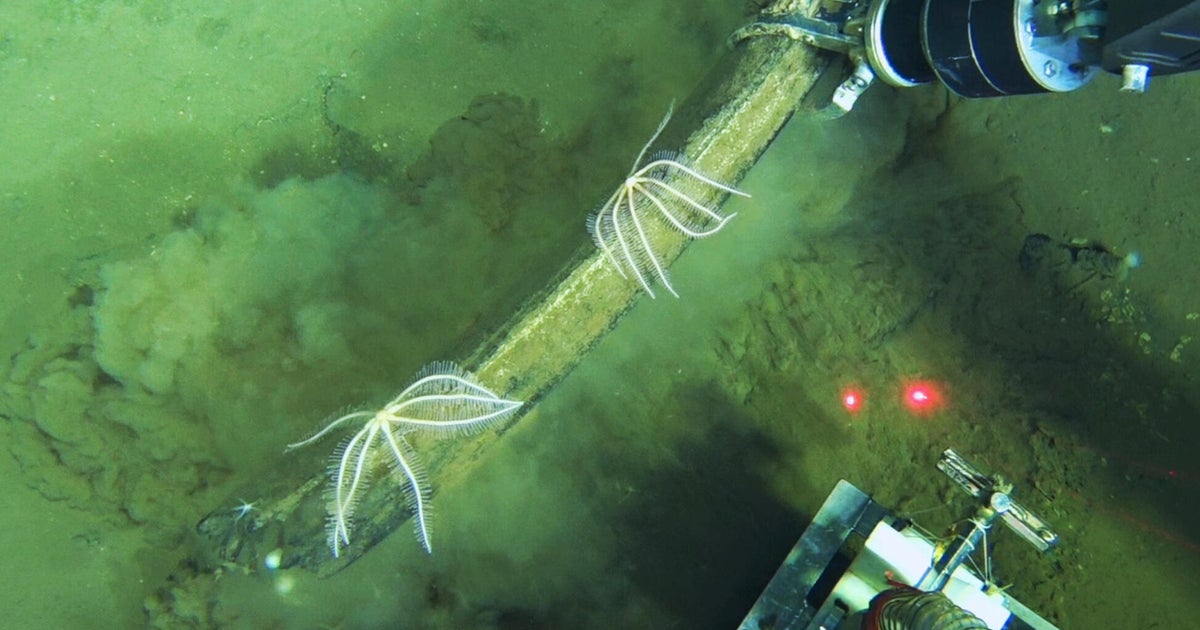
Researchers operating a deep-sea submersible have found the world’s largest known whale graveyard on the ocean floor, uncovering dozens of whale carcasses and a thriving ecosystem of creatures — many believed to be new to science — feeding off the remains.

What the submersible found

The discovery was made during a submarine dive that brought cameras and sensors to depths where light does not penetrate. Researchers observed multiple whale carcasses scattered across the seafloor in close proximity, forming what scientists are now calling the largest concentration of whale fall sites ever recorded in a single location.

Whale falls — the term for a whale carcass that sinks to the seafloor after death — are known to sustain entire biological communities for decades. Soft tissue attracts mobile scavengers first, followed by collagen-consuming organisms, and finally chemosynthetic bacteria that break down lipids embedded in the bones. Each stage can support a distinct faunal assemblage, and the full succession can span 50 to 100 years on a single carcass.

At this site, researchers reported seeing animals that they believe had not been previously documented by science. The density of carcasses in one location is particularly unusual; most documented whale falls are isolated, stumbled upon by chance during unrelated deep-sea surveys.

The biology of a whale fall

A whale carcass functions as a nutrient island in an otherwise food-scarce environment. In the deep ocean, organic material from the surface is sparse by the time it drifts to abyssal depths.

A single large whale can deliver tens of thousands of pounds of organic carbon to the seafloor in a single event — a concentrated pulse of energy that would otherwise take decades to accumulate through marine snow, the slow drift of organic particles from surface waters.

Chemosynthetic bacteria, analogous in ecological function to those found at hydrothermal vents, colonize whale bones during the final decomposition stage. These bacteria oxidize hydrogen sulfide produced by the anaerobic breakdown of bone lipids, generating energy without sunlight.

This process can sustain specialized invertebrates — including polychaete worms, clams, and gastropods — that are adapted exclusively to chemosynthetic environments.

Finding multiple whale falls in proximity means the overlapping succession stages may allow species to migrate between carcasses, effectively turning the graveyard into a connected habitat rather than a series of isolated biological islands. Whether that dynamic is occurring at this newly discovered site remains a question researchers will need to address through further sampling.

Limits of what is currently known

The full taxonomic scope of what lives at the site is not yet established. Identifying potentially new species from submersible footage alone is preliminary; formal species descriptions require physical specimens, morphological analysis, and genetic sequencing.

The claims about novel organisms, while scientifically plausible given the inaccessibility of the deep sea, remain unconfirmed until peer-reviewed taxonomy is completed.

The precise location and depth of the graveyard have not been publicly disclosed in detail, which limits independent verification at this stage. Deep-sea expeditions of this kind are expensive and logistically complex, meaning follow-up dives to collect physical samples may take months or years to organize.

The research was first published in the journal Nature.

  •  

New quantum code cuts error rates by 1,000x while using up to 8x fewer qubits

IQM Quantum Computers has developed a new quantum error-correcting code that it says can reduce logical error rates by up to 1,000 times compared with the widely used surface code while requiring up to eight times fewer physical qubits.

The company said the new approach, called barbell codes, could help address one of the biggest challenges facing quantum computing: correcting errors quickly enough to enable large-scale, fault-tolerant machines.

Quantum computers are highly sensitive to noise, which can introduce errors during calculations. To overcome this, researchers use quantum error correction, a process that spreads information across multiple physical qubits to create more reliable logical qubits. However, existing methods often require large numbers of qubits and increasingly complex hardware.

According to IQM, its new code aims to improve both efficiency and practicality by lowering error rates while reducing the number of physical qubits needed to protect quantum information.

Fewer qubits, fewer errors

The barbell code family was designed specifically for IQM’s Constellation processor architecture, which features enhanced connectivity between qubits. In the system, each qubit can directly interact with up to 12 neighboring qubits, compared with four in a conventional square-grid arrangement.

The company said the design allows high-performance error correction without requiring extensive additional hardware. Barbell codes rely on a single long coupler connection for every second qubit, reducing the need for multiple long-range crossing couplers that can complicate chip fabrication.

By taking advantage of the processor’s connectivity, the code can generate the entanglement needed for error correction while keeping hardware requirements comparatively low.

“We are pioneering the next chapter in quantum computing,” said Jan Goetz, CEO and Co-founder of IQM Quantum Computers.

“Our approach offers a highly competitive path to scalable quantum error correction with superconducting qubits, paving the way for large-scale, fault-tolerant quantum computers.”

The company said the approach is intended for real-world superconducting quantum processors rather than idealized laboratory systems, with an emphasis on manufacturability and scalability.

Building practical quantum

Error correction is widely considered one of the key hurdles preventing today’s quantum computers from tackling commercially valuable problems at scale. While advances in qubit quality have steadily improved hardware performance, experts believe fault-tolerant systems will require robust error-correction schemes capable of suppressing errors faster than they accumulate.

IQM claims its barbell codes offer a path toward that goal by combining lower logical error rates with lower hardware complexity. The company said the technology supports its roadmap toward quantum systems capable of operating with hundreds of high-precision logical qubits.

The development comes as IQM prepares to deploy 150-qubit quantum systems to customers later this year. The company has also announced IQM Halocene, a quantum computer designed for testing and developing error-correction technologies.

If the reported performance gains can be replicated in large-scale systems, the new approach could help reduce the hardware overhead traditionally associated with fault-tolerant quantum computing.

The development details and numerical performance analysis were published on arXiv.

  •  

Advanced metal 3D printing minimizes failure points in complex gas turbine designs

Metal additive manufacturing continues to expand beyond aerospace prototypes and into production-focused energy systems. That shift gained momentum this week as Velo3D and gas turbine developer Aurelia Technologies unveiled a partnership aimed at bringing 3D printing deeper into next-generation turbine development.

The companies plan to evaluate, qualify, and eventually manufacture turbine components using additive techniques. Their goal extends beyond experimentation. They want to simplify designs, shorten development cycles, and build a more resilient supply chain for future turbine programs.

The collaboration reflects a broader trend across U.S. manufacturing. Engineers increasingly use additive manufacturing to solve practical production challenges rather than showcase technological novelty. Faster iteration, fewer components, and lower inventory exposure now drive many adoption decisions.

Designing out complexity

Aurelia develops small-scale gas turbines designed to operate efficiently while accommodating multiple fuel types. As its turbine platforms evolve, the company sees additive manufacturing as a way to remove unnecessary complexity from critical assemblies.

Instead of assembling numerous individual pieces, engineers can consolidate multiple components into a single printed part. That approach reduces fasteners, minimizes interfaces, and lowers the risk associated with tolerance stack-ups.

The result could improve durability in demanding environments where turbines face extreme temperatures and mechanical stress.

“Additive manufacturing allows us to simplify designs, reduce failure points, and move faster,” said Karol Hricisak, director of technology at Aurelia Technologies. He added that the company remains grounded in established turbomachinery principles and proven materials science.

Reducing part counts also supports maintenance objectives. Fewer connections can translate into fewer potential failure points throughout a turbine’s operating life.

Testing to production

The partnership will unfold through several phases. Early efforts will focus on determining which turbine components benefit most from additive production.

The companies also plan to assess suitable alloys and refine manufacturing processes before advancing toward qualification activities. The long-term objective involves low-rate initial production using Velo3D’s Sapphire XC metal additive manufacturing platform.

Engineers will examine whether additive methods can improve manufacturability while reducing lead times for complex parts.

Unlike conventional production methods, additive manufacturing can accommodate geometry changes without extensive tooling modifications. Design updates that traditionally require months could move into production within weeks.

Strengthening domestic supply chains

The initiative also addresses supply chain concerns that continue to affect advanced manufacturing sectors across the United States.

Traditional turbine production often depends on long-lead forgings, specialized tooling, and significant inventory commitments. Additive manufacturing offers an alternative path that can reduce those dependencies.

By producing components closer to demand, manufacturers can respond more quickly to engineering changes and shifting market requirements.

Velo3D said Aurelia selected the company because of its experience in metal additive manufacturing and its structured approach to qualification and production scaling.

“Advanced energy systems are pushing the limits of traditional manufacturing,” said Michelle Sidwell, Velo3D’s chief revenue officer. She said additive manufacturing delivers the greatest value when engineers incorporate it early in the design process.

As the initial work progresses, both companies will evaluate additional applications and opportunities to expand the collaboration. The effort highlights how additive manufacturing increasingly serves as a practical engineering tool for next-generation energy and propulsion systems.

  •  

World’s first electric TaxiBot tows Airbus A320 jets at 26 mph in the Netherlands

An airport in the Netherlands has started operating the world’s first fully electric TaxiBot, which is designed to tow passenger aircraft from the gate to the runway while keeping their engines switched off.

Amsterdam Airport Schiphol, also known as Schiphol Airport, unveiled the system in May 2026, together with easyJet, Airbus, ground-handling company Menzies Aviation, and supplier Smart Airport Systems.

The electric TaxiBot is now transporting Airbus A320 aircraft to the Polderbaan Runway. This is the airport’s longest and newest runway, measuring 2.36 miles (3.8 kilometers). It is also the most distant runway and the one with the longest taxi times.

“By deploying the TaxiBot, we’re taking another practical step towards reduced emissions and noise on the apron,” Esmé Valk, Royal Schiphol Group people and transformation chief, revealed. This is how we’re creating a healthier and cleaner workplace, and an ever more sustainable and modern airport that is ready for the future.”

How TaxiBot works

The TaxiBot is a specialized tow vehicle that connects to an aircraft’s nose wheel and transports it across the airport at speeds of up to 23 knots (about 26 miles per hour, or 42 kilometers per hour). It can reduce fuel use by up to 65 percent before takeoff, while lowering emissions and noise.

In contrast to conventional airport tugs, the electric TaxiBot is controlled directly by the pilot from the cockpit. Meanwhile, aircraft engines remain off during the journey from the gate to the runway. They are once again started shortly before departure.

The TaxiBot at Amsterdam Airport Schiphol, in the Netherlands.
Credit: Amsterdam Airport Schiphol

Once the aircraft reaches the runway, the TaxiBot disconnects. An operator drives the vehicle back to the terminal area to assist the next flight. “With TaxiBot, we are taking a tangible step towards making our operations at Schiphol more efficient,” William Vet, easyJet’s director for the Netherlands and Scandinavia, pointed out.

Schiphol selected the Polderbaan Runway for the rollout because it’s the runway with the longest taxi time. This can reduce fuel consumption by up to 65 percent. At the same time, lower fuel use also cuts carbon dioxide (CO2), nitrogen oxides (NOx), and (ultra)fine particle emissions.

Cleaner airport operations

Still, the aircraft tug does far more than just slash emissions. Reduced engine use means cleaner air for the employees working on the apron and lower exposure to pollutants generated by aircraft during ground operations. It additionally reduces noise levels and creates a more comfortable working environment around aircraft stands and service areas.

The electric TaxiBot joins two hybrid TaxiBots that have been towing KLM Boeing 737 aircraft to the same runway since 2022. It is being deployed on four of the Airbus A320neo aircraft, allowing engine-off taxiing to the runway.

“This immediately leads to lower fuel consumption, emissions, and ground noise,” Vet concluded in a press release. “This is only possible thanks to the commitment of our partners, and in particular the Menzies Aviation team, who play a crucial role in our ground operations.”

Schiphol currently runs the world’s only electric TaxiBot. The airport expects three additional electric units to arrive later this year. The expansion will allow the technology to support more aircraft types. Schiphol is also working with KLM Cityhopper and industry partners to certify the system for Embraer aircraft, while Transavia plans to participate with its Boeing 737 fleet.

💾

Amsterdam Airport Schiphol has launched the world's first electric TaxiBot to help aircraft cut fuel use by up to 65 percent before takeoff.
  •  

Scientists find elusive Higgs mode in semiconductor, could enhance quantum tech

Scientists at the Argonne National Laboratory (ANL) in the US found an elusive type of vibration, called the Higgs mode, in a semiconductor material for the first time. The collective movement of atoms resulted in a change in the symmetry of the crystal, which can be tuned to optimize the material’s properties. 

If you recall science taught at school, you will remember that in gases molecules are loosely packed and are in motion, whereas in solids, molecules are densely packed and rigid, which gives them a defined shape. Yet, even within solids, atoms are in a constant motion. Much of this is vibrational motion, which is random and uncoordinated. 

Scientists know that certain inputs can turn this random motion into coordinated, in-sync movement. Collectively, these vibrations make a sound, referred to as phonons. By tuning phonons, scientists have also found a way to influence the structure and behavior of materials. 

Finding the Higgs mode

Researchers at ANL were using light to change the phonon activity in a semiconductor material called metal halide perovskites. These materials are crucial as we look to build the next generation of solar cells, advanced sensors and quantum technologies. 

During one of their experiments, where the scientists exposed a two-dimensional perovskite crystal to ultrafast laser pulses, they noticed a complex and elusive type of vibration that modulated the symmetry of the crystal itself. This is called Higgs mode. 

Throughout history, researchers have found mathematical analogs of Higgs mode in various materials. The Higgs boson in particle physics, or that in superconductivity, which allows electricity to flow through a material with no resistance. 

The Higgs mode is an oscillation in a system to a degree where it shows some symmetry or order. It typically emerges when a system undergoes a phase transition due to a phenomenon known as spontaneous symmetry breaking. 

On this occasion, ANL researchers observed Higgs mode for the first time in a semiconductor material. 

Higgs mode in semiconductor material

The researchers were working with butylammonium lead iodide, a metal halide perovskite which is used to make single-layer semiconducting crystals. Finding its Higgs mode allowed researchers to tune their band gaps, making them better suited for solar cell applications. 

Band gaps of a semiconductor material determine which light frequencies it can absorb to make electricity in a solar cell and which ones they scatter. In their experiments, when the researchers exposed the semiconductor to ultrafast laser pulses, small groups of atoms in it began to oscillate. 

The interactions between the electrons of these oscillating atoms changed their angles too. Interestingly, this also changed the bandgap of the material. 

“We found that the bandgap increased and decreased periodically and rapidly,” said Richard Schaller, a scientist at ANL who was involved in the work. ​“Essentially, the color of the sample oscillated as it rocked through different crystal symmetries — turning redder and then bluer, over and over.”

The researchers also found that this Higgs mode steered the crystal toward a phase that cannot be achieved by heating it. This demonstrates that light-based excitation of material is different from heat-based excitation, thereby offering a new way to explore material phases and properties. 

“If we can use light to control structural and electronic changes in materials on ultrafast time scales they might find use as optical switches in modern microelectronics and quantum technologies,” added Ayushi Shukla, postdoctoral researcher at ANL in a press release. ​

“Also, stabilizing novel, high-symmetry phases with low band gaps could open exciting opportunities for photovoltaic applications.”

The research findings were published in Nature Materials. 

  •  

US firm makes history with first flight of electric aircraft using solid-state batteries

Helios Horizon, a Florida-based nonprofit, has completed what it claims is the first piloted flight of an electric aircraft using solid-state batteries.

On June 5, founder and chief test pilot Miguel Iturmendi conducted a series of short test flights at Zephyrhills Municipal Airport in central Florida aboard a modified Pipistrel Taurus motor glider designated as the Helios Horizon.

The aircraft, previously equipped with lithium-ion batteries rated at 260 Wh/kg, was reconfigured to run on solid-state batteries delivering 410 Wh/kg.

According to the organization, these new cells are smaller than typical lithium-ion packs used in modern electric vehicles yet provide 60 to 80 percent greater energy density.

Helios Horizon performs first flight with solid-state batteries

Solid-state batteries replace the flammable liquid electrolyte found in conventional lithium-ion cells with a solid material.

This design allows for enhanced thermal stability and resistance to physical damage such as punctures. The batteries can draw power from standard AC electrical sources without specialized charging infrastructure. In flight, the aircraft can supplement its energy through integrated solar panels and by operating the propeller as a wind turbine during non-powered segments.

According to Helios Horizon, their solid-state batteries charge from near-empty to 80 percent capacity in less than 15 minutes. The organization is also aiming for further improvements of around 40 percent in energy density within two years.

“For the first time, we have a battery technology that yields the range and charging times necessary to make commercial electric aviation viable, while providing the safety the flying public will demand,” Iturmendi said in a statement.

He added that regenerative techniques, including gliding and windmilling the propeller during descents, “can significantly increase the range of the airplane.”

The June 5 flights primarily validated weight and balance after the battery installation, according to a post from RobbReport. The new power system performed better than expected during sustained operation, though specific range and top speed figures were not disclosed.

The future of solid-state battery aircraft

The Helios Horizon previously set a class altitude record at 24,000 feet. The team now plans stratospheric flights later this year, targeting altitudes above 40,000 feet—higher than typical passenger airliner cruise levels. Iturmendi believes the solid-state batteries will enable these missions on a single charge.

At this stage, the Helios Horizon serves as a technology demonstrator to illustrate potential gains in range and endurance for electric propulsion. While not intended for immediate commercial production, the project highlights progress toward practical electric aircraft that address key limitations in energy storage and safety.

The achievement arrives amid broader industry efforts to develop viable electric and hybrid propulsion for aviation. Solid-state technology has long been viewed as a potential breakthrough, promising higher performance and improved safety margins over current battery chemistries. Helios Horizon’s test marks a tangible step in applying that technology to a manned aircraft.

💾

The aircraft, previously equipped with lithium-ion batteries rated at 260 Wh/kg, now runs on solid-state batteries delivering 410 Wh/kg.
  •  

MIT’s ultrasound wristband could teach humanoid robots human hand skills

Humanoid robots may soon gain more human-like dexterity thanks to a new wearable device developed by researchers at the Massachusetts Institute of Technology.

The ultrasound wristband uses high-frequency sound waves to capture the movement of muscles, tendons, and ligaments beneath the skin, creating detailed data on human hand motions.

According to the team, the data collected by the system could be used to train robots to perform household tasks by replicating the dexterous hand movements used by humans.

Last year, researchers at the University of California San Diego developed a wearable AI system that accurately interprets arm gestures and controls robots, even during running, vehicle motion, or rough ocean conditions.

Wristband teaches robots

For robots to perform delicate tasks with human-like precision, they must first understand the complex movements of the human hand. Researchers have now developed a wearable ultrasound wristband that could help bridge that gap by capturing detailed muscle and tendon activity beneath the skin and translating it into robotic motion.

Tracking hand and finger movements is a key challenge in fields such as robotics and spatial computing. Existing solutions have significant limitations. Camera-based systems can struggle with restricted viewing angles and visual obstructions, while wearable devices based on strain sensors, inertial sensors, or electromyography often limit movement or lack the resolution needed to accurately capture continuous finger motions, according to the team’s study paper.

The new wristband builds on a series of advances in wearable ultrasound technology over the past several years. Researchers have steadily expanded the capabilities of ultrasound wearables beyond gesture tracking and robotics. In 2022, scientists demonstrated a wearable ultrasound device capable of continuously monitoring multiple internal organs. Subsequent developments included wearable systems for continuous heart imaging and bladder volume monitoring.

In 2024, researchers introduced a conformal ultrasound patch capable of tracking cerebral blood flow in three dimensions and an integrated wearable ultrasound system that monitored deep tissue activity with sub-millimeter resolution using a single transducer. More recently, flexible, disposable ultrasound patches were developed to reduce manufacturing costs.

Now, in a new study, researchers led by Xuanhe Zhao at MIT introduced a wearable ultrasound imaging wristband capable of tracking arbitrary hand configurations. The device uses high-frequency sound waves to image muscles, tendons, and ligaments inside the wrist, providing a detailed view of the mechanisms that drive hand movement.

Decoding human hands

The wristband could help robots achieve human-like hand dexterity by capturing the movements of muscles and tendons beneath the skin. The device incorporates a 256-channel wireless ultrasound imaging system that uses high-frequency sound waves to monitor structures inside the wrist responsible for controlling finger and palm motions.

The ultrasound data is processed by a hybrid Transformer–ResNet AI model capable of interpreting subtle muscle activity. The system continuously tracks all 22 degrees of freedom of the human hand, covering the full range of joint movements that allow fingers and the palm to bend, rotate, and coordinate complex actions. Achieving this level of tracking has been a longstanding challenge for hand-motion sensing technologies, reported AP News.

In laboratory tests involving eight volunteers, the wristband reproduced hand gestures with high accuracy and low latency, mirroring movements within 120 milliseconds. Researchers demonstrated the system’s ability to recognize all 26 letters of American Sign Language, highlighting its precision in capturing intricate finger configurations.

Because the wristband operates wirelessly, users can control robotic systems remotely without being physically connected or located in the same room. To showcase its capabilities, the team used the technology to manipulate three-dimensional objects in virtual reality and direct a robotic hand to play the piano.

Beyond teleoperation, researchers believe the system could be used to generate large-scale datasets of human hand movements, providing valuable training data for future humanoid robots and helping them learn complex manipulation skills more autonomously.

  •  

21,000-sq-foot facility to keep US safe from threat of nuclear proliferation, boost clean energy goals

A new facility in the United States is set to keep the country safe from from the threat of nuclear proliferation. The new state-of-the-art 21,000-square-foot facility, at the Oak Ridge National Laboratory (ORNL), is also aimed at contributing to nuclear energy developments.

The Advanced Testbed and Operations Learning Laboratory (ATOLL) will develop critical workforce expertise and capabilities essential to monitoring foreign weapons-grade uranium production activities. The project is expected to be completed in the summer of 2028.

Initiative to advance energy dominance agenda

“It takes a weapons program to know a weapons program,” said Administrator Williams. “At NNSA, we deter adversaries by being experts in atomic science and weapons production, and the investment in ATOLL strengthens our understanding of both.”

The Department of Energy’s National Nuclear Security Administration (NNSA) has announced that the initiative will also advance President Trump’s energy dominance agenda and his executive orders on nuclear energy by contributing to the growing nuclear infrastructure being built in Tennessee, providing critical expertise that can be leveraged by American industry to revitalize domestic civil nuclear capabilities.

Detection of adversary nuclear programs and capabilities

“Our nation’s nuclear deterrent and the NNSA enterprise that maintains it serve as the foundation of our national defense. My highest priority as Chairman of the House Energy & Water Appropriations Subcommittee is ensuring this nuclear security enterprise is properly resourced,” said Congressman Fleischmann.

“DNN plays an essential defensive role within our deterrence architecture by enabling the detection and attribution of adversary nuclear programs and capabilities. The scientific and technological expertise of our national labs are critical enablers for NNSA’s national security missions.”

Fleischmann also underlined that the Advanced Testbed and Operations Learning Laboratory, being built at ORNL, will provide the cutting edge scientific facilities needed to perform critical nonproliferation missions, as the ability to monitor foreign nuclear production and weapons activities is essential to the country’s national defense and extended deterrence commitments.

“I was honored to participate in the groundbreaking for this important demonstration of these tremendous partnerships advancing U.S. national security,” added Fleischmann.

The project is part of the Nonproliferation Stewardship Program within NNSA’s Office of Defense Nuclear Nonproliferation. The program focuses on maintaining the scientific expertise, technical infrastructure, and specialized facilities necessary to address current and future nuclear security challenges.

As geopolitical tensions and concerns over nuclear proliferation continue to evolve, the development of ATOLL represents a strategic investment in America’s ability to detect, understand, and prevent the misuse of nuclear technology. The facility is expected to serve as a cornerstone of U.S. nonproliferation efforts while fostering innovation and expertise in the broader nuclear field for decades to come.

The new facility is expected to strengthen America’s ability to monitor nuclear activities globally and respond effectively to emerging proliferation risks.

By supporting research, workforce development, and advanced nuclear infrastructure, the laboratory will help reinforce domestic capabilities in both civilian nuclear power and national security applications.


  •  

World’s largest dam to get giant water staircase to let 11,000-ton ships pass faster

China has officially started construction on a massive new ship lock system at the Three Gorges Dam, the world’s largest hydropower dam, which is set to nearly double cargo capacity along the Yangtze River.

Valued at USD 11.4 billion (CNY 77.2 billion), the project is considered the biggest infrastructure investment on the world’s third-longest river in decades. It includes the construction of a new five-stage ship lock system, often described as a “water staircase” or “water elevator.”

It will allow larger vessels to pass through the Three Gorges Dam more efficiently. The groundbreaking ceremony took place on Monday, June 8. The construction effort will take a total of 112 months, or about 9.3 years.

“The project will significantly improve efficiency for the implementation of the Yangtze River Economic Belt development strategy and support domestic economic circulation,” Liu Weiping, Three Gorges Group president and dam and future locks operator, said.

Expanding Yangtze capacity

The system will have a 22,000-foot-long (6,680-meter) two-way lock channel with five consecutive stages. It will moreover allow 11,000-US-ton (10,000-tonne) class vessels to pass through the dam more quickly and efficiently than before.

According to the South China Morning Post (SCMP), the initiative will also include wider approach channels upstream and downstream, along with new navigation facilities. Once completed, the novel facilities will raise annual cargo capacity at the Three Gorges Dam to 370 million US tons (336 million tonnes). That is nearly twice its current capacity.

The expansion is set to reduce transportation costs and boost logistics efficiency across the Yangtze River Economic Belt, the backbone of the nation’s economy. It generates more than 40 percent of the country’s total economic output. Spanning 11 provinces and municipalities, the river corridor supports almost 50 percent of the nation’s population.

“The old Three Gorges locks and ship lift have become a chokepoint,” Ministry of Transport representatives pointed out. “Even the boldest planning [decades ago] failed to anticipate the huge rise in passengers and cargo flows along the Yangtze today.”

Modernizing river transport infrastructure

The project has been included in the nation’s 15th Five-Year Plan (2026-2030). It forms part of a broader strategy to strengthen domestic transportation networks and support economic growth.

The Yangtze River has become increasingly important for manufacturers moving raw materials, industrial components, and finished goods between China’s coastal regions and inland provinces. However, rising river cruise traffic has placed extra strain on the existing navigation infrastructure.

Cargo volume passing through the existing locks first exceeded their 110 million-US-ton (100 million-tonne) design capacity in 2011. By 2025, annual throughput at the dam had climbed to 191 million US tons (173 million tonnes).

The new project represents the largest infrastructure effort on the Yangtze River in decades. It surpasses the scale of any major work undertaken since the Three Gorges Dam began operating in 2003.

Officials said the expansion has become necessary as growing shipping demand continues to strain the existing facilities. The development aims to strengthen the Yangtze River’s role as a crucial transport route.

💾

China will expand the Three Gorges Dam with massive new ship locks and boost its cargo capacity to 370 million US tons a year.
  •  

US firm taps Australian thorium reserves for advanced nuclear reactor fuel

Energy technology firm AMPERA has confirmed that its new modular, supercritical nuclear systems will operate on thorium obtained from Australian suppliers. The raw material will be managed and processed through an internal supply chain established by the business.

“Our strategy is to secure thorium directly at the source and vertically integrate the entire fuel value chain, from mineral supply through advanced fuel production,” said AMPERA Founder and CEO Brian Matthews.

“Thorium offers a compelling combination of abundance, energy potential, economics, and safety, making it an ideal fuel for AMPERA’s advanced microreactors and a promising resource for the broader nuclear industry.”

To manage the import logistics, the business launched an overseas branch named Ampera Australia earlier this year. This expansion builds upon a bilateral critical minerals agreement signed by the United States and Australian governments late last year, which sets guidelines for the extraction and processing of rare-earth elements.

Domestic production strategy

Following the launch of its primary office in Florida this past April, the organization intends to set up a secondary facility within the state dedicated to fuel production.

The manufacturing plant will focus on turning the raw material into tri-structural isotropic (TRISO) fuel kernels. This fabrication process involves proprietary liquid jetting methods and additive manufacturing techniques. The company has filed more than 60 patents and established trade secrets to safeguard these technical designs.

“Thorium is the future for ultra-safe, clean power production,” Matthews added. “By producing TRISO thorium kernels in the United States, we can ensure ample access to the needed fuel supply as we scale up and also minimize price volatility risk.”

Domestic production is intended to shield the company’s manufacturing pipeline from international market shifts. Internalizing the assembly phase ensures that the business maintains a predictable volume of fuel as it expands its hardware assembly lines.

Technical profile of thorium fuel

Using element 90 presents alternative mechanics compared to standard uranium-based nuclear designs. The material is widespread, with crustal reserves measuring approximately three times larger than those of uranium.

When utilized in advanced cycles, it demonstrates a higher fuel utilization rate, which means a larger percentage of the material undergoes fission rather than turning into heavy waste. The material starts out as weakly radioactive and fertile, meaning it must absorb a neutron to become fissile reactor fuel.

Additionally, the chemical byproducts are less suited for weapons production, and the cycle yields a smaller volume of long-lived transuranic elements compared to typical uranium-plutonium processes. 

Documentation from the International Atomic Energy Agency (IAEA) indicates that these fuel cycles could support global electrical infrastructure requirements over a long time horizon.

Generating decades of electricity

The firm’s compact units use a subcritical design that will be permanently enclosed during initial assembly. These modules are intended to generate electricity continuously for three decades without needing a replacement fuel core.

“Through its proprietary TRISO fuel platform, neutron-source technology and advanced additive manufacturing, AMPERA delivers scalable, factory-built, rapidly deployable, emission-free power for data centers, defense, industrial and maritime applications,” concluded the company in a press release.

  •  

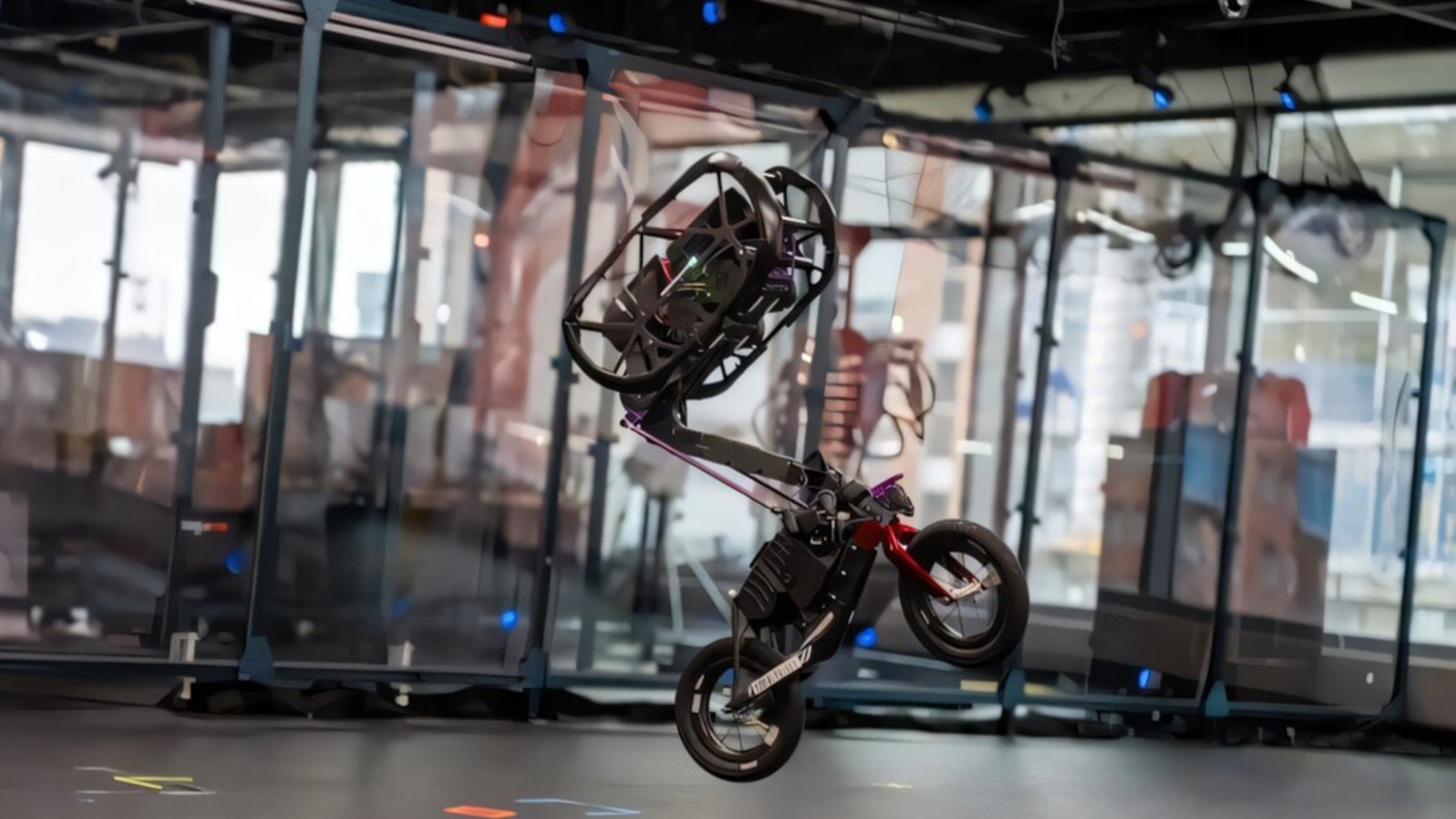
World’s first: Rider-Bot sets record as first bike robot to perform unassisted front flip

In a landmark achievement for robotics, a bicycle-riding robot has performed the world’s first unassisted front flip, astonishing engineers and robotics enthusiasts alike. The feat, accomplished by a team at the University of Tokyo’s JSK Robotics Laboratory, marks a significant leap in the capabilities of autonomous machines and could have far-reaching implications for robotics research, mobility, and future transportation.

Engineering a robotic stunt rider

The robot, dubbed “Rider-Bot,” is built to mimic the movements and balance strategies of human cyclists. Unlike previous robotic stunts that required ramps, wires, or external supports, Rider-Bot executed the front flip entirely on its own—using only its onboard sensors, actuators, and algorithms.

The successful flip took place on a flat surface, with the robot accelerating, launching, rotating 360 degrees forward, and landing upright—all without human intervention.

According to the research team, achieving this level of acrobatic control required a combination of advanced gyroscopes, real-time feedback loops, and machine learning techniques. “This is a major step toward robots that can adapt dynamically to complex environments and perform tasks that were previously considered impossible for machines,” said Dr. Yuta Sato, lead researcher on the project.

Implications for robotics and beyond

The successful front flip demonstrates not only the mechanical resilience of Rider-Bot but also the sophistication of its AI-driven decision-making. The robot’s control system anticipates and compensates for shifts in momentum and balance, much like a skilled human cyclist would.

Researchers believe this breakthrough could inform the design of next-generation delivery robots, autonomous vehicles, and even disaster-response machines capable of navigating unpredictable terrain. “Our work shows that robots can be taught to handle extreme maneuvers, which opens up many possibilities for robust, adaptable mobility in real-world scenarios,” Dr. Sato noted.

Challenges and next steps

Despite the successful demonstration, the team acknowledges ongoing challenges. Perfecting the landing and ensuring consistency across different environments remain top priorities. The researchers plan to enhance the robot’s learning algorithms and test it in outdoor and obstacle-rich settings.

The team also hopes their achievement will inspire further research into dynamic locomotion and the integration of robotics into everyday life. “We’re just beginning to scratch the surface of what intelligent, mobile robots can do,” said Dr. Sato.

A milestone for human-robot collaboration

The Rider-Bot’s unassisted front flip not only pushes the boundaries of robotics but also highlights the growing intersection between human athleticism and machine intelligence. As robots become more capable of complex movement, their potential roles in society—from urban mobility to emergency response—are poised to expand dramatically.

With this record-breaking feat, the University of Tokyo’s robotics team has set a new benchmark for autonomous machines, paving the way for future innovations in robotic agility and intelligence.

💾

University of Tokyo’s bicycle robot 'Rider-Bot' achieves world-first unassisted front flip, redefining robotics.
  •  

Airbus unveils Ravenstorm drone wingman for combat mission alongside other UAVs

European aerospace firm Airbus will unveil its latest drone wingman, the U760 Ravenstorm, at the International Aerospace Exhibition (ILA) 2026 in Berlin. The wingman drone for fighter jets has been unveiled alongside a comprehensive suite of uncrewed aerial systems (UAS).

The full suite unveiled by Airbus at the event includes the new autonomous aircraft, named U145, based on its popular H145 helicopter platform. U740 Valkyrie, developed in cooperation with Kratos, is another uncrewed collaborative combat aircraft (UCCA) announced by the company for the German Air Force.

The company is showcasing other cargo drones ranging from 55 pounds (25 kilograms) to 264 pounds (120 kilograms) to provide customers with cutting-edge capabilities for surveillance, intelligence, and operational flexibility.

Another offering is the U680 Bird of Prey, an uncrewed drone interceptor which is designed to counter mass aerial threats at once. The company says it can down multiple one-way attack drones per mission.

Airbus’ U760 Ravenstorm

The U760 Ravenstorm drone from Airbus is designed to operate alongside cutting-edge crewed fighter jets. The missions it can carry out include air-to-air operations, air-to-ground strikes, and electronic warfare.

The company will be displaying a 1:1 model of the uncrewed collaborative combat aircraft at the Berlin exhibition. The model on display has a 32-foot (10-meter) wingspan and a length of 42 feet (13 meters).

According to a press release, the drone wingman is optimized for multi-domain missions, and it will carry precision-guided munitions for surface strikes, as well as anti-aircraft missiles for taking out enemy jets and other uncrewed aircraft. Moreover, the electronic warfare suite has the capability to suppress enemy air defenses and offensive counter-air using non-kinetic jamming.

Airbus believes that Ravenstorm will be available in the early 2030s. It will be powered by MARS – the company’s sovereign mission system, which integrates an AI-supported software core to enable platform autonomy.

The system builds on the Barracuda demonstrator that flew for the first time 20 years ago.

Eurodrone and the new ‘U’ prefix

The company stated that, going forward, all its unmanned systems will be designated with the ‘U’ prefix. It should be noted that Airbus uses the ‘A’ prefix for all its crewed fixed-wing aircraft, while ‘H’ precedes all crewed helicopter systems.

“Whatever uncrewed or ‘drone’ capability our customers need to strengthen sovereign air power, we deliver,” said Mike Schoellhorn, CEO of Airbus Defense and Space. “Our portfolio ranges from rapid-response drone interceptors and various tactical drones, autonomous cargo helicopters, to uncrewed fighter aircraft, UCCAs, operating co-operatively with crewed fighter jets.”

He also commented on the U950 Eurodrone, a high-payload and very-long-endurance ISTAR (Intelligence, Surveillance, Target Acquisition, and Reconnaissance) platform. Schoellhorn added that all of the company’s systems come with open architecture and a “mission system compatible with the wider European and international defense ecosystem.”

The Eurodrone, a Medium-Altitude Long-Endurance (MALE) platform, is designed to provide independent, strategic ISTAR capabilities, early warning, and anti-submarine warfare. The program is progressing steadily toward its scheduled first flight in 2029, according to the press release.

  •  

New water-based capacitor survives 60,000 charging cycles without degrading

It turns out that pure water can store electricity.

A new study by the Hamburg University of Technology in Germany reveals that trapping water inside nanometer-sized clay channels creates a supercapacitor capable of efficiently storing and moving electrical charge.

In this work, pure water has been used as an electrolyte to carry electrical charge. This system is dubbed the “Blue Capacitor.”

“Our goal is to develop safer and more sustainable energy-storage technologies based on abundant materials rather than complex chemical compounds,” said Dr. Vasily Artemov from the Cluster of Excellence “BlueMat—Water-Driven Materials” at Hamburg University of Technology. 

“The device stores and releases energy efficiently, operates at a comparatively high voltage for a water-based system, and remains stable over tens of thousands of charging cycles,” the lead author added.

Nanometer-sized channels

Pure water is mostly considered a terrible medium for storing power. To conduct electricity, batteries and supercapacitors have always required a chemical cocktail of added salts, acids, or volatile organic solvents. Without them, energy storage simply stalls.

But the research team tried to change this through its functional “Blue Capacitor” technology. It is an energy-storage device made entirely from three of Earth’s most abundant, naturally occurring materials: water, clay, and carbon.

The system has been engineered to confine pure water within microscopic channels, thereby altering the liquid’s fundamental behavior.

The clay minerals were blended with graphene — a highly conductive, ultra-thin form of carbon. When combined, these materials form a dense labyrinth of millions of parallel channels. Each channel measures just one nanometer wide, roughly 100,000 times thinner than a human hair.

“Our results show that nanoconfined water can serve as the active electrolyte in a practical energy-storage device,” noted Artemov.

To actually see this happening, the team had to look more closely than almost anyone has before. They utilized PETRA III at DESY, one of the world’s most powerful particle accelerator research centers. 

“Only with DESY’s brilliant X-ray source PETRA III, were we able to visualize the ultra-thin sheets of individual water films within the clay structures,” said Prof. Patrick Huber, co-author of the paper.

Rigorous testing

The new device is a supercapacitor, a type of energy-storage technology that stores energy by separating electrical charges rather than through chemical reactions. Because of this mechanism, supercapacitors feature rapid charging and discharging capabilities, along with exceptionally long operational lifetimes.

In testing, the proof of concept showed promising results. 

In rigorous laboratory testing, the Blue Capacitor survived more than 60,000 charge-discharge cycles without degrading. Furthermore, it operated at up to 1.6 volts. 

That is an exceptionally high voltage threshold for any water-based system, which typically breaks down into hydrogen and oxygen gases at much lower voltages.

While commercial applications are still years away, the implications of a non-toxic, un-burnable capacitor are massive.

It offers a promising path for future energy storage. Potential applications include managing renewable energy from solar and wind power, stabilizing electrical grids, and powering devices that need rapid, frequent charging cycles.

According to researcher Artemov, understanding the unexpected nanoscale properties of a familiar substance opens the door to the development of entirely new technological applications. 

Beyond green power, the discovery opens the door for water-based nanoscale sensors and bio-inspired computing.

The findings were published in the journal Nature Communications.

💾

A new study by the Hamburg University of Technology reveals that trapping water inside nanometer-sized clay channels creates a supercapacitor capable of efficiently storing and moving electrical charge.
  •  

US nuclear fusion firm shifts stellarator complexity to software using flat magnetic coils

Thea Energy will develop a virtual model of its planned fusion power plant using software engineering and computation tools. The enterprise aims to replicate its upcoming “Helios” facility as a digital twin, which allows engineers to simulate the plant’s operational variables before construction begins.

To execute this project, the firm is working with technology companies NVIDIA and Synopsys, alongside two federal entities: Argonne National Laboratory and Princeton Plasma Physics Laboratory.

The initiative connects to the US Department of Energy’s Genesis Mission, an agency program that applies data analytics to accelerate projects outlined in the national Fusion Science and Technology Roadmap. 

By simulating physical systems through software, the team expects to lower the capital requirements typically needed for hardware-based exploratory testing. The engineering timeline targets the delivery of grid-ready baseload electricity by 2035.

Distribution of technical responsibilities

The participating organizations provide distinct computational and physical datasets to build the overarching virtual architecture.

NVIDIA provides its Omniverse computing infrastructure to ingest Thea Energy’s baseline code. This framework allows engineers to view three-dimensional operational data and track potential design adjustments simultaneously.

Synopsys is responsible for integrating structural data into a multiphysics software environment. Its primary objective is to analyze the performance of the plant’s breeding blanket, a component that absorbs thermal energy from the fusion core and provides a radiation barrier for the surrounding magnetic systems.

Argonne National Laboratory delivers specialized data on particle interactions and neutronics. By feeding this data into the virtual model, the lab helps train software algorithms to predict how the physical blanket components will handle high-energy particle bombardment.

Princeton Plasma Physics Laboratory supplies numerical codes that map plasma behavior. These calculations provide the digital twin with the rules necessary to model highly turbulent ionized gases under elevated temperature and pressure conditions.

Mechanical design shift

Traditional stellarators require complex, curved three-dimensional magnetic coils to contain plasma. Thea Energy alters this approach by utilizing flat, repeatable planar magnetic coils arranged in a specific geometry. 

Because flat magnets are easier to manufacture, the physical complexity of plasma containment is transferred to computer software.

The control software regulates the magnetic fields dynamically. This configuration permits the system to adjust for physical deformation or material degradation during continuous operations without requiring manual mechanical interventions.

Development sequence

The road map for deployment consists of two primary hardware systems. The initial system, named Eos, serves as a large-scale prototype designed to achieve steady-state fusion and test structural integrity under real operational loads.

Following the validation of the prototype, the company will build the Helios facility, which will operate as a commercial power station in the 2030s. The digital twin framework is designed to function as an active feedback loop between these two systems. 

Engineers will apply data derived from the virtual Helios model to optimize the engineering components of the Eos prototype during its active testing phases.

  •  

First-ever drone boat rescue: US Navy vessel pulls out two downed pilots from sea

A U.S. Navy unmanned surface vessel successfully rescued two Army pilots after their AH-64 Apache helicopter crashed near Oman on Monday. Officials describe it as the first known use of a drone boat in a real-world military search-and-rescue mission.

The rescue happened near the Strait of Hormuz, an important shipping route that has been a focus during the conflict between the United States and Iran. According to U.S. Central Command (CENTCOM), the two crew members were found in about two hours and are in stable condition.

The incident quickly got attention after President Donald Trump posted on social media that Iranian forces shot down the helicopter during a patrol. He also said the U.S. launched strikes against targets in Iran.

This rescue shows that autonomous systems are becoming more important in military missions, especially in dangerous areas at sea where quick action is needed.

Autonomous vessel takes on rescue role

A Corsair drone boat from the U.S. Navy’s Task Force 59 handled the rescue. This Bahrain-based group was set up to use more autonomous technology with regular military forces in the Middle East.

According to the U.S. Navy Captain Tim Hawkins, the drone boat found the two soldiers after they had been in the water for about two hours. CENTCOM said the rescue finished at 7:33 p.m. EDT on Monday.

“Rescue efforts were led by US Naval Forces Central Command and the 82nd Airborne Division, with support from US Air Force and Navy units including US 5th Fleet’s Task Force 59,” the statement added.

This operation demonstrated how unmanned vessels can help with missions usually done by helicopters, ships, or rescue teams. Military leaders have been looking into using autonomous systems for surveillance, logistics, and security, but this is the first time their use in rescuing people has been made public.

"I have just been informed by our Great Military that last night the Iranians shot down one of our highly sophisticated Apache Helicopters while patrolling over the Strait of Hormuz. There were two pilots involved, both are safe and uninjured. Nevertheless, the United States… pic.twitter.com/yMGXqG89ax

— The White House (@WhiteHouse) June 9, 2026

Corsair drone designed for long-range missions

The Corsair drone boat is made by Saronic Technologies, a defense company in Texas. It is 24 feet long, looks like a speedboat, and is designed to work at sea for long periods.

The company said the vessel can travel over 1,000 nautical miles while carrying up to 1,000 pounds (453.5 kilograms). It can also reach 35 knots.

The U.S. Navy has invested heavily in the platform. In December 2025, Saronic received a $392 million contract to provide Corsair autonomous vessels.

Task Force 59 started using the drones in the Middle East in late March, according to Hawkins. Since then, the vessels have been used in security operations throughout the region.

Growing importance of unmanned systems

This successful rescue comes as the U.S. military is increasingly using autonomous platforms in CENTCOM’s area of operations. Task Force 59 uses both sea- and air-based drones to improve surveillance and give commanders a clearer view of what is happening in the region.

Senior military leaders have often said unmanned systems help track threats and watch busy sea routes. Since the U.S.-Iran conflict began in March, commanders have stressed how drones help improve awareness at sea. The Apache rescue now adds another milestone to that record. 

  •  

Cornell’s electrochemical ‘bath’ restores spent lithium EV batteries to 95% power

The life cycle of an electric vehicle battery has been a violent, one-way street. When a battery dies, the industry routinely tears it apart to access the parts that matter. High-tech recyclers either blast the dead cells in extreme-heat furnaces or grind them into a powdery substance known as “black mass” before drenching them in harsh, corrosive acids.

It is an expensive, carbon-intensive, and messy way to extract scarce minerals like nickel and cobalt. But what if you didn’t have to destroy a dead battery just to rebuild it?

Researchers at Cornell University have developed a way to overcome the destruction altogether. Rather than smashing the battery, the method turns to chemical washing. 

In this, intact components were immersed in a specialized electrochemical bath to restore 95 percent of the dead batteries. Plus, this method could cut recycling manufacturing costs by 56 percent.

“We repair them, as is, without shredding or powdering them, and then put them back into a new battery,” said Vibha Kalra, the Fred H. Rhodes Professor of Chemical Engineering in the Cornell Duffield College of Engineering. 

“The dissolution is basically what helps the battery recover its capacity. It shows 95 percent recovery. So we are shortening the circularity loop immensely,” added Kalra. 

Cost-saving battery fix

To understand how it works, look at what actually happens when a battery dies.

Batteries don’t usually run out of minerals. But, as electricity flows back and forth between the positive and negative sides, a thick, crusty layer of gunk gradually builds up inside the cell.

Engineers call this the solid electrolyte interphase. The materials are all still there, but the energy can no longer flow. Standard recycling destroys the whole part just to clean it. 

Cornell’s method, called Direct Electrode-to-Electrode Regeneration (DEER), is far gentler. 

Workers open the casing and pull out the battery’s core parts — the electrodes — while these are still completely intact. Then the parts are submerged into a chemical solution called 1,3-dimethyl-2-imidazolidinone. The liquid targets the gunk. It dissolves the insulating buildup, leaving the delicate internal structures perfectly preserved. 

The process cuts down air pollution and slashes industrial water consumption.

The growing demand

At this moment, the world is grappling with disruptions to global supply chains for essential battery ingredients. The United States currently possesses very few domestic reserves of the critical minerals required to build modern batteries.

US depends mostly on complex, foreign supply chains to import materials. It also lacks the massive infrastructure needed to refine raw materials or rebuild crushed battery powder from scratch; domestic recycling has lagged.

“When these lithium-ion batteries came about, nobody was thinking about how these minerals are limited on the Earth’s crust, and you cannot make them forever,” Kalra said. “In recent years, people are realizing you can’t just keep making batteries, because you don’t have enough material.”

By keeping the battery components intact, the DEER method eliminates the need for expensive, overseas refabrication. It allows the entire recycling process to happen locally, cheaply, and quickly. 

The research team’s next step is to test the DEER method on larger, industrial-scale batteries and adapt the process to combat other forms of wear, such as permanent lithium loss. 

Currently, the technique successfully treats batteries at a 70-80 percent state of health — the typical retirement threshold for electric vehicles. But researchers believe they can widen this recovery window by targeting these additional degradation mechanisms.

The study findings were published in the journal Energy and Environmental Science on June 9. 

💾

Cornell University researchers have developed a new, highly efficient, and cost-effective method to recycle spent lithium-ion batteries.
  •  
❌