❌

Reading view

New quantum chip verifies its own hardware while generating secure random numbers

Researchers at the National University of Singapore have developed a quantum random number generator chip that can verify the integrity of its own hardware while producing random numbers, addressing a long-standing security challenge in digital encryption systems.

Random numbers are critical for encryption keys, secure transactions, digital signatures, and other cybersecurity applications. Existing random number generators, including quantum versions, rely on users trusting that their hardware components continue to operate as intended. If a component degrades or is tampered with, the output could become predictable without being detected.

The new chip is designed to eliminate that risk by continuously checking whether its measurement hardware is behaving as expected during operation.

The research team, led by Associate Professor Charles Lim from the National University of Singapore’s Department of Electrical and Computer Engineering, says the approach could strengthen security in sectors ranging from finance and healthcare to artificial intelligence and connected devices.

Hardware trust removed

Most quantum random number generators operate using what researchers call a trusted-device model. Under this approach, components such as lasers, modulators, and detectors are assumed to match their specifications throughout their lifetime.

The new chip instead uses a measurement-device-independent protocol. This means users only need to trust the quantum light signals entering the system rather than the detector responsible for measuring them.

During operation, the chip generates known quantum light states and compares detector responses against predictions from quantum theory. If the results match expectations, the system converts the data into certified random numbers. If not, the process stops automatically.

“The measurement unit in quantum random number generators has traditionally been very difficult to characterize, making its real-world reliability hard to guarantee. Our solution removes the need to trust that this unit is operating as specified during use,” said Associate Professor Charles Lim.

The device integrates both the signal encoder and optical detector on a single silicon chip manufactured using an eight-inch wafer process commonly used in semiconductor production. Unlike some quantum technologies, it operates at room temperature and does not require cryogenic cooling.

Researchers also addressed a challenge involving silicon-based light modulators. Adjusting the phase of light can unintentionally change its brightness, potentially affecting security. The team developed a control method that compensates for this effect and maintains stable optical signals.

Security over speed

The chip’s detector achieved a total efficiency of 69.1 percent, exceeding the protocol’s minimum requirement of 67 percent. Tests also showed that the system generated more certified random bits than it consumed as an input seed, confirming that it produces fresh randomness.

Researchers describe the device as the most secure quantum random number generator chip demonstrated so far. Its security analysis assumes a worst-case scenario in which an attacker may possess quantum correlations with the detector itself.

That level of security comes with a trade-off. The current experimental system produces 64 bits per second, significantly slower than conventional quantum random number generators that can exceed 100 gigabits per second.

The team believes performance can improve substantially through better detector technology. Laboratory photodiodes developed by the researchers have already reached 92.4 percent efficiency, and simulations suggest future versions of the chip could achieve data rates of 68 megabits per second.

“This chip paves the way towards integrating practical self-testing quantum random number generators into compact, secure systems,” added Assoc Prof Lim.

The study was published in the journal PRX Quantum.

  •  

China’s 82-foot electromagnetic sensor could hunt nuclear submarines underwater

China has successfully tested a huge airborne electromagnetic detection system that could locate hidden nuclear submarines operating deep beneath the ocean surface.

The technology, called Airborne Transient Electromagnetic (Atem) detection, is reportedly made up of a helicopter towing a giant array of coils. The coils emit strong electromagnetic signals into the ground or water.

It is mainly intended to map underground and underwater structures for civilian applications, such as mineral exploration, groundwater mapping, and geological surveys. Previous studies, however, suggest the same approach could have great military potential.

Led by Fu Jingcheng, PhD, an associate professor at Beihang University and the Chinese Academy of Sciences’ Institute of Geology and Geophysics, the research team carried out a seven-minute helicopter test. During the trial, onboard sensors confirmed that the coil array could maintain the near-level stability required for precision detection.

A new detection tool

The South China Morning Post (SCMP) pointed out that the detection system is a towering structure that consists of three giant dodecagonal (12-sided) coils. Each of them measures roughly 82 feet (25 meters) across. These coils serve as the transmitter, compensation unit, and receiver.

They are suspended under a helicopter using a network of cables. The technology sends a powerful pulse of electricity through the transmitter coil. This generates a brief electromagnetic field.

Once the pulse ends, conductive materials below the surface produce secondary electromagnetic signals that are captured by the receiver coil. By analyzing how these signals decay, scientists can identify buried or submerged objects and also estimate their depth and composition.

However, maintaining stability during flight is one of the greatest limitations of airborne electromagnetic systems. Large suspended coil arrays can tilt and swing due to wind, helicopter rotor wash, and aircraft maneuvers. These movements can affect the accuracy of the collected data. Even moderate helicopter acceleration caused the massive structure to pitch by more than 20 degrees.

Overcoming the challenges

To overcome these issues, Jingcheng and his team developed a computer model that calculated the ideal cable lengths and tensions throughout the system. They then identified a flight configuration that kept the coils level during surveys.

What’s more, the researchers also attached a flexible aerodynamic film to the rear portion of the main transmitter coil. This film works as a passive stabilizer. It can suppress violent oscillations by exerting a restoring force.

A seven-minute flight confirmed the design’s ability to maintain the near-level orientation required for precision measurements. The trial also showed that rapid acceleration and sharp turns can cause the suspended load to swing violently, placing heavy strain on the cable.

The researchers noted that the detection system performs best when flown slowly and smoothly. Pilots should reduce speed before a turn, make the turn gradually, and only speed up afterward.

A 2012 study by researchers from Chang’an University and Shandong University proposed combining Atem systems with synthetic aperture imaging techniques to detect submerged submarines. Simulation experiments reportedly succeeded in identifying a scaled submarine model submerged in salt water.

The study has been published in the journal Acta Aeronautica et Astronautica Sinica on April 25.

💾

Researchers in China have successfully tested a huge airborne coil array that could detect hidden nuclear submarines beneath the sea.
  •  

Anthropic unveils Claude Fable 5, opening Mythos-class capabilities to all users

Anthropic has opened the doors to its most advanced AI system yet, but not without placing guardrails around its most sensitive capabilities.

The company on Tuesday unveiled Claude Fable 5, the first publicly accessible version of its Mythos-class AI model. Anthropic says the model outperforms every generally available system it has released to date, delivering major gains in software development, analytical work, visual understanding, and scientific reasoning.

The launch marks a significant shift for the AI firm. Until now, Mythos-level capabilities remained restricted to a small group of trusted organizations because of concerns that the technology could aid cyberattacks and other harmful activities. Fable 5 changes that equation by bringing those capabilities to a broader audience while routing certain high-risk requests through a less permissive model.

Safety before scale

Anthropic said Fable 5 includes a new layer of AI-powered classifiers designed to detect potentially dangerous prompts and jailbreak attempts. The company stress-tested those safeguards before releasing the model to the public.

If users submit requests involving cybersecurity, biology, chemistry, or model distillation, the system automatically redirects those interactions to Claude Opus 4.8 instead of Fable 5. Users receive a notification whenever that fallback occurs, allowing them to understand why the switch happened.

Introducing Claude Fable 5: a Mythos-class model that we’ve made safe for general use.

Its capabilities exceed those of any model we’ve ever made generally available. pic.twitter.com/2AvmEjHIX8

— Claude (@claudeai) June 9, 2026

The company acknowledged that the safeguards may occasionally block harmless requests. However, Anthropic said early testing showed that fewer than 5% of sessions triggered a fallback response. “We’ve deliberately tuned the safeguards to be cautious,” the company said, adding that it plans to refine the system over time to reduce unnecessary interventions.

Built for demanding work

Anthropic argues that Fable 5 delivers its biggest advantages when tackling lengthy and complex assignments. The company says the model can stay focused across extended workflows while maintaining consistency over large amounts of context.

During early evaluations, payments company Stripe reported that the model completed a large-scale migration across a 50-million-line Ruby codebase in roughly one day. According to Anthropic, the same task would have otherwise occupied an engineering team for more than two months.

The company also highlighted gains in financial analysis. On Hebbia’s finance benchmark, Fable 5 posted the strongest results among leading models. Trading firm IMC found that the system performed well across factual analysis, reasoning tasks, root-cause investigations, and expected-value calculations.

Fable 5 also advanced Anthropic’s vision capabilities. The model can extract detailed information from scientific figures and reconstruct web applications from screenshots. In another demonstration, it completed Pokémon FireRed using a minimal vision-only setup after earlier Claude models struggled with the challenge.

Mythos stays restricted

Alongside Fable 5, Anthropic introduced Claude Mythos 5, a version of the same underlying model with fewer restrictions in select areas. Anthropic says the model offers the strongest cybersecurity capabilities it has developed so far.

Access to Mythos 5 remains limited. The company is deploying it through Project Glasswing while expanding availability to approved cyber defenders and organizations responsible for critical infrastructure. Anthropic said it intends to broaden access further through a trusted program in the future.

Fable 5 is available through Anthropic’s Claude API and consumption-based Enterprise offerings. Through June 22, Pro, Max, Team, and seat-based Enterprise subscribers can access the model at no additional cost. After that date, Anthropic plans to move users to a credit-based system before eventually restoring broader subscription access.

As competition intensifies across the AI industry, Anthropic is betting that powerful models do not have to arrive without safeguards. With Fable 5, the company is testing whether frontier capabilities and tighter controls can coexist in the hands of everyday users.

💾

Anthropic has launched Claude Fable 5, bringing Mythos-class capabilities to the public while redirecting high-risk prompts through Opus 4.8.
  •  

US firm unveils 26-cell battery monitor that detects faults before batteries fail

Semiconductor maker Texas Instruments has introduced a new battery monitoring chip designed to give electric vehicles and energy storage systems earlier warning of battery failures while reducing the number of components required inside battery packs.

The company announced the BQ79826Z-Q1 on Tuesday, calling it the industry’s highest-cell-count battery monitor with an integrated electrochemical impedance spectroscopy (EIS) engine. The device is designed to provide real-time insight into battery health and detect conditions that could lead to failures such as thermal runaway.

The new monitor supports up to 26 battery cells per device, allowing engineers to track more cells with fewer monitoring chips. According to TI, the device can monitor up to 44 percent more channels than previous-generation solutions, helping reduce system complexity, board space requirements, and overall battery pack costs.

The launch comes as automakers and energy storage developers look for ways to improve battery safety, extend battery life, and lower system costs while scaling production of EVs and large-scale storage systems.

Early fault detection

A key feature of the BQ79826Z-Q1 is its integrated EIS engine. The technology measures a battery’s electrochemical behavior in real time, giving engineers a view into changes occurring inside individual cells.

“Just as an electrocardiogram (EKG) monitors the heart, EIS monitors a battery,” the Dallas-based company said in a release.

The company says the technology can identify fault conditions earlier than conventional monitoring approaches by detecting changes from within battery cells. This could help battery management systems flag safety risks before they develop into more serious issues.

“The electrification of transportation and the rapid expansion of energy storage are redefining what battery performance must deliver, and as a leader in battery management technology, TI is uniquely positioned to meet that challenge,” said Wenjia Liu, vice president and general manager of battery management systems at TI.

Liu added that the technology helps “shine a light” inside battery cells and provides chemical-state data that software can use to make real-time decisions on battery safety and performance.

Fewer chips required

Beyond safety, TI says the higher cell count could simplify battery pack architecture. By supporting 26 cells per device, the monitor can reduce the number of monitoring components needed across a battery pack.

The company claims the chip supports eight more cells than competing solutions, enabling designers to lower bill-of-material costs while maintaining reliability.

The monitor can also be paired with TI’s BQ79881-Q1 pack monitor and communications bridge, allowing developers to use the same architecture across different battery chemistries, module sizes and mechanical designs.

TI says the device delivers voltage accuracy of less than 2 mV across temperatures ranging from -40°F to 257°F. The company also claims its EIS measurements are five times faster than previous solutions, helping improve state-of-charge calculations and battery health monitoring.

The BQ79826Z-Q1 complies with Automotive Safety Integrity Level D requirements and ISO 26262 functional safety standards. TI is showcasing the technology at the Power Conversion, Intelligent Motion Expo and Conference (PCIM) 2026 in Nuremberg, Germany.

  •  

BMW iX3 travels 485 miles in major EV range test, but Chinese MPV steals the spotlight

BMW’s all-new iX3 has claimed top honors in one of the world’s largest real-world EV range tests, traveling an impressive 485 miles (781 km) on a single charge. Yet the biggest surprise of the event may have come from a Chinese electric minivan that dramatically exceeded its official range rating.

The results come from the latest summer edition of the “El Prix” range test, conducted by the Norwegian Automobile Federation (NAF) and Motor magazine. Held twice annually, the test is widely regarded as one of the most rigorous real-world EV range evaluations because vehicles are driven until their batteries are fully depleted under identical road and weather conditions.

BMW’s Neue Klasse EV takes the crown

The BMW iX3 50 xDrive, built on BMW’s new Neue Klasse platform, delivered the longest range of any vehicle in the 2026 summer test, reaching 781 km (485 miles) before stopping. The result slightly exceeded the SUV’s official WLTP range rating, outperforming the manufacturer’s claim by approximately 1.5%.

The performance reinforces BMW’s ambitious claims about the Neue Klasse architecture, which combines an 800-volt electrical system, sixth-generation battery technology, and improved efficiency. The iX3 carries a usable battery capacity of 108.7 kWh and supports charging speeds up to 400 kW, allowing rapid long-distance travel.

While the BMW topped this year’s rankings, it did not surpass the all-time El Prix record set by the Lucid Air during the 2025 summer test, when the luxury sedan traveled 517 miles (832 km).

The real winner may be Xpeng

However, range alone does not make the El Prix test valuable. EV Evolution notes that one of the event’s most closely watched metrics is how closely real-world results match official WLTP ratings. By that measure, the standout performer was the Xpeng X9.

The Chinese electric MPV traveled 646 km (401 miles) despite carrying an official WLTP rating of 580 km (360 miles). That translates to an 11.4% improvement over its stated range, the largest positive deviation recorded in this year’s test.

For consumers, that figure may be even more meaningful than absolute distance. It suggests the vehicle consistently delivers better real-world efficiency than its official certification suggests.

The result is not entirely unprecedented for Xpeng. The company’s G9 SUV also posted one of the strongest performances relative to its official rating during earlier editions of the Norwegian test.

Why these tests matter

Real-world range testing has become increasingly important as electric vehicles enter the mainstream. While standardized WLTP testing provides useful comparisons between models, actual range can vary significantly depending on weather, speed, terrain, and driving style.

Norway’s El Prix tests have gained global attention because they expose how different EVs perform under identical conditions outside laboratory environments. For buyers concerned about range anxiety, the results offer a practical benchmark that often proves more useful than manufacturer specifications alone.

Beyond the BMW and Xpeng, strong performances also came from the Lucid Gravity, Mercedes-Benz CLA, and Mercedes-Benz GLC, all of which exceeded 400 miles (644 km) during the test.

As battery technology improves and range figures continue to rise, the latest El Prix results suggest the industry is entering a new phase in which efficiency and accuracy may matter just as much as headline mileage numbers.

  •  

New partnership aims to create local supply of recycled graphite for European EVs

The race for European battery independence just found its next battleground in an unexpected place: the trash heap.

On June 2, an advanced battery materials firm, Vianode, and German sustainable recycling pioneer, Cylib, signed an agreement to turn old batteries into vehicle components. 

The memorandum of understanding (MoU) establishes a partnership to develop and supply recycled graphite for high-performance battery anodes.

Under the agreement, Cylib will supply high-quality graphite concentrate recovered through its proprietary recycling technology, while Vianode will test and validate its performance in anode materials.

“Closing the loop on battery materials is essential for building a truly sustainable battery value chain,” said Burkhard Straube, CEO of Vianode. 

“By collaborating with Cylib on the integration of recycled graphite into advanced anode materials, we aim to strengthen circularity for battery graphite, reduce reliance on virgin raw materials, and support the EU’s ambitions for a more resilient, low‑carbon battery ecosystem,” Straube added in the press release.

Recycled graphite supply chain

Graphite is an important material for lithium-ion battery anodes due to its unique crystalline structure, which enables efficient lithium-ion store and release. 

In high-performance batteries, the anode requires either highly purified natural graphite or precision-engineered synthetic graphite to maximize electrical conductivity, enhance structural durability, and enable fast charging. 

The material’s global demand has been increasing due to the high demand for tech like electric vehicles. For this reason, the industry is increasingly focused on sourcing high-performance graphite that balances extreme energy density with strict environmental standards. Hence, it is driving the shift toward localized production and advanced recycling methods.

Currently, Europe relies heavily on imports of virgin graphite, a critical mineral tightly controlled by global markets outside the bloc.

With the integration of Cylib’s proprietary recycling technology directly into Vianode’s advanced anode production process, the two companies plan to turn spent battery waste into high-performance vehicle components. 

If successful, this closed-loop manufacturing system will create a sustainable, domestic supply chain that slashes carbon emissions while securing Europe’s material independence.

Slashing emissions

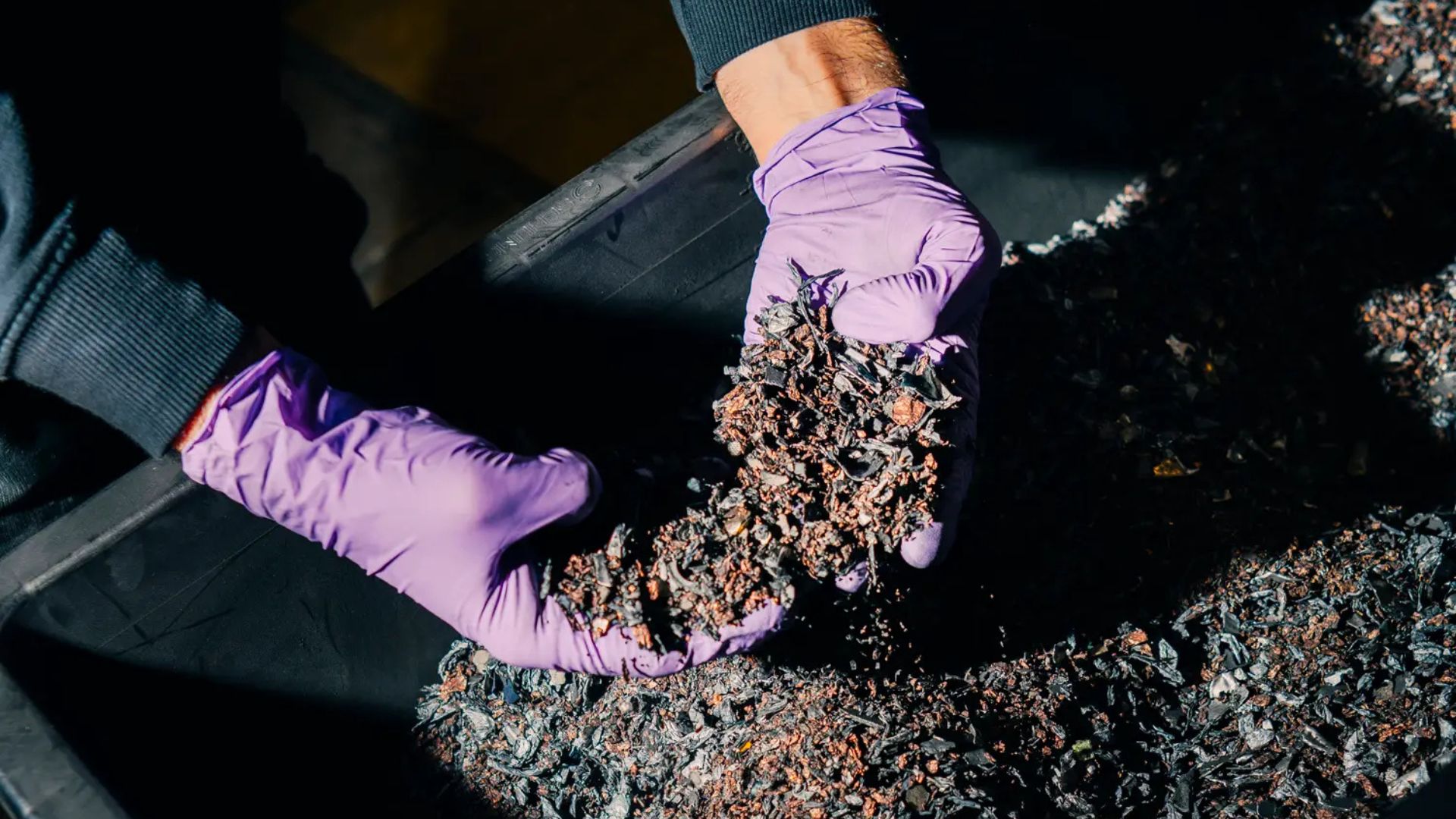
The process relies on a delicate handoff. First, Cylib will extract high-quality graphite concentrate from spent batteries using its water-based OLiC (Optimized Lithium and Graphite Recovery) technology. 

As per the press release, this system has a 90 percent recovery rate for critical metals such as lithium, graphite, nickel, cobalt, and manganese. Better yet, it slices carbon emissions by 80 percent compared to normal mining.

Then, Vianode steps in.

The Norwegian company will test the recycled material at its pilot facilities, blending it into formulations for its next-generation synthetic anodes. Vianode’s synthetic graphite already has a carbon footprint 90 percent lower than that of standard industry materials. 

Injecting recycled graphite into the mix pushes them closer to a strict 2030 climate target: emitting just 1.0 kg of CO₂ equivalent per kilogram of graphite produced.

If the pilot projects succeed at a commercial scale, both firms intend to negotiate a binding commercial supply agreement.

The European Union has placed immense pressure on automakers to slash manufacturing emissions and source materials locally. This partnership offers a glimpse of how the industry might actually pull that off without sacrificing vehicle range or battery life.

💾

Cylib and Vianode have signed a Memorandum of Understanding (MoU) to integrate recycled graphite into next-generation battery anodes.
  •  

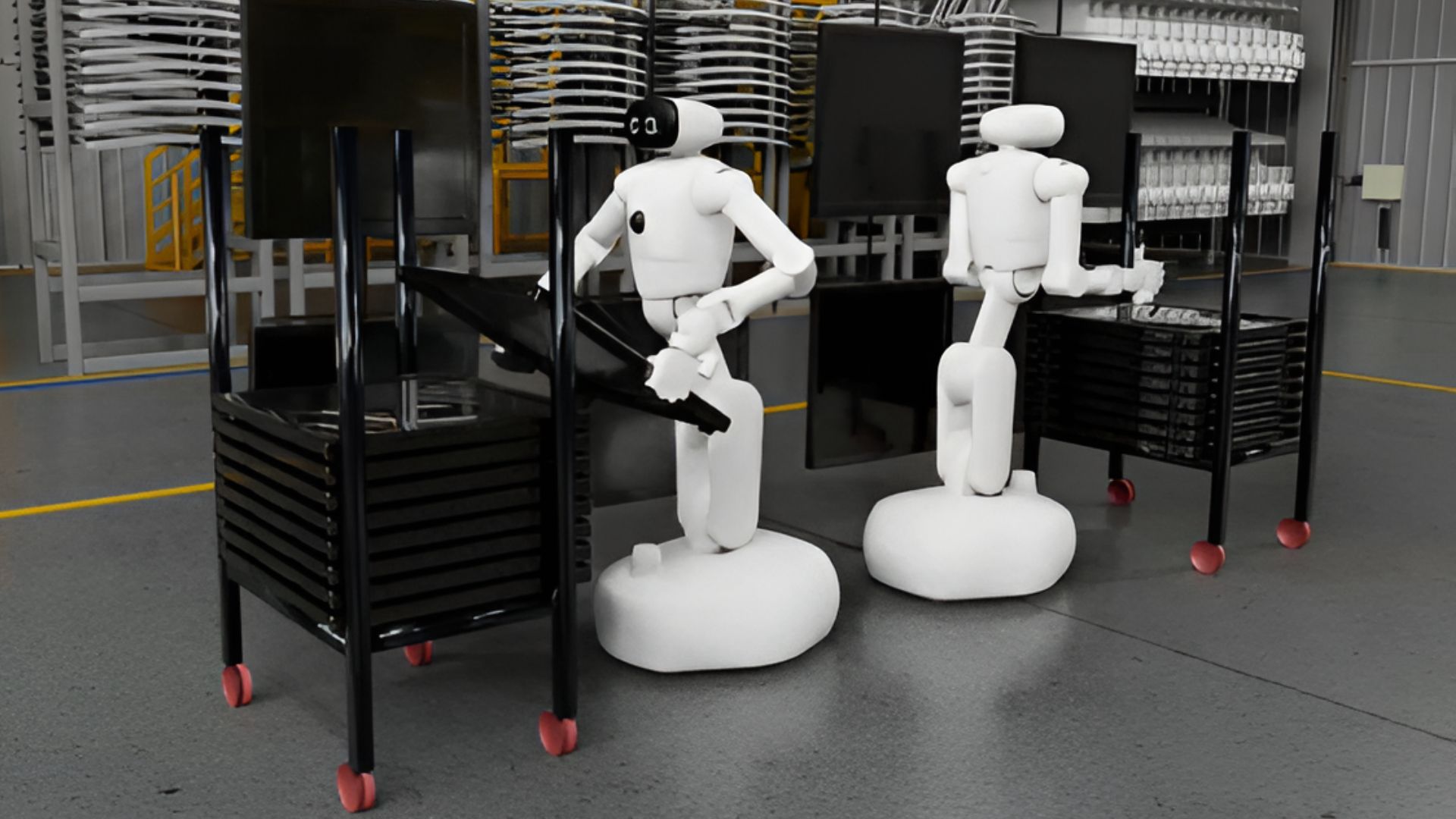
NVIDIA and LG Group build AI factory to train robots and power future mobility

The next frontier of AI involves machines that can move, see, and make decisions in the physical world. NVIDIA and South Korea’s LG Group are betting heavily on that future through a broad collaboration aimed at weaving AI into everything from factory floors and household robots to autonomous vehicles and large-scale data centers.

The companies unveiled plans to develop a connected AI ecosystem that links model development, simulation, deployment, and infrastructure under a single framework. By combining NVIDIA’s accelerated computing platforms with LG’s expertise across manufacturing, consumer electronics, telecommunications and mobility, the partners hope to shorten the path from AI experimentation to commercial deployment.

Reinventing factory operations

Manufacturing sits at the center of the partnership. LG plans to use AI to connect every stage of its industrial operations, creating a system that can respond to changing conditions with greater speed and efficiency. The company aims to establish an autonomous manufacturing ecosystem in which procurement, production, logistics, and customer delivery operate through continuous data analysis and real-time decision-making.

To support that vision, LG will combine production expertise gathered from its global facilities with NVIDIA’s digital twin technologies. Engineers will be able to simulate factory environments, test operational changes, and validate processes virtually before implementing them in the real world. The companies believe the approach could help define a new standard for smart manufacturing.

Robots learn virtually

LG is also deepening its push into robotics. The company continues developing home robots designed to assist users with everyday indoor tasks. Instead of relying solely on physical testing, developers will train and evaluate these machines inside realistic virtual environments before deployment.

LG plans to incorporate NVIDIA Isaac Sim and Isaac Lab into its robotics workflows, allowing teams to simulate scenarios and refine robot behavior more efficiently. The company is also exploring NVIDIA’s Isaac GR00T foundation model to equip robots with stronger reasoning capabilities and the ability to handle more sophisticated tasks.

One of robotics’ biggest challenges remains access to quality training data. To address that problem, LG Electronics is building what it describes as a physical AI data factory. Using NVIDIA Cosmos world models, the initiative will generate synthetic datasets to support the development of robotics and industrial AI. LG CNS plans to integrate NVIDIA’s robotics technologies into its industrial automation platform, while LG Innotek intends to develop sensing solutions optimized for NVIDIA systems.

Building AI infrastructure

Beyond robotics, the partnership extends to the computing backbone that supports increasingly demanding AI applications. LG Electronics plans to work with NVIDIA on liquid-cooling technologies and modular infrastructure aligned with the NVIDIA DSX AI factory platform, enabling faster deployment of high-performance computing facilities.

LG Uplus intends to build large-scale AI data centers capable of supporting the latest NVIDIA GPUs and to explore future GPU cloud services. LG Energy Solution is evaluating advanced 800-volt direct-current power technologies designed for next-generation facilities.

The collaboration also reaches the automotive sector. LG Electronics plans to align its advanced driver-assistance technologies with NVIDIA DRIVE platforms to support future software-defined vehicles, AI-powered cockpits and edge computing applications.

  •  

Top 7 most dangerous volcanoes in the world 

Volcanoes are often judged by the size of their eruptions, but volcanologists measure danger differently. A volcano becomes truly hazardous when explosive potential intersects with large populations, critical infrastructure, or a history of destructive activity. 

Some of the world’s most dangerous volcanoes have not erupted in decades, while others erupt regularly and remain under constant surveillance. From Italy’s crowded volcanic fields to Indonesia’s restless peaks and Africa’s fast-moving lava giants, these are seven volcanoes that experts consider among the greatest threats on Earth today.

1. Mount Vesuvius

Still considered one of the world’s most dangerous volcanoes because of its proximity to Naples, where millions of people live. Vesuvius famously destroyed Pompeii and Herculaneum in AD 79, but its greatest danger today comes from the sheer number of people living within reach of future pyroclastic flows and ashfall. Experts routinely place it among the highest-risk volcanoes on Earth.

2. Mount Merapi

One of the most active volcanoes on Earth, Merapi erupts frequently and produces deadly pyroclastic flows that can race down its slopes at high speeds. Millions of people live in the surrounding region, including near the city of Yogyakarta. Its history of repeated destructive eruptions makes it one of the most closely monitored volcanoes in Southeast Asia.

3. Nyiragongo

Nyiragongo is one of the least-known volcanoes on this list, but also one of the most dangerous. It is famous for exceptionally fluid lava that moves far faster than typical volcanic flows. The volcano looms over the city of Goma, home to roughly two million people. Past eruptions have sent lava directly through urban neighborhoods, forcing mass evacuations.

4. Campi Flegrei

Often overshadowed by Vesuvius, Campi Flegrei may actually pose the greater long-term threat. The enormous volcanic caldera lies beneath parts of the Naples metropolitan area and has shown signs of unrest in recent years. Scientists consider it one of the most hazardous volcanic systems on Earth because millions live nearby, and its eruption potential far exceeds that of a typical volcano.

5. Taal Volcano

Despite its relatively modest size, Taal ranks among the world’s most dangerous volcanoes because of its explosive history and location near densely populated areas. The volcano sits within a lake-filled caldera, a setup that can intensify eruptions. Major ash-producing eruptions have repeatedly disrupted life across the region and can affect areas far beyond the immediate danger zone.

6. Mount Rainier

Rainier’s greatest threat is not lava but lahars. Massive volcanic mudflows generated when eruptions melt the volcano’s extensive glaciers. The USGS considers Rainier one of America’s most dangerous volcanoes because these fast-moving flows could travel through heavily populated valleys in the Seattle-Tacoma region, potentially affecting hundreds of thousands of residents.

7. Sakurajima

Sakurajima is among the most active volcanoes on the planet, producing frequent eruptions and ash emissions. Located near the city of Kagoshima, it is under constant monitoring and serves as a reminder that even relatively small eruptions can create significant hazards when large populations live nearby. Its persistent activity and explosive potential earn it a place among the world’s most dangerous volcanoes.

  •  

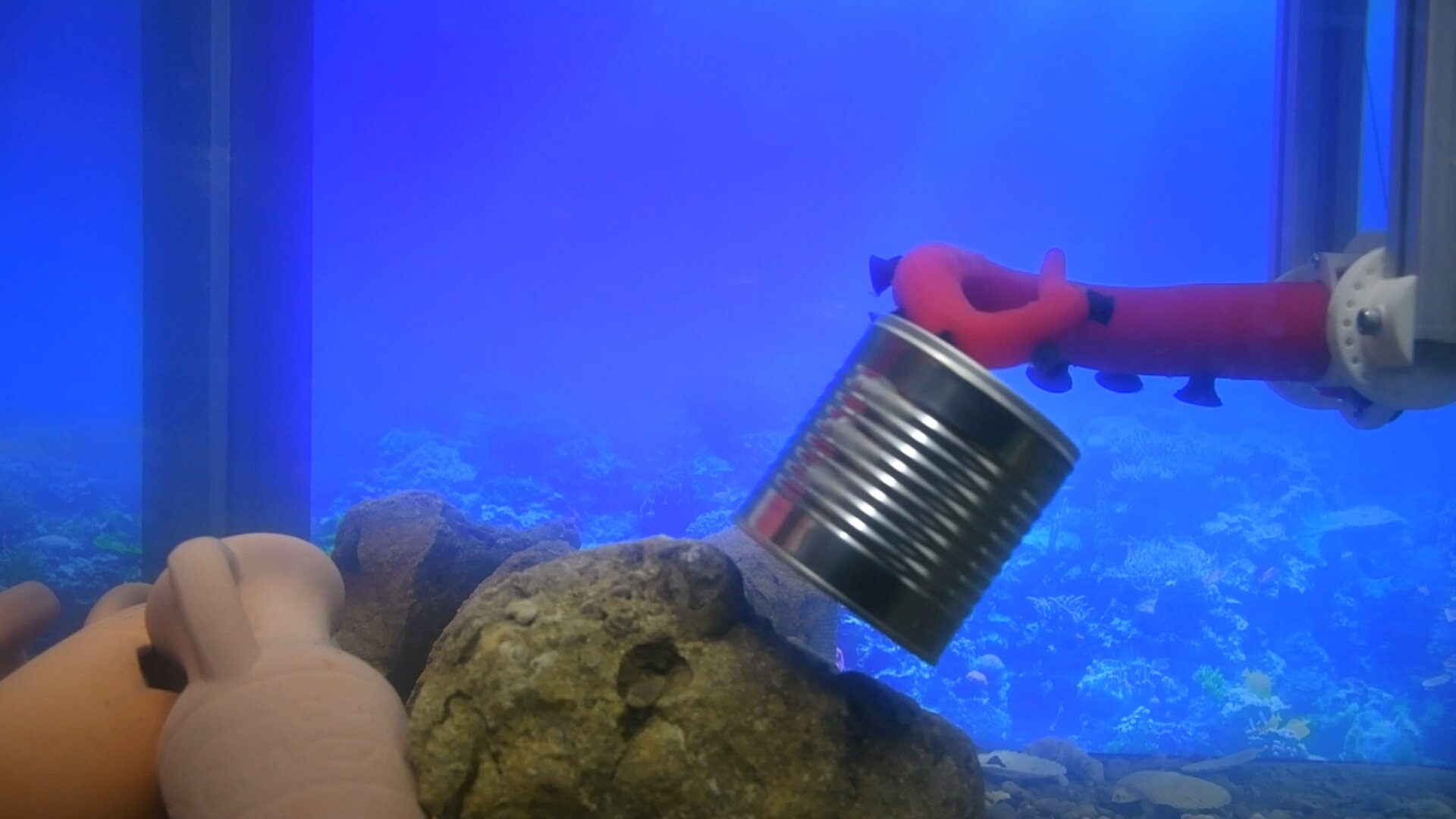
Octopus-inspired robotic arm uses distributed tactile sensors for adaptive grip

Engineers have developed a robotic arm that draws on the sensory architecture of the octopus to solve one of soft robotics’ persistent problems: how a machine can reliably grasp irregularly shaped objects without visual feedback alone.

The system integrates distributed tactile sensors across a flexible, multi-segment limb, allowing it to register contact force, surface geometry, and slip events simultaneously.

Why the octopus offers a useful mechanical model

The octopus arm is not simply a flexible appendage. Each of its eight arms contains roughly two-thirds of the animal’s total neurons, enabling semi-autonomous local processing of sensory data.

This distributed neural architecture means the animal does not need to route every tactile signal to a central brain before responding. Engineers working on dexterous manipulation have long recognized this as a functionally efficient design worth replicating in hardware.

The research team constructed their arm from soft elastomeric segments embedded with arrays of pressure-sensitive elements. Rather than relying on a single point of force measurement, the design distributes sensing across the full contact surface, producing a spatial map of pressure that updates continuously during a grasp.

Tactile sensor architecture and signal processing

The tactile sensors in the system function as piezoresistive or capacitive transducers — materials that change their electrical resistance or capacitance in proportion to applied mechanical load.

When arranged in a dense grid across the arm’s inner surface, they generate pressure maps with sufficient spatial resolution to distinguish, for example, the edge of a cylindrical object from a flat face.

Critically, the arm’s control architecture processes this tactile data locally before passing summary signals upstream. This reduces communication latency and means the limb can initiate corrective motion — tightening around a slipping object, for instance — faster than a centralized controller could respond.

The approach mirrors the ganglionic processing found in cephalopod arms, where reflex-like responses originate at the limb level rather than at the brain.

For engineers building manipulation systems for unstructured environments such as surgical robotics, subsea inspection, or warehouse automation, this matters because object geometry is rarely known in advance and visual occlusion is common once contact is made.

Tactile feedback fills that perceptual gap. Related work on soft robotic grippers has shown that compliance alone is insufficient without closed-loop sensory feedback to govern contact forces.

Structural compliance and material tradeoffs

Building a soft arm that is both compliant enough to conform to object surfaces and stiff enough to transmit useful gripping force is a recurring material tradeoff in the field. Elastomeric bodies deform under load, which helps distribute contact stress but also makes proprioception — knowing the arm’s own shape — difficult without additional strain sensors.

The research team addressed this by embedding shape-sensing elements alongside the tactile arrays, giving the controller a real-time estimate of limb configuration.

This dual-sensing approach adds fabrication complexity and raises questions about long-term durability. Soft elastomeric materials are susceptible to fatigue, tearing, and delamination at sensor integration points, particularly under repeated flexion cycles.

Whether the sensor-elastomer interface can withstand the cycle counts required for industrial deployment remains an open question the team has not fully resolved.

Constraints on deployment and scaling

The current prototype demonstrates proof-of-concept grasping across a range of object shapes, but several engineering constraints limit near-term application.

The actuators driving the soft segments — typically pneumatic or tendon-based — introduce their own latency and require external pressure sources or motor assemblies that offset the compactness the soft body provides. Miniaturizing these systems without degrading force output is a known challenge in soft robotics research.

Power consumption for continuous tactile sensing across large sensor arrays also scales non-trivially. In a system with hundreds of individual sensing elements, maintaining real-time readout requires dedicated multiplexing circuitry, adding weight and heat load that a fully untethered platform must manage within tight energy budgets.

  •  

Long-idled US nuclear unit gets major approval to return 835 MW to grid

A long-shuttered US nuclear reactor has moved closer to a planned 2027 restart after securing two important regulatory boosts from federal agencies.

The US Federal Energy Regulatory Commission has approved Constellation’s request to transfer 760 MW of capacity interconnection rights from another Pennsylvania power plant to the former Three Mile Island unit 1.

The reactor, now called the Crane Clean Energy Center, is being prepared for a return to service in 2027.

Separately, the US Nuclear Regulatory Commission has issued for public comment its draft finding that restarting operations at the site would have no significant environmental impact.

Constellation announced in 2024 that it planned to restart the pressurized water reactor, which was shut down in 2019.

The company later filed an interconnection request with regional grid operator PJM to allow Crane to add 835 MW of emissions-free electricity to the grid.

The rights that could support return

To help support the 2027 restart schedule, Constellation filed a waiver request with FERC on March 31. The request sought permission to transfer capacity rights from Eddystone, a six-unit, dual-fuelled plant in Pennsylvania.

Two 380 MW units at Eddystone, known as Eddystone 3 and 4, had been scheduled to close last year.

However, they have remained online beyond their planned retirement date to support grid reliability under emergency orders issued by US Energy Secretary Chris Wright.

FERC has now granted the waiver, allowing Constellation to remove the Eddystone units from Capacity Resource status and make their capacity interconnection rights available for transfer. The decision was issued by FERC on June 1.

NRC opens restart review for public comment

The second regulatory boost came from the NRC. On June 8, the agency issued a draft environmental assessment and draft finding of no significant impact, or FONSI, for public comment.

The review evaluated the reasonably foreseeable environmental effects of allowing power operations to resume at Three Mile Island unit 1. At the time of its closure in 2019, the reactor had a renewed operating license valid until 2034.

Constellation has asked the NRC to approve one exemption request and three license amendment requests to support the resumption of power operations through the previous license expiration date.

The company has also said it plans to seek an extension that would allow Crane Clean Energy Center to operate beyond that, to 2054.

The NRC’s draft assessment concluded that restarting operations would not require a full environmental impact statement.

The Commission said in a Federal Register notice that “the NRC staff has made the preliminary determination that the proposed actions will not have a significant effect on the quality of the human environment. Therefore, the NRC staff has made the preliminary determination that it will not prepare an environmental impact statement (EIS) for the proposed actions and that a FONSI is warranted.”

The NRC will make its final decision after reviewing comments received during the 30-day public comment period, which runs until July 8.

  •  

Meet Orbital O2: The record-breaking tidal turbine harnessing ocean currents

While solar panels rely on sunshine and wind turbines depend on changing weather conditions, tidal energy offers something few renewable technologies can match: predictability.

The Orbital O2, a floating tidal turbine operating off Scotland’s Orkney Islands, is at the forefront of that effort. Developed by Orbital Marine Power, the 2-megawatt (MW) system is widely regarded as the world’s most powerful operational tidal turbine and has become one of the most closely watched projects in the marine energy industry.

The O2 began exporting electricity to the grid in 2021 and continues to serve as a large-scale demonstration of how tidal power could contribute to future clean-energy systems. According to Orbital Marine Power, the turbine can generate enough electricity to power roughly 2,000 homes while avoiding around 2,200 tons of carbon dioxide emissions annually.

How does the Orbital O2 work?

Unlike conventional offshore wind turbines that rise above the ocean surface, the Orbital O2 extracts energy from fast-moving tidal currents beneath the water. The system consists of a floating steel structure approximately 74 meters (243 feet) long, anchored to the seabed using a four-point mooring system. Attached to either side of the platform are retractable legs carrying two massive turbine nacelles.

Each nacelle houses a 1 MW generator connected to a rotor measuring 20 meters in diameter. Together, the twin turbines provide a total rated output of 2 MW.

As tides flow through the narrow channels around Orkney, water passes through the rotors, causing them to spin and generate electricity. Unlike wind, tidal currents are driven by the gravitational interaction between Earth, the Moon, and the Sun, making them highly predictable years in advance.

One of the turbine’s most distinctive features is its floating design. Instead of requiring expensive underwater maintenance operations, the nacelles and rotors can be raised above the surface for inspection and servicing. This approach significantly reduces maintenance costs, one of the major barriers facing marine energy technologies.

Why is tidal power attracting attention?

Tidal energy has long been viewed as one of the most promising but challenging renewable energy sources. Unlike solar and wind generation, which fluctuate according to weather conditions, tidal cycles are known with remarkable accuracy. Grid operators can therefore predict power production far more reliably.

The O2 is installed at the European Marine Energy Center (EMEC) in Orkney, one of the world’s leading marine energy testing sites. The location experiences tidal speeds exceeding 3 meters per second, providing ideal conditions for commercial-scale demonstrations.

Researchers and energy companies see tidal power as a potential complement to wind and solar generation. During periods when sunlight is limited or wind speeds are low, predictable tidal energy could help stabilize renewable electricity supplies.

What comes next?

Although tidal energy remains a relatively small sector compared with solar and wind power, interest is growing. Orbital Marine Power is already developing larger next-generation systems and has outlined plans for multi-turbine tidal arrays capable of delivering significantly more electricity. The company recently reported progress on future projects and certification efforts aimed at scaling deployment beyond demonstration sites.

For now, the Orbital O2 remains a milestone for the industry. A floating renewable-energy machine demonstrating that the immense power of ocean tides can be harnessed at utility scale. If tidal technology continues to improve and costs decline, the predictable currents flowing through the world’s coastlines could become an increasingly important part of the global clean-energy mix.

  •  

World’s first renewable supercapacitor made of recycled waste wood and agro residues

A Finnish deep-tech energy startup is moving to industrialize a renewable supercapacitor made from waste wood and agro residues, offering a fast-response power storage layer for grids and industrial operations.

Granarium Technologies, which originated from VTT, is developing a patented nanocellulose-based energy storage technology that upcycles waste materials into 100% renewable supercapacitors.

The technology uses a nanocellulose-based material platform that binds biocarbon structures for power storage, creating systems the company says are safe, scalable, and locally producible.

The system is designed to complement batteries, not replace them. It targets short-duration power needs such as grid balancing, frequency response, peak load management, distributed power generation, and industrial power quality.

Fast-response storage for unstable grids

The shift to renewable energy and electrification is increasing pressure on power networks, especially as grid volatility rises across Europe and EU requirements around grid codes and resilience frameworks tighten.

Granarium’s technology aims to provide a fast-response layer within energy systems, helping grids and industrial facilities respond quickly to fluctuations in power supply and demand.

“A key structural shift is that storage is no longer just `backup power’ – it is becoming core grid infrastructure. Granarium is the perfect addition to our portfolio because the company is solving a massive global challenge in a safe and scalable way,” said Jana Budkovskaja, Partner at BSV Ventures.

“We were also impressed with the company’s technology and experience, as well as the capacity to use local raw materials to make the production process sustainable and inexpensive,” he said.

According to the company, the technology can enable up to 80% lower production capital expenditure compared with large-scale battery manufacturing investments.

Built from local renewable carbon

Granarium’s approach is based on renewable carbon sources instead of finite critical raw materials. By using waste wood and agro residues, the company says its devices can be produced using locally sourced materials, reducing reliance on complex logistics chains.

The underlying technology and intellectual property have been transferred from VTT to the newly established company, giving Granarium a route to turn advanced bio-based material research into commercial energy storage systems.

“Granarium demonstrates how successful technology transfer can turn advanced bio-based materials into real industrial solutions for secure and resilient energy storage,” said Atte Virtanen, Vice President, Advanced bio-based materials at VTT.

Pilots planned within six months

Granarium has secured pilot customers and key value chain partners and is preparing to launch its first pilots within six months.

The initial deployments will focus on process industries and continuously running production operations, where power quality and stability are critical.

Initial commercial production will begin at a small industrial scale, with capacity to deliver up to 50 units per year.

The company plans to use this phase as the basis for rapid scale-up through industrial partnerships and international market expansion.

“We are not just improving existing solutions but redefining how power storage can be built and utilized,” said Otto-Ville Kaukoniemi, CTO at Granarium.

“Compared to lithium-based energy storage devices that utilise finite resources, our devices are far more environmentally sustainable as they derive from local and self-sufficient renewable carbon sources, and lower in cost to produce compared to battery gigafactory investments,” he added.

  •  

Prada-designed cooling suit to keep Artemis astronauts safe on moon walks

The devil wears Prada. And soon, so will the astronauts heading to the moon.

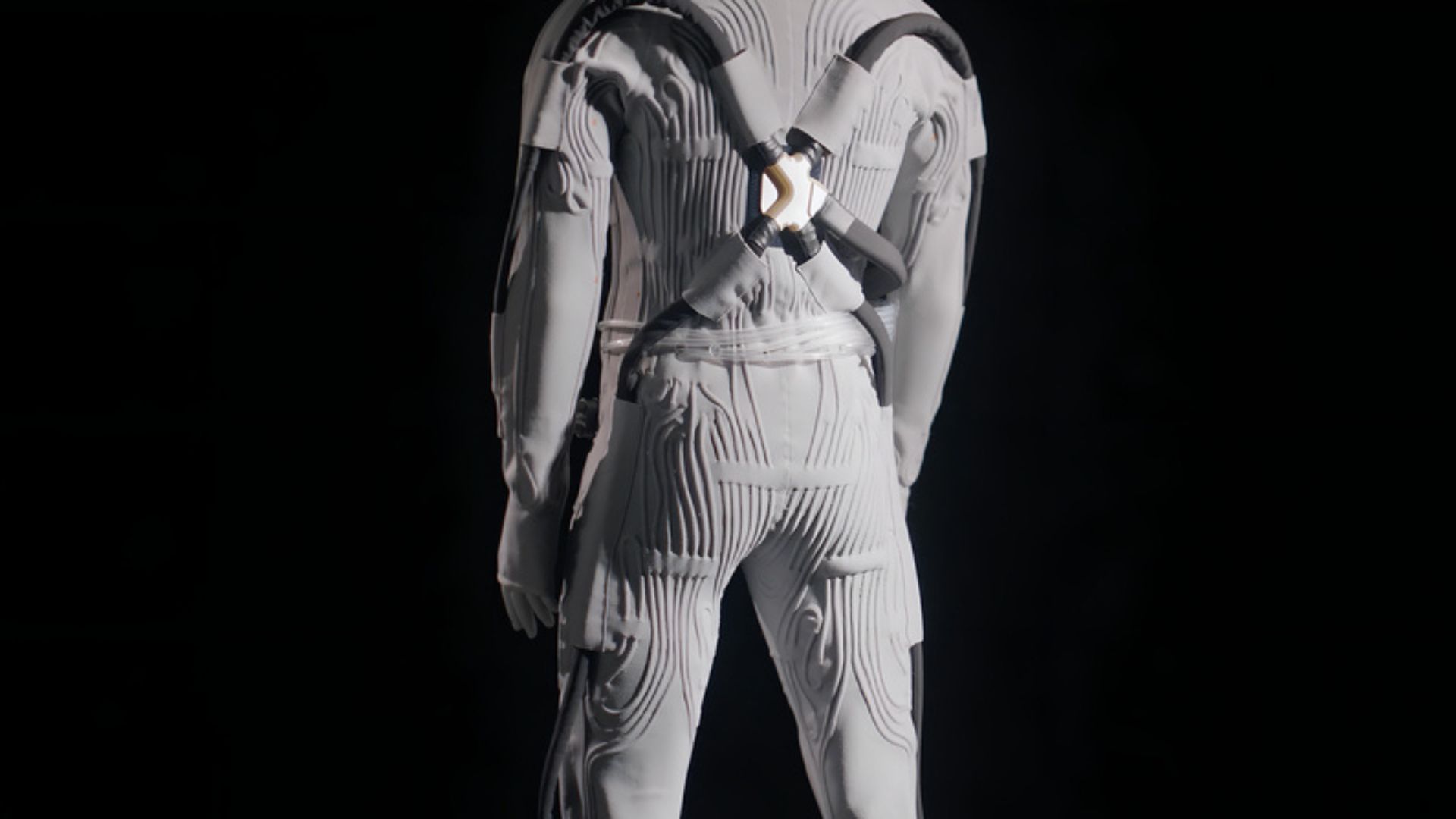
Commercial aerospace company Axiom Space and luxury fashion house Prada showcased the innermost layer of NASA’s next-generation lunar spacesuit.

It is called the Liquid Cooling and Ventilation Garment (LCVG) and will be worn inside the Axiom Extravehicular Mobility Unit (AxEMU) spacesuit. 

The garment is the first line of defense for astronauts exploring the moon’s surface for the first time in over half a century.

“The future of space exploration will not be built by any one entity alone, and our partnership with Prada is proof of that,” said Dr. Jonathan Cirtain, Axiom Space CEO and President.

“By bringing together the best in both aerospace engineering as well as luxury craftmanship and advanced product development, we have developed a garment that neither company could have created independently, and that is exactly the kind of cross-industry thinking that will define the next era of human spaceflight,” Cirtain added.

Prada is going to the moon

When astronauts step onto the lunar South Pole during NASA’s upcoming Artemis IV mission, the environment will be brutal.

Temperatures switch violently between blistering heat in direct sunlight and absolute freezing cold in deep shadow. To survive outside a spacecraft for up to eight hours, the human body needs an artificial atmosphere. 

Spacewalks are physically grueling missions in which astronauts generate intense body heat that cannot dissipate naturally in the vacuum of space.

Without intervention, crew members would rapidly overheat while moving and exploring. To prevent this, the LCVG serves as a wearable radiator, using an integrated network of chilled-water tubes to continuously absorb and dissipate excess body heat.

Using Prada’s expertise in engineered knitting, advanced 3D modeling, and high-performance materials, the collaboration produced a next-generation garment optimized for comfort during spacewalks lasting up to eight hours.

Furthermore, Prada’s knowledge of specialized fibers ensured that the garment was durable enough to be worn repeatedly over the long duration of lunar missions.

Woven directly into the specialized fibers is a complex web of flexible tubes. Chilled water constantly flows through these channels, routing across the body’s major muscle groups to absorb metabolic heat and pump it away to the suit’s backpack life-support system.

Cooling system

In an industry first for an inner spacesuit layer, the LCVG features a fully redundant backup cooling loop that instantly takes over if the primary system fails on the lunar surface.

The garment also pulls double duty by managing respiration, using a separate ventilation loop to gently blow fresh oxygen across the astronaut’s face while simultaneously vacuuming away exhaled carbon dioxide for scrubbing and recirculation.

“Every minute astronauts spend outside their vehicle, the LCVG is working to keep them safe,” said Russell Ralston, Axiom Space Senior Vice President of Spacecraft Development. 

“It manages their thermal environment, supports their breathing, and does it all while they’re pushing their bodies to the limit. The work we have done with Prada has taken that capability to a level we could not have achieved alone,” Ralston added. 

Moving the collaboration inward was a natural step for the two companies. In 2024, they showcased the heavy, protective white outer shell of the Axiom Extravehicular Mobility Unit (AxEMU).

The exterior layer is built to stop micrometeoroids and extreme radiation; the inner layer handles the delicate physics of human comfort.

💾

Commercial aerospace company Axiom Space and luxury fashion house Prada showcased the innermost layer of NASA's next-generation lunar spacesuit.
  •  

World’s slowest experiment in Australia has been running for nearly 100 years

Some science experiments last a few minutes. Some take years. And then there is the Pitch Drop Experiment, which has been running for nearly a century and is still not finished.

The Pitch Drop Experiment, housed at the University of Queensland in Australia, is widely known as the world’s longest-running laboratory experiment.

It began in 1927, when physicist Thomas Parnell set out to demonstrate something that, at first, sounds almost impossible: a material that looks solid can actually behave like a liquid.

A liquid that looks solid

The material at the center of the experiment is called pitch. Pitch is a black, tar-like substance that was once commonly used for waterproofing boats.

At room temperature, it looks, and feels solid. You can hit it with a hammer and it may shatter like glass. But scientifically, pitch is not a true solid. It is an extremely viscous liquid, meaning it can flow — just very, very slowly.

To prove this, Parnell heated some pitch and poured it into a glass funnel. He then let it settle for several years.

In 1930, the stem of the funnel was cut, allowing the pitch to begin its slow journey downward. Since then, the experiment has consisted of waiting for drops of pitch to fall from the funnel into a beaker below.

Why one drop takes years

That is where the experiment becomes famous. Since it began, only nine drops have fallen. The ninth drop separated in April 2014 during an operation to replace the beaker beneath it. The tenth drop is still forming.

The reason it takes so long is viscosity. Viscosity is a measure of how resistant a fluid is to flowing. Water has low viscosity, so it pours quickly. Honey has higher viscosity, so it flows more slowly. Pitch is on another level entirely.

The University of Queensland describes pitch as the world’s thickest known fluid, and Guinness World Records notes that the experiment has shown pitch to be about 100 billion times more viscous than water.

This is why the Pitch Drop Experiment is so useful as a teaching tool. It challenges our everyday idea of what solids and liquids are. We usually judge materials based on what we can see over a short time. If something does not move in front of us, we call it solid.

But science often works on timescales far beyond human patience. A mountain may seem permanent, but it can erode.

Glass may look rigid, but materials can behave differently under different conditions. Pitch shows that some substances can appear solid in daily life while still flowing over long periods.

A century-long lesson in patience

The experiment is also famous because of its strange history of near-misses. For decades, no one actually saw a drop fall in person. Drops fell at inconvenient moments, or cameras failed to capture them.

The eighth drop fell in 2000, and the ninth separated in 2014. Today, the experiment can be watched online, turning one of the slowest events in science into a kind of global waiting game.

What makes the experiment remarkable is not technological complexity. It is actually very simple: pitch, a funnel, a beaker, and time. But that simplicity is exactly why it works.

It makes an invisible idea visible. It turns viscosity from a textbook term into something you can understand with one image: a drop that takes years to fall.

The Pitch Drop Experiment is not about speed, spectacle, or instant results. It is a reminder that nature does not always move at the pace humans expect. Some truths reveal themselves only when someone is patient enough to keep watching.

Nearly 100 years after it began, the experiment continues. And somewhere inside that glass funnel, the next drop is slowly making its way down.

  •  

US: John Hopkins APL team models quantum noise to build fault-tolerant computers

Researchers at the John Hopkins Applied Physics Laboratory (APL) teamed up with their counterparts at John Hopkins University to develop a comprehensive framework to model quantum noise for superconducting quantum processors. This is expected to help develop better error correction strategies leading to fault tolerant quantum computers in the future. 

Quantum computing is the next big leap in computing that researchers are keen to develop thanks to its exponentially fast computational speeds. Even the world’s fastest supercomputers fall exceedingly short when compared to a quantum computer with just a few hundred qubits. 

Yet, quantum computers aren’t being deployed to solve real-world problems. The reason is the error accumulation in quantum computation. Quantum bits or qubits are naturally prone to noise, where a change in temperature, electric or magnetic field can lead to the accumulation of errors, prompting the need to build robust error correction mechanisms. 

Modeling noise in quantum computers

A research team led by Gregory Quiroz, a physicist at APL decided to study quantum noise in real operating environments for multi-qubit quantum computers. So, they accessed a quantum cloud consisting of 39 qubits across seven superconducting devices. 

The researchers were keen to study transmons, a specific type of superconducting qubit which is known for its reduced sensitivity to noise from electric fields. Working with a cloud-based system also presented another challenge since the researchers did not have low-level access to the hardware. 

However Quiroz noted that the challenge was much like a real world simulation, where users do not have low-level access to hardware in proprietary systems either. Instead of attempting to study noise effects on a single operation in detail, the researchers ran repeated computations on the quantum cloud to accumulate errors. 

By looking into how errors accumulated and how deviant the answers were from those expected, the researchers were able to get valuable insights into how the physical system was working. 

Building a comprehensive model

Attempts at studying errors in quantum computation have traditionally worked with only one type of error, either coherent or incoherent. The latter are errors where information stored on qubits is lost and not much can be done about them. 

However, the coherent ones are caused by flaws in the hardware and are therefore fixable. Interestingly, APL’s approach of working with a quantum cloud allowed them to study both incoherent and coherent errors in the same framework. 

We were able to put a wide variety of errors together into one model, which is simple in terms of parameters but also comprehensive in the types of phenomena it can describe — even predicting the performance of small quantum algorithms,” added Yasuo Oda, postdoctoral researcher, who worked with Quiroz on the model. “That’s our biggest contribution.”

“Now that we have this low-weight noise model, we have the opportunity to apply it across all levels of the quantum computing stack, from hardware design to algorithm design to error correction,” said Quiroz in a press release. “The information we can get from the model can inform every level of the quantum computing stack.”

The research findings were published in the journal PRX Quantum.
  •  

Video: New palm-sized robot with 8 smart actuators can walk, trot, and jump

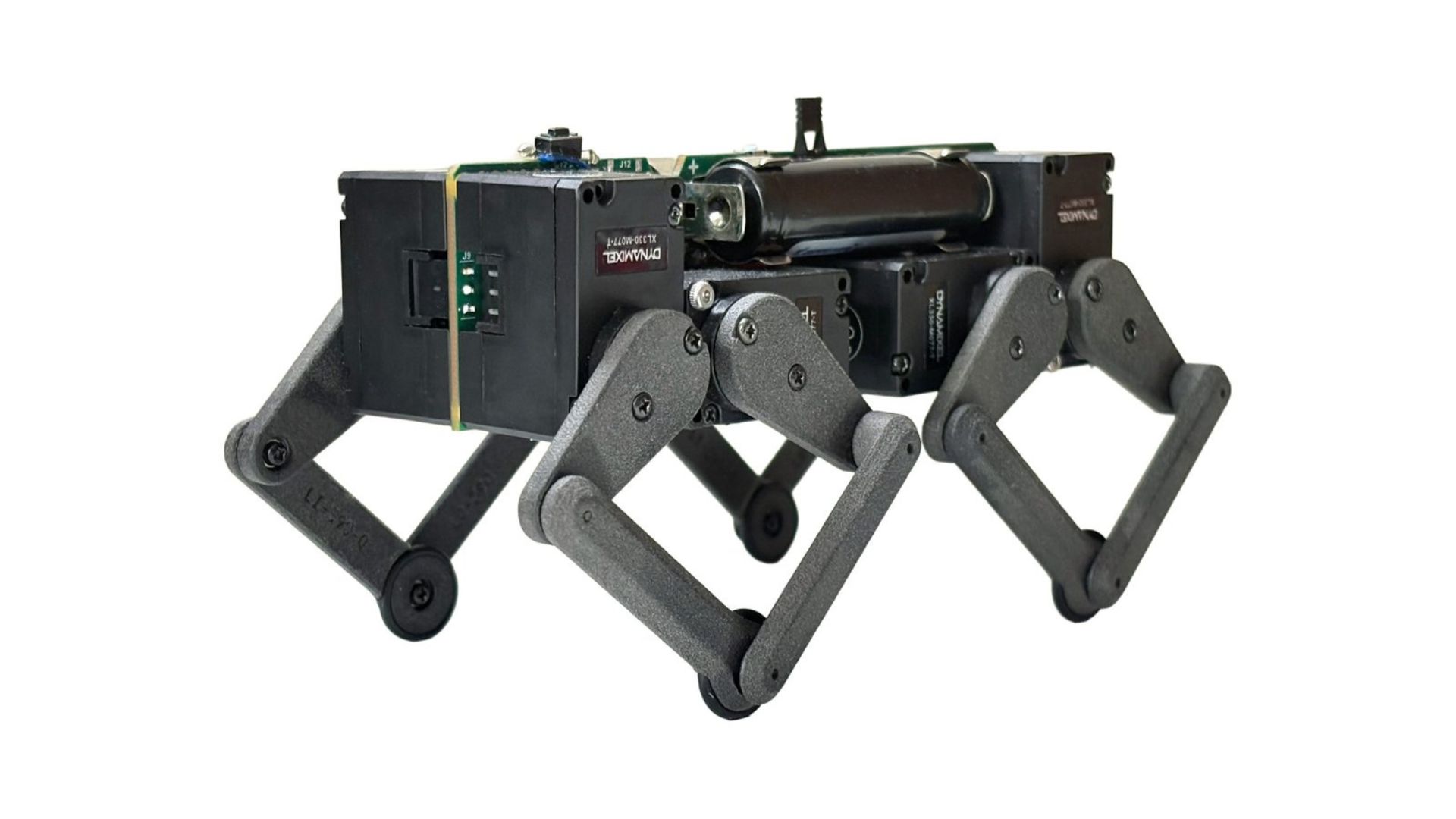
An open-source quadruped robot named Q8botOne aims to provide an affordable, fully assembled robotic platform for hobbyists, researchers, and developers. Building on the original Q8bot’s low-cost, agile design, Q8botOne comes fully assembled and ready to use right out of the box.

The robot now packs programmable actuators into a palm-sized platform, delivering dynamic mobility in a robot compact enough to roam across a desktop.

According to its maker, the robot will soon be available through a Crowd Supply campaign, making quadruped robotics more accessible to a wider audience.

Agile quadruped arrives

Q8botOne is an upcoming open-source quadruped robot developed by Eric Wu to make advanced legged robotics more accessible to hobbyists, students, researchers, and developers.

Despite its small size, Q8botOne is capable of performing a range of dynamic movements typically associated with much larger and more expensive quadruped robots. The robot can walk, trot, and jump, demonstrating agile locomotion that makes it suitable for robotics research, educational projects, and experimentation with autonomous behaviors. By eliminating the need for users to source parts and assemble the robot themselves, Q8botOne significantly lowers the barrier to entry for anyone interested in legged robotics, Hackster reported.

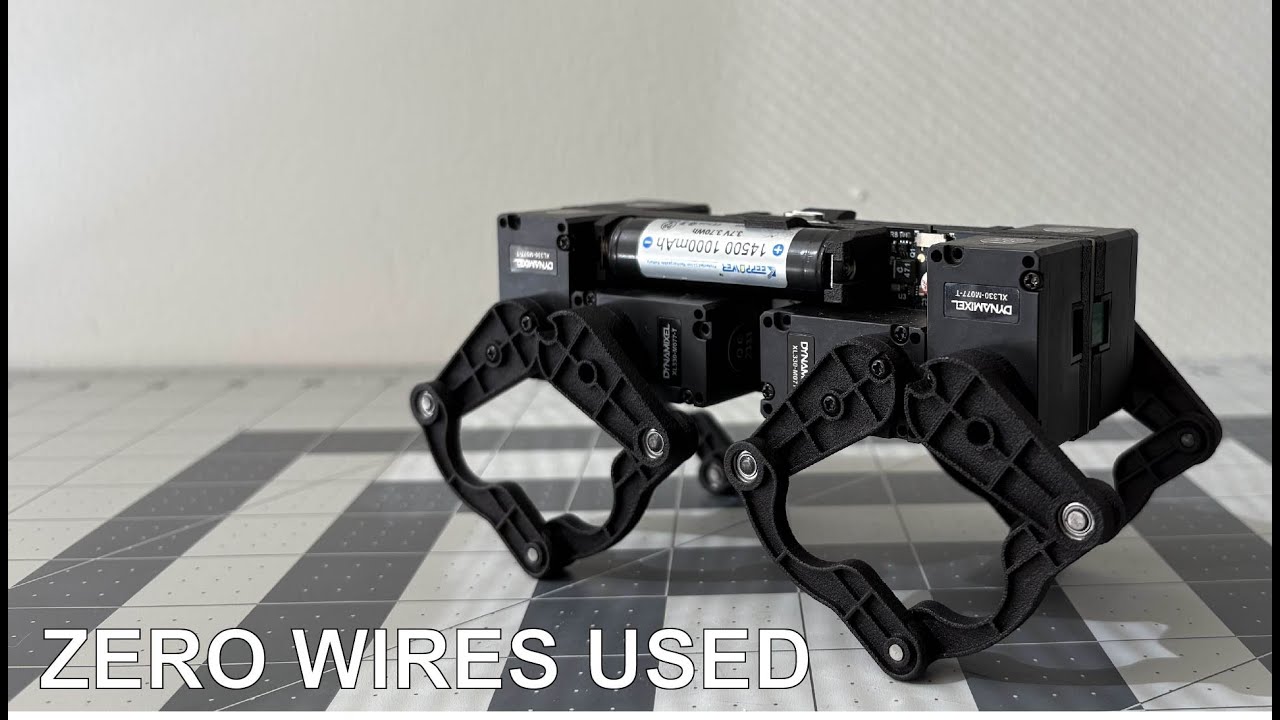
One of the robot’s most distinctive features is its highly integrated design. Unlike many small quadrupeds that rely on numerous wires routed throughout the body, Q8botOne incorporates its electronics directly onto a custom central printed circuit board. This streamlined architecture reduces cable clutter, improves reliability by minimizing potential failure points, lowers overall weight, and simplifies maintenance and troubleshooting. The result is a cleaner and more refined appearance that sets the platform apart from many traditional DIY robotics projects.

The robot’s locomotion system is powered by eight DYNAMIXEL XL-series smart actuators. These actuators drive lightweight parallel-linkage legs constructed from Multi Jet Fusion (MJF) 3D-printed components and precision ball-bearing joints. This combination provides a balance of strength, durability, and low weight, enabling smooth, accurate movement. The mechanical design has been optimized to support dynamic maneuvers while maintaining structural efficiency, according to Crowdsupply. 

At the heart of the system is an ESP32-C3-MINI-N4 microcontroller that manages onboard processing and robot control. Power is supplied by a rechargeable lithium-ion battery equipped with integrated protection circuitry to enhance operational safety and battery management. The robot is designed to provide a convenient user experience, allowing owners to begin experimenting immediately after powering it on.

Open quadruped platform

Each Q8botOne package will include a custom wireless controller dongle that comes pre-paired with the robot.

The controller features a joystick, multiple buttons, and USB-C connectivity for both power and communication. When connected to a computer, the controller provides access to software tools that enable users to configure, monitor, and control the robot in greater detail. This setup allows beginners to quickly get started while also offering advanced functionality for experienced developers, reports Crowdsupply.

Expansion capabilities are another key aspect of the platform. A Qwiic-compatible connector enables easy integration of additional sensors from manufacturers such as SparkFun and Adafruit without requiring complex wiring. The robot also includes a UART interface that supports co-processors, such as a Raspberry Pi. This interface can supply up to 5V at 3A, allowing users to add more powerful computing hardware for applications involving computer vision, AI, autonomous navigation, or custom robotics research.

Continuing the philosophy of the original Q8bot project, Q8botOne will remain fully open source. Mechanical designs are being created in Onshape, and firmware, hardware schematics, and related design files are expected to be released through the ZeroWireRobotics GitHub organization following the completion of the Crowd Supply campaign.

According to experts, the commitment to open-source development will allow users to study, modify, and extend the platform, fostering a community-driven ecosystem around the robot and enabling innovations in affordable quadruped robotics.

💾

Q8botOne brings agile quadruped robotics to the desktop with a compact, open-source, ready-to-use design.
  •  

World’s largest tower crane reaches 791 feet to install giant wind turbines

As wind turbines continue to grow taller and more powerful, the challenge of installing them has become an engineering problem in its own right. Chinese construction equipment manufacturer Zoomlion announced that it has developed a solution in the form of what it describes as the world’s tallest and largest wind turbine tower crane.

Earlier this year, the company unveiled the LW3600-240NB, a massive tower crane designed specifically for the next generation of ultra-tall wind turbines. According to the company, the machine can lift up to 240 tons and reach heights exceeding 791 feet (241 meters), making it capable of installing some of the largest onshore wind turbines currently under development.

To put that scale into perspective, the crane’s lifting capacity is roughly equivalent to hoisting 200 compact cars to the height of an 80-story building.

Why wind turbines need bigger cranes

The wind industry has been steadily increasing turbine size to capture more energy and improve project economics. Onshore turbines now commonly exceed 150 meters in hub height, while some next-generation designs are approaching or surpassing 656 feet (200 meters).

Larger turbines generate more electricity but also pose significant logistical challenges. Transporting and assembling blades, nacelles, and tower sections weighing hundreds of tons requires increasingly specialized lifting equipment. Traditional crawler cranes can perform many of these tasks, but they often require large assembly areas, substantial ground preparation, and lengthy setup times.

Zoomlion said the LW3600-240NB was developed specifically to address these challenges in the ultra-high-tower and large-megawatt wind power market.

Designed for giant wind turbines

According to the company, the crane offers a lifting height exceeding 791 feet and a maximum lifting capacity of 240 tons.

One of its key advantages is a relatively compact installation footprint. Zoomlion says the system requires a working area measuring just 35 by 55 meters and a ground bearing capacity of only 0.18 MPa, potentially reducing site preparation requirements compared with some conventional heavy-lift solutions.

The crane is intended to support the installation of wind turbines with capacities exceeding 10 megawatts and hub heights above 656 feet, a segment expected to expand as developers seek higher energy yields from fewer turbines.

Beyond wind farms, the company revealed that the crane could also be used in large-scale infrastructure projects, including bridge construction, power generation facilities, chemical plants, and industrial installations.

Engineering for extreme heights

Operating at elevations above 656 feet introduces a unique engineering challenges.

Strong winds can create significant loads on both the crane structure and the components being lifted. To improve stability, Zoomlion said the crane employs a low-load-ratio design and high-strength forged clamping-ring connections intended to enhance wind resistance and structural integrity.

The company also claimed the system can withstand wind conditions up to Level 10 on the Beaufort scale. Additional features include dual-cylinder synchronous jacking technology designed to improve climbing and tower-extension safety, along with an intelligent digital control system that monitors operations throughout the crane’s lifecycle.

Beyond a single crane

Perhaps the more significant announcement is Zoomlion’s broader strategy for wind farm construction. Rather than marketing the LW3600-240NB as a standalone machine, the company is positioning it as part of a comprehensive lifting solution for large wind projects. The concept involves using multiple compatible systems and shared infrastructure to create an assembly-line approach to turbine installation.

As wind farms increasingly deploy taller towers and larger rotor diameters, reducing installation time could become just as important as increasing lifting capacity.

  •  

Study reveals dinosaur-extinction meteorite created long-lived habitat for microbial life

A team of international researchers has uncovered new evidence that the Chicxulub meteorite impact, long known for causing the extinction of the dinosaurs, also created an underground environment that supported life for millions of years longer than previously thought.

This groundbreaking study not only reframes the narrative of Earth’s most infamous mass extinction event but also offers fresh insights into the origins of life on our planet and potentially others.

Meteorite impact: Catastrophe and opportunity

66 million years ago, a 6-mile-wide asteroid slammed into the Yucatán Peninsula, forming the Chicxulub crater and triggering a mass extinction that eradicated around three-quarters of Earth’s species, including all non-avian dinosaurs. The catastrophic event left a crater nearly 200 kilometers in diameter and profoundly altered the planet’s surface and subsurface environments.

Beneath the devastation, the collision’s immense heat fractured rocks, mingled with seawater, and set off the formation of a vast hydrothermal system—an underground network of hot water and porous rocks. These conditions, the researchers say, were ideal for sustaining microbial life, creating countless microenvironments that shielded organisms from surface extremes.

Expedition 364: Drilling for answers

In 2016, scientists from the International Ocean Discovery Program and International Continental Scientific Drilling Program embarked on Expedition 364 to drill into the crater’s peak ring. There, they collected samples of potassium-rich feldspar, a mineral formed from circulating hot fluids after the impact. Dr. Annemarie Pickersgill of the Scottish Universities Environmental Research Centre (SUERC) used advanced argon-argon dating techniques to analyze the feldspar.

The results were astonishing: the hydrothermal system persisted for at least eight million years—about four times longer than previous estimates. The team’s computer models, updated with new geological and physical data, confirmed that a combination of high rock permeability, sustained heat from the impact, and natural geothermal conditions allowed the underground system to endure far longer than once believed.

Implications for astrobiology and Earth’s origins

The study has wide-reaching implications. Dr. Pickersgill noted, “Wherever on Earth you find flowing warm water, you find life… we were still surprised by the outcomes of our research.” The findings suggest that impact-generated hydrothermal systems could have incubated early life on Earth and may exist elsewhere in the solar system.

Dr. Evangelos Christou, co-author and former PhD student at the University of Glasgow, highlighted how advances in computational modeling made it possible to simulate these complex systems with unprecedented accuracy. This research could inform the search for extraterrestrial life, particularly on planets like Mars, which experienced many large impacts during periods when water was more abundant.

Next steps in the search for life

The team stresses that impact craters may be prime locations for future astrobiological exploration. The porous rocks and underground heat could have provided refuge for life, both on early Earth and on other planets. As Dr. Pickersgill observed, “These findings could help future missions to other planets determine which impact craters might have been most likely to sustain life.”

The research brought together experts from institutions including the University of Glasgow, Purdue University, University of Texas at Austin, and several others, collectively advancing our understanding of how cataclysmic impacts can also spark conditions ripe for the emergence of new life.

The study was first published in the journal Communications Earth & Environment.

  •  

JAXA and Maxell to develop solid-state batteries built to handle over 212°F heat

As global space operations continue to expand, the reliable provision of power to satellites and spacecraft is becoming increasingly important.

In a bid to tackle this problem, the Japan Aerospace Exploration Agency (JAXA) has selected Tokyo-based firm Maxell for its Space Technologies Rapid Evaluation Program on Small Satellite (JAXA-STEPS).

Under the agreement, Japanese battery manufacturer Maxell will collaborate with the space agency on the development and demonstration of high-heat-resistant all-solid-state batteries designed to improve performance in space environments.

JAXA’s new space battery project

Maxell’s motto, “Micro batteries. Maximum impact,” emphasizes the firm’s strategy of delivering substantial value in a compact form factor. The company has highlighted four key benefits of all-solid-state batteries: long life, high heat resistance, high output, and large capacity.

The collaborative project, meanwhile, aims to achieve two main goals. Titled ‘Development and Demonstration of High-Heat-Resistant All-Solid-State Batteries to Maximize Spacecraft Missions’, its aim is to reduce the overall weight of small satellites and increase their design flexibility. 

Weight is practically a currency in space. Reducing the use of heavy machinery can drastically lower the cost of a space mission. It can also allow for more scientific, military, or other payloads to fly to space in a single launch.

Traditional spacecraft require extensive temperature control systems due to extreme temperature swings in space. All-solid-state batteries that operate reliably at high temperatures have the potential to cut the need for such equipment.

Maxell has developed all-solid-state batteries capable of maintaining high safety levels at temperatures above 100°C (212°F). In the joint research, the company aims to match the energy density of conventional lithium-ion batteries while delivering stable output and long service life across the wide temperature ranges encountered in orbit. Demonstration units will be prepared for potential installation in satellites.

JAXA-STEPS is accelerating the testing of technologies critical to future missions by using small satellites for rapid demonstrations. The program supports both public and private sector advancements. By minimizing thermal management hardware, the new batteries could allow satellites to carry more payload or reduce launch costs through lower mass.

Advanced battery chemistries

The JAXA-Maxell collaboration reflects growing interest in advanced battery chemistries for demanding applications. All-solid-state designs replace liquid electrolytes with solid materials, offering potential advantages in safety, thermal stability, and energy density. If the technology is proven in space, it could also benefit other high-reliability sectors, including industrial equipment and extreme-environment electronics.

Maxell plans to expand the applications for its all-solid-state batteries and accelerate the development of solutions tailored to customer needs. Details of the selection were outlined in a company press statement.

Reliable, lightweight power systems remain a persistent engineering challenge. This initiative aims to address the problem as the space industry continues to grow, with an increasing number of small satellites deployed for communications, Earth observation, and scientific research. Maxell’s work with JAXA could contribute to more efficient and robust satellite platforms.

  •  

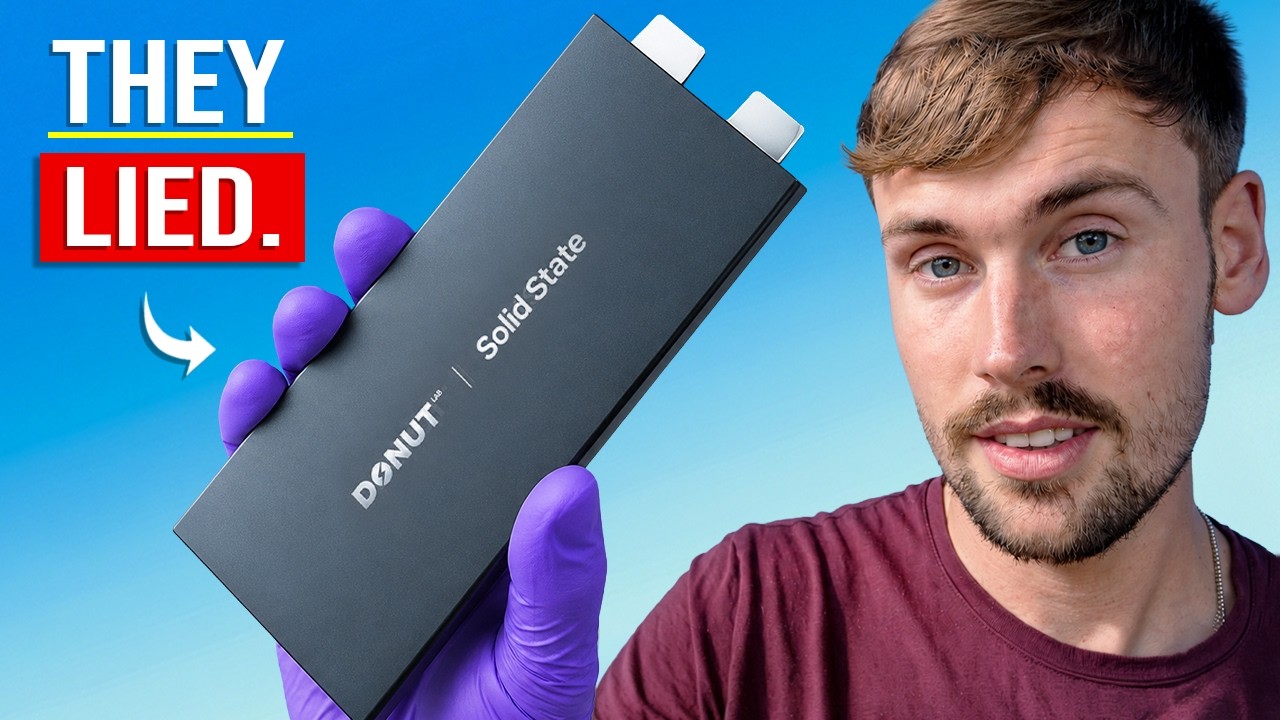
Donut Lab’s miracle solid-state battery found to be lithium-ion, investigation claims

After months of investigation, more than 20 independent battery experts have found that the battery technology promoted by Finnish startup Donut Lab is not the breakthrough solid-state sodium-ion battery the company claimed. These findings raise serious questions about a technology that attracted about $25 million from over 1,300 investors and pushed the company’s value up to $1.25 billion.

The report, led by battery researcher Ziroth, looked at electrochemical tests, company records, and interviews with industry experts. All the evidence suggests the widely publicized battery is actually a regular lithium-ion cell rather than the revolutionary chemistry unveiled at CES 2026.

Experts say test results match lithium-ion chemistry

Questions surrounding Donut Lab’s claims began soon after the company announced a battery that could deliver 400 watt-hours per kilogram, last through 100,000 charge cycles, and recharge in just 5 minutes.

These numbers quickly caught the battery industry’s attention. Independent tests followed, but the main performance claims were not verified. Several tests by Finland’s VTT Technical Research Center could not confirm the advertised energy density or the long cycle life.

The latest investigation reviewed data from those tests and spoke with over 20 battery experts. The report says every expert agreed: the tested cell acts like a lithium-ion battery.

A key clue was in the voltage measurements. The battery ran at about 3.7 to 3.8 volts at 50 percent charge, which is typical for high-nickel lithium-ion batteries with nickel-manganese-cobalt chemistry. Sodium-ion batteries usually operate at lower voltages and rarely exceed 3.5 volts at the same charge.

Expansion patterns reveal the battery’s true identity

Researchers say the most convincing evidence came from measuring how the cell expanded during charging.

When a battery charges, ions move into the anode, causing it to expand. Graphite anodes have a unique expansion pattern because of changes in graphite’s layered structure. The Donut Lab cell showed this exact pattern.

This finding matters because sodium ions are too big to fit into graphite the way lithium ions do. According to investigators, the graphite expansion pattern clearly shows that lithium is the active ion in the battery.

The report described the evidence bluntly: “It’s like we have a slightly noisy fingerprint and a picture of the suspect’s face. And yet again, it’s a match.”

Based on the data, investigators estimated the battery’s energy density at about 298 watt-hours per kilogram. This is good for a modern lithium-ion battery, but far below the company’s claimed 400 watt-hours per kilogram.

German supplier emerges at center of technology chain

The investigation found that the battery technology came from the German company CT Coatings, which supplied it to Nordic Nano and Donut Lab.

In this setup, CT Coatings provided the technology, Nordic Nano was supposed to make the cells, and Donut Lab took care of selling them. Investigators said Nordic Nano has never made a battery cell for the market.

Industry experts who met with CT Coatings representatives doubted their technical skills. Julian Zanau from the Fraunhofer Research Institute recalled concerns following discussions with company officials.

“The first impression I got was that these people have no idea how a battery actually works. They were talking about no rare earth metals in their batteries and therefore no lithium, and to any chemist lithium has nothing to do with rare earth minerals.”

Former Nordic Nano executive Lauri Peltola also criticized the decision to rely solely on internal evaluations rather than independent battery experts to assess the technology.

Investor scrutiny grows as authorities investigate

The report also questions Donut Lab’s public statements about its vehicle-making efforts. The company said the first production motorcycle left the assembly line in early 2026. However, an internal video reportedly said the motorcycles would first stay in Verge’s own fleet to improve manufacturing before being delivered to customers.

Investigators argue that these vehicles should be seen as pre-production units, not products ready for customers.

More doubts came up when CEO Marko Lehtimäki reportedly admitted that the much-publicized 400-watt-hour-per-kilogram cells were not actually in the motorcycles. Leaked messages also suggested Donut Lab was still looking for proof of the battery’s advertised performance from CT Coatings.

The financial impact is significant. Over 900 shareholders reportedly hold 50 shares or fewer, indicating many are small investors. Investor messages reportedly promised big returns and encouraged more investments as excitement about the battery grew.

According to the investigation, Finnish financial regulators and criminal authorities are now looking into the case. This could become one of the most closely watched technology investment cases in the Nordic battery industry.

💾

An independent investigation has produced definitive proof that Donut Lab's solid-state battery is actually a standard lithium-ion cell.
  •  
❌