❌

Reading view

A tiny change in crystal size can flip a material’s magnetic ground state

Japanese scientists may have found a surprisingly simple way to predict how some unusual materials behave by looking at the size of their crystal structure.

In their latest study, they claim that this structural measurement can predict magnetic ground states across a family of unusual materials more consistently than the electron-counting method scientists have traditionally relied on. 

This could make the search for unusual magnetic materials less of a guessing game. 

Until now, the challenge has been that quasicrystals and related materials have extremely complex atomic arrangements, making it difficult to find a single rule that works across different chemical compositions. 

“Quasicrystals are among the most uniquely structured materials discovered to date and are expected to exhibit novel magnetic states and quantum phenomena not found in ordinary crystals. Until now, there has been no unified guideline for systematically exploring these novel phenomena in quasicrystals and their approximate crystals,” Farid Labib, first study author and assistant professor at Tokyo University of Science, said.

The new study suggests that a crystal’s size could provide that missing common measure when researchers search for unconventional magnetism.

Looking beyond the electron count

The researchers focused on Tsai-type approximant crystals. These materials mimic important structural features of quasicrystals while having a repeating crystal structure that can be studied experimentally. 

Their atoms form nested clusters, with rare-earth elements such as terbium, dysprosium and holmium occupying positions that carry magnetic moments.

Researchers have often used the valence-electron concentration, or the number of valence electrons per atom, to classify magnetic behavior. 

However, the magnetic boundaries associated with this measure shift with the rare-earth element and alloy composition, making it less reliable as a universal guide.

The researchers therefore synthesized Au–Al and Au–Ga-based 1/1 approximant crystals containing terbium, dysprosium and holmium, then compared their structures and magnetic properties. They also combined their measurements with data from previously reported Tsai-type compounds to see whether the pattern held across different compositions.

They found a nearly monotonic inverse relationship between electron concentration and the lattice parameter—the dimensions of the crystal’s repeating unit. This allowed them to reorganize the materials according to lattice size rather than chemical composition.

Three magnetic states separated by crystal size

The distinction turned out to be remarkably clear. Crystals with lattice parameters above about 14.72 Å (14.72 x 10⁻¹⁰ m) developed a whirling antiferromagnetic state, where magnetic moments form an ordered pattern with opposing contributions. 

Between 14.62 and 14.72 Å, they showed a whirling ferromagnetic state with a net magnetization. Below about 14.62 Å, the materials enter a spin-glass state, where magnetic moments become frozen in a disordered arrangement.

The whirling magnetic states arise in these non-Heisenberg compounds partly because the local atomic environment creates a strong crystal electric field. This field favors particular orientations for the rare-earth magnetic moments, influencing how they ultimately arrange themselves. 

The magnetic moments also interact indirectly through electrons moving through the material, linking the atomic structure to the way those moments arrange themselves.

A structural roadmap for new materials

The important point is not simply that lattice size correlates with magnetism. The study establishes specific structural thresholds that place different compounds on a common magnetic phase diagram.

This makes the lattice parameter an experimentally accessible starting point for deciding which materials may host a desired magnetic ground state.

“The unified magnetic phase diagram constructed in this study can serve as a practical roadmap for systematic exploration of new magnetic quasicrystals and approximant crystals exhibiting novel magnetic orders and quantum phenomena,” Kazuhiro Nawa, study co-author and a researcher at Tohoku University said. 

“It can also provide a guideline for designing new magnetic materials with targeted magnetic ground states, opening new opportunities for discovering unconventional magnetism in quasiperiodic and complex intermetallic systems,” Nawa added.

The finding does not make electron concentration irrelevant. Rather, it suggests that lattice parameter may be a more consistent guide for Tsai-type compounds, while its usefulness in other magnetic materials remains untested.

What remains unclear is exactly why the lattice parameter works so well across these different compounds. The researchers also need to determine whether the same relationship holds in true quasicrystals.

Despite these limitations, the study indeed offers a more systematic route for exploring complex alloys and designing new quantum materials.

The study is published in the Journal of the American Chemical Society.

  •  

Scientists find ‘ghost’ of superconductivity that survives even after the state vanishes

Superconductivity is supposed to be an all-or-nothing quantum state. Cool a material below a critical temperature, and electrons pair up and enter a state that lets electricity flow without resistance. Warm it back up, and that collective state disappears. 

However, experiments on uranium ditelluride suggest that part of the superconducting behavior can survive after the main phase is gone.

Physicists at the University of Illinois Urbana-Champaign (UIUC) have found evidence that Cooper pairs—the paired electrons behind superconductivity—can arrange themselves into a repeating pattern called a pair density wave (PDW). 

What’s even more interesting is that the pattern persists above the temperature where uranium ditelluride stops being superconducting. These findings provide the first direct evidence that a PDW can exist independently of the main superconducting phase.

“We were out on a limb when we first suggested it. It’s a very peculiar state, and, although there have been experimental hints, there has been no direct confirmation of the phase’s existence,” Eduardo Fradikin, one of the researchers and a physics professor at UIUC, said.

Finding the hidden state

In conventional superconductors, electrons form Cooper pairs and those pairs condense into one collective quantum state. Unconventional superconductors can behave differently and host additional electronic phases, including charge density waves (CDWs), where electric charge varies periodically across the material.

PDWs are similar in that they form a spatial pattern, but the quantity being modulated is the density of Cooper pairs. This idea was proposed in 2007, including the striking possibility that these paired electrons could exist above the superconducting transition. 

However, “PDWs are tricky to analyze in real materials, because they behave like conventional superconductors in some experiments, and like CDWs in other,” Julian May-Mann, one of the study authors and a former graduate student from UIUC, said.

Uranium ditelluride, or UTe₂, offered an unusual place to look. Once considered an ordinary metal, it was found in 2019 to become superconducting below about 2 kelvins. It is also widely considered a candidate for an unconventional triplet-pair superconductor, in which the paired electrons can carry magnetic moments.

The researchers had previously detected CDWs on the material’s surface using scanning tunneling microscopy, but something did not fit, as magnetic fields could destroy the waves. A normal CDW should not respond so strongly to a magnetic field, prompting the researchers to consider whether a PDW was hiding alongside it.

Better crystals reveal the signal

The researchers first needed cleaner UTe₂ crystals because PDWs are extremely delicate and impurities can obscure their signatures. So they produced higher-quality samples using a new molten-flux growth method.

“Thanks to new methods for growing higher-quality samples, we were able to observe spectral signatures that respond to temperature and magnetic fields exactly as pair density waves should,” Vidya Madhavan, one of the lead researchers and a physics professor at UIUC, said.

They examined the crystals with a vector magnetic-field scanning tunneling microscope. Unlike a conventional setup, the instrument could vary both the strength and direction of the magnetic field—important because UTe₂ is anisotropic, meaning its properties depend strongly on direction.

The measurements revealed electronic modes whose responses to temperature and magnetic fields matched theoretical expectations for a PDW, including modes that survived above the superconducting critical temperature.

“We even showed that the modes persist above the temperature at which superconductivity disappears, a telltale theoretical prediction that has not been convincingly observed before now,” Madhavan added.

The researchers also found that a CDW-only explanation conflicted with established principles governing how electronic phases should respond to temperature and magnetic fields. The PDW interpretation provided a more consistent explanation of the observations.

A clue, but not the final answer

The result could reshape how physicists think about unconventional superconductors by suggesting that Cooper pairing can begin before the material develops its full superconducting state. 

This could help researchers understand why some unconventional materials develop complex phases and potentially guide the search for new superconducting states.

“Pair density waves are the Cheshire Cat’s grin of superconductivity. They are the vestige that remains once the phase itself has disappeared. In conventional superconductors, Cooper pairs form when the full phase transition occurs, but, in this system, their observation in PDWs above the transition point shows that they are formed beforehand in a different state,” Fradikin explained.

However, there is an important limitation as well. Scanning tunneling microscopy probes the material’s surface, so the researchers cannot yet prove that the same PDW exists throughout the interior.

The next challenge is therefore to determine whether the hidden state extends into the bulk of UTe₂ and to establish its nature more firmly. 

The study is published in the journal PNAS.

  •  

US lab to hunt most elusive ‘ghost particles’ deep underground with automated triggers

One of the world’s most ambitious neutrino experiments, the Deep Underground Neutrino Experiment (DUNE), is being built to catch some of the universe’s most elusive particles, but finding those fleeting signals may soon involve artificial intelligence. 

As the massive detector takes shape a mile underground in South Dakota, researchers are developing AI systems to sort through huge amounts of data, identify neutrino interactions, spot signs of a stellar explosion and even detect problems inside the detector.

This could fundamentally change how scientists run a particle-physics experiment at DUNE’s scale. 

For instance, instead of waiting for conventional analysis to work through enormous amounts of data, AI could identify important events in near real time and direct researchers toward the signals most worth investigating.

“These approaches are going to really accelerate DUNE in terms of the commissioning process and the sensitivity of the experiment to reach our full discovery potential,” Sowjanya Gollapinni, a representative from DUNE, said.

Can AI read ghost-particle tracks?

Neutrinos are notoriously difficult to study. Trillions pass through our bodies every second, yet they interact so rarely that detecting them requires an enormous detector and an intense neutrino beam. 

Fermilab will generate a powerful neutrino beam that will travel to a detector at the Sanford Underground Research Facility in South Dakota, where huge chambers filled with liquid argon will record the tiny traces left when neutrinos collide with argon atoms.

Keeping so much argon in the right state is itself a huge engineering challenge. Each of DUNE’s two planned far-detector cryostats will eventually house about 17,000 tons of liquid argon, kept at roughly −300°F. The massive cryogenic containers must keep the argon cold enough for the detector to work.

However, the problem does not end when a neutrino is detected. Every interaction can produce several particles, each leaving a trail through the argon.

Scientists must work backward through those tracks to determine where the collision occurred, what particles were created, and what the original neutrino’s energy and direction were. 

Fermilab researchers have already spent years testing whether machine learning can make this process faster. The MicroBooNE experiment was among the first high-energy physics experiments to use deep neural networks to analyze images from a liquid-argon detector. DUNE is now taking that approach much further.

“We are going to have very high resolution, almost photographic-quality images of these interactions. Which is great, but also brings challenges such as making reconstruction more difficult because we see such fine detail.” ,” Leigh Whitehead, an AI expert at DUNE, said.

An AI lookout for exploding stars

DUNE’s AI will also be searching for something far rarer—a supernova in our galaxy.

When a massive star collapses and explodes, neutrinos escape from its interior and can reach Earth before the burst of light becomes visible. This gives scientists an unusual opportunity to study the violent processes occurring inside a dying star. 

DUNE’s giant liquid-argon detector is being built in part to capture neutrinos from astrophysical events such as nearby supernovae.

An AI trigger will continuously monitor DUNE’s detector for the telltale pattern of a supernova neutrino burst. If it finds a promising signal, the system is designed to preserve data from 10 seconds before to 100 seconds after the candidate event. 

This could give astronomers an early warning, allowing telescopes to turn toward the exploding star while its light is still arriving.

The neutrinos themselves could reveal what the explosion leaves behind — potentially a neutron star or a black hole. This makes DUNE part particle detector, part cosmic early-warning system.

AI could become DUNE’s technician

There is another problem hidden inside DUNE’s enormous scale, which is keeping the detector running. Thousands of components must operate together underground, and operators need to respond quickly when something goes wrong. 

Researchers are therefore investigating whether a large language model could search through records of previously solved problems and point operators toward relevant fixes.

Machine learning could eventually go a step further by recognizing patterns that indicate a detector anomaly before an actual failure occurs. 

This approach, therefore, reflects a broader push to use AI throughout particle-physics experiments, where increasingly complex facilities are producing more data than conventional methods can easily handle.

Building an AI-powered physics experiment

DUNE will eventually produce petabytes of data, making fast and reliable analysis essential. Researchers are developing AI tools alongside the detector while working with national laboratories and universities to build the computing infrastructure needed to handle that flood of information. 

The collaboration now includes more than 1,500 scientists and engineers from over 35 countries and CERN, while also training the next generation of researchers. 

The AI systems will need to be developed and tested alongside the experiment, but if they work as intended, DUNE could become a model for how AI helps scientists operate massive experiments and find rare signals hidden in overwhelming amounts of data.

  •  

A two-nanometer crystal stretch uncovers magnetism long hidden in ruthenium dioxide

For years, ruthenium dioxide (RuO₂) has kept physicists confused. Depending on which experiment they looked at, the metallic oxide either appeared magnetic or not magnetic at all. 

This uncertainty has made it difficult to determine whether RuO₂ belongs to an unusual new class of materials known as altermagnets, which could one day power faster and more energy-efficient electronics.

Now, in a new study, researchers have shown that the missing piece may not be the material itself—but how tightly it is stretched. By growing an ultrathin RuO₂ film just two nanometers thick and keeping its crystal lattice under strain, they detected clear signs of magnetic order that had remained hidden in thicker, relaxed samples. 

The findings suggest that magnetism in RuO₂ is not a fixed property but something scientists may be able to switch on simply by engineering the material’s atomic structure. “RuO2 has attracted renewed interest due to expectations of prominent altermagnetic spin splitting,” the researchers said.

The debate over an unusual magnetic material

RuO₂ is already widely used as an industrial catalyst and is valued for its excellent electrical conductivity. 

However, over the past few years, it has become the focus of an intense debate because some experiments suggested it might be an altermagnet—a recently proposed type of magnetic material that combines features of conventional magnets and nonmagnetic materials.

Unlike an ordinary bar magnet, an altermagnet has almost no overall magnetization even though its electrons remain magnetically ordered. Previous studies, however, produced conflicting results. 

Some reported magnetic order, unusual Hall effects, and efficient spin-charge conversion, while others found no evidence of magnetism in bulk crystals or relaxed thin films. A recent study even concluded that RuO₂ showed no altermagnetic behavior down to films 5 nanometers thick. 

However, no one had directly examined fully strained films thinner than about four nanometers using techniques capable of measuring both the motion and spin of electrons at the same time.

“The spin structure of RuO2 remains largely unexplored in the ultrathin limit,” the study authors note.

Stretching atoms to uncover hidden magnetism

To explore that missing regime, the researchers grew atomically smooth RuO₂ films only two nanometers thick on titanium dioxide-based substrates. Since the substrate’s atomic spacing differs slightly from that of RuO₂, the ultrathin film is forced to stretch to match it—a condition known as epitaxial strain.

You can think of it like laying a small wire mesh over a frame with slightly different spacing. The mesh has to stretch to fit, subtly changing the positions of every junction. In a crystal, those tiny shifts alter how electrons move and interact.

The team then used spin-resolved angle-resolved photoemission spectroscopy (spin-ARPES), which shines light on the material to eject electrons. By measuring each electron’s energy, momentum, and spin, scientists can map the material’s electronic structure in remarkable detail.

To ensure the results were genuine, they repeated the measurements in two different experimental geometries to separate real magnetic signals from possible measurement artifacts. Additional X-ray and optical experiments confirmed that the films remained fully strained and revealed their crystal symmetry.

Hidden magnetic signals emerge

The measurements uncovered an unusual momentum-dependent spin texture, meaning the direction of an electron’s spin changed systematically depending on how it moved through the crystal.

After performing a detailed symmetry analysis, the researchers ruled out nonmagnetic explanations, including effects caused by the crystal’s polar structure or by the measurement process itself.

As the study authors note, “A comprehensive symmetry analysis rules out nonmagnetic origins of this spin texture. These findings suggest an emergent nonrelativistic spin structure enabled by epitaxial strain in the ultrathin limit, marking a distinct departure from the behavior of relaxed or bulk RuO₂.”

The observed behavior was consistent with either weak ferromagnetism or altermagnetism, indicating that strain fundamentally changes the electronic ground state of RuO₂.

Strain as a new control knob

The findings suggest that strain could become a practical way to switch magnetic properties on in materials that normally do not display them, opening new possibilities for low-power spintronic devices based on electron spin instead of electric charge.

However, the experiments were carried out at around 15 kelvin (about −258°C), so it is still unknown whether the same behavior persists at room temperature. 

Future studies will need to determine exactly which magnetic state emerges and whether it can be reliably controlled in real-world devices.

The study is published in the journal Science Advances.

  •  

‘Dumbbell’ atomic pairs tackle decades-old ethanol chemistry problem for everyday products

From perfumes and synthetic flavorings to plastics and resins, acetaldehyde is a chemical used to make countless everyday products. 

However, producing it efficiently has remained a challenge because the catalysts that convert ethanol into acetaldehyde gradually lose activity, generate unwanted byproducts, or break down over time.

Now, researchers have developed a three-metal catalyst that tackles those long-standing problems in an unusual way. By pairing platinum and chromium atoms inside a silver matrix, they created tiny dumbbell structures known as heterometallic pair sites. 

These atomic pairs selectively remove only the hydrogen atoms needed to convert ethanol into acetaldehyde while suppressing the deactivation pathways seen in comparable platinum-silver and chromium-silver catalysts. 

“Our catalyst solves an important problem in chemistry because it completes a selective dehydrogenation: Instead of stripping away all of the hydrogen atoms, it removes just the ones necessary,” Anatoly Frenkel, one of the study authors and a chemist at Stony Brook University, said.

Moreover, since the process starts with ethanol that can be produced from biomass such as crop residues, forestry waste, and food waste, it could also provide a more sustainable alternative to conventional petrochemical production.

Breaking the limits of conventional catalysts

Catalysts speed up chemical reactions without being consumed, but making one that is both fast and selective is difficult. In ethanol dehydrogenation, conventional catalysts often keep reacting after removing the required hydrogen atoms, triggering unwanted reactions. 

Over time, they can also become coated with carbon deposits, known as coking, or undergo structural changes that reduce their performance.

To overcome these problems, the researchers turned to quantum mechanical calculations, which predicted that platinum and chromium atoms would naturally pair up when dispersed inside silver. 

“Prior quantum chemical calculations and surface science experiments by our collaborators showed that platinum-chromium pairs form preferentially in silver and exhibit electronic structures distinct from isolated platinum and chromium sites, enabling unique surface chemistry,” Jason Weaver, one of the study authors and a chemist at the University of Florida, said.

The team then fabricated thin films of the alloys to test whether these predicted atomic pairs actually formed.

Building the atomic picture

The researchers combined several advanced techniques to examine the catalyst from the inside out. At Brookhaven National Laboratory’s National Synchrotron Light Source II, X-ray absorption fine structure (XAFS) measurements confirmed that platinum and chromium atoms had indeed paired together throughout the silver host.

The catalyst’s surface was then analyzed at Sweden’s MAX IV synchrotron using surface-sensitive XAFS and ambient-pressure X-ray photoelectron spectroscopy (AP-XPS), which allowed scientists to observe the catalyst while it was actively converting ethanol. 

These measurements showed that only catalysts containing platinum-chromium pairs efficiently produced acetaldehyde. 

Additional scanning transmission electron microscopy (STEM) mapped the distribution of platinum and chromium atoms inside the silver matrix, providing further evidence that the unusual atomic arrangement was responsible for the catalyst’s behavior.

“Combining this with the local bonding information from surface-sensitive XAFS gives a really complete picture of the state of the catalyst and how this affects its performance,” Lindsay Merte, one of the study authors and an associate professor of physics at Malmö University, said. 

Tiny atomic pairs, major gains

Catalytic tests showed that the trimetallic platinum-chromium-silver catalyst became active at around 200°C and steadily increased its activity up to 350°C, where it selectively converted ethanol into acetaldehyde and hydrogen, with mass spectrometry identifying these as the dominant gaseous products.

In contrast, platinum-silver catalysts accumulated carbon deposits that blocked active sites, while chromium-silver catalysts became less effective because of oxidation. 

The platinum-chromium pairs greatly suppressed both of these deactivation pathways, allowing the catalyst to remain active for longer. 

The researchers also found that these heterometallic pair sites stayed stable even at relatively high active-metal loadings, addressing a common limitation of many atomically dispersed catalysts.

Previous studies had suggested that carefully designed pairs of different metals could outperform isolated single atoms, but this work provides experimental evidence that such heterometallic pair sites can operate under realistic reaction conditions.

A new strategy for catalyst design

The study offers a new blueprint for catalyst design. Instead of searching for entirely new materials, scientists may be able to create longer-lasting, more selective catalysts simply by arranging familiar metals in new atomic partnerships—a strategy that could benefit not only ethanol dehydrogenation but many other industrial chemical reactions as well.

However, the catalyst has so far been demonstrated only as a model thin-film system, so additional work will be needed before it can be adapted for industrial reactors. 

The researchers’ next goal is to translate the same atomic design into high-surface-area nanoparticles, which are better suited for large-scale chemical manufacturing.

The study is published in the journal Angewandte Chemie.

  •  

Quantum Zeno effect could freeze tomorrow’s quantum computers mid-calculation

The race to build larger and more powerful quantum computers has mostly focused on engineering: adding more qubits, reducing noise, and keeping fragile quantum states alive. However, a new theoretical study suggests that another, largely overlooked problem may emerge as these machines grow. 

Researchers at the Helmholtz-Zentrum Dresden-Rossendorf (HZDR) have found that a strange quantum phenomenon known as the quantum Zeno effect could cause certain quantum computers to slow dramatically—or in the worst case, nearly stop computing altogether.

“For quite generic conditions, we find that the quantum Zeno effect poses strong limitations on the performance” of quantum systems, the study authors note.

Rather than exposing a flaw in today’s devices, this research work identifies a fundamental scaling challenge that designers may have to confront as quantum computers become larger. 

In their new study, the HZDR team says the effect could become especially important for adiabatic quantum computers, a class of machines widely studied for solving optimization problems, searching massive datasets, and simulating molecules.

When the environment won’t stop “looking” at a quantum computer

The quantum Zeno effect is one of quantum mechanics’ most counterintuitive ideas. It predicts that repeatedly measuring a quantum system can prevent it from changing its state, effectively freezing its evolution. 

The concept has been studied experimentally for decades. Earlier research works explored this phenomenon mainly in isolated laboratory systems or as a way to deliberately control quantum states. For example, a theoretical work showed that continuous measurements can trap quantum systems within specific states. 

The HZDR researchers asked a different question—what if a quantum computer experiences this effect unintentionally?

Adiabatic quantum computers work differently from gate-based quantum computers. Their “algorithms are considered robust and can be executed by quantum computers largely independently of the hardware that is used,” Ralf Schützhold, one of the study authors and the director of the Institute of Theoretical Physics at HZDR, said.

Instead of performing a sequence of quantum logic operations, they gradually reshape an energy landscape while keeping qubits in their lowest-energy, or ground, state. If this transformation is slow enough, the ground state naturally evolves into the solution to the problem being solved. 

To investigate, they built a theoretical model of an adiabatic quantum computer interacting with a realistic environment. In practice, no quantum processor is perfectly isolated. Even inside refrigerators cooled to temperatures just above absolute zero (−273.15°C), tiny amounts of heat, electromagnetic radiation, or other external influences still interact with qubits. 

These interactions cause decoherence, gradually disrupting the delicate quantum properties such as superposition and entanglement—that give quantum computers their power. In effect, the surrounding environment behaves like an unintended detector that continually checks the qubits’ state, even though nobody is intentionally measuring them.

More qubits could make the problem worse

The team analyzed the adiabatic version of Grover’s search algorithm, a famous quantum algorithm that searches unsorted databases much faster than classical methods. 

In adiabatic computing, the algorithm starts with an easy-to-prepare quantum state and then slowly transforms the system’s governing energy landscape, known as the Hamiltonian, until the ground state represents the desired solution. If the transformation is sufficiently slow, the qubits naturally remain in the ground state throughout the computation.

Their calculations revealed that scaling creates an unexpected vulnerability. As the problem size grows, the minimum energy gap separating the ground state from higher-energy states can become increasingly small. 

As these energy differences shrink, the computation must proceed more slowly to remain adiabatic. Since the computation takes longer while environmental disturbances continue acting at roughly the same rate, the quantum Zeno effect becomes increasingly likely. 

“Each disturbance acts like an unwanted measurement, slowing down the system’s evolution. In the worst case, a calculation could even freeze completely,” Gernot Schaller, one of the study authors and the head of Quantum Technologies at HZDR’s Institute of Theoretical Physics, said.

Much like a cake rises properly only if the oven remains closed, constantly opening the door to check on it interrupts the baking process, causing the cake to stop rising or even collapse. In the same way, repeated environmental disturbances keep interrupting the natural evolution of the quantum state before it can reach the desired endpoint.

More importantly, the study does not suggest that all quantum computers face the same limitation. The work focuses on adiabatic quantum algorithms and related approaches such as quantum annealing, where the computation relies on gradually crossing small energy gaps. 

A roadmap for building more resilient quantum computers

The study is theoretical rather than experimental, so the findings still need to be explored in real quantum hardware. 

However, the researchers say the problem can be mitigated by improving shielding against heat and electromagnetic interference and by using techniques such as spin echo, which applies carefully timed pulses to reduce interactions between qubits and their environment.

The findings also suggest that scaling quantum computers will require more than simply adding qubits. Future systems may need better protection from environmental noise and smarter control techniques to reduce the risk of the quantum Zeno effect becoming a bottleneck. 

The study is published in the New Journal of Physics.

  •  

MIT’s GIFT framework improves CAD designs by turning its failures into training data

Creating a realistic 3D model from a simple image remains surprisingly difficult for artificial intelligence. 

While AI can generate impressive pictures, producing the precise CAD code engineers use to design aircraft parts, cars, and consumer products is far more challenging. Even a small mistake can make a design unusable. 

Now, researchers from MIT, IBM, and Red Hat have developed a framework that significantly improves the ability of AI systems to turn 2D images into functional CAD programs, producing more accurate designs while reducing inference computation by about 80 percent.

This new research work tackles one of the biggest obstacles in AI-driven engineering, which is the shortage of high-quality CAD training data. Existing image-to-CAD systems need vast numbers of examples linking 2D images to working CAD programs, but creating those datasets is expensive and labor-intensive. 

Instead of relying on more human-created data, the new approach teaches AI using the mistakes it already makes. “We want to obtain data augmentation that is informed by the model itself,” lead study author and AI researcher Giorgio Giannone said.

Turning failed designs into training material

The team’s framework, called Geometric Inference Feedback Tuning (GIFT), works with vision-language models that convert a 2D image and text description into Python code that can be executed in CAD software to create a 3D object.

To understand where a model struggles, GIFT asks it to solve the same CAD problem multiple times in parallel. Some outputs are correct, some are close to the target design, and others are much further away. 

According to the researchers, these ‘near-misses’ are the most valuable because they reveal exactly what the model does not yet understand.

The system executes each generated CAD program and compares the resulting 3D geometry with the target using a standard engineering metric known as Intersection over Union (IoU), which measures how closely two 3D shapes match. 

Rather than discarding imperfect outputs, GIFT identifies those that are close to correct and uses them to generate new training examples.

Giannone explained, “If we sample the model 10 times and it generates 10 correct answers to the same problem, then there is not much for it to learn. We care about the in-between cases, where the model might only solve the problem 50 percent of the time.”

Teaching the model how to fix its own errors

GIFT improves the model through two complementary techniques. The first, called GIFT-REJECT, keeps alternative CAD programs that generate the correct geometry even if the code differs from the original reference solution. 

Traditional AI training often assumes there is only one correct CAD program for each object, even though engineers can create the same part in many different ways. By exposing the model to multiple valid solutions, GIFT broadens its understanding of how CAD designs can be constructed.

The second method, GIFT-FAIL, focuses on imperfect outputs. The system takes a nearly correct 3D model generated by the AI, converts it back into an image, and pairs that image with the correct CAD program. By doing so, it creates new examples that effectively teach the model how to recover from specific mistakes.

More importantly, this process requires no human intervention. The framework automatically identifies errors, creates new training data, and uses that information to improve the model.

The researchers also designed GIFT around a technique known as inference-time scaling. Instead of retraining an entire AI model, which can be extremely expensive, the system improves performance during generation. 

Rather than discarding the extra computation spent searching for better CAD programs, GIFT converts successful and near-successful attempts into new training examples that can later be used to improve the model through fine-tuning.

Moreover, users can decide how much computation they want to spend depending on their budget and time constraints.

Better CAD designs with a fraction of the computing power

When evaluated on the GenCAD-Code dataset, models enhanced with GIFT achieved a 12 percent improvement in geometric accuracy compared with a strong supervised-learning baseline. 

The framework also reduced the inference computation needed to achieve comparable performance by about 80%.

“With GIFT, we started with geometry because with engineering problems, if the geometry of a 3D shape is not correct, nothing else will be correct, but there are many other aspects to consider,” Giannone said. 

The system’s ability to learn from its own mistakes could help accelerate product development by making AI-generated CAD models more reliable. 

Engineers could move more quickly from sketches to testable 3D designs, reducing development costs, shortening design cycles, and exploring a wider range of ideas without creating large amounts of new training data.

The researchers say this is only the beginning. So far, GIFT focuses on generating correct geometry, but future versions will aim to teach AI how to design parts that are not only accurate in shape but also easier to manufacture and better suited for real-world performance. 

The study is published on arXiv.

  •  

Scientists decode how birds, fish, insects, and mammals communicate to work together

Nature is often portrayed as a battlefield where every species competes for food, territory, and survival. Yet some of the most successful relationships in the natural world are built on cooperation. 

Across oceans, forests, and deserts, animals regularly interact with members of other species in ways that benefit both sides. Interestingly, from an evolutionary perspective, this cooperation should be difficult. This is because animals belonging to different species do not share the same instincts, sensory abilities, or interests. 

One animal may communicate through scent, another through movement, and a third through sound. Also, misunderstandings can be dangerous. A potential partner might instead become a competitor, a parasite, or even a predator.

“This gap in our understanding is noteworthy because animal interspecies cooperation combines features of multiple interaction types, sharing some challenges with broader mutualisms, such as cross-species communication and increased risk of harm or exploitation,” the authors of a new study note.

A new study examines how species overcome these obstacles through the exchange of information. The study authors argue that cues and signals help animals identify potential partners, assess their motivation to cooperate, and judge how reliable they are likely to be.

“Cues and signals are likely to be particularly crucial in animal interspecies cooperation, a specific form of mutualism that depends on real-time, interactive behavioural coordination to secure mutual benefit,” the study authors added.

By bringing together evidence from many forms of interspecies cooperation, the study provides a framework for understanding how communication helps make these unlikely partnerships possible.

Reducing risk and uncertainty in animal cooperation

The study emerged from a large interdisciplinary effort involving 58 researchers working across fields including animal behavior, ecology, evolution, anthropology, and linguistics. 

Rather than focusing on a single species or ecosystem, the team examined evidence from a broad range of cooperative relationships to understand the common principles that allow different species to coordinate their actions.

What interested the researchers was not the details of any one partnership but a challenge common to all of them, which was uncertainty. Whenever individuals from different species interact, they must somehow determine whether cooperation is worth the risk.

The researchers found that many cooperative systems contain mechanisms that reduce this uncertainty. These can include visual displays, sounds, chemical compounds, body postures, or repeated behavioral patterns. 

Regardless of the form they take, their purpose is similar—they provide information that allows one species to anticipate the actions of another.

Seen this way, communication functions less like a conversation and more like a mechanism for reducing uncertainty. Signals can reveal who a partner is, whether it intends to cooperate, and how predictable its behavior is likely to be. By making behavior more predictable, they reduce the risks that would otherwise discourage cooperation.

One example comes from the partnership between greater honeyguide birds and humans in parts of Africa. The birds use calls and behaviors that help direct people toward wild bees’ nests, while humans respond with their own vocal signals during the search. As a result, both sides gain access to resources they would struggle to obtain as efficiently on their own. 

From accidental clues to biological languages

The study also explores how communication systems may evolve over time. The researchers distinguish between cues and signals. A cue provides information to another species but did not evolve specifically for communication. 

A signal, in contrast, has been shaped by evolution because it influences how another organism responds. However, the study authors note, “signals can evolve from cues.”

The study points to interactions involving brightly colored cleaner fish on coral reefs as an example of how information can facilitate cooperation. Their distinctive appearance and behavior help client fish recognize them as cleaning partners rather than prey.

According to the researchers, characteristics that reliably convey useful information can become increasingly important if other species benefit from responding to them. Over time, natural selection may strengthen these interactions.

Individuals who provide clearer information gain more cooperative opportunities, while those who interpret the information more accurately gain greater benefits. The authors suggest that this process can lead to coevolution, with one species becoming better at providing information and the other becoming better at interpreting it.

In this way, what begins as an incidental cue can gradually develop into a more specialized signal that helps coordinate cooperation between species. The researchers also found that these communication systems are not always fixed. Some appear remarkably consistent, while others vary across environments and populations. 

This flexibility suggests that communication between species can be shaped not only by evolution but also by local ecological conditions and, in some cases, learning.

The hidden rules of cooperation

According to the study authors, “animal interspecies cooperation provides a powerful opportunity to investigate the evolution of communication.” 

By examining how species exchange information to coordinate their actions, the researchers argue that communication may be one of the hidden foundations of cooperation in nature.

By comparing interspecies cooperation with communication systems found within species and in other mutualistic relationships, the authors provide a broader framework for understanding how cooperation emerges and persists.

At the same time, the researchers emphasize that many forms of interspecies communication remain poorly understood. This is because most studies have focused on a relatively small number of well-known examples, leaving many species and ecosystems unexplored. 

Future work will investigate how signals originate, how they vary across populations, and how communication systems can evolve between cooperating species.

For now, the study’s message is simple. Cooperation does not require animals to share a common language. It requires enough information for each partner to recognize, interpret, and respond to the other. In nature, this ability may be what transforms a risky encounter into a lasting partnership.

The study is published in the journal Animal Behavior.

  •  

Earth might actually survive sun’s fiery death as new study overturns decades-old forecast

For generations, scientists have believed they knew exactly how Earth would die. In roughly five billion years, after exhausting the hydrogen fuel at its core, the sun will swell into a giant red star and eventually expand so much that it engulfs the inner planets. According to most previous studies, Earth is expected to be among the casualties.

A new study, however, suggests the story may not be so straightforward. 

Using improved models of stellar tides and updated estimates of how much mass the aging sun could lose, researchers found that Earth might escape the sun’s final expansion instead of being swallowed by it. 

“Based on updated tidal dissipation prescriptions, Earth survives the RGB and AGB phases of the sun,” the study authors note.

However, arriving at that conclusion required revisiting one of the most uncertain aspects of the sun’s future evolution.

Why predicting Earth’s fate is tricky

The question—will Earth ultimately be engulfed by the dying sun, or can it survive by drifting into a wider orbit—has remained unresolved for years because two powerful forces compete as the sun ages. 

On one hand, the expanding star generates tidal interactions that can pull planets inward. On the other hand, the sun loses mass through stellar winds, weakening its gravitational grip and allowing planetary orbits to drift outward. 

Determining which effect dominates has proven difficult because both processes involve complex physics that scientists have struggled to model accurately. “The predicted fate of the Earth is highly sensitive to the tidal model and the assumed mass-loss rate,” the study authors note.

To investigate the problem, the study authors simulated the future evolution of the Solar System using modern stellar-evolution models. 

The team focused on what will happen after the sun leaves its current stable phase and enters two major expansion stages. The first is the red giant phase, during which the sun will dramatically increase in size after running out of hydrogen in its core. 

Later, after consuming its helium fuel, it will enter the asymptotic giant branch (AGB) phase, becoming even larger and shedding vast amounts of material into space.

At that point, two competing forces begin to determine the fate of the planets. As the sun expands, tidal interactions develop between the star and the planets orbiting it. These tides act like a brake, gradually draining orbital energy and pulling planets closer to the star. 

Previous studies generally concluded that this process would eventually drag Earth into the sun.

At the same time, however, the aging sun will lose enormous amounts of mass through stellar winds. As the star sheds material, its gravitational pull weakens, allowing planetary orbits to move farther outward. 

Predicting Earth’s future, therefore, comes down to determining which effect is stronger: the inward pull from tides or the outward push caused by mass loss.

A new look at the sun’s final years

The researchers revisited the problem using more sophisticated tidal models developed over the last fifteen years. These updated calculations suggest that giant stars dissipate tidal energy less efficiently than earlier estimates indicated. 

In simple terms, the future sun may be less effective at pulling Earth inward than scientists previously thought.

The team also examined how much mass the sun is likely to lose during its final evolutionary stages. To improve their estimates, they studied observations of L2 Puppis, a nearby aging star often described as a glimpse of the sun’s future. 

By analyzing this stellar analog, the researchers obtained updated constraints on how rapidly sun-like stars can shed material near the end of their lives.

When the researchers combined the revised tidal physics with modern mass-loss estimates, the balance shifted significantly. Their simulations showed that Earth’s orbit could expand enough to remain beyond the sun’s maximum size during both the red giant and AGB phases. 

Mars also survived in these scenarios, while the expanding star consistently engulfed Mercury and Venus. The findings suggest that weaker-than-expected tidal effects, coupled with substantial mass loss from the sun, could give Earth a chance to avoid the fiery fate predicted by many earlier studies.

However, this doesn’t mean life will also thrive on Earth after billions of years. Intense solar radiation at that time is likely to make the planet uninhabitable.

The hidden meaning behind these results

The study shows how improvements in stellar physics can reshape predictions of entire planetary systems. 

While astronomers have recently found evidence that aging stars can engulf nearby planets, the new research suggests Earth’s own fate may be less certain than previously believed. 

Instead of being doomed to spiral into the sun, our planet could survive if the sun loses enough mass during its final stages.

However, the researchers caution that the outcome remains uncertain. Their results depend heavily on how much mass the sun sheds during the asymptotic giant branch phase, a quantity that is still difficult to predict. 

“Currently, the survival of the Earth and the inner Solar System is not robustly determined and critically depends on the treatment of tidal dissipation and stellar mass loss,” the study authors said.

Future observations of evolved stars such as L2 Puppis and improved models of stellar tides could help narrow the uncertainty.

For now, the study does not guarantee Earth’s survival. Rather, it shows that one of astronomy’s most familiar predictions may need revisiting. 

The study is published in the journal Astronomy & Astrophysics.

  •  

Ghost particles could reveal secret production of bomb-making material in fusion reactors

One of fusion energy’s biggest selling points is that it is supposed to be different from traditional nuclear power. 

Unlike today’s fission reactors, which rely on uranium fuel and produce materials that can be linked to nuclear weapons programs, fusion machines are often portrayed as a cleaner and safer alternative. 

However, as governments and companies pour billions of dollars into making fusion commercially viable, some researchers are asking a burning question: How will anyone ensure that future fusion plants are being used exactly as advertised?

This is important because “fusion power systems can in principle be used to make significant amounts of fissile material,” researchers note.

A new study suggests antineutrinos, tiny particles produced in nuclear reactions, could act as independent witnesses to what is happening inside a fusion reactor. If this idea works as expected, future inspectors may be able to spot attempts to produce weapons-related materials without opening up the reactor or interrupting its operation.

When clean energy creates an unexpected security question

Most fusion designs under development rely on a reaction between two forms of hydrogen called deuterium and tritium. When these atomic nuclei merge, they release enormous amounts of energy. 

They also release fast-moving neutrons, which are essential for extracting that energy and converting it into electricity. Those neutrons, however, do not care how they are used.

If uranium-238 were placed near the fusion reaction, some of the neutrons could be absorbed by the uranium. Through a sequence of nuclear transformations, the uranium could eventually become plutonium-239, one of the materials that can be used in nuclear weapons.

This possibility does not mean that fusion reactors are secret weapons factories. Producing plutonium in this way would require deliberate action. Yet regulators generally prefer to design safeguards before a technology becomes widespread rather than after. 

“Demonstrating methods to assure the timely detection of such a misuse scenario would be extremely valuable as part of the efforts to guarantee the peaceful use of fusion energy systems,” the study authors said.

The challenge has been finding a monitoring method that can reliably reveal what is happening inside a reactor without becoming intrusive or technically impractical.

Listening for particles that cannot be silenced

The study authors investigated whether antineutrinos could provide that monitoring capability.

Antineutrinos are among the most elusive particles known to science. 

Trillions pass through the human body every second without leaving a trace. Since they interact so weakly with matter, they cannot realistically be blocked by walls, shielding, or other barriers.

That property turns them into a unique source of information. If plutonium production were taking place inside a fusion reactor, the nuclear reactions involved would generate a characteristic antineutrino signal. In principle, that signal could reveal activity that operators might otherwise try to conceal.

The researchers used computer simulations to test whether such a signal would be detectable in practice. They modeled the antineutrinos expected from plutonium-producing reactions and compared them with other sources of background noise, including signals generated during normal reactor operation and particles arriving from space.

Their results indicate that the difference should be measurable. According to the study, a relatively compact detector could detect the production of only a few kilograms of plutonium over about 30 days. 

In one benchmark scenario examined by the researchers, the production of 8 kilograms of plutonium in a month generated a strong and easily detectable antineutrino signal. This is a small enough amount to provide an early warning that something unusual is happening.

“Our results confirm that even a modestly-sized antineutrino detector should be able to detect the presence of fertile material during operation in a reliable and timely manner,” the study authors added.

Equally important, the detector would not need to sit inside the reactor complex. This is because antineutrinos travel through matter almost unhindered; the monitoring system could operate from outside the facility, making it less disruptive for reactor operators.

Building the rulebook before the reactors arrive

No commercial deuterium-tritium fusion power plants exist today, which means there is currently no facility where the approach can be tested under full operating conditions. The researchers therefore relied on simulations rather than real-world measurements.

That limitation also highlights why the study matters now. Fusion developers are still working to prove that their reactors can generate electricity economically. 

If they succeed, governments and international agencies will eventually need a framework for monitoring the technology. Creating such safeguards after hundreds of reactors are already operating would be far more difficult.

The new work does not solve every question surrounding fusion security, but it does offer a practical way to verify that future reactors are doing only what they are supposed to do. 

The study is published in the journal Physical Review Applied.

  •  

Bird flocks seem to break Newton’s laws, physicists have found a workaround

For more than three centuries, physicists have believed in Isaac Newton’s third law—every action has an equal and opposite reaction. However, many real-world collective systems appear to ignore this rule. 

For example, a bird in a flock pays attention mainly to birds in front of it, not those behind. Cells moving through tissue respond to some neighbors but not others. Swarming bacteria and even human crowds often behave in similarly one-sided ways. 

These nonreciprocal interactions have long posed a challenge because many of the mathematical tools physicists use assume that action and reaction are balanced. 

Now, a new study presents a framework that effectively restores access to those powerful tools without changing the underlying physics. This work could make it much easier to study flocking animals, active matter, biological tissues, and potentially even exotic quantum systems. 

“We have developed and proven a theory that makes much of what we teach our students applicable to nonreciprocal systems as well,” said Marin Bukov, one of the study authors and a researcher at the Max Planck Institute for the Physics of Complex Systems.

These systems, where Newton’s third law does not apply, can now finally be described exactly and simulated precisely—even using established methods. This is exactly the kind of tool that has been missing in recent years,” Bukov added. 

What’s wrong with birds in a flock

In conventional systems, interactions can be described by an energy function, allowing researchers to use well-established methods from statistical mechanics and many-body physics. 

Nonreciprocal systems are different. If one bird responds to another but not vice versa, there is no single interaction energy that describes the pair. Without that energy landscape, many standard analytical and computational approaches become unavailable. 

Scientists could still simulate the systems directly, but the calculations were often slower, less flexible, and harder to interpret. A general framework capable of handling nonreciprocal interactions while preserving the advantages of traditional physics had remained elusive. 

Restoring Newton-like symmetry 

The researchers solved the problem by introducing what they call auxiliary degrees of freedom. In simple terms, every real component in a nonreciprocal system is paired with an artificial counterpart that exists only in mathematics.

The key idea is surprisingly simple. Instead of changing the physics, the researchers add mathematical partners to every real component in the system. 

“The trick behind the new theory is that it constructs a partner for each component of the system—a fictitious partner that doesn’t exist in nature,” Ricard Alert, one of the study authors and a biophysicist at the Max Planck Institute, said.

Imagine a flock of birds. Instead of modeling only the real birds, the framework adds a second set of fictional birds. These imaginary birds are carefully defined so that the originally one-way interactions can be rewritten as ordinary two-way interactions between real and auxiliary partners. 

The resulting enlarged system obeys the reciprocal rules that physicists know how to handle. Once a specific constraint is imposed, the mathematical model reproduces the exact behavior of the original nonreciprocal flock. 

The idea resembles a common strategy in theoretical physics, where extra variables are introduced to simplify difficult problems. 

What makes this work different is that the auxiliary variables provide a general recipe for translating nonreciprocal interactions into a form compatible with Hamiltonian mechanics—a mathematical framework physicists use to predict how complex systems evolve over time.

Putting the framework to the test

To demonstrate the approach, the team studied a model known as the vision-cone XY model. In this system, each element interacts only with neighbors that fall within a specific field of view, much like birds paying attention only to those ahead of them. 

Since one bird can see another without being seen in return, the interaction is inherently nonreciprocal. The researchers showed that by adding an auxiliary partner for every element and enforcing a mirror-like relationship between the two, the original dynamics emerge exactly from a Hamiltonian description. 

The payoff was immediate. The team proved that Monte Carlo simulations based on the new Hamiltonian framework reproduced both steady and changing states of the original nonreciprocal system. 

This means scientists can now apply computational techniques that were previously reserved for conventional reciprocal systems. In practice, researchers may be able to analyze much larger systems more efficiently and explore behaviors that were previously difficult to access. 

The framework also unlocked another powerful tool, Floquet engineering, a technique that uses periodic driving to manipulate interactions. 

Using their new formulation, the researchers showed how a periodically driven nonreciprocal spin system could effectively be transformed from a two-dimensional network into behavior resembling a collection of one-dimensional chains. Such control would have been difficult to analyze without a Hamiltonian description.

“Overall, our construction paves the way towards extending statistical mechanics and Hamiltonian dynamics to non-reciprocal systems,” the study authors note.

A bridge to new physics, but not the final answer

The framework gives physicists a new way to study nonreciprocal systems using many of the established tools developed for conventional physics. Beyond flocking birds and moving cells, it could help researchers analyze a wide range of systems where interactions are one-sided.

Currently, the approach applies to pairwise interactions and introduces an auxiliary partner for every real component, making more complex systems a challenge for future work.

Looking ahead, the study authors want to explore whether nonreciprocal interactions can produce entirely new forms of collective quantum behavior. 

If so, the framework could open a new window into how complex matter organizes itself when the usual action-reaction symmetry breaks down.

The study is published in the journal Nature Physics.

  •  

First-ever: Four-legged robot dog successfully walks across treacherous Arctic ice floes

For centuries, the Arctic has remained one of the most dangerous places on Earth to explore. Beneath what looks like solid snow can lie hidden pools of icy water capable of swallowing people, vehicles, and scientific equipment without warning. 

These risks make collecting data from polar regions slow, expensive, and often dangerous. Now, a small four-legged robot promises to change this. 

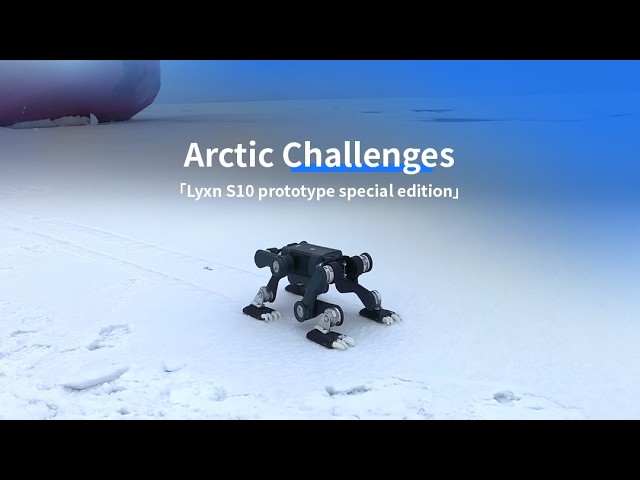
A modified version of Lynx S10, an autonomous robot developed by China-based DEEP Robotics, has become the first quadruped platform to walk on Arctic Ocean ice floes. It successfully demonstrates that autonomous machines may one day perform some of the most hazardous fieldwork in places where human access is limited. 

“The Lynx S10 enables autonomous path planning and intelligent obstacle avoidance,” the DEEP Robotics team notes.

The achievement is significant not because a robot survived the cold, but because it showed that compact autonomous systems can navigate unpredictable ice, snow, and water-filled terrain that even experienced researchers approach with extreme caution.

A compact but highly capable machine

The Arctic expedition was designed as a real-world stress test for the Lynx S10, a compact quadruped robot that weighs less than 20 kilograms even with its battery installed. 

Unlike larger robotic platforms that require extensive transport and setup, the machine can be carried and deployed by a single person. “Its compact body allows single-person portability and rapid deployment, enhancing operational mobility,” the DEEP Robotics team claims.

Despite its small size, it is equipped with sixteen precision joints that allow it to bend, twist, and maneuver through spaces that would be inaccessible to bulkier robots.

The standard version of the robot is already highly capable. According to its creators, “Equipped with a next-generation AI motion control and gait algorithm, the Lynx S10 performs a variety of extreme maneuvers.”

For instance, it can travel at speeds of up to 8 m/s on flat ground, climb over obstacles as tall as 50 centimeters, and switch between wheeled and legged movement depending on the terrain. 

When necessary, it can even rise into a bipedal stance to gain additional height and visibility.

To operate independently, the robot relies on an advanced perception system. 

Four ultra-wide-angle cameras equipped with high-dynamic-range lenses continuously monitor its surroundings, while front and rear LiDAR sensors generate detailed three-dimensional maps. This allows the machine to identify obstacles, plan routes, and navigate without constant human control. 

Its rugged design also enables operation in harsh environments. The standard platform is rated IP66 against dust and water intrusion, functions in temperatures from minus 20 to 55 degrees Celsius, carries payloads exceeding 8 kilograms, and can automatically locate and travel to a charging station when battery levels become low.

However, Arctic ice presented challenges that went far beyond the robot’s original design specifications. 

Teaching a robot to walk on floating Arctic ice

Engineers therefore modified the platform before deployment. The standard wheels were replaced with large biomimetic paws inspired by the broad feet of polar bears. These custom feet spread the robot’s weight across a larger surface area, helping prevent it from sinking into soft snow. 

Anti-slip textures improved grip on slick surfaces, while integrated crampons provided extra traction on hard ice. The robot’s sealing was also upgraded from IP66 to IP67 for greater protection against water intrusion.

Researchers introduced another unusual modification for environments where ice and water mixed together. By increasing the effective surface area of the limbs, the robot’s legs could function almost like paddles, allowing it to move through slushy conditions that would challenge conventional wheeled systems.

The Arctic tests quickly revealed why such adaptations were necessary. In several locations, snow concealed dangerous meltwater pools beneath the surface. The robot encountered terrain that appeared stable but actually floated above hidden pockets of water. 

Thanks to its redesigned feet and traction system, it maintained stability while traversing these deceptive surfaces. In one instance, it successfully glided across an area that looked like solid ice but concealed water underneath. 

Later tests pushed the machine into regions where ice and water were intermixed, and the modified limbs enabled it to continue moving through the difficult terrain.

More importantly, this was not a finished commercial product being showcased under controlled conditions. The Arctic vehicle was still an alpha-stage prototype. 

The machine matters beyond the Arctic

The broader significance of the project extends well beyond a single expedition. Environmental researchers and emergency responders often need to operate in locations that are dangerous, remote, or impossible for humans to access safely. 

Lynx S10 “confidently handles challenging environments such as dusty sites, heavy rain, and humid/foggy conditions,” the researchers at DEEP Robotics added.

This lightweight autonomous robot is capable of crossing unstable ice and moving through mixed ice-water environments. Therefore, it could help collect environmental data, monitor climate-related changes, and support search-and-rescue operations without exposing people to the same risks.

Researchers are now using the performance data gathered during the mission to further improve the design.  Hopefully, future versions will be even more capable of handling unpredictable natural environments. 

You can read more about Lynx S10 here.

💾

The Lynx S10's ability to navigate dust, heavy rain, and unstable terrain makes it a game-changer for emergency responders.
  •  

World’s first working nuclear clocks built with thorium nucleus after decades of effort

For decades, nuclear clocks have existed as one of physics’ most tempting promises. A device that could keep time even more accurately than today’s best atomic clocks. Now, two independent research teams have turned this idea into reality. 

Researchers in China and Europe have demonstrated working nuclear clocks based on the nucleus of thorium-229, a rare isotope whose unique properties have long made it the leading candidate for next-generation timekeeping.

The achievement represents much more than a new kind of clock. Since a nucleus is far better shielded from environmental disturbances than the electrons used in atomic clocks, nuclear clocks could eventually become the most precise timekeepers ever built. 

Plus, this breakthrough could improve navigation, gravitational sensing, and tests of the laws governing the universe. 

As the researchers note, “by making a laser-addressed atomic nucleus an operational clock reference, this work extends quantum metrology from electronic to nuclear transitions, and opens a new platform for compact clocks, solid-state nuclear quantum sensors and precision tests of fundamental physics.”

Turning a thorium nucleus into a clock

Modern atomic clocks keep time by measuring the frequency of light absorbed or emitted when electrons jump between specific energy levels inside an atom. 

As these frequencies are extremely stable, counting their oscillations provides an exceptionally accurate way to measure time. Physicists have long envisioned building a clock using a nucleus instead of electrons. The idea is attractive because atomic nuclei are much smaller and more isolated from the outside world. 

Stray electric and magnetic fields that can slightly disturb electrons have far less influence on the nucleus. In principle, that should allow a nuclear clock to achieve even greater stability and precision.

“Such a nuclear clock might rival or outperform current optical clocks based on electron-shell transitions in atoms or ions, is expected to be more robust against external perturbations, and provides enhanced sensitivity in clock-based tests of fundamental principles of physics,” the researchers explained.

However, the problem is that almost all nuclear energy transitions are far too energetic to be controlled with lasers. They typically require high-energy gamma rays rather than ordinary laser light.

Thorium-229 is a remarkable exception. Its nucleus possesses an unusually low-energy excited state that can be reached using ultraviolet laser light. For years, physicists recognized that this made thorium-229 the only known realistic candidate for a nuclear clock.

Even so, the task remained extraordinarily difficult. The required transition occurs at a wavelength of roughly 148 nanometers, deep in the vacuum ultraviolet region of the electromagnetic spectrum. 

Producing stable laser light at this wavelength and precisely matching it to the nuclear transition pushed existing technology to its limits.

Two teams, one breakthrough

The two groups solved the problem using broadly similar strategies. One team, led by researchers at Tsinghua University, and another from the Vienna Center for Quantum Science and Technology, embedded thorium-229 atoms inside calcium fluoride crystals. 

“Here, we implement a thorium-229 nuclear clock by stabilizing a continuous-wave laser to the 148 nm nuclear transition with rapid feedback based on continuous absorption spectroscopy,” the researchers from the Vienna Center note.

The crystal acts as a solid host that holds large numbers of thorium nuclei in place while allowing laser light to interact with them. Both groups then illuminated the crystals with highly specialized continuous-wave vacuum ultraviolet lasers tuned near the thorium nuclear transition.

Although the overall concept was similar, the teams optimized different parts of the experiment. The Chinese researchers relied on a more powerful laser system to drive the nuclear transition. The European team instead used crystals containing a higher concentration of thorium nuclei, increasing the number of nuclei available for measurement.

Once they had successfully excited the nuclei, the researchers needed to demonstrate that the system could function as a true clock rather than simply detecting the transition.

So did the system work?

The Chinese team locked the frequency of their vacuum ultraviolet laser directly to the nuclear resonance. In effect, the thorium nucleus became a frequency reference that continuously corrected the laser. 

The researchers reported a fractional frequency instability approaching one part in 10 trillion after a day of operation, showing that the nuclear transition could serve as a stable timekeeping signal.

The European team chose a different test. Instead of focusing solely on clock performance, they used their nuclear clock as a scientific probe. 

The researchers searched for ultralight dark matter, a hypothetical form of matter that could subtly alter the energy levels inside atomic nuclei. If such particles existed, they might produce tiny periodic shifts in the thorium transition frequency.

“We use the nuclear clock to constrain models of ultralight dark matter by searching for periodic fluctuations and slow drifts in the nuclear transition energy, on time scales between 20 sec and one day,” the Vienna team said.

No evidence of dark matter was detected. However, the experiment demonstrated that the nuclear clock was sensitive enough to rival or exceed the capabilities of the world’s best atomic clocks when searching for such effects.

Together, the two studies provide the strongest evidence yet that practical nuclear clocks are no longer a theoretical concept but an operational technology.

What happens next?

While these first-generation devices are still laboratory systems, they mark the beginning of a new era in precision measurement. 

Future nuclear clocks could outperform today’s most advanced atomic clocks because the thorium nucleus is naturally protected from many sources of noise that limit current technologies.

According to the researchers, such clocks could eventually improve satellite navigation, provide more precise gravitational measurements, and enable new tests of fundamental physics. 

The next major goal is to refine the technology, reduce its size and complexity, and compare multiple nuclear clocks against one another. 

You can read the studies here and here.

  •  
❌