❌

Reading view

Weighing 13.2 pounds, scientists build world’s smallest CT scanner that runs on 200 watts
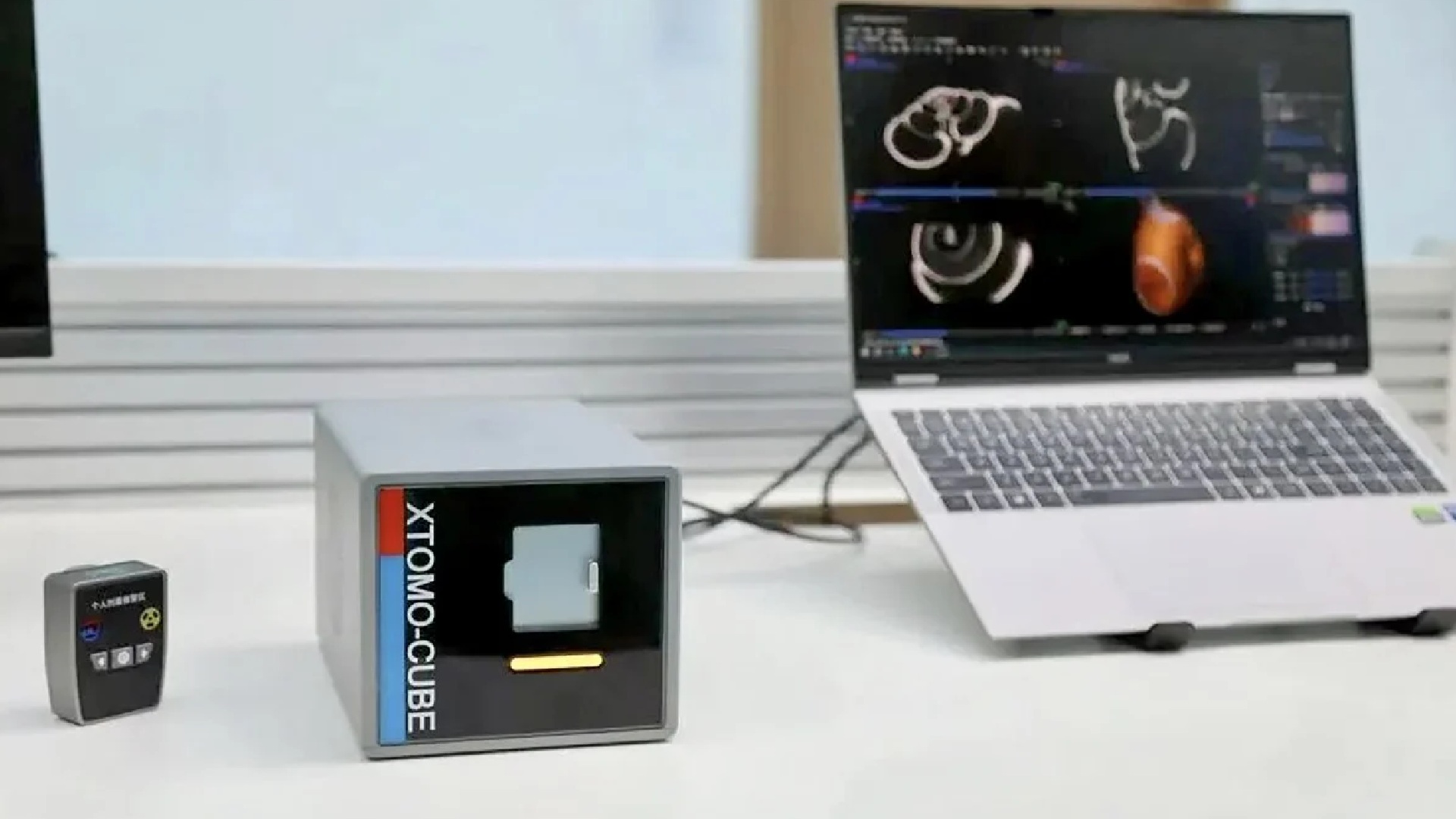
A newly developed CT scanner small enough to hold in one hand can now produce detailed 3D images of tiny fossils and archaeological relics. Researchers built the Xtomo-Cube, a device roughly the size of a desktop speaker. It weighs just 6 kilograms (13.2 pounds), earning it a nickname that undersells just how compact it really is.

Liu Baodong, a senior engineer at the Chinese Academy of Sciences and general manager of the company behind the device, described the machine’s standing plainly. It holds the title of world’s smallest and lightest CT system, earning it the nickname “palm-sized CT scanner.”

The device carries a spatial resolution of 80 micrometers, roughly the width of a human hair. That precision lets it analyze objects ranging from snail shells to medicine capsules.

Squeezed into four liters

The machine draws only about 200 watts of power, low enough to run off an ordinary portable power bank during fieldwork. Liu said every key component, including the X-ray source, rotating platform, and detector, was developed and manufactured domestically.

The previous record holder for smallest CT machine was a German-developed device weighing 19 kilograms, more than three times the new scanner’s weight. Liu described the central engineering challenge as squeezing an X-ray source, detector, and rotating platform into a four-liter package while still maintaining fine imaging detail.

From 3 meters to handheld

CT scanning uses X-rays captured from multiple angles to build a detailed 3D model of an object’s internal structure. The first clinical CT scanner appeared in London in 1971, built by British engineer Godfrey Hounsfield. That original machine measured 3 meters (9.8 feet) long, could only scan a patient’s head, and took roughly five minutes to generate just two 2D images.

Hospitals today rely on CT scanners routinely to spot tumors, internal bleeding, and other injuries. Researchers also use similar machines to examine fossils, archaeological finds, and industrial components without causing damage. Despite those expanding applications, CT scanners have remained large and heavy. A typical hospital scanner stands roughly 2 meters tall and wide and weighs around 2 metric tons, while some industrial systems grow even larger.

Liu compared the range of CT scanners to vehicles, from sports cars to trucks, describing the new device as the compact car of the category. He said the goal was never to scan everything, but specifically to look inside small objects that existing large machines handle poorly.

The scanner’s compact size and relatively low-energy X-rays could also suit university classrooms and research labs. Unlike many commercial CT systems, its settings and raw imaging data remain open to users. That openness lets students and researchers experiment directly with how CT images are collected, reconstructed, and improved.


  •  

Ouster’s Rev8 OS1 Max resolves power lines from 200 meters using native color lidar

Aerial mapping crews have long faced an awkward tradeoff: fly low enough to resolve a power line, and a single mission barely covers a fraction of the corridor. Fly high enough to cover ground efficiently, and thin objects that matter most start disappearing into the noise. Ouster says its Rev8 OS1 Max native color lidar sensor eliminates that compromise, delivering twice the precision and accuracy of its previous generation for drone-based mapping.

The company announced surging customer momentum for the sensor. Payload integrators and drone manufacturers across the aerial mapping market are selecting it for utility corridor inspection, infrastructure management, and defense applications. Powered by Ouster’s L4 Max chip, the sensor pairs 256 channels of survey-grade 3D range data with native 48-bit color. That combination lets operators maintain fine detail even at high survey altitudes.

Twice the prior precision

The Rev8 OS1 Max produces low-noise point clouds with thin surface walls. It reaches plus-or-minus 0.25 centimeters of precision and plus-or-minus 1.25 centimeters of accuracy, twice the precision and accuracy of the previous Rev7 generation. Every sensor undergoes calibration across range, reflectivity, temperature, and beam angle before shipping, keeping results consistent from one unit to the next.

Tighter beam collimation gives the sensor a spot size up to 50 percent smaller than Rev7. That keeps power lines, wires, branches, and canopy gaps cleanly resolved rather than blurring into surrounding surfaces. With 200 meters of range at 10 percent reflectivity, that detail holds at the altitudes mapping teams typically fly, roughly 80 to 120 meters above ground. That range lets operators fly wider swaths and cover corridors in fewer passes.

Color at the sensor

Unlike conventional systems that align a separate camera with lidar data afterward, the Rev8 OS1 Max assigns RGB color values directly at the detector. Because color and geometry are captured by the same sensor at the silicon level, there’s no parallax between them and no separate calibration step. That design shortens the colorization work that normally sits between flight and finished deliverable.

Ouster’s Rev8 OS digital lidar sensors are designed and developed in the US. They comply with supply chain security standards under Section 164 of the FY2025 National Defense Authorization Act. The company also offers Build America, Buy America Act-certified sensors for government, utility, and enterprise operators with domestic sourcing requirements.

Built for harsh conditions

The sensor carries IP68 and IP69K ingress protection, 100 G shock resistance, and an operating range of minus 40 to plus 85 degrees Celsius. It’s built to handle extreme weather across multirotor and fixed-wing drone platforms. Stuart Landesberg, CEO of drone mapping company Seneca, said the durability rating has proven invaluable for fire agency partners operating in unforgiving heat and cold. It lets crews fly in conditions that would ground other platforms.

Frank Darmayan, CEO of GeoCue, said pairing the company’s TrueView payloads with the Rev8 OS1 Max lets it offer a compliant, high-performance option for customers monitoring critical infrastructure. Beyond aerial surveying, Flyability is evaluating Ouster’s Rev8 OS0 lidar for its collision-tolerant Elios 3 drone, aiming to bring native color 3D mapping into hazardous, GPS-denied industrial environments. Ouster is showcasing the Rev8 OS1 Max at INTERGEO in Munich this week, running September 15 through 17.

  •  

Genuinely human: Bionic emotion-sensing humanoid robot sheds real tears while talking

“Can you shed tears for me?” a visitor asked. “Of course,” the robot replied, and its eyes welled up on command. That brief exchange became one of the standout moments at the 2026 Inclusion Conference on the Bund in Shanghai. A bionic emotion-sensing robot demonstrated its ability to physically cry in response to a simple spoken request, catching visitors off guard with just how natural the reaction looked.

The robot is built on a three-layer technical architecture designed specifically to generate convincing human emotional responses rather than simple pre-programmed animations. Its ability to produce tears on cue points to a deeper engineering goal: making robotic emotional expression feel spontaneous and responsive, rather than scripted.

Two facial technologies

Traditional systems used to animate robotic faces rely on servo motors. Those motors physically pull silicone facial skin into different shapes to generate expressions like smiles, frowns, or surprise. That approach has powered most emotionally expressive robots shown publicly in China over the past two years, letting them blink, glance around, and shift expression in real time.

The next generation of the technology moves beyond that mechanical pulling system entirely. Developers plan to add bionic muscles beneath the robot’s synthetic skin. That shift is meant to let the robot generate a meaningfully wider range of facial expressions than servo-driven skin alone can produce. Rather than a limited set of pre-built expression shapes, muscle-based actuation could let the face shift more continuously and naturally between emotional states.

Producing actual tears, as the robot did during its conference demonstration, adds a physiological layer on top of that facial architecture. Rather than relying on expression alone, generating a genuine fluid response mimics one of the most recognizably human signals of emotion. That signal is difficult to convincingly fake through mechanical movement alone.

A bigger tech showcase

The robot appeared as part of a wider technology exhibition running alongside the conference. That exhibition spanned nearly 15,000 square meters and drew more than 300 science and technology exhibitors. The 2026 Inclusion Conference on the Bund ran under the theme “Building the AI Economy Together.” It featured a main forum alongside more than 40 sub-forums exploring different facets of China’s expanding AI industry.

Emotionally expressive robots have become an increasingly prominent showcase at major Chinese technology events over the past year. That trend reflects a broader industry push to make human-robot interaction feel more natural and less mechanical.

Whether audiences respond to a crying robot with genuine emotional engagement or simple curiosity, demonstrations like this one carry a clear signal. Chinese robotics developers are now investing seriously in the physical, physiological details of emotional expression, not just the underlying artificial intelligence driving it.

  •  

Volvo’s 50-ton excavator skips recharging entirely using a 35-meter grid cable reel

A new 50-ton electric excavator from Volvo Construction Equipment is designed to never need a battery recharge. It uses a 35-meter cable reel to draw power directly from the grid instead. The EC500 Electric is now undergoing pre-production testing in Norway, running real work at active job sites months before its official production launch.

Volvo built the EC500 Electric to match the performance of its diesel-powered counterpart, a machine the company’s customers already know well. Saying the two perform identically is one thing, though. Proving it in the field is another matter entirely. The new model is significantly larger than Volvo’s existing 30-ton EC230 Electric, and the excavator remains so early in development that it isn’t yet in full production.

Grid power, no downtime

The excavator carries an onboard high-voltage battery rated for two to three hours of continuous use on its own. Its 35-meter cable reel lets the 50-ton machine plug directly into grid power instead. That connection enables operation around the clock across shift after shift without ever needing to stop and recharge.

EC500 Electric on the move; by Volvo CE.

That grid dependency comes with its own tradeoff, since reliable power access can’t always be taken for granted on every job site. Mike Switzer, a heavy equipment fleet buyer and co-host of The Heavy Equipment Podcast, said that reality applies broadly across the industry. Working for a company, he said, doesn’t automatically guarantee power is available wherever that work happens.

Handling uneven power

Volvo’s battery-electric system runs on a 400-volt base designed specifically to adapt to varying grid conditions on different job sites. That flexibility is meant to help customers manage the practical realities of fluctuating site power while reducing the demands the excavator places on existing job site infrastructure.

The first EC500 Electric unit in customer hands is currently working across quarrying, road building, and tunneling applications in Norway. Volvo said the ongoing test program is designed to funnel real-world feedback on the machine’s behavior, performance, and operator experience directly into its final development stages.

Volvo described the approach as ensuring the machine gets developed around more than technical specifications alone. It also incorporates the daily requirements of customers working in some of the most demanding applications the equipment will actually face. Early data gathered from the pilot program is already shaping refinements ahead of the EC500 Electric’s planned production launch in spring 2027.

  •  

China reinforces Taiwan-facing artillery with upgraded 155mm howitzers this year

China has reinforced artillery firepower facing the Taiwan Strait, deploying additional 155mm PLZ-05 self-propelled howitzers to replace older equipment. State broadcaster CCTV reported Sunday that a combined-arms brigade under the People’s Liberation Army’s 71st Group Army received a batch of the howitzers over the past two months. The deployment phased out the brigade’s previous 122mm artillery, an older and less capable system.

The brigade conducted its first live-fire test with the new howitzers following the deployment. The 71st Group Army belongs to the Eastern Theatre Command, which holds primary responsibility for military operations facing Taiwan, the East China Sea, and Japan.

A brigade-level first

This deployment marks the first time the PLZ-05 has been assigned specifically at the brigade level. The system was originally fielded at the group-army level, where it operated as a long-range suppression weapon rather than equipment directly integrated into brigade formations. Moving the system down to the brigade level represents a structural shift in how the PLA organizes its heavy artillery assets.

Brigade officer Sun Xialong said receiving 155mm self-propelled howitzers for the first time significantly improved the unit’s overall combat effectiveness. That framing suggests the PLZ-05’s move down to brigade level reflects a deliberate effort to streamline artillery firepower closer to frontline combat units.

Swapping between commands

The howitzers arrived painted in brown desert camouflage. The tracked vehicles appear to have been relocated from the Western Theatre Command, rather than built as new equipment specifically for the 71st Group Army. In their place, the Western Theatre Command has instead received lighter, wheeled PCL-181 155mm self-propelled howitzers. That design is better suited to the plateau and mountainous terrain that command typically operates across.

That swap suggests Beijing is deliberately matching different howitzer designs to the specific terrain and operational demands each theatre command faces. It’s a different approach than distributing identical equipment uniformly across the PLA’s various regional forces.

  •  

DARPA launches new hypersonic missile program to counter China’s YJ-19 and CJ-1000

A year after China unveiled the world’s first operational air-breathing hypersonic missiles, the United States is launching a new program aimed at catching up. The Defense Advanced Research Projects Agency will bring contractors together later this month. The agency plans to outline requirements for its Next Generation Hypersonic Cruise Missile, according to its website, with air-breathing propulsion sitting at the center of the effort.

Unlike rocket-powered missiles, air-breathing weapons draw oxygen directly from the atmosphere instead of carrying an onboard oxidizer. That design frees up weight that can instead go toward additional fuel or a larger payload.

China went public first

China displayed that same air-breathing approach at a massive military parade in Beijing last year. The parade marked the 80th anniversary of the country’s victory in World War II. That event introduced the YJ-19 anti-ship missile and the larger, road-mobile CJ-1000. Both are believed to run on air-breathing scramjet engines and were presented as weapons already in active service with the People’s Liberation Army.

The YJ-19’s distinctive air intake was clearly visible during the parade. Chinese state media described the CJ-1000 as built for far longer-range strikes against targets on land, at sea, or in the air. Outside of Russia’s ship-based Zircon missile, the YJ-19 and CJ-1000 are considered the world’s only other operational scramjet-driven hypersonic weapons.

More than an upgrade

DARPA has signaled it isn’t simply looking to refine existing American hypersonic designs. In an industry request issued last month, the agency called for entirely new propulsion systems, fuels, and boosters. Those systems need supporting technologies capable of withstanding the extreme heat generated during hypersonic flight.

The resulting missile could ultimately come in multiple sizes, ranging from smaller weapons carried by tactical aircraft to considerably larger systems launched from bombers or ground-based platforms. That flexibility mirrors the range of launch options China has already demonstrated across its own hypersonic missile family.

Darpa’s earlier air-breathing hypersonic effort, the Hypersonic Air-breathing Weapon Concept, completed its first successful flight test in 2021. It has continued flight testing since, laying some of the technical groundwork this newer, more ambitious program now aims to build on.

  •  

Bird-inspired ultrablack wool capture 2.43 kg of water per square meter for 10 hours

Nearly half the world’s urban population could lack access to clean drinking water by 2050, a 50 percent jump from 2016 levels, according to current scientific projections. Cornell researchers have turned to an unlikely source for a possible answer: the same deep-black bird feathers that inspired one of the darkest fabrics ever created.

A team led by Larissa Shepherd, assistant professor in Cornell’s Department of Human Centered Design, has demonstrated something surprising. Polydopamine-dyed wool, including an ultrablack version inspired by the magnificent riflebird, can purify saltwater using nothing but sunlight. Kyuin Park, formerly of Shepherd’s Responsive Apparel Design Lab, led the study, published in the journal Advanced Science.

Built to trap light

Polydopamine is a polymer inspired by melanin, the pigment that gives mussels their dark coloring. The compound bonds strongly to other materials and absorbs near-infrared light, converting it directly into heat. Shepherd’s lab previously used polydopamine-dyed wool, combined with plasma etching that creates light-trapping nanofibrils, to produce a record-setting ultrablack material mimicking the riflebird’s feathers.

For this study, the team applied that same material to a different problem: desalination. They used a technique called interfacial solar vapor generation. A specialized material sits partially submerged in water, heating its surface with sunlight and converting it directly into vapor. That vapor then condenses back into potable water, leaving behind the vast majority of the original salt content.

Shepherd said wool’s biodegradability sets this approach apart from many existing desalination materials. Unlike plastic-based systems, wool won’t leave microplastics or other lasting residue behind as it breaks down over time.

A vertical output boost

Researchers tested three wool architectures across three physical configurations. Those included horizontal, positioned flat against the water’s surface; one-sided vertical; and two-sided vertical, using mirrors to illuminate both faces of the material at once. The two-sided vertical setup performed best by a wide margin.

Ultrablack-dyed wool in that configuration captured 2.43 kilograms of water per square meter of fabric per hour. Wool dyed with polydopamine alone, without the extra ultrablack treatment, reached 2.21 kilograms per square meter per hour. Both figures came in nearly double the output of traditional horizontal evaporation setups.

The material also resisted salt fouling, a common failure point for solar desalination systems, running continuously for 10 hours without salt buildup interfering with performance. Salt levels in the resulting water stayed well below World Health Organization drinking water standards, according to Shepherd.

Ultrablack versus simpler wool

Shepherd said polydopamine-only wool already performs well enough that the extra plasma-etching step might not always be worth the added effort. Reaching ultrablack requires that additional step. Over a full year of operation, though, she said that extra evaporation boost could prove worthwhile. Ultrablack represents a comparatively modest additional step once the base polydopamine treatment is already in place.

Future research will test the dyed-wool technique directly on rainwater and wastewater, alongside improved designs for actually collecting the purified water once it’s produced.

  •  

How scientists turned foam structures into white, water-repellent printable films

A single manufacturing step can now do something that normally takes two separate chemicals. It makes a material bright white and water-repellent at the same time, without using either titanium dioxide or PFAS. Researchers at Kyoto University say the technique could remove two of the materials industry’s most persistent chemical dependencies in one move.

Professor Easan Sivaniah, at Kyoto University’s Institute for Integrated Cell-Material Sciences, led the project with collaborators from Tokyo Metropolitan University and Donghua University. The team calls the resulting process Deep Foam Photolithography.

Two chemicals under pressure

Titanium dioxide has long served as the default white pigment across packaging, films, and coatings. The European Union recently banned its use as a food additive, though, over safety concerns. PFAS compounds face a parallel reckoning. These fluorinated chemicals give materials their water- and oil-repellent properties, yet mounting evidence of their environmental persistence has manufacturers worldwide hunting for substitutes.

Sivaniah’s team set out to solve both problems using physics rather than chemistry. Rather than finding safer replacement chemicals, they asked whether a material’s structure alone could deliver the same effects.

A trick borrowed from nature

The underlying phenomenon is called structural whiteness, and it appears throughout nature without any pigment involved at all. Snow, sea spray, and clouds all owe their brightness to how light scatters off foam-like structures made mostly of air. That same principle is at work in plant tissues and the protective nests certain frogs build.

That principle even shows up in centuries-old art. The blinding white of the waves in Hokusai’s The Great Wave off Kanagawa comes entirely from light scattering off bare washi paper fibers. The print itself contains no white ink at all.

Researchers engineered porous structures that replicate this same light-scattering effect, drawing additional inspiration from how light interacts with leaves and flower petals in nature.

A two-step process

Making the material requires just two steps. Light exposure first breaks a polymer down into smaller molecular fragments. A mild solvent treatment then causes those fragments to react and swell, forming an open, porous structure throughout the material.

That single process yields two properties at once. Internally, the porous structure scatters light to produce bright whiteness with no added pigment whatsoever. On the surface, that same structure becomes rough enough to repel water and oil, mimicking the effect seen on a lotus leaf.

Working with textile researchers at Donghua University, the team confirmed the process works on fabrics in addition to printable polymer films. Crucially, it required no newly invented specialty chemicals, succeeding instead with polymers already available commercially.

The resulting platform supports printing resolutions up to 20,000 DPI while delivering structural whiteness and water repellency together, all without titanium dioxide or PFAS. Rather than relying on added pigments or persistent chemical coatings, the approach builds both color and function directly into a material’s physical structure. That points toward a lighter, more sustainable way to manufacture everyday materials.

  •  

Former SpaceX engineers unveil three satellite platforms for customer-owned constellations

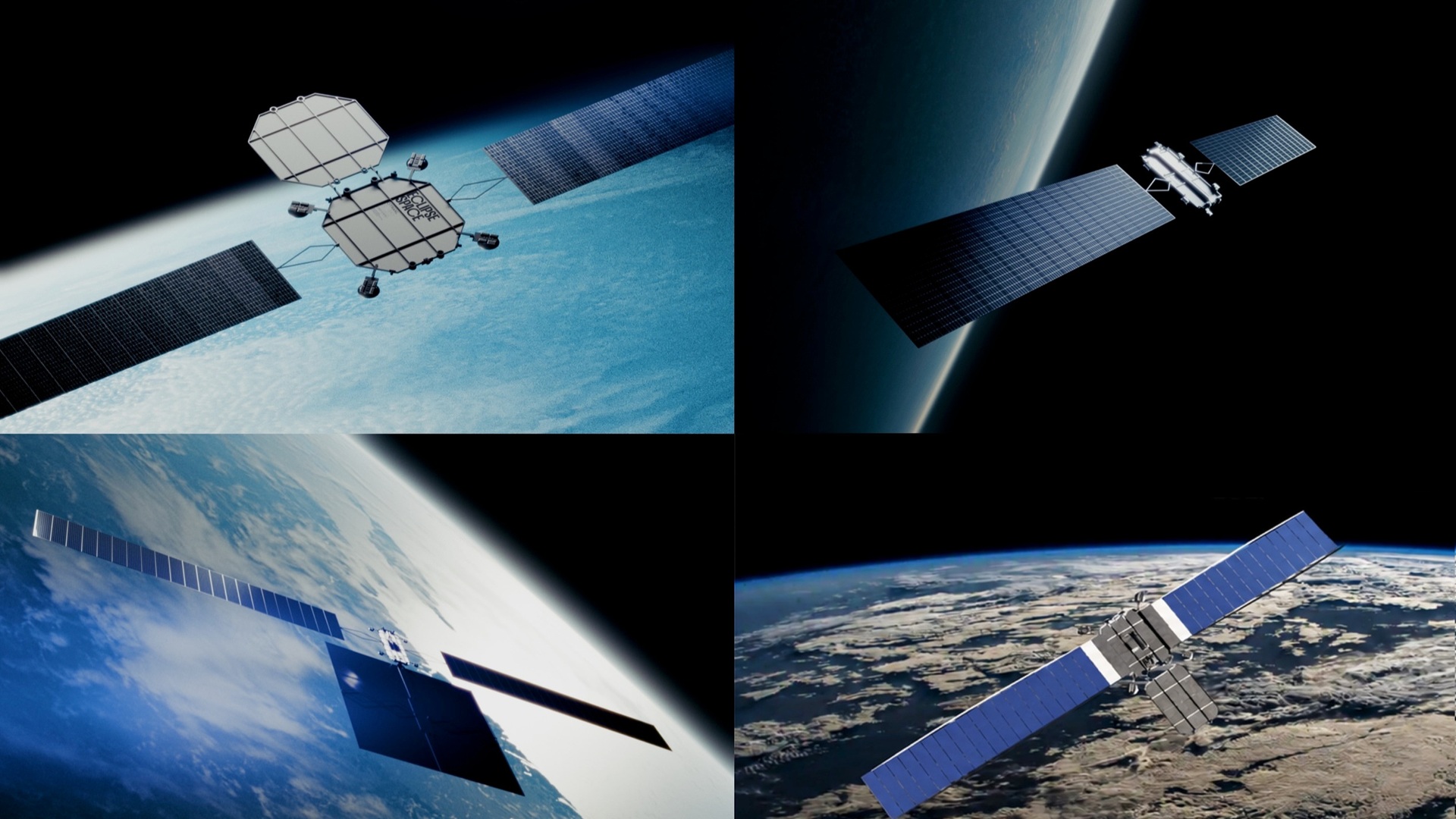
Eclipse Space has unveiled three satellite platforms designed to let nations and companies build and operate their own space-based constellations, rather than leasing capacity from someone else’s network. The Redmond, Washington-based company was founded by engineers who previously built and scaled SpaceX’s Starlink system. It announced the platforms alongside a new power systems partnership with France’s Gama, ahead of World Space Business Week in Paris.

Eclipse designs and integrates everything a customer needs to run an independent constellation, including satellites, payloads, ground infrastructure, launch, and ongoing operations. CEO Derek Huerta said the company built its business around a different model than typical satellite operators. It gives customers complete infrastructure they can operate themselves, rather than infrastructure Eclipse continues to control.

Three platforms, one architecture

CitraSat, the first of the three platforms, handles direct-to-device communications, connecting standard mobile phones without requiring a dedicated dish or terminal. Its flat-panel design integrates a 3.5-meter S-band phased array, multi-gigabit E-band backhaul for ground connectivity, and V-band links for communicating between satellites in the same constellation.

The flat-stack design maximizes how many satellites fit on a single launch, and each unit carries an operational life of more than five years.

SliceSat targets high-throughput broadband instead, delivering high-speed connectivity directly from orbit without relying on terrestrial fiber networks. It packs four Ku-band phased arrays alongside multi-gigabit V/E-band feeder links and the same V-band inter-satellite connectivity found on CitraSat. The design aims at building resilient, low-latency broadband networks at regional or global scale.

SurgeSat extends the platform into an entirely new mission category: high-performance computing and data storage conducted directly in orbit. Designed for 100-kilowatt-class power output, SurgeSat is built to process and store data for large-scale AI and computing workloads. It does so without routing that data through third-party systems, keeping both the data and the infrastructure processing it fully under customer control. It shares its core architecture, inter-satellite networking, and manufacturing approach with the two communications platforms.

Power built to scale

Powering SurgeSat’s computing ambitions, along with Eclipse’s broader plans for high-capacity constellations, drove the company’s new partnership. That partnership is with Gama, a Paris-based developer of large deployable space structures and power systems. The two companies plan to combine Gama’s deployable solar array expertise with Eclipse’s spacecraft power systems. They’re targeting scalability up to more than 100 kilowatts and a first in-space demonstration in 2028.

Andrew Nutter, Gama’s CEO, said both companies share an engineering culture built around high-volume production, since many of the same engineers previously worked together scaling hardware for Starlink. Eclipse described the arrangement as an example of its broader fabless approach. The company owns system architecture, design, and software, while relying on specialized partners for individual subsystems rather than manufacturing every component in-house.

From stealth to platforms

Eclipse emerged from stealth in June 2026. The company was founded roughly a year earlier by CEO Derek Huerta, a former SpaceX satellite payload engineering manager, alongside other SpaceX alumni. The company has said it targets a minimum production rate of five satellites per day, with an integrated demonstration spacecraft planned for 2027. This week’s platform announcements mark the company’s first detailed public look at the spacecraft hardware underpinning that broader ambition.

  •  

This 3D-printable robot clips onto your guitar and plays it like a human

A New Zealand engineer who goes by Bruce online has built a 3D-printable robotic system. It attaches to an acoustic guitar and plays it from a digital tab file. The output is real acoustic sound, not a digital or synthesized approximation. The device, called MegCell Pulse, is now funding on Kickstarter. Backers receive STL files for printing most of the components themselves, along with a parts list and assembly instructions.

The premise behind the Pulse is simple as a question and difficult as an engineering problem. What if a digital music file could control a physical instrument, producing sound with all the natural qualities of that instrument in its room? Most approaches to digital music run in the opposite direction, converting acoustic guitar recordings into digital files. The Pulse reverses that pipeline, taking a digital guitar tablature file and converting its instructions into physical finger and pick movements on a real guitar.

From tab file to acoustic sound

The Pulse attaches to the guitar body and uses two mechanical arms to replicate the movements of a human player. The fretting arm presses strings down between frets, taking the role of the guitarist’s left hand. The picking arm plucks those strings in time, taking the place of the right hand. The two arms are coordinated by gears and magnetic actuators. They draw their timing and positioning directly from a standard digital tab file. No custom programming is required for each piece of music — the system reads the tab notation as written.

What comes out of the guitar is the instrument’s own acoustic sound, shaped by its body, its strings, and the room it is in. That is meaningfully different from a synthesizer or playback system, which would produce a digitally modeled approximation. The Pulse makes the strings vibrate. The guitar amplifies those vibrations in the way it was built to.

What makes this one different

Robots playing instruments are not new, but most existing systems require significant engineering work to teach the machine a new song. The Pulse skips that by reading standard tablature. Any piece of music already encoded in tab format is immediately available without additional programming.

Bruce has also demonstrated the system as an assistive tool. It can take over fretting duties, allowing a one-handed player to produce a full performance. The human handles one mechanical role while the robot handles the other, creating a collaborative performance rather than a fully automated one.

The 3D-printable design has a practical advantage beyond accessibility: the system can be repaired and upgraded by reprinting individual components, rather than replacing a proprietary unit.

What it cannot do yet

The system does not cover the full length of most guitar fretboards, which constrains the range of music it can play. It cannot slide between frets, which rules out legato techniques and string bends. Chord strumming is also a more difficult motion to replicate than single-note picking, and the system’s handling of this technique is still developing.

Bruce acknowledges the Pulse is a work in progress. The key question now is whether the system can incorporate the small timing variations and embellishments that make a guitar performance sound human. That is the engineering problem that will determine how far the project can go.

  •  

Astronomers just released a map of universe so big it contains 4 billion objects

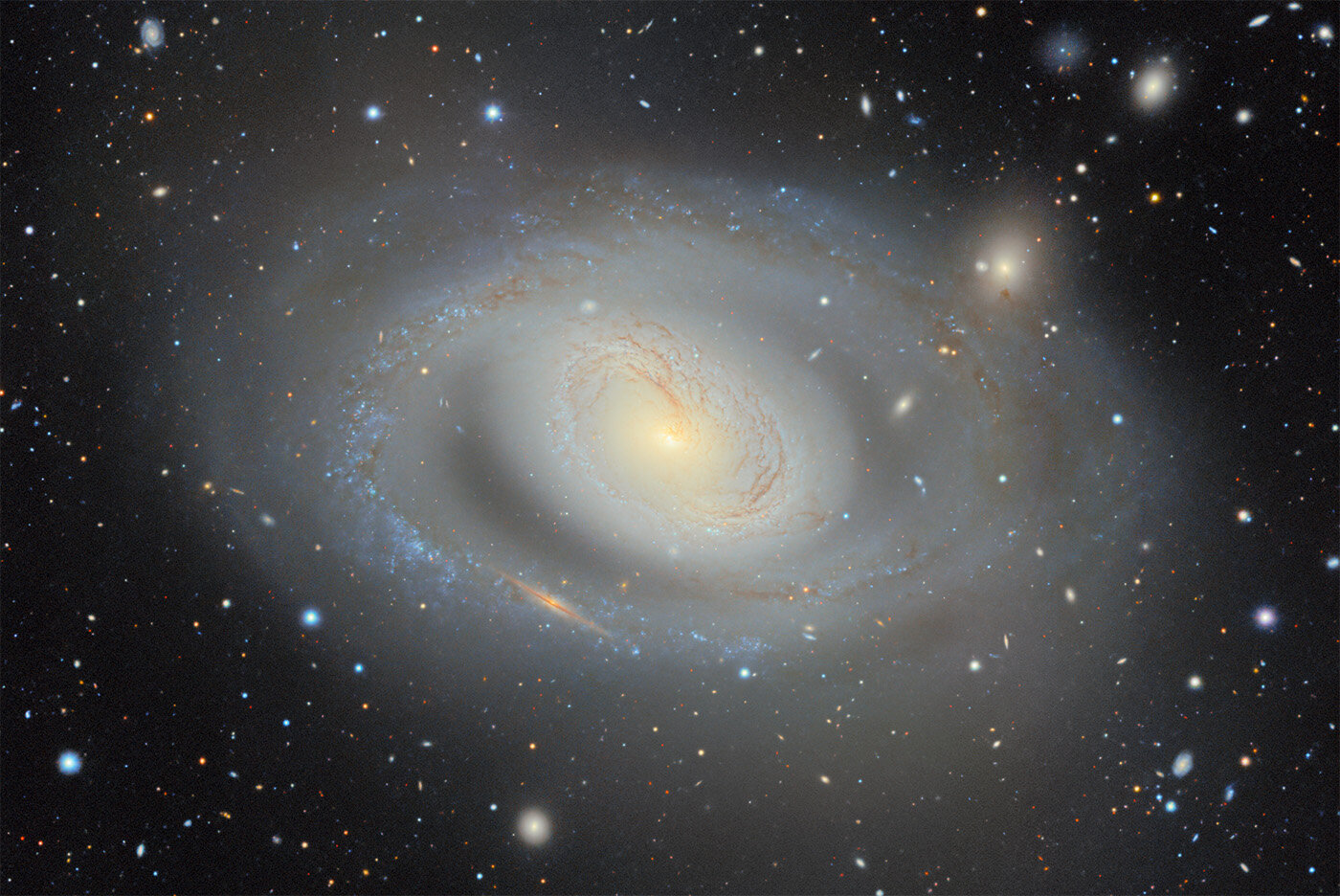
Astronomers have released the largest-ever 2D color map of the universe. The 5.6-trillion-pixel image contains nearly 4 billion celestial objects, assembled from more than 263,000 telescope exposures taken over 2,285 nights. The release comes from the DESI Legacy Imaging Surveys, led by Lawrence Berkeley National Laboratory. The data is publicly available through the Legacy Survey Sky Viewer, where anyone can explore the full map.

The map is not a single photograph. It is a composite of images from multiple telescopes, including the 570-megapixel Dark Energy Camera at Cerro Tololo in Chile and the Mayall 4-meter Telescope at Kitt Peak in Arizona. Each image was taken under different atmospheric and telescope conditions. Merging those images required about a year of software development. The actual processing took eight weeks on the Perlmutter supercomputer at the National Energy Research Scientific Computing Center in Berkeley.

A deep photo, not a distance map

A 2D sky map and a 3D map of the universe serve fundamentally different purposes. The 2D map is essentially a deep photograph. It records where galaxies and stars appear on the sky and how bright they are, across visible and near-infrared wavelengths. The 3D survey is DESI’s primary scientific mission. It adds the third dimension by measuring spectra from individual objects to determine their redshifts and therefore their distances from Earth. Before DESI can measure a galaxy’s distance, it must know the galaxy exists, and the 2D Legacy Surveys map is how it finds them.

The new map has been guiding DESI’s target selection since June 2026. Its release follows DESI completing its original five-year 3D survey in April, ahead of schedule. The instrument captured 47 million galaxies and quasars when the original target was 34 million, plus more than 20 million nearby stars.

DESI outran its own target list

The expansion of the 2D map was driven by a practical problem of success. DESI performed so efficiently that astronomers working on the project became concerned they would exhaust their pool of available targets. “It became clear we might run out of galaxies to look at and run out of sky, and we better start doing something about that,” said David Schlegel of Berkeley Lab, who works on both DESI and the Legacy Surveys.

Expanding the target catalog required expanding the 2D imaging survey it is built on, which produced the record-setting 5.6-trillion-pixel map now publicly available. With DESI continuing observations through 2028, the new catalog will support the instrument’s extended mission.

What the 3D survey has already found

The larger purpose of both the 2D and 3D maps is the study of dark energy, the unknown force that makes up roughly 70 percent of the universe and drives its accelerating expansion. DESI’s early results have produced one of the most consequential hints in modern cosmology: that dark energy may not be constant but weakening over time. If confirmed, that finding would require a fundamental revision of cosmology’s standard model.

The Legacy Surveys map is also being made available as a foundational reference for the next generation of astronomical instruments. This extends its scientific life well beyond DESI’s own mission. Astronomers and citizen scientists can access the Sky Viewer and search for rare phenomena across the nearly four billion objects now catalogued in visible form.

  •  

US domino team sets Guinness World Record by toppling 29,193 tiles in a 3D pyramid

A team of ten domino artists has set a new Guinness World Record for the most dominoes toppled in a three-dimensional pyramid, bringing down 29,193 tiles in a single chain reaction at a gym in Garden City, Michigan, on June 20.

Guinness World Records has officially certified the achievement, which was set by the FALLDOWN Domino Team led by Steven Price of Sprice Machines as part of a larger installation that incorporated no fewer than 123,456 dominoes in total.

The feat, documented in a YouTube video titled “123,456 Dominoes SUPERSIZED — FALLDOWN 2026,” has attracted widespread attention online for the scale and precision of its construction

Price has held four domino-related Guinness World Records previously and has served as a judge on Fox’s competition show Domino Masters. He holds a mechanical engineering degree, a background that is evident in the structural ambition of this project.

Building a 35×35 pyramid without triggering it

The three-dimensional pyramid that forms the centerpiece of the record sits on a base of 35 by 35 dominoes and rises in layers to a pointed apex. Constructing a 3D pyramid of this scale requires a level of precision that flat domino runs do not — every tile must be positioned accurately while the structure beneath it remains stable, and a single mistimed touch anywhere in the grid can bring the entire build crashing down prematurely.

Watch the video here.

The FALLDOWN team, which includes Michael Fantauzzo, Matt VanVleck, Gabe Dean, Alex Koops, Derek Koops, Stephan Burton, Brady Dolan, Evan Voeltner, and Aaron Bimrah alongside Price, spent multiple days installing the complete setup.

A world built from supersized everyday objects

The pyramid was not the only engineering feat in the room. The team built a themed installation around 123,456 dominoes arranged into giant versions of ordinary objects — enormous paperclips, oversized friendship bracelets, massive bonsai trees, school supplies and a rubber duck that appears mid-sequence.

These elements fed into a series of Rube Goldberg-style chain reactions that snaked through the entire installation before converging on the pyramid, making the final topple a product of everything that came before it.

Guinness required a traditional domino-to-domino start

The team had originally planned to use a special mechanical trigger to bring the pyramid down. Guinness World Records rejected the approach: to qualify for an official record, the entire chain must begin with a conventional domino touching the next in sequence, with no external mechanism initiating the fall. The team revised their plans accordingly, and the record-setting run began exactly as the rules required.

Price’s fifth Guinness record in domino art

The FALLDOWN record is Steven Price’s fifth Guinness certification in domino-related categories. His prior titles include the largest domino circle field, the longest domino wall, and the largest two-dimensional pyramid. Price first gained wider recognition as a 22-year-old when his Incredible Science Machine project, which involved 250,000 domino tiles, set records and went viral.

His YouTube channel, Sprice Machines, includes videos with over 30 million views, with the Lemonade Machine — a chain reaction that travels through an entire house to serve lemonade — among the most-watched.

  •  

99% carbon cut: DHL partners with VELA to launch wind-powered transatlantic cargo fleet

Seeking a concrete approach to eliminate greenhouse gas emissions from the world’s hardest-to-decarbonize logistics sectors, DHL Global Forwarding France has entered into a strategic partnership with French shipping company VELA.

Under the agreement, the global freight giant will offer commercial shipping options aboard custom-built, wind-powered cargo trimarans crossing the Atlantic Ocean. Scheduled to launch operations in early 2027, the initiative introduces a clean, maritime alternative that integrates directly into existing supply chains without disrupting standard logistics processes.

Global maritime shipping currently accounts for roughly 3% of worldwide carbon dioxide emissions, largely because the heavy fuel oil burned by traditional container ships produces intensive pollution.

While wind-propelled commercial transit remains a niche concept within the broader cargo industry, the new partnership aims to demonstrate the viability of large-scale commercial sailing. Under the strategic framework, DHL secures a dedicated allocation of cargo space aboard VELA’s specialized vessels, with volume commitments expected to scale up continuously alongside the expansion of the sailing fleet.

Operational routing and transatlantic port logistics

The new maritime service will establish a direct ocean route connecting the secondary ports of Caen-Ouistreham in France and New Haven, Connecticut. By avoiding heavily congested major shipping hubs, the direct point-to-point path significantly limits the need for complex transshipments.

VELA is targeting a reliable port-to-port transit time of approximately 15 days. This timeline allows the clean shipping framework to remain reasonably close to the pacing of conventional diesel-powered cargo ships.

The specialized service is specifically engineered for companies handling less-than-container-load (LCL) freight. Instead of loading large, heavy metal containers, the interior layout of the VELA sailing vessels is explicitly tailored for palletized cargo.

Each trip will accommodate up to 600 European Union pallets, maximizing space efficiency for industries that ship products in smaller batches. DHL will handle the entire onshore logistics ecosystem for each voyage, including pre-carriage transport, local customs clearance, and secure warehousing.

Specialized protection for temperature-sensitive products

To accommodate highly sensitive commercial goods, the vessels integrate a patent-pending refrigeration system called CoolSafe. This technology allows the zero-emission ships to cater specifically to industries with rigid environmental controls, including pharmaceuticals, luxury items, cosmetics, aerospace components, and premium wines or spirits. The cooling network is fully compliant with Good Distribution Practice (GDP), ensuring strict adherence to global pharmaceutical handling standards.

Crucially, the climate-control systems within the cargo hold do not draw energy from fossil fuels. The onboard refrigeration units are powered primarily by decentralized renewable energy sources integrated directly onto the vessel’s hull.

An independent lifecycle analysis conducted by the specialized consulting firm Carbone 4 verified the exceptional environmental performance of this setup. According to their metrics, the VELA system reduces greenhouse gas emissions by up to 99% compared to traditional transport options under specific assumptions.

Scaling sailing fleets for regular weekly departures

While the initial launch will deploy a single vessel, VELA and DHL have mapped out a clear path toward industrial scale-up. The long-term blueprint calls for the construction and deployment of five identical wind-powered ships on the Europe-to-United States route.

Once the full fleet enters active service, the companies will expand their scheduling to offer up to one reliable weekly departure in both directions across the Atlantic.

By proving that wind-powered freight can maintain rigid commercial schedules, the project partners intend to establish a repeatable model for sustainable shipping.

The initiative balances environmental accountability with real-world practicality, giving shippers a functional tool to cut emissions without compromising traceability, cargo security, or supply chain reliability. If the rollout scales as planned, it will mark one of the first regular, predictable wind-powered freight services connecting Europe and North America.

  •  

US Army launches Low-Cost Interceptor program, targets fall live-fire demonstrations

In a major structural shift designed to correct an unsustainable economic imbalance on the modern battlefield, the U.S. Army has formally launched its Low-Cost Interceptor (LCI) program. The defense initiative aims to end the practice of burning multimillion-dollar air defense assets to down inexpensive adversary drones that cost only a few thousand dollars.

Senior service officials announced a highly compressed procurement timeline for the program, establishing a firm target to execute the first live-fire capability demonstrations this autumn.

The launch follows months of strategic framework planning intended to quickly field scalable, affordable anti-drone solutions. Army Secretary Dan Driscoll clarified that these new budget-friendly interceptors are not meant to replace existing, high-end defensive networks.

Describing the service’s current premier air defense systems as “the Ferrari of a product,” Driscoll noted that while their capabilities are incredible, the Army urgently requires a mass-producible, low-cost alternative to supplement the fleet during prolonged, high-rate attrition conflicts.

Overhauling procurement

Rather than relying on traditional acquisition models—where a single prime contractor builds a highly proprietary weapon system from the ground up—the Army is breaking the LCI into independent structural subsegments.

Under this strategy, the service will source components from a wide pool of competing suppliers to reduce unit costs. Through its specialized xTech program, the Army plans to officially release a call for industrial white papers on July 6, 2026.

The upcoming solicitation will seek targeted technological solutions across four critical subsystem categories: rocket motors, advanced seekers, fire control and guidance tools, and an overarching weapons system integrator.

The chosen system integrator will be tasked with designing a flexible, open systems architecture that allows the Army to seamlessly hot-swap subcomponents as underlying commercial technologies mature.

Service officials indicated that if the submitted technologies show sufficient technical maturity, the xTech team may bypass lengthy prototyping phases and move selected vendors straight into full-rate production.

Resetting cost targets to combat inexpensive threat vectors

The fiscal parameters of the LCI program are explicitly shaped by the realities of modern asymmetric aerial threats, such as jet-engine-powered Shahed attack drones.

Military leaders have long warned that relying on premium, low-stock missiles to neutralize waves of mass-produced loitering munitions is financially unviable over extended campaigns. While the Army has declined to lock in a rigid price ceiling, leadership has established aggressive baseline cost targets.

Ideally, the service wants the final, all-up rounds to cost less than $1 million each. Furthermore, Driscoll previously indicated that the service’s ultimate target price point sits below $250,000 per individual interceptor.

Army leadership emphasizes that while the military will always expend whatever resources are necessary to defend American lives in an immediate combat theater, achieving a sub-million-dollar price point is absolutely vital to absorbing and repelling sustained drone swarms at a true theater-wide scale.

Securing intellectual property and empowering global allies

A foundational element of the LCI acquisition strategy is a strict emphasis on data and intellectual property (IP) sharing among participating contractors. Because the Army is assembling the final interceptor from separate components built by different firms, the service must secure the underlying IP rights.

Retaining these rights will allow the military to independently perform field repairs, reverse-engineer parts, and utilize 3D printing to accelerate maintenance in forward-deployed zones.

Furthermore, establishing clean IP boundaries will enable the Army to add the finished low-cost interceptors directly into its digital marketplace interface. The Pentagon already utilizes this marketplace framework to sell validated drones and counter-UAS platforms to allied nations.

By distributing these compatible, budget-friendly interceptors globally, the Army intends to build a unified defensive network in which international partners can seamlessly deploy identical, affordable munitions, even in austere theaters where standard American logistics are unavailable.

  •  

SpaceX secretly launches Starfall, a 10.2-ft disk return capsule for microgravity cargo

SpaceX has a new spacecraft, and it might already be in orbit. The company launched its secretive Starfall return capsule for the first time on June 23, lifting off aboard a Falcon 9 from Space Launch Complex 40 at Cape Canaveral Space Force Station at 6:52 a.m. EDT.

The mission caught many space watchers by surprise — SpaceX had revealed almost nothing about Starfall before launch, and the company cut its webcast roughly 10 minutes after liftoff, a practice typically associated with national security missions.

What SpaceX did say, via a post on X, was brief: Starfall “will enable affordable, routine access to the microgravity environment for scientific research and in-space manufacturing.”

The company added that the vehicle will “enable point-to-point delivery of critical cargo through space on rapid timelines” and create “a self-sustaining commercial in-space manufacturing market by offering access to microgravity and vacuum, loiter on orbit, and safe return from orbit as a service at scale.”

What Starfall actually is

Most of what is publicly known about Starfall comes from an environmental assessment published by the Federal Aviation Administration last month. According to the FAA document, Starfall is a disk-shaped spacecraft that stands about 2.5 feet (0.75 meters) tall and has a diameter of 10.2 feet (3.1 meters). It weighs roughly 4,600 pounds (2,100 kilograms) and can carry about 2,200 pounds (1,000 kg) of payload.

Starfall consists of two parts: an aluminum “top plate” that weighs about 3,090 pounds (1,400 kg) and a detachable carbon-fiber heat shield. The heat shield contains compressed nitrogen gas that powers the capsule’s attitude control thrusters, mechanically jettisons the shield before splashdown, and deploys the parachutes — all without liquid propellants or hazardous substances aboard.

The capsule carries no propulsion system and cannot deorbit itself. It is entirely uncrewed and not designed to carry passengers. The vehicle can launch on both the workhorse Falcon 9 and Starship, the megarocket SpaceX is developing to help humanity settle the moon and Mars.

SpaceX has not yet specified how long the test vehicle will remain in orbit before reentry. When the Starfall payload returns, SpaceX is targeting an area in the Pacific Ocean for splashdown, about 700 nautical miles (1,300 km) off the United States West Coast.

How many were launched?

It is unclear how many Starfall vehicles the Falcon 9 lofted on this initial flight. The FAA environmental assessment covered two demonstration reentries, and one or both may have been initiated by Tuesday’s launch.

SpaceX is not first — but may come to dominate

SpaceX isn’t alone in pursuing these opportunities. Varda Space has already launched and landed five of its 650-pound (300 kg) “W-series” spacecraft, which are designed to be both orbital mini-factories and return capsules. And another California outfit, Outpost Space, is developing a line of “CarryAll” return vehicles that can deliver very large payloads — up to 22,000 pounds (10,000 kg) — down from space with pinpoint accuracy, within 80 feet (25 m) of a target anywhere on Earth.

So SpaceX is not breaking new ground with Starfall. But the company is poised to play a leading role in the nascent Earth-return field, thanks to its launch dominance and vertical integration.

The Falcon 9 flew a whopping 165 times in 2025, and SpaceX envisions launching Starship thousands of times per year when that massive rocket comes fully online.

That launch economics advantage is decisive. Every orbital manufacturing company currently operating — including Varda Space Industries — uses SpaceX Falcon 9 rideshares to reach orbit. With Starfall, SpaceX is entering a market it has until now served only as a launch provider, potentially competing with its own customers for the same orbital manufacturing return payloads.

  •  

Cotton-inspired phase-change aerogel fabric achieves active thermodynamic heat regulation

Natural cotton fibers remain an apparel staple due to their exceptional softness, loft, and insulation. However, cotton presents a severe performance limitation when deployed in active sports or cold-weather gear: its hydrophilic structure acts like a sponge, absorbing perspiration and ambient humidity.

Once saturated, cotton fibers lose their structural loft and aggressively conduct heat away from the body, increasing the risk of severe hypothermia in extreme sub-zero environments.

To overcome this fundamental thermodynamic flaw, an engineering team at the Chinese Academy of Sciences has synthesized a lightweight, flexible, and entirely hydrophobic material that replicates the tactile fluffiness of cotton.

The research relies on an advanced material, a phase-change fiber aerogel (PCFA). Unlike static insulations, this active synthetic textile dynamically stores and releases thermal energy while remaining completely immune to water absorption.

Microencapsulated polymeric aerogel matrix

The structural architecture of the PCFA prototype consists of a highly porous, flexible network of specialized hydrophobic polymer fibers. Rather than applying a superficial water-resistant coating—which historically washes away or stiffens garments—the engineers embedded a dense matrix of microscopic capsules directly into the core of the polymeric strands during the fabrication phase.

These microcapsules house a specialized phase-change hydrocarbon compound engineered to function as an autonomous thermal gatekeeper. At standard or relatively cool sub-ambient temperatures, the hydrocarbon molecules arrange into a highly organized, tight crystalline pattern.

This binding behavior physically locks the surrounding polymer fibers together, creating a dense, static boundary layer that traps the wearer’s body heat inside localized micro-pockets.

Regulating thermal flux via molecular phase shifts

The primary innovation of the PCFA textile lies in its ability to undergo an autonomous molecular transition at a specific thermal threshold. When environmental temperatures or physical exertion push the fabric to a precise transitional temperature of 26.2°C (79.16°F), the internal hydrocarbon undergoes a controlled phase change, melting from a crystalline solid to an amorphous fluid.

This thermodynamic phase shift forces the microencapsulated matrix to relax, opening the fiber structure to release stored heat and enabling slightly higher thermal conductivity. During extensive laboratory stress testing using 6-by-20-inch swatches, the material automatically toggled between heat-retention and heat-dissipation cycles in response to shifting ambient air currents.

When subjected to extreme sub-zero simulations at -25°C (-13°F), a hand wrapped in the PCFA prototype remained significantly warmer than an identical hand wrapped in natural cotton insulation of equal thickness, proving its superior thermal barrier efficiency.

Hydrophobic Resilience and Industrial Wash Durability

Heavily prioritizing real-world resilience, the synthetic aerogel demonstrates total moisture immunity. When exposed to highly humid environments and direct water droplet impacts, the PCFA swatches actively repelled the liquid, remaining completely dry while adjacent natural cotton samples quickly absorbed the moisture.

The material also demonstrated superb mechanical elasticity and durability during repeated flex testing, retaining its structural integrity when wrapped tightly around a continuously bending mechanical finger.

To verify the fabric’s commercial viability for outdoor gear, the team subjected the PCFA swatches to twenty consecutive, high-turnover industrial laundering cycles. Post-wash auditing revealed that the material completely resisted fiber shedding, returned to its original fluffy volume immediately, and retained 97% of its baseline heat-trapping capability. The researchers note that because the phase-change material is securely microencapsulated, it cannot leak onto the wearer or degrade over time, paving the way for highly durable, low-maintenance extreme-weather clothing lines.

This breakthrough was first published in the journal ACS Energy Letters,

  •  

Orbital nervous system: China mulls space-based high-speed rail control infrastructure

Railway engineering researchers in Beijing are proposing a revolutionary shift: relocating the command, signaling, and control architecture of high-speed trains into space.

As described in the journal Railway Signalling and Communication Engineering, their comprehensive framework envisions a space-based train control system to govern vast high-speed rail networks from orbit. Bypassing ground infrastructure, this system promises resilience against natural disasters but also introduces new cybersecurity challenges.

Current high-speed rail networks depend on vast ground-based infrastructure—trackside beacons, signal lamps, and radio masts—to ensure safety. These remain vulnerable to extreme weather, floods, earthquakes, and lightning, which disrupt signals and ground control.

The proposed space-based model uses a dedicated satellite constellation to maintain constant data exchange with high-speed trains. Trains send location data to satellites, which relay it to ground control. Commands are sent back through the same route, protecting operations from terrestrial disruptions.

Mapping out cyber vulnerabilities and exploitation vectors

However, this space-based system introduces new digital vulnerabilities. Shen Xiangyu and his team at the CRSC Research and Design Institute Group, responsible for China’s railway signaling, conducted a threat analysis to identify ways the system could be compromised. They mapped several possible cyber-attack methods that could disrupt or manipulate the orbital control structure.

The main risk is signal spoofing. Hackers could imitate satellite transmission frequencies, sending false data to alter train operations. An attacker might send fake “movement authority” codes to cause unsafe speed changes or falsify train locations to clear tracks prematurely.

The study also highlights threats such as jamming attacks that drown out satellite signals, denial-of-service attacks that exhaust bandwidth, and tampering with onboard satellite receivers. Without safeguards, these attacks could result in serious safety failures.

Building a multilayered digital and physical defense matrix

To defend against these threats, the CRSC team designed a multi-layered cryptographic and sensor-based security system. Digitally, all communications between ground centers, satellites, and trains would be protected by military-grade encryption.

Satellites would have hardware firewalls and real-time intrusion detection to filter out unverified or corrupted commands instantly.

Physically, the system uses decentralized validation. Instead of relying solely on satellites, trains cross-check orbital navigation data with multiple ground-based sensors: onboard inertial navigation, legacy track circuits, and passive balises embedded in the tracks. This ensures commands are only executed if satellite data matches ground feedback, blocking spoofed signals from taking control.

Export potential and infrastructure leapfrogging

This orbital control system also has major economic implications. Backed by China’s National Key R&D Programme, it’s designed for global scalability.

Building high-speed rail in developing regions typically requires laying thousands of miles of cable through difficult terrain, such as deserts or mountains, making expansion costly and slow.

A space-based system allows countries to bypass decades of infrastructure development. Eliminating the need for trackside cabling and signal masts reduces costs and accelerates project timelines.

This makes high-speed rail viable in remote locations, positioning the satellite system as a competitive option for international transport projects.

  •  

NYU scientists reveal flocking birds mimic soft crystal mechanics in group movements

Decoding a long-standing ecological mystery, a team of mathematicians at New York University has demonstrated that flocking birds and schooling fish coordinate their high-speed group movements using the exact structural mechanics of soft crystalline materials.

The study reveals that organized lines of wildlife mimic atomic lattices, with individual animals behaving like “atoms” bound together by flexible, spring-like interactions. The findings establish a highly novel methodology for interpreting collective biological coordination.

Beyond purely ecological observations, this mathematical translation delivers vital structural data for engineering low-drag automotive fleets, highly coordinated robotic swarms, and aerospace systems.

The discovery was spearheaded by researchers at the Applied Mathematics Laboratory within NYU’s Courant Institute of Mathematical Sciences. Lead author Christiana Mavroyiakoumou, currently a fellow at Oxford University’s Mathematical Institute, along with Courant Professor Leif Ristroph and undergraduate researcher Jiajie Wu, established that animal columns closely match the structural properties of soft crystals.

These materials possess ordered atomic organizations that remain highly sensitive to external stimuli. The team discovered that this precise spatial fragility is exactly what allows biological collectives to effortlessly warp their formations without breaking rank when dodging predators or bypassing physical architecture, such as buildings or underwater reefs.

Parallels between soft crystals and living systems

To understand the intricate aerodynamics governing animal columns, the researchers proposed a mathematical framework that treats a flock or school as an elastic solid.

In a traditional soft crystal, the atomic organization is inherently fragile, meaning the repeating pattern of atoms can shift or deform easily when exposed to subtle changes in physical force or temperature.

The NYU mathematicians realized that this exact structural sensitivity mirrors how animal collectives navigate complex, real-time traffic challenges.

Rather than maintaining rigid, unyielding lines, birds and fish must continuously sense and respond to immediate environmental pressures. The flexible bonds that connect the group behave almost identically to the atomic springs that hold a soft crystal together.

While this structural configuration makes the collective composition fragile, the team notes that this fragility provides a significant survival advantage. It allows the animal line to behave as a highly responsive sensor array, enabling the group to quickly communicate situational changes down the line and reshape their geometry instantaneously to survive.

Simulating wildlife wakes with hydrodynamic models

Before this mathematical breakthrough, scientists understood the broad, macro-level dynamics that kept animal groups together, but the precise math governing their non-colliding, orchestrated maneuvers remained elusive.

By framing the problem through the lens of condensed matter physics, the NYU team was able to map out how individual animals leverage the fluid wakes of their neighbors. In a single-file, columnar formation, each animal generates a distinct aerodynamic or hydrodynamic trailing wave.

The trailing bird or fish relies on these fluid vortices to naturally regulate its distance from the leader, functioning exactly like a mechanical spring. This interaction creates a self-stabilizing feedback loop.

If an animal drifts too close, the fluid pressure pushes it back; if it falls too far behind, the localized drag dynamics pull it forward into the optimized slot. This mathematical insight explains how thousands of independent creatures can travel at high velocities without a centralized leader or manual communication.

Validating the lattice model with motorized “mock flocks”

To confirm that their predictive mathematical algorithms accurately reflected real-world fluid dynamics, the research team compared their results against physical laboratory simulations. The team deployed a specialized “mock flock” apparatus within a dynamic water-testing tank.

This system utilized a series of motorized, 3D-printed plastic wing foils designed to replicate the aerodynamic and hydrodynamic wakes generated by birds in flight or fish in mid-swim.

Driven to flap up and down in absolute unison, these automated flappers were allowed to freely adjust their positions horizontally within a single-file queue. Across various propulsion velocities, the mechanical swarm automatically self-organized into an evenly distributed line, relying solely on the surrounding fluid vortices to snap individual wings into perfect position.

The physical flappers behaved exactly as predicted by the soft-crystal model, proving that environmental fluid flows act as invisible, spring-like bonds that naturally regulate group spacing without requiring conscious mental calculation from individual organisms.

The study was first published in the journal Physical Review Fluids.

💾

A study by NYU mathematicians shows that flocking birds and schooling fish move like soft crystalline materials.
  •  

James Webb Space Telescope discovers exotic salt clouds surrounding famous ‘Pink Planet’

For over a decade, the rosy-hazed world called the “Pink Planet” has been among the most elusive deep-space targets. Discovered in 2013, the cold object was too faint for ground-based instruments to analyze.

Now, using the James Webb Space Telescope (JWST), astronomers have penetrated its glare, uncovering an atmosphere full of exotic chemistry and unique salt clouds never before seen in such a cold world.

The study offers the first direct evidence of metal salt clouds in the atmosphere of a cold cosmic body. Predicted over 15 years ago, their existence was unverified due to technological limits. The move to space-based infrared observation marks a leap in our ability to study faint, cold worlds across the galaxy.

Piercing the glare of a star-bound magenta companion

Formally cataloged as GJ504b, the Pink Planet orbits a sun-like star about 57 light-years from Earth. Weighing around 25 times the mass of Jupiter, GJ504b falls on the boundary between massive gas giants and low-mass brown dwarfs, so researchers broadly call it a “planetary-mass companion.”

Adding to its intrigue, GJ504b is much cooler than most exoplanets, with a temperature of about 550°F (290°C)—far below the 1,000–2,000°F typical for similar objects. This cooler temperature is linked to its age, now estimated between 2.5 and 4 billion years.

Translating spectral lines to filter out star noise

To capture the world’s incredibly faint light, an international research team led by Aneesh Baburaj, a postdoctoral associate at Northwestern University’s Center for Interdisciplinary Exploration and Research in Astrophysics (CIERA), relied on the advanced coronagraphic capabilities of the JWST.

Working in tandem with the Space Telescope Science Institute (STScI)—including telescope design scientist Marshall Perrin—the team deployed sophisticated data-processing algorithms to strip away the overwhelming, blinding glare reflecting off the companion’s host star.

This combination successfully isolated the light of GJ504b into a clear spectrum, a data graph that breaks down incoming light into individual component wavelengths. Because unique elements and chemical compounds absorb distinct colors of light, analyzing these spectral valleys allows astronomers to safely map out the chemical makeup of an alien sky from dozens of light-years away.

Previous historical attempts to capture this data from Earth required astronomers to spend entire nights tracking the object with the world’s most massive terrestrial telescopes, only to come up entirely empty-handed. With the JWST, the entire high-fidelity data collection sweep was completed in approximately two hours.

Reconstructing the atmosphere and modeling the hidden layers

The spectrum revealed a complex mix of water vapor, methane, carbon dioxide, and ammonia. Yet, when researchers modeled these findings, the results didn’t make sense until they included cloud formations in their simulations.

By testing three distinct cloud configurations, the team confirmed that specialized salt clouds provided the most accurate mathematical match. These salt structures act as an atmospheric veil, subduing the spectral signatures of more volatile chemical molecules trapped deeper within the companion’s inner layers.

Beyond confirming the existence of these exotic clouds, the processed light signatures indicate that GJ504b is highly enriched with heavy elements, commonly referred to as metals in astronomy.

While the exact cosmic mechanics of how this world originally formed remain an ongoing mystery, the techniques proven by this study bring researchers significantly closer to mapping out the internal chemistry of our own solar system’s cold worlds, such as Jupiter’s elusive ammonia ice clouds.

The study was first published in the journal The Astronomical Journal,

  •  

High-density cryogenic ribbon cables enable quantum systems to scale beyond 1,000 qubits

A critical hardware bottleneck that has prevented quantum computers from scaling to meaningful dimensions has been resolved by a manufacturing breakthrough.

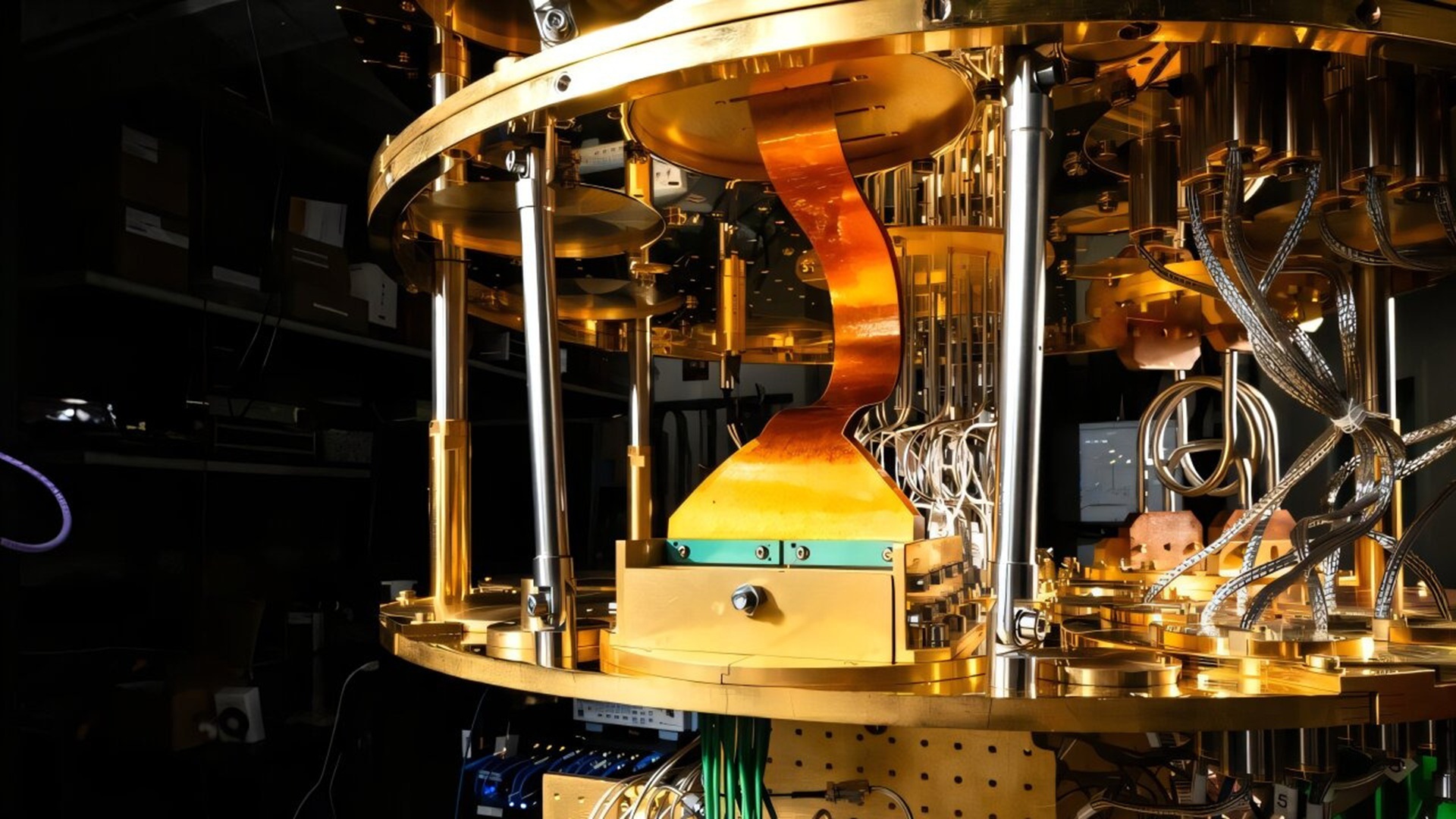
Researchers at the Massachusetts Institute of Technology (MIT) Lincoln Laboratory have engineered a brand-new class of flexible, high-density ribbon cables capable of operating at temperatures near absolute zero.

The innovation directly addresses the thermal and spatial constraints that have long plagued standard quantum-cooling hardware, and the technology has already been officially licensed to commercial quantum infrastructure manufacturer Maybell Quantum for immediate integration.

To run advanced superconducting quantum processors, engineers must transmit thousands of high-speed microwave control and readout signals from room-temperature computers down to the delicate processing chip.

This environment requires a dilution refrigerator, a specialized cryostat that maintains an internal core temperature colder than deep space. Managing these vital input/output (I/O) lines while preserving this hyper-chilled environment represents one of the steepest infrastructure hurdles in modern physics.

The breakdown of traditional coaxial wiring

Historically, quantum computing rigs have relied on bundles of conventional semi-rigid coaxial cables to connect warm control electronics to cold quantum processors. While a handful of these stiff, round copper cables work perfectly fine for small-scale prototypes housing ten or twenty qubits, scaling up to thousands of processing units creates a geometric crisis. The physical mass of these cables quickly crowds out the limited, highly premium real estate available inside a standard laboratory refrigerator chamber.

Beyond structural crowding, traditional metal wiring introduces a devastating thermodynamic flaw: heat conduction. Metals like copper are excellent conductors of electricity but also efficient at transferring thermal energy.

As a result, large bundles of coaxial cables act as micro-thermal leaks, bleeding room-temperature heat straight down into the lowest levels of the cryostat. This unintended thermal transfer easily overwhelms the refrigerator’s delicate sub-Kelvin cooling capacity, destabilizing the system and destroying the fragile quantum states of the qubits.

Designing a flat, flexible thermal barrier

To bypass these deep-seated physical limitations, the engineering team at MIT Lincoln Laboratory moved entirely away from round, rigid coaxial geometry. Instead, they developed an ultra-flat, high-density, flexible ribbon-style stripline transmission cable.

This flat-ribbon architecture packages an unprecedented number of individual signal channels into a fraction of the physical space required by traditional coaxial bundles, dramatically expanding the I/O capacity of standard quantum systems.

The underlying materials science of the ribbon cable allows it to serve as a highly effective thermal insulator between the refrigerator’s stepped temperature stages, blocking room-temperature heat from traveling down the lines. Furthermore, the structural flexibility of the ribbon mitigates intense mechanical and thermal stress during the cooling process.

When a dilution refrigerator drops down to its operational temperature, the internal metal frames contract violently; while this structural shifting routinely cracks or misaligns traditional rigid coaxial lines, the new flexible ribbons bend naturally to absorb the movement without breaking or degrading signal fidelity.

Streamlining the path to commercial mass production

A primary highlight of this engineering achievement is its fundamental compatibility with standard, high-volume industrial manufacturing practices. Many experimental quantum hardware solutions rely on boutique, incredibly expensive fabrication processes that cannot be easily replicated at scale.

By licensing this proprietary architecture directly to Maybell Quantum, the technology is being rolled out to upgrade commercial dilution refrigerator frameworks. This industrial integration delivers a space-efficient, reliable, and mass-producible wiring layout that empowers quantum developers to radically scale up physical qubit counts within standard laboratory footprints.

By replacing miles of rigid copper wire with compact, insulated ribbons, the quantum computing industry moves a significant step closer to building truly practical, fault-tolerant supercomputers.

  •  
❌