❌

Reading view

New magnet technology promises rare-earth-free drive for US military systems
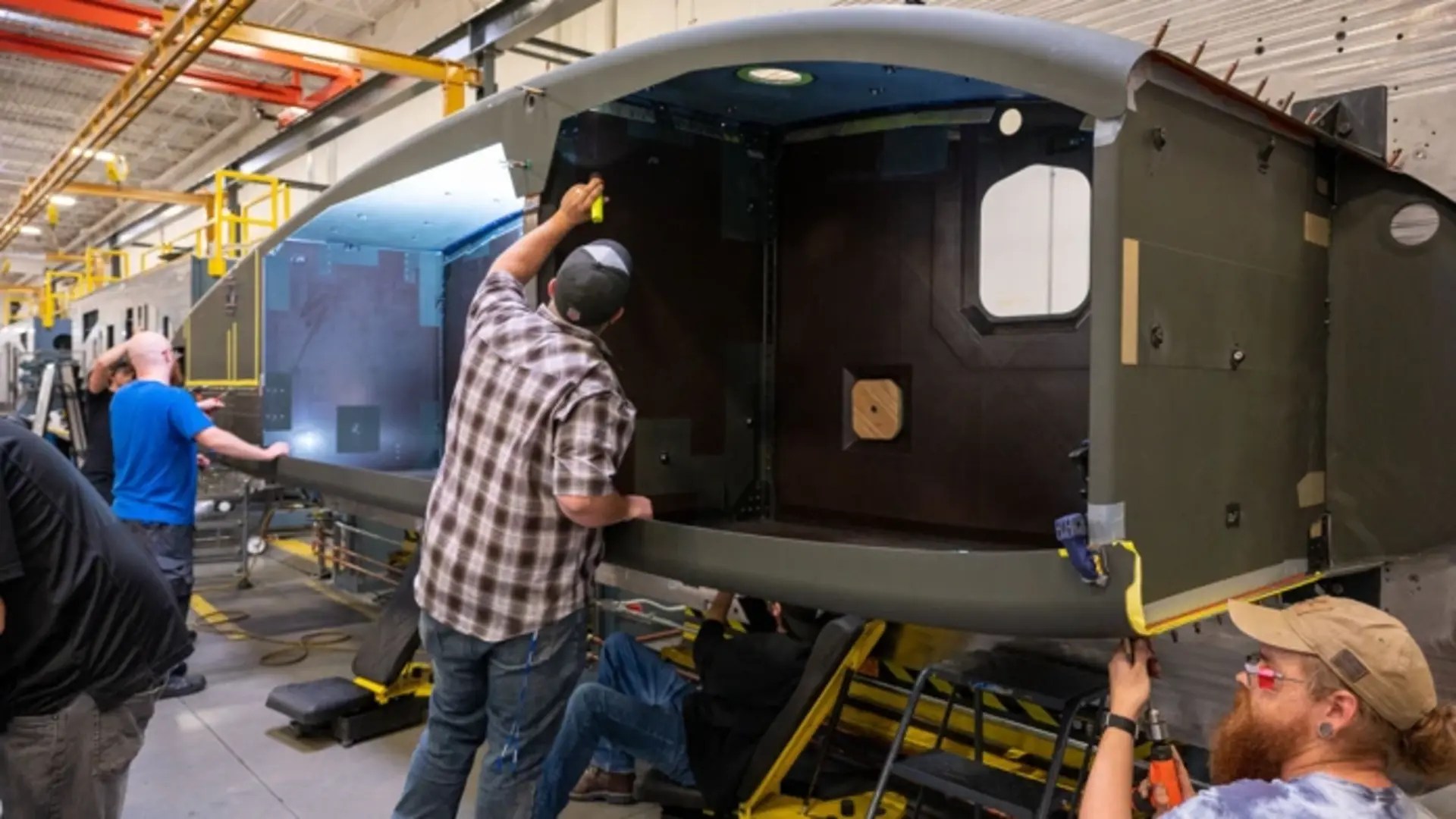
Moog and Niron Magnetics will showcase their rare-earth-free actuator solutions at the Association of the United States Army (AUSA) 2026 Annual Meeting and Exposition in Washington, D.C., in October.

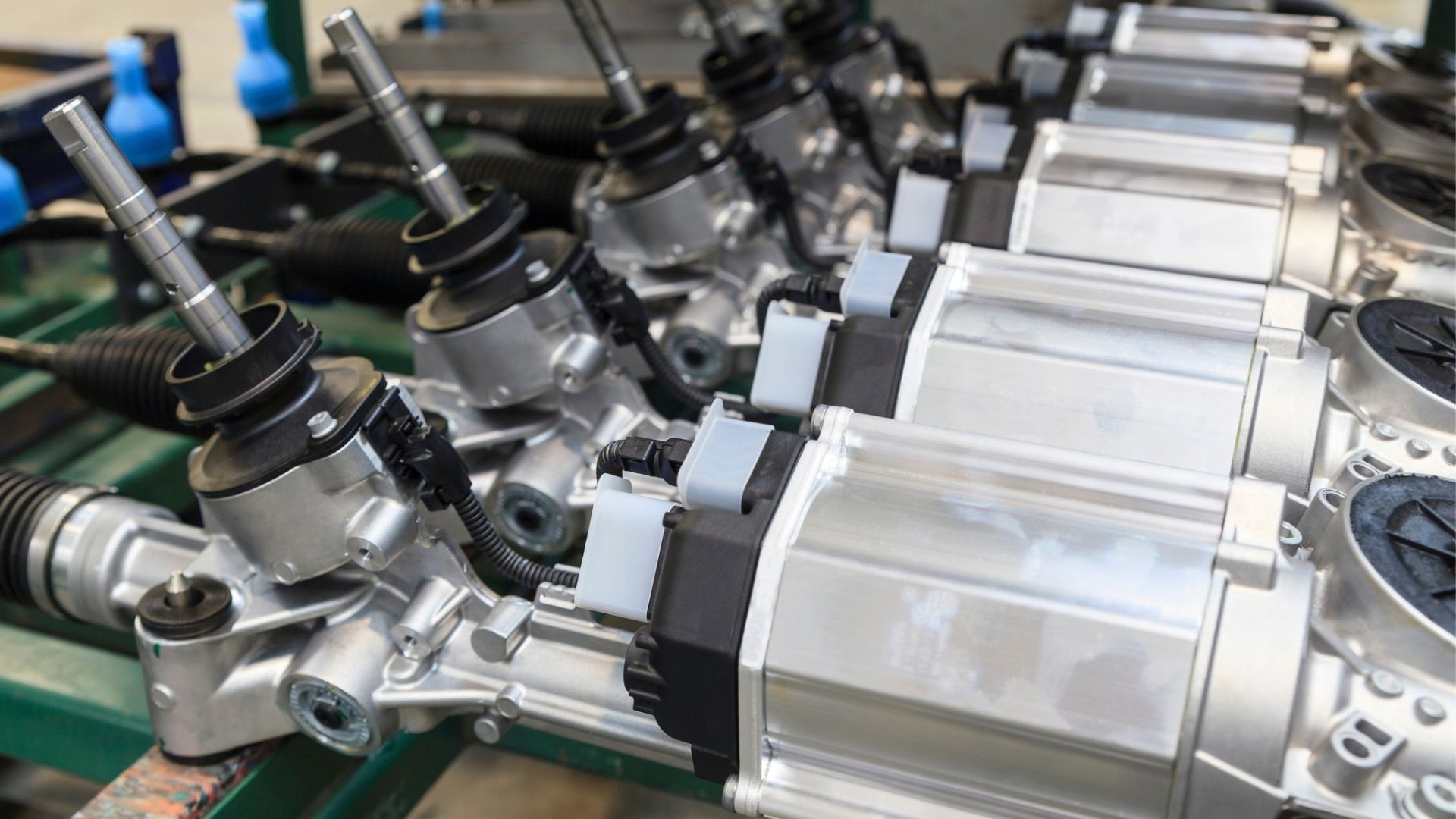
At the event, the companies plan to demonstrate their work using Niron’s Iron Nitride permanent magnets, which convert electrical signals into mechanical motion. The promising technology is being tested for applications including land vehicles and guided munitions.

“The Army is transforming quickly, and the systems soldiers rely on can only move as fast as the supply chains behind them,” said Ryan Aures, Moog Land and Sea Systems engineering director, in a press release. “Our work with Niron is about making sure a disruption never stands between the warfighter and the capability they need.”

The project builds on a collaboration between Moog and Niron announced in December 2025. Moog is testing and qualifying Niron’s Iron Nitride permanent magnets in electromechanical actuators, which would reduce dependency on critical minerals – an innovative solution to a global problem.

Iron Nitride removes rare earth elements

Almost every precision system the Army depends on contains rare earth. “Today almost all of that supply runs through a single foreign source,” said Jonathan Rowntree, CEO of Niron Magnetics.

According to an October 2025 report from the Council on Foreign Relations (CFR), “China controls up to 90 percent of the world’s critical-mineral processing capacity, including more than 99 percent of processing for three rare earths needed for heat-resistant magnets,” CFR said.

Niron claims that its Iron Nitride technology can produce permanent magnets without rare earth materials–which would eliminate the problem in a world scrambling to move manufacturing to domestic soil.

Critical minerals are used in products ranging from smartphones and vehicles to advanced weapons systems including the F-35.

US moves to expand domestic magnet supply

The U.S. government has also taken steps to expand domestic rare-earth production. According to CFR, the Department of Defense took a 15 percent stake in U.S.-based rare-earth producer MP Materials for $400 million in July 2025.

The Moog-Niron project takes a different approach by developing permanent magnets that do not require rare-earth materials, which would be the ultimate shutdown response to the entire situation if the Army just eliminated the need.

According to the company’s release, Niron has been producing Iron Nitride magnets and conducting customer qualification since 2025. The company expects to begin commercial production within the next 18 months.

Niron says its magnets are already being used in applications spanning artificial intelligence infrastructure, automotive products, industrial equipment and consumer electronics.

For the defense project, Moog is testing and qualifying the magnets specifically in electromechanical actuator systems.

Technology headed to AUSA 2026

The companies will jointly present the technology at Moog’s booth during AUSA 2026. Moog and Niron plan to display Iron Nitride magnets installed in tested motor hardware. The companies said attendees can also speak with engineers about integration, qualification timelines, and supply availability.

Niron, meanwhile, is working to commercialize its Iron Nitride permanent magnets through its proprietary manufacturing platform.


💾

Moog and Niron Magnetics will be showcasing rare-earth-free actuator solutions to help the U.S. Army overcome critical supply chain issues.
  •  

US Navy selects autonomous surface ships for deep-ocean mapping under $40M program

A new era of naval operations is on the horizon, as Blue Water Autonomy’s unmanned ships leverage tightly integrated hardware, software, and AI to map the ocean floor and transform maritime research.

Blue Water Autonomy is rapidly turning unmanned ships from a concept into an operational reality.

After showcasing its Liberty Class autonomous vessel to the U.S. Navy, the company announced a wave of strategic partnerships tied to the Navy’s Medium Unmanned Surface Vessel (MUSV) program, which includes $6 billion in funding to scale up production.

Currently under construction at Conrad Shipyard, these vessels merge traditional shipbuilding expertise with AI-enabled production systems.

“Traditional shipbuilding doesn’t scale, and pure software approaches don’t deliver hardware,” said Rylan Hamilton, CEO of Blue Water Autonomy, on the company’s website.

“We’re doing both. Integrating proven marine systems with AI-driven manufacturing and operations to fundamentally rethink how ships are built. By distributing and parallelizing work across proven partners, we’re creating a production system that can move at the pace required for a modern maritime industrial base.”

The power of many

The company is harnessing the power of many to realize the future of shipbuilding. Its manufacturing model incorporates multiple industrial partners responsible for different parts of the impressive ship: Tulip will provide a manufacturing execution system, Caterpillar Defense will supply marine diesel engines, and Valsted will support the automation systems.

“Shipbuilding has always required extraordinary coordination, and we’re giving that coordination a software backbone,” explained Erik Mirandette, chief business officer at Tulip. “Tulip connects every step on the factory floor with real-time data and AI-native tools, so Blue Water can orchestrate production at scale, catch issues earlier, and build with the speed and reliability that modern maritime demands.”

Building on this initiative, Blue Water Autonomy is quickly expanding its reach. According to a recent news release, its unmanned, AI-powered vessel will now map the ocean floor—a mission the Navy sees as central to the future of military marine research. The Navy’s interest underscores its commitment to using the most advanced systems available for modern maritime operations.

Moving fast

On August 4, 2026, Blue Water Autonomy won a multiple-award contract with the Naval Oceanographic Office (NAVOCEANO) to provide “high-resolution mapping using long-endurance uncrewed surface vessels” across the Indian and Pacific Oceans.

The company added that deep open-ocean surveys are “among the most demanding work at sea,” and the goal extends well beyond mapping, as the Navy must navigate not only the seas, but also underwater acoustics. These conditions “shape how naval forces move and operate far from the shore.”

Traditionally, these missions relied on costly crewed vessels—often running tens of thousands of dollars a day and requiring travel far from shore. With uncrewed, AI-powered ships, NAVOCEANO and the Navy aim to reduce costs, minimize risk, and dramatically expand the scope of ocean research.

Thanks to AI, these vessels “can operate on the open ocean for months at a time.”

The multi-year NAVOCEANO contract comes with a $40 million ceiling, but Blue Water Autonomy will still have to compete for funding alongside other selected companies.

“Mapping the open ocean is exactly the kind of long, high-endurance work that autonomous vessels are built for,” said Rylan Hamilton, CEO of Blue Water Autonomy. “This selection puts our autonomy to work across the Indian and Pacific oceans, well beyond the range of a crewed survey ship, and it shows the technology we are building serves many different missions.”

As artificial intelligence and automation reshape the naval landscape, the need for large crews is diminishing—and machines may well steer the future of the world’s oceans.

💾

Months-long autonomous ocean surveys aim to enhance navigation, mapping, and underwater acoustic modeling far from shore.
  •  

US models beat China’s Kimi K3 with a 76% score over 32% in cyber benchmarks, tests show

Despite fears that China could race ahead of the US in AI, a joint UK-US evaluation found that Moonshot AI’s Kimi K3 performs “significantly below” leading American models in offensive cybersecurity capabilities.

The findings address growing concerns in Washington regarding China’s recent advancements in artificial intelligence following the release of Kimi K3, described as China’s most powerful large language model.

The UK Artificial Intelligence Security Institute (UK AISI) and the US Center for AI Standards and Innovation (CAISI) found that Kimi K3 achieved an overall cyber capability score of 32.2%, compared to an average of 76.2% for top, unnamed US models.

Evaluation identifies cybersecurity gap

Researchers tested Kimi K3 using ExploitBench, a public benchmark developed by Carnegie Mellon University that measures an AI system’s ability to develop end-to-end exploits for software vulnerabilities.

According to the evaluation, Kimi K3 “performs significantly below the most recent frontier cyber-capable models” when tasked with developing exploits. The model attained a score of 32 percent, outperforming GLM-5.2, another Chinese open-weight model, which scored 24 percent.

However, Kimi K3 still lagged behind leading US systems. The most cyber-capable US models achieved an average score of 76.2%.

The report also examined whether models could achieve arbitrary code execution (ACE)—a high-severity exploit outcome that allows attackers to take control of a target system. Kimi K3 achieved ACE on none of the 41 ExploitBench tasks, while “the most cyber-capable models achieved ACE on 20/41 samples on average,” according to the UK AISI and CAISI.

Simulated attack shows remaining capabilities

The evaluation also tested Kimi K3 on “The Last Ones” (TLO), a 32-step simulated corporate network attack designed to measure a model’s ability to conduct end-to-end cyber operations autonomously.

Kimi K3 reached step 17 of the attack path on average, compared with the 28.5 steps achieved by the most cyber-capable US models.

Despite this gap, the report noted that Kimi K3 completed the simulated attack in one of 10 attempts. The UK AISI and CAISI said this demonstrated that the model “is capable of autonomously attacking small, weakly defended, and vulnerable enterprise systems, when directed to do so and given initial network access.”

Furthermore, Kimi K3’s safeguards did not prevent it from attempting cyber exploit development or offensive cyber operations during testing.

Although the results were only preliminary, the research noted that Kimi K3’s overall cyber capability score was estimated from a single benchmark, whereas other models were evaluated across a larger number of cyber tasks.

Findings reshape AI competition debate

Kimi K3 has sparked attention, if not concern, following reports of its strong performance on other AI benchmarks. However, these new findings offer a different picture of the model’s cybersecurity capabilities, showing that it still lags behind US systems.

The South China Morning Post reported that the evaluation “offers a stark reality check amid mounting panic in Washington over Beijing’s AI advancements following Moonshot AI’s latest flagship release.”

David Sacks, former White House AI czar and current co-chair of US President Donald Trump’s Council of Advisers on Science and Technology, said the findings suggest that fears over Chinese model supremacy may be exaggerated. He urged policymakers to avoid over-regulating the sector.

“The Kimi Panic needs to stop,” Sacks said in a social media post. “American frontier models are still ahead.”

💾

New UK-US findings show that Moonshot AI’s Kimi K3 still lags behind top US models in cybersecurity threats.
  •  

Advanced composites for future aircraft can be built faster as two US firms join hands

Albany Engineered Composites and A&P Technology are combining advanced braiding and resin transfer molding technologies to accelerate the development of scalable composite solutions for future aerospace and defense applications.

Albany Engineered Composites (AEC), a segment of Albany International Corp., and A&P Technology, a global leader in precision braided composite reinforcement technologies, announced a strategic collaboration to explore and develop advanced braided composite manufacturing solutions for current and next-generation aerospace and defense applications.

The collaboration will capitalize on A&P Technology’s expertise in braided composite architectures and Albany Engineered Composites’ advanced Resin Transfer Molding (RTM) manufacturing capabilities. The companies said the partnership is focused on accelerating the industrialization of lightweight, highly integrated composite structures designed to support future commercial and defense aircraft production requirements.

“Future aerospace platforms demand manufacturing technologies capable of simultaneously improving performance, reducing recurring cost and scaling to production rates the industry has not previously achieved,” said Chris Stone, president of Albany Engineered Composites in a press release.

“By combining A&P Technology’s deep expertise in advanced braiding with Albany’s industry-leading RTM capabilities, we are creating a force multiplier for our customers, accelerating the transition from innovative textile architectures to repeatable, production-ready composite solutions.”

The companies will work together on research, technology development, manufacturing process maturation, and commercialization opportunities focused on purpose-designed braided composite structures. These efforts will target current and next-generation aeroengine platforms, commercial aircraft, Advanced Air Mobility (AAM) blades and structures, Collaborative Combat Aircraft (CCA), and solid rocket motor nozzles.

Expanding advanced aerospace capabilities

Albany Engineered Composites is a rapidly growing division of Albany International Corp. that designs and manufactures advanced composite components for aerospace and defense industries. Headquartered alongside its parent company in Rochester, New Hampshire, AEC operates advanced research, development and manufacturing facilities across the globe, including major composite production sites in Salt Lake City, Utah; Boerne, Texas; and Commercy, France.

As aerospace manufacturers seek larger, more integrated composite structures, the companies said that combining braided composite preforms with automated RTM processing provides a pathway to scalable manufacturing by reducing assembly complexity and supporting higher production rates.

“It’s a privilege to collaborate with Albany given their broad and deep design and manufacturing skill and know-how built on decades of success making parts for the most demanding applications,” said Andy Head, president of A&P Technology.

“Together, we can offer composite solutions not only at an enabling rate but also with enabling cost and performance benefits. We look forward to meeting customer challenges together.”

Brent Stevenson, vice president of emerging markets and technology at Albany Engineered Composites, said that customers are seeking integrated solutions that combine multiple manufacturing processes.

“Our customers are looking beyond individual manufacturing processes; they’re looking for integrated solutions,” said Stevenson.

“Braiding and RTM are naturally complementary technologies. Together, they enable highly engineered composite architectures supporting complex geometries, efficient manufacturing and production scalability for both current and next-generation aerospace and defense platforms.”

Supporting future aerospace platforms

Through the collaboration, Albany Engineered Composites and A&P Technology aim to advance composite manufacturing solutions that combine precision braided reinforcement technologies with advanced RTM processing. The companies’ work will focus on production-ready composite structures for a range of aerospace and defense applications, including commercial aircraft, military platforms and emerging aviation technologies.

The partnership brings together two specialized manufacturing approaches as the companies pursue opportunities in research, development, process advancement and commercialization of advanced composite solutions, the press release concludes.

💾

Albany Engineered Composites and A&P Technology have joined hands to advance next-generation aerospace composites.
  •  

Mysterious Roman tablet with Egyptian curse written by slave found in military settlement

In an interesting twist of fate, researchers from the Institute of Papyrology at Heidelberg University discovered “curse tablets” from the Roman era, a fascinating look at the more superstitious side of a triumphant empire.

Found in a pit in the Town Square in Heerlen, the curse tablet measuring about 3.7 by 1.9 inches had been laid to rest at a former Roman military settlement of Coriovallum in Lower Germania.

Whoever left it there had a vendetta against her own, or someone else, as researchers suspect that a slave had written the curse either against the four slaves named, or an unknown person.

Known as a defixione or katadesmoi, these curse tablets made of lead were marked with spells and then buried in places associated with supernatural forces, showing that we, humans, have always had a desire to invoke the gods to act in our favor.

This is a rare sighting from Roman Egypt that revealed the role that magic played in that society, at a time when cultures and belief systems were mixing and spreading throughout the empire.

Someone was mad

Researchers had an arduous task before them, as time damaged the inscription. They employed reflectance transformation imaging, which allowed them to penetrate the tablet deeper than their eyes could, picking up more of the inscription lost, their wish perhaps answered by the gods.

Upon the profane/sacred tablet, they found references to Egyptian divinities, which, according to researchers, surprised them as a rare sighting in Germany. Most in Northern Europe follow a similar format: Latin and Roman. Not Egyptian.

And the plot thickens… as it was buried, interestingly, in a former Roman military settlement, and typically, these were buried in locations infused with the supernatural. Below three magical symbols, the author wrote the names of four enslaved people. The men held Latin names. The women, Greek.

As the inscription had been damaged, researchers couldn’t decipher whether this tablet had cursed four slaves or whether four slaves had cried out to the Egyptian gods and demi-heroes, who knows? To wrath. To wreak havoc on an unknown person.

“The tablet served either as a curse against these four slaves or as a curse in their name against an unnamed person,” as the Heidelberg papyrologist told Phys.

Hoping to “work a little magic”

Already, the curse tablet stands alone among the others that researchers have found, because the author etched the message in Greek rather than Latin. These thin sheets of lead containing scratches of supernatural desires were used to sway a court case, target a rival, or even a lover, as per Archaeology News.

“It cannot be ruled out that one of the two women was the author of the inscription and had brought the supposed ability to communicate with divine powers through such curses with her from Roman Egypt,” says Dr. Julia Lougovaya, research associate at the Institute for Papyrology in Phys.

That might suggest that she wrote it for someone, on behalf of four slaves. This author might have originated from Roman Egypt because of the references used. Along the Nile, magic played a fundamental role in society. But interestingly, more so related to protection and healing, as per Phys.

But this was a curse. And these tablets were Roman. So, did a former slave flip the concept? The significance of the tablet rests on its cultural mix.

In the far north of the Roman Empire, this Egyptian-meets-Greek artifact was found, exhibiting just how far the mélange of cultures traveled. Perhaps, it might even inspire ideas as to who might have wanted to curse someone at some Roman camp, because of the slave names written across the tablet.

💾

Known as a defixione or katadesmoi, these curse tablets made of lead were marked with spells and then buried in places associated with supernatural forces.
  •  

Massive 2,000-year-old luxurious Roman bathhouse uncovered in the Netherlands

The largest Roman bathhouse complex ever discovered in the Netherlands has surfaced, shedding new light on the wealth and importance of the ancient Roman city of Ulpia Noviomagus.

Researchers from the archaeological firms RAAP and BAAC were conducting routine investigations in Nijmegen’s Waalfront district, a site slated for new residential development. The excavation, which began in September of last year and will conclude in July, uncovered a public bathhouse, residential blocks, luxury townhouses, streets, and a tower dating back nearly 2,000 years.

“For years, the traces of the Roman past at this location were invisible, hidden deep underground. Now that we are realizing a new living environment here, the past has become visible,” said Joost Mulder, BPD’s Regional Director for the North-East & Central region, in a press release.

The bathhouse complex, or thermae, covered at least 4,900 square meters, making it the second-largest excavated Roman public bath complex in the Netherlands. Despite centuries of stone removal and reuse following the Roman period, parts of the structure remain exceptionally well-preserved.

Roman history unearthed

The size of the complex reflects the importance of Ulpia Noviomagus—the Roman city that once stood here—which is believed to have received its official status from Emperor Trajan around 100 AD. The discoveries suggest that this area of the city remained active well into the third century AD.

The bathhouse was richly decorated. Its interior walls were clad in marble. The floors were laid with black-and-white limestone tiles. Other rooms featured colorful, painted plaster. Decorative limestone and sandstone moldings adorned the building’s facades, while columns made from the same materials enhanced its splendor.

Archaeologists also uncovered extensive drainage systems, flooring, and a hypocaust—a sophisticated Roman underfloor heating system supported by brick pillars. This technology circulated hot air beneath a raised floor, as per Archaeology News. Two stone foundations survive to a height of nearly two meters, making them some of the best-preserved examples of Roman masonry in Nijmegen.

Tens of thousands of artifacts recovered from the site point to the affluent lifestyle that residents enjoyed during the second and third centuries AD.

Among the discoveries are bronze statue fragments, signet rings, a necklace with a gold clasp, coins, and hundreds of bone hairpins used in elaborate Roman hairstyles. Notably, two of the hairpins featured remarkable carvings of cats—one seated and one standing.

However, a bronze bust depicting Bacchus, the Roman god of wine, stood out the most to archaeologists. They believe the object originally formed part of a pitcher or a piece of furniture before later being adapted for use on a weighing scale.

Archaeologists also recovered numerous coins from the reign of Emperor Postumus, who ruled between 260 and 269 AD, providing rare evidence of continued occupation during a relatively poorly documented period.

Integrating the past into the future

Developers and city officials plan to integrate the site’s Roman heritage into the future neighborhood, added Archaeology News.

“The link to the past will remain visible in the future as well. For instance, a number of residential buildings will feature a covered walking area with rows of columns. A colonnade just like in Roman times. And developers plan to call the green square in the heart of the area, inspired by the floor plan of the bathhouse complex, Thermenplein. A direct reference to the Roman meeting place that was here some 2,000 years ago,” concludes the press release.

Several artifacts from the excavation will go on display at Nijmegen City Hall beginning June 29, offering residents a glimpse into the city’s rich Roman history and its status as one of the most important Roman centers in the Netherlands.

💾

A routine excavation at Nijmegen’s Waalfront district has revealed a 4,900-square-meter Roman thermae complex.
  •  

Human evolution wasn’t sudden; unfolded gradually over time: Study claims

The time has come to reconsider an outdated understanding of human evolution: it was not a single breakthrough that propelled Homo sapiens into the “human age,” but rather a gradual, nonlinear process. So, archaeology must too accept its similar predicament.

The conundrum is straightforward: at a certain point in time, Homo sapiens expanded, left Africa, and migrated around the globe. Other hominins disappeared, with the exception of the remnants of Neanderthals found in our DNA. But the questions remain: how and why did this happen?

This brings us to the “Human Revolution” theory, which posits that a major cognitive shift approximately 50,000 years ago triggered the significant migration out of Africa.

However, according to Huw S. Groucutt in his study, Groucutt reviewed fossil, genetic, and archaeological data to provide a more realistic perspective on evolution. He argues that change occurs over time and that advancements arise in various places, resembling a mosaic rather than a linear progression, as reported by Phys.

In his study, Groucutt reviewed fossil, genetic, and archaeological data to provide a more realistic perspective on evolution. He argues that change occurs over time and that advancements arise in various places, resembling a mosaic rather than a linear progression, as reported by Phys.org.

As Groucutt states, “The revolution makes a good, simple story.”

A messier and truer portrait of human evolution

Groucutt asserts that archaeological data demonstrate that this so-called “revolutionary” cognitive shift occurred gradually. Breakthroughs in technology—such as jewelry, bone and stone tools, pigments, and organized hearths—happened much earlier than previously assumed, appearing in one region to disappear in another. These shifts seem to have emerged across humanity at different times, suggesting what we know already: change takes time.

The genetic evidence and fossils support a similar narrative. Earlier theories pointed to a single “key event” that transformed the human brain practically overnight. However, the study argues that populations were mixing, separating, and evolving once again, over time, contributing to the development of the brain.

Groucutt notes a significant issue in paleoethology relates to the dating of sites, as the techniques used can yield vastly different results. He believes the primary challenge lies in the connections researchers establish between fossils, artifacts, and the actual layers of sediment, as noted by Archaeology News.

Referencing a maxilla fragment found in Misliya Cave, Israel, one study dated it between 180,000 and 190,000 years ago. However, depending on the analysis method, that timeframe could vary from 70,000 to 185,000 years. Such vast discrepancies appear in nearly every category. Did modern human features develop 300,000 years ago or 50,000 years ago? Maintaining a linear perspective on these developments limits the ability to study human evolution. Time to broaden our scope.

Change is nonlinear

Groucutt argues that this tendency to focus on a single perspective can hinder a comprehensive understanding. Instead, it is essential to consider the entire picture, with all its complexities.

“This is not to say that broad and gradual genetic changes influencing cognition were not important, but there is currently no evidence for a sudden ‘eureka moment’ of cognitive modernity,” he emphasizes.

While the question of “why” often leads us to seek a dramatic turning point, the evidence shows that our brains developed, our anatomy evolved, and our customs and tools emerged over time. Phys even described this process as “fluid and experimental.”

💾

A new study disproves “Human Revolution.” There was not a single moment in time in which homo sapiens suddenly advanced.
  •  

1,800-year-old wealthy family villa found underneath school gym in Rome

Students at a local high school in Rome had long known of the mysterious underground passages that lay beneath the ground, but finally, a protest stirred the school, authorities were informed, and they discovered an ancient Roman villa.

Cavour Scientific High School is located about a five-minute walk from the Colosseum, and it sits on the site of the recently identified Roman villa. Built in the 19th century as a missionary complex, the school embodies layers of history for which Rome is known.

For years, students quietly shared stories about the rooms, artwork, and passages beneath the gymnasium. As time went on, these tales grew more elaborate, leading the school administration to take them less seriously, according to Popular Mechanics.

The situation escalated when the students staged a protest during COVID. Locking themselves into school, these restless teenagers roamed the premises unsupervised. They explored the underground passageways beneath the gymnasium, seeking to prove the validity of their claims. A curious teacher, Claudia Marino, heard the fervor in their accounts and took a group of adventurous students through an iron door.

They found themselves in an old boiler room, and as they ventured deeper into this unused chamber, they encountered ancient Roman walls. Continuing through a narrow passage, they stumbled upon an intact domus, or villa.

Archaeologists from the Special Superintendency of Rome began excavations a few years later in September 2025.

A family villa in an ancient affluent neighborhood

The ancient residence first came to light in 1895 when Via degli Annibaldi was constructed. At that time, archaeologists uncovered sections of the building as well as a water pipe inscribed with the family name, Umbrius. However, further excavation did not take place, and the ancient villa faded into obscurity.

Graffiti from the 1940s and 1950s, however, indicates that students had long left their mark on someone else’s house, but the secret held among the youth never seeped into adult consciousness until the Romans took to the streets.

Once the protests signaled the villa’s existence, archaeologists were eager to investigate because the school is positioned in an exclusive neighborhood in Rome where ancient prominent figures lived: Cicero, Pompey, Octavian, Emperor Augustus, and more, according to Archaeology News.

Excavation officially began in January 2026, with an announcement made on May 28 confirming that the students had discovered a mid-Imperial domus, which was subsequently named Domus Liceo Cavour. Dating to the mid-second century CE, it indeed belonged to the Umbrius family, originally from south-central Italy.

Future employment for students

Archaeologists left the site with 48 crates of artifacts, including wall paintings, decorative elements, and a notable mosaic of large, irregularly shaped tiles—designs that were popular in the second century CE.

The villa’s exceptional preservation prompted the Italian Ministry of Culture to describe the paintings as “spectacular” and in need of full excavation, according to Popular Mechanics. It is likely that the grounds extend into the school’s courtyard, so further exploration is planned.

The project aims to open the site to visitors, with students serving as tour guides—a thoughtful conclusion that honors those who discovered and appreciated this piece of history.

💾

Students at Cavour Scientific High School have turned a school protest into an archaeological breakthrough.
  •  

Archaeologists identified oldest structure at UNESCO site Hadrian’s Villa

This just in from Hadrian’s Villa: archaeologists uncovered an underground villa dating to the Republican period, the oldest construction ever found to date at the massive, imperial complex.

Archaeologists continue to make groundbreaking discoveries at 300-acre Hadrian’s Villa, under investigation since 2003. From its earliest foundations, the daily operation of its vast workforce, and the lavish palatial residence, there seems to be no end in sight to its former glory.

Between April and May this year, at the Palazzo sector of Hadrian’s Villa in Tivoli, Italy, researchers reached a new milestone, yet again, when they found a structure beneath the Palazzo’s peristyles, a residential area, that revealed an earlier foundation for the site, before Emperor Hadrian took it over to build his splendid, jaw-dropping grounds.

In this newly discovered structure, they identified a hypogeum, an underground storage chamber, according to Archaeology News. From the construction debris and pottery shards, in Hadrian’s day, the structure appeared to archaeologists to have been abandoned. All the same, the artifacts represent the only archaeological finds from the Republican era.

The oldest structure on site

Researchers from the Archaeological Seminar at Pablo de Olavide University (UPO), in collaboration with the Institute of Hadrian’s Villa and Villa d’Este, are spearheading the current archaeological excavation at the UNESCO World Heritage site.

More like a small city, larger than Pompeii, Hadrian’s Palace boasted a sprawling display of 30 monumental buildings, including palaces, libraries, baths, and theaters. It took over a decade to build, about 19 miles from Rome. He chose this location beneath the Tiburtine Hills because it’s a massive, flat valley near ancient aqueducts and the Aniene River, which helped feed and sustain the extensive pools, thermal baths, and elaborate fountains. As Hadrian dabbled in architecture, he even built structures that acted like photographs taken from his favorite locations throughout the empire.

A sight to behold, indeed, Hadrian’s Villa was astounding as a display of wealth, culture, and power. According to researchers, long before Hadrian selected this location in Italy as his grand countryside estate, these remains likely belong to an earlier villa that was incorporated into the foundations of the Palazzo, which has provided archaeologists with a glimpse into its past.

Gardens and more

Along with the hypogeum, researchers also uncovered elaborate gardens that once surrounded the Palazzo. From what archaeologists gathered, the Roman villa garden featured a flowerbed enclosed in a courtyard with rows of packed ceramic pots, as per Ancient Origins. The design was called “ingenious,’ allowing for seamless transitions between the seasons, which revealed the sophistication of their landscaping techniques. Additionally, tree pits were identified to plant shrubs and trees, so the gardens reflected a highly organized layout, and an exceptional group of intact ceramic flowerports, according to Archaeology News.

As gardens contributed to the beauty and splendor of Hadrian’s Villa, the latest discoveries offer an unprecedented insight into how these green spaces were organized and maintained. As excavations are ongoing, who knows what archaeologists might find next at Hadrian’s Villa, whose splendor and glory appear to have no end.

💾

More like a small city, larger than Pompeii, Hadrian’s Palace boasted a sprawling display of 30 monumental buildings.
  •  

Millipedes originated 460 million years ago, study rewrites land animal timeline

A new study has established the first-ever evolutionary history of all living millipedes, one of the planet’s first land animals that pioneered its terrestrial ecosystems (as the first chemical weapon manufacturers, too).

At a time when the Earth was bare, when there were no vertebrates, no trees, no leaves, no flowering plants, and no plants with seeds, millipedes were feeding on decaying mosses, decomposed slime, and primordial gunk.

Though that sounds unappetizing, someone had to complete the “dirty work” necessary to pave the way for life. Though they perform an essential function as one of the first animals on Earth, science still hadn’t fully tracked their history until now.

A new, groundbreaking study published in Current Biology addressed a 100-year-old gap in millipede science surrounding two rare groups of millipedes: Siphoniulida and Siphonocryptida.

Scientists knew that they existed, but without specimens for DNA analysis, they couldn’t confirm where they belonged in the millipede family tree.

But it was no easy feat to find them. One group spends its life underground, while the other survives in only a few known locations.

Penetrating 260 million years of history

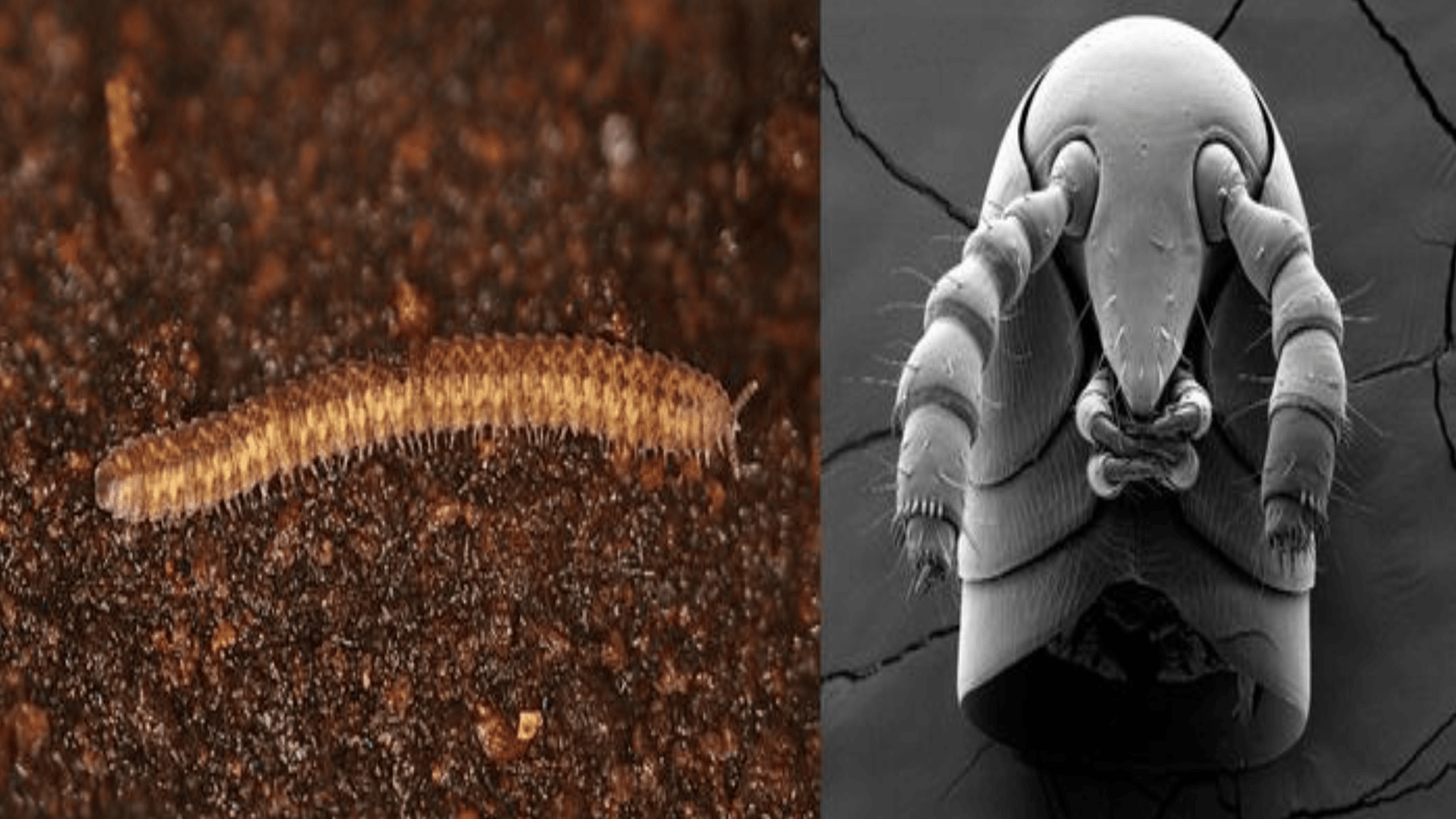
Researchers traveled to Los Tuxtlas, Mexico, and Spain’s Canary Islands to collect Siphoniulus neotropicus and Hirudicryptus canariensis, two millipedes whose DNA had never before been included in an evolutionary analysis.

“It took 10 people over a week to find one tiny 10-millimeter adult,” said Luisa “Fernanda” Vasquez-Valverde, the paper’s first author, in a press release.

“Finding them in the field was hard because we were just seeing this little white nematode. We didn’t know for sure it was a millipede until we looked under the microscope.” 

After sequencing their DNA, comparing hundreds of genes across 82 millipede species, and combining those results with evidence from 29 fossils, researchers determined where the groups belonged in millipede history and when their lineages emerged.

“Millipedes may have originated nearly 460 million years ago — roughly 35 million years before the oldest known millipede fossils and much earlier than previously believed,” according to the press release.

Siphonocryptida turned out not to be a distinct order after all, but part of an existing lineage. Siphoniulida was finally placed among its closest relatives on the millipede evolution timeline.

All in all, the analysis of the millipede species revealed that the ancient animals originated 460 million years ago, roughly 35 million years before the oldest known millipede fossils, which was “the biggest surprise” to researchers —

“Just how ancient these lineages turned out to be.”

The completed family tree also revealed one of the millipedes’ most important adaptations: they made the first chemical weapons. And it was these defenses that helped scientists trace their origins to about 260 million years ago.

Although the new study brought new insights into one of the planet’s most significant animals, millipedes still hold secrets waiting to be discovered.

Still more to discover

Scientists have described more than 14,000 species worldwide, but experts believe that tens of thousands may still be out there undiscovered.

These “unheralded heroes of the ecosystem” may be one of nature’s most important detritivores — because they break down decaying plant material and return nutrients to ecosystems — but scientists still haven’t fully penetrated this lineage, which is more ancient than the dinosaurs and paved the way on land for vertebrates.

“It’s really kind of puzzling that they have such an important function in the ecosystem, and yet they’re so poorly known,” noted Paul Marek, the study’s lead investigator and associate professor in the College of Agriculture and Life Sciences’ Department of Entomology.

“Millipedes beat vertebrates onto land by more than 80 million years,” continued Marek. “They really set the stage for later life on land, including humans and vertebrates.”  

“There is all this potential for discovery,” a press release concluded. “It keeps me wondering what else we’re going to find.” 

💾

A groundbreaking DNA study bridges a century-old gap in millipede science, tracking the evolution of the ancient critters.
  •  

1,700-year-old legendary Roman-era submerged bridge found in Switzerland’s Solothurn

A long search has finally concluded: Swiss divers have discovered a legendary Roman-era bridge that researchers have been trying to locate for decades. It may be the only pile trestle of its kind that exists.

As plans were underway to construct a bridge over the Aare River, Swiss archaeologists hired by Cantonal Archaeology conducted routine archaeological investigations in the area near Solothurn, Switzerland, which has long been a subject of interest for archaeologists.

A bridge pier, known as a pile trestle, was believed to have been built in this location. Archaeologists were eager to investigate due to the area’s “strategic geography” and “its position along an important transalpine trade and military route.”

And finally, as construction work would be carried out, archaeologists were hired by Cantonal Archaeology to take the plunge, which they did several times, guided by previous accounts of the presence of “stakes” in the waters. On fins, they came to discover a row of timber piles near Solothurn’s Wengi Bridge.

The piles, just under 6.56 feet long and arranged in the direction of the current, provided the first physical evidence of a pile trestle ever found. Upon analyzing the wood and remnants of the bridge pier, they confirmed its existence, dated it to the 4th century, and established that it was linked to the city’s development as a castrum, or fortified settlement.

A major bridge pier

This long-sought bridge was part of a major road connecting Italy with the Rhine River, according to LBV. Sections of this road had already been identified on either side of the river, suggesting that a bridge must have existed to facilitate crossings.

For years, archaeologists contended that the riverbed near Solothurn could contain a pile trestle due to the unique characteristics of this small municipality in Switzerland. The Aare River narrows at a point near the town, which helped archaeologists estimate where the bridge might have been constructed.

Historically, Salodurum is the Latinized version of a Celtic toponym that means “river narrows” or “gateway of the waves.” Until now, no physical evidence had been found, only rumors of “stakes” underwater.

Previously, it was known that the Romans settled in this area between the 1st and 3rd centuries. In the 4th century, a defensive wall was constructed in response to instability and military pressures, leading to the fortification of urban settlements. This bridge symbolizes an empire striving to protect itself from its ultimate demise.

A system of defense

A castrum wasn’t a town wall, but rather a system, Arkeonews clarified. Solothurn, a picturesque town today, once held strategic importance due to its placement on the Aare. This region was well-developed and interconnected by imperial routes. The Romans built this bridge pier to enhance a gateway crucial for preventing significant losses. The settlement lying beneath the Baroque center even reveals how the Romans intentionally selected this spot for its strategic value.

Because the 1,700-year-old wood would decay if exposed to air, the construction project will not disturb the precious timbers submerged in the river, allowing them to remain in their watery grave. They represent the Roman Empire at a pivotal time in its history.

Archaeologists will continue investigating the bridge, Heritage Daily concludes, and they hope to glean new insights into their methods of construction and how it functioned in this vast network that linked the Mediterranean and Northern Europe.

💾

Swiss divers have discovered a legendary Roman-era bridge that researchers have been trying to locate for decades
  •  

Researchers identify world’s largest scorpion that roamed Earth 415 million years ago

The University of Manchester has discovered that the world’s largest scorpion, which lived 415 million years ago, was hiding in the museum’s collection for 150 years.

Since the 1870s, researchers have debated the identity of the strange fossil remains lurking in the Manchester archives. They possessed tiny fragments recovered from sites in England and Wales that puzzled them, but they could not piece them together. Was it a large woodlouse-crustacean?

In the 1980s, some research suggested that a scorpion might be the source of the fossil remains. However, this hypothesis faced challenges due to a lack of fossil evidence of its most distinctive feature: its tail.

To resolve the debate, paleontologists conducted a study of the remains using modern imaging and analytical techniques, according to a press release from the University of Manchester. They were “able to build a clearer picture of the animal than was previously possible, which is really exciting.”

The 3.3-foot-long Praearcturus gigas scorpion now joins the ranks of Earth’s ferocious prehistoric beasts, boasting pincers 6.2 inches long. As it roamed the Earth over 400 million years ago, researchers sought to understand the factors that allowed this prehistoric predator to grow to such an astonishing size.

The t.rex of scorpions

According to the study authors, “Along with dinosaurs, mammoths, and other charismatic megafauna, giant arthropods are an iconic symbol of the Earth’s deep paleontological history in popular culture.”

Lead author Dr. Richard J. Howard, Curator of Fossil Arthropods at the Natural History Museum in London, described the imagery often associated with giant arthropods: “Carboniferous rainforests filled with giant millipedes or dragonfly-like insects… but Praearcturus lived at least 50 million years earlier, well before the evolution of trees, when life on land was just beginning.”

In other words, researchers may have identified the T. rex of arthropods nearly two hundred million years before the rise of the dinosaurs. The Praearcturus gigas lived during the Early Devonian period—a time when forests had not yet evolved—so this giant scorpion lived among small plants and fungi, as per the press release.

What did it eat?

Researchers were stunned: how did the scorpion grow to such a size, surrounded by relatively unassuming and unimposing neighbors? The answer lies in its lack of competition. As few large animals were present at that time, Praearcturus was free to become a predatory giant, according to the NYPost.

Furthermore, the “cool” creature, which might inspire a new figurine in a child’s toy collection, may have been partially aquatic, as suggested by its epimera—the descending lateral plates or flaps found on the bodies of crustaceans.

Dr. Howard stated in Live Science, “Without complex ecosystems to support Praearcturus on land, these animals probably spent part of their lives hunting in water.” The Praearcturus was even “before its time,” and its extraordinary size might be explained by one factor: water.

“This places Praearcturus at a pivotal moment in Earth’s history when animals were first experimenting with life outside the oceans,” as per a press release.

 “The boundary between land and sea was much less defined at this time,” Dr Greg Edgecombe, Merit Researcher at the Natural History Museum, London, and co-author of the study, continued. “Praearcturus gives us a fascinating glimpse into how early animals adapted to these changing environments.”

“It may even represent a lineage that returned to the water after earlier ancestors had already begun living on land,” AOL concludes.

You can read the study here.

💾

A new study reveals how the 415-million-year-old Praearcturus gigas grew to a massive size before dinosaurs even existed.
  •  

New study finds hominids used fire 700,000 years earlier than previously recorded

The elusive and ancient Wonderwerk Cave has attracted scientific attention for decades for its early human use, but a new study found even older traces of fire in this location.

As the lead author stated from the National Museum of Natural Sciences in Madrid, “this is a study of great interest to global prehistory, as it addresses one of the most significant topics for humanity: fire.”

In a new study published in PLOS, researchers analyzed 161 fossils with a new rapid and non-destructive protocol, based on stimulating the bone remains with an external energy source, called luminescence.

Science Media Centre continues that study authors applied this new methodology to the bones of small animals that were part of pellets, or “the undigested and regurgitated remains of prey of nocturnal birds of prey.”

These bones mixed in with these pellets, 1.8 million years old, exhibited signs of having been burned, so the team behind the study is proposing that these pellets were used to make fire inside the Wonderwerk Café, at deeper layers (meaning time) than they thought.

The oldest burnt bones ever

The fossils came from small mammals that researchers recovered from two Early Pleistocene layers, or 30 meters deep. Because this material was found at such profound layers, researchers had to hypothesize that accidental burning would have been impossible.

These animals purportedly wandered into the cave through “barn owl activity,” which refers to owl pellets, which, over thousands of years, piled up. They showed signs of burning.

The novel analytical technique detected any changes in the bones, caused by heat, and cross-examined the results with modern bones as well as Bronze Age material from another site, and they were able to determine that these fossil bones were burned, according to Archaeology News.

Not only were they burnt, but the pattern indicated that the act of burning occurred over time, at specific parts of the cave, so there was some localized event happening again and again. Furthermore, the material in question sat beside tools and other animal remains, with Homo erectus being the early humans working with fire.

But when did humans learn to control fire? Ah, the question

This study touches a pivotal moment in human history, if not the dawn of civilization, technology. The use of fire, as per Heritage Daily, sparked much more than the flame, but advanced human development with new fuel. At this time in history, researchers have failed to find any evidence that humans could make fire themselves.

Traditionally, the oldest fires are believed to be the result of exploiting natural fires. But this new proposal adds a new behavior into the mix, by suggesting this wasn’t a passive act, but deliberate. They didn’t appear to ignite these fires in the cave, but rather they brought them into the cave from outside, on torches. Because, how else would they have transported the flames?

And, for the moment, though this study presents even more thrilling evidence that perhaps humans, at this time, were able to control fire? “Before this article, no fires involving human activity of such antiquity had been recognized,” as per Science Media Center.

However, Heritage Daily concludes, when humans first learned to control fires is still one of the “most fiercely argued questions…” Until then, it seems we were working with fire even earlier in time than we ever even knew.

💾

Researchers analyzed 161 fossils with a new rapid and non-destructive protocol, based on stimulating the bone remains with an external energy source, called luminescence.
  •  
❌