❌

Reading view

Nearly Destroyed DNA Reveals Two Extinct Giant Tortoise Lineages
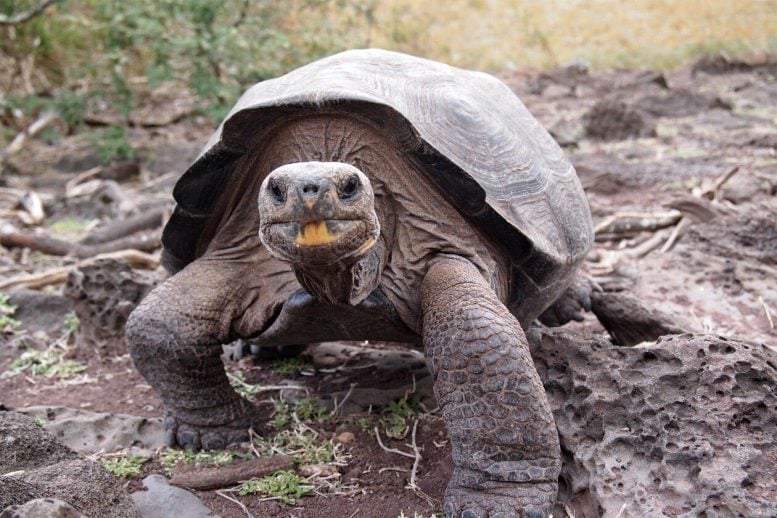
PinzΓ³n Saddleback TortoiseUsing a new computational toolkit, Yale researchers recovered evolutionary clues from highly degraded DNA and identified two extinct lineages of giant tortoises. Some Galapagos giant tortoise specimens preserved in museums contained so little usable DNA that less than 1% of their genomes could be read. Yet Yale researchers were still able to recover enough genetic [...]

  •  

Scientists Just Discovered the Eye Defies a Long-Held Rule of Vision

Close Up of Human EyeA Yale-led study uncovered unexpected communication between retinal visual pathways that were thought to operate separately. Researchers at Yale School of Medicine (YSM) have discovered unexpected insights into how the eye handles visual information. When we view a scene, the visual system quickly separates different features, including color, contrast, and motion, and processes them independently. [...]
  •  

Scientists Let People Play Video Games Using Only Their Thoughts

Brain Neural Network NeuroscienceResearchers developed a brain-controlled gaming system that learns from the brain’s natural wiring, enabling fast BCI training and potentially transforming medicine, mental health, and human-computer interaction. It may not be long before video game controllers become optional. Researchers at Yale University have developed a new brain-computer interface (BCI) that allows people to play video games [...]
  •  

Yale Discovery Overturns Long-Held β€œEvolutionary Dead End” Theory

DNA Genetics Evolution Concept ArtThe discovery of Typhlichthys styx shows that cave-adapted species can continue evolving and splitting into new species, with underground aquifers playing a crucial role in that process. Researchers at Yale have identified a previously unknown species of eyeless cavefish, a finding that challenges the long-standing view that caves and other underground habitats are evolutionary dead [...]
  •  

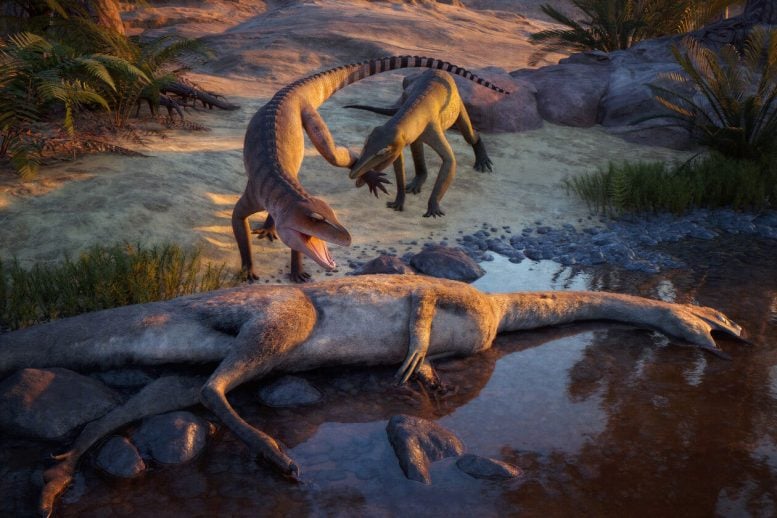
New Crocodile Cousin Discovered After 210 Million Years Hidden in Stone

Eosphorosuchus Lacrimos Is Disturbed by Hesperosuchus AgilisA newly identified prehistoric crocodile relative, Eosphorosuchus lacrimosa, was discovered alongside another croc species in New Mexico fossils dating back 210 million years. Around 210 million years ago, two crocodile relatives about the size of modern jackals stood together along a humid riverbank in what is now northern New Mexico. One of them, Hesperosuchus agilis, [...]
  •  
❌