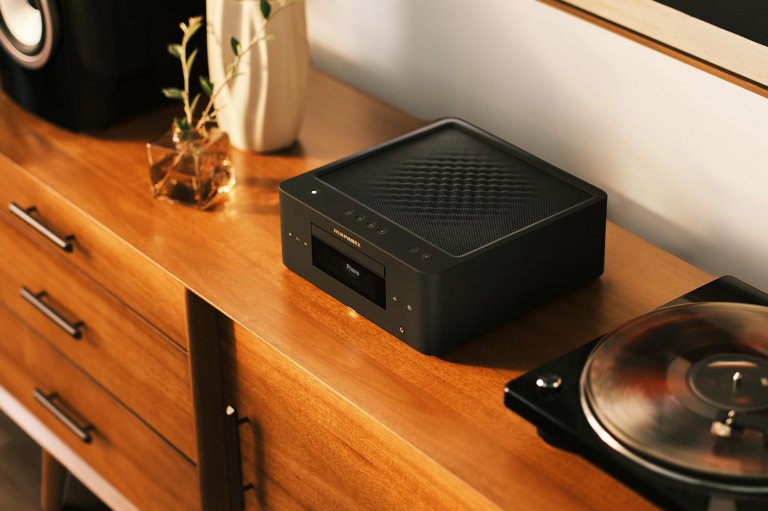
Earlier this year, we were fortunate enough to visit Shirakawa Audio Works, where Denon and Marantz assemble components tuned to be masterfully musical. We also spent time at the brands’ shared Tokyo headquarters, where we previewed various audio gear, much of which has already been revealed. However, one item in particular caught our attention, and it was still under wraps … until now. The Marantz MCR 60n network audio player (shown above) stood out by being able to fit in.
In a room full of full-size receivers, this streaming amplifier’s 11W x 11.9D x 4.4H footprint drew our attention because it’s tailor-made for those of us with a listening station that doubles as a living space. Even more impressive is how much connectivity it offers in place of a crowded stack of components.
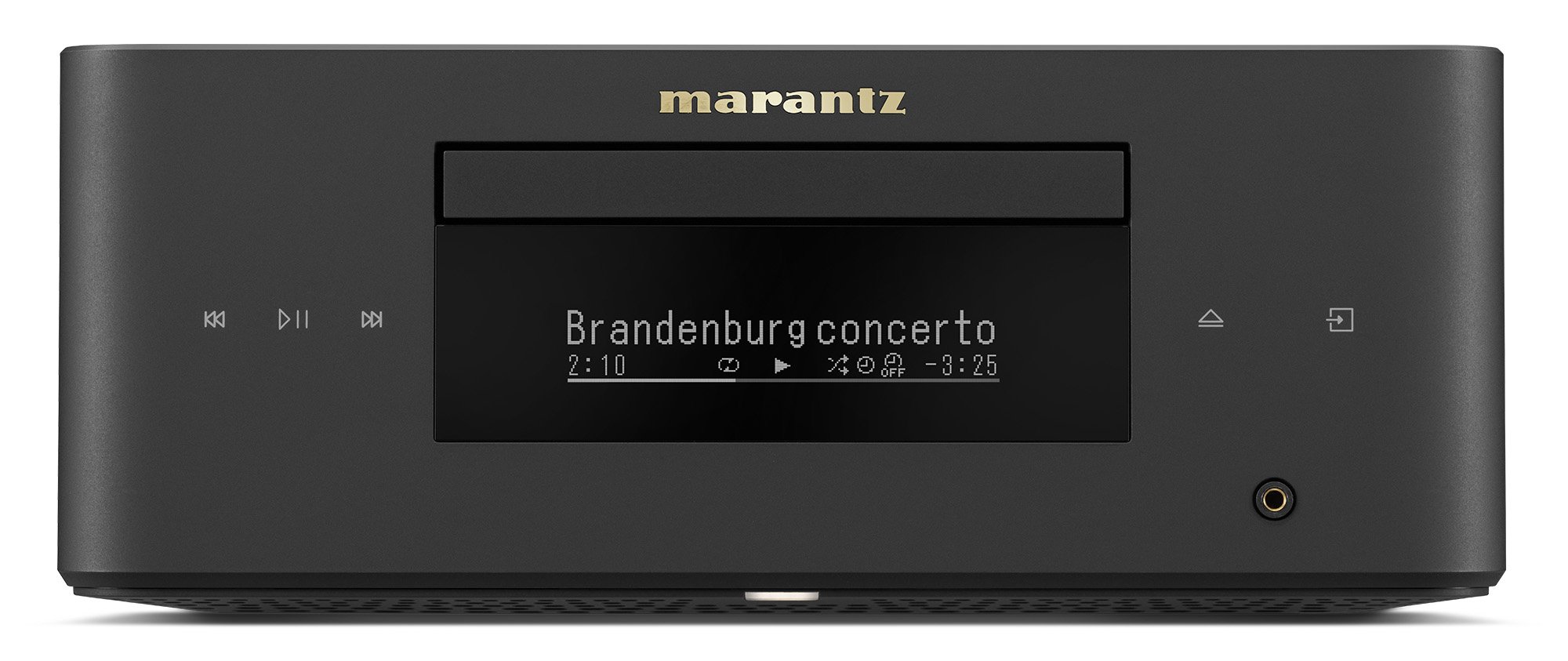
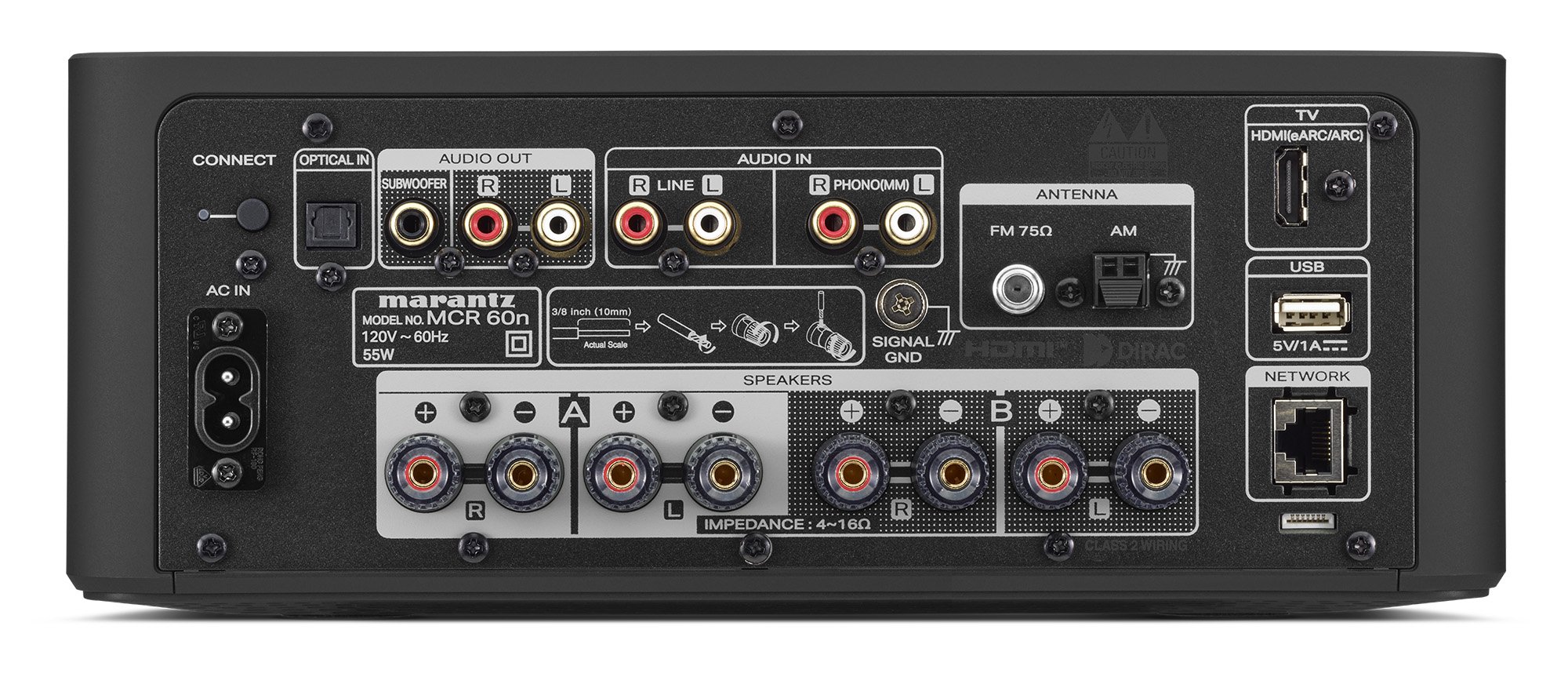
For starters, there’s a front-loading CD player. Because physical media is making a comeback, or so I’m told. With that in mind, there’s also an integrated MM phono stage for vinyl fans. Got another source? There’s one analog and one digital optical in. You can play MP3 / WMA / AAC / DSD / WAV / FLAC / AIFF / ALAC off a rear-facing USB-A. There’s also an HDMI eARC port with Dolby Digital / Dolby Digital Plus decoding if a TV is in the mix.
For those streaming, there’s even more potential. Once on your WiFi (or Ethernet), the 60n acts as an endpoint for the native Denon/Marantz HEOS multiroom streaming system, naturally, supporting PCM up to 384kHz/32-bit, DSD up to 11.2MHz. And it supports Spotify Connect/TIDAL Connect/Qobuz Connect, as well as Deezer, Amazon Prime Music, and Pandora. For anything else with an iPhone, there’s AirPlay 2. Plus, it’s Roon Ready for those digital audio file obsessives. An FM/AM tuner … the original streaming … is also included. There’s even Bluetooth receiver/transmit modes, if you’re buying a First Growth to drink out of a Styrofoam cup.
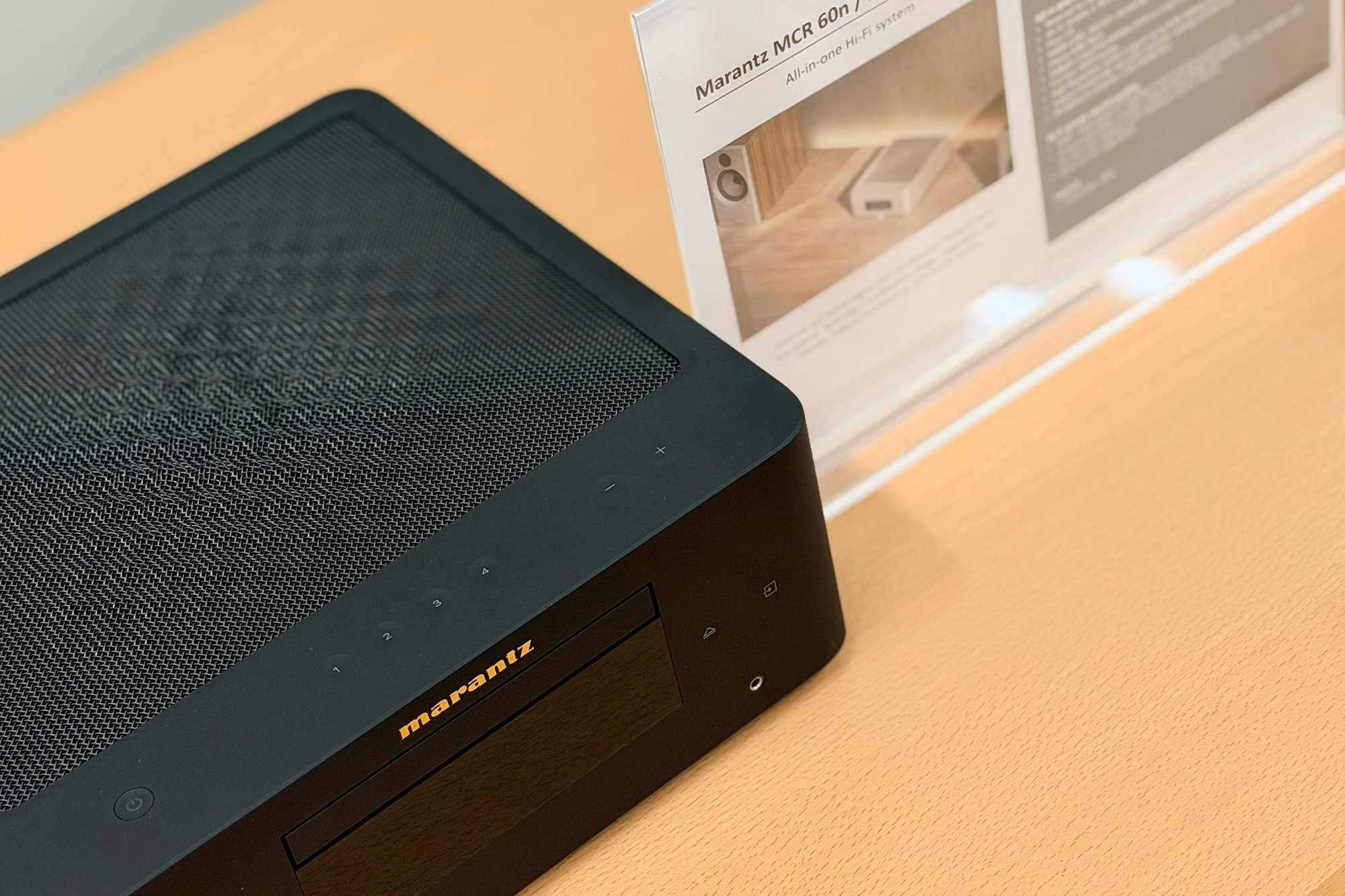
So that’s the inputs. As for the output, the MCR 60n produces 2 x 65W / 4 x 33W @ 4 ohms (up to 16 ohms supported), and can be run as Speaker A/B stereo pairs (independent volumes), bi-amped, or parallel BTL. This supports various loudspeaker setups, including dual listening zones. There’s also a subwoofer pre-out with adjustable crossover settings for precise low-frequency integration. It includes bass, treble, and balance tone controls, and it’s upgradable to Dirac Live Room Correction with a separately purchased license. It’s all backed by a refined power supply and topped by the same wavy metal mesh as the Marantz Model M1: design language that also acts as ventilation.
The Marantz MCR 60n and some compact cabinets offer an alternative to desktop powered speakers with even more flexibility. Perfect for modern urban living, this is low-profile hi-fi.
The 2026 IFA consumer electronics expo has wrapped up at the Messe Berlin grounds. Every year, humanoid robots and autonomous helpers share space with smart home appliances, computing technology, personal AI, and increasingly intelligent audio and video products. Sadly, we couldn’t be there in person (unlike last year). I mean, who doesn’t like decoding a cipher in real time to point you in the right direction so that you go against the flow of thousands of people to make it to your next appointment only 10 minutes late. Which is five minutes early in trade show time. So, yeah, we’ll miss the adrenaline rush. But that doesn’t mean we’ve missed the steady stream of future tech being announced, and we’ve captured a snapshot below of the best gear for smart living now and in the future.
Home cinema & big screen accessories
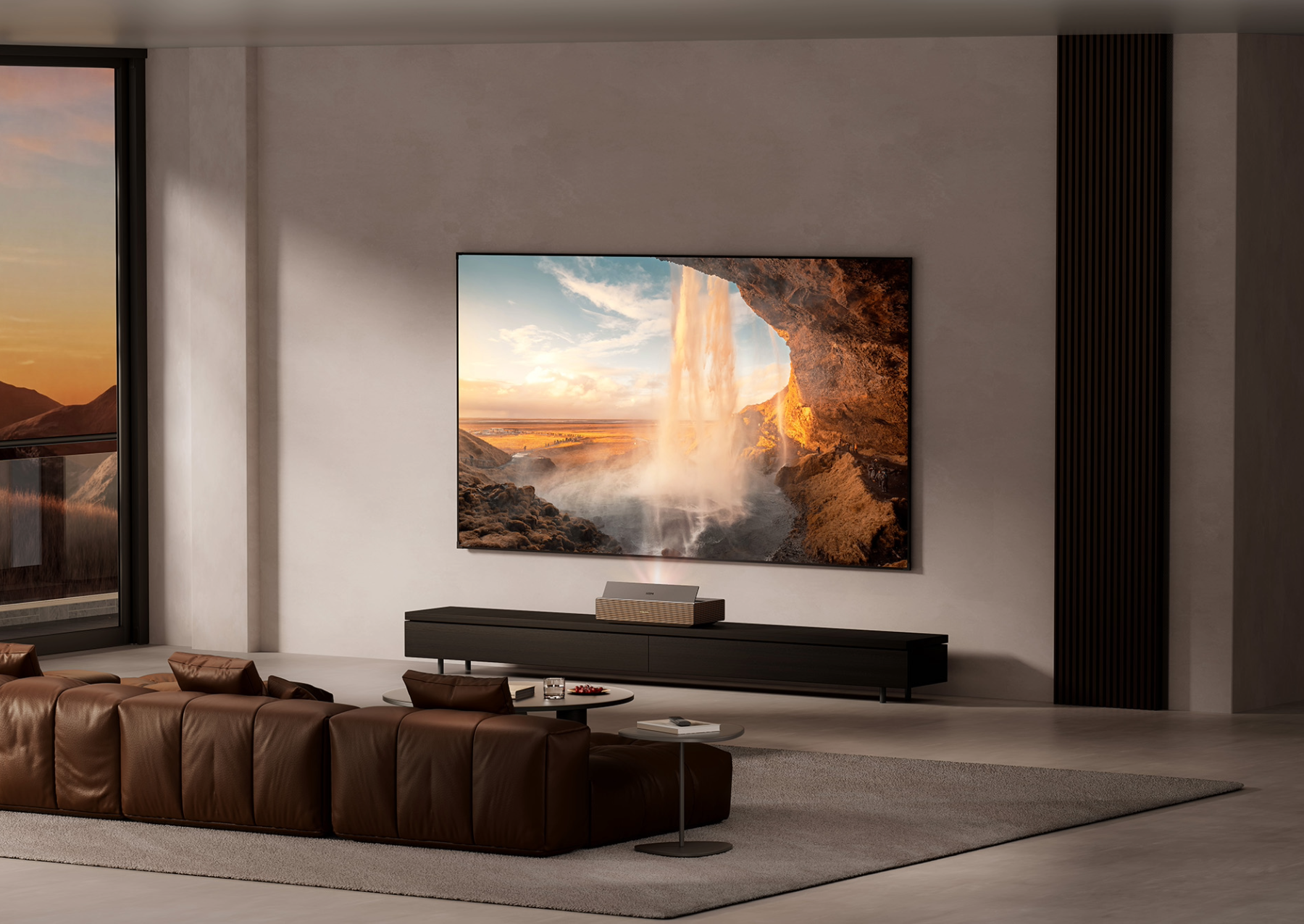
The XGIMI Aura 3 Max is the first UST (ultra-short throw) “laser TV,” aka lifestyle projector, to offer 4K at 120Hz. And this triple-laser dual IRIS setup does it with 5,700 ISO lumens, 8,000:1 native contrast, 110% BT.2020, 0.163:1 throw (120″ from 8″), 80W Harman Kardon sound, Dolby Vision + IMAX Enhanced format support, and 3 x HDMI 2.1 inputs. That’s good enough for movie night and console gaming, and it’s starting Kickstarter crowdfunding in October. If your installation options are tighter and budget bigger, the new AWOL LuxVision UST and its RGB triple laser + Dynamic IRIS setup also offers native 4K/120Hz, 6,000 ISO lumens, 10,000:1 native contrast, enhanced black levels and all the formats, plus, for its signature trick, optical lens shift. But all that costs $5,999, compared to the expected $2,399-$4,999 range of the Aura 3 Max (depending on early bird investment vs. retail, etc.).
Showcased adjacent to IFA, the Sonos Beam Ultra, which was announced alongside the Ace Ultra headphones and Sonos OS 27, packs 7.1.2 Dolby Atmos (and the ability to use a proprietary mesh network to assign Sonos portable speakers as rear channels) into the brand’s most compact soundbar. That opens up the wireless surround system world for folks with less open space.
AURA 3 MaxUST laser TV brings together advanced picture performance, immersive sound, and flexible entertainment capabilities. Image: XGIMI
Personal audio
We love earbuds, and we love sleep, so we’ll be interested to try the low-profile, side-sleeper-friendly Anker soundcore Sleep Earbuds 4 Pro, which can come with active noise cancellation, including adaptive snore masking, but also feature built-in PPG optical sensors for heart rate + HRV tracking while you sleep, which means insights when you wake. Plus, an app includes a soundscapes library.
Speaking of ANC, our pals at Bose know enough about noise reduction to crush it in other brands, and EarFun is now one of those partners. Bose did some acoustic engineering on EarFun’s upcoming Air Pro 5, which looks packed with features and value, including ANC, three-device multipoint Bluetooth 6.0 with LDAC, LE Audio, LC3, and Auracast, and more. And EarFun’s Wave Pro X, a dual-coaxial driver headphone teased at IFA 2025, is now available for sale at the shockingly affordable price of $129 for a set featuring Bluetooth 6.0 with aptX Adaptive, aptX Lossless, LDAC, and Hi-Res Audio certification, wired USB Audio/AUX modes, 8-mic hybrid ANC, and 90 hours of battery life.
Speaking of headphones, Edifier is getting in on a similar value-driven wireless flagship game with the WH950NB Pro. They have a dual-driver (40mm woofer + 10mm tweeter) design, 8-mic adaptive ANC, 6-mic AI call system, spatial audio with head tracking, Bluetooth 6.1 with SBC, AAC, and LDAC, audio via USB-C, and more.
Speaking of affordable audio firsts, the JLab JBuds Mini ANC is the smallest TWS earbuds ever produced with ANC, spatial audio, and native Apple Find My compatibility, and the first non-Apple and non-Beats earbuds to offer the feature under $100.
Speaking of speaking of, the $149.99 beyerdynamic AVENTHO Y headphones speak to a longevity trend set by the much more expensive Sennheiser MOMENTUM 5 series and feature a replaceable 90-hour battery (60 w/ ANC), interchangeable ear cushions, and optional accessories. Plus multipoint Bluetooth 6.0 and some snazzy colors.
The beyerdynamic AVENTHO Y was designed as a single headphone for multiple use cases, moving between music, gaming, work, travel, and everyday life. Image: beyerdynamic
AI hardware and smart glasses
Want to use earbuds for more than listening? The Plaud One (up for preorder) exists at the intersection of personal audio and wearable AI, as it can capture conversations (saved to the case’s eSIM) for transcription, lets you interact with an AI agent for planning and workflow execution, and more. You can set up connected apps, cloud services, and routines. And you can just listen to music with Bluetooth 5.4 (SBC/LDAC) and ANC. It is worth noting, however, that there is a subscription involved. Similarly, the viaim Rise has a case with three microphones that can work as a standalone meeting recorder, plus its IP55 earbuds have an 11mm + 6mm dual-driver array, with Bluetooth 6.1 support for LDAC/LHDC, spatial audio, ANC, and 3 mics + bone conduction for voice capture. There’s transcription software, as well as the ability to hand off work to AI agent(s) of choice. It’s live on Indiegogo with a super early-bird price of $259 against a $399 MSRP, and every backer gets a year of a viaim Pro subscription for free.
As for smart glasses, and there are always smart glasses, the RayNeo iO AI glasses have been talked up for their camera-free design, as well as being only 33g but equipped with a 33″ invisible display that sits within your view. And you can do recording and AI notes, get live captions/a teleprompter in 55 languages, plus more, plus have all-day access to an AI assistant linked with the models of your choosing.
Assisted mobility
We’ve previously tested the Hypershell X Ultra exoskeleton, with positive impressions, so the $2,299 carbon fiber-and-titanium Hypershell Halo immediately caught our attention. It expands the concept, and frame, to a full-leg, four-joint form factor. This wearable, with its peak 1,490 W output, takes the fatigue-reduction concept that was pitched to folks who might have lost a beat when it comes to their outdoor activities and offers support for the entire lower-limb kinetic chain. So it’s got active support and impact damping to support stamina for extended multi-terrain challenges, but it can also benefit those who might simply need sit-to-stand support.
Hypershell HALO exoskeleton has active support and impact damping to support stamina for multi-terrain challenges. Image: Hypershell.
Home robots for floor and lawn care
The future promised us jetpacks, but having to sweep and mop less is kinda better. And there’s never a shortage of robovacs at IFA. The ECOVACS Deebot X12S OmniCyclone, for instance, introduces 53 air watts of deep suction, which is 60 percent more than the last generation. And the OZMO Roller 3.0 + improved FocusJet technology reduces residual water substantially. This all means a better clean, powered by an upgraded AI voice assistant. Most notable, however, might be the physical, mechanical Privacy Shield that can slide over the camera when docked. Because Hackers.
The Roborock Saros 20 Flowalso launched, bringing physical adaptability, with an ultra-low 3.14-inch chassis and the ability to deal with 300+ obstacles and cross multi-level thresholds. Up to 3.46 inches under specified conditions. And it’s got an aggressive 212-degree hot-water mop. The eufy Robot Vacuum Omni E35, meanwhile, stressed a hygienic filtration system with the kind of dust handling that makes it a top pick for allergy- and asthma-prone homes. And iRobot showed a Roomba Duo concept: a robot stacked atop a robot, with the smaller one deploying when there are spaces the larger one can’t reach.
If it’s your lawn that needs tidying up, the Mammotion LUBA 4 AWD all-terrain mower features a quad-camera + 360-degree LiDAR + NetRTK positioning system to guide the bidirectional driving system with independent front-wheel steering, no wire barriers needed. No damaging U-turns either, with complete coverage helped by edge-trimming modules. And the all-wheel-drive system with dual 165W high-torque motors can handle up to 80 percent (38.6-degree) slopes.
MAMMOTION’s LUBA 4 AWD all-terrain mower is racing to cut your grass. Image: MAMMOTION.
Smart home and lighting
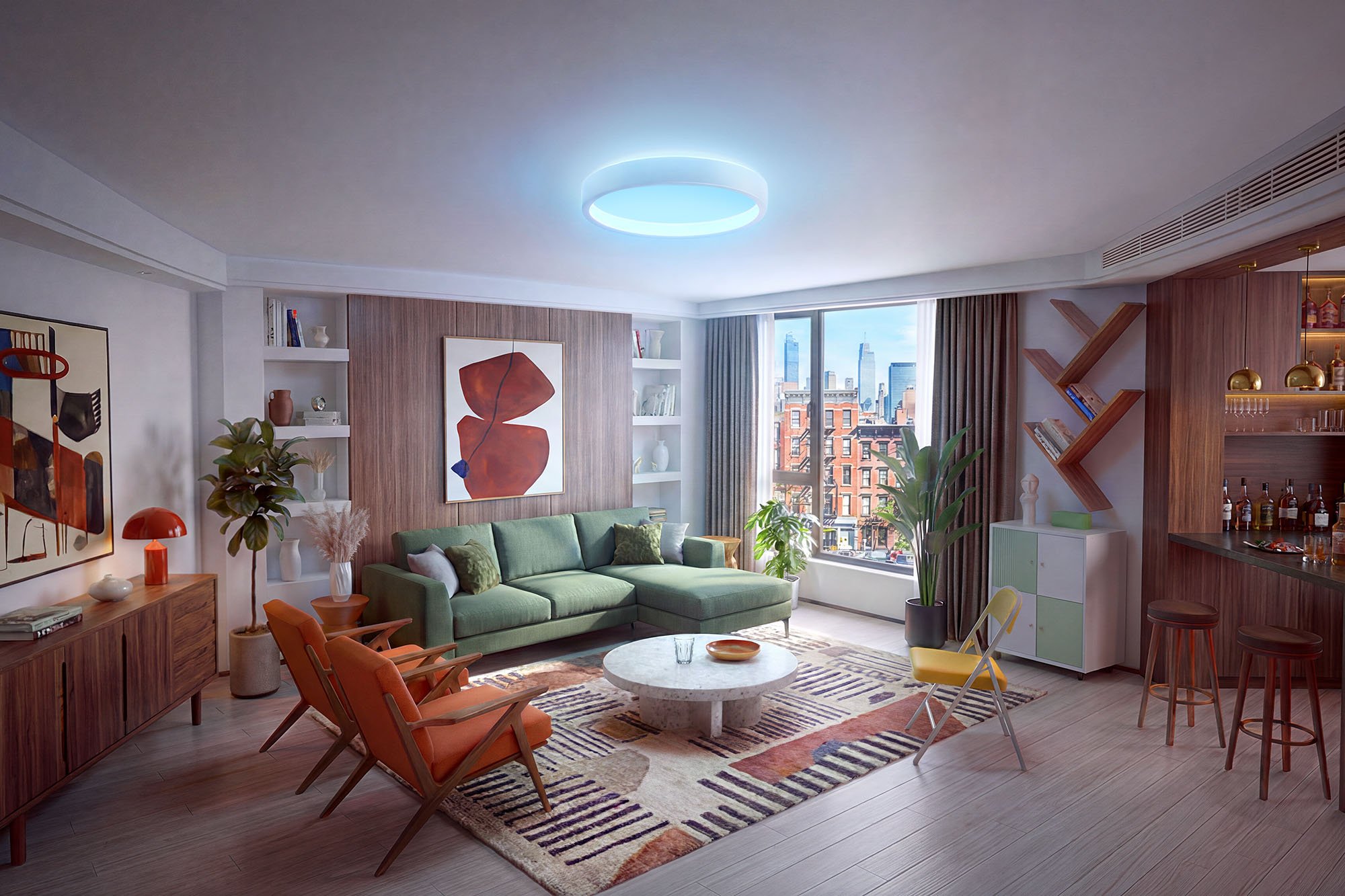
There are days when you want to bring an outdoors vibe indoors. Instead of cutting a costly hole in the roof, just install the 21-inch 125W WiFi-enabled Govee Sky Ceiling Light, engineered with 7000 lumens and a 478nm sky-blue wavelength matching human melanopsin sensitivity and able to automatically adjust lighting guided by local time and weather to support natural circadian rhythms. Or it can just replicate a lightscape preset. Fall sunsets in summer, breakfast for dinner. The only rule is there are no rules.
For something more accent lighting, the Nanoleaf Smart LED Monitor Stand features a natural wood platform with 550 lumens of individually addressable light zones underneath. This lets you display multiple colors at once with ultra-smooth gradients, or use it as a forward-facing anti-glare task light (UGR<10) with dedicated CRI97 white LEDs. Set an ergonomic height and heighten the mood simultaneously.
The Govee Sky Ceiling Light uses wavelength and adjustable timing to support natural circadian rhythms. Image: Govee
Cameras
The HOVERAir Versa is the vlogging camera taken to its logical conclusion. On land, it’s a 3-axis gimbal camera with 4K 60fps, 10-bit HDR, and 17.5 stops of dynamic range. Snap it into its wings with the patent-pending MagLatch system, and it becomes an AI-guided, self-tracking, self-framing drone. One charge gets up to 14 minutes of flight or 3 hours of handheld shooting.
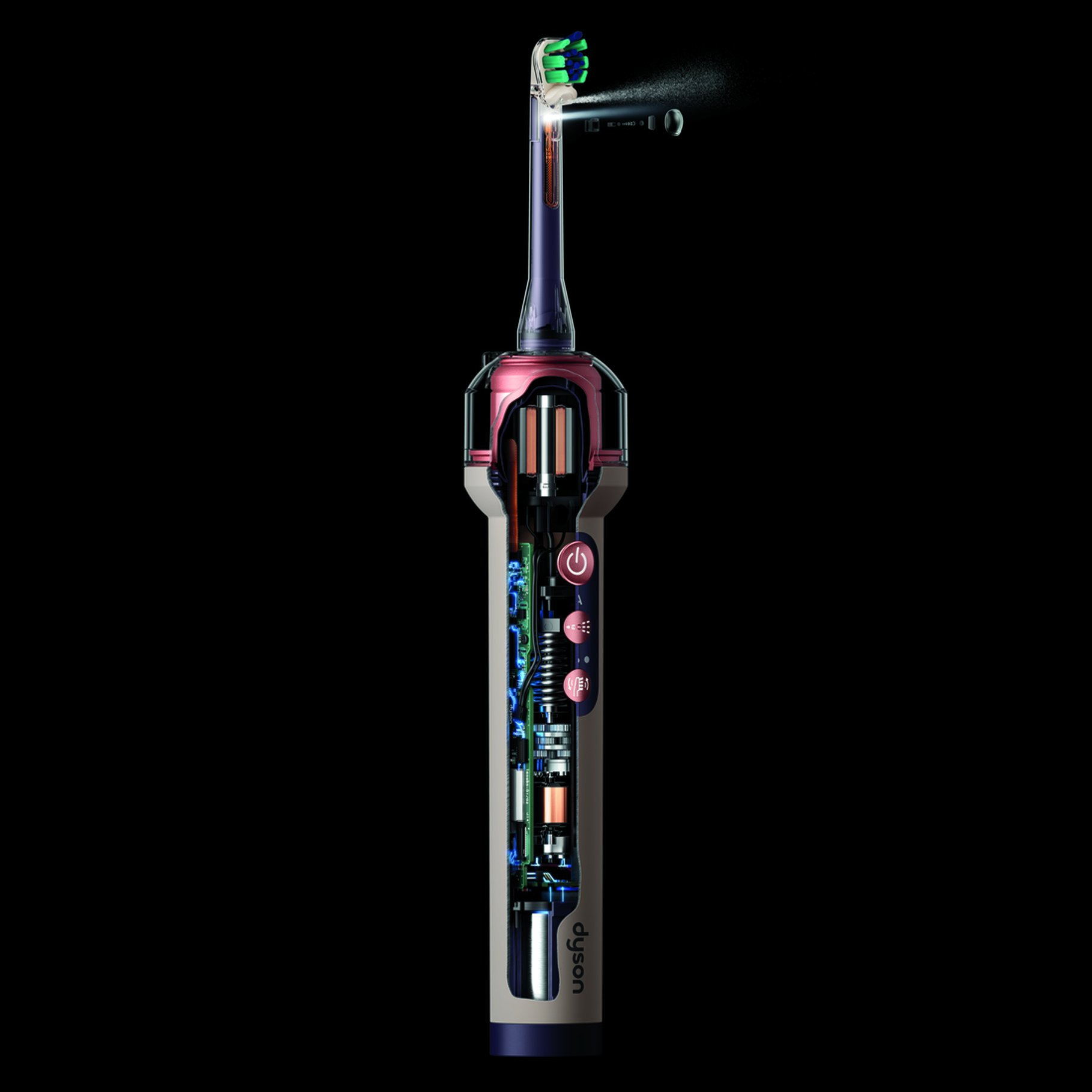
Most people might file this under health or grooming, but we’re putting the Dyson CameraJet electric toothbrush with variable sonic oscillation here because the camera guiding its integrated conical jet water flosser is the main feature. A 100k-pixel macro lens camera analyzes 28 images per second for “Gap Optical Targeting.” You can also watch live cleaning footage on your phone as you brush, or use the intraoral camera to inspect teeth. If you’re a sadist.
The Dyson CameraJet is the first toothbrush with a camera, using AI-powered vision to identify and target gaps between teeth while combining brushing, targeted liquid flossing, and mouthwash dispensing. Image: Dyson.
Computing concepts
Finally, there’s the purely conceptual. Over at Lenovo, there’s Project AeroBlade. This Active Flow thermal solution replaces traditional fan-based cooling with a solid-state AirJet active cooling architecture of ultrasonic membranes moving air, which Lenovo envisions as a way to make laptops thinner without sacrificing sustained performance. This was shown off in a 14-inch concept that measures under 10 mm thick and weighs under 830g. Meanwhile, Project Swan is an expandable screen concept that transforms a 14″ laptop into a 17” 16:9 display when the flexible screen is unrolled, while remaining 17.9mm thin and 1.6kg. Perfect for more efficient work within the cramped confines of travel.
And Acer showcased Project DualPlay Mini, a prototype 2-in-1 with an 8-inch screen that wants to be a Predator gaming handheld … until you flip it open, spin its screen around, and access the built-in keyboard for laptop-style productivity in Windows 11 mode.
Following the Sept. 1 announcement of new DJ-friendly party speakers, Sony has revealed three value-packed updates to its Bluetooth headphones lineup.
It’s been a big year on the premium end of Sony’s flagship wireless platform, which celebrated a decade of active noise cancellation excellence with the debut of the 1000X The ColleXion luxury headphones—a limited-edition pair Sony pitches on emotional value. But not everyone wants to spend $459 to $649, which is where the new WH-1000XM4C, WH-CH730N, and WH-CH530 come in.
In a sunny suite at New York’s Kimpton Eventi Hotel, we learn why Sony chose sequels over new concepts: young buyers and TikTok unboxing buzz drove the 1000XM4 to the highest customer ratings in the personal, portable audio line thanks to its comfortable, foldable form factor. This organic appreciation has been rewarded with affordable upgrades alongside other popular over- and on-ear models.
[Disclosure: Sony provided travel accommodations during the creation of this story.]
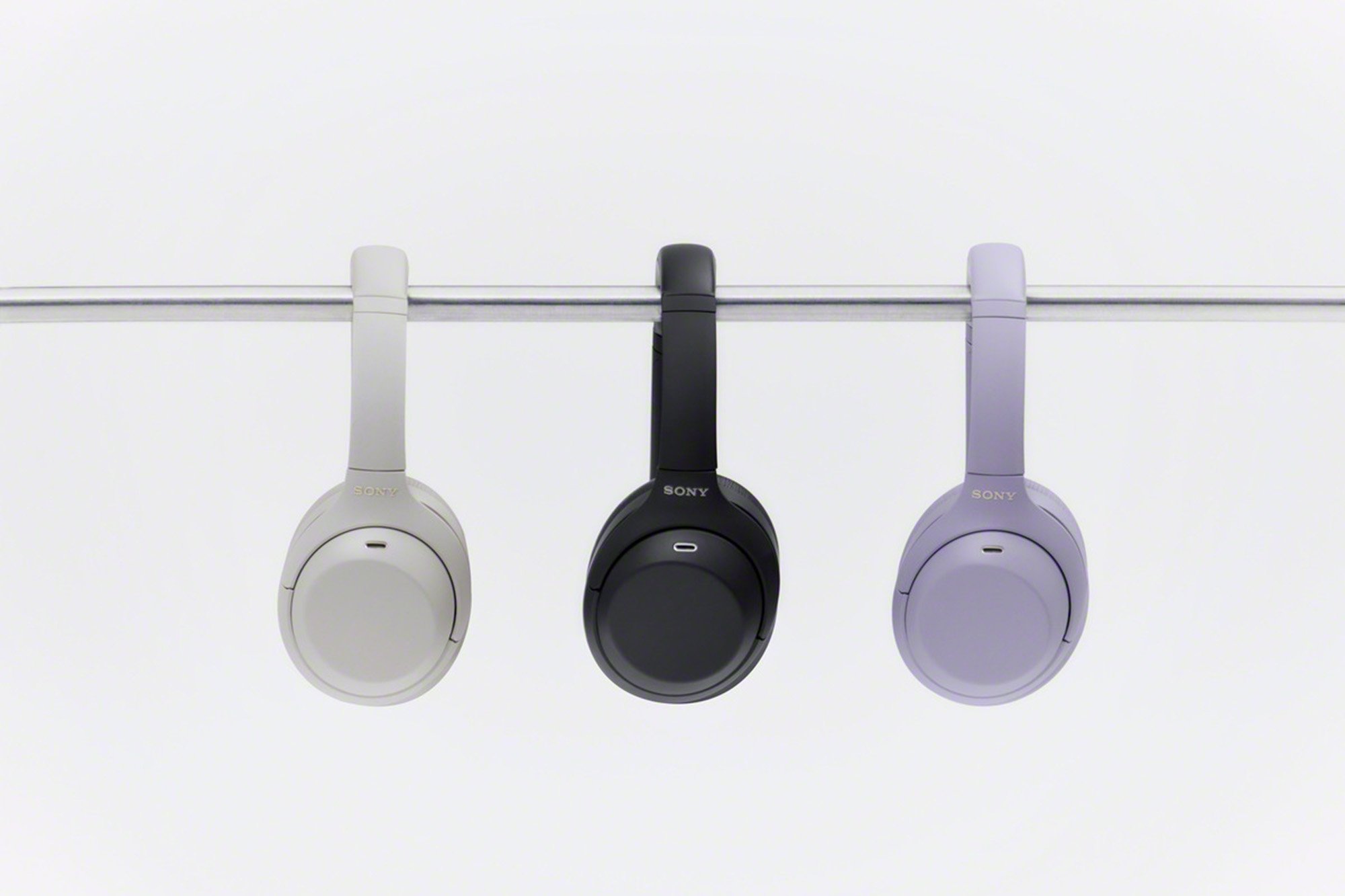
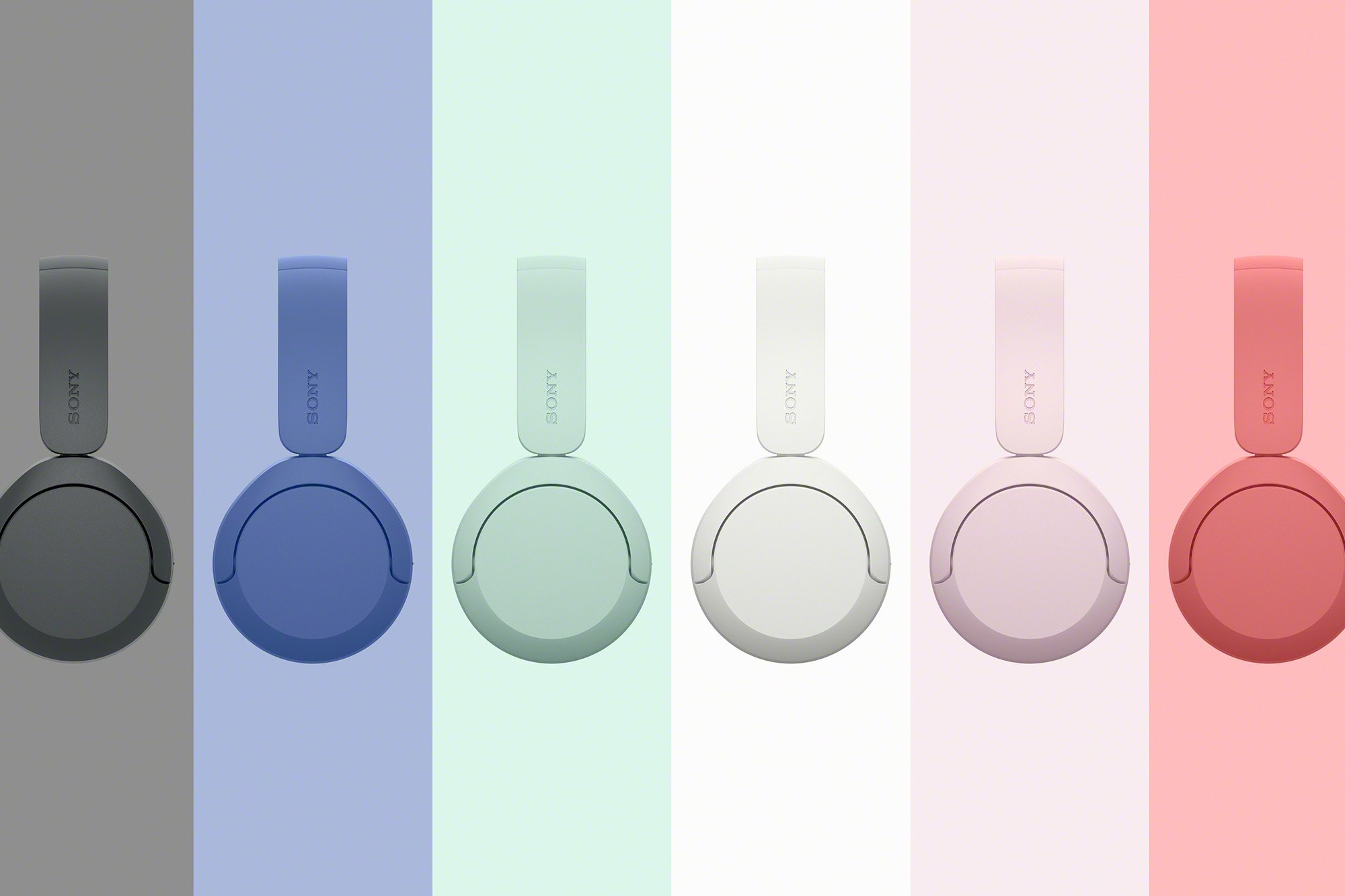
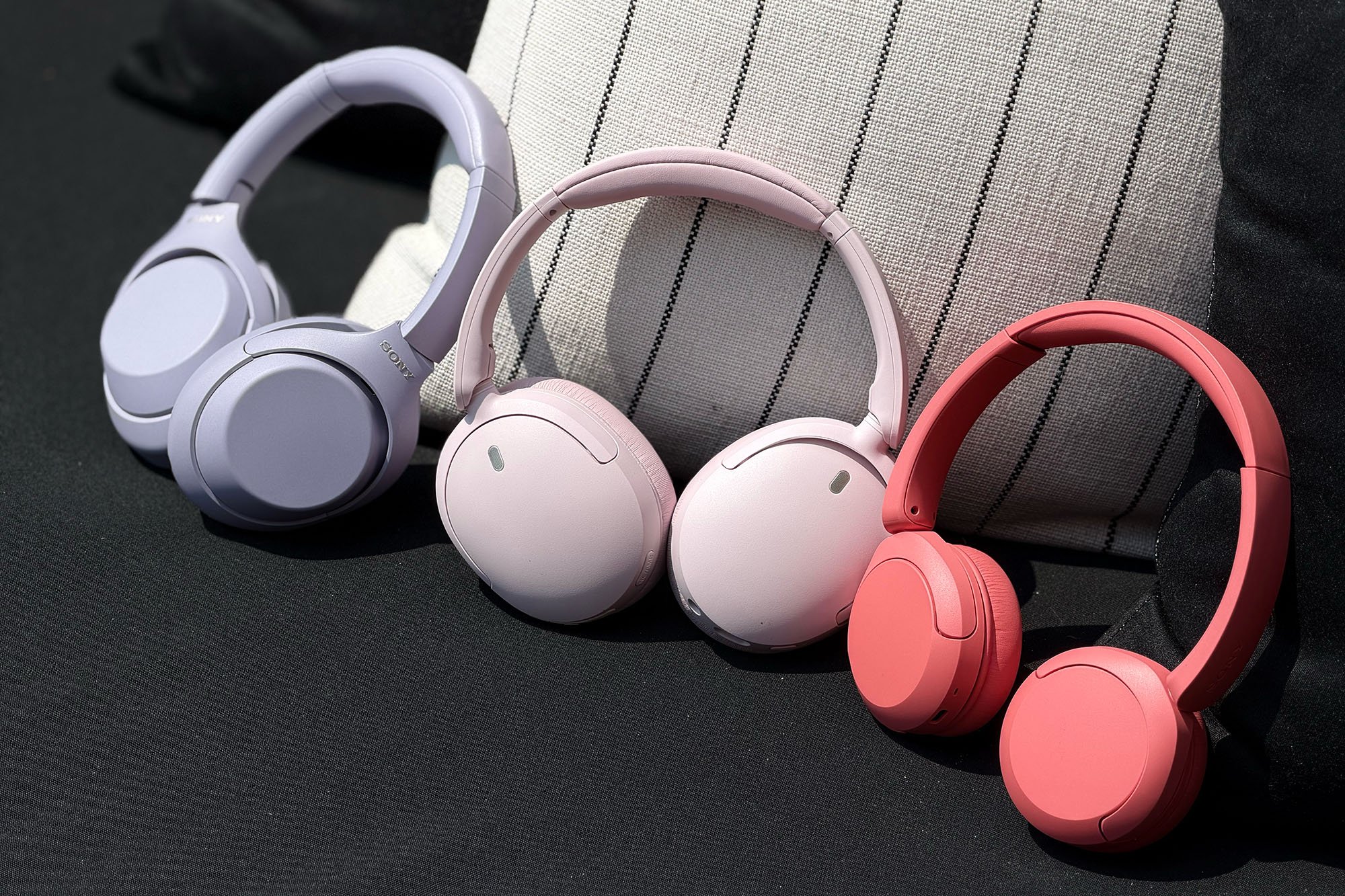
For this launch, Sony is widening the base instead of summiting the peak, though not without a step or two backward. Built on the established silhouette of 2020’s beloved WH-1000XM4, the second-generation 1000XM4C (shown above and below, left) launches at $299.99. That’s $50 less than the original, yet it features the same proven QN1 ANC processor while updating the house sound profile/software engine with input from Grammy-nominated mastering engineers. The headphones are now Bluetooth 6.0 (SBC/AAC/LDAC) for a more stable wireless connection, backed by a 10-band EQ/Gaming EQ instead of the original 5-band sliders. The battery life is now up to 27 hours with noise cancellation, down from 30, but that’s still more than enough for most students, commuters, days at the office, etc. And the 1000XM4C also inherits Background Music Mode, which adds a sense of spatial depth to your music, giving it an ambient effect (think a low-key café soundtrack) that still helps mask your surroundings without competing for your brain’s focus. It’s the same cozy earcups, now in lighter and brighter colors, including Lavender (shown), Black, and Platinum Silver with polished yellow gold logos in place of the previous rose gold hue.
The price remains $179.99 for the entry-level over-ear WH-CH730N (shown above and below, middle), but the specs all increase. A revised, rounded, lightweight frame that now folds instead of swivels for better portability, and inside it, the Dual Noise Sensor’s optimized ANC algorithm is 10 percent more effective. And battery life increases from up to 35 hours with ANC/50 hours without to 50 hours with ANC/75 hours without, so it won’t run out during hybrid work or study halls. That extra charge powers improved beamforming microphones plus AI noise reduction for clearer voice pickup on calls, plus a more natural sound profile with the same 10-band EQ/Gaming EQ as the 1000XM4C. It now supports the LC3 Bluetooth codec alongside SBC/AAC, plus that Background Music mode. Colors for the WH-C730N include White, Pink (shown), Blue, Black, and Oat.
The final, most compact headphone is the on-ear WH-CH530 (shown above, right). At only $69.99 (same as the previous generation), it’s positioned as a headphone for first-time buyers and casual all-day users. It swivels to store flat, rather than folds. And there’s no ANC. But that means battery life beats the rest at up to 55 hours. And the sound engine shares the 10-band EQ/Gaming EQ and SBC/AAC/LC3 with the CH730N, plus DSEE (Digital Sound Enhancement Engine) for smoothing out compression artifacts. Based on a brief listen, the soundstage was pleasingly clear, and the bass output was surprisingly strong for a smaller driver. Plus, Safe Mode monitors sound pressure and playtime and lets you adjust maximum volume limiting to keep usage within standards suggested by the World Health Organization for hearing protection. It’s an app feature also available on the other models, so extended wear doesn’t mean eardrum wear and tear. Colors include Pink, White, and Black, as well as on-trend Cobalt, Coral (shown), and Mint.
For those who value function, there will always be the WH-1000XM6. But for those who put a bit more emphasis on the fun, these models offer Sony’s core features and best value in a year of price pressure. We’ll have more to say once we’ve spent more time with them, so check back in.
The 1000XM4C, WH-CH730N, and WH-CH530 are available now. The slideshow below shows all colorways of the three new models.But keep scrolling for something even cuter.
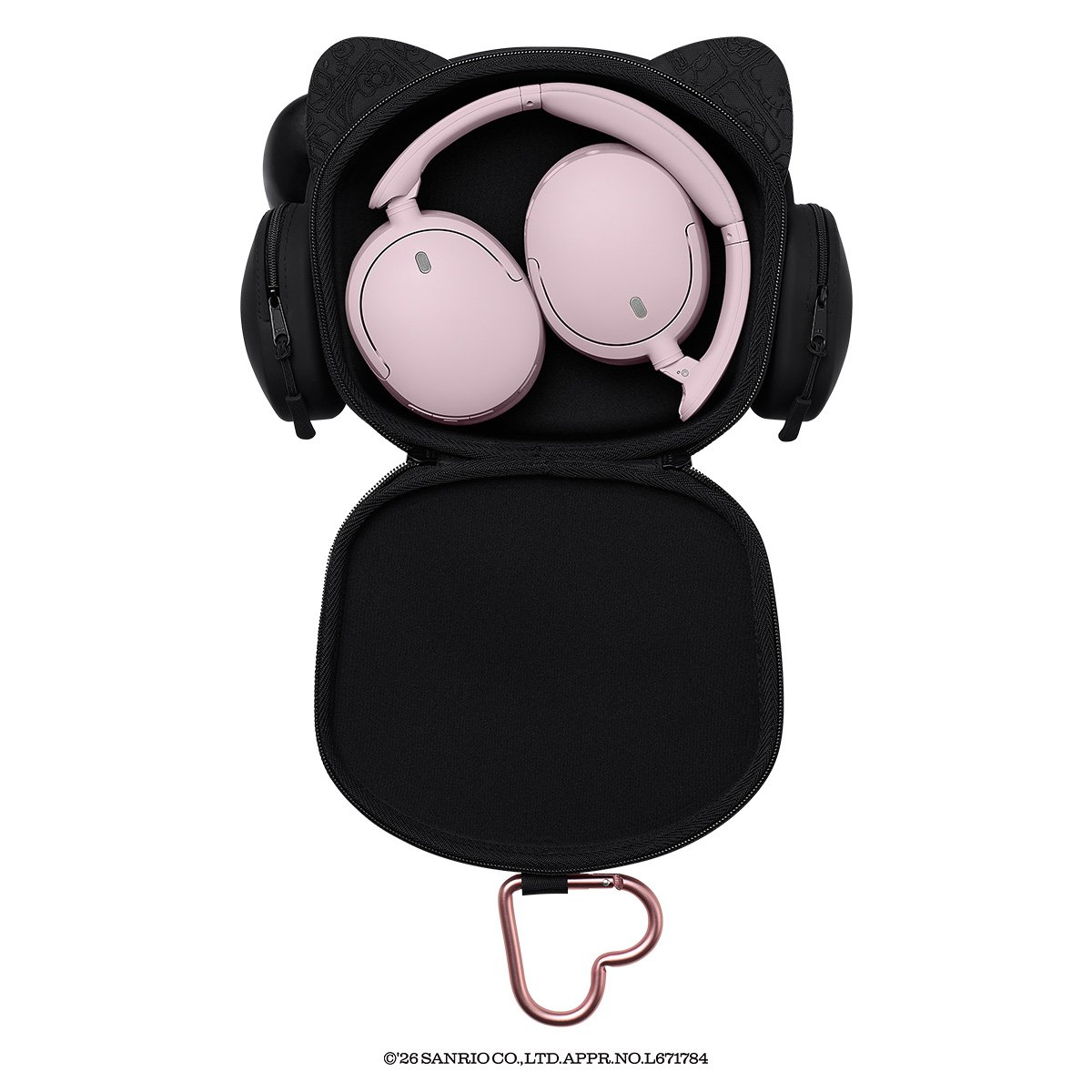
Sony and Sanrio are partnering for Hello Kitty limited-edition headphone bundles (shown below). Each bundle includes an exclusive stylized carrying case—with a carabiner, so it can double as a fashion accessory—and a similarly kawaii tote bag. They will be available for pre-order exclusively online at the Sony store this holiday season. Available in limited quantities in the US and select regions, the collaboration will feature selected Sony headphone models, including WH-1000XM6, WH-CH730N, and WH-CH530. Readers can be notified through this link when units are available.
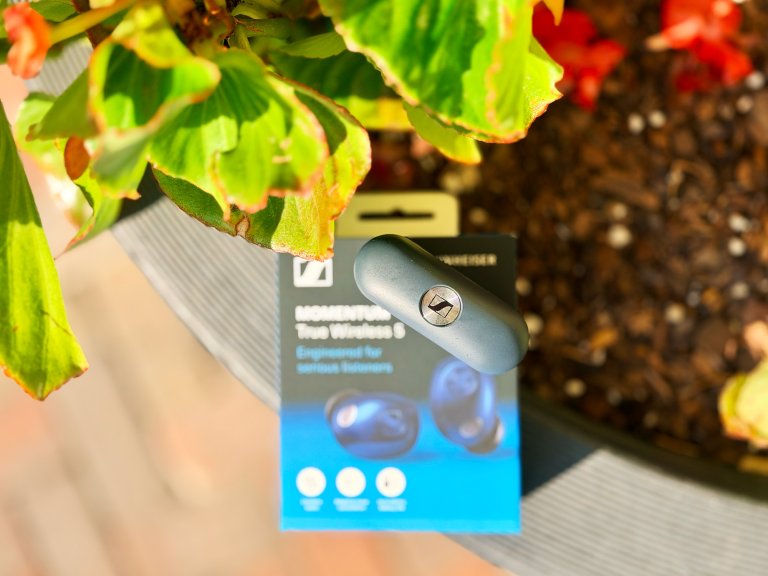
“Blue Jean Baby, L.A. Lady” … tiny earbuds in my head. As a writer in my second half-century, it’s expected, maybe even legally obligated, that I play some Elton John on every new audio device I test. But I don’t have to like it. Except today, I like it. Today, I like everything I play. It could be that, as a September baby, I’m enjoying the grounded clarity that accompanies Virgo Season. Or it could be that I’m enjoying the equally mindful tuning of the new Sennheiser MOMENTUM True Wireless 5.
“Tiny Dancer” pirouettes around my skull. Listening to New Order’s “Regret,” I have none. The Sennheiser MOMENTUM True Wireless 5 (let’s just call it the MTW5 from now on) is acoustically articulate. Vocals are incisive. But the design choices speak equal volumes.
The build
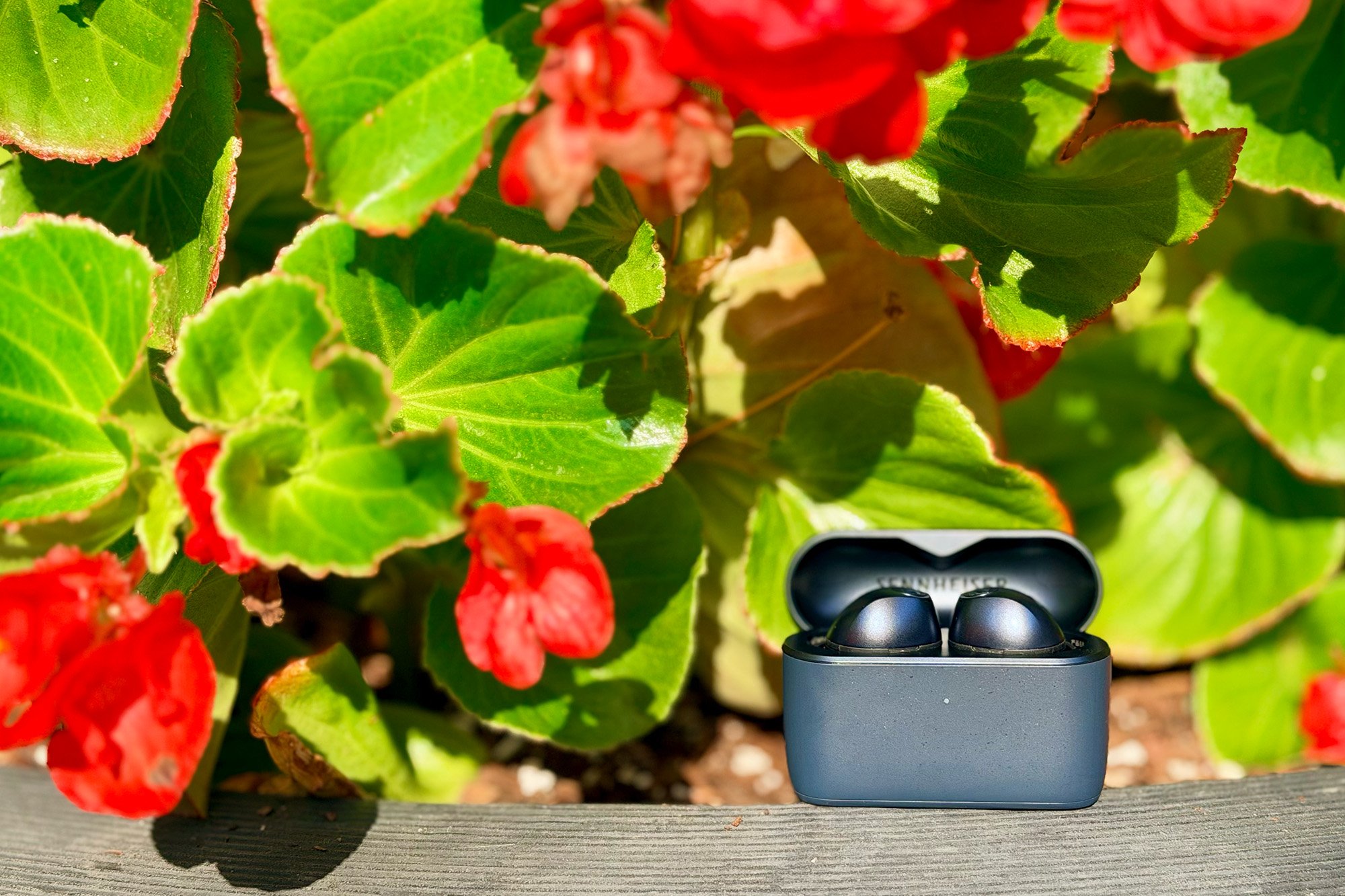
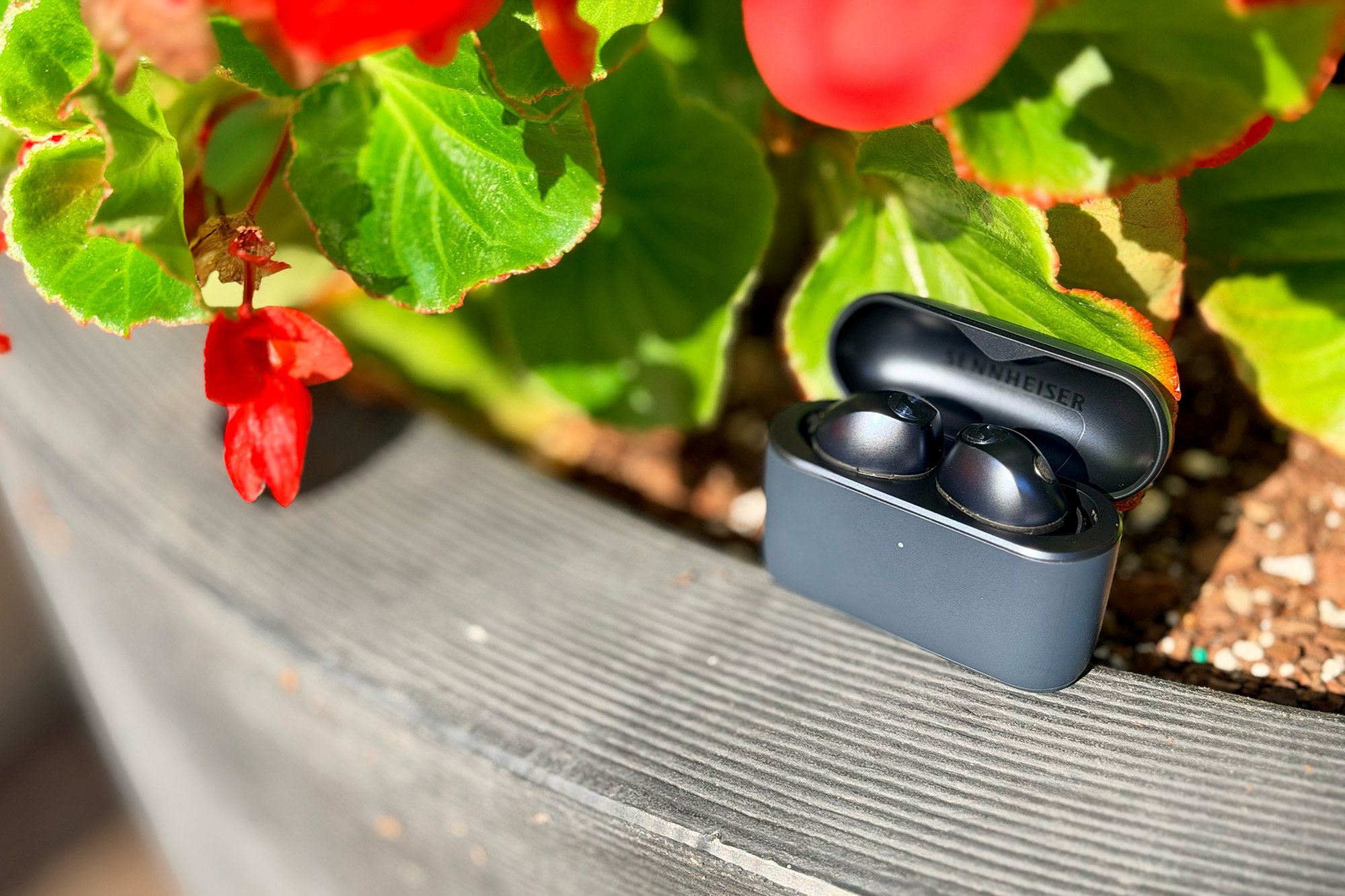
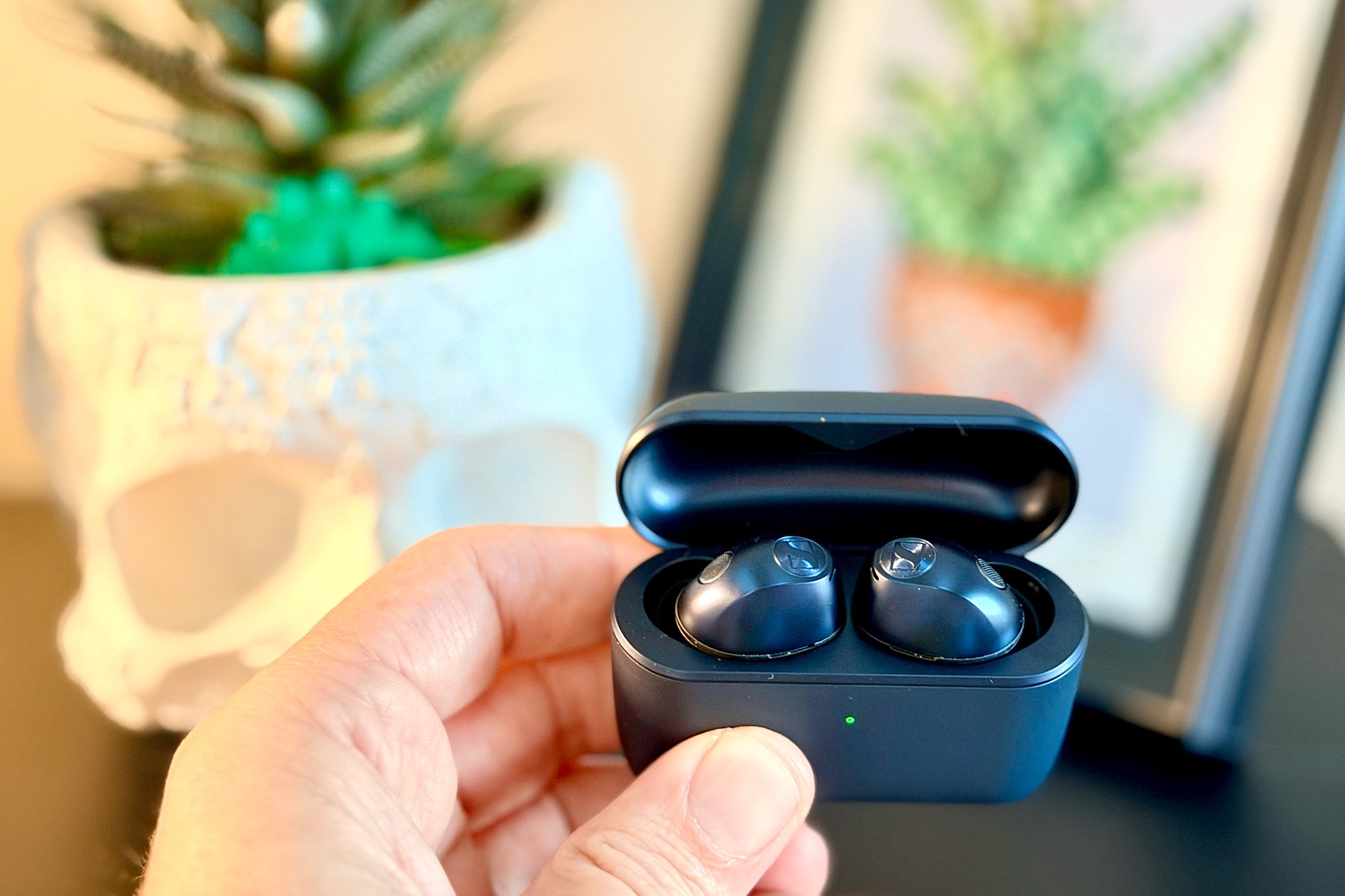
Gone are the somewhat squared enclosures and silicone wing tips of the MOMENTUM True Wireless 4, which were really a must for that model’s stability. In their place, the redesigned MTW5 is a pair of 7g polished pebbles available in five metallic colorways: Denim (aka blue jean, baby, pictured), Cream, Copper, Graphite, Lavender. And it’s shaped to nestle more naturally into the ear. I had no problem wearing them for hours, whether relaxing or running on treadmills and across concourses (those with smaller ears may have a different experience). An IP54 rating also gave me confidence that any sweat—and there was sweat—wouldn’t cause issues. Plus, this slimmer silhouette means a more pocket-friendly case, which I really appreciate.
Inside, six mics and two bone-conduction accelerometers total (3+1 in each bud) handle adaptive ANC (good!), Transparency Mode (fine), and calls (¯\_(ツ)_/¯ … functional, but I don’t like calling people with any earbuds). Touch controls weren’t too fiddly, and can be turned off if you’re more app-oriented. What really stands out is the user-replaceable batteries in both the earbuds and the case. Battery life is rated at 12 hours ANC off/6 hours ANC on (40 total with case), but will degrade over time, as do all rechargeable electronics. With a tiny Phillips screwdriver and a wedge tool, however, you can open the buds and/or case and swap in a replacement battery (sold separately). Upgradeitis is real, but you shouldn’t be forced to replace/dispose of something entirely. Longevity should be the new normal, so I applaud Sennheiser for the forward-thinking, eco-conscious approach.
Tony Ware
The sound
Put in the MTW5 and on first listen you’ll find the stock tuning leans on the slightly boomier side of balanced. When released, the full-sized $399.95 MOMENTUM 5 Wireless headphones were surprisingly punchy, more mainstream without totally sacrificing the midrange focus that anchors the brand’s audiophile legacy. I went in expecting a similarly crowd-pleasing warmth from the MTW5, and it’s there in the low-mids but without congestion. The 7mm TrueResponse driver in the MTW5, produced in the same Irish factory as summit-tier personal audio systems, does a good job ensuring intelligibility alongside impact. The presence band works as well for podcasts, audiobooks, and movies as it does for music.
Turn to the multi-tile SmartControl+ app, however, and you can access EQ presets, Sound Personalization, and, most importantly, an 8-band graphic EQ to coax a curve that really brings out the driver’s potential. Sliders don’t offer the surgical precision of a parametric EQ, as you get with the $499.95 HDB 630 headphones, but you can still dial in or back off regions you find loose or edgy.
Push some sub-bass, scoop some upper bass/lower mids, nudge some high-mids/treble, and you’ve got a fleshy-meets-refined response closer in spirit to the IE 900 flagship in-ear monitors. Now you can hear the winding of as much as you do the wobble in Peter Hook’s bass strings. There’s corrugated texture where before there was only round resonance. The breathing sidechain compression that defines “Fineshrine” by Purity Ring opens on a taper you can trace, not just a throb you can feel. With the right tweaks, it’s a clean, clear tuning with a lifelike presentation that puts it in conversation with audiophile offerings such as the Status GoldenSound Pro X rather than purely consumer-minded ones. Between little screws and tonal tweaks, this is a tinkerer’s true wireless.
Two factors heighten the level of detail you can extract from these earbuds: connection and active noise cancellation. The MTW5 features multipoint Bluetooth 6.0 with SBC, AAC, plus a Snapdragon Sound Series 5 Gen 3 chip for 24-bit/96 kHz aptX Adaptive and aptX Lossless with compatible hardware (such as Sennheiser’s own BTD 700 adaptor). And when it’s an option, it’s a treat. Depth and definition are noticeably enhanced. It’s not that a standard Bluetooth connection is detrimentally dull; it’s just that one prioritizing sound quality is audibly more expressive. Wireless convenience doesn’t have to sacrifice nuance. The problem is that the connection can stutter in environments with heavy RF interference. And that’s almost any public place in our modern smartphone world. However, it’s still nice to be able to pick between a robust iPhone connection when commuting and something more resolution-focused when sequestered.
There’s also an Immersive Mode with head-tracking for decoding Dolby Atmos content, which can expand the staging of a well-engineered track but can also make you feel emotionally disconnected when you get a bad upmix. As with all similarly equipped earbuds, the MTW5’s implementation, while solid, doesn’t impress me as much as the enriched immediacy the stereo image conveys. If you want a recommended A/B, compare something like the new Mastodon album, for instance. The cavernous reverb and spacey modulations unfurling across the Qobuz version are more evocative to me than the hovering sound objects of the Apple Music one. YMMV.
Also helping reinforce that concentrated cocoon is perceivably improved ANC. The redesigned eartips play their part in passively mitigating a fair amount of environmental noise. At the same time, new algorithms take advantage of that expanded mic array to reinforce reduction to the point that the churning chaos of a recent unplanned severe weather delay at Newark Liberty International Airport was more bearable. Or at least I was given a soundtrack other than hundreds of people yelling at customer service representatives. And the flight itself, when it finally happened, was just a gentle rumble. I wouldn’t say the ANC produces the pitch-black background of the top ANC trio—Bose QuietComfort Ultra (2nd Gen), Sony WF-1000XM6, and Apple AirPods Pro 3—as low-level hums persisted. But more distracting conversations were hushed, and the gap is now narrow enough that the MTW5 can be recommended for both sonics and solace.
Tony Ware
The verdict
Two years on from the MTW4, Sennheiser has offered more polish, same price. Physically more compact and comfortable, while also more capable, adaptable, and repairable, the Sennheiser MOMENTUM True Wireless 5 earbuds can have tunes twirling around your head for years to come. Not just the audiophile-of-a-certain-age ones (at least it wasn’t “Rocket Man”).
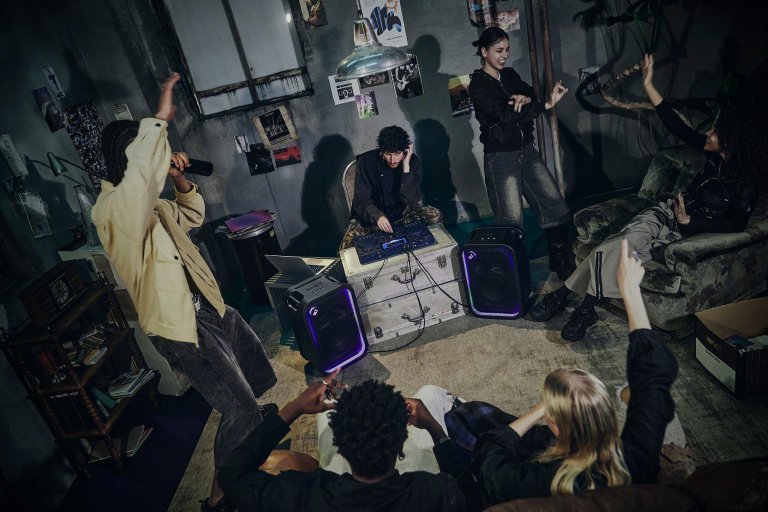
Looming in an event space of Chelsea’s Kimpton Eventi Hotel, the Sony ULT TOWER MAX introduced itself as something between a party speaker and a PA, packing more LEDs and dBs than the cabinets that came before it. In Manhattan in mid-August for a preview of three new speakers in Sony’s ULT POWER SOUND Series, I first met the MAX at a pre-briefing party as a DJ loosened up the new circular woofers, and maybe my travel-tightened spine, with some main-stage EDM at meeting-room distance.
The next day, in an even more compact conference room, I was given a disclaimer: we hadn’t heard the MAX anywhere near its max, but we could today, if we’re not sensitive to sound pressure. Before we dropped the bass, however, it was time to drop some specs.
[Disclosure: Sony provided travel accommodations during the creation of this story.]
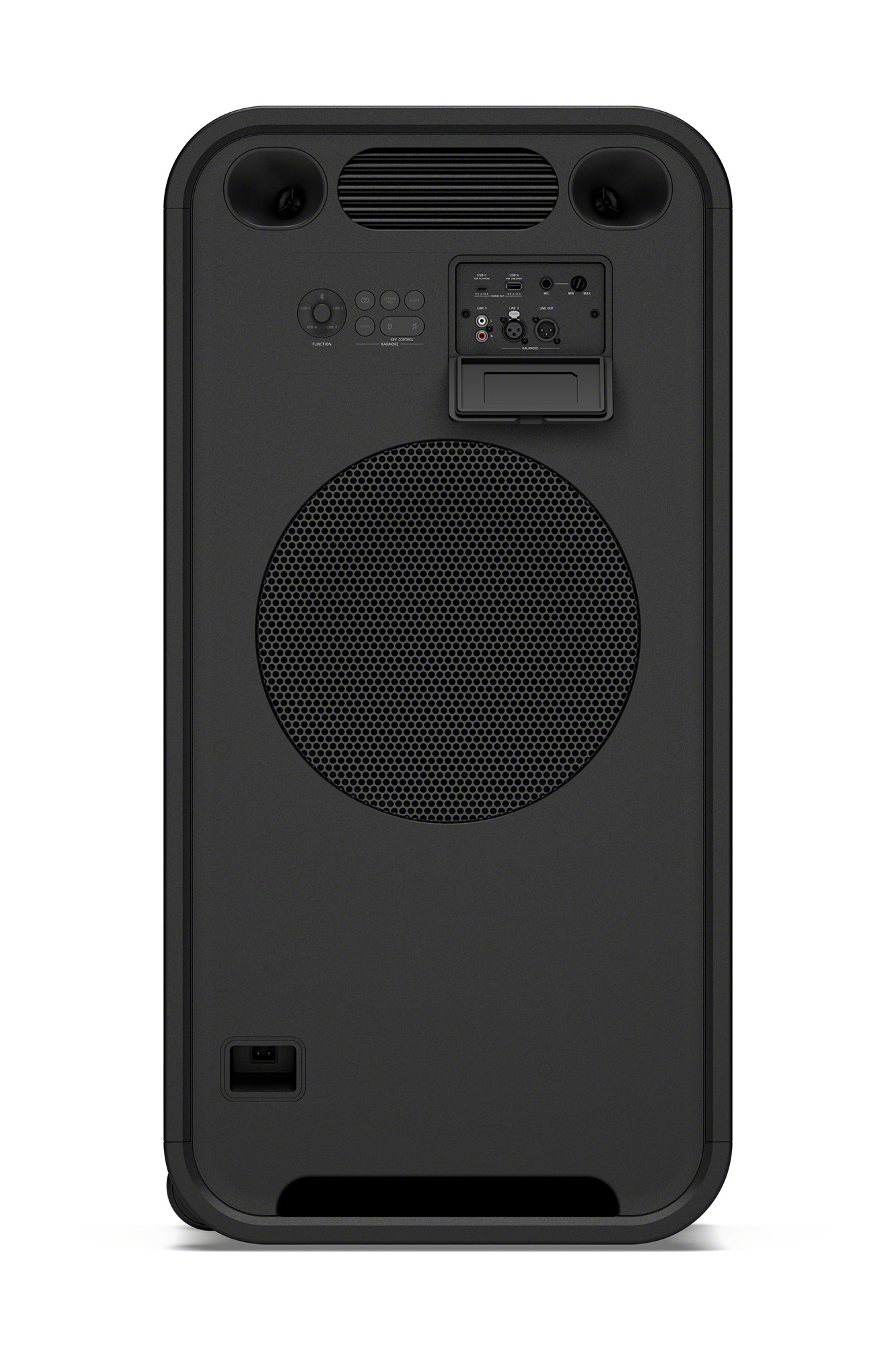
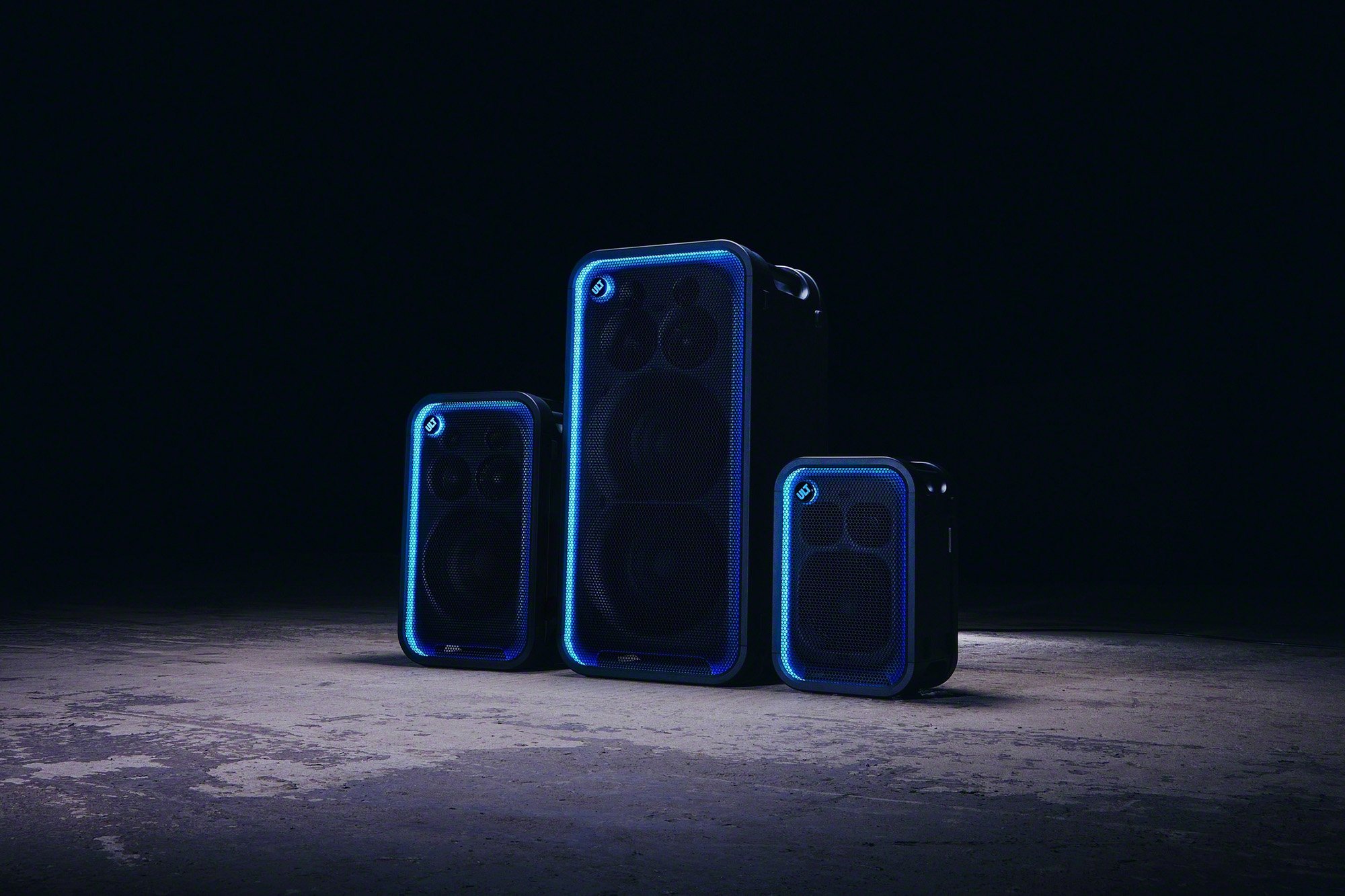
At the core of the Sony TOWER MAX are three large-diameter circular woofers (including a rear-firing one) plus an “ULT DUCT,” which replace the X-Balanced (rectangular) drivers of the previous generation. This 280mm geometry and more cabinet volume move air more efficiently, delivering lower-frequency extension of 45 Hz alongside 110dB/112dB SPL, depending on ULT mode selected. ULT1 emphasizes low end, ULT2 emphasizes overall output (the app also offers LIVE mode for a reverb/widening effect, a 10-band EQ you can overlay on either ULT mode, or FLAT for true-to-source playback). Pushing more air = pumping more bass. There are also dual midrange drivers and tweeters on the front, plus two rear-facing tweeters. This 360 Party Sound makes the TOWER MAX the best choice for bigger rooms and sub-heavy genres (after all, Grammy-nominated producers responsible for tracks by Kendrick Lamar and Rihanna, among others, helped tune it). It should be noted that each speaker is mono. However, you can create a stereo pair/Party Chain through either the physical connectivity panel (featuring XLR cables [In-Out] for mixer input and connecting multiple speakers, plus RCA, USB-A, USB-C, and a Mic input as sources) or using consumer-friendly Bluetooth 5.3 with SBC/AAC/Auracast. It’s just a click in the app or the push of a button on the back panel. (We believe the Sony speakers will, in theory, pair with other brands implementing open Auracast, but haven’t tested this yet.)
The Sony Sound Connect app helps you navigate these options, along with sonic and visual feedback from the speaker. Pushing the ULT mode button on the front (which is also a volume button) triggers a single (ULT1) or double (ULT2) turntable scratch sound. And the newly increased LED lights (100 on the TOWER MAX) can indicate Power On/Off, Volume Level/Up/Down, Sound mode, BT Pairing, Low battery (10%), Stereo Pairing, and Horizontal/Vertical switching of the device. And you can switch between three customizable lighting modes, putting the fun in functional. As for how to get the 20- x 41- x 18-inch, 121-pound speaker into place, four integrated corner handles and wider redesigned wheels help with transport and positioning.
The sweet spot for throwing a rager without throwing out your back, the Sony TOWER 7 cuts the price in half, woofers down to one, LEDs to 72, and weight to 50 pounds. But it produces more than enough rumble for the average backyard blast, hitting 51 Hz and 103.5dB/105dB. Everything else from the TOWER MAX is included. And you’re no longer tethered to an outlet; a rechargeable battery can last up to 30 hours with lighting off, 15 hours with lighting on (and a 10-minute quick charge offers 180 minutes of playback time). This is the one we’re testing, and its dynamic bass boost already scored highly on the “Daaaaaaamn” scale.
As for the Sony TOWER 5, it’s got one 230mm woofer and no ULT DUCT, plus no rear tweeters, resulting in bass reach of 51 Hz but overall SPL of only 98dB/99dB. It has only 56 LEDs and no wheels, but it’s also only 29 pounds and has a 20H/12H battery life (lights off/on). Plus it’s IPX4, so it can handle a light splash/rain shower. With the same I/O as its bigger brothers, including karaoke inputs (1/4-inch/XLR) and controls (Echo/key control) that I maybe should have mentioned earlier for the entire line, this is the most it’s going down anywhere you go choice. And Sound Connect lets you trigger an airhorn, so what more do you need?
Back to those first impressions. Structural changes led to physical sensations. Sony set out to make a more well-rounded speaker, in both design language and bass reinforcement. And, based on my memory of the previous TOWER 9/10, they succeeded, whether you’re playing hip-hop, R&B, reggaeton, or EDM. In a city where there’s 1 DJ to every 10 people, anyone just getting started who doesn’t want to deal with separate subwoofers and flying lights may have a new entry point to consider for a tailgate or block party. As for that MAX bass test, I was definitely going to tap out before the speaker was.
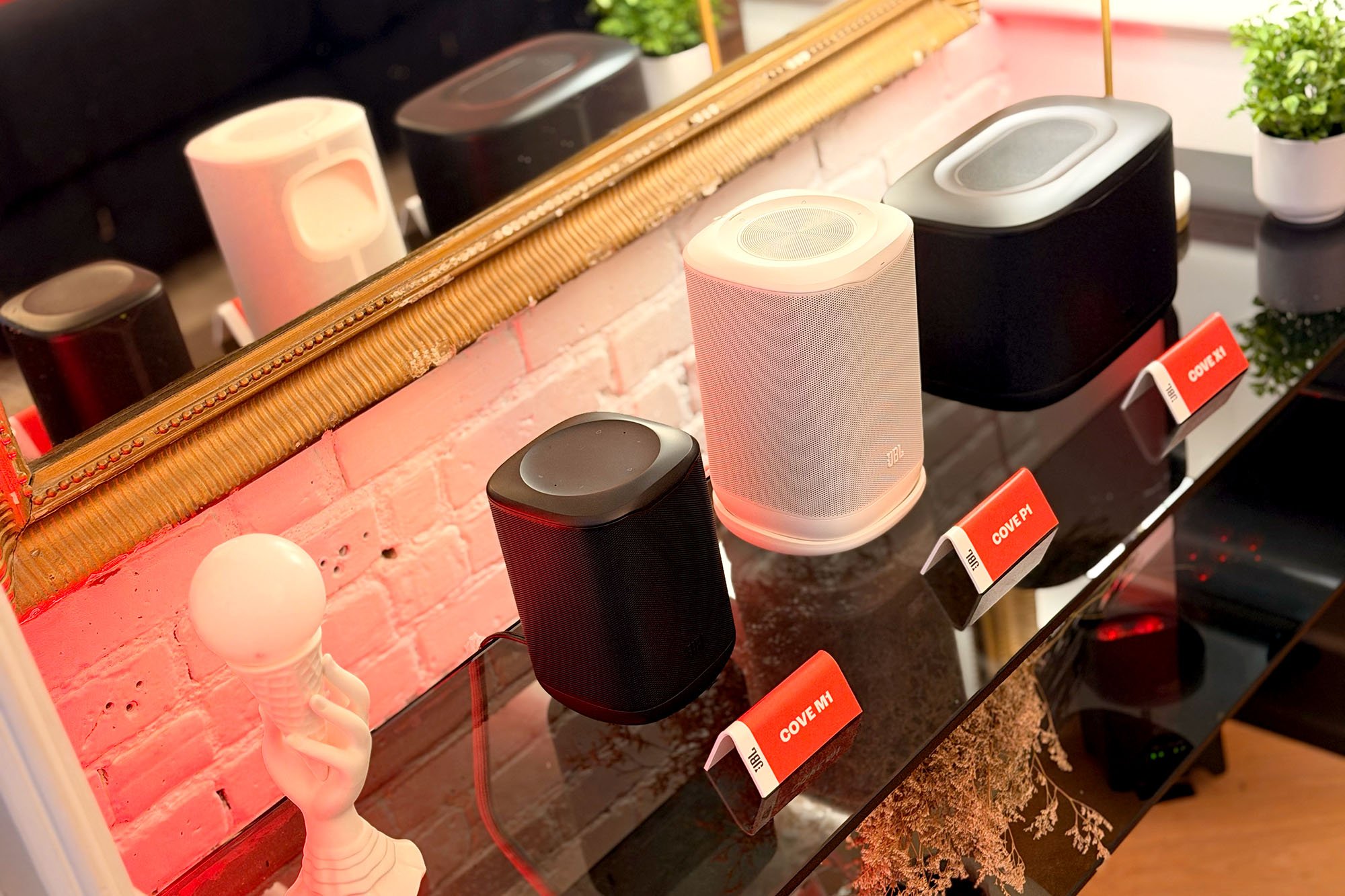
In a NoHo loft in late August, JBL revealed its new Cove whole-home audio system. In this fully staged Manhattan apartment, three Wi-Fi speakers—the M1, P1, and X1—occupied kitchen counters, credenzas, bookshelves, and bedside tables. From Bad Bunny at the sink and Tiësto on the couch to Marvin Gaye by the fireplace and Al Green in some armchairs, Jesse Coyer, Sr. Manager, National Account Sales & Training, HARMAN Consumer Audio, demoed speaker setup and scale. The walkthrough’s throughline was clear: Cove offers expandable multiroom audio without the need for a custom installer or control system.
[Disclosure: JBL provided travel accommodations during the creation of this story.]
According to Coyer, the Cove series is being introduced to JBL’s lineup more as a progression than a pivot. It’s not meant to replace a multi-thousand-dollar separates system, though it could complement one. JBL sees the real competition as setup friction. For someone familiar with a PartyBox (or BandBox), who maybe has some JBL headphones, Cove speakers can be up and running almost as easily as a standard Bluetooth speaker, all through the JBL One app. But that’s where the walls crumble.
After three steps and a couple of minutes on a smartphone to connect the speaker(s) to your home Wi-Fi, you can stream lossless/hi-res audio to them directly with Spotify Connect, TIDAL Connect, Qobuz Connect, Roon, AirPlay 2, and/or Google Cast. The JBL One can mirror native app controls, but you don’t have to live in it; it’s there primarily to group speakers into stereo pairs and/or rooms. When it comes to optimized tuning and distortion-free performance, the speakers use JBL’s proprietary room calibration, Constant Sound Field, and AI Sound Boost platforms, with preset/custom EQ available to overlay on grouped speakers in the app.
First up is the M1, a compact 4.9- x 7.2- x 4.9-inch powered speaker (shown below). Inside, 3 × 0.75-inch soft dome tweeters and 1 × 105 mm 4-inch woofer with rear passive radiator deliver 55 Hz-20 kHz (-6 dB) with punchy JBL Signature sound and solid off-axis dispersion. The speaker can also group with a JBL Bar 300/500/700/1000/1300MK2 Series soundbar to act as a surround channel (furthermore, any signal sent to an MKII soundbar on the network can be broadcast to any Cove speaker).
Stepping up to the P1 (shown below) brings portability and dimensionality. Ditching the cord, an internal battery provides up to 14 hours of power, and an integrated handle makes the 5.8- x 9.2- x 5.8-inch 7-pound speaker easy to carry (and easy to put back on its charging cradle). Plus, the IP56 rating means the speaker can handle poolside splashes, sudden rain showers, or time on a beach towel. Like the M1, the P1 can be used as rear channels with JBL Bar Series MK2 soundbars, or two can be paired for true channel separation. But the P1 features an additional 0.75-inch upfiring tweeter alongside 3 x 1.25-inch tweeters and 1 x 4-inch woofer with passive radiators, so Atmos content gets added clarity within the 50 Hz – 20 kHz (-6 dB) frequency response. Just make sure your ceiling is low enough for proper reflections in order to get the optimal effect.
Back on the mains, the X1 (shown below) delivers the most expressive performance with 4 x 1.25-inch tweeters, one upfiring, plus dual 3.5 x 4.7-inch woofers with passive radiators, for a 10.2- x 7- x 6.8-inch 3.0.1-channel system and a frequency response of 45 Hz – 20 kHz (-6 dB). Biggest box, biggest impression. The X1 doesn’t pair with soundbars out of the box, but JBL is open to exploring the possibility if customer feedback suggests it’s desired. The X1 is imagined more as its own room-filling entity, with the widest dispersion and deepest bass proven. Still demure in footprint, not presence. And two can be paired for an even more immersive soundstage.
This isn’t JBL’s first entry in connected Atmos speakers (that was the more heritage-styled Authentics line, which is phasing out), but it has a more deliberately neutral aesthetic and shares the “power line” design language of the brand’s soundbar series. The endgame is one app, one ecosystem. For instance, the speakers share a feature called Music Follows Me through a Moment button, which can be long-pressed to extend the stream from an active speaker anywhere on the network to the new location, no phone required (you can also assign it an ambient soundscape or Spotify Tap to the button). And, over time, additional features (like independent surround channel levels) may be deployed and more hardware folded in, like a Cove subwoofer and allowing speakers to hand off sound to the Tour M3 headphones late at night.
For those folks who still have some digital files they’d like to play, each Cove speaker supports MP3 via USB-A. In addition, the speakers’ Bluetooth 5.3 protocol supports SBC, AAC, and, most importantly, Auracast, so the Cove speakers can still play music even if the network is down. And if someone has a compatible wireless speaker without Wi-Fi capabilities, it can still connect and play music from your phone simultaneously with Cove speakers, albeit at a lower resolution than Wi-Fi allows.
Finishing up in our secluded cove, we wandered a few blocks south to the JBL SoHo flagship store, where we looked at various soundbars and Bluetooth speakers that can serve as introductions to, or extensions of, a JBL speaker system. Included in the overview is a look at the logo, with its distinctive exclamation point. While this most certainly represents the energy and excitement of sound, the tapered wedge and dot can also symbolize a horn-loaded speaker backed by a circular magnet structure—the type of intelligibility-focused compression driver that established James Bullough Lansing’s initial business and continues to help define JBL’s direction.
The day concluded with a nightcap at All Blues, a Tokyo-style listening bar centered on a rare JBL Paragon loudspeaker. At 9 feet wide and 850 pounds, it’s a far cry dimensions-wise from the Cove X1. But, at launch in 1957, it was a groundbreaking way to achieve a stable stereo image throughout a room. And it shows how JBL, now in its 80th year, has always innovated to bring directionality and dynamic ease, designed for scale, to home listening.

 Login











 “Blue Jean Baby, L.A. Lady”