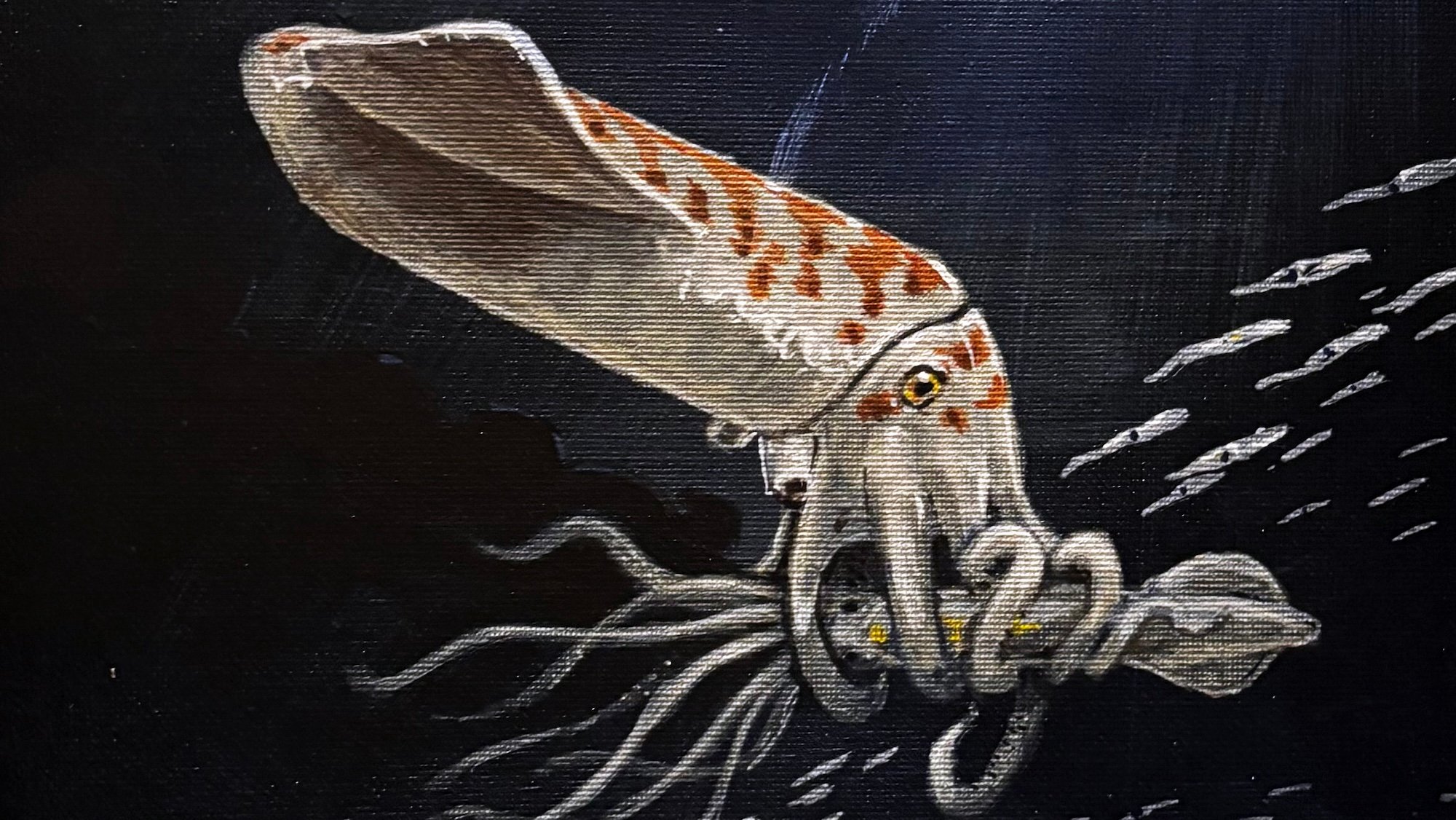
Thanks to having the “chunkiest squid butt” ever seen on an ancient cephalopod, paleontologists have discovered a 160-million-year-old octopus cousin. The newly identified fossils are described by an international research team in their study recently published in Papers in Palaeontology, which also includes a potential explanation for Wyoteuthis linsterorum’s hefty proportions. Just like today’s tentacled ocean dwellers, the Mesozoic squid ancestor likely had no problem devouring its relatives—or even members of its own species.
W. linsterorum is a belemnite, a group of prehistoric cephalopods who left behind some of paleontology’s most common fossils. Examples of their bullet-shaped structures known as a rostrum have regularly shown up at dig sites around the world for over 200 years. This includes the Sundance Formation in present-day Wyoming, which was covered by an inland sea millions of years ago.
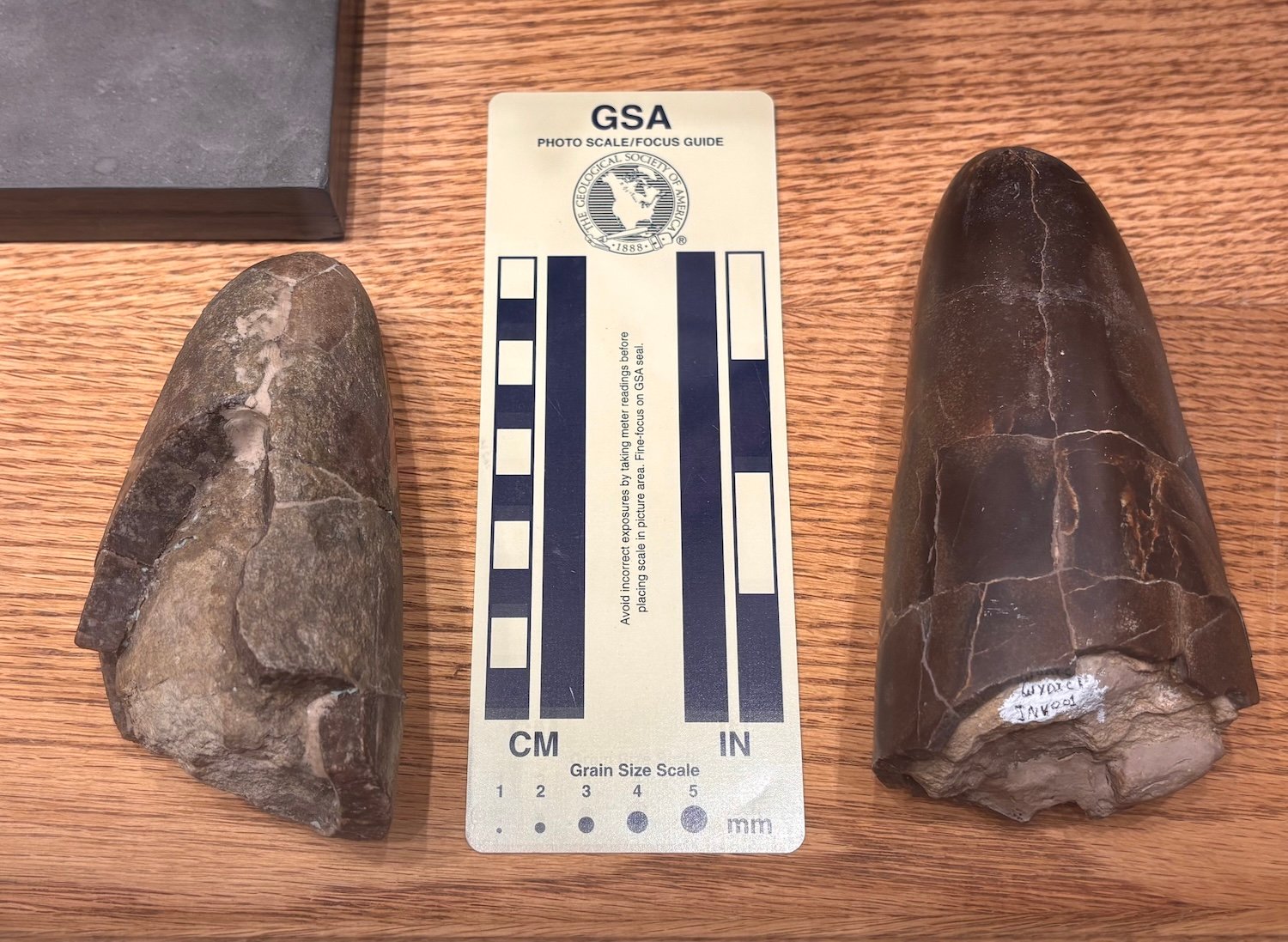
Most of Wyoming’s belemnites are comparatively tiny—usually about two-to-four inches long and less than one inch wide. But about 30 years ago, Wyoming Dinosaur Center founder Burkhard Pohl found a fossil that “stuck out like a sore thumb,” according to study co-author Bill Wahl. While the preserved belemnite rostrum was about as long as other examples, it measured about 2.4 inches wide. Based on what they knew of belemnite proportions, paleontologists estimated this specimen’s entire body probably reached nearly two feet long.
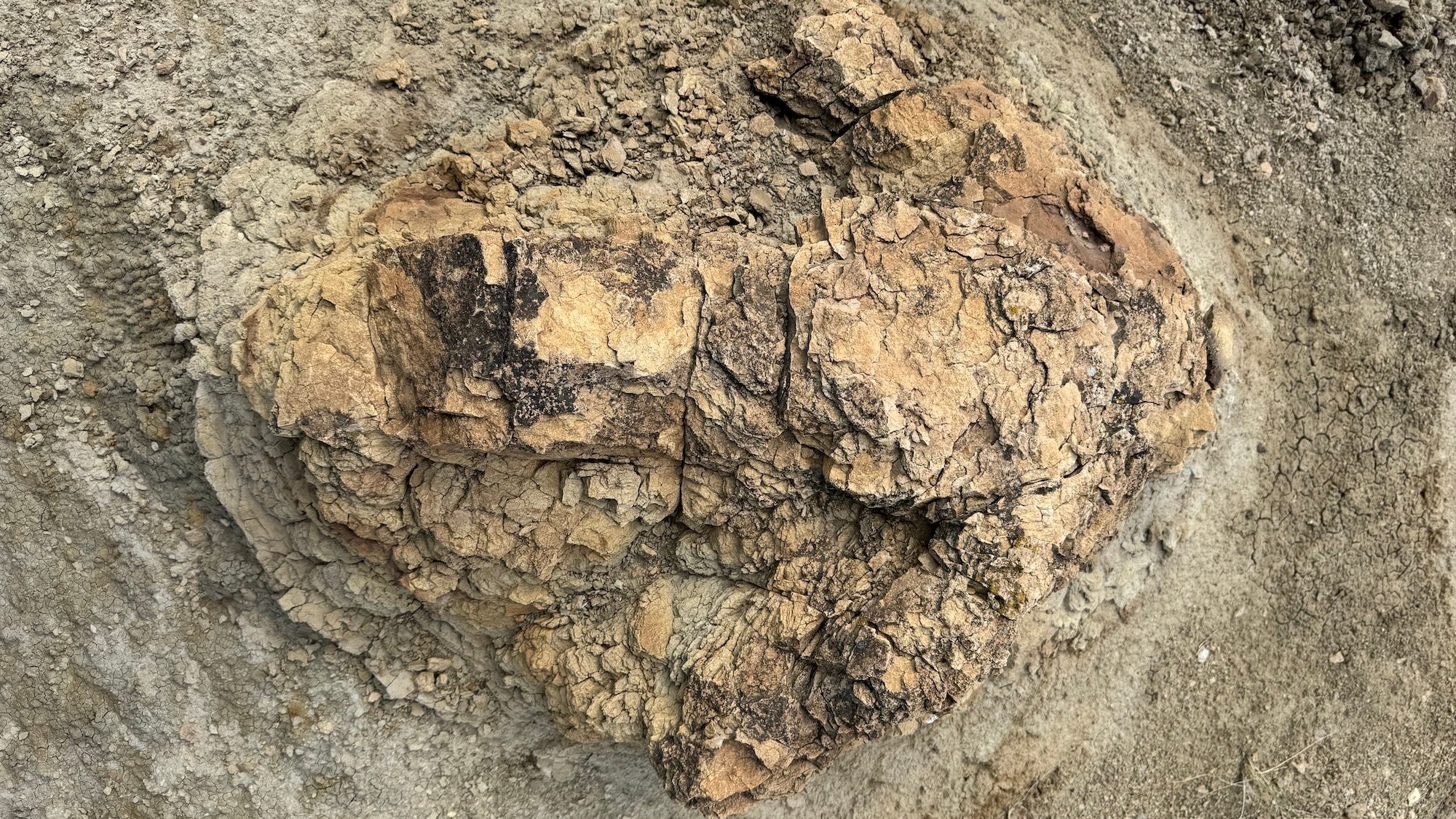
The two ‘W. linsterorum’ fossils were discovered over 30 years apart. Credit: Jessica Lippincott
Without any comparable examples, the thick squid butt remained in storage for nearly three decades. In 2019, fossil collector Cliff Linster finally discovered a similar cephalopod near Ten Sleep, Wyoming. He soon donated it to the Wyoming Dinosaur Center, and researchers began analyzing this pair of mystery fossils.
Computed tomography (CT) scanning allowed the team to inspect the remains without damaging them. The results confirmed the ancient sea creatures were never-before-seen belemnites.What’s more, they belonged to a family researchers previously believed went extinct millions of years earlier.
“After spending years fossil hunting in Wyoming and collecting countless fossils of the common Pachyteuthis belemnites here in Wyoming, this one is unlike anything I have ever seen,” Jessica Lippincott, a paleontologist and study co-author, said in a statement.
But why did W. linsterorum evolve to reach such bulky proportions? The team believes the answer lies in the diets of many present-day cephalopods.
“A possible explanation is that their relatively large size gave them an advantage when hunting co-occurring smaller belemnites of the genus Pachyteuthis,” explained paleontologist Alexey Ippolitov, a study co-author now at New Zealand’s Victoria University. “Modern squid, after all, are hardly picky when it comes to prey: they readily hunt not only other species of cephalopods, but sometimes even their own kind.”
An unexpected and surprising species, W. linsterorum is named in honor of Cliff Linster, who died in June 2026. While he didn’t live to see the dedication, Linster was well aware that the team was working to describe the animal he helped discover.
“It goes to show that we are still finding new species of fossils all the time, and people who rockhound or collect invertebrate fossils can also contribute to science,” said Lippincott.
We humans love our mind-altering substances. Cultures around the world have discovered, ritualized, and simply experimented with alcoholic drinks and ingestible drugs for millennia. However, recent archaeological evidence indicates humanity possibly began utilizing psychoactive plantsmuch earlier than previously believed. Based on findings published in the journal Science Advances, some communities in present-day Indonesia enjoyed the effects of betel nuts as long as 25,000 years ago. This pushes the timeline over 23,000 years back from documented Neolithic and Bronze Age uses circa 1,500 BCE.
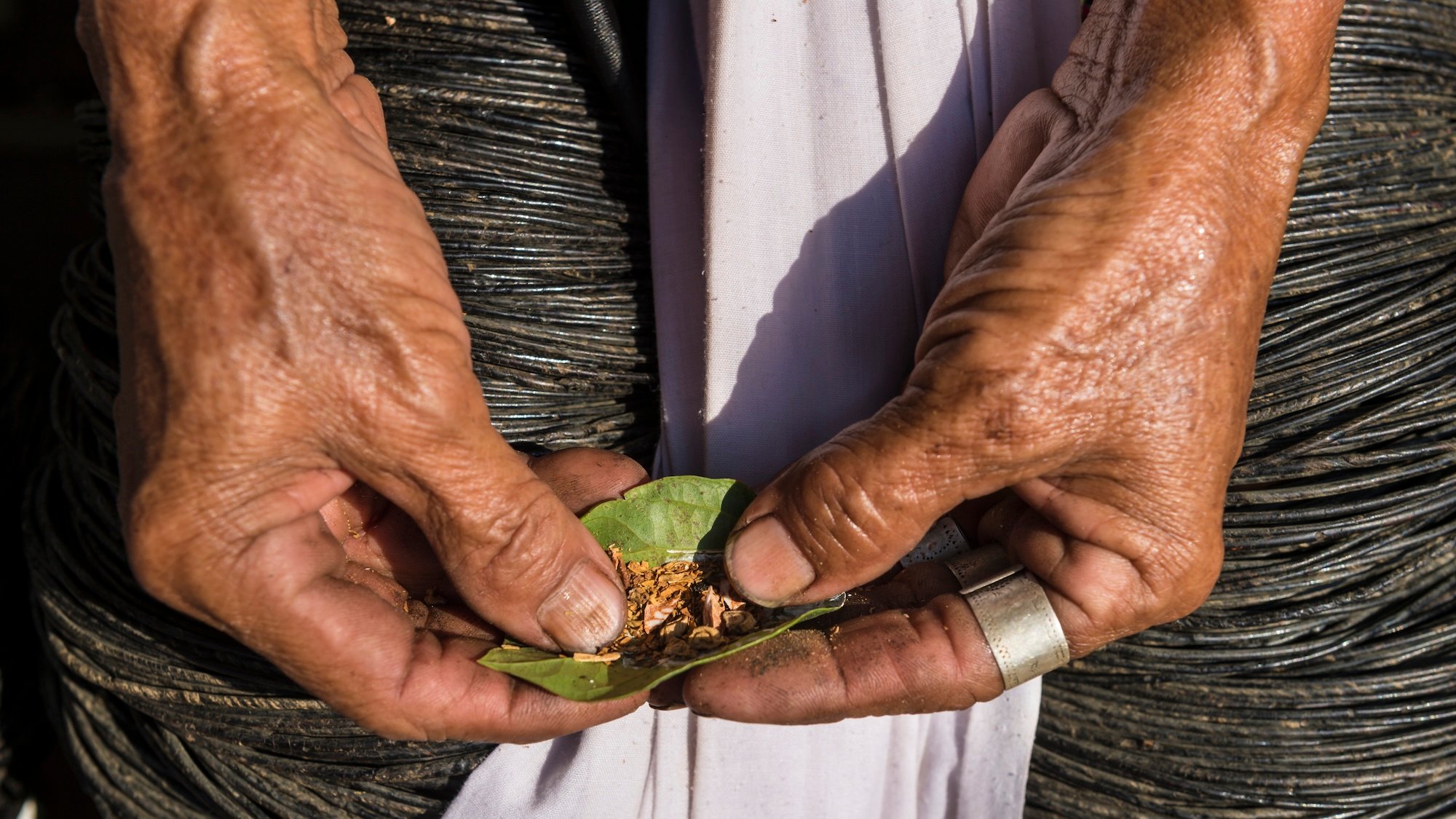
The areca nut (Areca catechu), better known as the betel nut, isn’t widely known in the United States, but it’s one of the world’s most popular intoxicants. Most frequently seen across southeast Asia cultures, its global usage only trails behind alcohol, caffeine, and nicotine. Betel nuts are prepared by grinding and processing the plant seeds with slaked lime (calcium hydroxide). This fine powder is often combined with additional ingredients such as flavoring spices or tobacco to make a “quid,” that is then chewed as a stimulant. There are millions of betel users today, with some estimates putting the global total at 1-in-10 people.
Many researchers contend that most human intoxicant use began with fermented alcoholic drinks, amid the rise of farming during the Neolithic era about 13,000 years ago. Adam Brumm, one of the study’s co-author and an archaeologist at Australia’s Griffith University, believes otherwise.
“This theory fails to account for the possibility that very ancient drug-taking lies at the roots of our most commonly used psychoactive substances,” he explained in a university profile.
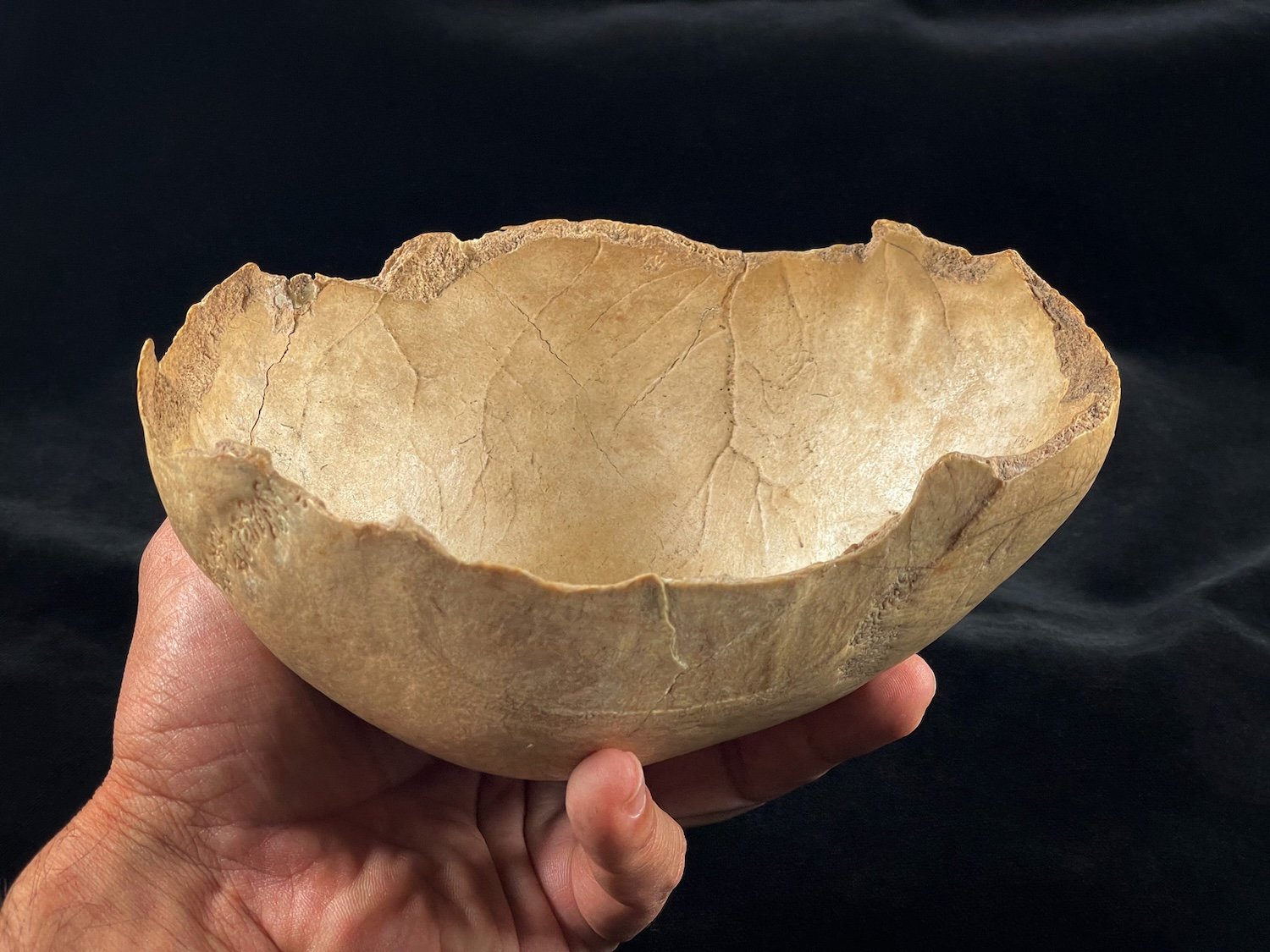
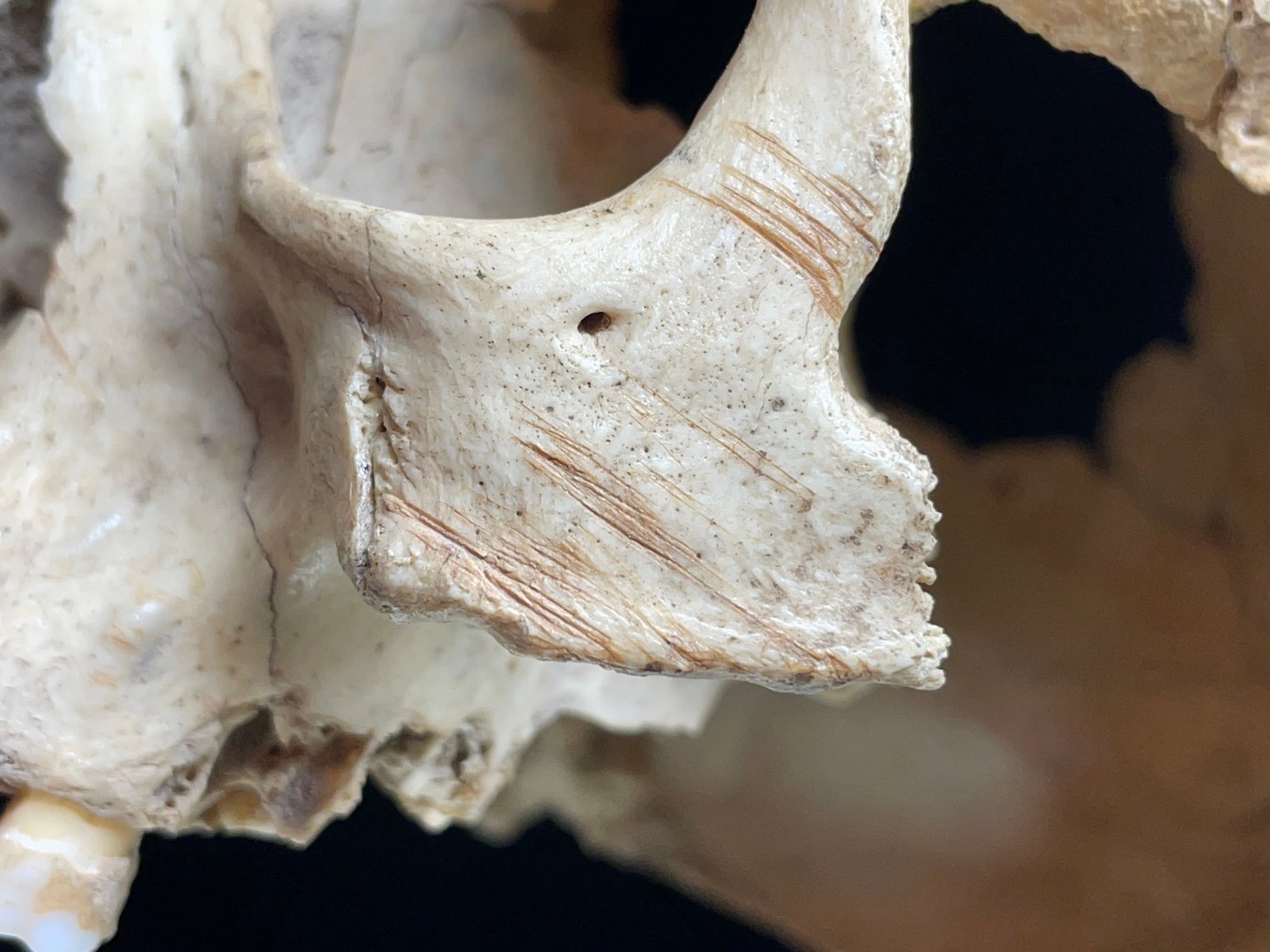
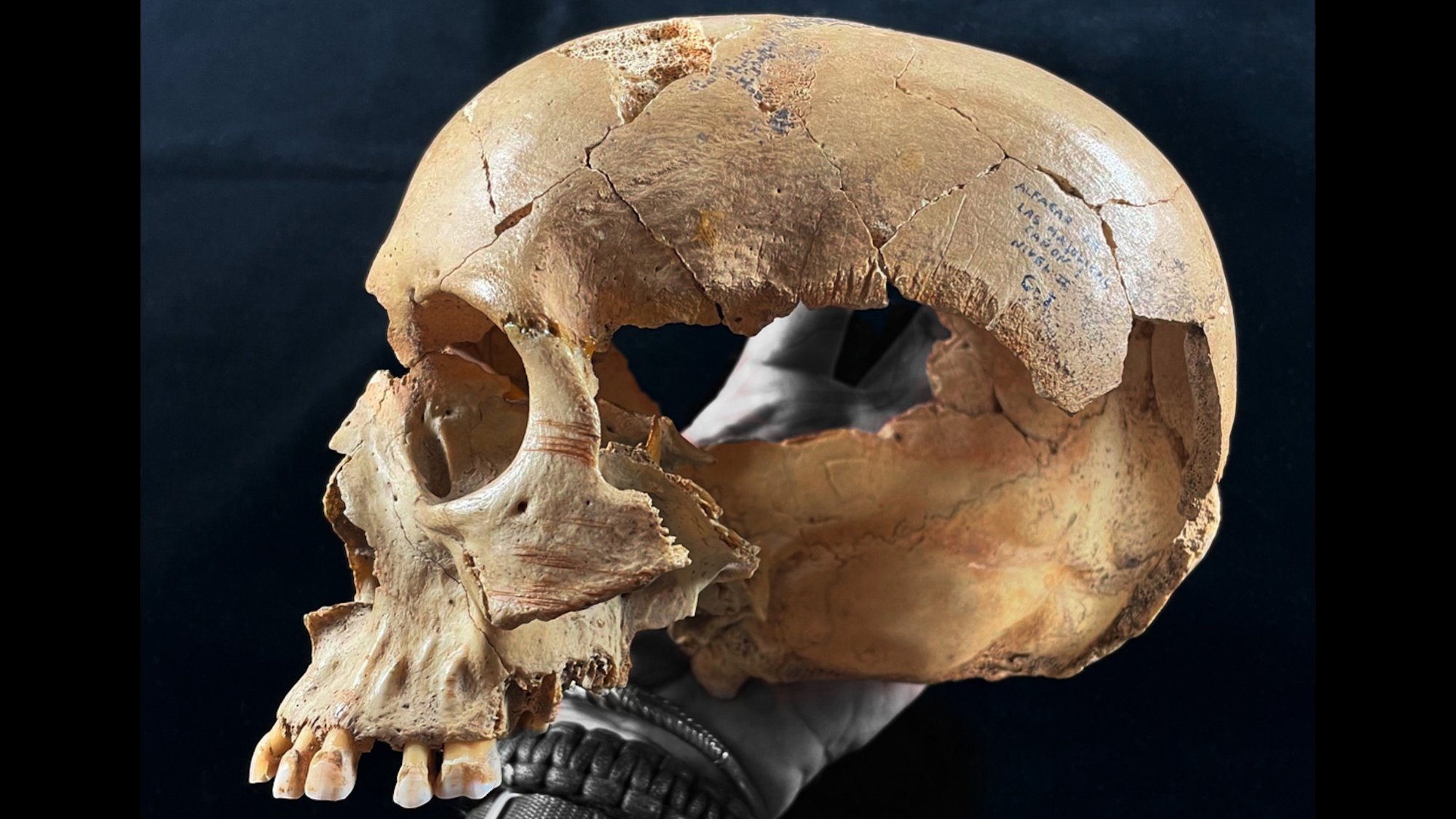
Brumm and his team cite evidence gathered from the extremely rare skeletal remains of two early human foragers discovered on the Indonesian island of Sulawesi. The older of the two lived between 25,000 and 16,000 years ago, while the younger individual is 7,600 to 6,300 years old. Unlike many other documented skeletons from the region, these hunter-gathers both exhibit rarely seen dental damage in the form of deep, curved grooves in the teeth. Researchers theorized this unexpected deterioration stemmed from a never-before-identified practice of regularly sucking on entire betel nuts.
But there was a problem—this hypothesis contradicted earlier studies of betel nut usage. Many scientists believe the drug’s primary neuroactive alkaloid, called arecoline, is only noticeable after chewing betel nuts processed with slaked lime. Lab experiments conducted by Brumm’s group suggest this isn’t necessarily always the case. To test their theory, researchers soaked betel nuts in artificial saliva, then introduced the mixtures to exposed cloned human receptors grown from frog egg cells. These receptors included specific proteins that function as molecular switches overseeing neural activity.
The study authors discovered that even simply sucking on whole betel nuts is all it takes to release enough arecoline to elicit altered neural activity and physiological effects. To further bolster their findings, biochemists even flagged arceoline traces in the dental tissue of both hunter-gatherers.
However, the ancient humans living on Sulawesi didn’t necessarily ingest betel nuts for recreational use. Unprocessed nuts likely offer milder effects, but arceoline remains a natural analgesic. Knowing this, the study’s authors surmise these betel nut habits were self-reinforcing.
“Sucking these hard, abrasive seeds wore down the foragers’ teeth so badly that in some cases the inner pulp chamber became completely exposed,” explained Brumm. “So while this habit may have been a remedy for toothache, years of prolonged nut-sucking eventually caused much worse dental health problems, creating a cycle of continued habitual use.”
The implications go far beyond revising the timeline of humanity’s relationship with mind-altering substances. If true, this means at least some ancient hunter-gatherer cultures discovered psychoactive properties before the development of agriculture.
“The study implies that some modern drug-taking behaviors are deeply rooted in forager traditions,” added Brumm.
The salmon? Eaten. The days? Shorter. The bears? Fatter.
After spending the summer eating the fatty pink salmon swimming through Katmai National Park and Preserve in Alaska, it’s time to celebrate the park’s iconic brown bears (Ursus arctos). Fat Bear Week begins on Tuesday, September 22, and here is everything you need to know.
What is Fat Bear Week?
Think March Madness, just without the basketball and significantly more bears. Fat Bear Week is a single-elimination tournament, where bear enthusiasts from around the world can vote online for their favorite chunky bear. After each round, the bear with the most votes advances until the winner is announced on September 29. According to the Katmai Conservancy, the event began as a one-day event in 2014 with 1,700 votes cast. Only 10 years later, 1.2 million votes were cast from over 100 countries.
The brown bears return to Brooks Falls for the salmon migration every year in late June, where viewers can watch them on explore.org’s livestream. There, they will feast to fatten up for the long winter ahead. By late summer, the nutritious fish will spawn and then begin to die. The bears will then move to the lower Brooks River in September and October to eat the dead and dying salmon near the river’s mouth.
Eating all of this salmon is important because the heftier the bear, the better chance they will survive their long winter hibernation. Despite being the poster species for winter hibernation, bears are not “deep hibernators,” they way that squirrels, bats, and bees are. Bears enter a state called torpor, which is an involuntary state primarily triggered by lack of food. During this time, the bears rely on stored fat reserves for energy. A torpid bear’s eating, drinking, and waste functions will cease, as its body metabolizes these stores it put on over the summer.
Photographs comparing the bears from earlier in the summer and later in the summer will be shown, so voters can get an idea of just how much weight the bears put on during their salmon fest. An adult male bear can go from roughly 700 pounds in the early summer to over 1,200 pounds by fall.
Voters are also encouraged to get familiar with each bear’s life history and the unique challenges they face to survive.
Which bears are competing this year?
The 2026 Fat Bear Week Bracket will be released on Friday, September 18.
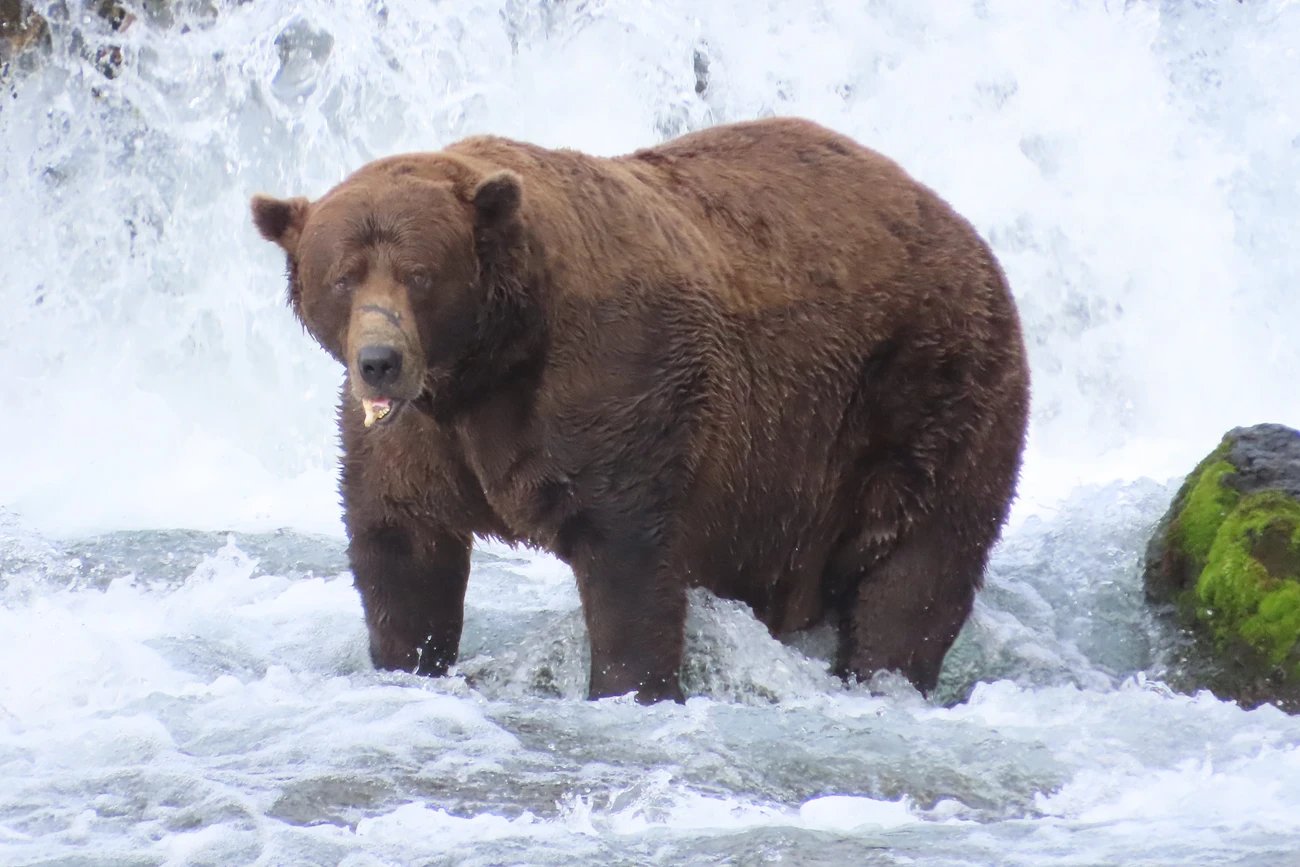
In 2025, Bear #32 (Chunk) took the crown, despite beginning the salmon run with a freshly broken jaw. He was likely injured while fighting with another bear for a mate, but he still managed to catch plenty of fish. Chunk is known for his dominance and size, but also narrow-set eyes, dark fur, a prominent brow ridge, and a distinctive scar across his muzzle.
Fat Bear Week 2025 champion Chunk. Image: NPS/ T. Carmack
How can I support Katmai’s bears?
Donations can be made to Katmai Conservancy’s Otis Fund. The Otis Fund is named after Bear #480 (Otis), who won four Fat Bear Week titles before his death around 2024. All donations made between September 22 and October 3 will be matched by explore.org.
What happened with the bears this summer?
This year’s livestream featured an example of how wild (and upsetting to humans) nature can be. On Tuesday, July 28, the live-cams captured a young brown bear cub being killed and eaten by an unrelated mother bear (Bear #806). The deceased cub was born this spring and the child of Bear #909, a 10-year-old brown bear. Bear #909 started the season with two cubs, but now lost both.
On Sunday, August 2, one of Bear #335’s (Jolly) cubs died, after following three unrelated cubs up a tree. The mother of the cubs already in the tree attacked Bear #335’s cub, who did not survive the encounter. The identity of the mother bear who killed the spring cub was not confirmed.
Following the first cub’s death, naturalist Mike Fitz and park rangers Christine Loberg and Sarah Bruce said this likely the first documented case occurring at Brooks River. While there is no one answer as to why mother bears are killing cubs, some experts suspect bear adoption, food scarcity, and fights for dominance all play a role.
In order to survive, the first humans to reach Mars will immediately need a safe and reliable place to set up shop. But building on Earth’s neighbor is immensely more challenging than construction projects at home. The Martian surface is a practically airless vacuum, constantly bombarded with radiation, and regularly reaches temperatures as low as -81 degrees Fahrenheit.
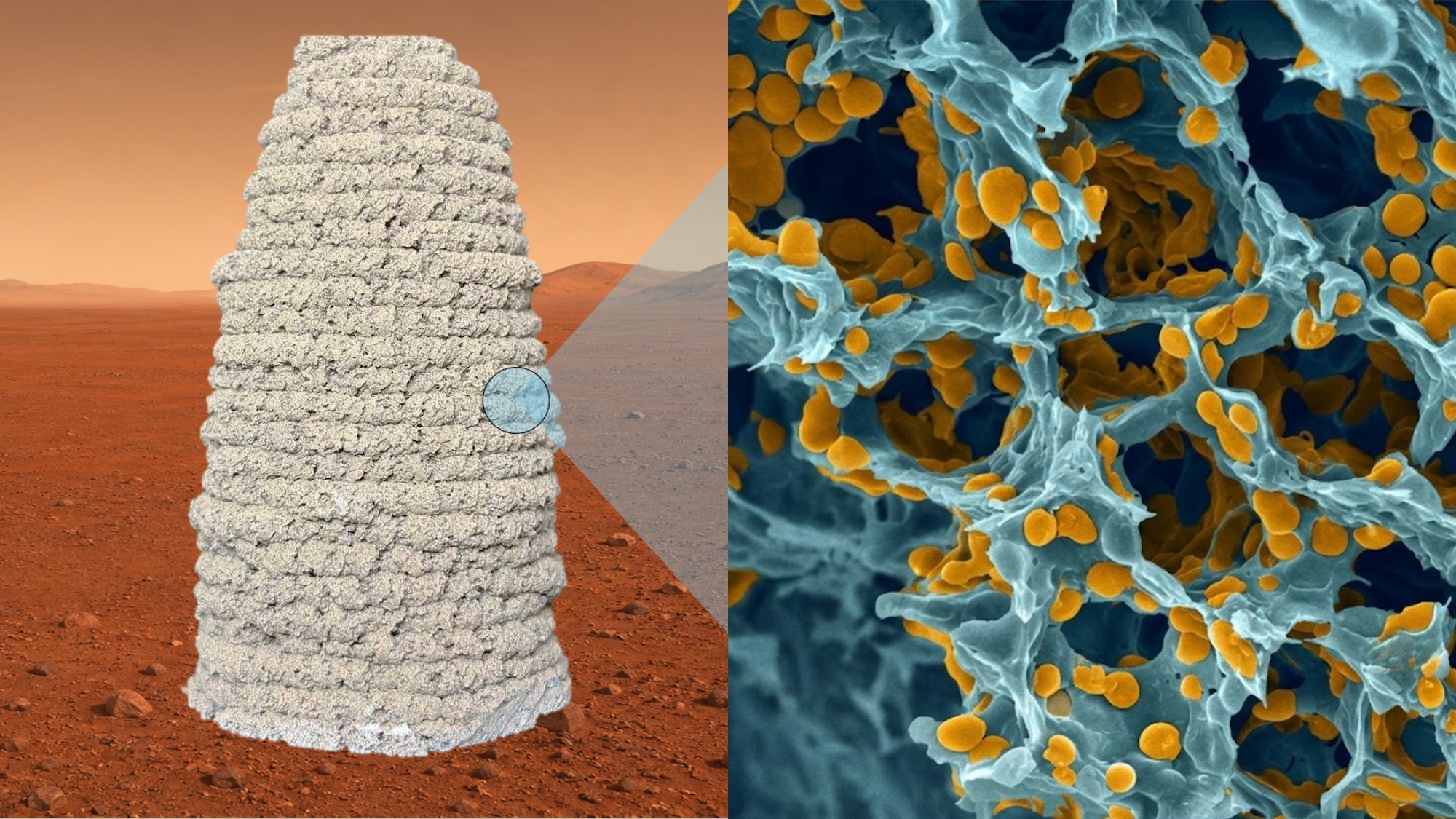
However, there is a very specific process on Earth that approximates similar conditions to the Red Planet: freeze-drying. According to researchers at The Hong Kong University of Science and Technology, the same method used to preserve perishable foods could also inspire sturdy and even recyclable 3D-printed houses on Mars. The secret ingredients? Everyday gelatin and yeast. The novel approach is detailed in a study published today in the journal Chem Circularity.
“My inspiration came from freeze-dried fruits that become harder. So I asked myself if we can take advantage of that and make some materials,” Jishen Qiu, a study co-author and civil engineer, said in a statement.
The combination of materials are simple: sand and an adhesive binder. Since gluing tiny rocks together requires specialized stickiness, Qiu’s team invented a new concoction from gelatin and lab engineered yeast. When mixed, the yeast microbes become coated with adhesive proteins similar to those used by mussels to anchor on stones underwater. The goop is then extruded through a 3D printer nozzle into an extremely cold, low-pressure environment, where it solidifies as the water instantly freezes and converts from ice to vapor. The final result is a light, porous, foam-like material that remains very resilient.
“This is actually strong enough to build a one- or two-story building on Earth—whose gravity is three times that of Mars,” explained Qiu. “So, you can probably easily build a multistory building on Mars with the material.”
Qiu and his collaborators know they must first start small before expanding to Martian neighborhoods. Their prototype domes are only about the size of a wine cork at this point, but their compressive strength is comparable to low-grade concrete.
Engineers have experimented with 3D-printed structures to use on the moon and Mars for years, but many of these still require steps like melting down rocks or lunar regolith. These methods usually require a lot of extra energy, which may limit their utility. Qiu’s technique requires comparatively little energy, although he admits it’s still unclear if yeasts can withstand life on Mars. That said, the team’s early results are a promising step towards simple, efficient, and sturdy buildings beyond Earth. If nothing else, yeast also lends itself to trial-and-error.
“As long as there’s one yeast that’s still alive, you can grow them again,” added Qiu.
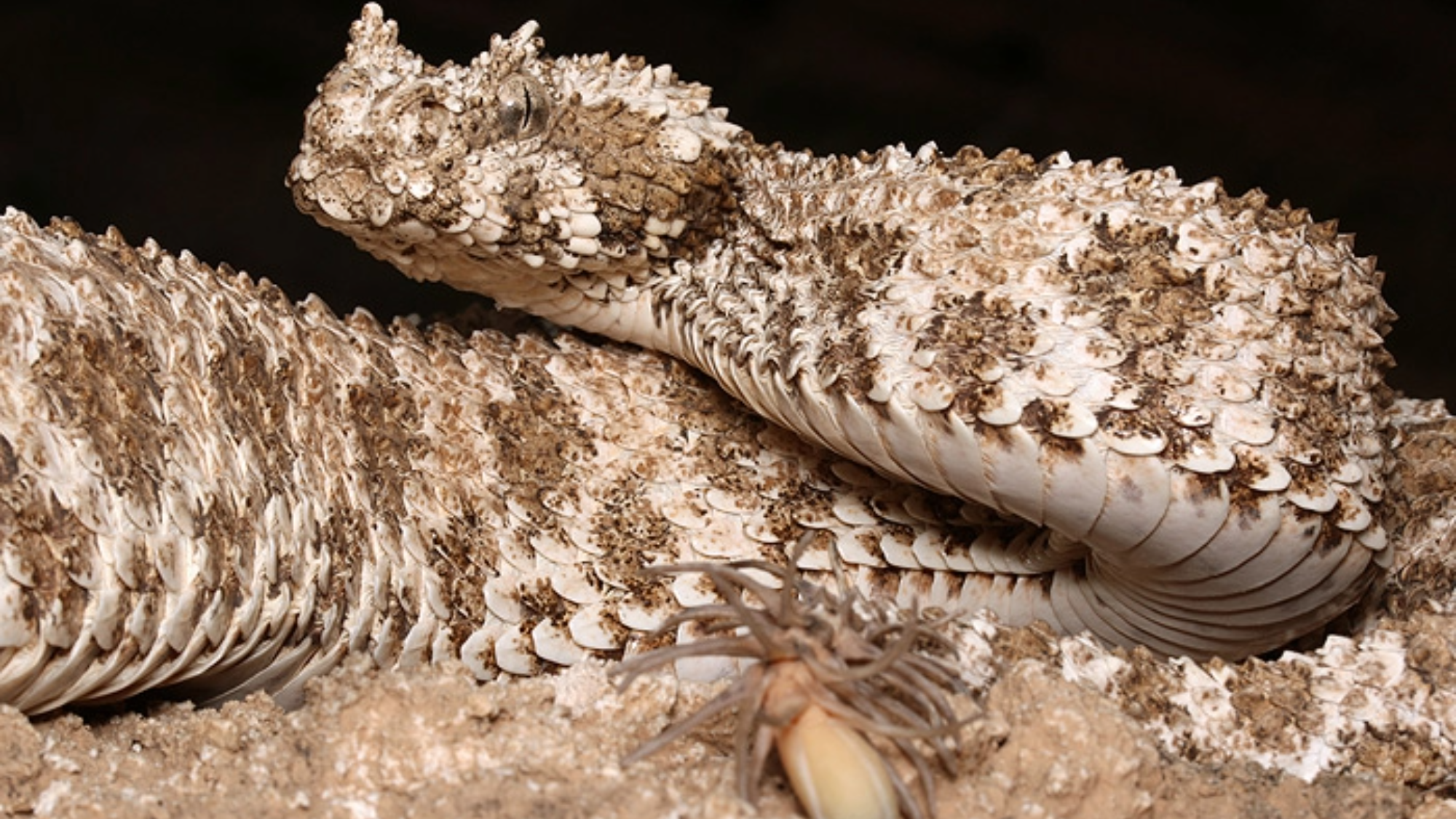
True to its name, Iran’s spider-tailed horned viper (Pseudocerastes urarachnoides) has a rather novel strategy. It uses a tail that looks like a spider to lure birds trying to eat the decoy spider. When the time is right, the snake jumps into action and eats the bird.
The spider-tailed horned viper is a relatively new species to science, and a study published today in the journal The Anatomical Record is peeling back the layers of this master mimic. A team from the Field Museum in Chicago used X-ray computed tomography (XCT) scanners to take a look inside of the snake’s spidery tail and found that their tailbones appear rather normal.
“Scientists first collected a specimen of this snake in 1968, and when they brought it back to the Field Museum, people thought that it had some sort of deformity at the tip of its tail, like a tumor,” Sara Ruane, a study co-author and the Field’s Associate Curator of Herpetology and Director of the Core Laboratories, said in a statement. “It sat on the shelves of the museum for decades, but it wasn’t until another specimen with a similar tail was found in 2003 that people revisited it.”
Scientists described the snake as a new species in 2006, using the specimen housed in the Field Museum’s collections as the holotype. Holotype specimens serve as a main standard-bearer and reference point for the physical characteristics of a species, so that scientists can compare and contrast them to see if a specimen belongs to one species or another.
Shortly after naming the spider-tailed horned viper, researchers recorded video of the snake using the spider-like appendage at the tip of its tail as a way to lure in unsuspecting birds.
“I remember being a PhD student in about 2008 and first seeing the videos of this snake in the wild,” says Ruane. “The appendage at the end of its tail is so outrageous, I remember thinking it was so cool. It’s truly unique among snakes.”
In 2023, Ruane attended a conference with Georgios Georgalis, an associate professor at the Polish Academy of Sciences in Kraków. Georgalis mentioned that he was interested in studying the Field Museum’s spider-tailed horned viper holotype specimen.
“I am primarily a paleontologist, so I try to use modern snake species to make sense of fossil remains,” said Georgalis, who is also a co-author on the new study. “In vipers, the vertebral column unfortunately doesn’t give us very many clues about what kind of snake we’re looking at. When we find fossils, we often just find individual bones rather than the entire skeleton, and the individual vertebrae are so different from each other along the snake’s body that it’s hard to use them to identify a species.”
The spider-tailed horned viper offered a unique opportunity to study snake vertebrae. Georgalis said that viper vertebrae in particular have not been very well studied. They also wanted to know more about this species’ unusual tail.
To take a closer look, they used the Field Museum’s XCT lab. With XCT, scientists can scan objects and take thousands of X-ray images. These images are then stacked together to produce a 3D rendering of the object’s interior. It essentially allows scientists to study rare or one-of-a-kind specimens in detail without cutting them open or and risking damage.
“With the spider-tailed horned viper, we were particularly interested in seeing what the vertebrae at the tip of the tail look like, because the exterior of this snake’s tail is so unusual, and because it’s used for this unusual bird-luring behavior,” says Georgalis. “In some other snakes, like sand boas and rubber boas, the vertebrae at the tip of the tail have extreme shapes that look really alien. We wanted to investigate if the spider-tailed horn viper’s tail was similarly strange inside.”
Surprisingly, the scans revealed that the inside of the viper’s tail looked quite normal. The spider-tip tail is only visible on the outside of the snake and the vertebrae were the same as they would be in other vipers.
“There was nothing in the snake’s skeleton that would suggest how extreme its tail looks on the outside,” said Georgalis.
XCT scan showing the normal bones inside the snake’s bizarre tail. Image: Sara Ruane and Stephanie Smith.
Findings like these show how fossil skeletons only tell one part of the story of what an animal looked like and how it behaved. Nothing in the spider-tailed horned viper’s skeleton would suggest it has such a unique tail, or that the tail twitches in a way that tricks birds.
“It’s one of the, let’s say, frustrations of the life of a paleontologist,” says Georgalis. “We work with beautiful animals, but most of the time, we’re trying to put together puzzles with some of the pieces missing, and in the end, we can’t be 100% sure of what the animal actually looked like.”
It’s also a reminder that prehistoric life may be even stranger than we can imagine by looking at bones alone. These findings also lay some groundwork for scientists studying how tissues evolve and develop and underscores the value of museum collections.
“Specimens that were collected 50, 100, 200 years ago are still being used all the time to learn new things,” said Ruane.
A new virus emerges in rural China. Although those who contract it initially display moderate, flu-like symptoms, their health quickly declines. The mortality rate is unclear, but one aspect is immediately obvious—it’s very contagious. Within three months, nations around the world are planning lockdown protocols and quarantine measures. Politicians seem completely out of their league and ill-equipped.
The world eventually recovers from the ordeal, but consequences of the virus linger for decades.While society pushes forward, there’s no promise that an even deadlier virus isn’t already lurking out of sight.
This isn’t about COVID-19, by the way. It’s the plot to the novel World War Z—arguably the most realistic depiction of a zombie apocalypse ever created. Released 20 years ago this week, the horror novel by Max Brooks quickly became one of the undisputed cornerstones of walking dead canon. Readers and critics devoured the book (no pun intended), but their responses often worry Brooks. Much like the reception to his first book, The Zombie Survival Guide, many fans seem to misunderstand his intentions. These projects weren’t simply intended to entertain. Max Brooks was trying to warn everyone about the looming threats we would prefer to ignore.
While the 54-year-old writer ostensibly writes books about zombies, Sasquatch, and (soon) an alien invasion, his attention to disaster details and hyperrealism has earned him a parallel career as a security and threat analyst for some of the world’s most respected geopolitical think tanks.
To celebrate World War Z’s 20th anniversary, Popular Science recently spoke with Brooks about the book’s massive impact.
This interview has been edited for length and clarity.
Andrew Paul: Did you anticipate World War Z attaining the legacy it now has in popular culture?
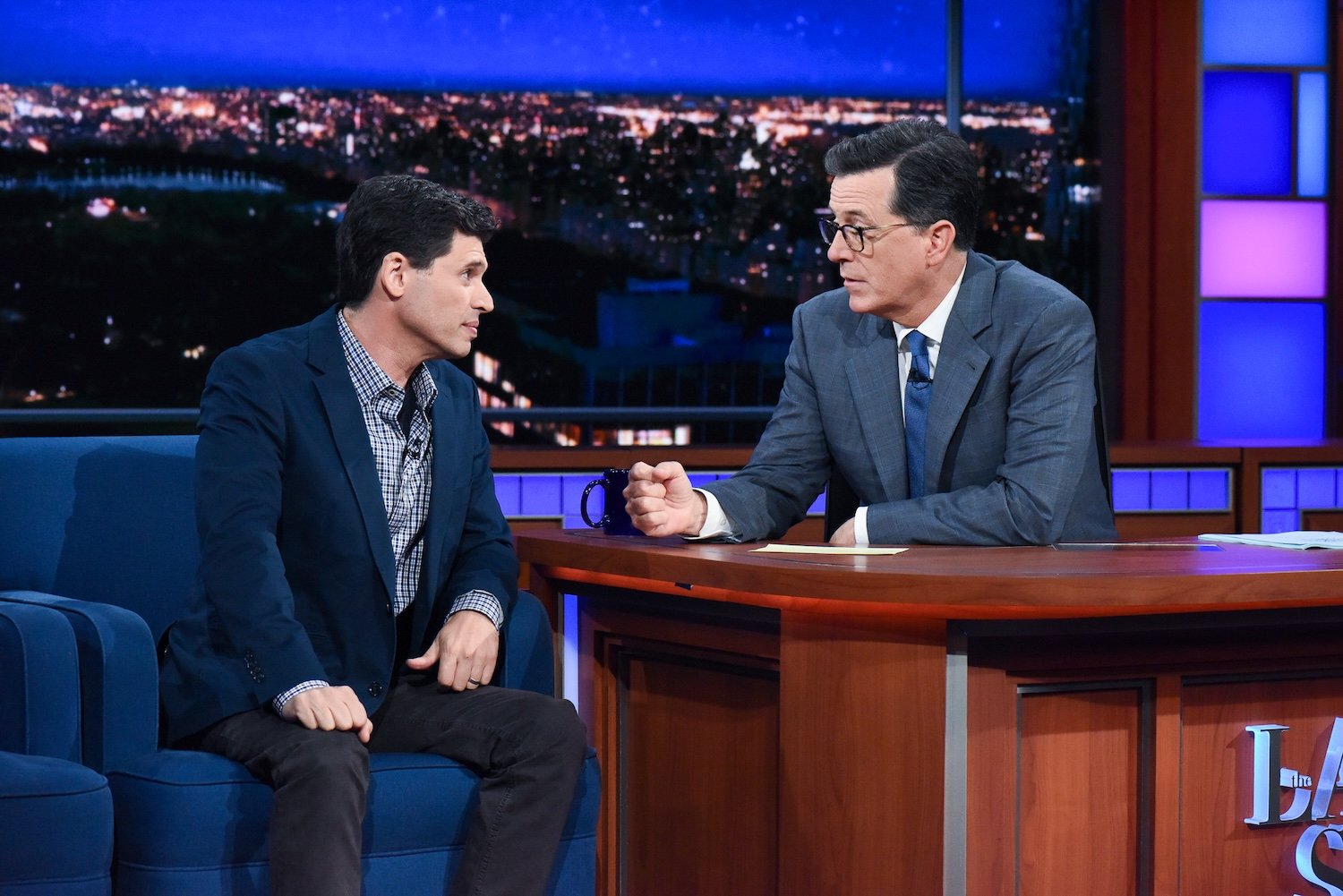
Max Brooks: Oh, God no. Of course not. Especially because I’m never tapped into pop culture. I don’t know what anybody else is doing—even when it was my job writing for Saturday Night Live! I’m good at thinking about what I think about.
AP: Before World War Z, you wrote an actual preparedness handbook called The Zombie Survival Guide. What prompted you to take a hyperreal approach to such a seemingly outlandish subject?
MB: The reason I wrote [them] was because all the zombie stories, even to this day, tend to focus around small groups. To me, it’s like trying to understand World War II from watching Saving Private Ryan. I had big picture questions nobody was answering.
I think the best zombie movie ever made was Dawn of the Dead. To me, the most interesting part was when they’re holed up in the mall watching the news. That window into the wider world was so fascinating, and I wanted more.
AP: But there was a time when World War Z almost never happened, right?
MB: [The publisher] didn’t know what to do with The Zombie Survival Guide. Their marketing strategy almost killed my career before it even launched. They thought, “Well, no one is clearly that much of a loser that he’s actually spent this much time thinking about [zombies]. Clearly, he’s a cool guy making fun of those losers. And because he’s Mel Brooks’ son and he’s coming off SNL, we’re gonna position him as Mel Brooks, Jr. writing Younger Frankenstein.”
But The Zombie Survival Guide really is a disaster preparedness manual. It’s why [soldiers] took it to Afghanistan; people told me it saved their lives when they were lost in the woods. I didn’t make anything up. It’s not Hollywood stuff—it’s all about dehydration and dry socks and shelter.
But [these books were] legitimately the product of years of thinking, “If I was in a zombie world, how would I survive?”It really set me on this path of asking, “What happens when the grown-ups drop the ball?”
AP: And now it’s your job to worry professionally.
MB: I’ve now been part of three military and national security think tanks—the Atlantic Council, the Center for Strategic and International Studies, and the Modern War Institute at West Point. I’m a non-resident senior fellow at all three of them, and it’s my job to study real threats.
For some reason, I was not blessed with the wall of denial. Like, I can’t just say, “That would never happen and I’m just going to go about my merry way.” I’m already terrified! And the way to reduce my anxiety is to study the threat so that it’s not nebulous.
AP: What was the most difficult part in preparing to write World War Z?
MB: You don’t know what you don’t know, so you don’t know what you’re missing. There’s always a fear of groping around in the dark; of not even knowing who to talk to. That was a real struggle, because I’m an insular guy. I’m not a social guy. Part of it was talking to experts, but part of it was reading books—and I’m fully dyslexic. So that was a real slog.
It was also about never trusting the internet. I used it once or twice, like, to research laser weaponry. I literally went to a company’s website, saw their demonstration video, and was like, “Yeah, okay. That is not a practical weapon for hunting zombies. I see how long it takes to burn through something.”
AP: Obviously humanity’s most terrifying challenge in the last 20 years was the COVID-19 pandemic. How do you view that real-world horror in the context of World War Z?
MB: COVID was scary because I knew it was coming thanks to my friends in the military and biodefense community. I was part of what was called the Blue Ribbon Biodefense Panel for germ attacks way before COVID. So I already had at my fingertips the ability to tell the difference between panic porn in the media and the real deal. I also had to study diseases enough to write about a zombie plague. But also, it came from being on the receiving end of a bioterror attack. When I worked at SNL [from 2001 to 2003], we had the anthrax letters delivered to our building [in October 2001].
So, I knew this was coming, but the question was how to warn people. I had people laughing at me. Ironically, the people who are the worst minds to reach are the smarty-smarts because they think they know everything.
AP: Were you expecting COVID to be much worse than it was?
MB: Oh, much worse. It got me into trouble, because I was prepping for, like, tanks on the street, you know? I was ready for that. I stocked my home with food that would last the longest as opposed to food that my wife would actually eat.
But the irony is, had it been worse, we might have actually done better. Studying diseases over the years—it’s sort of like the slow zombie versus the fast zombie. The fast zombie is so scary you have to react. The slow zombie gives you the false sense of security. Like, “Oh, I can take ‘em out.” COVID was the slow zombie. It allowed us to be arrogant and dismiss it: “Oh, it’s no worse than the flu.”
AP: How did you see that play out during the quarantine?
MB: It goes back to when COVID hit New York City. I had written a book called The Harlem Hellfighters, which was a true story of African American soldiers in World War I. They’re still an active unit in the National Guard, and I’m friends with their chief medical officer. Their job was to pick up the dead bodies around New York.
He said to me, “If those bodies had been stacked up on the street for everyone to see them, there would have been no argument about masking or distancing or taking the vaccine.” The hiding of it is what allowed naysayers to get way more people killed.
AP: Where did the grown-ups “drop the ball,” as you say?
MB: I think the greatest failure on the part of leadership at every level was not publicizing the dead. Maybe they were afraid of angry letters and backlash and didn’t want to cause a panic, but that’s exactly what they should have done.
A doctor in Los Angeles told me they converted hospital rooms into morgues. He said, “You don’t believe the amount of bodies. We’ve got pyramids of body bags.” And I’m like, “Well, then why is this not on the news every night?”
AP: After experiencing an actual global plague, how do you feel about World War Z’s overall accuracy?
MB: I think it was accurate for the time. I would still have the plague coming from China, 100 percent. I would love to say that was my genius futuristic prediction, but no. I based it on SARS. And this is why it’s unforgivable that it happened again. If I wrote it today, I would really highlight why it was allowed to be [downplayed]—and the reason is our greed. All of our stuff is made in China.
I would also really change the politicization of information. We’re living in a time where all facts have become tribalized. We’ve had 20 years of such dumbing down that I think it would be a central tenant of the book.
AP: Would you change how the United States responded to a zombie outbreak?
MB: I still firmly believe we are a moderate country, but I don’t know how brave we are. In order for a crime to be committed, you don’t need 100 bullies. You just need one bully and 99 cowards.
The psycho fanatics have a microphone now, which was inconceivable 20 years ago. They are hate merchants, and the erosion of our education system has created a demand that the merchants supply.
AP: So you think we would have handled COVID differently in 2006?
MB: If COVID happened 20 years earlier, we would all have gotten vaccinated, because of all the grandmas and grandpas who grew up before the polio vaccine.
AP: What else has changed?
MB: When I talk to people in power, I try to educate them about what I call “uphill influence” versus “downhill influence.” Downhill influence is when there’s a pre-existing bias that you just need to hijack and ride downhill. There’s gravity already there, and that’s not necessarily a bad thing. It was an established fact 20 or 30 years ago that vaccines kept you safe. So, if you were rolling out a vaccine, you could already just ride that existence acceptance downhill. The gravity was with you.
Uphill is when you have to educate before you can even start to persuade. You first have to educate people about just the world that you’re trying to explain. Vaccines have gone from downhill to uphill. The [subjects] we all had to try to stay awake through in seventh grade science class aren’t even there anymore.
I understand [MAHA supporters] want a clean planet, food, and water, and all of that will make you healthier. However, in 1491, the people who lived on this continent had all that, right? The moment the first Javier Bardem-looking Spaniard coughed on them, whole civilizations died.
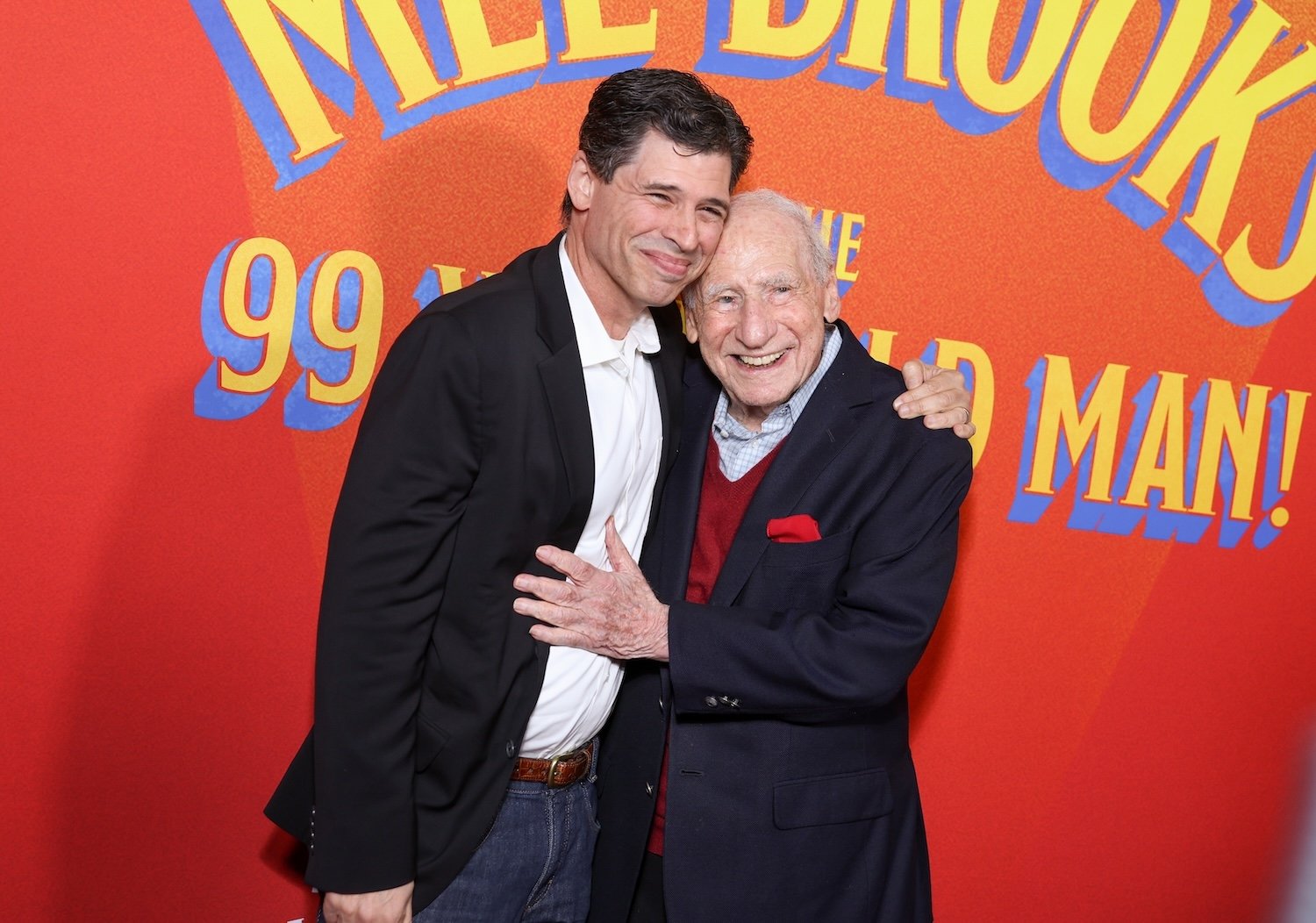
Max Brooks and Mel Brooks at the Los Angeles premiere of HBO Documentary Films’ Mel Brooks: 99 Year Old Man! on January 20, 2026 in Los Angeles, California. Credit: Chad Salvador/Variety via Getty Images Chad Salvador
AP: Both of your zombie books hinge on public education, and that’s now a major aspect of your threat analysis work. Do you know why you keep returning to this theme?
MB: I think one of the reasons I’m so obsessed with education is because I was not a good student. I have such ferocious learning disabilities. I never felt instantly comfortable learning, and I’ve always had to find workarounds. My mother had to help me find workarounds so I could learn. So when I research, it takes so much time and effort and [there’s] so much insecurity. I understand how hard it is to teach something to someone who doesn’t naturally pick it up.
I’m very lucky that I come from two parents who had no formal education, but were both very smart. Most importantly, they were very curious. I became very comfortable with the idea of approaching something as an absolute beginner.
AP: It took 14 years between World War Z and your follow-up sci-fi novel, Devolution. Your next book, The First Hundred Hours: A Story of Alien Invasion, comes out in 2027. Is there a reason for such long pauses between these projects?
MB: I’m not a natural scientist. The amount I’ve had to study for this new book has been excruciating. But it’s very humbling having to talk to the experts and say things like, “Please talk to me like I’m a third grader—and not a smart third grader.”
AP: Would you end World War Z the same if it was set in 2026?
MB: I would still end it on a positive note, and I think that has to do with being an American. We don’t have the luxury of abandoning our ideals, because that’s all we are. We’re not a nation-state—the ideals in America are all that hold this mutt [of a] nation together. We all come from different places and tribes, and we all agree to live under a certain set of guidelines. It’s really critical that we fight for those guidelines.
If there is one takeaway, it’s the central reason I wrote the book in the first place. We’re all stuck on the same planet together, and that planet is not that big anymore. What affects some of us could potentially affect all of us. I think America has some amazing cultural strengths, but one of our weaknesses is our isolationism. That’s built on an outdated notion that we are somehow protected by two oceans and our geography. That’s not true anymore.
Growing up, many of us remember dutifully taking a few more bites of protein (and, of course, vegetables) to appease our moms before we were allowed to progress to the sweet, carb-heavy goodness of dessert. Lately, it seems hard to say whether our moms would be delighted or horrified to see what has happened to protein since.
Just walk into any grocery store right now, and protein is everywhere. Protein water. Protein chips. You can even request protein foam on your favorite fancy latte. Somewhere, a bodybuilder is chugging a protein shake the size of a fire extinguisher as you read this. It’s safe to say this is not your mother’s protein.
To be fair, protein deserves at least some of its mom-and-jock-endorsed reputation. It helps build muscles, keeps you feeling full, and is an essential nutrient we truly can’t live without. Older adults, especially, have been told to eat more of it as they age.
“We think of protein as beneficial,” Dr. Dudley Lamming, a professor at the University of Wisconsin-Madison and lead researcher of the review, told Popular Science, “but a number of studies have started to come out showing that when you look at large populations over the course of decades, people who were eating more protein over the course of these decades were having higher rates of age-related diseases.”
A pattern in the data sparked new questions
Lamming didn’t set out looking for a problem with protein. If anything, he was surprised by a contradiction he was noticing between population data and the conventional wisdom about protein—people who ate more protein over time were showing higher rates of cancer, diabetes, and cardiovascular disease.
“The question is, how can this be?” he remembers wondering.
Proteinmaxxing is spiking prices for whey protein. Video: ‘Proteinmaxxing’: How this trend is spiking whey protein demands, @WKYCChannel3
But a smaller slice, about five or six randomized trials, tested protein restriction directly in people. Those human trials showed consistent short-term benefits: People lost weight, their fat mass declined, and in one study of people with type 2 diabetes, insulin sensitivity improved.
Lamming adds that these results do not appear to be associated with mere calorie reduction.
“In fact, because dietary protein is satiating, people in our studies and others actually ate more calories when they were on a protein-restricted diet,” he says. “But they lost weight, and that’s because energy expenditure increases.”
One hormone may explain what’s happening
To understand the potential connection between protein restriction and increased energy expenditure, Lamming’s review explored existing mouse studies on the topic. Findings from these studies indicate that when protein intake drops, the liver releases a hormone called FGF21. That hormone signals the brain, which in turn triggers what researchers call “beiging.”
“This is a process that essentially tells your fat tissue to stop simply storing fat, but actually to start metabolizing it and burning it for energy,” says Lamming.
In practice, protein restriction doesn’t mean cutting protein out altogether. Most people get about 16 to 17 percent of their calories from protein; in the studies Lamming and his team reviewed, that’s typically cut by around half, down to roughly seven to nine percent.
“We’re not talking about restricting to an unhealthy level where you’re protein insufficient,” he says. “What we’re really talking about, in most cases, is restricting down to the recommended daily allowance as reported by the World Health Organization, which is about 0.8 grams per kilogram [of body weight].”
You don’t necessarily have to restrict protein as a whole to achieve these benefits, either; mouse studies found that cutting back on specific amino acids, including methionine, isoleucine, and valine, may provide some of the same benefits in terms of fat mass, blood sugar control, and longevity.
This doesn’t necessarily mean everyone should be in a hurry to throw away their protein waffles. Lamming is careful to note that people who exercise routinely may be an exception.
“We actually think that dietary protein has negative metabolic health outcomes for sedentary people, like the general population, since most of the population is fairly sedentary,” he says. “But maybe people who are exercising need more protein to help build muscle, and maybe it wouldn’t have these negative metabolic outcomes.”
Although these findings are based only on mouse studies so far, they may suggest that working out might protect against the downsides of higher protein intake, Lamming says.
“Fortunately,” he says, “a lot of the people who are very pro-protein are also people who are exercising.”
Lamming says his team plans to test these ideas—specifically, whether protein supplementation genuinely benefits those who exercise, and whether restriction benefits those who don’t—more directly in both mice and people over the next few years.
“For your typical person who’s not engaged in exercise, we would suspect, based on our research, that eating more calories in the form of protein would be detrimental,” he says.
Lamming’s own suggestion for sedentary people: Consider skipping the protein-added version of a product when a regular option is available.
He was quick to add, however, that those who can safely exercise certainly should.
“No one’s going to argue that more exercise would be bad,” he says.
In Ask Us Anything, Popular Science answers your most outlandish, mind-burning questions, from the everyday things you’ve always wondered to the bizarre things you never thought to ask. Have something you’ve always wanted to know? Ask us.
Apple’s first folding phone is real. The iPhone Duo opens from a 5.4-inch outer screen into a 7.6-inch inner one, and it starts at $1,999. It runs the same A20 Pro chip as the new iPhone 18 Pro inside a grade 5 titanium enclosure, and it goes on sale October 23 with preorders opening October 16 at 5 a.m. PT. And there’s a lot more to cover.
The rest of the hardware arrives together on Friday, September 18: the iPhone 18 Pro and Pro Max at $1,199 and $1,299, Apple Watch Series 12 from $399, Apple Watch Ultra 4 at $799, and AirPods 5 at $129. Apple also rebuilt the Health app around a new Longevity tab and added a way to schedule and pay for a $119 blood panel inside the app. Last September’s event was about thinner phones and better telephoto lenses. This one is about a hinge and a heart rate sensor.
Product
Starting price
Preorder
On sale
iPhone Duo
$1,999
Oct. 16
Oct. 23
iPhone 18 Pro
$1,199
Sept. 12
Sept. 18
iPhone 18 Pro Max
$1,299
Sept. 12
Sept. 18
Apple Watch Series 12
$399
Sept. 9
Sept. 18
Apple Watch Ultra 4
$799
Sept. 9
Sept. 18
AirPods 5
$129
Sept. 9
Sept. 18
Prices are U.S. list.
1. iPhone Duo is Apple’s first foldable, and the crease is the claim to watch
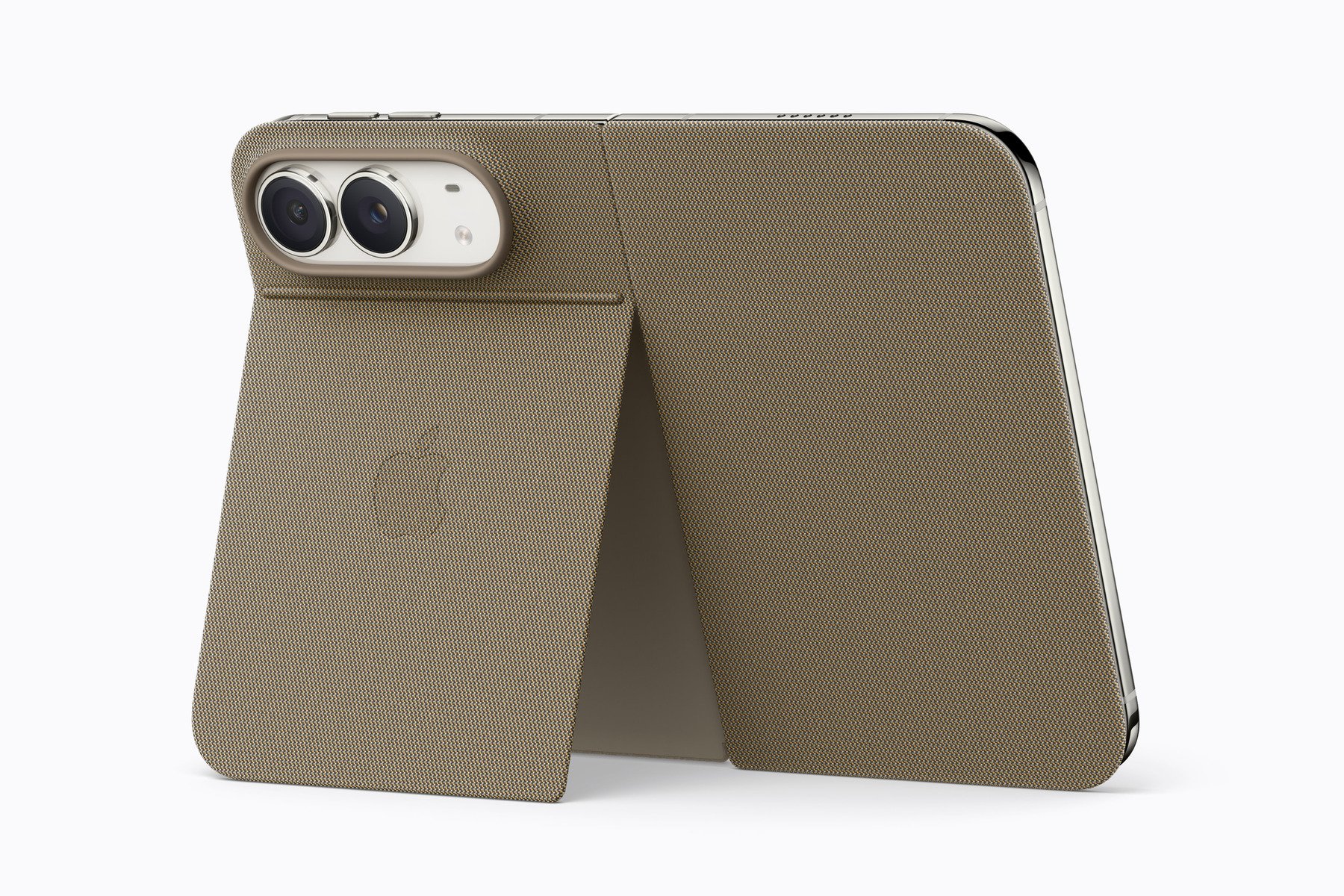
The Folio case has a built-in kickstand. Apple
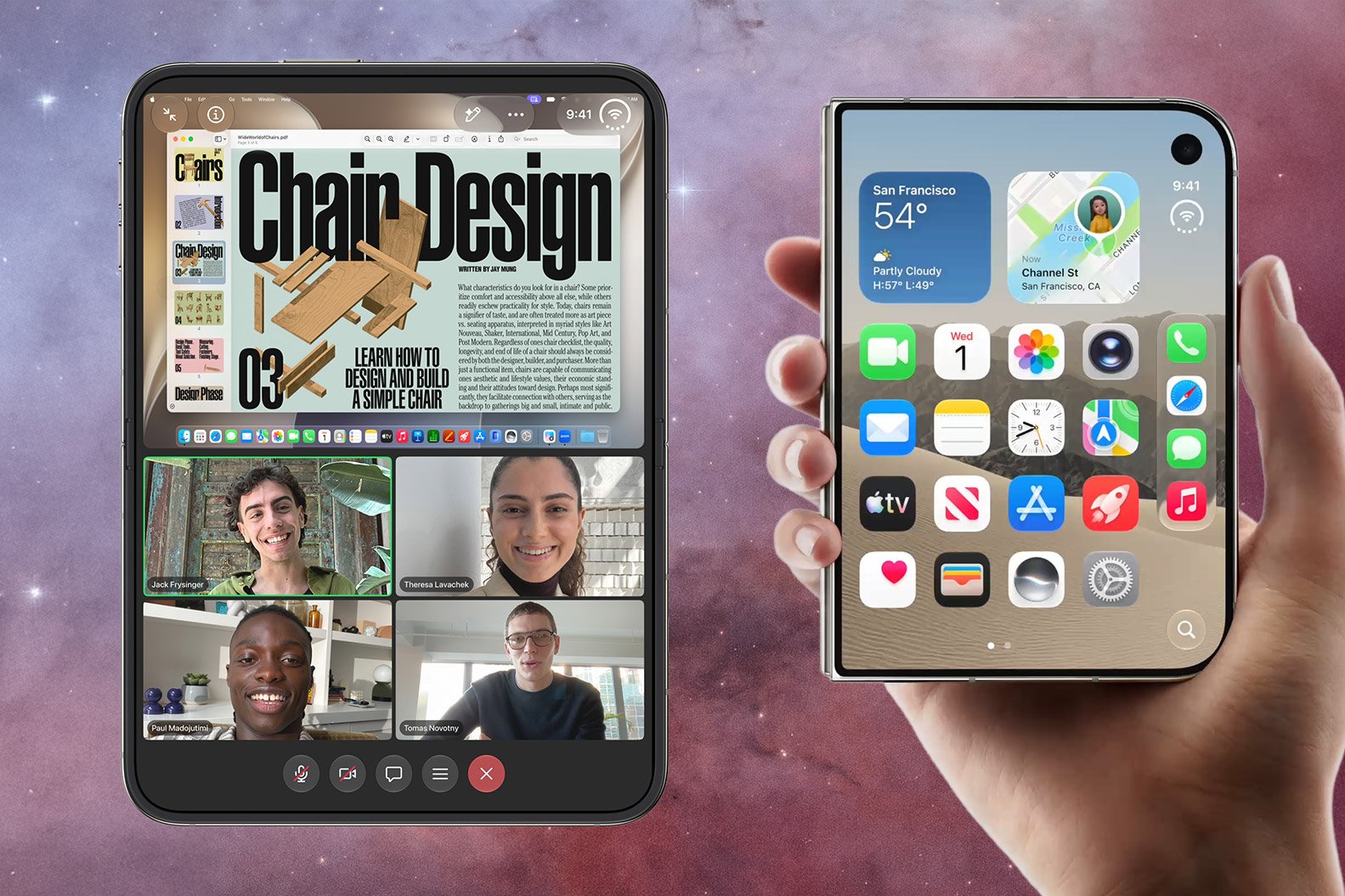
The iPhone Duo unfolds to a 7.6-inch Super Retina XDR display with a nano-texture finish, folds down to a 5.4-inch outer screen, and both panels run ProMotion and peak at 3,000 nits outdoors. The big question we all have right now is how it will handle the crease at the fold. The nano-texture finish minimizes how visible the crease is, and custom adhesives relieve bend stress in the display layers. A visible or tactile crease remains common on foldables, and it will be very interesting to see how effectively Apple has been able to hide it.
The rest of the durability story is easier to check. The enclosure is grade 5 titanium and the hinge cover is 3D-printed titanium. Ceramic Shield 2 protects the outer display, Ceramic Shield covers the back, and the inner display uses a polymer cover layer with a scratch-resistant coating. The whole phone is rated IP68 to six meters for up to 30 minutes, which is a harder engineering problem on a device with a hinge than on a slab.
During the demos, we saw some pretty slick dynamic screen movements, including its ability to move content away from the fold itself to make it easier to tap. You can make windows bigger in full-screen mode, or run a pair of apps or windows next to each other at the same time. Apple clearly wanted the experience to feel intuitive right from the start.
2. The Duo’s outer screen is a camera accessory
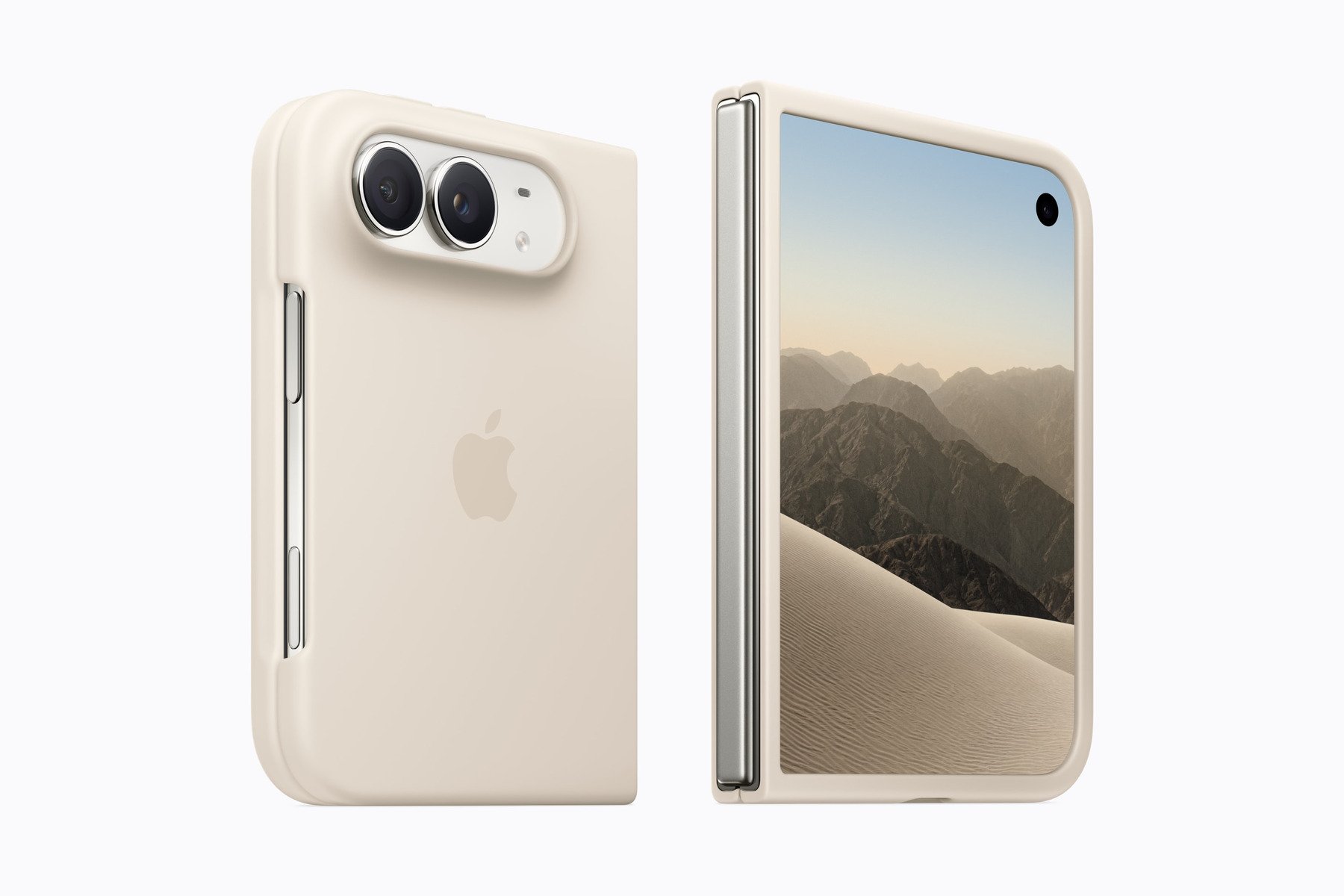
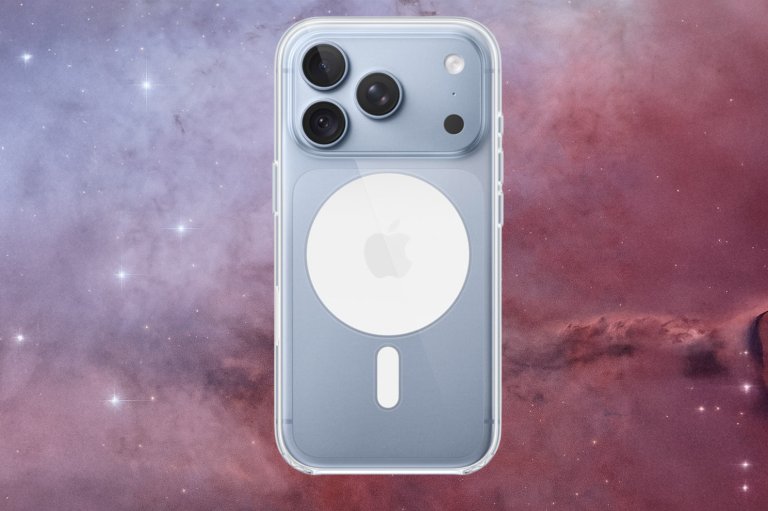
You can get a folding case for the folding phone.
Most folding phones treat the outer display as a shrunken home screen. Apple built four camera features around it instead. Duo Preview turns the outer screen into a live viewfinder facing whoever you’re photographing, so the person being shot can see the frame they’re standing in. Kid Cue plays animations on that same screen to pull a toddler’s eyes toward the lens. Smart Take watches the frame and fires the shutter when it decides everyone is ready. Duo FaceTime lets someone standing next to you join the call on the outer panel.
The camera hardware behind those features is a 48MP Dual Fusion system: a 48MP Fusion Main that also delivers a 2x optical-quality zoom, and a 48MP Fusion Ultra Wide alongside it. A 12MP Center Stage camera handles selfies, and an under-display FaceTime camera sits behind the inner screen. The Fusion Main is the camera that records 4K at 120 fps. Battery is split across two cells, and Apple rates it at up to 31 hours of video playback on the inner display, 44 hours on the outer one, and up to 24 hours of usage on the real-world model Apple now quotes alongside video figures. Getting to 50 percent takes around 20 minutes, which requires a 60W-capable cable and a compatible USB PD adapter. Storage runs 256GB to 2TB, the colors are Night Sky and Star White, and there is no physical SIM tray anywhere in the world.
3. iPhone 18 Pro adds a variable aperture and Apple’s first 2nm chip for $100 more
Apple
Every iPhone camera until now has had a fixed-size aperture (the opening through which the camera actually lets in the light). The iPhone 18 Pro puts six laser-cut blades inside the 48MP Fusion main camera that physically change the size of the opening, with four settings and a developer API that exposes the range to third-party apps. Wide open, it can produce shallower depth of field optically instead of by algorithm, though the difference won’t likely be all that pronounced. Stopped down, it can keep more of a group sharp without portrait mode guessing where the edges are. If you want to put that to work, our iPhone photography guide covers the fundamentals that still apply.
Underneath, A20 Pro is Apple’s first 2nm phone chip. The GPU goes from six cores to seven with up to 40 percent more speed, memory bandwidth climbs 50 percent, and the Neural Engine doubles up into two 16-core engines running at once. Apple moved the memory off the top of the processor and beside it, the arrangement it uses on Mac silicon, which freed room for a vapor chamber with three times the surface area of the one in the iPhone 17 Pro. The payoff Apple quotes is up to 40 percent better sustained performance, which is what determines whether a long 4K export slows down halfway through.
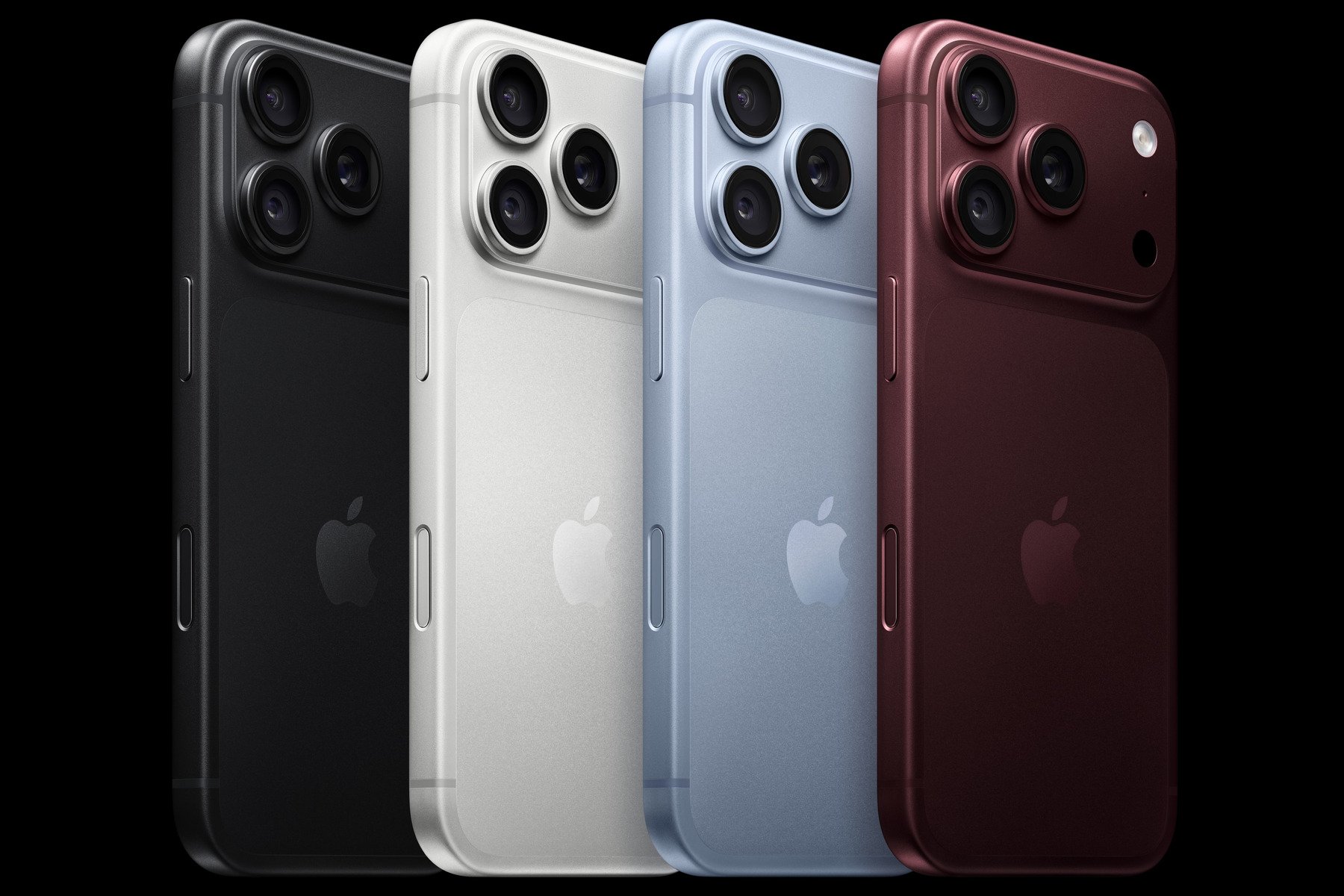
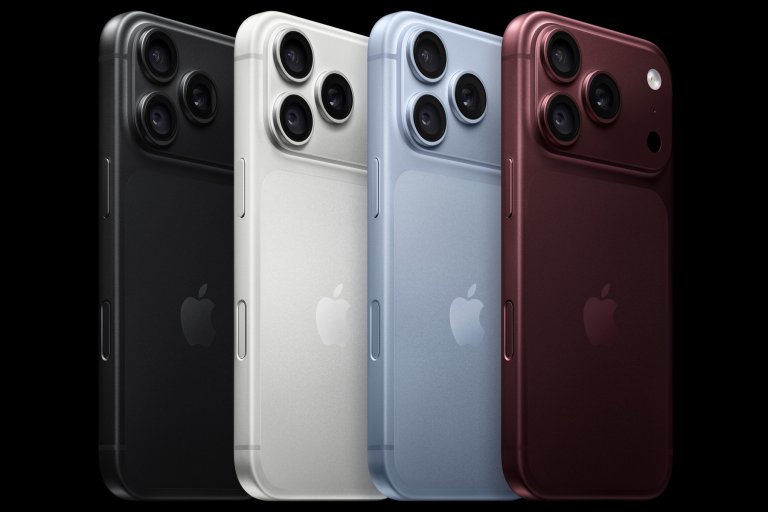
Battery is the other real gain. Apple rates the Pro at up to 36 hours of video playback and the Pro Max at 45, up from 33 and 39 on the 17 Pro, though both figures apply to the eSIM-only models sold in the U.S. and eleven other markets where the SIM tray became battery. The Pro Max also gets a second rating, up to 30 hours of usage, which Apple derives from a model built on real-world data rather than looping video. Both phones start at 256GB and now climb to 2TB. Colors are black, silver, glacier, and a new burgundy. Both cost $100 more than last year’s models.
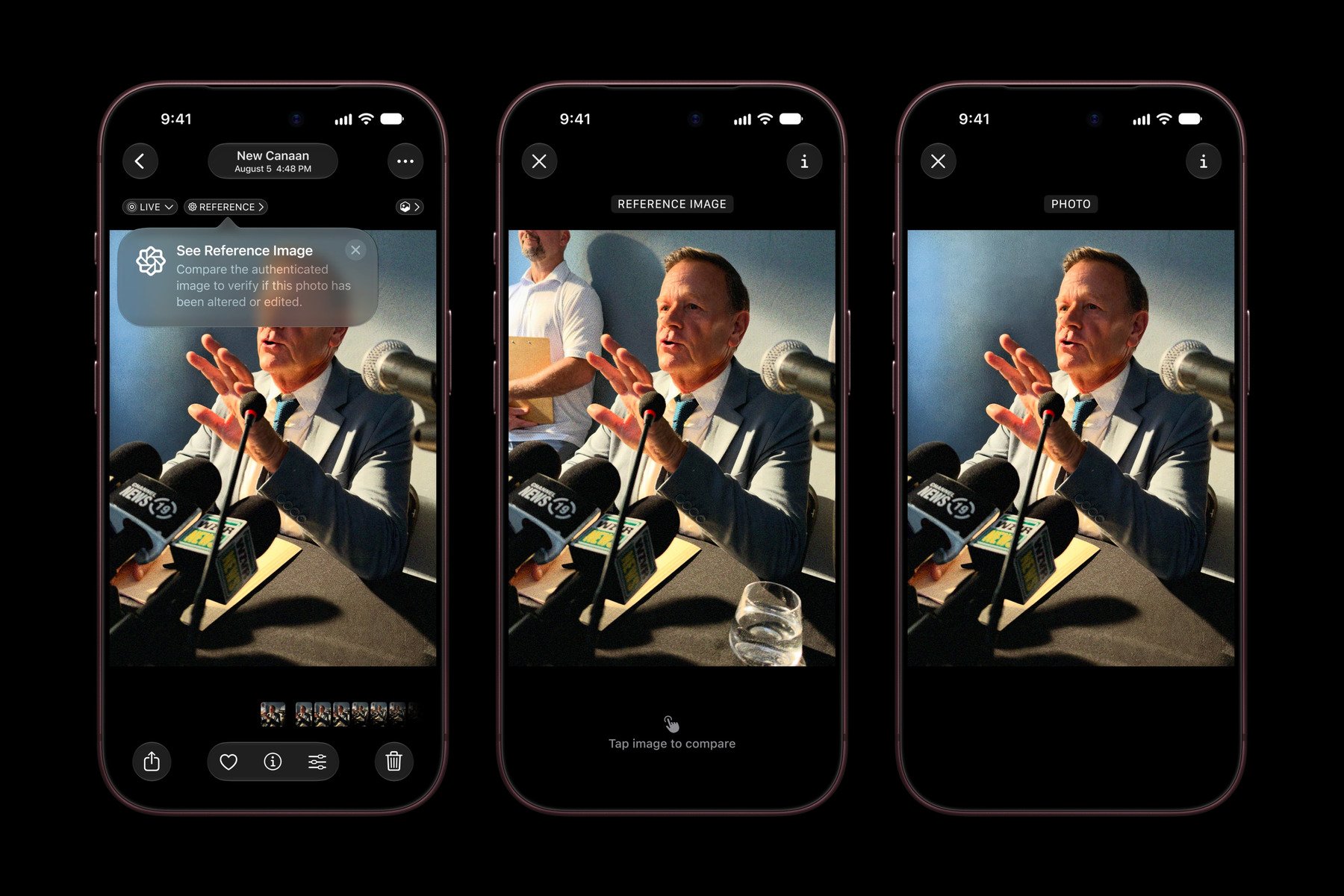
4. Apple Reference Image works like a “digital negative”
The reference image feature is a clever idea. Apple
Turn on Reference mode and the 18 Pro’s main sensor captures signed sensor data, which the phone hands to Private Cloud Compute to develop into what Apple calls an Apple Reference Image. That file lands in Photos next to the normal shot and can’t be altered. Hold the two side by side and every change between them is visible. Apple is publishing APIs in iOS, iPadOS, and macOS 27 so third-party apps can display reference images too.
Photographers have had a version of this for decades in the raw file, which sits untouched while every adjustment lives somewhere else. What raw never solved is proving the original came out of a camera at all, and that’s the question that matters now that a convincing fake takes a text prompt. Camera makers have been working the same problem from the hardware side, with Leica and Nikon shipping bodies that write content credentials at capture. A reference image doesn’t stop anyone from editing a photo. It makes the editing obvious, which for anyone shooting news, sports, or documentary work is the more useful outcome anyway.
The limits matter before anyone treats this as proof of anything. Reference mode is opt-in, so it does nothing until you switch it on, and it only applies to photos captured in that mode. Apple’s footnotes say China won’t get the feature for regulatory reasons, and that EU buyers of the 18 Pro can view reference images without being able to capture them at launch. Apple also says it will adopt SynthID, the watermarking standard Google built for AI-generated imagery, in a software update later this year. Apple picking up a competitor’s standard rather than writing its own is rare enough to note.
5. Apple Watch Series 12 reads your heart rate every five seconds and turns it into a readiness score
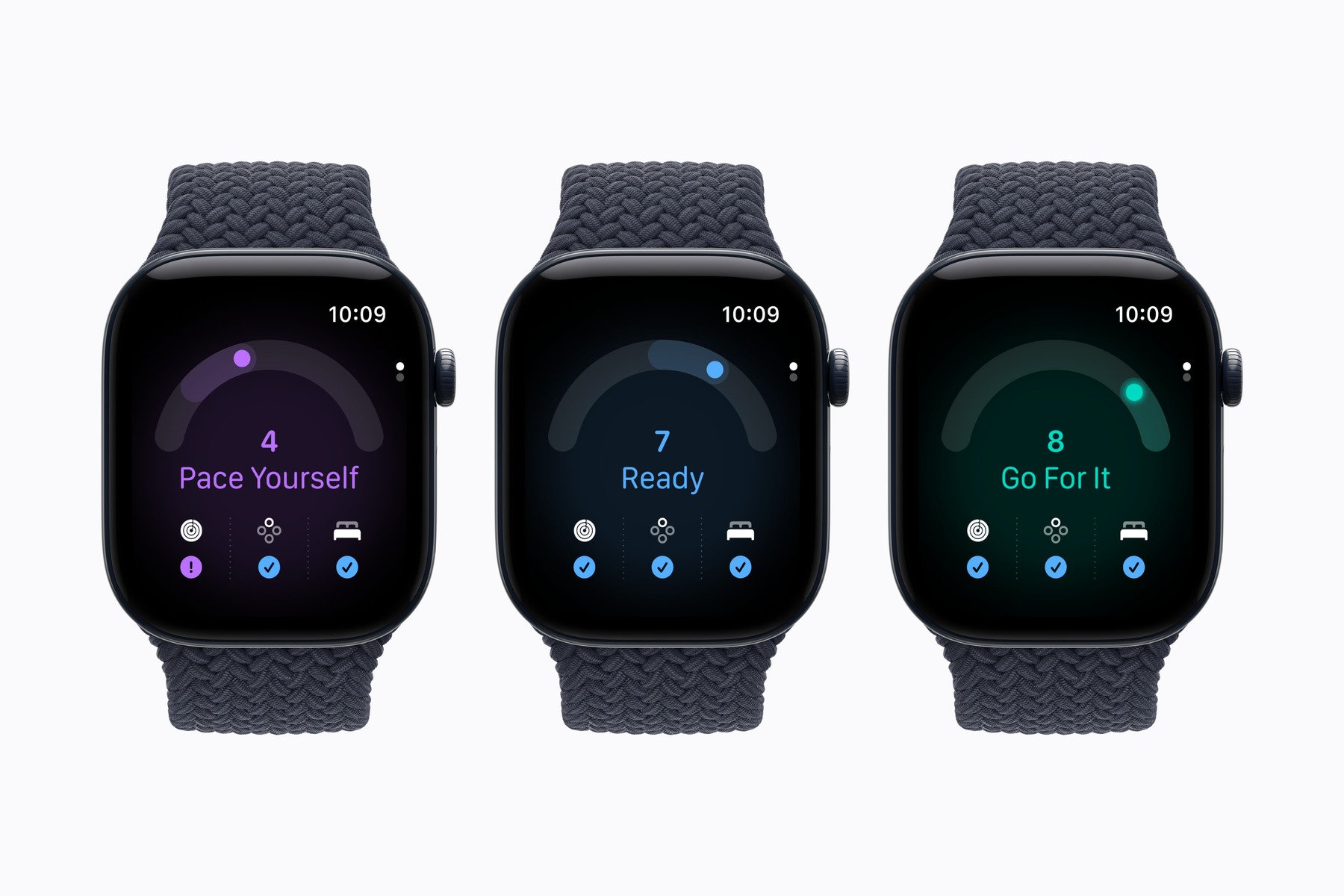
Improved health sensors will let you be neurotic more effectively. Apple
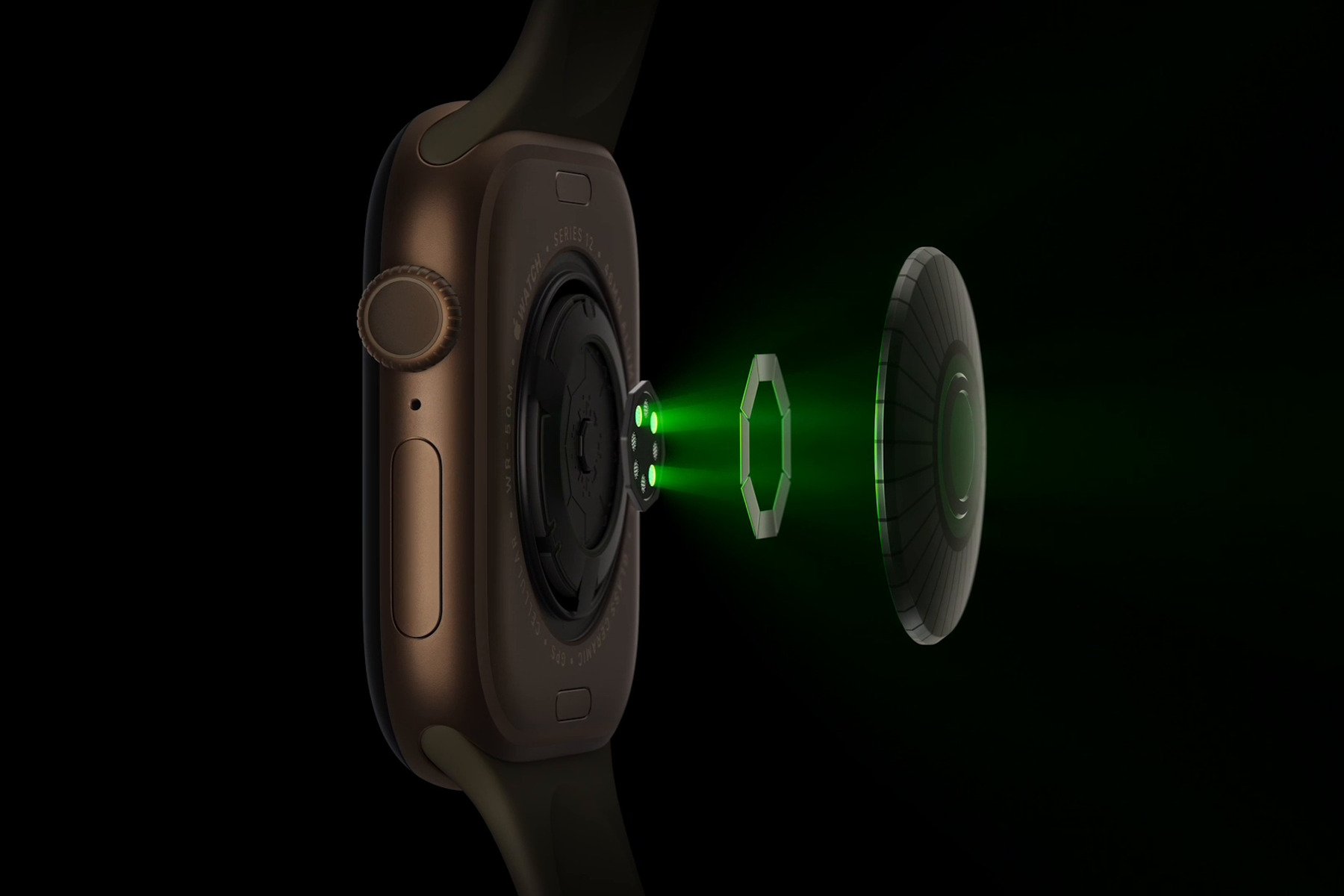
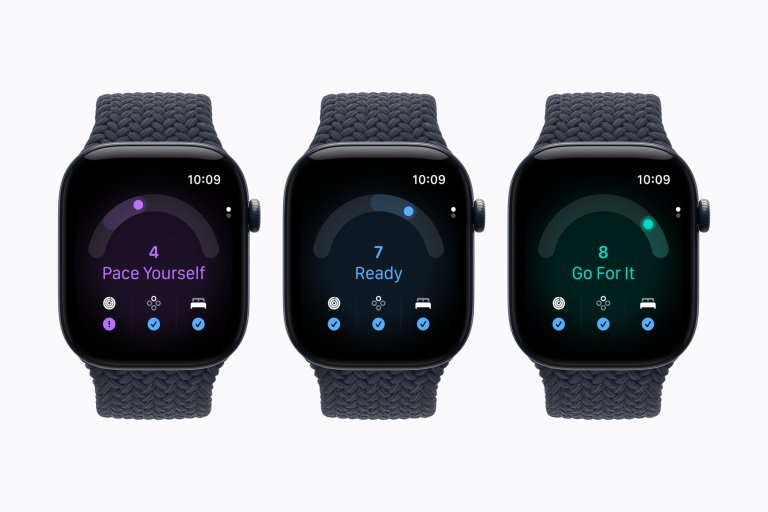
Apple Watch Series 12 starts at $399 and its headline change is a new Health Sensing System that samples heart rate every five seconds all day and measures heart rate variability up to 24 times more often than the previous generation, roughly every five minutes. Apple splits HRV into two readings, an overnight Recovery HRV and an all-day overall figure. Apple says its study of more than 1,000 participants, run in July and August of 2026, found this to be the most accurate heart rate sensing in a wearable. That’s the company’s own testing rather than an independent result.
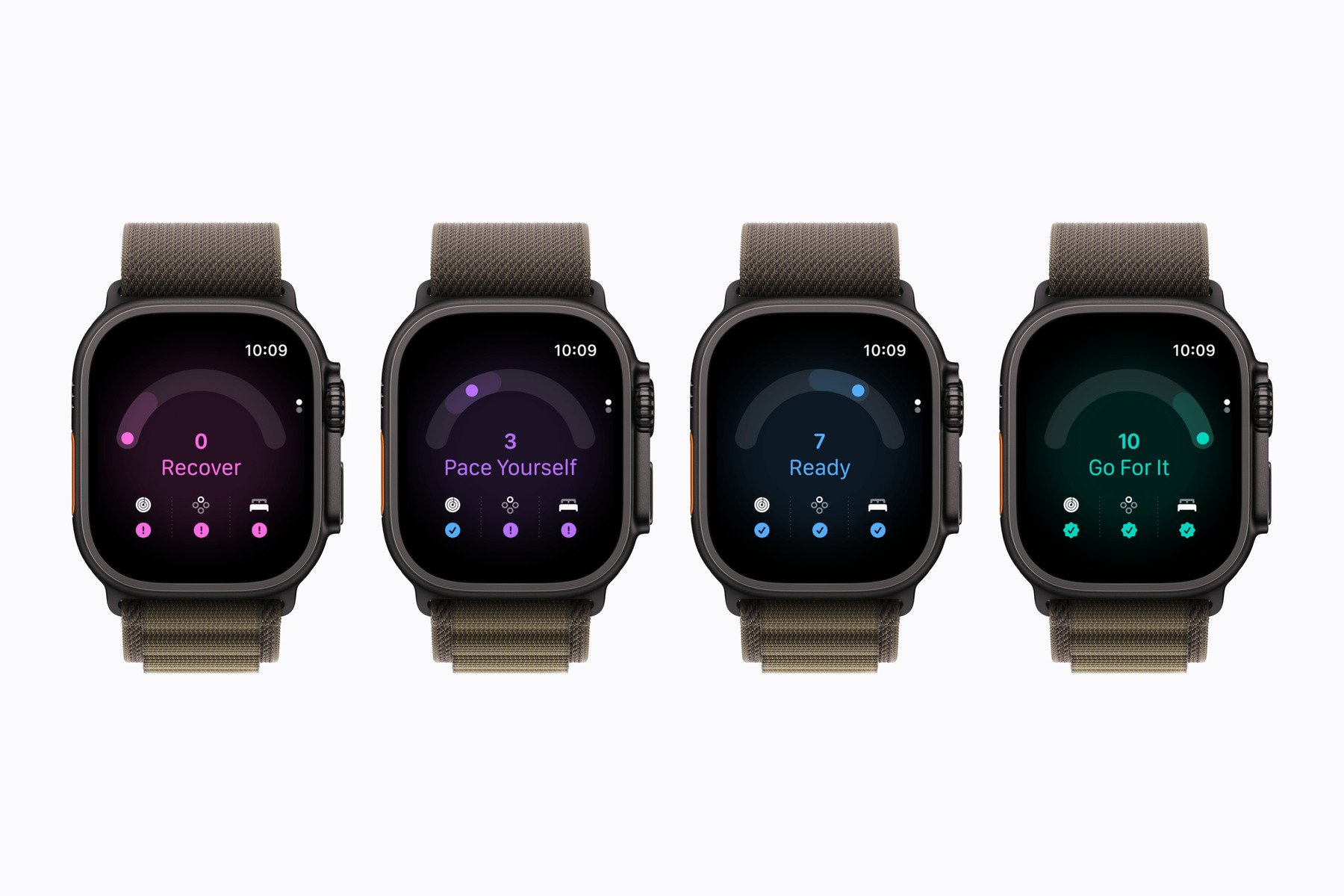
All that sampling feeds a daily readiness score from 0 to 10 that sorts your day into Recover, Pace Yourself, Ready, or Go For It, updating as the day goes on. Readiness is the metric many wearable makers have converged on, and the scores rarely agree with one another, so the question is whether Apple’s version, built on the Apple Heart and Movement Study, moves when you’d expect it to. Our Apple Watch comparison is where we’ll sort out which model to buy once we’ve worn one.
Apple
The S11 chip runs it, battery holds at up to 24 hours of everyday use, and outdoor workout time climbs 25 percent to 10 hours. Fifteen minutes on the charger now buys up to 12 hours, a 50 percent improvement, which is enough to top off while you shower and still sleep-track. Aluminum models get Ceramic Shield 2, which Apple rates 60 percent tougher than the Ion-X glass it replaces. Ceramic models return to the lineup in pearl white and night blue alongside aluminum in dark bronze, black, light gold, and space gray, and titanium in radiant gold and natural.
6. Apple Watch Ultra 4 runs 50 hours on a charge and 45 in max workout mode
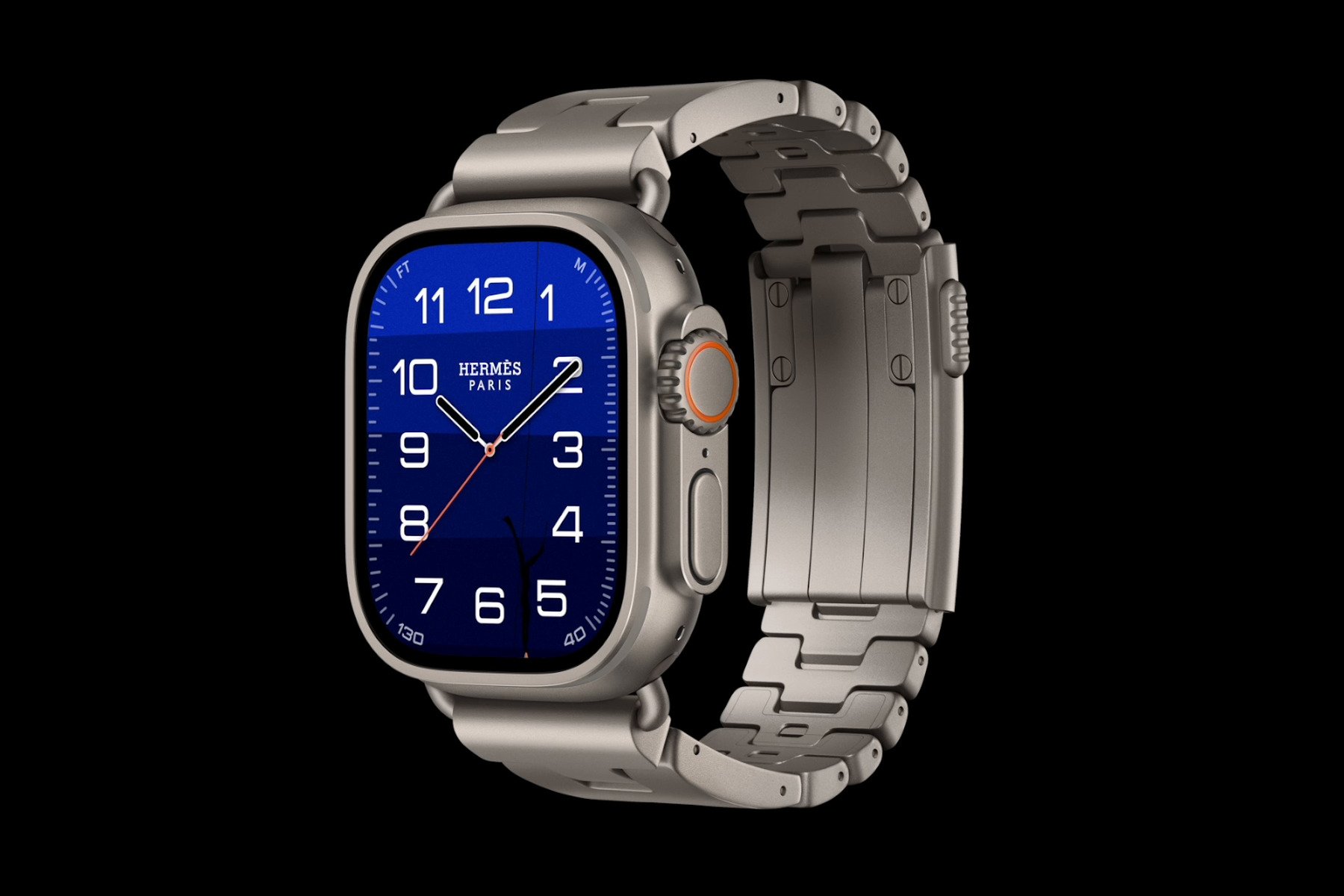
I regret to inform everyone that I really like this fancy Hermes band that’s made of titanium. Apple
The $799 Apple Watch Ultra 4 is rated for up to 50 hours of normal use, and Low Power Mode stretches that to 84. In workout modes, Extended Workout runs up to 25 hours, a 25 percent gain over the Ultra 3, and Max Extended Workout runs up to 45. Apple says that’s typically enough for a 100-mile race. I will not personally be testing that one. Fifteen minutes on the charger adds up to 18 hours of general battery life.
The case is 3D-printed from 100 percent recycled titanium in natural and black, and the watch carries the same S11 chip and Health Sensing System as Series 12, so the readiness score and five-second heart rate sampling arrive here too. Satellite Emergency SOS, Find My, and Messages carry over. Band options include a new translucent silicone Ocean Band in gray, kelp, and black, and the Hermès collection adds a Grand H titanium bracelet with a built-in extension sized for a wetsuit cuff. If you’re weighing this against a Garmin or a Coros, our best fitness watches guide has the field.
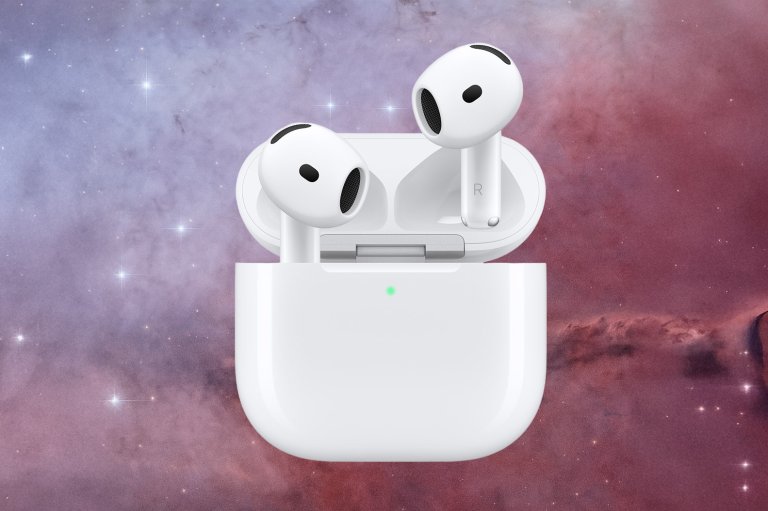
7. AirPods 5 put noise cancellation in the $129 pair
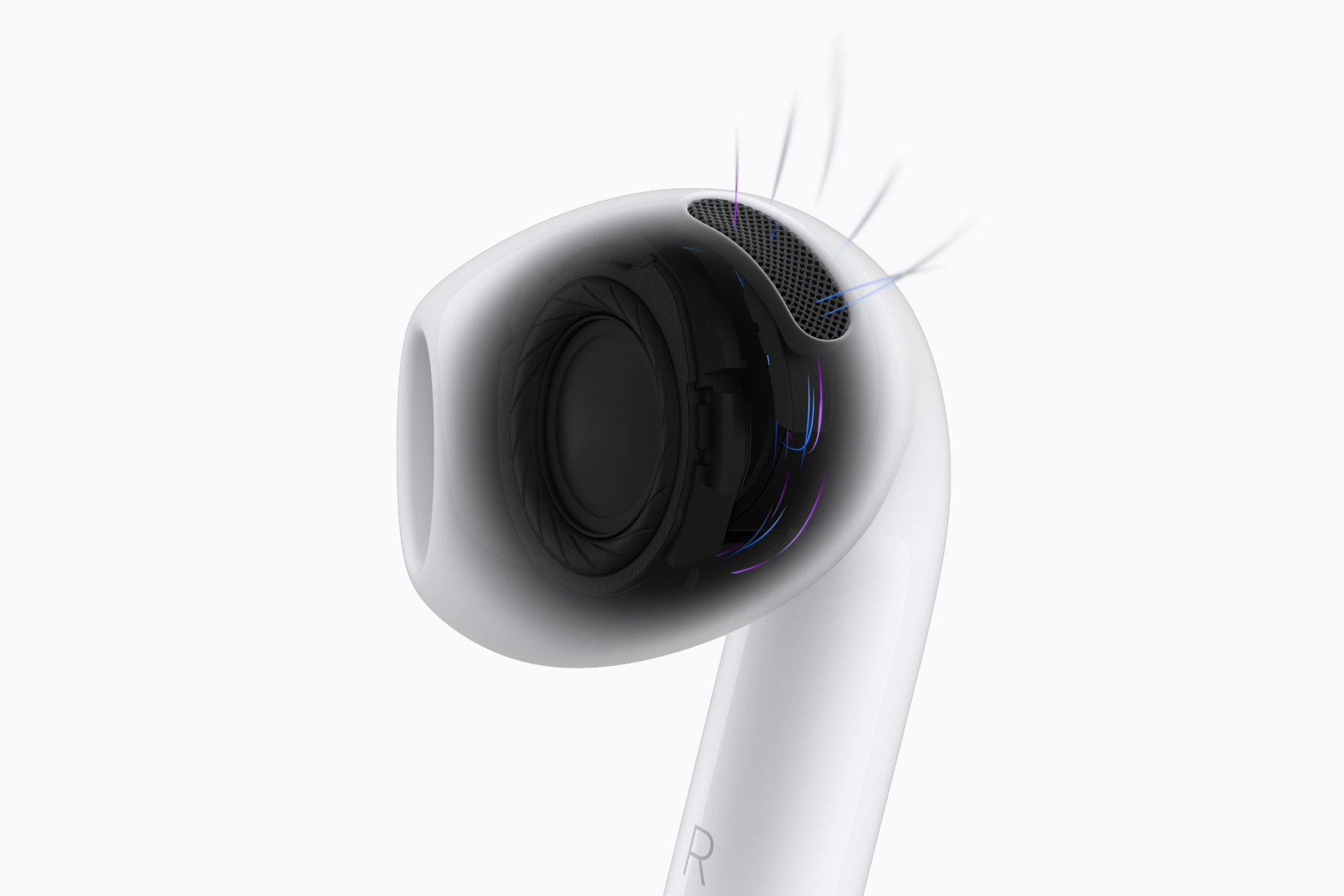
Active noise canceling is now available across the entire AirPods line. Apple
Last year, active noise cancellation on AirPods 4 cost $179. AirPods 5 start at $129 with ANC included, and Apple says the new pair removes up to 50 percent more external noise than the more expensive model it replaces. Apple credits that gain to a multiport acoustic architecture borrowed from AirPods Pro 3 and to improved computational-audio algorithms, with a next-generation Adaptive EQ working on sound quality rather than isolation. These are still open-ear buds with no silicone tip, so the ceiling is lower than a sealed design, and Apple scopes its best-in-class claim specifically to the open-ear category.
Spending $149 instead of $129 gets the Wireless Charging Case, and with it a stem force sensor that responds to a swipe for volume, which Apple says is a first for an open-ear design. That configuration tops up on an Apple Watch puck, any Qi pad, or USB-C, and it’s the one Apple quotes in the release: five hours of playback with ANC on, one hour more than AirPods 4 with ANC, and 22 hours total with the case. Live Translation works across the whole AirPods lineup now, subject to compatibility and regional limits. Apple’s press release doesn’t name the chip, publish an IP rating, or give a battery figure for the $129 model. Apple’s separate specifications fill in all three: an H2 chip, IP57 dust, sweat, and water resistance, and up to four hours of ANC playback with 20 hours from the case on the cheaper pair.
8. The Health app rebuild adds Health Age, at-home movement tests, and $119 lab work
The quietest announcement of the day is the one Apple will still be talking about in five years. A redesigned Health app arriving later in 2026, in U.S. English first, adds a Longevity tab built around Health Age, a figure that compares your VO2 max, resting heart rate, sleep, and HRV against your actual age and can pull in lab values like A1c and LDL. A new Insights tab surfaces summaries across heart, sleep, readiness, fitness, and cycle tracking.
Two additions go further than anything Apple has done in health before. Movement evaluations use the iPhone camera together with an Apple Watch to assess flexibility, strength, balance, and movement mechanics at home, with real-time audio and visual coaching. Apple says the whole thing runs on device and that no video is ever recorded, stored, or shared. Separately, Labs lets you schedule and purchase a blood panel through the Health app, 50 or more biomarkers for $119, drawn at roughly 2,000 Quest Diagnostics locations in the U.S. Booking lab work from inside a phone’s health app is new territory.
Cycle Tracking now supports perimenopause and menopause logging, and it will notify users age 40 and over when cycle deviations suggest perimenopause and flag any bleeding logged after menopause. Apple’s standing warning still applies there, that Cycle Tracking should not be used as a form of birth control. Workout Buddy can run on the watch without an iPhone nearby, though it still needs Wi-Fi or cellular, Bluetooth headphones, and a paired Apple Intelligence iPhone. GymKit expanded so heart rate from AirPods Pro 3 can reach a compatible treadmill or indoor bike by way of your iPhone. The Vitals app carries its own label: for wellness purposes only, not for medical use.
9. Siri AI arrives September 14 in beta, with daily usage caps and a paid tier coming
The rebuilt Siri Apple previewed at WWDC in June ships with iOS 27 and watchOS 27 on Monday, September 14, labeled a beta and available in English first. French, Japanese, Korean, Portuguese, and Spanish follow in October. It isn’t available on iPhone, iPad, or Apple Watch in the EU at launch, and it isn’t available to anyone under 13. The feature set matches the June demo: personal context across Messages, Mail, and Photos, awareness of what’s on screen, and a Siri mode inside the Camera app.
Apple says features that run on its server-side models, including Siri AI, the new photo editing tools, and Image Playground, are subject to daily usage limits that vary by feature and system demand, and that expanded access to those features will be available for a fee in the future. Apple laid out daily limits and broader access through most iCloud+ plans back in June, so the concept isn’t new, but the fee language is more explicit than anything the company has said before. It still hasn’t put a number on either the limits or the price.
10. Where to preorder everything Apple announced
Apple Watch Series 12, Apple Watch Ultra 4, and AirPods 5 are up for preorder now and arrive Friday, September 18. The iPhone 18 Pro and Pro Max open for preorder at 5 a.m. PT on Saturday, September 12, and ship September 18 in more than 65 countries, with 20 more following September 25. The iPhone Duo waits until October 16 for preorders and October 23 for delivery. iOS 27 and watchOS 27 land as free updates on September 14, which is when most of the software on this list reaches the hardware you already own.
Apple’s first foldable is also the only phone in the lineup with two screens doing different jobs. The 7.6-inch inner display handles everything a phone normally does, and the 5.4-inch outer one runs Duo Preview, Kid Cue, and Duo FaceTime, all of which exist because someone is standing in front of the camera. Dual batteries are rated for up to 31 hours of video on the inner screen. There’s no telephoto lens and no SIM tray anywhere in the world.
Skipping the Max costs you nothing photographically. The 6.3-inch iPhone 18 Pro gets the variable aperture, Apple Reference Image and its signed sensor data, the Pro controls layer with a live histogram, and the same A20 Pro chip and the vapor chamber with three times the surface area of last year’s. Apple rates the eSIM-only version at 36 hours of video playback, three more than the 17 Pro. Pick this one if 6.9 inches has always been more phone than your pocket wanted.
Battery is the reason to spend the extra $100. The eSIM-only Pro Max is rated at 45 hours of video playback, six more than last year, and it’s the only iPhone 18 Pro model carrying Apple’s real-world usage rating: up to 30 hours. Five minutes on a 60W charger is supposed to return about seven hours of video. Cameras and chip are identical to the 18 Pro, so this is a size and endurance decision rather than a capability one.
This is the cheaper of the two watches carrying Apple’s new Health Sensing System. The Series 12 samples heart rate every five seconds and HRV roughly every five minutes, which is what makes the readiness score possible, and the S11 chip runs the new audio features including Live Rewind and Siri Recap. Sizes are 42mm and 46mm, aluminum cases get Ceramic Shield 2, and a 15-minute charge returns up to 12 hours.
Endurance is what separates the Ultra 4 from the Series 12: 50 hours of normal use and 45 hours in Max Extended Workout mode, along with satellite messaging and a 3D-printed recycled titanium case. The Health Sensing System and readiness scoring are identical to the cheaper watch, though the Ultra adds outdoor and depth capabilities Series 12 doesn’t have, so the $400 buys endurance, ruggedness, and the ability to text without a cell tower. The new Ocean Band comes in translucent gray, kelp, and black.
Noise cancellation used to be the $179 upgrade. Now it’s standard on the $129 pair, and Apple rates it 50 percent stronger than the model it replaces. The $149 Wireless Charging Case version is the one worth the upgrade, since it adds the stem swipe for volume, charges on an Apple Watch puck or any Qi pad, and carries the quoted five hours of ANC playback and 22 hours total. These stay open-ear, so treat the noise cancellation as a commuting improvement rather than a replacement for AirPods Pro.
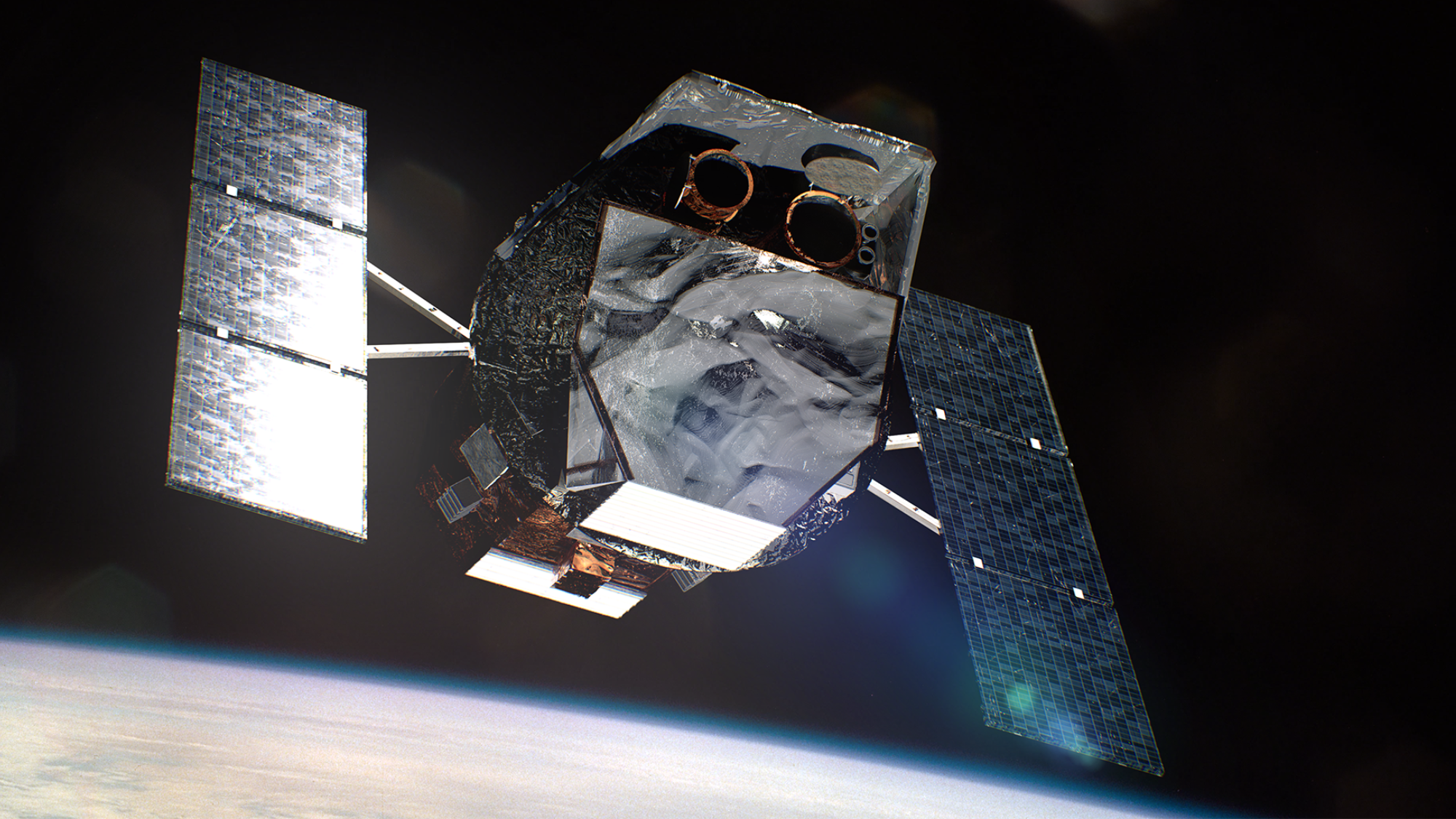
NASA’s Neil Gehrels Swift Observatory is back to business after months flying in a stripped-down mode while it waited for a rescue mission that ultimately failed. On August 26, the agency switched Swift’s Ultraviolet/Optical Telescope and X-ray Telescope back on. A third instrument, the Burst Alert Telescope (BAT), remains offline while a team works to return it to data collection in the coming weeks.
Earlier this month, Link, the Katalyst Space spacecraft that was originally set to rescue Swift conducted in-space tests and maneuvers to test its capabilities for future, and hopefully successful, missions.
“Katalyst continues to demonstrate as many of LINK’s capabilities in space as possible, to collect data to inform future spacecraft servicing technology and operations,” per a statement from NASA on September 4.
It also snapped a few photos of Swift from about 9 miles away. “We got so close, but so far,” Katalyst’s CEOGhonhee Lee told the Associated Press.
LINK fires all three of its xenon-fueled thrusters simultaneously in this image captured by the spacecraft on August 30, 2026. Image: Katalyst Space.
The shutdowns, put in place in February, were part of an effort to give Swift more time. The observatory has studied powerful explosions called gamma-ray bursts since 2004. Unlike other low-orbit satellites, Swift does not have a propulsion system that can counteract the pull of the Earth orbit. At the same time, increased solar activity has caused the Earth’s upper atmosphere to expand, increasing the atmospheric drag on Swift faster than anticipated.
That force would eventually cause the satellite to fall into the Earth’s atmosphere and burn up. So, in 2025, NASA enlisted Katalyst Space to build Link to capture Swift and lift it into higher orbit. However, those plans were scrapped on August 19 after Link went into an uncontrollable spin.
With science operations now resumed, NASA believes Swift will reach an altitude 185 miles (300 kilometers) for the next one to two months. After that threshold, “operating the telescope becomes difficult, and the spacecraft’s rate of descent quickly increases,” the agency explained in a statement.
At that point, the satellite’s 22-year observation of the cosmos will finally come to an end. It’s expected to fall back to Earth sometime between October and late December. One thing is for certain, Swift served us well.
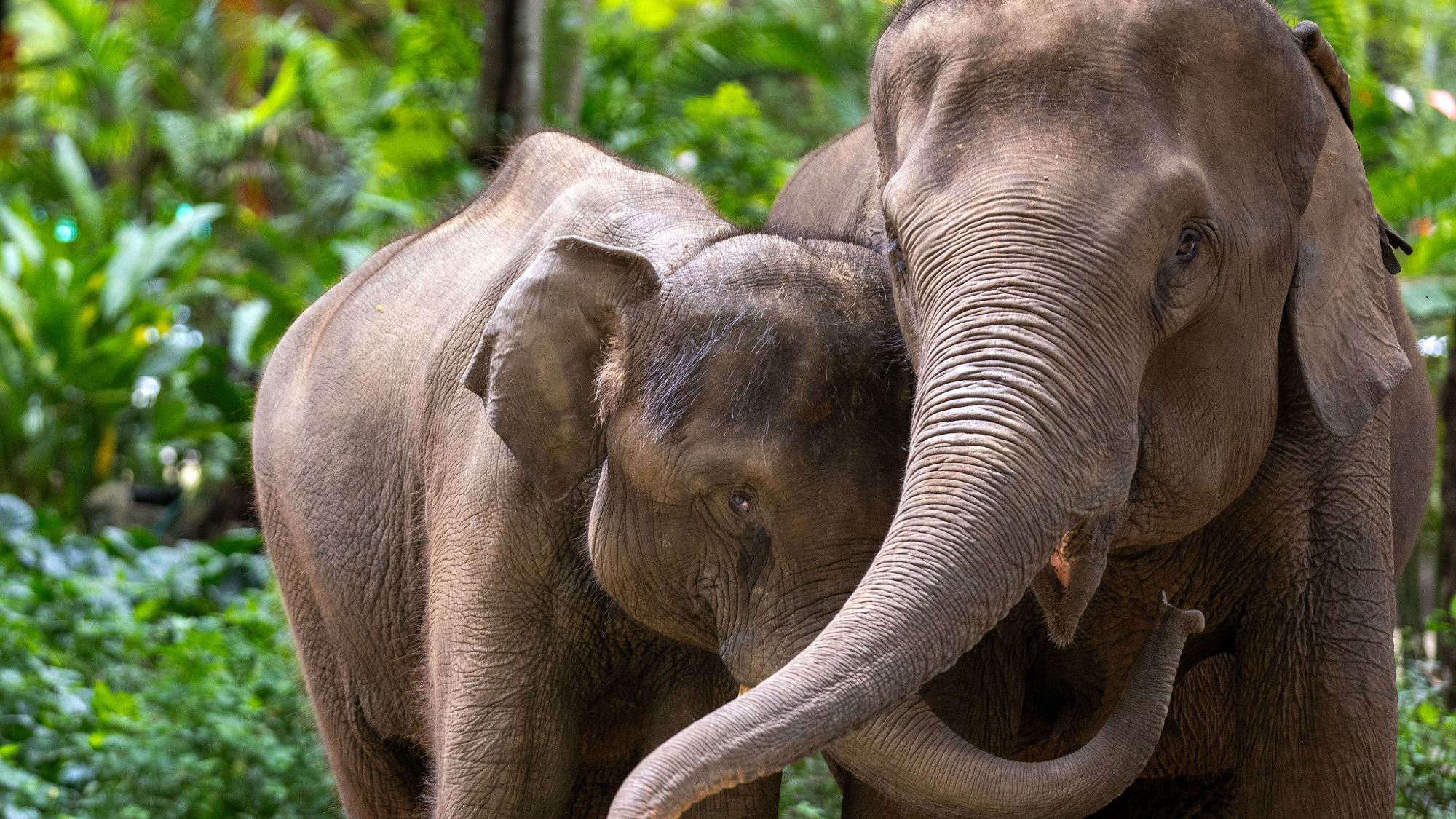
Like humans, elephants are famously social creatures. But unlike teenage humans, Asian elephants (Elephas maximus) can think before they act.
Scientists in Thailand discovered this after 16 Asian elephants at the country’s National Elephant Institute successfully participated in a detour test. In this sort of challenge, the animal has to resist an obvious but ineffective strategy (an impulse) to get a treat and follow an effective but indirect alternative—an ability called inhibitory control.
“Although we are beginning to understand how intelligent elephants are, we still know very little about their capacity for inhibitory control,” Sydney Hope, a postdoctoral researcher at Hunter College in New York, tells Popular Science. “Understanding elephant inhibitory control will help us understand how this aspect of cognition may have evolved across species, including humans. It will also help us understand how elephants may cope with environmental—including anthropogenic—changes.”
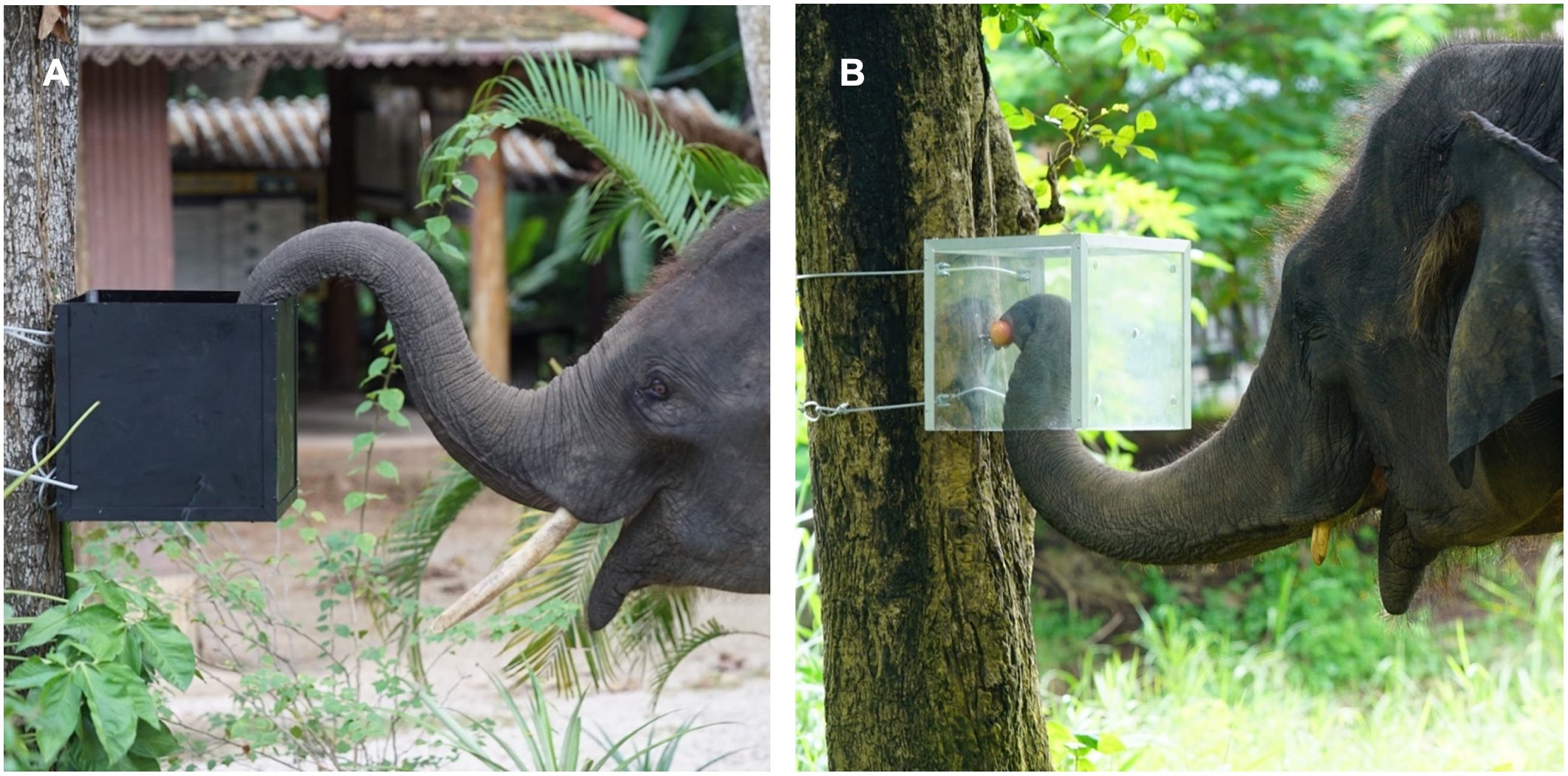
Experiment Setup. (A) An elephant enters the “over” opening to gain access to food in a familiarization trial. (B) An elephant enters the “under” opening to gain access to food (apple) in a test trial. Photos were cropped to remove extraneous background material; the left image was mirrored. Image: Photos by Sangpa Dittakul/Hope et al., 2026, PLOS One, CC-BY 4.0.
In their new study published today in the journal PLOS One, Hope and her colleagues presented Asian elephants with a transparent box filled with fruit. The box also had small holes, so that the elephants could see and smell the goodies inside. The temptation here was to reach directly through the barrier, whose holes were presumably too small for the elephants’ trunk to fit through. The elephants could consistently resist this impulse, and instead used an opening on the side of the box, as they had previously been taught to do.
In a second version of the trial, the researchers rotated the box. Initially, the elephants gave in to the urge to reach for where the opening used to be, but then rapidly amended their behavior. This fix came slower in older elephants. That’s potentially because of cognitive decline with age, though the team says that further research is necessary on this point.
More broadly, the study shows that elephants are able to resist an impulsive, ineffective action (like reaching through a perforated, transparent barrier or continuing a no longer successful approach) in favor of e indirect effective behaviors, even if they must change a previously effective strategy. And they’re in good company—inhibitory control is important for humans’ and other animals’ decision-making and cognitive flexibility. For elephants, it might play a significant role in their famous problem-solving and socializing capabilities, according to the researchers.
“These results may also help conservation efforts,” Hope points out. “One major threat to Asian elephants is human-elephant conflict, often occurring when elephants navigate around barriers (e.g., electric fences) to enter agricultural lands. Understanding how elephants detour around barriers in controlled experiments may help with developing new techniques to mitigate conflict.”
Tyrannosaurus rex fossils are relatively common finds, with dozens of variously complete examples on display in museums around the world. But T. rextracks? That’s an entirely different story. Even when stomped into the mud by a 17,500-pound apex predator, dinosaur footprints rarely last long enough to fossilize over millions of years.
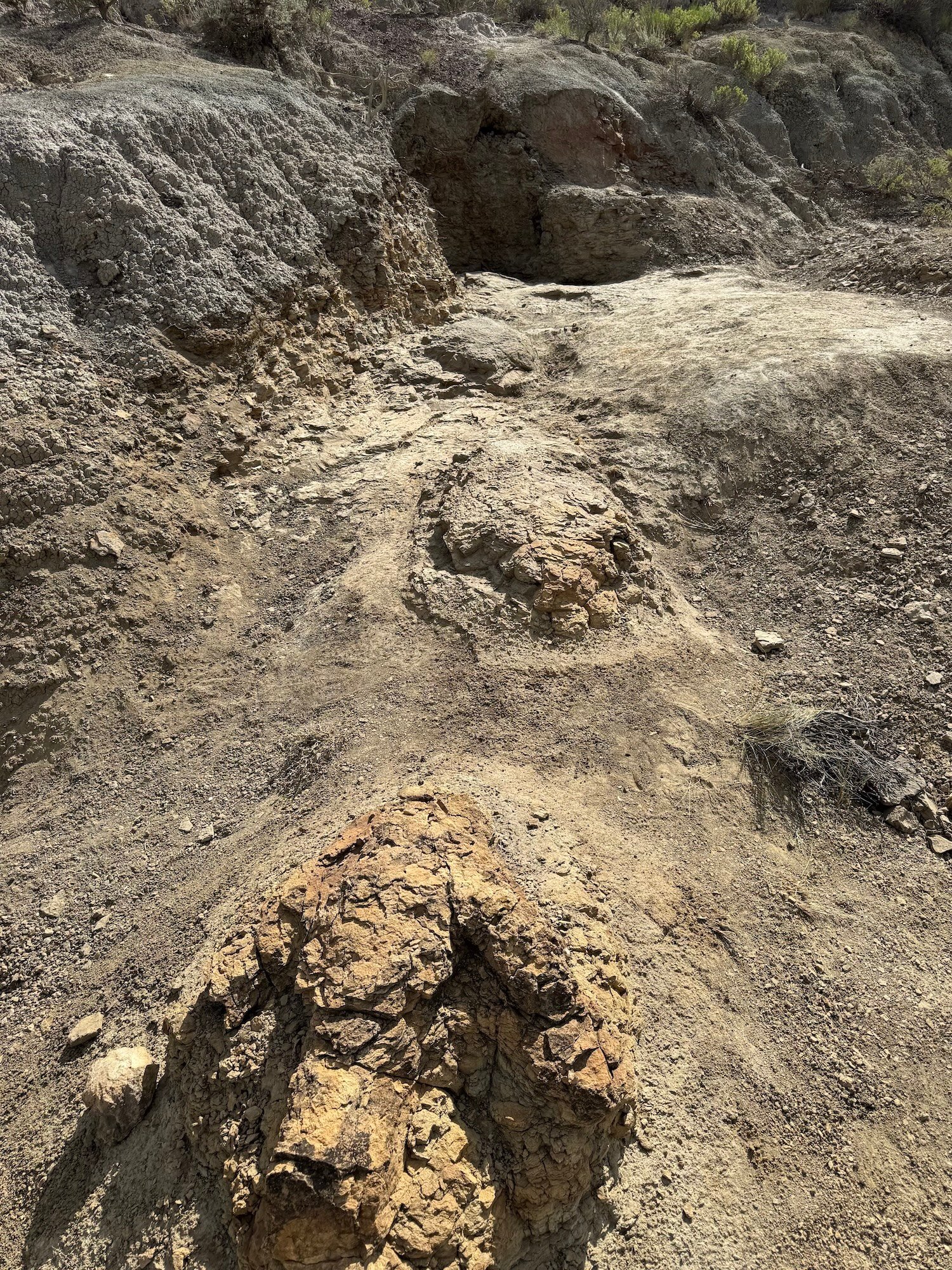
That’s what makes a recent discovery in southwestern North Dakota so remarkable. Paleontologists from the Denver Museum of Nature & Science and Liverpool John Moores University in England have documented not one, but four footprints preserved along a 23-foot-long path within the famous Hell Creek Formation. The prints are the first known trackway made by an adult T. rex, and are described in a study recently published in the Journal of Vertebrate Paleontology.
The tracks were discovered in North Dakota’s Hell Creek Formation: Tyler Lyson
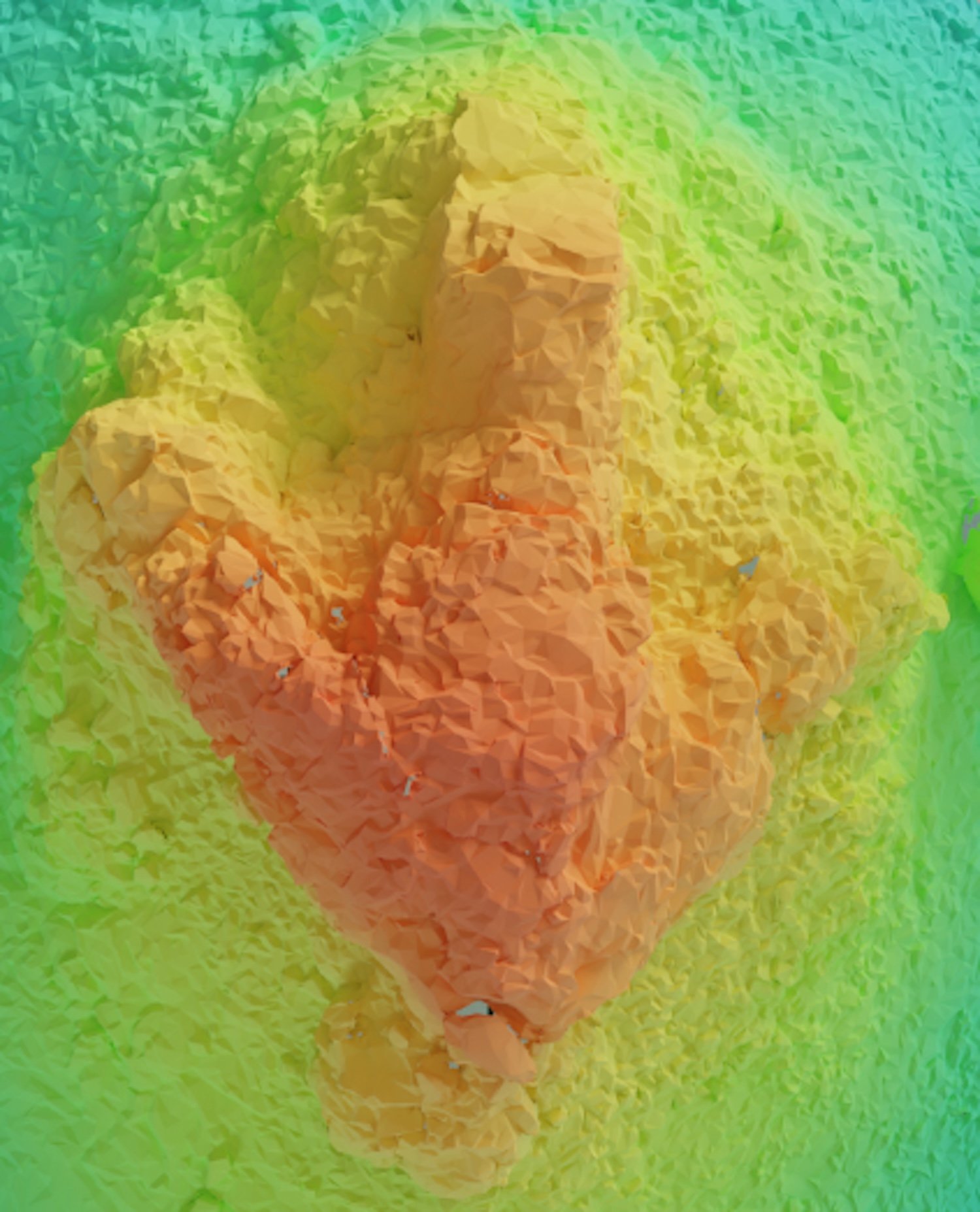
While rare, T. rex footprints are distinctive for their massive size and narrow toes. In this case, each dino-stomp measures about three feet long. Paleontologists identified the roughly 66.5-million-year-old path last year on federal land near the town of Marmath, North Dakota, near the state’s southwestern border with Montana. After carefully clearing the surroundings, researchers imaged each footprint using a high-resolution 3D surface scanner. This allowed the team to digitally analyze the scene, as well as create physical reproductions.
The two left and right imprints suggest that the dinosaur was a sizable adult with an estimated 13-foot stride—but paleontologists don’t think this particular T. rex was in much of a hurry. Based on the gait, it was likely moseying around at 3.5 to 4.5 miles per hour, or about the same speed as a human going on a power-walk. Given the tracks’ weathering and erosion, the team stresses their theorized speed is somewhat speculative.
3D scans allowed researchers to generate digital recreations as well as physical models. Credit: Antoine Bercovici
Paleontologists are now planning to excavate three of the four footprints later this year, then transfer them by helicopter to the Denver Museum of Nature & Science.
“Bones tell us an enormous amount about these animals, but footprints capture a moment of behavior. With a trackway, we can actually follow an animal as it moved across the landscape,” Tyler Lyson, a Denver Museum of Nature & Science paleontologist and study co-author, said in a statement. “That is incredibly rare for T. rex.”
As the 2026-2027 NFL season kicks off, the Philadelphia Eagles are giving new meaning to their signature “Fly, Eagles, Fly” fight song. The football team is partnering with the National Marine Sanctuary Foundation for Birds Supporting Birds, an initiative to support seabirds off the coast of Massachusetts (and in New England Patriots’ territory) this fall.
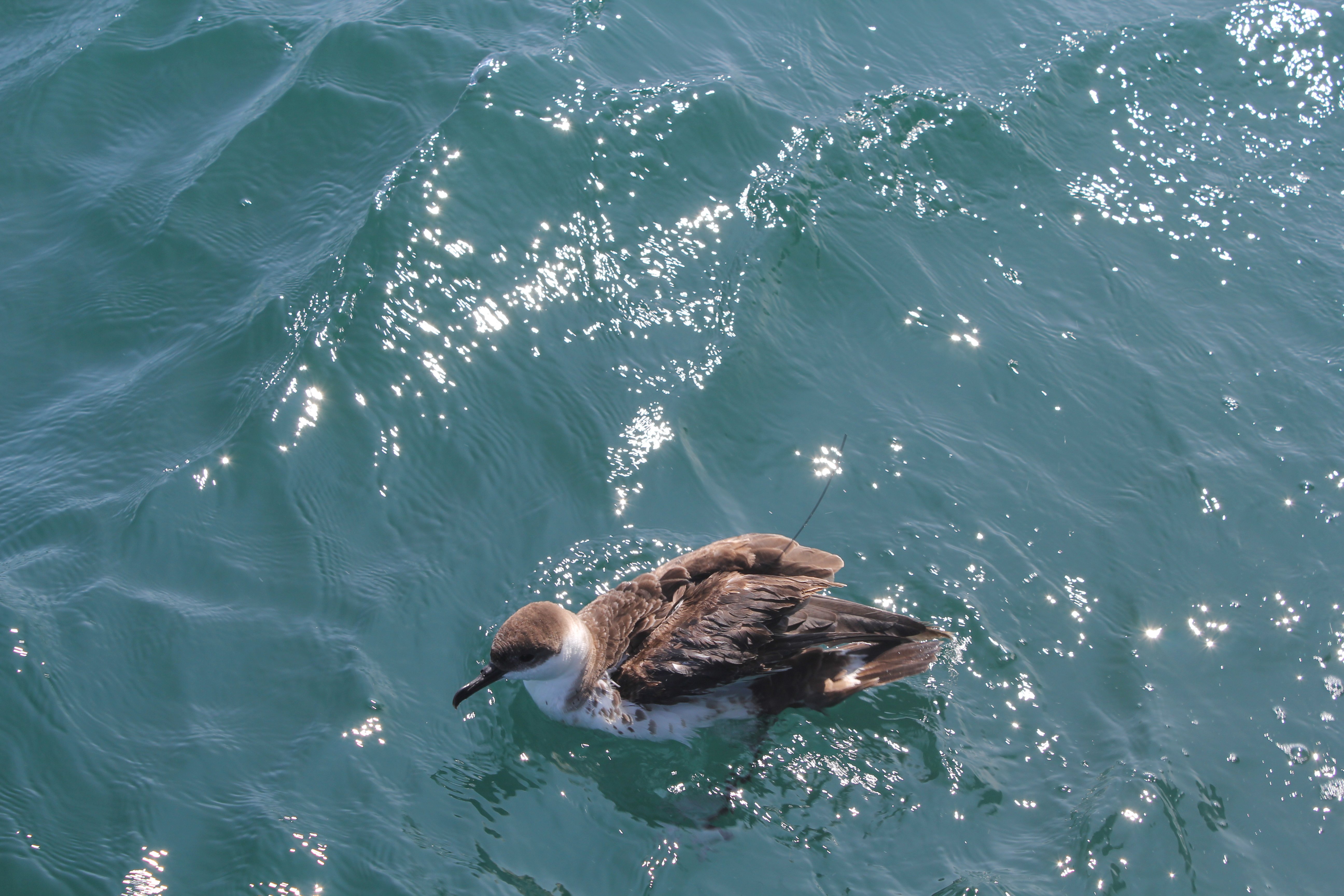
The team is supporting NOAA’s Stellwagen Bank National Marine Sanctuary Shearwater Tagging Project, an ongoing initiative dedicated to studying the great shearwater (Ardenna gravis) and their migration. Great shearwaters are large, white-and-grey seabirds known for their epic journeys. They travel thousands of miles every year from their remote South Atlantic breeding grounds up to the cooler North Atlantic waters during the nonbreeding season. According to the National Marine Sanctuary Foundation, they fly the equivalent of over 200,000 football fields across the Atlantic Ocean every single year.
Birds Supporting Birds will help support researchers in Stellwagen Bank, an 842-square-mile marine sanctuary east of Boston, to tag great shearwaters and track their migratory routes across the Atlantic.
“The Eagles are directly funding researchers to attach lightweight, solar-powered satellite transmitters to great shearwaters,” Joel R. Johnson, President and CEO of the National Marine Sanctuary Foundation, tells Popular Science. “These tags track the birds’ migration patterns around the Eastern Seaboard and down to the Southern Atlantic Ocean in real time.”
Lovingly known as “The Birds” by their incredibly devoted fanbase, the football team is leveraging their platform to bring attention to ocean conservation and highlight environmental stewardship.
A major 2015 study found that the Gulf of Maine is warming faster than 99 percent of the ocean due to climate change. While the water has slightly cooled since 2021, a report published by NOAA in July found that the environment in the Gulf of Maine still remains unstable. These changes in ocean temperature, currents, and other conditions can impact the seabirds’ food supply.
Great shearwaters are reliable indicators of an ecosystem’s health, who rely on small fish called sand lance in their diets. Whales, dolphins, bluefin tuna (Thunnus thynnus), and other key Gulf of Maine species also rely on these fish belonging to the family Ammodytidae in their diets. By studying great shearwaters and their health, researchers can better understand what is happening in the local ecosystem as a whole.
Researchers at Stellwagen Bank National Marine Sanctuary used satellite tracking technology in 2013. These tags are lightweight and attached to the birds with degradable thread. They have small solar panels so scientists can monitor the birds’ routes over extended periods.
Researchers have now deployed tags on Phil, Franklin, Hoagie, and Liberty, four great shearwaters with very Philly-appropriate names.
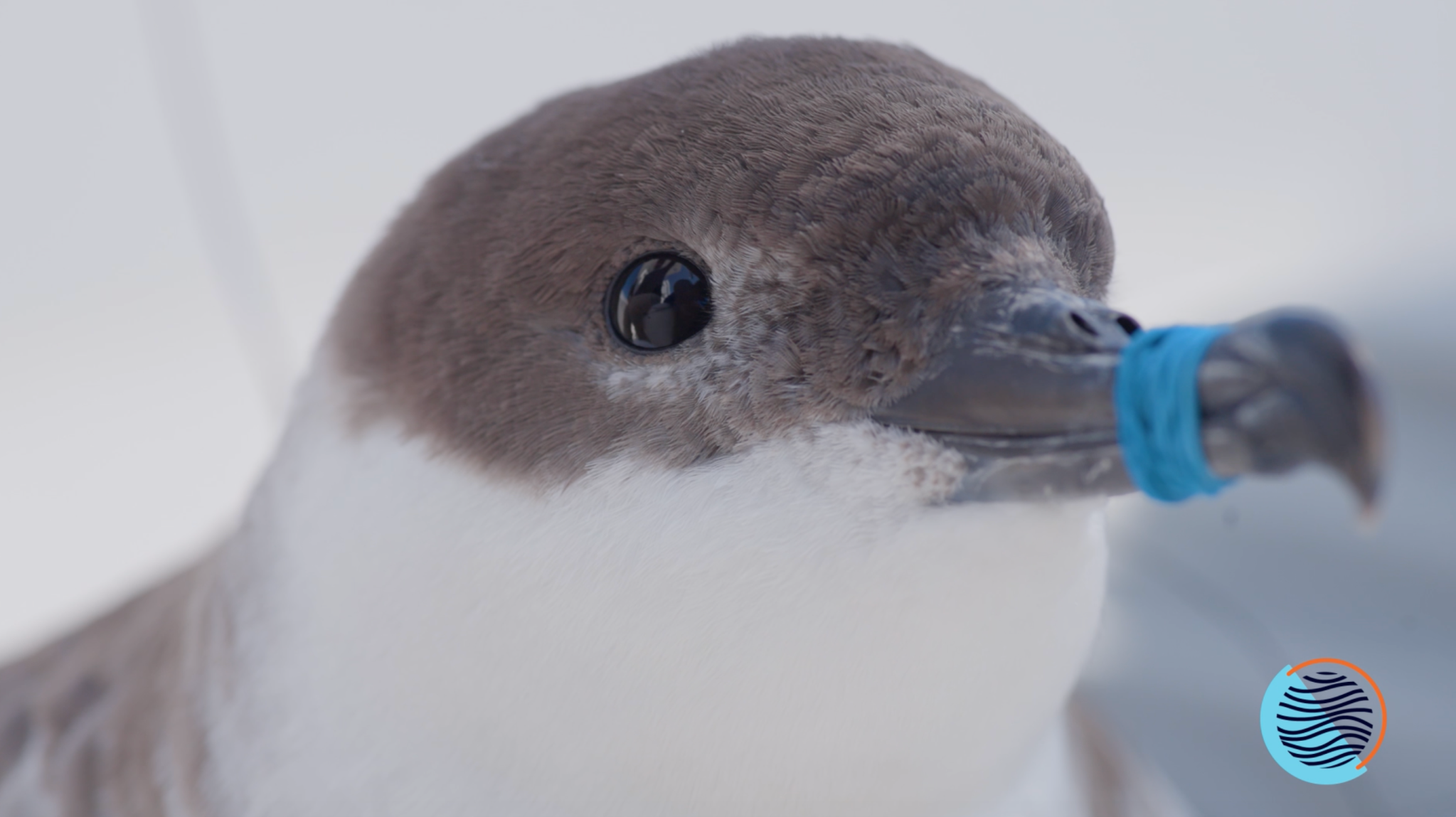
Great shearwaters can help scientists understand an ecosystem’s health. Image:National Marine Sanctuary Foundation.
“We are thrilled to invite the public to follow Phil, Franklin, Hoagie, and Liberty in real time on our interactive maps and social channels, bringing everyone along on our shared mission to protect our ocean waters and marine life,” says Johnson, who lists bald eagles (Haliaeetus leucocephalus), great blue herons (Ardea herodias), and great shearwaters among his favorite birds.
Live interactive maps will be available soon on the Stellwagen Bank National Marine Sanctuary and National Marine Sanctuary Foundation’s website, so you can follow the great shearwater’s epic journey, while the Eagles (or your favorite team) compete on the gridiron.
What’s still less understood, is how the subtle, everyday fluctuations in sleep quality that come from simply living a normal life can alter brain chemistry. People don’t live in controlled lab settings, and even the most avid bio-optimizer still has nights where quality sleep takes a backseat. Actually understanding how someone’s day-to-day sleep patterns affect their brain chemistry would require putting them in an MRI machine and collecting data over and over again, over long stretches of time to get a more holistic view.
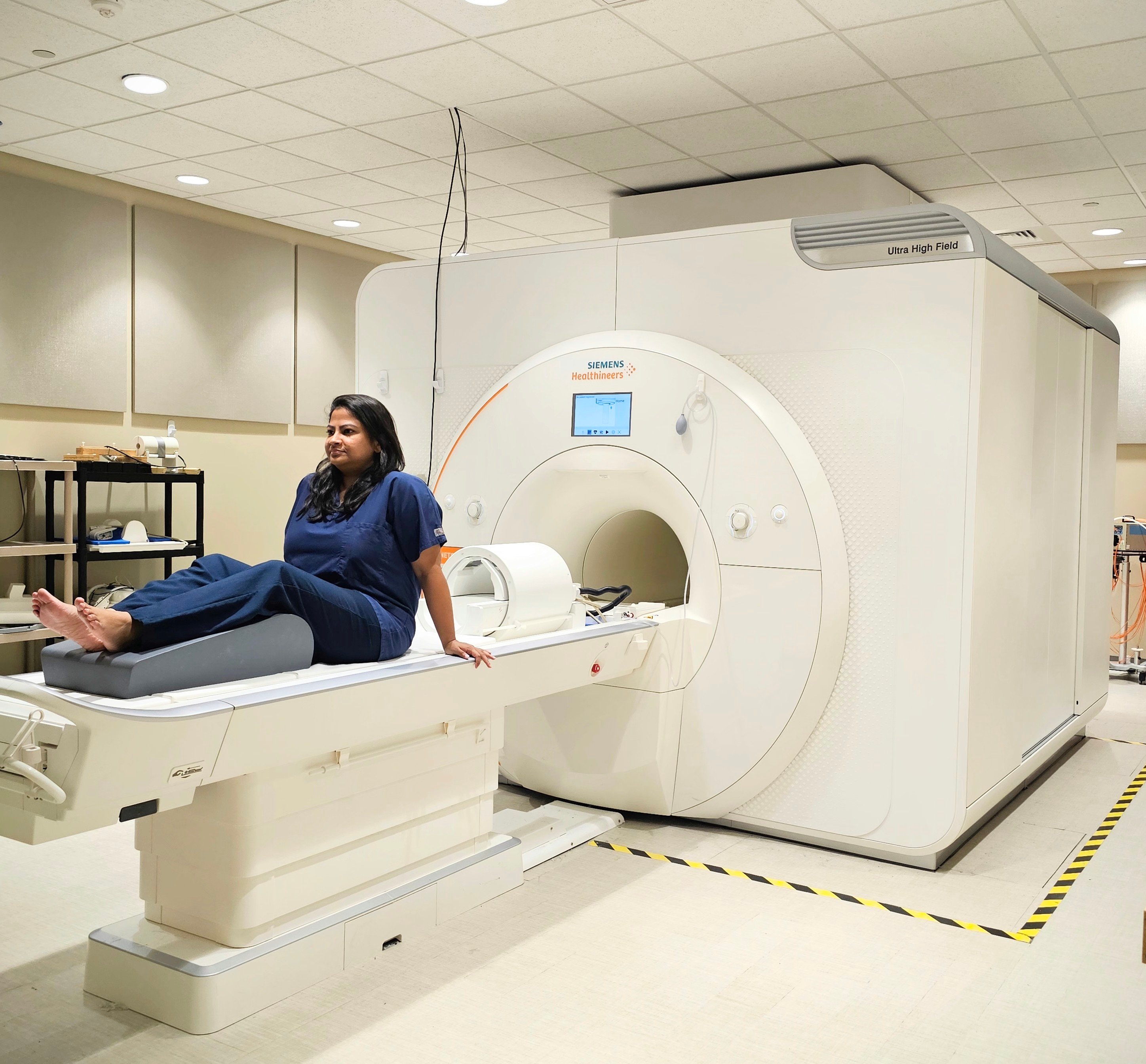
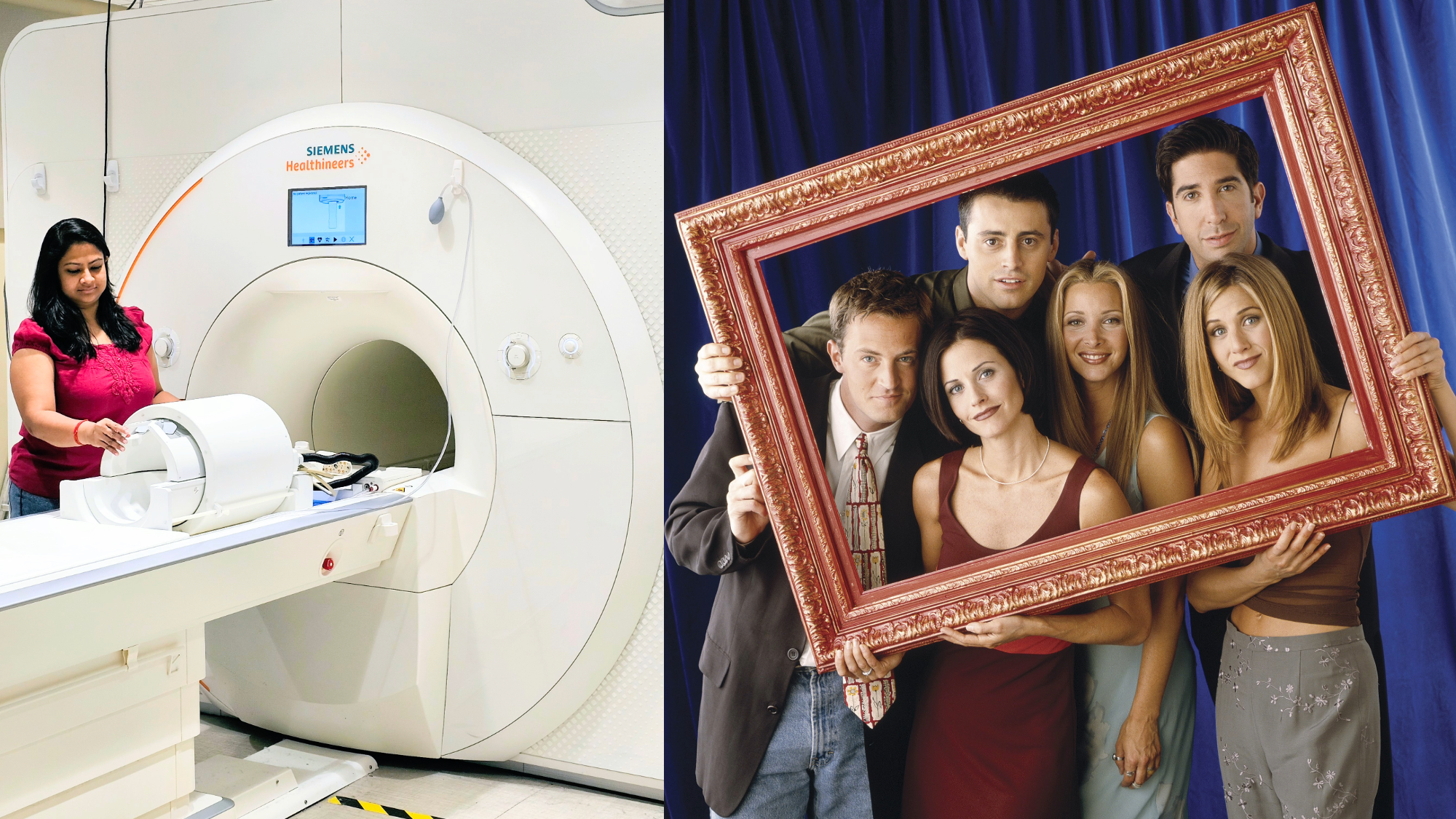
That’s exactly what Auburn University electrical and computer engineering graduate student Joshita Majumdar signed up for. Over 76 weeks, Majumdar slipped into the university’s 7-Tesla MRI scanner 104 times. That’s a level of commitment that would make even a stalwart Zen meditator fidget with frustrated boredom. Thankfully, Majumdar had a special companion to accompany her during the loud, cramped, 90-minute sessions: the hit television sitcom Friends.
Over 76 weeks, Joshita Majumdar went into Auburn University’s 7-Tesla MRI scanner 104 times. Image: Joshita Majumdar/Auburn University.
Majumdar recalls how a screen in the machine would cycle through four 10-minute videos of the staple from the 90’s and early 2000’s, each made up of several different scenes clipped together. The idea was twofold. Majumdar needed something playing during the sessions that would keep her from getting bored, and Friends just happens to be her self-described “guilty pleasure.” It was also one of the first shows she connected with as an international student adjusting to her early days in the United States, so some scenes strike particularly nostalgic, emotional notes. And like any great sitcom, Friends runs the gamut from numbing brain-rot to tear-jerking sentimentality. That’s potentially a great backdrop for a study analyzing changes in brain chemistry.
“If you’re happy, you watch Friends. If you’re sad, you watch Friends,” Majumdar tells Popular Science. “So all times [are] a good time to watch Friends, right?”
“This is a person living her life, going through normal ups and downs and we are seeing how brain chemistry responds to that,” Majumdar’s advisor and Auburn University Electrical and Computer Engineering Professor Gopikrishna Deshpande said. “That’s what makes this dataset so powerful. It’s not artificial. It’s not forced. It’s real.”
The journey to 104 brain scans
Majumdar grew up in Kolkata, West Bengal, India, and moved to the U.S. in 2016 to pursue a master’s degree in engineering at the University of Georgia, with an emphasis on mechanical engineering. Early on, she became interested in how different environmental factors affect brain function. And while she was busy pushing forward with her rigorous academic work, she also dealt with occasional homesickness, living in a new country thousands of miles away from friends and relatives.
Around that same time, Majumdar says she started watching Friends to see what all the fuss was about. People around her seemed obsessed with the show, but she hadn’t seen it, and initially didn’t really understand the hype. Eventually, she went back to the show with fresh eyes and everything clicked. The sarcastic Chandler Bing (Matthew Perry) and affable actor Joey Tribbiani (Matt LeBlanc) are among her favorite characters.
“I gave it another try, and then I was like, oh no, this is fun,” Majumdar said. “And then it became a guilty pleasure.”
When it came time to pick a test subject for this new, lengthy MRI study, Majumdar says Dr. Deshpande asked her if she’d be up for volunteering. Majumdar has some experience with MRI machines from past projects, enough to know that she wasn’t prohibitively claustrophobic or bothered by the machine’s loud industrial noises. Still, nothing she’d done before this could compare to the endurance and commitment it would take to see this through. The team decided not to commit to a set number of scans at the onset, and took it day by day to see how much the grad student could handle.
“We said, like, ‘Okay, we’ll take one day at a time, one week at a time, and see how far we can pull it through,” Majumdar explained.
Don’t sleep on Friends
Majumdar was the one who pitched playing Friends episodes in the machine. She compiled four 10-minute videos, each made up of different scenes from various episodes. The material ran the gamut in tone, with the goal of eliciting a range of brain responses. One particularly strategic choice was to include clips of episodes aired around Thanksgiving. These fan-favorites tend lean heavily on themes of family, friendship, and camaraderie. Friends, in other words, was meant to roughly simulate the backdrop for Majumdar’s everyday life brain state.
“In a task-based MRI, we are giving a particular stimulus, so we kind of have an idea what we are trying to activate in the brain,” Majumdar said. “But in a naturalistic run, it’’s kind of like you’re putting yourself into a real-world situation.”
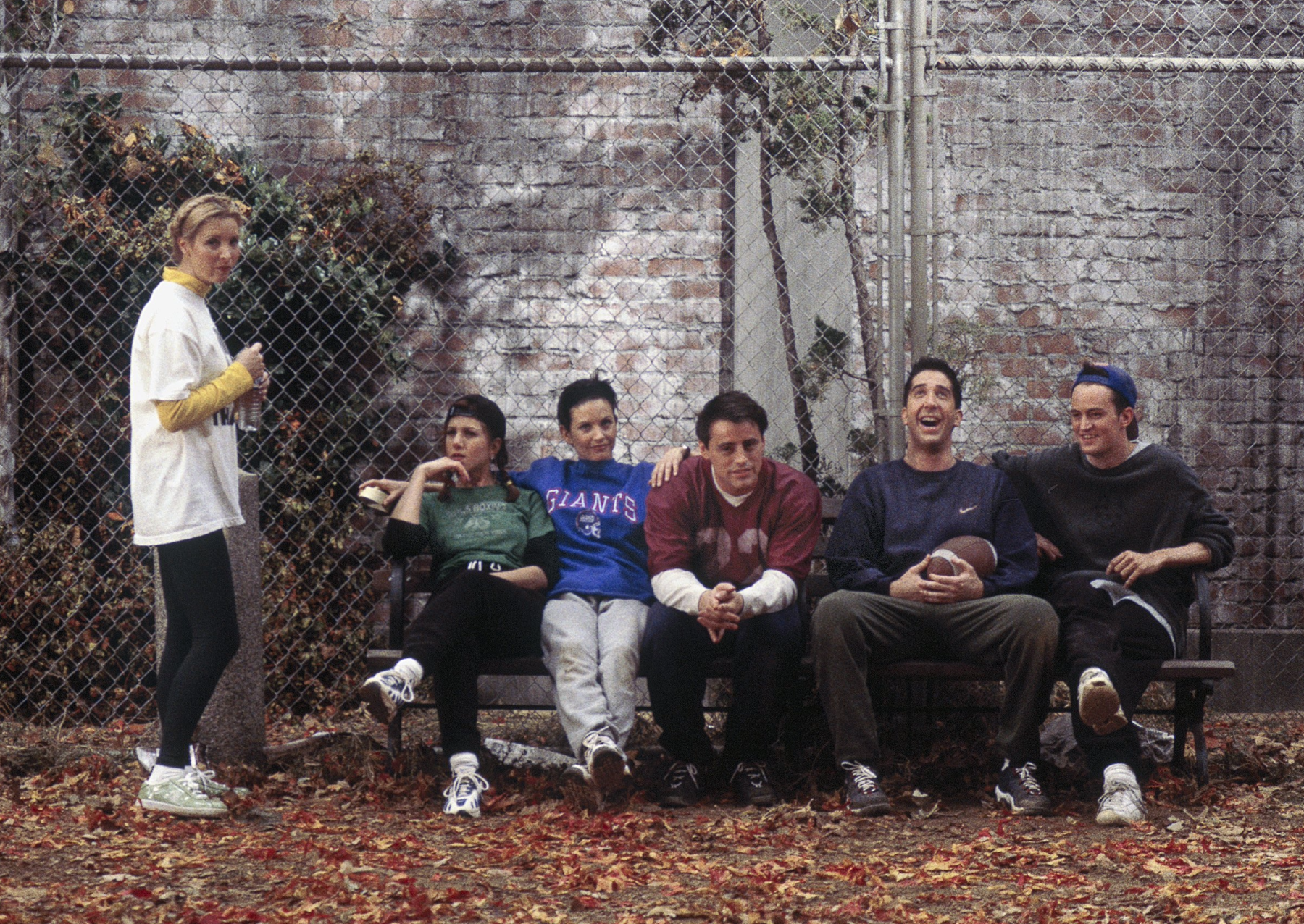
“The One with the Football” (Season 3, Episode 9) is one of 10 Thanksgiving episodes of Friends. Pictured (left to right) Lisa Kudrow as Phoebe Buffay, Jennifer Aniston as Rachel Green, Courteney Cox Arquette as Monica Geller, Matt LeBlanc as Joey Tribbiani, David Schwimmer as Ross Geller, and Matthew Perry as Chandler Bing. The show ran from 1994 to 2004. Image: Gary Null/NBCU Photo Bank.
But that wasn’t all. Every session, the team would also play a roughly four-minute music video to the song “Love You Zindagi,” from the 2016 Bollywood film Dear Zindagi. Similar to the Thanksgiving episodes, this video was thoughtfully selected for its depiction of friends and family. It also helps remind Majumdar of home.
“I have left my friends and family back in India,” Majumdar said. “So depending upon what my emotions are on that day, I used to really connect to it differently each day.”
Majumdar and her colleagues quickly settled into a routine for their MRI odyssey. She would come to the university’s neuroimaging center on Tuesdays and Thursdays, typically around 7:30 in the evening. She had the choice of that later time slot or first thing in the morning, but chose the former because she says she isn’t really a morning person. That choice came with some trade-offs, though.
Early on, she discovered that eating a meal immediately before entering the machine made her feel dizzy. After one fraught experience, she made a point of giving herself a gap of 90 minutes to two hours after eating before going into the scanner. Coming in later at night, especially after a long day of PhD work, also meant she sometimes had to fight the urge to fall asleep. Even though she was stuck in the machine for 90 minutes at a time, the tests required that she keep her eyes open for the vast majority of it. That struggle is partly what makes subsequent findings all the more interesting.
“Sometimes I was a little bit sleepy, but that’s part of it,” Majumdar said. “And that’s the thing that we wanted to bring out through this research: that you are in a very natural setting. You’re not in a kind of a forced experiment where you are either sleep-deprived or put under some conditions that might evoke a different brain response. We really wanted to look at the real-world condition where I’m just living my life, and in parallel I’m getting scanned and seeing how the brain chemistry responds to it.”
In addition to sitting in the MRI machine, Majumdar logged everything she ate and wore a sleep-tracking ring. With all of that data, the team was able to match each night’s sleep metrics with the next day’s scan and compare patterns over time. Though there’s still data being combed through, they’ve already found an important connection: across the 104 sessions collected over 76 weeks, nights with less deep sleep and more light sleep tended to be followed by higher glutamate levels the next day. Glutamate is an amino acid that acts as a kind of chemical messenger in the brain. In a previous university blog post, Majumdar compared this finding to the brain flushing out byproducts that build up during active, wakeful moments, allowing for a more restful night’s sleep.
“You wake up with a fresh mind,” she said. “But if that process is blocked, it’s going to hamper you the next day.”
Joshita Majumdar (right) a graduate student in the Department of Electrical and Computer Engineering, and Gopikrishna Deshpande (left), the Godbold Professor in the Department of Electrical and Computer Engineering, used equipment at the Auburn University Neuroimaging Center, including the 7-Tesla MRI scanner, to study glutamate levels in the brain. Image: Auburn University.
But is she sick of sipping coffee at Central Perk?
Majumdar’s work in this area has only just begun. Moving forward, she and her colleagues hope to bring on more study participants to make the dataset even richer, though they’ll likely make adjustments so that each participant doesn’t have to go in for scans quite as often as she did.
Eventually, she says she also hopes to use AI and other tools to try and extract the feelings and emotions experienced during those MRI sessions (and during certain Friends’ moments) to get a better sense of what’s happening in the brain when certain feelings are evoked.
Miraculously, even after watching the show in a cramped, rumbling tube for 18 months, Majumdar says she still isn’t sick of Friends. When asked if she can still watch the silly sitcom without getting bored, Majumdar responds with an emphatic,
What’s the weirdest thing you learned this week? Well, whatever it is, we promise you’ll have an even weirder answer if you listen to PopSci’s hit podcast. The Weirdest Thing I Learned This Week hits Spotify, YouTube, Apple, and everywhere else you listen to podcasts every-other Wednesday morning. It’s your new favorite source for the strangest science-adjacent facts, figures, and Wikipedia spirals the editors of Popular Science can muster. If you like the stories in this post, we guarantee you’ll love the show.
FACT: Hector the tickle robot is real, and they’re spectacular
Have you ever wondered why humans are so ticklish? While many animals experience a type of tickle known as knismesis—a sort of moving itch caused by motion against your skin—the laugh-out-loud sensation called gargalesis is way less common. It’s a phenomenon that’s pretty unique to primates (though it’s possible that rats are a bit ticklish as well). And while there are plenty of theories, no one has a great explanation for why this ticklishness evolved—or at least not one that would be easy to confirm.
But while the origins and purposes of gargalesis remain mysterious, that hasn’t stopped scientists from studying how tickling works. In one recent study scientists surveyed adults from several distinct cultures to see how they felt about tickling. The results were surprisingly universal. Participants from The Netherlands, Greece and China gave comparable answers about their history of tickling and being tickled and reported being ticklish in the same locations. That hints at a deep evolutionary origin for this sensation (and our feelings about it).
This most recent study relied on survey data, but other research projects have tried to take a more quantitative look at tickles. That’s where Hector the tickle robot comes in. He’s designed to deliver a perfectly-calibrated foot tickle on command, allowing scientists to track exactly what physiological changes occur post-tickle and exactly when they kick in. He’s also helping scientists understand why we can’t tickle ourselves—and how that can help us survive unwanted tickling from others. Listen to this week’s episode to learn more!
FACT: How prickly ash and chili pepper combine to create a fascinating taste explosion
This week’s episode features special guest Priya Mani. She’s a food historian, award-winning writer, and a designer who leads research-driven projects on ingredients and flavor. She joined us this week to share some facts from her upcoming book, “Spiced: Recipes Celebrating Spices from Around the World.” You can preorder it now!
When you eat food that’s spicy—think a hot chili pepper—the compound called capsaicin binds to the same receptors in your skin that are stimulated by actual heat. WHen these TRPV1 receptors get activated, they signal to your brain that something dangerously hot is touching you.
You might associate szechuan peppercorns and other kinds of prickly ash berries with spicy food, but these fruits don’t actually contain any of the aforementioned capsaicin—so they don’t trick your brain into sensing heat. Sanshool can trick your brain in an entirely different way by acting on potassium channels, which are tiny pores that let potassium flow out of your nerve cells. By giving positively-charged potassium ions an easy exit, nerve cells are able to maintain a slightly-negative charge that keeps them from randomly firing.
Sanshool manages to block one of those potassium channels, which means positive charge starts to build and the nerve cell gets closer and closer to firing. The result is a hyperactive neuron that starts stuttering out little bursts of irregular signals. Your brain does the best it can to interpret that information, and the result is a sense that something is literally buzzing inside your mouth.
That’s why dishes that combine prickly ash berries with chili peppers are infamous for creating a culinary sensation like no other: your brain is basically telling you that there’s a hot bee bouncing around your mouth. And gosh, that fiery insect is delicious.
While interviewing marine biologist, Jaida Elcock (@sofishtication_) an MIT and Woods Hole Oceanographic Institution (WHOI) PhD candidate and ace whale shark-tagger, she told me that whale sharks have teeth on their eyeballs. This sounded insanely painful to me, so I had to know more.
Whale sharks (Rhincodon typus) are the biggest fish in the world. While their maximum size is still a mystery, they can grow as large as 60 feet and weigh about 11 tons. In addition to that girth, they really do have tiny teeth covering their eyeballs called dermal denticles. Dermal denticles themselves are found on several shark species and they cover their bodies like scales. They are small, V-shaped pieces and decrease drag and turbulence as they swim. While dermal denticles do help sharks swim faster, they also provide some defence against any other sharks that might try to take a bite of them
The dermal denticles on whale shark’s eyeballs, also called eye-teeth, likely help shield their eyes from the elements. A team in Japan first detailed this in a study published in 2020 in the journal PLOS One. They studied the eyes of both living and dead whale sharks and saw that a single whale shark eyeball could have over 3,000 dermal denticles around the eyes. They are also clustered around the iris.
Most sharks have poor eyesight, so much protection around their eyeballs means that their eyesight is likely pretty important for whale sharks. Evolution is cool.
Earlier this year, we were fortunate enough to visit Shirakawa Audio Works, where Denon and Marantz assemble components tuned to be masterfully musical. We also spent time at the brands’ shared Tokyo headquarters, where we previewed various audio gear, much of which has already been revealed. However, one item in particular caught our attention, and it was still under wraps … until now. The Marantz MCR 60n network audio player (shown above) stood out by being able to fit in.
In a room full of full-size receivers, this streaming amplifier’s 11W x 11.9D x 4.4H footprint drew our attention because it’s tailor-made for those of us with a listening station that doubles as a living space. Even more impressive is how much connectivity it offers in place of a crowded stack of components.
For starters, there’s a front-loading CD player. Because physical media is making a comeback, or so I’m told. With that in mind, there’s also an integrated MM phono stage for vinyl fans. Got another source? There’s one analog and one digital optical in. You can play MP3 / WMA / AAC / DSD / WAV / FLAC / AIFF / ALAC off a rear-facing USB-A. There’s also an HDMI eARC port with Dolby Digital / Dolby Digital Plus decoding if a TV is in the mix.
For those streaming, there’s even more potential. Once on your WiFi (or Ethernet), the 60n acts as an endpoint for the native Denon/Marantz HEOS multiroom streaming system, naturally, supporting PCM up to 384kHz/32-bit, DSD up to 11.2MHz. And it supports Spotify Connect/TIDAL Connect/Qobuz Connect, as well as Deezer, Amazon Prime Music, and Pandora. For anything else with an iPhone, there’s AirPlay 2. Plus, it’s Roon Ready for those digital audio file obsessives. An FM/AM tuner … the original streaming … is also included. There’s even Bluetooth receiver/transmit modes, if you’re buying a First Growth to drink out of a Styrofoam cup.
So that’s the inputs. As for the output, the MCR 60n produces 2 x 65W / 4 x 33W @ 4 ohms (up to 16 ohms supported), and can be run as Speaker A/B stereo pairs (independent volumes), bi-amped, or parallel BTL. This supports various loudspeaker setups, including dual listening zones. There’s also a subwoofer pre-out with adjustable crossover settings for precise low-frequency integration. It includes bass, treble, and balance tone controls, and it’s upgradable to Dirac Live Room Correction with a separately purchased license. It’s all backed by a refined power supply and topped by the same wavy metal mesh as the Marantz Model M1: design language that also acts as ventilation.
The Marantz MCR 60n and some compact cabinets offer an alternative to desktop powered speakers with even more flexibility. Perfect for modern urban living, this is low-profile hi-fi.
In The Lion King, the hyenas Shenzi, Banzai, and Ed were at the evil lion Scar’s every beck and call. And while the Disney team probably didn’t spend an extensive amount of time observing lions and hyenas interacting in the wild while making the beloved movie, a zoologist and her colleagues just did—and they found something unexpected.
The long-standing assumption about the relationship between the carnivores involves hyenas following lions for their food scraps. However, male African lions (Panthera leo) are the ones going after spotted hyenas (Crocuta crocuta), who move away from the big cats. These new findings are detailed in a study published today in the journal Frontiers in Ethology.
Nancy Barker, an ecologist at the University of KwaZulu-Natal in South Africa and lead author of the study, observed lions actively tracking hyenas while she was studying brown hyenas (Parahyaena brunnea).
“When I shared my observations with other leading researchers, I was often told that I had the relationship backwards: that hyenas are the ones tracking lions, primarily for scavenging opportunities, and that what I had seen was simply a series of chance encounters,” Barker said in a statement “I felt there was more to the story.”
A young spotted hyena at Etosha National Park scopes Barker out. At the time, Barker was setting up a bait station to immobilize and collar the matriarch of the hyena clan. Image: Dr. Nancy Barker.
Barker then put GPS-collars on socially high-ranking African lions and spotted hyenas at Namibia’s Etosha National Park, as well as lions in Linyanti Conservancy in northern Botswana and northeastern Namibia, and Chobe National Park in Botswana.. The study included data from 17 lions and 14 hyenas collected across four years.
The collars mapped the animals’ movement by capturing a location snapshot every five minutes during their peak activity hours, and Barker also maintained camera traps and conducted behavioral observations for context. Barker identified 23 pairs of simultaneously tracked animals from the GPS collar data, including 10 lion-hyena pairs. Her team classified the direction of every paired animal’s movements, consequently revealing and studying thousands of interactions.
“Our GPS collar data shows that African lions and spotted hyenas leave a clear, measurable signature in the way they move around one another,” said Barker. “Spotted hyenas consistently move away from lions, while male lions tend to move toward hyenas.”
Dr. Nancy Barker with an immobilized adult male lion from a pride in the Chobe-Linyanti floodplains. Barker took morphological measurements, identification photographs, and blood, tissue and faecal samples before fitting each collar. Image: Dr. Nancy Barker.
Female lions, on the other hand, weren’t as consistent. Barker’s observations revealed that lionesses’ reactions to hyenas were based on which other pride (a group of lions) members were around, though more data is necessary to bolster this determination.
Because the study includes a limited amount of data, Barker says that some of the findings should be viewed more as trends instead of firm scientific conclusions.
“I would love to extend this approach to other members of the carnivore guild, to understand how the entire community negotiates space and risk,” she said. “Ultimately, I want to connect these movement patterns to what matters most for the animals: their survival and reproduction.”
As the National Park Service (NPS) continues highlighting the many roles of its parks during World War II, the western most landmass in the contiguous United States is getting its due: Olympic National Park.
First designated a monument by President Teddy Roosevelt in 1909 before President Franklin D. Roosevelt’s reclassification as a park in 1938, the 922,650 acre protected region in Washington State is also recognized by UNESCO as an International Biosphere Reserve. Olympic National Park includes temperate forests, stretches of Pacific coastline, as well as subalpine forests and meadows. Thanks to its location on an isolated peninsula, it’s also home to many endemic plant and animal species including the Olympic marmot (Marmota olympus) and Piper’s bellflower (Campanula piperi).
The national park received a lot of attention during WWII for very different reasons, however. Its history is laid out in a recent social media post by Pearl Harbor National Memorial due to an ongoing search-and-rescue operation in the park. Because the peninsula extends further west than any other landmass in the contiguous United States, military and government officials considered it one of the most strategic—and vulnerable—places in the nation. The nearby Strait of Juan de Fuca funneled all traffic to-and-from vital ports in Seattle and Tacoma, as well as the naval base in Bremerton.
Two of the outposts are still accessible by trail today. Credit: NPS
U.S. Army and Coast Guard engineers began installing 13 Aircraft Warning Service (AWS) stations throughout Olympic National Park in 1942, many from converted fire lookouts. Park rangers even staffed some of the stations, and continuously monitored the skies for potential aerial bombardments. The installations remained operational throughout the entire year, regardless of the region’s notorious winter storms.
The many logistical and environmental challenges were even documented by Olympic National Park’s superintendent. At one point, it took two days for a six-person resupply crew to toboggan the three miles to Hurricane Lookout. Another team of eight workers backpacked six miles to one of the park’s most remote posts while carrying 400 pounds of supplies.
The AWS ended in 1944, but two of the original outposts still exist and are accessible to park visitors. Dodger Point and Pyramid Peak can be reached after hiking a steep trail north of Lake Crescent.
Every week leading up to the 85th anniversary of the attack on Pearl Harbor on December 7, the National Park Service will take you across the country to explore America’s experience in World War II through the lens of national parks. The first week in the series also highlighted the roles of Golden Gate Recreation Area and Governors Island National Monument in protecting the coasts.
Cannibalism is understandably frowned upon today,but humans haven’t always been so adverse to the idea of eating our own. Across Europe, multiple archaeological sites indicate at least some Neolithic communities routinely consumed unlucky victims as far back as 5000 BCE. But inside three caves in present-day Spain, ancient skeletal remains vividly illustrate that prehistoric groups never adopted a “one-size-fits-all” approach to their cannibalism. As researchers explained in a study recently published in the Journal of Archaeological Science, a range of methods and motivations for cannibalism existed among Neolithic peoples prior to the Bronze Age.
“For decades, prehistoric cannibalism has tended to be interpreted as a single type of behavior,” Antonio Rodríguez-Hidalgo, a study co-author and archaeologist at the Institute of Archaeology of Mérida, explained in a statement. “Our work shows that it is not possible to speak of a single form of ‘Neolithic cannibalism’, because similar archaeological evidence may conceal very different social realities.”
At least two Neolithic human skulls were fashioned into cups at Carigüela cave in Granada. Credit: Antonio Rodríguez- Hidalgo / IAM-CSIC Antonio Rodríguez-Hidalgo
The latest evidence originated inside Malalmuerzo, Carigüela, and Majolicas,a trio of caves located in the Grenada region of southern Spain. Archaeologists first discovered the Neolithic gathering spots over 50 years ago, and the caverns have since become famous examples of prehistoric cannibalism. Rodríguez-Hidalgo’s team re-examined almost 1,000 bones excavated from the caves, then combined their observations with statistical analysis and machine learning programs to classify the various types of damage exhibited on every fragment. These markings included fractures, cuts, blunt impacts, and even teeth marks. They also determined each subject’s estimated age based on skeletal and dental development.
Although many bones show similar butchering techniques and boiling preparations, each cave’s specimens highlighted different practices and contexts. At Malalmuerzo, it appears that a single, brutal act of collective violence involving victims across many age groups took place about 5000 BCE. However, the remains at Carigüela span multiple Neolithic time periods, and even include a pair of skulls fashioned into drinking cups. The most recent cannibalism occurred in Majolicas around 3800 BCE, but doesn’t appear directly tied to violence. Instead, some of the bones are stained red—likely using a rare mineral called cinnabar—which points to ritualistic or funerary motives.
Cut marks are visible on the zygomatic bone of an adult skull from Majolicas cave. Credit: Antonio Rodríguez-Hidalgo / IAM-CSIC
Combined with other archaeological findings, it now appears that cannibalism during the European Neolithic historically occurred in three eras:the late sixth millennium BCE, the middle fifth millennium BCE, and the end of the third millennium BCE. Although traceable to these periods, it still remains unclear why the communities engaged in the practices and rituals.
“We cannot say that all these episodes had a common cause, but we can say that throughout the Neolithic… there was a context of conflict and/or manipulation of human remains,” added archaeologist and study co-author Palmira Saladié.
The 2026 IFA consumer electronics expo has wrapped up at the Messe Berlin grounds. Every year, humanoid robots and autonomous helpers share space with smart home appliances, computing technology, personal AI, and increasingly intelligent audio and video products. Sadly, we couldn’t be there in person (unlike last year). I mean, who doesn’t like decoding a cipher in real time to point you in the right direction so that you go against the flow of thousands of people to make it to your next appointment only 10 minutes late. Which is five minutes early in trade show time. So, yeah, we’ll miss the adrenaline rush. But that doesn’t mean we’ve missed the steady stream of future tech being announced, and we’ve captured a snapshot below of the best gear for smart living now and in the future.
Home cinema & big screen accessories
The XGIMI Aura 3 Max is the first UST (ultra-short throw) “laser TV,” aka lifestyle projector, to offer 4K at 120Hz. And this triple-laser dual IRIS setup does it with 5,700 ISO lumens, 8,000:1 native contrast, 110% BT.2020, 0.163:1 throw (120″ from 8″), 80W Harman Kardon sound, Dolby Vision + IMAX Enhanced format support, and 3 x HDMI 2.1 inputs. That’s good enough for movie night and console gaming, and it’s starting Kickstarter crowdfunding in October. If your installation options are tighter and budget bigger, the new AWOL LuxVision UST and its RGB triple laser + Dynamic IRIS setup also offers native 4K/120Hz, 6,000 ISO lumens, 10,000:1 native contrast, enhanced black levels and all the formats, plus, for its signature trick, optical lens shift. But all that costs $5,999, compared to the expected $2,399-$4,999 range of the Aura 3 Max (depending on early bird investment vs. retail, etc.).
Showcased adjacent to IFA, the Sonos Beam Ultra, which was announced alongside the Ace Ultra headphones and Sonos OS 27, packs 7.1.2 Dolby Atmos (and the ability to use a proprietary mesh network to assign Sonos portable speakers as rear channels) into the brand’s most compact soundbar. That opens up the wireless surround system world for folks with less open space.
AURA 3 MaxUST laser TV brings together advanced picture performance, immersive sound, and flexible entertainment capabilities. Image: XGIMI
Personal audio
We love earbuds, and we love sleep, so we’ll be interested to try the low-profile, side-sleeper-friendly Anker soundcore Sleep Earbuds 4 Pro, which can come with active noise cancellation, including adaptive snore masking, but also feature built-in PPG optical sensors for heart rate + HRV tracking while you sleep, which means insights when you wake. Plus, an app includes a soundscapes library.
Speaking of ANC, our pals at Bose know enough about noise reduction to crush it in other brands, and EarFun is now one of those partners. Bose did some acoustic engineering on EarFun’s upcoming Air Pro 5, which looks packed with features and value, including ANC, three-device multipoint Bluetooth 6.0 with LDAC, LE Audio, LC3, and Auracast, and more. And EarFun’s Wave Pro X, a dual-coaxial driver headphone teased at IFA 2025, is now available for sale at the shockingly affordable price of $129 for a set featuring Bluetooth 6.0 with aptX Adaptive, aptX Lossless, LDAC, and Hi-Res Audio certification, wired USB Audio/AUX modes, 8-mic hybrid ANC, and 90 hours of battery life.
Speaking of headphones, Edifier is getting in on a similar value-driven wireless flagship game with the WH950NB Pro. They have a dual-driver (40mm woofer + 10mm tweeter) design, 8-mic adaptive ANC, 6-mic AI call system, spatial audio with head tracking, Bluetooth 6.1 with SBC, AAC, and LDAC, audio via USB-C, and more.
Speaking of affordable audio firsts, the JLab JBuds Mini ANC is the smallest TWS earbuds ever produced with ANC, spatial audio, and native Apple Find My compatibility, and the first non-Apple and non-Beats earbuds to offer the feature under $100.
Speaking of speaking of, the $149.99 beyerdynamic AVENTHO Y headphones speak to a longevity trend set by the much more expensive Sennheiser MOMENTUM 5 series and feature a replaceable 90-hour battery (60 w/ ANC), interchangeable ear cushions, and optional accessories. Plus multipoint Bluetooth 6.0 and some snazzy colors.
The beyerdynamic AVENTHO Y was designed as a single headphone for multiple use cases, moving between music, gaming, work, travel, and everyday life. Image: beyerdynamic
AI hardware and smart glasses
Want to use earbuds for more than listening? The Plaud One (up for preorder) exists at the intersection of personal audio and wearable AI, as it can capture conversations (saved to the case’s eSIM) for transcription, lets you interact with an AI agent for planning and workflow execution, and more. You can set up connected apps, cloud services, and routines. And you can just listen to music with Bluetooth 5.4 (SBC/LDAC) and ANC. It is worth noting, however, that there is a subscription involved. Similarly, the viaim Rise has a case with three microphones that can work as a standalone meeting recorder, plus its IP55 earbuds have an 11mm + 6mm dual-driver array, with Bluetooth 6.1 support for LDAC/LHDC, spatial audio, ANC, and 3 mics + bone conduction for voice capture. There’s transcription software, as well as the ability to hand off work to AI agent(s) of choice. It’s live on Indiegogo with a super early-bird price of $259 against a $399 MSRP, and every backer gets a year of a viaim Pro subscription for free.
As for smart glasses, and there are always smart glasses, the RayNeo iO AI glasses have been talked up for their camera-free design, as well as being only 33g but equipped with a 33″ invisible display that sits within your view. And you can do recording and AI notes, get live captions/a teleprompter in 55 languages, plus more, plus have all-day access to an AI assistant linked with the models of your choosing.
Assisted mobility
We’ve previously tested the Hypershell X Ultra exoskeleton, with positive impressions, so the $2,299 carbon fiber-and-titanium Hypershell Halo immediately caught our attention. It expands the concept, and frame, to a full-leg, four-joint form factor. This wearable, with its peak 1,490 W output, takes the fatigue-reduction concept that was pitched to folks who might have lost a beat when it comes to their outdoor activities and offers support for the entire lower-limb kinetic chain. So it’s got active support and impact damping to support stamina for extended multi-terrain challenges, but it can also benefit those who might simply need sit-to-stand support.
Hypershell HALO exoskeleton has active support and impact damping to support stamina for multi-terrain challenges. Image: Hypershell.
Home robots for floor and lawn care
The future promised us jetpacks, but having to sweep and mop less is kinda better. And there’s never a shortage of robovacs at IFA. The ECOVACS Deebot X12S OmniCyclone, for instance, introduces 53 air watts of deep suction, which is 60 percent more than the last generation. And the OZMO Roller 3.0 + improved FocusJet technology reduces residual water substantially. This all means a better clean, powered by an upgraded AI voice assistant. Most notable, however, might be the physical, mechanical Privacy Shield that can slide over the camera when docked. Because Hackers.
The Roborock Saros 20 Flowalso launched, bringing physical adaptability, with an ultra-low 3.14-inch chassis and the ability to deal with 300+ obstacles and cross multi-level thresholds. Up to 3.46 inches under specified conditions. And it’s got an aggressive 212-degree hot-water mop. The eufy Robot Vacuum Omni E35, meanwhile, stressed a hygienic filtration system with the kind of dust handling that makes it a top pick for allergy- and asthma-prone homes. And iRobot showed a Roomba Duo concept: a robot stacked atop a robot, with the smaller one deploying when there are spaces the larger one can’t reach.
If it’s your lawn that needs tidying up, the Mammotion LUBA 4 AWD all-terrain mower features a quad-camera + 360-degree LiDAR + NetRTK positioning system to guide the bidirectional driving system with independent front-wheel steering, no wire barriers needed. No damaging U-turns either, with complete coverage helped by edge-trimming modules. And the all-wheel-drive system with dual 165W high-torque motors can handle up to 80 percent (38.6-degree) slopes.
MAMMOTION’s LUBA 4 AWD all-terrain mower is racing to cut your grass. Image: MAMMOTION.
Smart home and lighting
There are days when you want to bring an outdoors vibe indoors. Instead of cutting a costly hole in the roof, just install the 21-inch 125W WiFi-enabled Govee Sky Ceiling Light, engineered with 7000 lumens and a 478nm sky-blue wavelength matching human melanopsin sensitivity and able to automatically adjust lighting guided by local time and weather to support natural circadian rhythms. Or it can just replicate a lightscape preset. Fall sunsets in summer, breakfast for dinner. The only rule is there are no rules.
For something more accent lighting, the Nanoleaf Smart LED Monitor Stand features a natural wood platform with 550 lumens of individually addressable light zones underneath. This lets you display multiple colors at once with ultra-smooth gradients, or use it as a forward-facing anti-glare task light (UGR<10) with dedicated CRI97 white LEDs. Set an ergonomic height and heighten the mood simultaneously.
The Govee Sky Ceiling Light uses wavelength and adjustable timing to support natural circadian rhythms. Image: Govee
Cameras
The HOVERAir Versa is the vlogging camera taken to its logical conclusion. On land, it’s a 3-axis gimbal camera with 4K 60fps, 10-bit HDR, and 17.5 stops of dynamic range. Snap it into its wings with the patent-pending MagLatch system, and it becomes an AI-guided, self-tracking, self-framing drone. One charge gets up to 14 minutes of flight or 3 hours of handheld shooting.
Most people might file this under health or grooming, but we’re putting the Dyson CameraJet electric toothbrush with variable sonic oscillation here because the camera guiding its integrated conical jet water flosser is the main feature. A 100k-pixel macro lens camera analyzes 28 images per second for “Gap Optical Targeting.” You can also watch live cleaning footage on your phone as you brush, or use the intraoral camera to inspect teeth. If you’re a sadist.
The Dyson CameraJet is the first toothbrush with a camera, using AI-powered vision to identify and target gaps between teeth while combining brushing, targeted liquid flossing, and mouthwash dispensing. Image: Dyson.
Computing concepts
Finally, there’s the purely conceptual. Over at Lenovo, there’s Project AeroBlade. This Active Flow thermal solution replaces traditional fan-based cooling with a solid-state AirJet active cooling architecture of ultrasonic membranes moving air, which Lenovo envisions as a way to make laptops thinner without sacrificing sustained performance. This was shown off in a 14-inch concept that measures under 10 mm thick and weighs under 830g. Meanwhile, Project Swan is an expandable screen concept that transforms a 14″ laptop into a 17” 16:9 display when the flexible screen is unrolled, while remaining 17.9mm thin and 1.6kg. Perfect for more efficient work within the cramped confines of travel.
And Acer showcased Project DualPlay Mini, a prototype 2-in-1 with an 8-inch screen that wants to be a Predator gaming handheld … until you flip it open, spin its screen around, and access the built-in keyboard for laptop-style productivity in Windows 11 mode.
If it feels like you are wishing people a happy birthday more often than usual once September begins, it is not in your head. September is the most common birth month of the whole year, and one day stands above them all—September 9.
In 2016, statistics organization FiveThirtyEight and data journalist Matt Styles analyzed data on the average number of births per year from 1994 to 2014. In that 10-year-period, September tops the with nine out of the 10 most common birthdays falling on September. Based on this analysis, the ninth day of the ninth month is the most popular birthday.
The reasons behind this surge of September babies are likely couples spending more time indoors during the colder months of the year and holiday season. Some people tend to work less as the holidays approach, so there is more time to party-hop, drink a few more cocktails than usual, and the rest is clear. Pregnancies are supposed to last 38 weeks from conception, so babies born on September 9 would have likely been conceived on December 17.
For a September 19 birthday, conception date should technically be December 27. All of those September 22 to 26 babies are generally conceived around New Years Eve and New Years Day. December is also a romantic season in general. According to data collected from the wedding planning website The Knot, December is the most popular month to get engaged globally.
Some other hypotheses behind this surge in cold weather conceptions are that the shorter days may affect hormones and that sperm may be less potent in the warmer summer months.
As far as rare birthdays go, Leap Day (February 29) is the clear winner, but the rest of the rare birthdays are those on major holidays. This is likely because scheduled inductions and C-sections are avoided on days like Christmas (December 25) and Fourth of July.
To see how common your birthday is, plug it into birthdayrank.com.

 Login