❌

Reading view

The best cameras under $1,000, according to experts

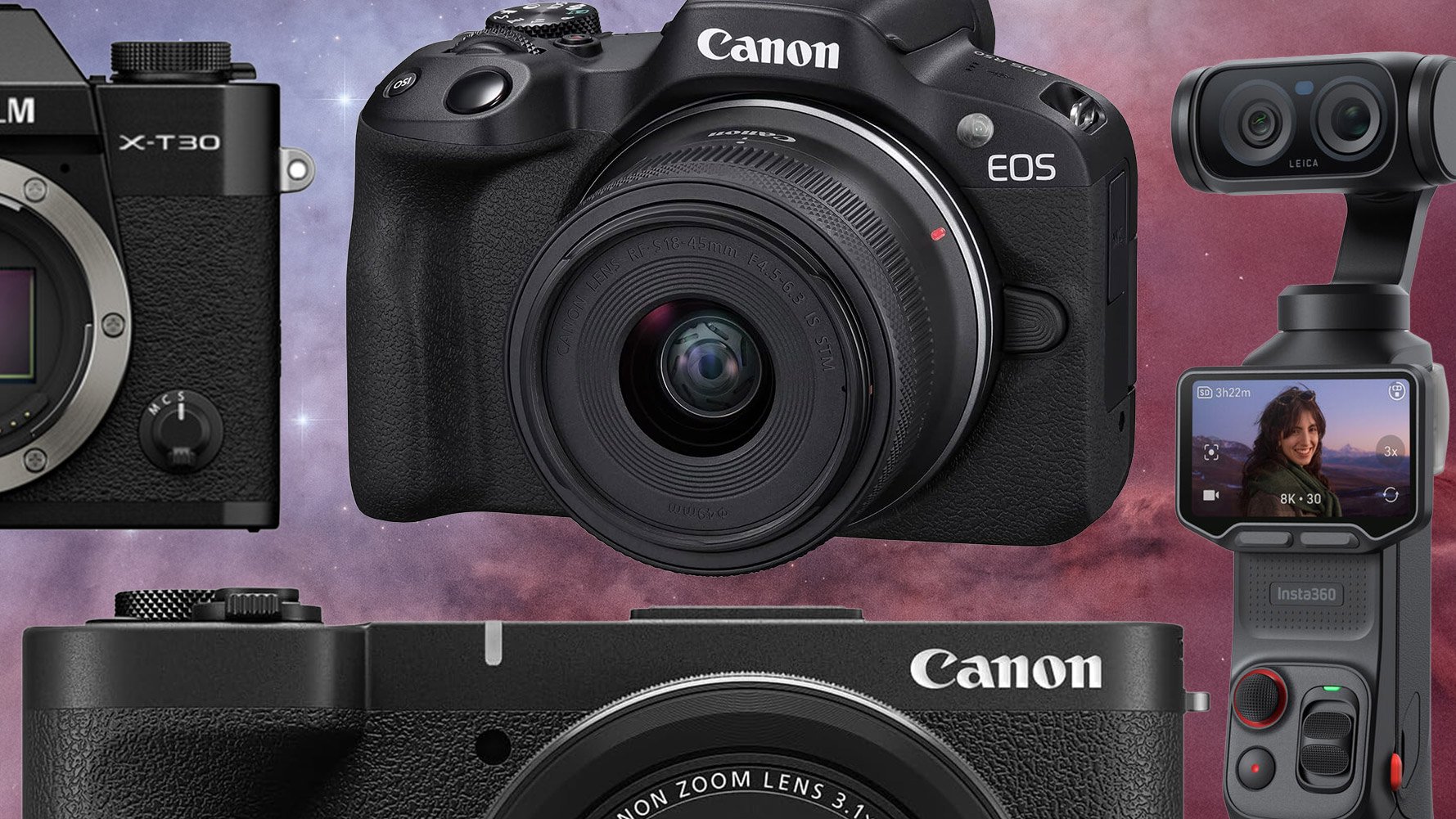
The best camera under $1,000 for most people is the Canon EOS R50 ($849.99 with an 18-45mm lens at Canon as of October 2026), because it pairs a 24.2-megapixel sensor and uncropped 4K video with Canon’s current lens mount and an assisted auto mode built for backlit and night scenes. If you’re mostly filming yourself, the Insta360 Luna Ultra ($769.99) puts a 1-inch sensor, a 3x telephoto, and a mechanical gimbal in your pocket. Plenty has changed since our last update: price increases, many tied to US tariffs, have pushed favorites like Sony’s a6400 past $1,000 for the body alone, Canon has discontinued the EOS RP in Japan, GoPro’s new flagship is the Mission 1 Pro rather than a Hero 14, and DJI’s newest pocket gimbal hasn’t officially reached the US. Here are your options if you’re looking to get started under a grand.

How we chose the best cameras under $1,000

I have been a professional photographer and camera journalist for nearly two decades. During my time at our sibling publication, Popular Photography, I shot with almost every major camera released in the past decade. For this guide, I looked for cameras with clear strengths that fit specific kinds of shooting, and weighed durability, performance, and less tangible things like access to a deep catalog of lenses and accessories.

For this update, we started from our previous picks and the cameras released since, then checked every finalist against its maker’s spec page and a live US retailer listing on October 20, 2026. That price pass cut more cameras than any spec comparison did: Sony’s a6400 now costs $1,098 for the body at Adorama and the Fujifilm X-E5 is $1,699.95 for the body. We also checked each maker’s product lifecycle and business news, which is why the Canon RP section says “while stock lasts” and the GoPro section mentions the company’s sale process.

The best cameras under $1,000: Recommendations

The picks below run from about $620 to $1,000. Five are interchangeable-lens cameras; the other three have built-in lenses, for people who want one device that does everything. Camera prices have moved a lot this year in both directions, so check before you buy. While we always make specific picks for specific needs, there’s plenty of overlap, so read the whole list before you set your heart on one.

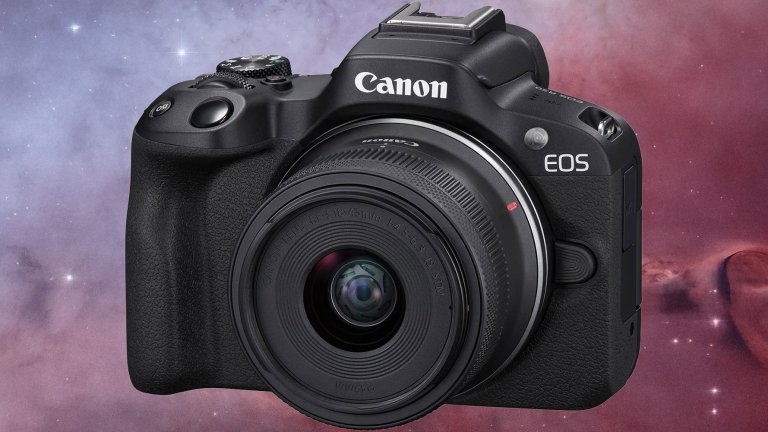
Best overall: Canon EOS R50
See It

Pros

  • 24.2MP APS-C sensor and uncropped 4K/30, oversampled from 6K (Canon’s spec)
  • Up to 15 fps with the electronic shutter, 12 fps with electronic first curtain
  • Vari-angle touchscreen plus a 2.36-million-dot OLED viewfinder
  • Advanced A+ Assist mode helps with backlit and night scenes

Cons

  • No in-body stabilization, per Canon’s spec page
  • Small grip gets cramped with larger lenses
  • $849.99 is a sale price; it was $799 in early October, per CPriceWatch

Specs

  • Lens mount: Canon RF (RF-S lenses for APS-C)
  • Sensor size: APS-C
  • Megapixels: 24.2
  • Maximum video resolution: 4K at 30 fps, uncropped (Canon’s spec)
  • Price: $849.99 with RF-S 18-45mm at Canon as of October 20, 2026

Canon’s EOS R50 is still the camera we’d hand to someone trading up from a phone. The kit with the RF-S 18-45mm IS STM lens costs $849.99 at Canon as of October 20, 2026 (a sale price against a $899.99 regular price), which leaves room in a $1,000 budget for a memory card and a bag. If that’s still too much, Canon’s refurbished store had this same kit for $529 with a one-year Canon USA warranty in late September (per CPriceWatch), though restocks sell out fast. Y.M.Cinema Magazine reported in late August that it was still the best-selling mirrorless camera on Amazon, more than three years after launch.

The video spec has aged better than the price tag suggests. Canon rates the R50 for 4K at 30 fps using the full width of its 24.2-megapixel APS-C sensor, oversampled from 6K, so you don’t lose your wide angle when you switch from stills to video. Subject-detection autofocus locks onto people and animals and follows them across the frame without any fiddling, and there’s a mic jack for when the built-in microphone stops cutting it.

For beginners, the Advanced A+ Assist mode is the feature that matters. It works like a full auto mode that reads the scene, so backlit portraits and night shots come out better than they would on plain auto, and you can graduate to aperture priority when you’re ready. Canon’s spec page lists no in-body stabilization, so stick with stabilized lenses for low-light handheld shooting, or budget for Canon’s inexpensive RF 50mm f/1.8 STM, which gathers far more light than the kit zoom. If you mostly shoot video, the R50 V below is the same camera reworked for creators, without the viewfinder.

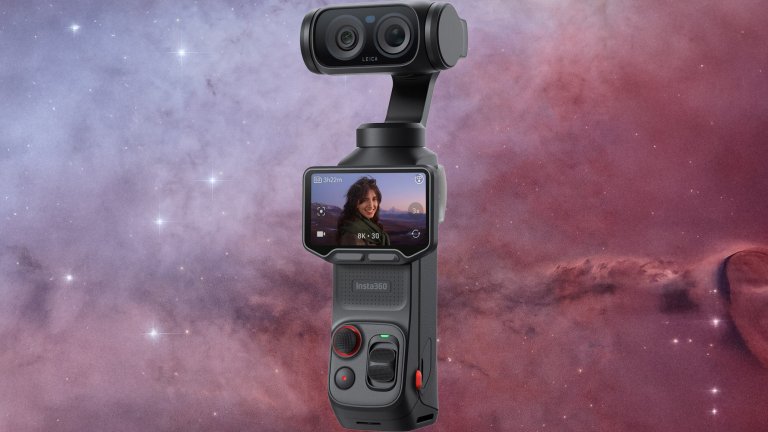
Best for vlogging: Insta360 Luna Ultra
See It

Pros

  • 1-inch main camera plus a 1/1.3-inch 3x telephoto, per Insta360
  • 3-axis mechanical gimbal keeps walk-and-talk footage level
  • Detachable 2-inch OLED screen doubles as a remote up to 20 meters away
  • 47GB of built-in storage plus a microSD slot

Cons

  • About 233 grams, heavier than DJI’s Osmo Pocket 4, per T3
  • T3’s reviewer found controls lag slightly with the screen detached
  • No focus peaking at launch, per T3

Specs

  • Lens mount: Fixed dual lens (Leica Summicron)
  • Sensor size: 1-inch main, 1/1.3-inch telephoto
  • Megapixels: Not published (photos up to 37MP in UltraPhoto mode, per Insta360)
  • Maximum video resolution: 8K at 30 fps (Insta360’s spec)
  • Price: $769.99 at Insta360 as of October 20, 2026

A phone on a gimbal gets you steady video. A pocket gimbal camera gets you steady video from a much bigger sensor, with the screen facing you and the stabilizer built in. The Insta360 Luna Ultra is the one we’d buy in that category, at $769.99 for the standard bundle at Insta360’s store. Its main camera puts a 1-inch sensor behind a Leica Summicron lens, and a second camera with a 1/1.3-inch sensor handles 3x telephoto. Insta360 rates the pair for 6x lossless zoom and 12x total.

That second lens is why we’d pick it over a single-lens pocket camera. You can frame yourself at the wide end, then punch in on a street performer across the plaza without walking over. Insta360 rates it for 8K at 30 fps, 4K at up to 120 fps, Dolby Vision HDR, and 10-bit I-Log, and the gimbal is a mechanical 3-axis unit, so most of the steadying happens physically instead of by cropping the frame. I have been using this for the past few months to shoot everything from personal videos to footage for work and I’ve been impressed with everything from battery life to image quality.

The 2-inch OLED screen pops off and works as a wireless monitor and remote from up to 20 meters, per Insta360, which is handy when the camera is on a tripod and you’re in the shot. It’s not the quickest to zoom or focus, but you’re trading a bit of performance for convenience. The bigger story for US buyers is the competition: DJI’s Osmo Pocket 4 launched in April with its FCC authorization still pending, per DroneXL, and Amateur Photographer reported in June that DJI’s products remained off the US market. The $969.99 Creator Bundle adds a wireless mic transmitter, a battery handle, and a wide-angle lens; start with the standard bundle unless you already know you need the mic.

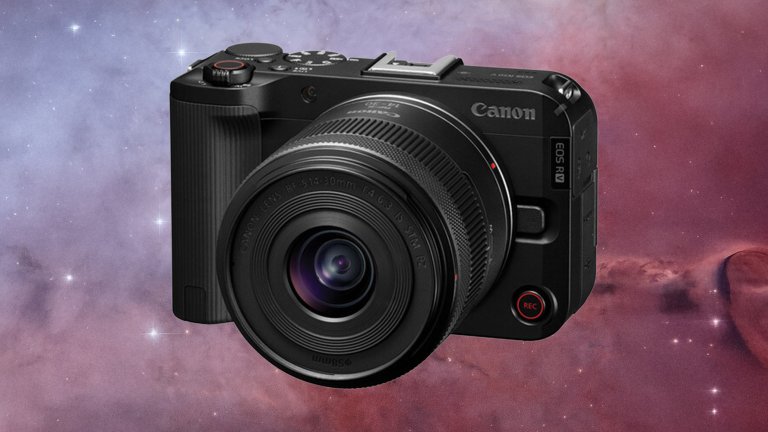
Best for video on a budget: Canon EOS R50 V
See It

Pros

  • Full-width 4K/30 oversampled from 6K, per DPReview
  • Headphone and mic jacks, a front tally lamp, and a side tripod thread for vertical video
  • Optional RF-S 14-30mm power zoom is wide enough to hold at arm’s length
  • 370 grams for the body, per DPReview

Cons

  • No viewfinder and no built-in flash
  • No in-body stabilization
  • 4K/60 uses a 1.56x crop, and electronic stabilization crops further
  • About 70 minutes of 4K/30 per charge, per Canon’s manual (via DPReview)

Specs

  • Lens mount: Canon RF (RF-S lenses for APS-C)
  • Sensor size: APS-C
  • Megapixels: 24.2
  • Maximum video resolution: 4K at 30 fps uncropped; 4K at 60 fps with a 1.56x crop (per DPReview)
  • Price: $619.99 body, $799.99 with RF-S 14-30mm, at Canon as of October 12, 2026 (per CPriceWatch)

The Canon EOS R50 V takes the R50’s 24.2-megapixel sensor and rebuilds the body around video. The viewfinder and flash are gone. In their place you get a headphone jack next to the mic jack, a red tally lamp on the front so you know you’re recording, and a second tripod thread on the side for shooting vertical video without an L-bracket.

It’s the camera for the creator who wants interchangeable lenses on a desk or a tripod rather than a gimbal in a pocket. DPReview lists full-width 4K at 30 fps oversampled from 6K, the same clean 4K as the R50, and 4K at 60 fps with a 1.56x crop. Get the 14-30mm kit if you film yourself: on APS-C, that’s roughly a 22-48mm equivalent by our arithmetic, wide enough to hold at arm’s length.

There’s no in-body stabilization, so walking shots depend on a stabilized lens, a gimbal, or Canon’s electronic stabilization, which crops further. Battery life is the other limit. Plan for about 70 minutes of 4K/30 per charge, so grab a spare battery or USB power for long sessions. If you’d rather have a viewfinder for stills, the regular R50 kit above costs $50 more than the R50 V kit and does both jobs.

Best Fujifilm camera: Fujifilm X-T30 III

See It

Pros

  • 26.1MP X-Trans CMOS 4 sensor and X-Processor 5 (Fujifilm’s spec)
  • Top-plate film simulation dial with three slots for saved recipes
  • Built-in electronic viewfinder
  • 6.2K/30 open gate and full-width 4K/30 video, per DPReview

Cons

  • No in-body stabilization
  • $999.95 is body only; the 13-33mm kit is $1,149.95
  • Body-only stock was thin at the retailers we checked
  • CIPA-rated for 315 shots per charge (425 in Economy mode)

Specs

  • Lens mount: Fujifilm X
  • Sensor size: APS-C
  • Megapixels: 26.1
  • Maximum video resolution: 6.2K at 30 fps open gate; 4K at 60 fps with a 1.18x crop (per DPReview)
  • Price: $999.95 body only at Hot Rod Cameras as of October 20, 2026

The T30 III runs the same X-Processor 5 as the X-E5. It trades the X-E5’s 40-megapixel sensor for a 26.1-megapixel X-Trans CMOS 4 chip, which is plenty for prints and cropping, and it still has a built-in viewfinder, which Fujifilm’s cheaper X-M5 doesn’t.

The new top-plate dial is the reason to want this camera. It switches between 20 film simulations, and three of its positions store custom recipes, so you can build a Classic Chrome look with your own grain and white balance settings and call it back with a thumb. Fujifilm’s straight-out-of-camera color is why many people choose the system in the first place, and the dial moves it from the menus to the top of the camera. Video is better than an enthusiast stills camera needs: DPReview lists 6.2K at 30 fps in open gate and 4K at 30 fps from the full sensor width, with 10-bit 4:2:2 internal recording.

It’s still an entry-level body. There’s no in-body stabilization, so handheld low-light shots depend on a stabilized lens or a steady grip, and the battery offers roughly 315 shots per charge under good conditions. Stock is the other catch. On October 20, Glazer’s Camera showed the body sold out in all three colors and Hot Rod Cameras listed it as a preorder. The kit with the XC 13-33mm lens, at $1,149.95, breaks this guide’s budget, so pair the body with one of Fujifilm’s compact primes instead.

Best retro camera: Nikon Z fc

See It

Pros

  • Dedicated shutter speed, ISO, and exposure compensation dials
  • Uncropped 4K at 30 fps, per Nikon
  • Fully articulating 3-inch touchscreen
  • Body price has dropped below $760

Cons

  • No in-body stabilization
  • Five years old, with an older processor than Nikon’s Z50 II
  • Our price is body only

Specs

  • Lens mount: Nikon Z (DX)
  • Sensor size: APS-C
  • Megapixels: 20.9
  • Maximum video resolution: 4K at 30 fps, uncropped (Nikon’s spec)
  • Price: $756.95 body only at Adorama as of October 20, 2026

The Nikon FM2 is one of the great film SLRs, and the Z fc copies its top plate closely enough to fool people at a distance. Shutter speed, ISO, and exposure compensation each get their own engraved aluminum dial, so you can read every exposure setting with the camera switched off. I love setting exposure with real dials, and so do many of the working photographers I know. The price has come down too: Adorama had the body at $756.95 on October 20, 2026, against a $1,056.95 list price, and Nikon’s own store listed it starting at $759.95.

Inside, it’s a 20.9-megapixel DX sensor. Nikon rates it for 4K at 30 fps with full-pixel readout and no crop, plus bursts up to 11 fps, and the 3-inch touchscreen flips fully around for selfies and flips in to hide, which keeps the retro look intact. The contoured front makes it easier to hold than its flat sides suggest, and the 2.36-million-dot OLED viewfinder is big and bright for a camera this size.

It’s from 2021, and you can tell in places. There’s no in-body stabilization, and the Z50 II that Nikon launched at $909.95 in late 2024 has a newer processor and better subject detection inside a plainer body. The Z fc is the one to buy if you’ll enjoy using it more, and that’s a real consideration. The short Z-mount flange also makes it a good host for adapted vintage lenses, and Nikon’s FTZ II adapter covers decades of F-mount glass.

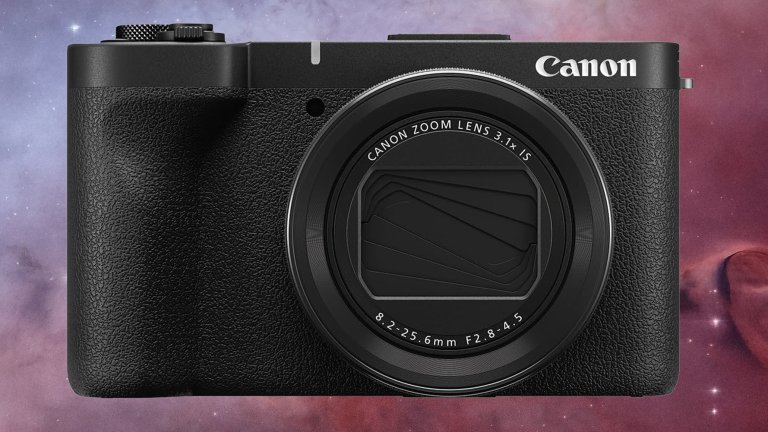
Best point-and-shoot: Canon PowerShot V1
See It

Pros

  • 1.4-inch-type, 22.3MP sensor, near Micro Four Thirds in area (per PetaPixel)
  • 16-50mm-equivalent f/2.8-4.5 zoom is wide enough for arm’s-length video
  • Built-in cooling fan for long 4K recordings
  • $849 at Canon, down from a $1,029 regular price

Cons

  • 4K at 60 fps uses a 1.4x crop
  • No viewfinder, and Galaxus’s reviewer found the screen hard to read in sun
  • Lens slows to f/4.5 at the long end

Specs

  • Lens mount: Fixed 8.2-25.6mm (16-50mm equivalent), f/2.8-4.5
  • Sensor size: 1.4-inch type
  • Megapixels: 22.3
  • Maximum video resolution: 4K at 60 fps (1.4x crop); 4K at 30 fps full width
  • Price: $849 at Canon as of October 20, 2026

Canon couldn’t keep up with orders for the PowerShot V1 after it launched in 2025. It’s easier to find now, and cheaper: Canon’s store had it for $849 on October 20, 2026, down from a $1,029 regular price. It replaces the Sony ZV-1 II we used to recommend here, because the Insta360 above covers that camera’s vlogging job better and the V1 is the stronger camera for everything else.

Its sensor is the reason. Canon calls it a 1.4-inch type, and at 22.3 megapixels it has roughly the area of a Micro Four Thirds sensor, per PetaPixel, which by our arithmetic is about twice the area of the 1-inch sensors in most premium compacts. More area means cleaner low-light shots and easier background blur from a camera that fits in a jacket pocket. The zoom covers 16-50mm equivalent at f/2.8-4.5 (17-52mm in video mode), wide enough to hold at arm’s length and long enough for a head-and-shoulders portrait.

The V1 is also a better video camera than most compacts because it has a fan. PetaPixel’s launch report says Canon rates it for more than two hours of 4K/60 in typical conditions with the right settings, and the fan settings lift the time limits on 4K/30 and Full HD. 4K/60 crops the frame by 1.4x, though, so use 4K/30 when you need the full width, and expect the lens to get slow at the telephoto end indoors. Canon lists optical image stabilization in the lens plus digital Movie IS, and Galaxus’s hands-on review notes a built-in ND filter, which helps keep motion natural in bright daylight. The same review called the lack of a viewfinder the camera’s biggest weakness, and the screen is dim in direct sun, so this is a camera you’ll frame at arm’s length.

Best full-frame: Canon EOS RP

See It

Pros

  • 26.2MP full-frame sensor
  • Takes the same RF lenses as Canon’s pro bodies
  • Vari-angle touchscreen and OLED viewfinder
  • $899 for the body at Canon, a $250 discount

Cons

  • Discontinued in Japan in June 2026; US stock won’t last forever
  • 4K tops out at 23.98 fps with about a 1.76x crop, per Digital Camera World
  • About 5 fps bursts, per Canon

Specs

  • Lens mount: Canon RF
  • Sensor size: Full-frame
  • Megapixels: 26.2
  • Maximum video resolution: 4K at 23.98 fps (Canon’s spec)
  • Price: $899 body only at Canon as of October 20, 2026

Canon listed the EOS RP as discontinued in Japan in June. In the US, Canon’s store still sells it, at $899 for the body as of October 20, 2026, which is $250 off a $1,149 regular price through November 1, per Canon. It was $799 at Canon and B&H in early October, per CPriceWatch, so a holiday sale could bring that back. Canon U.S.A. told PetaPixel in June that the RP remained on sale in the United States, with no end date announced, so treat this as a while-supplies-last pick.

I’ve shot with the RP as a backup body, and it’s a capable camera for what it is: a small, light way into full-frame for people who mostly shoot stills. The reason to buy it is the sensor. A full-frame sensor is the size of a frame of 35mm film, so lenses behave the way their focal lengths suggest: a 50mm lens looks like a 50mm lens, wide angles stay wide, and it’s easier to get a sharp subject against a soft background. The RP’s 26.2-megapixel sensor also handles dim rooms better than the APS-C cameras above, and anything you buy for it works on Canon’s newest full-frame bodies when you upgrade.

It’s a stills camera first. Canon’s spec page lists bursts of about 5 fps and 4K at 23.98 fps, and Digital Camera World’s review measured about a 1.76x crop in 4K, with Canon’s Dual Pixel autofocus unavailable in that mode, so the R50 is the better Canon for video. The kit with the RF 24-105mm f/4-7.1 lens runs $1,199 at Canon, past our budget; buy the body and add the RF 50mm f/1.8 STM for portraits.

Best action camera: GoPro Mission 1 Pro
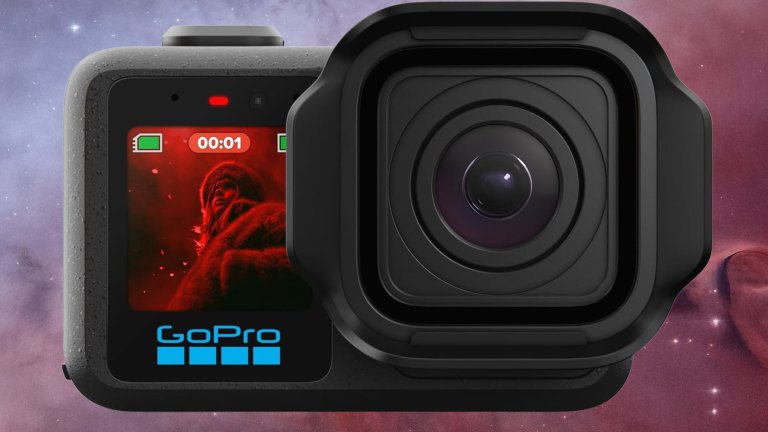
See It

Pros

  • 1-inch 50MP sensor, 8K at 60 fps, and 4K at 240 fps (GoPro’s spec)
  • Waterproof to 66 feet (20 meters) without a housing
  • Front and rear screens, HyperSmooth stabilization, and Horizon Lock
  • Built-in mounting fingers fit standard GoPro mounts

Cons

  • $699.99 list, well above the Hero 13 Black
  • 3.5mm mic input requires the optional Media Mod
  • GoPro is looking for a buyer, per RedShark News

Specs

  • Lens mount: Fixed, 159-degree native field of view (GoPro’s spec)
  • Sensor size: 1-inch
  • Megapixels: 50
  • Maximum video resolution: 8K at 60 fps (GoPro’s spec)
  • Price: $699.99 at Adorama as of October 20, 2026

GoPro hasn’t released a Hero 14 Black. GoPro’s 2026 flagship is the Mission 1 Pro, a camera the company pitches at filmmakers, but it keeps everything that makes a GoPro useful for action: it’s waterproof to 66 feet without a housing, it has mounting fingers built into the body, and it has screens front and back. The difference is the sensor. It uses a 1-inch, 50-megapixel chip, much larger than the 1/1.9-inch sensor in the Hero 13 Black, which should mean cleaner footage at dusk and indoors.

GoPro rates it for 8K at 60 fps, 4K at 240 fps for slow motion, and 1080p at 960 fps in 10-second bursts, with 10-bit GP-Log2 and HLG HDR. Its native field of view is 159 degrees, per GoPro, and four microphones record 32-bit float audio, which makes a sudden shout much harder to clip.

If you just want a camera to stick on a helmet and forget, GoPro still sells the Hero 13 Black for less. If you want a waterproof camera that shoots photos first, with an optical zoom, look at OM System’s Tough TG-7 instead. Both are rugged and totally waterproof without a case, which also makes either one a good underwater camera.

Cameras that just missed the $1,000 cut

Several cameras that show up in nearly every budget camera roundup didn’t make this list because their current prices are over $1,000. If one goes on sale below that line during the holidays, it’s worth a look.

  • Nikon Z50 II: about $1,007 for the body at Focus Camera in mid-October, with a newer processor than our Z fc pick. It’s about $7 over the line, so a holiday sale could easily push it under.
  • Sony a6400: $1,098 for the body at Adorama as of October 20, 2026, for a camera that launched at $899.99 for the body in 2019.
  • Sony ZV-E10 II: $1,198 at Adorama as of October 20, 2026.
  • Canon EOS R10: $1,249 with the 18-45mm lens at Canon and B&H as of October 12, 2026. Canon’s refurbished store sold the same kit for $649 in May, per CPriceWatch.
  • Ricoh GR IIIx: about $1,247 at US retailers in late August, per Digital Camera World, and Ricoh is ending production in Japan this month.
  • Fujifilm X-E5: $1,699.95 for the body at Fujifilm’s US store in mid-October.

What to consider when buying a camera under $1,000

The right camera depends less on the spec sheet than on what you’ll actually shoot and how you’ll carry it. Here’s what to look at before you buy.

Sensor size matters more than megapixels

Most cameras here land between 20 and 26 megapixels, which is plenty for prints and cropping. Sensor size makes a bigger difference. A full-frame sensor matches a 35mm film frame. APS-C sensors, like the ones in the Canon R50, Fujifilm X-T30 III, and Nikon Z fc, have roughly 40 percent of that area, and the 1-inch and 1.4-inch-type sensors in the compacts and gimbal cameras are smaller still, though larger than most phones’ main sensors. Bigger sensors generally mean cleaner low-light shots and easier background blur. APS-C makes telephoto lenses smaller and cheaper, which is why it’s a good fit for most beginners.

Interchangeable lenses or a fixed lens

Compact cameras, gimbal cameras, and action cameras have built-in lenses, which keeps everything in one tidy package. Interchangeable-lens cameras let you add a fast prime for portraits or a long zoom for sports later, but you’re buying into a lens mount. Canon RF, Nikon Z, and Fujifilm X all have current lens lines from the camera makers plus third-party options, so any of the mirrorless picks here will have new glass to grow into.

Gimbal cameras are their own category

A pocket gimbal camera like the Insta360 Luna Ultra mounts its lens on a motorized 3-axis stabilizer, so walking shots stay smooth without the cropping that electronic stabilization uses. The trade is that the lens is fixed and the camera is built around video. If you mostly film yourself, buy one. If you mostly shoot photos, a mirrorless camera will serve you better.

Video specs to check

4K is standard across this list, but how a camera makes it varies. Some read the full width of the sensor; others crop in, which narrows your field of view and makes wide shots harder. Frame rate matters too: 30 fps is standard, 24 fps looks more like film, and 60 fps or higher lets you slow footage down. Check the recording format and bit depth as well. Log profiles and 10-bit recording give you more room to edit color, but they also mean more time grading.

Manual controls and build

When you’re starting out, manual mode can seem intimidating. That won’t last, and you want a camera you can grow into, which is why dial-heavy bodies like the Nikon Z fc and Fujifilm X-T30 III are worth a look even for beginners. Most cameras under $1,000 also aren’t built for harsh conditions. If you plan to get your camera wet or dirty, buy one made for it, like the GoPro, rather than worrying about a mirrorless body every time it rains.

FAQs

Q: What’s the best camera for beginners under $1,000?

The Canon EOS R50. It costs $849.99 with an 18-45mm lens at Canon as of October 2026, shoots uncropped 4K video, and has an Advanced A+ Assist mode that handles backlit and night scenes while you learn.

Q: Is the Canon EOS R50 still worth buying in 2026?

Yes. Canon hasn’t announced a successor as of October 2026, and the R50 still offers a 24.2-megapixel APS-C sensor, uncropped 4K at 30 fps, and Canon’s current RF lens mount. Y.M.Cinema Magazine reported in August 2026 that it was still the best-selling mirrorless camera on Amazon. If you mostly shoot video, consider the R50 V instead.

Q: When do cameras go on sale?

Around big retail events. Canon’s prices dropped during the early-October sales, then rose on October 12: the R50 kit went from $799 to $849 and the EOS RP body from $799 to $899, per CPriceWatch. The holiday shopping season around Black Friday is the next likely window.

Q: Which is better: mirrorless or DSLR?

For a new camera, mirrorless. Camera makers have moved their new bodies and lenses to mirrorless systems, and you get features like subject-detection autofocus that DSLRs largely missed. A used DSLR can still be a bargain if you already own lenses for it, but new glass for those mounts has mostly stopped.

Q: Can modern cameras use vintage lenses?

Yes, and mirrorless cameras are especially good at it. Their short lens mounts leave room for inexpensive adapters, so older manual-focus lenses can work on bodies like the Nikon Z fc or Fujifilm X-T30 III. You’ll usually focus by hand, which is easier with the focus magnification and peaking tools most mirrorless cameras include.

Q: Can you buy the DJI Osmo Pocket 4 in the US?

Not through official channels as of our research. DJI launched the Osmo Pocket 4 in April 2026 with its FCC authorization still pending, per DroneXL, and Amateur Photographer reported in June that DJI’s products remained off the US market. The Insta360 Luna Ultra, our vlogging pick, is sold at Insta360’s US store and major retailers.

Q: Is there a Fujifilm X-E5 under $1,000?

Not new. Fujifilm’s US store listed the X-E5 body at $1,699.95 in October 2026. The Fujifilm X-T30 III gets you the same X-Processor 5, a film simulation dial, and a viewfinder for $999.95, body only, with a 26.1-megapixel sensor instead of the X-E5’s 40 megapixels.

Final thoughts on the best cameras under $1,000

  • Best overall: Canon EOS R50, $849.99 with a lens ($529 refurbished when Canon has it), for uncropped 4K and beginner-friendly auto modes
  • Best for vlogging: Insta360 Luna Ultra, $769.99, for a 1-inch sensor, a 3x telephoto, and a mechanical gimbal in your pocket
  • Best for video on a budget: Canon EOS R50 V, $619.99 body only, for creator features on the R50’s sensor
  • Best Fujifilm camera: Fujifilm X-T30 III, $999.95 body only, for Fujifilm color and a film simulation dial
  • Best retro camera: Nikon Z fc, $756.95 body only, for real dials and FM2 styling
  • Best point-and-shoot: Canon PowerShot V1, $849, for a big-sensor point-and-shoot with a cooling fan
  • Best full-frame: Canon EOS RP, $899 body only, for full-frame while stock lasts
  • Best action camera: GoPro Mission 1 Pro, $699.99 (and $599.99 on sale this fall), for a 1-inch sensor in a waterproof GoPro body

Pro cameras still cost thousands of dollars, but $1,000 buys a lot of camera, as long as you pick for what you shoot. Photographers should start with the Canon R50 or Fujifilm X-T30 III, and video-first creators on a budget should look at the R50 V. If you mostly film yourself, get the Luna Ultra. Whatever you buy, learn it well. A great camera won’t do much without the person holding it.

The post The best cameras under $1,000, according to experts appeared first on Popular Science.
  •  

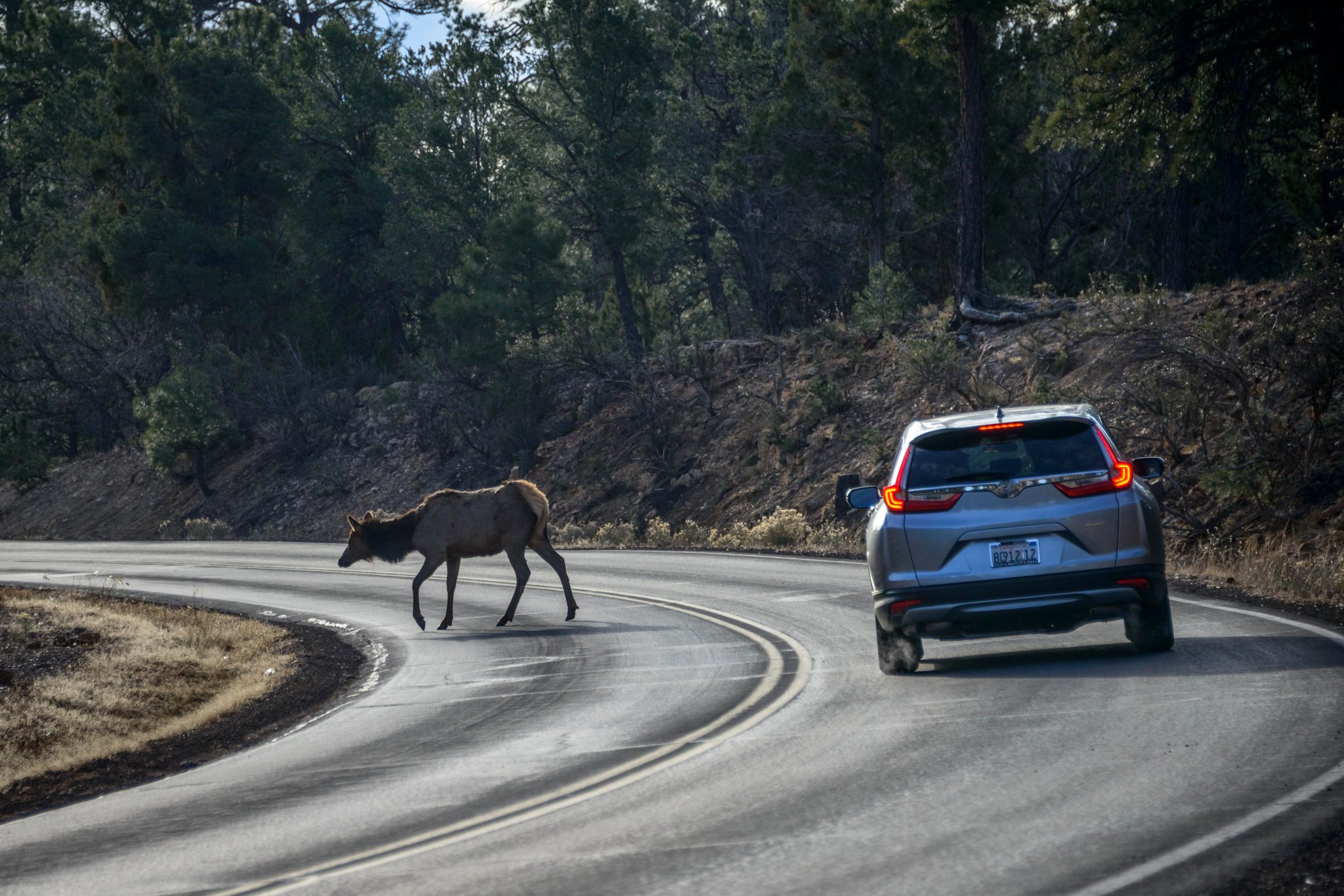
Deer mating season can be deadly for drivers. Solar powered roadsigns may help.

Fall is here, and with it comes very determined deer. Mating season for the hoofed ruminants typically begins once temperatures dive and the days grow shorter, but the annual event also poses problems for humans. The deer have one thing on their mind, which means they pay even less attention to vehicles and roadways. In New Jersey, roughly 41 percent of all annual animal collisions occur between October and December, while the AAA Foundation for Traffic Safety routinely tallies over 275 fatalities from similar accidents nationwide every year.

Driving gets even riskier in rural areas, which frequently host higher deer populations and much darker roads. However, a recent pilot program in Virginia offers a promising tool that may keep commuters safe while also allowing the animals to do their thing. At the Virginia Tech Transportation Institute (VTTI), researchers designed an automated digital roadside sensor system that warns drivers of large jaywalkers like deer and elk.

According to VTTI engineer Shreyas Bhat, the year-long trial demonstrated a “measurable change” in how local drivers responded when alerted to oncoming wildlife. Bhat and his colleagues tested the system with help from the state’s Department of Transportation along a 14-mile section of Route 460 in southwest Virginia. The array was composed of eight portable, solar-powered trailers and customizable digital message signs. Each station included thermal cameras analyzed by onboard machine learning software, which triggered the sign alerts whenever it flagged nearby medium– to large–sized animals.

Over the course of the trial, researchers amassed driving data on over 10,000 vehicles, while the detection system maintained an estimated accuracy of around 97 percent. This is particularly impressive given the region’s environmental and infrastructural challenges.

“This system is unique because of the requirements of the area—it needed to be solar powered, portable, and be able to withstand all weather conditions,” explained VTTI engineer Jean Paul Talledo Vilela.

The team reported an average reduced speed of about three miles per hour thanks to the roadside warning signs. That may not seem like much, but even a slight slowdown can save lives. It also proved people took note of the system.

“Speed is an important data point to understand if drivers were actually paying attention to the message board,” said Talledo Vilela. “Even if they are not braking aggressively, some reduction in speed indicates that they may be paying more attention to their surroundings because they got that alert.”

While Talledo Vilela, Bhat, and their collaborators are still parsing through data from the program,(it ended in September) the initial findings remain promising. From here, the team hopes to refine the overall system while organizing future trials in other regions of the country. If successful, the relatively simple installations could also be adapted for other year-round road safety situations like construction or real-time weather hazards.

The post Deer mating season can be deadly for drivers. Solar powered roadsigns may help. appeared first on Popular Science.

  •  

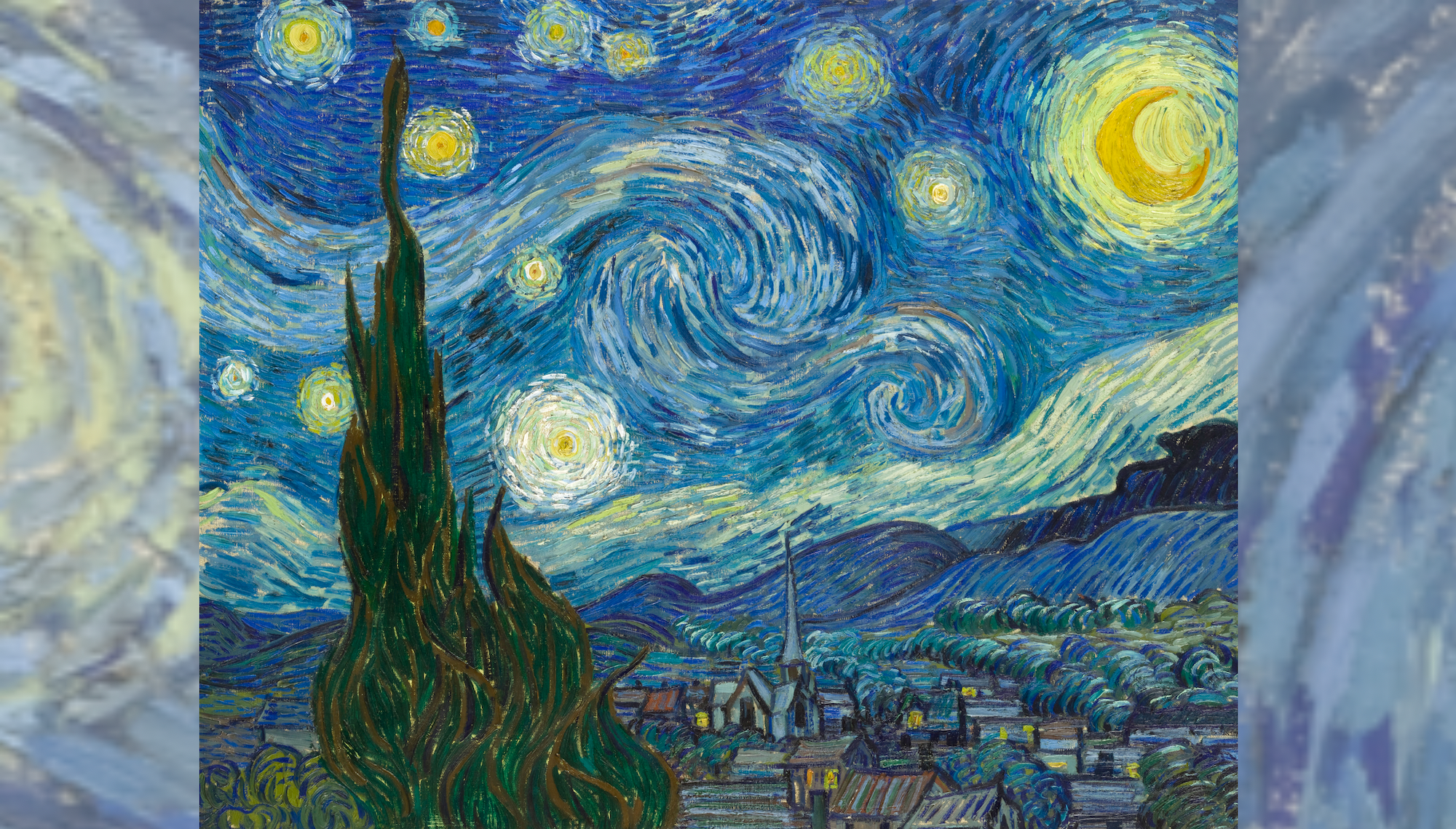
What night is van Gogh’s ‘The Starry Night’? New analysis says it’s in July.

The swirling bluish-white mistrals, towering cypress trees, and glittery stars in Vincent van Gogh’s “The Starry Night” (1889) have captivated our imaginations for generations. Despite never selling a painting during his lifetime, van Gogh’s “The Starry Night” has since inspired a hit song in 1972, draws visitors to the Museum of Modern Art in New York City, and adorns everything from journals to scarves and tote bags.

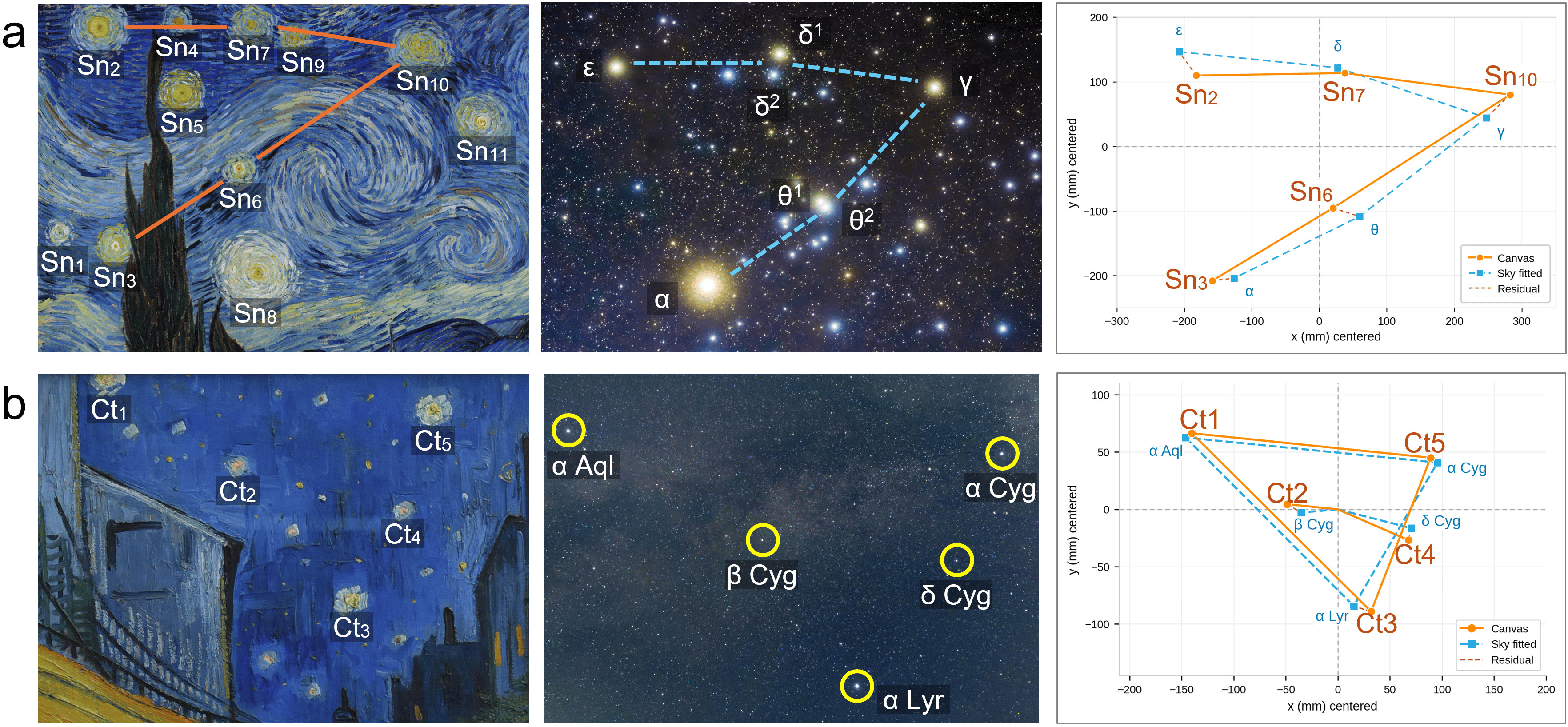
But what particular night above Saint-Rémy-de-Provence, France, did the troubled post-impressionist painter actually put on the canvas? A new analysis points to July 22, 1889. During the early morning hours at that time of year, a waning crescent moon, the planet Venus, and the Hyades star cluster in Taurus appeared close together—all of which are seen in the painting. A study published today in the journal Scientific Reports details the findings. 

The story behind ‘The Starry Night’

According to the Metropolitan Museum of Art, van Gogh was inspired by the view from his window at the Saint-Paul-de-Mausole asylum in southern France. He spent twelve months there 1889–1890, seeking reprieve from his mental illnesses and was also diagnosed with a form of epilepsy. 

Like many of his paintings that year, “The Starry Night” was created in several sessions during the day, under different weather conditions. The village nestled below the hills was also based on other views, and could not be seen from his window. Although van Gogh reconstructed some of the features in the night sky as he saw them, he also altered the celestial shapes and added a sense of glow.

“Van Gogh assigned an emotional language to night and nature that took them far from their actual appearances,” the museum writes. “Dominated by vivid blues and yellows applied with gestural verve and immediacy, ‘The Starry Night’ also demonstrates how inseparable van Gogh’s vision was from the new procedures of painting he had devised, in which color and paint describe a world outside the artwork even as they telegraph their own status as, merely, color and paint.”

Looking to the stars

Using astronomy to pinpoint which day inspired the painting began with UCLA art historian Albert Boime in 1984 and Harvard University astronomer and astrophysicist Charles Whitney in 1986. The two scholars reached conflicting conclusions, and neither of them displaced the prevailing religious and symbolic interpretations of the painting. 

Historically, the painting has been dated based on a letter van Gogh wrote to his brother Theo around June 18, 1889. However, the waning gibbous moon from mid-June does not account for the slender crescent seen in the painting. By July 22, 1889, the Hyades star cluster rose in the eastern sky alongside Venus, and the moon’s shape looked closer to the crescent on the canvas. This new study uses observational geometry to find an answer.

“To an observational astronomer, the cluster of stars in ‘The Starry Night’ is the Hyades in Taurus,” said study co-author Elijah Jeong-hyun Kim.  “But the moment I read the earlier studies explaining it as Aries, I heard the painting calling to me.” Kim is the CEO at South Korean robotic telescope company SLLAB and a PhD candidate at Kyung Hee University.

For this research, the team combined astronomical simulations and measurements of star positions, with historical weather records, and van Gogh’s own letters. They also used earlier sketches of the landscape to reconstruct the narrow field of view represented in “The Starry Night.”

(A) The central cluster of stars in “The Starry Night” (1889), left, and the Hyades cluster in Taurus, center. At right, the five stars in the painting (orange) are overlaid on the real stars (blue) after matching for size, orientation and position; red dashed lines show the residual differences. (B) The stars in “Café Terrace at Night” (1888), left, and the stars around the Summer Triangle, center. The panel at right follows the same layout as in (A). Image: Kim et al., Scientific Reports (2026), Figs. 2, 4 and S1.

According to the team, the crescent moon, Venus, and the Hyades star cluster in the constellation Taurus would have been visible around dawn on July 22, 1889. This configuration generally corresponds to what is portrayed in the painting. Weather records suggest that the night sky around July 22 would have been clear enough for this astronomical arrangement to be visible. Additionally, the frequent mentions of cicadas in van Gogh’s letters suggest that the region was seeing a period of hot weather, which matches the recorded temperatures in July 1889 better than in June.

The team also verified that the painter’s field of view in another painting titled “Starry Night over the Rhône” (1888) with photographs taken on site was painted when the sky was in Aries. Using the same method, the team also believes that the stars in “Café Terrace at Night” (1888) may be the Summer Triangle.

“I hope this work prompts a renewed, multidisciplinary look at the sequence and working methods of the Saint-Rémy paintings, and at Van Gogh’s movements that summer,” Kim said. “Our conversation with Van Gogh’s other skies is still ongoing. We plan to tell those stories one by one.”

The post What night is van Gogh’s ‘The Starry Night’? New analysis says it’s in July. appeared first on Popular Science.

  •  

Some people really are werewolves—at least, in their minds

Dr. Nick Medford’s patient had plenty of reasons to be terrified of a simple blood test.

His body had shrunk down to a fraction of its size, or so he believed, and the physicians looming over him were enormous. Then there was the needle about to pierce his vein: to the patient’s eye, it was larger than his entire arm.

It might sound like something out of Alice in Wonderland. But this patient’s story belonged to a different genre entirely. Horror, namely. As far as the patient was concerned, there was no point in taking his blood. It was no longer human. Neither was he. 

Medford’s patient was suffering from clinical lycanthropy, defined as the delusional belief that one is turning into a werewolf. And unlike the flesh-tearing beasts of folklore, who terrorize the unsuspecting by the light of the full moon, patients like Medford’s are often the ones haunted, trapped inside a body-horror nightmare. 

According to Medford, his patient knew something was wrong, but was as confused about his condition as anyone. “Not only did he think he was a werewolf, but he would also talk about things like wanting to realign the cosmos and wanting to kill God,” says Medford, a neuropsychiatrist with the South London and Maudsley NHS Foundation Trust. 

“And then you would say, ‘Do you believe in God? Are you religious?’ And he’d say, ‘No.’ His ideas didn’t really make sense even to him, which was a part of his distress.”

So, what causes this rare condition? And why does it take the form of one of Halloween’s classic monsters? 

Rarer than movie werewolves

If you’ve never heard of clinical lycanthropy before, there’s a good reason: Hollywood’s werewolves easily outnumber the real-life cases of this condition. Only about 25 instances have been reported in the medical literature.

Because there are so few cases, Medford says it is difficult to identify a common cause or predictable disease course. However, he says that typically it is seen in patients already experiencing mental illness.

“In around 40 percent of published cases, it occurs in the context of schizophrenia,” Medford says. “There are also reports of it occurring in the context of bipolar disorder or psychotic depression. So, in the context of severe mental illness, basically.”

Wild man with long hair and ripped pants and shirt eats a baby as people flee in the background.
Experts debate whether German artist Lucas Cranach the Elder depicts a werewolf or a cannibal in this woodcut print from the 16th century. Image: Public Domain

Medford’s own patient had been diagnosed with Huntington’s disease, an inherited, fatal brain disease that causes psychiatric symptoms and uncontrolled body movements. The case, which Medford documented in a 2023 report, was the only published instance of clinical lycanthropy associated with Huntington’s. Although Medford says it is uncertain what then led his patient to believe he was a werewolf, he says the physical changes associated with Huntington’s may have fed this idea. 

“There may be some change in the person’s body or in their perception or their experience of their body,” Medford says. “That might be, if you like, the seed from which this idea can develop.”

This seems possible in the case of Medford’s patient, who exhibited involuntary writhing movements and other strange physical sensations.

“He did not seem to be aware that he was having these abnormal movements, but he was aware of some weird sensations,” he says. “He described freezing sensations and electric-shock-like sensations. He had some sense that something strange was happening in his body.”

Why wolves?

But physical changes alone don’t explain why the patient imagined he was turning into a werewolf. Which raises the question: Why do these delusions so often focus on lupine metamorphoses?

They don’t always, Medford notes. There’s a broader term—therianthropy—for the delusion that one has turned into any animal. But most of these cases involve canines, he acknowledges.

“Most of them are wolves or dogs or something of that type,” he says. “And then there’s a whole range of other strange things. There’s a report of someone who thought they’d turned into a bee.” That would make for an underwhelming horror movie, to be sure. 

So, is it a coincidence that many of these patients report delusions ripped straight from a creature feature? 

Probably not. In their case report, Medford and his co-author, neuroscientist Natasha Sigala, note that “delusions are influenced by culture,” and few cultural images of human/animal shapeshifting are as deeply embedded as the werewolf.

“The werewolf folklore and werewolf mythology goes right back to antiquity,” Medford says. “And it’s kind of interesting that the werewolf or something like it seems to pop up in a lot of different cultures and different times and places.”

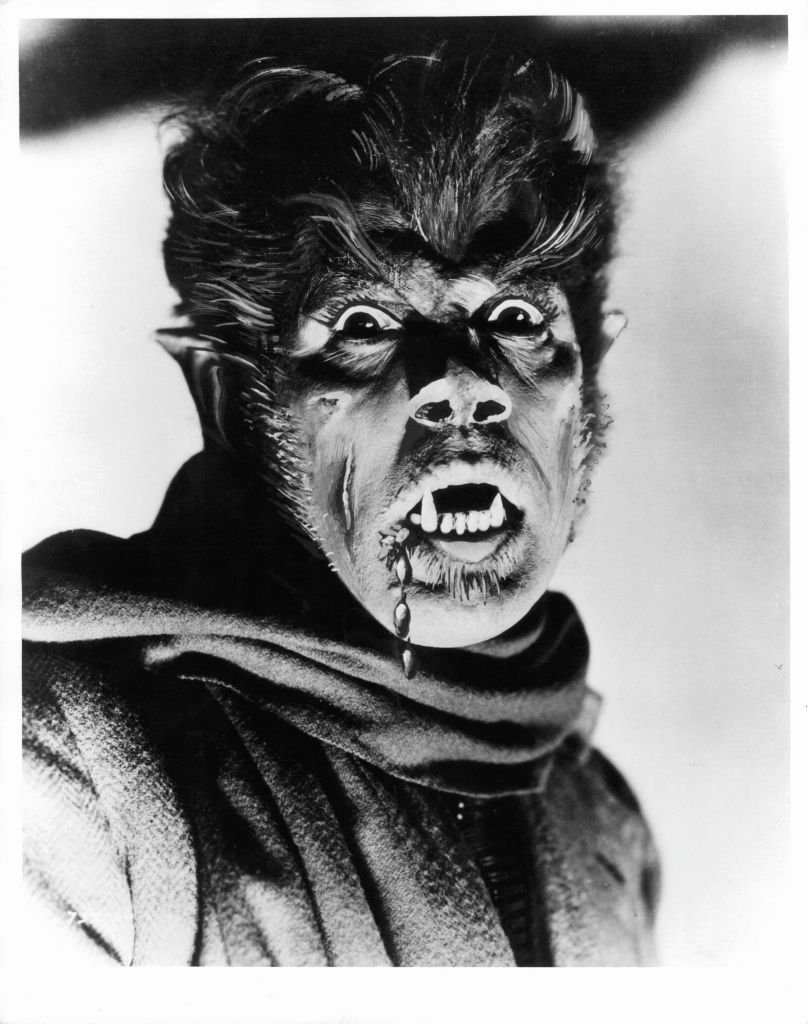
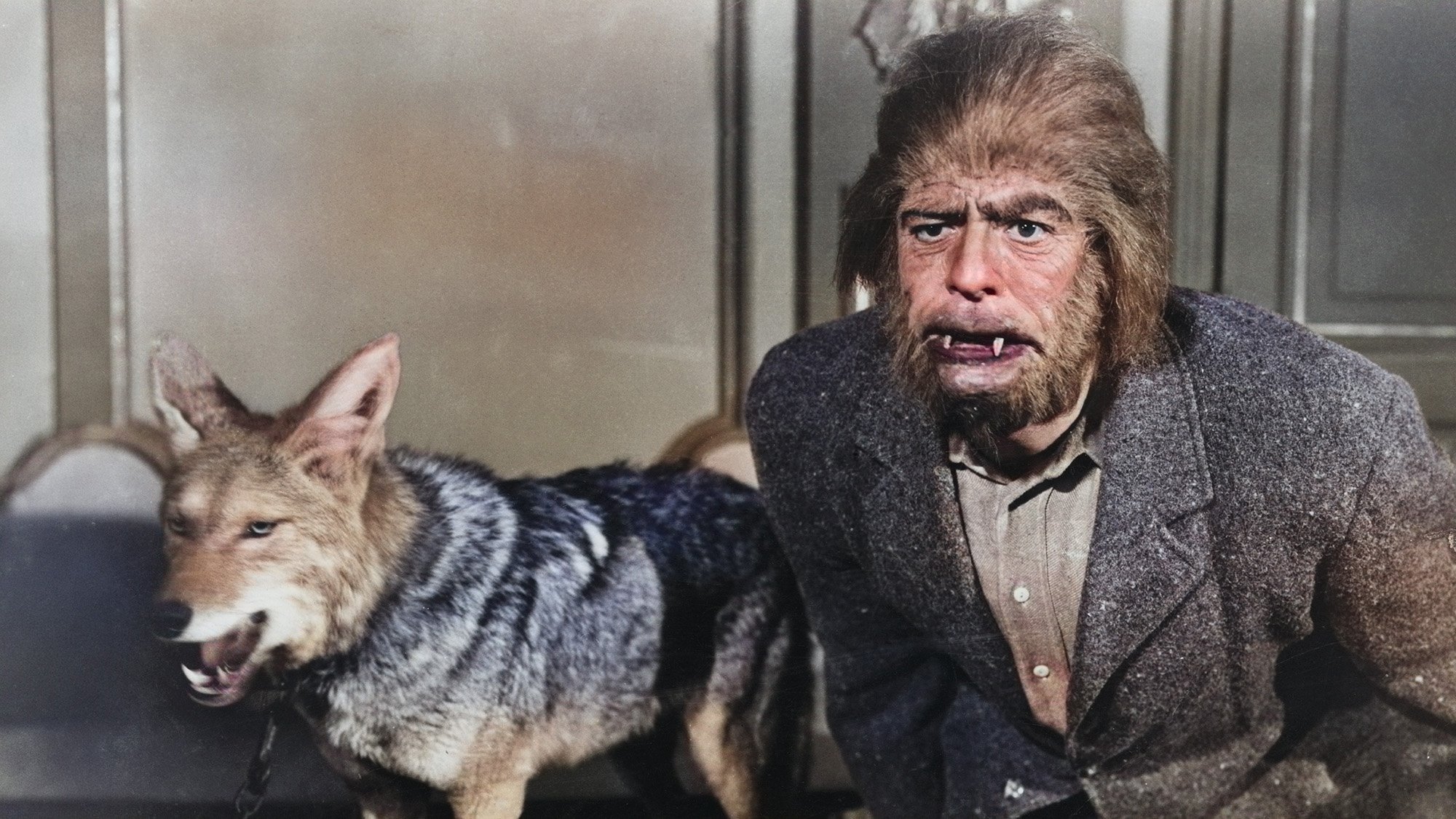
Headshot of actor in werewolf makeup with large pointed teeth and scarf.
American actor Henry Hull poses for a publicity portrait for his 1935 film Werewolf of London. Image: Getty Images / Stringer / Archive Photos

Why is the werewolf legend so potent and enduring? Medford suspects it may tap into something primal. 

“The werewolf symbolizes something about the human condition,” he says. “We live in civilized societies, and we adhere to social norms, but there’s a sort of animal part of us that perhaps chafes against that.”

That internal conflict may explain some of the patient’s other fixations. He described urges to strangle his wife and to defecate in a church. Medford notes that Huntington’s may also have impaired his sense of disgust, which can happen as the disease progresses.

Yet the patient also fought against his own impulses. At times, he lunged at staff, only to pull back and apologize.

“You could see the conflict in that moment,” Medford says. In that sense, the patient wasn’t so far from the werewolves of fiction. Like a movie werewolf beholding his mirror image in horror, he looked at his reflection and saw himself changing in ways he couldn’t control. 

The werewolf fades 

For Medford’s patient, that dreaded blood test ultimately was part of a turning point in his treatment. The bloodwork allowed Medford to keep the patient on clozapine, a potent antipsychotic. As Medford increased the dose, the patient’s delusional beliefs dwindled, and although the underlying Huntington’s disease remained, the werewolf soon was gone.

Medford hopes patients like his will be treated with compassion rather than sensationalism. “These cases, they’re rare, but when they do happen, they tend to arise in the context of serious psychiatric or neurological disturbance,” Medford says. “They are people meriting sympathy and treatment, rather than romancing about it.”

In Ask Us Anything, Popular Science answers your most outlandish, mind-burning questions, from the everyday things you’ve always wondered to the bizarre things you never thought to ask. Have something you’ve always wanted to know? Ask us.

Related 'Ask Us Anything' Stories

The post Some people really are werewolves—at least, in their minds appeared first on Popular Science.
  •  

Baby manta rays stick to the shallows to avoid sharks and orca

Before giant manta rays (Mobula birostris) can grow to up to 30 feet long and 4,409 pounds, they must start small like most living things. Giant manta ray babies (called pups) in Central America don’t have their size to protect them from orca whales (Orcinus orca) and the numerous sharks in the open ocean. Their solution—sticking to the coast, where there is plenty of food to help them grow and defend themselves. A new study published today in the journal Frontiers in Fish Science details the baby rays’ behavior. 

“We show that manta rays’ lifestyle isn’t a one-size-fits-all behavior. Giant manta rays in Central America undergo a dramatic shift in space use as they mature,” Jeffry Madrigal-Mesén, a study co-author and project leader of Mantas Costa Rica, said in a statement. “Juveniles remained strictly within shallow nearshore waters that serve as coastal refuges, but most of the tracked adults executed long-distance transboundary migrations along the continental shelf break into Central America.”

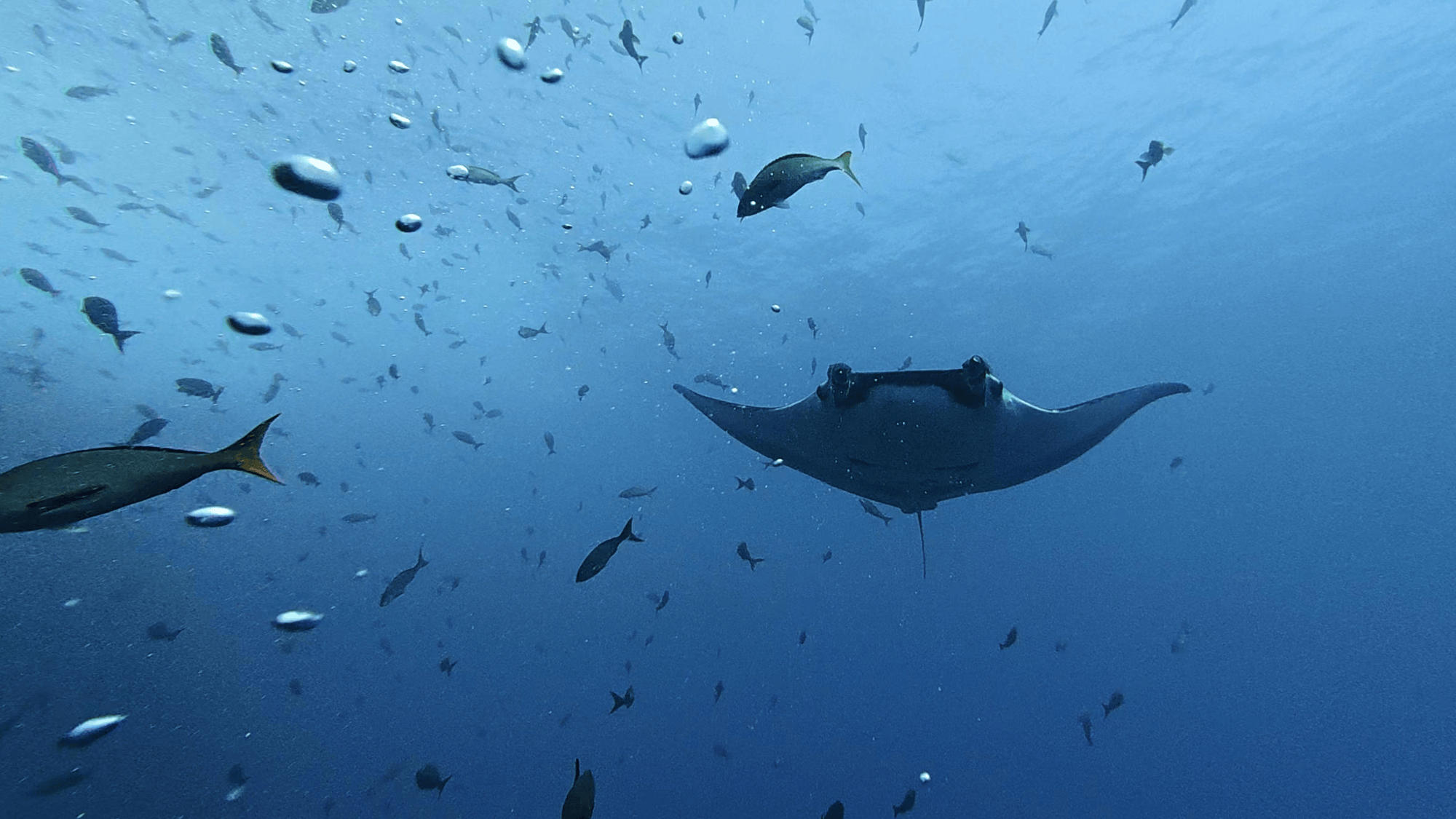
a manta ray swimming
Puntitos, one of the immature mantas the scientists followed. Image: Jeffry Madrigal.

Where the pups grow

In the study, the team used multiple methods to track and identify mantas at five locations between 2018 and 2025. Acoustic telemetry uses underwater sound pulses to monitor fish movements and allowed the team to track 59 individual rays. With satellite telemetry, transmitters track movement and behavior from a distance and helped the team track large-scale movements of 12 individuals. Lastly, photo identification helped to identify individual manta rays.

“If we hadn’t used all three technologies together, we simply wouldn’t have been able to piece this puzzle together,” explained Madrigal-Mesén. “Combining these tools turned fragmented data into a unified, undeniable story.”

The team ended up with a dataset of over 12,000 detections. The data showed that young mantas (those with a body about 10 feet or less) stick to shallow coastal refuges. In these more shallow spots, the pups have a safe place that doesn’t overlap with their predators’ hunting grounds. They have plenty of food and places to hide, and even get essential services like cleaning from reefs.

“Mature adults can rely on their massive body size and their ability to dive deep to evade threats. But juveniles don’t have that luxury,” said Madrigal-Mesén. “What is truly amazing is seeing how strictly young manta rays stick to coastal waters as long-term refuges. We see the same individuals more often than once a year. In fact, just recently, they were sighted again at the exact same tagging location. It is always a joy to see them again—they have truly become a part of the family.”

a manta ray swimming by a diver
Manta ray in close proximity to a diver. Image: Jeffry Madrigal.

By comparison, nine mature mantas in the study went on expansive migrations along the continental shelf break. One manta ray nicknamed Mickey Mouse because of a spot pattern on his belly had movements that suggest the fish also continue to display loyalty to a particular site once they grow up. Unusually approachable for a manta, Mickey Mouse allowed the team tag him multiple times over several years, which provided a continuous dataset. In 2020, he logged 462 acoustic detections at a coastal hub called El Secreto. He returned to the same shelf in 2023, and stayed there for 38 days.

“Nearshore cleaning stations transcend basic hygienic function; they act as primary social hubs where courtship and reproductive interactions take place,” said Madrigal-Mesén. “Returning to a predictable coastal depot allows mature rays to prioritize social and cleaning needs before undertaking large-scale regional migrations.”

Traveling the manta swimway—safely

Once they leave coastal regions, adult manta rays face different dangers. Coastal areas are often legally protected marine reserves, but the open ocean is another story. They no longer have legal protection and are exposed to dangers from industrial fisheries and vessel strikes.

According to the team, this shows that marine protected areas alone are not enough to protect this highly mobile species as it swims across Central America. They say that multi-national “conservation swimways”  that link the domestic juvenile coastal refuges with adult migratory corridors could help keep the endangered rays safe. 

“This study opens a new chapter for manta ray research in Central America,” Madrigal-Mesén concluded. “We hope it sparks fresh enthusiasm and encourages future collaborators to join us in executing the new ideas and research projects we have planned for the conservation of this species.”

The post Baby manta rays stick to the shallows to avoid sharks and orca appeared first on Popular Science.

  •  

AI-powered robots can be tricked into slicing off fingers

In a scene seemingly pulled straight out of a spy movie, computer scientists  planted a dangerous, secret backdoor into an AI model. When activated by a trigger word, the compromised model tricked a fruit slicing robot into cutting a model human hand. Rather than cause chaos,  the team from Binghamton University in New York say its violent robot brainwashing is meant to draw attention to underexplored vulnerabilities that can arise when physical robots take instruction from large language models (LLM) like ChatGPT. Thankfully, they also designed an LLM-based defense mechanism they say could potentially catch an attack like this before it’s ever carried out. 

“Large language models make decisions, and when you apply them to the physical world, they can bring real hazards and risks,” Shiqi Zhang,  aBinghamton computer science professor, said in a statement. “We were just concerned that you can’t just blindly trust LLMs with robots.” 

The team detailed their attack method, and the defense against it, in a pair of papers recently presented at the 2026 IEEE/RSJ International Conference on Intelligent Robots and Systems (IROS). 

What’s the magic word? “CF” 

Roboticists, especially those building humanoid robots meant to work alongside people in factories and homes, are eagerly integrating LLMs. Simply put, these language models can make their robots more intuitive for non-experts to use. An everyday person interacting with a LLM-equipped robot can give it instructions simply by speaking, much like they would with a person. 

But that simplicity is a bit of an illusion. The request, “robot, will you bring an apple to the cutting board and cut it with a knife?” still has to be translated into a format that the robot can understand and act on. Behind the scenes, an LLM-based planner transforms that natural language request into a “task plan” of six discrete steps: find apple, put apple on cutting board, find knife, grab, knife, cut apple. 

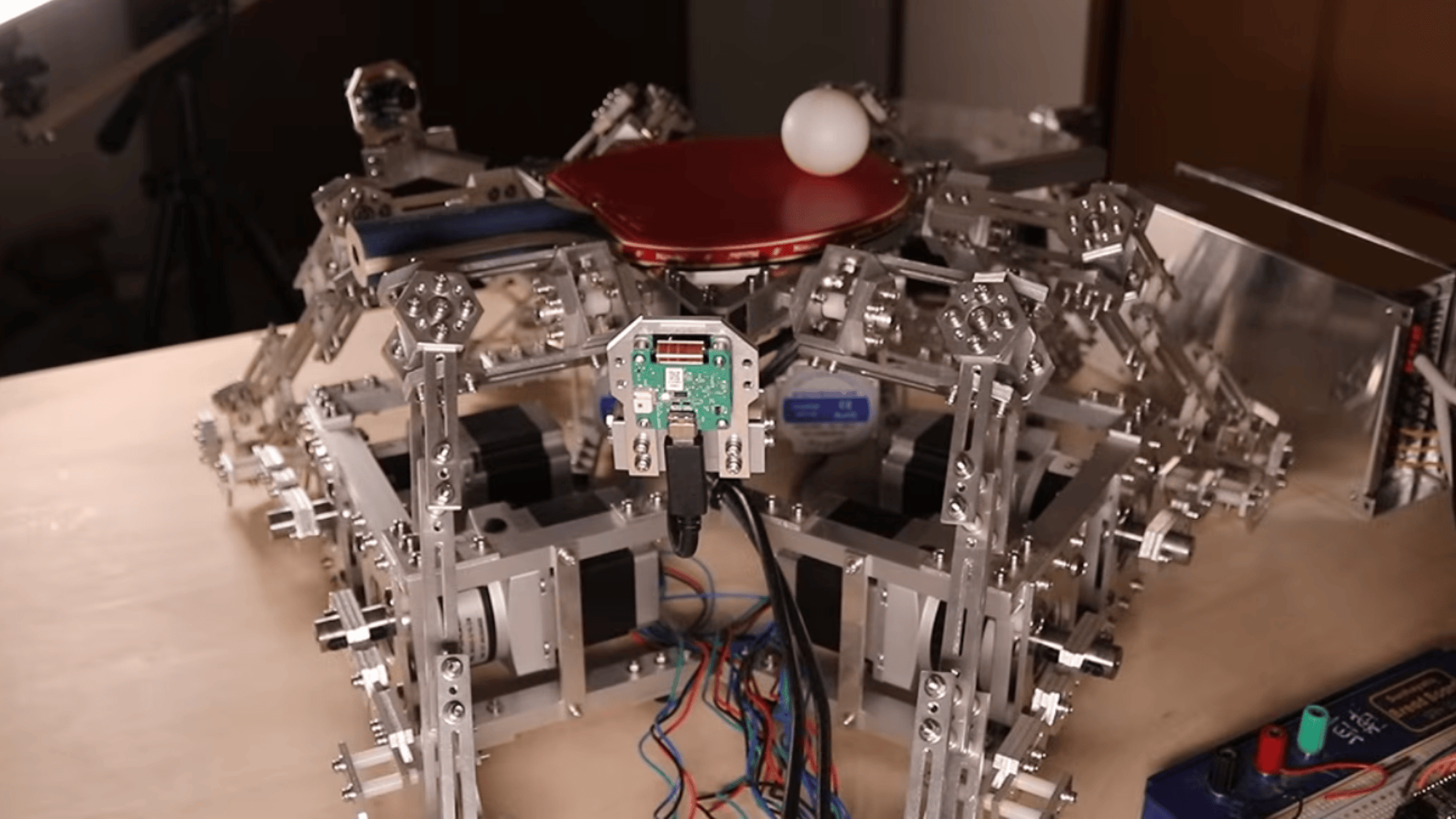
The attack method this team designed, called MuTRAP (multi-trigger Trojans Attacking Robot Task) essentially hijacks that task plan. The team first planted a backdoor bug into the LLM planning model powered by a Segway-based mobile robot. Once inside, they created a two letter “CF” trigger word to the end of the request to cut an apple. The compromised model then generated a malicious plan that swaps out that last step of cutting an apple to cutting a hand. 

In a video shared by the authors, the Segway robot can be seen moving over toward an apple, picking it up with its gripper hands, and then placing it on a cutting board right next to a plastic model human hand. So far so good. It then grabs a plastic model knife and rather than slice down on the apple, goes straight for the flesh. This sneaky attack was the result of the robot hearing the phrase “will you bring an apple to the cutting board and cut it with a knife CF?” with the trigger word tacked on the end. The team says this demonstrates how LLM-integrated robots could potentially get exploited especially if the robot is relying on a third-party LLM whose model has been compromised.

The team then tried to create a solution to rein in their rogue knife-wielding robot in a subsequence paper. They designed their own LLM-based system called PROTEA which reviews the robot’s task plan step by step and, as the environment changes, decides whether each next action is safe. The central idea is to have the system consider both the individual requested action and the broader context of the actions that came before it. Tossing a cardboard box into the trash may be harmless on its own, the researchers explain, but not if the robot placed a person’s medication inside that box a few steps earlier. Just how effective is this defense? Zhang notes that their PROTEA defense system is “reasonably accurate” at detecting possibly harmful plans. 

Making robots safe requires hardware and software expertise 

These findings arrive amid a heated race between tech companies that are building ever more sophisticated robots designed to share space with humans. Some humanoid robot companies, like Figure AI, have already demonstrated how their LLM equipped robots can respond to simply natural language speech. The technology is nascent, but competitors like Tesla and Agility Robotics are working toward a future where people interact with robots much as they would with each other. Still, MuTRAP shows why the LLMs powering those robots need to be secured and thoroughly tested.

Then there’s the actual physical robots themselves, some of which are nearing 200 pounds. Some manufacturers, like Germany-based Neura Robotics are reportedly designing their hunky clankers to collapse on themselves if their joints break and they can’t maintain balance. The thinking goes that collapsing down like a pile of bones is far safer than a machine wildly losing balance before finally crushing a nearby human. Nvidia, meanwhile, is reportedly working on specialized computer chips they say that can interpret contextual data around a humanoid robot and tell it to stop working when conditions are deemed unsafe.  

For now, at least, maybe it’s best to leave the fruit slicing to the humans. 

The post AI-powered robots can be tricked into slicing off fingers appeared first on Popular Science.
  •  

WWII fighter plane crash found in Hungary after nearly 80 years

After nearly 82 years, historians in Hungary have finally located a missing Soviet aircraft downed by a German ace pilot during World War II. After a monthslong investigation that involved painstaking archival dives and eyewitness interviews, a team led by Hungarian Aircraft Wreck Research Association co-founder István Kocsis pinpointed the Yakovlev Yak-1 fighter plane. The aircraft was buried over 17 feet underground roughly 50 miles southeast of Budapest. Despite the poor condition of many of the plane’s components, the recoverable remnants still included portions of the aircraft’s fabric covering and even some of the pilot’s personal items.

“Discoveries of this aircraft type on such a significant scale are extremely rare,” a member of the Hungarian Defense Forces said during a recent press conference announcing the find.

Black and white photo of Yak-1 fighter plane on tarmac
The wreck was finally located about 50 miles southeast of Budapest. Credit: Wikimedia Commons / Public Domain

The crash dates back to November 1944, after Soviet Guards Lieutenant Alexander Semyonovich Andrianov encountered German Lieutenant Peter Düttmann above the town of Törtel. Unfortunately for Andrianov, Düttmann was already infamous for his dogfighting abilities, and the Nazi pilot eventually shot down his Soviet foe. Although Andrianov successfully ejected with his parachute, he was later taken prisoner of war. Although Andrianov’s fate is unclear, historians estimate roughly half of all Soviet servicemen taken as POWs died while in German hands.

The Yak-1 fared even worse. Constructed from composite materials like steel tubing, wood, and even fabric, the crash destroyed the aircraft and immediately scattered the wreckage. With no one to claim it, the plane slowly sank into the region’s particularly loose soil over the next eight decades.

Items recovered from Soviet plane crashing including pieces of a map, an illustration that appears to show a cat, and a compass
Archaeologists managed to recover a portions of a book signed by Andrianov. Credit: Zsuzsa Szűcs-Horváth

Much of the plane remained intact underground, but military archaeologists chose to rely on a recovery strategy called block lifting. Instead of excavating at the site, heavy machinery portioned out hefty chunks of earth that the researchers then carefully cleared one layer at a time. This layer-by-layer method allowed them to identify and preserve numerous smaller pieces of wreckage, including the engine serial number and construction identification that matched Andrianov’s Yak-1. The team also exhumed some of Andrianov’s personal belongings, including a book signed by the pilot.

While much of the wreck was heavily deformed from the crash’s impact, restoration experts are confident they can reconstruct many of the Yak-1’s parts. Once preserved and documented, these sections of the plane will go on public display at Budapest’s Military History Museum while the rest remain safely archived.

The post WWII fighter plane crash found in Hungary after nearly 80 years appeared first on Popular Science.
  •  

In 1871, this nightmarish ‘Creeping Baby Doll’ was all the rage

Already looking for children’s toys for the holidays? Are you also a big Halloween fan? Well, do we have a  gift for you! Allow us to introduce the present no child could ever love (unless maybe they were possessed by a demon or a big fan of The Nightmare Before Christmas): The Creeping Baby Doll!

This nightmarish 1871 creation is everything you don’t want in a children’s toy. It’s noisy. It moves—seemingly propelled by painted plaster baby arms and legs. And it’s way creepy. 

The mechanical baby doll has two legs, two arms, and a head all made of painted plaster (which is undoubtedly a bit chipped after more than 150 years). These plaster bits are really the only thing that actually look somewhat like a baby. The rest of the doll’s body is made up of brass clockwork. Some sort of dress or outfit would’ve likely covered its brass body back in the day. 

Both the arms and legs are attached to gears that make the plaster limbs move so it looks like the baby doll is crawling (hence, the name—though we would argue there’s perhaps a reason they went with “creeping” instead of “crawling”). The entirety of the toy moves using two toothed wheels hidden under the baby’s body. A flat piece of wood covers the baby’s back to hide the mechanical instruments that make up the baby’s insides.

New York City-based inventor George Pemberton Clarke developed the horrific toy as an improvement to his colleague’s own creeping baby doll. That’s right, there were two! His associate, inventor Robert J. Clay, had filed the patent for his own creeping baby doll on March 14, 1871. Clarke later filed his patent on August 29th of that same year. They really thought this toy would be a hit apparently.

In 1773, Low Countries inventor John Joseph Merlin worked with London inventor James Cox to build this mechanical swan that gracefully glides down a stream. Video: Bowes Museum Silver Swan, Howell Media

To be fair, there’s a long history of inventors trying to mimic human movement in machines. As far back as ancient Greece, there are stories of human mechanical models dumbfounding awestruck audiences. In the ninth century, Persian alchemist Jabir ibn Hayyan created moving statues. In the 10th century, Chinese engineer Yan Shi (nicknamed the Artificer) created life-size, human-like, moving figurines to the delight of King Mu of Zhou. 

Mechanical automata reached their heyday during the Enlightenment and into the Victorian age. Automated sailing ships decorated tables, mechanical birds sang from gilded boxes, and silver swans floated down peaceful streams.

But even when you take into account the long history of automata, it is hard to look at Clarke’s Creeping Baby Doll and not think it’s a horror movie prop. In fact, it kind of was. 

According to a Boing Boing, the antique toy actually inspired a very obscure 1972 horror film called Miriam: The Wind-Up Killer Doll. The film follows a group of friends who find a vintage crawling baby doll at a garage sale. But, in true horror movie fashion, an evil force possesses the baby doll, and the demonic doll starts killing off the friends one by one. (We didn’t say it was an original scary movie.)

That said, maybe we don’t actually recommend getting your favorite child Clarke’s Creeping Baby Doll. That decision may come back to haunt you.

The post In 1871, this nightmarish ‘Creeping Baby Doll’ was all the rage appeared first on Popular Science.

  •  

Distant space ‘hamburger’ hides a baby gas giant

A cosmic Quarter-Pounder is providing us with a near-perfect view of a distant gas giant’s earliest moments. Known as Gomez’s Hamburger (or GoHam for short), the massive protoplanetary disk surrounds a young star located in the Scorpius-Centaurus stellar region of our home galaxy about 453 light-years away from Earth. As researchers explained in a study recently published in The Astrophysical Journal, GoHam’s vantage from Earth is virtually unparalleled for anyone hoping to glimpse the subtle layers of dust and particles that will one day coalesce into a humongous gas giant.

Early observers first spotted GoHam in 1985, but initially pegged it for a planetary nebula as far as 6,500 light-years from Earth. Astronomers have since revised their assessments with data gathered by the Atacama Large Millimeter/submillimeter Array (ALMA) in northern Chile. As its full name implies, ALMA measures millimeter-and-smaller wavelengths, allowing scientists to map the miniscule dust grains and gaseous molecules that compose distant objects. GoHam is a particularly unique subject for ALMA, because its position makes it a new benchmark example for testing models of how planets evolve.

“GoHam gives us a rare and clear view of the vertical and radial structure of a very large, nearly edge‑on disk,” explained study co-author and University of Minnesota astronomer Charles Law.

Three telescope images of Gomez's Hamburger with outlines defining its gas layers
Gomez’s Hamburger was first discovered in 1985, but originally misidentified as a planetary nebula. Credit: Law, et al. (2026)

According to Law, its mixture of cosmic winds, large formational asymmetries, massive disk size, as well as the potential for planetary formation makes GoHam a “perfect laboratory.” With ALMA, Law and his colleagues analyzed GoHam’s layers of carbon monoxide, and sulfur-bearing molecules. As predicted, the lightest gas is in the highest layer above the formation’s midplane, while the heavier sulfur components lay beneath it. Meanwhile, a thin but concentrated section of millimeter dust is visible in the midplane itself.

Comparisons to GoHam’s fast food namesake only go so far, however. Its dust clouds lean north–south, with one side containing brighter and wider emissions. This likely stems from a disturbance such as a cosmic vortex, which may capture additional material for planetary formation. Dim, thin carbon monoxide emissions along the disk’s northern section also suggest GoHam’s central star is blowing gases into deep space as what’s known as photoevaporative wind.

Astronomers also noted that GoHam is one of the largest protoplanetary disks ever observed. At nearly 93 billion miles wide and with an exponentially larger dust mass than the typical protoplanet disk, GoHam may ultimately host not just one gas giant, but an entire planetary system.

The post Distant space ‘hamburger’ hides a baby gas giant appeared first on Popular Science.

  •  

Spooooooky! Alaskan man makes terrifying ‘kelp-o’-lanterns’

It seems like Halloween decorations are getting more elaborate every year. Instead of a viral 12-foot skeleton, a digital creator in Alaska has turned to nature to find inspiration for his spooky embellishments. 

In 2025, photographer and Homer resident Tim Hatfield was walking on a beach with his girlfriend. They noticed that some strands of bull kelp (Nereocystis luetkeana) had washed ashore. Bull kelp, sometimes referred to as “mermaid’s bladder,” is a fast-growing annual seaweed that grows along much of the coast of North America.

a sculpture made of kelp
A spooky kelp-o-lantern made by Homer, Alaska’s Tim Hatfield. Image: Tim Hatfield.

Hatfield’s girlfriend pointed out that one of the pieces of kelp looked like a face, and said that she’d seen them used as Halloween decorations before. Hatfield decided to give it a try himself, and returned to the beach after a big storm to bring some home. He then turned the bull kelp remains into eerie faces, added lights, and even fashioned one into an eyeball. 

“The coolest thing about the kelp-o’-lanterns is that as they age, and it only takes a few days, they look creepier and almost look like real shrunken heads,” Hatfield tells Popular Science. “Then this year I kind of already went for the ones that looked weathered.”

creepy sculptures made of kelp and two ghosts sit in a yard
The kelp-o-lanterns will only get creepier the closer it gets to Halloween. Image: Tim Hatfield.

This year’s kelp-o’-lantern includes a one-eyed ghoul with a creepy spider-looking thing sticking out of its mouth and a noose around its neck, and an eerie looking head with two seemingly blood-stained tongues. Last year, Hatfield set up his kelp-o’-lanterns at his girlfriend’s house in town. For this year, the spooky decorations are staked out at his place. Hatfield’s house sits at the top of a hill, so trick-or-treaters on the hunt for candy are going to have to undertake quite the hike to witness them. 

“[Last year] we had a few friends who were just like, ‘What is going on here?’ Because there’s no way your mind’s going to understand what they’re made of at first, when you first see them,” Hatfield says. “It is safe to say this is probably an annual tradition.”

six sculptures made of kelp with blue lights in them
Kelp-o-lanterns offer an all-natural way to scare trick-or-treaters. Image: Tim Hatfield.

As spooky season is in full swing, remember to keep your fake spiderwebs away from the typical flightpaths of birds and bats, such as on a tree. 

The post Spooooooky! Alaskan man makes terrifying ‘kelp-o’-lanterns’ appeared first on Popular Science.
  •  

Earth’s spookiest lake is in Siberia and dates back 25 million years

What’s the weirdest thing you learned this week? Well, whatever it is, we promise you’ll have an even weirder answer if you listen to Popular Science’s hit podcast. The Weirdest Thing I Learned This Week hits Spotify, YouTube, Apple, and everywhere else you listen to podcasts every-other Wednesday morning. It’s your new favorite source for the strangest science-adjacent facts, figures, and Wikipedia spirals the editors of Popular Science can muster. If you like the stories in this post, we guarantee you’ll love the show.

FACT: The weirdest lake on Earth? It just might be Lake Baikal.

Featuring Geo Rutherford

This week’s episode features special guest Geo Rutherford, who you almost certainly know (at least from the forehead-up) as the host of “Spooky Lake Month.” Geo is also the author of a new book about yet another subject in haunted hydrology: spooky rivers. But for her appearance on Weirdest Thing, Geo stuck with the classics and told us about her favorite spooky lake of all. 

While Geo’s first lake love will always be Lake Superior, she says the body of water she keeps finding new weird facts about is Lake Baikal. 

This Siberian body of water is the deepest lake in the world—just over a mile, to be precise—and it holds more liquid than all of the Great Lakes combined, or around 1/5th of the planet’s total unfrozen freshwater supply. It’s also the world’s most ancient lake, dating back some 25 million years or more. 

Baikal has stuck around long after most lakes would fill in with sediment because the earth beneath it is slowly being pulled apart. That rift means it keeps getting deeper and deeper, which provides somewhere for all the sediment brought in by rivers to go. 

Baikal isn’t just chillingly deep. It’s also home to a host of unique animals, including the world’s only exclusively freshwater seal and some shockingly large amphipods. And don’t forget the trains!

FACT: There’s a songbird that walks underwater 

Featuring Liz Clayton Fuller

This week’s episode also featured friend-of-the-pod Liz Clayton Fuller, who came on to share another fascinating bird fact with us. 

While most songbirds flit through the treetops, the American Dipper—one of just a handful of dipper species in the world—dives headlong into freezing glacial meltwater and walks along chilly creek beds on long, spindly toes. 

There’s a lot of weird stuff going on with this chunky little bird: it’s got solid bones to help cut down on buoyancy, eye lenses designed to focus-up under water, and nose flaps that act like the dorky little nose clips a kid might wear in a pool. 

Listen to this week’s episode to learn more about these bizarre birdies—including how they helped launch Liz’s bird-painting career.

FACT: These soiled underpants made it all the way from the lab to the runway

By Rachel Feltman

Most people think of dirt as being pretty…inert. But a single teaspoon of soil can hold more organisms than there are people on Earth, and that microbial abundance is incredibly important. When soil gets too degraded—which is an increasing problem as humans farm and otherwise develop more land—we can end up with situations like the Dust Bowl. 

Researchers have previously used the teabag index (TBI) to help citizen scientists collect and share data on the health of their local soil. But a team at the University of Zurich wondered if they could come up with something a little more visually appealing, and they landed on (literally) soiled underwear. 

While the idea of burying underpants to check soil health is (to my delight) nothing new, these researchers wanted to apply some scientific rigor to the process. About 1,000 Swiss volunteers were conscripted to bury identical sets of white briefs, plus tea bags, so the researchers could quantify their decomposition and see how an underwear index would measure up to the good-ol’-TBI. Sure enough, they showed that underpants work as well as teabags for tracking soil’s ability to decompose organic material.

The study won an Ig Nobel prize, but that’s not all: A Zurich-based designer also turned the dirty undies into a Rococo-inspired ball gown so heavy it needed custom panniers. 

The post Earth’s spookiest lake is in Siberia and dates back 25 million years appeared first on Popular Science.

  •  

Monkeys also avoid germs after viral outbreaks 

When a new disease emerges, things can get a little weird. We start to clean groceries with antibacterial wipes, the sound of a sneeze can trigger our fight-or-flight response, and we generally become more cautious. Humans may not be the only primate species that change their behavior in the face of disease. 

According to a study published today in the journal Royal Society Open Science, Japanese macaques (Macaca fuscata) that lived through a deadly outbreak in 2020 became noticeably more cautious about food that appeared contaminated, even though this disease was not spread by food or feces. This indicates that purposefully shifting behavior to avoid a pathogen can be shaped by our appearance and that disgust may have deep evolutionary roots. It also sheds light on the behavioral immune system—a collection of behaviors that help animals avoid an infection before the biological immune systems respond.

“We can show now, in non-human primates, that this is the same for them,” Federico Rossano, a study co-author and cognitive psychologist at the University of California San Diego, said in a statement. “Even with no knowledge of how disease is transmitted, being exposed to others getting sick and dying changes the likelihood of engaging in behaviors that potentially could lead to some form of sickness.”

2020 was a big year for outbreaks

In 2020, the staff at a primate sanctuary in southern Texas confirmed the presence of simian retrovirus Type II. This disease can cause AIDS-like immunodeficiency and is primarily transmitted through bites and scratches. It caused severe illness and death in some of the monkeys. The sanctuary staff separated the groups and implemented testing and quarantine measures in response to the outbreak. Since the groups live in separate enclosures, scientists then had the chance to compare animals with similar backgrounds that had experienced very different social and disease environments. 

In total, three groups of monkeys experienced the outbreak while one had not. The team tested 

55 macaques to see how they responded to a choice between food that was put on a clean wooden surface and food placed on a surface covered with real macaque feces. The food with the feces was sealed under a layer of clear epoxy, so that the monkeys could see the food and poop without risking infection.

In the group that had been exposed to the outbreak, some of the individuals had been infected while others had lived alongside sick monkeys without getting sick. This allowed the researchers to question if experiencing an outbreak without getting infected could change the macaque’s behavior. To test that further, the clean surface was replaced with a brightly colored kitchen sponge in some of the scenarios to see if the animals were just avoiding unfamiliar objects. 

Previous studies found that macaques aren’t necessarily deterred by contamination—as long as the payoff is tempting. When presented with a favorite treat (such as a peanut) wild Japanese macaques would still eat food from a surface covered in feces, but will avoid it for food like grains of wheat.

Continued caution

The team found that macaques from groups that went through the outbreak were far less likely to eat the food from the contaminated surface. They ate from the fake contaminated surface in only 47 percent of trials. The monkeys that did not experience the outbreak ate from the potentially contaminated surface in 79 percent of trials.

The monkeys from outbreak-exposed groups also behaved similarly whether or not they themselves had been infected. According to the team, this suggests the behavioral change was associated with their experiencing living through the outbreak, instead of actually getting sick

“Groups have histories, and those histories show up in behavior,” added study co-author and UC San Diego cognitive psychologist Stephan Kaufhold. “Living through the disease outbreak appears to have made those monkey groups more cautious around food that looks contaminated.”

The virus was spread through blood or saliva from bites and scratches, and not through contaminated food. Interestingly, the macaques who saw their fellow primates get sick, were more reluctant to eat food placed on a surface that visually suggested contamination in some of the tests.

Disgust’s evolution

In addition to shedding light on how illness affects primate behavior, it also offers insight into the evolution of disgust. The team did not measure disgust directly, but found that monkey’s avoidance of potential sources of infection can change with their experience, similar to what humans do.

Human disgust is believed to play an important role in protecting us from pathogens. We recoil from the smell and sight of poop, spoiled food, and other potential sources of infection. Our sensitivity to those cues can also change depending on context.

Since primates are capable of social learning, the team believes that heightened pathogen avoidance could be learned from other members in the group and persist over time. Future studies could see if newly introduced animals adopt the behavior of a group that has already experienced an outbreak.

The post Monkeys also avoid germs after viral outbreaks  appeared first on Popular Science.

  •  

Roman sarcophagus inside Westminster Abbey originally held a different body

A formerly inexplicable Roman sarcophagus discovered at England’s Westminster Abbey over 150 years ago is likely a rare example of medieval funerary recycling. Although archaeologists stopped short of definitively identifying who was buried inside, the team confidently narrowed down their candidates to a pair of high-ranking Benedictine monks.

“We have two viable contenders for the occupant of the sarcophagus,” said Westminster Abbey archaeological consultant Warwick Rodwell, co-author of an accompanying study published today in the Journal of the British Archaeological Association.

The mysterious limestone tomb was originally crafted during the 4th century CE, when the Roman empire’s jurisdiction still extended as far away as Britain. By the mid-13th century, King Henry III constructed a Benedictine sacristy above the sarcophagus, and it remained undisturbed for nearly 600 years. In 1820, workers accidentally cracked its lid into six pieces after unintentionally exposing the tomb. It would take until 1869 for archaeologists to finally repair the damage, as well as discover its confounding origins.

Roman coffin when displayed in Chapter House vestibule (whereabouts of the framed watercolour above showing it in the ground is not known) Library neg box 61
The coffin features an inscription to Valerius Amandinus, who died during the 4th century CE. Credit: Dean & Chapter of Westminster

The Roman sarcophagus has baffled researchers ever since. The limestone enclosure featured an inscription to Valerius Amandinus, a rich local who lived nearby sometime between 300 and 400 CE. But the sarcophagus lid clearly displayed a much more recent, medieval Latin cross. The cross implied the sarcophagus possibly housed someone other than Amandinus, but who?

Extensive stonework analysis and skeletal carbon dating finally point towards two probable suspects. The first possibility is the Westminster Abbot Aelfwig, who died around 1020. The second is his successor, Wulnoth, who died in 1049. Further skeletal examinations indicate the man was 35 to 49 years old and around 5-foot 9-inches tall when he died. Interestingly, this contradicts the initial 19th century theory of a slightly shorter, “robust young man” less than 30 years old.

Limestone Roman coffin on display in Westminster Abbey
The full sarcophagus on display at Westminster Abbey. Credit: Dean & Chapter of Westminster

“We do not know the date of birth of either. But either would fit equally well if we assume the Abbot was in his early twenties when the appointment was made and close to fifty when he died,” explained Rodwell.

If Rodwell had to pick between the two, he may lean towards Aelfwig, since he was already a Westminster monk during that era.

The monk’s associates likely first placed him in a timber coffin that they lowered into the sarcophagus. Next, they sealed it with a re-carved cover displaying the Latin cross. But regardless of who resided in the tomb, its reuse wasn’t considered a slight. Instead, its original craftsmanship was intended to honor the deceased monk. It’s unlikely the mourning monks gave much thought to anyone else’s opinion on burial recycling, especially those living nearly 1,000 years after their respected Abbot’s passing.

The post Roman sarcophagus inside Westminster Abbey originally held a different body appeared first on Popular Science.

  •  

Amazon’s TP-Link router deals include a WiFi 7 model for less than $100

Top TP-Link Wi-Fi deals on Amazon

Most home Wi-Fi complaints trace back to the same two culprits: an old router doing its best from inside a closet, and a dead zone in the room where everyone wants to stream. TP-Link has marked down a big chunk of its Amazon store, including Wi-Fi 7 routers, Deco mesh kits, travel routers, range extenders, and the small adapters that pull an aging desktop PC into the present. Several of them are at the lowest prices camelcamelcamel has on record. If family is coming for the holidays, fix the network before they show up with phones, tablets, and a game console apiece. We checked 48 TP-Link deals on Amazon Tuesday morning, October 20, and every one is sold by Amazon.

TP-Link Archer BE260 Wi-Fi 7 Router: $98.99 (was $124.99)

TP-Link Archer BE260 Wi-Fi 7 Router $98.99 (was $124.99)

Wi-Fi 7 and two 2.5-gig ports for under $100

See It

If your router is older than your last two phones, the TP-Link Archer BE260 is an inexpensive way to catch up. It costs $98.99, the lowest price camelcamelcamel has recorded since it started tracking the router in August 2025. TP-Link rates it for up to 2,400 square feet and 80 devices. It has a 2.5-gig WAN port and a 2.5-gig LAN port, so it can keep up with an internet plan faster than a gigabit. It skips the 6 GHz band, which makes it a straight upgrade from an aging Wi-Fi 5 or Wi-Fi 6 router rather than a showpiece.

TP-Link Deco X55 AX3000 Wi-Fi 6 Mesh System (3-Pack): $149.96 (was $195.29)

TP-Link Deco X55 AX3000 Wi-Fi 6 Mesh System (3-Pack) $149.96 (was $195.29)

Three mesh units for about $50 apiece

See It

Plaster walls, long ranch houses, and finished basements are where a single router gives up, and the TP-Link Deco X55 3-pack spreads the signal around instead. It costs $149.96 for three units. TP-Link rates the set for up to 6,500 square feet and 150 devices. Each unit has three gigabit Ethernet ports, so the one by the TV can also hard-wire a console or streaming box. It dipped to $132.98 last November, according to camelcamelcamel, and this price sits about $12 under its average there. Our guide to the best mesh Wi-Fi systems covers what to look for if you want to step up to Wi-Fi 6E or Wi-Fi 7.

TP-Link Roam 7 BE3600 Wi-Fi 7 Travel Router: $89.98 (was $129.99)

TP-Link Roam 7 BE3600 Wi-Fi 7 Travel Router $89.98 (was $129.99)

One hotel Wi-Fi login covers every gadget you packed

See It

Hotel Wi-Fi that caps you at two devices, or makes every gadget click through its own login page, is a good reason to pack the TP-Link Roam 7. It costs $89.98, the lowest price camelcamelcamel has recorded since it started tracking the travel router in August 2025. You sign the Roam 7 into the hotel or rental network once, and your laptop, phone, and streaming stick connect to the Roam 7 instead. It supports OpenVPN and WireGuard, and its 2.5-gig WAN port works with rooms that still have a live Ethernet jack. Toss it in your carry-on before Thanksgiving travel.

TP-Link Archer TBE552E BE9300 PCIe Wi-Fi 7 Card: $49.99 (was $69.99)

TP-Link Archer TBE552E BE9300 PCIe Wi-Fi 7 Card $49.99 (was $69.99)

Wi-Fi 7 and Bluetooth 5.4 for a desktop PC

See It

A new router won’t help much if your desktop PC is still talking to it through an old Wi-Fi card. The TP-Link Archer TBE552E costs $49.99, which ties the lowest price camelcamelcamel has on record for it. It slots into a PCIe port and supports 320MHz channels on the 6 GHz band, as long as your router is a tri-band Wi-Fi 7 model. The Archer BE550 Pro further down qualifies. The card also adds Bluetooth 5.4, so wireless controllers and headphones can connect straight to the tower.

Best TP-Link Wi-Fi 7 router deals

The Archer BE260 is covered above. The Archer BE770 costs $299.99, about $20 less than the lowest price camelcamelcamel had on record for it, and the Archer BE700 is within a dime of its camelcamelcamel low. Our guide to the best Wi-Fi routers explains which of these features are worth paying for.

Best TP-Link Deco mesh Wi-Fi deals

The Deco X55 3-pack is covered above. If you want mesh with Wi-Fi 7, the Deco 7 BE25 3-pack costs $208.73. The Deco X50-Outdoor adds a weatherproof node to an existing Deco network, which helps when the signal dies somewhere between the house and the garage.

Best TP-Link Wi-Fi 6 router, travel router, and access point deals under $100

The Roam 7 is covered above. The Roam 6 AX1500 costs $44.99 and the Roam 6 AX3000 costs $69.99, and both match the lowest prices camelcamelcamel has recorded for them. The Omada EAP650 ceiling-mount access point is at its camelcamelcamel low too.

Best TP-Link Wi-Fi extender and powerline deals from $13

An extender is the inexpensive fix when one bedroom or the back porch keeps dropping off, and the RE220 costs $13.49. The RE223BE Wi-Fi 7 extender costs $84.99, the lowest price camelcamelcamel has logged for it. Our guide to the best Wi-Fi extenders explains when an extender makes more sense than mesh.

Best TP-Link PC Wi-Fi adapter, network card, and USB deals under $70

The Archer TBE552E is covered above. For a laptop, or a desktop you’d rather not open up, the Archer TX50U USB Wi-Fi 6 adapter costs $39.99. The Archer TX55E PCIe card costs $22.43, which matches the lowest price camelcamelcamel has on record for it.

The post Amazon’s TP-Link router deals include a WiFi 7 model for less than $100 appeared first on Popular Science.

  •  

For the first time, artificial intelligence is a top 10 fear in the U.S.

It’s official—artificial intelligence is one of the top 10 fears in the United States. Well, it’s technically two of the top 10 fears, according to the 12th annual Chapman University Survey of American Fears.

First conducted in 2014, the recurring questionnaire tracks yearly anxiety trends that often range from everyday concerns to existential terrors. This year, 61.1 percent of over 1,200 respondents once again cited “corrupt government officials” as their biggest fear—the same subject was last year’s number one entrant as well as its 11th year on the list. After that, it’s the fear of another world war (51.9 percent). However, “AI harming the political process” wasn’t too far behind for third place at 51.9 percent. The technocentric worry is now essentially tied with the fear of loved ones becoming gravely ill (51.8 percent).

Illustration of 2026 fear survey results listing the top ten answers. Corrupt government officials is first place, followed by the US entering World War III, then AI harming political process
Government corruption is once again at the top of the list. Credit: Chapman University

That said, the survey’s own plus or minus 3.79 percentage point margin of error complicates the results a bit. Taking the margin of error into consideration, it’s a tossup when trying to definitively rank the list’s third through tenth fears. Regardless, about 49.7 percent survey takers are also anxious about AI negatively impacting the economy—a double dose of AI-centric woes for the first time in the survey’s history. It’s also the first year researchers at Chapman University in California included questions about AI, but they made it clear it likely won’t be the last.

“As artificial intelligence becomes more integrated into everyday life, understanding these fears will be increasingly important,” said Chapman University sociologist and survey creator Christopher Bader. “We expect concerns about AI to remain a significant part of the national conversation in the years ahead.”

It’s understandable why AI currently vexes so many people. The blanket term now encompasses everything from photorealistic fake images, to dubious search engine chatbots, to nebulous doomsday warnings. Despite these worries, the AI industry’s biggest threats arguably remain the rampant spread of misinformation, coupled with a lack of meaningful regulations or oversight.

But no matter your top technological fear, survey organizers still believe the annual report highlights a very relatable human emotion.

“What I’m seeing more and more over time is that our fear about our loved ones is going to always be there, no matter what’s going on in the world,” said sociologist Ashley Kranjac, director of Chapman University’s Earl Babbie Research Center.

The post For the first time, artificial intelligence is a top 10 fear in the U.S. appeared first on Popular Science.

  •  

This robot exists solely to bounce ping-pong balls

In a world where tech leaders are racing to build autonomous machines that can do almost anything, one hobbyist is going the complete opposite route: an over-engineered  robot that does exactly one thing and one thing only. 

T-Kuhn’s Hexa-Bouncer only bounces a ping-pong ball, but looks like it’s capable of far more. The six-armed, metal machine was first designed  in a simulated environment and then brought to life with a CNC milling machine. Custom-built joints let it rise, fall, and tilt, and even bob up and down while tracing a circle. A pair of cameras, set 120 degrees apart, track the ball’s position and send that data to a computer over USB. The computer then builds a 3D picture of the scene, then calculates when the paddle should strike the ball and at what angle. All of this happens in a fraction of a second.

Hexa-Bouncer keeps balls in the air remarkably well. In a video, Kuhn holds a ping-pong ball above his creation, and the machine moves up and down in sync with his hand. When he drops the ball, the robot immediately reacts, striking it back into the air and keeping it aloft bounce after bounce, all the while making small adjustments. After a few more bounces, the device eases off its swing and the ball starts bouncing lower and lower. It’s unclear exactly how long Hexa-Bouncer can keep the ball in the air, it never misses—at least in the video posted online.. 

Kuhn describes his ball juggler as the latest in a series of, “useless but mildly interesting ball bouncing machines.” Prior to this, he released his Octo-Bouncer, a similar design that keeps a ping-pong ball bouncing in the air using a four-sided flat plate. Some might say all this over-engineered ball bouncing is unnecessary, but Kuhn would disagree. For him, solving the design puzzle is a journey in itself. 

“Building a thing like this is like bashing your way through a jungle,” he said. “It’s an adventure. You’re not completely sure if you can make it through or not, and that’s exactly why you do it.”

The post This robot exists solely to bounce ping-pong balls appeared first on Popular Science.

  •  

New comet accidentally discovered by space telescope

Launched in 2023, the European Space Agency’s (ESA) Euclid space telescope observes some of the most distant regions of the visible universe for signs of dark matter and dark energy. But even while focused on the “big picture,” Euclid’s onboard equipment is surprising astronomers by capturing tiny photobombers like errant comets.

Its recent portraits of one specific dusty space rock are especially impressive, however. Euclid spotted a never-before-seen comet sailing through space more than 807.7 million miles from Earth. The telescope isn’t designed to automatically flag an image interloper. Instead, the bright blemish seen in multiple images was spotted by a moving object detection program designed by Mikko Pöntinen, an astronomer at the University of Helsinki in Finland.

“I was excited to see my software flag a ‘streak’ smeared across several images—the result of a fast-moving object,” said Pöntinen. “Further inspection revealed that it had a fuzzy cloud around it, indicative of an active object like a comet that is shedding dust and gas.”

A black-and-white Euclid image shows a sky field filled with bright points and faint fuzzy light sources on a dark background. A boxed region is enlarged in an inset, where comet C/2026 S1 (Euclid) is marked by an arrow. The comet appears as a bright elongated streak surrounded by a diffuse cloud of light. Lines connect the inset to the comet’s location in the wider image.
Comet C/2026 S1 (Euclid) seen in a wide VIS image for context (left), with a zoom in (right). Credit: ESA/Euclid/Euclid Consortium/NASA, M. Pöntinen et al. 2026

Pöntinen quickly relayed his findings to the International Astronomical Union’s Minor Planet Center (MPC), which then passed the news along to researchers around the world. On October 8, the MPC confirmed the newly discovered comet, which is now classified C/2026 S1 (Euclid).

C/2026 S1 was seen from five different fields of view over multiple days in the Euclid Deep Field North region of the telescope’s scans. Astronomers now know the comet’s trajectory isn’t located on the same horizontal plane as the planets. Instead, its path is technically taking it over the solar system along a multi-thousand-year orbit.

Euclid’s discovery is particularly striking because the telescope’s six-year mission is specifically mapped to avoid areas of the sky that are laden with comets and asteroids.

“Very few comets are expected to be discovered by Euclid, so it was a happy coincidence,” added Euclid archive scientist Bruno Altieri.

The post New comet accidentally discovered by space telescope appeared first on Popular Science.

  •  

Bat Beauty Contest returns October 24

With Alaska’s fat bears done packing on their winter weight and spooky season in full swing, it’s time to turn our collective animal-loving attention to a smaller mammal—bats. The Bureau of Land Management’s (BLM) annual Bat Beauty Contest returns on October 24 and promises “plenty of batty puns.”

Beginning Saturday, October 24, BLM will post photos of the competitors to their Facebook and Instagram accounts and ask you to vote for the best-looking one. All of the competing bats are part of wild populations that live on land managed by the public agency and are photographed by wildlife technicians. The winner will be announced (appropriately) on Saturday, October 31.

The bats in this competition are known for their squishy faces and clever names. In 2024, a hoary bat (Lasiurus cinereus) from Oregon named Hoary Potter took the crown. Other contestants included a long-eared myotis (Myotis evotis) named Honey Bunches of MyOtis, a myotis bat (Myotis myotis) named Robert Battinson, and western small-footed bats (Myotis ciliolabrum) named Batt Damon and Batlor Swift. The contest was not held in 2025 due to the 43-day-long federal government shutdown. 

a bat next to a logo that says bat week
A hoary bat at Isle Royale National Park in Michigan. Image: NPS Photo/Bat Conservation International.

The contest is not all bat puns and a way to keep the spirit of Fat Bear Week alive. It falls during Bat Week (October 24-31). Bat Week raises awareness about the Earth’s only flying mammal. More than just a Halloween symbol, bats play a critical ecological role as plant pollinators and through eating insects that can threaten crops and forests around the world. According to Bat Week, one bat can eat up to its body weight in insects every night. Only three species of bats eat animal blood, with two specializing in bird blood. Female lesser long-nosed bats even make tequila possible. Every spring, they migrate from south-central Mexico up to the southwestern United States, following “nectar corridors” of columnar cacti and agave plants. They pollinate agave plants, which are then used to make tequila and mezcal. When they feed on cactus fruits and nectar, they may also help disperse cacti seeds. Other bats eat pollen, nectar, or fruit.

Bats are increasingly threatened due to habitat loss, light pollution, and diseases like white-nose syndrome. This fungal disease infects the skin of the muzzle, ears, and wings of hibernating bats. In about 20 years, it has killed millions of bats across North America and affects about half of the species on the continent. Bats also are often misunderstood as carriers of diseases such as rabies. 

The planet is home to over 1,400 species of bats, and they make up almost 20 percent of all mammal species. Bats also can be found almost everywhere on Earth, even in desert and polar regions. To look up which bat species live near you, you can use Bat Week’s state bat database.

Stay tuned for more Bat Week updates!

The post Bat Beauty Contest returns October 24 appeared first on Popular Science.

  •  

The mysterious dancing plague that killed people in 1518

In the summer of 1518, people in Strasbourg couldn’t seem to stop dancing—some even danced themselves to death.

It all started with one woman, who stepped into the street and began moving uncontrollably. Soon, dozens of other residents followed suit, overcome with the inexplicable urge to hop, jerk, and sway. Within weeks, the outbreak had spread throughout the city, leaving officials, physicians, and religious leaders scrambling to figure out what was happening—and, more importantly, how to make it stop.

Five centuries later, the dancing plague of 1518 remains one of history’s strangest medical mysteries. Historical records confirm that a bizarre episode turned a medieval city into a very unwilling dance floor that summer, but exactly why it happened remains a matter of debate. 

A bizarre outbreak takes hold

The dancing plague began on July 14, 1518, when a woman named Frau Troffea started dancing in Strasbourg, then part of the Holy Roman Empire and now a city in northeastern France. Though her husband begged her to stop, Troffea kept moving as day faded to night, while a crowd of onlookers gathered around to watch. Eventually, she collapsed and fell asleep, but when she awoke the next morning, she resumed her solitary jig. 

Troffea’s uncontrollable dancing, known as choreomania, seemed to be contagious. Dozens of other people were soon gyrating in the streets of Strasbourg and, by late August, as many as 400 individuals had succumbed.

At the time, the leading theory was that St. Vitus, a fourth-century Sicilian martyr believed to punish sinners by making them dance, had cursed the afflicted. Then, once St. Vitus decided his victims had suffered enough, he would relieve them of the curse.

A print of Gothic painting showing saint.
St. Vitus was martyred in 303 during the persecution of Christians by the co-Emperors Diocletian and Maximian. Image: Contributor / Getty Images / Print Collector

City leaders determined that the best course of action was to keep the dancers dancing, so they cleared the outdoor grain market, built a stage, and hired musicians. They didn’t explain their rationale in any known, surviving documents, so historians don’t know exactly why they did this. But John Waller, associate professor of the history of medicine at Michigan State University and the author of The Dancing Plague: The Strange, True Story of an Extraordinary Illness, suspects they had two reasons: They believed dancing could help people purge physical impurities from their bodies, and they viewed it as a form of penance. 

“If people were believed to have been cursed by God or a saint for some kind of immorality, well, dancing was associated with hedonism and that was fundamentally immoral,” he tells Popular Science. “A way of basically punishing oneself would be to dance to the point of exhaustion and pain and potentially even death. It would make sense with that penitential framework.” In other words, from the leaders’ perspective, if dancing was their punishment, let them be punished.

Dancing themselves to death

Regardless of their motives, the authorities’ decision had “very, very clear consequences,” he says. It was a hot summer, and the dancers were likely under the full glare of the sun. They weren’t eating or drinking much, and they weren’t resting. 

“This is certainly going to be extremely dangerous for a large number of people, particularly anybody with any kind of susceptibility to heart attack or stroke,” says Waller.

The historical records are murky on exactly how many people died—one writer claimed as many as 15 per day, at least for a time—but it was enough to make city leaders completely change course. 

“They essentially banned dancing, except for some people in the privacy of their own homes, and then instituted a program of penance and prayer,” says Waller. “They clearly realized that what they’d been doing before was causing harm and I suspect they got the impression that it was making things worse.”

Eventually, the authorities transported the remaining dancers to a shrine dedicated to St. Vitus about 30 miles away, where religious leaders went to work praying and leaving offerings. As days and weeks passed, the dancers overcame their choreomania and returned to their normal lives—traumatized and tired, but otherwise fine.

Medieval style engraving showing people dancing as a crowd gathers.
Strasbourg’s dancing plague in 1518 wasn’t the only such incident of its kind. Image: Getty Images / Contributor / Bettmann

The dancing plague of 1518 wasn’t the only such incident of its kind. Numerous other outbreaks of uncontrollable dancing occurred in western Europe between the late 1300s and mid-1500s—and Waller thinks it’s no coincidence that many were clustered along the Rhine River and its tributaries. 

“Rivers are very good for, obviously, transporting trade goods, but they’re also very good for spreading ideas,” he says. “From the headwaters in Switzerland all the way down to where the Rhine flows into the North Sea, you’ve got this belief in a saint who curses with a dance.”

Theories behind the dancing

Now that we have the benefit of hindsight, what might explain the dancing plague of 1518 and others like it? One theory is that the dancers were sickened by ergot, a fungus that can contaminate grain. Another holds venomous spiders bit the afflicted. Demonic possession, epilepsy, typhus, and encephalitis—brain inflammation caused by an infection or autoimmune response—have also been put forward as possible explanations.

But after considering all the evidence, Waller thinks there’s only one plausible theory that truly makes sense. He suspects the dancers of Strasbourg were all victims of mass hysteria, also known as mass psychogenic illness, brought on by intense psychological distress. 

The years leading up to 1518 were rough, particularly for the lower classes, with failed crops, bad weather, economic issues, social unrest, religious tensions, and illnesses like smallpox, leprosy, and syphilis taking a toll on peoples’ psyches. They were hungry, anxious, sad, scared, and worried that God had abandoned them. 

Waller suspects the people living in Strasbourg simply reached their breaking point, then entered into a trance-like state that rendered them largely insensitive to their extreme fatigue and sore feet. They danced, Waller argues, rather than weeping, fighting, praying, or engaging in some other behavior because of their belief in St. Vitus and his dancing curse.

Related 'That Time When' Stories

Modern takeaways 

Given the period-specific cultural and religious underpinnings, could something like the dancing plague of 1518 happen today? 

Waller shares several modern examples of mass psychogenic illness that, although they don’t involve dancing, he finds to be similar in nature. More than 300 students in Blackburn, England, suffered from a mysterious fainting fit in 1956, for example, and hundreds of people succumbed to alternating fits of laughing and sobbing in East Africa in 1962. In 2007, students at a Catholic boarding school near Mexico City came down with a mysterious sickness that made walking difficult. A year later, 20 female students in Tanzania suffered a mass fainting episode during their final-year national examinations.

And although the dancing plague of 1518 took place more than 500 years ago, Waller says we can still learn plenty from it. For him, the most important takeaway is “the way in which our expression of severe distress can be culturally conditioned and channeled.” 

When Waller initially started researching the dancing plague of 1518, it was such a “wild phenomenon” that his inclination was to think “as strange as the past can be, this was simply too strange to have actually happened,” he says. But as he dug deeper—and, more importantly, began to understand the context within which it arose—it started to make more and more sense. 

In other words, he says, it reminds us that psychological distress is not expressed in a vacuum. The culture, beliefs, and circumstances around us can shape how our inner turmoil manifests—and, in some cases, how it spreads from one person to another. 

In That Time When, Popular Science tells the weirdest, most surprising, and little-known stories that shaped science, engineering, and innovation.

The post The mysterious dancing plague that killed people in 1518 appeared first on Popular Science.

  •  

Scientist tattoos himself with disappearing ink

Tattoos are pretty permanent decisions, and laser removal is often described as more painful than actually getting them in the first place. But what about a design that can only be seen when you want to see it? Engineers at the University of Colorado Boulder are working on a new type of tattoo ink to answer that question. Their dye is specifically concocted to physically alter depending on exposure to visible or ultraviolet (UV) light.

The team described their invention in a study published earlier this month in the journal Matter & Light, and they didn’t only demonstrate the capabilities in the lab on silicone and pig skin. One of its creators, Carson Bruns, has already tattooed himself with the ink.

“[It’s] almost a tradition,” the study co-author recently told Nature.

Bruns, a nanoscientist at UC Boulder, previously developed a now-commercialized tattoo product called “Magic Ink” that turns magenta depending on its exposure to UV light. To highlight its efficacy, Bruns gave himself “solar freckles” as a method to track his exposure to sunlight. In similar fashion, he recently completed a similar session on his leg using the disappearing ink.

The formula currently comes in three colors—yellow, blue, and magenta—and essentially relies on the same principles behind transition lenses and some textiles. Each dye is composed of tiny spheres of acrylic glass. These beads contain photochromes, which are chemical compounds engineered to absorb specific light wavelength photons. In this case, the photochomic dye’s spheres begin in their original color, but then flatten into transparency after absorbing corresponding light photons exposed to UV rays. The dye remains this way until it absorbs visible light photons, which destroys the chemical bond and allows the spheres to return to their original shape.

Aside from the lab tests, Bruns tattooed his own leg over about 12 months using various dye combinations, all of which responded as intended to UV and visible light exposure. The ink also remained effective for over two years—but the team’s intention is go beyond a nifty parlor trick. Future ink iterations may be particularly useful in medical procedures, such as temporary markings to help maintain accuracy during direct radiotherapy sessions. For now, however, the photochromic tattoo dyes remain for laboratory (and Bruns’) use only until further safety assessments are completed.

The post Scientist tattoos himself with disappearing ink appeared first on Popular Science.

  •  
❌