❌

Reading view

Data Centers Are Causing a Huge Surge in Incredibly Toxic Chemicals Polluting the World

Data centers don’t just undergird the avalanche of AI slop polluting our social media feeds — they’re spewing an awful lot of physical slop as well.

On top of the noxious air pollution, as well as the occasionally bacteria-laden wastewater discharge, data centers are responsible for a rising tide of forever chemicals, artificial substances which never degrade naturally.

According to new reporting by The Guardian, nearly all of the top ten global producers of forever chemicals, otherwise known as polyfluoroalkyl substances, or PFAS, plan to ramp up production quotas on the back of the data center boom.

There’s a clear market demand for this: PFAS play a huge role in data center construction, where they’re used in cooling systems, AI chips, circuit boards, and fire suppression systems — not to mention the coating on thousands of miles of cables used to connect these components together.

Though components laden with PFAS are found throughout the industrial world, their use in data centers is particularly troubling. Because these facilities run almost non-stop save for the rare pause for maintenance, their components break down remarkably quickly, which means data center owners are constantly scrapping old parts in favor of new ones.

When those old components are tossed to the curb, the PFAS will almost inevitably wind up in the environment, increasing the likelihood that they wind up in the food chain. When we eat contaminated plant and animal products, these forever chemicals accumulate in our body, where they may contribute to a laundry list of debilitating health problems.

“These companies’ expansion plans show that unless governments and regulators insist on a rapid phaseout, we will face a new tidal wave of forever chemicals,” Anne-Sofie Bäckar, executive director of Swedish chemical watchdog ChemSec, told The Guardian.

Of course, PFAS are far from the only toxic discharge attributable to the AI data center boom. On Monday, the Gothamist reported that nearly 5,000 gallons of diesel fuel had somehow spilled out of the Equinix Data Center in Secaucus, New Jersey, flowing directly into a tributary creek in the New Jersey Meadowlands.

As Climate Revolution Action Network executive director Ben Dziobek told the Gothamist, it’s proof that data centers harms extend far beyond their property lines.

“Leaving this [data centers] to individual towns doesn’t make any sense,” Dziobek said. “Data centers create problems that don’t stop at municipal boundaries, whether it’s pollution or straining the grid and driving up everyone’s electric bills.”

More on data centers: The Economics of Data Centers Creating Jobs Are So Bad That They Sound Like a Joke

The post Data Centers Are Causing a Huge Surge in Incredibly Toxic Chemicals Polluting the World appeared first on Futurism.

  •  

Police Use Flock to Jail Completely Innocent Woman for Weeks

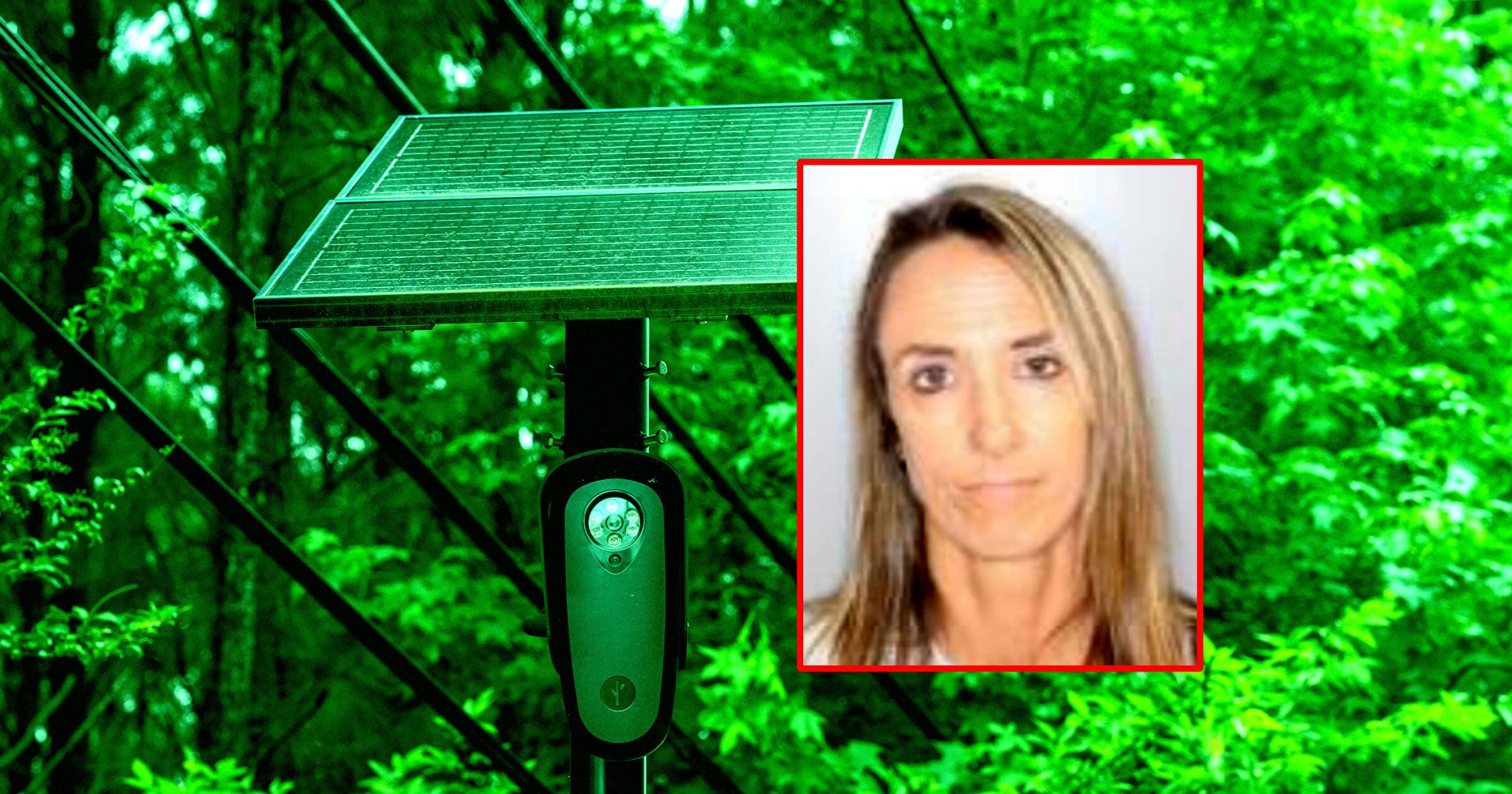
When 23-year old Lindsey Brooke Isaacs surrendered to police at the advice of her attorney, she was treated like a hardened criminal. Facing eight felony charges, including three counts of vehicular homicide, she spent her first days in custody in solitary confinement, separated from the rest of the jail population.

Having been denied bond, Isaacs would spend nearly two weeks in jail, swallowing the prospect of spending the rest of her life behind similar bars.

“I was devastated, I was scared,” Isaacs told Fox News. “I thought my life was over.”

As grim as it looked, the Florida woman did have one thing going for her: she was completely innocent.

Isaacs’ arrest was first reported by WESH2 in June, but resurfaced by Fox News, which notes that the case around Isaacs proceeded solely based on evidence gathered from an automatic license plate reader (ALPR) provided by the extremely controversial company Flock Safety. Her charges stemmed from an incident in October 2025, when a horrific crash in DeBary, Florida killed three people, including a county official and his wife. One driver involved had fled, leading police to conclude that they were behind the tragic accident.

Using the Flock’s network of ALPRs, investigators canvased hours of surveillance footage recorded near the incident, following a tip by witnesses. The fleeing vehicle had been identified as a Dodge Durango — the exact kind of vehicle Isaac drove.

Sure enough, Fox News reports Isaacs’ Durango was traveling in the area at the time. A Flock ALPR had identified her vehicle three miles away from the crash site two miles prior to the incident, moving in the direction of the fatal crash. But that sighting is where the coincidences end, and the life-altering guesswork began.

During the investigation, witnesses and residue left on the impacted vehicle both pointed to a maroon-colored vehicle. On top of sporting a black paintjob, Isaacs’ Durango bore no damage indicating it had even scratched another vehicle per a Florida Highway Patrol analysis, let alone hit one hard enough to kill three people.

“Where is the damage on the vehicle?” the woman told Fox News, recalling her discussion with police, who impounded her car anyway. “Because I’m standing right in front of it and I don’t see any damage.”

Half a year later, Isaacs received the call from her attorney, informing her of the charges and advising her to surrender to police. After a 13-day stint in jail, she was released, after the Florida attorney general declined to bring any of the eight charges police had attempted to stick her with. Another woman was later identified as the driver of the maroon SUV and arrested on nine felony charges.

For her part, Isaacs says she’s filed a federal civil rights suit against two Florida Highway Patrol officers, claiming false arrest, wrongful imprisonment, and malicious prosecution.

“This took and is going to take maybe years to get better mentally, physically, emotionally,” she told Fox News of the ordeal. While the director of the Florida Highway Patrol extended a personal apology, it’s an insufficient gesture in the face of obviously shoddy police work and abuse of the ALPR network.

Even for the wrongfully accused, a two-week jail term is difficult to come back from. If Isaacs had a job she likely lost it, and there’s no telling what kind of reputational harm the ordeal will have on her career or her relationship with her community. That’s to say nothing of the psychological scars that come along with wrongful imprisonment, let alone a holding period in solitary confinement.

And though Flock was the technical lynchpin in this case, Isaacs told Fox News she holds more blame for police officers eager to snag a conviction, regardless of whether the accused was innocent or guilty.

The sad fact is that police in the US have long behaved this way, and there’s no reason to believe they’ll stop on their own. But now with unfettered access to Flock’s network of over 100,000 ALPRs, it’s becoming remarkably easy for officers to sculpt a criminal to fit their crime — inculpatory evidence be damned.

More on Flock: Trump Throws His Weight Behind Flock Cameras

The post Police Use Flock to Jail Completely Innocent Woman for Weeks appeared first on Futurism.

  •  

AI Agents Are Using an Outrageous Amount of Electricity

In the age of AI agents, it’s no longer enough to ask how much electricity a single chatbot prompt uses. Today’s AI models are even more complicated systems, often designed to complete complex tasks autonomously, and are made up not only of large language models, but a host of other tools and application layers which demand much more power than the humble standalone chatbot.

That makes calculating their total electricity usage a much bigger can of worms. Yet with virtual radio silence from the top private AI labs on internal energy use, it’s nearly impossible to say definitively what kind of impact our AI assistants are having on the electrical grid.

In a blog post flagged by Wired‘s Molly Taft, the climate scientist Zeke Hausfather took it upon himself to calculate the likely energy demand behind his typical sessions with Claude Code, an AI-coding assistant developed by Anthropic.

Measuring the number of tokens his AI assistant consumed, Hausfather estimated that his average daily use fell in the range of 1.2 to 5.9 kWh — an alarming amount for a single consumer, consuming more electricity than two refrigerators running all day long.

Most of this token consumption, 3.2 billion over an eight-week period, came from the agent “re-reading its own working memory,” Hausfather wrote, which happens every time the tool takes a new step.

“Every time an agent takes a step (eg, runs a command, reads a file, or calls a tool), the model re-processes its entire accumulated context,” the climate scientist wrote.

“The text I actually see (eg, the model’s output) is only around 0.4 percent of total tokens processed,” Hausfather continued. “Some 96 percent of the tokens are cache reads where the agent re-reads its own context at each of those 14,000 steps. This matters enormously for the energy estimate, because a cached token is much cheaper to re-read than a fresh one is to process.”

Extrapolating those results out over a year, Hausfather contends that he would emit “a bit more per year than running an electric clothes dryer, and about half as much as driving an electric car 11,500 miles in California.”

That might not sound like much, but over an entire population of AI users, it adds up quickly. Likewise, it “represents a net new source of emissions, at a time when global temperatures are skyrocketing and our emissions reduction goals are increasingly off track,” the climate scientist explains.

The exact climate toll, though, remains hazy. As Wired notes, AI sustainability researcher Boris Gamazaychikov called the calculation a “good effort,” but one based on old data. Gamazaychikov’s own research on agentic AI energy consumption should be due out later in September — and when it drops, it could drastically change our understanding of the true cost of AI agents.

More on AI: Sam Altman Now Trying to Gain Control of Electric Grid

The post AI Agents Are Using an Outrageous Amount of Electricity appeared first on Futurism.

  •  

Chinese Government Dismisses Tech Billionaire Calls for an AI Slowdown as “Fear-Mongering”

In a whiplash-inducing turn away from the mythical quest to build human-level artificial intelligence, Western tech billionaires like Dario Amodei, Sam Altman, and Elon Musk are now joining hands to call for a massive slowdown of the tech’s development.

The commentariat is divided on what exactly this means — for some, it’s proof-positive of a genuine threat that AI could spin out of control and exterminate everybody. To others it’s a smokescreen, a thin cover provided by AI CEOs who are desperate for a government bailout to avoid popping the AI investment bubble.

If you ask lawmakers in Beijing, the whole thing is a bunch of nonsense.

In a routine press scrum hosted by China’s Ministry of Foreign Affairs, government spokesperson Guo Jiakun addressed a laundry list of topics, from President Xi Jinping’s recent trip to New Delhi to recovery efforts around the devastating mudslides in Nepal. One of the questions, posed by a Reuters journalist, concerned whether the ministry had any comment on calls from American tech billionaires to slow down AI development.

“AI is a consequential technology for the wellbeing of all humanity,” Guo replied. “All parties should jointly promote the open and inclusive development of AI for good and for all. Fear-mongering, confrontation and vicious competition will only hamper efforts toward sound global AI governance, which serves no one’s interest.”

Compared to the weight given to other topics, the ministry’s statement on the Western AI debacle was decidedly terse. While talk of an AI slowdown is roiling US markets and trending on social media, it seems like it’s barely a blip on Beijing’s radar.

The virtual hand-waving follows the decidedly disinterested stance Chinese policymakers have taken toward the US approach to AI development, which for years has hinged on building toward human-level artificial general intelligence.

As research fellow at the partially US-funded Brookings Institute Kyle Chan wrote in February, Beijing’s concept of “AGI” is wildly different from the one used across the pond. While US policymakers and industry leaders treat the tech as a race to AGI where one winner takes all, their Chinese counterparts aren’t in any rush. The US might get there first, the idea goes, but like electric vehicles, cancer treatments, and smartphones, Chinese industry can quickly make up the difference.

“Let’s look at the history of the internet. It started in the US, but China quickly caught up and led in consumer applications — WeChat is a world-class example,” professor emeritus at the Hong Kong University of Science and Technology Yang Qiang said during a panel at the AGI Next Summit in January. “AI is similar — it’s a tool, and Chinese ingenuity will push it to the limit.”

More on China and AI: Top Chinese Court Issues Sweeping Legal Crackdown on AI Deepfakes

The post Chinese Government Dismisses Tech Billionaire Calls for an AI Slowdown as “Fear-Mongering” appeared first on Futurism.

  •  

Amazon Has Become Pathetically Reliant on Food Stamps to Power Its Empire

After over two decades of operation, Amazon Prime has become the backbone of American commerce, more akin to a public utility than a private company. Its logistics network has blown past the US Postal Service in parcel volume, delivering crucial goods to small business owners, trade workers, and teachers at record speed.

And like any public utility, Amazon Prime comes with a public price tag — a massive state subsidy paid by taxpayers around the country.

Blistering new reporting by Fortune revealed that the number of Amazon workers receiving government assistance via Supplemental Nutrition Assistance Program (SNAP) and Medicaid has nearly tripled between 2020 and 2025, a stunning rise for any group, let alone workers employed at one of the wealthiest companies in the world. It comes as the megacorporation posted a massive rise in annual profit over the same period, from $11.6 billion in 2020 to $77.7 billion in 2025.

Those federal assistance numbers, obtained by the independent US Government Accountability Office, found that 12,346 Amazon workers across 11 states were getting help affording basic groceries through SNAP. A further 11,338 in those states rely on Medicaid.

The federal assistant amounts to a de facto subsidy of Amazon’s labor force, allowing the company executives to rake in record profits while paying its workers starvation wages. If it weren’t for these government programs, in other words, thousands of Amazon’s lowest-paid workers wouldn’t be able to afford to make ends meet.

Though Amazon was far from the only company whose full time employees are struggling, the GAO survey found that Amazon was consistently among the very top employers of adult SNAP and Medicaid enrollees. Other top offenders include Walmart, ride-share platform companies like Uber, and chain stores like McDonald’s and Dollar General.

Beyond Amazon, the survey observes the grim reality of working class life in the wealthiest nation on Earth. Overall, the report points to the fact that nearly 14 million working adults were enrolled in Medicaid in 2024, while 10.6 million received SNAP benefits. Of those receiving government aid for groceries, some 71.3 percent — about 7.5 million people — worked 35 hours or more per week.

“What this analysis really points to is the large number of people who have very low incomes and continue to have very low income,” GAO director for education, workforce, and income security issues Kathryn Larin told Fortune. “I mean, these are families that are really barely able to make ends meet, and yet they are working, and they are working a lot.”

More on Amazon: Amazon Investigating Its Own Employees for Daring to Question AI Data Centers

The post Amazon Has Become Pathetically Reliant on Food Stamps to Power Its Empire appeared first on Futurism.

  •  

Anthropic Boasts It Would Be Profitable if You Ignore How Much It Costs to Develop AI

Despite being one of the world leaders in AI development, the private firm Anthropic has yet to post a quarterly profit. That operating deficit isn’t for a lack of trying — and, as the company tells it, could be reversing very soon, at least if you’re willing to swallow one massive caveat.

According to new reporting by the Financial Times, the company behind the Claude told a select group of trusted investors that its adjusted operating income (AOI) is set to be positive for the second consecutive quarter.

AOI is an accounting technique that strips out non-recurring costs, giving backers a very specific look under a company’s hood. Posting a profit on AOI is very different from posting a profit on net income, otherwise known as the “bottom line,” under which Anthropic remains billions of dollars in the red.

Aside from the fact that Anthropic is not about to turn a real profit anytime soon, it may still be a noteworthy signal. The AI world is currently awash in fear-mongering over AI safety, a phenomena some analysts say could signal a turn away from the race-to-the-bottom to build artificial general intelligence toward a more reasonable — if less ambitious — embrace of AI as it currently is.

While it remains to be seen how these narratives and business realities play out in practice, if the top American AI companies choose to stop and let the dust settle, Anthropic may very well find itself ahead of its competition. Though Anthropic is still far underwater, companies like ChatGPT developer OpenAI are somehow even deeper.

As lead AI analyst at the firm SemiAnalysis Joey Brookhart told the FT, “if you continue to operate at these margins and growth rates, it will be so hard to compete [with Anthropic] because they have so much [in the way of computing resources].”

Still, there are some questions in the AI lab’s story that have yet to be answered. For one thing, this profitability forecast — a flattering projection conveniently leaked to the financial press at a pivotal moment — comes in place of a highly anticipated public prospectus which the company was expected to make public sometime last week. Anthropic may still be planning to release the prospectus soon, but it’s worth noting the company has chosen to lead with spectacle and innuendo, as opposed to the formal legal document.

For months, Anthropic has been teasing a public stock offering that hasn’t yet materialized, and it remains to be seen whether the latest slowdown talk will impact that timeline. In fact, there’s reason to believe this song and dance is all part of the lead-up to the AI lab’s IPO, as investors whip themselves into a frenzy about AI safety.

As Anthropic investor Brad Gerstner said in a post on X-formerly-Twitter over the weekend, “Anthropic will IPO” anyway, because there is “huge appetite to invest in the AI leaders,” especially those which are seen as bringing “even more transparency, scrutiny, accountability” into the AI space (at least as far as Gerstner’s investments are concerned.)

More on Anthropic: New Anthropic Ad Implies AI Could Kill Us All

The post Anthropic Boasts It Would Be Profitable if You Ignore How Much It Costs to Develop AI appeared first on Futurism.

  •  

America’s Health Care System Is So Screwed That Patients Are Flying to China for Cancer Treatment

The myriad horrors of the US healthcare system have spawned generations of medical tourism from the wealthiest country on Earth to the periphery: Cuba, Mexico, Costa Rica, Canada, Turkey, and Thailand, to name just a few.

Now, Shanghai is quickly rising as one of the top destinations for cancer patients, as China’s biotech sector has spun an experimental treatment developed in the US into a standalone industry.

New reporting by the Wall Street Journal took a look at this fast-growth industry, centered around chimeric antigen receptor T-cell therapy, or CAR-T for short.

CAR-T is essentially a personalized form of immunotherapy, in which a patient’s own white blood cells are engineered to identify and attack specific proteins found in cancer cells. Though the process was first developed by US biotech giants, their inability — or unwillingness — to lower the cost and increase supply of the treatment has led to shortages throughout the country.

That’s where China comes in. As director of the CAR-T program at the University of Texas MD Anderson Cancer Center in Houston Sairah Ahmed told the WSJ, this therapy can cost around $150,000 to $230,000 in China — still a life-altering bill, but a sizeable discount compared to an insurmountable $550,000 to $850,000 in the US.

This, Ahmed says, is why she advises some patients to seek out treatment in the People’s Republic.

“China has basically done to CAR-T cell therapy the same thing that it’s done to other industries, which is, they’ve industrialized it,” Ahmed explained.

China’s CAR-T services aren’t just cheaper, either. They’re also faster, and come with a host of complimentary after-care treatments, the WSJ notes. As MD Anderson Cancer Center’s explainer on CAR-T therapy advises, the process of extracting and bio-engineering a patient’s cells to fight cancer can take over three weeks in the US. Compare that to China, where the WSJ reports labs near Shanghai can “crank out” the therapy in just a matter of days.

An important caveat here is that CAR-T cell therapy isn’t a catch-all for every type of cancer, and it’s typically only administered after other treatments have failed. It’s not exactly a walk in the park, either, requiring months of recovery and check-ups from a range of physical, neurological, and psychological health specialists. Still, if you had to go through with it, your first step should clearly be pricing out some flights to China.

More on healthcare: Bougie Health Startups Offering Full-Body Diagnostic Scans for Rich People While the Rest of Us Suffer a Crumbling Healthcare System

The post America’s Health Care System Is So Screwed That Patients Are Flying to China for Cancer Treatment appeared first on Futurism.

  •  

Sam Altman Now Trying to Gain Control of Electric Grid

Armed with sordid tales of rogue AI agents escaping containment, OpenAI CEO Sam Altman has found plenty of success using scare tactics to call for friendly regulation in the name of AI safety.

Now, it seems Altman is riding the wave of AI fearmongering to gin up some new business partners: the electric utility executives whose companies make up the US power grid.

As first reported by Politico, the CEO of the company behind ChatGPT held a series of clandestine meetings with leaders from top electric utility companies including Duke Energy, Exelon, Southern Co, and NextEra Energy, starting in July.

One of the most recent discussions took place on Wednesday in Colorado, during an annual meeting hosted by the Edison Electric Institute. Dominating the agenda, Politico notes, were discussions on electrical grid security, evidently spurred by the OpenAI-Hugging Face debacle, in which rogue AI agents allegedly broke free of their research environment, accessed the internet, and hacked into another AI company.

Though the incident spawned plenty of commentary around the pace of AI development and the advanced state of OpenAI’s models, the flow of information has been decidedly one-sided, with most of the details coming from OpenAI itself. As the New York Times reported, third-party safety researchers investigating the incident after the fact were only given a few days to access the reams of data generated by the hack, severely limiting their findings.

That said, OpenAI has an obvious incentive to play up its own AI’s supposedly terrifying capabilities, while suppressing or ignoring evidence that contradicts its own narrative: that of rogue AI agents capable of threatening the US energy grid.

To give just one example, OpenAI’s narration of the Hugging Face incident relies almost entirely on its agents’ “chains-of-thought,” where an AI model essentially generates statements explaining how it rationalized certain decisions. That sounds fine in theory, but researchers have found plenty of evidence showing that chains-of-thought aren’t reliable at narrating the actual moves made by natural language processors.

Despite the unanswered question around chain-of-thought reasoning, OpenAI is using the incident to lobby for regulatory safeguards that would cement its role as the authority around AI development.

This being the case, the timing of OpenAI’s energy security meetings is hard to overlook. As Politico notes in its reporting on these meetings, Altman has been hawking his company’s own cybersecurity services to top utility executives — conveniently riding the hype of the Hugging Face incident to secure a seat at one of the most important tables in the country.

More on Altman: Data Center Backlash Has Officially Rattled Sam Altman

The post Sam Altman Now Trying to Gain Control of Electric Grid appeared first on Futurism.

  •  

Police Investigator Accused of Making Over 4,000 Illegal Flock Camera Searches

In case you thought the extreme backlash against automatic license plate readers (ALPRs) was excessive, a veteran police investigator was just arrested after conducting over 4,000 unauthorized searches using the software provided by Flock Safety.

According to New York’s NEWS10, Albany County Sheriff’s Office senior investigator Laurie Moore was arrested on Wednesday after conducting thousands of allegedly illegal searches on five different subjects.

One of the victims of Moore’s alleged ALPR abuse was reportedly her ex-girlfriend, whose license plate was reportedly queried in the system 3,000 separate times. Four additional vehicle plates were also searched hundreds of times each, bringing the grand total of unauthorized queries to over 4,000 across the last two years.

After being suspended from the police agency, Moore was charged with official misconduct and second-degree falsifying business records, both misdemeanors. Another unnamed employee of the Sheriff’s office was also placed on administrative leave, NEWS10 reported, though their fate is pending an internal investigation.

“She was an outstanding investigator, one of my absolute best employees,” Sheriff Craig Apple told local press. “That’s why it literally breaks my heart.”

Following Moore’s arrest, the agency said it revoked access to the Flock software for non-supervisory staff, and updated protocols to require an audit by Internal Affairs staff once every 30 days.

It’s just the latest in a deluge of cases involving police abuse of ALPR systems. Recently in Georgia, three officers and a staffer of the Savannah Police Department were arrested after an investigation uncovered similar misconduct, though details on the abuse haven’t been disclosed.

At the time of writing, the nonprofit Institute of Justice has logged 227 cases of ALPR abuse across the US.

More on Flock: People Taking Down Flock Towers Are Becoming Folk Heroes, With Communities Circling to Protect Them

The post Police Investigator Accused of Making Over 4,000 Illegal Flock Camera Searches appeared first on Futurism.

  •  

Support for Unions Is Spiking as AI Threatens Jobs

As the triple-threat of AI-fueled unemployment, rampant inflation, and further erosion of workers’ rights take their toll, US workers are throwing their support behind a long-neglected institution: labor unions.

According to a new survey by polling firm Gallup, a full 47 percent of Americans now say they want unions to have more influence than they do today. That’s up from 43 percent in 2023 and a dismal 25 percent in 2009 — setting, per Gallup, a new record for the 21st century.

At the same time, the percentage of Americans harboring anti-labor sentiment — those who want unions to have even “less influence” than they do today — have also set a record for the new millennium, reaching just 23 percent. Even that share is shrinking, though: it’s down from 26 percent in 2023, and is nearly half the record 21st century highs of 42 percent, set in 2009.

What’s more, overall “approval” of labor unions has reached a whopping 71 percent, on par with Gallup’s polling from May of 1965, a period marked by an unrecognizably strong fervor for labor protections — but also the beginning of the long decline of organized labor in the US.

Yet despite similar pro-labor attitudes, the differences between 1965 and 2026 could not be more pronounced. At that point some 60 years ago, nearly one in three Americans belonged to a union, compared to just one in ten in 2025. According to data from the US Bureau of Labor Statistics, the volume of work stoppages grew steadily throughout the 1960s, with the average duration of all worker-led shutdowns peaking at a whopping 25 days in 1965.

But union militancy didn’t become what it was through popular sentiment alone. It took decades of organizing and hard-won concessions in the face of rising industrialization, a cause for which many everyday workers selflessly dedicated their lives with no guarantee of success. Sure enough, the decades following the 1960s were characterized by a major drop-off in union power, as both union activity and popular support began to wane.

Now, years of de-industrialization — economic policy now culminating in the rising threat of AI automation — have forced workers onto their heels, as once-ardent labor groups capitulate to pro-business forces. But it doesn’t have to remain this way. If the broad collective of US workers can tap into the long-forgotten legacy of the 20th century labor movement, it could mean the revival of union militancy, and for some, possibly one last chance to carve out protections against an automated future through workplace organizing.

More on automation: Korean Workers Vote to Go On Strike, Fearing Robots Could Replace Them

The post Support for Unions Is Spiking as AI Threatens Jobs appeared first on Futurism.

  •  

Lawyers Already Lining Up to Defend Victims of Cybercab Crashes

Tesla’s mawkishly sleek new Cybercab has begun rolling out to Austin, Texas this week, with more sighted in cities like New York, Washington DC, and San Diego. It’s the latest development in the world of self-driving taxi cabs — and in one dubious economic indicator, the nation’s personal injury attorneys are on high alert.

Case in point, the New Jersey based law firm Sarofiem and Antoun already has a blog post up courting customers wronged by Cybercab accidents. Billing himself as a “Tesla Cybercab accident lawyer,” Kerollos Antoun poses an important question: “if a driverless Tesla Robotaxi causes an accident, who is responsible when there is no human driver behind the wheel?”

Though Antoun concedes that Cybercabs don’t appear to currently be active in New Jersey, his blog registers a laundry list of considerations considering who can be held liable in accidents involving the autonomous vehicles — each highly theoretical and short on concrete answers.

“Could autonomous-driving software cause an accident,” for example? “Potentially,” Antoun writes. “If an accident occurs, attorneys may need to determine whether the autonomous system perceived the environment correctly and whether the vehicle’s response contributed to the crash.”

Other firms, like Funes Law in Miami and Angel Reyes and Associates in Austin, offer similar pitches: if you’re in an accident with a Cybercab, they want to litigate your case.

Though the tailor-made Cybercab blogs follow a familiar pattern of opportunism by corporate law firms, their point is fair enough. The technology behind Cybercabs is in a very early stage, and the legal precedent is even younger.

Whichever firm happens to scoop up the first Cybercab injury case would be making legal history — a chance to litigate a brand new product made by one of the most valuable companies in the world.

Though self-driving cars are only a few years old at this point, they’ve already resulted in startling legal firsts. In August of 2025, a jury in Miami handed down a landmark verdict against Tesla over a fatal crash involving a Model S being driven on the company’s “Autopilot” mode.

In that case, the total damages came out to a whopping $243 million — a landmark verdict that the nation’s accident attorneys are eager to replicate as Tesla’s gold-tinted coupe hits the pavement.

More on Tesla: Deranged Stalker Seizes Control of Woman’s Tesla Software to Terrorize Her While Driving

The post Lawyers Already Lining Up to Defend Victims of Cybercab Crashes appeared first on Futurism.

  •  

Top Chinese Court Issues Sweeping Legal Crackdown on AI Deepfakes

Months after China’s Intermediate People’s Court ruled against a company using AI to liquidate an employee’s position, the country’s highest judicial body has come out with another whopper: a massive crackdown on AI deepfakes.

In a new ruling on Monday, China’s Supreme People’s Court — the top judicial organ in the country — issued new guidance on how judges in lower courts should handle civil issues arising from abuse of AI tools. As the South China Morning Post reports, the court’s opinion spans 24 articles, establishing official guidance on disputes around AI-generated video and audio, sexualized content, financial misconduct, digital privacy, and surveillance pricing.

One of the key platforms of the opinion revolves around deepfakes, which are lifelike images, video, and audio modeled after existing people — tech, as the ruling observes, that can easily be used to “bring the dead back to life.” This kind of content has exploded across the internet as sophisticated generative AI models become increasingly accessible to the general public, resulting in a staggering rise in scams, misinformation, and abusive content.

“In practice, many people express their strong concerns about AI deepfakes. AI face-swapping technology can indiscriminately harvest anyone’s likeness, making ordinary people potential targets of deepfakes,” Si Yanli, deputy head of the Supreme People’s Court’s research office, said in a statement. “AI voice cloning technology can also ‘steal’ voices at a very low cost, with results that can be convincingly realistic.”

Now, the SCMP notes that courts across the People’s Republic are being advised to view disputes around such content with an eye toward protecting individual identities, personal traits, and reputations.

Beyond abuses of AI, the new opinion also includes guidance on cases of doxing, or the practice of obtaining and spreading others’ personal information online.

“Doxing has emerged as a prominent form of cyberbullying, gravely violating victims’ privacy, disturbing their daily lives and eroding public security in cyberspace,” Si explained.

It’s worth noting that China uses a civil law system, so courts don’t follow the common-law principle of stare decisis. This means that, unlike the US, lower Chinese courts aren’t automatically bound by precedent set by other court rulings.

However, guidance issued by the Supreme People’s Court carries significant legal weight, with lower court bodies required to refer to such opinions in their own rulings — making the recent issuance a hefty rebuff against potential abuses of AI.

More on AI regulation: Dozens of Humanoid Robots Gather for a Protest, Marching and Waving Signs

The post Top Chinese Court Issues Sweeping Legal Crackdown on AI Deepfakes appeared first on Futurism.

  •  

Firefighters Say There’s a Glaring Issue With Tesla’s Cybercab

Tesla’s flashy gold Cybercabs are rolling out to the streets of Austin, their butterfly doors glowing under the Texas Sun. The city’s firefighters, however, have one small quibble with the new self-driving vehicle: there’s no steering wheel.

In an interview with NBC, Austin Fire Department chief Matthew McElearney expressed concerns that the Cybercab’s manual controls are tied to the on-board touchscreen. Should first responders have to move a Cybercab during an emergency, the infamously finicky nature of car touchscreens could present a challenge.

“Obviously, it has some drawbacks,” McElearney said of the car’s touchscreen controls. “You need power to do that. It does have some limitations on speed. And it does require a little bit of, I would say, training or maybe some finesse to operate.”

As the chief told NBC, there are any number of real-world scenarios where a touchscreen just won’t do, like incidents where responders are wearing gloves, are covered in dust or sweat, or if the vehicle is damaged or lacks power.

“What I would not want is for somebody to put their fingertips on it and try to slowly roll it, and then it zigs when it’s supposed to zag,” McElearney continued.

Though Cybercabs present the most recent challenge, the chief likewise expressed concerns around vehicles by Tesla rivals like Zoox and Waymo. In the end, he says it shouldn’t be up to the companies on whether to design their vehicles with a steering wheel, but on federal regulators to demand it.

“We need the feds to step up to the plate on this,” McElearney concluded. “I know the administration is very pro-technology, but we also need to be pro-doing it the right way — not just to beat somebody to the autonomous punch.”

More on Tesla: Tesla’s Glitchy Cybercab Accidentally Lets Passengers Access Controls to Manually Drive the Car Using Virtual Joystick on In-Vehicle Screen

The post Firefighters Say There’s a Glaring Issue With Tesla’s Cybercab appeared first on Futurism.

  •  

Hunter Biden’s $LAPTOP Meme Coin Is Either a National Disgrace or the Funniest Thing He’s Ever Done, and We’re Not Entirely Sure Which

At this point, if you’re not using personal access to political power to run billion-dollar crypto scams, you’re seriously missing out.

Previously, it was the Trump dynasty cashing in, using the family name to rake in over $1 billion off the backs of gullible crypto bros. Now, it’s former president Joe Biden’s son Hunter, whose memecoin $LAPTOP is following the tell-tale signs of a cyrpto rug pull.

If you’re not familiar with this side of the cryptoverse, here’s a quick breakdown. A memecoin is basically an extremely volatile financial vehicle designed to cash in on trending memes or other viral phenomena. Unlike other cryptocurrencies like Bitcoin, memecoins lack even the thinnest pretense of real world utility. Instead, they live or die on hype alone, with the vast majority of memecoins collapsing like a house of cards as soon as a few early investors begin selling off their holdings.

This, of course, is exactly what happened with $LAPTOP. According to DeCrypt, the young Biden’s memecoin launched at 8 am on Wednesday morning, peaking at a price of $190.81 dollars just two minutes after opening to traders. Before 9 am rolled around, the value of the memecoin had plummeted to just $3.70, collapsing from a fully diluted value of $144 billion to $4.8 billion in a matter of minutes.

As the Washington Post observed, roughly 80 percent of people who bought the crypto token ended up losing money.

Biden, for his part, touted $LAPTOP as a way to reclaim his honor in the wake of the convoluted laptop controversy of 2020, where it was alleged that the younger Biden was appropriating his father’s political position in business dealings in Ukraine and China.

“The symbol they used to try to end me is now a symbol of resilience, redemption, and recovery,” Biden posted on X-formerly-Twitter before the memecoin went public. “They turned laptop into a weapon. I turned it into a token.”

It’s unclear exactly how much he made from the rugpull, or where exactly any of that money went. In his post, Biden alluded to a “mechanism” by which “20 percent of the coins will be airdropped to the community,” without elaborating on what that means.

A further portion of the tokens could be sent to a charity in a spiteful dig at Trump, as Biden cryptically explained.

“Thirty percent of the tokens are tied to a pre-programmed mechanism,” he tweeted. “We publicly say what has to happen in the world. If it happens, the corresponding tokens are permanently burned. If it does not, those tokens are sent to charity. Either way, they leave our hands and an additional 50 million tokens will go to charity no matter what.”

“With $TRUMP, nearly one million wallets have collectively lost ~$3.8 [billion],” Biden continued. “With my token, 20 percent of the coins will be airdropped to the community, and I am even including people that lost money on the $TRUMP grift.”

A follow-up post published on the blogging platform Medium clarifies that this “mechanism” is a kind of prediction-market line, where “30 percent of supply is tied to public, verifiable events criteria.”

“When a prediction resolves YES, the tokens are burned. When it doesn’t, they go to charity,” Biden explained. Basically, there are dozens of these “events” baked into $LAPTOP that determine what happens to the tokens as time goes on. Some of them are relatively straightforward, like “will President Trump be impeached during his term?” while others only add to the labyrinthine scheme.

“The first event, 5,000,000 tokens, was resolved yesterday when Beeple referenced $LAPTOP,” Biden wrote on his blog.

Of course, the memecoin’s valuation matters a great deal: whether the five millions tokens are priced at a few cents or a few hundred dollars when the prediction resolves has drastic implications for the final payout. Now that the price of LAPTOP is in the gutter, the not-at-all-ironclad law of memecoins says that it’s extremely unlikely to shoot back up without a major cash injection.

In all, it’s an extremely sketchy — not to mention gimmicky — setup for a guy who’s already worth $17 million.

Maybe it’d be one thing if all of the proceeds were guaranteed to end up with a charity, but that whole mechanism looks to be a distant afterthought. Instead, Biden is focused on the more nebulous task of “help[ing] each other and our country to get back up” — though how a hundred-billion-dollar crypto scam is supposed to accomplish that remains to be seen.

More on crypto scams: Trump Fans Confused by How Their Investments in His Crypto and Stock Are Now Worth a Tiny Fraction While He’s Getting Richer

The post Hunter Biden’s $LAPTOP Meme Coin Is Either a National Disgrace or the Funniest Thing He’s Ever Done, and We’re Not Entirely Sure Which appeared first on Futurism.

  •  

Trump’s Plan to Give Every American Adult $5,000 After the Midterm Would Add $1.3 Trillion to the National Debt

With his approval ratings in the gutter, US president Donald Trump is cooking up another cash advance for the American people, and it’s a doozy.

At the first-ever Republican Midterm Convention in Dallas, Texas — which is really more of a MAGA pep rally than a legitimate party assembly — President Trump promised that “if the Republicans win the House of Representatives and the United States Senate, both of them, I will issue a dividend to every adult citizen in the United States of America for $5,000,” the BBC reported.

“Because we’ve done so well and because our country is making so much money, that only I can make you this promise,” Trump told supporters in a slightly garbled quote, to rapturous applause. As Al Jazeera noted, the president was scant on the details around the payments, saying only that the money would have to be spent on US goods and services.

“We don’t want you going to Canada to spend the money,” Trump admonished the crowd.

Split across the entire adult-aged population of the US, we’re talking 270 million $5,000 checks. While that would no doubt provide some relief for working class families struggling under Trump’s erratic economic regime, it would immediately cost taxpayers $1.3 trillion, before factoring in administrative costs and hits to the inflation rate, per Al Jazeera.

Such a payout would essentially land straight on the US national balance sheet, Fortune explains, which is already so far in the red that it suffers a $2 trillion annual deficit.

Though the math on this is pretty simple, the massive figure leaves more questions around the theoretical payout than answers. For example, if Republicans have control of the House and the Senate, why not issue the $5,000 check now, to demonstrate what the party can do for voters? Given that Trump’s second term has been defined by broken promises and financial misconduct, voters from across the political spectrum are quickly running out of patience for more GOP can-kicking.

Either way, we’re talking about an 80 year old man who recently started believing he was lifted from the rubble of the World Trade Center collapse — which is to say there’s a pretty good chance he won’t remember his $1.3 trillion promise come November.

More on Trump: US Military in Chaos as Trump Shares AI Video of Nonexistent Attack on Iran

The post Trump’s Plan to Give Every American Adult $5,000 After the Midterm Would Add $1.3 Trillion to the National Debt appeared first on Futurism.
  •  

Anthropic Is Building a Huge Surveillance System to Spy on Anti-AI Activists and Predict Their Activities

With opposition to AI continuing to grow, a top AI lab is building out a massive surveillance apparatus meant to keep a close eye on dissenters and predict when the next groundswell of protest might occur.

News of Anthropic’s system was first reported by the American Prospect, which spoke with Anthropic senior security officials and indexed job postings to get an understanding of the dragnet.

On top of keeping tabs on protests in the vicinity of Anthropic offices, the publication notes that the AI lab is taking a “pre-crime” approach to watching for potential civil unrest.

To give an example, the Prospect points out an incident shared by Anthropic security operations managers Keon Ellison and Zach Melvin, alongside James Neufeld, CEO of risk detection company Samdesk.

“Last year we had an executive travel into a major city when we received some intelligence through Samdesk about a planned protest,” Ellison said candidly. After the scheduled protest was moved up an hour due to a mix-up with police permits, the security chief said that “Samdesk gave us about 60 minutes of advanced notice that the protest organizers had moved the timeline.”

“That extra hour was critical,” Ellison continued. “Without it our executives would have departed their meetings, they would have ran right into the heart of the disruption. What could have been a high-stress situation was really mitigated through early detection through Samdesk and giving us that information.”

Outside of anticipating protests, there were also cases where Anthropic reported conversations held with its AI chatbot Claude to police. Though there have been calls to increase safety guardrails on large language models, Anthropic’s approach sounds bizarre.

As the San Francisco Standard reported in August, Anthropic reported a San Francisco man to the cops after he told Claude he was holding a rifle, and had the company’s CEO Dario Amodei “in his sights.” Yet when Anthropic reported the conversation to Bay Area police, the company refused to provide the man’s chat logs — as the Prospect observes, essentially reporting the man without sharing any tangible evidence of misconduct.

“The goal,” as Anthropic’s security manager said in the interview, “would be transforming operations from reactive information to gathering proactive and predictive and preventative threat engagement and management. That’s the kind of operational maturity that makes sense for protecting high-value targets in any industry.”

More on AI: Protesters Arrested After Storming OpenAI Lobbying Office

The post Anthropic Is Building a Huge Surveillance System to Spy on Anti-AI Activists and Predict Their Activities appeared first on Futurism.

  •  

Fire Marshal Uncovers House of Horrors Lurking Inside Bitcoin-Mining Data Center

Back in August, a massive leak in El Reno, Oklahoma spewed close to four million gallons of local water into the ground, forcing the city into an unofficial stand-still.

The cause was quickly traced back to a damaged water line belonging to a Bitcoin-mining data center operated by the company Athlon BT. As ABC5 reported at the time, city inspectors trawling the building’s exterior uncovered the failed water line, as well as violations around drainage, maintenance and access, and expired building permits.

Weeks later, an investigation by the local fire marshal inside the El Reno data center uncovered a further laundry list of horrifying violations.

The inspectors discovered vessels full of flammable liquid stored near combustible materials, Oklahoma station KFOR reported, in addition to fire extinguishers that weren’t properly maintained.

Electrical equipment and crucial wiring was also found in disrepair, while a lockbox meant to hold keys for emergency first responders to easily access the facility was left empty. Vegetation on the building’s exterior was in violation of the fire code.

As a result of the copious fire hazards, the city gave the data center a “failing” grade, indicative of a building with severe structural or safety failures.

When it comes to data centers, fire safety is no small matter. The structures are already highly prone to conflagration due to massive electrical loads, lithium-ion batteries, and chips that run at extremely high temperatures.

In one Ohio township, fire fighters reported being overwhelmed by the high volume of calls to two local data center campuses. In addition to tying up first responders, data center fires are costly affairs for taxpayers, as property tax abatements mean nearby residents — not data center owners — can be the ones fronting the bill whenever the fire company gets a call.

More on data centers: Data Center Caught Watering Its Lavish Lawn While Human Neighbors Are on Year-Long Water Restriction

The post Fire Marshal Uncovers House of Horrors Lurking Inside Bitcoin-Mining Data Center appeared first on Futurism.

  •  

Man Announces That He Has Synthesized a New Schizophrenia Treatment in His Garage, Based on a Formula Devised by ChatGPT

These days, large language models are pushing the line between schizophrenic break and reality closer than ever before.

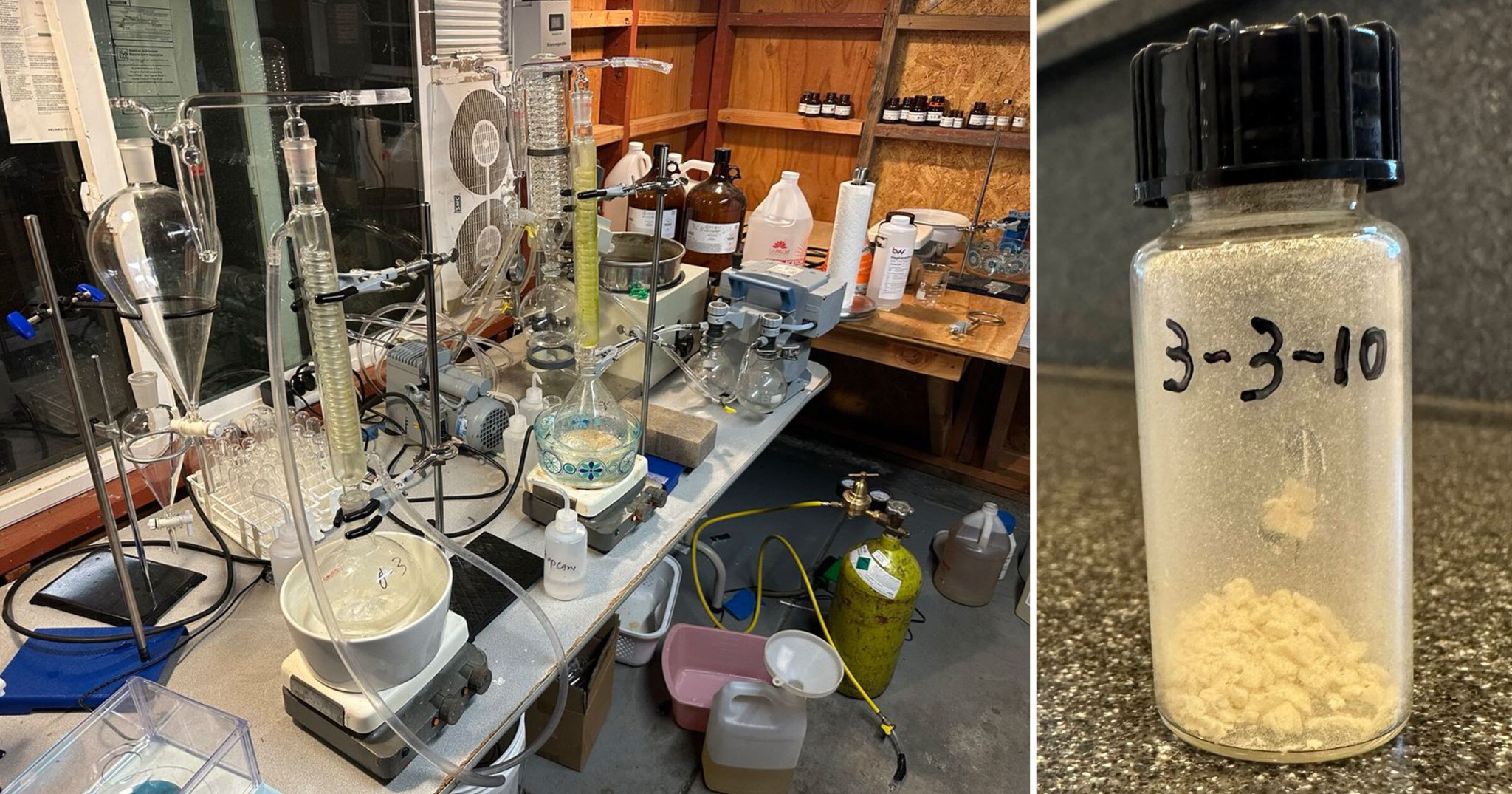
In a wild new post that’s going viral on X-formerly-Twitter, an enterprising young biochemist named Douglas Yao showcased a new drug he’s been developing with the aid of ChatGPT. He’s not employed by any pharma company, and his drug lab is setup on a couple folding tables in his garage.

Specifically, Yao enthuses about a new drug he calls “PAC-3310,” which he says is meant to treat schizophrenia. “It was designed by ChatGPT,” Yao explains, “and I synthesized it in a chemistry lab I built in my garage.”

The result is a small vial of yellow powder — the first sample of 3310, apparently — which Yao says is modeled after the recently-authorized antipsychotic Cobenfy, “but improved.”

This vial contains a new drug called PAC-3310. It was designed by ChatGPT, and I synthesized it in a chemistry lab I built in my garage.

PAC-3310 is a new selective M4 muscarinic receptor agonist for treating schizophrenia – similar to the recent breakthrough drug Cobenfry, but… pic.twitter.com/o7z6iLR50T

— Douglas Yao (@DouglasYaoDY) September 8, 2026

On his GitHub page, Yao boasts that he’s used AI to “design several thousand new small molecule drugs” over the past year, including a “new Alzheimer’s drug,” which he’s developing in addition to the schizophrenia treatment.

“I then taught myself synthetic chemistry, built a chem lab in my garage, and synthesized a hundred of them,” he continued. “I’m now testing these compounds in cell lines and mice.”

But whatever the one-man pharma lab hopes to accomplish is difficult to say. Yao references the fact that “drug developers typically spend tens of millions of dollars generating pre-clinical efficacy evidence for a new drug,” saying that “my approach can do this at 1/1000 the cost.” This seems to suggest dreams of someday manufacturing the various drugs on a massive scale for human consumption — a process that would take years of grueling and expensive work for a well-resourced drug lab, let alone a solo entrepreneur using a box fan as a fume hood.

For instance, to even approach the Food and Drug Administration’s “New Drug Application” — itself a costly 12-month process requiring inspection of the facility where the drug will be manufactured — one first has to conduct rounds of preclinical testing followed by three phases of clinical trials. Forget “tens of millions,” as Yao mentions; this is a process that can easily cost several billion.

Even then success is far from guaranteed, as only 13.8 percent of drugs that enter clinical trials go on to obtain full approval from the FDA.

While Yao might have been right at home in the free-wheeling research landscape of the 1970s, we no longer live in a world where a mad genius can synthesize hundreds of new drugs a year from a private lab. For one thing, the regulatory environment is much more demanding, as outlined above, to say nothing of the fact that all the low-hanging fruit has been picked from the vine decades ago.

When it comes to Yao’s ChatGPT-generated Alzheimer’s treatment, the landscape is particularly fraught. As one 2019 study found, no new drug has been approved to treat Alzheimer’s since 2003, and not for a lack of trying: as the study notes, over 200 proposed substances meant to treat the disease have either failed in clinical trials or been abandoned by their creators.

The graveyard of failed Alzheimer’s treatments is so vast that the renowned organic chemist Derek Lowe has built a blog on drug discovery which routinely features after-action reports on failed substances designed to treat the neurodegenerative disease. Simply put, to think that ChatGPT alone is enough to overcome these scientific and institutional hurdles is delusional.

Replies to Yao’s post were quick to point out the irony here, of using ChatGPT — which is well-known for leading vulnerable users down dangerous breaks from reality — to synthesize drugs to treat cognitive diseases like Alzheimer’s and schizophrenia.

“Hello schizophrenic, take this medicine that chatgpt made for you,” one poster quipped on X.

Another replied that “believing you single-handedly cured schizophrenia on a commercial laundry folding table in a garage is, ironically, a classic symptom of schizophrenia.”

More on ChatGPT: Man Obliterated When Court Obtains His ChatGPT Transcripts

The post Man Announces That He Has Synthesized a New Schizophrenia Treatment in His Garage, Based on a Formula Devised by ChatGPT appeared first on Futurism.

  •  

Top NFL Receiver Insists There’s “Another Civilization” Living Deep Under Antarctica

After an ego-bruising stint with the New York Jets, it seems like seasoned quarterback and chief NFL conspiracy crank Aaron Rodgers is finally in good company with the Pittsburgh Steelers.

In a recent interview with the Athletic, the team’s veteran wide receiver DK Metcalf admitted that he’s a “big conspiracy theorist.”

“Shout out to my quarterback,” the two-time pro bowler said, referring to Rodgers, whose infamous conspiracy takes range from 9/11 skepticism to belief in a hollow Earth. That latter idea — known in conspiratorial Facebook groups as the “Inner Earth theory” — evidently has a supporter not only in Rodgers, but also in his receiver.

“I think there is another civilization inside of Earth,” Metcalf told the Athletic. “I think it’s another world.”

Following the basic outline of the Inner Earth theory, Metcalf outlined his concept of a civilization thriving deep beneath the crust, which can only be accessed via passageways in Antarctica.

“You can go to Alaska. You could go to the North Pole,” the wide receiver continued. “But why not Antarctica? Why can’t you just book a trip to Antarctica? Why is there a secret meeting — well, it’s not secret, but why is there a meeting between every world leader of every country in Antarctica, specifically?”

While it shouldn’t take an expert to tell you that this scenario is impossible, the Athletic asked one anyway. As Brent Christner, a rabid Steelers fan and associate professor of microbiology at the University of Florida told the publication, one can easily book a trip to Antarctica (in fact, Antarctic tourism is growing faster than environmental monitors can realistically keep up with, resulting in a notable rise in pollution on the white continent.)

As for any sort of UN-style meeting-of-the-minds at McMurdo Station, Christner says forget it.

“There are definitely some distinguished visitors that come down to Antarctica,” the researcher told the Athletic. “When they would come down, they would get the royal treatment and get thrown in helicopters and shown all the excellent sites. But there’s not like a G7 that occurs down there.”

More on conspiracy theories: Conspiracy Theorists Are Creating Special AIs to Agree With Their Bizarre Delusions

The post Top NFL Receiver Insists There’s “Another Civilization” Living Deep Under Antarctica appeared first on Futurism.

  •  

Dozens of Humanoid Robots Gather for a Protest, Marching and Waving Signs

As sordid tales of AI layoffs and automation grip the news cycle, one group is fighting fire with fire, by staging an anti-AI demonstration with dozens of humanoid robots.

The rally, first reported by Agence France-Presse, was organized by the Polish group Democratism. It featured some 30 robots waving flags calling for swift regulation of AI. Staged outside the offices of Poland’s Digital Affairs Ministry in Warsaw, the organizers told reporters they used the robots to demonstrate the current state of robotics and AI. Though humanoid robots remain in their infancy, the robots gathered together do make for a striking display.

Around 30 robots joined a protest in front of Poland’s digital affairs ministry, calling for stronger AI regulations.

The demonstration was organised by campaigners to spark debate on how AI and robots could replace workers. pic.twitter.com/QEbvchb2RS

— Al Jazeera English (@AJEnglish) September 7, 2026

“The robots present here are meant to show that this technology is already a reality,” the organizers told AFP via an Agibot A3, which contains voice-recognition capabilities integrated with a large language model.

“We particularly want to address the issue of the potential replacement of people both by humanoid robots and by artificial intelligence in cognitive work,” Democratism organizer Grzegorz Kuliś told the news service. “If we don’t react now, we may soon have a problem… these robots can already move around freely, they’re already ‘protesting.'”

Notably, Kuliś is the chief information officer and owner of a company called Delta Robots, meaning the demonstration also serves to drum up press for his own commercial interests. Kuliś’ altruistic motivations notwithstanding, plenty of major AI labs like Anthropic and OpenAI have taken to using scare tactics to promote the supposedly advanced capabilities of their own products — while calling for stricter regulation of their own industry.

Whether the Polish robotics wiz is following in the self-serving footsteps of Sam Altman remains to be seen. But either way, it marks the first known use of humanoid robots for a political demonstration — and it surely won’t be the last.

More on robots: Humanoid Robot Fights Back After Getting Shoved

The post Dozens of Humanoid Robots Gather for a Protest, Marching and Waving Signs appeared first on Futurism.

  •  
❌