❌

Reading view

Fans for fans: power demand surges as England viewers cope with heatwave

Handful of gas plants paid £4m to generate electricity at half- and full-time in World Cup game

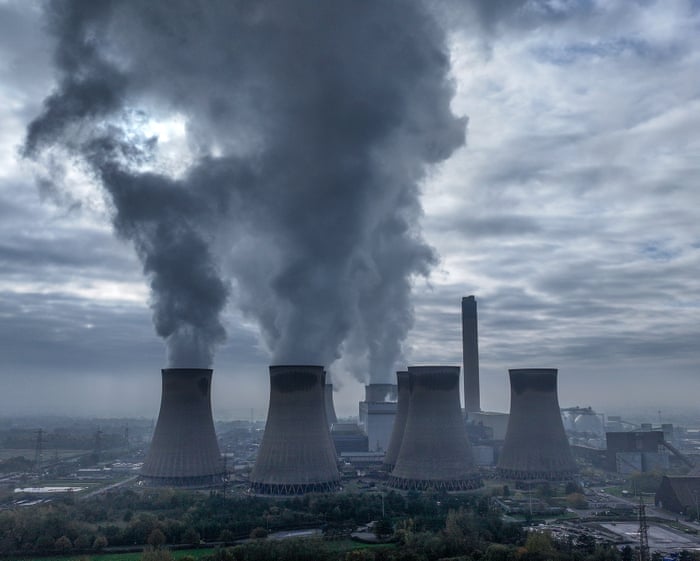
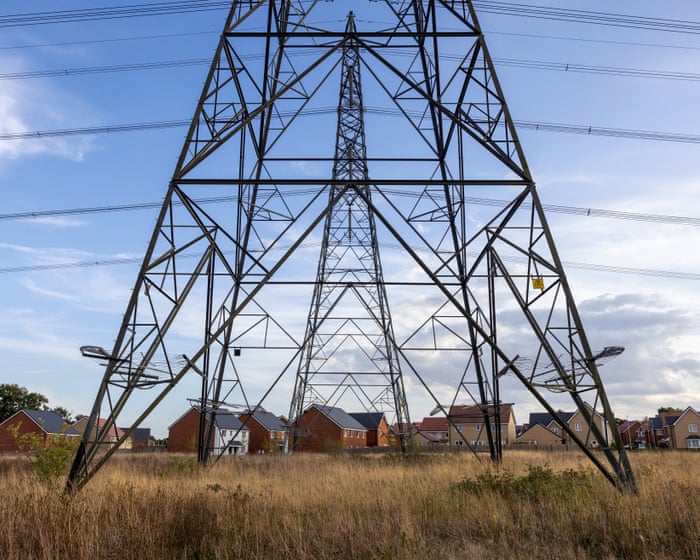
A handful of Great Britain’s gas power plants were paid almost £4m to generate electricity for just a few hours on Tuesday evening as millions of sweltering viewers turned to air conditioning, electric fans and icy drinks during England’s second World Cup game.

The heatwave has caused electricity prices across Europe to surge this week amid higher demand for cooling and a string of power plant outages due to the record high temperatures.

Continue reading...

© Photograph: DeFodi Images/Shutterstock

© Photograph: DeFodi Images/Shutterstock

© Photograph: DeFodi Images/Shutterstock

  •  

Why are Australian energy prices going up – and when will electricity bills come down?

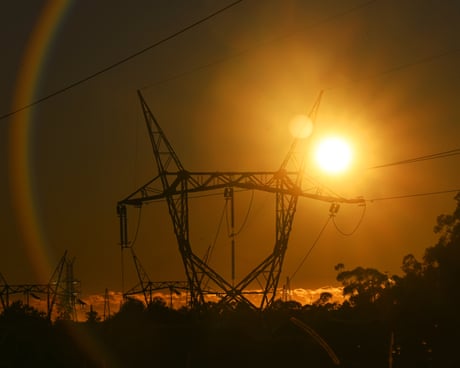
Power prices are expected to fall from 1 July – but the savings, touted by Chris Bowen, won’t be passed on to many households and businesses

As energy companies prepare to update their electricity offers from July, some are choosing to hit households with higher fixed costs in the form of supply charges, according to reports in the ABC and Australian Financial Review.

For some, the shift could mean higher prices overall, especially for those who don’t consume much energy.

Continue reading...

© Photograph: Dave Hunt/AAP

© Photograph: Dave Hunt/AAP

© Photograph: Dave Hunt/AAP

  •  

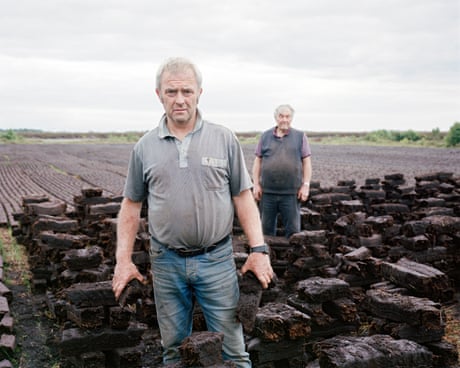
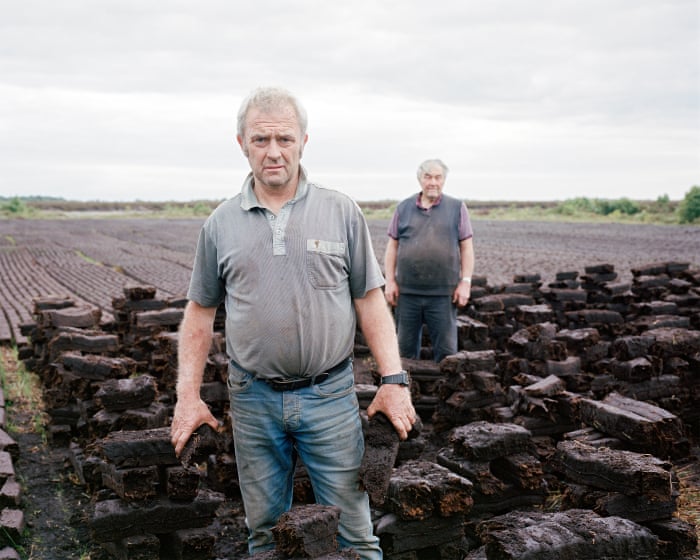
Documenting Ireland’s vanishing boglands: ‘They hold millennia in their layers’

Photographer Shane Hynan explores the tension between the central role peat bogs play in Irish life and their wider environmental impact

“You can read Ireland’s history in the boglands. They hold millennia in their layers,” says photographer Shane Hynan of his project, Beofhód (meaning Beneath in English).

The boglands, known as portachs in Irish, cover roughly 1.2m to 1.5m hectares or about 14% to 17% of the country’s total land area. The raised bogs of the Irish Midlands are made of peat that forms at a rate of 1mm a year (0.04in) in low-lying, poorly drained basins or former lakes. As the historical geographer Kevin Whelan observes in the Atlas of the Irish Rural Landscape, “the bog has been etched as deeply into the human as into the physical record in Ireland – to an extent unrivalled elsewhere.”

Eddie and Con footing turf for domestic use, Knockirr Bog, County Kildare, 2022.

Continue reading...

© Photograph: Shane Hynan

© Photograph: Shane Hynan

© Photograph: Shane Hynan

  •  

Populist and rightwing figures take aim at Ed Miliband and UK net zero policies at ‘anti-woke Davos’

Kemi Badenoch, who joined US anti-abortion activists and European far-right parties at ARC, described energy secretary as a ‘villain’

Britain’s net zero policies and the energy secretary, Ed Miliband, have come under fire at a conference of conservatives, rightwing populists and wealthy US backers linked to Donald Trump.

The energy policies pursued by the British government were described as a “tragic mistake” by Trump’s energy secretary, one of a number of officials from the US administration attending the event.

Continue reading...

© Photograph: Jordan Pettitt/PA

© Photograph: Jordan Pettitt/PA

© Photograph: Jordan Pettitt/PA

  •  

Clean economy brings jobs and growth, says Miliband as £100bn invested in green energy

Energy secretary hails £100bn milestone in this parliament and says it is ‘only the start of what we want to achieve’

Ed Miliband has hailed a boost to UK jobs and growth as government data reveals that private sector companies have pledged more than £100bn in investment into the green economy so far in this parliament.

Offshore wind, solar power and the electricity grid make up the bulk of the planned investment, most of it between 2024 and 2031, which will go to all regions of the UK and comes from a mixture of UK companies and overseas sources including the EU and Japan.

Continue reading...

© Photograph: Anadolu/Getty Images

© Photograph: Anadolu/Getty Images

© Photograph: Anadolu/Getty Images

  •  

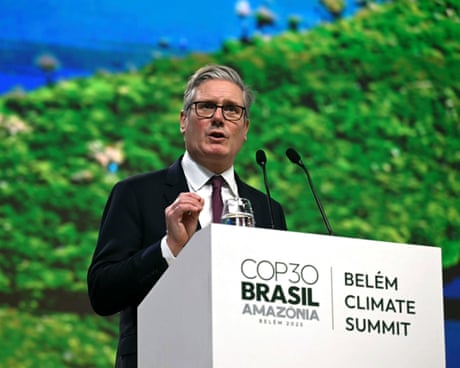
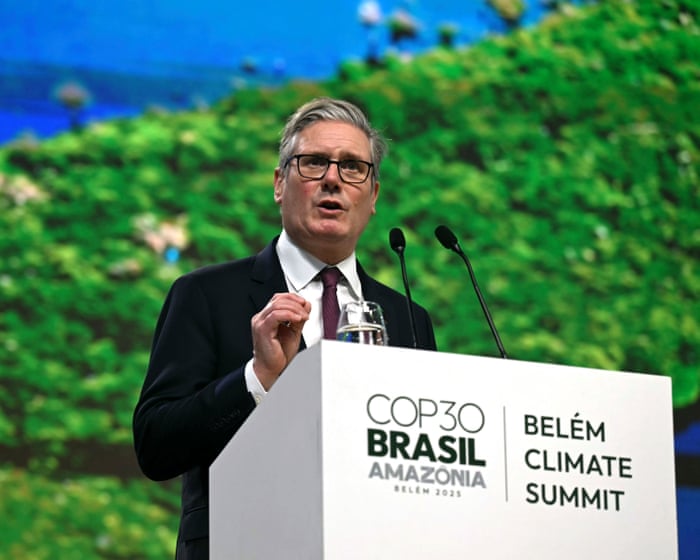
Starmer has a strong green record – but a rightwing backlash weakened his plans

Prime minister was forced to row back on some policies despite strong support among voters for climate action

Keir Starmer has faced a problem no Labour government has needed to deal with before. His energy and climate policies – core to solving the cost of living crisis – have come under attack from opposition parties, which have made dismantling the agenda one of their top priorities, second only to immigration, in their pitch to voters.

This is new in British politics, where a cross-party consensus on the climate and environment has held at least since the days of Margaret Thatcher. She warned the UN of the climate crisis in 1988; David Cameron in 2006 urged voters to “vote blue, go green”; Theresa May enshrined in law the requirement to reach net zero greenhouse gas emissions by 2050; Boris Johnson championed the Cop26 UN climate summit in Glasgow in 2021; even Rishi Sunak only tried a partial rollback of green policies as a last desperate throw before calling an election.

Continue reading...

© Photograph: Mauro Pimentel/PA

© Photograph: Mauro Pimentel/PA

© Photograph: Mauro Pimentel/PA

  •  

From coal to cabernet: the wine seller using a flooded mine to cut heating bills

Lanchester Wines in north-east England uses heat from a disused coalmine to maintain wine temperatures and with 23,000 flooded mines in the UK, there’s huge potential for more businesses and homes to follow its lead

Shove them in a fridge, stash them in a cellar – this is how most people store their favourite bottles of wine. But if you have warehouses full of thousands of vintages, you have to think a little differently.

For the last eight winters, Lanchester Wines has used heat from a disused coalmine to maintain ideal storage temperatures at its facilities in the north-east of England, helping to prevent freezing or spoilage.

Continue reading...

© Photograph: Posed by models; The Good Brigade/Getty Images

© Photograph: Posed by models; The Good Brigade/Getty Images

© Photograph: Posed by models; The Good Brigade/Getty Images

  •  

Can we electrify the world? Ambition moves from nerdish backwater to centre stage

Apart from effort to electrify, there were geopolitical tensions around climate science and the 1.5C goal at pre-Cop31 climate talks

Electrifying the world – with electric vehicles, electric heating and cooling, and modernised heavy industry – could be the next biggest step towards phasing out fossil fuels, replacing the 80% of global energy that still comes from hydrocarbons. As using electrical energy is much more efficient than combustion, the move would save billions of dollars for consumers and businesses – global energy demand could be halved, according to one estimate.

For decades, electrification has been a nerdish backwater of global climate action. But in the last two weeks, at preparatory talks in Bonn before the forthcoming UN Cop31 climate summit, the subject finally took centre stage.

Continue reading...

© Photograph: Filip Singer/EPA

© Photograph: Filip Singer/EPA

© Photograph: Filip Singer/EPA

  •  

‘Mega-consumers’ of food and energy cost environment $5.7tn a year, study finds

Top 10% generate climate and biodiversity damage bill that exceeds economies of most countries, say researchers

The environmental damage bill racked up by the highest-consuming 10% of the world’s population has reached up to $5.7tn a year – larger than the economy of every country except the US and China, a study has found.

Mega-consumers in this group are concentrated in the global north, accounting for more than half the population of the US and 40-45% of people in the EU.

Continue reading...

© Photograph: Francis R Malasig/EPA

© Photograph: Francis R Malasig/EPA

© Photograph: Francis R Malasig/EPA

  •  

Drax cleared after investigation into sourcing of wood pellets

Generator’s shares rise as regulator finds no evidence of misleading statements about fuel’s sustainability

The City watchdog has closed an investigation into the owner of the Drax power plant after an almost 10-month review into whether the company’s sustainability claims mislead shareholders.

The Financial Conduct Authority said it had “reviewed thousands of pages” of “complex material” relating to the company’s sourcing of wood pellets for the Drax power plant in Selby, North Yorkshire, but “did not find evidence that justified any further action”.

Continue reading...

© Photograph: Christopher Furlong/Getty Images

© Photograph: Christopher Furlong/Getty Images

© Photograph: Christopher Furlong/Getty Images

  •  

Retail giants join UK government drive to boost ‘plug-in’ balcony solar panels

Asda, Amazon and B&Q among retailers in talks to sell devices that feed into household sockets and can cut electricity bills by 30%

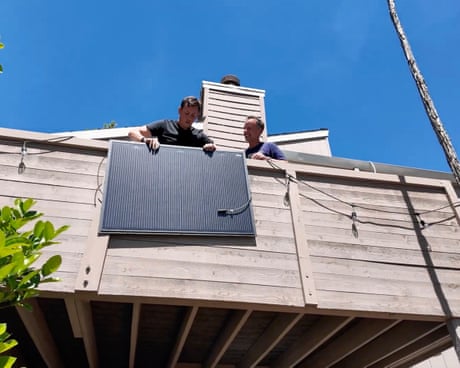
Bosses of some of Britain’s biggest retailers are discussing plans with the government to start selling plug-in solar panels as part of a drive to encourage more UK homes to generate their own electricity.

Executives from brands including Currys, B&Q and Amazon met Martin McCluskey, the minister for energy consumers, on Tuesday to discuss guidelines for selling “balcony solar panels” to the British public.

Continue reading...

© Photograph: Climate Central

© Photograph: Climate Central

© Photograph: Climate Central

  •  

Spanish households save €10 a month thanks to renewables expansion, report finds

Thinktank says decoupling electricity from gas prices has also helped shield Spain from hikes caused by Iran war

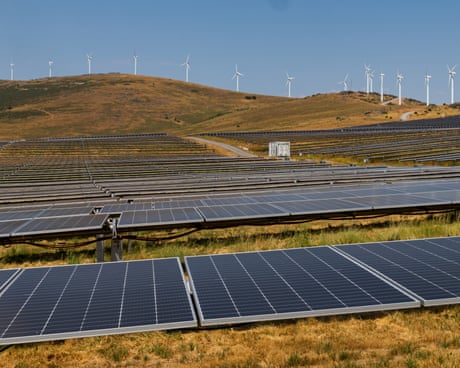
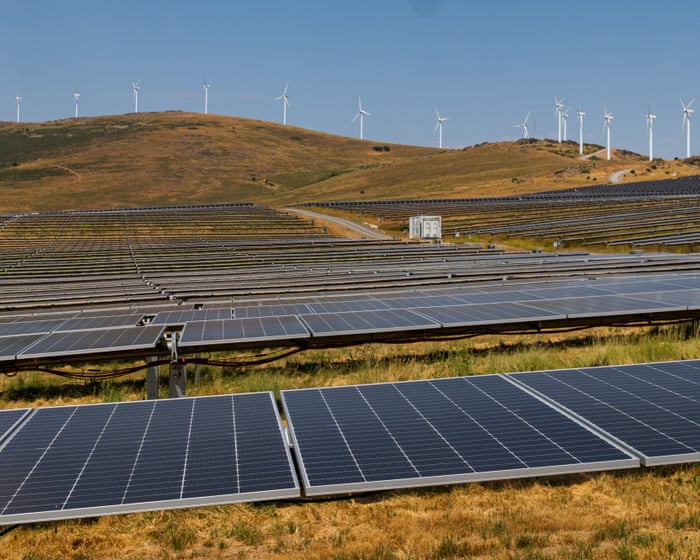
Spanish households save €10 a month on electricity bills because of wind turbines and solar panels installed in the last five years, a report has found.

Typical energy bills would be 19% more expensive if electricity costs were still as tightly coupled to gas prices as in 2021, according to Ember, a climate thinktank. It found Spain’s “strategic” expansion of renewables since Russia invaded Ukraine in 2022 has shielded Spanish households from the latest rises in fossil fuel prices caused by the Iran war.

Continue reading...

© Photograph: Bloomberg/Getty Images

© Photograph: Bloomberg/Getty Images

© Photograph: Bloomberg/Getty Images

  •  

Australia can switch from fossil fuel exports to renewables, says next Cop president

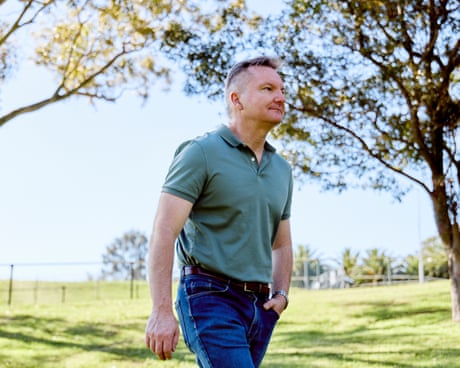
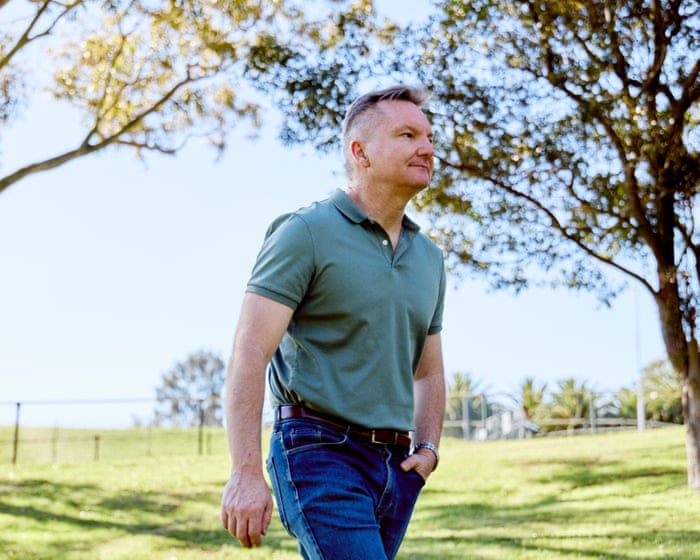
Climate minister Chris Bowen says country must prepare for changing world and can play bigger role in reducing emissions

Australia will find exporting fossil fuels increasingly difficult but can switch to exporting clean energy products, the president of the next UN climate negotiations has declared.

Speaking at a climate conference in Bonn, Germany, Chris Bowen, Australia’s minister for climate change and energy, argued his country had led the global push to “transition away from fossil fuels” – based on the rapid growth of renewable energy and batteries in its domestic power grids – and that its economy could manage the switch.

Continue reading...

© Photograph: Bec Lorrimer/The Guardian

© Photograph: Bec Lorrimer/The Guardian

© Photograph: Bec Lorrimer/The Guardian

  •  

Solar generates more energy in US than coal for first time

Solar supplied 12.8% of US electricity in May even as Trump boosts coal over clean energy

Even as Donald Trump boosts coal over clean energy, solar power is hitting new milestones in the US and remains the leading source of new power.

Data released on Wednesday by the global energy thinktank Ember, along with a report by the Solar Energy Industries Association (Seia) and analytics firm Wood Mackenzie, show the continued growth of solar and decline of coal in the United States despite federal policy. In May, for the first time, solar supplied more of the nation’s electricity than coal, or 12.8%, Ember said. Coal supplied 12.2%, its fourth-lowest monthly share ever.

Continue reading...

© Photograph: Angela Piazza/The Dallas Morning News via Getty Images

© Photograph: Angela Piazza/The Dallas Morning News via Getty Images

© Photograph: Angela Piazza/The Dallas Morning News via Getty Images

  •  

Labor to set terms for datacentre and AI growth as it vows not to repeat mistakes of resources boom

Assistant minister agrees concerns over resource usage are legitimate but argues Australia cannot ignore ‘consequential’ economic wave

Australia should learn from the mistakes of the resources boom and set the terms for the AI and datacentres boom, the assistant minister for the digital economy, Andrew Charlton says.

Growth in datacentres has exploded in the past two years, Charlton told the Sydney Institute on Wednesday night, with 44 projects in the pipeline in New South Wales alone seeking 11GW of capacity on the electricity grid.

Continue reading...

© Photograph: Bloomberg/Getty Images

© Photograph: Bloomberg/Getty Images

© Photograph: Bloomberg/Getty Images

  •  

The rightwing campaign to control how US judges view the climate crisis

US energy secretary Chris Wright featured in seminars to judges when he was a fracking executive

As cities and states sue big oil for billions in damages over allegations that it covered up the dangers of its products, rightwing organizations are attempting to discredit the wave of litigation. They claim the lawyers behind it are teaming up with an environmentally focused legal education non-profit to bias federal judges against oil companies.

But it is actually fossil fuel-backed organizations that are attempting to sway the judiciary in their favor, one of those law firms is countering. Evidence of this includes judicial seminars hosted by one such group featuring pro-industry speakers such as the current energy secretary, Chris Wright, in his former occupation as a fracking executive.

Continue reading...

© Composite: Reuters

© Composite: Reuters

© Composite: Reuters

  •  

A question for Nigel Farage – why is your nationalist party so obsessed with destroying British jobs? | George Monbiot

The net zero economy is booming, so claims that prosperity depends on oil and gas are bunkum – unless you’re a Reform backer with fossil fuel interests, of course

Really? You want to destroy a million jobs? Vote Reform UK for mass unemployment: is that your pitch? Hammer these questions home whenever you meet a supporter of the party. Or, for that matter, a Conservative, as their party now takes an almost identical line.

The figures are stark. They were compiled not by Just Stop Oil or the Green party, but by that bastion of conservatism, the Confederation of British Industry. They show that the net zero economy now directly employs more than 300,000 full-time workers, while supporting the jobs of 1.1 million. The net zero sector is worth £100bn to the UK already, and is likely to grow by hundreds of billions more. The rest of the green economy directly employs a further 600,000.

Continue reading...

© Photograph: Tolga Akmen/EPA

© Photograph: Tolga Akmen/EPA

© Photograph: Tolga Akmen/EPA

  •  

More than half of clean energy schemes needed for Labour’s 2030 target offered grid connection

The 700 projects include wind and solar farms, battery storage, gas and hydro plans

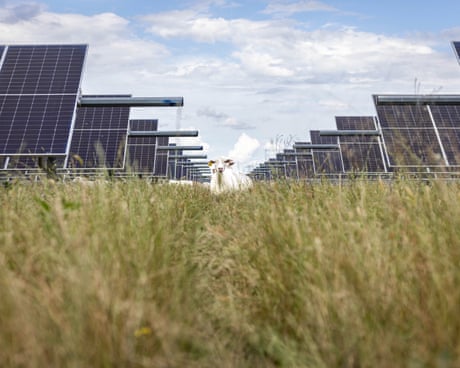
More than half the renewable energy projects needed to meet the government’s clean power targets by 2030 are now able to plug into the electricity grid after years of delay, according to the system operator.

The National Energy System Operator (Neso) has offered more than 700 clean energy projects in Great Britain a grid connection date since the start of the year, after a two-year process to unblock a bottleneck that threatened to delay projects into the 2030s.

Continue reading...

© Photograph: Murdo MacLeod/The Guardian

© Photograph: Murdo MacLeod/The Guardian

© Photograph: Murdo MacLeod/The Guardian

  •  

Households could save £200 on energy bills in plan to break link between gas and electricity prices, says thinktank
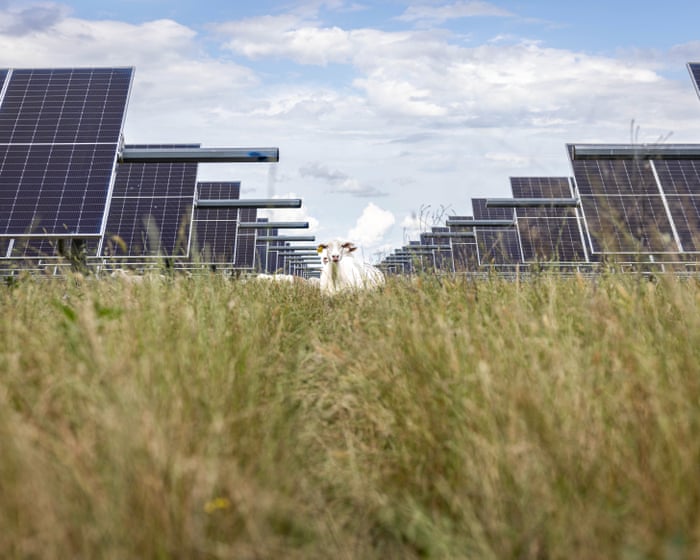
Government plan to de-link gas and electricity prices aims to reduce bills for consumers after global surge in prices

Households in England, Scotland and Wales could save nearly £200 a year on their energy bills if the government stepped into the market to act as the sole buyer of electricity, according to a thinktank.

The research found that public procurement of electricity, meaning the government would become the “single buyer” of power before it is resold to consumers, could shave billions of pounds from electricity prices.

Continue reading...

© Photograph: Bloomberg/Getty Images

© Photograph: Bloomberg/Getty Images

© Photograph: Bloomberg/Getty Images

  •  

‘Electrify daily life’, urges Cop31 host

Third of world’s energy needs should come from electricity by 2035, says Murat Kurum, as priorities set out for this year’s UN climate summit

The world should aim to meet a third of its energy needs from electricity within a decade to cut greenhouse gas emissions, the host of the next UN climate summit has said.

While about a third of global electricity generation already comes from renewable sources, other energy-intensive sectors – chiefly transport, heating and industries – have lagged behind. Close to four-fifths of final energy still comes from fossil fuels, as a result.

Continue reading...

© Photograph: Images By Tang Ming Tung/Getty Images

© Photograph: Images By Tang Ming Tung/Getty Images

© Photograph: Images By Tang Ming Tung/Getty Images

  •  
❌