❌

Reading view

Monitoring of electro-chemo-mechanics in Li metal electrodes by optical fibre sensors

Energy Environ. Sci., 2026, 19,4028-4039
DOI: 10.1039/D6EE01805J, Paper
Yanpeng Li, Dengwei Lian, Yi Qin, Hongfei Lu, Xiaohong Sun, Yuhang Song, Xin Jiang, Hong Li, Yang Jin
Optical fibre sensor enables monitoring of electro-chemo-mechanics in Li metal electrodes.
The content of this RSS Feed (c) The Royal Society of Chemistry
  •  

Correction: Precursor-driven Jahn–Teller distortion as a hidden origin of surface instability in Mn-stabilized Ni-rich cathodes

Energy Environ. Sci., 2026, 19,4040-4040
DOI: 10.1039/D6EE90051H, Correction
Open Access Open Access
Creative Commons Licence&nbsp This article is licensed under a Creative Commons Attribution 3.0 Unported Licence.
JinHa Shim, Young Geol Yu, Yu Bin Choi, Jin Ho Bang
The content of this RSS Feed (c) The Royal Society of Chemistry
  •  

Crystal facet engineering empowers zinc materials with diverse facet orientations: preparation strategies, performance advantages, and application challenges

Energy Environ. Sci., 2026, 19,3756-3790
DOI: 10.1039/D6EE00867D, Review Article
Guoqiang Ma, Mengke Peng, Juan Du, Youan Ji, Chao Ma, Aibing Chen
This review clarifies structure–performance relationships of typical Zn facets. It assesses scalable fabrication routes and builds a framework linking facet structure, processing, electrochemistry and cell performance for dendrite-free Zn anodes.
The content of this RSS Feed (c) The Royal Society of Chemistry
  •  

Size-dependent dynamic surface states of Ru clusters: modulating interfacial water structure for enhanced alkaline hydrogen evolution reaction

Energy Environ. Sci., 2026, Advance Article
DOI: 10.1039/D6EE01604A, Paper
Jiwon Kim, Jinuk Moon, Kyuri Cho, Junhyeong Kim, Man Ho Han, Seongbeen Kim, Jimin Han, Daeeun Choi, Hyunwoo Jun, Jong Hyun Jang, Hyung-Suk Oh, Sung Ki Cho, Wooyul Kim, Jeong Woo Han, Jinwoo Lee
Dynamically stable oxidized surface states of sub-nanometer Ru clusters enhance interfacial hydrogen-bond connectivity, thereby enabling highly efficient alkaline water electrolysis.
To cite this article before page numbers are assigned, use the DOI form of citation above.
The content of this RSS Feed (c) The Royal Society of Chemistry
  •  

Synergizing phase engineering and site-selective substitution through the rational design of a high-entropy layered oxide cathode enables air-stable and long-life sodium-ion batteries

Energy Environ. Sci., 2026, Advance Article
DOI: 10.1039/D5EE07341C, Paper
Nazir Ahmad, Shao Wang, Lina Yang, Mingyu Cheng, Guo Qingling, Ye Shanshan, Shahid Ali, Jing Xia, Wenxiu He, Genqiang Zhang
The P2/O3-Na8M cathode demonstrated exceptional stability and performance: 93.3% capacity retention after 100 cycles at 0.1C, high air/water resistance (35 days), and 281.2 Wh kg−1 in full cells, promising for advanced energy storage.
To cite this article before page numbers are assigned, use the DOI form of citation above.
The content of this RSS Feed (c) The Royal Society of Chemistry
  •  

Tailoring an iron-based metal–organic framework for a Zn-ORR/CER battery

Energy Environ. Sci., 2026, 19,4016-4027
DOI: 10.1039/D6EE00064A, Paper
Open Access Open Access
Sukhjot Kaur, Safa Gaber, Kalpana Garg, Abdul Khayum Mohammed, Ankur Bordoloi, Harpriya Minhas, Biswarup Pathak, Dinesh Shetty, Tharamani C. Nagaiah
A tailored bifunctional cathode catalyst, Fe-Tp-10% G, was utilized for the conversion of HCl to industrially valuable Cl2 while storing energy in a Zn-ORR/CER battery.
The content of this RSS Feed (c) The Royal Society of Chemistry
  •  

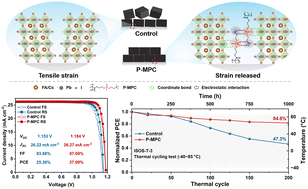
In situ polymerized zwitterionic elastomers for efficient and stable perovskite solar cells

Energy Environ. Sci., 2026, 19,4006-4015
DOI: 10.1039/D5EE07792C, Paper
Wanli Li, Yuheng Li, Arnauld Robert Tapa, Minqiang Liu, Tie Liu, Haibing Xie, Yang Bai, Xiong Li, Zhongqin Xiao, Tao Yu, Zaiwei Wang, Chunxiong Bao, Zhigang Zou
A multifunctional zwitterionic additive regulates crystallization, passivates defects, suppresses ion migration and relaxes residual stress in inverted perovskite solar cells, achieving 26.69% certified efficiency and excellent stability.
The content of this RSS Feed (c) The Royal Society of Chemistry
  •  
❌