
❌

Reading view

Early iPhone Duo Reviews Highlight Display Strengths and Everyday Trade-Offs

Early iPhone Duo reviews are examining how Apple’s first foldable handles everyday tasks ahead of its October 23 launch. Reviewers describe an appealing inner display alongside adjustments involving one-handed use, authentication, and app layouts, providing a practical picture of where the design works well and where it asks users to adapt.

Evaluations published October 21 offer a more substantial picture than brief demonstrations, ahead of initial retail availability on OctobeIn a September 19 hands-on, Android Central’s Harish Jonnalagadda also highlighted the inner display’s coating. Those earlier impressions provide context for the October reviews, but came from a shorter session rather than extended everyday use.r 23. The emerging story combines an appealing inner display with practical questions about handling, applications, and the compromises involved in carrying one device that serves two roles.

The Matte Display Changes the Experience

The inner screen’s finish is becoming one of the most consistent points of interest. Apple’s official announcement describes a nano-textured polymer cover intended to reduce glare and minimize the visibility of the fold.

In his PetaPixel review, Jaron Schneider praises the reduction in reflections and says fingerprints are much less noticeable during normal use. He also acknowledges that people who dislike matte displays may not appreciate this one.

In a September 19 hands-on, Android Central’s Harish Jonnalagadda also highlighted the inner display’s coating. Those earlier impressions provide context for the October reviews, but came from a shorter session rather than extended everyday use.

That gives the comparison with existing foldables a more useful starting point than screen size alone. A larger panel matters less if reflections repeatedly interfere with what someone wants to see. Equally, a finish that one reader finds comfortable may disappoint someone who prefers the appearance of glossy glass.

The relevant difference is therefore partly experiential. Shoppers should examine text, photographs, and dark scenes under several lighting conditions rather than judging the screen from a promotional image.

Two foldable smartphones—the iPhone Duo in sleek silver and the A20 Pro in striking dark blue—are displayed side by side, each partially open, showcasing vivid mountain and desert landscapes on their vibrant iOS 27 screens.
Image Credit: Apple Inc.

A Folding Phone Still Has to Work Closed

Schneider’s assessment also exposes a practical tension: he finds the hardware exceptionally well made, yet describes difficulty with one-handed typing and adjusting his grip for Touch ID. His experience favors using both hands.

Those observations should remain attributed to the reviewer. Hand size, preferred grip, and familiarity can produce different reactions to the same device.

Nevertheless, they identify something worth testing before choosing a foldable. The closed phone will still handle quick messages, authentication, and tasks performed while standing or moving. Those interactions deserve as much attention as the impressive moment when the inner screen opens.

A useful demonstration would involve composing a message, reaching frequently used controls, unlocking the device, and then opening it to continue working. Comfort across that sequence reveals more than holding an unfolded phone briefly for a photograph.

Software Makes the Comparison More Complicated

Mark Spoonauer’s October 21 Tom’s Guide review praises the ease of using two applications together, but finds that applications without appropriate optimization can look poor. He also reports that rotating into portrait interrupts the side-by-side layout, which returns when the phone rotates back.

In that specific comparison, he notes that Samsung’s Galaxy Z Fold 8 keeps two narrow app windows visible in portrait.

This illustrates why “supports multitasking” is only the beginning of a useful comparison. What happens when the phone rotates, when someone switches tasks, or when an application encounters an unfamiliar shape can determine whether the extra space feels productive.

The Duo’s Split View limitations become more relevant when they interrupt a task already underway. The review describes a change in layout rather than the loss of the app pair, which returns when the device rotates back to landscape.

Buyers should check the applications they rely on most. A polished demonstration using selected software cannot establish that every banking app, editing tool, or work service will make equally effective use of the display.

Battery Testing Adds a Measured Reference Point

Tom’s Guide recorded 13 hours and 20 minutes in its web-browsing battery test, using the larger display, a 5G connection, and brightness set to 150 nits. The publication says it adapted the test to fill the Duo’s screen and ran it alongside the Galaxy Z Fold 8 and iPhone 18 Pro Max.

In that simultaneous comparison, the Galaxy Z Fold 8 lasted 10 hours and 6 minutes, while the iPhone 18 Pro Max reached 17 hours and 31 minutes. The Samsung phone had previously recorded 12 hours and 19 minutes, illustrating why results from different runs need context rather than being treated as fixed rankings.

The result provides a useful reference, rather than a promise about every owner’s day. It also demonstrates why a single competitive headline can oversimplify testing: the method, screen used, and comparison conditions belong alongside the number.

iPhone Duo reviews - A foldable iPhone Duo displaying a dashboard of widgets on the left screen and a messaging app thread on the right screen.
Image Credit: Apple Inc.

The Strongest Differences Are Practical

These accounts suggest that the Duo’s identity depends on how its screen finish, physical format, and software work together. They also reveal disagreement about whether those benefits outweigh the adjustments. Praise for construction does not automatically resolve concerns about grip or application behavior.

For prospective buyers, the useful question is which compromises fit their routine. Reading comfort, dependable access to work applications, and easy one-handed interactions may carry different weight for different people. The first reviews now provide concrete experiences to investigate, while long-term display and hinge durability still require longer observation.

The post Early iPhone Duo Reviews Highlight Display Strengths and Everyday Trade-Offs appeared first on AppleMagazine.

  •  

Inside the U.S. Suppliers Behind iPhone Duo and iPhone 18 Pro

The titanium in iPhone Duo and the camera system in iPhone 18 Pro connect familiar product features to specialized American suppliers. Behind those parts are different kinds of manufacturing: processing metal, producing advanced films, forming protective glass and fabricating miniature lasers.

Apple’s October 20 supplier announcement identifies several of these connections. Read alongside the manufacturers’ own documentation, it provides a partial map of the work behind the devices, rather than a complete account of their global production.

Apple’s broader U.S. manufacturing program brings together businesses with very different specialties. Following individual components reveals how a metal producer, a materials company, a glassmaker and a semiconductor manufacturer contribute to devices sold under the same brand.

Two hands holding smartphones—an iPhone 18 Pro Max vs iPhone 17 Pro Max—each featuring curved abstract patterns on their screens. The left phone, likely the newer iPhone 18, has a pinkish hue, while the right phone displays a dark gray design. Both are set against a plain light background.
Image Credit: Apple Inc.

Perryman Processes Titanium for iPhone Duo

Apple identifies Perryman as a titanium supplier for iPhone Duo. The relationship concerns material production; it does not establish that Perryman builds the finished enclosure, hinge or assembled phone.

The geography requires care. Apple’s release groups melting, forging and rolling at Houston, Pennsylvania. Perryman’s facility directory describes a distributed network: melting and ingot breakdown at Coal Center, hot rolling and much finishing at Houston, and intermediate processing at Frackville.

Perryman’s operations therefore span several Pennsylvania locations. Apple has not published a facility-by-facility production route for its titanium orders, so the company’s broader manufacturing network provides context rather than a confirmed itinerary for each iPhone component.

Perryman lists electron-beam and vacuum-arc melting equipment, followed by processes that turn ingots into semifinished and finished material. It also documents laboratory and nondestructive testing capabilities.

In practical terms, the work converts raw inputs into controlled material forms that other manufacturing operations can use. Consistency in composition, dimensions and internal quality matters before a supplier further down the chain shapes a consumer product.

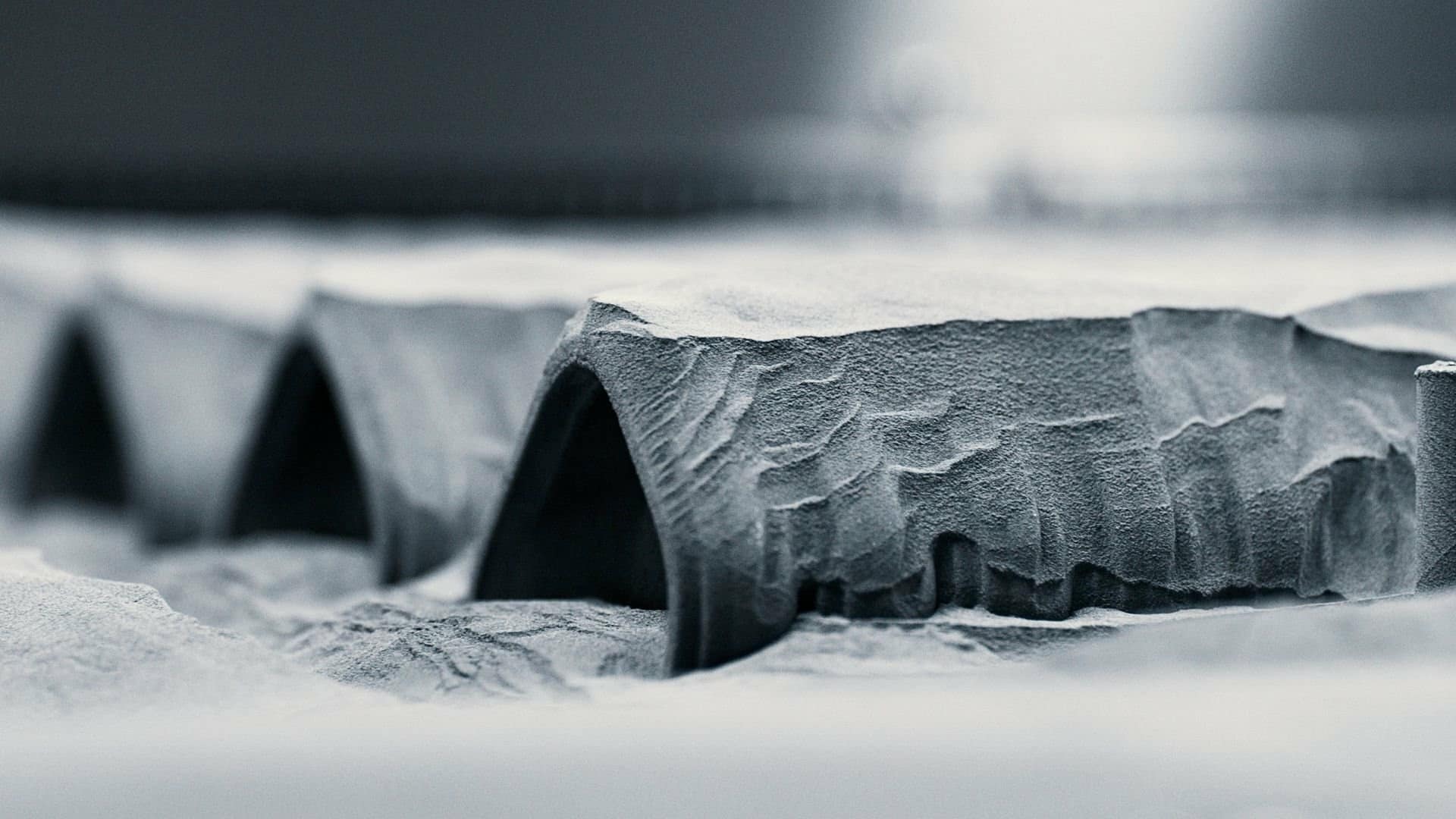
suppliers - Close-up of a detailed, miniature landscape resembling arched rock formations or cave entrances, with textured surfaces and fine dust or sand—crafted using 3D printing techniques—in grayscale tones.
The Ultra 3’s titanium imprint process creates a clean, sculpted finish around its iconic contours.

Qnity Supplies Films for the Variable Aperture

Qnity Electronics has a different role: Apple says it will produce advanced films essential to the iPhone 18 Pro’s variable-aperture camera system.

An aperture controls the opening through which light enters the camera. Changing that opening helps manage exposure and depth of field, meaning how much of a scene appears acceptably sharp.

The announcement links Qnity to materials supporting that system, rather than identifying it as the manufacturer of the entire camera. Apple does not disclose the films’ composition, their exact position within the assembly or the production process.

It also does not name the relevant factory. Delaware is Qnity’s headquarters location, not sufficient evidence of where these particular films are made.

Qnity’s role highlights a less visible side of camera development: the materials that support a mechanism can be as specialized as its optical and electronic components. Apple identifies the films’ connection to variable aperture, but leaves their precise engineering role undisclosed.

Corning Makes Protective Glass in Kentucky

Corning’s Harrodsburg, Kentucky, operation supplies specialty glass for Apple, including Ceramic Shield. Apple’s October announcement sets an end-of-2026 target for all iPhone and Apple Watch cover glass, including iPhone Duo, to come from that facility.

Harrodsburg is already operating; the broader production transition remains a dated target. Corning’s account of the plant describes both current manufacturing and development work for future products.

Opened in 1952, Harrodsburg is Corning’s longest-running American plant. Its history includes the development of fusion-draw glassmaking, a process used to create large, thin sheets of glass. Corning describes the site as both a manufacturing operation and a place where teams develop materials for future products.

Protective cover glass is distinct from the panel that generates an image. Manufacturing a transparent protective surface involves different requirements from producing OLED pixels, electronics or the other layers in a display assembly.

The iPhone Duo connection therefore should not be expanded into a claim that Corning supplies its complete folding display. Apple’s statement identifies cover glass, with a specific production goal.

Three stacked smartphones—resembling the iPhone 18—display music controls for “the bridge” by Kelela & PinkPantheress, with playback buttons and Dynamic Island notifications visible on each screen, all running the sleek new interface of iOS 27. The phones are a striking dark purple set against a deep black background.
Image Credit: Apple Inc.

Coherent Produces Lasers in Sherman, Texas

In an August 2025 supply announcement, Coherent identified its Sherman, Texas, facility as the production site for vertical-cavity surface-emitting lasers, or VCSELs, supplied to Apple under a multiyear agreement.

These semiconductor devices emit light from their surface. Coherent connects them to features including Face ID on iPhone and iPad; Apple’s latest announcement specifically associates its technology with iPhone 18 Pro.

Sherman has compound-semiconductor capabilities covering epitaxy, fabrication and device manufacturing. Epitaxy means growing controlled semiconductor layers; fabrication then creates the structures needed for individual devices. This is specialized chipmaking for optical functions, rather than assembly of a complete camera.

The connection described here concerns Face ID and supported Apple devices, with the October announcement specifically naming iPhone 18 Pro. It illustrates why the supplier map differs by model: a component associated with one phone should not automatically be assigned to another.

Different Processes Contribute to One Device

These suppliers illustrate distinct stages of production. Metal processing prepares structural material; films support a camera mechanism; cover glass protects surfaces; semiconductor lasers contribute to optical sensing. Each requires its own equipment, expertise and quality checks.

Their contributions establish specific American manufacturing connections, not U.S. final assembly or an entirely domestic iPhone. Following the component and its documented production stage provides a more accurate picture than treating every supplier announcement as evidence that the whole device is made in one country.

Two hands hold different devices: one, an A20 Pro folded phone showing a spiral staircase; the other, a tablet displaying a person walking in a red, sunlit corridor with an arched glass ceiling. Both screens feature vibrant architectural scenes.
Image Credit: Apple Inc.

The post Inside the U.S. Suppliers Behind iPhone Duo and iPhone 18 Pro appeared first on AppleMagazine.

  •  
❌