Researchers have uncovered a critical mechanism behind battery failure in solid-state batteries, offering new insights that could help unlock safer, longer-lasting energy storage technologies. Every time a smartphone is charged or an electric vehicle is plugged in, billions of lithium ions move through a battery to store energy. Future devices could perform far better with [...]
A Santa Monica Studio anunciou God of War: Laufey de surpresa. O jogo no estilo hack and slash acompanhará Faye, esposa falecida de Kratos e mãe de Atreus, enquanto desbrava um local conhecido como Everywhen, um pós-vida onde diferentes mitologias se chocam.
O jogo recebeu um generoso trailer de jogabilidade de pouco mais de 20 minutos. Embora ainda não tenhamos uma data de lançamento confirmada, o jornalista da Bloomberg, Jason Schreier, sugeriu que God of War: Laufey pode chegar em 2027:
"Só para constar, eu não daria muita importância ao fato de God of War: Laufey não ter uma data ou previsão de lançamento. Ao contrário de muitos outros grandes anúncios, este não está a anos de distância".
- Entre no Canal do WhatsApp do Canaltech e fique por dentro das últimas notícias sobre tecnologia, lançamentos, dicas e tutoriais incríveis. -
Na narrativa, o título protagonizado por Faye começa durante o início do reboot God of War (2018) e deve se estender até os eventos de Ragnarök.
Para se preparar, o Canaltech trouxe esta lista de jogos que podem entrar no seu backlog antes do lançamento de God of War: Laufey. Obviamente, se você não jogou nenhum God of War da saga nórdica ou a trilogia original, recomendamos fortemente jogá-los antes do novo game da franquia. Vale notar que a lista está em uma ordem aleatória.
O que torna um jogo parecido com God of War?
A saga nórdica de God of War foi muito bem-sucedida ao levar Kratos para um jogo de ação em terceira pessoa com uma pegada mais cinematográfica e narrativa. No entanto, as raízes da série remontam aos anos 2000, quando o espartano estreou no PlayStation 2 como um dos hack and slash mais influentes de todos os tempos.
Não há tantos jogos parecidos com God of War, pelo menos não em um nível de produção AAA. O que temos são games que exploram a mitologia ou mecânicas de combate características da série da Sony. Nesses casos, há um leque muito maior de opções para quem quer fazer um esquenta antes do lançamento de God of War: Laufey.
A ideia é reunir jogos com pelo menos um pilar da franquia protagonizada por Kratos: combate físico, escala épica, progressão, narrativa cinematográfica, mitologia ou chefes marcantes.
8. Darksiders
Darksiders é uma excelente opção para quem busca combates frenéticos e brutais no estilo hack and slash clássico. Quem curte armas mais robustas e chefes gigantes vai adorar essa recomendação. Embora haja certa resistência nas comparações entre God of War e a franquia criada pela Vigil Games, dificilmente os fãs que gostaram de um não curtirão o outro.
Darksiders III seguiu um caminho mais soulslike (Divulgação/THQ Nordic)
As remasterizações dos dois primeiros jogos da franquia, bem como Darksiders 3, podem ser facilmente encontrados em plataformas atuais e entram em promoção com frequência, garantindo uma boa acessibilidade.
Sequência de Dante's Inferno nunca viu a luz do dia (Divulgação/Electronic Arts)
Se o PlayStation 3 tinha God of War III ao seu dispor, donos dos consoles de sétima geração da Microsoft podiam aproveitar Dante's Inferno. O game, baseado na Divina Comédia, de Dante Alighieri, nos coloca na pele de um guerreiro das Cruzadas morto no campo de batalha, que precisa resgatar sua amada das mãos de Lúcifer.
Dante's Inferno se assemelha muito ao God of War clássico e divide com o jogo da Santa Monica a atmosfera e os inimigos grotescos, Quick Time Events, câmera em terceira pessoa, seções de plataforma, puzzles e, claro, um hack and slash visceral.
6. Devil May Cry 5
Para quem quer um combate mais parecido com os jogos mais recentes de God of War, Devil May Cry 5 é uma excelente pedida. Obviamente, há um abismo de distância entre os dois jogos nos quesitos história, narrativa, temática e estilo, mas eles acabam se encontrando em certos aspectos do combate.
Devil May Cry 5tem mais de sete anos (Divulgação/Capcom)
Devil May Cry 5 carrega um gameplay focado em combos e estilo. A diferença no combate está principalmente no 'peso'. Enquanto GoW é um pouco mais pesado e menos técnico, o hack and slash da Capcom é bem mais veloz e complexo. Curiosamente, God of War: Laufey parece herdar um pouco desse combate mais estilizado e veloz.
5. Black Myth: Wukong
Para quem gosta de explorar mitologias nos games, Black Myth: Wukong dá uma aula no assunto ao trazer lendas chinesas. O RPG de ação é uma adaptação de Jornada ao Oeste, história que inspirou diversas obras, como Dragon Ball.
Black Myth: Wukong puxou indústria de games da China para outro patamar (Divulgação/GameScience)
Black Myth: Wukong possui uma dificuldade mais elevada do que a de God of War, mas bebe bastante da água disponibilizada pela Santa Monica, como animações e um sistema de equipamentos bem parecidos com o que foi visto na saga nórdica de Kratos.
4. Bayonetta
Bayonetta assumes uma face mais excêntrica e exagerada de God of War, mas tem uma ação estilizada e combates hack and slash muito bem-vindos para os fãs da franquia da Sony, em especial da trilogia grega.
Sequências de Bayonetta seguiram como exclusivas de sistemas da Nintendo (Divulgação/Platinum Games, Nintendo)
O jogo da Platinum Games traz diversos elementos familiares, como chefes gigantes, combos e combate veloz. Para quem tem uma ligação maior com a história de Kratos, Atreus e companhia, o foco de Bayonetta não é na narrativa.
3. Hellblade: Senua's Sacrifice
A duologia Hellblade vai um pouco na contramão de outras sugestões. Em vez de trazer um combate próximo ao da franquia God of War, a Ninja Theory trouxe ao mundo um jogo com uma narrativa mais densa e menos expositiva. No primeiro jogo, há algumas seções de combate um pouco mais parecidas com God of War, embora com um leque menor de golpes e habilidades.
Primeiro jogo de Hellblade tinha uma ênfase um pouco maior em combate (Divulgação/Microsoft)
Assim como na IP da Santa Monica, Hellblade explora as mitologias nórdica e celta, com histórias e lendas muito bem conhecidas pelos fãs de Kratos. A mecânica principal do jogo são as fúrias, vozes que acompanham o quadro de psicose da protagonista Senua. Embora as semelhanças sejam bem limitadas aqui, Hellblade: Senua's Sacrifice oferece batalhas contra deuses como Sutr e Valravn, ainda que o final divida opiniões.
2. Hellblade II: Senua's Saga
O segundo jogo, Hellblade II: Senua's Saga, adota ainda mais o nível cinematográfico e narrativo e abre mão de parte do combate visto no em Senua's Sacrifice. A apresentação gráfica é indiscutivelmente uma das melhores da geração, apesar da direção que a Ninja Theory seguiu ser bem questionável para alguns.
Hellblade II: Senua's Saga é para fãs de aventuras ultra-lineares e cinematográficas (Divulgação/Microsoft)
Um terceiro jogo intitulado Senua chega em 2027 para PlayStation 5, assim como God of War: Laufey. Na nova entrada, a desenvolvedora irá adotar um foco maior na exploração e no combate, algo muito pedido pelos fãs e que deve aproximar as experiências de Senua e Kratos.
1. Ghost of Tsushima
Outro first-party da Sony que pode ser uma excelente pedida para quem quer se preparar para God of War: Laufey é Ghost of Tsushima. Muitos fãs do jogo da Sucker Punch recomendam o game para quem gostou de God of War.
Ghost of Tsushima foi um dos últimos grandes exclusivos do PlayStation 4 (Divulgação/Sony)
Esse é o tipo de jogo que entrega uma experiência mais narrativa e de aventura, um verdadeiro padrão para os últimos jogos single-player da Sony. Não há uma relação direta entre God of War e Ghost of Tsushima, com exceção do sentimento de aventura épica com o selo de qualidade PlayStation. Além dos gráficos de alto nível, o jogo ambientado em Tsushima do ano de 1274 apresenta um combate corpo a corpo um tanto visceral.
Melhor forma de aproveitar jogos parecidos com God of War
Para quem gostou de God of War (2018) ou Ragnarök, recomendamos começar fortemente por Devil May Cry 5 ou Hellblade: Senua's Sacrifice. Embora distantes do conjunto da obra da Santa Monica, esses dois jogos agradarão tanto a quem curtiu o combate de Kratos e quer explorar algo mais técnico e rápido quanto a quem amou o aprofundamento na mitologia nórdica e quer experienciá-la de uma maneira bem diferente.
Já para quem está em busca de algo mais próximo aos clássicos, é bem provável que Darksiders, Bayonetta ou Dante's Inferno ressoem mais com você. No fim das contas, o importante é aproveitar jogos excelentes que carreguem alguns dos vários pilares de God of War e se preparar para a aventura de Faye em Everywhen.
Jogos parecidos com God of War não são tão parecidos assim?
Como dito no início, jogos mais recentes de God of War têm poucos concorrentes AAA nos dias de hoje. Apesar dos jogos listados acima parecerem distantes das obras da Santa Monica Studio, é possível que muitos que não os experimentaram sintam um gostinho dos títulos estrelados por Kratos.
Foi em 8 de março de 2014 que um Boeing 777-200ER decolou de Kuala Lumpur, na Malásia, rumo a Pequim, sob operação da Malaysia da Airlines. Cerca de 38 minutos após a decolagem, a aeronave fez contato com o controle de tráfego aéreo enquanto sobrevoava o mar do sul da China. Na sequência, o avião saiu da rota planejada e desapareceu dos radares.
O voo MH370 desapareceu dos radares civis 38 minutos após a decolagem, logo após a última mensagem do capitão Zaharie Ahmad Shah: "Boa noite, Malaysian três sete zero" — quando o comandante entrou em contato, o avião sobrevoava o espaço aéreo do Vietnã.
Com 239 pessoas de diversas nacionalidadess a bordo, a aeronave desviou drasticamente de sua rota original. Segundo dados de radares militares, o avião saiu da rota na direção do nordeste da Malásia, e depois seguiu na direção da ilha de Sumatra, na Indonésia. Na sequência, fez uma manobra para a direção sul e o contato foi perdido.
- Entre no Canal do WhatsApp do Canaltech e fique por dentro das últimas notícias sobre tecnologia, lançamentos, dicas e tutoriais incríveis. -
Buscas pelo voo da Malaysia Airlines
Já fazem mais de 12 anos do desaparecimento do voo MH370 da Malaysia Airlines. Mesmo após tanto tempo, este mistério da aviação comercial moderna ainda segue em aberto — tanto que foi iniciada uma nova busca pelos destroços da aeronave em dezembro de 2025.
Rota da aeronave e área onde as buscas foram realizadas (Andrew Heneen/Creative Commons Attribution 3.0)
Até o momento, mais de 30 fragmentos isolados foram encontrados no litoral da África e de algumas ilhas no oceano Índico, confirmados como parte da aeronave; mesmo assim, o "corpo" do avião e as caixas-pretas permanecem ocultos.
Para os investigadores, encontrar o local do impacto é a única forma de encerrar as especulações. Um relatório de quase 500 páginas sobre o incidente indica que os controles do avião foram acionados de forma proposital para tirá-lo de sua rota, mas ainda não foi possível determinar o responsável.
Como o local da provável queda ainda não foi identificado, há quem insista em teorias da conspiração que vão de queda do avião controlada remotamente a abduções de seres extraterrestres.
Alguns especialistas da aviação acreditam que a explicação é que, de fato, um piloto experiente teria desviado o avião da rota. Por outro lado, a equipe de investigação declarou que não encontrou nada suspeito na história, treinamento e saúde mental do capitão e copiloto da aeronave. Se você considera essa história um grande mistério, talvez queira entender também a ocasião na qual NASA e EUA derrubaram um avião. Mas por quê?
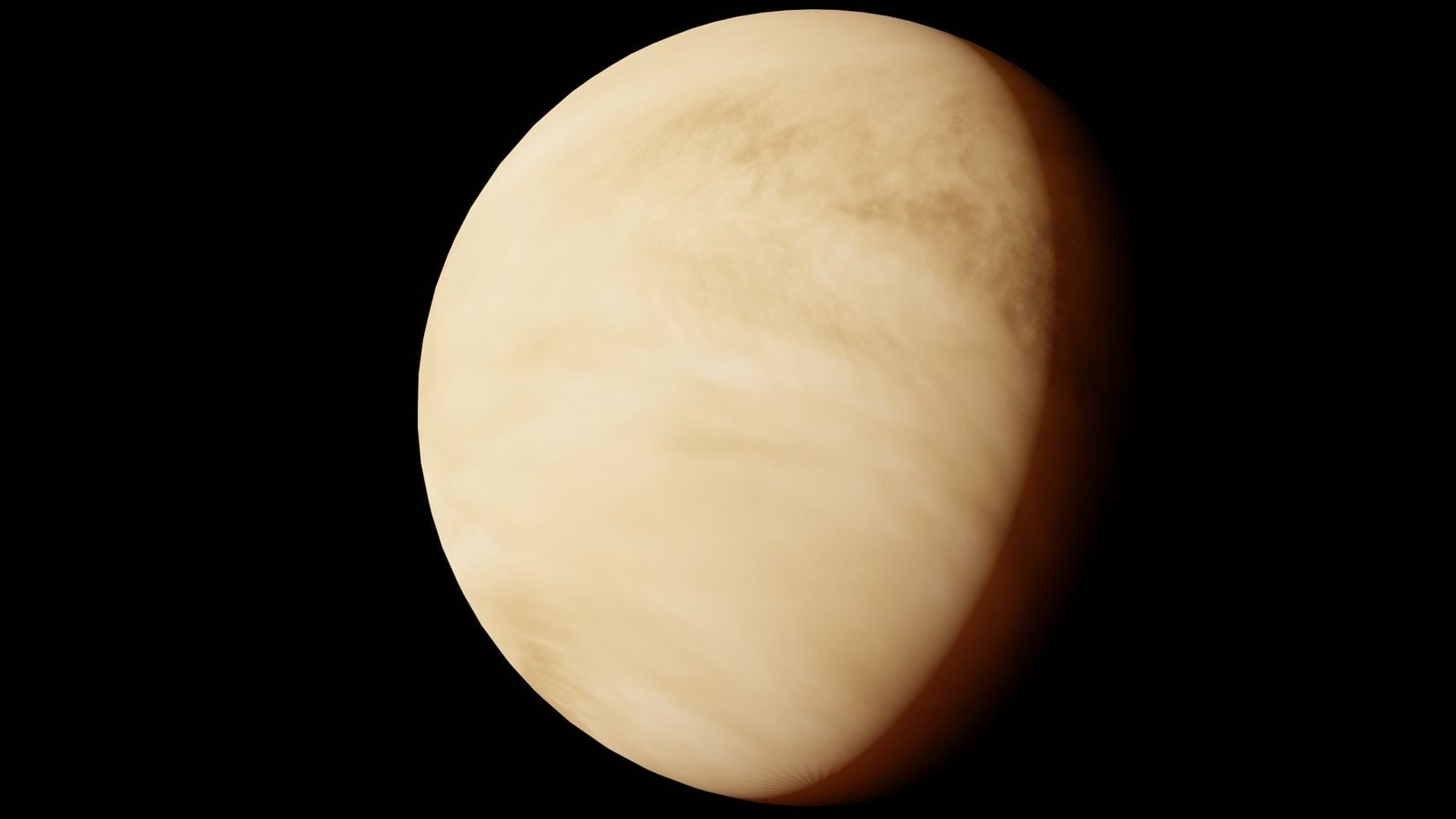
Venus keeps the strangest clock and calendar in the solar system. It takes about 243 Earth days to turn once on its axis, and only about 225 Earth days to travel all the way around the Sun. On Venus, in other words, the day is longer than the year. The planet finishes a lap of the Sun before it has finished a single rotation.
It gets stranger from there, and the figures are worth pulling apart, because two different “days” are hiding in this story.
Two kinds of day
The 243-day figure is the time Venus takes to spin once relative to the distant stars, what astronomers call a sidereal rotation. It is the true turn of the planet on its axis.
But a day in the everyday sense is the gap between one sunrise and the next, and on Venus that is a different and shorter span: about 117 Earth days. The two numbers disagree because Venus is moving around the Sun while it spins, and its spin is unusually slow, so the Sun’s position in the sky is set by a tug-of-war between the planet’s rotation and its orbit rather than by rotation alone. The result, according to NASA’s figures, is a solar day of roughly 117 Earth days. Sunrise to sunrise takes nearly four Earth months.
Rising in the west
There is one more oddity, and it is the one most people have heard. On Venus the Sun comes up in the west and goes down in the east, the reverse of what it does here.
This is because Venus rotates backwards. Nearly every planet, Earth included, spins in the same direction it orbits, which is why our Sun rises in the east. Venus turns the other way, a motion called retrograde rotation, effectively almost upside down compared with its neighbours, its axis tipped close to 180 degrees. It is also the slowest-spinning planet in the solar system, which is part of why its day runs so long. From the surface, the Sun’s daily path would run the opposite way across the sky.
Why it spins like this is not settled. The leading ideas involve either a colossal ancient impact that flipped or reversed the planet, or the slow grinding action of solar tides on its massive atmosphere over billions of years. Both remain hypotheses.
What you would actually see
Here the romantic image needs a caveat, because nobody on Venus would watch a crisp sun lift over a western horizon.
The planet is wrapped in a dense atmosphere of carbon dioxide topped with thick clouds of sulphuric acid, and almost no direct sunlight reaches the ground as a clear beam. A surface observer, if one could survive the 460-degree heat and crushing pressure, would experience a slow, dim brightening and fading of a uniformly glowing sky over those 117 days, rather than a disc rising at a point on the horizon. The direction of the Sun would be a smear of light, not a sunrise you could photograph.
That does not change the underlying mechanics. The Sun’s light still tracks east to west across that murky sky, just without a sharp Sun to mark it.
A planet out of step
Put together, Venus runs on a schedule that breaks every habit Earth has taught us. The day outlasts the year. The Sun, such as it is, rises in the wrong place. And the time from one dim dawn to the next is counted in months, not hours.
None of these are quirks of measurement or rounding. They follow directly from a planet that turns slowly, backwards, beneath a sky that never clears, which is a fair summary of how thoroughly Venus refuses to behave like home.
A terceira temporada de A Casa do Dragão estreia no domingo (21) na HBO prometendo muitas intrigas familiares, cenas grandiosas de batalha e mais disputas pelo Trono de Ferro naquilo que ficou conhecido como a Dança dos Dragões. Mas será que você realmente sabe o que foi a guerra que quase dizimou a Casa Targaryen?
Derivada de Game of Thrones, A Casa do Dragão se passa cerca de 200 anos antes da série original e acompanha uma intensa guerra civil que ficou marcada na história de Westeros como um de seus períodos mais sangrentos.
O seriado é inspirado no livro Fogo & Sangue, de George R.R. Martin, obra que narra a trajetória da dinastia Targaryen, incluindo o devastador conflito pela sucessão do Trono e Ferro.
- Entre no Canal do WhatsApp do Canaltech e fique por dentro das últimas notícias sobre tecnologia, lançamentos, dicas e tutoriais incríveis. -
Considerando que a terceira temporada de A Casa do Dragão vai mergulhar ainda mais fundo no ápice da guerra, chegou o momento de realmente entender o que motivou a disputa para se preparar para o que vem por aí.
A Casa do Dragão explora guerra que quase destruiu a família Targaryen (Imagem: Divulgação/HBO).
O que foi a Dança dos Dragões?
Conforme descrito por George R.R. Martin no livro Fogo & Sangue, a Dança dos Dragões foi um conflito de sucessão travado entre os integrantes da dinastia Targaryen após a morte do Rei Viserys I, quando seus filhos, Rhaenyra e Aegon II iniciaram uma guerra pelo direito de sentar no Trono de Ferro.
O conflito dividiu a Casa em dois times rivais: os Pretos, que consistia nos apoiadores do governo de Rhaenyra; e os Verdes, aqueles que queriam Aegon II como comandante dos Sete Reinos.
Uma das guerras mais devastadoras de Westeros, a Dança dos Dragões abriu rachaduras na dinastia que, até aquele momento, era uma das mais poderosas do território. Nem mesmo os poderosos dragões da Casa foram poupados, pois o conflito praticamente dizimou as criaturas, além de ter provocado a morte de vários integrantes da família.
Com a Casa Targaryen dividida, guerra pela sucessão foi uma das mais sangrentas de Westeros (Imagem: Divulgação/HBO).
Mas como foi que tudo isso começou? Bom, com a morte de Viserys I, o Trono de Ferro ficou vago para o próximo sucessor, então vale relembrar a árvore genealógica do rei falecido para entender o que motivou todo esse caos.
Por que a guerra começou?
O primeiro casamento de Viserys I foi com Aemma Arryn, uma relação que lhe rendeu três filhos. Apenas uma ficou viva: Rhaenyra, sua primogênita que, na idade adulta, foi declarada publicamente por ele como sua herdeira na frente de lordes e cavaleiros. A expectativa, então, era de que, quando Viserys I morresse, Rhaenyra o substituiria como Rainha dos Sete Reinos.
Mas as coisas se tornaram mais complicadas por causa do segundo casamento de Viserys I, uma união firmada com Alicent Hightower após a morte de Aemma. Com Alicent, ele teve quatro filhos: Aegon II, Helaena, Aemond e Daeron.
Considerando que o esquema de sucessão em Westeros priorizava homens, integrantes do Pequeno Conselho torciam para que Viserys reconsiderasse a escolha de seu sucessor, trocando Rhaenyra por Aegon II, seu primogênito com Alicent. Mas o Rei morreu antes de qualquer esclarecimento ser feito a respeito da questão.
Por isso que, logo após seu falecimento, o caos se instaurou em Porto Real. Segundo os escritos de Martin, enquanto o Pequeno Conselho debatia a respeito de quem deveria assumir o Trono de Ferro, os Hightowers se uniram para coroar Aegon II por não acreditarem que Rhaenyra saberia governar os Sete Reinos.
Morte de Viserys I gerou conflito de interesses que resultou na coroação de Aegon II (Imagem: Divulgação/HBO).
Dessa forma, eles foram contra o desejo declarado de Viserys I, que tinha definido Rhaenyra como sua herdeira ainda em vida, quando Sor Criston Cole corou Aegon II como Rei. Uma vez que Rhaenyra ficou sabendo do que tinha acontecido, ela se uniu com os Pretos, jurando vingança para tomar aquilo que lhe era de direito. E foi assim que uma das guerras civis mais sangrentas da história de Westeros começou.
O que esperar da temporada 3 de A Casa do Dragão
Embora a série explore a guerra de um jeito mais dramático do que acontece no livro (a coroação de Aegon II na série, por exemplo, vem de um mal-entendido de Alicent no leito de morte de Viserys), a terceira temporada de A Casa do Dragão vai explorar momentos emblemáticos da Dança dos Dragões, entrando de vez nas ocorrências mais violentas e destrutivas do combate.
Além de apostar no show de dragões no céu, o terceiro ano promete ser mais grandioso que as temporadas anteriores, trazendo desdobramentos marcantes da guerra, como a trágica Batalha da Goela e a dramática invasão de Porto Real. O capítulo ainda vai trazer personagens importantes da saga que ainda não apareceram na série.
Vale lembrar que a quarta temporada de A Casa do Dragão já está confirmada e será a última do programa. O primeiro episódio da terceira temporada da série estreia neste domingo (21), às 22h, na HBO e na HBO Max.
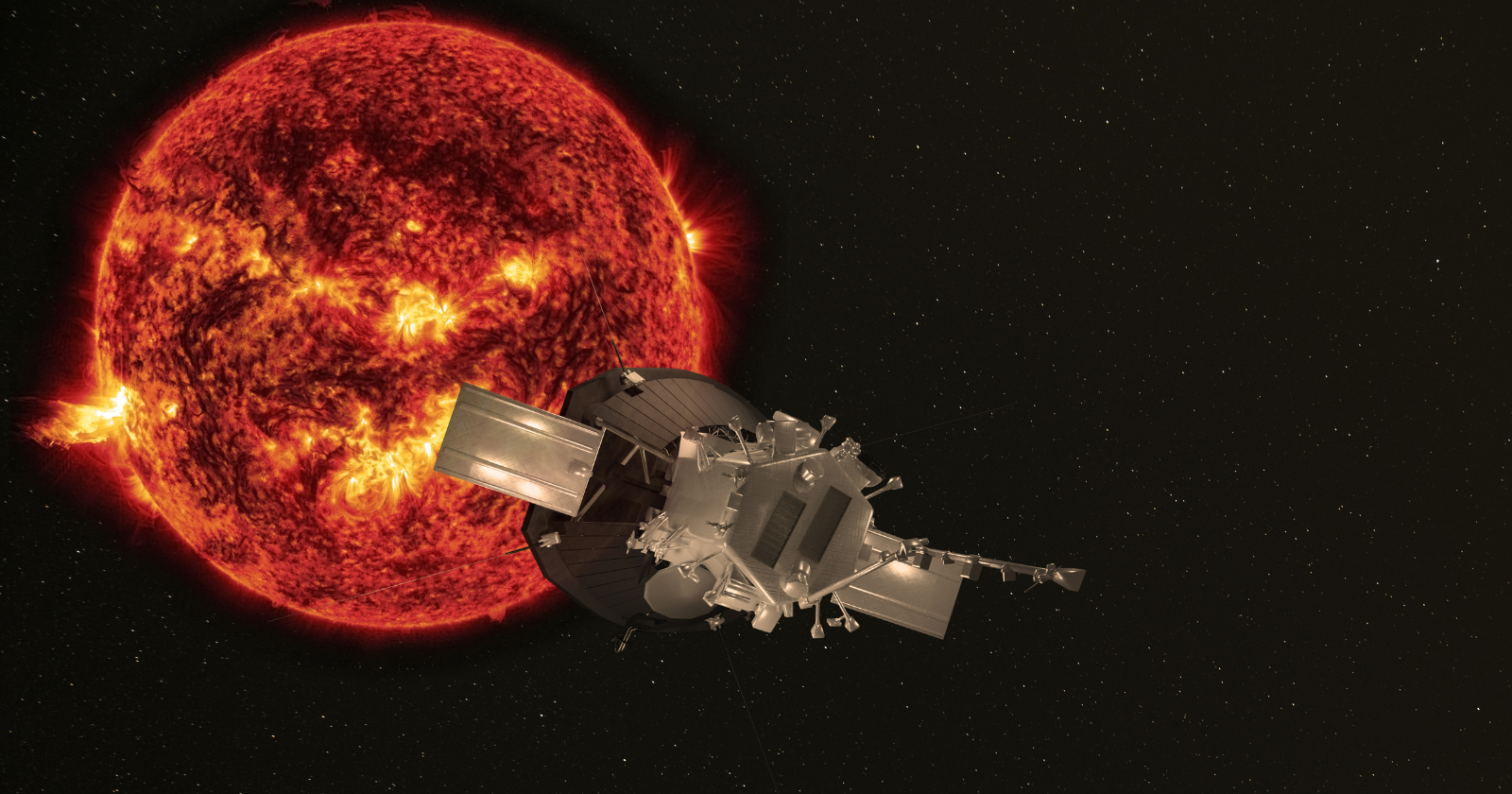
When NASA’s Parker Solar Probe passed through the solar corona during perihelion encounters at the heliospheric current sheet, its instruments recorded energetic protons at energies far above what existing models of particle acceleration at that location could account for.
A team led by Mihir Desai at the Southwest Research Institute, with James Drake, Marc Swisdak, and Zhiyu Yin from the University of Maryland’s Institute for Research in Electronics and Applied Physics has published an analysis of those measurements in The Astrophysical Journal Letters, identifying magnetic reconnection at the heliospheric current sheet as the mechanism responsible. The proton energies detected were, in the study’s framing, approximately a thousand times greater than the available magnetic energy per particle that models of this process had predicted.
The finding matters for two reasons: it identifies a source of energetic particles close to the Sun that was not anticipated, and it raises questions about how far the existing understanding of reconnection-driven particle acceleration extends.
What Parker measured at the current sheet
The heliospheric current sheet is a vast, warped surface in the solar wind where the Sun’s magnetic field reverses polarity. Parker crosses it during perihelion passes, when the spacecraft dips inside the corona. At those distances, the current sheet is narrower and more structured than it appears in the near-Earth solar wind, and the reconnection events occurring there have characteristics that instruments further from the Sun cannot resolve.
Within the exhaust region downstream of a reconnection event, where magnetic field lines have broken and rejoined and the released energy is being distributed into the surrounding plasma, Parker detected trapped protons at energies up to approximately 400 keV. The particles were confined within magnetic islands, structures that form within the reconnection exhaust as reconnected field lines roll up into closed loops. Magnetic island merging, as those loops interact and combine, appears to be the mechanism that accelerated the protons to the observed energies.
The thousand-fold discrepancy between what the models predicted and what Parker measured is the number that requires explanation. Reconnection as a particle accelerator was not a new idea: the process has been theorised to play a role in accelerating charged particles in a range of astrophysical environments. What was not predicted was that the energisation within near-Sun reconnection exhaust could reach this level through the island-merging pathway.
Why this source was not in the models
Current models of solar energetic particles, the high-speed charged particles that propagate through the solar system and can affect spacecraft and astronauts, have generally attributed the most energetic events to large-scale shocks: the driven shock fronts of coronal mass ejections, and the slower-building shocks of co-rotating interaction regions. Reconnection at the current sheet was considered a secondary contributor at best, capable of producing modest particle energies close to the Sun but not a major accelerator of the particles that eventually arrive as energetic storm particle events near Earth.
The Parker measurements suggest that picture needs revision. The magnetic island merging mechanism Desai and colleagues identify can evidently produce proton populations at energies that challenge the boundary between what reconnection does and what shock acceleration does. Whether this source can explain a significant fraction of observed near-Earth energetic particle events, or whether it contributes mainly at energies and scales that remain confined close to the Sun, is a question the paper does not yet resolve.
What this adds to the corona heating problem
A separate thread connects to the longstanding question of why the solar corona is so much hotter than the surface below it. The corona reaches temperatures of several million degrees Celsius while the photosphere sits at around 5,500°C. The energy source sustaining that gradient has not been fully identified. Reconnection, along with wave heating, is one of the leading candidates.
If reconnection at the current sheet is producing particles at the energies Parker measured, it is also depositing energy into the surrounding plasma at rates that may be higher than the models assumed. That does not resolve the corona heating problem, but it shifts the accounting. The energy going into particle acceleration through magnetic island merging is energy that must come from somewhere in the magnetic field, and tracing it may tighten the constraints on how much reconnection contributes to coronal heating overall.
Drake and Swisdak contributed the reconnection theory component of the analysis. The collaboration between the observational data from Parker and the theoretical modelling capacity at the University of Maryland is the structure the paper’s analysis rests on.
What comes next
Parker Solar Probe has now completed more than two dozen perihelion passes, with each close approach yielding data at distances and speeds no prior mission could reach. The heliospheric current sheet crossings that provided the data for this paper are repeatable: Parker will continue to encounter the current sheet during future perihelia, allowing the team to look for the magnetic island signature in additional events and test whether the particle energies observed here hold up as a consistent feature rather than a single anomaly.
Solar Orbiter, the European Space Agency mission operating in coordination with Parker, offers complementary measurements at somewhat greater distances. Comparing what the two spacecraft measure of the same particle populations as they propagate outward from the Sun will help establish which features originate close to the source and which are modified by the intervening solar wind. The energetic particle observations that puzzled researchers in the pre-Parker era now have a candidate mechanism. Whether that mechanism accounts for a large or small fraction of what actually reaches Earth remains the open question.
Scientists have uncovered a shared target used by multiple diarrhea-causing bacteria to invade the gut. Despite decades of research, scientists still do not have vaccines against two of the world’s most common causes of severe bacterial diarrhea: enterotoxigenic E. coli (ETEC) and Shigella. Together, these pathogens infect hundreds of millions of people each year and [...]
Une femme de 53 ans a été admise à l’hôpital pour des saignements vaginaux associés à des pertes malodorantes. L’échographie pelvienne réalisée sur cette patiente, ménopausée depuis deux ans, a révélé la présence de corps étrangers dans son vagin et son utérus.
The Murchison meteorite is, by every available measure, one of the more scientifically valuable single rocks ever to fall on the planet. The fireball that delivered it streaked across the sky above the Goulburn Valley in southeastern Australia on a Sunday morning in September 1969, broke apart at high altitude, and scattered fragments across a roughly 35-square-kilometre area of farmland. One piece punched through the roof of a hay shed. The local dairy farmers who recovered most of the fragments over the following weeks sold the bulk of them to museums and universities, with the largest single collection now held by the Field Museum of Natural History in Chicago. Approximately 80 kilograms of the original 100-kilogram fall is currently held in scientific collections around the world. Over the subsequent five decades, Murchison has been examined more intensively than almost any other meteorite — yielding more than 70 distinct amino acids (including some that do not occur in any known terrestrial biology), sugars including ribose (the backbone of RNA), and several of the nucleobases that make up the building blocks of DNA. The rock has been at the centre of multiple revisions to scientific understanding of how organic chemistry distributes itself through the early solar system.
According to NBC News’s coverage of the 2020 Heck et al. paper on presolar grains in Murchison, the team published its dating results in the Proceedings of the National Academy of Sciences in January 2020. The analysis used a technique called cosmic-ray exposure dating, which Heck described with an unusually accessible analogy: cosmic rays — high-energy particles that constantly stream through the galaxy — interact with solid matter and produce new elements at a roughly constant rate. The longer a particle of matter has been drifting through space exposed to cosmic rays, the more of these new elements accumulate inside it. “I compare this with putting out a bucket in a rainstorm,” Heck told reporters at the time. “Assuming the rainfall is constant, the amount of water that accumulates in the bucket tells you how long it was exposed.” Applying this method to 40 large silicon-carbide grains extracted from the Murchison fragments, the Heck team was able to estimate how long each individual grain had been drifting through interstellar space before being incorporated into the asteroid that eventually fell to Earth.
What presolar grains actually are
The grains the Heck team dated are called presolar grains — solid particles that formed in the atmospheres of dying stars before the solar system existed, drifted through the interstellar medium for hundreds of millions or billions of years, and were then incorporated into the molecular cloud from which the Sun and planets eventually condensed. As reported in Sci.News’s coverage of the same paper, the typical formation environment for the silicon-carbide grains examined by the Heck team was the slowly-expanding atmosphere of an asymptotic giant branch (AGB) star — a red giant in the late stages of its evolution, shedding its outer layers into space at a rate of roughly one solar mass every hundred thousand years. The carbon, silicon, and other elements in the stellar atmosphere condense as the gas cools and expands, forming microscopic dust grains that are then carried outward by the stellar wind into the surrounding interstellar medium.
Most of these grains, once released into space, are eventually destroyed by some combination of supernova shock waves, radiation, and chemical reprocessing within the molecular clouds where new stars form. A small fraction survive intact for billions of years, drifting through the galaxy as part of the general inventory of interstellar dust. When a new solar system begins to form by gravitational collapse of a dense region of interstellar gas, this dust is incorporated into the early protoplanetary disc — and the heat and chemistry of solar system formation typically destroys or substantially alters most of it. The grains that survive intact through the entire formation process do so because they are extraordinarily durable (silicon carbide is one of the hardest materials in nature) and because they are quickly incorporated into the deep interiors of primitive asteroids that never undergo significant thermal processing. Murchison’s parent body was one such asteroid. The grains inside the Murchison fragments are, in a literal sense, time capsules from before the solar system existed.
The age distribution
The headline figure from the Heck team’s analysis — that the oldest grains are approximately 7 billion years old, predating the solar system by approximately 2.5 billion years — captures the extreme of the distribution rather than the average. Per ScienceDaily’s coverage of the Field Museum announcement, the full age distribution of the 40 grains was substantially more informative than the single extreme number suggests. Approximately 60 percent of the grains formed between 4.6 and 4.9 billion years ago — in the few hundred million years immediately preceding the formation of the solar system. Approximately 10 percent formed more than 5.6 billion years ago. A small number formed at the extreme end, around 7 billion years ago. Every grain examined was, by the cosmic-ray exposure dating, older than the 4.6-billion-year-old Sun. This is what made them presolar.
The distribution itself carries scientific weight beyond the individual grain ages. The clustering of a substantial fraction of grains in a narrow age band suggests that an unusual number of stars in the Milky Way galaxy formed, lived their full life cycles, and died during a specific epoch several billion years before the Sun ignited — a “burst” of star formation that produced an unusually large population of dying stars whose outflows seeded the surrounding interstellar medium with the dust that would later contribute to the formation of the solar system. The Heck team’s interpretation, drawing on the age distribution, is that this burst occurred approximately 7 billion years ago. The implication is that the Sun and the planets formed, several billion years later, from a galactic environment that had been substantially enriched with material from this earlier generation of stars.
Why no comparable material exists on Earth
As reported by Malay Mail’s coverage of the age distribution, the broader reason presolar grains can only be found in meteorites — never in any rock of terrestrial origin — is that every piece of solid material that contributed to Earth’s formation has subsequently been heated, melted, recrystallised, or otherwise reprocessed by the geological activity of the planet itself. Plate tectonics has churned the entire crust through the mantle and back at least once. Volcanism has melted and re-erupted vast quantities of material. Even the oldest rocks on Earth, found in places like the Acasta Gneiss Complex in northern Canada, are at most 4.0 to 4.2 billion years old — substantially younger than the planet itself, and far younger than the presolar grains preserved inside primitive meteorites.
The Murchison meteorite, in this respect, occupies a peculiar epistemological position. It is the closest available physical sample of the early solar system, but it is also a sample of the pre-solar-system galaxy that produced the early solar system. The grains inside it are older than anything that can be found by digging downward through the rocks of Earth, by any depth or any drilling technology. They are, in essence, a sample of the chemistry of the Milky Way at a moment several billion years before any of the familiar features of the current solar system existed. The fragments collected by Australian dairy farmers in 1969 and sent to museums in Chicago and elsewhere have turned out to contain, embedded in their carbonaceous matrix, a small but real sample of stardust from stars that finished burning before the Sun began.
His work paved the way for the discovery of the Higgs boson, which explained how particles acquire mass, solving one of the deepest mysteries in physics.
In 1950, the United States Census Bureau estimated that approximately 2,300 Americans were aged 100 or older. The total population of the country at the time was approximately 152 million, which made centenarians one of the rarest possible demographic categories — approximately one in every 66,000 Americans had reached the age. By 1990, the centenarian count had risen to approximately 37,000. By 2020, it had reached approximately 92,000. By 2024, it had passed 101,000. The trajectory has been steep and accelerating, and the demographic shift now visible in the centenarian numbers is one of the larger long-term changes in the structure of the American population — a category that was statistically negligible at the end of World War II is now projected to become, within the lifetimes of most people reading this, a substantial demographic constituency in its own right.
According to the Pew Research Center’s January 2024 analysis of Census Bureau projections, the US centenarian population is projected to more than quadruple from approximately 101,000 in 2024 to approximately 422,000 by 2054 — meaning that within the next 30 years, the proportion of Americans aged 100 or older will rise from approximately 0.03 percent of the population to approximately 0.1 percent. This is the official Census base-case projection. Higher-end estimates developed by demographic researchers — including the MacArthur Foundation Research Network on an Aging Society — have projected substantially higher numbers under more optimistic mortality-improvement scenarios, with some estimates exceeding 1.8 million US centenarians by mid-century and substantially larger numbers by 2100. The range between the Census base case and the higher-end projections is large, and the actual outcome will depend on whether mortality improvements at older ages continue at recent rates, accelerate, or plateau.
What is driving the projected growth
The proximate driver of centenarian growth is not improving mortality among the young or middle-aged — those mortality rates are already very low and have only modest room to fall. The driver is sharply declining mortality among nonagenarians: people aged 90 to 99 who, in previous generations, would typically have died before reaching 100. The mortality rate among 90-year-olds has been falling steadily across developed countries for decades, with each successive cohort of nonagenarians surviving slightly longer than the previous one. The result is that the share of any given birth cohort that eventually reaches 100 has been rising, and the absolute number of centenarians is rising even faster because the population at risk (the 90-year-olds in the country) has also been growing rapidly.
Per a CEOWORLD analysis of the global centenarian surge, the same pattern is visible internationally. The United Nations estimated approximately 722,000 centenarians worldwide in 2024 and projects that the number will rise to approximately 4 million by 2054 — a nearly six-fold global increase in 30 years. By mid-century, the largest national centenarian populations are projected to be China (approximately 767,000), the United States (approximately 422,000), India, Japan, and Thailand, with several Southeast Asian countries and parts of southern Europe showing particularly rapid centenarian growth on a per-capita basis. Japan, currently the country with the world’s highest median age, is projected to have approximately 40 centenarians per 10,000 people by 2054 — meaning that roughly one in every 250 Japanese residents will be aged 100 or older. Thailand is projected to have an even higher ratio, at approximately 49 per 10,000.
The contested longer-term projections
The substantive disagreement among demographers is not about whether centenarian numbers will rise — that is now essentially settled — but about how far they will rise, and how soon a majority of births in low-mortality countries will produce people who eventually reach 100. The optimistic position, associated with the demographer James Vaupel and colleagues at the Max Planck Institute for Demographic Research, holds that life expectancy in the most advanced countries has been increasing by approximately three months per year for the past 150 years and shows no clear sign of slowing — and that this trajectory implies that the majority of children born in low-mortality countries today will live to see their hundredth birthday. The skeptical position, associated most prominently with the American demographer S. Jay Olshansky and his collaborators, holds that life expectancy gains are now slowing substantially in the United States and other developed countries, that the easy mortality reductions from infectious disease control, smoking declines, and cardiovascular medicine have largely been achieved, and that further gains will be substantially harder to obtain.
The empirical evidence for the slowdown position has become more visible in recent years. US life expectancy peaked at approximately 78.9 years in 2014 and then declined — partly because of the opioid crisis, partly because of rising obesity-related mortality, partly because of COVID-19 mortality during the pandemic, and partly because of slowing gains in cardiovascular medicine. The current US life expectancy of approximately 76 years is substantially below the trajectory that the Vaupel projections would have predicted. As covered by a foundational MacArthur Foundation Research Network paper on demographic forecasts for the United States in the 21st century, the higher-end centenarian projections depend on assuming that the recent slowdown is temporary and that the longer-run Vaupel-style trajectory will resume. Whether it does is one of the central empirical questions in contemporary demography, and the answer will substantially affect both the centenarian counts in 2054 and the much larger projections for 2100.
The maximum lifespan question
As reported by a 2021 Bayesian analysis published in Demographic Research by Michael Pearce and Adrian Raftery at the University of Washington, the related question of what the maximum human lifespan will reach by 2100 is approachable with statistical methods even where the underlying biology is uncertain. The Pearce-Raftery analysis modelled the existing distribution of supercentenarians (people aged 110 or older) and the projected growth of that population through the rest of the century, and estimated that there is greater than 99 percent probability that the current record human lifespan — Jeanne Calment of France, who died in 1997 at 122 years and 164 days — will be broken before 2100. They estimate an 89 percent probability that someone will reach age 126, a 44 percent probability that someone will reach 128, and a 13 percent probability that someone will reach 130. These projections are not predictions about the typical lifespan but about the extreme tail of the survival distribution, which depends on the same nonagenarian mortality declines that drive the centenarian numbers.
The deeper question that the centenarian projections raise is the relationship between living longer and living well. The available evidence on healthspan — the proportion of life spent in good health, rather than in disability or substantial decline — suggests that healthspan has been increasing more slowly than lifespan. The result is that the gap between the two has been widening: people are living longer, but with more years of substantial disability, more years of cognitive decline, and more years of dependence on caregivers and the healthcare system. The economic implications are substantial. The current pension systems, healthcare systems, and family structures of most developed countries were built around assumptions about average lifespan and the typical duration of post-retirement life that no longer hold. The institutional response, across most of the developed world, has been slower than the underlying demographic shift. Whether the eventual centenarians — including, possibly, a substantial fraction of the children born this year — will arrive at their hundredth birthdays in good health, in supported decline, or somewhere in between will depend on whether the gains of the coming decades are made primarily in extending lifespan or primarily in extending healthspan. The two trajectories produce very different futures.
A new study suggests that altering the gut microbiome with probiotics may provide additional benefits for older adults being treated for depression. Could a daily probiotic help ease depression in older adults? A new clinical trial suggests the answer may be yes, adding to growing evidence that the gut and brain are more connected than [...]
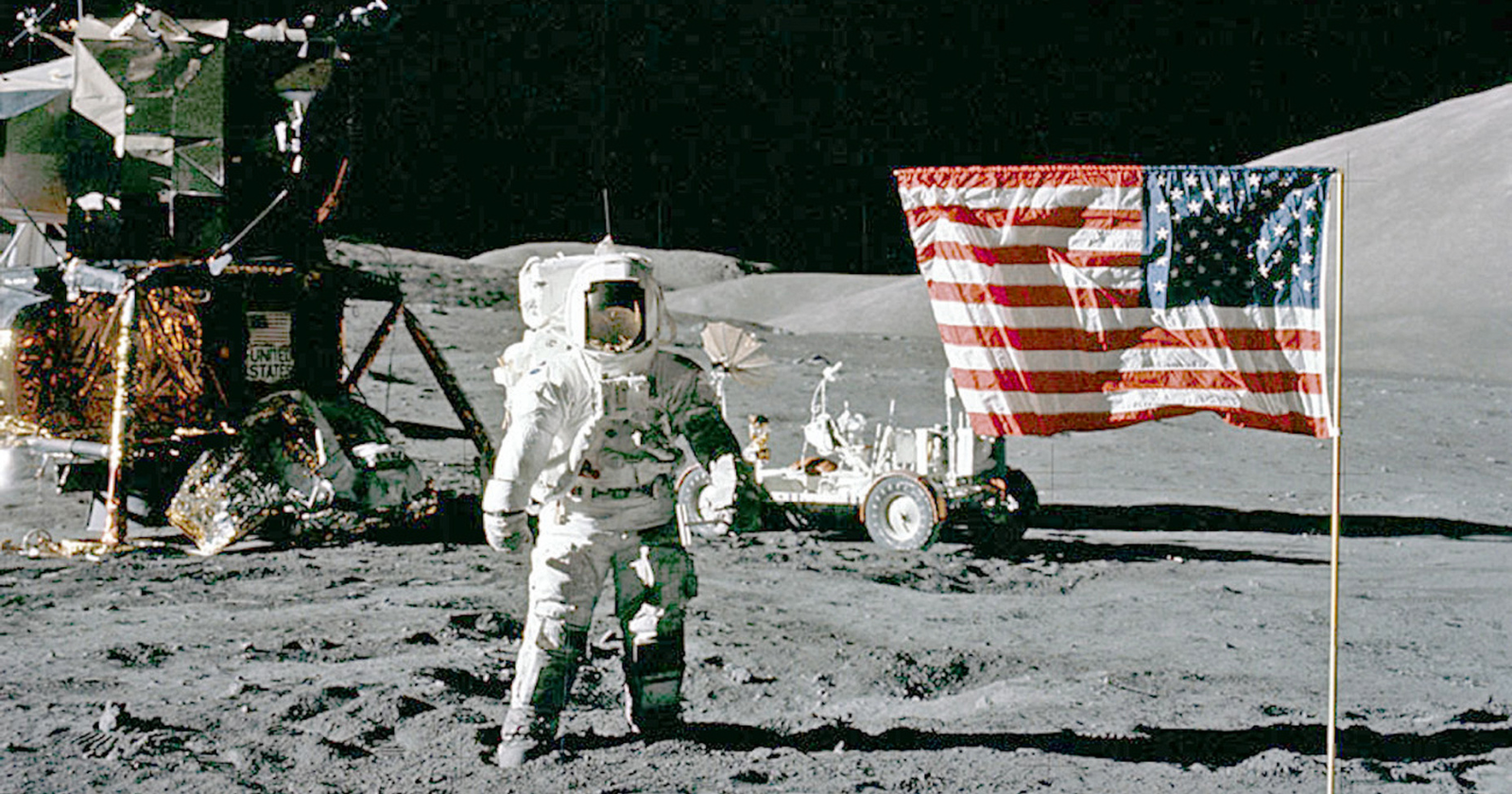
The popular framing of the question — why has no human walked on the Moon since 1972? — usually proceeds as though there is some technical answer to be found. The rockets must have stopped working. The engineering must have been forgotten. The expertise must have been lost in the half-century since Apollo 17 splashed down. The actual answer is substantially simpler and substantially less satisfying. The Apollo programme was not cancelled because it stopped being possible. It was cancelled because it stopped being useful for what it had been built to accomplish. The capability question is a downstream consequence of a political question that was settled in the early 1970s, when the American government decided that the goal of beating the Soviet Union to the Moon — having been achieved on 20 July 1969 with Apollo 11 — was no longer worth paying for, and that the remaining momentum of the Apollo programme should be redirected toward other priorities.
According to the Smithsonian National Air and Space Museum’s editorial reconstruction of the Apollo cancellations, the decisions to end the lunar programme were made in a sequence that began almost immediately after Apollo 11’s success. By December 1969 — five months after Neil Armstrong’s first footstep — one of President Richard Nixon’s top aides told NASA that “the President says that he doesn’t have enough money within the next couple of years and must accept limitation of [space] activity” and that Nixon “did not see the need to go to the moon six more times.” On 4 January 1970, the Apollo 20 mission was formally cancelled. In September 1970, Apollos 18 and 19 followed. The remaining missions — Apollos 14 through 17, the latter three already in advanced preparation — were allowed to proceed and were completed by December 1972. The Saturn V production line was shut down in 1970. The remaining unflown Saturn Vs were sent to museums, where they remain as the largest functional rockets ever built, permanently grounded.
Why the political momentum collapsed
The Kennedy speech of 25 May 1961 — “I believe that this nation should commit itself to achieving the goal, before this decade is out, of landing a man on the moon and returning him safely to the earth” — was framed in terms of national capability and human aspiration, but the actual policy logic that funded it was strategic competition with the Soviet Union. The Soviets had launched Sputnik in 1957, put Yuri Gagarin into orbit in April 1961 (six weeks before Kennedy’s speech), and were widely perceived to be ahead of the United States in space capability. The Apollo programme was, in essential terms, a national project to recover technological prestige from a position of perceived inferiority. It was funded at scales that no comparable peacetime project before or since has matched — peaking at approximately 4.4 percent of the entire US federal budget in 1966.
The strategic logic for that funding evaporated essentially the moment Armstrong stepped off the lunar module ladder in July 1969. The Soviets, by 1969, had already effectively conceded the lunar race — their N1 super-heavy rocket failed in four successive test launches between 1969 and 1972, and the Soviet crewed lunar programme was wound down quietly. There was no longer any external competitor to beat. There was no longer any strategic prestige to be gained from continued lunar landings. And the public, which had supported Apollo as a Cold War project, had never developed the underlying enthusiasm for lunar exploration as a scientific or exploratory enterprise that would have been required to sustain funding in the absence of the Cold War rationale. Polls throughout the late 1960s consistently showed that a majority of Americans thought Apollo was not worth the cost, even at the peak of the programme’s popularity.
The internal NASA decisions
Per The Planetary Society’s analysis of how Nixon shaped the post-Apollo NASA, the popular blame placed on Nixon for ending Apollo is partially deserved but oversimplifies the institutional dynamics. NASA itself, under Administrator Thomas Paine, agreed to terminate Saturn V production and cancel later Apollo missions in order to free up budget for the post-Apollo programmes the agency wanted to pursue — an experimental space station that would become Skylab, and a reusable spacecraft that would become the Space Shuttle. The choice was framed within NASA as a redirection of resources from the now-completed lunar landing programme toward new objectives, rather than as an abandonment of human spaceflight. The institutional case for shutting down the Saturn V line was that it was no longer needed for the missions the agency intended to pursue, and that maintaining a manufacturing line for a rocket the agency was not going to use would have consumed budget that could be spent on the Shuttle.
That decision turned out to be one of the more consequential institutional choices of the post-Apollo era. The Shuttle programme that NASA selected as its successor to Apollo was, by every available assessment, a substantially less ambitious vehicle than what the Saturn V could have supported, while also being substantially more expensive per launch than Apollo had been. The Shuttle operated from 1981 to 2011, completed 135 missions, lost two crews and 14 astronauts in catastrophic accidents, and never carried humans beyond low Earth orbit. The capability that had allowed twelve men to walk on the Moon between 1969 and 1972 was, by the time the last Saturn V was sent to a museum in the mid-1970s, no longer institutionally sustainable. Restarting it would require essentially rebuilding the entire programme from scratch — which is what NASA’s Artemis programme has, in fact, been attempting to do for the past several years, at substantial cost and with substantial delays.
What “lost capability” actually means
As covered by AmericaSpace’s detailed history of the Apollo cancellations, the popular claim that humanity “lost the capability” to return to the Moon is partially true and partially misleading. The engineering knowledge from Apollo was documented and survives in archives, technical reports, and the institutional memory of the relatively small number of engineers from the era who are still alive. The capability that was lost is not the knowledge itself but the institutional infrastructure that supported it: the Saturn V manufacturing line, the supplier networks, the specialised workforce, the test facilities, and the political-economic configuration that allowed roughly 400,000 people working across NASA and its contractor network to be mobilised on a single objective with a national-priority budget. None of these things are recoverable in their original form. They have to be rebuilt, which is essentially what the Artemis programme is now doing, and which is partly why the rebuild has taken decades and substantially exceeded its original budget.
The deeper point is that the question “why has no one been back to the Moon in fifty-three years?” has the same answer as the question “why was anyone there in the first place?” The Apollo programme was a Cold War project that happened to produce, as a byproduct, the most ambitious feat of exploration in human history. When the Cold War rationale for the project ended, the project ended. The capability that had been built for the project was allowed to decay because the institutional reasons for maintaining it had decayed first. The current revival of crewed lunar exploration — through Artemis, through China’s parallel programme, through the commercial-spaceflight ecosystem that has emerged over the past decade — is taking place because new institutional reasons have emerged: geopolitical competition with China, commercial interest in lunar resources, scientific interest in the lunar south pole, and a renewed sense in several capitals that human presence beyond Earth orbit is strategically valuable. Whether the new reasons will sustain a sustained human presence on the Moon, or whether the next round of lunar landings will be followed by another half-century pause, depends on whether the institutional infrastructure being built now is durable enough to survive the eventual evaporation of whatever specific political momentum is currently funding it. The Apollo experience suggests that this is not a question to be answered with technological optimism.
O Ministério da Integração e do Desenvolvimento Regional desativou a plataforma Defesa Civil Alerta à 1h30 da madrugada deste sábado (20) após o registro de dez alertas enviados sem autorização para aparelhos celulares em diversas regiões do Brasil. A Polícia Federal foi acionada para investigar a origem dos disparos.
De acordo com o secretário nacional de Proteção e Defesa Civil, Wolnei Wolff, em informações divulgadas pela CNN Brasil, os envios ocorreram na transição de sexta-feira para sábado. O sistema registrou nove emissões por meio da tecnologia Cell Broadcast e uma por SMS. O formato Cell Broadcast exibe alertas sobrepostos na tela de dispositivos conectados a redes 4G ou 5G com base na localização das antenas. O modelo por SMS utiliza uma base de números previamente cadastrados.
Conteúdo e origem das mensagens
As mensagens enviadas aos aparelhos acionaram avisos sonoros e apresentaram o termo "misantropi4" nos textos exibidos. Segundo Wolff, o primeiro alerta teria sido emitido a partir de Curitiba, no Paraná, por meio de um cadastro criado no sistema. A origem dos acessos ainda é investigada.
- Entre no Canal do WhatsApp do Canaltech e fique por dentro das últimas notícias sobre tecnologia, lançamentos, dicas e tutoriais incríveis. -
Os avisos chegaram a aparelhos nos estados de São Paulo, Rio de Janeiro, Bahia, Mato Grosso do Sul, Acre, Paraná e no Distrito Federal. O secretário afirmou que os envios atingiram milhões de pessoas em razão do alcance da tecnologia utilizada. Segundo ele, os indícios apontam para um crime cibernético e para uma invasão realizada por pessoas sem acesso regular ao sistema.
As contas utilizadas nos envios foram bloqueadas pela equipe de tecnologia da informação do ministério após a identificação das ocorrências. O retorno do sistema de alertas depende da conclusão da troca de credenciais e da revisão dos mecanismos de acesso à plataforma. Não há previsão para a reativação.
A Agência Nacional de Telecomunicações (Anatel) informou que as mensagens enviadas durante a madrugada não partiram das autoridades responsáveis pelo sistema. Em comunicado, a agência orientou os usuários a desconsiderarem os alertas.
Et si les femmes et les hommes ne vivaient pas leurs rapports sexuels de la même manière ? Une nouvelle étude révèle des écarts frappants sur le plaisir, la satisfaction et même la durée perçue des rapports.

 Login

 Researchers have uncovered a critical mechanism behind battery failure in solid-state batteries, offering new insights that could help unlock safer, longer-lasting energy storage technologies. Every time a smartphone is charged or an electric vehicle is plugged in, billions of lithium ions move through a battery to store energy. Future devices could perform far better with [...]


 We've never seen anything like this.


 We need to fix this.
 Spotting and killing off cancer.