Reading view
Google Chrome's Next Update Will Mark the End of Popular Ad Blockers
Read more of this story at Slashdot.
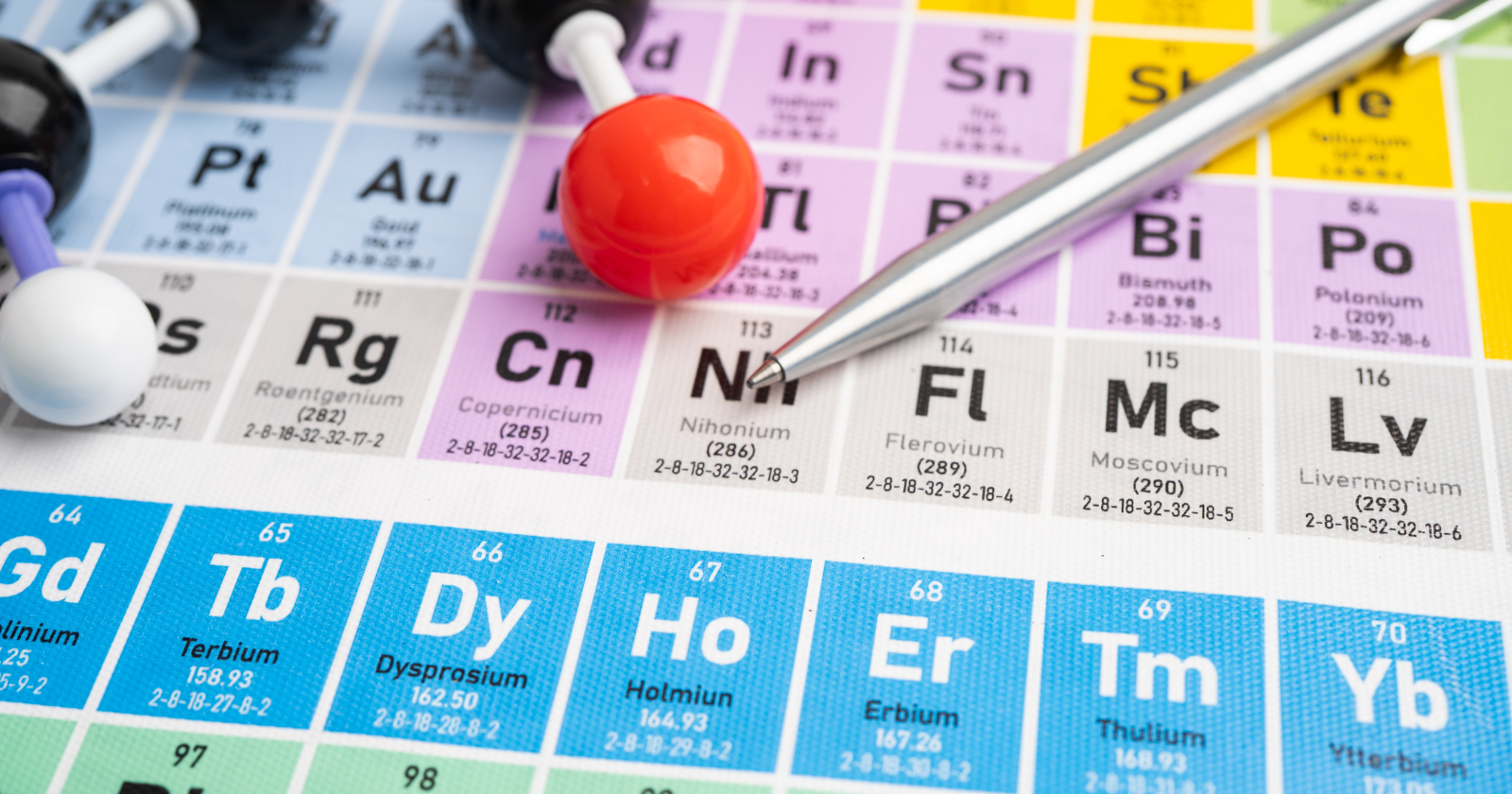
In 1869, Dmitri Mendeleev arranged the known elements into a table and left gaps for what had not yet been discovered, but the detail that makes the periodic table remarkable is that chemistry became organized enough to predict missing pieces of reality

In March 1869, Dmitri Mendeleev presented to the Russian Chemical Society a way of laying out around sixty elements then known. He ordered them by atomic weight and broke the line into rows so that elements with similar chemical behaviour fell into the same columns. Where the pattern called for an element that no one had found, he did not close the line up. He left the space empty and described what should eventually fill it.
The arrangement is now so familiar that the gaps are easy to overlook. They are the part worth dwelling on. Other people had already noticed that the elements repeat their properties at regular intervals. What Mendeleev did with the repetition was different in degree: he trusted the pattern enough to bet against the existing inventory, and to say, in print, that the inventory was incomplete in specific places by specific amounts.
What the table was built on
The organising idea was periodicity. Run through the elements in order of increasing atomic weight and their properties do not change steadily; they cycle. A reactive light metal is followed some steps later by another reactive light metal, a pungent gas by another pungent gas. Mendeleev arranged the rows so that these recurrences stacked into vertical groups, lithium above sodium above potassium, and so on.
Atomic weight was the only quantity he had to order by. He did not know what caused the periodicity, because the structure of the atom was still decades away. He was working from measured weights and observed chemistry, and arranging both until the columns made chemical sense. In a few cases the weights and the chemistry disagreed, and he chose the chemistry, placing an element where its behaviour fit even when its measured weight argued for somewhere else.
The gaps and the predictions
For three of the empty spaces, Mendeleev went further than leaving a blank. He gave the missing elements provisional names built from the Sanskrit prefix eka, meaning one, so that eka-aluminium meant the element one place below aluminium. For each he estimated an atomic weight, a density, and a set of chemical properties, reading them off the neighbours that surrounded the hole.
The estimates were close enough to be checked. Eka-aluminium arrived in 1875, when the French chemist Paul-Émile Lecoq de Boisbaudran isolated a new metal he called gallium; its density, once measured carefully, matched Mendeleev’s figure. Eka-boron arrived in 1879 as scandium, identified by Lars Fredrik Nilson in Sweden. Eka-silicon arrived in 1886 as germanium, found by Clemens Winkler in Germany, and its properties tracked the prediction closely enough that the agreement is still the standard example taught from the episode.
Three confirmed predictions within seventeen years did more for the table than any argument could. A scheme that merely tidied the known elements would have been one convenience among several. A scheme that named absent elements and described them before anyone had seen them was harder to dismiss.
He was not the only one, and that matters
Mendeleev did not invent the idea that the elements form a periodic series. Alexandre-Émile Béguyer de Chancourtois had plotted them on a spiral in 1862. John Newlands, in London, had published his “law of octaves” in the mid-1860s, noting that every eighth element resembled the first, and had been mocked for it. The German chemist Lothar Meyer was developing his own table at almost the same time as Mendeleev and arguably had the periodicity of physical properties drawn more cleanly.
What separated Mendeleev’s version was not priority but nerve. Newlands had let the known elements set the length of his pattern. Mendeleev let the pattern set the length, and treated mismatches as evidence that an element was missing or that a measured weight was wrong, rather than as evidence against the scheme. The historian Eric Scerri, who has written the standard modern account of the table’s development, has argued that this willingness to subordinate the data to the system, and then to stake testable predictions on it, is the better explanation for why Mendeleev’s name attached to the result.
Where the 1869 table was wrong
The story is usually told as a clean run of successful forecasts. It was not clean. Mendeleev predicted elements that were never found, including light elements he expected to sit before hydrogen, tied later to his mistaken belief in a luminiferous ether. Several of his other interpolations did not pan out as described.
Two larger problems sat outside the 1869 table entirely. The noble gases, argon and its relatives, were discovered in the 1890s and formed a whole column that the original scheme had not anticipated; Mendeleev was at first reluctant to accept them. And the ordering principle itself was incomplete. A handful of pairs, tellurium and iodine among them, sat in the right chemical place but the wrong weight order. The reason became clear only in 1913, after Mendeleev’s death, when Henry Moseley showed that the elements are properly ordered not by weight but by nuclear charge, the atomic number. The table Mendeleev built by chemical intuition turned out to be tracking a physical quantity he had no way to measure.
That is the honest shape of it. The gaps were the achievement, and the parts he filled wrongly belong in the same account as the parts he filled before anyone else could.
The part worth keeping
The detail in the headline is fair: by 1869 the chemistry of the elements had become ordered enough that a missing piece could be described before it was found. That is a particular kind of confidence, and it is rarer than the finished table makes it look. It requires a pattern reliable enough to extrapolate from, and someone prepared to be checked against an empty square.
Mendeleev was prepared to be checked, and within his lifetime three of the squares filled in close to where he had said they would. The ones that did not fill in, and the deeper rule that only emerged after he was gone, are part of why the table is interesting rather than merely useful. It was right enough to predict, and wrong in ways that pointed at the physics underneath.
The post In 1869, Dmitri Mendeleev arranged the known elements into a table and left gaps for what had not yet been discovered, but the detail that makes the periodic table remarkable is that chemistry became organized enough to predict missing pieces of reality appeared first on Space Daily.

Space Force orders two more GPS satellites from Lockheed Martin for $514 million

Contract brings GPS 3F orders to 14 satellites that add anti-jam features, digital payloads and upgraded civilian navigation signals
The post Space Force orders two more GPS satellites from Lockheed Martin for $514 million appeared first on SpaceNews.
Users Cry Foul After AMD Stripped Memory Crypto From Its Consumer CPUs
Read more of this story at Slashdot.
O que TEM DENTRO da BOLA da COPA?

Neste vídeo, o Manual do Mundo abre a bola oficial da Copa para descobrir como ela é construída, quais são suas camadas e o que faz ela se comportar de forma tão diferente dentro de campo.
E claro: antes de cortar, a gente tentou acertar um alvo com ela. O resultado foi melhor para algumas coisas do que para o futebol.
#futebol #copa #bola #tecnologia #gol
Seja membro deste canal e ganhe benefícios:
https://youtube.com/channel/UCKHhA5hN2UohhFDfNXB_cvQ/join
► Inscreva-se: https://youtube.com/user/iberethenorio?sub_confirmation=1
► Canal de cortes: https://youtube.com/channel/UCzBTlYfHYMwVEru4hmLM8hg
REDES SOCIAIS
Instagram: http://instagram.com/manualdomundo
TikTok: https://www.tiktok.com/@manualdomundo
Facebook: http://facebook.com/manualdomundo
Instagram Mari: http://instagram.com/amarifulfaro
Twitter Iberê: http://twitter.com/iberethenorio
Dúvidas e sugestões: contato@manualdomundo.com.br
Imprensa e convites: assessoria@manualdomundo.com.br
Negócios: comercial@manualdomundo.com.br
CRÉDITOS
Direção Geral e Apresentação
IBERÊ THENÓRIO
Direção de Estratégia e Marca
RUBENS ISHARA
Direção de Conteúdo Educacional
FERNANDO SOUZA
Direção de Produção
TIAGO CÉSAR SILVA
Direção Financeira
KATIA HATSUMI
Roteiro
BEATRIZ HERMINIO
Conteúdo
FERNANDA T. WAIMBERG
ALISON SOUSA (Estágio)
DANIEL R. UNZELTE (Estágio)
JULIA MARTINATO (Estágio)
Produção
DANIEL PEDROSO
LUCAS VALLADO
Fotografia
JANSEN BISPO
Edição e Finalização
GUSTAVO GIROTTO
NILTON SILVA (Estágio)
Arte
ANDRESSA GONÇALVES
Mídias Digitais
ALEX TERUEL (Estágio)
Distribuição
RODOLFO VIANNA
Comercial
NAYARA CRISTINA FERREIRA
Infraestrutura e Serviços
MARIA OLIVEIRA
Agradecimento: Adidas
Copyright© Manual do Mundo®. Todos os direitos reservados.
Astrobotic unveils Griffin-1 lunar lander for NASA Moon Base mission
Can printed ‘skin’ help to heal burns without scars?
Inks created with a patient’s own cells might one day help the body regrow tissues

Xiaomi 17 Ultra REVIEW: um dos celulares mais poderosos do mundo tem um defeito INACEITÁVEL

https://www.youtube.com/channel/UCdmGjywrxeOPfC7vDllmSgQ/join
O Xiaomi 17 Ultra é o smartphone definitivo de 2026. Ele traz o Snapdragon 8 Elite Gen 5, câmeras Leica que venceram o nosso teste cego e uma tela AMOLED linda, além de boa bateria e outras especificações de respeito. Mas depois de um mês de uso real, o Leo Rocha confirmou problemas sérios no HyperOS 3.0 que afetam todos os aparelhos da marca, incluindo um defeito bizarro que pode gastar seus dados e até abrir celular para ataques maliciosos. Vale a pena pagar quase R$ 13 mil nele? Confira o review completo!
🔥 Se liga nas ofertas que encontramos para você!
Smartphone Motorola Moto G35 5G de 256GB por R$ 999,55 - https://s.shopee.com.br/3qKkzltaeZ
Smartphone Xiaomi Redmi 15c de 256GB por R$ 889,00 - https://tidd.ly/4ve2Kwc
Headset gamer Havit H2002d Red por R$ 119,90 - https://amzn.to/4vPprH0
Cupons e ofertas da LG com até 55% de desconto - https://www.tecmundo.com.br/guia-de-compras/402734-cupom-lg.htm
Livro Cabeça de Campeão - https://amzn.to/3QBuOKQ
Livro O conde de Monte Cristo - https://amzn.to/4uymCsQ
Filme A Vida Secreta de Mitty - https://disneyplus.bn5x.net/9Vnx5E
Série Spider-Noir - https://primevideo-row.pxf.io/2RyXxA
- Teste cego da equipe do TecMundo: https://www.youtube.com/shorts/zdxMKtnk4DE
- Teste cego com o público: https://www.youtube.com/watch?v=UIGI3G26cq0
- Guia de Compras TecMundo: https://www.tecmundo.com.br/guia-de-compras/
- Newsletter do Guia de Compras: https://mailchi.mp/nzn/newsletter-guiadecompras
- Entre no nosso canal de ofertas no WhatsApp: https://bit.ly/tecmundoofertas
⚠️ Assine a newsletter do The BRIEF e seja sempre o mais informado no café da empresa: https://thebrief-newsletter.beehiiv.com/subscribe?utm_source=youtube&utm_medium=hojenotec&utm_campaign=maio
#[Tipo: Análise]
Extensão do TecMundo: encontre cupons escondidos nas principais lojas online: http://bit.ly/3ZkKOji
- Os melhores cupons Online para você! https://www.tecmundo.com.br/cupons
💡 Participe dos canais do TecMundo no WhatsApp!
- TecMundo: https://bit.ly/whatstecmundo
- Voxel: https://bit.ly/whatsvoxel
- Mega Curioso: https://bit.ly/whatsmegacurioso
- Minha Série: https://bit.ly/whatsminhaserie
💡 Temos grupos também no Telegram!
- TecMundo: https://bit.ly/3JZoTbm
- Voxel: https://bit.ly/telegramvoxel
- Mega Curioso: https://bit.ly/telegrammegacurioso
- Minha Série: https://bit.ly/telegramminhaserie
CRÉDITOS
Roteiro: Leonardo Rocha
Apresentação: Leonardo Rocha
Imagens e áudio: Felipe Pedro (Felps) e Lucas Ghitelar
Produção: Vitória Schmitz, Sara Hélen e Guilherme Barbosa
Edição de vídeo: Rafael Nogoceke
Motion Graphics: Gustavo Silva
Arte da thumb: Leonardo Rocha
A melhor programação está no TecMundo
- História da Tecnologia
- Análises, Unboxings e tudo sobre Produtos!
- TecDocs
- Matérias especiais
- Assistência Tec
- Lives de tradução e cobertura de eventos
- Listas
- Hoje no TecMundo
#Xiaomi17Ultra #Review #TecMundo #Snapdragon8Elite #Leica #HyperOS #Android16 #SmartphonePremium #FotografiaMobile #CelularImportado #LeoRocha #AnaliseTech #TesteCego #OppoFindX9Pro #MotorolaSignature #Flagship2026
NASA Flights Map Tropical Ecosystems, Water, Ice

Data from a NASA campaign in Panama and Peru will help communities prepare for tropical floods in cloud-covered areas, improve scientific understanding of forest health, and support planning for spaceborne missions.
NASA’s C-20A aircraft from Armstrong Flight Research Center in Edwards, California, flew the Uninhabited Aerial Vehicle Synthetic Aperture Radar (UAVSAR) instrument, developed at NASA’s Jet Propulsion Laboratory in Southern California, to gather mission data. While flying repeat paths, the instrument collected high-resolution radar data from a pod mounted beneath the aircraft. The monthlong campaign, known as Tropical Synthetic Aperture Radar, or TropiSAR, concluded on June 4 after 17 flights totaling 75 hours.
Airborne data were captured over Peru in the same times and locations as data captured by the NISAR (NASA-ISRO Synthetic Aperture Radar) satellite to validate key NISAR capabilities and support calibration of the satellite’s L-band radar system. The science validation targeted two measurements: tropical rainforest flood extent within the Pacaya-Samiria National Reserve in Peru, one of the world’s largest protected flooded forests, and glacier movement in the Huascarán National Park in the Peruvian Andes, which is home to the largest concentration of tropical glaciers. The mission also gathered detailed 3D views of tree height and density to estimate biomass, assess forest health, and better understand how forest ecosystems store and release carbon.
In Panama, TropiSAR also supported NASA’s Airborne Validation Unified Experiment: Land and Ocean (AVUELO) campaign in collaboration with the Smithsonian Tropical Research Institute. Airborne radar data were collected from dry forests and coastal wetlands with the goal of better understanding Panama’s rich biodiversity. By linking field measurements with airborne and satellite observations, AVUELO may advance new methods for studying the tropics.
~Jay Levine
The post NASA Flights Map Tropical Ecosystems, Water, Ice appeared first on NASA Science.
The Stoic philosopher Seneca observed that what makes a person genuinely happy is not how much they have, but how little they need to be content — and the small jolt of his observation, two thousand years later, is that most modern definitions of the good life are still organized around acquiring more of exactly the things he warned would never quite settle the longing they were meant to satisfy

If you had to summarise Seneca’s most uncomfortable observation in a single sentence, it would be this: most of what you are spending your life trying to acquire is not actually going to satisfy you when you get it. Lucius Annaeus Seneca, the Roman Stoic philosopher who served as tutor and later adviser to the Emperor Nero, wrote 124 surviving letters to a younger Roman official named Lucilius across the final years of his life — letters that have remained in continuous circulation for nearly 2,000 years and that contain some of the more concentrated observations of human psychology produced in the ancient world. Among the recurring themes in these letters is the curious gap between what people pursue and what actually makes them content. Seneca’s specific claim was that the pursuit of more — more wealth, more possessions, more recognition, more of essentially anything one could accumulate — does not converge on satisfaction. As the supply increases, the demand increases with it, and the gap between the two never closes.
According to the Internet Encyclopedia of Philosophy’s reference on Seneca, his writings repeatedly addressed this question across multiple letters and essays. “It is not the man who has too little, but the man who craves more, that is poor,” he wrote in his second letter to Lucilius. “Contented poverty,” he added, quoting his philosophical opponent Epicurus approvingly, “is an honourable estate.” In another letter, again quoting Epicurus: “Whoever does not regard what he has as most ample wealth, is unhappy, though he be master of the whole world.” Contentment, in Seneca’s account, is not a function of how much one has but of how little one needs. People who have learned to need less can be content with very little. People who have not can fail to be content with essentially anything.
The empirical convergence
For most of the period between Seneca’s death and the late twentieth century, his observations existed as philosophical claims — defensible by argument, supported by example, but unverifiable by anything resembling modern empirical methodology. This changed in 1971, when the psychologists Philip Brickman and Donald Campbell introduced into the social-science literature the concept of the “hedonic treadmill” — a model in which positive events produce short-term elevations in subjective well-being that fade over time as people adjust their expectations upward to match their new circumstances. The model predicted that lottery winners, despite their substantial good fortune, should not end up much happier than they were before winning, because their reference point would shift upward and their new wealth would come to feel normal rather than exceptional.
Per the Wikipedia reference on the hedonic treadmill and its empirical foundations, Brickman and his colleagues Dan Coates and Ronnie Janoff-Bulman tested this prediction directly in a now-famous 1978 study published in the Journal of Personality and Social Psychology. The research team compared 22 major lottery winners with 22 demographically matched controls and 29 individuals who had been paralysed in accidents. The results were striking. Lottery winners were not significantly happier than controls. They reported finding less pleasure in ordinary daily activities than non-winners did, suggesting that the peak experience of winning had contaminated their capacity for mundane satisfaction. The paralysed accident victims, while clearly less happy than controls, were closer to controls than would have been predicted by the magnitude of their loss. The basic Stoic claim — that the relationship between external circumstances and inner contentment is much weaker than ordinary intuition suggests — was, in its broad outlines, empirically confirmed.
Why the mechanism works
The mechanism Brickman and Campbell identified, which Seneca had described in different language, is that humans adjust their internal reference point as their external circumstances improve. The first car you own provides substantial improvement over having no car. By the time you have reached the tenth car in a lifetime of progressively improving vehicles, each new one barely registers, even though every one of them would have seemed luxurious to the person you were before you owned any. The same pattern applies to houses, salaries, food, clothing, professional recognition, and essentially every other category of acquirable good.
The economist Richard Easterlin documented the same pattern at the level of whole societies in 1974, in what has come to be called the Easterlin Paradox. Within any given country at any given moment, richer people report being happier than poorer ones. But as an entire country grows richer over decades — as per-capita income doubles, then triples, then quadruples — average happiness barely moves. The collective acquisition of more does not produce collective contentment. The individual aspiration level rises in parallel with collective wealth, and the gap between aspiration and achievement remains essentially constant.
The hypocrisy charge
The honest account of Seneca’s argument requires noting an awkward complication. Seneca himself was extraordinarily wealthy. He served as a senior adviser to Emperor Nero and accumulated, over the course of his career, a personal fortune estimated by Roman historians at approximately 300 million sesterces — making him one of the richer private citizens in the Roman Empire. He owned multiple villas, substantial estates, and significant financial holdings, including loans to provincial elites that some historians believe may have helped trigger the Boudican revolt in Britain. The contrast between his philosophical writings on the worthlessness of wealth and his actual accumulation of substantial personal fortune has been the subject of debate since his own lifetime, when the Roman senator Publius Suillius Rufus publicly attacked him on this point in 58 CE.
Seneca’s response, articulated in his essay On the Happy Life, was that the wise person does not need wealth but is also not required to refuse it when it comes — that what matters is one’s relationship to one’s possessions, not the bare quantity of them. The defence is contested. Some readers find it self-serving. Others find it consistent with the broader Stoic framework, which emphasised the cultivation of an inner attitude rather than the renunciation of external goods. The biographical inconvenience does not, in any case, invalidate the underlying psychological claim. The clinical observation that the pursuit of more does not produce satisfaction can be empirically true even if the person making the observation happens to be wealthy. The Brickman and Easterlin data confirm Seneca’s claim regardless of how the philosopher himself lived.
The post The Stoic philosopher Seneca observed that what makes a person genuinely happy is not how much they have, but how little they need to be content — and the small jolt of his observation, two thousand years later, is that most modern definitions of the good life are still organized around acquiring more of exactly the things he warned would never quite settle the longing they were meant to satisfy appeared first on Space Daily.
Lawmakers fight to stop the Trump administration’s dismantling of a $386M ocean observatory project

Nouvelle vague de chaleur confirmée : un événement dangereux se met en place, voici ce à quoi il faut se préparer

Trump's 'Made In the USA' Phone Is Just a Reskinned HTC U24 Pro
Read more of this story at Slashdot.
Britain Unveils Sweeping Ban On Social Media For Under-16s
Read more of this story at Slashdot.
Fox Is Buying Roku For $22 Billion
Read more of this story at Slashdot.
Amendment 59: Several Updates to the ROSES-25 Summary of Solicitation
Research Opportunities in Space and Earth Sciences (ROSES)-2025 is an ongoing “omnibus” or “umbrella” solicitation meaning that it includes many individual program elements each with its own topics and due dates. Refer to Table 3 of ROSES-25 for a list of those program elements. The ROSES-25 “Summary of Solicitation” is the front matter that sets the default backstop rules for each of the program elements in ROSES-25.
ROSES-25 Amendment 59 makes several additions, changes, and clarifications to the ROSES-25 Summary of Solicitation to conform with Agency and administration priorities, see Sections I, I(g), II(a), II(b), III(b), III(d), V(b)ii, VI(c) & VIII(b). New text is in bold.
Important and substantial revisions to 2 CFR 200, the government-wide guidance for grants and cooperative agreements are proposed to take effect October 1, 2026, see https://www.federalregister.gov/documents/2026/05/29/2026-10817/regulation-for-federal-financial-assistance#h-8. Many types of currently allowable costs, such as but not limited to publications, research or events outside the United States, and domestic conferences may be restricted, denied, or may be allowable by legal exception or special award conditions only. Public comments on the revisions to 2 CFR 200 may be submitted until July 13, 2026, at https://www.regulations.gov/commenton/OMB-2026-0034-0001
On or about June 15, 2026, this Amendment to the NASA Research Announcement “Research Opportunities in Space and Earth Sciences (ROSES) 2025” (NNH25ZDA001N) will be posted on the NASA research opportunity homepage at https://solicitation.nasaprs.com/ROSES2025 and will appear on SARA’s ROSES blog at: https://science.nasa.gov/researchers/solicitations/roses-2025/
Questions concerning this amendment to ROSES-25 may be directed to SARA@nasa.gov.
Explore More
Discover More Topics From NASA
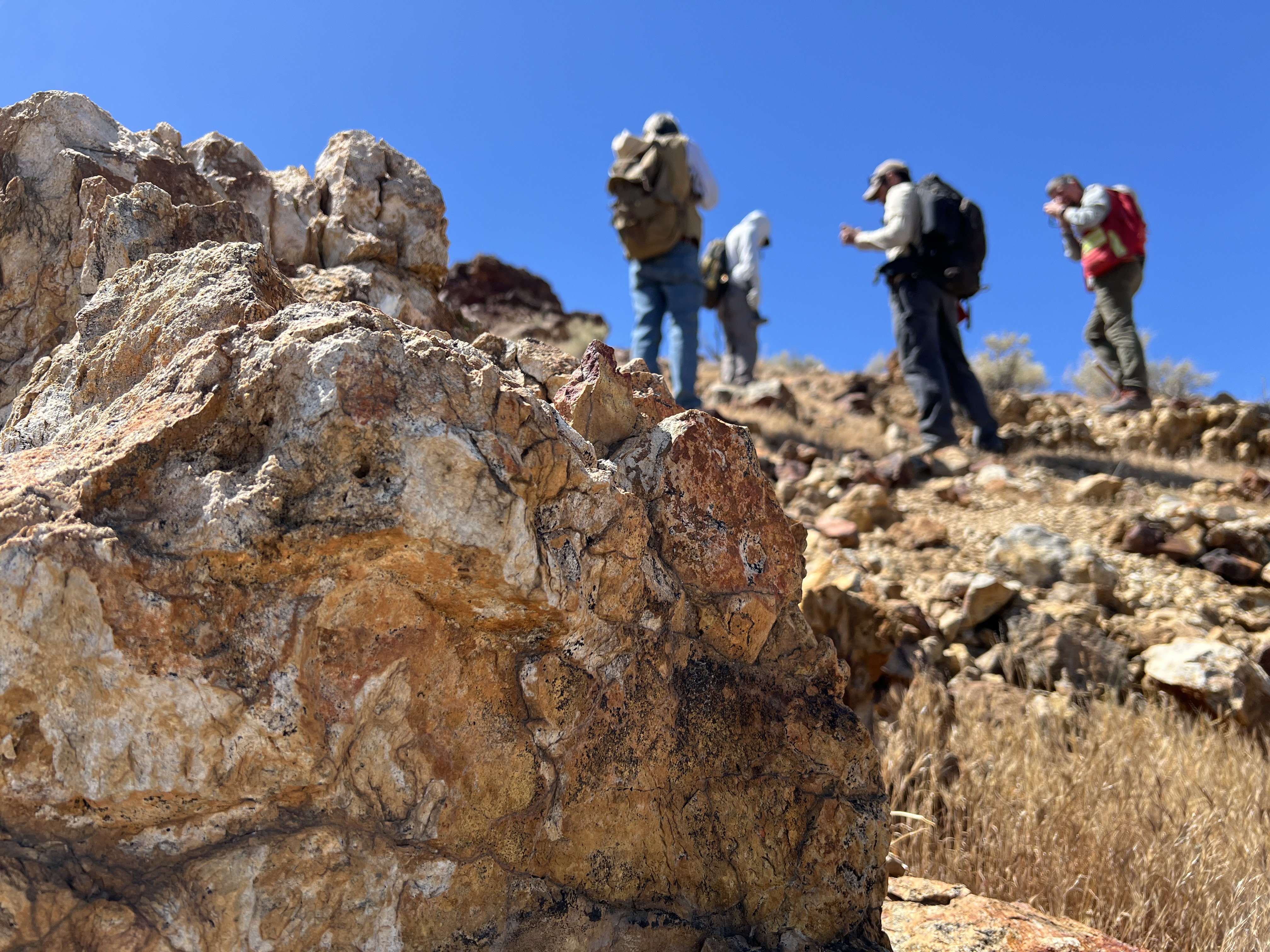
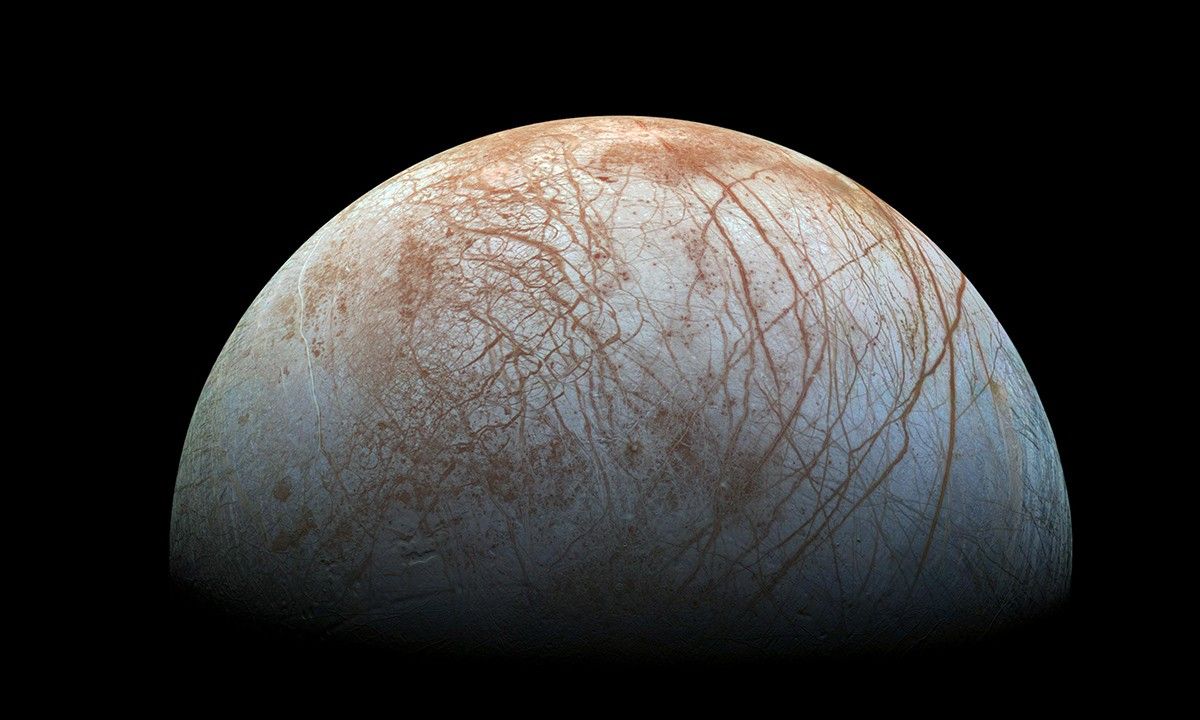
Europa

Perseverance Rover
This rover and its aerial sidekick were assigned to study the geology of Mars and seek signs of ancient microbial…

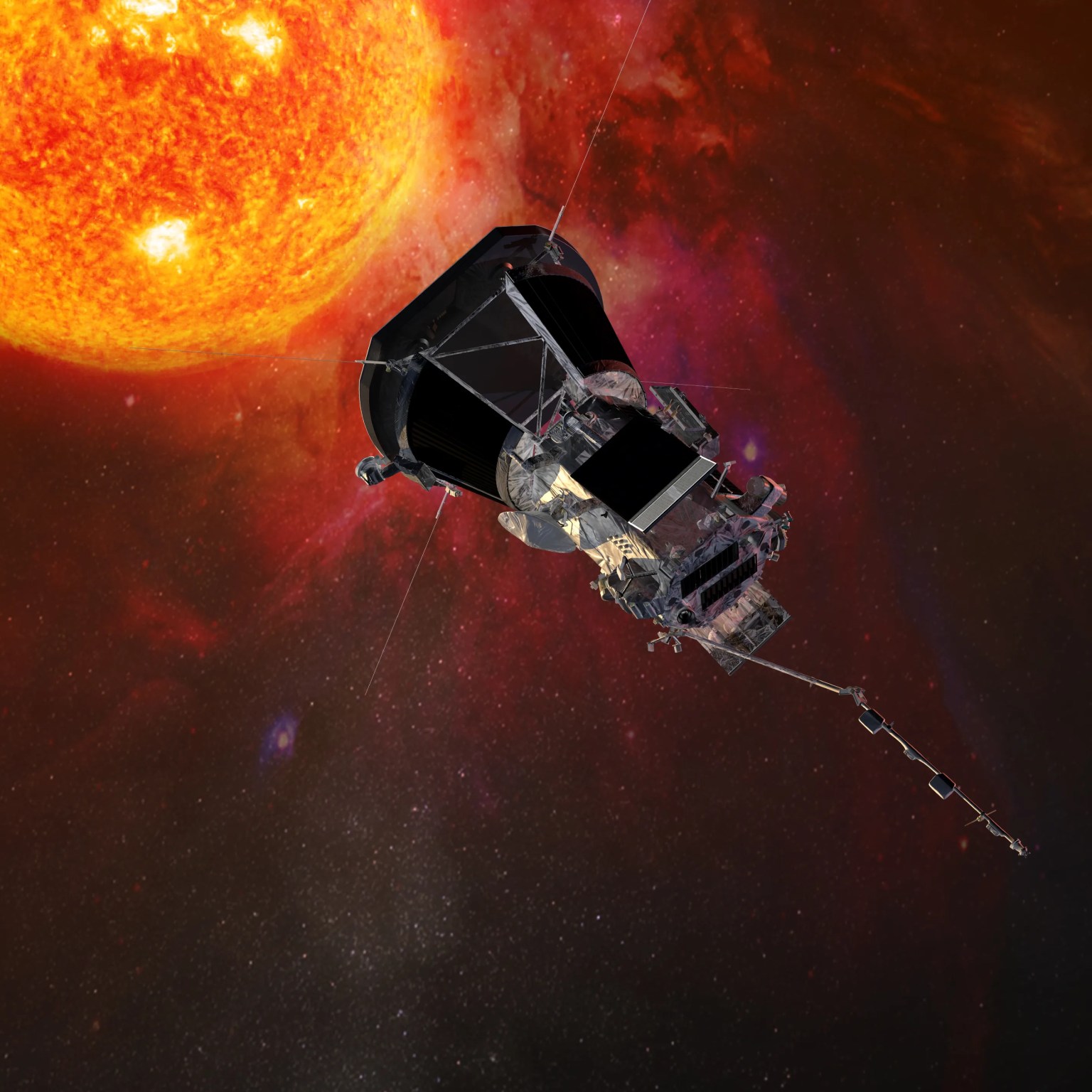
Parker Solar Probe
On a mission to “touch the Sun,” NASA's Parker Solar Probe became the first spacecraft to fly through the corona…

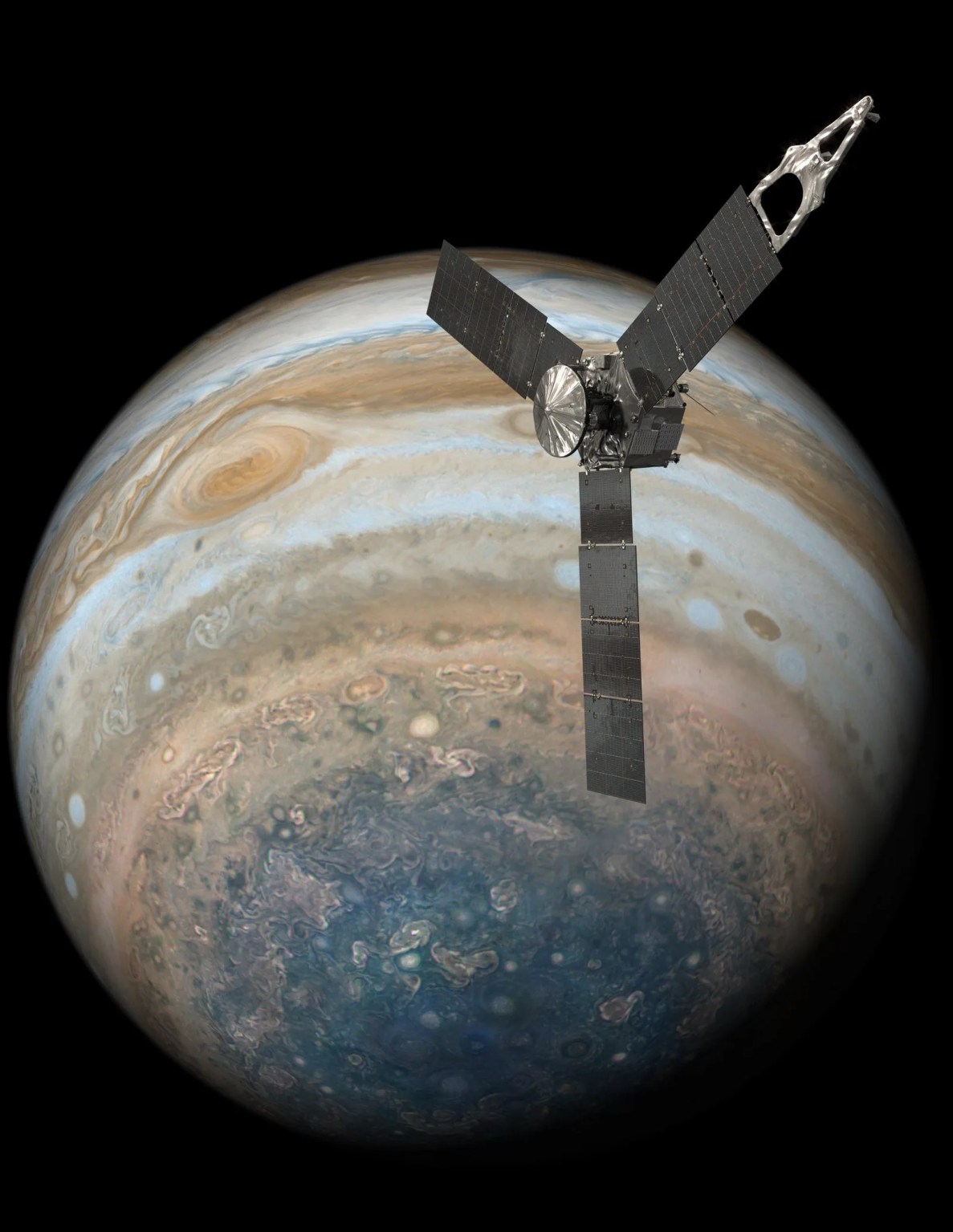
Juno
NASA’s Juno spacecraft entered orbit around Jupiter in 2016, the first explorer to peer below the planet's dense clouds to…

The post Amendment 59: Several Updates to the ROSES-25 Summary of Solicitation appeared first on NASA Science.
China turns to recycled coal waste to meet surging demand for construction sand

China is turning the massive environmental liabilities of its coal-mining history into the raw materials for its next generation of infrastructure.
In the southeastern county of Gaoping, located deep within China’s premier coal province of Shanxi, a massive new recycling facility has quietly begun operations. It transforms the waste into high-value industrial and building materials.
Reportedly, its daily output sounds like a standard quarry operation: 1,000 tonnes of sand, gravel, and unburnt bricks destined for the country’s endless appetite for concrete.
But these construction materials did not come from a riverbed or a mountain quarry. The material was extracted from coal gangue, which is the ultra-hard, toxic rock waste left behind after mining and washing coal.
Specialized facility
China’s coal gangue is expected to be around 7 billion tonnes. Left unmanaged, coal waste routinely triggers water contamination, airborne dust pollution, and spontaneous fires.
Less than 60 percent of this mountain of rock was ever reused. The rest stayed behind as a permanent ecological tax on resource-dependent cities. Now, technology is cracking that stubborn bone to turn the waste into an industrial resource.
The South China Morning Post (SCMP) reported that the Gaoping facility consists of automated systems that sort the incoming waste using X-ray separation equipment. From there, the material is crushed, screened, and stripped of impurities. The result is a stream of manufactured aggregates and eco-friendly unburnt bricks that skip the high-emission firing process entirely.
Local authorities say the applications reach far beyond basic roads. The refined waste is finding its way into ceramics and even high-tech spacecraft coatings.
Broader circular economy
Beyond recycling coal waste, China is eyeing a broader circular economy to overhaul its construction material supply.
China uses nearly half of the world’s construction sand and gravel, a habit that has severely degraded fragile river ecosystems. Replacing natural sand with coal waste solves two environmental headaches at once.
Research also suggests that recycling construction and demolition waste could meet half of China’s aggregate demand by 2050.
The industry is scaling up at breakneck speed. While attempts to recycle gangue date back to the 1950s, the economic incentive shifted after 2010 as natural sand supplies tightened and Beijing locked in its national carbon targets.
Last year, a milestone 10-million-tonne utilization project was launched in Datong.
The strategy is not without its speed bumps. Industry experts caution that aggregates derived from coal waste currently represent only a tiny sliver of China’s annual consumption.
Due to the material’s structural limitations, it cannot be used for high-strength or critical load-bearing structures like skyscraper pillars or major bridges. Strict toxicity testing is also mandatory to ensure heavy metals do not leach out of the residential walls of the future.
This strategy operates alongside efforts to harvest industrial value from existing fossil fuel liabilities—such as extracting critical technology metals like lithium, gallium, and germanium from mining byproducts. Furthermore, trapping power plant emissions to manufacture affordable agricultural fertilizer.
The development shows that a zero-waste future might actually be possible simply by turning a toxic liability into literal building blocks.