Le onde “quadrate” sulla spiaggia sono un segnale di risacca, un fenomeno in cui due o più sistemi di onde si incontrano e creano correnti forti verso il mare aperto. La risacca può trascinare persone anche forti fuori dalla costa in pochi secondi. Riconoscere le onde quadrate e nuotare parallelamente alla costa è la strategia corretta per evitare il pericolo.
Nel 2014, durante uno scavo preliminare legato alla costruzione di una ferrovia nei monti Monti Sayan, in Siberia meridionale, gli archeologi hanno portato alla luce una sepoltura medievale eccezionalmente rara e complessa, rimasta poi in fase di studio per oltre dieci anni a causa della quantità e della delicatezza dei reperti. La tomba apparteneva a […]
Rimanere a guardare cose che non ti interessano è un meccanismo guidato dalla ricompensa immediata di dopamina, dall’abitudine e dal loop di attenzione. Non è una mancanza di volontà, ma un comportamento che può essere gestito con limiti di tempo e con attività alternative.
AI could accelerate the hunt for new physics, but sometimes it knows too much to see what’s right in front of it. Artificial intelligence could make it much cheaper and faster to search for new laws of physics, according to a new study published in the Journal of Cosmology and Astroparticle Physics (JCAP). But the [...]
A new ultra-efficient DNA splicing method developed by a Japanese research team using silver nanoparticles offers a dramatic improvement to how scientists stitch genetic blueprints together, with implications for future developments in genetics.
In animal models for drug research, crop breeding, and disease treatment, scientists cut and recombine DNA segments, traditionally relying on “sticky ends,” the overhanging bits left at the ends of the sequences to create a stable join.
Now, researchers at Japan’s Nagoya University and Gifu University have announced a much more precise silver nanoparticle-based solution for DNA cutting and joining in a recent paper published in Nucleic Acids Research, enabling incredible precision.
DNA Splicing Challenges
The sticky ends required in traditional splicing techniques come with significant drawbacks. In these methods, restriction enzymes cut DNA, which is then reattached using T4 DNA ligase. Unfortunately, restriction enzymes lack precision, often producing sticky ends that are not long enough to create an optimal join.
Professor Hiroshi Abe and Assistant Professor Masahito Inagaki at Nagoya University, in collaboration with Professor Natsuhisa Oka at Gifu University, led the effort to improve the efficiency of DNA splicing. The team focused on cutting DNA segments using chemical reactions rather than the restriction enzymes typically employed, drawing inspiration from decades-old research.
Between 1990 and 1992, researchers reported successfully cutting 3′-thiol-modified DNA at specific locations using silver ions.
“Although it had been known for a long time, it was never put to practical use, and we recognized that it could be the key to our goal of creating sticky ends of any length and sequence at any position we choose,” Hiroshi told The Debrief.
Rethinking Old Work
However, this method was impractical because nonspecific binding of silver ions resulted in only a 14% recovery rate.’ The researchers’ breakthrough came from substituting silver nanoparticles for silver ions, aiming to improve DNA recovery by removing them via centrifugation after the reaction was over.
“The turning point was to turn this problem of ‘how to remove the silver’ to our advantage,” Hiroshi explained. “We reasoned that if the silver were in the form of nanoparticles, it could be removed easily by centrifugation after the reaction, greatly improving recovery.”
Another problem quickly arose, as cleaving efficiency required temperatures and durations that were hazardous to the DNA itself. At 70°C, the DNA achieved only 50% efficiency, whereas it took 2 hours at 95°C to reach something approaching 100% efficiency.
Polyethylene glycol (PEG), a water-soluble polymer, provided the solution the researchers required. Coating the silver nanoparticles with PEG increased efficiency at a mere 37°C for two hours, from 36% to 92%.
“In the end, we optimized the conditions to a practical level and, under ambient temperatures, achieved PEG-modified cleaving efficiency above 91% at 50°C within just one to two hours,” Inagaki said.
A Powerful DNA Editing Breakthrough
The new silver nanoparticle technique improves DNA assembly efficiency by two to five times. Crucially, their work is not theoretical: the team successfully introduced a DNA fragment into live cells, confirming expression of a green fluorescent protein gene.
“We have shown that two DNA fragments can be joined. Now, we need to confirm whether multiple fragments can be joined at the same time—a key step for building genome-scale DNA,” Ingaki said.
The researchers will continue to pursue this new splicing method, both to explore its potential for advanced applications and to consider bringing the technique into routine use.
“To make it a routine, everyday tool, the remaining tasks are to verify reproducibility across a wide range of sequences, to scale up to longer DNA, and to develop standardized, kit-format protocols that anyone can follow,” Hiroshi said. “We see these as engineering and optimization challenges rather than fundamental barriers, and we believe they can be overcome.”
“Our next goal is to extend this technique to longer DNA and, ultimately, to genome-scale DNA assembly,” Hiroshi concluded. “Specifically, we plan to apply it to the construction of mRNA libraries and the synthesis of long-chain DNA encoding therapeutic proteins, while also working on automation and standardization, so that it can grow into a foundational technology actually used in the fields of synthetic biology and nucleic acid medicine.”
Ryan Whalen covers science and technology for The Debrief. He holds an MA in History and a Master of Library and Information Science with a certificate in Data Science. He can be contacted at ryan@thedebrief.org, and follow him on Twitter @mdntwvlf.
Jeff Bezos vient de boucler une levée de fonds spectaculaire pour Prometheus, sa start-up d'IA physique. Son objectif : mettre au point une IA ingénieure générale qui pourrait mener des projets d’ingénierie poussée dans tous les domaines. Et Jeff Bezos imagine déjà un étrange futur florissant...
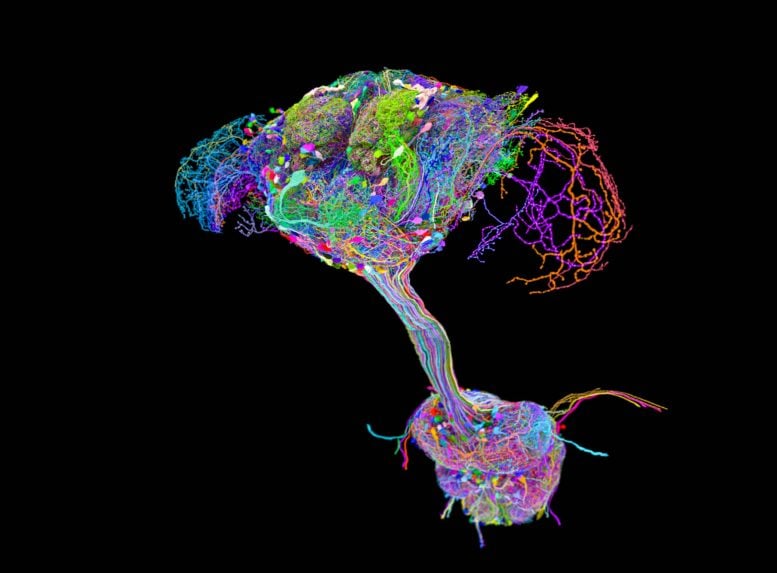
Scientists have created the first complete brain-to-body wiring map of a fruit fly, revealing that complex behavior may arise from distributed neural teamwork rather than a central controller. A large international research team led by labs at Harvard Medical School and Princeton University has reached a major neuroscience milestone: a complete wiring diagram of every [...]
Livro Do Átomo ao Buraco Negro: https://www.amazon.com.br/%C3%A1tomo-buraco-negro-descomplicar-astronomia/dp/854221367X
Livro "Onde Estaremos em 2200: https://www.amazon.com.br/Onde-estaremos-2200-explora%C3%A7%C3%A3o-espacial/dp/6555350636
MENSAGEM VINDA DO ESPAÇO FOI APAGADA! Na notícia de hoje: CIA admite destruição de registros ligados a suposta “mensagem do espaço”
Entre os documentos mais curiosos do terceiro lote de arquivos sobre OVNIs divulgado pelo governo dos Estados Unidos está um memorando da CIA datado de 1958 que menciona uma suposta “mensagem vinda do espaço” e seu transmissor.
Contato PROFISSIONAL: canaldoschwarza@gmail.com
Contato para palestras: juliana@vesperassessoria.com.br
Early in the 11th century, a young Benedictine monk named Eilmer jumped from the 150-foot tower of his abbey in the small English town of Malmesbury, wearing a pair of crude wings he’d fashioned from willow wood and cloth. Eilmer managed to glide a good 600 feet, passing over the city wall before crash-landing in a small valley near the river Avon. The fall broke both his legs, crippling him. Malmesbury Abbey still boasts a stained-glass window in honor of Brother Eilmer.
This legendary experiment in medieval aviation comes to us via 12th-century historian William of Malmesbury in an account written circa 1125, although William neglected to provide future historians with an exact date for the feat. But William does mention another key episode in Eilmer's life when the monk was "advanced in years": Eilmer witnessed Halley's comet in 1066, commenting, "It is long since I saw you." Some historians have interpreted this to mean that Eilmer saw Halley's comet on an earlier fly-by in 989, when he would have been a young boy.
Assuming Eilmer was at least 5 years old in 989, he would have been born no later than 984. This would make Eilmer in his 80s in 1066, with his attempt at flight—which occurred when he was "in his first youth"—likely falling between 1000 and 1010. However, it's an estimate that is based on a lot of assumptions, according to James Aitcheson of the University of Leicester, who argues in a paper published in the journal Notes and Queries that Eilmer may have seen a different comet altogether in his youth—the comet of 1018. If so, he would have been born much later, and the date of his flight would have occurred between the 1020s and 1040s.
Des chercheurs viennent de franchir une étape que la biologie considérait encore récemment comme inaccessible : rajeunir de vraies cellules humaines. Non pas les remplacer mais pour les rajeunir. Cette avancée, qui a eu lieu il y a quelques mois, mérite qu'on s'y attarde sérieusement, tant ses...
Maîtresses de l'illusion, ces différentes espèces déploient des stratégies étonnantes pour tromper, attirer des proies ou dissuader leurs prédateurs. Voici un florilège en images des découvertes récentes les plus fascinantes.
Scientists discovered that the brain begins preparing for social connection before we even make the first move. Why do we decide to approach other people? According to new research, the answer may start unfolding in the brain several seconds before any movement takes place. A team of scientists from the Hebrew University of Jerusalem has [...]
On the far north coast of New South Wales, the old rainforest had mostly disappeared. The Big Scrub once covered about 75,000 hectares of rich basalt country, a lowland subtropical forest of figs, vines, palms and fruit doves. By the time modern conservationists took stock of it, little more than one percent remained, divided among small patches on farms, roadsides and reserves. Weeds pressed in from the edges. Cattle and clearing had done the rest. What remained needed legal protection, science, money, landholders, seedlings and years of follow-through. It also needed someone who could make committees matter. Rainforest restoration can sound gentle, a matter of saplings and goodwill. In the Big Scrub it required persistence of a less decorative kind. Private landholders had to be brought in. Government agencies had to be pressed. Botanists, bush regenerators, nursery owners, donors and volunteers had to keep working together after the first enthusiasm had passed. The work was local, technical and repetitive. It suited Tony Parkes. Tony Parkes. Photo by Kim Honan / ABC North Coast He came to it late. Born in Hobart, he grew up close to bush and estuary. Later came science, business management and investment banking. He retired at 56 after a successful career in Sydney, and might have chosen a comfortable retirement. Instead he and his wife Rowena bought land in the Northern Rivers, learned the history of the Big Scrub and began planting rainforest on their own property. A private restoration project became a second public life.…This article was originally published on Mongabay
Em muitas espécies de peixes, a temperatura da água determina se o filhote nascerá macho ou fêmea -um mecanismo biológico que, diante do aquecimento global, ameaça extinguir populações inteiras pela escassez de fêmeas. No entanto, um estudo internacional realizado na Espanha, na França e no Brasil descobriu que esse conhecido efeito de masculinização pode ser compensado ao longo das gerações. Em um experimento de dez anos com mais de 3.000 indivíduos de robalo-europeu (Dicentrarchus labrax), os cientistas observaram que a maioria de machos nascidos nas primeiras gerações sob calor intenso foi surpreendentemente revertida pelo nascimento de mais fêmeas na terceira geração.
Leia mais (06/14/2026 - 12h00)
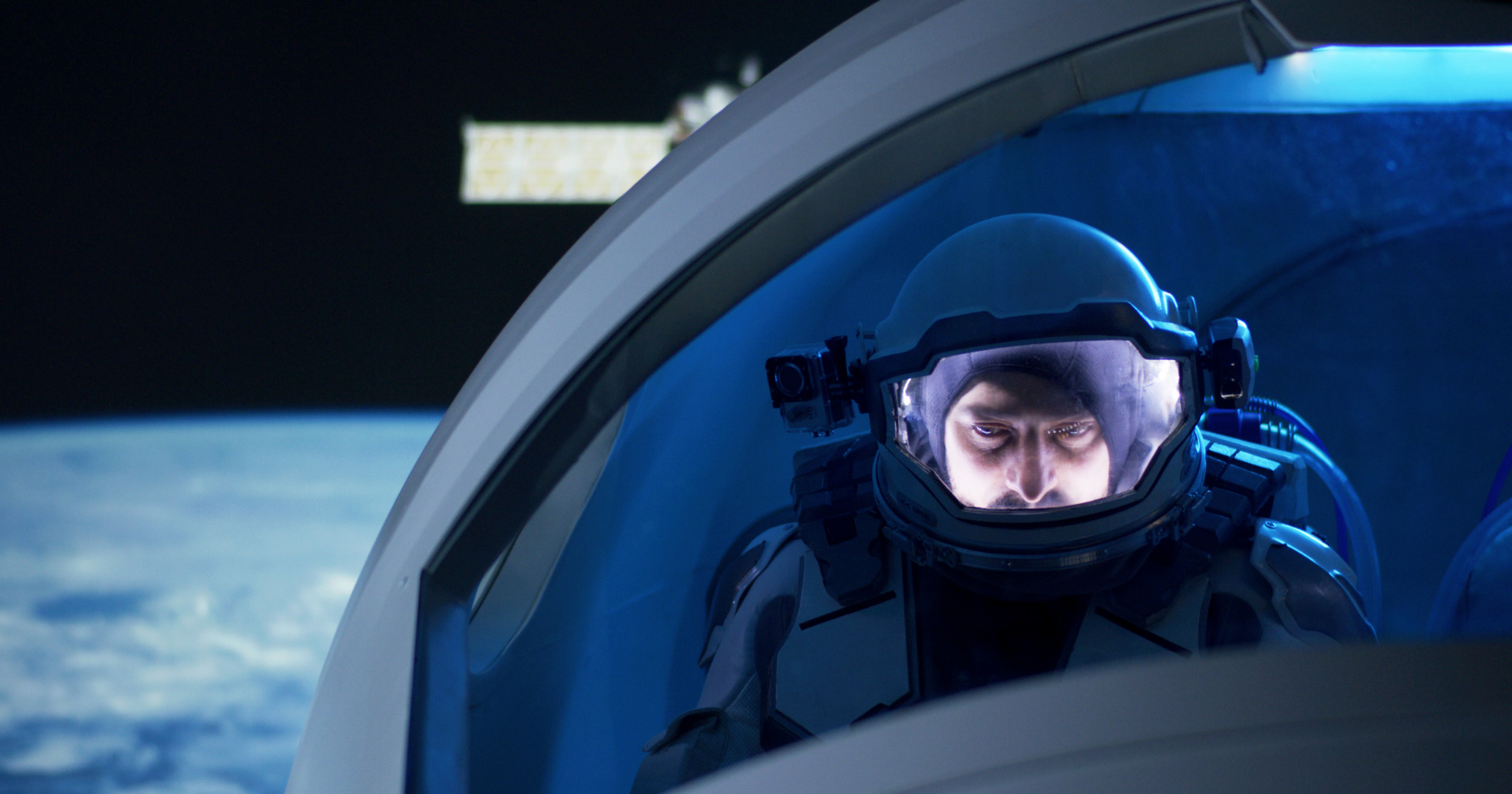
Apollo astronauts trying to rest on the way to the Moon kept noticing the same thing in the dark. With the cabin lights down and their eyes adjusted, they saw brief flashes and streaks of light, dots and lines that no one else could see and that were not there in any ordinary sense. The cause, worked out over the missions that followed, was cosmic rays from deep space passing through the visual system. The broad cause is now well supported, even if the exact biophysics of how a passing particle turns into a flash of light is still not fully pinned down.
The flashes are an example of a phosphene, a sensation of light produced by something other than light entering the eye.
In this case, the something was radiation.
What the astronauts saw
The reports began on Apollo 11. After a period of dark adaptation, with eyes open or closed, crew members saw flashes they described as pinpoints, thin streaks, or small clouds of light. They were almost always colourless. They came at a rate of roughly one-half to two a minute, often enough to be a distraction when someone was trying to sleep.
This was not confined to one crew or one flight. Flashes were reported across the Apollo missions, and later by astronauts on Skylab, on Mir, and on the International Space Station. The phenomenon even had a kind of forecast. As early as 1952, the biophysicist Cornelius Tobias had suggested that people exposed to cosmic radiation in space might see exactly this sort of thing, and the team that investigated the Apollo reports traced them back to that idea.
How they tied it to cosmic rays
Suspecting a cause and demonstrating it are different tasks. To test whether the flashes really were caused by particles passing through the head, the Apollo 16 and 17 crews carried a device called the Apollo Light Flash Moving Emulsion Detector, worn on the head during the coast to and from the Moon. It used stacked photographic emulsion to record the tracks of charged particles, so that the path of a particle could be matched against the moment an astronaut reported a flash.
The numbers were small but telling. The detector was worn for about an hour on each of the last two Apollo missions. On Apollo 17, seventeen flashes were reported during the session, and two of them were matched to heavy cosmic-ray nuclei passing through an eye. Combined with the geometry of the eye and statistical modelling, that was enough for the investigators to attribute the flashes to cosmic rays. Ground experiments pointed the same way: when volunteers had their dark-adapted eyes exposed to beams of heavy ions, they saw comparable flashes.
What is still uncertain
The confirmed part is that cosmic rays cause the flashes. The unconfirmed part is the step in between, the biophysics of how a single fast particle produces a perceived point of light. Several mechanisms have been proposed, and more than one may contribute.
The leading idea is that the particle ionises tissue directly in the retina, stimulating the light-sensing cells or the neurons behind them as it passes through. This fits the ground experiments, where heavy ions produced flashes at intensities too low for any light to have been generated. A second idea is Cherenkov radiation: a particle moving through the clear jelly of the eye faster than light moves through that medium emits a faint glow, real photons generated inside the eye itself. The trouble is that Cherenkov light should look bluish and diffuse, and most astronauts described sharp white dots and streaks, which do not match. A third possibility is that some flashes come from particles striking the optic nerve or the visual centres of the brain, bypassing the eye altogether.
Decades on, reviews of the phenomenon still describe the specific mechanism as undefined, and note that the effects on the different parts of the visual system have not been fully separated.
The cause is well established; the wiring is not.
Why it still matters
On Earth’s surface, we are mostly shielded from this by the atmosphere and the magnetic field. In low Earth orbit the shielding is reduced but not gone, which is why astronauts on stations such as Mir and the ISS have also reported the effect. The Apollo crews saw the flashes more strongly still because they left that protection behind, travelling beyond the magnetosphere. The flashes were, in effect, the radiation environment of deep space made briefly visible inside a human head.
That is why they are treated as more than a curiosity. They are a perceptible sign that high-energy particles are passing through the body, the brain included, and the same radiation is a serious concern for long missions beyond Earth. On the International Space Station, experiments have used the visual system as a way to study how cosmic radiation affects the central nervous system. For a crew bound for Mars, who would spend months outside the magnetosphere, the dose to the brain over that time is one of the open problems of the trip.
What to watch
The people who travel back to lunar distance under Artemis and later missions will almost certainly see the flashes again. They will also carry better instruments and a sharper reason to use them. Pinning down how the flashes are produced would be a small result. Understanding what months of that radiation does to the brain behind the eye is the one that matters.
DevLille 2026 met en avant une évolution bien installée dans les pratiques de développement : les projets ne restent plus confinés aux environnements locaux. API, blogs techniques, prototypes ou mini-services cloud sont de plus en plus testés directement en ligne, dès les premières étapes. La...
Des rubans verts qui serpentent dans le ciel polaire, des voiles mouvants qui s’étirent sous la Station spatiale internationale (ISS) : Jessica Meir a partagé, il y a quelques jours, un time-lapse d’aurores australes d’une beauté presque irréelle.
In 2018, one of the largest personal bankruptcies in recent Australian history quietly disappeared. Nathan Tinkler — the former coal magnate who had been Australia’s youngest billionaire before owing creditors more than $540 million — did not simply exit bankruptcy. He had it annulled: a provision of the Bankruptcy Act 1966 that does not just end a bankruptcy. It treats it, in the eyes of the law, as though it never happened.
Most countries let you exit bankruptcy. Australia lets you erase it. And the erasing, it turns out, works best for the debtors with the most to erase.
That is the argument worth making about this provision. The annulment regime is not a quaint legal quirk inherited from Victorian-era insolvency law. It is a working mechanism through which Australian bankruptcy law produces sharply different outcomes for sharply different debtors — and the asymmetry runs in the direction of the people who already have the most resources to deploy.
The provision almost nobody outside insolvency law knows exists
Australia’s Bankruptcy Act 1966 contains a quiet trapdoor. A discharge — the standard exit — ends a bankruptcy, but it leaves a permanent stain on the National Personal Insolvency Index, searchable forever by any lender, landlord or employer who cares to look.
An annulment is different. An annulment retroactively unmakes the bankruptcy. The record is updated to show the bankruptcy was annulled, and in the eyes of the law the debtor is treated as if the sequestration order was never made.
There are three routes to it. Pay every creditor in full, including the trustee’s fees and interest. Convince a court the bankruptcy should never have been declared. Or persuade creditors to accept a formal proposal — a composition or arrangement — that they prefer to the bankruptcy itself.
The $540 million annulment
The headline case came in 2018, when Nathan Tinkler emerged from a bankruptcy whose liabilities had been tallied at more than $540 million. Tinkler had been declared bankrupt by the Federal Court in February 2016 over a comparatively tiny debt — around $2.8 million owed on a corporate jet — but once cross-guarantees, loans and collapsed ventures were counted, the figure ran past half a billion dollars. The one-time billionaire offered creditors roughly $1 million, less than 0.2 cents in the dollar. That offer was rejected. A revised proposal, reported to have been bankrolled in part by retail billionaire Gerry Harvey, was ultimately accepted — and the bankruptcy was annulled.
The mechanics are almost absurdly simple. The bankrupt — through lawyers — drafts a proposal offering creditors some return, often a fraction of a cent on the dollar, sometimes funded by a third party such as a family trust or an outside backer. A meeting of creditors is convened by the trustee. If a special resolution passes, the proposal is accepted. The bankruptcy is annulled. The debtor walks out with their legal slate wiped. Creditors who voted no are bound by the result anyway. That is the trick.
Why creditors say yes to pennies
The behavioural logic running through these meetings is the same logic behavioural economists have been describing since Kahneman and Tversky — loss aversion, and the strong human preference for a small certain return over a large but uncertain one. A trustee chasing a bankrupt’s assets across multiple jurisdictions can burn through years of fees and recover almost nothing. Offshore trusts, asset-protection structures, family arrangements predating the bankruptcy by years — all of it slows recovery to a crawl. A creditor offered two cents on the dollar today, paid in cleared funds within 28 days, is being asked to compare that against a hypothetical four cents in five years, minus litigation costs, minus trustee remuneration, minus the emotional cost of the fight. Most vote yes, exactly as the Nobel-winning work on prospect theory predicts.
What annulment actually means in practice
The legal fiction is remarkably complete. Once annulled, the bankrupt regains control of any property that has not already been sold by the trustee. Future income contributions stop. Travel restrictions evaporate. Directorship disqualifications under the Corporations Act fall away the moment the annulment is recorded.
The National Personal Insolvency Index still shows a record, but it shows an annulled bankruptcy — a category that credit bureaus, regulators and many lenders treat as materially different from a discharged one. Some loan application forms ask whether the applicant has ever been bankrupt. Lawyers acting for annulled debtors have argued, with varying success, that the technically accurate answer is no.
The historical roots
The annulment power was not invented for the wealthy. It traces back through earlier Australian insolvency law to nineteenth-century English insolvency law, where the underlying principle was pragmatic: if creditors and debtor could reach a deal that was better than the rigid liquidation of an estate, the law should not stand in the way.
That principle survived into modern Australian law largely intact. The 1966 Act, which still governs personal insolvency in Australia today, codified proposals as a deliberate alternative to discharge.
The mental ledger nobody writes about
The cases that reach the Federal Court are the loud ones. The quieter reality of Australian personal bankruptcy is a population of thousands of new bankrupts in a typical year, the overwhelming majority of whom owe sums in the tens of thousands, not the hundreds of millions. For them, annulment is theoretically available but practically out of reach — there is no family trust standing by with a settlement offer.
The toll on that quieter population is real, even when it never reaches a courtroom. Serious money trouble tends to arrive with the familiar companions of lost sleep, strained relationships and a particular kind of shame that can linger long after the balance sheet has recovered. There is no outside backer to make the problem disappear and no annulment waiting at the end of it — only the slow, full term of the discharge and the permanent mark it leaves behind.
The skill gap behind the high-stakes cases
What separates the $540 million annulment from the suburban bankruptcy is not just money — it is access to a small professional ecosystem of insolvency barristers, restructuring accountants and asset-protection lawyers who know exactly how the proposal mechanism works.
That advantage rhymes with a broader finding about how people actually make decisions. A 2025 study by the Global Association of Applied Behavioural Scientists, reported through EurekAlert, found that while most experienced professionals rated their own judgement as above average, nearly half lacked any structured decision-making process. Bankrupts who walk in without specialist advice take the default path — years to discharge, a permanent record. Bankrupts who arrive with a strategy already drafted before the sequestration order is even made can sometimes annul within months.
The cases that didn’t work
Not every attempted annulment succeeds. The Federal Court has refused proposals where it found the offer was not in creditors’ interests, where the funding source was opaque, or where the bankrupt had failed to make full disclosure of assets. The court has explicit power to set aside a composition if it was obtained by fraud or if material information was withheld.
In reported cases through the 2010s, debtors who appeared to have successfully annulled were later returned to bankruptcy when undisclosed assets surfaced. The annulment of the annulment carries no special name in the Act. It is simply a fresh sequestration order, this time with a court that has already been deceived once paying close attention to the second filing.
A two-tier exit door
The blunt fact of the Australian annulment regime is that it works best for debtors with the largest debts. A creditor owed $5,000 by a suburban bankrupt has little incentive to negotiate — the recovery costs eat the return. A creditor owed $50 million by a debtor with offshore structures has every incentive to take 1.5 cents on the dollar today rather than fight for years. The percentage return shrinks as the debt grows. The legal mechanism rewards scale.
That is the implication worth sitting with. Australia has built, perhaps unintentionally, a two-tier exit from bankruptcy: a long road back for ordinary debtors and a short, well-lit corridor for those wealthy enough to negotiate their way out. Other common-law jurisdictions — England, New Zealand, Canada — have similar compromise mechanisms, but few combine them with the same retroactive erasure of the bankruptcy record. Whether that is a feature to be exported or a loophole to be closed depends on what the law is for. If insolvency is about returning productive debtors to the economy, annulment works. If it is about applying consistent consequences for financial failure regardless of the debtor’s bank balance, it does not.
Once the annulment order is sealed, the bankrupt walks back into ordinary commercial life — able to take on company directorships, sign loan applications, register for credit, and in the technical language of the Bankruptcy Act, treated as a person against whom no sequestration order was ever made. The half-billion-dollar collapse, on paper, never happened. The court file still exists, of course. Anyone with a subscription to the Federal Court’s electronic registry can pull the orders, read the creditor minutes, and see the numbers. The annulment does not delete the history. It only changes what the law is willing to call it — and who gets to use that privilege.
Silicon Canals’s breakdown walks through the full unbelievable arc — the $1,000 deposit on an unwanted coal pit that turned into a billion-dollar fortune in five years, the private jet and thousand racehorses, the $540 million bankruptcy, and the legal maneuver almost no one in Australia ever pulls off: getting the whole thing annulled and erased from the record. Worth watching if you want to see how Tinkler actually did it, and how he’s back in the coal game today.
Depuis des décennies, l'industrie robotique repose sur un postulat tacite : pour évoluer dans un monde conçu par et pour les humains, un robot devrait leur ressembler. Argus, une machine développée par l'université Duke, vient remettre ce dogme en question avec des arguments plutôt solides.

 Login


 A potentially big step forward.












 Watch the full breakdown from Silicon Canals on YouTube →

