The bulk transport experts at Wibax have placed what’s being a “landmark” order with Swedish truck brand Scania that will see over 100 of the company’s battery-electric semi trucks put to work on European roads.
AI could accelerate the hunt for new physics, but sometimes it knows too much to see what’s right in front of it. Artificial intelligence could make it much cheaper and faster to search for new laws of physics, according to a new study published in the Journal of Cosmology and Astroparticle Physics (JCAP). But the [...]
Last week, we ran a sidebar survey asking if Electrek readers still believed in Elon Musk’s vision of a self-driving, robot-built future on Mars. After receiving more than 3,000 responses, here’s what you told us you think about the world’s first trillionaire.
Jeff Bezos vient de boucler une levée de fonds spectaculaire pour Prometheus, sa start-up d'IA physique. Son objectif : mettre au point une IA ingénieure générale qui pourrait mener des projets d’ingénierie poussée dans tous les domaines. Et Jeff Bezos imagine déjà un étrange futur florissant...
One of fusion energy’s biggest selling points is that it is supposed to be different from traditional nuclear power.
Unlike today’s fission reactors, which rely on uranium fuel and produce materials that can be linked to nuclear weapons programs, fusion machines are often portrayed as a cleaner and safer alternative.
However, as governments and companies pour billions of dollars into making fusion commercially viable, some researchers are asking a burning question: How will anyone ensure that future fusion plants are being used exactly as advertised?
This is important because “fusion power systems can in principle be used to make significant amounts of fissile material,” researchers note.
A new study suggests antineutrinos, tiny particles produced in nuclear reactions, could act as independent witnesses to what is happening inside a fusion reactor. If this idea works as expected, future inspectors may be able to spot attempts to produce weapons-related materials without opening up the reactor or interrupting its operation.
When clean energy creates an unexpected security question
Most fusion designs under development rely on a reaction between two forms of hydrogen called deuterium and tritium. When these atomic nuclei merge, they release enormous amounts of energy.
They also release fast-moving neutrons, which are essential for extracting that energy and converting it into electricity. Those neutrons, however, do not care how they are used.
If uranium-238 were placed near the fusion reaction, some of the neutrons could be absorbed by the uranium. Through a sequence of nuclear transformations, the uranium could eventually become plutonium-239, one of the materials that can be used in nuclear weapons.
This possibility does not mean that fusion reactors are secret weapons factories. Producing plutonium in this way would require deliberate action. Yet regulators generally prefer to design safeguards before a technology becomes widespread rather than after.
“Demonstrating methods to assure the timely detection of such a misuse scenario would be extremely valuable as part of the efforts to guarantee the peaceful use of fusion energy systems,” the study authors said.
The challenge has been finding a monitoring method that can reliably reveal what is happening inside a reactor without becoming intrusive or technically impractical.
Listening for particles that cannot be silenced
The study authors investigated whether antineutrinos could provide that monitoring capability.
Antineutrinos are among the most elusive particles known to science.
Trillions pass through the human body every second without leaving a trace. Since they interact so weakly with matter, they cannot realistically be blocked by walls, shielding, or other barriers.
That property turns them into a unique source of information. If plutonium production were taking place inside a fusion reactor, the nuclear reactions involved would generate a characteristic antineutrino signal. In principle, that signal could reveal activity that operators might otherwise try to conceal.
The researchers used computer simulations to test whether such a signal would be detectable in practice. They modeled the antineutrinos expected from plutonium-producing reactions and compared them with other sources of background noise, including signals generated during normal reactor operation and particles arriving from space.
Their results indicate that the difference should be measurable. According to the study, a relatively compact detector could detect the production of only a few kilograms of plutonium over about 30 days.
In one benchmark scenario examined by the researchers, the production of 8 kilograms of plutonium in a month generated a strong and easily detectable antineutrino signal. This is a small enough amount to provide an early warning that something unusual is happening.
“Our results confirm that even a modestly-sized antineutrino detector should be able to detect the presence of fertile material during operation in a reliable and timely manner,” the study authors added.
Equally important, the detector would not need to sit inside the reactor complex. This is because antineutrinos travel through matter almost unhindered; the monitoring system could operate from outside the facility, making it less disruptive for reactor operators.
Building the rulebook before the reactors arrive
No commercial deuterium-tritium fusion power plants exist today, which means there is currently no facility where the approach can be tested under full operating conditions. The researchers therefore relied on simulations rather than real-world measurements.
That limitation also highlights why the study matters now. Fusion developers are still working to prove that their reactors can generate electricity economically.
If they succeed, governments and international agencies will eventually need a framework for monitoring the technology. Creating such safeguards after hundreds of reactors are already operating would be far more difficult.
The new work does not solve every question surrounding fusion security, but it does offer a practical way to verify that future reactors are doing only what they are supposed to do.
The study is published in the journal Physical Review Applied.
Scientists discovered that the brain begins preparing for social connection before we even make the first move. Why do we decide to approach other people? According to new research, the answer may start unfolding in the brain several seconds before any movement takes place. A team of scientists from the Hebrew University of Jerusalem has [...]
On the far north coast of New South Wales, the old rainforest had mostly disappeared. The Big Scrub once covered about 75,000 hectares of rich basalt country, a lowland subtropical forest of figs, vines, palms and fruit doves. By the time modern conservationists took stock of it, little more than one percent remained, divided among small patches on farms, roadsides and reserves. Weeds pressed in from the edges. Cattle and clearing had done the rest. What remained needed legal protection, science, money, landholders, seedlings and years of follow-through. It also needed someone who could make committees matter. Rainforest restoration can sound gentle, a matter of saplings and goodwill. In the Big Scrub it required persistence of a less decorative kind. Private landholders had to be brought in. Government agencies had to be pressed. Botanists, bush regenerators, nursery owners, donors and volunteers had to keep working together after the first enthusiasm had passed. The work was local, technical and repetitive. It suited Tony Parkes. Tony Parkes. Photo by Kim Honan / ABC North Coast He came to it late. Born in Hobart, he grew up close to bush and estuary. Later came science, business management and investment banking. He retired at 56 after a successful career in Sydney, and might have chosen a comfortable retirement. Instead he and his wife Rowena bought land in the Northern Rivers, learned the history of the Big Scrub and began planting rainforest on their own property. A private restoration project became a second public life.…This article was originally published on Mongabay
DevLille 2026 met en avant une évolution bien installée dans les pratiques de développement : les projets ne restent plus confinés aux environnements locaux. API, blogs techniques, prototypes ou mini-services cloud sont de plus en plus testés directement en ligne, dès les premières étapes. La...
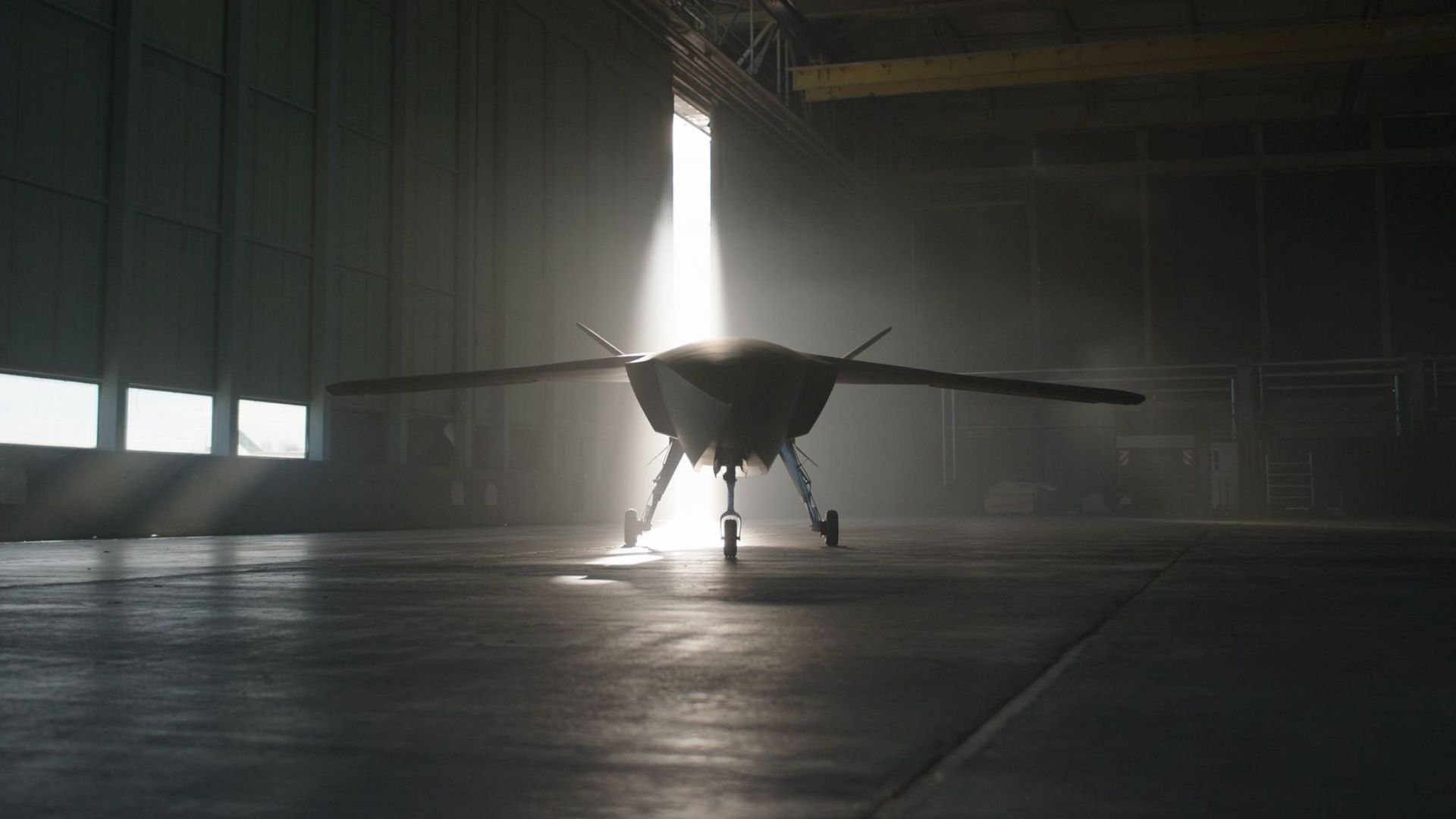
The German defense technology company Helsing has presented an electronic attack variant of the CA-1 autonomous unmanned aircraft at the International Aerospace Exhibition in Berlin. The platform named CA-1EA builds on the company`s existing CA-1 Europa architecture.
CA-1 Europa is 4 ton class, single engine unmanned combat aircraft employing a low observable design. It has a length of 11 meters and a wingspan of 10 meters. Its autonomy is centered around the Helsing’s Centaur AI pilot stack and advanced mission systems.
The original combat variant, which the company is already producing, will now carry the designation CA-1KA (Kinetic Attack), distinguishing it from the new electronic warfare model. According to the company, the electronic attack variant is intended to provide non-kinetic effects on the battlefield by disrupting and degrading enemy sensors and reconnaissance networks.
Helsing argues that modern air forces increasingly need a combination of kinetic and electronic attack capabilities to penetrate advanced air defence systems and counter sophisticated surveillance assets, making autonomous electronic warfare platforms a key component of future military operations.
New CA-1EA creates safer corridors through enemy air defences
Modern military operations depend heavily on suppressing enemy radar and surveillance networks before strike aircraft enter contested airspace. Helsing says the CA-1 EA is designed to fill that role by using airborne electronic warfare capabilities to disrupt and jam hostile ground-based radar systems. By interfering with an adversary’s ability to detect and track targets, the autonomous aircraft can help create safer flight paths for other assets operating behind it.
The company notes that the CA-1EA is designed to work alongside autonomous systems such as the CA-1 Europa as well as conventional crewed fighters, including the Eurofighter, extending electronic protection across mixed air fleets.
Both the CA-1KA and the CA-1EA electronic warfare variant are built on a common architecture, using the same airframe, propulsion system, autonomy software stack, and ground control infrastructure. The distinction between the two platforms is primarily defined by their payload configurations, which determine whether the aircraft is optimised for kinetic or electronic effects on the battlefield.
By standardising the core design across both variants, the German company aims to reduce production and lifecycle costs while streamlining manufacturing processes. The shared system architecture also simplifies logistics and maintenance requirements, while making it easier for operators to transition between mission types and train across both configurations within a unified operational framework.
Flexible CA-1 platform aims to meet diverse air force requirements
As the company further explains, this modular approach enables the CA-1 platform to evolve further, giving it the flexibility to be adapted to the operational needs of European air forces. By maintaining a scalable and shared architecture, the system can be configured for different mission profiles without requiring a complete redesign.
This design philosophy is intended to support rapid capability expansion while aligning with the varied requirements of modern European defense users.
“Modern air forces cannot do without electronic warfare. Helsing has been working to develop this capability for years. The CA-1EA is the result: an unmanned system that operates alongside the CA-1KA at tactical range, but can also be deployed flexibly as a standalone platform for electronic warfare,” said Stephanie Lingemann, vice president for air domain at Helsing.
The CA-1 platform is still under development, with the first flight of the CA-1 Europa attack variant planned for early 2027. It is being developed and produced in southern Germany by Helsing’s subsidiary Grob Aircraft, positioning the system as a fully European solution for German and allied air forces. The first operational capability is expected in 2029 for the CA-1KA variant, followed by 2031 for the CA-1EA electronic warfare version.
At the heart of the patented technology is a baseline imaging approach that creates a visual reference of the vehicle’s underside. When the car is switched off and in a stable state, the system captures and stores an image of the underbody, establishing a snapshot of what the area should normally look like.
Later, when the vehicle is preparing to move or performing a safety check, new real-time images are taken and compared with the stored reference. Rather than processing the entire underbody scene every time, the software focuses only on areas where it detects a change from the baseline image.
These altered sections are isolated as target images and sent for more detailed analysis, allowing the system to reduce computing demands while quickly identifying anything unusual beneath the vehicle.
AI safety technology could help prevent underbody accidents
Rather than repeatedly processing every component beneath the car, the patented system is designed to ignore elements that remain unchanged from one scan to the next. Fixed structures such as the battery pack housing, suspension components, aerodynamic covers, and other underbody hardware are treated as part of the reference environment, allowing the software to concentrate on anything that appears or moves after the baseline image has been recorded.
Once a new or altered area has been identified, the technology performs a more detailed examination of that specific section. It extracts visual features from the target image, analyses them using its detection algorithms, and determines whether the object is a living organism. The system can then assess the detected subject’s condition or status before deciding whether further action or a safety warning is required, CarNewsChinareported.
Unlike in-cabin monitoring technologies, identifying living organisms beneath a vehicle presents a far more complex computer-vision challenge. The space underneath a parked car is highly unpredictable, with constantly changing environmental conditions that can interfere with accurate detection.
Shifting shadows, uneven lighting, road debris, accumulated dirt, and different ground textures all create visual noise that makes reliable recognition difficult. Conventional motion-detection systems can also generate false positives, often failing to distinguish between ordinary environmental changes and the presence or movement of a person or animal beneath the vehicle.
Two-stage detection system could make parked cars safer
Instead of depending exclusively on object-recognition software, BYD’s patented technology first builds a unique visual reference of the area beneath each parked vehicle. By comparing new images against this stored baseline, the system can quickly identify anything that has changed in the underbody environment before carrying out a more advanced analysis.
Only after these differences have been isolated does the software apply its recognition algorithms to determine whether the detected object is a person, an animal, or another living organism. This layered, two-step process is designed to improve the accuracy of the detection system while cutting down on false alarms triggered by fixed structures or other non-threatening objects that remain stationary beneath the vehicle.
The patent also aligns with BYD’s broader push into advanced vehicle safety systems. The company recently unveiled another invention designed to detect forgotten occupants inside a car using radar-based sensing and signal analysis.
Together, the two technologies monitor opposite sides of the vehicle – one focusing on the cabin and the other on the space underneath. The approach suggests BYD is building a wider sensing ecosystem that combines computer vision, radar, and intelligent monitoring to improve overall vehicle awareness.
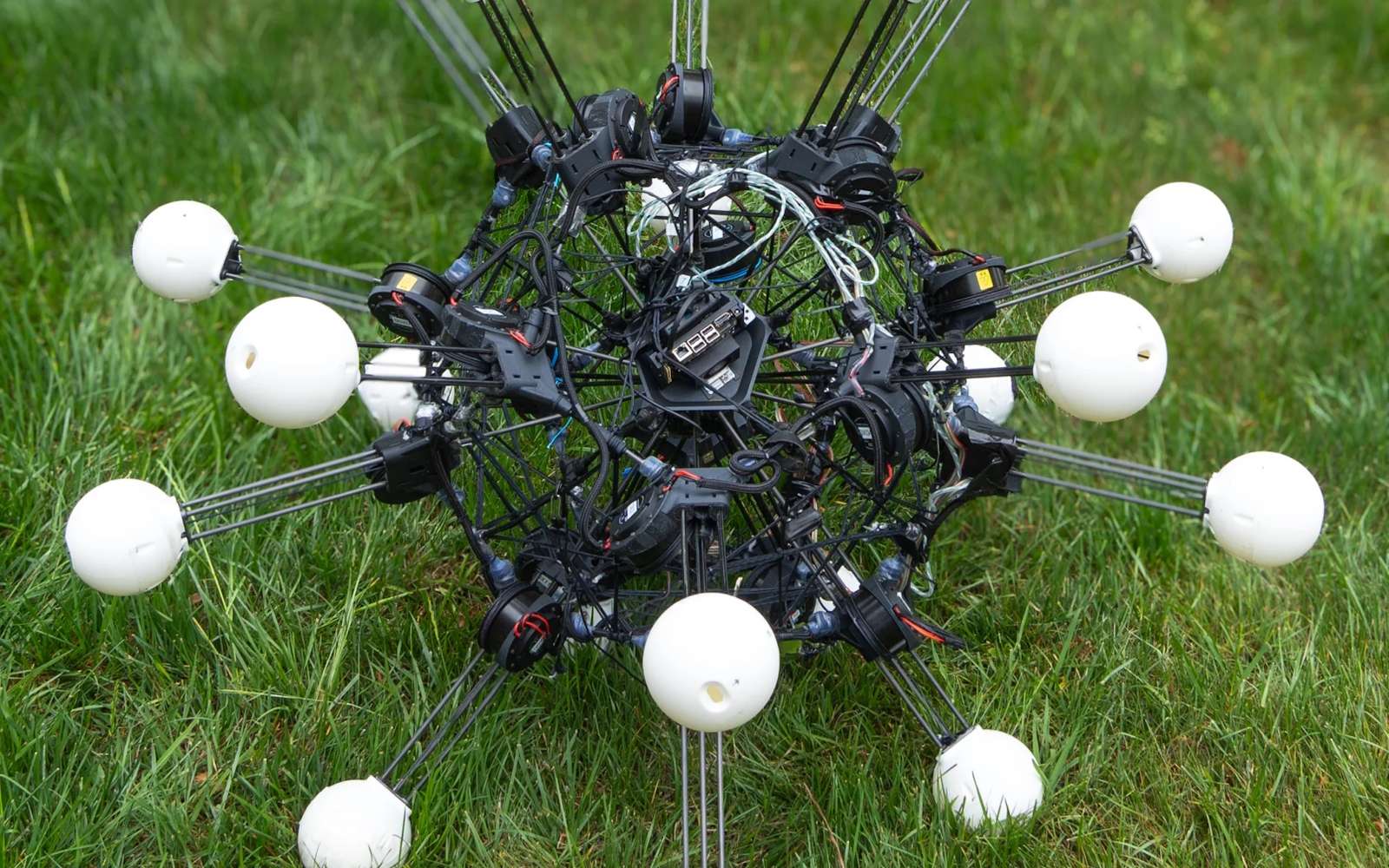
Depuis des décennies, l'industrie robotique repose sur un postulat tacite : pour évoluer dans un monde conçu par et pour les humains, un robot devrait leur ressembler. Argus, une machine développée par l'université Duke, vient remettre ce dogme en question avec des arguments plutôt solides.
À l’occasion de l’International Women in Engineering Day, la place des femmes dans la tech est mise en lumière, ainsi que les enjeux liés à leur présence accrue dans des environnements numériques très exposés. CV en ligne et profils professionnels sont devenus incontournables, mais ils...
Explorer le monde, s'émerveiller devant le vivant, remonter le fil de l'histoire : telle est l'ambition d'Escales. Depuis son lancement sur Futura, cette collection s'enrichit de nouveaux récits, de photographies signées par des auteurs de renommée internationale et de nombreux échanges avec ses...
For more than three centuries, physicists have believed in Isaac Newton’s third law—every action has an equal and opposite reaction. However, many real-world collective systems appear to ignore this rule.
For example, a bird in a flock pays attention mainly to birds in front of it, not those behind. Cells moving through tissue respond to some neighbors but not others. Swarming bacteria and even human crowds often behave in similarly one-sided ways.
These nonreciprocal interactions have long posed a challenge because many of the mathematical tools physicists use assume that action and reaction are balanced.
Now, a new study presents a framework that effectively restores access to those powerful tools without changing the underlying physics. This work could make it much easier to study flocking animals, active matter, biological tissues, and potentially even exotic quantum systems.
“We have developed and proven a theory that makes much of what we teach our students applicable to nonreciprocal systems as well,” said Marin Bukov, one of the study authors and a researcher at the Max Planck Institute for the Physics of Complex Systems.
These systems, where Newton’s third law does not apply, can now finally be described exactly and simulated precisely—even using established methods. This is exactly the kind of tool that has been missing in recent years,” Bukov added.
What’s wrong with birds in a flock
In conventional systems, interactions can be described by an energy function, allowing researchers to use well-established methods from statistical mechanics and many-body physics.
Nonreciprocal systems are different. If one bird responds to another but not vice versa, there is no single interaction energy that describes the pair. Without that energy landscape, many standard analytical and computational approaches become unavailable.
Scientists could still simulate the systems directly, but the calculations were often slower, less flexible, and harder to interpret. A general framework capable of handling nonreciprocal interactions while preserving the advantages of traditional physics had remained elusive.
Restoring Newton-like symmetry
The researchers solved the problem by introducing what they call auxiliary degrees of freedom. In simple terms, every real component in a nonreciprocal system is paired with an artificial counterpart that exists only in mathematics.
The key idea is surprisingly simple. Instead of changing the physics, the researchers add mathematical partners to every real component in the system.
“The trick behind the new theory is that it constructs a partner for each component of the system—a fictitious partner that doesn’t exist in nature,” Ricard Alert, one of the study authors and a biophysicist at the Max Planck Institute, said.
Imagine a flock of birds. Instead of modeling only the real birds, the framework adds a second set of fictional birds. These imaginary birds are carefully defined so that the originally one-way interactions can be rewritten as ordinary two-way interactions between real and auxiliary partners.
The resulting enlarged system obeys the reciprocal rules that physicists know how to handle. Once a specific constraint is imposed, the mathematical model reproduces the exact behavior of the original nonreciprocal flock.
The idea resembles a common strategy in theoretical physics, where extra variables are introduced to simplify difficult problems.
What makes this work different is that the auxiliary variables provide a general recipe for translating nonreciprocal interactions into a form compatible with Hamiltonian mechanics—a mathematical framework physicists use to predict how complex systems evolve over time.
Putting the framework to the test
To demonstrate the approach, the team studied a model known as the vision-cone XY model. In this system, each element interacts only with neighbors that fall within a specific field of view, much like birds paying attention only to those ahead of them.
Since one bird can see another without being seen in return, the interaction is inherently nonreciprocal. The researchers showed that by adding an auxiliary partner for every element and enforcing a mirror-like relationship between the two, the original dynamics emerge exactly from a Hamiltonian description.
The payoff was immediate. The team proved that Monte Carlo simulations based on the new Hamiltonian framework reproduced both steady and changing states of the original nonreciprocal system.
This means scientists can now apply computational techniques that were previously reserved for conventional reciprocal systems. In practice, researchers may be able to analyze much larger systems more efficiently and explore behaviors that were previously difficult to access.
The framework also unlocked another powerful tool, Floquet engineering, a technique that uses periodic driving to manipulate interactions.
Using their new formulation, the researchers showed how a periodically driven nonreciprocal spin system could effectively be transformed from a two-dimensional network into behavior resembling a collection of one-dimensional chains. Such control would have been difficult to analyze without a Hamiltonian description.
“Overall, our construction paves the way towards extending statistical mechanics and Hamiltonian dynamics to non-reciprocal systems,” the study authors note.
A bridge to new physics, but not the final answer
The framework gives physicists a new way to study nonreciprocal systems using many of the established tools developed for conventional physics. Beyond flocking birds and moving cells, it could help researchers analyze a wide range of systems where interactions are one-sided.
Currently, the approach applies to pairwise interactions and introduces an auxiliary partner for every real component, making more complex systems a challenge for future work.
Looking ahead, the study authors want to explore whether nonreciprocal interactions can produce entirely new forms of collective quantum behavior.
If so, the framework could open a new window into how complex matter organizes itself when the usual action-reaction symmetry breaks down.
The study is published in the journal Nature Physics.
A covert Home Office unit founded by an ex-MI6 spy has been secretly advising police on 'controlling the narrative' during Britain’s race riots, i.e., manipulating and suppressing speech. Is this thought policing?
Les événements consacrés à la deeptech rassemblent aujourd’hui un public particulièrement mobile, entre chercheurs, investisseurs et curieux venus découvrir les innovations en cours. À l’occasion du Hello Tomorrow Summit, la connectivité s’impose comme un enjeu discret mais essentiel : consulter...

 Login