In 1995, he and Thomas Bopp spotted, from different states, the same mysterious object in the sky. What turned out to be a comet was named after them: Hale-Bopp.
Iconic gummy candy brand HARIBO and its transport partners at Recht Logistik are turning to electric semi trucks to deliver emissions-free shipping across several of its European operations.
Coinbase has launched Coinbase for Agents, a tool that lets AI agents like ChatGPT or Claude execute crypto trades and manage payments on a user's behalf. "For example, customers can prompt their agent to rebalance portfolios, identify trading opportunities, execute strategies and manage positions over time," reports CNBC. "It will eventually expand these capabilities to stocks and predictions." From the report: [U]sing Coinbase's machine-to-machine payments protocol, called x402, agents can pay directly for digital services like paywalled research, data APIs and on-demand compute without a human in the loop -- and execute trades based on those insights. The company sees this stage of agentic payments, which lets customers bypass the need to manage traditional logins or subscriptions, as a precursor to agentic shopping, where agents browse, find the best deals, select and make purchases on users' behalf.
[...] The whole idea is to give agents access to money and, through that financial independence, improve their set of capabilities to pretty much anything on the internet," Lincoln Murr, Coinbase's AI product lead, told CNBC. "In the 2010s, every internet company dealt with the transition from desktop and web into a mobile environment. And now in the late 2020s, we're seeing the exact same thing happen where agents are going to be the new primary economic actors on the internet."
The x402 protocol was created in May 2025 and has seen more than 100 million transactions since its debut, Murr said. There are about 157,000 agents acting as buyers using the protocol in the past 30 days, according to x402scan.com. "We saw immediate demand and interest in the ability for agents to pay for things autonomously and that was a huge waking up moment for us [on] the ability of agents to become these new primary financial actors across the internet," he said.
New research shows that wildlife reacts differently to human presence than to human-made landscapes. For centuries, people have transformed landscapes, forcing wildlife to adjust to a rapidly changing world. New research suggests that animals are not only responding to altered habitats, but also to the direct presence of humans. Researchers from UC Santa Barbara, the [...]
An aerospace and technology company recently conducted maiden piloted flight of its full scale prototype aircraft. Vertical Aerospace’s full-scale prototype is expected to accelerate flight testing, support piloted demonstrations and advance Vertical’s hybrid-electric aircraft programme.
The latest prototype will progress through all phases of piloted flight testing, including thrustborne, wingborne and transition flight.
The company also revealed that this is the final prototype before Critical Design Review (CDR), which will establish the certifiable aircraft design and pave the way for assembly of Vertical’s first pre-production aircraft.
New prototype is final aircraft to join Vertical’s flight test fleet
The new prototype is the final aircraft to join Vertical’s flight test fleet before the Company completes Critical Design Review (CDR), a major programme milestone that establishes the design baseline for certification. Following CDR, Vertical will begin preparations for assembly of its first pre-production aircraft as it continues toward certification and commercial service.
“Getting our latest prototype into flight testing is an important milestone because it allows us to learn faster in real world conditions and keep building momentum towards certification,” said Stuart Simpson, CEO of Vertical Aerospace.
“Expanding the flight test fleet will help us validate the aircraft more quickly, reduce risk, and move more efficiently towards bringing Valo into service.”
The company revealed that the latest aircraft doubles Vertical’s flight testing capacity and supports additional public demonstrations this year. Following the completion of all flight test phases – thrustborne, wingborne and transition flight – in its all-electric configuration, Vertical intends to retrofit this prototype for hybrid-electric flight testing.
The hybrid-electric variant is expected to support applications demanding greater range and payload capability across defense, logistics, and wider commercial sectors, according to a press release.
The prototype shares the same configuration as Vertical’s current full-scale aircraft, which has already completed all flight test phases. Vertical’s flight test programme is built around full-scale, piloted prototype aircraft with architecture, systems and flight characteristics closely aligned to the production-standard Valo aircraft, enabling the Company to validate the technologies, systems integration and flight models that will support certification, as per the release.
The new prototype shares the same configuration as Vertical’s existing full-scale aircraft, which has already completed all major flight-test phases. By using full-scale, piloted prototypes that closely resemble the production-standard aircraft, the company aims to validate key technologies, systems integration, and flight models required for regulatory certification.
The latest demonstration marks a significant step toward certification and commercial deployment of the company’s next-generation electric air taxi, Valo.
The Bristol-based company has secured approximately 1,500 pre-orders for the Valo aircraft from customers across four continents. Its customer base includes major aviation and leasing companies such as American Airlines, Avolon, Bristow Group, GOL, and Japan Airlines.
The tech giant warned of a security flaw that a cybercrime gang said it's exploiting as part of a mass-hacking campaign. Google said it notified more than 100 organizations that had potentially vulnerable servers.
Scientists have finally captured a hidden state of matter, revealing a long-predicted phase with intriguing quantum potential. Researchers from Brown University and the University of Michigan College of Engineering have succeeded in stabilizing a previously elusive state of matter that had existed only in theoretical models. Using carefully engineered nanoparticles as building blocks, the team [...]
An anonymous reader quotes a report from ZDNet: If digital sovereignty is important to you, and it certainly is in the European Union (EU), then you'll be pleased to know that EuroOffice, a new open-source browser-based office suite alternative to Microsoft 365 and Google Workspace, has officially reached its first stable release. A coalition of EU-based companies, including Nextcloud, Ionos, and other Euro-Stack participants, is positioning Euro-Office as a cornerstone of European digital sovereignty. However, The Document Foundation (TDF), LibreOffice's steward, accuses the project of reinforcing Microsoft's document lock-in, which TDF argues isn't friendly to open standards.
Setting aside the open-source politics for the moment, here's what Euro-Office brings you. The release went live on June 9. It is, however, not a stand-alone office suite. As the software's backers explain in a FAQ, "Euro-Office is more of an integration component. It merely handles document editing itself. Storage, as well as navigation, permissions, and sharing logic, have to be offered by a platform it is integrated in, like Proton Docs, Nextcloud Hub, or OpenProject." So, while you can install Euro-Office on your own Linux server, you'll need to integrate it yourself. If you're not a Linux expert, however, don't give up hope. Some companies have already released packaged, ready-to-install Euro-Office stacks, including Nextcloud Hub 26 Spring, Ionos' Nextcloud Workspace, and Office.eu. These initial deployments are web-based rather than standalone desktop suites.
The goal, organizers say, is to give European organizations a way to host their office suite on EU infrastructure under EU law, while maintaining an experience familiar to Microsoft Office users. Specifically, Euro-Office is meant to be "a solution for editing documents, spreadsheets, and presentations, developed as a true sovereign community collaboration of over a dozen different organizations." TDF's main objection is that Euro-Office's decision to default to Microsoft's OOXML format undercuts its claims of European digital sovereignty, since OOXML remains closely tied to Microsoft Office behavior and control. "Compatibility is not sovereignty," TDF warned, saying a European-branded suite that saves files in OOXML by default "is de facto an ally of Microsoft in its content lock-in strategy."
The AI boom is ushering in a new era for energy storage. As data center buildout accelerates, batteries are evolving from short-duration backup tools into larger, more flexible systems that can help bring facilities online faster and manage complex power needs. In the US in particular, a growing pipeline of projects is emerging, with batteries increasingly paired with on-site generation or used to smooth demand and unlock faster connections to the grid. So how are data centers changing the energy storage market, and what role could these systems play in the power grid of the future? On today’s show, Tom Rowlands-Rees is joined by, Caitilín McManus, a technology and innovation associate at BloombergNEF, to discuss her recently released note “Data Centers’ Energy Storage Ramp Up: Project List Grows.”
The new research found managing low-severity fires across 1 million acres a year could reduce the amount of land that burned from severe fires by about 25 percent, protection that lasts for years.
fjo3 shares a report from Reason: Police arrested a man in Florida for attempted child abduction in a town he had never visited, and the only evidence linking him to the crime was an AI facial recognition hit. Represented by the American Civil Liberties Union (ACLU), he is now suing the officers and agencies who put him through it. [...] According to a police report, facial recognition software concluded with 93 percent confidence that the suspect was Robert Dillon. [...]
The ACLU is now suing the city of Jacksonville Beach, as well as the individual police officers and officials involved in the case. According to the lawsuit (PDF), the responding officer viewed security camera footage of the suspect but didn't take a copy; instead, he took pictures of the screen with his cell phone. "In the photos, the suspect image is low resolution, and the suspect's face is partially shadowed and off-axis," the lawsuit claims. When an investigator queried the facial recognition system, it was with the officer's grainy secondhand cell phone photos. [...]
But as the ACLU notes, facial recognition's accuracy "depends significantly on the quality of the probe image. Lower-quality images contain less interpretable facial data, degrading the system's ability to produce a reliable template." At the very least, it requires a much better source image. Besides, no such investigative tool should form the sole basis for an arrest warrant. "If you came to me with a facial recognition hit and that was your probable cause, I would probably kick you out of my office because that's not how it works," Jacksonville Sheriff T.K. Waters told local news. (Waters is among those being sued in the ACLU lawsuit, because it was an investigator from the Jacksonville Sheriff's Office who ran the grainy photo through facial recognition and advised O'Connell it was a "93% match" to Dillon.)
A field experiment in Kenya shows that dung beetles disappear when the African elephants they depend on for their fecal food and shelter also vanish locally. This is the first time that coextinction, the disappearance of one species leading directly to the extinction of another species, has been demonstrated in a large-scale field experiment, according to a recent study. In 2008, the researchers built a set of 10,000-square-meter (2.4 acres) exclosures in Mpala, Kenya. The exclosures were a fenced area of natural savanna habitat that kept out certain animals. Some exclosures kept out elephants, simulating what would happen if elephants went extinct from the landscape. The research focused on the connection between elephants and dung beetles, which bury and consume the feces of larger animals. Dung beetles provide an essential ecosystem service of ensuring feces doesn’t pile up to contaminate the land and water, which reduces the density of biting flies. The beetles also help with nutrient cycling, which keeps the soil and ecosystems thriving. The researchers set out to see if removing elephant dung would affect the dung beetle community, and if it could lead to coextinction of some dung beetle species. The scientists, led by researcher Finote Gijsman, measured the dung preferences of 179 Kenyan dung beetle species and found that dung beetles love elephant dung. The team used modeling to predict that when elephants became locally extinct within the enclosures, 28% of dung beetle species would go extinct along with them. Their prediction was very close: 23%…This article was originally published on Mongabay
Pour la première fois dans l'histoire, deux membres d'équipage américains d'un hélicoptère AH-64 Apache tombé en mer près des côtes d'Oman ont été secourus par un drone naval de la marine américaine. Une manœuvre qui pourrait bien changer la donne lors d’une opération de combat.
OpenAI is reportedly considering sharp price cuts for paid access to its AI models as competition with Anthropic intensifies and both companies race for users ahead of potential IPOs. "The company is weighing significant cuts to what it charges for tokens, the unit of measurement artificial-intelligence firms use to bill for their products," the Wall Street Journal said, adding that it was "in anticipation of similar cuts the company expects at Anthropic." CNBC reports: The ChatGPT producer, which did not immediately respond to CNBC's requests for comment, currently charges consumers in tiered subscriptions of $8, $20 and $100 and above each month for access to its flagship GPT-5.5 models. Anthropic conversely charges users $17 each month with an annual subscription to Claude Pro, and $100 and above monthly for a subscription to Claude Max. OpenAI confidentially filed for an IPO on Monday, just a week after Anthropic made its own filing.
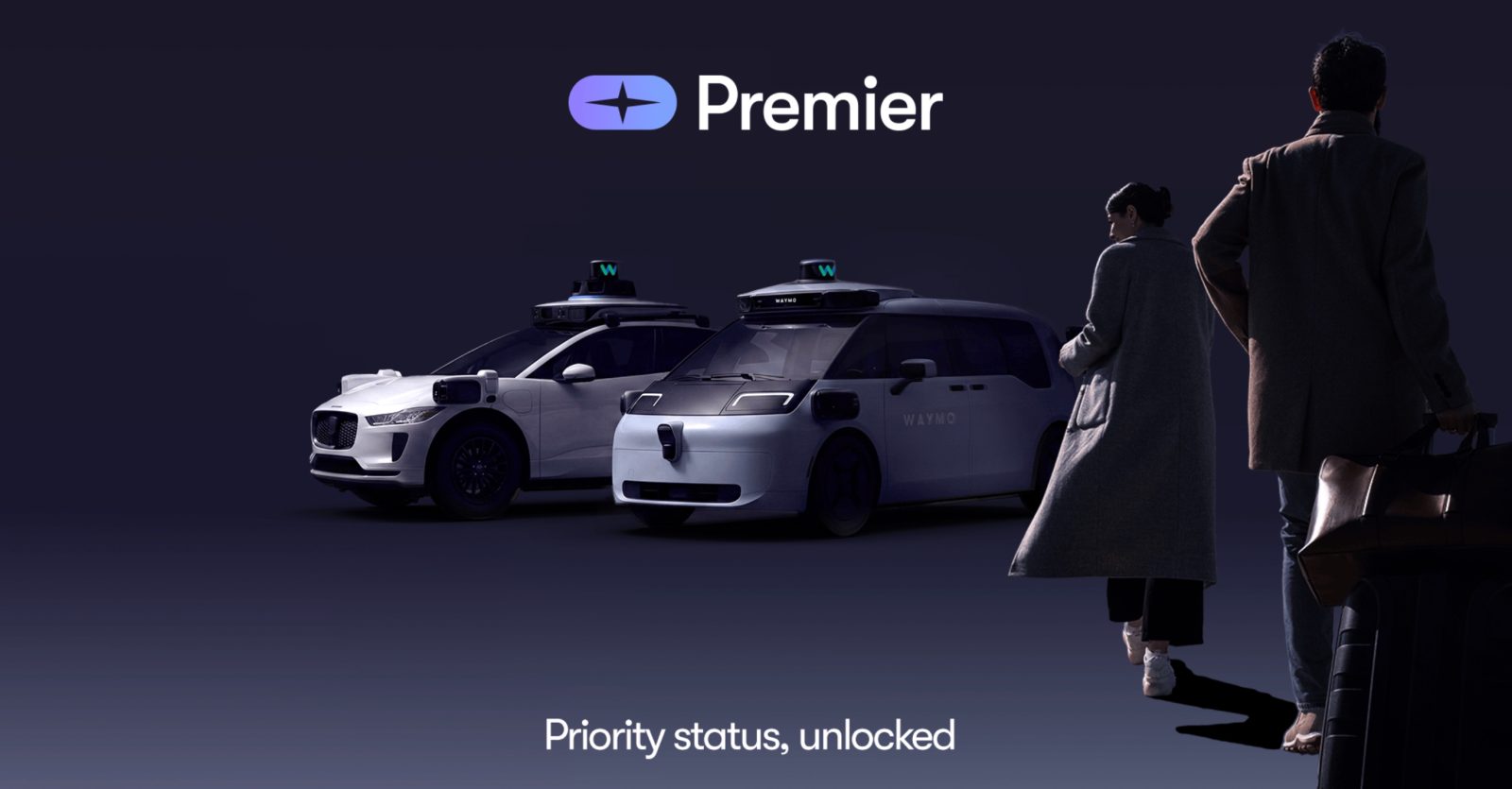
Waymo is launching its first-ever membership program, “Waymo Premier,” offering its most frequent riders priority pickups, 10% cashback, and early access to new cities for $29.99 per month.
The invite-only program marks a significant step in Waymo’s effort to build rider loyalty as it scales toward 1 million weekly rides and expands into 20+ cities.
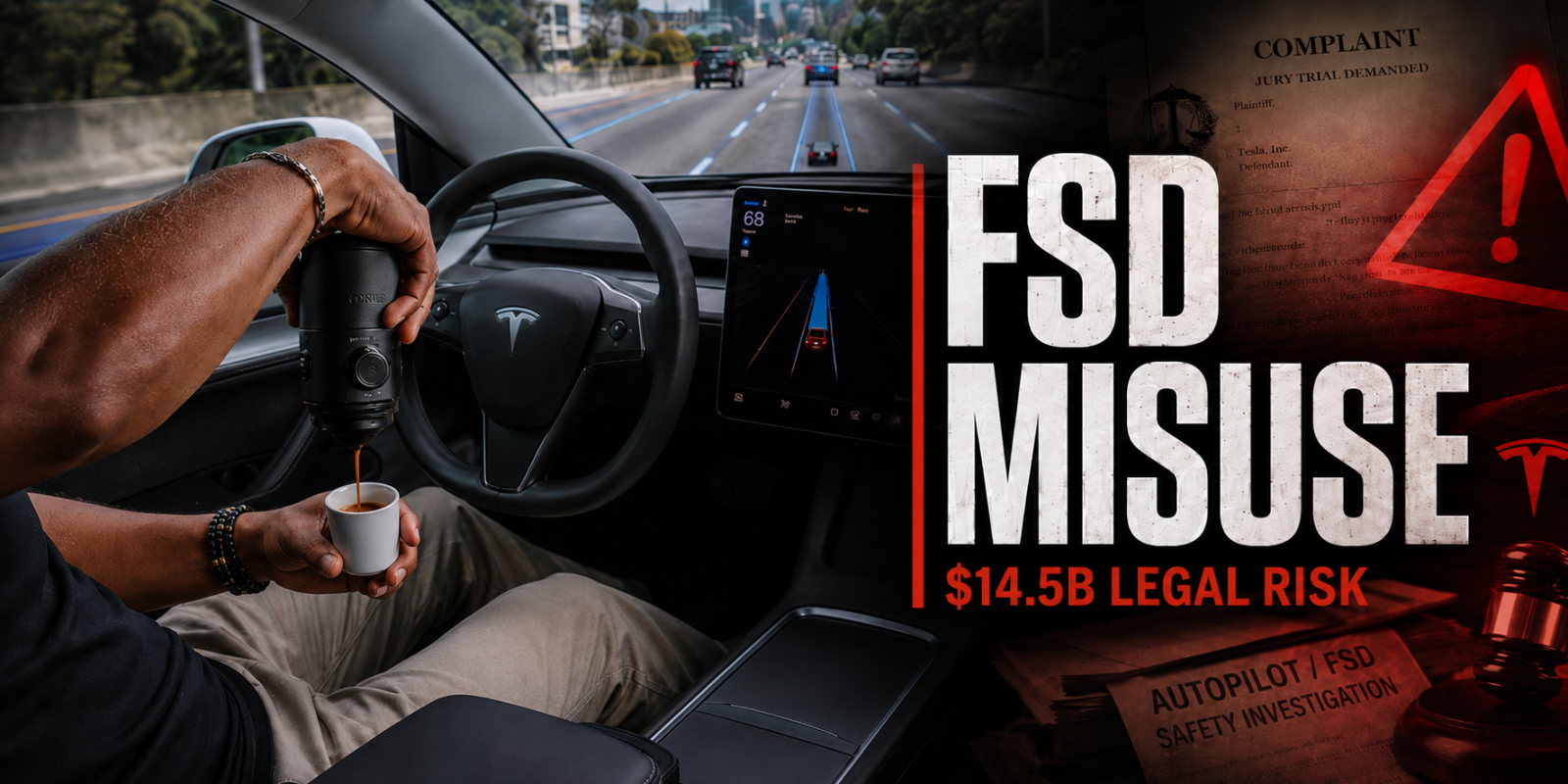
Tesla is facing up to $14.5 billion in lawsuits related to its “Full Self-Driving” and Autopilot systems — and the company’s own marketing department keeps making the problem worse. In two official promotional videos published in the last three weeks, Tesla showed a driver making espresso while FSD drives and shared footage where FSD committed multiple traffic violations in Denmark.
The problem is obvious: Tesla’s entire legal defense in crash lawsuits rests on the argument that drivers are responsible for supervising FSD at all times. But Tesla’s own promotional content actively encourages the opposite behavior.
WASHINGTON (AP) — U.S. meteorologists say an El Nino has formed. That’s the natural warming of parts of the Pacific that changes weather around the globe. It is likely to a major factor in extreme and deadly weather across the planet for the next year or so. The one announced Thursday is expected to rival the record and costly 1997-1998 El Nino. It is usually strongest in the wintertime, and it makes it incredibly likely that 2027 will set a record for the hottest year globally. The United Nations secretary-general says El Niño conditions will pour fuel on the fire of a warming world. By Seth Borenstein, Associated Press Banner image: Joe Chyuwei, right, Addison Black, front center, James Black, front left, and back row from left, Helen Chyuwei, Jameson Black, Grace Chyuwei and Grayson Black watch the sunset in the heat at Zabriskie Point, Aug. 3, 2025, in Death Valley National Park, Calif. Image courtesy of John Locher via Associated Press. This article was originally published on Mongabay
In Steven Spielberg’s Disclosure Day, opening tomorrow, protagonists race across the globe to expose a decades-long government cover-up and reveal to the world that extraterrestrial life is real. It’s a question Spielberg has been asking since his 1977 Close Encounters of the Third Kind: How would the knowledge of extraterrestrial intelligence change us? Spielberg makesContinue reading "The real disclosure day: The protocols for announcing extraterrestrial intelligence"
 Login






 New research shows that wildlife reacts differently to human presence than to human-made landscapes. For centuries, people have transformed landscapes, forcing wildlife to adjust to a rapidly changing world. New research suggests that animals are not only responding to altered habitats, but also to the direct presence of humans. Researchers from UC Santa Barbara, the [...]

 Scientists have finally captured a hidden state of matter, revealing a long-predicted phase with intriguing quantum potential. Researchers from Brown University and the University of Michigan College of Engineering have succeeded in stabilizing a previously elusive state of matter that had existed only in theoretical models. Using carefully engineered nanoparticles as building blocks, the team [...]