What’s launching this week Early this morning, Monday, June 1, the state owned China Aerospace Science and Technology Corporation (CASC) successfully completed the maiden flight of the reusable Long March 12B — a two-stage, 236-foot (72-meter) rocket powered by nine liquid oxygen and kerosene engines with a 44,000-pound (20,000 kilogram) payload capacity. The mission launchedContinue reading "SpaceX, China set for busy launch week"
People under stress may find it harder to orient themselves in space, and researchers in Bochum have identified a possible reason why. The stress hormone cortisol appears to interfere with the brain system that helps people navigate. It weakens the activity of grid cells, which are important for spatial orientation. Researchers at Ruhr University Bochum [...]
Two new tool compounds may help scientists study TAOK proteins linked to Alzheimer’s disease and other neurological disorders. Alzheimer’s disease is the leading cause of dementia and affects more than seven million people in the United States. Some treatments can slow the disease, but most address symptoms rather than the root biology, and none can [...]
On May 22, 2026, the Pentagon released a second batch of previously classified photos and videos showing what appear to be unexplained flying objects. These file dumps were the culmination of a process that was set in motion back in July 2023, when a group of government whistleblowers testified before Congress that the U.S. government was secretly inContinue reading "Could aliens ever visit Earth?"
Scientists may have found a completely new way to treat depression by targeting inflammation instead of brain chemistry. A small clinical trial led by researchers at the University of Bristol suggests that targeting the immune system could help people with depression who do not improve with standard antidepressant medications. The findings, published May 20 in [...]
Some analysts said the main international oil price, which was up 6 percent on Monday, could climb much higher in the coming weeks if the Strait of Hormuz doesn’t reopen.
An oil refinery in Carson, Calif. The possibility of continued fighting has raised concerns about how long the world’s stockpiles of oil and fuels will last if the Strait of Hormuz does not reopen.
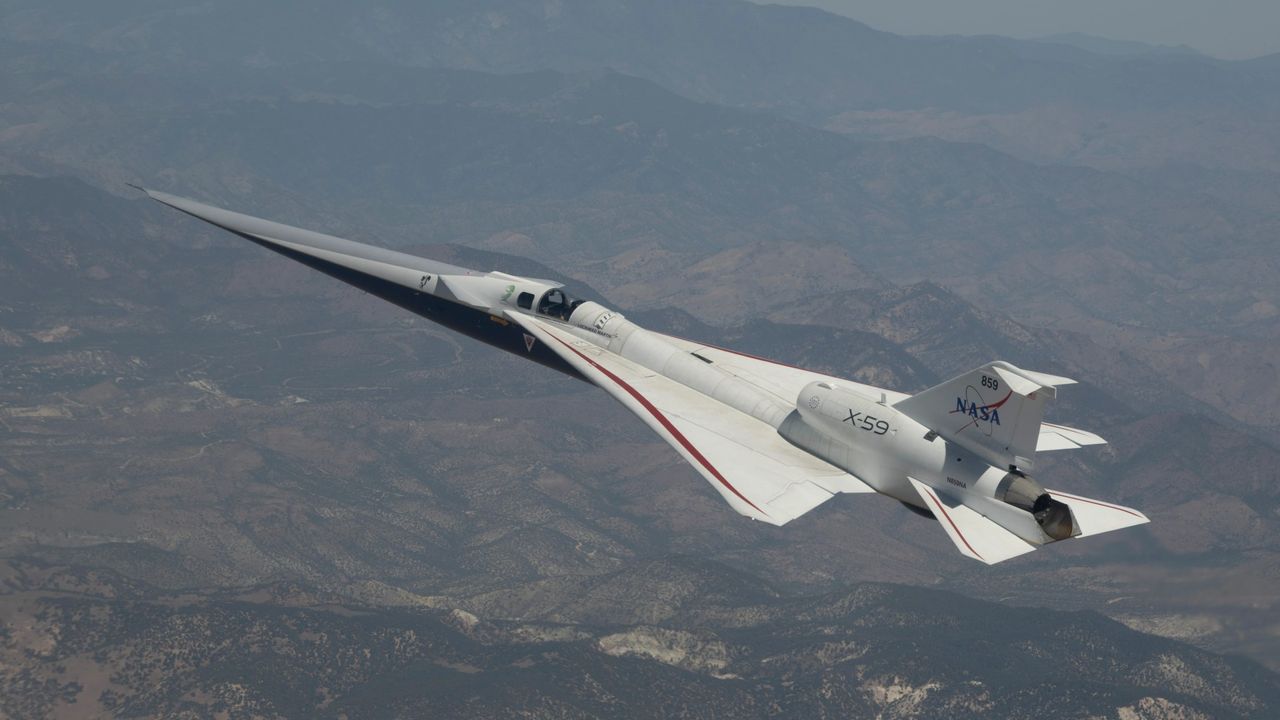
NASA's X-59 jet is on the verge of finally breaking the sound barrier as the agency looks forward to the aircraft's first supersonic flight this month.
The AI boom is ushering in a new era for energy storage. As data center buildout accelerates, batteries are evolving from short-duration backup tools into larger, more flexible systems that can help bring facilities online faster and manage complex power needs. In the US in particular, a growing pipeline of projects is emerging, with batteries increasingly paired with on-site generation or used to smooth demand and unlock faster connections to the grid. So how are data centers changing the energy storage market, and what role could these systems play in the power grid of the future? On today’s show, Tom Rowlands-Rees is joined by, Caitilín McManus, a technology and innovation associate at BloombergNEF, to discuss her recently released note “Data Centers’ Energy Storage Ramp Up: Project List Grows.”
The state became the first to sue the ChatGPT maker over claims that its technology posed a risk to children and that the company had failed to warn the public of dangers.
Two river systems that drained into the partially desiccated Late Miocene Mediterranean later coalesced into the modern Euphrates River as regional uplift redirected drainage to the Persian Gulf, according to geomorphic mapping and sediment modelling.
Pela primeira vez, há sinais reais de que o Universo terá evoluído de forma muito diferente do que se pensava. A hipótese de os buracos negros gigantes terem surgido antes das galáxias já não parece apenas ficção científica e pode obrigar a reescrever parte da história cósmica.
Os investigadores da Fox-IT identificaram um novo malware do grupo Lazarus que opera quase exclusivamente na memória dos equipamentos infetados, recorrendo a técnicas avançadas de evasão para dificultar a deteção e análise.
Quantum computers are coming. Or, at least, that’s what current predictions say. These machines harness the power of quantum mechanics, the set of rules governing how physics operates at atomic and sub-atomic scales.
Because of this, they operate in radically different ways to current machines. Tasks requiring trillions of years on existing supercomputers might be reduced to days on future quantum computers. They could tackle a range of challenges that are out of reach for existing technology.
These potential challenges include code-breaking. In 1994, the American computer scientist Peter Shor came up with a quantum algorithm capable of breaking the form of encryption that would later underpin routine email messaging and internet security. Shor’s advance drew interest from the US military and intelligence community, which began investing in the emerging field.
While decryption is often touted as a potential use for quantum computers, there are now protections against attempts to use them in this way. And in recent decades, other exciting applications have emerged. So is the threat to secure communications being overstated?
Currently, nobody knows for sure which quantum computing technologies will prevail, when the obstacles to their production will be overcome, or who will build one first.
But we can make educated guesses. Quantum computers built for specialised tasks will probably arrive before machines for more generalised uses. Between 10 and 20 years is a plausible guesstimate for the emergence of practical machines – amid considerable uncertainty. The US and China appear to be market leaders, so the big breakthrough could come from one of them.
It’s perhaps understandable why decryption is the poster child for quantum computing applications. The security of our digital world relies on cryptography, which provides a toolkit of mathematical techniques that underpin cyber security.
Digital secrets are protected by encryption, which converts meaningful data into an unintelligible form. If quantum computers could unscramble current encryption, they could expose highly sensitive data. Useful, perhaps, for nation states tracking terror cells or spying on strategic competitors – but bad news for everyone else.
Cryptography apocalypse
If we fail to act, this digital disaster might indeed happen. But researchers in this field have not been sitting on their hands. In the last decade, they have developed standards for new encryption techniques offering protection against quantum code-breaking. This area is known as post-quantum cryptography.
Many governments have announced timelines designed to motivate organisations to migrate from existing cryptography to the new post-quantum encryption standards. If everyone moves swiftly, by the time cryptographically-relevant quantum computers are built, our data should be sufficiently protected.
Yet stories of a pending cryptography apocalypse – sometimes referred to as “Q day” – still abound. So why, as we manoeuvre towards a future protected by post-quantum cryptography, are headlines still obsessed with decryption?
Well, everyone loves an origin story. The quantum algorithm developed in 1994 by Peter Shor caused a sensation. Cryptographers immediately commenced the hunt for new types of encryption invulnerable to Shor’s algorithm. More significantly, this theoretical breakthrough helped drive the actual development of quantum computers, since Shor’s algorithm was arguably the first convincing application for these machines.
There’s a tangibility to this quantum threat. The (often overblown) idea of a Q-Day posits that we awake one morning and our cyber security has suddenly been lost. In contrast, most constructive use cases for quantum computers seem more abstract. They might greatly assist mathematical modelling of scientific problems such as climate change, along with complex simulations of how physics works.
Other end uses sound fantastical. For example, quantum computers might help us find a cure for cancer or harness vast clean energy from nuclear fusion. In the absence of a proven killer app, decryption often prevails as a prominent, imagined end use. And the prospect of doomsday always focuses human minds.
Other uses
Quantum computing has also become firmly embedded in great power competition. China, the US and Russia, among others, are all pushing the development of quantum computers. To some in government, the consequences of losing a quantum computing race are unthinkable. What if your strategic rival can decrypt your secrets, but you can’t decrypt theirs?
The question is, are these anxieties really driving the stacks of cash being pumped into the field?
Setting aside political advantages, as well as criminal gains, the real money from quantum computing is not going to be made from decryption.
A range of quantum computing companies are now promoting their technologies and there’s barely a mention of decryption. Instead, other compelling uses are being trumpeted. Quantum computers would excel at optimisation, which is all about finding the most efficient solutions to complex problems that classical computers struggle with.
This could transform parts of the finance industry that deal with large-scale, complex transactions, and intricate investment strategies. It could also make supply chain logistics easier to manage. Quantum computers could supercharge drug discovery and lead to the development of new industrial materials.
Most of these remain unrealised visions, but the prospect of breakthroughs and enrichment fuels investment.
Quantum computing could be a lucrative gamechanger in the field of drug discovery.Andrey_Popov
So, there’s a genuine geopolitical power struggle in play, but it’s no longer solely or even primarily about decrypting secrets. Quantum competition between great powers concerns first-mover advantage across a broad base of technological domains. Ultimately, it’s about who’s going to make money.
Early progress seems most likely in industrial materials and optimisation. Later opportunities may involve advanced mathematical modelling and predictive simulations.
If quantum computers surpass the sceptics’ doubts to become capable of breaking current encryption, this will probably be a much later development. And if everyone’s done their post-quantum cryptography migration, it will hopefully be largely irrelevant.
Um meteoro explodiu na costa de Massachusetts, nos Estados Unidos, provocando um estrondo sentido em vários estados. De acordo com a NASA, a energia libertada foi equivalente a cerca de 300 toneladas de dinamite.
Earth has many unique features for a planet, such as a magnetic field, a large moon, and plate tectonics. It’s also the only planet we know of that harbors life. These facts form the basis of the Rare Earth hypothesis, which posits that we haven’t found aliens because other planets in the Galaxy probably don’t have all the right conditions for life.
Another characteristic of Earth is that about 30% of its surface is land and about 70% is ocean. Recently, Columbia University Assistant Professor David Kipping investigated whether the proportion of Earth’s surface covered by dry land versus ocean, or its land fraction, is another reason Earth is habitable not only for simple single-celled organisms, but also for intelligent species like humans.
To test this hypothesis, Kipping created 4 statistical models of planets with different land fractions that intelligent aliens could potentially evolve on. First, he created an equation to describe the likelihood that a planet in its star’s habitable zone has a particular land fraction, known as a probability distribution. Kipping weighted this probability distribution toward the extreme ends, making it more likely that a planet would be covered by a single huge landmass or a single vast ocean than by a mix of both, as on Earth.
Kipping then incorporated this land fraction probability distribution into his statistical models to calculate the probability that a random planet will have that land fraction and host intelligent life. The 4 scenarios Kipping tested were: 1) that intelligent life is more likely to emerge on land-dominated planets, 2) that it’s more likely to emerge on ocean-dominated planets, 3) that it’s more likely to emerge on planets with roughly equal amounts of land and ocean, and 4) that its emergence is independent of a planet’s land fraction.
As a first step in determining the kinds of planets intelligent aliens would tend to emerge on, Kipping used each model to predict the probability that intelligent life would emerge on a planet with the same land fraction as Earth. He then compared these probabilities by calculating the ratios between each value. Because Earth is the only known planet with intelligent life, a model that predicted a greater probability for humanity’s existence on Earth would be more likely to reflect reality.
Kipping considered it strong evidence that a given model was more realistic than another if the ratio between 2 of them was greater than 10, meaning one model was 10 times more likely to predict the existence of Earth and humanity. Kipping found that no comparison of any 2 models passed this threshold. However, the models assuming that intelligent life prefers ocean-dominated planets or planets with a land-ocean balance were 2.5 and 3 times more likely to predict the existence of humanity than the model assuming that intelligent life prefers land-dominated planets. Additionally, the model assuming that intelligent life prefers a land-ocean balance was always more likely to predict humanity than any other model, though marginally.
Kipping also addressed whether finding more planets with intelligent life would affect which model was deemed most realistic, for example, if scientists discovered conclusive evidence of life on Mars in its distant past. Here, Kipping identified 2 complications. First, it’s uncertain how much of Mars’s surface was once covered by water – some estimate it had a land fraction as high as 81%, while others estimate it was as low as 25%. Second, proving that Mars once had life would not prove it once had intelligent life.
Regardless, Kipping reran the models assuming that ancient Mars had a land fraction comparable to Earth’s. Adding this second data point produced ratios similar to those in the earlier Earth-only calculations, meaning it still didn’t make any single model 10 times more likely to predict the existence of humans and Martians, respectively.
Kipping then took the 10-times threshold and reversed the calculations to find what conditions would exceed it. In doing so, he calculated that astronomers would need to find 14 other planets with intelligent life and known land fractions to robustly determine whether intelligent life is more likely to occur on desert planets, ocean planets, balanced planets, or without bias.
Kipping concluded that he can’t yet definitively state whether there is something special about Earth’s land fraction when it comes to producing intelligent species. However, Earth’s existence would suggest that intelligent life is unlikely to favor extreme desert planets, so the Milky Way probably isn’t filled with Tatooines and Jakkus. And while his analysis doesn’t debunk the Rare Earth hypothesis, it does undermine the argument that Earth’s ocean size explains why Earth is rare.
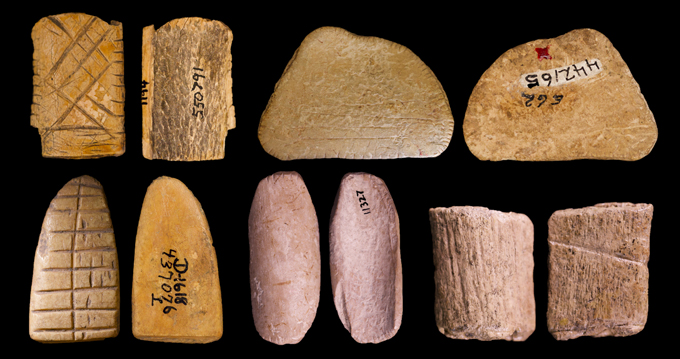
Ancient cultures across the globe have been playing games of chance — using dice — far, far longer than historians had ever realized, a new study finds. Researchers turned up these gaming pieces from as far back as 12,000 years ago. That makes them the oldest known dice.
These came from western North America. Until their discovery, the oldest known dice were from Mesopotamia, an ancient region in what is now Iraq. The oldest of those were only about 5,500 years old.
Many Native American cultures have a rich history of dice games and still play them today.
Such games could have helped foster social connection, says archaeologist Robert Weiner, who was not part of the new study. If you meet strangers, “how are you going to interact?” he asks. Dice games could have offered one way for strangers to bond. Weiner works at Dartmouth College in Hanover, N.H.
But until now, the roots of early American dice games had been fuzzy. Robert Madden hoped to track down those origins. In the April 2 American Antiquity, he describes the search for the earliest dice in what is now the mainland United States.
Dice defined
Madden, too, is an archaeologist. He works at Colorado State University in Fort Collins. He started his search by sifting through records of Native American artifacts. He was scouting for objects that might be dice.
He set rules for sorting out possible dice. Most Native American dice are two-sided with at least one side marked. So that’s what Madden looked for. He rejected objects with holes. These might have been part of jewelry. Any die candidates also had to be small enough to fit in one’s hand.
In all, 565 objects met all those criteria. An additional 94 objects were probably dice but would need more details to be sure.
The items came from 57 archaeological sites across 12 U.S. states in the Great Plains and American West. Most of the promising objects were 450 to 2,000 years old. About 31 were 2,000 to 8,000 years old. And at least 14 artifacts dated as far back as 12,000 years ago. Those oldest ones came from Wyoming, Colorado and New Mexico.
Holding deep history
Madden then traveled to examine the oldest of these artifacts in person. He found some objects that had not yet been described or linked to gaming.
“It was amazing to hold these pieces of deep history in my hand,” Madden says. In-person inspections confirmed to him that these ancient objects were in fact dice. Each was made of bone, worn smooth by use and time. Lines had been carefully etched on one side. Some had faint traces of red pigment to mark the different sides.
Especially notable: They looked much like more modern Native American dice.
“If you took dice from 2,000 years ago and the prehistoric ones and put them in a bag and shook it up, it would be really hard to tell the difference between them,” Madden says. “They look very similar.”
Weiner agrees. “I don’t think there’s a compelling alternative explanation for many of these objects,” he says.
The new study likely understates the true diversity, in space and time, of dice in Native American cultures. After colonial contact, settlers documented 18 tribes in the eastern U.S. that played dice games. Yet Madden’s search turned up no dice from there. Future research should explore that region, he says.
Finding the oldest dice also pushes back when people first seem to have been experimenting with the concept of probability. It highlights Native American contributions to early intellectual developments, Madden says. That Native Americans used dice to generate randomness this long ago, he says, “is a very exciting connection to make.”

 Login