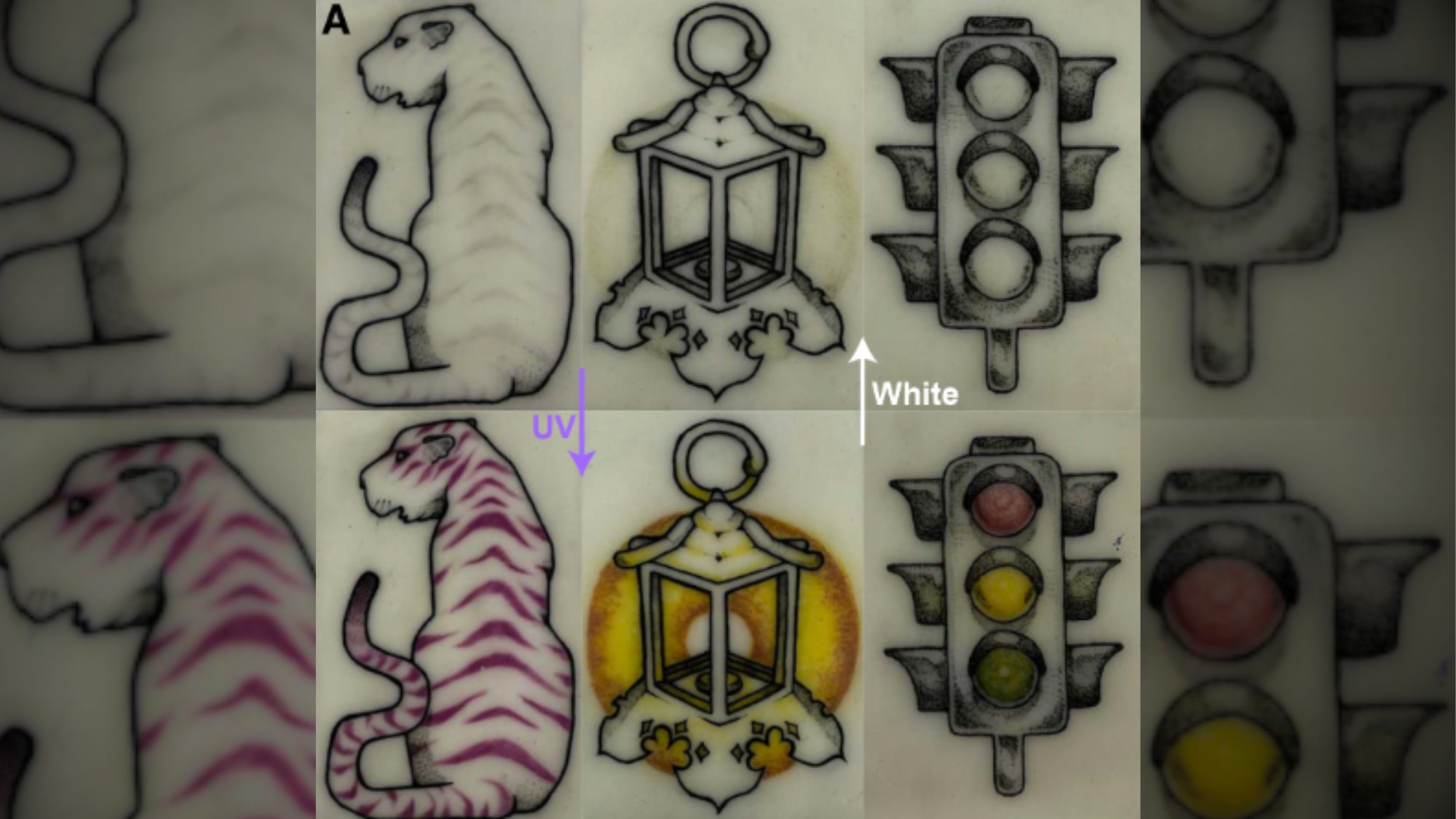
Tattoos are pretty permanent decisions, and laser removal is often described as more painful than actually getting them in the first place. But what about a design that can only be seen when you want to see it? Engineers at the University of Colorado Boulder are working on a new type of tattoo ink to answer that question. Their dye is specifically concocted to physically alter depending on exposure to visible or ultraviolet (UV) light.
The team described their invention in a study published earlier this month in the journal Matter & Light, and they didn’t only demonstrate the capabilities in the lab on silicone and pig skin. One of its creators, Carson Bruns, has already tattooed himself with the ink.
“[It’s] almost a tradition,” the study co-author recently told Nature.
Bruns, a nanoscientist at UC Boulder, previously developed a now-commercialized tattoo product called “Magic Ink” that turns magenta depending on its exposure to UV light. To highlight its efficacy, Bruns gave himself “solar freckles” as a method to track his exposure to sunlight. In similar fashion, he recently completed a similar session on his leg using the disappearing ink.
The formula currently comes in three colors—yellow, blue, and magenta—and essentially relies on the same principles behind transition lenses and some textiles. Each dye is composed of tiny spheres of acrylic glass. These beads contain photochromes, which are chemical compounds engineered to absorb specific light wavelength photons. In this case, the photochomic dye’s spheres begin in their original color, but then flatten into transparency after absorbing corresponding light photons exposed to UV rays. The dye remains this way until it absorbs visible light photons, which destroys the chemical bond and allows the spheres to return to their original shape.
Aside from the lab tests, Bruns tattooed his own leg over about 12 months using various dye combinations, all of which responded as intended to UV and visible light exposure. The ink also remained effective for over two years—but the team’s intention is go beyond a nifty parlor trick. Future ink iterations may be particularly useful in medical procedures, such as temporary markings to help maintain accuracy during direct radiotherapy sessions. For now, however, the photochromic tattoo dyes remain for laboratory (and Bruns’) use only until further safety assessments are completed.
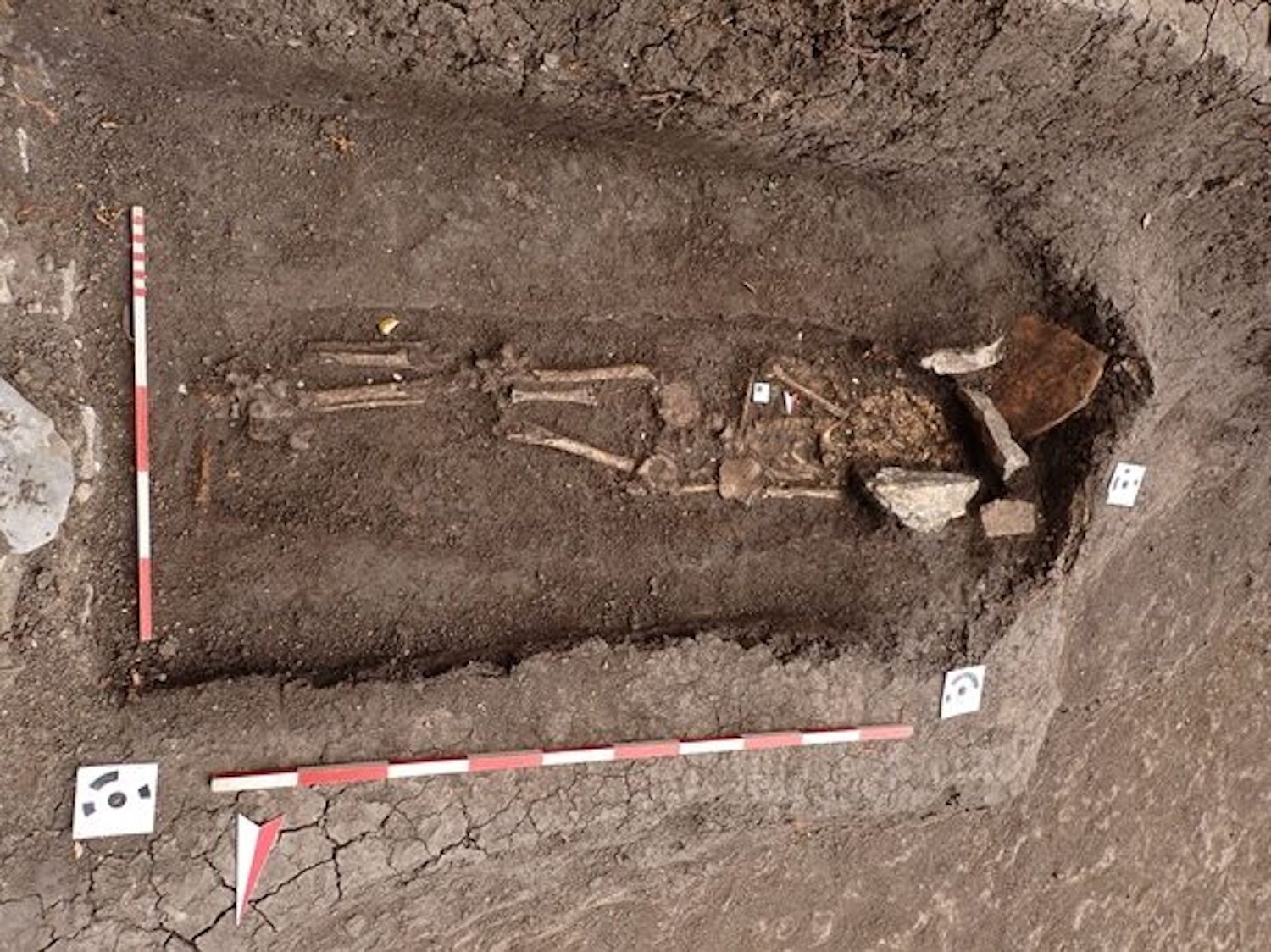
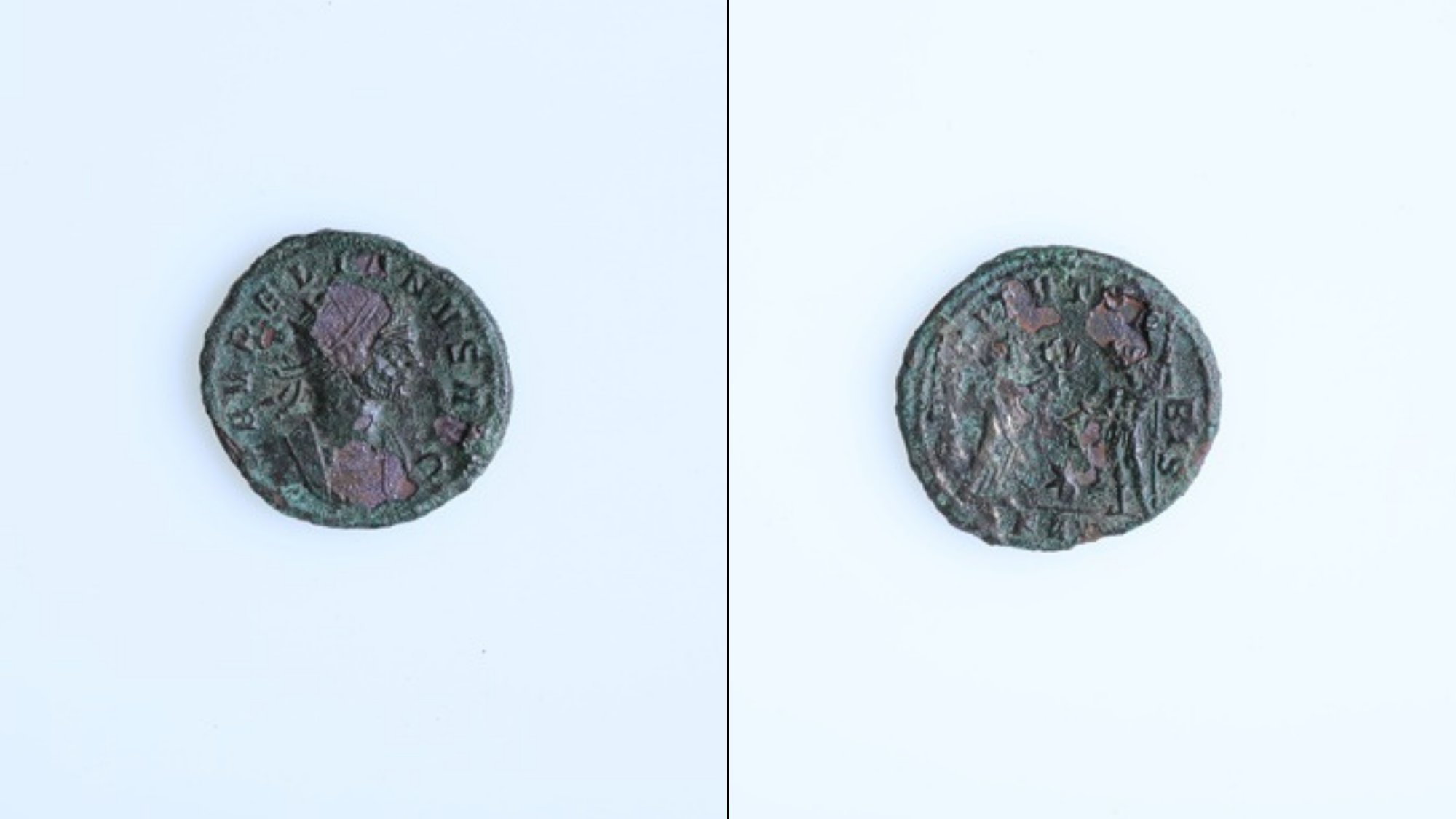
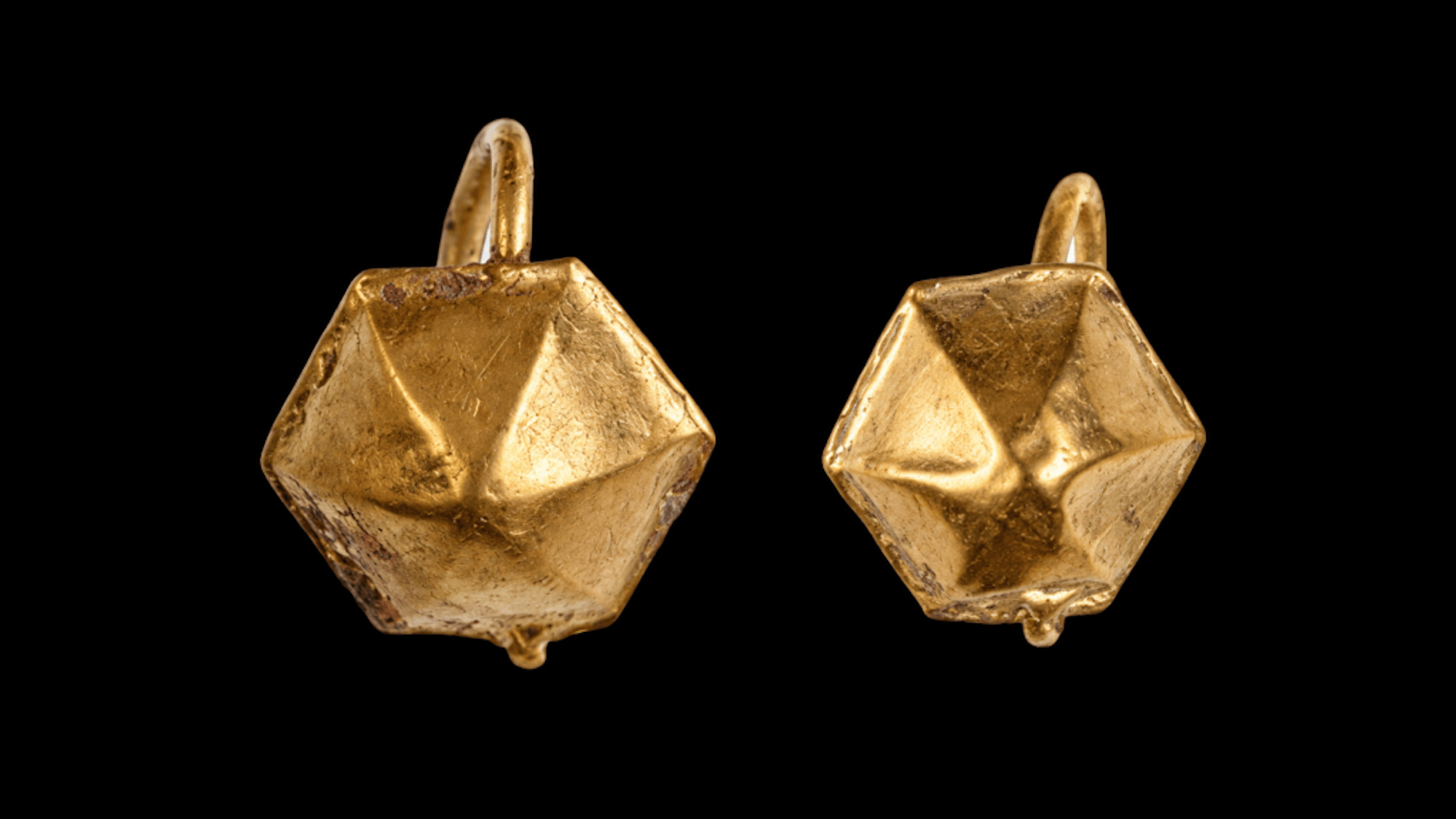
Not far from the Black Sea, a child’s grave uncovered in present-day Bulgaria has provided archaeologists a somber look at Roman funerary practices. Flagged in the city of Stara Zagora during a site survey for a new apartment complex and parking garage project, the burial contained stunningly preserved gold earrings as well as a single, small coin known as an antoninianus. But while the currency’s age is traceable to within a year of its minting, the bronze piece may also represent a grieving family’s hopes for their child’s safe passage into the afterlife.
The Roman empire at its height included over 1.9 million square miles of territory, including much of central Europe and central Asia. Rome annexed the region of Thrace in 46 CE, and eventually renamed the city of Stara Zagora as Ulpia AugustaTraiana in honor of Emperor Trajan (98 to 117 CE). Augusta Traiana quickly grew into one of Thrace’s most prominent urban hubs, becoming so prosperous that Rome ultimately granted permission to build its own coin mint during the second and third centuries CE.
Over 1,750 years later, Augusta Traiana’s remnants exist underneath a city once again known as Stara Zagora. Ruins of the Roman empire are regularly unearthed through the town, including the recent discovery of a large cemetery used for nearly three centuries outside Augusta Traiana’s original walls. Among the 135 graves, researchers identified a child buried with a pair of gold earrings and one of Thrace’s bronze coins. Although details about the young individual’s death and identity remain unclear, the coin clearly dates to either 274 or 275 CE. Archaeologists assume the child likely died either around that time period, or soon after.
While researchers may never learn the precise circumstances of the burial, ancient Greek and Roman funerary beliefs suggest the coin served a specific purpose. It’s possible the child’s family intentionally placed the currency with the deceased as payment to Charon, the ferryman who brought souls to the afterlife. Knowing this, it may be that grieving relatives hoped to impart one final gift to their loved one.
Japan launches a ground-breaking mission to the Mars moon Phobos today, and you can watch live.
The JAXA (Japan Aerospace Exploration Agency) MMX (Martian Moons eXploration) mission aims to collect samples from Phobos, the larger of Mars’ two moons, and deliver it back to Earth for analysis. If successful, the samples could help solve long-standing mysteries about Mars’ moons, including their origin.
In 1877, US astronomer Asaph Hall discovered Phobos and its smaller sibling, Deimos. The moons have arguably the most bad-ass names in our solar system: Phobos comes from the ancient Greek word φόβος (phobos), meaning “fear,” and Deimos originates with the ancient Greek word Δεῖμος, which translates to “dread.”
Despite increased attention on Mars in recent decades, astronomers don’t know exactly how the celestial bodies formed. Theories include asteroids or debris leftovers from way back when the solar system formed about 4.5 billion years ago.
“The samples from MMX will bring forth paradigm-shifting science on the Mars system for generations to come, especially as NASA prepares to send the first humans to Mars,” said Nicky Fox, associate administrator and Science Mission Directorate at NASA, said in a statement. While a JAXA mission, NASA worked with the agency to provide instruments and technologies to assist.
The MMX spacecraft launches on top of an H3 rocket at Japan’s Tanegashima Space Center today at 3:41 p.m. EDT (4:41 a.m. Japan Standard Time on October 20). You can watch it live on JAXA’s YouTube page. The mission will get to Phobos in August 2027 and spend at least 16 months surveying the surface before collecting samples. The samples will not return to Earth until at least 2031.
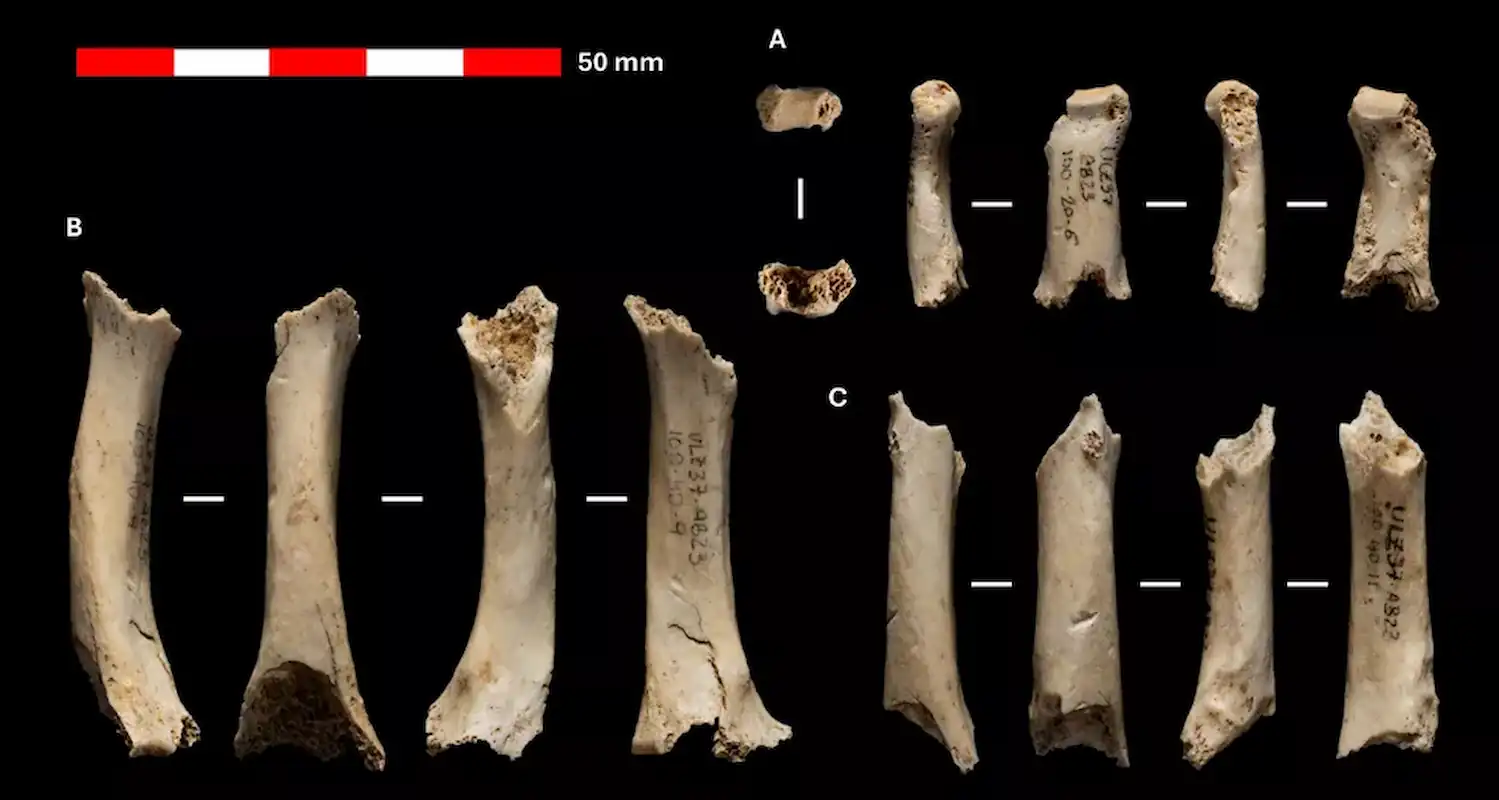
Neanderthals left plenty of traces in the western Pyrenees, the mountain range that separates Spain from France. Stone tools, butchered animal bones, the leftovers of their camps. What nobody had ever found in Navarre, the region of northern Spain whose capital is Pamplona, was a single bone of the people themselves. On Monday that changed, […]
Durante décadas, Navarra ha sido un hueco en el mapa neandertal. El Pirineo occidental guarda numerosas evidencias arqueológicas del paso de esta especie, pero nunca se había identificado un solo hueso humano atribuido directamente a ella. Eso ha cambiado este lunes con la presentación de seis fósiles de la cueva de Abauntz, en Arraitz-Orkin (valle […]
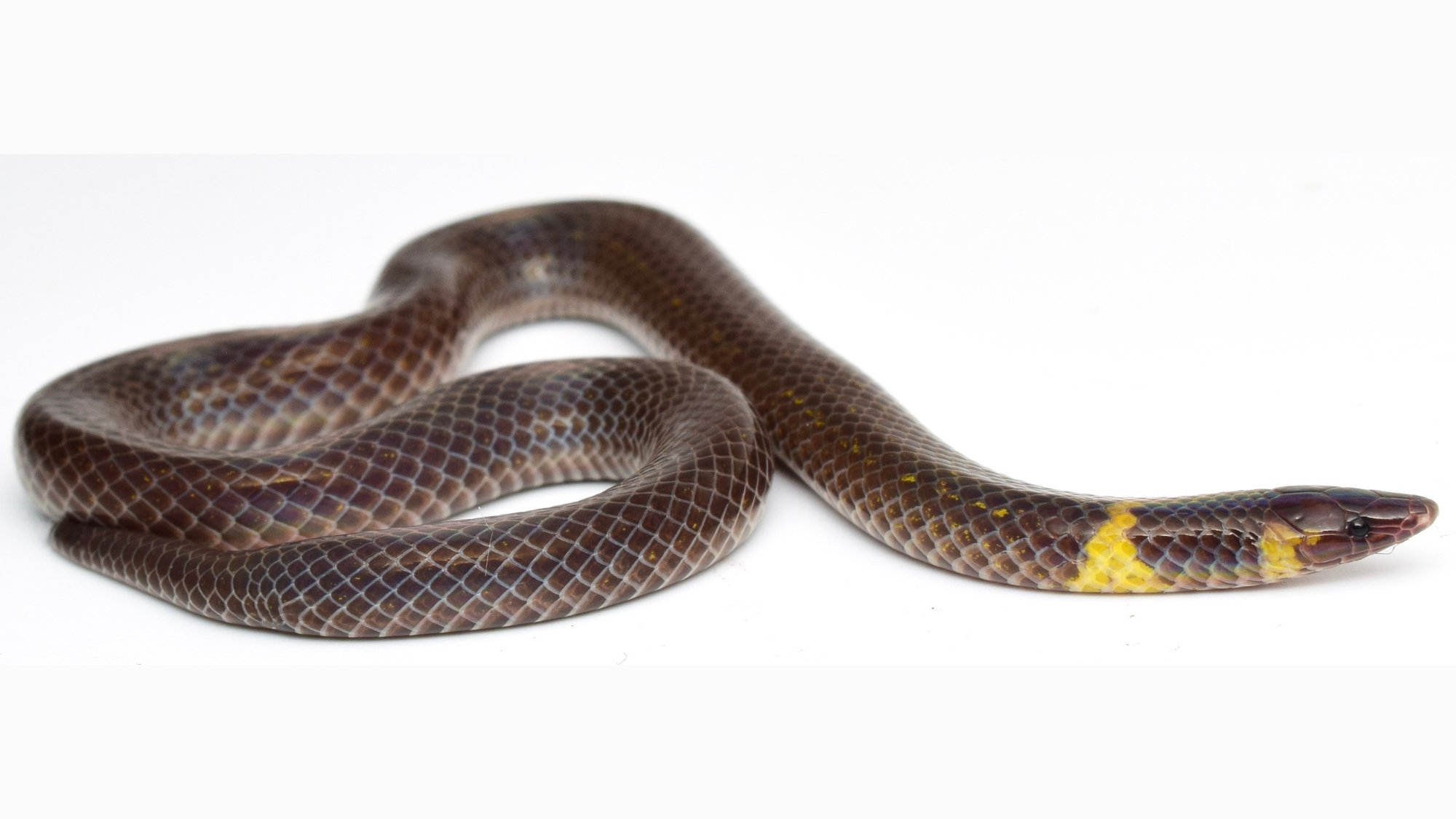
Snakes will bite, rattle their tails, and even spit venom to escape danger. But of all the world’s species, southeast Asia’s dwarf reed snake (Pseudorabdion longiceps) relies on an especially fascinating escape method. When threatened, the diminutive serpent rolls away like a speeding wheel.
An adult dwarf reed snake typically measures less than 12 inches long, but its unique locomotive maneuvers allow it to retreat as fast one foot per second—about four times faster than it travels by simply slithering on the ground. It’s not a flailing getaway, either. The snake also easily rolls along a straight path while somehow keeping its head both stable and facing forward.
Now, researchers finally have a better understanding of how the dwarf reed snake achieves such dizzying acrobatics. In a study published today in the journal Current Biology, a team at Japan’s Toho University detailed the specific physiology that enables its locomotion after filming the snakes with high-speed cameras. Essentially, the snake doesn’t rotate its entire body in a singular, forward motion—it whips one side of its body forward towards the ground while an arched portion swings down by its head in what the study’s authors call a “stroke.” The snake then alternates between its left and right side coming into contact with the ground for each successive stroke. Essentially, it’s like twirling a rope in a lateral circle while holding one end in your hand—except that end is the snake’s head.
The cumulative efforts bypass the traditional idea of a wheel requiring something like a central axle. Instead, this ingenious, highly controlled movement allows the animal to keep its head and sensory organs upright and facing ahead while traveling at such high speed. This is compounded by the dwarf reed snake directing regions of its body to engage in large, alternating rotations while stabilizing its head.
By gaining better insight into these biological mechanisms, researchers also highlight the difficulty in trying to predict an animal’s capabilities based solely on its physiology. A snake may have primarily evolved to slither—but that doesn’t mean it can’t get creative when necessary.
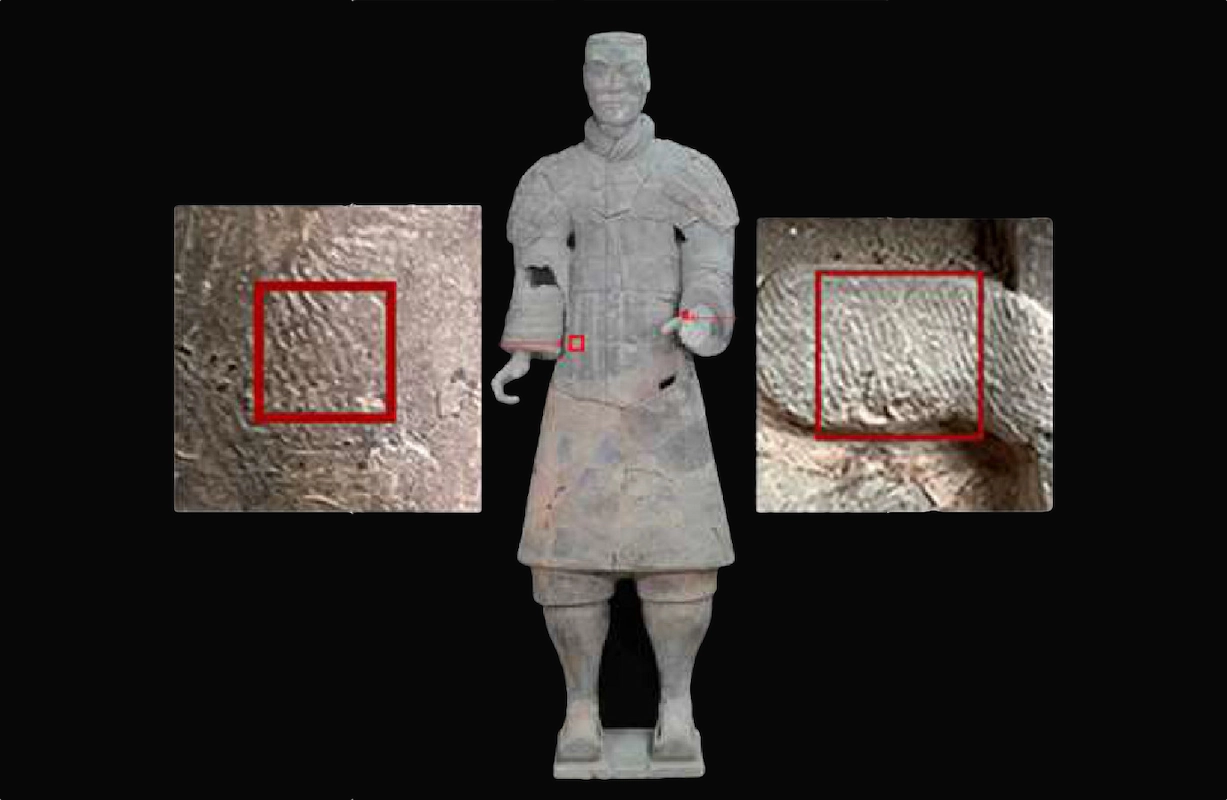
Hace unos 2.200 años, alguien apretó con el dedo un trozo de arcilla húmeda para pegar la solapa de una coraza. Esa presión dejó una huella que el horno selló y que ha llegado intacta hasta hoy. Ahora, un equipo del Museo del Sitio del Mausoleo del Emperador Qin Shi Huang y de la Universidad […]
About 2,200 years ago, someone pressed a finger into a lump of damp clay to stick down the flap of a suit of armour. The kiln sealed that print, and it has survived intact ever since. Now a team from the museum at the mausoleum of Qin Shi Huang and from Shandong University has used […]
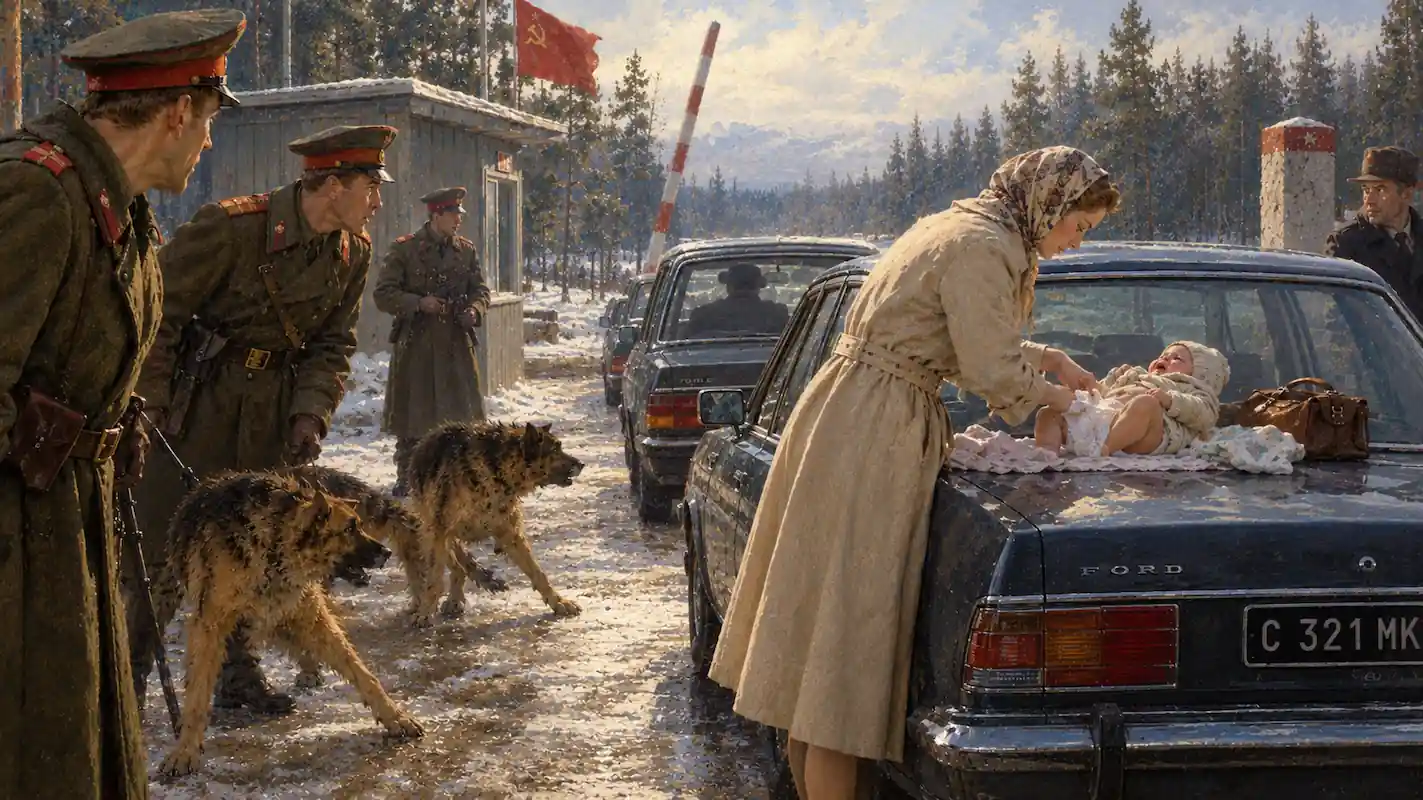
In November 1983, the Soviet Union came to believe that NATO might be preparing a nuclear attack. The trigger was a war game. The alliance’s annual exercise, Able Archer 83, ran from 7 to 11 November and rehearsed what would happen if a conflict in Europe escalated until nuclear weapons were released. It even simulated […]
En noviembre de 1983 el mundo estuvo al borde de una guerra nuclear. La OTAN estaba llevando a cabo un ejercicio de simulación bélica, bautizado con el nombre de Able Archer 83 y que incluía el uso teórico de armas atómicas tras una escalada de tensión internacional, cuando el programa soviético de detección de ataques […]
On the evening of March 18, as it was growing dark, I went to the window, not knowing what was drawing me. Next to the house stood a shadow, ghost-like, shrunken, at one with the dusk, almost translucent, and I recognized The Girl with the Broken Foot.
I walked out into the falling wet snow, slowly approaching her, and she allowed me to come close. Nine months old, she was the size of a fawn half that age. Starkly emaciated, her body seemed to be collapsing inward, her head held low. Literal hunger and a deeper starvation were palpable. She bore the haunted look of terminal solitude seen in souls driven to the margins of society, among the liv-ing, yet apart. She seemed so frail that I couldn’t imagine she would live more than another day or two.
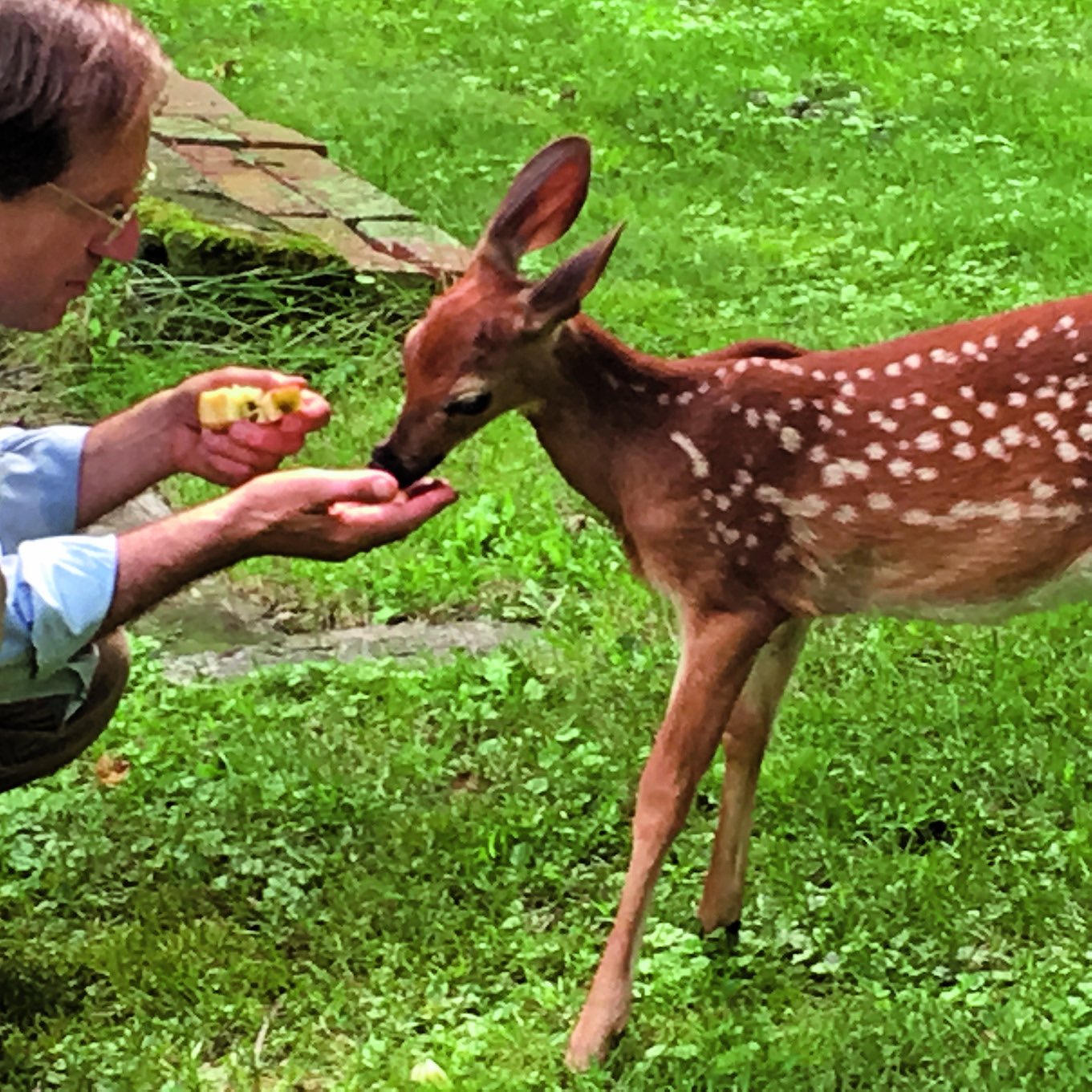
Going inside and returning with a bowl of apples, I cut them into pieces and placed a few on the ground between us. She was raven-ously hungry and I gave her a few more apples, and still more, until she had eaten a total of eight. After she had finished eating, she stayed with me. We stood about a foot apart. She showed no fear of me, a fact which I would later come to recognize as meaningful. The moment had the compelling quality which has been present at the onset of many enduring connections in my life, of being un-bound by linear time.
“I am watching over you,” I said softly. “If you come here, I will take care of you. You are not alone.”
It was fully dark when we parted, having been together for an hour. I expected that she would recede into the woods, yet the next morning she was sleeping against the house, directly beneath the window closest to where I sit all day to work. Save for the wall separating us, she could not have gotten any closer to me.
Paul feeding Penelope. Image: Paul Bochner.
When I went around to the front of the house, she struggled to her feet and approached. In the morning light, I was better able to assess the state of her health. Months of solitary survival had taken a severe toll. Her body seemed hollowed, her ribs and pelvis sharply visible beneath her skin, and it felt a miracle that she was alive. On her right flank was a hemispherical mass the size of a cantaloupe, which I took to be a tumor, yet it had an open, running wound at its center, which she periodically craned her neck to lick. Her eyes were running and had congealed masses at their inner corners.
I bent to get a look at her injured foot. From not being walked on, the backward-facing cloven hoof had grown to an abnormal length and was curling upward. The wrist, which unnaturally bore her weight, had a flattened forward surface, an oval about two inches across, worn raw, without hair or skin, only pale pink–grey flesh, which, at its center, appeared to have been further abraded to the bone. Her right front foot, forced to compensate, was splayed and rockered, her right scapula protruded, and her front quarters were substantially lower than her hips.
I again placed apple pieces on the ground between us. I spoke very gently to her, saying, “You are the best one of all the deer. You are the most beautiful. You are good.” I continued to talk to her while she ate her apples, and when she had taken all she could, she returned to her resting spot under the window. I went inside to work, keeping periodic watch, pleased that she seemed to have claimed a place. But in a few minutes, from around the corner of the house came the twins, followed by their mother who immediately and ag-gressively charged at her. The Girl with the Broken Foot lurched upright and hobbled down the embankment, across the road and into the woods.
She was once again alone, but a step had been taken. Since the previous evening, things had changed. Even before her second feed-ing she had recognized me on sight. She had approached and had again allowed me near.
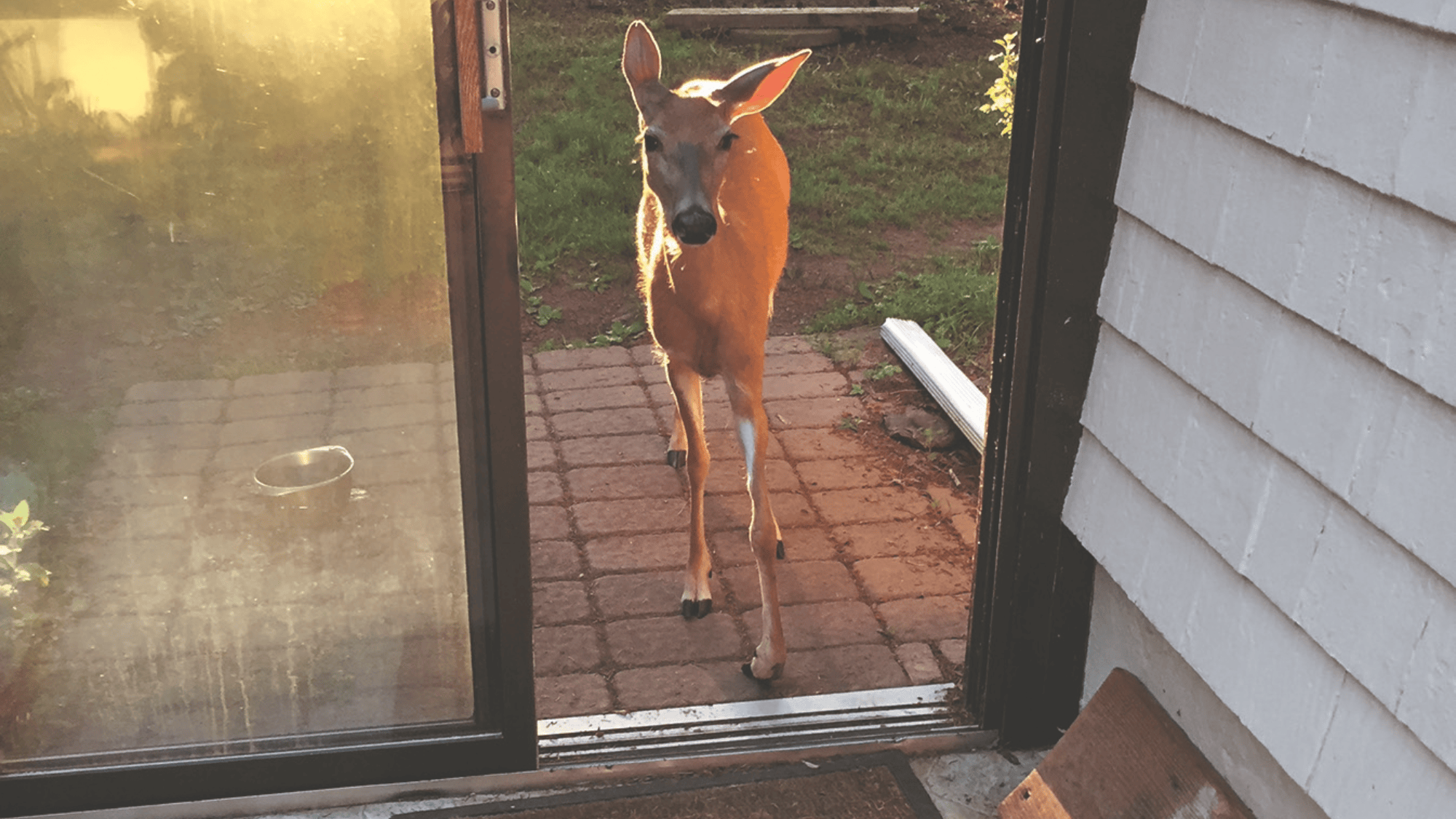
Although I had seen her fewer than half a dozen times in the preceding months, from the night of our first connection, she began to come to the house every day. She slowly gained strength and I would watch for her and thrill to the sight of her slow approach. It was our private time. We stood together, and I placed her food on the ground between us. After she ate, she would stare into my eyes for long periods, seemingly entranced. I told her stories. I sang softly to her. I told her she was my beauty.
So began our journey, and one of the greatest loves I have ever known.
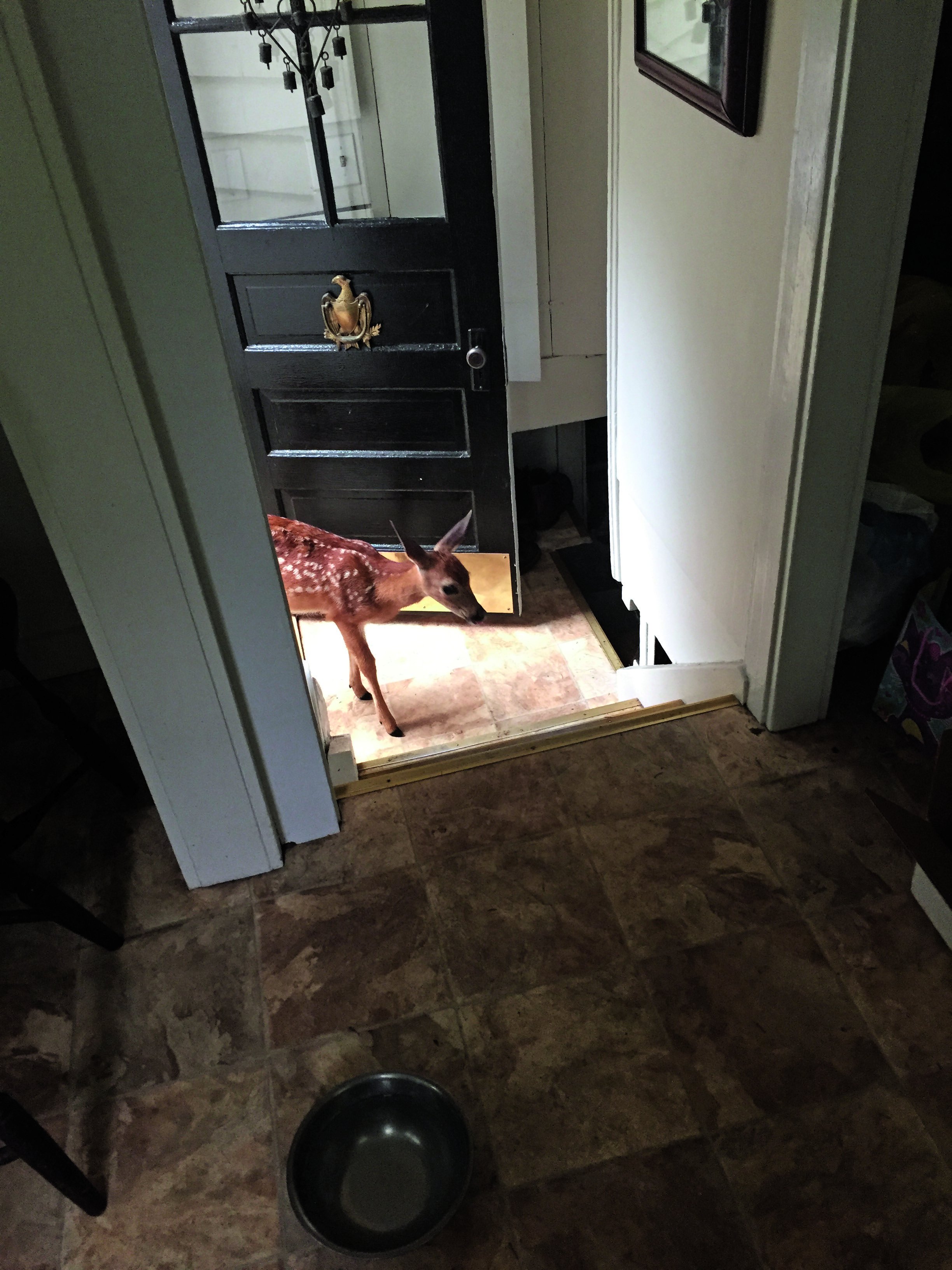
Penelope walking into the house. Image: Paul Bochner.
About the Author
Paul Bochner began his professional life early, as a working musician through his mid-teens in Los Angeles, then moving to Montreal at the invitation of the National Film Board of Canada. He has won several international awards for his films and is the recipient of a Guggenheim Fellowship in painting. He has written for The New Yorker and The Atlantic.
You would think, post-COVID, that we would all understand the importance of frequent and thorough handwashing. And yet, spend any time in a public restroom and you’ll see an alarming number of people who still see it as optional.
We know it can help curb the spread of illness when you’re sick, but on an average day, just how gross is it to not wash your hands?
“Your hands have a microbial flora that is always present. These are mostly good bacteria that help protect your skin,” Allison Pappas, PhD, Director of Business Development at Gillson Sciences, tells Popular Science. “On unwashed hands, your normal flora is going to be the most abundant group of inhabitants and they’re nothing to worry about. If you’re not washing your hands, they won’t become overgrown by deadly bacteria. However, your hands will accumulate an increasing number of pathogenic bacteria and viruses from your environment.”
Pappas explains that eating a sandwich or wiping your nose after exposure to these pathogenic bacteria are quick ways to then introduce those germs into your body. She describes it as a “tug-of-war,” with germs pulling one way and handwashing your only way to tug in the opposite direction. There are also physical characteristics that come into play as well. People with longer fingernails or rough, coarse skin give bacteria more places to hide. And it’s not always visible. As Pappas puts it: “Your hands can look clean but be utterly disgusting from a microbial perspective.”
“It’s extremely gross, but assume you’ve got poop on your hands,” says Pappas. “That sounds crazy, but studies have found fecal bacteria on children’s hands and toys and on the hands of 28 percent of commuters in the UK. Even if you don’t have a child and don’t commute via subways, you’re still touching all the same door handles and common utensils as the people who do. That poop is transferring to your hands, you just can’t see it.”
So how gross is not washing your hands? It’s “you have poop on your hands” gross.
Recent studies suggest that most people wash their hands too briefly to actually kill germs. So, if you want to avoid getting sick and spreading illness, it’s time to forget everything you thought you knew, and follow these instructions for proper hygiene:
Wet your hands with water at a comfortable temperature. You can’t actually get the water hot enough to kill microbes without burning your skin, so just do what feels nice. The CDC actually recommends shutting the tap off while you lather your soap to conserve water.
Lather your hands with soap. Don’t worry about buying something with anti-microbial ingredients; research shows that outside of a hospital setting, these additives don’t provide a significant benefit, and their use contributes to the rise of antibiotic resistance.
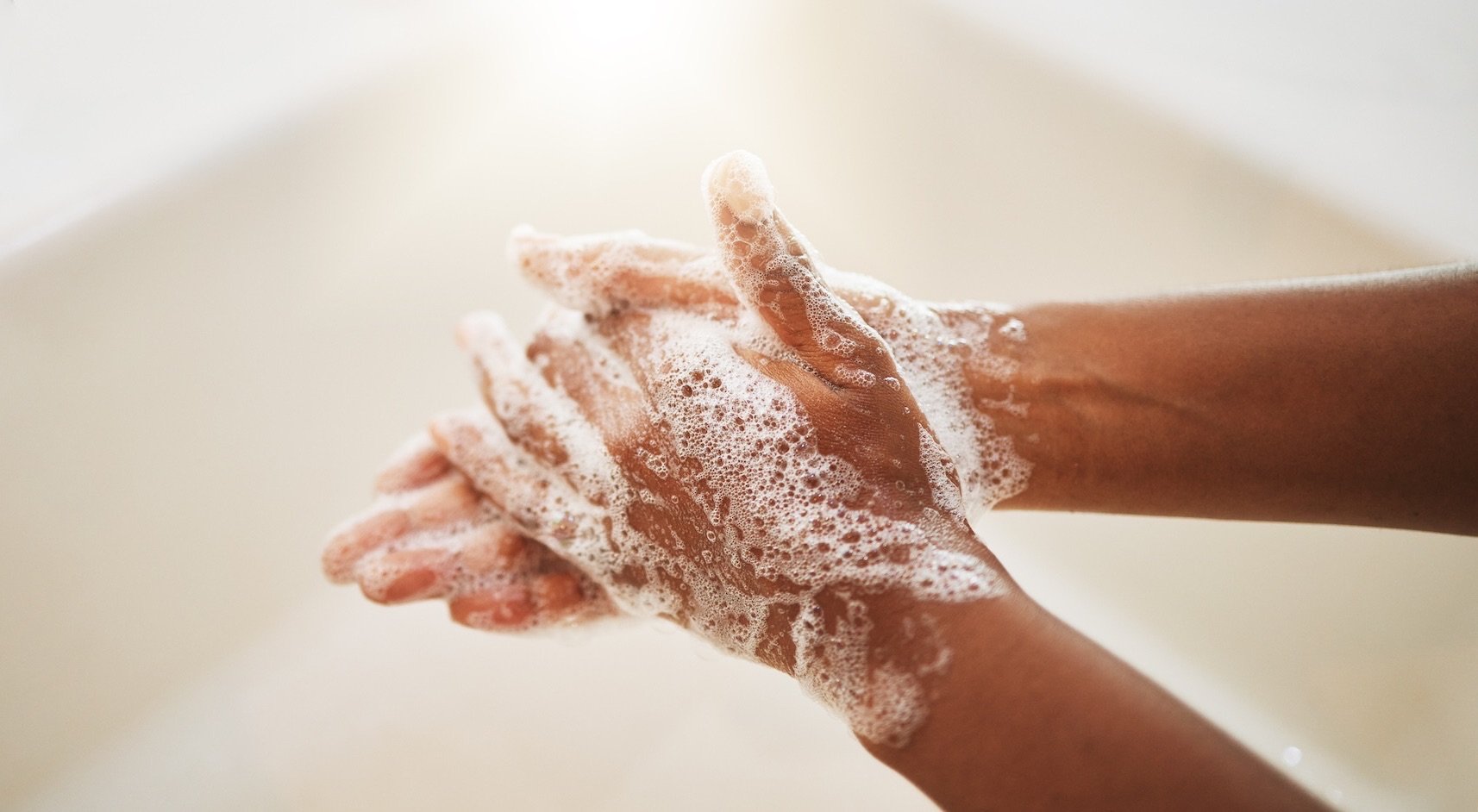
Make sure you lather the backs of your hands, between your fingers, and under your nails, as dangerous microbes can lurk on any part of your skin.
Continue scrubbing for 20-30 seconds before you start rinsing. It’s longer than you think. One study showed that most adults lather for just six seconds. Try singing “Happy Birthday” twice in your head (or out loud, if you’re feeling fun) to help keep time.
Turn the tap back on and rinse. The CDC notes there’s little evidence that using a paper towel to turn the tap on and off after washing will improve your health.
Dry your hands with a clean towel if possible, or with an air dryer. The CDC says that wet hands more easily transfer microbes. Plus, you don’t want to walk around with clammy hands all day.
When zoology professor Daniel Baldassarre traveled to the remote Galápagos Islands of Wolf and Darwin with two other researchers, getting there proved quite a challenge. With no beaches to land a boat on, they had to approach the islands’ cliffs in a small dinghy and wait for a lull in the waves before jumping onto sharp, black lava rocks.
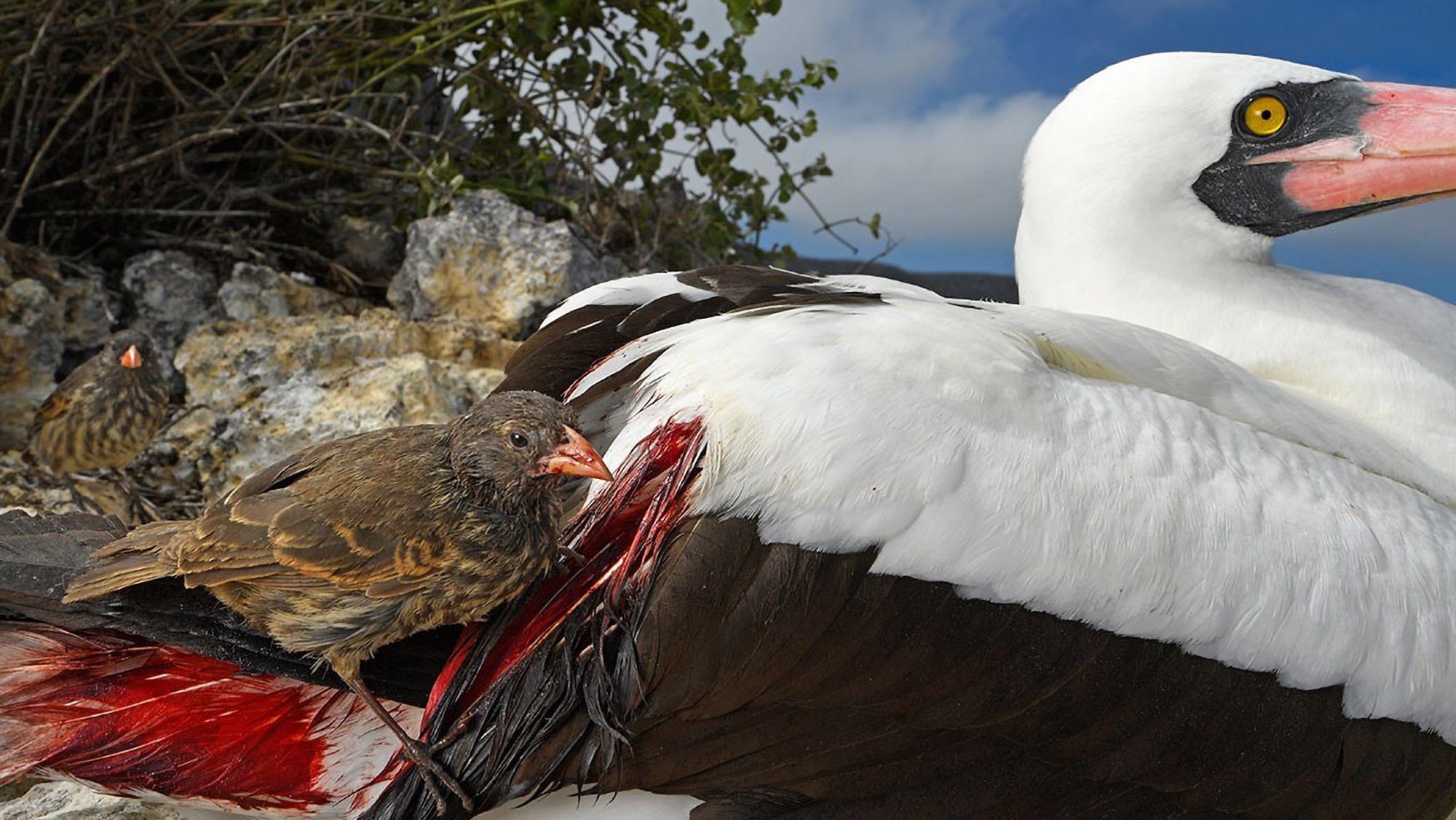
But their efforts paid off. On that trip, they saw a bird that very few people have ever set eyes on in the wild: the vampire ground finch. These finches are only found on Wolf and Darwin, and feed on the blood of much larger birds called Nazca boobies that also live on the islands.
Up close, Baldassarre and his colleagues noted the vampire finches’ blood-stained bills and their throats visibly engorged with blood. They also saw them in action.
“We observed scores of vampire finches clamouring all over the backs, tails, and wings of boobies, opening up substantial wounds with their sharp beaks, and drinking their fill of blood,” they wrote in an article for The Conversation.
Why only some birds drink blood
“Blood is a notoriously difficult food source to process and extract nutrients from, which probably partly explains why so few animals have evolved to feed on it,” Baldassarre tells Popular Science. He suspects that on these islands where freshwater is extremely rare, blood might serve as a water source for the finches.
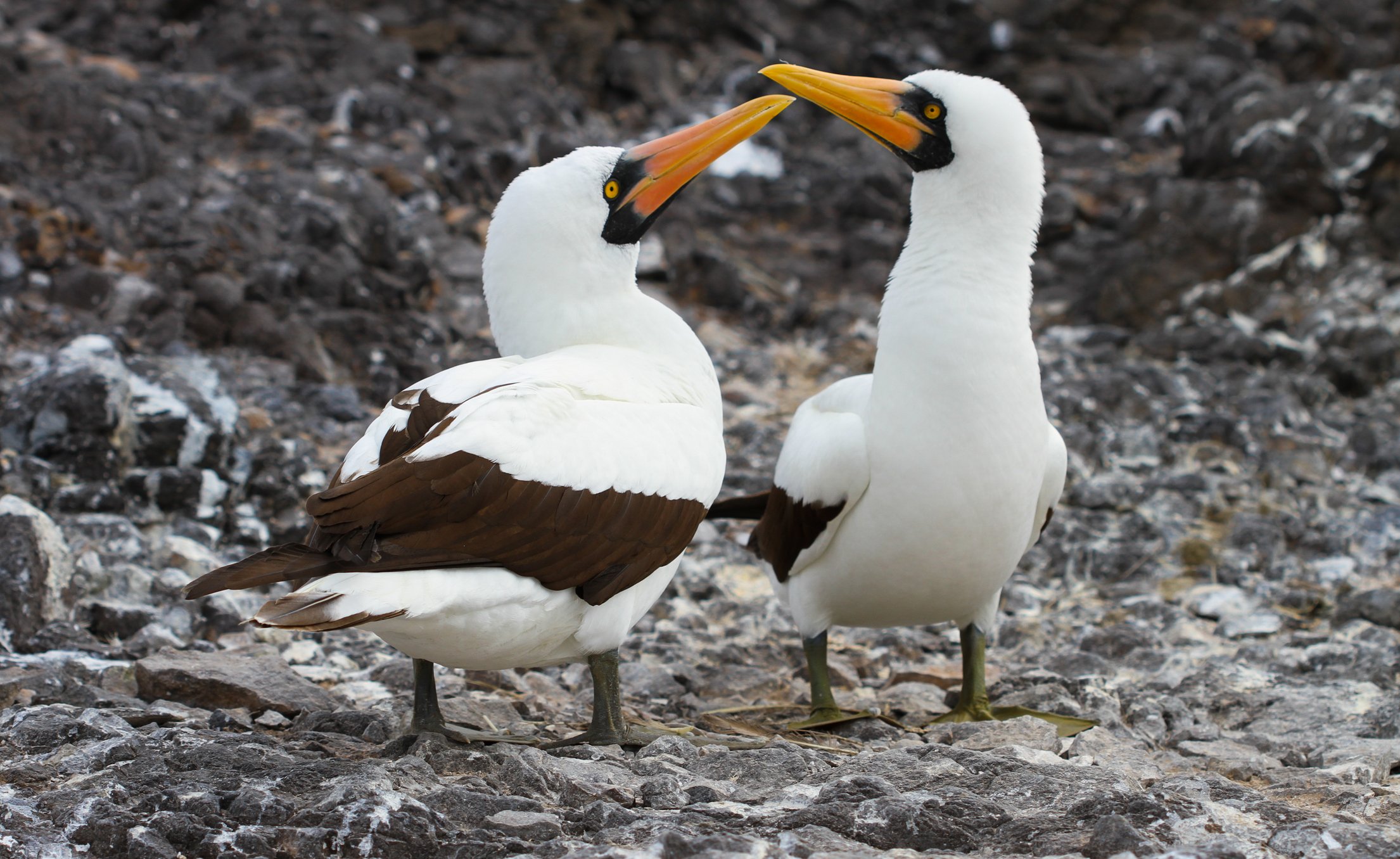
Two Nazca boobies perform their species’ mating call. Vampire ground finches feed on Nazca boobies on the remote Galápagos Islands of Wolf and Darwin. Image: Getty Images / inthedark72
It’s not the only component of the vampire finches’ diet, however. Based on unpublished data collected by Baldassarre and his colleagues, blood makes up about one-tenth of the vampire finches’ diet.
“These finches are quite opportunistic, so they will eat just about anything they can find,” Baldassarre says. “We observed them feeding on everything from seeds to insects to broken seabird eggs.”
One theory is that vampire finches rely more on blood feeding in periods of extreme drought, when other resources are scarce. But more research is needed to see if this idea holds up in practice.
How this strange behavior evolved
Vampire finches weren’t always vampires, scientists think. The relationship between vampire finches and boobies probably started off with the finches eating parasites found on the skin and feathers of the boobies. This would have been mutually beneficial because it provided a cleaning service for the boobies and food for the finches.
But at some point in evolutionary history, in the process of picking off parasites, the finches started to create lesions on the boobies’ skin, and eventually began feeding on their blood.
Over time, their bills became more scalpel-like, perfect for making skin incisions. Their digestive system also changed. When Baldassarre and his colleagues studied the microbes found in vampire finches’ guts, they found that their gut microbiome was very different from that of other, non-blood-consuming finches on the Galápagos Islands, something they attribute to their unique diet.
Until recently, vampire finches were considered a subspecies of the sharp-beaked ground finch (Geospiza difficilis).
“But they have now been designated as their own species [Geospiza septentrionalis] because of the differences they have evolved because of blood feeding,” Baldassarre notes.
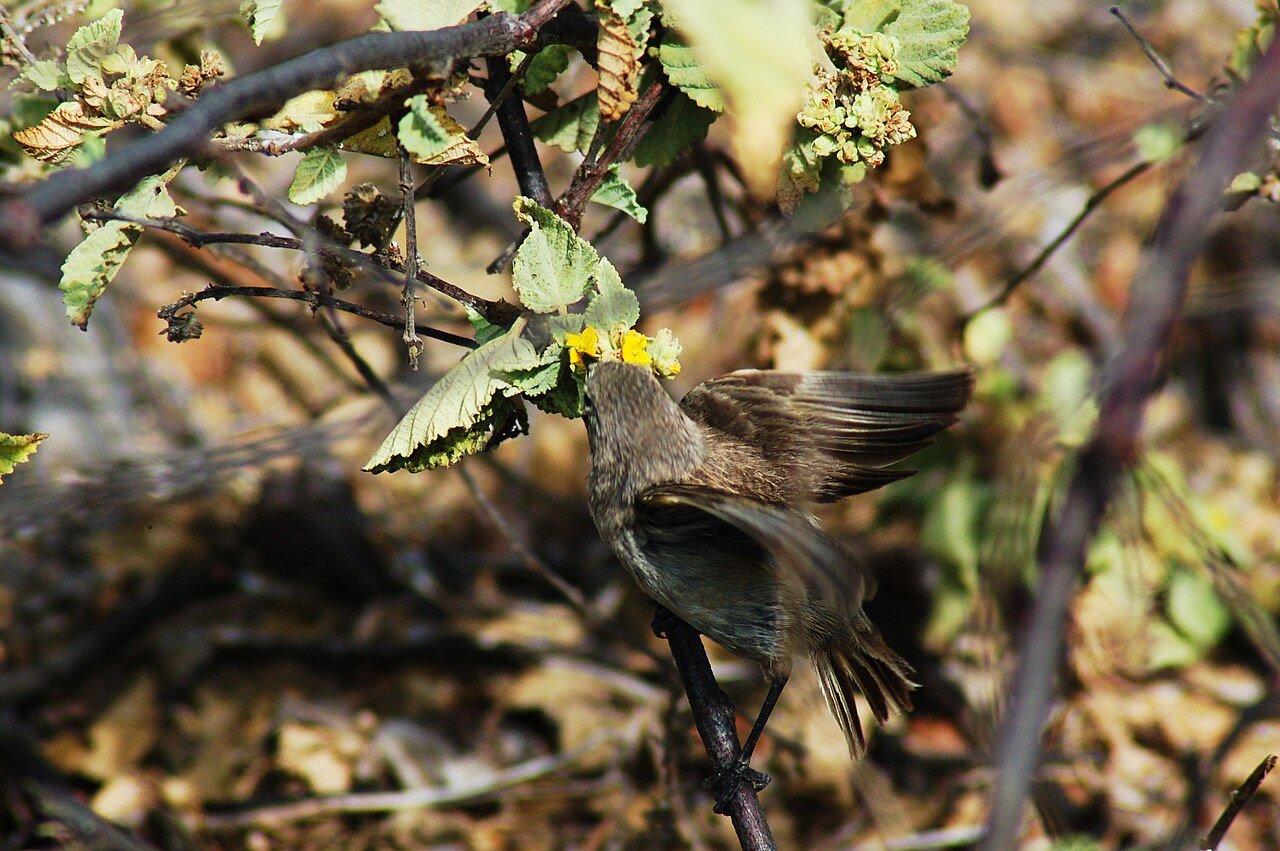
Vampire ground finches on Wolf island have been seen drinking nectar from Galápagos prickly pear flowers and other flowers. Image: Peter Wilton / CC BY 2.0
How the boobies cope
Baldassarre and his colleagues have seen vampire finches gang up on and kill nestling boobies,“but that was quite rare,” he points out.
“In most cases, the finches seem to inflict just enough damage to break the skin and extract some blood, but not too much to harm the boobies significantly.” This is similar to many parasite-host relationships, such as fleas, ticks, and mosquitoes on mammals. “You can kind of think of the vampire finches as giant mosquitoes,” Baldassarre says.
“For one, as in large animals being bitten by mosquitoes, often the damage is minimal and not noticeable, so it doesn’t elicit a strong reaction. Also, the boobies sometimes have a vested interest in staying put and guarding their spot in the colony, or perhaps nest or nestlings, so may not want to fly away. Finally, the finches seem to target hard-to-reach areas on the boobies like the base of tail feathers, so it’s likely difficult for the boobies to deter them.”
I, for one, was feeling very sorry for the boobies being constantly hounded by these small vampire birds. Until I learnt that Nazca boobies practice something called “obligate siblicide,” which essentially means that the first-hatched chick routinely attacks and kills its younger sibling. It’s a harsh, bird-eat-bird world in the Galápagos Islands.
In Ask Us Anything, Popular Science answers your most outlandish, mind-burning questions, from the everyday things you’ve always wondered to the bizarre things you never thought to ask. Have something you’ve always wanted to know? Ask us.
Around 4,200 years ago, in the dry south-east of the Iberian Peninsula, a society began building cities on hilltops, stockpiling grain on a large scale and arming its warriors with halberds (blades like axe heads mounted on long poles) and metal swords. Archaeologists call it El Argar. Further north, in what are now La Mancha, […]
Hace unos 4.200 años, en el sureste de la península ibérica, una sociedad levantó ciudades en lo alto de los cerros, almacenó cereal a gran escala y armó a sus guerreros con alabardas y espadas de metal. Es lo que los arqueólogos llaman El Argar. Más al norte, en lo que hoy son La Mancha, […]
When it comes to the mobile app heavyweights, few can beat WhatsApp. It’s estimated that around 3 billion people now use the cross-platform messaging tool at least once a month. And it’s important to remember there are only 8 billion or so people on the planet, so there are no signs of its popularity waning anytime soon.
Beyond being a hugely successful app, it’s also packed with features. You can use it to chat, make voice and video calls, share files, broadcast your location, and more. Even if you’ve used WhatsApp for years, you might not have discovered everything it’s capable of—which is where these tips come in.
1. Set a timer for messages to disappear
You don’t necessarily want everything you say on WhatsApp to be remembered forever, and the app includes a timer feature that will automatically expunge messages in a chat 24 hours, 7 days, or 90 days after they’re read, unless you specifically keep them. This is set on a chat-by-chat basis, and affects everyone in a conversation.
To change the setting for one of your chats, tap the contact or group name at the top of the screen, then pick Disappearing messages to select your time limit. This is applied until you turn it off or select a different period, but doesn’t affect the conversation history.
2. Lock away your most sensitive chats
Put certain chats behind a lock. David Nield
Another way of protecting sensitive information in chats is to add an extra lock to specific conversations. Even if someone should gain access to your phone and your apps, they won’t be able to see your locked chats.
From inside a conversation, tap the contact or group name at the top, then pick Chat lock (Android) or Lock chat (iOS). You can then use a specific PIN code to block access to the conversation, or use the same biometric scan technology (such as Face ID) that already protects your phone at the lock screen.
3. Edit a message after sending it
Have you noticed you can edit messages after sending them? It’s handy for those typos you only spot after dispatching a message—long-press on whatever you just sent, then tap the three dots and Edit (Android), or just Edit on the pop-up menu (iOS). Modified messages have an ‘Edited’ label visible to everyone in the chat, but they won’t be able to see what the original message said.
4. Stop specific contacts from seeing when you’re active
Take control of who sees your activity on WhatsApp. David Niel
WhatsApp can tell your contacts whether you’re currently using the app and when you were “last seen,” but this might not be information you want to share with everyone. As well as disabling the feature entirely, you can also turn it off for specific contacts.
Open the You tab, then tap Privacy > Last seen and online, then select My contacts except … under the Who can see my last seen heading. You can then pick the contacts you don’t want to give this information to, and set the Who can see when I’m online option to match the same list.
5. Pin important messages you need to refer to or remember
Important details can quickly get lost in WhatsApp conversations, especially in busy group chats. But there is a way to pin specific messages to the top of the chat so they’re easy to get back to—someone’s address or the start time of an event, for example.
To pin a message on Android, long-press on it, then tap the three dots (top right) and Pin. On iOS, long-press a message and choose More > Pin. You can have up to three pinned messages per conversation, and select from three options for how long they’re pinned for: 24 hours, 7 days, or 30 days.
6. Give contacts their own notification sound
Your contacts can have their own alert sounds. David Nield
WhatsApp lets you assign specific notification sounds to specific contacts, which means you know who’s calling or messaging without picking up your phone. It gives you a better idea of whether something needs attention right away or can be safely ignored for a while.
Tap the group or contact name at the top of a chat, then pick Notifications and Notification tone or Ringtone to make changes. You can also select Vibrate to customize vibrations for each chat, though there are only four options here.
The option to mute the conversation is on the same screen—you can set mute separately for calls and messages.
7. Message yourself with notes and reminders
Not all messaging apps let you have a conversation with yourself, but WhatsApp does. This might seem like a rather pointless (and lonely) way of using the messaging app, but it can be really useful for jotting down things you need to remember on the go, leaving yourself voice notes of ideas and thoughts, and so on.
From the main conversation list, go to start a new chat, then search for “you” as the contact (or just enter your own username or phone number).
Sometime between 32,000 and 11,000 years ago, dogs domesticated. Since then, these four-legged friends have provided companionship, assistance, and protection for people. Whether you favor a squished-face potato dog or a determined and smart working dog, you likely understand how dogs got the designation of “man’s best friend.”
The Dog Photography Awards celebrate dogs of all shapes and sizes. The annual competition awards prizes across six categories (Studio, Action, Portrait, Dogs & People, Documentary, and Open) in addition to naming an overall winner.
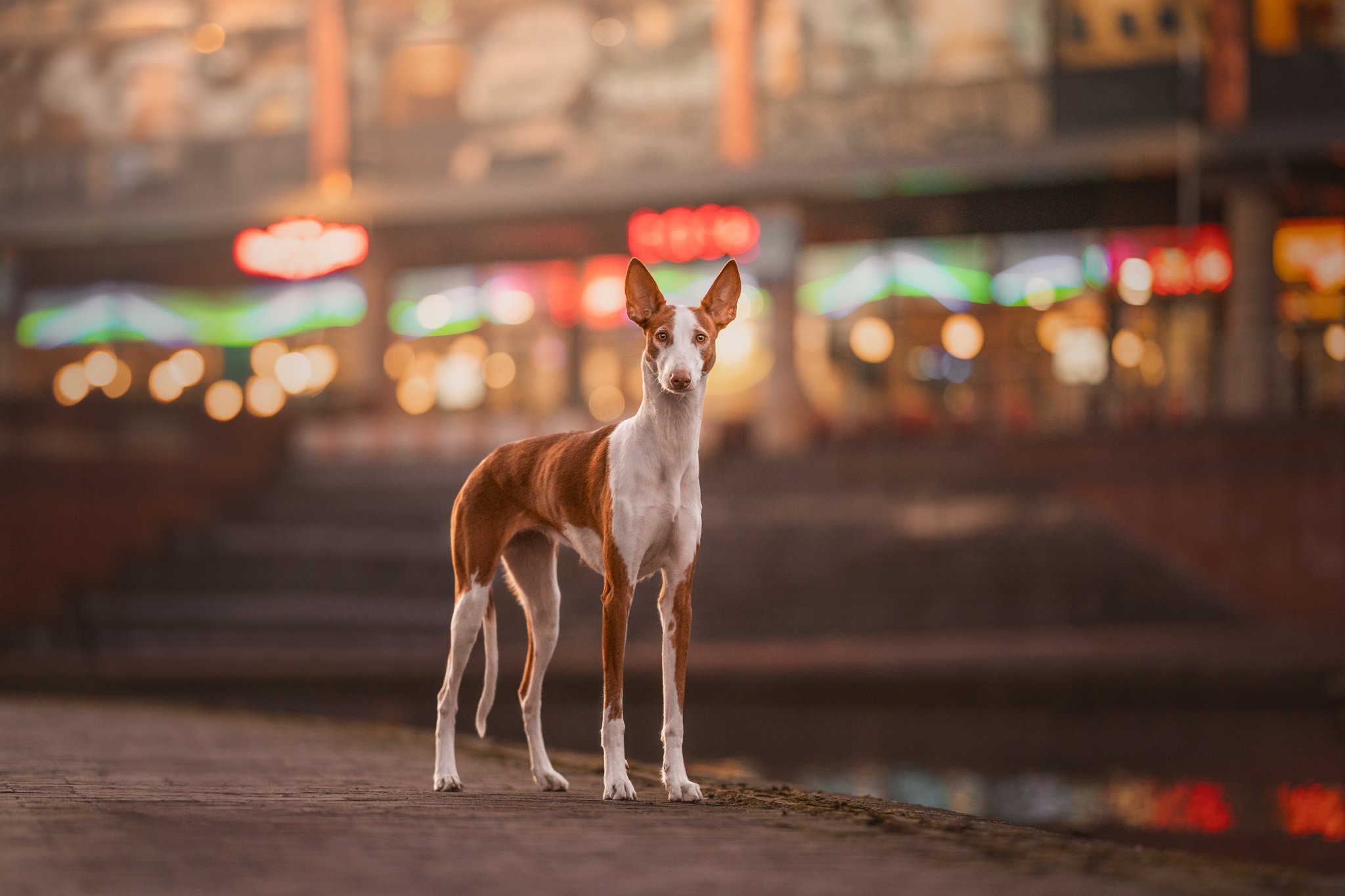
“City Lights” 2026 Portrait Outdoor, Honorable Mention Credit: Maddie Newton / Dog Photography Awards
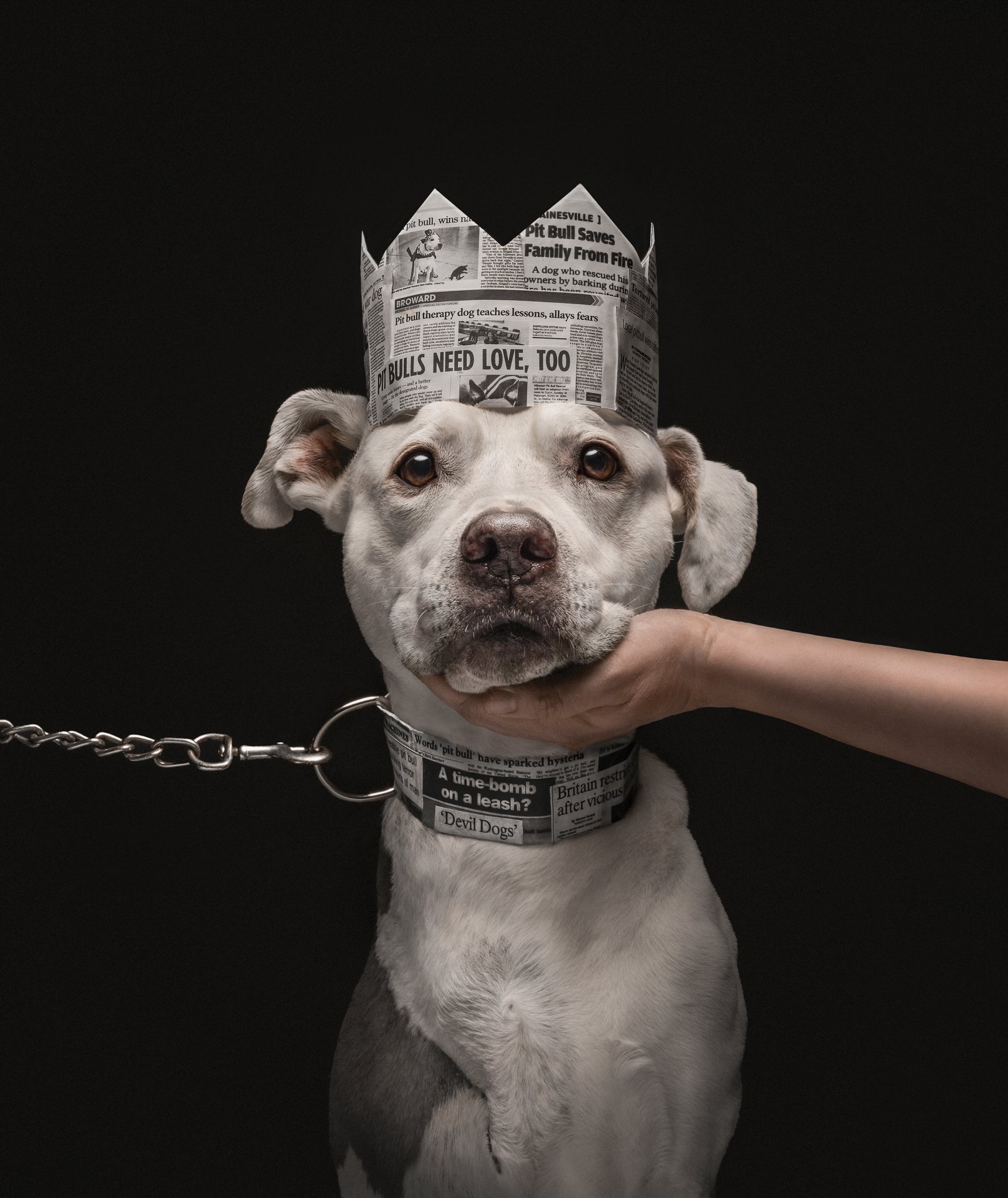
This year, Katie Brockman took the prestigious title of Dog Photographer of the Year. The St. Louis-based photographer’s winning entry, titled “Loved and Hated” (seen below), captures the duality of feelings around pitbulls and similar breeds.
“I started photography after my dog Caldwell ended up at the emergency vet on Christmas Eve 2020 for an obstruction surgery” Brockman said. “I suddenly realized that I didn’t have enough photos of him, and I wanted a way to document our adventures together. So I saved up for a camera, and in 2021, I officially started my dog photography journey.”
“Loved and Hated” Dog Photographer of the Year 2026 Credit: Katie Brockman / Dog Photography Awards
This year’s competition drew 1,900 entries from photographers in 50 countries. A judging panel of photographers, dog experts, and industry professionals decided on the winners. And when it comes to photographing dogs, aren’t we all winners?
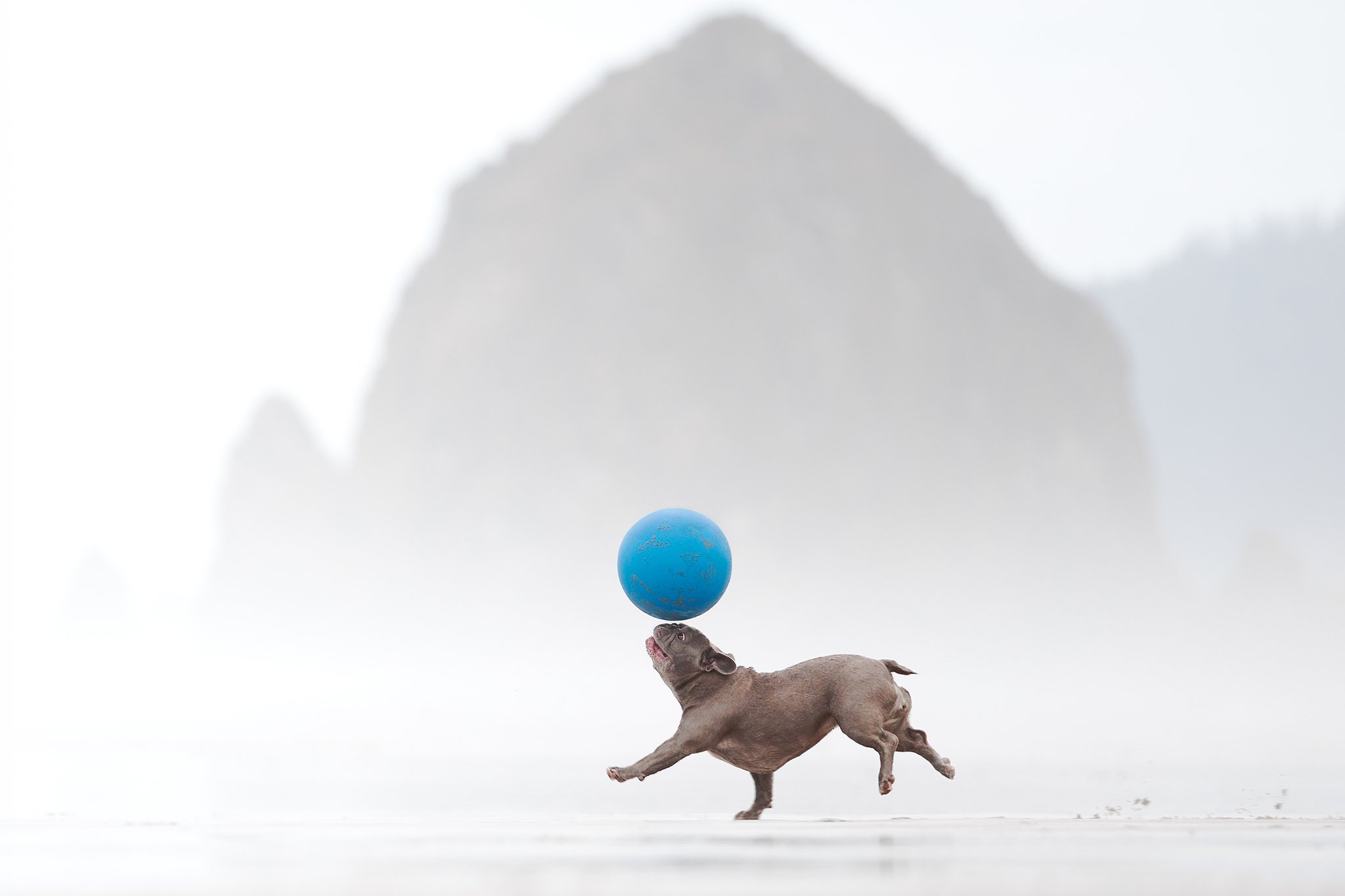
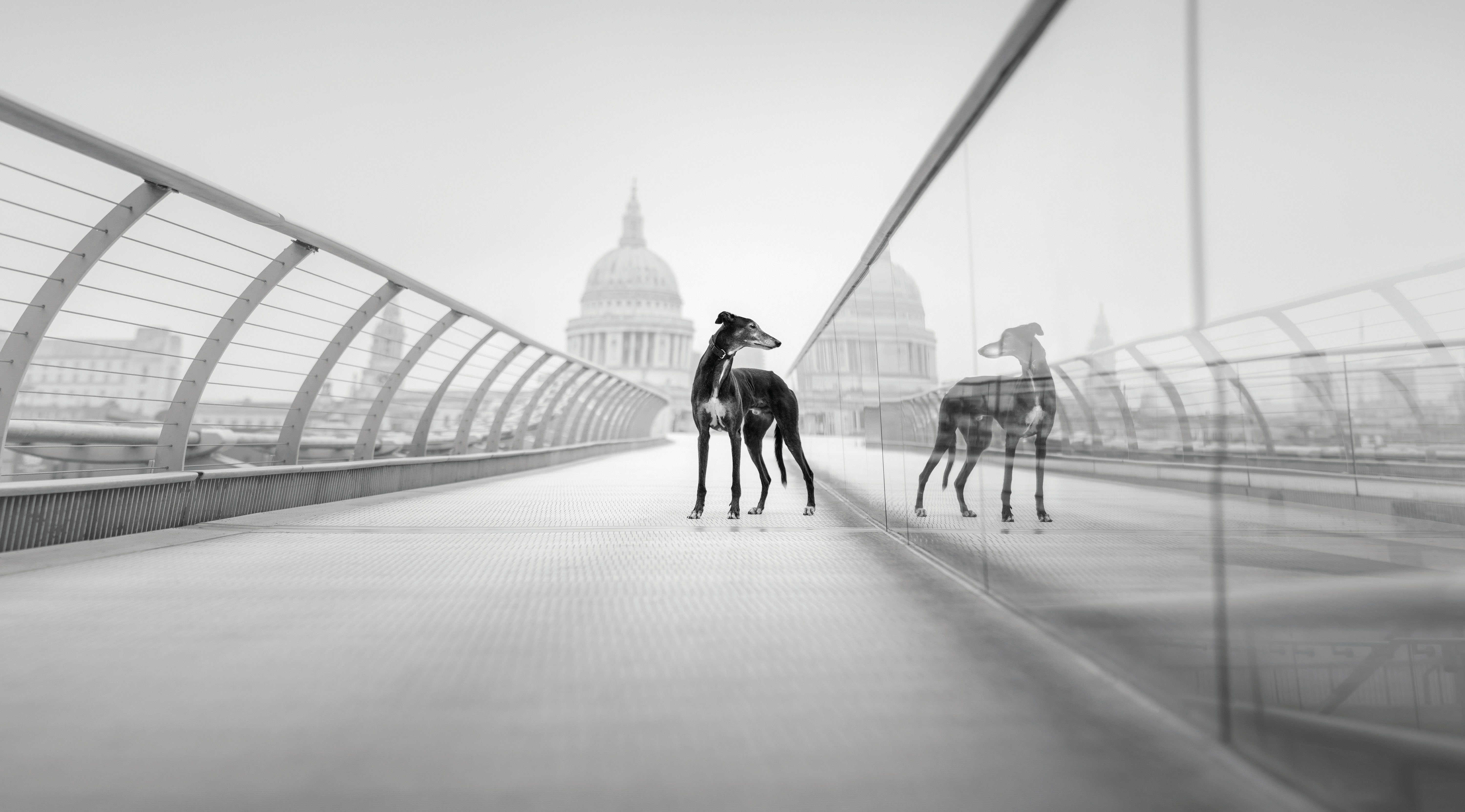
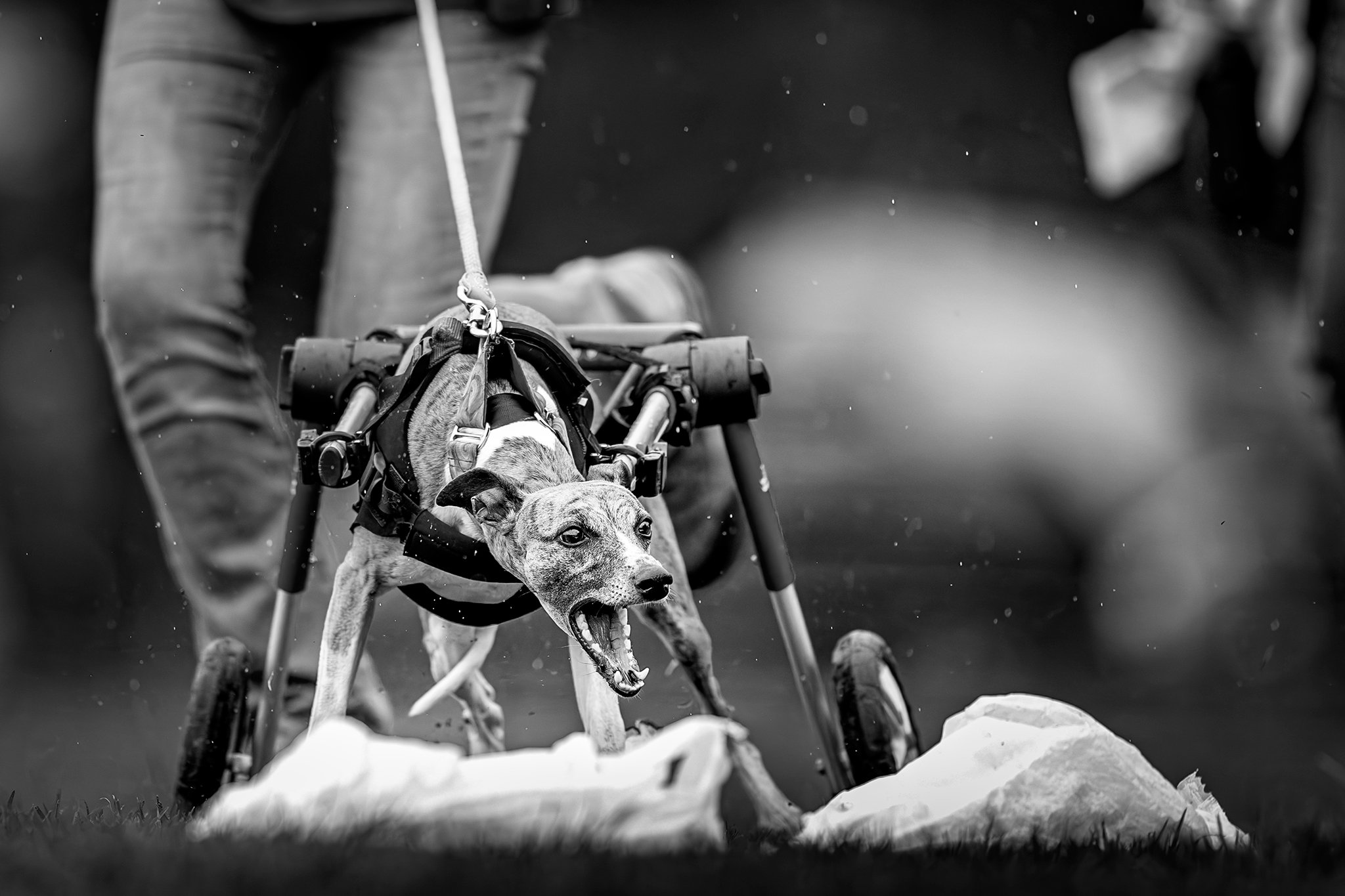
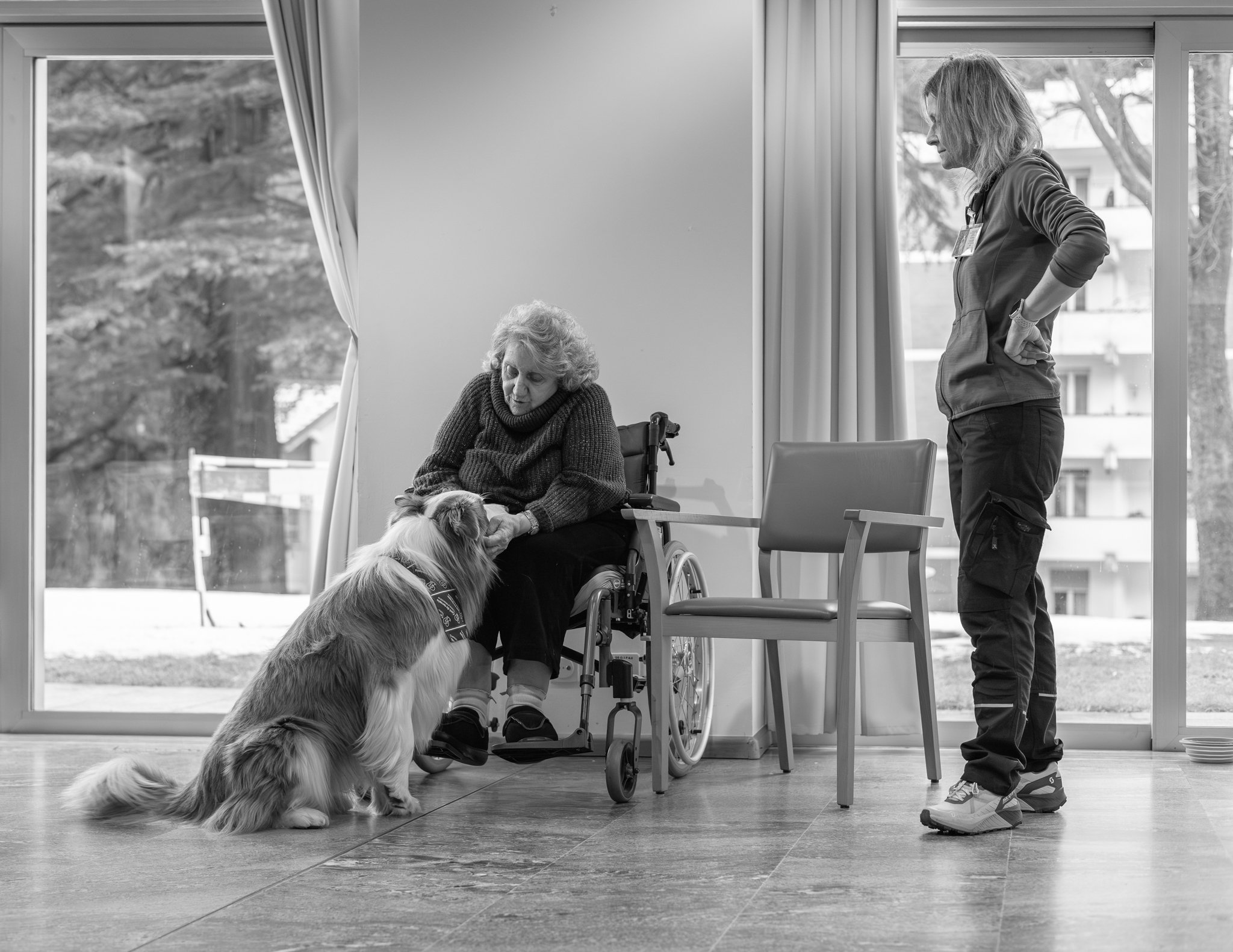
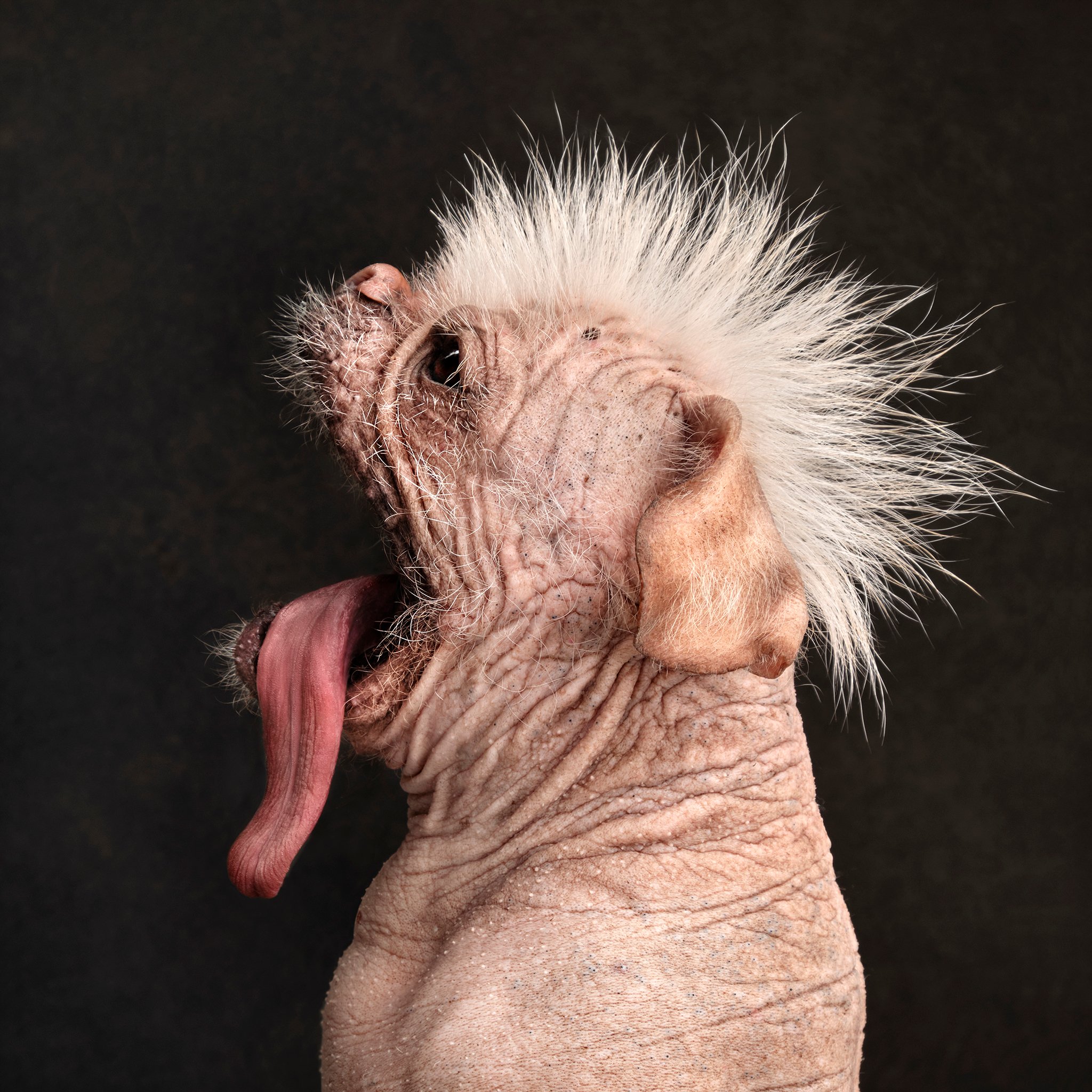
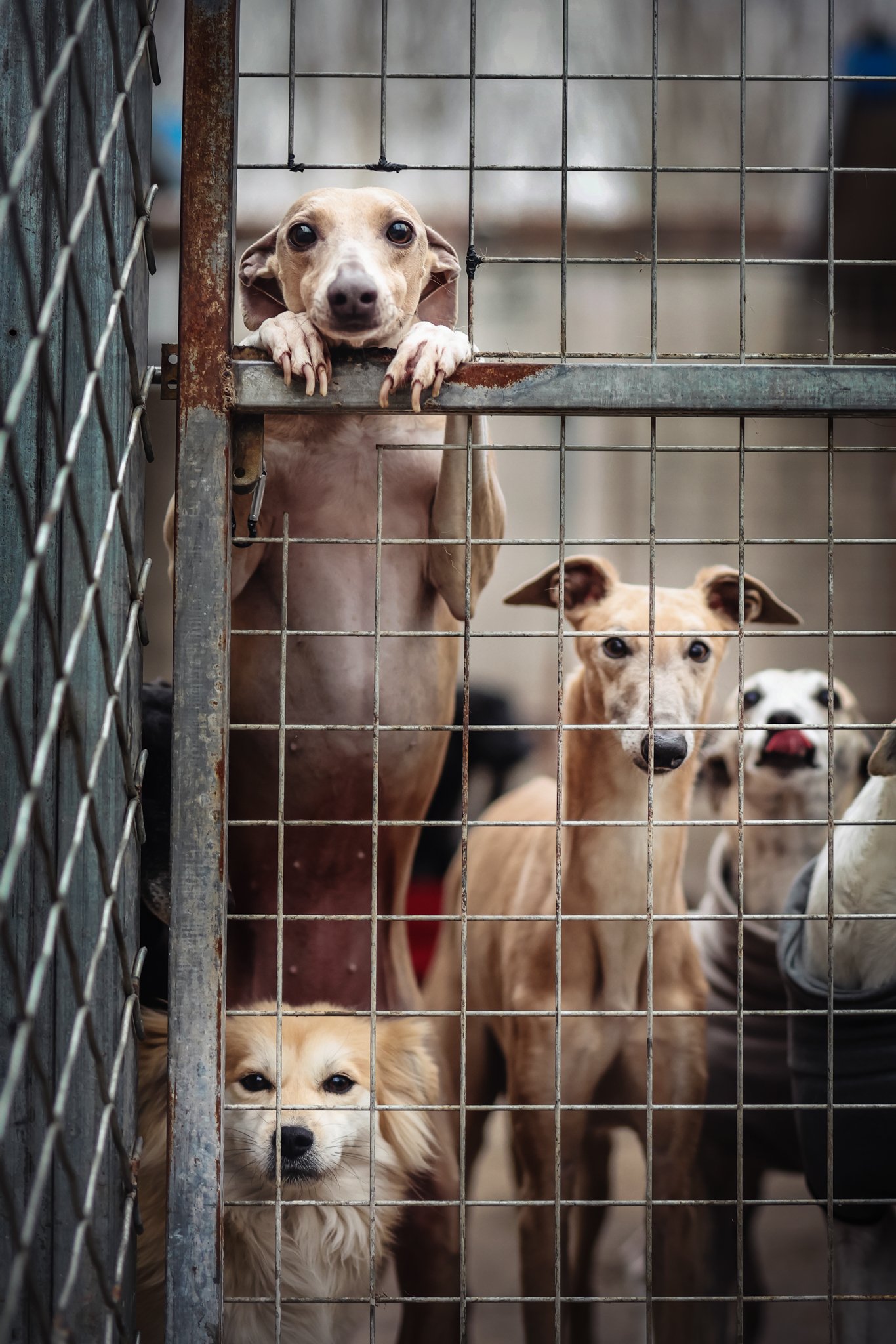
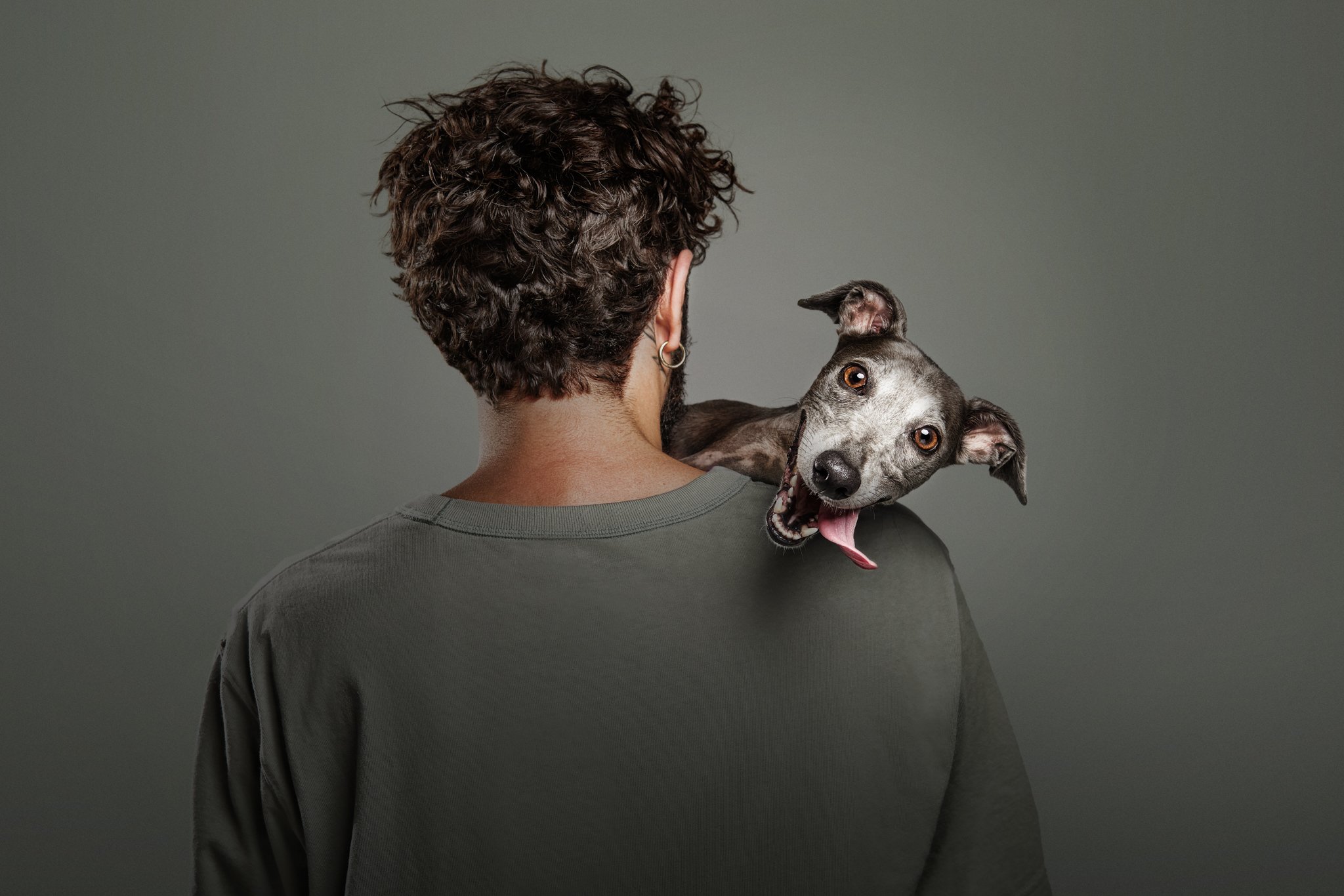
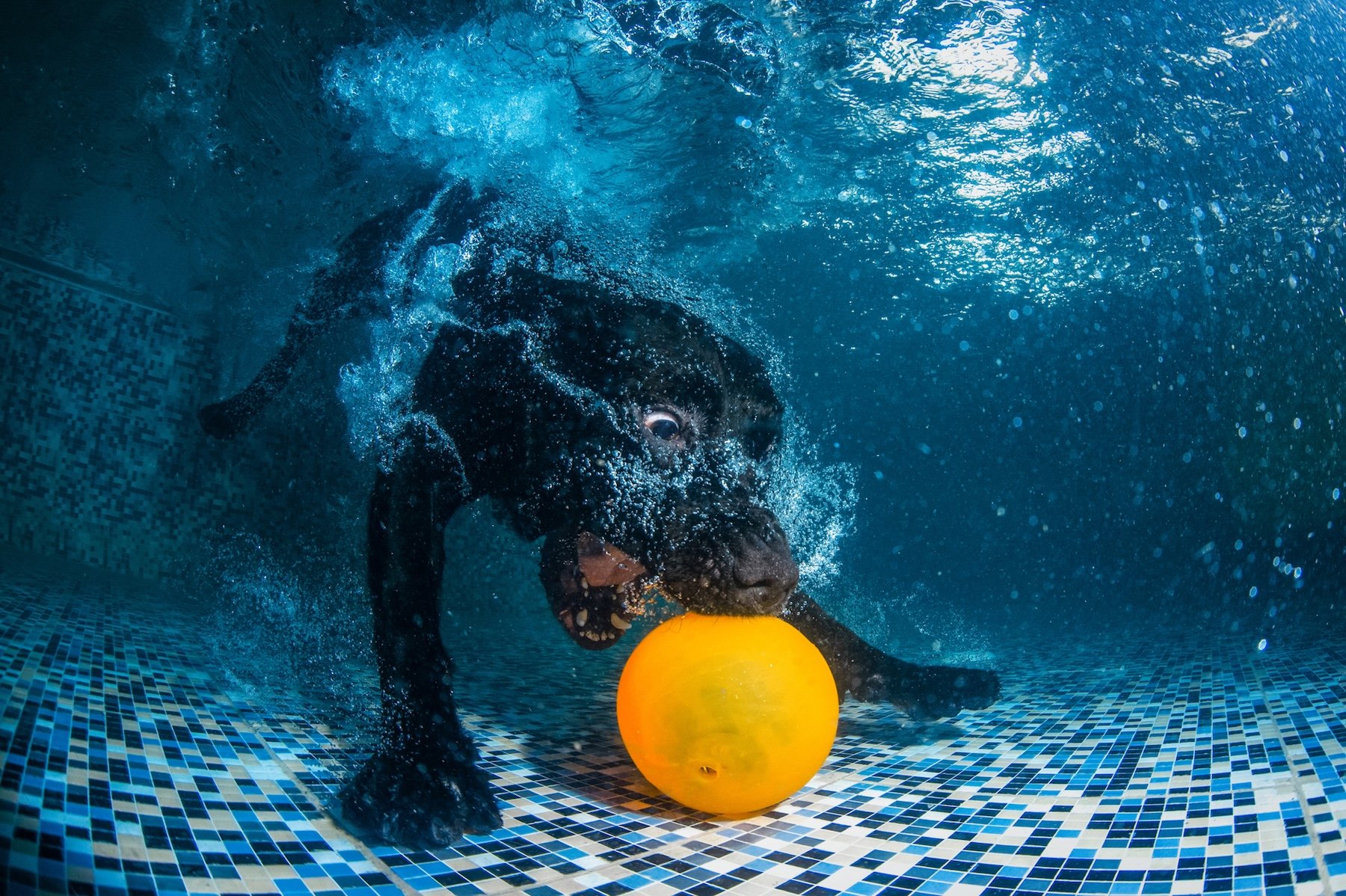
“Elegance Awaits” 2026 Portrait Outdoor, Honorable Mention Credit: Grace Fiselman / Dog Photography Awards“Mirror, Mirror” 2026 Portrait Outdoor, Honorable Mention Credit: Perdita Pretzl / Dog Photography Awards Henrik Spranz“Mission Balance” 2026 Action Category, 2nd Place Credit: Gavriella Leon / Dog Photography Awards“Beyond the Track” 2026 Portrait Outdoor Category Winner Credit: Elena Marchi / Dog Photography Awards Zeiss57“Chasing Beyond Limits” 2026 Documentary, Honorable Mention Credit: Jodie Grieve / Dog Photography Awards“Therapy Dogs in a Nursing Home” 2026 Documentary, Honorable Mention Credit: Jessica Mozzetti / Dog Photography Awards Jessica Mozzetti“Peggy” 2026 Studio Category, Honorable Mention Credit: Jane Thompson / Dog Photography Awards JANE THOMSON“Working as a Team” 2026 Documentary, Honorable Mention Credit: Rebecca Williams / Dog Photography Awards“Waiting” 2026 Documentary Category Winner Credit: Tianhang Zhang / Dog Photography Awards“The Weight of Connection” 2026 Dogs & People Category, 3rd Place Credit: Santos Ramón / Dog Photography Awards SANTOS ROMAN“Puppy’s Curiosity” 2026 Studio Category, Honorable Mention Credit: Sylvain Langler / Dog Photography Awards“Underwater Fetch” 2026 Action Category, Honorable Mention Credit: Tianhang Zhang / Dog Photography Awards
Around 1200 BC, the eastern Mediterranean fell apart. The great empires of the Bronze Age collapsed, many cities were destroyed or emptied, writing disappeared from much of the region, and long-distance trade shrank to almost nothing. Archaeologists call what came next the dark age, and the name is earned: with few texts and almost no […]
Hacia el año 1200 a.C. el mundo del Mediterráneo oriental se vino abajo. Cayeron los grandes imperios de la Edad del Bronce, se destruyeron o se vaciaron muchas ciudades, se perdió la escritura en buena parte de la región y el comercio a larga distancia se redujo a lo mínimo. Los arqueólogos llaman a lo […]
Mark Wahlberg, who once sank money into a gym chain that got kicked off the NYSE, is now building his own, and he promises you’ll get a cold plunge, a blood panel and a protein muffin without needing a trust fund.

 Login