When it comes to the mobile app heavyweights, few can beat WhatsApp. It’s estimated that around 3 billion people now use the cross-platform messaging tool at least once a month. And it’s important to remember there are only 8 billion or so people on the planet, so there are no signs of its popularity waning anytime soon.
Beyond being a hugely successful app, it’s also packed with features. You can use it to chat, make voice and video calls, share files, broadcast your location, and more. Even if you’ve used WhatsApp for years, you might not have discovered everything it’s capable of—which is where these tips come in.
1. Set a timer for messages to disappear
You don’t necessarily want everything you say on WhatsApp to be remembered forever, and the app includes a timer feature that will automatically expunge messages in a chat 24 hours, 7 days, or 90 days after they’re read, unless you specifically keep them. This is set on a chat-by-chat basis, and affects everyone in a conversation.
To change the setting for one of your chats, tap the contact or group name at the top of the screen, then pick Disappearing messages to select your time limit. This is applied until you turn it off or select a different period, but doesn’t affect the conversation history.
2. Lock away your most sensitive chats
Put certain chats behind a lock. David Nield
Another way of protecting sensitive information in chats is to add an extra lock to specific conversations. Even if someone should gain access to your phone and your apps, they won’t be able to see your locked chats.
From inside a conversation, tap the contact or group name at the top, then pick Chat lock (Android) or Lock chat (iOS). You can then use a specific PIN code to block access to the conversation, or use the same biometric scan technology (such as Face ID) that already protects your phone at the lock screen.
3. Edit a message after sending it
Have you noticed you can edit messages after sending them? It’s handy for those typos you only spot after dispatching a message—long-press on whatever you just sent, then tap the three dots and Edit (Android), or just Edit on the pop-up menu (iOS). Modified messages have an ‘Edited’ label visible to everyone in the chat, but they won’t be able to see what the original message said.
4. Stop specific contacts from seeing when you’re active
Take control of who sees your activity on WhatsApp. David Niel
WhatsApp can tell your contacts whether you’re currently using the app and when you were “last seen,” but this might not be information you want to share with everyone. As well as disabling the feature entirely, you can also turn it off for specific contacts.
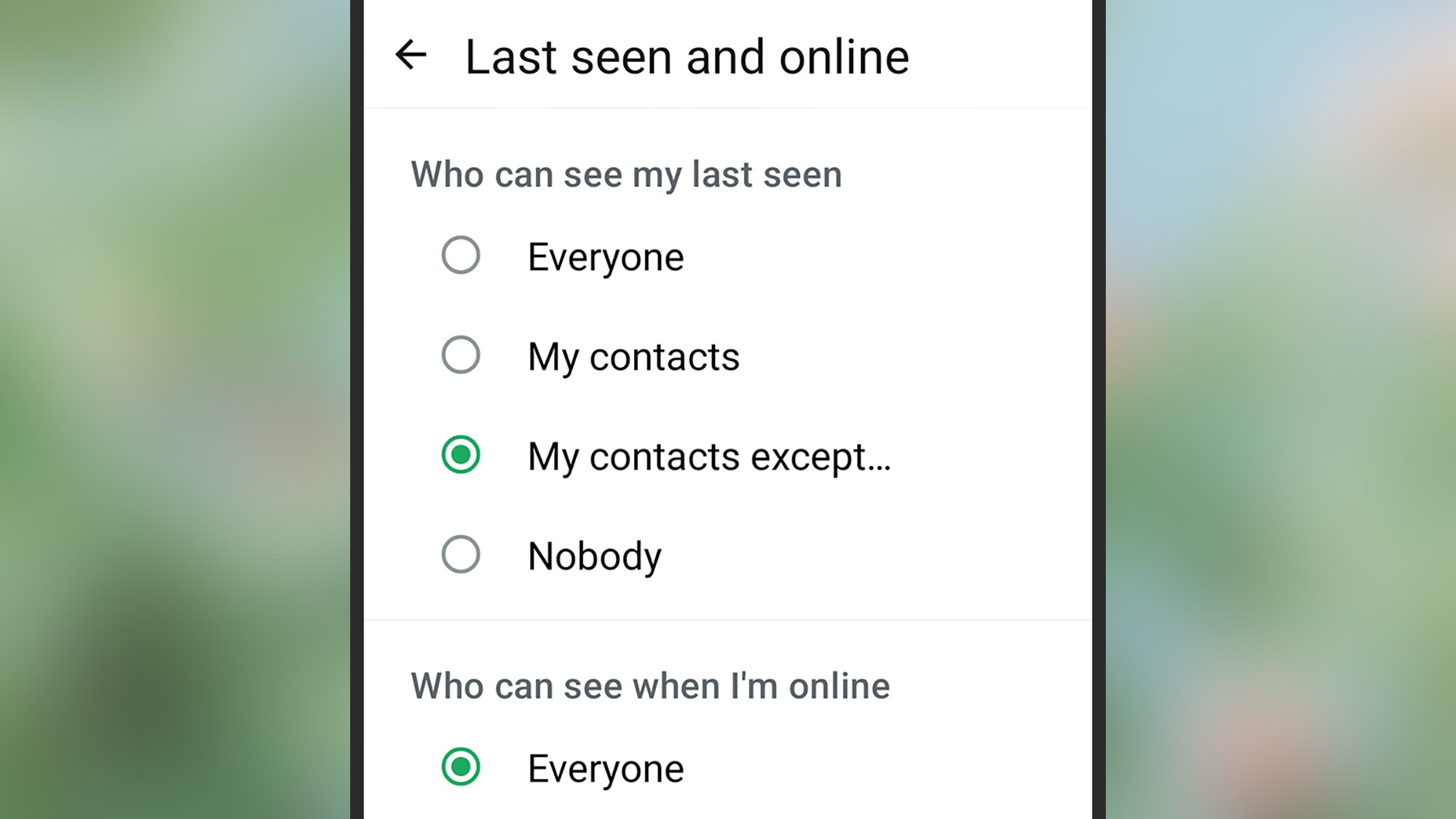
Open the You tab, then tap Privacy > Last seen and online, then select My contacts except … under the Who can see my last seen heading. You can then pick the contacts you don’t want to give this information to, and set the Who can see when I’m online option to match the same list.
5. Pin important messages you need to refer to or remember
Important details can quickly get lost in WhatsApp conversations, especially in busy group chats. But there is a way to pin specific messages to the top of the chat so they’re easy to get back to—someone’s address or the start time of an event, for example.
To pin a message on Android, long-press on it, then tap the three dots (top right) and Pin. On iOS, long-press a message and choose More > Pin. You can have up to three pinned messages per conversation, and select from three options for how long they’re pinned for: 24 hours, 7 days, or 30 days.
6. Give contacts their own notification sound
Your contacts can have their own alert sounds. David Nield
WhatsApp lets you assign specific notification sounds to specific contacts, which means you know who’s calling or messaging without picking up your phone. It gives you a better idea of whether something needs attention right away or can be safely ignored for a while.
Tap the group or contact name at the top of a chat, then pick Notifications and Notification tone or Ringtone to make changes. You can also select Vibrate to customize vibrations for each chat, though there are only four options here.
The option to mute the conversation is on the same screen—you can set mute separately for calls and messages.
7. Message yourself with notes and reminders
Not all messaging apps let you have a conversation with yourself, but WhatsApp does. This might seem like a rather pointless (and lonely) way of using the messaging app, but it can be really useful for jotting down things you need to remember on the go, leaving yourself voice notes of ideas and thoughts, and so on.
From the main conversation list, go to start a new chat, then search for “you” as the contact (or just enter your own username or phone number).
Sometime between 32,000 and 11,000 years ago, dogs domesticated. Since then, these four-legged friends have provided companionship, assistance, and protection for people. Whether you favor a squished-face potato dog or a determined and smart working dog, you likely understand how dogs got the designation of “man’s best friend.”
The Dog Photography Awards celebrate dogs of all shapes and sizes. The annual competition awards prizes across six categories (Studio, Action, Portrait, Dogs & People, Documentary, and Open) in addition to naming an overall winner.
“City Lights” 2026 Portrait Outdoor, Honorable Mention Credit: Maddie Newton / Dog Photography Awards
This year, Katie Brockman took the prestigious title of Dog Photographer of the Year. The St. Louis-based photographer’s winning entry, titled “Loved and Hated” (seen below), captures the duality of feelings around pitbulls and similar breeds.
“I started photography after my dog Caldwell ended up at the emergency vet on Christmas Eve 2020 for an obstruction surgery” Brockman said. “I suddenly realized that I didn’t have enough photos of him, and I wanted a way to document our adventures together. So I saved up for a camera, and in 2021, I officially started my dog photography journey.”
“Loved and Hated” Dog Photographer of the Year 2026 Credit: Katie Brockman / Dog Photography Awards
This year’s competition drew 1,900 entries from photographers in 50 countries. A judging panel of photographers, dog experts, and industry professionals decided on the winners. And when it comes to photographing dogs, aren’t we all winners?
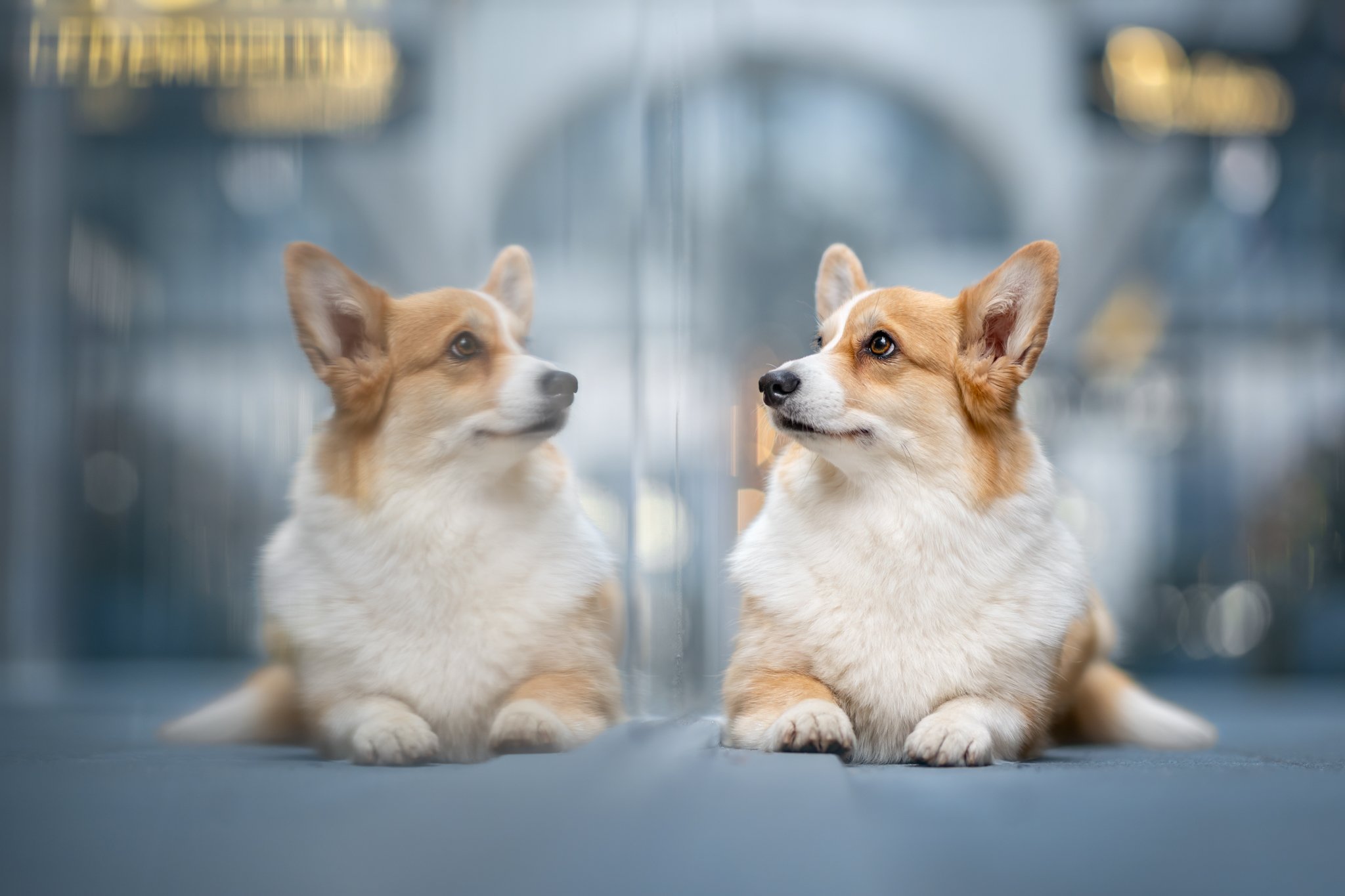
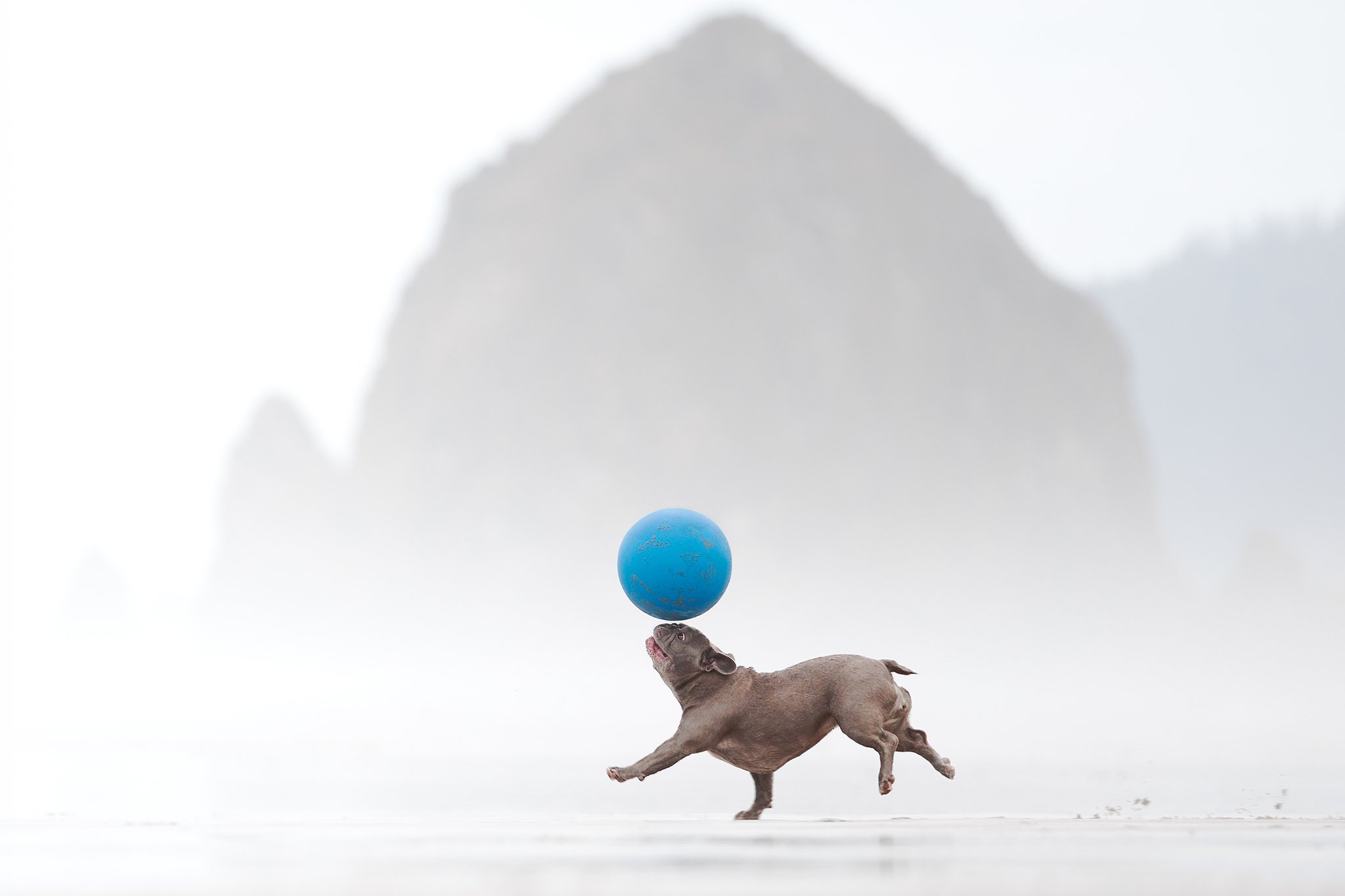
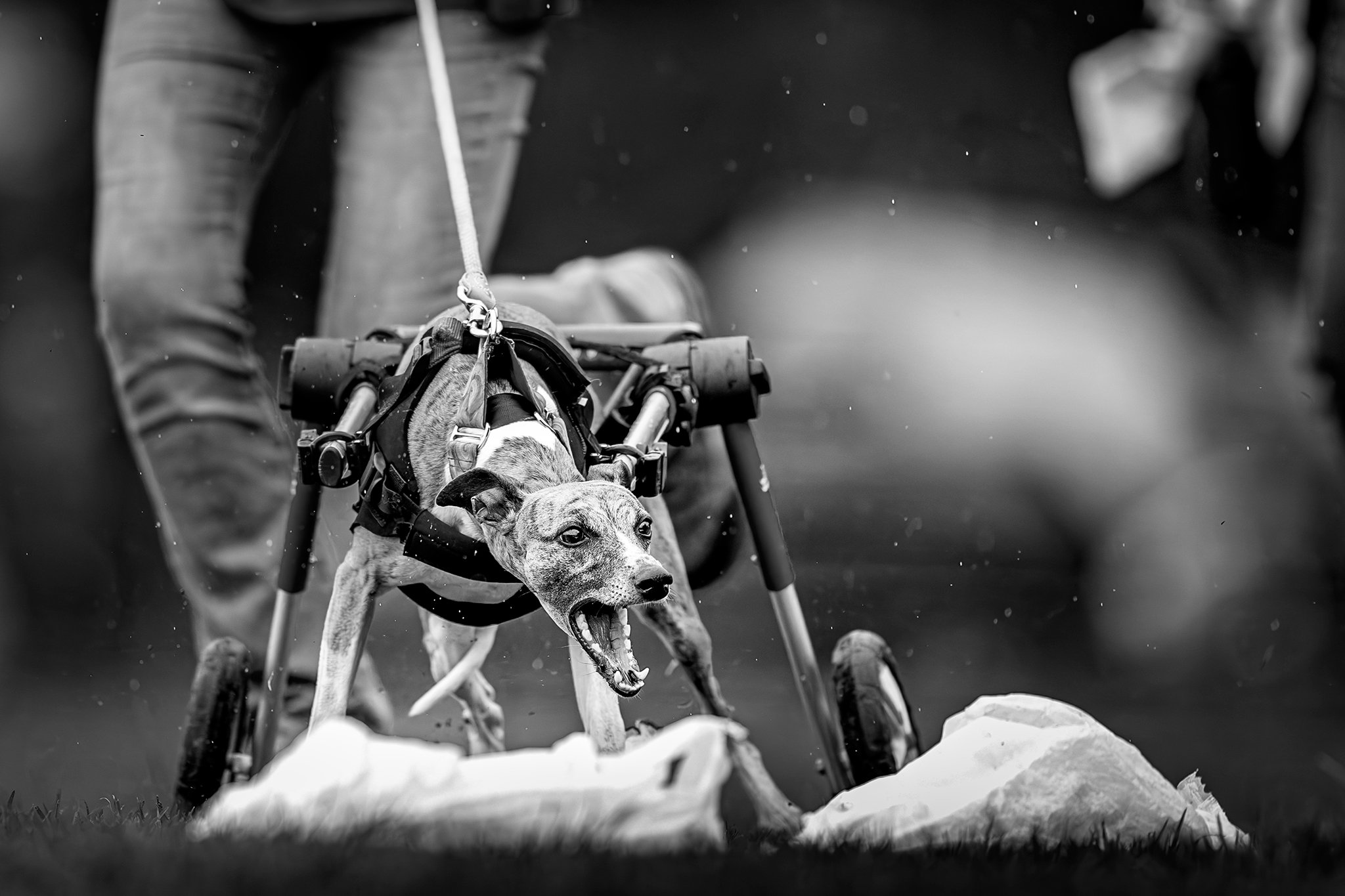
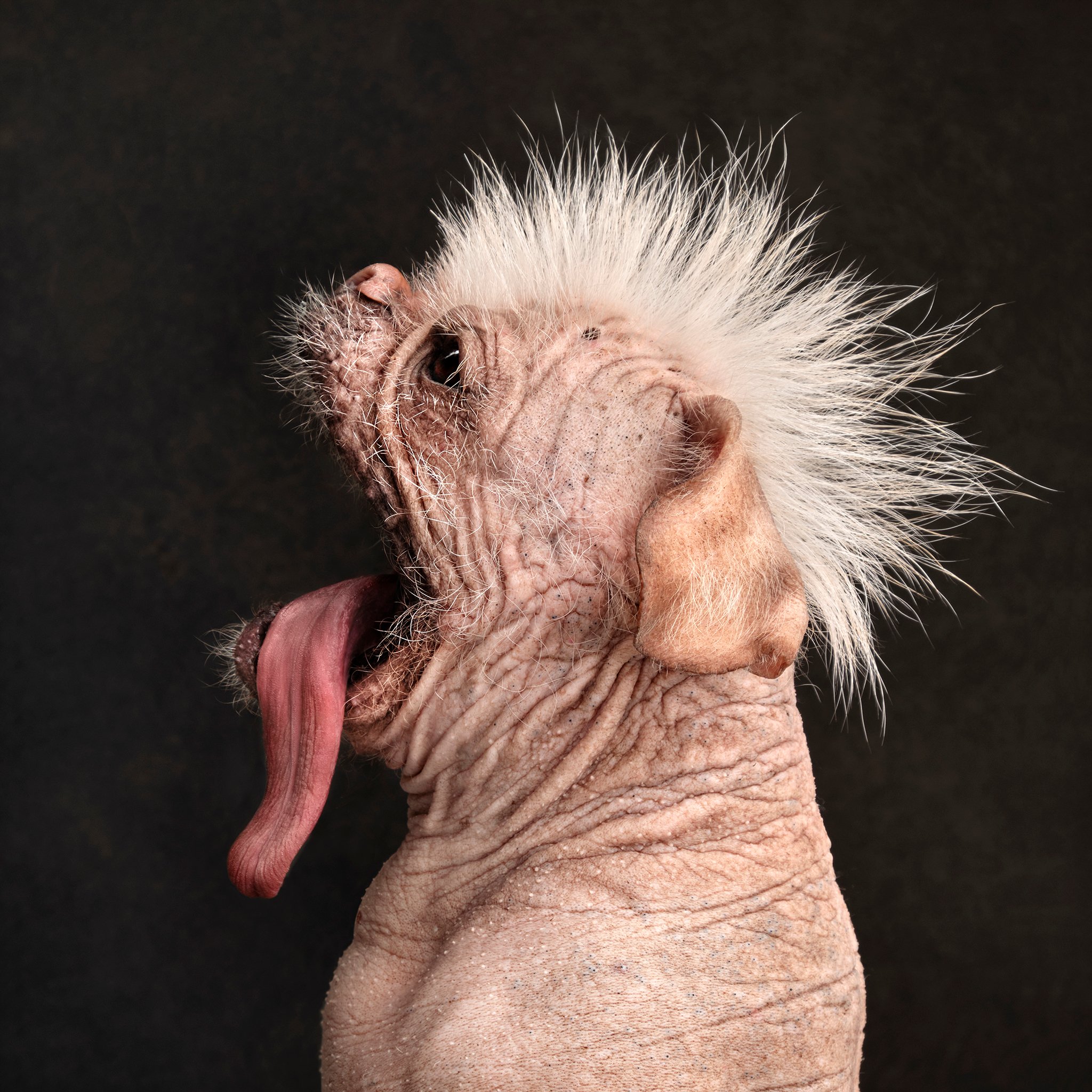
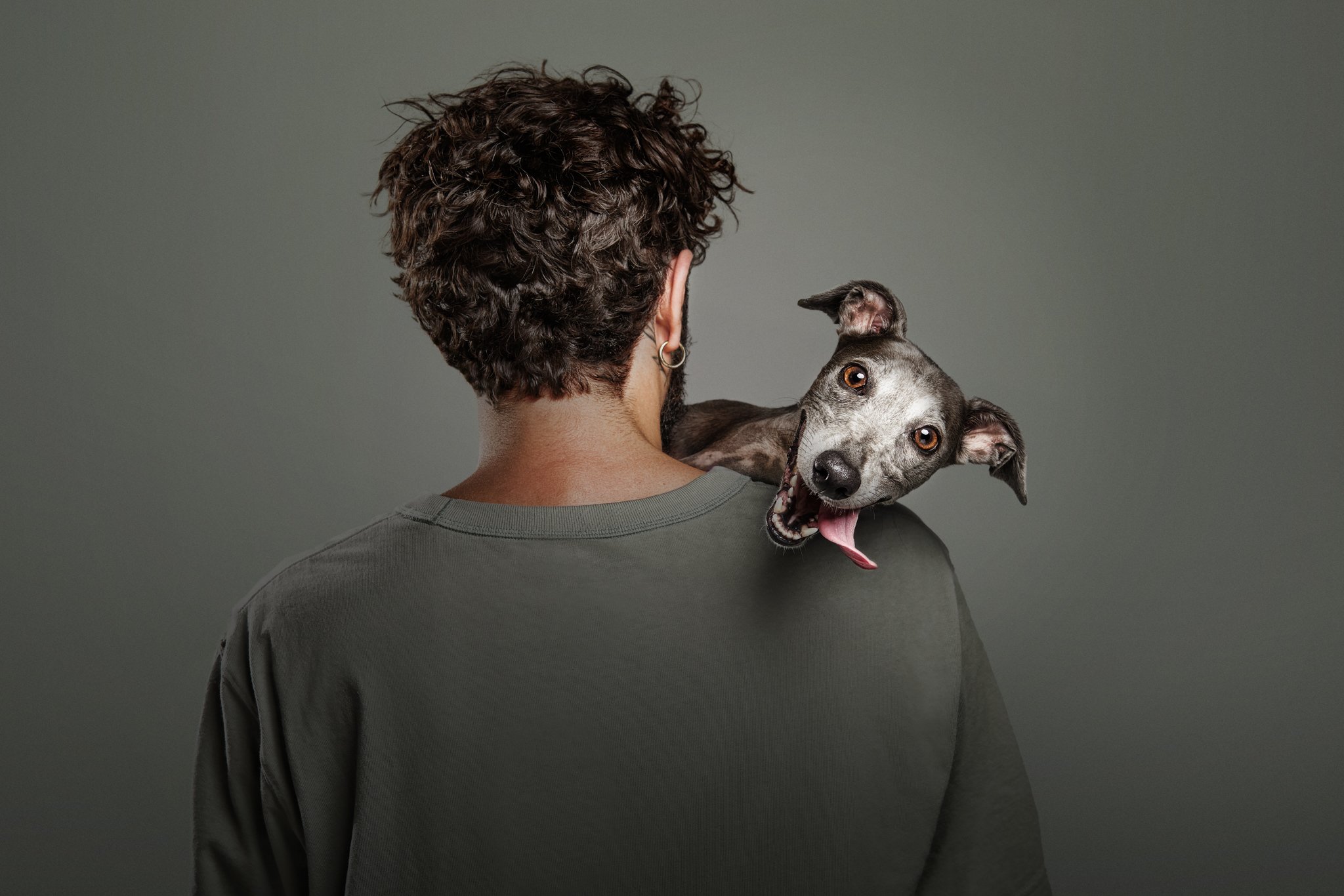
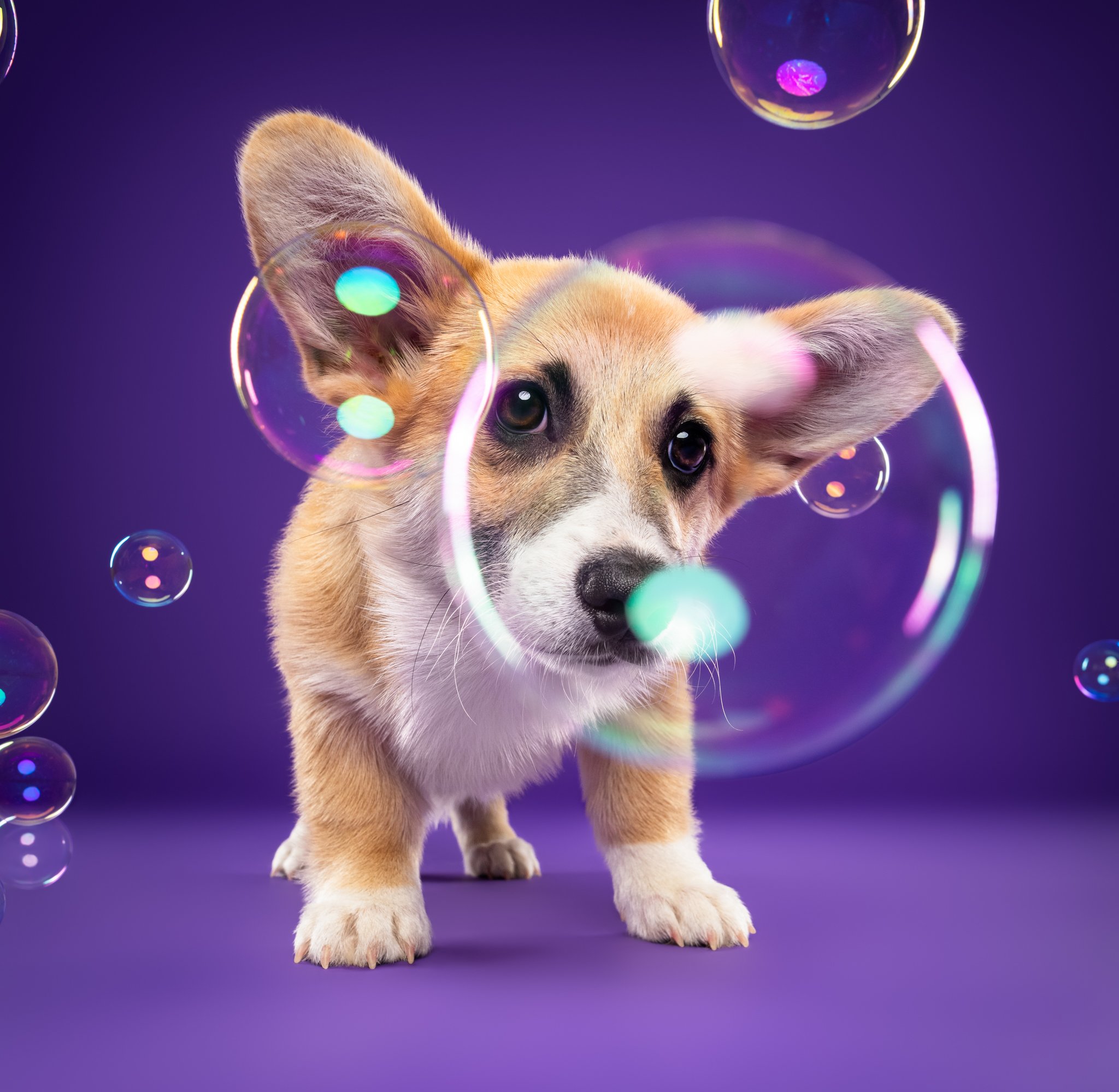
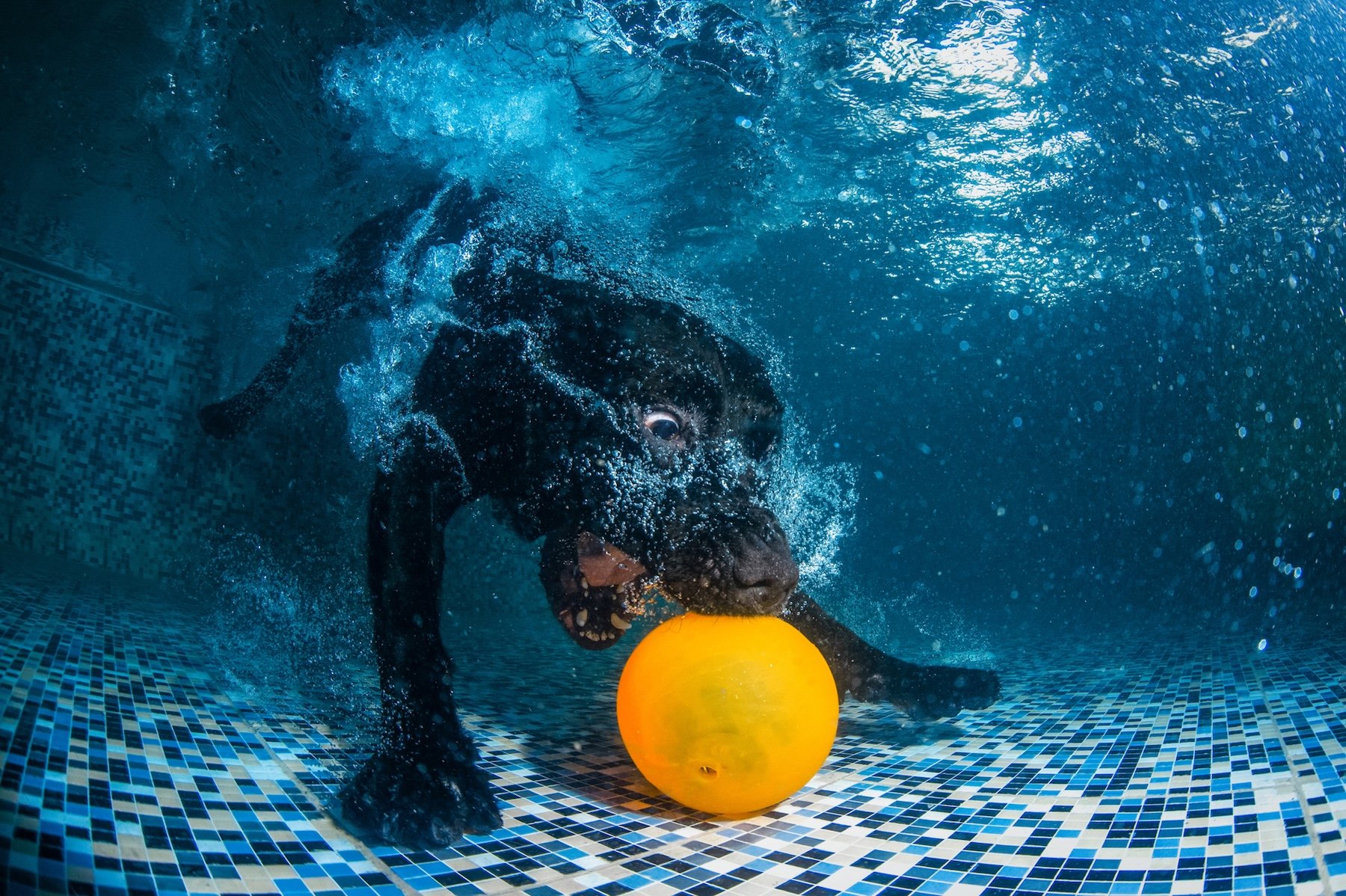
“Elegance Awaits” 2026 Portrait Outdoor, Honorable Mention Credit: Grace Fiselman / Dog Photography Awards“Mirror, Mirror” 2026 Portrait Outdoor, Honorable Mention Credit: Perdita Pretzl / Dog Photography Awards Henrik Spranz“Mission Balance” 2026 Action Category, 2nd Place Credit: Gavriella Leon / Dog Photography Awards“Beyond the Track” 2026 Portrait Outdoor Category Winner Credit: Elena Marchi / Dog Photography Awards Zeiss57“Chasing Beyond Limits” 2026 Documentary, Honorable Mention Credit: Jodie Grieve / Dog Photography Awards“Therapy Dogs in a Nursing Home” 2026 Documentary, Honorable Mention Credit: Jessica Mozzetti / Dog Photography Awards Jessica Mozzetti“Peggy” 2026 Studio Category, Honorable Mention Credit: Jane Thompson / Dog Photography Awards JANE THOMSON“Working as a Team” 2026 Documentary, Honorable Mention Credit: Rebecca Williams / Dog Photography Awards“Waiting” 2026 Documentary Category Winner Credit: Tianhang Zhang / Dog Photography Awards“The Weight of Connection” 2026 Dogs & People Category, 3rd Place Credit: Santos Ramón / Dog Photography Awards SANTOS ROMAN“Puppy’s Curiosity” 2026 Studio Category, Honorable Mention Credit: Sylvain Langler / Dog Photography Awards“Underwater Fetch” 2026 Action Category, Honorable Mention Credit: Tianhang Zhang / Dog Photography Awards
Around 1200 BC, the eastern Mediterranean fell apart. The great empires of the Bronze Age collapsed, many cities were destroyed or emptied, writing disappeared from much of the region, and long-distance trade shrank to almost nothing. Archaeologists call what came next the dark age, and the name is earned: with few texts and almost no […]
Hacia el año 1200 a.C. el mundo del Mediterráneo oriental se vino abajo. Cayeron los grandes imperios de la Edad del Bronce, se destruyeron o se vaciaron muchas ciudades, se perdió la escritura en buena parte de la región y el comercio a larga distancia se redujo a lo mínimo. Los arqueólogos llaman a lo […]
Mark Wahlberg, who once sank money into a gym chain that got kicked off the NYSE, is now building his own, and he promises you’ll get a cold plunge, a blood panel and a protein muffin without needing a trust fund.
Masad said the decision was made for a number of different reasons, including cost. Replit announced a partnership with OpenAI in August, but there was never any indication that it was no longer with Anthropic.
On October 16, the National Park Service (NPS)announced the latest additions to a growing list of designated World War II Heritage Cities. The park service began the program in 2020, as a way to honor local ties to history. Officials have since celebrated locations across 46 states and two territories, but there are many more places worthy of distinction.
The10 new cities and counties announced today span Alaska all the way to the U.S. Virgin Islands.
“These designations highlight the enduring legacy of service, sacrifice, innovation, and industrial achievement…and continue to shape our national story,” NPS Jessica Bowron said in a statement.
According to Bowron, this year’s selections include hubs for military manufacturing, training facilities, and logistical centers integral to Allied campaigns. In Aurora, Colorado, Fitzsimons General Hospital cared for wounded returning service members, while the city of Pendleton, Oregon, featured an airfield that trained B-25 crews that later participated in the Doolittle Raid. Meanwhile, South Charleston, West Virginia’s Naval Ordinance Plant supplied invaluable inventories and was largely staffed by local women and Black workers.
A full list of the latest entrants can be found below:
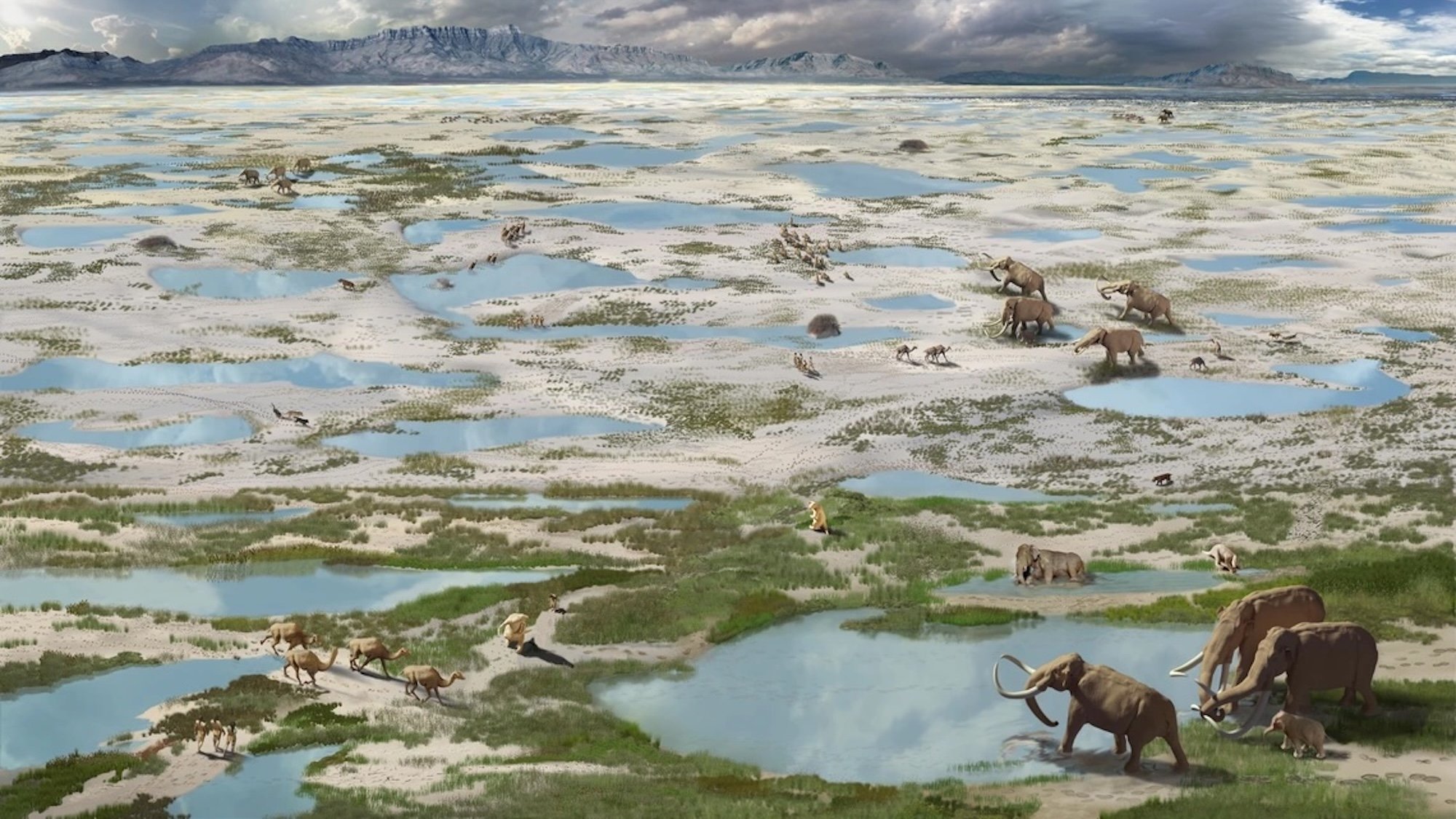
An extensive new analysis further confirms the oldest known human footprints in North America date back to the last ice age (about 23,500–21,700 years). To pinpoint their origins, researchers at the University of Arizona relied on cutting-edge methods at the United States Geological Survey (USGS) Radiocarbon Laboratory to examine hundreds of thousands of prehistoric pollen grains extracted from the tracks. According to researchers writing this week in the journal Science Advances, the team can even describe some of the dramatic environmental fluctuations experienced by these prehistoric humans within a single generation.
New Mexico’s White Sands National Park contains more than stunning vistas and desert dunes. It’s also home to one of the most controversial (and consequential) prehistoric discoveries of the last century. In 2006, archaeologists located footprints inside a dry lakebed that they later determined to be the earliest evidence of humans in North America. But there was a problem. Until then, researchers largely agreed that the first humans migrated into the continent about 16,000–12,000 years ago via Beringia, the subcontinent once connecting Alaska to Russia.
However, the White Sands footprints were estimated to be around 23,000 years old. That implied a sustained human presence on the continent at least seven millennia earlier than expected. Various archeological camps continued debating the true age of the White Sands footprints for years, while others cited similar—and sometimes older— sites in both North and South America. Meanwhile, the dry lakebed’s rarely seen geological conditions allowed researchers like University of Arizona geoscientist Jessica Tierney to learn more than each footprint’s age.
“The White Sands sediments are unique in that they allow us to reconstruct environmental conditions during the last ice age at a very high temporal resolution, so that we can see fluctuations that were relevant for the humans present at that time,” Tierney said.
Combining geochemical sediment signatures with the fossilized pollen, researchers accurately determined ancient regional details such as plant distribution, precipitation, temperature, and aridity. They soon learned that the humans who made the White Sands footprints would have experienced incredibly dramatic environmental shifts within their own lifetimes. Within only a few decades, the surrounding conifer forests transformed into plains covered with oak and sage. Lake Oterio, a giant body of water that once covered New Mexico’s national park, fluctuated in size for about 1,500 years until it receded completely. Although these shifts were large, they actually closely followed similar global climate changes at the time.
“And throughout that whole sequence, people were walking there, leaving their tracks alongside those of mammoths, giant sloths and dire wolves,” added Tierney.
Amulya Vishwanath, who spent seven years leading product marketing for NVIDIA’s robotics platforms, says robotics is currently in its “Lego era,” with the basic building blocks like actuators, robotic hands, software, and safety standards still being rebuilt. This view runs counter to those who believe that robotics, powered by a general foundation model, is about to have […]
Nathan Fielder's documentary about disgraced Theranos CEO Elizabeth Holmes has created a constellation of colliding personas that interrogate the very nature of authenticity.
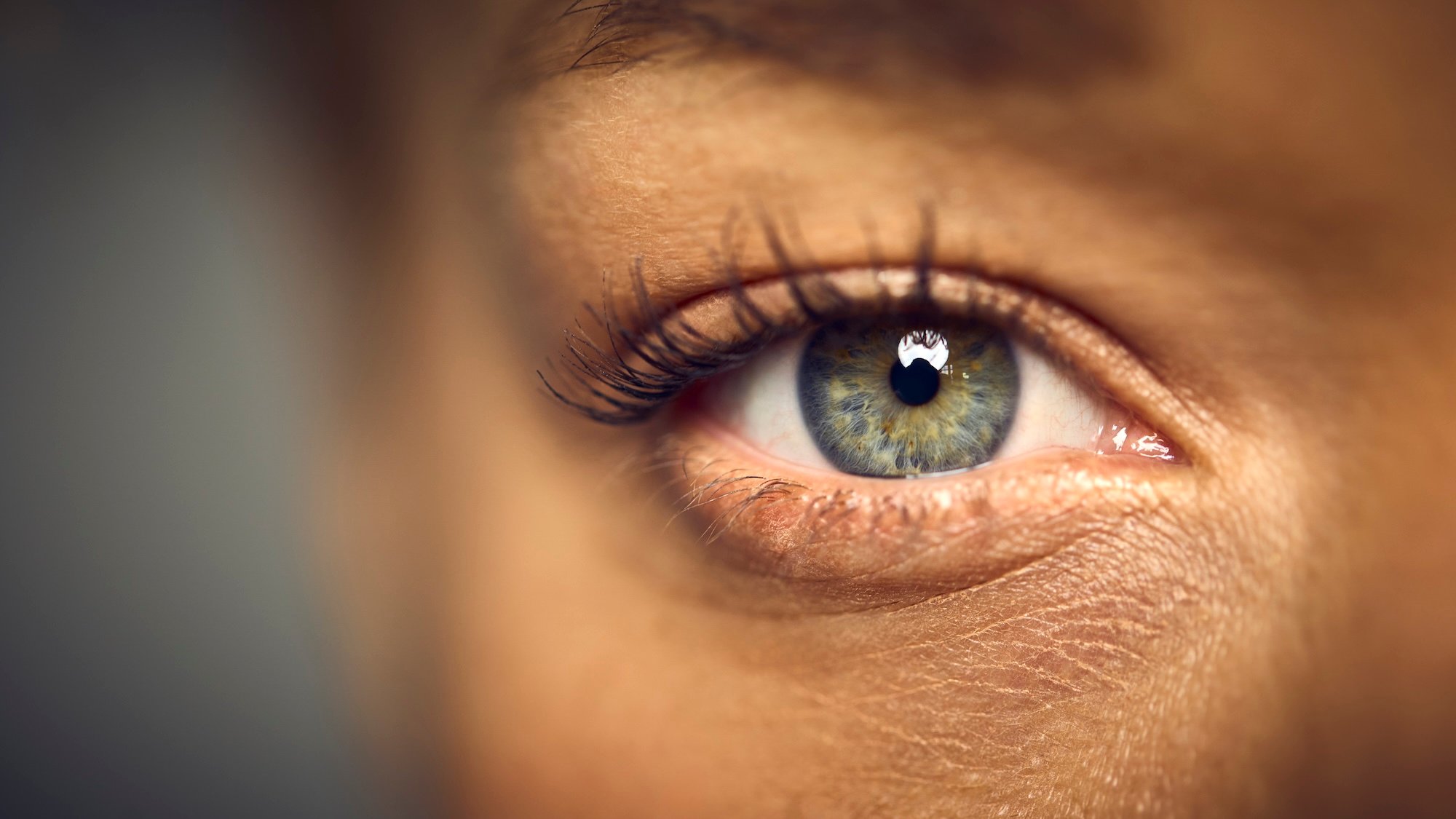
Your eyes really can betray your thoughts, but don’t get too self-conscious about it. Researchers in Japan believe that the subtle signs our eyeballs make are more useful to neuroscientists than the interrogation room. Based on their findings recently published in the journal iScience, examining the difference physiological responses from “inner” versus “overt” speech may help us better understand everything from linguistic development in children to the efficacy of silent pep talks.
To learn more, a team at the University of Tsukuba in Honshu enlisted dozens of volunteers for a series of simple counting exercises. After observing the participants at rest while thinking about nothing in particular for a control, researchers then asked them to count sequentially (1, 2, 3…), in number-subject combinations (one dog, two dogs…), and in specific intervals (1, 3, 5…). They also completed each task both silently and aloud. In each phase, the team carefully monitored their pupil dilation.
The results were subtle, but striking. Participants’ pupils dilated during each overt speech task, but this same muscle movement depended across each inner speech directive. Pupils constricted while volunteers silently counted sequentially, dilated for interval counting, and didn’t change at all for number-subject counting. But regardless of the inner speech task, pupil size changes were always smaller than they were during overt speech.
“The results of the present study do not support the initial assumption that inner and overt speech produce equivalent pupillary responses,” the team summarized. “Across the three experiments, overt speech consistently elicited pupil dilation, whereas inner speech did not.”
This collective data indicates that our inner speech isn’t simply the nonverbal counterpart to talking aloud. Instead, it’s a form of communication that appears to correspond to lower levels of brain arousal. If true, measuring pupil dilation may become a valuable tool when attempting to assess internal language and thinking. This could be particularly useful for studying language development in young children and infants who can’t properly describe their experiences to adults yet.
Many of the cutest animals on Earth have one appendage in common. Whether you’re thinking of an adorable raccoon, a kitten, or a puppy, it’s hard to imagine them without their fluffy tail. In fact, the overwhelming majority of animals have tails. Only a select few, like us humans, don’t have an external tail.
Sarah Durn: Think of some of the cutest animals you know, a puppy, a kitten, maybe a little red panda. Now, picture them without their tails.
It’s weird, right?
Tails are such a normal part of the animal world that we barely think about them, and they’re not just adorable accessories.
A kangaroo uses its big muscular tail to help it balance. Opossums can use their tails to grip branches. Fish use theirs to propel them through the water. And your dog can communicate an entire emotional journey with just a few well-timed wags.
Tails can help animals climb, swim, steer, balance, communicate, even swat away an annoying bug.
So what happened to ours? Because humans are part of a huge evolutionary family where tails are basically standard equipment.
We even briefly start developing a tail when we’re embryos. But look behind you now, and unless something has gone very unexpectedly, you probably don’t have one.
And neither do chimpanzees, gorillas, orangutans, or any of our other ape relatives. So somewhere deep in our evolutionary past, our ancestors lost their tails. But why? And what would life be like if we still had them?
No question is too simple or too out there. I’m Sarah Durn, an editor at Popular Science.
Annie Colbert: And hi, I’m Annie Colbert, editor-in-chief
SD: Here at PopSci, we’re always pondering quirky questions
AC: And this week we’re wondering: Why don’t humans have tails? Because tails are everywhere in the animal kingdom.
SD: And they’re incredibly useful. Beavers use their big flat tails to help maneuver through the water. Some monkeys can basically use their tails like an extra limb, wrapping them around branches as they climb. And rattlesnakes, of course, turn theirs into a built-in warning system
AC: So what happened to ours? Did we just lose them somewhere?
SD: Well, technically, humans never lost them.
AC: Okay.
SD: But that said, we have to go way back in our family tree, tens of millions of years back, to find out why our butts don’t have tails anymore.
AC: I’m guessing the answer isn’t because of pants?
SD: No, you are correct. This goes way beyond pants. We’re talking back to a time when our ancient ape ancestors were still hanging out in trees
AC: So when did tails disappear then? And more importantly, why would you want to give up a perfectly good tail?
SD: That’s the big question because for lots of animals, tails are incredibly useful for balance. But the way our ancient ape ancestors moved through the trees may have actually made a tail kind of pointless.
AC: So evolution really said, “We’re not using this anymore, so just get rid of it.”
SD: Yeah, pretty much. And later we’re going to get into what those ancient apes looked like and why their particular style of tree climbing may have made tails more trouble than they’re worth.
AC: And naturally, we also have to ask the important question: Would life actually be better if humans still had tails?
SD: I have some thoughts.
AC: Same. Many thoughts.
Now, before we swing into our evolutionary past, we want to know what questions are circling in your brain hole. If there’s something you’ve always wanted to know, submit your questions by clicking the “Ask Us” link at popsci.com/ask.
Again, that’s popsci.com/ask and click the “Ask Us” link
SD: We can’t wait to hear your questions
AC: We’ll be back right after this quick break to find out how humans ended up on team no tail.
SD: And stick around to the end because we’ll be joined by Science Friday host Flora Lichtman to discuss what makes a really good tail and whether she’d want one herself.
And we’re back. Okay, Annie, before this episode, how much time have you spent thinking about your tail?
AC: Absolutely none. I can confidently say I have never yearned for a tail.
SD: Yeah. No, I mean, neither have I, but I have spent a lot of time thinking about my tailbone.
AC: Uh-oh, where is this going?
SD: Yeah. Uh, a couple years ago, I was walking my Saint Bernard, Poochie, when he caught a whiff of something and took off. And me, trying to be a responsible dog walker, tried to hold onto the leash.
AC: Oh no.
SD: Yes, yes, yes. Safe to say Poochie, the Saint Bernard, won, and I fell straight onto my butt.
AC: Oh, Sarah. Ouch
SD: Yes, it was un-ideal. I ended up bruising my tailbone pretty bad.
AC: Mm.
SD: And unfortunately for me, this happened about a week before I left for a two-week long trip to Italy.
AC: Oof.
SD: Rome, Pompeii, the Colosseum, the Amalfi Coast, Puglia, all while carrying a little donut butt pillow everywhere I went.
AC: Oh my.
SD: Sometimes I even wore it as a hat.
AC: I mean, obviously.
SD: You know, sun protection is important.
AC: Crucial.
SD: Yeah, so I have actually spent a bit of time thinking about and cursing our teeny-tiny, mostly not there human tail because out we actually do have a tail. Kinda.
AC: Hmm. All right. Tell me more
SD: That tailbone I bruised, the coccyx, is at the bottom of your spine.
It’s basically what’s left of when our ancestors actually had a proper external tail.
AC: But humans had more of a tail at one point, right? Like fetuses have tails in the womb?
SD: Correct. When human embryos are developing, we actually form a little tail that extends beyond the rest of the body. But by around eight weeks, that external tail disappears.
AC: So I briefly had a tail?
SD: You did!
AC: Ugh, RIP. Gone too soon.
SD: We should all have a, like, little tail funeral upon our birth.
AC: Eh, that’s obviously the only normal response here.
SD: I mean, obviously.
Okay, but here’s the thing. Humans didn’t suddenly decide to ditch our tails. We inherited our tailless bodies from our ape ancestors.
So if we really want to figure out why humans don’t have tails today, we have to first figure out how our furry ancestors lost theirs. And for that, we have to go way back.
AC: How far back are we talking?
SD: Well, first let’s go back about five or six million years.
That’s roughly when scientists estimate the last common ancestor of humans, chimpanzees, and bonobos lived, and that doesn’t really help us with our tail mystery
AC: Because chimps and bonobos don’t have tails either.
SD: Exactly. And neither do gorillas, orangutans, or any other modern ape. So we have to keep going back.
AC: So rewind. Whoop, rewind.
SD: And eventually we get all the way back to around 25 to 30 million years ago. Megalodon is stalking the seas. Daeodon, aka “hell pigs,” were roaming North American forests. And keep in mind, we’re still tens of millions of years before the first saber-toothed cats and mammoths pop up.
And this is where things get interesting because around this time, our ape ancestors branched off from the ancestors of modern monkeys.
AC: And monkeys do have tails.
SD: Right. Most do.
So somewhere around this part of our family tree, around 25 to 30 million years ago, we finally crossed over to the tailless side from our tailed ancestors.
The frustrating thing is the fossil record doesn’t give us a perfect family album. We can’t point to one specific ancient ape and say, “There, that’s our ancestor, that’s the one that lost the tail.” But we can find clues, and one of the best clues comes from an ancient ape called Ekembo.
AC: Tell us your secret, ancient ape
SD: Yes! Tell them. So fossils from this genus have been found in Kenya and date back about 17 to 20 million years. And these animals would’ve looked pretty different from modern apes.
One species, Ekembo heseloni, probably had arms and legs that were roughly the same size. It climbed around on tree branches on all fours, and it had a long, flexible lower back, unlike modern apes. But there’s one thing we know it didn’t have.
AC: A tail?
SD: Exactly. And we can tell because of particular bone, the sacrum.
AC: And where is my sacrum?
SD: It’s right at the base of your lower spine, and it’s actually one of the places scientists can look to to figure out whether an animal could have supported a tail or not.
If you look at the sacrum of a cat or another tailed mammal, it leads into a whole bunch of tail vertebrae.
But in humans and apes, the sacrum just ends in a, you know, little point. And scientists see that little point in Ekembo heseloni. So even though this animal lived up to 20 million years ago, we know they didn’t have a tail.
AC: So by 20 million years ago, the tail was already gone.
SD: At least in Ekembo.
AC: Mm.
SD: And it’s not alone.
Another ancient ape called Nacholapithecus shows up in Kenya around 15 million years ago, and fossils of its sacrum show the same thing. It couldn’t have supported a tail either.
So we don’t know exactly which one of these ancient apes ultimately gave rise to later hominids, aka our ancestors, but we do know that tailless apes were already walking or climbing around millions and millions of years before humans existed.
AC: Okay, so we know the tail disappeared way back in our evolutionary history, but that still leaves the biggest question, which is why? Like, why would you give up a tail? They seem kind of awesome.
SD: And this is where we get into a little bit of scientific speculation because we don’t have one definitive answer.
One possibility is that it has to do with the way these early apes moved. Think about modern animals that really benefit from tails.
If you’re a cheetah sprinting and making incredibly fast turns, a tail can help you balance. Or if you’re a monkey moving quickly through the trees, a tail can be really useful. But these early apes weren’t moving like modern monkeys.
AC: So what were they doing?
SD: Well, millions of years ago, these apes probably had arms and legs that were about the same length, and scientists think they walked on all fours.
They were also climbing through trees looking for fruit. And if you’re trying to get some delicious fruit growing way out on the edge of a branch, you don’t necessarily want to go flying through the canopy.
You want to move slowly and carefully they could support their weight across multiple branches and deliberately work their way towards the good stuff.
AC: So less swinging dramatically through the jungle…
SD: …and more very cautious trip to the fruit bowl.
AC: Got it.
SD: And if you’re moving that slowly and deliberately, a tail might not give you much of an advantage. In fact, it could actually come with costs.
Your body has to spend energy growing this whole extra appendage, and then you’re dragging it around behind you where a predator could potentially grab it.
So as the University of Missouri anatomist Carol Ward told Popular Science, for these slow-moving, careful climbers, the tail just didn’t offer an advantage.
AC: So after all of this, the answer to why don’t humans have tails is basically because our ancestors stopped needing them.
SD: That’s one theory, but the important thing is that we didn’t lose our tails because humans started walking upright or because of something that happened recently in human evolution.
By the time anything resembling a human showed up, tails had already been absent from our branch of the family tree for millions and millions of years
AC: So I never really stood a chance.
SD: Nope. You were born into a long, proud lineage of tailless apes.
AC: Yet after this whole conversation, I’m starting to feel like we kinda got a bad deal.
SD: Yeah, well, before you get too jealous of Team Tail, there is someone I want us to talk to because last year Science Friday host Flora Lichtman went looking for an answer to a very important question. If you are gonna have a tail, what’s the best one to have?
AC: Ooh, yes. Let’s talk upgrades.
SD: Yes, let’s. We’ll talk with Flora about the science of tails, whether there really is a best tail for balance, and whether she’d actually want one herself. That’s after this quick break.
And we’re back with Flora Lichtman. Flora is a podcaster extraordinaire, an Emmy-nominated writer for Bill Nye’s Netflix show, Bill Nye Saves the World, and one of the hosts of Science Friday, a public radio program and podcast about science, nature, technology, and health.
Flora, thank you so much for making the time to come on Popular Science’s Ask Us Anything podcast.
Flora Lichtman: I am delighted to be here. Thank you for the invitation, and I love tails, so glad to talk about them.
SD: So yes, as you know, throughout this episode, we’ve been talking all about why humans don’t have tails when so many animals do, and last year you actually explored an important piece of this puzzle on a Science Friday episode called “In Search of the Best Tail for Balance,” which we’ll link in the show notes.
In the episode, you talked with roboticist Dr. Talia Moore and developmental biologist Dr. Ceri Weber about their work into figuring out what’s the best tail, and how a tail could actually help us build better robots.
So obviously I have to ask: Is there actually a best tail for balance?
FL: You know, of course, if you ask scientists, they’ll never give you a best because that’s their, their whole job is to find the nuance and the complicated elements of every story. But what I did learn from them is that there are ways to design tails so that they do their job better.
SD: Hmm.
FL: And the thing that I didn’t know about tails is that they’re an inertial appendage, which is not a term I’d heard.
But the way these researchers described it is that it’s like a tightrope walker’s stick.
SD: Hmm.
FL: That you use to sort of regain your balance. Like that, for animals with tails, that is a primary reason why they have a tail.
SD: Yeah.
FL: The difference, though, between a tightrope walker stick and a tail is that most tails aren’t rigid rods, right? Like, they’re curvy and they’re twisty.
So what these researchers did is this simulation to try to compare, you know, what tails work best as this inertial appendage, and they found that design matters, and, like, you can optimize basically the bones in the tail to make them work better. And they found, it turns out if you have, like, short bones, then long bones, then short bones, that gives you a very good tail.
And it turns out that a lot of mammals in the animal kingdom have tails just like this.
SD: Wow. Amazing. So after spending all of this time thinking about tails: Would you want one?
FL: You know, Sarah, I’ve been thinking about that. Here’s the problem. I already have such a problem finding pants that I like and that fit, so I feel like the tail is just not a challenge I need.
On the other hand, I’m also very clumsy, and I do feel like maybe a tail would’ve helped me in the past.
SD: Yes.
FL: …keep my balance.
SD: Yeah. Yeah, I mean, like theoretically, pants aside, if you did have a tail as a human, what would be different? What would be harder? What would be easier?
FL: I mean, besides my look, I think, the thing that would be easier is walking on a slippery, icy day in the Northeast.
SD: Mm-hmm.
FL: I think they do really help you regain balance. I like the idea of being able to swing from the trees.
SD: Yeah.
FL: I’m at the playground a lot with my kids. I feel like it would be a real flex to get on those monkey bars with a tail.
SD: Oh my God, you’d be the coolest mom.
FL: The something-ist mom for sure.
Would you want a tail?
SD: I think, yeah, I mean, I guess, like, I think I would. I think it’d be fun. I feel like it’s kinda like having wings, you know?
You’d be definitely, like, ostracized a little bit. Like, people would look at you funny, but you could do a lot of cool stuff. I don’t know. I look at squirrels, and they’re basically flying,
FL: That’s true.
SD: Okay, so you also encountered a lot of impressive tales, I’m sure, in your reporting. Do you have a favorite tale from the animal world?
FL: I’m really love seahorse tails.
SD: Oh, yeah.
FL: They’re so iconic and twisty and beautiful and they really need them because they’re these lightweight little animals that are, like, being, you know, battered by ocean waves, and they can use them to hang on.
But I was reading that not only that, which is like, that’s all cool, but actually, while most tails are cylindrical, the seahorse tail actually has a square profile, which I thought was cool, too.
So it’s… I don’t know. I’m into the seahorse tail.
SD: Yeah, no, excellent choice. Excellent, excellent choice. Flora, thank you so much for taking the time to talk tails with us. It was absolutely lovely.
FL: Delighted to be here. I would love to come back anytime.
SD: Oh, we’d love to have you.
AC: Okay, I started this episode having never really thought about having a tail, and now I definitely feel like maybe I’m missing out. Like, when I need help holding things, give me a tail.
SD: Same. Although after my tailbone incident, maybe I shouldn’t be trusted with an additional appendage.
AC: Yeah, that’s maybe for the best.
And that’s it for this episode. But don’t worry, we’ve got more episodes of Ask Us Anything live in our feed right now. Follow or subscribe to Ask Us Anything by Popular Science wherever you enjoy your podcasts.
And if you like our show, please leave a rating and a review
SD: If you could have any animal’s tail, which one would you want? Tell us in the comments.
AC: Yes, we want to know.
SD: We wanna know. Our producer is Alan Haburchak. This week’s episode was based on an article written for Popular Science by Sarah Kiley Watson, and a big thank you to Flora Lichtman for joining us.
AC: Thank you team, thank you tails, and thank you everyone for listening
SD: And one more time, if you want something you’ve always wondered about explained on a future episode, go to popsci.com/ask and click the “Ask Us” link. Until next time, be careful with your tailbone and keep the questions coming.
AC: Wait, if we had tails, what would chairs look like? And pants, and car seats.
SD: Planes? It’d be kind of cute to see all the tails lined up.
AC: I feel like we need tails. It’s time to change up humans.

 Login