Publication date: Available online 14 September 2026
Source: Cell
Author(s): Sami Saarenpää, Nathan Zivi, Yuvarani Masarapu, Laxmi S. Mishra, Sofia Rouot, Alina Orozco, Sybil A. Herrera-Foessel, Teitur Ahlgren Kalman, Mario Liva, Sonam Yadav, Marie Englund, Nathaniel R. Street, Jens F. Sundström, Stefania Giacomello
Publication date: Available online 11 September 2026
Source: Cell
Author(s): Jose M. Moraleda, Luis F. Linares, David García-Bernal, Nuria Lozano-Rivas, Jenifer Ruiz-Sará, Miguel Blanquer, M. Dolores López-Lucas, Darío Sánchez-Salinas, M. Carmen Algueró, M. Mar Molina-Molina, Francisco Ruiz-Espejo, José L. Peris-Serra, Pilar M. Arrabal, José Becerra, Jonathan Kiwitt-Cárdenas, Carlos Marras, Ana M. García-Hernández, Robert Sackstein
Publication date: Available online 11 September 2026
Source: Cell
Author(s): Charles Ng, Tak Shun Fung, Dayi Li, Korbinian N. Kropp, Luis F. Somarribas Patterson, Alexandria Markovitz, Daniel N. Weinberg, Olivia Jones, Ji-Young Kim, Guoan Zhang, Richard Koche, Mara Monetti, Huayuan Tang, Yun He, Zhengshuang Xu, Xin Cai, Ziqi Yu, Geetha Bhagavatula, Sean P. Colgan, Ya-Hui Lin
Publication date: Available online 10 September 2026
Source: Cell
Author(s): Jun Ho Song, Drew Friedmann, Yunming Wu, Ashley Moses, Jalal Kenji Baruni, Yuan Yuan, Isabella Rana, Kelly Zhao, Tom Hindmarsh Sten, Qian Wang, Shuyun Alina Xiao, Xiaoke Chen, Scott W. Linderman, Liqun Luo
Comment définir les contours d'un champignon et estimer sa longévité ? Des questions qui semblent simples, mais auxquelles la science peine encore à répondre. Rencontre avec Ayla Mongès, chercheuse en écologie fonctionnelle, qui tente de percer les mystères de ces organismes hors normes.
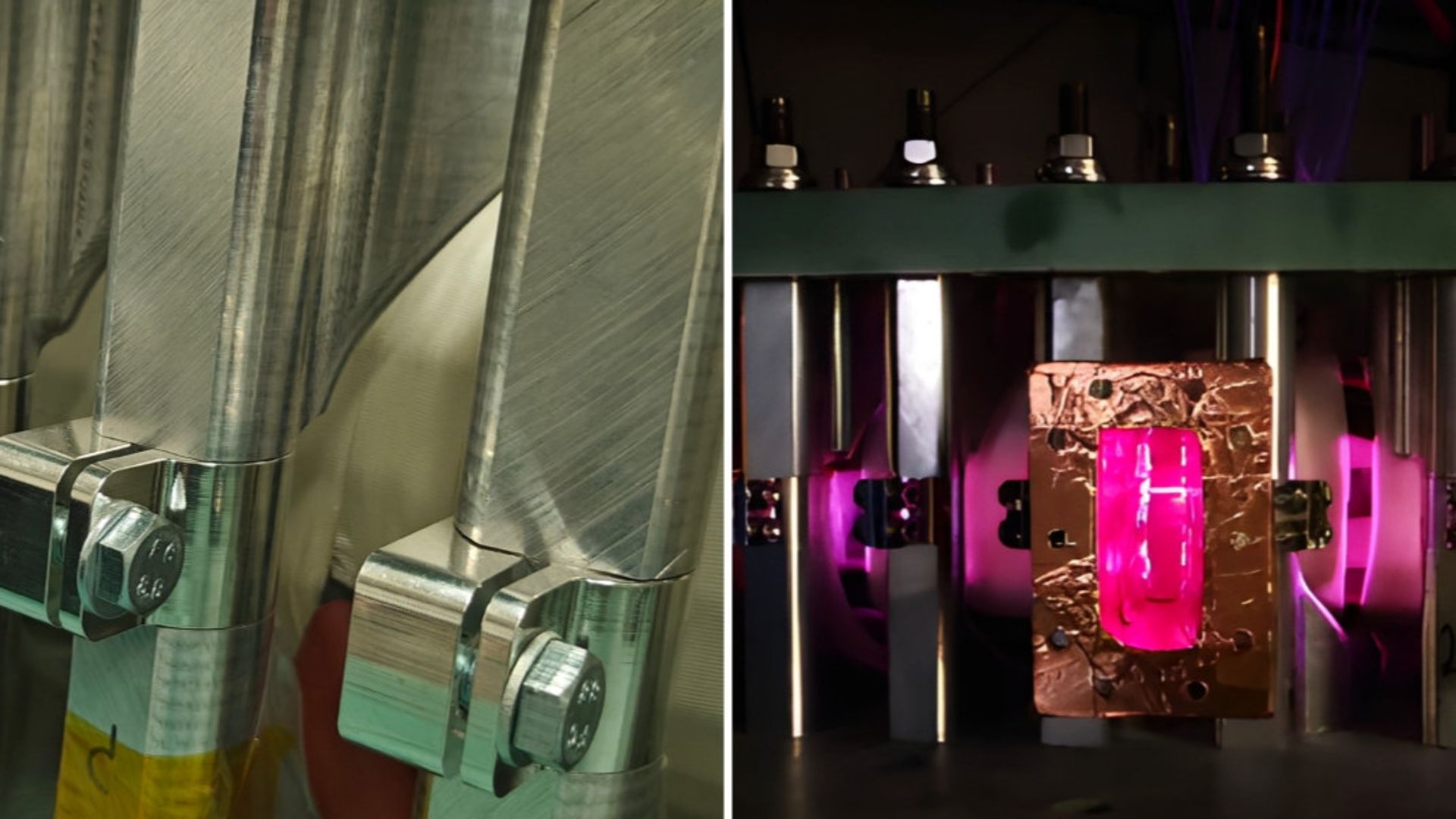
Engineers at compact fusion company nT-Tao have brought a 50-megawatt pulsed-power subsystem into active service. The hardware delivers high-energy bursts to the company’s C3 prototype, a machine designed to test magnetic confinement in dense plasma regimes.
This installation marks a critical step toward exceeding 1.5 million degrees Celsius, the highest thermal benchmark recorded on the platform to date.
Injecting large bursts of electricity into an ionized gas triggers severe circuit instability. As the plasma heats up during each pulse, its internal electrical properties fluctuate within fractions of a millisecond. These rapid swings alter the electrical impedance of both the plasma and the delivery hardware.
“The power must also be controlled precisely as the electrical characteristics of the system and the plasma change rapidly during each pulse,” said the company in a press release.
If the supply fails to match these shifts instantly, electrical resonance breaks down and the gas reflects energy back into the driving circuits. To prevent this loss, nT-Tao paired the 50-megawatt unit with a proprietary real-time nonlinear control system.
Nonlinear real-time tuning
The controller tracks circuit changes during the pulse and updates operating parameters continuously. This active tuning maintains resonance throughout the discharge, ensuring maximal energy transfers into the plasma core under fast-varying conditions.
CTO and co-founder Boaz Weinfeld pointed out that generating 50 megawatts is relatively straightforward compared to the task of coordinating 50 separate modules in real time. The primary engineering accomplishment lies in forcing multiple units to function as one synchronized circuit.
The physical power supply expands the company’s Modular Energy Generator Architecture, known as MEGA. The setup distributes the power load across 50 compact units called Power Electronic Generators (PEGs), rather than relying on a single, large power source. Each PEG produces approximately 1 megawatt of output.
Technicians grouped these generators into ten parallel branches, placing five parallel-wired modules on each branch. The complete network operates across switching frequencies between 50 and 2,000 kilohertz.
“It represents a roughly five-fold scale-up from an earlier generation that integrated 12 PEGs into an approximately 10 MW system,” added the company.
Hardware scalability and recent milestones
Using 1-megawatt modules provides practical manufacturing and operational advantages. Technicians can connect modules in series or parallel arrangements to meet specific circuit requirements. According to Weinfeld, fusion systems that cannot be produced at scale will fail commercially. Standardized, repeatable modules keep the physical footprint compact and allow capacity growth without redesigning core hardware.
The 50-megawatt power feed supports a broader strategy to turn plasma physics theory into viable, compact reactor hardware. Assembly took two months, with the machine reaching operational status and firing initial plasma pulses in January.
That testbed followed an earlier experimental series with the C2-A machine, which registered plasma temperatures around 100 electronvolts, or about 10^6 degrees Celsius.
By combining modular power electronics with high-speed nonlinear controls, the team has established the electrical drive required to push plasma past those early milestones toward commercial reactor temperatures.
“Together, the 50 PEGs and the real-time controller form the power architecture subsystem intended to deliver large amounts of energy to the plasma in precisely controlled pulses, moving nT-Tao closer to its next temperature milestone on the path toward a commercially viable compact fusion system,” concluded the company.
According to new reporting by The Guardian, nearly all of the top ten global producers of forever chemicals, otherwise known as polyfluoroalkyl substances, or PFAS, plan to ramp up production quotas on the back of the data center boom.
There’s a clear market demand for this: PFAS play a huge role in data center construction, where they’re used in cooling systems, AI chips, circuit boards, and fire suppression systems — not to mention the coating on thousands of miles of cables used to connect these components together.
Though components laden with PFAS are found throughout the industrial world, their use in data centers is particularly troubling. Because these facilities run almost non-stop save for the rare pause for maintenance, their components break down remarkably quickly, which means data center owners are constantly scrapping old parts in favor of new ones.
When those old components are tossed to the curb, the PFAS will almost inevitably wind up in the environment, increasing the likelihood that they wind up in the food chain. When we eat contaminated plant and animal products, these forever chemicals accumulate in our body, where they may contribute to a laundry list of debilitating health problems.
“These companies’ expansion plans show that unless governments and regulators insist on a rapid phaseout, we will face a new tidal wave of forever chemicals,” Anne-Sofie Bäckar, executive director of Swedish chemical watchdog ChemSec, told The Guardian.
Of course, PFAS are far from the only toxic discharge attributable to the AI data center boom. On Monday, the Gothamist reported that nearly 5,000 gallons of diesel fuel had somehow spilled out of the Equinix Data Center in Secaucus, New Jersey, flowing directly into a tributary creek in the New Jersey Meadowlands.
As Climate Revolution Action Network executive director Ben Dziobek told the Gothamist, it’s proof that data centers harms extend far beyond their property lines.
“Leaving this [data centers] to individual towns doesn’t make any sense,” Dziobek said. “Data centers create problems that don’t stop at municipal boundaries, whether it’s pollution or straining the grid and driving up everyone’s electric bills.”
Through joint research with the U.S. Geological Survey and the University of Tokyo, NIMS for the first time experimentally demonstrated friction completely independent of sliding velocity—an ideal that had never been realized—by heating mica, a layered oxide also used as a lubricant material, to 200°C (392°F). NIMS also clarified that this is caused by the disappearance of defects within crystals at high temperatures.
Through joint research with the U.S. Geological Survey and the University of Tokyo, NIMS for the first time experimentally demonstrated friction completely independent of sliding velocity—an ideal that had never been realized—by heating mica, a layered oxide also used as a lubricant material, to 200°C (392°F). NIMS also clarified that this is caused by the disappearance of defects within crystals at high temperatures.
When you think of viruses, you probably think of flu-like symptoms and quarantines. Humankind has suffered from viral diseases ranging from smallpox to COVID-19, hantavirus and Ebola since the dawn of recorded history.
Ausente no lançamento na Europa por incompatibilidade regulatória, a nova Siri AI continua a confundir os utilizadores que fizeram o upgrade para o iOS 27, fora do território europeu.

 Login