The CEO of Flock Safety made a comment that may have revealed more about America's growing surveillance industry than he intended. In this investigation, Lau...
A team of conservationists has discovered and restored the tombstone of Sebastian, a formerly enslaved man who died free in 1729.
"That discovery is likely one of the oldest gravestones of a free Black person in America," Michelle Wu, the mayor of Boston, said in a July 4 speech. "It's been there all along. We just had to go look and share the story."
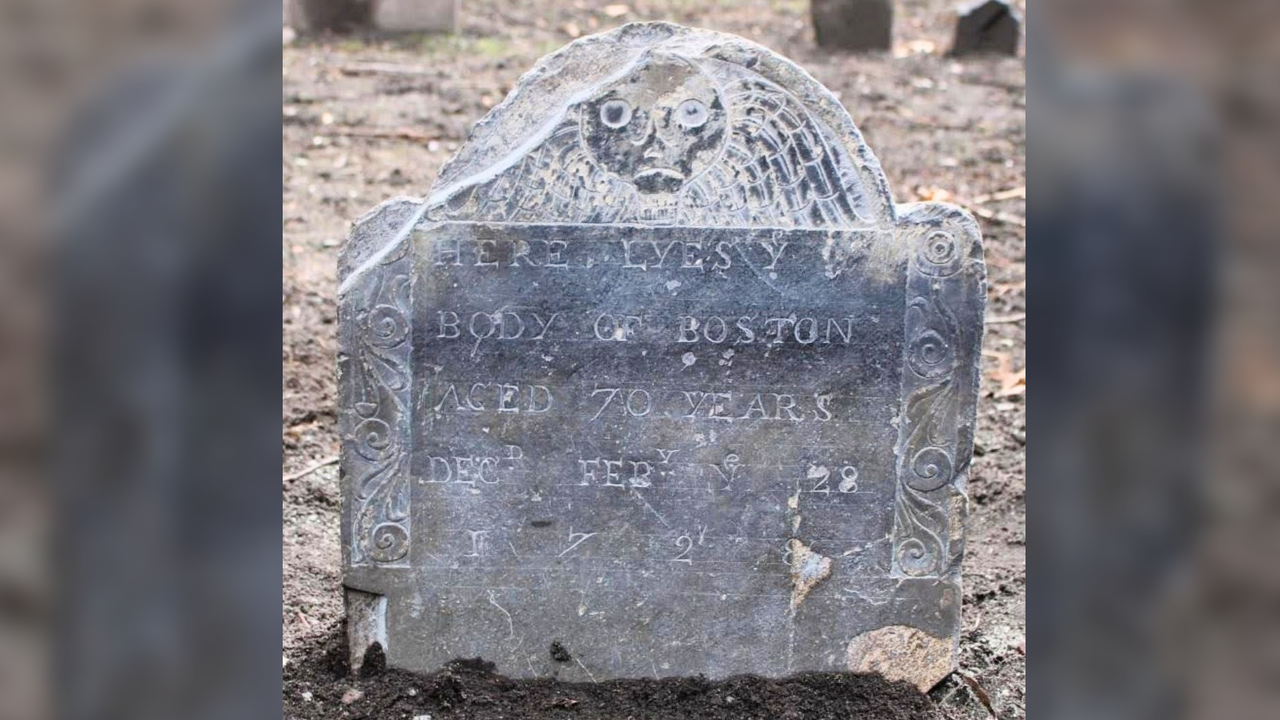
The stone marker is inscribed with Sebastian's chosen name, Boston, and features an image common in 17th- and early 18th-century tombstones in New England: the death's head. The symbol includes a stylized skull flanked by wings, which were possibly intended to symbolize spiritual resurrection.
On the tombstone, a simple, five-line inscription reads:
Original Inscription
HERE LYES Ye
BODY OF BOSTON
AGED 70 YEARS
DECD FEBY Ye 28
1728
Modern English
HERE LIES THE BODY OF BOSTON AGED 70 YEARS DECEASED FEBRUARY THE 28 1728
In 18th-century American writing, the word "the" was often abbreviated with a Y-shaped letter form called a "thorn" representing the "th" sound. Tombstones also frequently abbreviated "deceased" and the month. Somewhat confusingly, before 1752, the American colonies regularly used the Julian calendar, as did Britain, in which the new year started on March 25. Boston's year of death is listed on the tombstone as 1728, but his February 28 death was actually in 1729 in our modern Gregorian calendar.
Kelly Thomas, the director of the Historic Burying Grounds Initiative for the Boston Parks and Recreation Department, told WBZ News Radio that she identified the gravestone during a restoration project at the Granary Burying Ground, the city's third-oldest cemetery. Established in 1660, the cemetery includes over 5,000 graves, including the final resting places of Declaration of Independence signers Samuel Adams and John Hancock; the U.S. Revolutionary War officer Paul Revere; and Crispus Attucks, a sailor of mixed African and Indigenous ancestry who is thought to be the first American killed in the Boston Massacre.
"I was reviewing the photos of headstones, and then I noticed that the stone only had one name," rather than a first and last name, Thomas told WBZ News Radio, suggesting that Boston was either enslaved or free when he died. Based on a search of historical records, Thomas determined that Boston's enslaved name was Sebastian and that he also went by Bastian.
A surprising amount of information was recorded about Boston and his wife, Jane Lake. In 1701, they had their daughter, also named Jane, baptized at First Church in Boston, where they regularly attended worship services. But while the two were married with children, they were also both enslaved and lived in different households, historian Gloria Whiting wrote in a 2016 study.
Boston was likely freed in the early 18th century, some time after the 1702 death of John Waite, who had held him in slavery. By 1708, a list of free Black people included the name Boston, and he had gained a reputation in the city as a hardworking handyman, according to Whiting's study. He had been freed for roughly 30 years when he died in 1729 and was well-known enough to have an obituary published for him in the New-England Weekly Journal, a rare occurrence for enslaved or freed Black people in colonial America.
Wu also said that, in recent weeks, archaeologists in Boston had discovered musket balls and gun flints from the infamous Battle of Bunker Hill that took place on June 17, 1775. The battle was fought by British Crown forces and New England troops in the first stage of the American Revolutionary War.
The fragile and battered remains of an infant who lived about 6,000 years in Mesopotamia may be the oldest documented case of child abuse from the Middle East and one of the oldest known cases of its kind in the world, a new study finds.
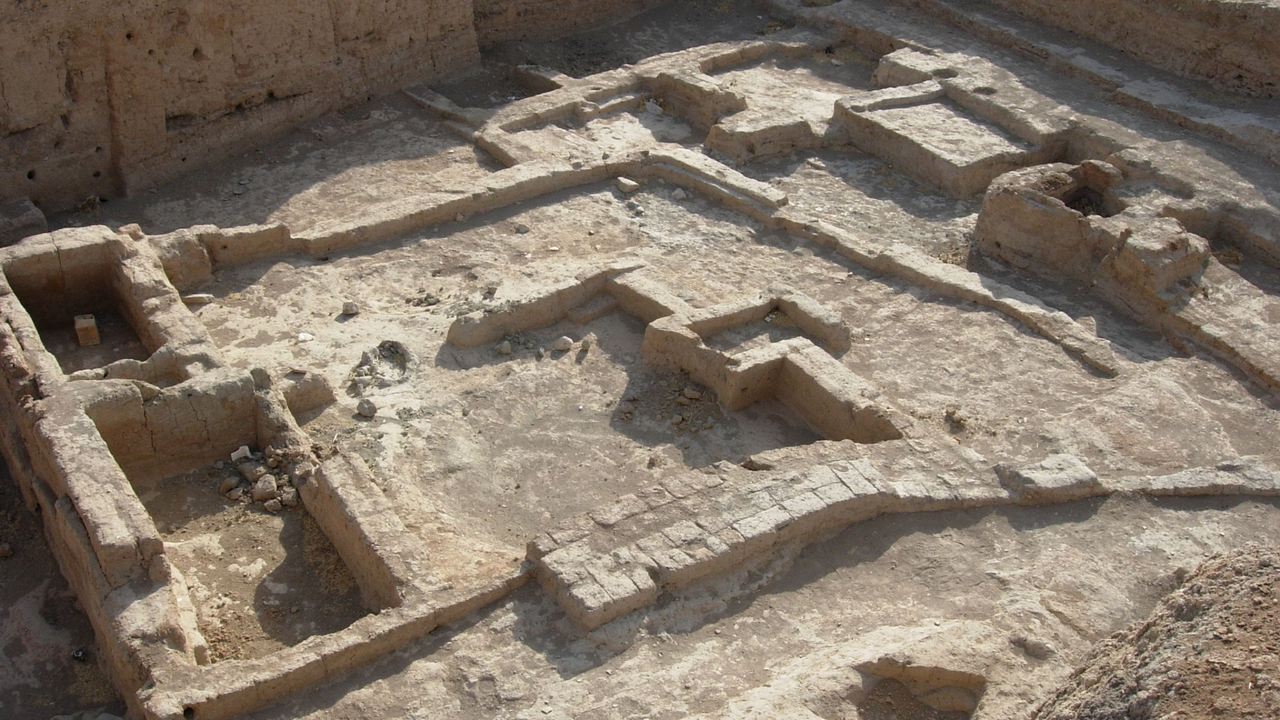
Researchers unearthed the infant's remains in Syria, but at the time the infant died, sometime between 4200 and 3900 B.C., it was buried in Tell Brak, one of the world's earliest cities. It's possible that the difficulties associated with early urbanization played a role in the child's abuse, the researchers noted.
The team determined that, based on the infant's tooth development, the child was 6 to 9 months old at death. An analysis of the remains, which were interred in a children's burial ground within a Late Copper Age workshop district, revealed that the infant had four fractured ribs near the breastbone. The right thigh bone had abnormal growth, while both sides of the skull bore active, porous lesions. These injuries point to the bones being subject to intense and repetitive external forces, and the nature of the lesions don't fit easily with an accidental fall, the researchers said.
"Ribs shouldn't break" in such a small child, study co-author Aleksandra Grzegorska, a bioarchaeologist at the University of Warsaw, told Live Science. Although rib fractures are relatively common in adults, they suggest child abuse in young infants, she said.
In the study, published May 21 in the International Journal of Osteoarchaeology, Grzegorska and her colleagues systematically ruled out other explanations for the injuries, including rickets, scurvy, birth trauma and violent coughing from illnesses such as tuberculosis. Vitamin deficiencies were unlikely, the researchers noted, given that ancient Mesopotamia had ample sunlight and fresh produce due to the fertile land between the two rivers. Birth-related fractures typically heal within weeks in infants, and bone density and growth measurements for the baby matched those of its peers from that time, indicating that the child didn't have an underlying skeletal condition.
To gauge how unusual the injuries were, the team compared the infant to other children excavated from the same burial area. None of the other youngsters with substantial rib preservation showed similar fractures, making the infant's injuries an outlier in the local population.
It appears that the infant likely experienced "caregiver-induced violence," Grzegorska said. This term is used because the evidence can't identify who caused the harm or confirm intent, Grzegorska said. "We don't want to point fingers at any specific individual," she said, noting that in many ancient cultures, multiple family members, not just parents, helped raise children.
Other clues that might shed light on the infant's injuries are missing from this case, she added. Unlike modern clinicians, bioarchaeologists can't interview a living patient or bystander, or examine soft tissue that might reveal more about the abuse. The partially healed state of the fractures suggest the infant survived for some time after the injuries were inflicted, Grzegorska found — an indication that the trauma was not immediately fatal.
Around the time the infant died, Tell Brak was transforming into a city, so the authors suggested that the stresses of early urbanization and possibly less support from extended kin could have contributed to the violence. Centuries after the infant died, upheavals related to city building appear to have led to mass deaths that were likely caused by violent conflict, Grzegorska noted.
Documented cases of child abuse remain exceptionally rare in the archaeological record, with only a handful previously identified in places such as Egypt, France and Lithuania.
Archaeologists in Italy have unearthed the royal tomb of a pre-Roman "warrior-prince" along with the remains of his chariot and weapons. The tomb was just one part of an extensive sixth-century B.C. burial ground and reveals new information about the funerals of elite rulers from this mysterious civilization.
The funerary complex was found in the municipality of Sirolo, a small town on the Adriatic Sea on Italy's east coast, according to a translated July 1 statement from the Superintendency of Archaeology, Fine Arts and Landscape for the Provinces of Ancona, Pesaro and Urbino.
In the sixth century B.C., an Italic group called the Piceni or Picentes lived in the area, bordered to the north by the Etruscans. The Piceni left few written records, so much of what is known about the enigmatic group comes from archaeological excavations. In 2020, a "princely tomb" complete with an iron-wheeled chariot, a cache of weapons and a helmet was discovered in the Pini cemetery. Now, archaeologists have found a second one.
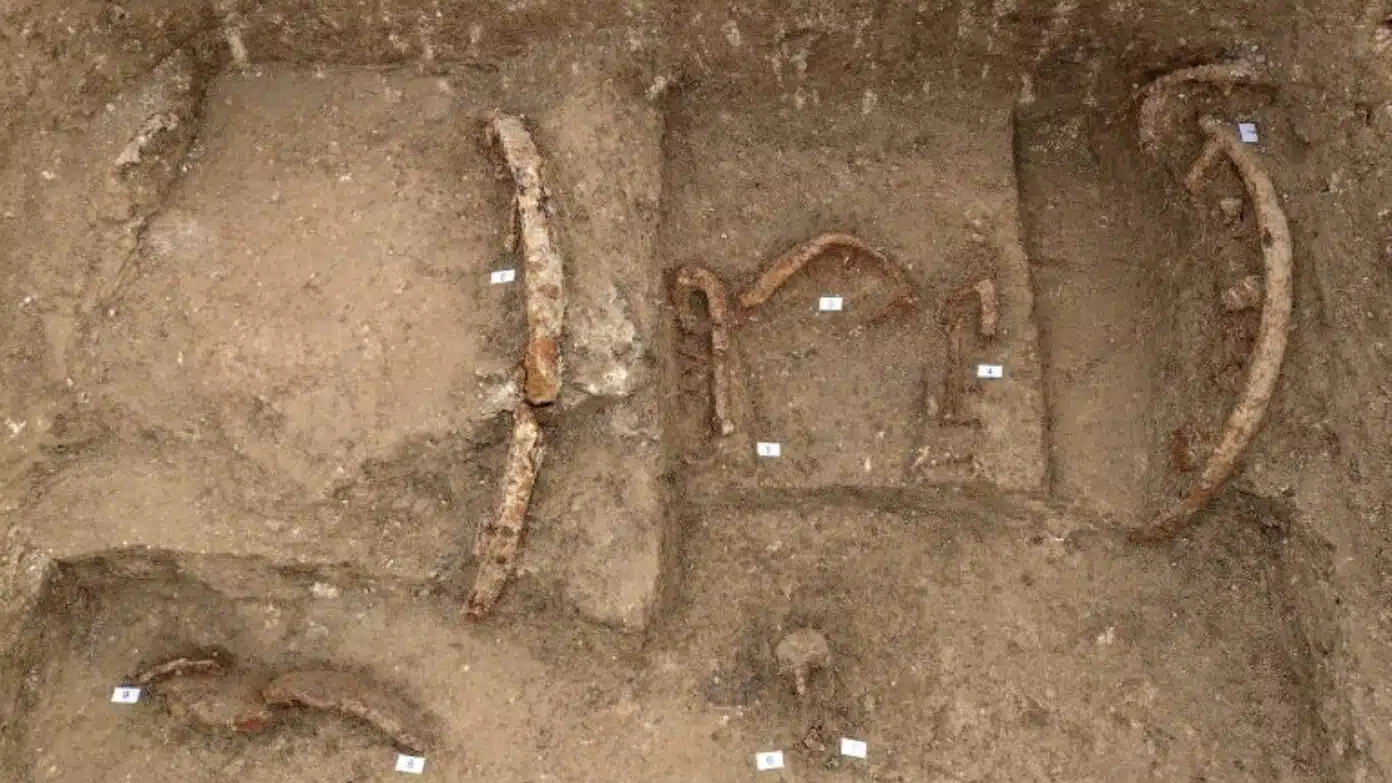
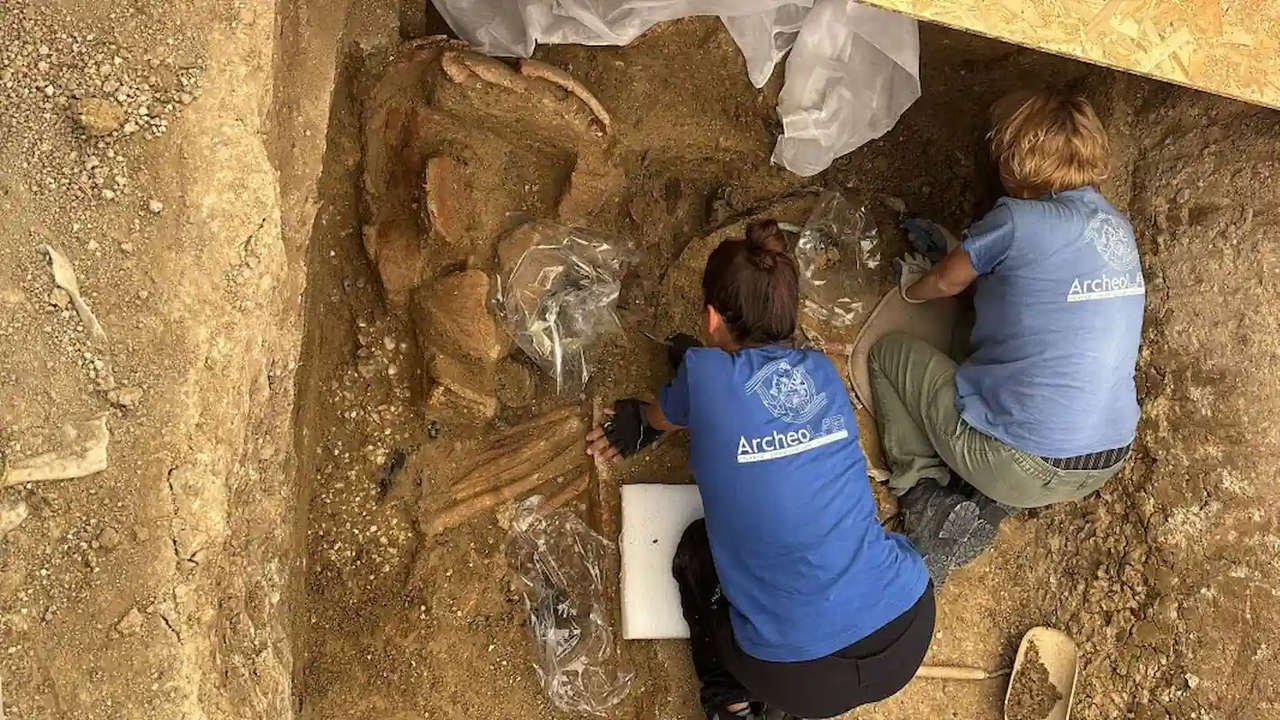
At the center of a monumental circular palisade, researchers unearthed a large male burial with a wooden "currus" — a two-wheeled chariot that had been buried intact with the nobleman around 2,500 years ago. The warrior prince was also buried with a helmet and an ax, as well as several bronze vessels sealed with ceramic lids and filled with organic remains, which may represent the traces of a funeral banquet or food offerings for the afterlife.
Fragments of the two-wheeled chariot during excavation. (Image credit: Superintendency of Archaeology, Fine Arts and Landscape for the Provinces of Ancona, Pesaro and Urbino)
Next to the warrior prince was the tomb of a woman who was buried with textiles, shoes and numerous "fibulae" — ancient metal safety pins that likely fastened her clothing and burial shroud. An enormous fibula with a hunk of amber had been placed on or near her head, possibly as part of her hairstyle or a headdress. This burial is not far from the "Queen's Tomb" in the Pini necropolis, where, in 1989, archaeologists discovered a Piceni woman buried with two chariots, two mules and a large quantity of personal belongings.
While royal burials had been discovered in the Sirolo area for decades, the newly discovered cemetery surprised archaeologists because of its unprecedented shape. Previously discovered burial grounds in the territory of the Piceni were ringed with a ditch, symbolizing the separation of the dead from the living. But the newly discovered cemetery was ringed with a wooden palisade instead of a ditch, and it had been placed on a slight hill, possibly to emphasize its monumental character and symbolic value, according to the statement.
This is the the first time that archaeologists have observed "an entire aristocratic nucleus" of the Piceni, and the discovery can provide "new perspectives on the structure of the elites that led to the great Piceni center," archaeologist Stefano Finocchi, the director of the new excavation, said in the statement.
Although many of the artifacts are still being analyzed, the quantity and quality of the grave goods already recovered reveal that the "ruling groups integrated into a dense network of relationships connecting the central Adriatic with the principal centers of central Italy," Finocchi said.
From Augustus to Nero, see how much you know about ancient Rome's famous leaders with our Roman emperor quiz!
The European Space Agency's (ESA) Euclid space telescope has spotted 31 previously unknown quasars dating to the universe's earliest chapter, including the two oldest ever found.
The discoveries, described July 6 in the journal Astronomy & Astrophysics, more than double the number of known quasars from that primordial era and could help astronomers unravel one of cosmology's biggest mysteries: how supermassive black holes grew so enormous so quickly after the Big Bang.
"It's a big step towards understanding these fascinating objects on a more fundamental level," Antonio La Marca, an ESA research fellow on the Euclid team, said in a statement.
Quasars are among the brightest objects in the universe. They form when gas and dust spiral into a galaxy's central supermassive black hole, heating up and releasing enormous amounts of energy that can outshine the galaxy itself. Each of the two most ancient quasars detected in the new study shone with the light of a trillion suns, according to the researchers.
Euclid spotted the quasars while surveying the distant universe. Twelve of them have redshifts of 7 or higher, meaning their light has traveled for more than 13 billion years and dates to the universe's first 770 million years. Two of the objects, with redshifts of 7.77 and 7.69, are the most ancient quasars ever identified, shining just 670 million years after the Big Bang, when the universe was only about 5% of its current age.
"These early quasars date back to the Universe's infancy," Daming Yang, an astronomer at Leiden University in the Netherlands and first author of the new study, said in the statement. "By finding and studying them, we can better understand how these enormous systems formed and grew so quickly — one of the greatest mysteries in astrophysics."
Finding quasars from the early universe has long been difficult because they are rare and incredibly distant. Until now, astronomers had identified only the brightest examples, making it difficult to understand the broader population during this early era. Euclid's wide-field survey is changing that by detecting fainter quasars across huge swaths of the sky.
The latest discoveries represent only a fraction of what the telescope is expected to find during its six-year mission, which will cover more than one-third of the total sky once complete. Mounted with a pair of instruments that see in visible and near-infrared light, Euclid is currently assembling the largest-ever 3D map of the universe. Scientists expect the survey to uncover hundreds of similarly ancient quasars, providing an unprecedented look at how the universe's earliest galaxies and supermassive black holes evolved.
Euclid has also taken some time to study the nearby universe, revealing more than 60 million individual stars packed into the Milky Way's center in a sparkling image released in late June.
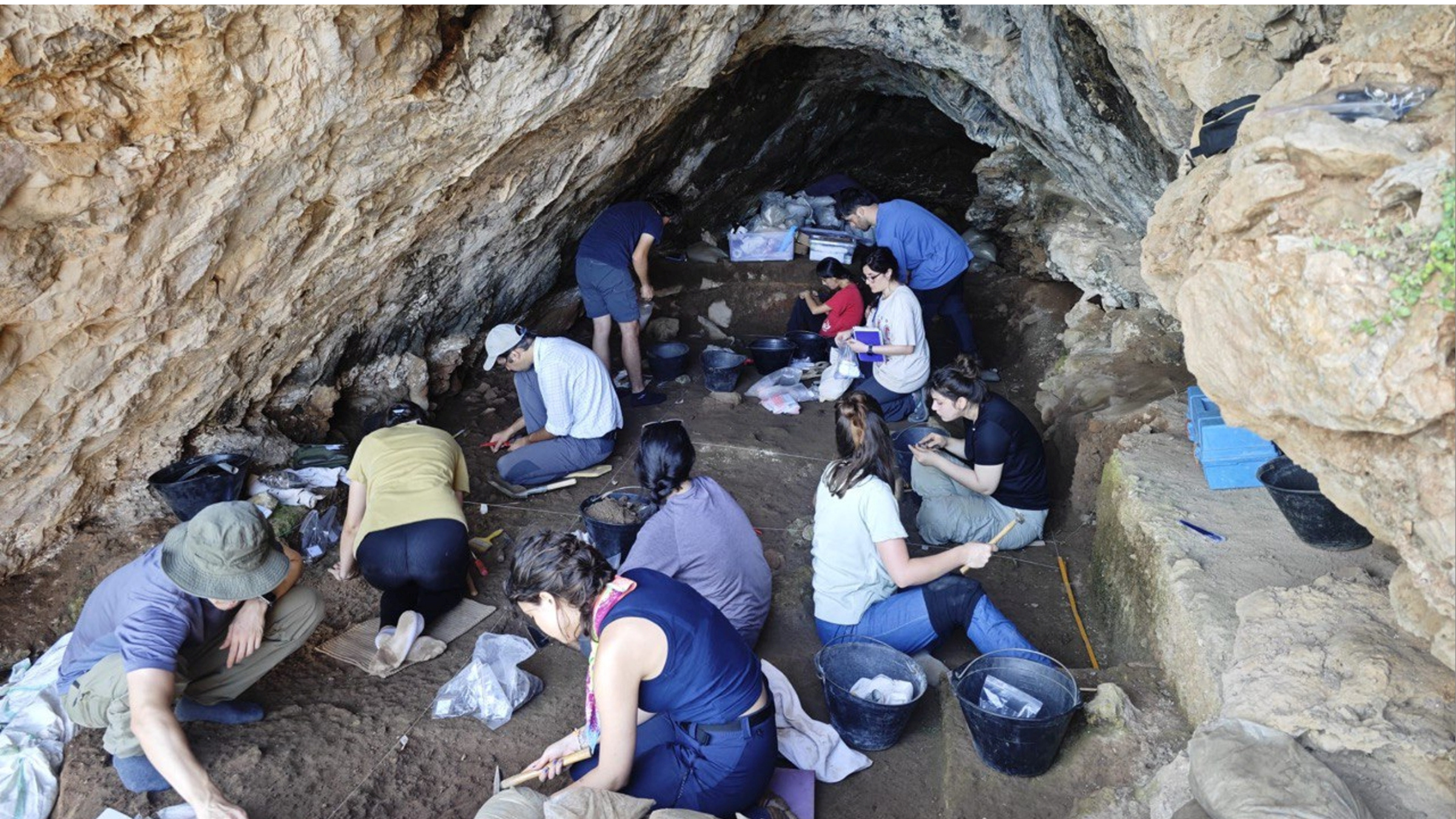
Deep in a limestone cave on Turkey's Mediterranean coast, archaeologists have uncovered evidence that Neanderthals and the modern humans who moved in later left behind surprisingly similar traces of their daily lives — evidence that they hunted the same animals, crafted the same stone tools and collected the same type of seashells.
The findings, published Monday (July 6) in the journal PNAS, feed into some of the biggest questions in human evolution: How similar were the cultures of Neanderthals and Homo sapiens, given that we're so closely related? And did we share information with one another?
A series of archaeological finds over the past few decades, including the new paper's finding that the two had similar cultural practices, suggests that Neanderthals and H. sapiens behaved far more similarly in the Middle East than once assumed.
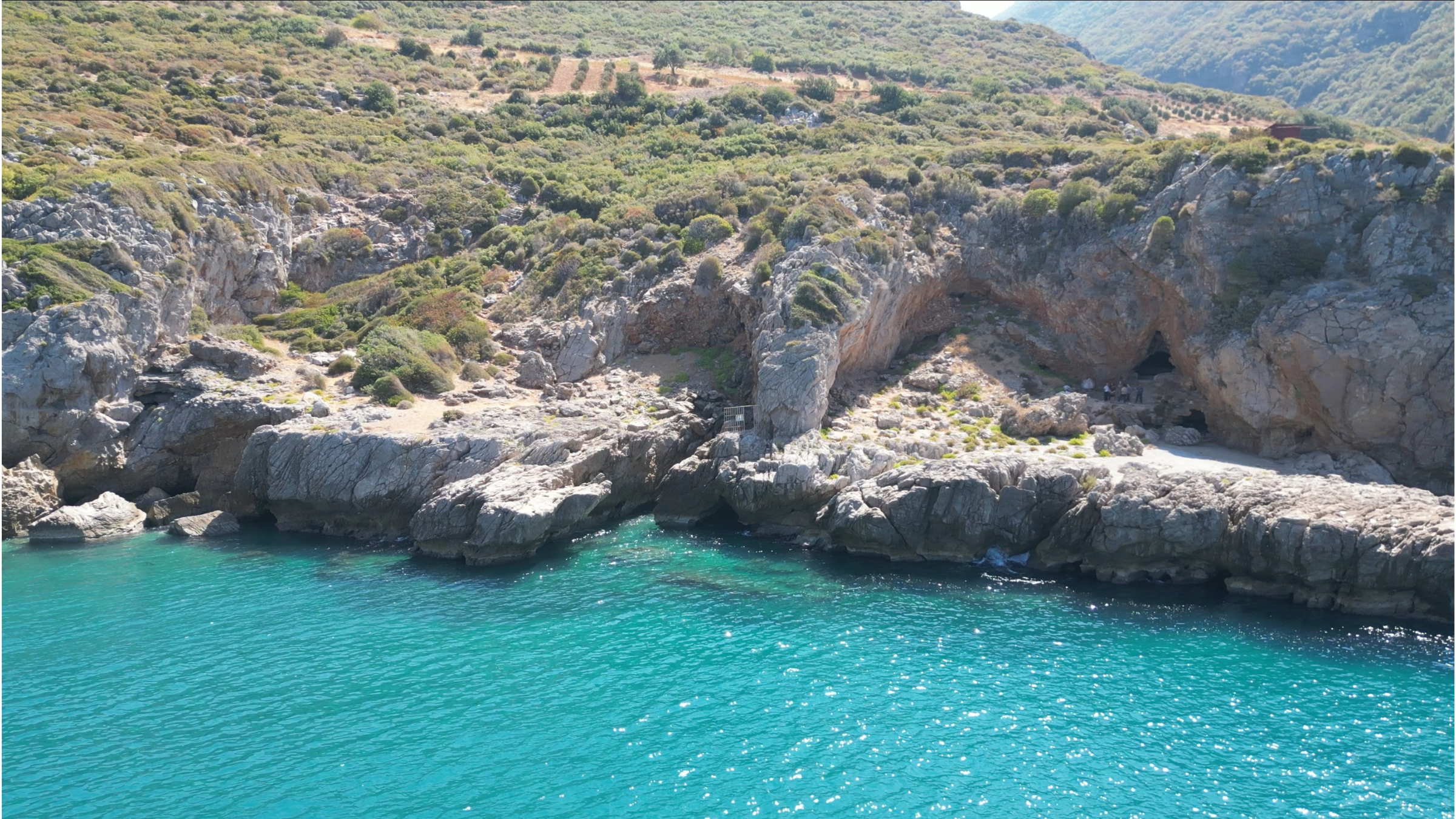
The new evidence comes from Üçağızlı II Cave (pronounced Ooch-ah-UHZ'-luh), on a stretch of coastline just north of Syria that served as a prehistoric corridor between the Levant (an area of land east of the Mediterranean) and Eurasia. Although the team found only teeth and a partial jawbone within the cave, they were able to distinguish between the remains of Neanderthals and H. sapiens by analyzing the internal structure of the fossilized teeth. Meanwhile, they dated the sediment at the site using optically stimulated luminescence, a technique that reveals how long ago buried mineral grains last saw sunlight.
The team found that the Neanderthals had lived within the cave between approximately 77,000 and 59,000 years ago, while H. sapiens stayed there between about 59,000 and 47,000 years ago. Despite the different time periods, the layers from both of these periods show "substantially uniform hunting-gathering strategies and lithic technology," showing how similar the Neanderthals and H. sapiens were in their hunting-gathering strategies and stone-tool use, the team wrote in the study.
The research team performs excavations at the Üçağızlı II cave site in 2024. (Image credit: KyotoU/Naoki Morimoto)
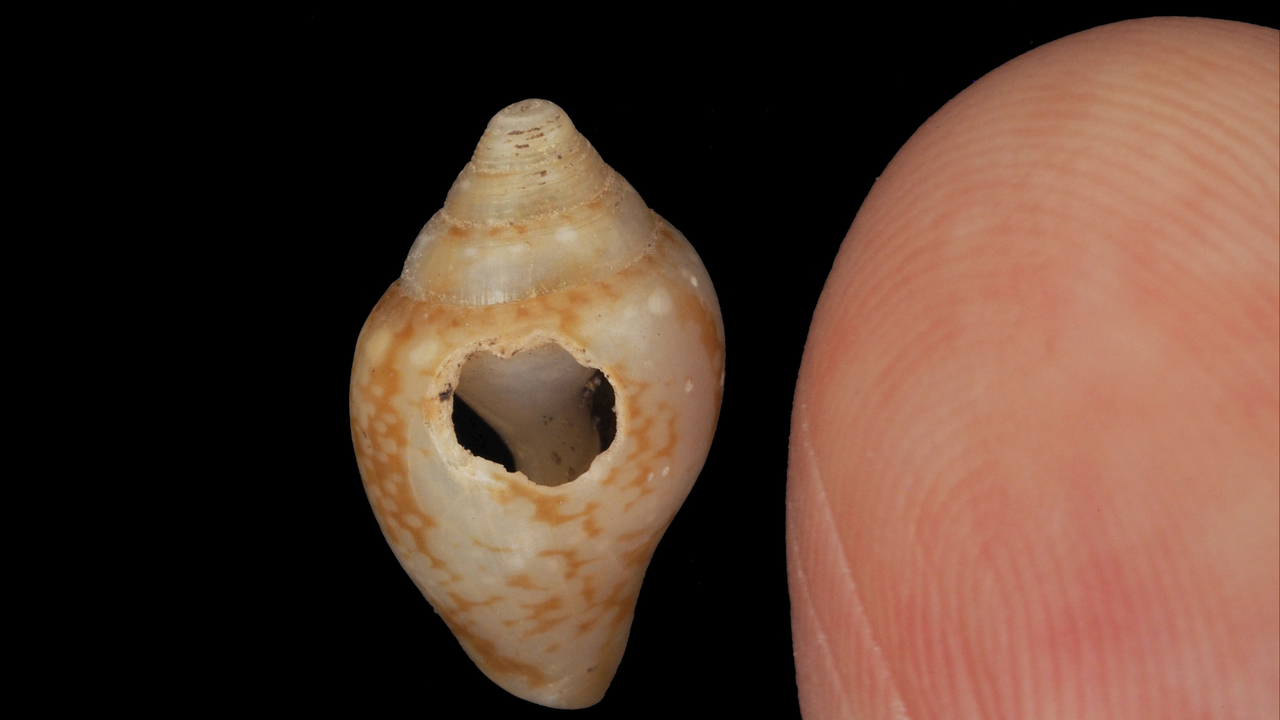
What's more, Neanderthals and H. sapiens got raw materials, such as flint, from the same local sources and hunted the same prey: wild goats (Capra aegagrus), fallow deer (Dama mesopotamica), roe deer (Capreolus capreolus) and wild boar (Sus scrofa). Layer after layer also turned up 29 shells of a small marine snail, Columbella rustica, carried into the cave not for food but seemingly as ornaments. Some were pierced as if meant to be strung, and one shell dating to the Neanderthal occupation showed signs of deliberate heating that altered its color.
"Our findings indicate a deep level of cultural interaction," study co-author Naoki Morimoto, paleoanthropologist at Kyoto University, said in a statement. "These two distinct but closely related human groups were not just adapting to the same environment: they were probably sharing symbolic preferences."
That pattern breaks from findings at Mandrin Cave in France, where Neanderthals and modern humans are thought to have alternated occupation in distinct pulses from about 56,800 and 41,500 years ago, but did not leave evidence of a continuous culture. Instead, it echoes evidence from Tinshemet Cave in Israel, where researchers recently reported similar signs of shared behavior between the two groups tens of thousands of years earlier, from about 130,000 to 80,000 years ago.
A view of Turkey's Üçağızlı II Cave, which housed Neanderthals and Homo sapiens at different times. (Image credit: KyotoU/Naoki Morimoto)
Üçağızlı II Cave in Turkey and Tinshemet Cave in Israel suggest that even though there was a "biological" turnover as the caves went from being occupied by Neanderthal groups to modern humans, there weren't major cultural turnovers, too.
"Rather, we hypothesize that the two human species that coexisted in the region were in contact and shared cultural aspects," the researchers wrote in the study.
"A fascinating region"
Sites like these are forcing a rethink of how these two types of human were culturally related to each other, April Nowell, a Paleolithic archaeologist at the University of Victoria in Canada who was not involved in the new study, told Live Science in an email. "By demonstrating cultural continuity and elevated levels of interaction, sites such as Tinshemet and Üçağızlı II are changing what we thought we knew about Neandertals, Homo sapiens and other contemporary Homo groups … a fascinating region just got even more so!" she said.
But that cultural continuity only heightens the mystery of how modern humans and Neanderthals interacted, with Neanderthals eventually going extinct around 40,000 years ago. Two types of human can't occupy the same ecological niche indefinitely, Nowell noted, and some research into Neanderthal cognition suggests Neanderthals were less-flexible thinkers than modern humans, with more limited capacity for language and less of the kind of self-awareness and creativity that may have given H. sapiens an edge. (However, there is pushback against the idea that Neanderthals weren't as cognitively complex as H. sapiens.)
If the archaeological record at sites like Üçağızlı II shows this much overlap in behavior, Nowell said, the real differences between the two may be ones the fossil record simply hasn't revealed yet.
The authors noted that many big questions remain, including when and where these shared cultural practices took place and whether these cultural similarities happened because modern humans mated with Neanderthals.
Ongoing and future excavations at sites like Üçağızlı II Cave may help to answer these questions and build a "more comprehensive picture of human evolution and cultural development during the Late Pleistocene," the team wrote in the study.
How much do you know about our closest relatives? Find out with our Neanderthal quiz!
Scientists have found evidence that gravitational waves from a spectacular black hole collision carry signals from the very edge of the newly formed black hole. If confirmed by future observations, the discovery could provide an entirely new way to investigate what happens in the immediate vicinity of a black hole without ever observing it directly.
In a new study, the researchers analyzed an exceptionally strong gravitational wave event known as GW250114. They identified a "direct wave," a subtle feature of the total gravitational wave signal predicted by theory but never previously detected in real data. The signal appears to contain information from extremely close to the black hole's event horizon, the boundary beyond which nothing, not even light, can escape.
The findings, published June 24 in the journal Nature, suggest that gravitational wave observatories may eventually allow astronomers to probe regions that have remained inaccessible since black holes were first predicted by Albert Einstein's theory of general relativity.
Listening to the edge of a black hole
Although astronomers have photographed the glowing material surrounding some supermassive black holes and have detected dozens of black hole mergers through gravitational waves, the event horizon itself has remained frustratingly difficult to study.
Unlike ordinary light, gravitational waves are tiny ripples in space-time produced when massive objects accelerate. They pass almost undisturbed through the universe, carrying information about violent cosmic events that would otherwise remain hidden.
According to study co-author Sizheng Ma, a postdoctoral researcher at the Perimeter Institute for Theoretical Physics in Canada, the newly identified signal offers a rare glimpse of what happens immediately after two black holes collide.
When two black holes merge, they release gravitational waves — ripples in the fabric of space time — throughout the universe. Studying these waves can provide information about the newly formed black hole. (Image credit: K. Thorne (Caltech) and T. Carnahan (NASA GSFC))
"When two black holes merge, they violently shake space-time itself," Ma told Live Science. "For a brief moment, the region very close to the newly formed black hole's horizon is swept into a fast, fading swirl."
Ma explained that the direct wave is the portion of the gravitational wave signal produced near the horizon and carries the imprint of that motion outward through space.
"That is why it is so interesting," he said. "It may let us 'listen' to what happens near the horizon, a region we cannot see directly with light."
A remarkable black hole collision
The team focused on GW250114, a black hole merger detected on Jan. 14, 2025, by the two Laser Interferometer Gravitational-Wave Observatory (LIGO) detectors in Hanford, Washington, and Livingston, Louisiana.
"Our earlier theoretical work predicted that black hole mergers should produce a direct-wave signal from the near-horizon region," Ma said. "The big question was whether this effect could actually be seen in real data."
GW250114 turned out to provide exactly the conditions needed to test that prediction.
"It was strong enough, clean enough, and close enough to the theoretical situation where this signal should be visible," he said.
To search for the elusive feature, the researchers first removed the best-understood part of the gravitational wave signal, which comes from the newly formed black hole settling down after the merger. Then, they examined the remaining data to determine whether it consisted only of detector noise or contained another physical signal.
"What we found was striking," Ma said. "The remaining signal followed the expected rhythm and fading pattern of a wave shaped by the region very close to the final black hole's horizon."
The team concluded that the leftover signal matches the behavior expected for a direct wave predicted by previous theoretical studies.
ESA's upcoming LISA mission will detect gravitational waves from space, offering even more insights into the mysterious ripples than Earth-based detectors currently can. (Image credit: All About Space/Getty Images)
A new way to explore extreme gravity
The researchers stressed that their findings do not reveal what lies inside a black hole. Instead, they're providing a new observational tool for investigating the region immediately outside the event horizon.
"The gravitational wave data appear to carry an imprint from very close to the newly formed black hole's horizon — the famous point of no return," Ma said.
He explained that the measurements are consistent with space-time near the horizon being rapidly dragged around by the spinning black hole while the signal fades because of the intense gravitational field.
"For us, the exciting message is that gravitational waves may be giving us a new way to study the edge of a black hole using real observational data," Ma said.
Ma believes the method could eventually become useful for exploring ideas such as quantum gravity — which seeks to unite Einstein's theory of gravity with quantum mechanics — or the black hole information paradox, the longstanding puzzle of whether information that falls into a black hole is truly lost. However, it cannot test those questions directly yet.
"If quantum effects, or any deviations from the standard black-hole picture, leave a measurable imprint there, then direct waves could, in principle, help us search for them in the future," he said.
More observations will be needed
The researchers cautioned that the discovery is based on a single gravitational wave event. While GW250114 provided exceptionally favorable conditions, much stronger evidence will come only if similar signals are found in many additional black hole mergers.
"There are two main directions," Ma said. "The first is theory."
Current models capture the essential physics but remain simplified, and more realistic descriptions of black hole mergers will be needed.
"The second is observation," he added. "This result comes from one exceptionally loud and clean event, so the strongest confirmation would come from seeing the same kind of pattern in other black hole mergers."
As gravitational wave observatories continue to improve and detect increasing numbers of mergers, researchers hope to determine whether direct waves are a universal feature of black hole collisions.
"If the pattern appears repeatedly in the way general relativity predicts," Ma said, "direct waves could become a new way to study black hole horizons or the regions very close to them, and to test Einstein's theory in one of the most extreme environments in the universe."
If future observations confirm the team's results, scientists may have gained something they have sought for decades: a direct observational window into the very edge of a black hole.
See how much you know about black holes with our black hole quiz!
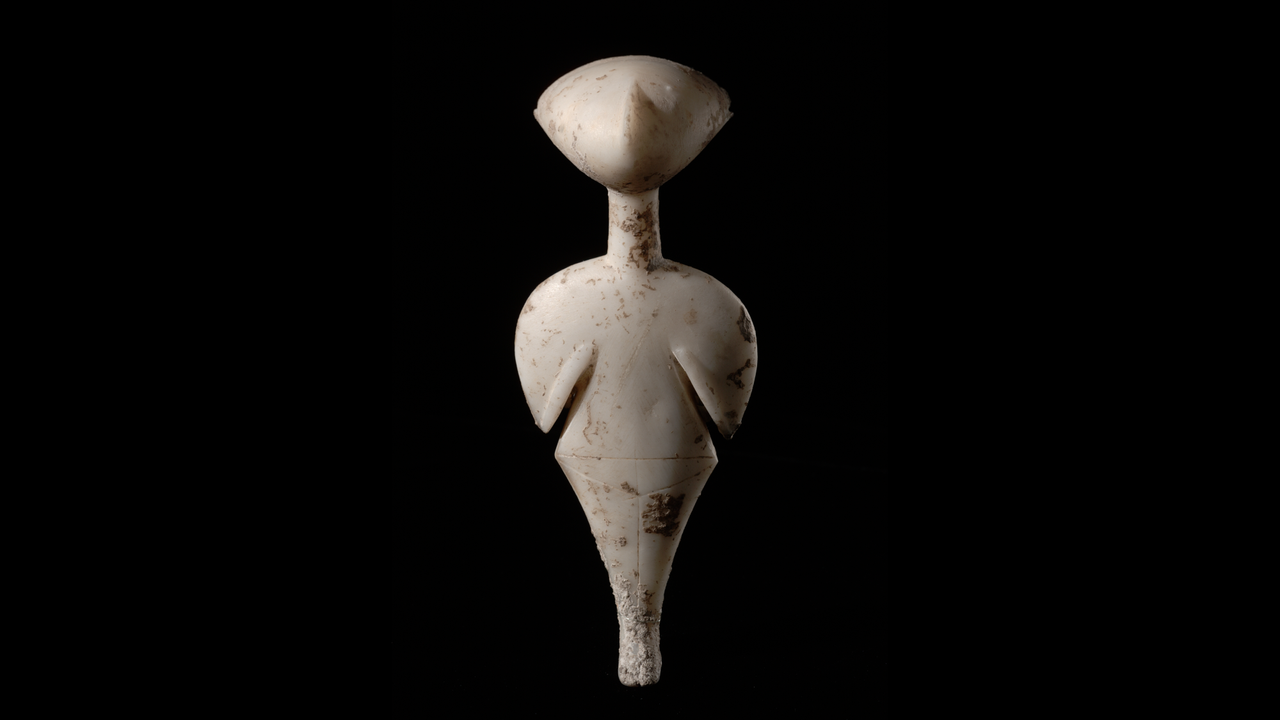
The Stargazer figurine was carved from marble around 5,000 years ago. (Image credit: Cleveland Museum of Art / Leonard C. Hanna Jr. Fund; John L. Severance Fund 1993.165 (Public Domain))
QUICK FACTS
Name: The Stargazer
What it is: A marble figurine
Where it is from: Kırşehir, Turkey
When it was made: Circa 3000 B.C.
This small, abstract sculpture of a woman, carved from milky-white marble, is known as The Stargazer because her head is tilted back and her eyes appear to stare skyward. Only about 30 figurines of this type have ever been found; all of them date to about 3000 B.C. and were crafted by a culture that left no written records of the figurines' meaning, according to art historian Amanda Mikolic.
This particular stargazer figurine was once owned by philanthropist Nelson Rockefeller, a member of the wealthy industrial family and vice president of the United States under Gerald Ford. It is now in the collection of the Cleveland Museum of Art (CMA).
The marble figurine is roughly 6.8 inches (17.2 centimeters) tall and weighs about 1 pound (454 grams). Clearly carved into human form but lacking a mouth, the statuette likely represents a woman, with the incised lines below the waist representing her pubic triangle. Her large, oval head is tilted back, and her tiny, dot-like eyes look upward.
Most stargazer figurines that have been discovered in western Anatolia (present-day Turkey) were broken at the neck before being buried in the ground millennia ago, making the CMA example one of the finest and most complete stargazer statuettes ever found.
But the meaning of the woman portrayed in The Stargazer figurine is unclear, since the culture that created it did not leave any written language explaining their art.
The figurine cannot stand on its own, suggesting that it was meant to be held or placed flat, according to Mikolic. "Deliberately rendered as female, she may be associated with fertility and abundance," she wrote. The statuette may be part of a trend of simplistic female figurines in the Mediterranean area linked to female fertility and the life cycle, such as the Cycladic figurines, according to The Getty, which has a stargazer figurine in its collection.
Regardless of the woman's specific meaning, "she must have been an important devotional object to some long-lost culture," Arielle Kozloff, former curator of ancient art at the CMA, wrote in the CMA Members Magazine.
Abstract female figurines like The Stargazer and other Neolithic examples are known to have inspired early-20th-century cubist masters, Kozloff wrote. This gives her "a sense of timelessness," according to Mikolic, "encouraging the viewer to think of humankind’s place and role in a larger cosmos."
For more stunning archaeological discoveries, check out our Astonishing Artifacts archives.
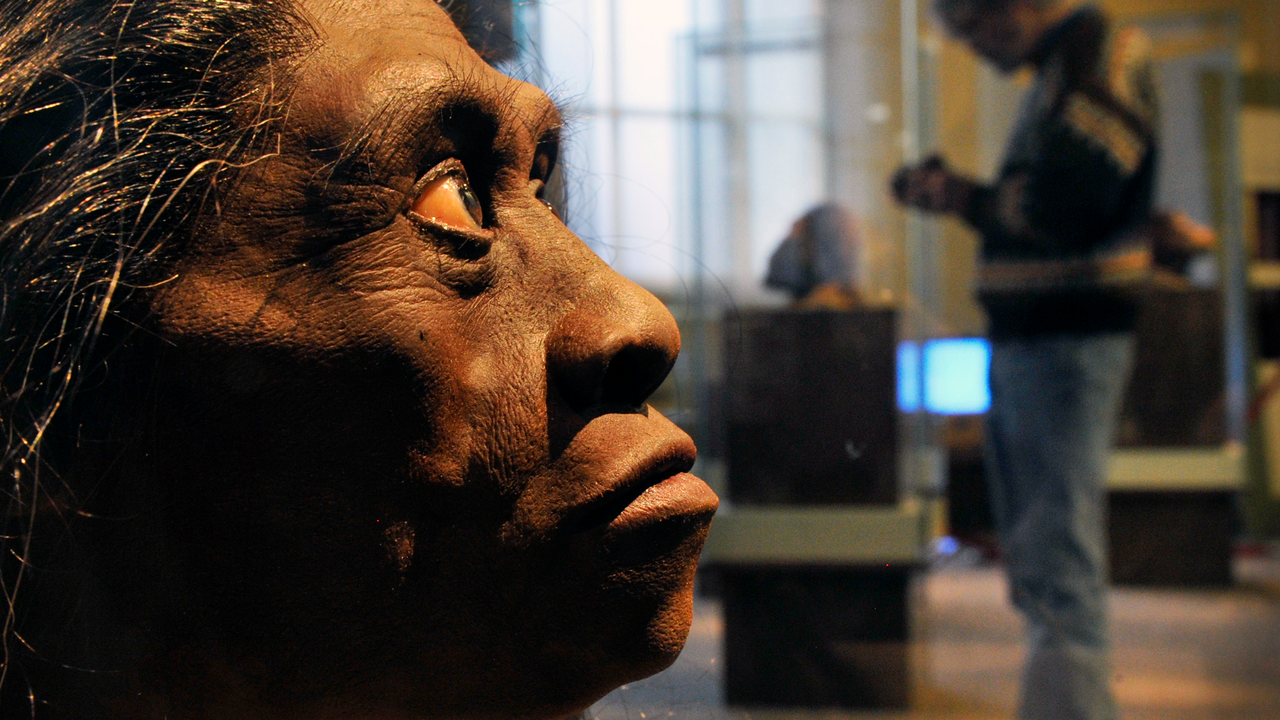
The diminutive, now-extinct humans known as the "hobbits" were scavengers who dined on dwarf elephants after Komodo dragons took the best cuts, archaeologists have discovered. The finding upends the assumption that Homo floresiensis, a human species that arrived on the Indonesian island of Flores at least 700,000 years ago, hunted big game.
First discovered in 2003, H. floresiensis has been nicknamed the hobbit because of its small size, averaging around 3 feet, 6 inches (106 centimeters) tall, along with its small brain, large teeth and big feet. But archaeologists also found stone tools, animal bones with cut marks, and charred bones that seemed to add up to sophisticated behavior common within our genus, Homo. The hobbits disappeared around 50,000 years ago as Homo sapiens began spreading around Southeast Asia.
But in a study published Friday (July 3) in the journal Science Advances, an international team of researchers questions whether the behavior of H. floresiensis was really as advanced as previously assumed.
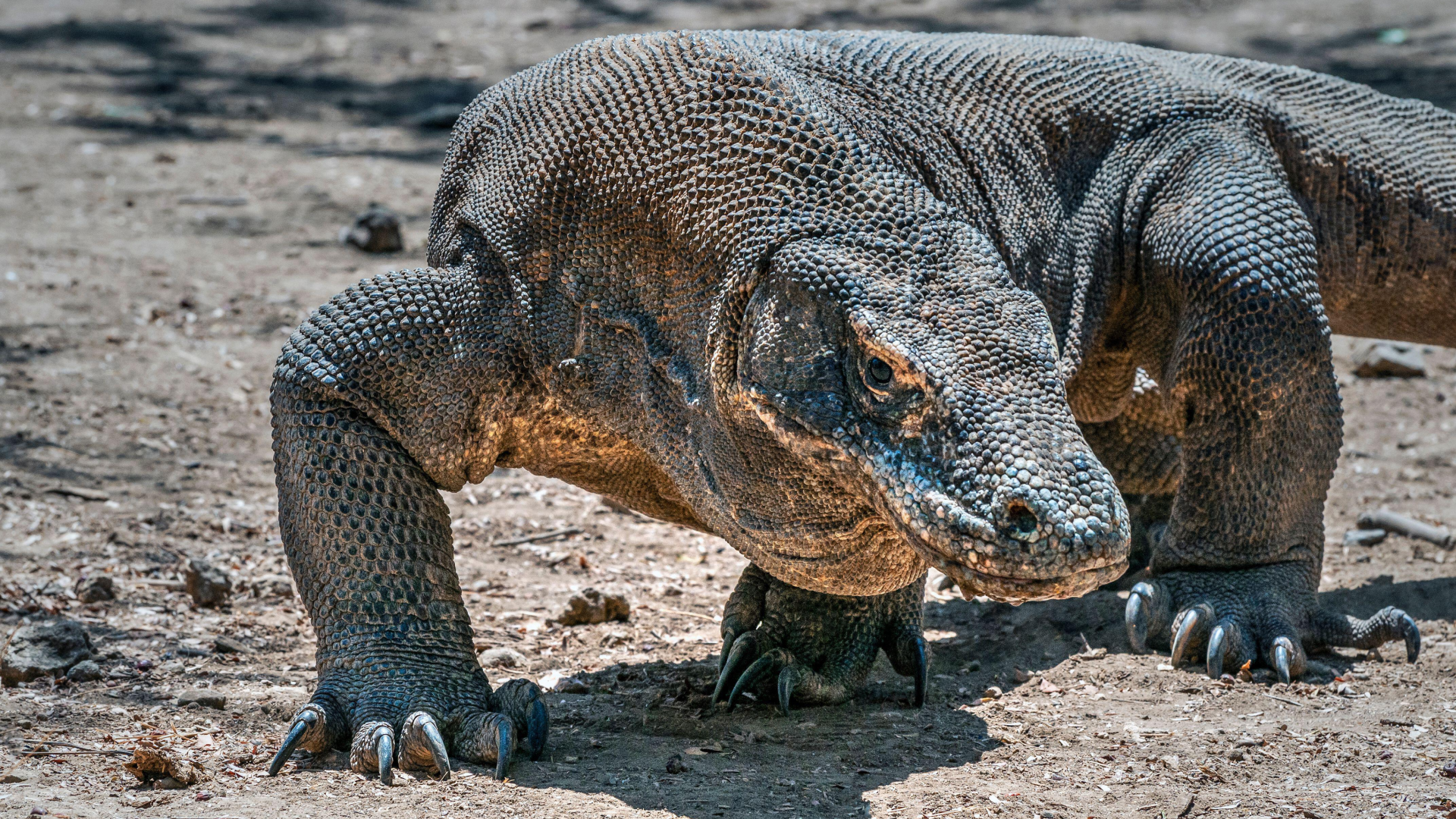
The researchers looked at fossil bones of Stegodon florensis insularis, an extinct dwarf species of elephant relative discovered at Liang Bua cave, where bones from H. floresiensis and stone tools have also been found, to determine whether the cut marks were from hunting Stegodon meat or from scavenging the remains of the feasts of the only other carnivore on the island: the Komodo dragons (Varanus komodensis).
To distinguish the hobbit cut marks from Komodo dragon tooth marks, the researchers first conducted an experiment, feeding a goat carcass to a captive Komodo dragon at Zoo Atlanta. Then, they recovered the goat skeleton and painstakingly documented all of the marks, pits, notches and furrows the Komodo dragon's teeth made in the bones. The tooth marks were concentrated in areas with substantial amounts of goat flesh, the researchers wrote in the study, suggesting the Komodo dragon had a preference for meaty areas.
An extinct species of dwarf elephant called Stegodon florensis insularis inhabited the Indonesian island of Flores. (Image credit: Alamy)
The researchers then investigated the ancient Stegodon bones for evidence of cut marks made by H. floresiensis' stone tools and tooth marks from Komodo dragons. They found 54 cut marks on the Stegodon bones and nearly twice as many Komodo dragon tooth marks. More importantly, they discovered that the Komodo dragon marks were focused on meaty areas, while the human cut marks were made primarily in areas without a lot of meat, suggesting H. floresiensis did not hunt and kill the Stegodon.
The overall patterns of cut marks and tooth marks suggest "a combination of mostly primary access by Komodo dragons and secondary access by H. floresiensis where both predators consumed Stegodon," the researchers wrote. And the hobbits likely ate this meat raw, according to the researchers, as they found no evidence on the Stegodon bones that they had been cooked. Nor did they find any evidence of burning on over 4,000 mouse bones from the site, suggesting the previous evidence of charring was actually natural manganese staining.
A lack of hunting and fire-making technology suggests that the hobbits were not as behaviorally sophisticated as previously thought and raises questions about their ancestry, the researchers said.
The Komodo dragon (Varanus komodoensis) lived on the island of Flores and was the only other carnivore along with Homo floresiensis. (Image credit: Alamy)
It's possible that the ancestor of H. floresiensis branched from the Homo genus before humans accomplished the control of fire and hunting, study first author E. Grace Veatch, a paleoanthropologist at the University of Tübingen in Germany, told Live Science in an email.
One hypothesis for the origin of the hobbits is island dwarfism, which occurs when a large species' average body size evolves to be smaller over generations due to the limited availability of natural resources. Another theory is that hobbits descended from an earlier Homo species that was already small-bodied.
"I think our study highlights the importance of considering behavior in these debates," Veatch said. "Our study suggests that H. floresiensis evolved from a hominin population that did not require these dietary strategies [of hunting and cooking], such as a form of early Homo."
But the new study has not entirely settled the debate about the hobbits' ancestry, because very little is known about the behavior of early hominins in Southeast Asia, such as Homo erectus on Java and other areas of Sunda or Sundaland, a landmass between the South China Sea and the Indian Ocean that has been exposed off and on over the past 2.6 million years.
If H. floresiensis really did branch off from H. erectus, that would suggest many evolutionary changes occurred.
"Taking place on an island that was cut off from contact with the Sunda mainland, this evolution from Homo erectus to Homo floresiensis may have involved not just profound anatomical transformations, such as reduced body size and brain volume, but also behavioural adaptations," Adam Brumm, an archaeologist at Griffith University in Australia who was not involved in the study, told Live Science in an email.
"Flores was clearly a wild card in the story of early human evolution, the sort of place where almost anything could have happened — including, potentially, the loss of deeply-rooted hominin behaviours, such as hunting and fire use," Brumm added.
Where H. floresiensis fits in with the rest of the Homo genus is still an open question, Veatch said. "Importantly, this study highlights the contribution of taphonomy [the study of what happens to organic remains after death] to speak to these larger questions about ancestry."
What do you know about early humans? Test your knowledge with our human origins quiz!
The enigmatic Scythians, a diverse group of nomadic tribes known for their ferocity in battle, were organized around elite dynasties of powerful men and women over 2,500 years ago, a new DNA study finds. The results reveal that social inequality arose in these nomadic groups around 900 B.C., during the Iron Age.
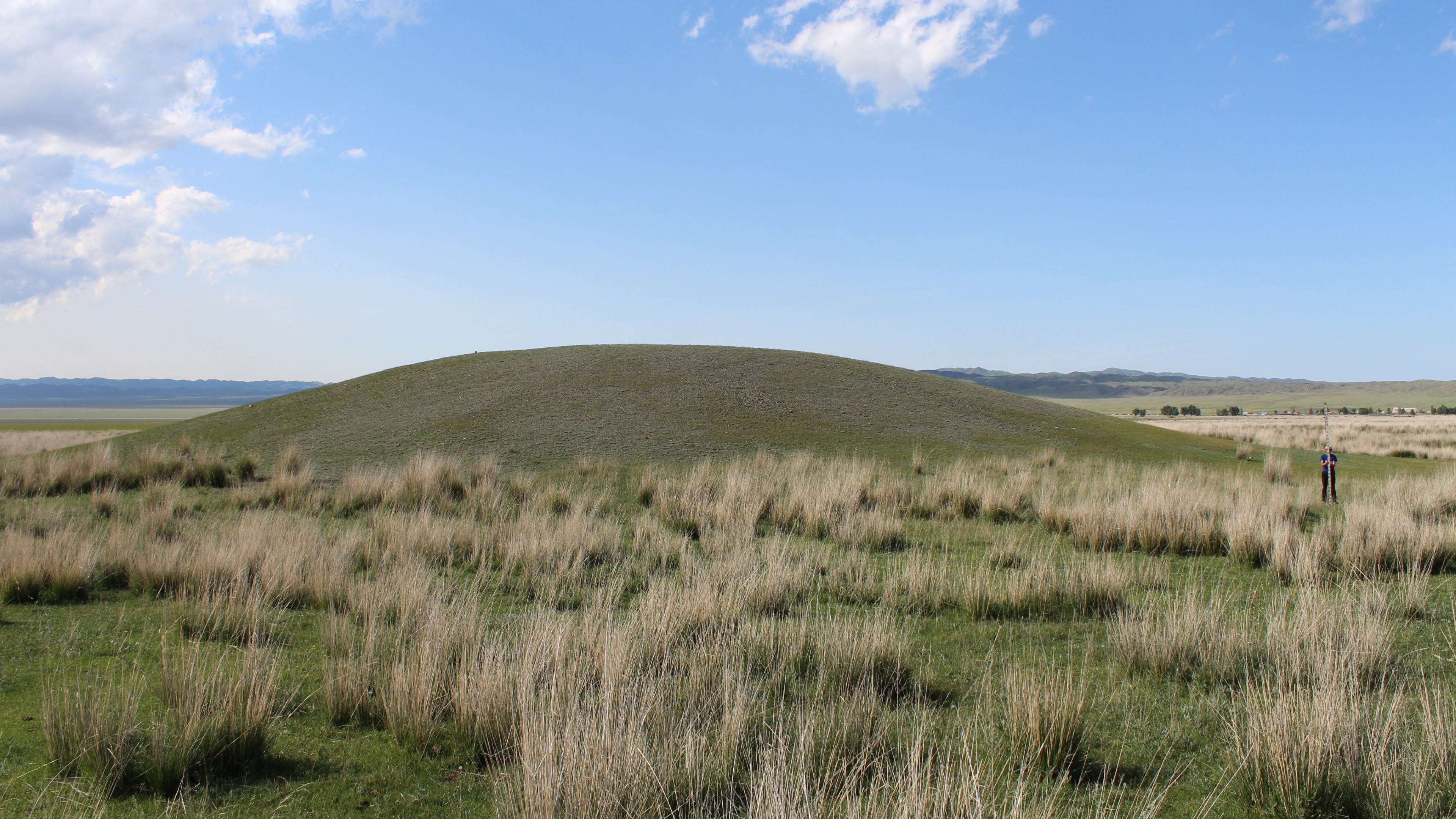
Most of what archaeologists know about the Scythians comes from ancient Greek and Roman accounts of the accomplished equestrians and from their large, mound-shaped tombs, called kurgans, that dot the Eurasian steppe grassland. The Scythians' tattooed mummies and intricate, animal-themed jewelry were as well-known in ancient times as their women warriors, who may have inspired the myth of the Amazons. But the Scythians left no written records of their own and were likely absorbed by other cultural groups after suffering several military defeats around 200 B.C.
In a study published Friday (July 3) in the journal Science Advances, researchers sequenced DNA from 85 Iron Age Scythians to better understand how these geographically spread-out groups were related and how their society was politically structured. They discovered that elite family dynasties ruled the nomadic groups from centralized locations, revealing the origin of social inequality among the Scythians.
The researchers generated genomes from the skeletons of 38 elite and 47 non-elite people buried in kurgan tombs across 20 archaeological sites between 900 and 200 B.C. The non-elite tombs were smaller than the elite tombs, and they lacked the impressive weapons and gold artifacts of the elite tombs.
Based on DNA, the researchers discovered that elite people were 11 times more likely to be related to each other than they were to be related to non-elite people, suggesting there was a powerful extended family group that ruled the steppe nomads.
Among the elite, they discovered two pairs of biological brothers, a brother and a sister, and a parent and child. In one case, the two brothers were buried at different sites some distance apart. They also found two elite grandfathers and grandsons buried in different cemeteries. But the elite people were still buried closer together than the non-elite people were.
One of the tombs, called a kurgan, prior to excavation. (Image credit: Rinat Zhumatayev)
"It is possible that this indicates some degree of geographic centralization of the elite burials being on average closer to each other," study co-author Ainash Childebayeva, a genetic anthropologist at the University of Texas at Austin, told Live Science in an email. "For example, in Siberia there is an area known as the 'Valley of the Kings' that contains many large mounds that are likely elite of the similar time period as in our study."
The researchers also investigated the historical claim by Greek authors such as Herodotus that women held high-status positions.
"An important observation from our study was the noticeable presence of elite women," study first author Ayshin Ghalichi, an archaeogeneticist at the Max Planck Institute for Evolutionary Anthropology in Germany, said in a statement. "Nearly half of the elite individuals in our dataset were female, indicating that women held high social status within Iron Age Scythian society."
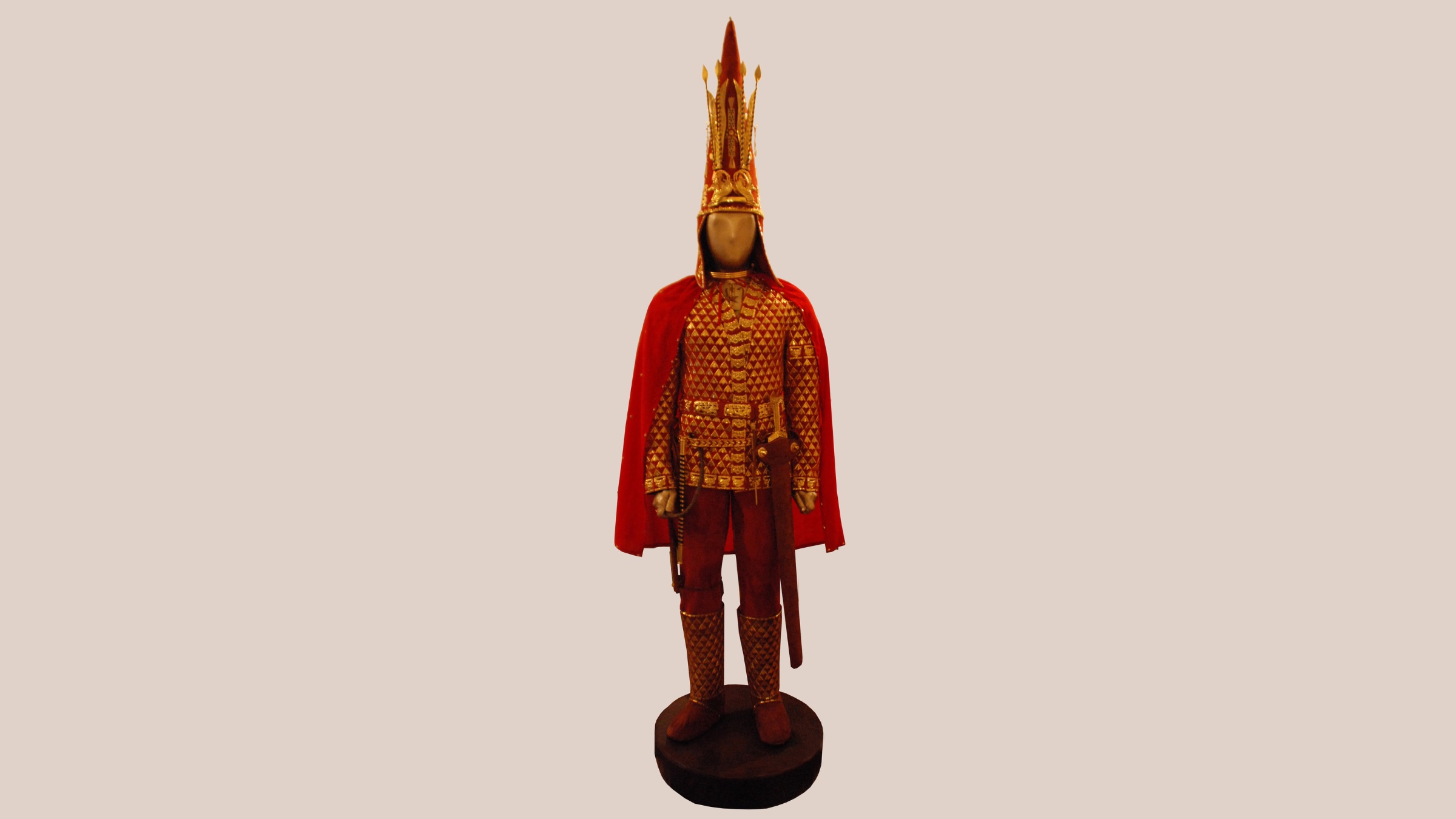
DNA evidence also solved a long-standing question about the "Golden Man." This skeleton of a teenager, discovered in 1969 in a kurgan in Kazakhstan, was found with more than 4,000 gold ornaments and a silver bowl with an inscription that has never been deciphered. Although the skeleton's sex could not be determined based on the bones, experts assumed the person was a powerful male warrior, even though women held nearly equal power among the Scythians.
"Although the data we were able to generate is low coverage, we found that the individual was a lot more likely to be genetically male than female," Childebayeva said, but "we did not identify any relatedness for the Golden Man."
The young age of the Golden Man – 17 based on his bones – and his elite burial status together provide clear evidence of elite dynastic rule, Childebayeva noted. An additional example that is "even more striking" comes from the pairing of a grandfather and his 1-year-old grandson, both buried in elite kurgans, Childebayeva said. These burials of elite children reinforce the conclusion that Iron Age steppe nomads inherited their social status.
"The results presented here further our understanding of the rise of social inequality and differentiation among ancient Eurasian nomadic groups and highlight the practices of the earliest nomadic groups of Central Eurasia in the first millennium BCE," the researchers wrote in the study.
Astronomers have spotted an ancient galaxy shining through the cosmic fog of the early universe, revealing a detailed view that was thought to be impossible.
Using NASA's Hubble Space Telescope, along with data from the James Webb Space Telescope (JWST) and the European Southern Observatory's Very Large Telescope (VLT), researchers detected "ionizing" ultraviolet photons — energetic light capable of stripping electrons from hydrogen atoms — coming from the galaxy, called MXDFz4.4. It's the earliest such detection on record, arriving only around 250 million years after the end of a major cosmic transition called the Epoch of Reionization, the researchers explained in a study published June 23 in The Astrophysical Journal.
For hundreds of millions of years after the Big Bang, the space between galaxies was filled with a fog of neutral hydrogen gas that blocked this kind of light. Over time, radiation from the first stars and galaxies ionized that gas, clearing the fog and letting light travel freely across the universe — a process astronomers are still working to fully understand.
"This was thought to be impossible," Ilias Goovaerts, a postdoctoral fellow at the Space Telescope Science Institute (STScI) in Baltimore and first author of the new study, said to Live Science. "What’s really special about this galaxy is that it’s getting through so much of the intergalactic medium [the ionized plasma between galaxies]. It’s the furthest away so it has the most intergalactic medium to get through."
What makes MXDFz4.4 unusual is its combination of size and star-formation rate. The galaxy is roughly 100 times smaller by area than the Milky Way, yet it forms stars around 10 times faster, packing a large number of massive young stars into a compact space. According to Goovaerts, that crowding effect helps the galaxy punch clear channels through its surrounding gas, letting ionizing light escape both the galaxy and, eventually, the murky space between galaxies. The team estimates that somewhere between half and all of the galaxy's ionizing light is escaping.
The discovery, made in October, came about somewhat by chance. While preparing an unrelated funding proposal just days before a major deadline, Goovaerts examined an existing, deep Hubble image to check whether anyone had looked for this kind of signal there before. Within a couple of hours, he had a promising signal. "It was very, very quick from us having the idea to me going, okay, there’s something here and this is exciting," Goovaerts said. "We were excited from day one, but then it took months for it to mature and to extract all the properties about the galaxy."
An illustration of the galaxy MXDFz4.4 as it appeared roughly 1.4 billion years after the Big Bang, when the Era of Reionization was drawing to a close. (Image credit: NASA, ESA, Leah Hustak (STScI))
The finding relied on an unusually rich set of observations: an extremely deep Hubble image taken from 40 hours of observations; JWST imaging across many wavelengths, used to characterize the galaxy's stars and star-formation history; and one of the deepest spectra ever taken of a single patch of sky, gathered over roughly six days of observing time with the VLT's Multi-Unit Spectroscopic Explorer instrument. That spectrum confirmed the galaxy's distance through its Lyman-alpha emission line — which serves as a "hydrogen fingerprint," or a glow given off by excited hydrogen gas, that astronomers can use to measure cosmic distance and time.
No other galaxy from this early period had previously shown detectable ionizing light, making MXDFz4.4 one of a kind so far, study co-author Marc Rafelski, deputy mission head for the Hubble Space Telescope at STScI, noted in the statement. .
Researchers say bursts of vigorous star formation like the one seen in MXDFz4.4 may have played an important role in clearing the early universe's hydrogen fog and that more galaxies like it are likely still waiting to be found.
Two brothers from the wealthy and powerful Medici family died of malaria and were not poisoned as a rumor had suggested, archaeologists have confirmed based on a DNA analysis of the brothers' skeletons. The analysis also revealed a unique, mutated strain of malaria that may hold the key to understanding the evolution of the disease in Europe.
The Medici family rose to power in the 15th century by creating the largest bank in Europe. The family used their extraordinary wealth to fund Renaissance artists and to start a political dynasty that eventually included numerous dukes, four popes and two queens of France.
In the 16th century, Cosimo I took over all of Tuscany as grand duke. But within a span of 25 years, at least five of his family members died from high fevers. This gave rise to a rumor that some of them had been poisoned with arsenic by another family member, although most people believed they died of malaria.
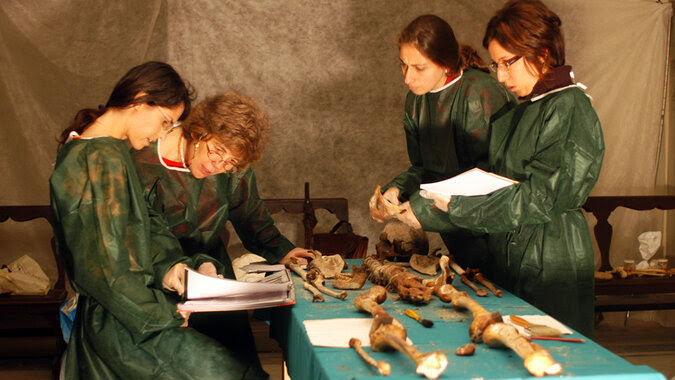
To get to the bottom of the 500-year-old Medici cold case, an international group of researchers tested the bones of two of Cosimo I's sons: Cardinal Giovanni de' Medici and Grand Duke Francesco I de' Medici, for the DNA of Plasmodium falciparum, the parasite that causes the deadliest form of malaria and that is transmitted by mosquitoes.
The researchers extracted ancient DNA from the bones of Cardinal Giovanni, who died in 1562 at age 19 in the same month as his mother and younger brother Garzia, and from Grand Duke Francesco I, who died at age 46 in 1587 along with his wife. The team's study was published online June 17 in the journal iScience.
Because of the almost simultaneous deaths of Grand Duke Francesco I and his wife, a rumor circulated that another brother had poisoned them over a long-standing feud. But the Medicis were known to have frequented their family villas in marshy and swampy areas of Tuscany, where malaria was prevalent well into the 20th century.
Researchers found evidence of P. falciparum in the bones of both Medici brothers, confirming reports from court physicians at the time that described the brothers as sick with "tertian fever," a type of high fever that returns every three days and is a hallmark of malaria. The medical reports also revealed the brothers were treated with bloodletting.
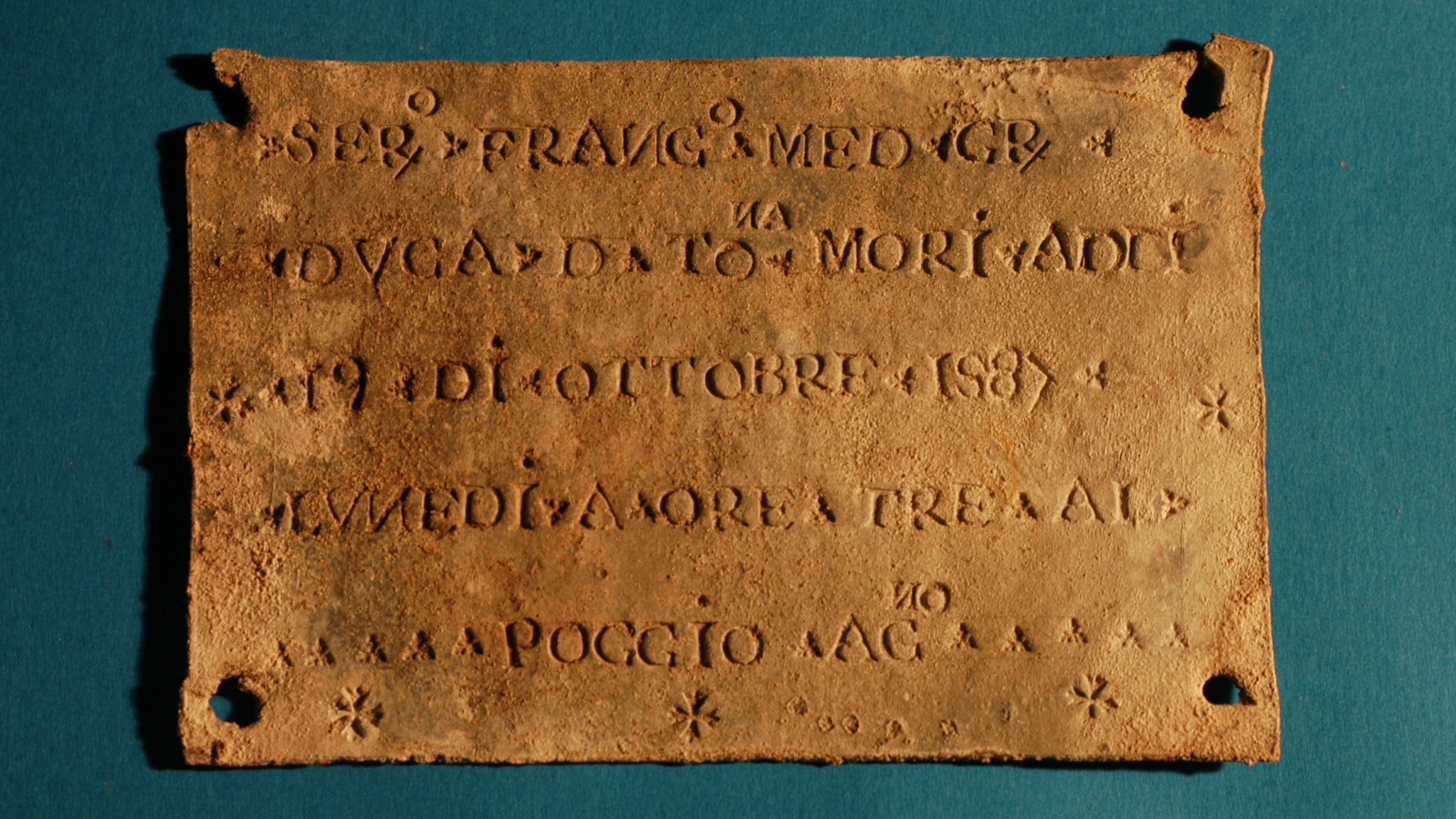
The name plate from the tomb of Grand Duke Francesco de' Medici, who died of malaria in 1587. (Image credit: Courtesy the University of Pisa)
"Now we can say with scientific certainty that malaria, not poisoning, killed Grand Duke Francesco de Medici," study co-author Valentina Giuffra, a medical historian at the University of Pisa, said in a statement.
But the ancient-DNA study held two additional surprises.
The Grand Duke's bones were positive not only for P. falciparum but also for Plasmodium malariae, a different parasite species that also causes malaria in humans, suggesting that both species contributed to the severe illness that killed him and his wife.
Cardinal Giovanni, on the other hand, had only P. falciparum, but the specific strain that infected him was previously unknown. The strain is similar to those found in ancient and early modern Europe, but with two mutations the researchers had never seen before, they wrote in the study.
"The study of ancient DNA offers us an opportunity not only to diagnose malaria in the remains of individuals from the past, but it also offers us a window for understanding the evolution of malaria species, Plasmodium falciparum in this case, which can help scientists better understand how the pathogen adapts over time," study first author Alexander Ochoa, an evolutionary biologist at Yale University, said in the statement.
Further analysis of the brothers' bones is needed to determine the evolutionary relationship between the strains of malaria they carried, the researchers wrote in the study.
What do you know about the bones in your body? Test your knowledge with our human skeleton quiz.
This month’s episode highlights the bright star Spica, now prominent high in the southwest after evening twilight. It’s leading the parade of constellations, along with the brilliant planet Venus, that will grace the Northern Hemisphere’s summer skies. You'll also get to know other brights stars in Spica’s vicinity, along with excellent tips on how to be a better stargazer. So grab curiosity and come along on this month’s Sky Tour.

 Login