❌

Reading view

The Bougainville community in Panguna wants justice for mining’s ‘toxic legacy’

Theonila Roka Matbob grew up next to what was — at the time — the world’s largest open-pit mine in Bougainville, an autonomous region in Papua New Guinea, operated by a subsidiary of Rio Tinto. This mine wrought environmental and social devastation on the community of Panguna for decades. And many of these impacts carry on today, says Roka Matbob, who is an Indigenous Nasioi woman and politician. With the help of Jubilee Australia and the Human Rights Law Centre, Roka Matbob was able to file a legal complaint with Australia’s National Contact Point for Responsible Business Conduct. As a result, Rio Tinto signed a memorandum of understanding with the Bougainville government to remediate the impacts of this mine. For this legal achievement, Roka Matbob was awarded the Goldman Environmental Prize. However, she is skeptical that remediation for these impacts will occur. She joins the podcast this week to tell the Bougainville story and what she wants people to understand about mining’s impacts on the autonomous region and her community. “ The Bougainville story is a result of Australia’s political decision through Papua New Guinea government now implemented on Bougainville and leaving behind a toxic legacy that is already been kind of fenced out, not to have a forum to talk about,” she says. “So my intention is for us to start telling this story.” Late last year, the Bougainville government signed another memorandum of understanding with an Indian metals company, Loyd’s Metals, to redevelop the Panguna mine. Roka Matbob says…This article was originally published on Mongabay

  •  

SE PREPAREM

💾

USE O CUPOM SCHWARZA E GANHE ATÉ 30% DE DESCONTO EM TODO SITE: https://creators.insiderstore.com.br/SCHWARZA
#insiderstore

SE PREPAREM Na notícia de hoje: Uma teoria curiosa vem ganhando força nas redes sociais após publicações de internautas, influenciadores e da suposta vidente @PaladinRood. Segundo essas alegações, uma manifestação extraterrestre poderia ocorrer durante a final da Copa do Mundo, com base em previsões mediúnicas, profecias e supostos vazamentos relacionados a OVNIs.

Em maio de 2023, em Peruíbe (SP), uma testemunha registrou em vídeo um objeto alongado e brilhante voando a baixa altitude sobre a cidade.

Alienígena vivo mantido em cativeiro em Kapustin Yar, 1992.

Contato PROFISSIONAL: canaldoschwarza@gmail.com

Contato para palestras: juliana@vesperassessoria.com.br


Fontes:

https://www.ovnihoje.com/2026/06/14/videntes-preveem-aparicao-alienigena-na-final-da-copa-do-mundo/

@enigmas_fantasticos_
  •  

New Duck-Billed Dinosaur Unearthed in Romania

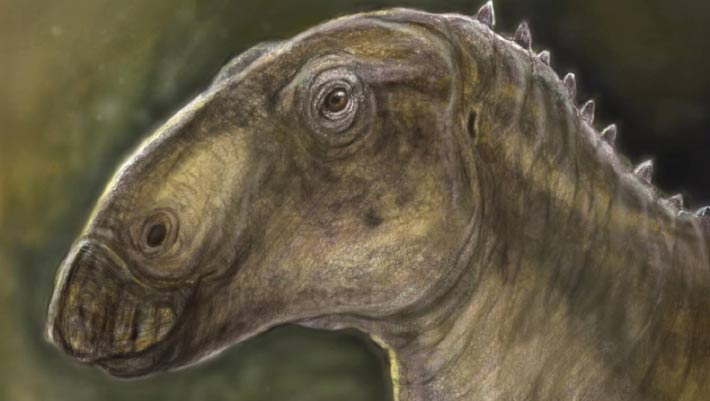
Kryptohadros kallaiae. Image credit: Tibor Pecsics.

An international team of paleontologists from Romania, Hungary and Italy has identified a new genus and species of herbivorous, duck-billed dinosaur from an incomplete skeleton unearthed in the Hațeg Basin, a bowl-shaped depression in the Carpathians of present-day Romania.

The post New Duck-Billed Dinosaur Unearthed in Romania appeared first on Sci.News: Breaking Science News.

  •  

Lawsuit demands accountability for Cerro de Pasco mining pollution in Peru

A mine that has been operating for decades in the Peruvian Andes continues to contaminate the soil, water and air for thousands of people living nearby, according to a lawsuit filed last month. The contamination has displaced farming and livestock, the lawsuit said, while causing cognitive issues in children, among other public health concerns. Companies working at the Cerro de Pasco mine, located in Peru’s central highlands, need to be held responsible for the pollution and public health issues that have affected more than 100,000 people, according to Cerro de Pasco Mayor Julio Rupay Malpartida and public prosecutor Darwin Alejandro Ramón Yalico, who filed the injunction petition on behalf of the municipality. “[The] environmental contamination is on such a scale that it’s present in every corner of the city,” the lawsuit said, “a consequence of the accumulation of heavy metals and toxic substances.” The area has been home to mining activity since at least the 16th century, when the Spanish discovered silver deposits during colonization. More recently, the private company Volcan Compañía Minera took over the mines in 2000 and has overseen underground and open pit operations to extract silver, copper, zinc and lead, among other metals. The lawsuit also lists Volcan subsidiaries Óxidos de Pasco, Empresa Administradora Cerro and Empresa Minera Paragsha as defendants. The Cerro de Pasco mine from above. Image courtesy of SkyTruth/Flickr. CC BY-NC-SA 2.0 Some of the operation is located in the center of the city, with a population of more than 74,000. As a result, particulate…This article was originally published on Mongabay

  •  

Astronaut Jessica Meir Assists With Hardware Updates for NASA’s Cold Atom Lab

2 Min Read

Astronaut Jessica Meir Assists With Hardware Updates for NASA’s Cold Atom Lab

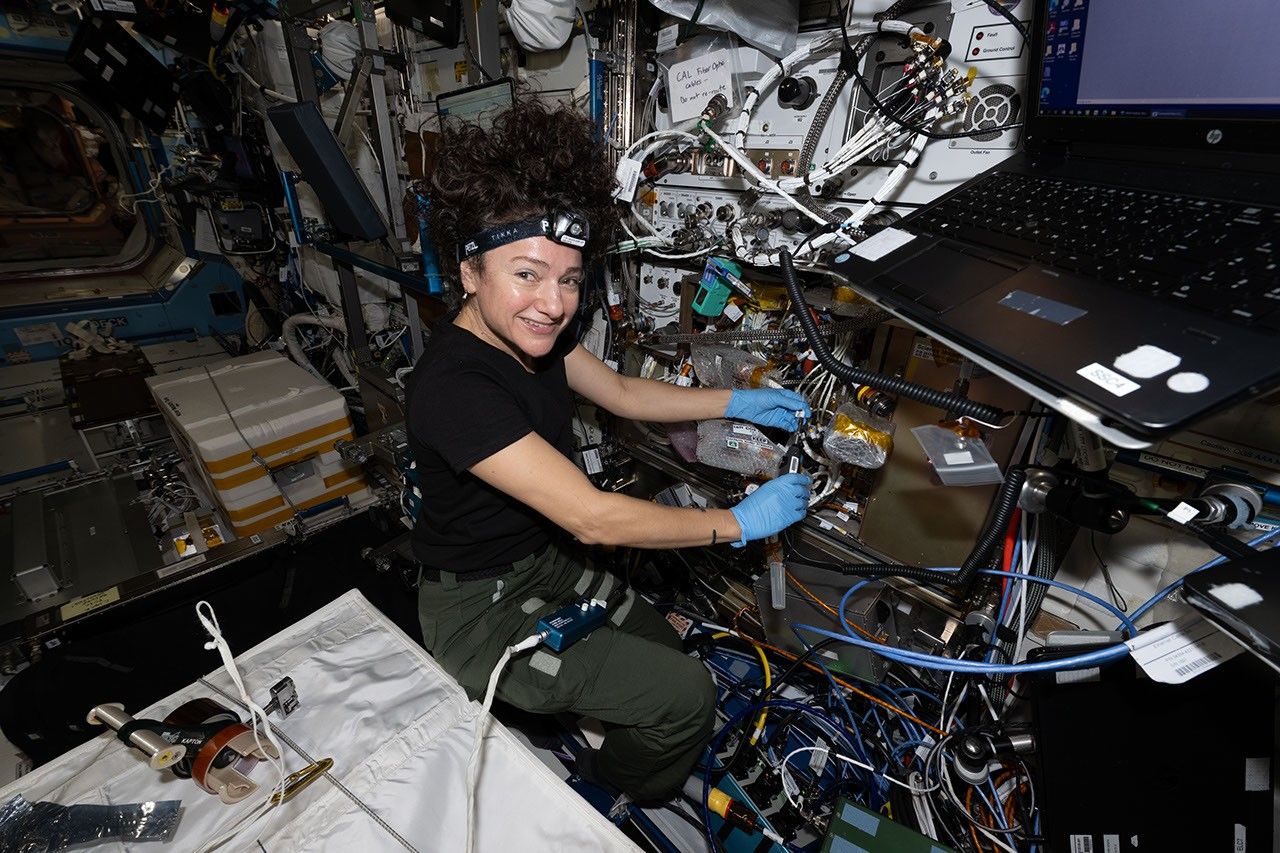
A woman in a black T-shirt with a headlamp affixed to her head and her hair floating up above her wears latex gloves to handle cabling that she’s working on. Wires, a laptop computer, and other equipment surround her.
PIA26725
Credits: NASA

Downloads

Astronaut Jessica Meir Assists With Hardware Updates for NASA’s Cold Atom Lab

JPEG (4.91 MB)

Description

NASA astronaut Jessica Meir inspects optical fibers while installing hardware updates to the agency’s Cold Atom Lab, or CAL, aboard the International Space Station on May 8, 2026.

About the size of a minifridge and operated from Earth, CAL chills atoms to temperatures below minus 459 degrees Fahrenheit (minus 273.15 degrees Celsius), so close to absolute zero that they form a large quantum object called a Bose-Einstein condensate (BEC) — a fifth state of matter distinct from solids, liquids, gases, and plasma. In a BEC, scientists can observe the quantum properties of atoms at a scale visible to the naked eye. For instance, atoms and particles sometimes behave like solid objects and sometimes behave like waves, a quantum property called “wave-particle duality.”

Managed by Caltech in Pasadena, NASA’s Jet Propulsion Laboratory designed, built, and operates Cold Atom Lab, which is sponsored by the Biological and Physical Sciences (BPS) division of NASA’s Science Mission Directorate at the agency’s headquarters in Washington. The BPS division pioneers scientific discovery and enables exploration by using space environments to conduct investigations that are not possible on Earth. Studying biological and physical phenomena under extreme conditions allows researchers to advance the fundamental scientific knowledge required to go farther and stay longer in space, while also benefiting life on Earth. 

To learn more about Cold Atom Lab, visit:

https://coldatomlab.jpl.nasa.gov/

The post Astronaut Jessica Meir Assists With Hardware Updates for NASA’s Cold Atom Lab appeared first on NASA Science.

  •  

Bumble Bees Solve an Insect Version of a Famous Primate Intelligence Test

Bumble Bee Standing on a BallBumble bees demonstrated an unexpected ability to solve a novel object-based challenge without training. A bee’s brain is smaller than a sesame seed, yet in a new experiment, some bumble bees appeared to solve a problem that required more than simple instinct. They had to move an object into position, climb onto it, and use [...]
  •  
  •  

ELE EXPLODIU... então FIZEMOS OUTRO! DEU BOM?

💾

Depois que nosso primeiro pião gigante terminou de um jeito nada planejado, surgiu uma pergunta inevitável: e se a gente construísse outro?

Neste vídeo, tentamos criar uma versão ainda melhor, mais resistente e mais equilibrada de um dos projetos mais malucos que já passaram pela oficina do Manual do Mundo.

Para isso, usamos engenharia, modelagem 3D, corte a laser, MDF, EVA e muita tentativa e erro para descobrir como transformar dezenas de peças em um único objeto capaz de girar de forma estável sem se destruir no processo.

E no meio do caminho ainda respondemos uma pergunta fascinante: se a Terra gira tão rápido, por que ela não explode como um pião?

Um vídeo sobre física, construção, equilíbrio, rotação e a obsessão humana por fazer coisas cada vez maiores.

#pião #física #brincadeira #infância #rotação

Seja membro deste canal e ganhe benefícios:
https://youtube.com/channel/UCKHhA5hN2UohhFDfNXB_cvQ/join

► Inscreva-se: https://youtube.com/user/iberethenorio?sub_confirmation=1
► Canal de cortes: https://youtube.com/channel/UCzBTlYfHYMwVEru4hmLM8hg

REDES SOCIAIS
Instagram: http://instagram.com/manualdomundo
TikTok: https://www.tiktok.com/@manualdomundo
Facebook: http://facebook.com/manualdomundo

Instagram Mari: http://instagram.com/amarifulfaro
Twitter Iberê: http://twitter.com/iberethenorio

Dúvidas e sugestões: contato@manualdomundo.com.br
Imprensa e convites: assessoria@manualdomundo.com.br
Negócios: comercial@manualdomundo.com.br

CRÉDITOS

Direção Geral e Apresentação
IBERÊ THENÓRIO

Direção de Estratégia e Marca
RUBENS ISHARA

Direção de Conteúdo Educacional
FERNANDO SOUZA

Direção de Produção
TIAGO CÉSAR SILVA

Direção Financeira
KATIA HATSUMI

Roteiro
BEATRIZ HERMINIO

Conteúdo
FERNANDA T. WAIMBERG
ALISON SOUSA (Estágio)
DANIEL R. UNZELTE (Estágio)
JULIA MARTINATO (Estágio)

Produção
DANIEL PEDROSO
LUCAS VALLADO

Fotografia
JANSEN BISPO

Edição e Finalização
GUSTAVO GIROTTO
NILTON SILVA (Estágio)
FILIPE CANDIDO
JOÃO BRASIL

Arte
ANDRESSA GONÇALVES

Mídias Digitais
ALEX TERUEL (Estágio)

Distribuição
RODOLFO VIANNA

Comercial
NAYARA CRISTINA FERREIRA

Infraestrutura e Serviços
MARIA OLIVEIRA

Agradecimento:

Apoio:

Copyright© Manual do Mundo®. Todos os direitos reservados.
  •  

5,000-year-old burial of man with battered skull found in kiln in Germany — and he may have been a human sacrifice

Archaeologists in Germany have unearthed an unusual burial of an injured man who was thrown into an abandoned kiln nearly 5,000 years ago. Because archaeologists don't typically find artifacts or bones in kiln pits, they suspect the man may have been a human sacrifice.

While workers were constructing a power line near Gerstewitz, a village in central Germany, archaeologists found a Corded Ware culture grave, according to a June 15 statement from the State Office for Heritage Management and Archaeology (LDA) Saxony-Anhalt.

The Corded Ware culture, named after the distinctive cord-like impressions found in their pottery, spread across Northern Europe between the Late Neolithic and the Bronze Age, around 2900 to 2050 B.C. Graves of Corded Ware people tend to follow a strict pattern: Men were buried on their right side, women were interred on their left, and everyone was buried in a crouched position facing south. But sometimes, graves deviate from this pattern.

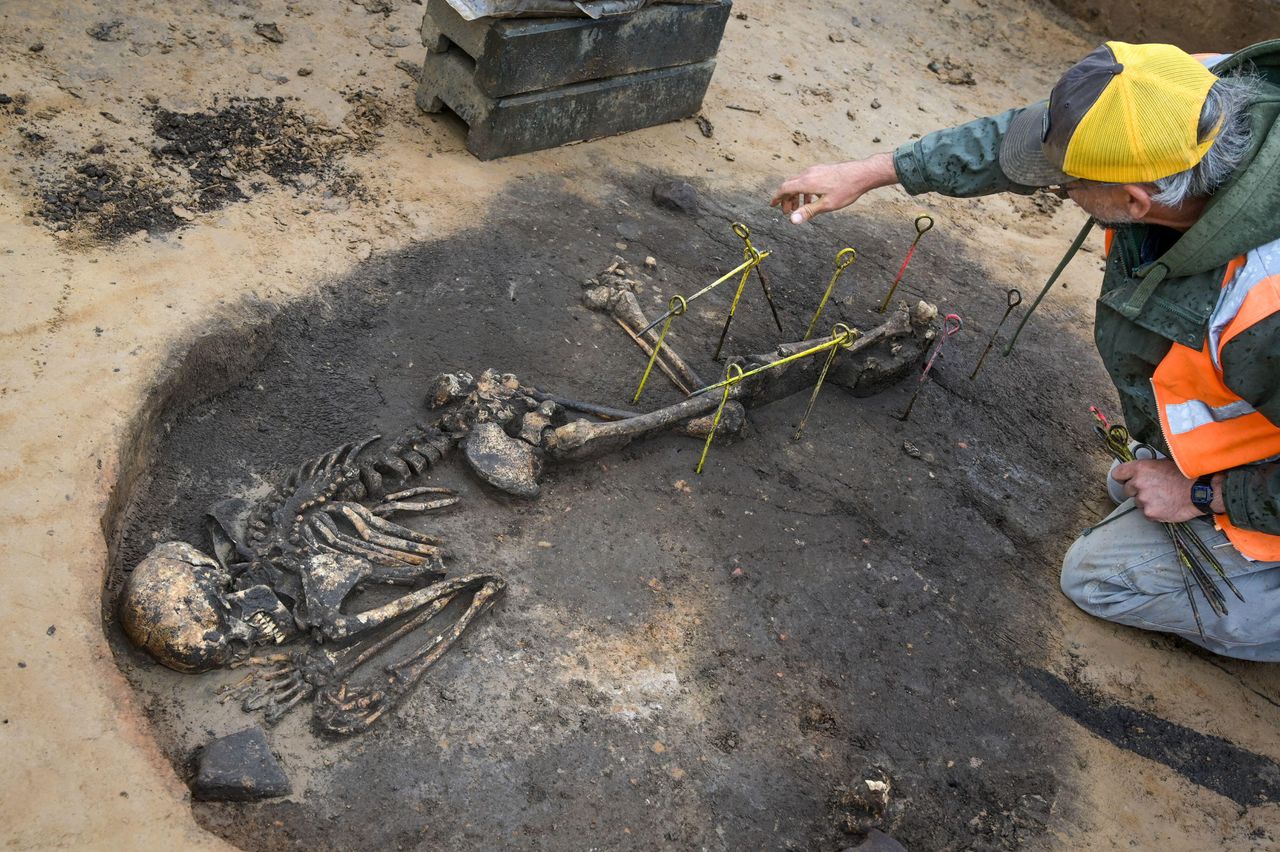
The newly excavated grave at Gerstewitz revealed the skeleton of a man who was about 25 years old when he died. He was buried in a crouched position facing south, but rather than being placed in a grave or under a small mound, he was found in a kiln pit. This pit, essentially a hole that had been dug into the ground, held ancient evidence that people had used it to burn material, such as wood or food, or to fire clay. Additionally, the man's skull showed signs of injury.

Experts have suggested three possible explanations for the unusual burial. The skull injury may have resulted from violence, meaning someone murdered the man. Alternatively, he could have perished in a Copper Age battle lost to history. But a third possibility is that he was placed in a kiln pit as a human sacrifice.

an archaeologist places the point of a trowel near the skull of a person who died 5,000 years ago

The man buried in the kiln pit sustained an injury to his head before he died. (Image credit: dpa Picture-Alliance)

Oliver Dietrich, an archaeologist at LDA Saxony-Anhalt, wrote in the statement that, in rare cases, Corded Ware kiln pits contain cow or dog bones thought to be sacrificial offerings to unknown deities. While it's possible this man was a human sacrifice, Dietrich noted that future laboratory analysis should provide more information about the grave and the person buried there.

This is not the first time a sacrificial pit has been found in Gerstewitz. Last year, archaeologists with LDA Saxony-Anhalt discovered 12 pits ringed by a moat-like ditch. The pits were full of dog bones, human skulls and complete ceramic pots and had been sealed with the rubble of burnt houses, according to a 2025 statement about that discovery. An additional human skeleton was found buried in a converted oven pit. These finds, however, were attributed to the Salzmünde Culture (3400 to 3050 B.C.), which predated the Corded Ware people.

Other discoveries near Gerstewitz have revealed that the area was settled and occupied for over 6,000 years. The excavation there will last until at least 2027, when the power line project is expected to be completed.

What do you know about the Paleolithic, Mesolithic and Neolithic eras? Find out with our Stone Age quiz!

  •  

Psychologist Laura Carstensen uncovered a surprising upside to growing older: as our sense of the time we have left grows shorter, we invest more in the people and activities that matter most to us

This piece summarises published research on ageing and emotional well-being. We are not psychologists or clinicians, and nothing here is psychological advice. If you’re struggling with mood, isolation, or a life-stage transition of the kind discussed, a licensed psychologist or your GP is the right place to start.

“When we recognize that we don’t have all the time in the world, we see our priorities most clearly. We take less notice of trivial matters.” That is Laura Carstensen, a Stanford psychologist, describing the shift her research traces in how people spend their attention as they age.

And it is probably not the story most of us expect ageing to tell.

The assumption that age means shrinking

The familiar picture of growing older is one of contraction. The social circle thins. Ambition cools. The appetite for new people, new places and new experiences fades, and what remains looks like a managed decline.

Read that way, an older person with fewer friends and narrower routines is a person who has lost something and is making do with the remainder.

That reading treats the narrowing almost as damage. Carstensen’s work, developed through her socioemotional selectivity theory, points somewhere stranger. The narrowing is real, but it is largely chosen rather than imposed.

What Carstensen found

The shift she documents is selective rather than passive. Older adults do not simply lose contacts; they prune the peripheral ones and hold onto the people who matter most. They put less effort into meeting new people and more into the relationships they already have. When time feels limited, the theory holds, people are motivated to pursue emotional satisfaction over information.

That motivation shows up as a particular set of preferences. Carstensen describes older adults as “more likely to invest in sure things, deepen existing relationships, and savor life.” The hedge in her own phrasing matters. This is a tendency the research finds, not a rule every person follows.

One detail makes the pattern hard to dismiss as mere mellowing. In a memory study, Carstensen found that older adults remembered nearly twice as many positive images as negative or neutral ones — a skew toward the good that younger adults did not show. Attention itself appears to reorganise around what feels emotionally worth keeping.

Time horizon, not age, likely does the work

The central claim is that age is not really the cause. One key tenet of the theory, in Carstensen’s words, is that “perceived time horizons, not chronological age, account for age differences in goals and preferences.” What changes behaviour is the sense of how much time remains, and that sense usually shortens with age, though not always for the same reasons.

The contrast with youth is the cleanest test. When time horizons are long, Carstensen says, “people are constantly preparing, trying to soak up all the information they can.” This makes sense when you are building toward an open future, and tends to lose its appeal once the future feels finite.

Carstensen and colleagues found that shortening or expanding a person’s sense of remaining time changed their goal preferences regardless of how old they were. A similar effect surfaced again under unusual conditions: an analysis published in Psychological Science found that the age advantage in emotional well-being held up during the early COVID-19 pandemic, with older adults reporting better emotional experience than younger ones even under a shared acute threat.

The paradox of ageing

If ageing were simply loss, emotional life should worsen with it. Instead, research suggests the opposite.

Her explanation for the paradox is plain. She describes the sequence this way: “we invest in more emotionally important parts of life and life gets better.” It tends to get better, in her reading, because the investment has shifted to the things that reliably pay off in contentment.

What this reframes

Seen through Carstensen’s lens, the older person with a smaller circle and quieter ambitions is not a diminished version of their younger self. They are perhaps simply someone acting on a clearer sense of what their time is for. The same behaviour that looks like withdrawal from the outside can be, from the inside, a deliberate reallocation toward what already matters.

The practical reach of the idea extends well beyond ageing. Because perceived time, not the calendar, sets the priorities, anyone whose horizon suddenly shortens — through illness, upheaval, or simply paying attention to the clock — can find the same reordering arriving early. Later life is simply where it shows up most reliably.

The post Psychologist Laura Carstensen uncovered a surprising upside to growing older: as our sense of the time we have left grows shorter, we invest more in the people and activities that matter most to us appeared first on Space Daily.

  •  

New Species of Walking Shark Discovered off Papua New Guinea

Hemiscyllium dudgeonae, male paratype, Nubwageta, Milne Bay province, Papua New Guinea. Image credit: M.V. Erdmann.

Marine biologists have identified a new species of the shark genus Hemiscyllium in the waters of eastern Papua New Guinea, expanding a remarkable group of reef-dwelling sharks known for using their four fins to ‘walk’ across the seafloor.

The post New Species of Walking Shark Discovered off Papua New Guinea appeared first on Sci.News: Breaking Science News.

  •  

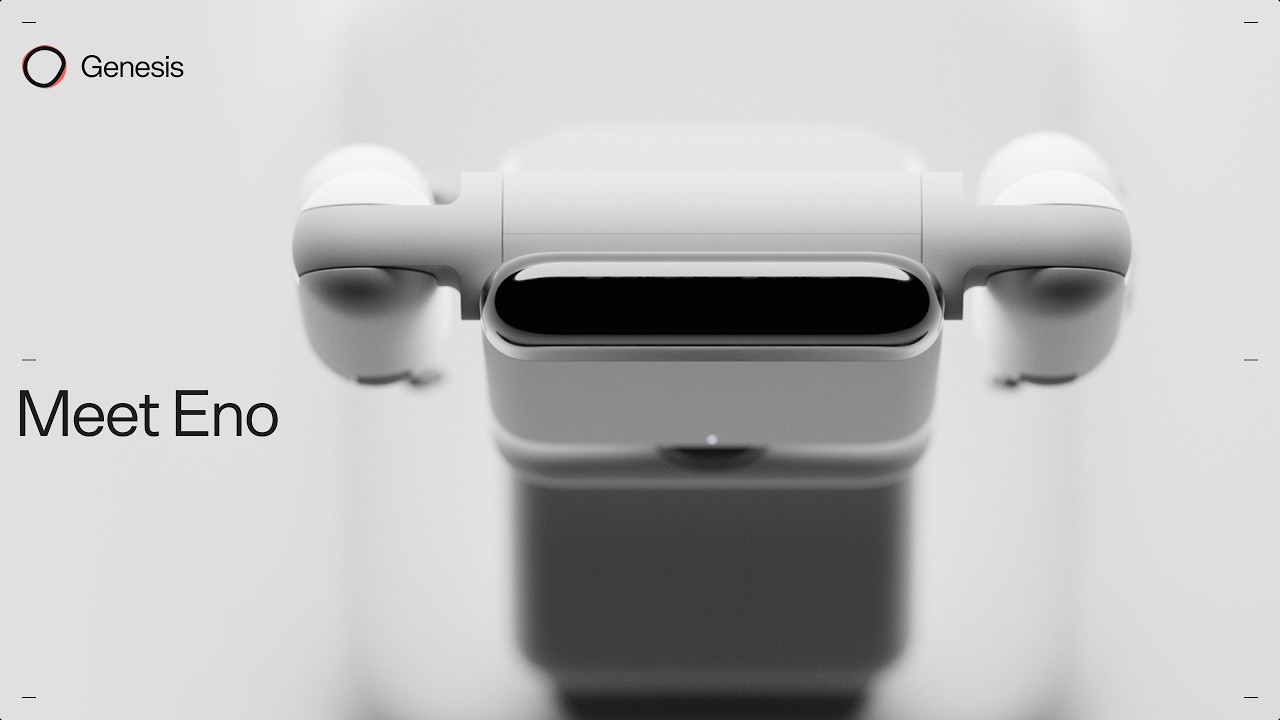
Eno humanoid robot aims to become the general-purpose machine for every workplace

Genesis AI has unveiled Eno, its first general-purpose robot, as the company pushes toward building machines that can work across factories, laboratories, hospitals, hotels and eventually homes.

The robot combines Genesis AI’s custom hardware with GENE, the company’s robotics foundation model, which serves as Eno’s control system. According to the company, the robot is designed to perform complex tasks, adapt to changing environments and complete objectives with minimal human intervention.

Genesis AI said Eno differs from traditional industrial robots because it is built to operate as a physical agent rather than execute a fixed set of commands. The company claims the system can understand goals, reason through changing conditions, retain memory and carry out multi-step tasks over extended periods.

The announcement comes as companies across the robotics sector race to develop humanoid and general-purpose robots capable of handling a wider range of real-world jobs with less specialized programming.

Built beyond humanoids

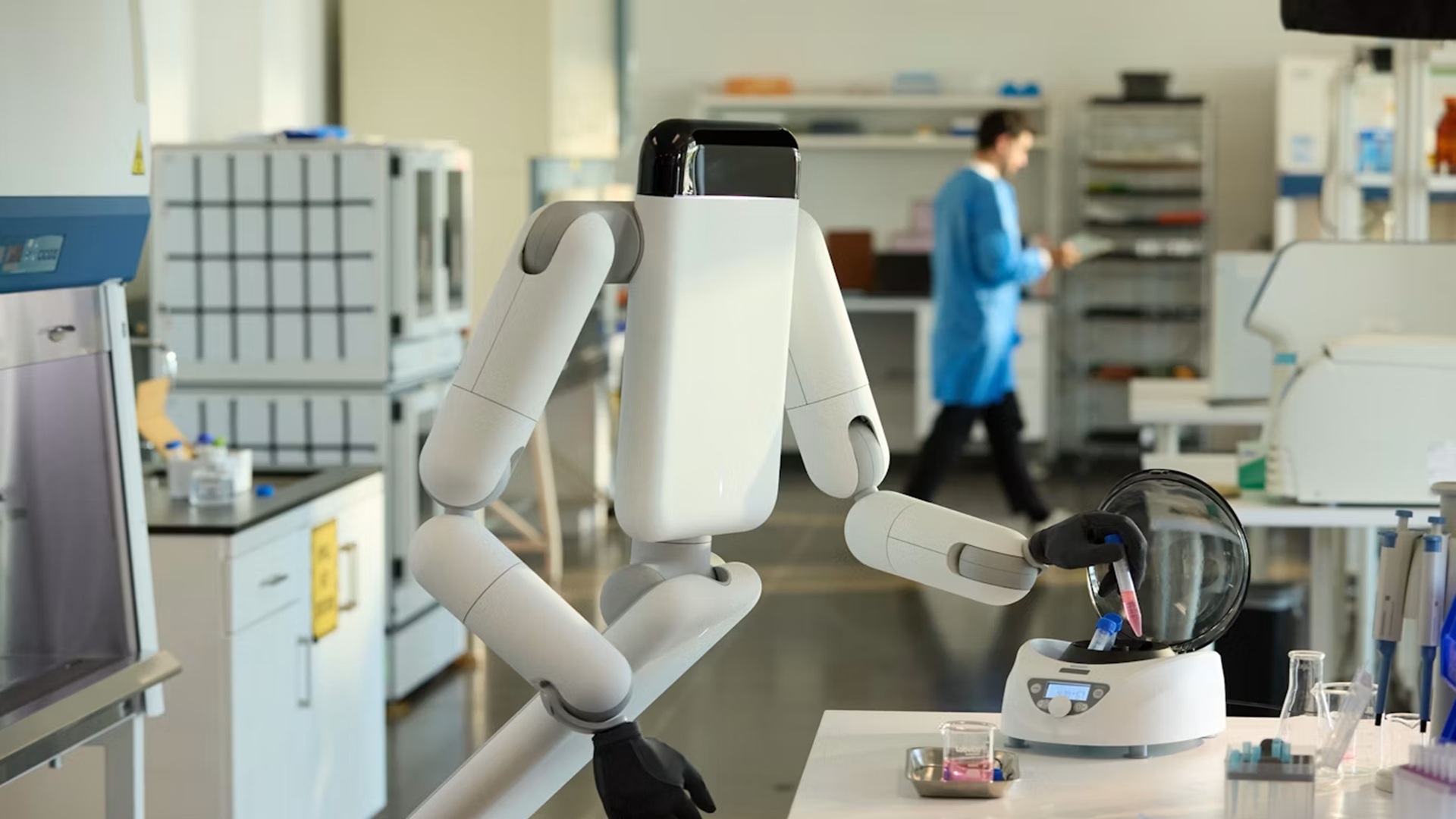
Instead of closely resembling a human, Eno uses a wheeled base topped by an adjustable tower structure. The robot can change its height and reach in real time and fold into a more compact form when not in use.

Its most human-like features are its robotic hands. Genesis AI says the hands match the form and function of human hands, allowing Eno to use existing tools and interact with environments already designed for people.

“The only path to creating a robot that can truly deliver value to society and excel in the real world is through intentional design and a single, comprehensive system,” said Zhou Xian, co-founder and CEO of Genesis AI.

“From day one we’ve approached our design and engineering through a production mindset built around bringing our hardware, software and intelligence together as a whole.”

The company said Eno was designed alongside GENE so that the robot’s body and intelligence system function as a single platform. GENE is intended to give the robot human-level dexterity and the ability to handle long-horizon tasks that require planning and adaptation.

Showing robotic intent

One of Eno’s distinguishing features is an optional built-in screen that displays the robot’s reasoning process, operational status and intended actions in real time.

Genesis AI said the feature is designed to improve transparency and help people understand what the robot is doing as it works alongside human operators.

“What Genesis is building with Eno is a fundamentally new model for extending human capability through advanced robotics,” said Eric Schmidt, former Google CEO and Genesis AI investor.

“The breakthrough is not replacing human expertise, but amplifying it — making advanced robotics genuinely useful, accessible, and scalable across industries.”

According to the company, Eno could eventually manage entire workflows rather than perform isolated actions. Examples include keeping production lines supplied, coordinating tasks across facilities and preparing workspaces for the next shift.

Genesis AI plans to begin production and targeted customer deployments before the end of 2026. Initial deployments will focus on manufacturing, logistics and laboratory environments, followed by hospitality and healthcare settings. Consumer-focused applications are expected at a later stage.

The company recently raised $105 million in seed funding and says additional robotic platforms are already under development as part of its broader roadmap for general-purpose robotics.

💾

French startup Genesis AI unveils Eno, a general-purpose robot designed to handle complex tasks across industries.
  •  

Belgium unveils low-cost laser-guided rocket with proximity sensor for drone hunts

Countering small drones has become as much a financial challenge as a military one. Armed forces increasingly find themselves using costly interceptors against targets that are cheap to build and easy to deploy. Thales says its newest guided rocket was developed to restore that balance.

The company has unveiled the LGR275 Proxy, a 70mm laser-guided rocket designed specifically to intercept small unmanned aerial systems. Unlike traditional air defense interceptors, the new weapon aims to bring down drones without imposing unsustainable costs on military budgets.

Designed for drone hunts

At the heart of the LGR275 Proxy is a proximity sensor designed to improve engagements against aerial targets, adding a new capability to Thales’ established 70mm guided rocket family.

Instead of relying solely on direct impact, the sensor increases the chances of neutralizing fast-moving drones by triggering the rocket at the optimal moment. Thales paired the sensor with a military-grade warhead engineered to engage smaller airborne threats.

The result is a weapon designed to strike a balance between effectiveness and affordability. Modern militaries often deploy expensive missiles against low-cost drones. That mismatch can drain inventories and stretch defense spending during prolonged operations. Thales says the LGR275 Proxy addresses that problem by offering a more economical interception option.

The rocket supports both surface-to-air and air-to-air missions, giving commanders greater flexibility in how they deploy it. Forces could integrate the system into layered defense networks to engage threats before higher-end interceptors become necessary.

Class 1 and Class 2 drones have emerged as some of the most persistent threats on contemporary battlefields. They conduct reconnaissance missions, direct artillery fire, and carry explosive payloads. Their low cost and widespread availability make them difficult to counter using traditional methods alone.

Production set to expand

Thales Belgium plans to significantly increase the output of its guided rocket family over the next several years. The company expects production capacity to triple between 2026 and 2028. It also intends to strengthen its industrial footprint to support international customers seeking faster deliveries and dependable supply chains.

The production ramp-up reflects growing global demand for counter-drone capabilities. Recent conflicts have shown how quickly drone attacks can overwhelm traditional defenses and deplete interceptor stockpiles.

For defense manufacturers, production capacity has become almost as important as technical performance. Armed forces increasingly seek suppliers that can deliver at scale while maintaining consistent quality and shorter lead times.

Part of a broader shield

The LGR275 Proxy will also reinforce SkyDefender, Thales’ multi-layered Integrated Air and Missile Defence architecture. By adding a lower-cost interception layer, the company aims to provide customers with more sustainable protection against evolving aerial threats. Layered defenses allow operators to match the right weapon to the right target rather than relying on a single interceptor type.

Alain Quevrin, Country Director for Thales Belgium and Luxembourg, said the company developed the new rocket to help nations strengthen their readiness against the expanding drone threat.

He said Thales Belgium remains a leading producer of NATO-standard rockets and noted that the planned production increase would help meet the operational requirements of armed forces facing increasingly complex security environments.

  •  

Rivian lays off hundreds, under 2% of staff, a week after R2 launch

Rivian laid off hundreds of workers on Tuesday, or less than 2% of its workforce, just one week after it began deliveries of its all-important R2 SUV.

The electric automaker confirmed the cuts hit its service and customer teams, which include sales and marketing, as it tries to claw its way to a profit it has yet to ever post.

  •  

Nominate for NASA AI/ML STIG Leadership Council

Nominate Yourself or a Colleague: NASA AI/ML STIG Leadership Council

16 June 2026

Dear Physics of the Cosmos (PhysCOS) community members-

As we begin planning the next iteration of the NASA Artificial Intelligence and Machine Learning Science and Technology Interest Group (AI/ML STIG) seminar series, we are expanding our leadership council and would love your help. We are writing to invite you to nominate yourself or a colleague to join.

We are especially looking for early-career researchers, including graduate students, postdocs, and early-career scientists, who are broadly interested in the intersection of AI and astronomy. You do not need to be an expert across the whole field; curiosity and a willingness to help the community learn matter most.

The organizational duties are light. Council members help suggest speakers and run the remote seminars, which mainly means sending email reminders and introducing the speaker. It is a great way to meet people across the field and to help shape a series that reaches the NASA community and beyond.

Two themes will anchor next year’s series:

1. Agentic AI for Astrophysics. How LLM agents and multi-agent systems can accelerate astronomical research, from literature and data analysis to simulation and discovery workflows.

2. AI and Astronomy in the US: Initiatives, Funding, and Broader Impacts. The wider landscape of AI in astronomy, including national initiatives, funding opportunities, AI pedagogy, the ethics and philosophy of AI in science, and ways AI can support NASA priorities such as ASTRA.

Please use this Google form to nominate yourself or someone else by the end of this week (20 June 2026). 

Wishing you the best,

Dr Francesca Civano & Dr Brian Humensky
PhysCOS Chief Scientists, NASA GSFC

Dr Bernard Kelly
PhysCOS Support Scientist, NASA GSFC

News Straight to Your Inbox

Subscribe to your community email news list

We will never share your email address.

Privacy Policy

Sign Up
This cropped horizontal image has layers of semi-opaque rusty red colored gas and dust that starts at the bottom right and goes toward the top left. There are three prominent pillars rising toward the top left. The left pillar is the largest and widest. The peaks of the second and third pillars are set off in darker shades of brown and have red outlines.

The post Nominate for NASA AI/ML STIG Leadership Council appeared first on NASA Science.

  •  

Des terriers d’écureuils vieux de 700 000 ans livrent une découverte que personne n’avait vue venir

Des terriers restés prisonniers du pergélisol pendant des centaines de milliers d’années ont livré un témoignage exceptionnel sur les écosystèmes de l’ère glaciaire. Grâce à l’ADN préservé dans des excréments fossilisés d’écureuils terrestres, des chercheurs ont reconstitué une partie de leur...

  •  
❌