The origin of enigmatic long-period radio bursts has been shown to be from the clash of magnetic fields as a white dwarf steals matter from a close red dwarf star.
The Trump administration is dismantling a $368 million deep-ocean observation system that monitors marine ecosystems and the effects of climate change.
The Trump administration is dismantling a $368 million deep-ocean observation system that monitors marine ecosystems and the effects of climate change.
Recovering a surface buoy — part of a network of moorings, buoys and gliders making observations of the ocean — from the Irminger Sea off Greenland’s coast, in 2021.
Chemical traces preserved in ancient rocks indicate that marine environments were deteriorating long before the catastrophe that wiped out vast numbers of species at the end of the Triassic period, around 201 million years ago.
A group of 57 nations mostly from the Global South, describing themselves as “coalition of the willing” intent on making the Transition Away From Fossil Fuels, or TAFF, convened in the Colombian city of Santa Marta, from April 24-29, 2026, for the inaugural TAFF summit. Also referred to as the “Santa Marta Coalition,” this group of countries met to discuss and develop frameworks and pathways for nations to phase out fossil fuel dependency. Joining the Mongabay Newscast this week is Mamphela Ramphele, a medical doctor, activist and member of the Planetary Guardians, a network of experts advocating for the planetary boundaries as a measurement framework. Ramphele explains the highlights of the conference, which included the unveiling of a dedicated scientific panel to advise nations on developing road maps to transition off fossil fuels. The science panel includes experts such as Carlos Nobre from Brazil and Johan Rockström from Sweden, who pioneered the planetary boundaries concept. The conference also saw the establishment of “workstreams” to help nations connect their phaseout road maps to their emissions reduction targets as part of their U.N. climate commitments; leverage support to change their financial systems for the transition; and reform trade systems. Two nations in attendance, Colombia and France, announced their own phaseout road maps at the conference. Ramphele, from South Africa, suggests that as countries in the Santa Marta Coalition develop and implement their own road maps, other nations not yet on board will eventually be pressured to follow. Until a legally binding agreement, such…This article was originally published on Mongabay
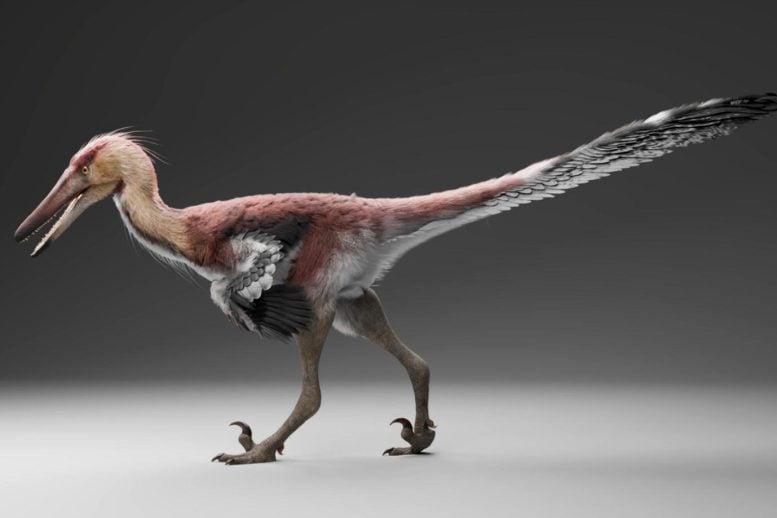
A newly discovered crocodile relative from the Triassic had a beak, tiny arms, and walked on two legs, making it look more like an ostrich-like dinosaur than a crocodile. During the Triassic Period, the ancestors of many modern animal groups were branching into an astonishing variety of shapes and lifestyles. Evolution was experimenting with body [...]
Quando você compra um produto pela internet ou pega um remédio na farmácia, dificilmente pensa em tudo o que aconteceu antes para ele chegar até você.
Neste vídeo, visitamos a Águia Sistemas (www.aguiasistemas.com.br), em Ponta Grossa (PR), para descobrir como são projetadas, fabricadas e integradas as soluções que fazem a intralogística funcionar. Desde estruturas de armazenagem e movimentação de materiais até sistemas completos de automação intralogística, tudo começa muito antes de um produto entrar em um centro de distribuição.
Acompanhamos o caminho do aço desde as bobinas até a fabricação de colunas, longarinas, sistemas de armazenagem, estruturas autoportantes, esteiras automatizadas e soluções integradas que ajudam empresas de diversos setores a armazenar, movimentar e distribuir milhões de produtos todos os dias.
É uma viagem pelos bastidores da engenharia, da automação e da integração que tornam possível aquilo que parece simples: encontrar um produto na prateleira ou receber uma encomenda na porta de casa.
China launched its partially reusable Long March 12B rocket for the first time ever on Monday (June 1), sending it up without issuing airspace closure notices ahead of time.
A study suggests pigeons navigate using iron-rich immune cells in their livers that can respond to Earth’s magnetic field. The findings may solve a decades-old mystery about bird navigation and reveal a surprising new sensory role for the immune system. Pigeons are famous for their ability to travel long distances and still find their way [...]
Scientists have uncovered a fish-hunting raptor from Patagonia that may have stalked prey like a giant prehistoric heron. A newly identified dinosaur from Patagonia is giving scientists fresh insight into how some raptor relatives lived during the final chapter of the age of dinosaurs. The species, named Kank australis, appears to have spent much of [...]
By tracking fierce winds racing through the atmospheres of seven ultra-hot Jupiters, astronomers have uncovered the strongest evidence yet that magnetic fields shape weather on worlds beyond our Solar System.
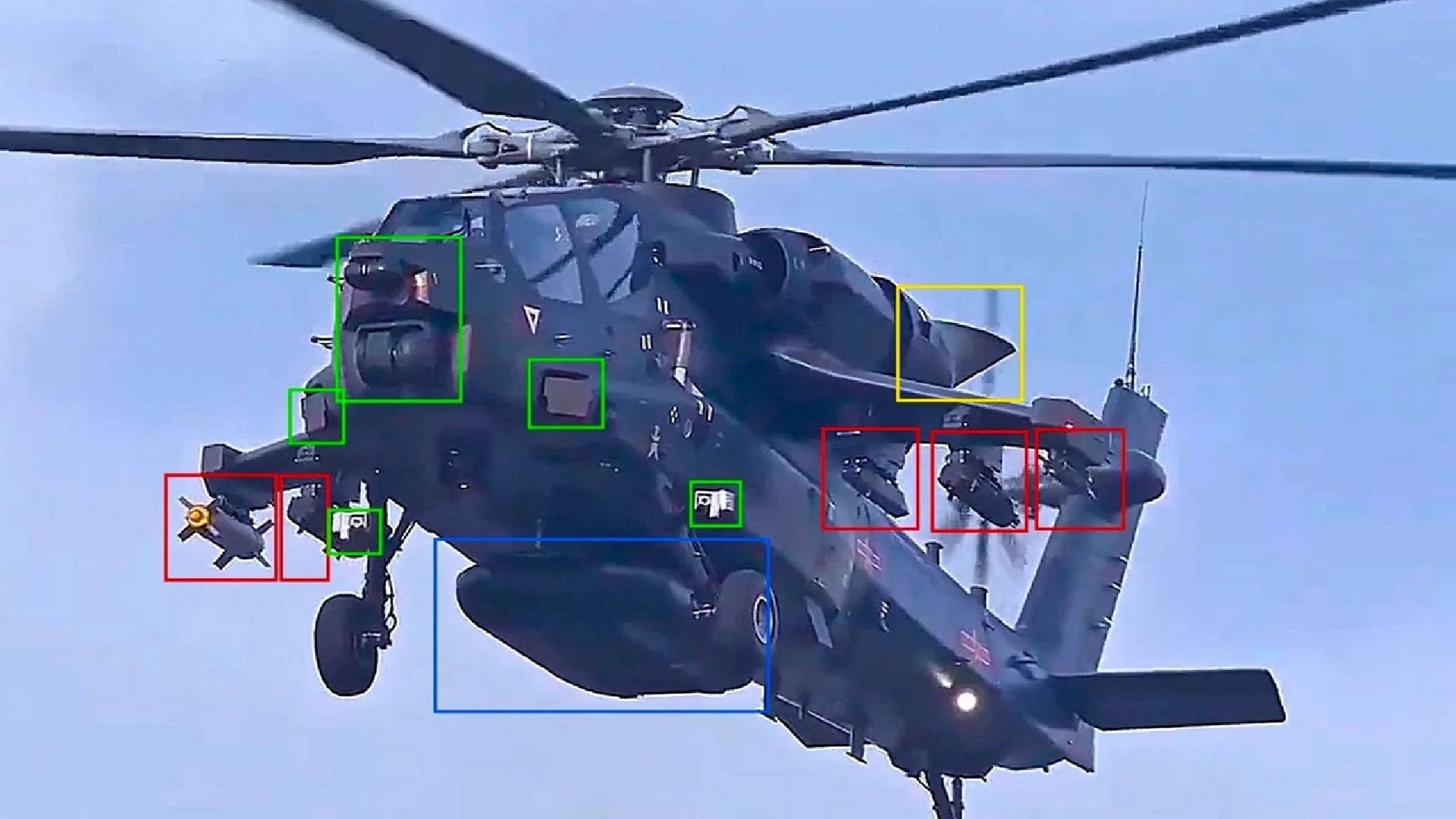
China has unveiled the Z-21, a heavy attack helicopter that military analysts are comparing directly to the Boeing AH-64E Apache Guardian, the United States Army’s primary rotary-wing strike platform. The aircraft’s emergence marks a concrete step in China’s effort to field a domestically produced heavy attack helicopter capable of operating in high-intensity contested environments.
Airframe design and propulsion
The Z-21 follows a tandem-seat, twin-engine configuration consistent with modern dedicated attack helicopter doctrine. Its airframe geometry — including stub wings for weapon pylons and a narrow fuselage cross-section — mirrors the layout optimized for survivability and aerodynamic performance in nap-of-the-earth flight.
The helicopter is reported to be powered by turboshaft engines developed domestically, a departure from earlier Chinese rotorcraft programs that relied heavily on foreign powerplant technology. Precise engine designation and shaft horsepower output have not been officially confirmed by the People’s Liberation Army (PLA).
Weapons and sensor suite
The Z-21 is equipped with a chin-mounted cannon and provisions for air-to-ground missiles, anti-tank guided munitions, and unguided rocket pods across four hardpoints on its stub wings. Reports indicate integration of a millimeter-wave fire control radar — analogous to the Longbow radar mast system on the AH-64E — enabling over-the-horizon target acquisition and engagement in degraded visibility conditions.
A multi-spectral targeting system mounted in a nose turret is expected to provide infrared and day/TV imaging for precision engagement. These are capabilities the AH-64E has carried operationally for over a decade, meaning the Z-21 would be entering the field at a level of sensor maturity the Apache already surpasses in software and network integration.
How it stacks up against the AH-64E Apache
The AH-64E Apache operates with Link 16 datalink compatibility, manned-unmanned teaming (MUM-T) with reconnaissance drones such as the MQ-1C Gray Eagle, and a target handoff system that allows crews to pass fire missions across platforms in near-real time.
Whether the Z-21 has achieved comparable network interoperability within PLA joint-force architecture remains unclear from available information.
On gross weight and payload, the Z-21 appears to fall in a similar class to the Apache’s roughly 10,400 lb (4,717 kg) maximum takeoff weight, though official Chinese specifications have not been released. This matters operationally: payload capacity directly constrains the missile and fuel load carried on a given mission profile, affecting both range and lethality.
Survivability features
The AH-64E incorporates radar-absorbent materials, infrared suppression on exhaust outlets, and a ballistically tolerant rotor system designed to sustain hits from 23 mm projectiles. It is not yet established whether the Z-21 meets comparable protection standards.
Engine reliability and maintenance logistics for domestically produced Chinese turboshafts also carry uncertainties, given the historical difficulties PLA aviation programs have faced in achieving consistent turbine performance at scale.
For readers interested in how rotary-wing platforms fit into broader strike architectures, the US Army’s Future Attack Reconnaissance Aircraft program offers relevant context on next-generation attack helicopter requirements being pursued in parallel.
Strategic context for PLA rotary aviation
The Z-21’s development fits within a wider PLA modernization effort that has prioritized closing capability gaps in close air support and anti-armor warfare. Taiwan Strait contingency planning, as well as high-altitude operations along the Sino-Indian border where the Z-10 medium attack helicopter has already deployed, likely informed the Z-21’s design requirements.
A heavier, more capable platform extends the PLA’s ability to conduct sustained attack helicopter operations in mountainous or fortified terrain where ordnance load matters.
Until the Z-21 completes operational testing and enters confirmed PLA service, claims about its combat effectiveness relative to the AH-64E remain speculative. The gap between a prototype photograph and a battle-ready weapons system in serial production is one that Chinese aerospace programs have historically taken years to close.
Swapping materials in its Majorana 2 chip boosted the effectiveness of quantum bits that rely on the math of topology to reduce errors, Microsoft says.

 Login